RidgeWaves Over IvoryHills - K-ARTIST

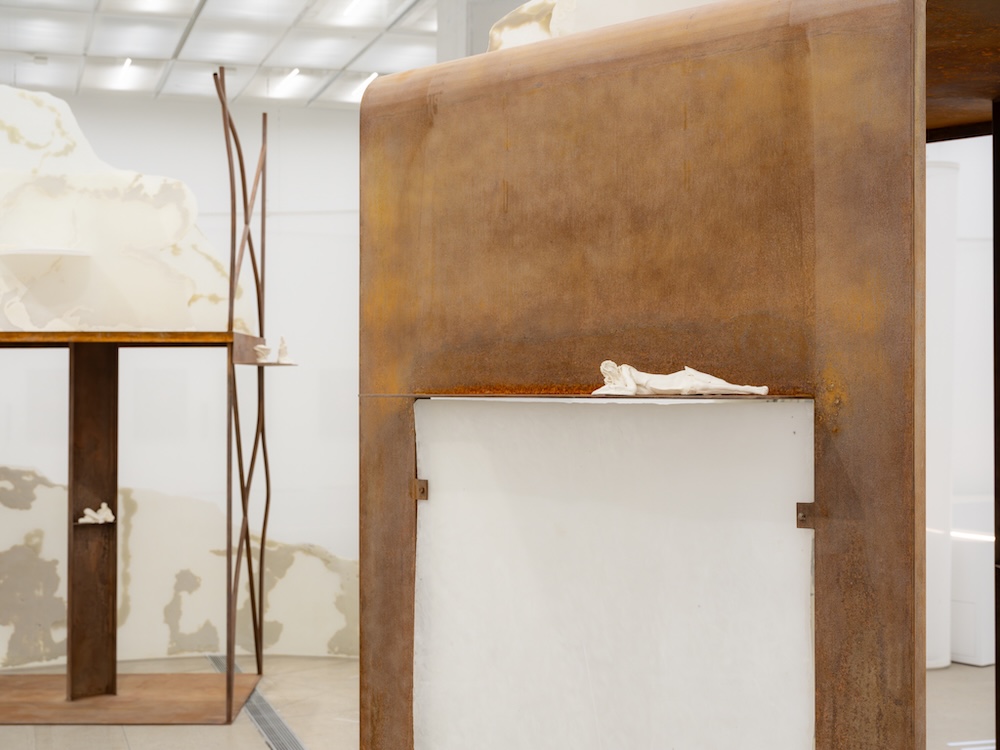
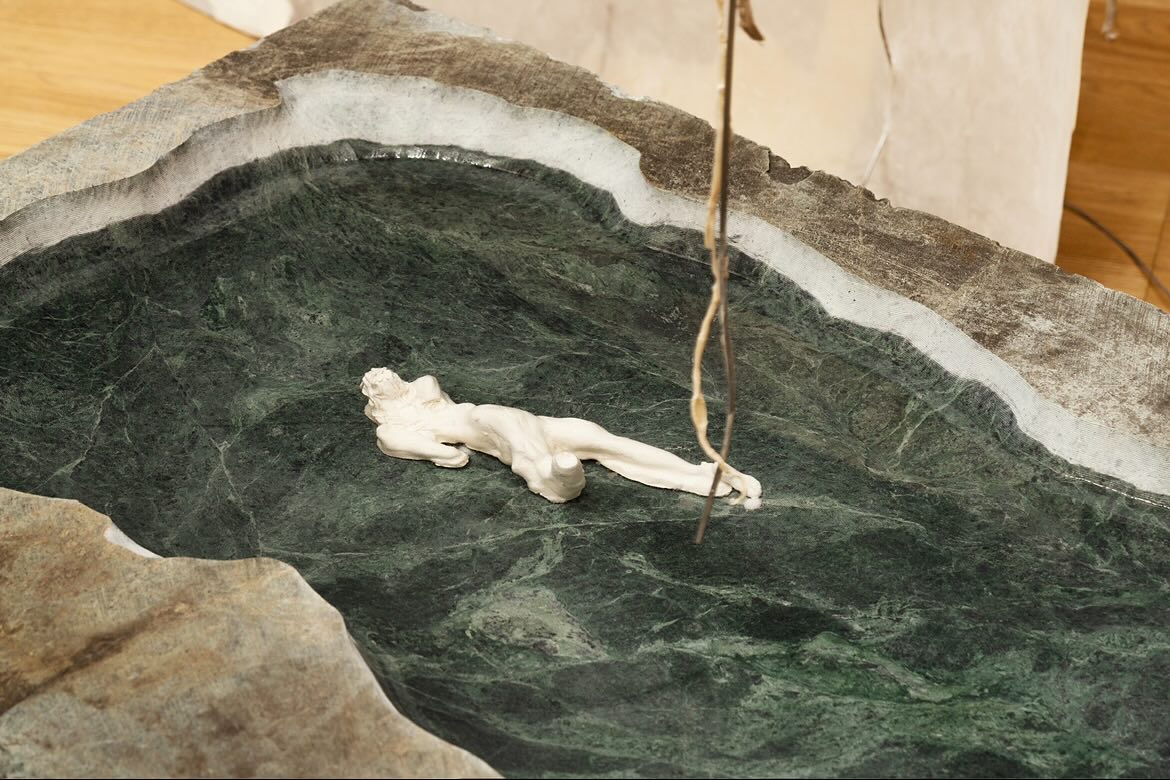
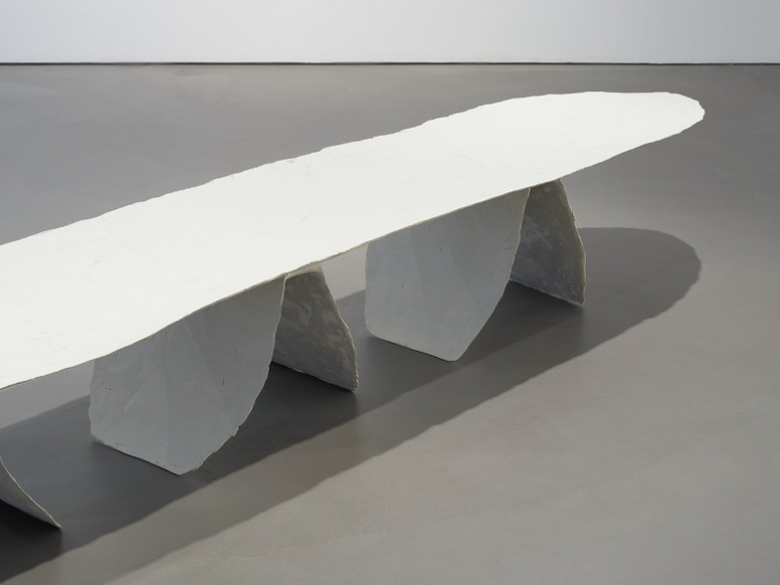
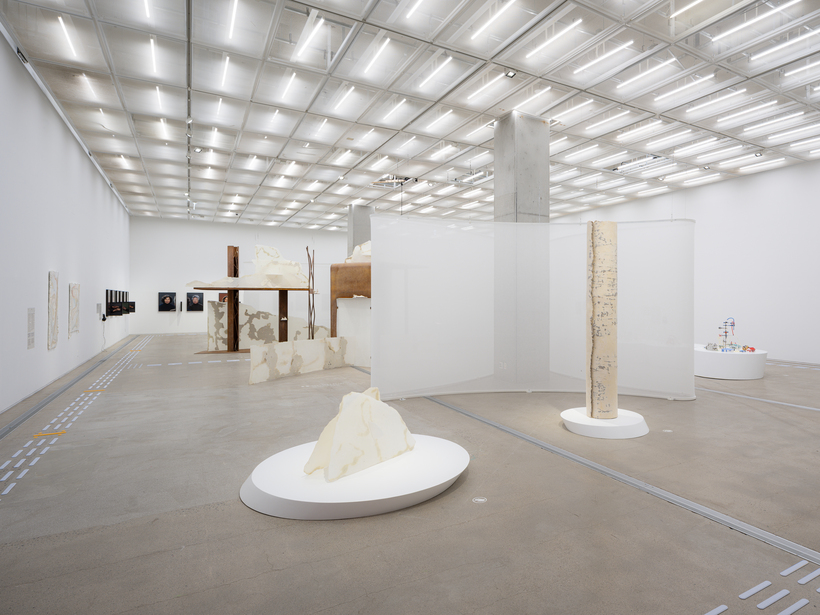
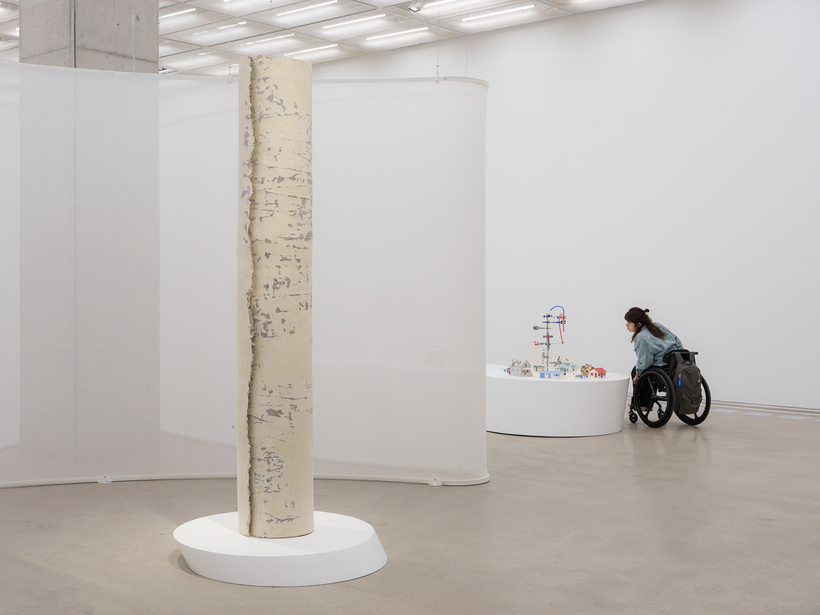
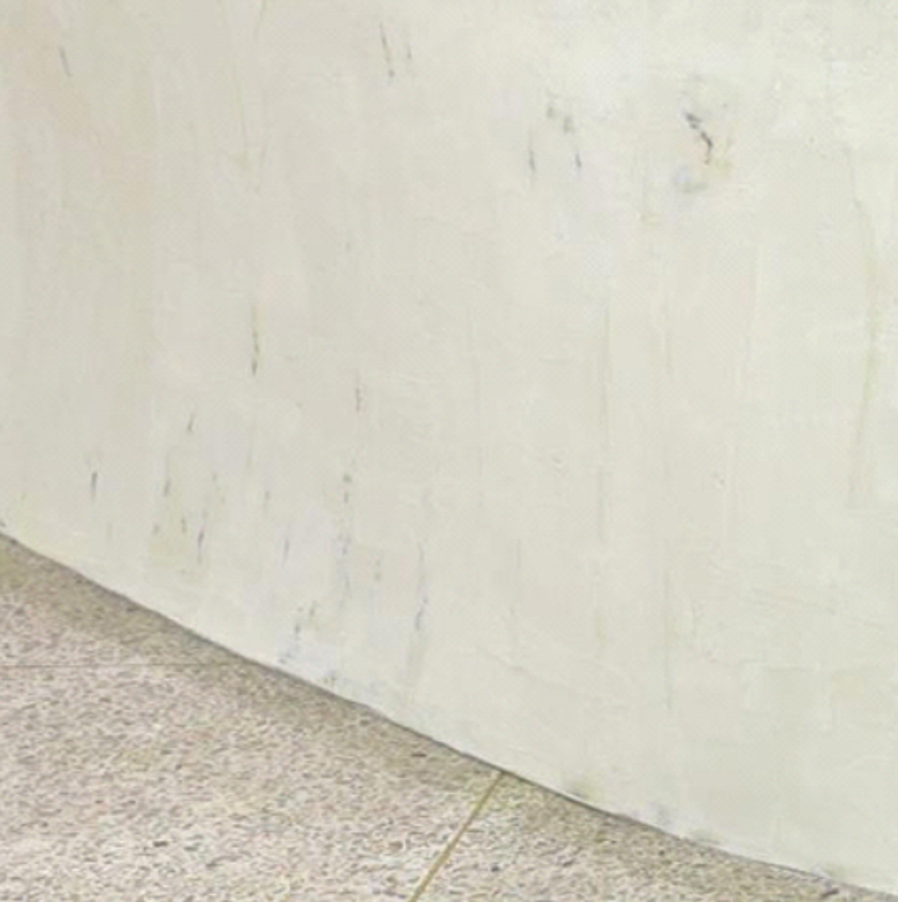
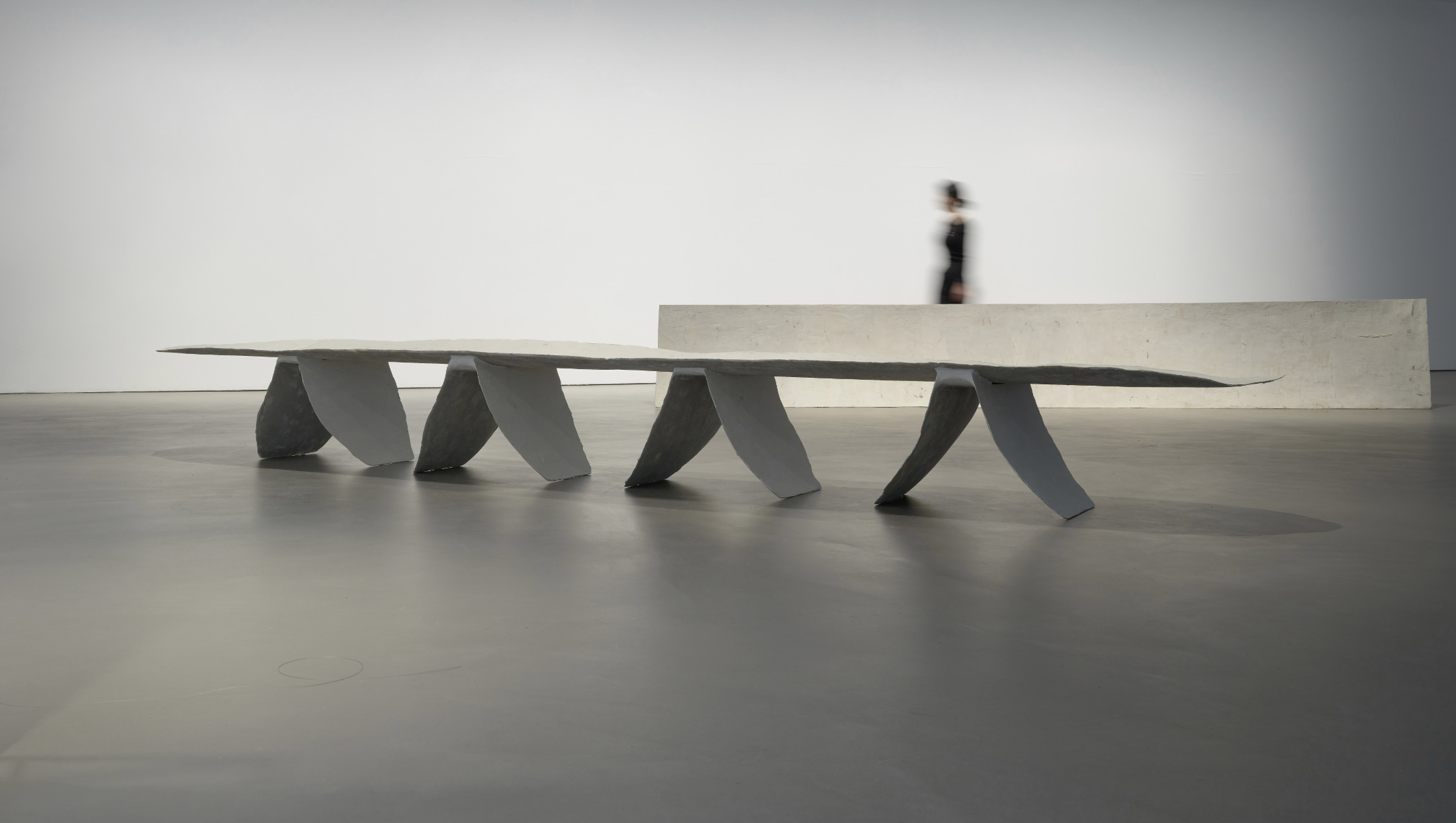
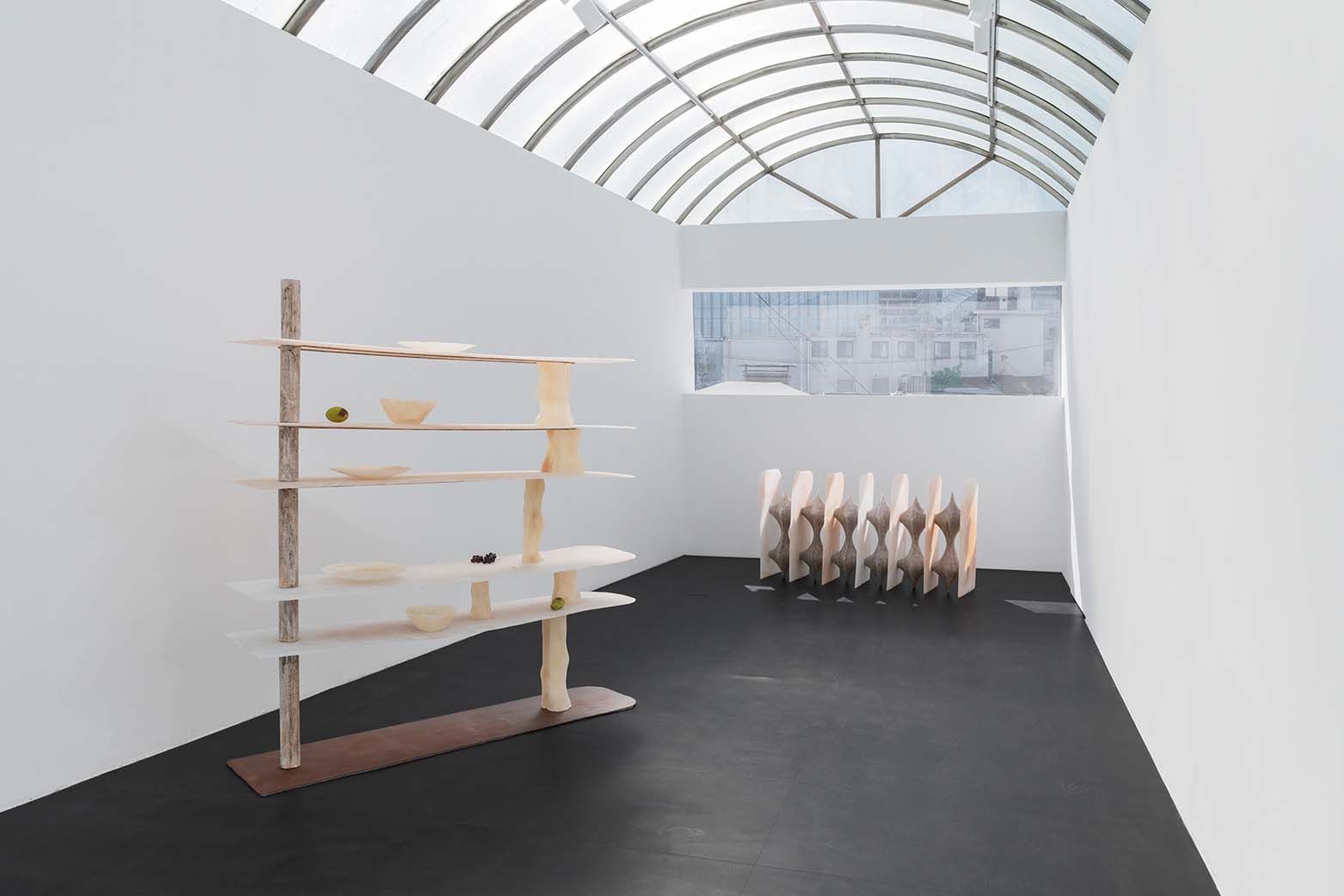
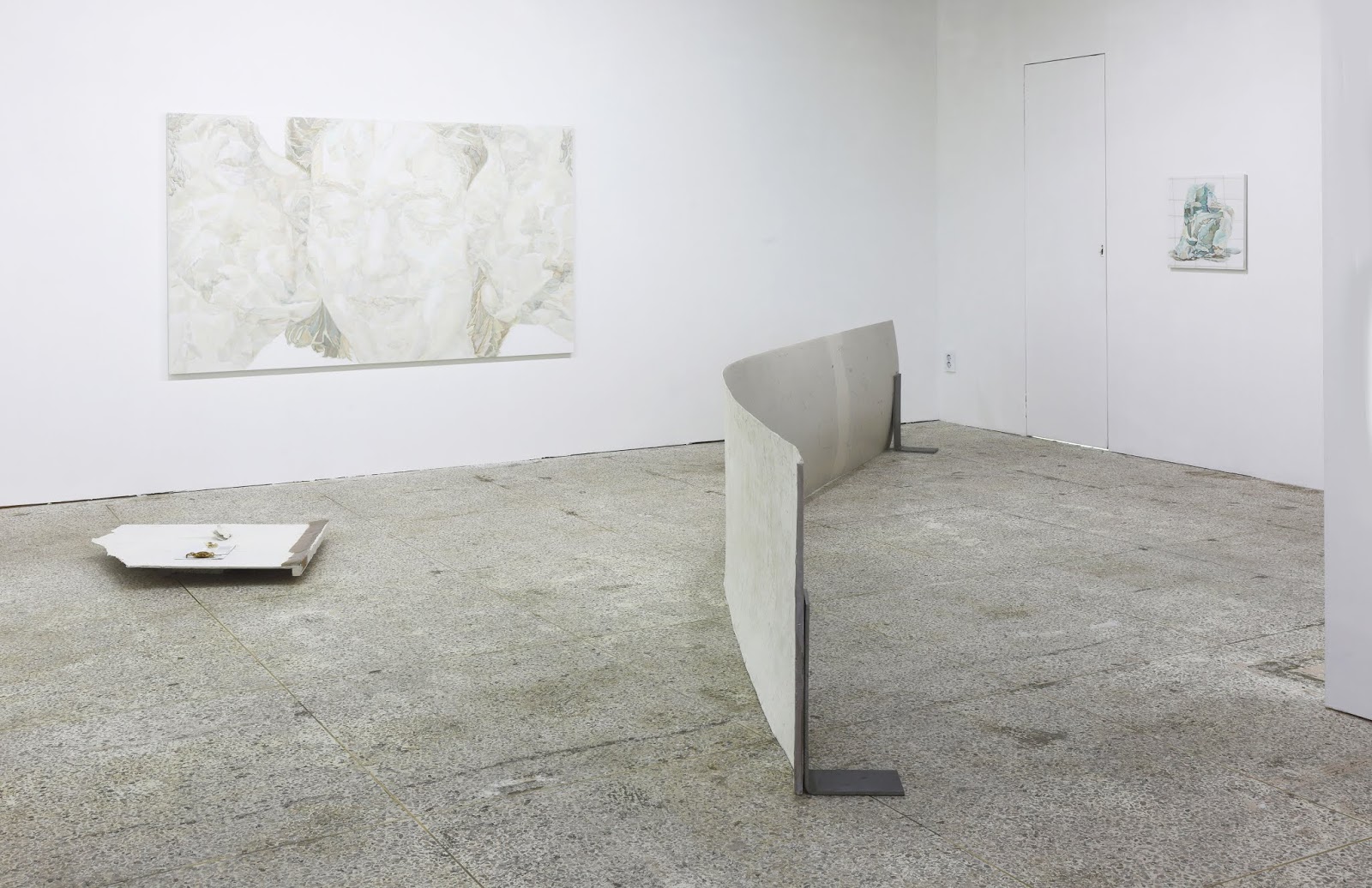
RidgeWaves Over IvoryHills

2023
Mixed media
500 x 68 x 51 cm
About The Work

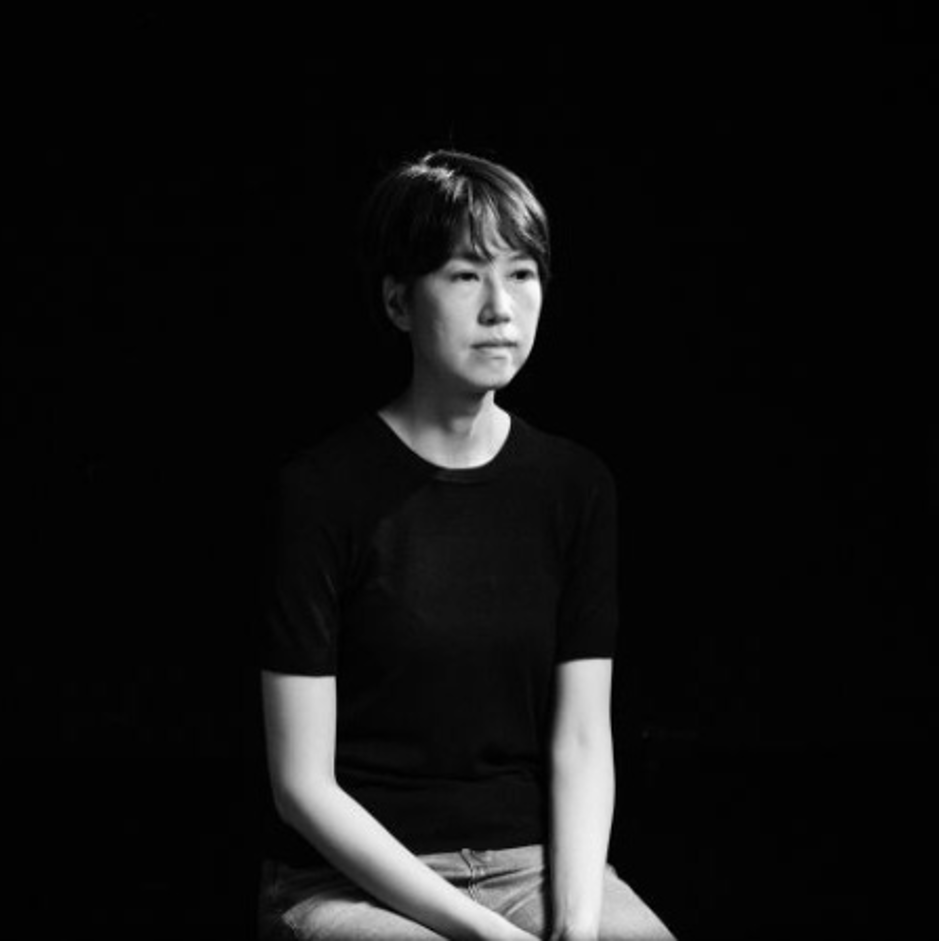
GuNa has explored gaps in understanding that are difficult to grasp through existing systems of language and perception, using the materiality of painting and sculpture.

For her, such gaps are not simply absences but spaces of possibility where new differences emerge and contradictory meanings overlap. Drawing on personal experiences, she abstractly renders the limitations of a body marked by lack, seeking to capture a sensibility in which longing and anxiety, vulnerability and potential intersect.

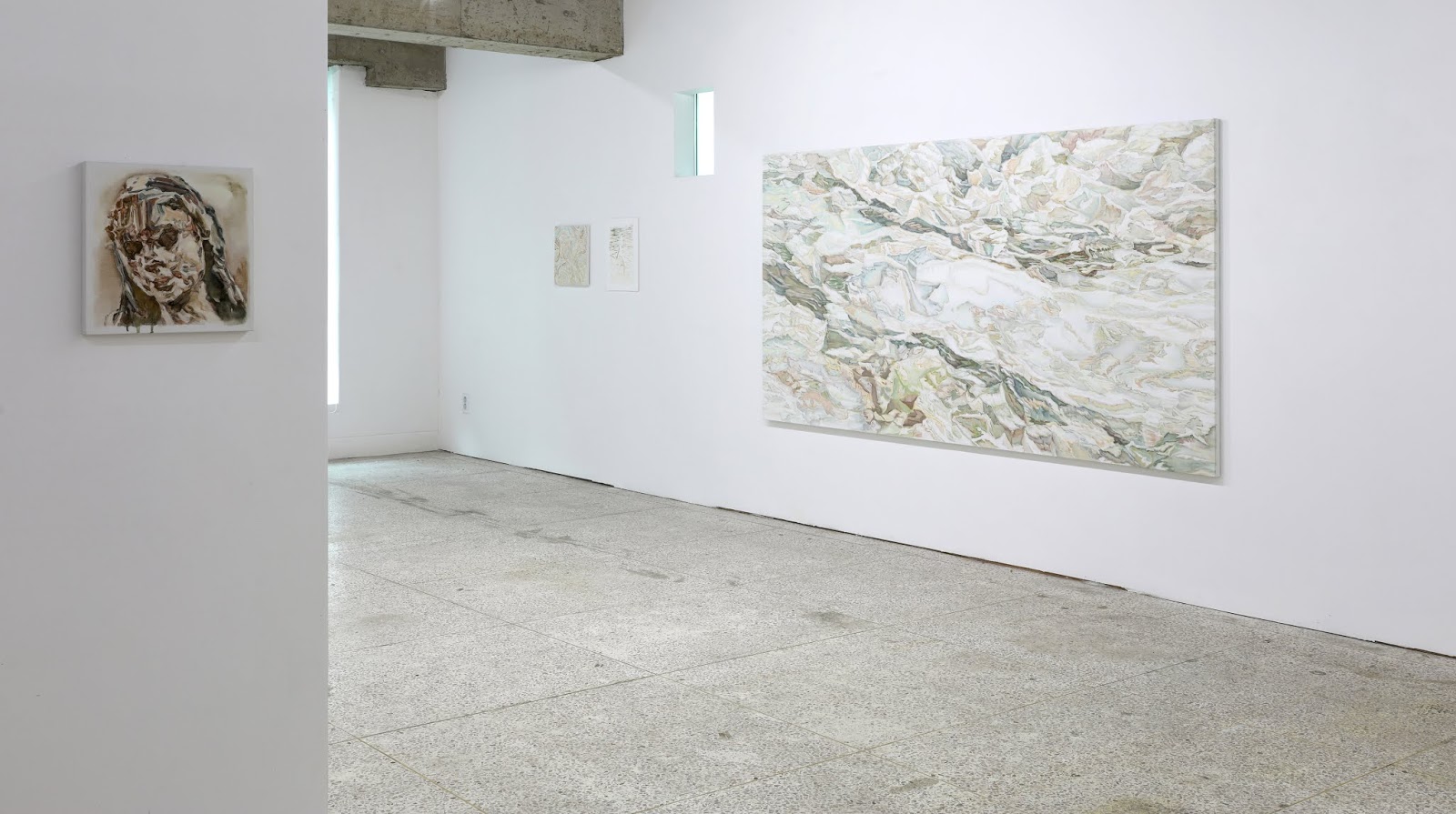
Rather than reproducing the outward appearance of an object, GuNa’s practice gives form to the process of sensing and internalizing it. In this process, the boundary between subject and object becomes blurred, while connections and ruptures recur, generating fragmented images and structures. She continually separates and filters the heterogeneous stimuli that enter from the outside, weaving together the images and sensations that remain to create wrinkled landscapes.

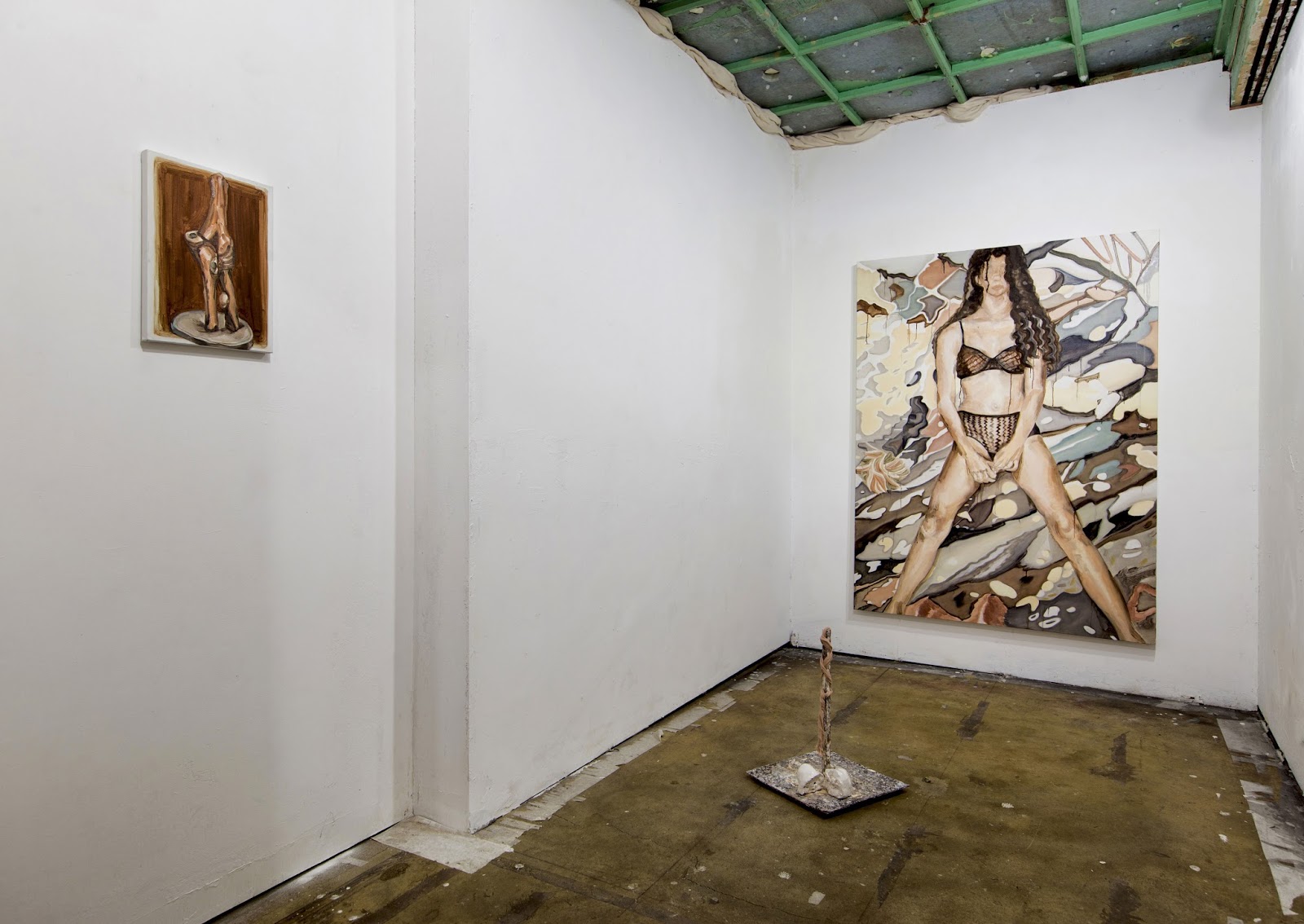
Her experience of a spinal condition during childhood has been an important starting point in shaping her artistic practice. The pain caused by the condition, along with her experiences of wearing a brace and undergoing surgery, recur in images such as the “tilted body,” “curved bones,” and “fragile skin.” States of being bent, withering, corroding, and having to lean on something else are presented in her work as potential states of continuously adjusting one’s balance and remaining in motion.

GuNa’s sculptural language, which embraces oblique structures, irregular surfaces, and unpredictable transformations of materials rather than straight lines and complete forms, can thus be understood as a material and bodily articulation of the “place of failure” she has explored over many years. In her work, imperfection and disjunction are not defects to be overcome, but conditions from which new sensations and forms can emerge.

Solo Exhibitions (Brief)

GuNa has held solo exhibitions including 《StillLife In DreamDreamDream》 (Artspace Boan 2, Seoul, 2022), 《Table of Contents from Twins》 (Park Soo Keun Museum Pavilion, Yanggu, 2020), and 《you And i And you And i》 (KICHE, Seoul, 2019).

Group Exhibitions (Brief)

GuNa has also participated in numerous group exhibitions, including 《Where Light Leans》 (ThisWeekendRoom, Seoul, 2026), 《Looking After Each Other》 (MMCA, Seoul, 2025), 《The 24th SONGEUN Art Award Exhibition》 (SONGEUN, Seoul, 2024), 《I Want to Love Us》 (Buk-Seoul Museum of Art, Seoul, 2024), 《The Sunken Eyes Were Dim》 (DOOSAN Gallery, Seoul, 2023), and 《Where All Places Are》 (Kumho Museum of Art, Seoul, 2021).

Residencies (Selected)

GuNa has participated in residency programs at SeMA Nanji Residency (2026), White Block Residency (2023–2025), and Kumho Museum of Art Residency (2020).

Collections (Selected)

GuNa’s works are held in the collections of the Daejeon Museum of Art and Incheon Art Bank.

Works of Art

A Wrinkled Landscape Woven from the Sensations of Life

Originality & Identity

GuNa’s practice begins with the question of how emotions and sensations that resist precise verbal explanation can be translated into other forms. She has described this as a “gap in understanding” or a “site of failure.” Here, failure is less a negative outcome of not arriving at meaning than a point of departure that allows her to reconsider states that cannot be reduced to a single interpretation.

This is why, in her early solo exhibition 《askew bone and stuttering》(O’NEWWALL E’JUHEON, 2017), fragments such as bones, hair, skin, stone, and insomnia appear without being integrated into a complete whole. In works such as Detached Buttocks(2017) and Nights that Cannot Sleep with Her Worries(2017), subjects remain fractured, slackened, or reduced to remnants rather than arriving at a resolved meaning. GuNa has continued to slowly translate these states of indeterminacy into painting and sculpture.
 
This concern later expands into the relationship between the self and others. In 《you And i And you And i》(KICHE, 2019), landscapes of fields and rivers, figures from her surroundings, and forms drawn from the works of other artists appear to merge into one another before dispersing again.

White bone
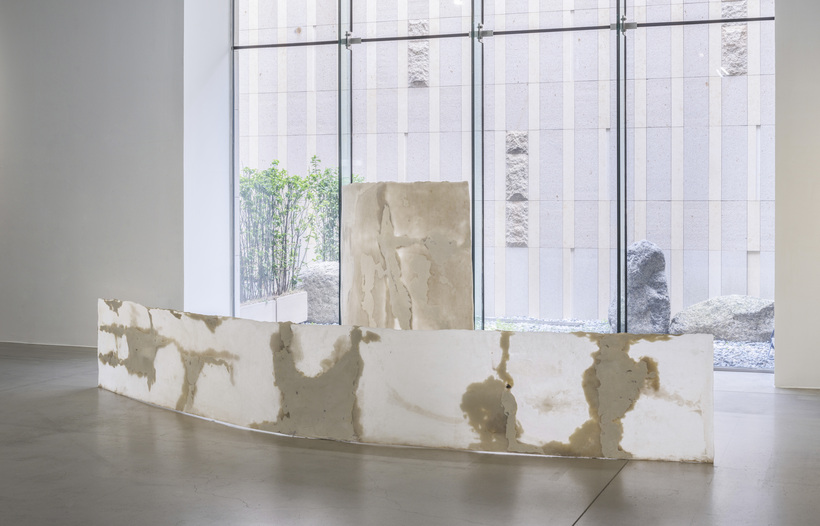
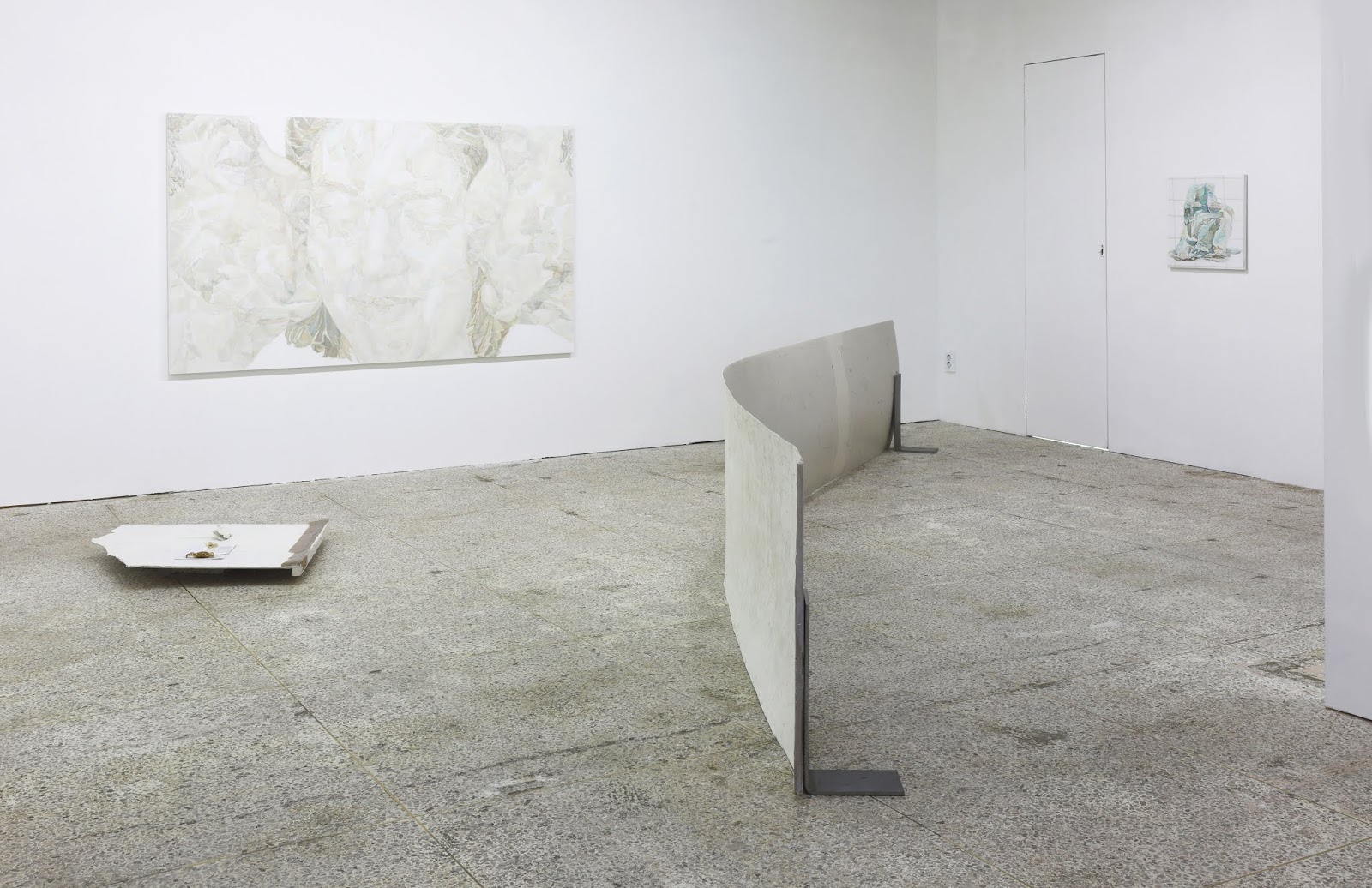
(2019–2023) and White bone from address(2019) conceive of the exhibition space as a single body while presenting the spine and fragments of bone as never fully connected. My Face Slipped Deep into Your Back(2023) similarly brings together flat structures that lean against one another, appearing as a single body while still retaining their individual forms.

For GuNa, a relationship does not mean complete understanding or becoming identical, but rather remaining close, leaning on one another, and still preserving difference.
 
From the 2020s onward, this question develops further through dreams, memory, and the instability of perception. In 《StillLife In DreamDreamDream》(Artspace Boan 2, 2022), the artist lingers over scenes that are difficult to grasp clearly: images on a monitor, landscapes beyond glass, a person seen from behind, or an old painting.

BluesApricotBeigeStillLife In Dream
(2021) emerged from repeatedly looking at a portion of Paul Cézanne’s Portrait of Madame Cézanne and translating the discrepancy between the actual image and the artist’s own sensory response into a fragmented face. At this stage, “seeing” for GuNa is no longer about accurately reproducing an object, but about identifying the sensations that remain within her and recomposing them.
 
In more recent works, these questions of perception become more directly connected to the artist’s own experience of illness. Her childhood experiences of spinal disorder, wearing a brace, and undergoing surgery repeatedly return through images of the “tilted body,” “bent bone,” and “fragile skin.”

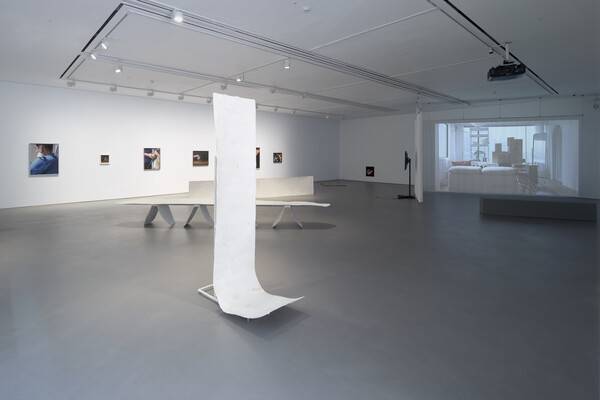
In 《The Sunken Eyes Were Dim》(DOOSAN Gallery, 2023), RidgeWaves Over IvoryHills(2019–2023) presents a long body precariously supported by several slender legs, while IvoryBoneGrayProstheticsStill-life And Ivory BrownBlackPortrait, And BlueBluesWaterReal(2024), shown in 《The 24th SONGEUN Art Award Exhibition》(SONGEUN, 2024), addresses states of disintegration and care, melancholy and coldness, life and death coexisting within an ailing body.

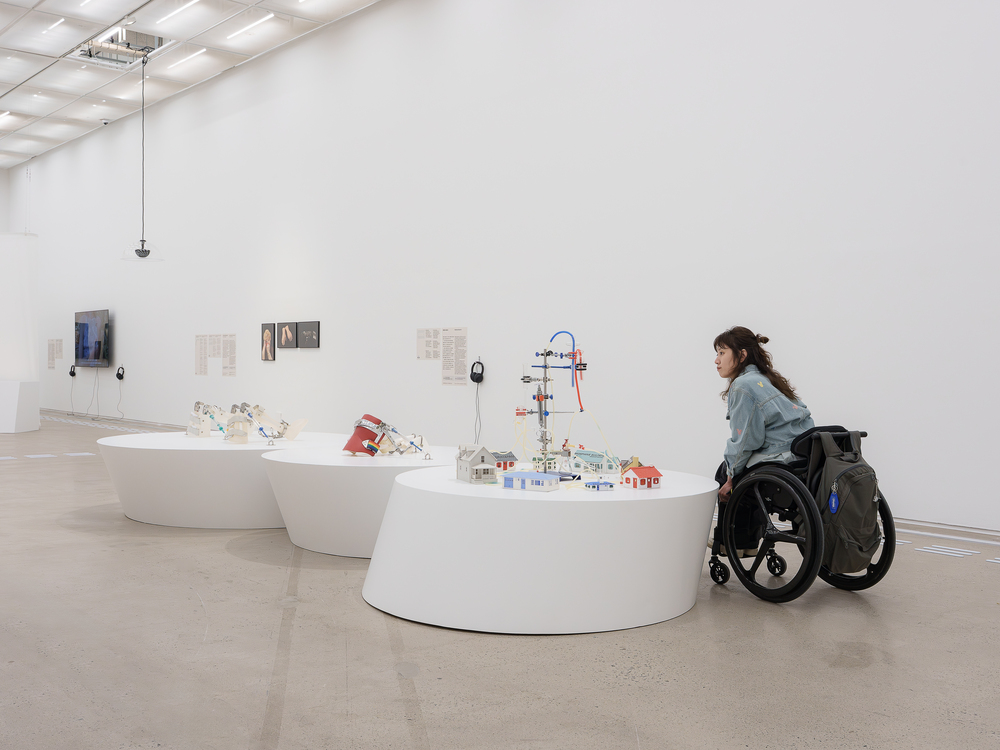
In 《Looking After Each Other》(MMCA, 2025), this concern expands beyond personal pain toward the question of how different bodies might lean on and coexist with one another.

Style & Contents

GuNa studied sculpture at university and later earned a master’s degree in painting, and this background informs her tendency to treat painting and sculpture not as separate genres but as media that actively interfere with one another. In her earlier practice, melancholic objects discovered in photographs or memories were transferred onto canvas, while objects and remnants on the verge of disappearing were held in place through installation.

This approach, already visible in 《askew bone and stuttering》, appears in painting through faint images and incomplete contours, and in sculpture through tilted and fractured forms. What matters is not creating a likeness, but materializing the discrepancy that arises in the process of looking at, remembering, and sensing a subject.
 
From 2019 onward, sculptural structures that function like bodies without directly depicting the human figure become increasingly prominent. White bone takes the form of something standing on its edge while seeming to lie sideways, and My Face Slipped Deep into Your Back brings together three thin FRP panels that lean against and penetrate one another to form an unstable body.

SkinSkinSkinColumnBody In Dream(2021) and RidgeWaves Over IvoryHills also contain parts that may evoke the spine, skin, or legs, yet they do not represent any specific human body. In this way, GuNa understands the body less through the outward appearance of the face or limbs than through acts of supporting, leaning, bending, and reclining. Bodily conditions are translated into structure and posture.
 
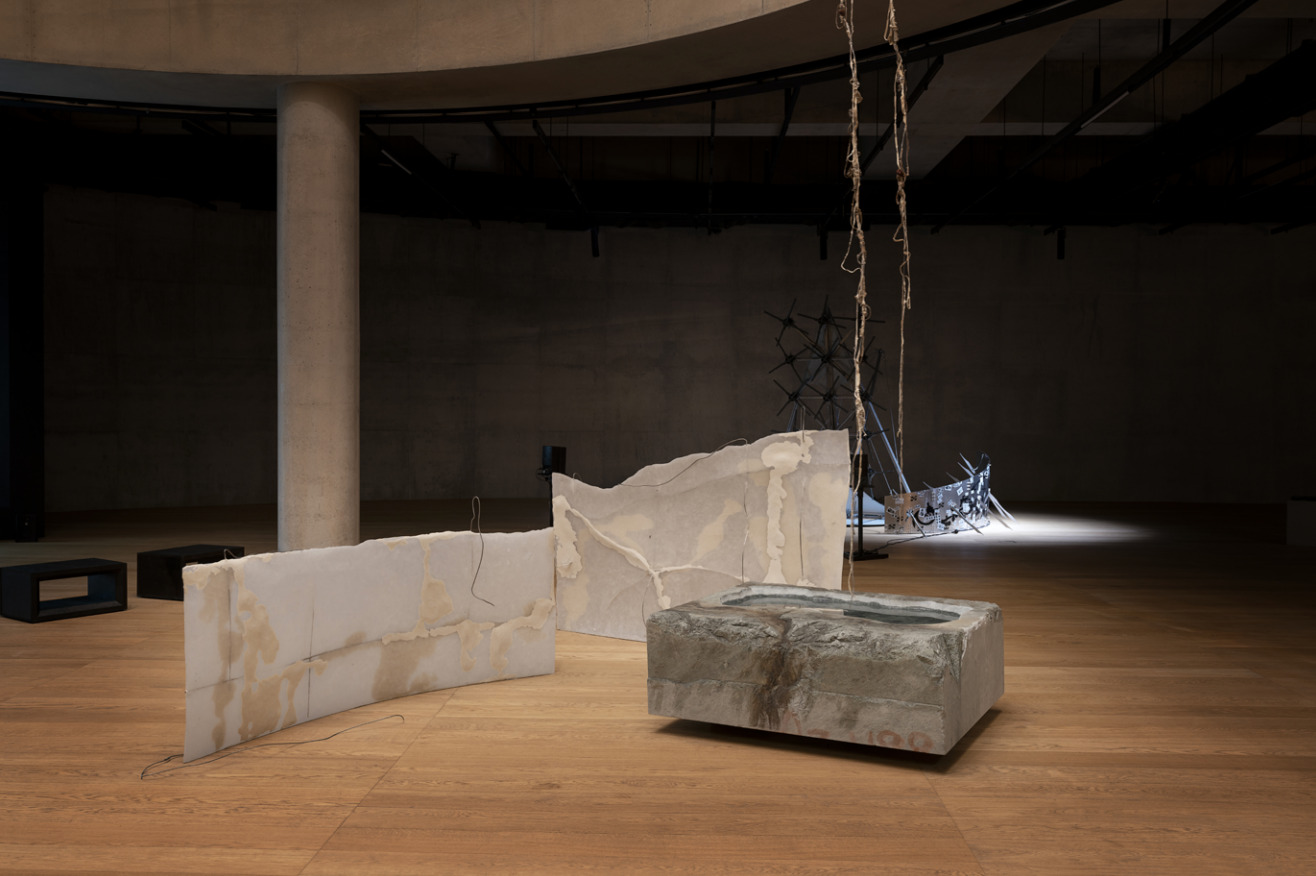
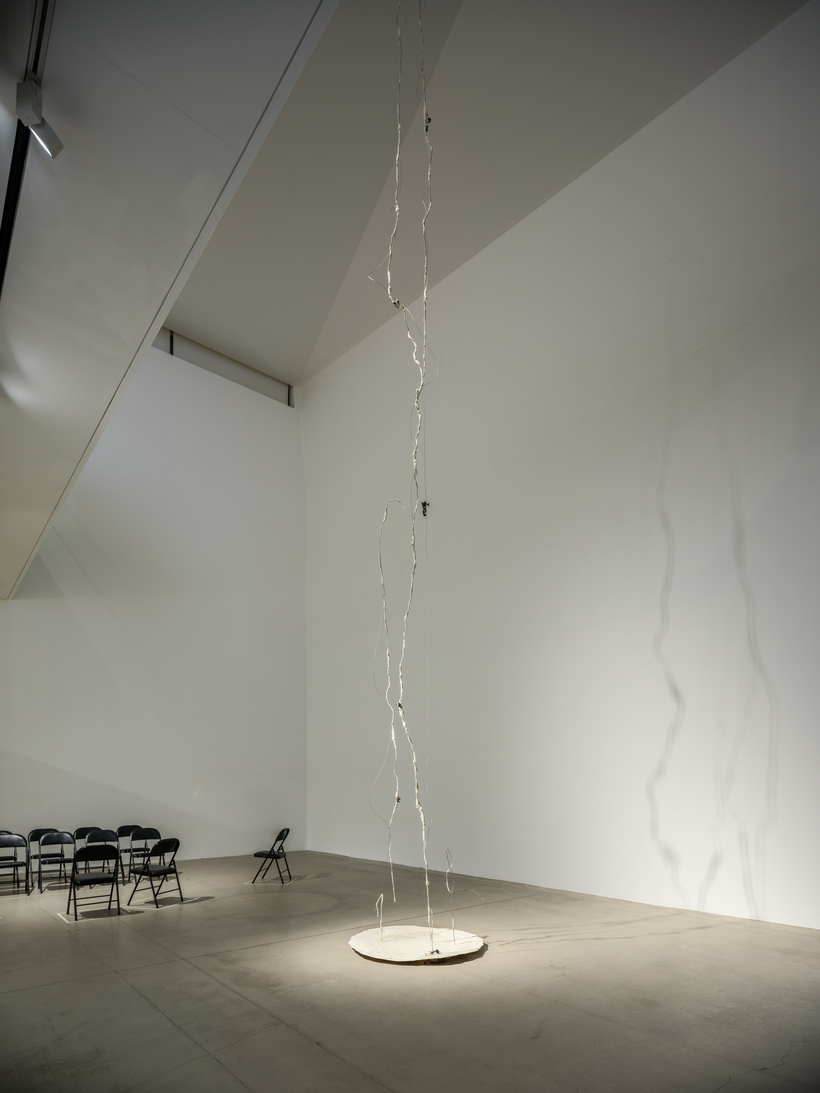
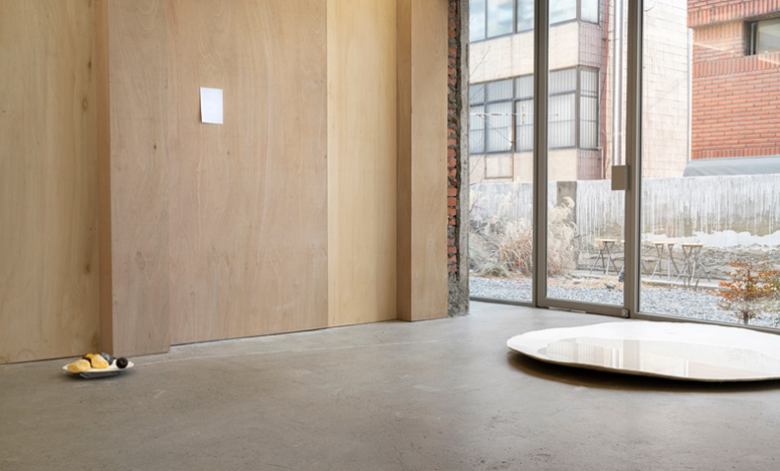
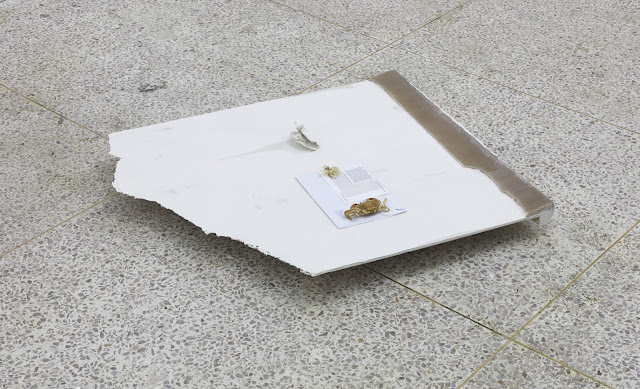
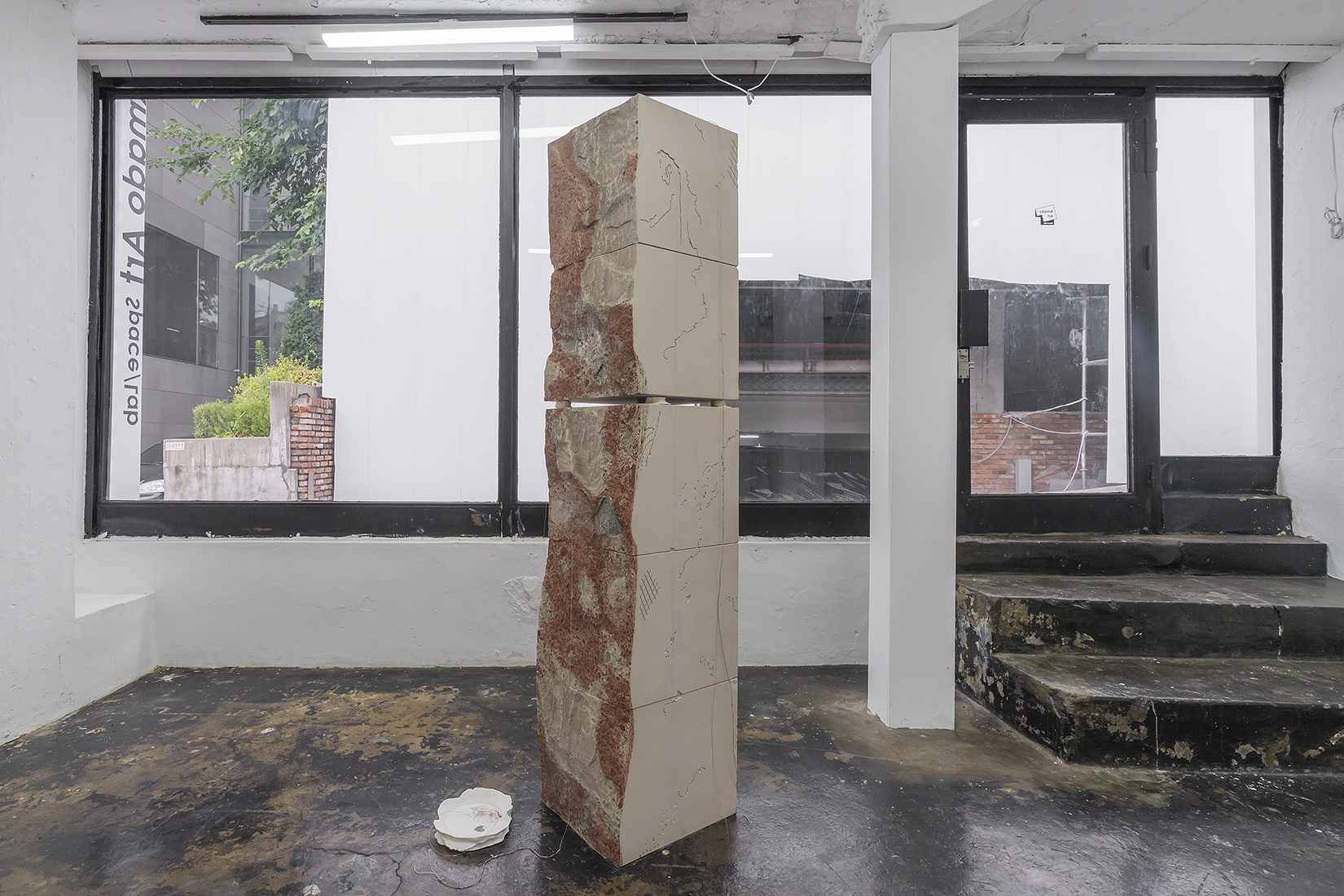
The same attitude continues in her use of materials. GuNa combines industrial materials such as FRP, steel, wire, stone clay, wood, resin, and cement with organic matter including water, quince, beehives, and dried leaves. In MyBlackBrown’sFeverAndThermalWater(2024), a drying quince changes color alongside an oxidizing steel plate and pooled water, each transforming at a different pace.

In QuinceBowlBelowBeigeIvoryMountainchain(2024), wood, putty, quince, and an empty beehive endure time differently within a single structure. GuardianAndCheckerwoman(2024) and Woven Water(2024) likewise bring together materials with distinct properties, including water, stone, thread, and wire. Here, discoloration, drying, corrosion, and evaporation are not signs of damage, but evidence that time continues to operate within the work.
 
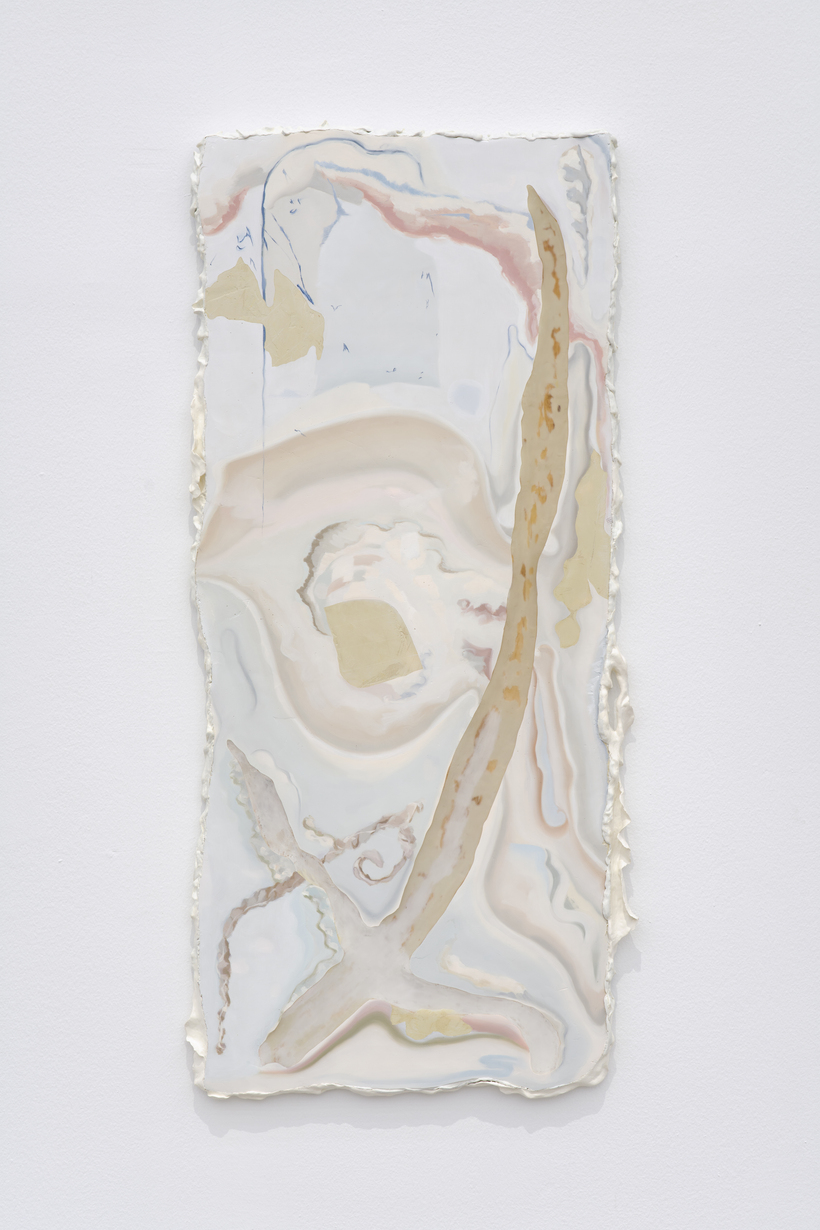
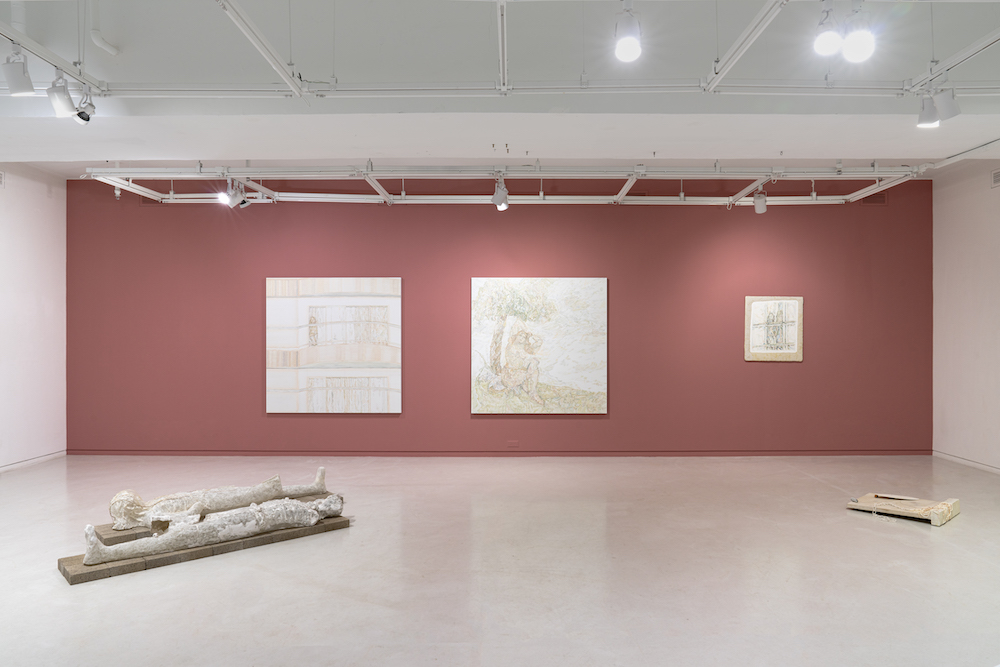
This approach has recently expanded painting into a more sculptural form. BluesInternalOrganDance In IvoryWagon(2025) is made by carving into a wooden panel, filling the cavities with another material, and then smoothing the surface again, creating an internal structure that resembles an actual “bone” within the painting.

IvoryBoneColdSkinGesture In RedBrownCabinet(2025) and IvoryBoneColdSkinGesture On RedBrownShelf(2025) arrange multiple fragments by leaning and layering them inside cabinets and on shelves, allowing them to appear simultaneously as bodies and landscapes. Structures such as the “wagon,” “cabinet,” and “shelf,” which recur in her recent solo and group exhibitions, can also be understood as devices that protect the body’s interior or carry and transport something.

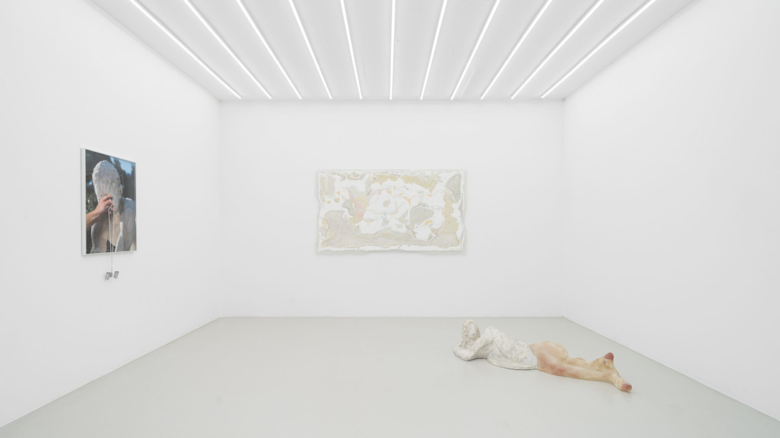
As a result, painting no longer remains confined to surface but becomes an object with bones and skin, while sculpture moves away from the isolated object toward a scene in which multiple beings coexist.

Topography & Continuity

One of the most distinctive aspects of GuNa’s practice is that she does not treat the vulnerable body simply as something wounded or in need of protection. States of bending, drying, corroding, and depending on other things are, in her work, forms of deficiency but also forms of movement.

The idea of “tilting,” emphasized again in 《Where Light Leans》(ThisWeekendRoom, 2026), is not a criterion for distinguishing between a normal and abnormal body, but rather a way of continuously adjusting balance within an unstable environment.

GuNa’s visual language—tilted structures, irregular surfaces, and the acceptance of unexpected material changes in place of straight lines and completed forms—can be understood as the material realization of her long-standing idea of the “site of failure.”
 
Another defining feature is her refusal to separate painting and sculpture into the categories of “image” and “object.” Carved grooves and internal supports enter the painting, color and traces accumulate on sculptural surfaces, and water and fruit change over actual time within installations.

While many practices concerned with bodily vulnerability focus on personal narratives or representations of the human figure, GuNa translates such experience into the ways materials endure and surfaces transform over time. What becomes important, then, is less the specific scene of illness than changes in states expressed through verbs such as “endure,” “lean,” “flow,” “dry,” and “stand again.”

This approach prevents personal bodily experience from being enclosed within a single narrative and allows viewers to connect the work to their own bodies and experiences of time.
 
Her recent works have expanded from the individual body toward bodies living alongside other beings. In 《Paint It Black》(Amado Art Space, 2024), Woven Water and BlackBrown’s RiverDepth(2024) translate the emotions of those left behind after disaster and mourning through the weight and flow of stone, water, dried leaves, and cement.

In 《Looking After Each Other》, sculptures leaning against and overlapping with one another frame vulnerability as a condition of relation. From personal experiences of illness to memory and dreams, aging and death, mourning and care, GuNa’s practice has not simply repeated a single theme but has continued to renew the same fundamental question through different materials and forms of relation.

By translating experiences that cannot be fully contained by language into changes of body and matter, her work suggests an ongoing path in which painting, sculpture, and installation continue to overlap while developing new variations on the relationship between body and time.

Works of Art

A Wrinkled Landscape Woven from the Sensations of Life

Articles

Exhibitions

Activities