Curtain - K-ARTIST

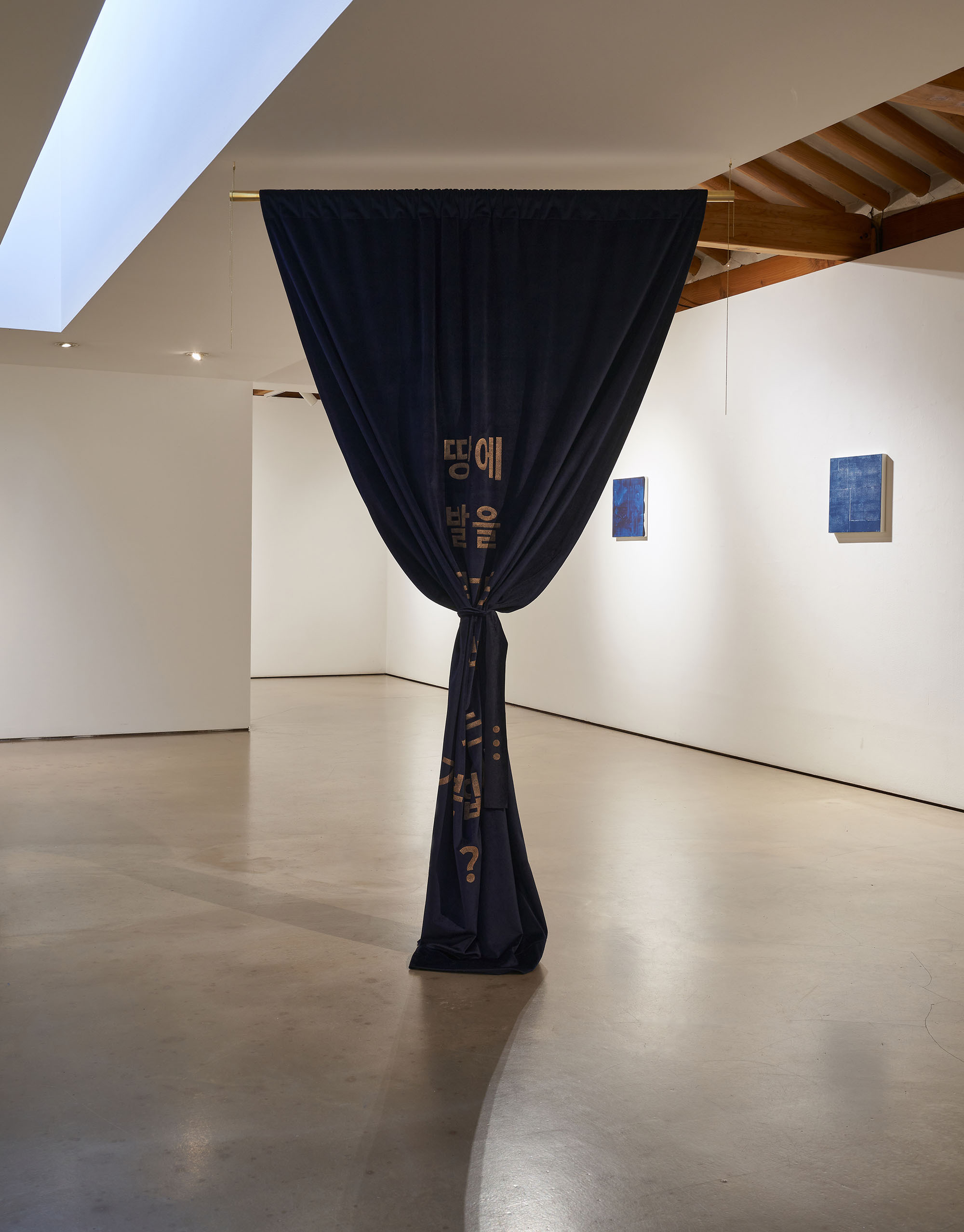
Curtain

2024
Acrylic on velvet curtain, brass tube, brass chain
250 x 150 cm
About The Work

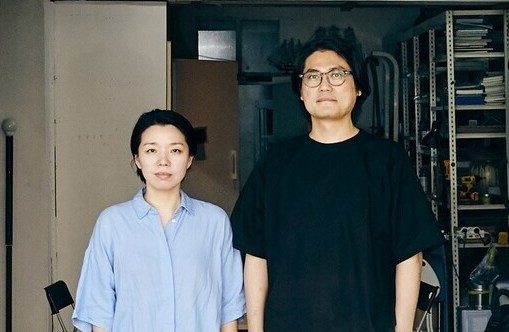
RohwaJeong is an artist duo formed in 2007 by Noh Yoonhee and Jeong Hyunseok. The duo has made the process of negotiating and persuading one another through their differing perspectives a fundamental principle of their practice.

Through continuous dialogue and mutual critique, the two artists challenge and keep one another in check, building a singular, fictional identity under the name “RohwaJeong.” This structure naturally extends to an interest in relationships, leading to an exploration of various relational and interpretive structures, from the individual and society to the center and the periphery.

RohwaJeong focuses on the relationships and boundaries between seemingly opposing elements, such as reality and image, the artificial and the natural, inside and outside, center and periphery, and past and future.

Rather than viewing these binary distinctions as fixed oppositions, the duo captures their meanings and paradoxes as they emerge within relationships that continually influence and transform one another. They have expanded these inquiries through diverse media and forms, including painting, installation, video, objects, text, and sculpture, reflecting on contemporary conditions and boundaries.

In RohwaJeong’s practice, relationships and boundaries are not fixed states but mutable structures that constantly shift according to their circumstances and environments. Their works actively evoke the audience’s affect and sensory responses, sometimes inviting viewers to participate in the process through which the work takes shape.

This creates an open structure that resists being reduced to a single meaning or interpretation, allowing viewers to experience the works from more multilayered and multidimensional perspectives.

Ultimately, RohwaJeong’s practice transforms passive viewing into an active experience, allowing meaning to continually emerge through interactions between the work and its audience. Rather than fixing the meaning of a work within a single interpretation, the duo keeps it open within constantly changing relationships. Through these shifting relational structures, RohwaJeong proposes new ways of sensing and contemplating the meanings of the “self” and the “other.”

Solo Exhibitions (Brief)

RohwaJeong has held solo exhibitions including 《yesterday’s surprise》 (The WilloW, Seoul, 2025), 《in the gaze lie thickness and density》 (Hakgojae Gallery, Seoul, 2024), 《rrr》 (A-Lounge Contemporary, Seoul, 2020), and 《Willing N Dealing Open Project by RohwaJeong》 (Space Willing N Dealing, Seoul, 2019).

Group Exhibitions (Brief)

RohwaJeong have also participated in numerous group exhibitions, including 《Shimmering Memories》 (Pohang Museum of Art, Pohang, 2025), 《from the earth》 (Hakgojae Gallery, Seoul, 2025), 《THE VOLUME OF VOID》 (Yangpyeong Cultural Foundation Aolda, Yangpyeong, 2024), 《Portrait Of》 (Ulsan Art Museum, Ulsan, 2023), 《Manual》 (Primary Practice, Seoul, 2022), and 《Collecting for All》 (Seoul Museum of Art, Seoul, 2020).

Residencies (Selected)

RohwaJeong has participated in residency programs including the Jeju Museum of Contemporary Art Residency (2022), HIAP – Helsinki International Artist Programme (2017), SeMA Nanji Residency (2015), and Seoul Art Space Geumcheon (2015).

Collections (Selected)

RohwaJeong’s works are held in the collections of the Seoul Museum of Art, Ulsan Art Museum, and the MMCA Art Bank.

Works of Art

Art as an Open Structure for Interpretation and Misreading

Originality & Identity

RohwaJeong’s work begins from the very structure of two artists working under a single name. Since 2007, Noh Yoonhee and Jeong Hyunseok have formed the fictional identity of “RohwaJeong,” making the process of negotiating, persuading, and critiquing one another an internal principle of their practice. For RohwaJeong, “relationship” is therefore not simply a subject, but the condition that makes the work possible.

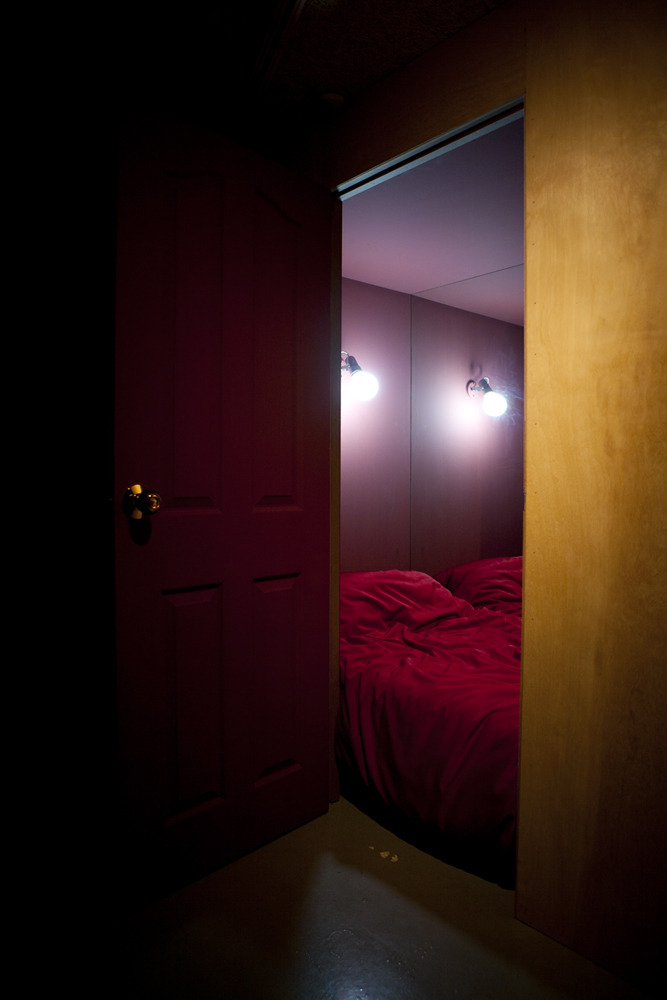
In their early solo exhibition 《Single Room for 2 People》(Ssamzie Space, Seoul, 2008), the duo addressed marriage as a relationship in which two separate individuals negotiate and adapt in order to form a shared community. Works such as Single room for two people(2008) and between a and A(2010) show how conversation, conflict, rules, and negotiation between two people can be translated into a work of art.
 
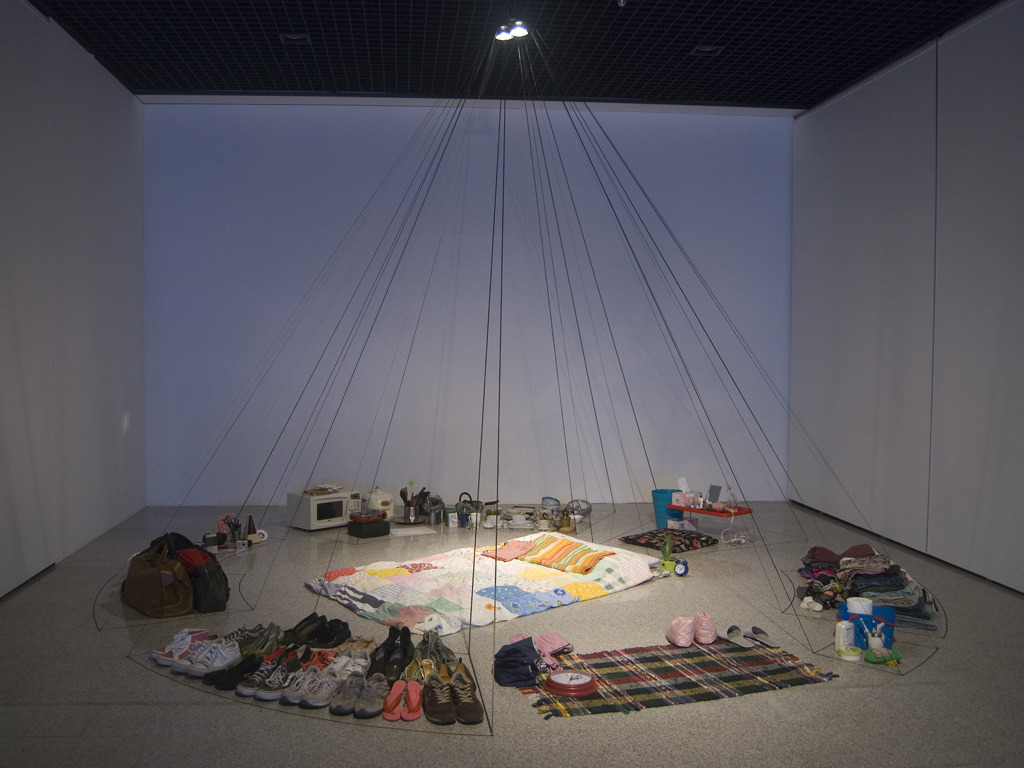
RohwaJeong’s concerns later expanded beyond private interpersonal relationships to the relations between everyday life and objects, center and periphery, inside and outside, the real and the image. The discovery of living(2010) arranges everyday household objects in a circle and connects the light from lamps with masking tape, turning the structure of ordinary life into an unfamiliar sculptural scene.

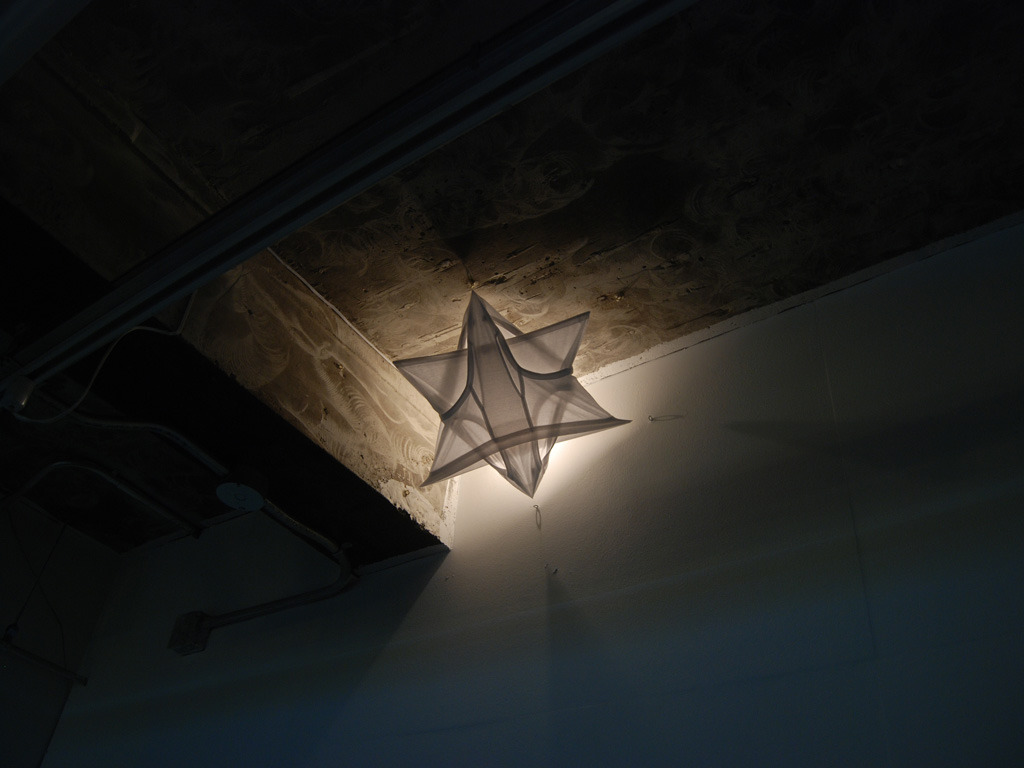
Wanna be happy every night…
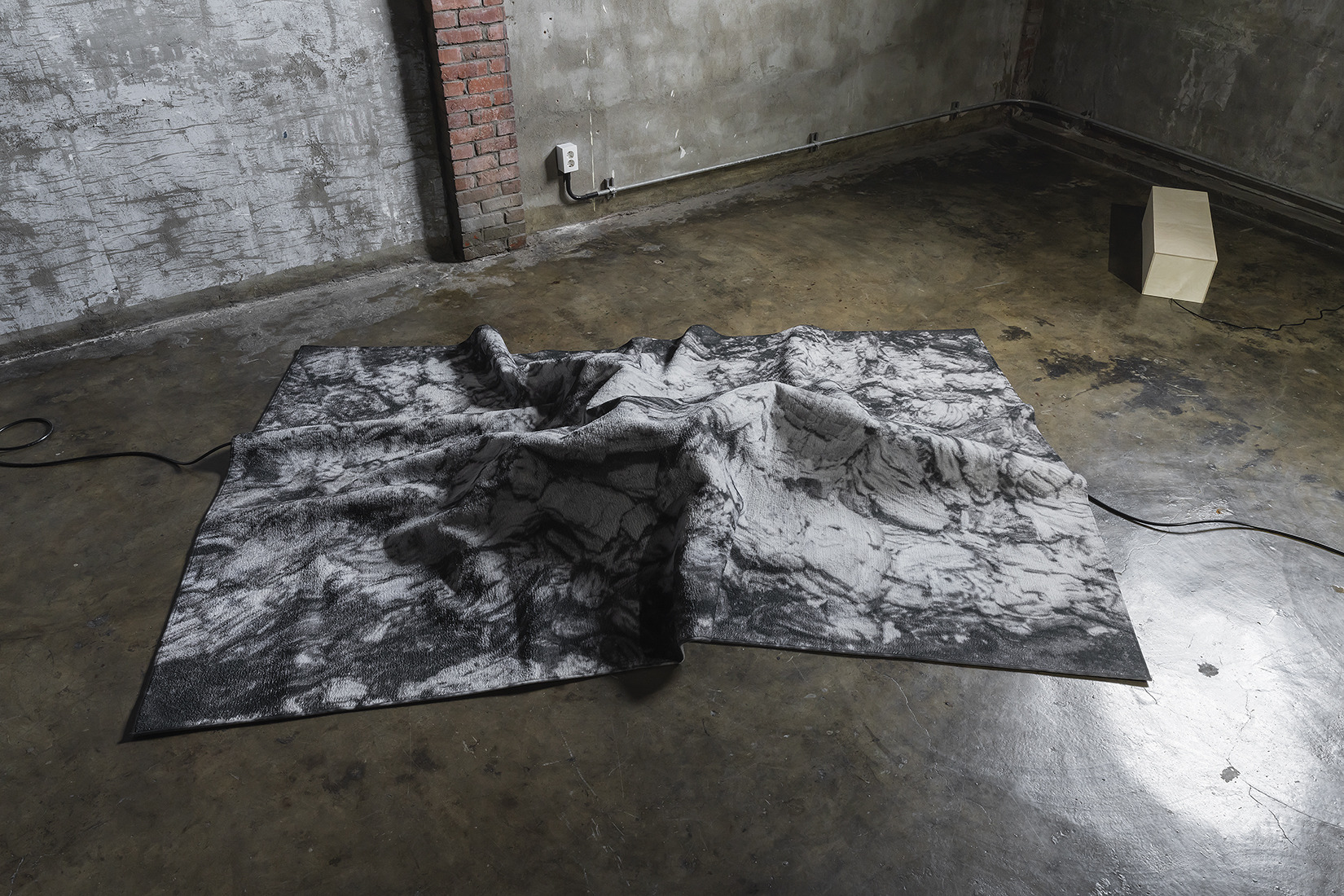
(2010) uses two pairs of underwear and light to create a star-shaped structure, transforming a minor and private object into something where desire and humor intersect. In 86 days packed(2010), the artists carried bags they had made themselves for 86 days, turning the dust, muddy water, and traces of movement accumulated on their surfaces into the work.

Here, relationship no longer remains only between people; it is generated among the artists’ bodies, routes of movement, surrounding environments, and the marks of time.
 
Through 《Within Arm’s Length》(Gallery Factory, Seoul, 2014), RohwaJeong began to deal more directly with the relations between the center and the periphery of an exhibition, the work and its process, and the front and back of an object. Rearview(2014) consists of two paintings in which each artist paints the back of the canvas being painted by the other, bringing what is usually hidden in an exhibition to the center of the image.

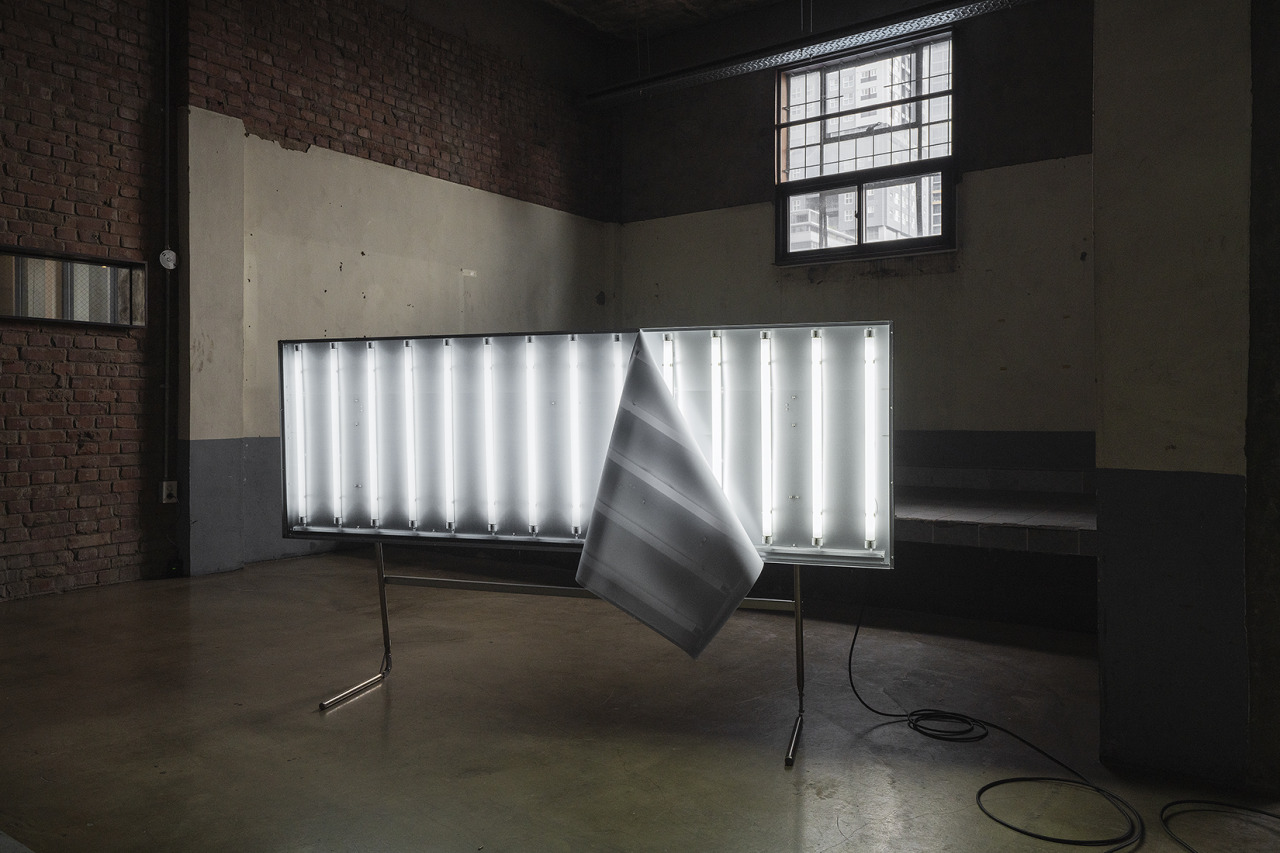
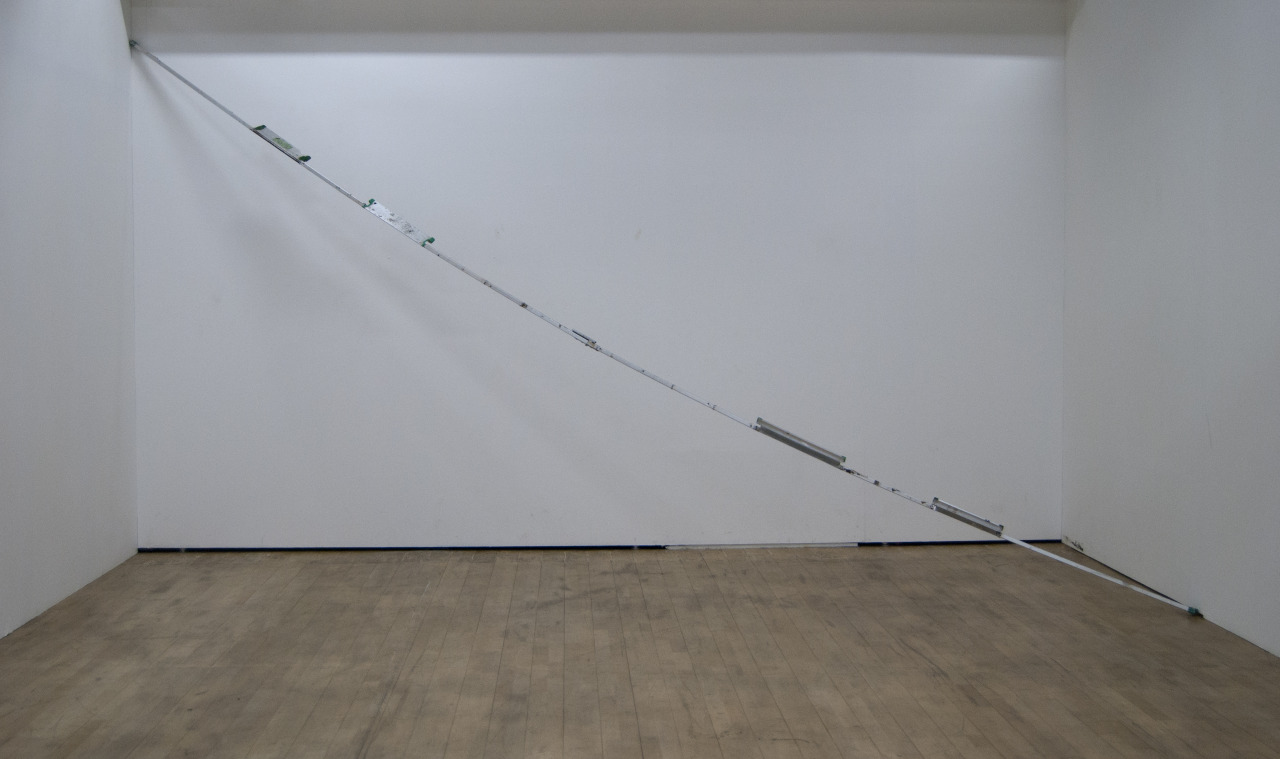
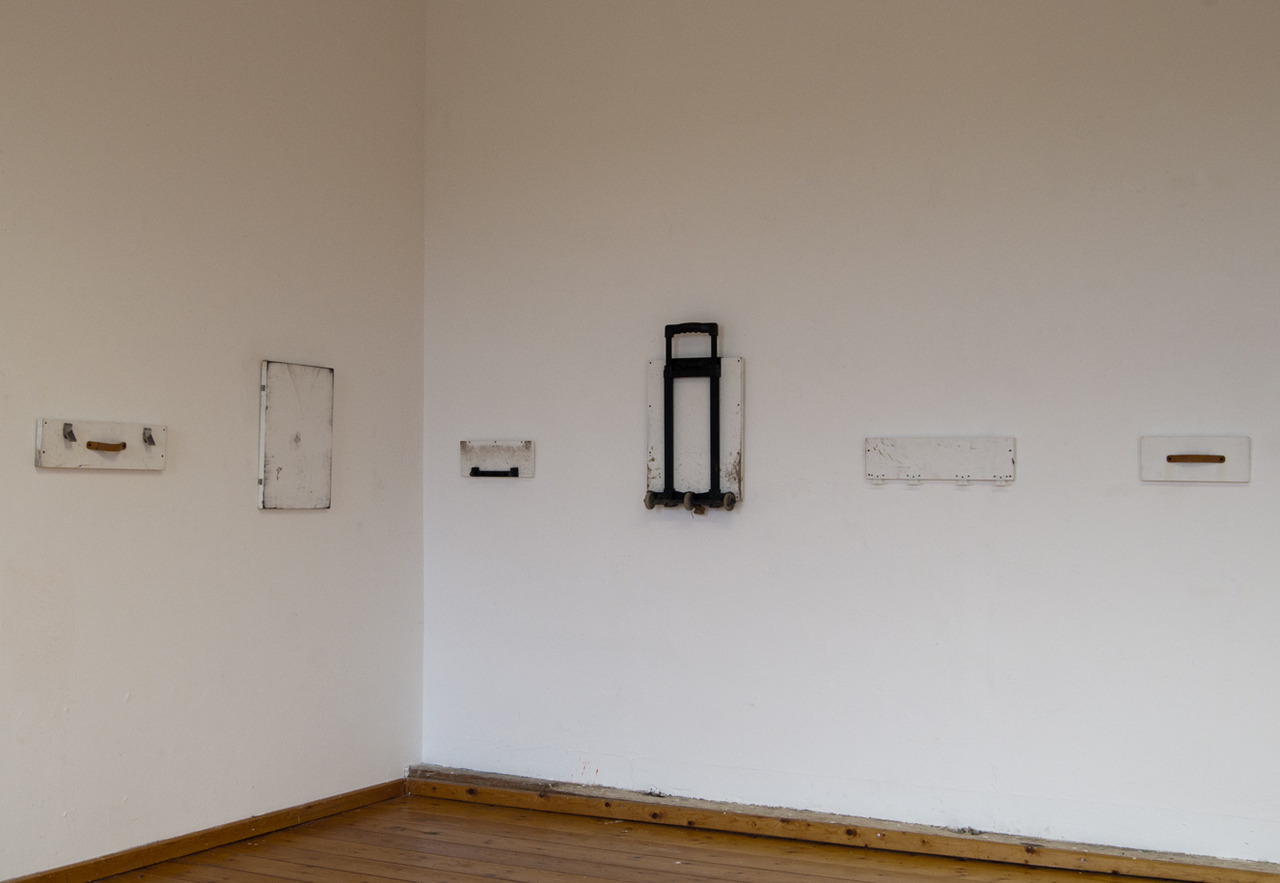
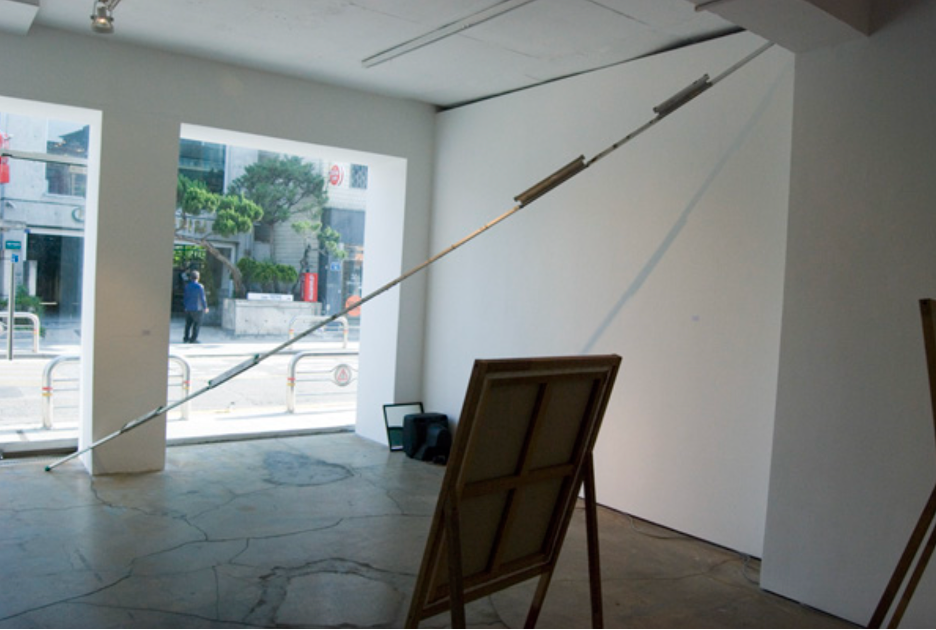
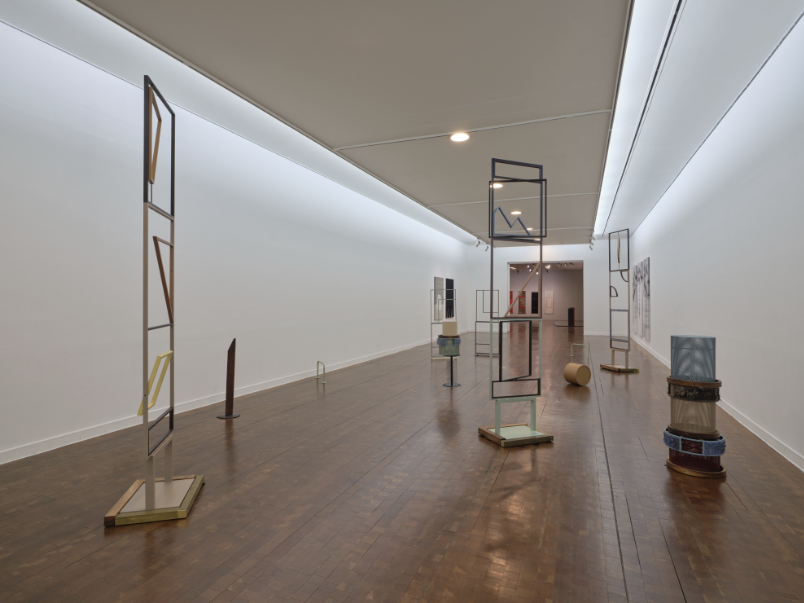
Doubled Distance(2014) reconstructs a ladder used as an installation tool at Gallery Factory into a long sculpture. As an object that originally existed to help install artworks becomes a work itself, the process and devices behind an exhibition are brought to the foreground. A Meticulous Operation(2014) also reveals the distance between artist and viewer, understanding and misunderstanding, planning and execution through an empty space and subtitled dialogue.

In this way, RohwaJeong does not explain relationship through a single answer, but shows how it is sensed through distance, displacement, and shifts in role.
 
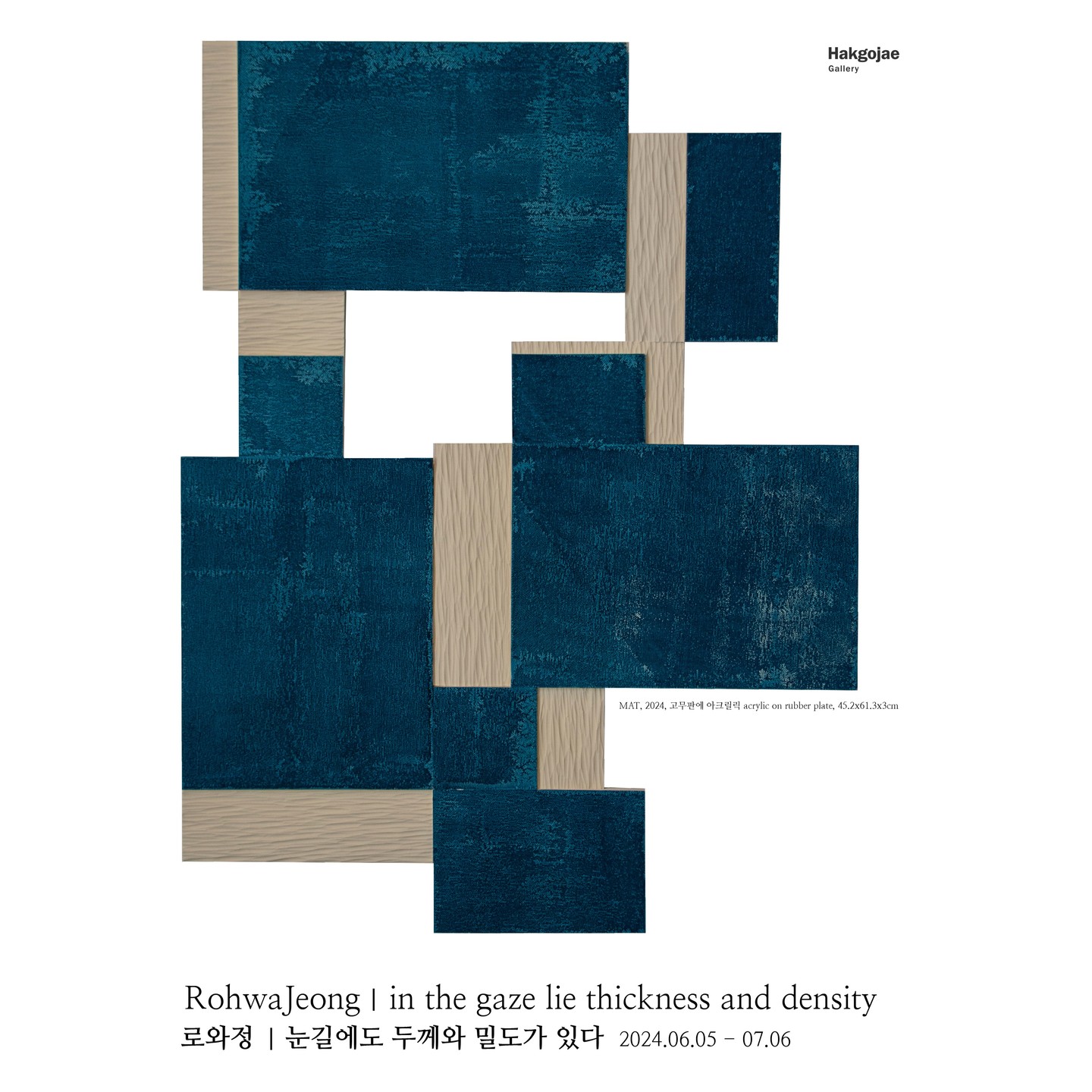
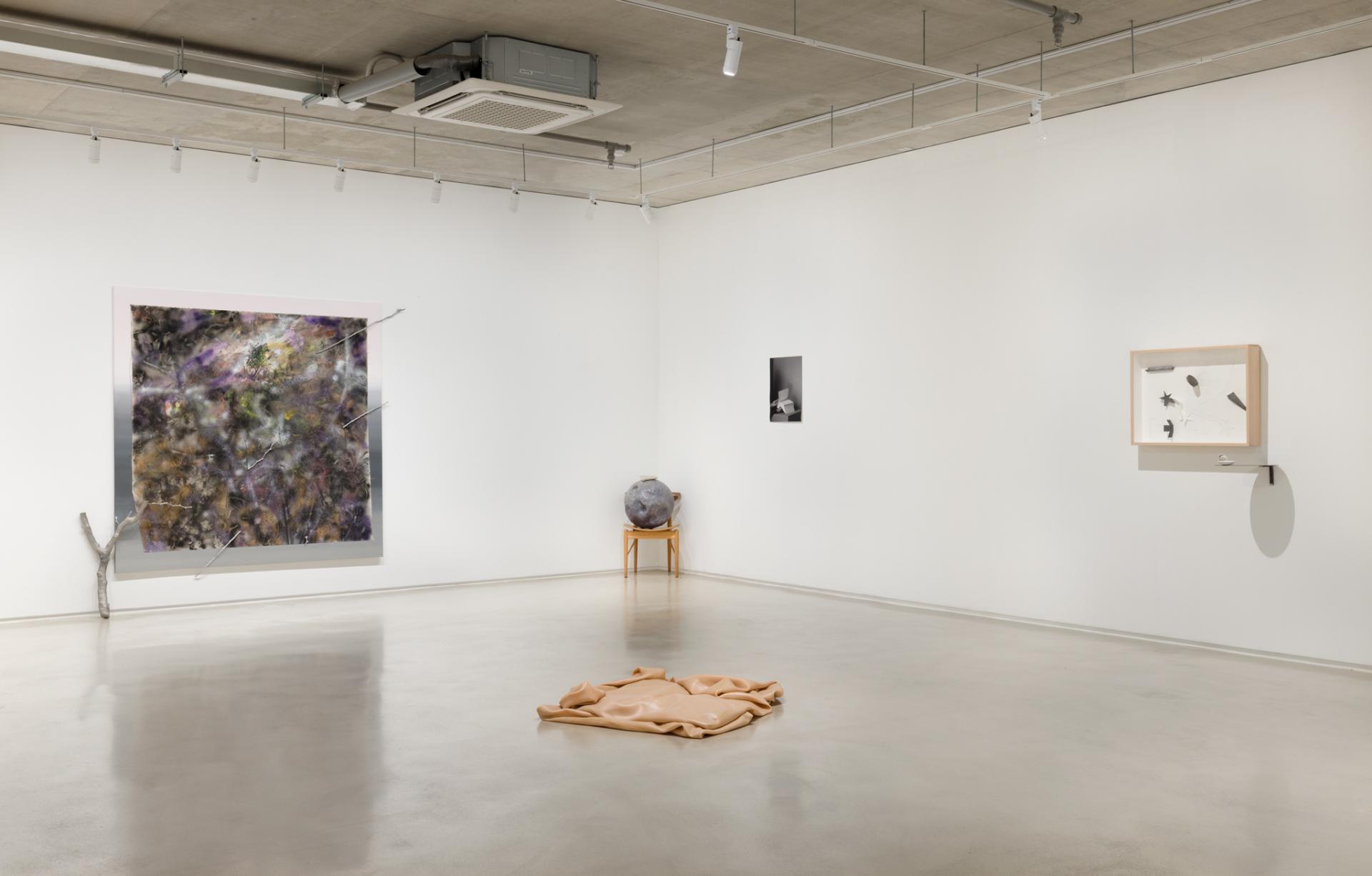
In recent works, RohwaJeong has extended the question of relationship into the fields of image, language, gaze, and interpretation. 《in the gaze lie thickness and density》(Hakgojae Gallery, Seoul, 2024) explores the possibilities of misunderstanding, delay, and metaphor that arise between image and text, rather than using one to fix or explain the other.

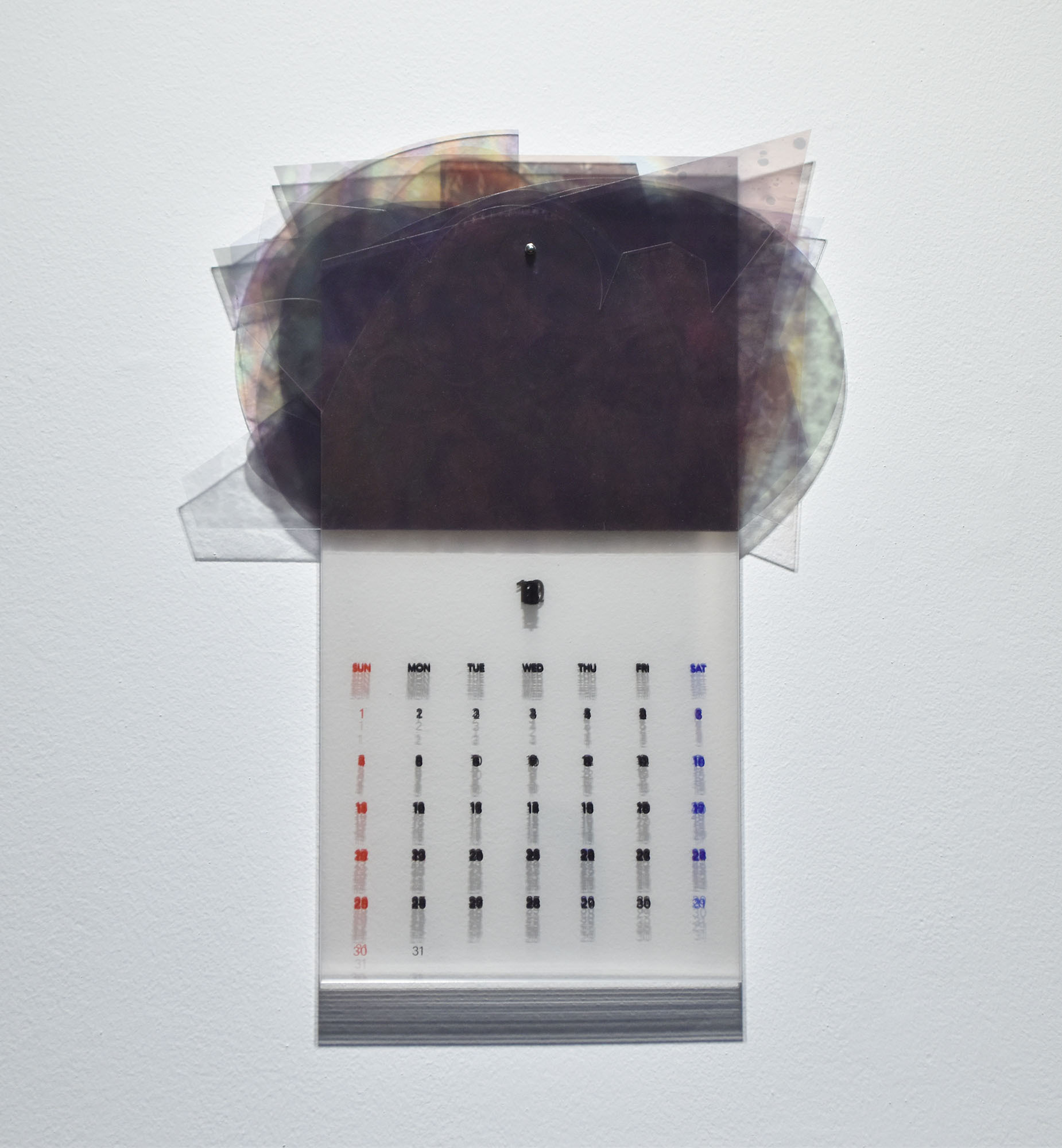
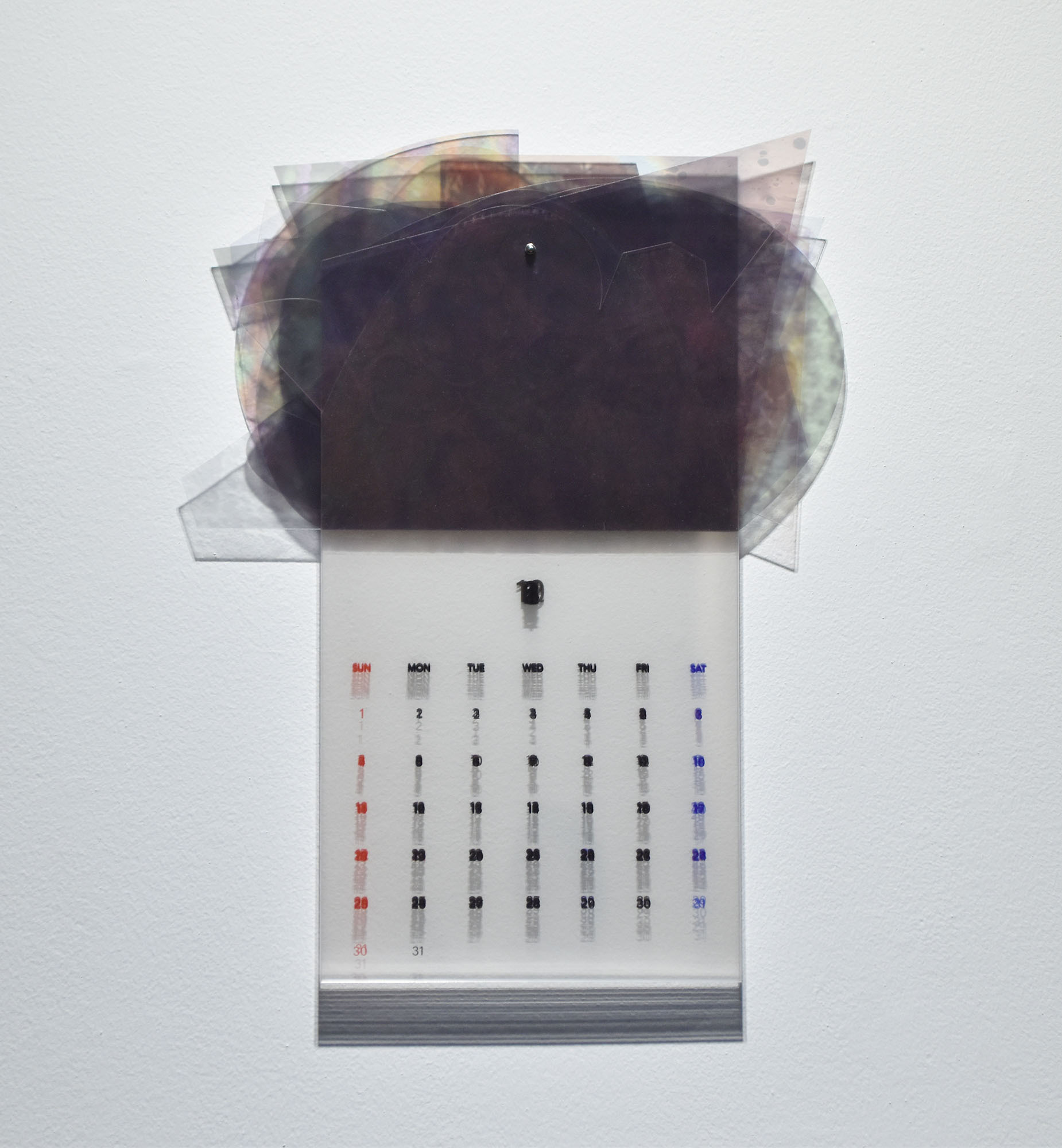
2184(2024) overlays a calendar for the year 2184 with cellular images, revealing how the calendar and language systems that operate as if they were truth for everyone are in fact incomplete and ambiguous. Curtain(2024) combines text with the folds of fabric, allowing meaning to move between image and object without being fixed as one thing.

In 《yesterday’s surprise》(The WilloW, Seoul, 2025), the duo turns to the relation between “me” and another “me,” the other, addressing connection and disconnection through the recurring motif of electrical wires. RohwaJeong’s work has thus expanded from the relation between two people to complex structures connecting objects and spaces, time and exhibition, language and image, self and other.

Style & Contents

RohwaJeong’s work moves across painting, installation, video, objects, text, sculpture, kinetic devices, and the structure of the exhibition itself, each time finding a new form appropriate to the question at hand. For the duo, medium is not a tool for repeating a recognizable style, but a device that allows relationships to appear differently.

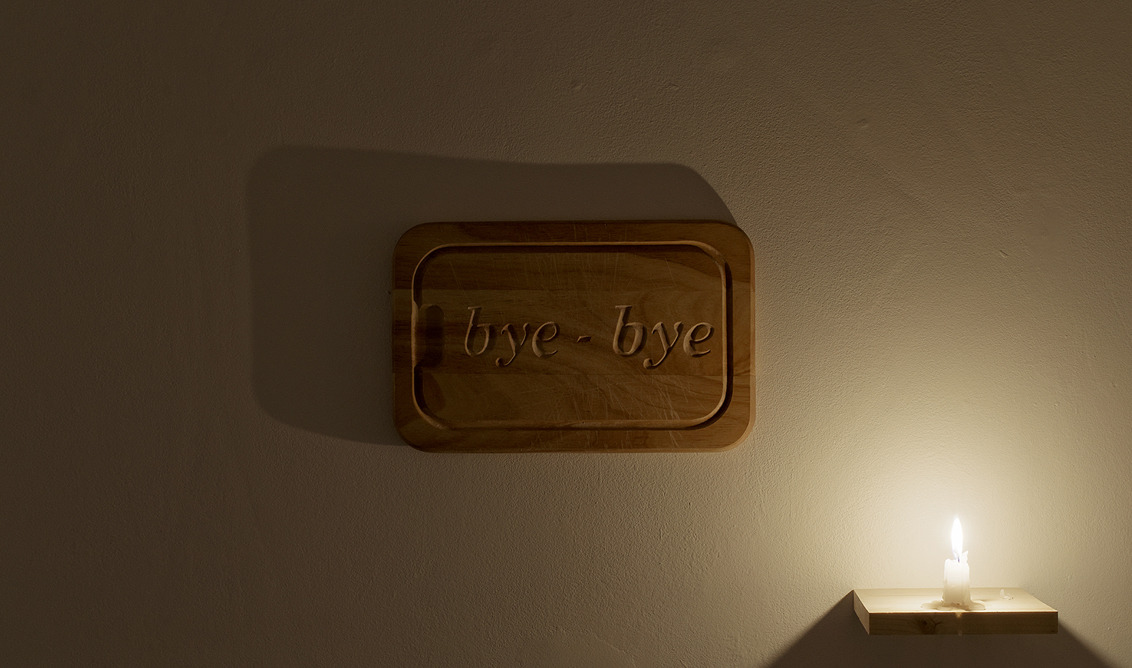
The discovery of living uses masking tape, personal objects, and light; Wanna be happy every night… uses underwear and lighting; and Bye - Bye(2014) engraves a farewell phrase onto a well-used wooden cutting board.

Everyday objects become a sculptural language with new meaning at the moment when they lose their function or are relocated. RohwaJeong’s forms often appear light and humorous, but within them lies a precise inquiry into the role and value of objects, use and discard, closeness and distance.
 
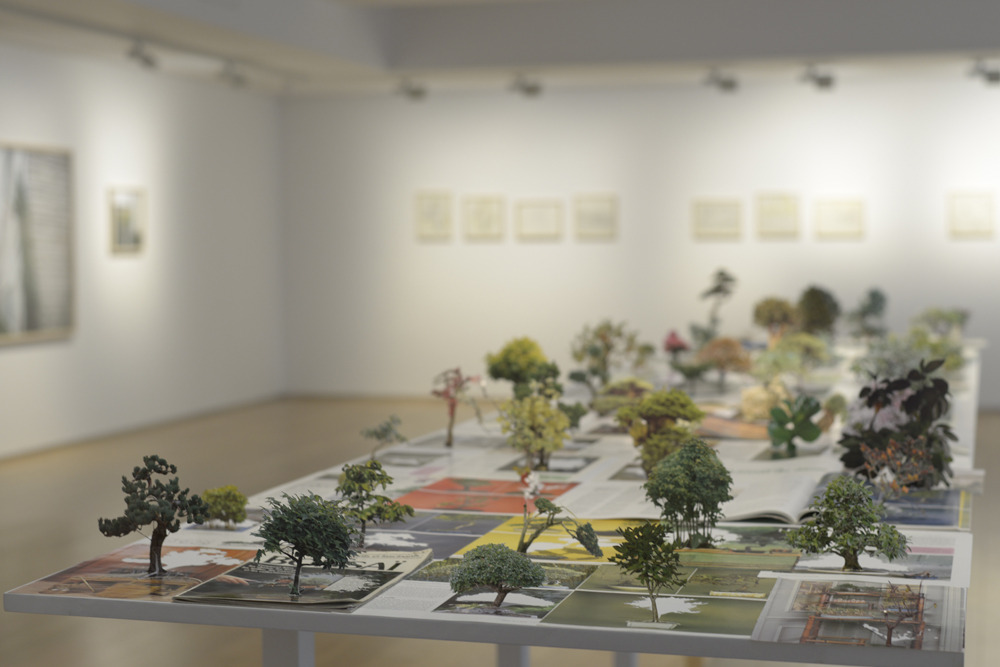
Their way of dealing with the relationship between image and object is also an important formal characteristic. Souvenir of somewhere (tree)(2013) cuts out tree images printed in second-hand magazines and stands them upright, making trees that had existed as flat images appear again like a three-dimensional thicket.

Souvenir of somewhere (frame)
(2013) leaves only parts of images from old magazines and covers the rest with white acrylic, blurring the boundaries between images. In these works, RohwaJeong does not treat images simply as things to be looked at. Images are cut, raised, covered, and rearranged so that they behave like objects, while objects are read like images. This process unsettles the hierarchy between image and reality, flatness and volume, collection and reconstruction.
 
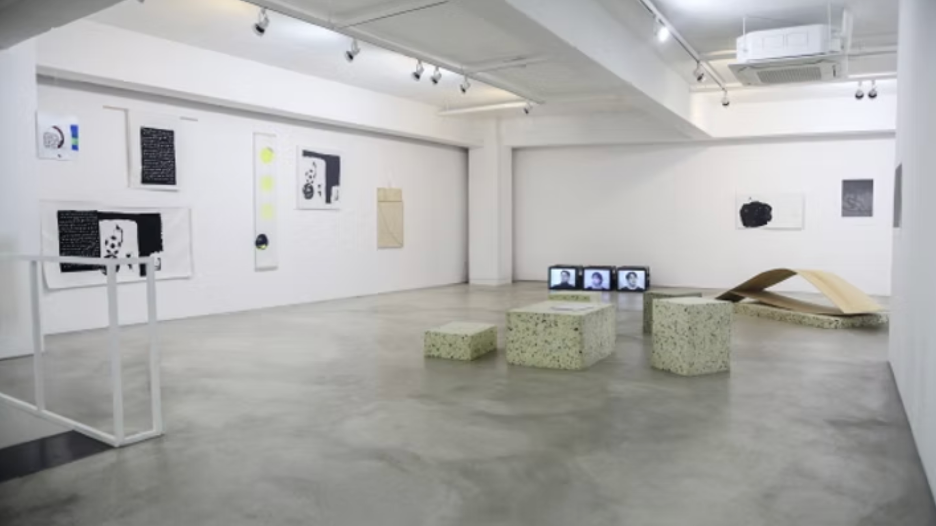
In 《Sunday is Monday, Monday is Sunday》(Space Willing N Dealing, Seoul, 2018), the exhibition itself becomes a temporal structure. The exhibition is organized around three temporal axes—A, B, and C—and each stage functions both as a process and as a result at a particular moment. Depending on when they visit, viewers encounter different “presents,” and the exhibition is experienced not as a completed result but as a state in continuous change.

Here, RohwaJeong does not position the artist only as a producer, but places the viewer as a co-producer within the variable of time. This method resists the convention that an exhibition must converge into a fixed result. Process, chance, the timing of the viewer’s visit, and changes in the space all become elements composing the work.
 
After 2024, language, image, signs, and devices emerge as more central forms in RohwaJeong’s work. 2184 overlaps a calendar and cellular images through UV print on acrylic, creating a structure in which numbers and images of life blur one another. Curtain uses velvet curtain, acrylic, brass tube, and brass chain to turn text into a folded and suspended object.

untitled(19May2024)
(2024) functions both as a support for a video documenting the making of a structure and as the subject of that video, allowing process and result, support and subject, to circulate through one another. salt of the earth(2024) uses a rotating motor, aluminum pipe, salt, broom, and timer to create an image that continuously changes as salt falls and is swept away.

undecidable
(2024) reverses the status of words such as “flatness” and “facingness” through volume and flatness, showing that the meaning indicated by language and the actual state of matter do not necessarily coincide. RohwaJeong’s forms therefore do not explain concepts; they allow viewers to experience the unstable ways in which concepts operate.

Topography & Continuity

The distinctiveness of RohwaJeong lies in the way the duo speaks about “relationship” without reducing it to sentimental narrative or a clear message. Their work begins from the structure of collaboration between two people, but it does not close that relationship into a private story. Rather, through the processes of persuasion, debate, negotiation, and misunderstanding between the two, they continually unsettle the structures between center and periphery, process and result, language and image, subject and object.

Compared with other artists working with installation and conceptual methods, RohwaJeong’s work does not operate only as heavy or dry concept. Using familiar objects such as underwear, cutting boards, toilet paper cores, ladders, electrical wires, curtains, and salt, they change the position and relation of those objects to create new scenes of thought. Humor, black comedy, and poetic detour keep their practice from hardening into overly rigid conceptual art.
 
Tracing the development of their practice, RohwaJeong has moved from human and communal relationships to the roles of objects, the position of the periphery, the process and temporality of exhibitions, the mismatch between language and image, and the possibility of connection with the other. If Single room for two people and between a and A revealed the actual relationship and rules between the two artists, 86 days packed and The discovery of living brought surrounding environments and everyday objects into the field of relationship.

《Within Arm’s Length》 moved the reverse side of the exhibition and its installation tools to the center, while 《Sunday is Monday, Monday is Sunday》 showed that an exhibition is not a fixed result but a process that changes over time. 《in the gaze lie thickness and density》 and 《yesterday’s surprise》 address how relationships are always delayed, displaced, and newly connected through language, images, signs, and wires.
 
RohwaJeong occupies a position within conceptual practice that addresses relationships and structures, while also retaining a strong sense of everyday life. Even when dealing with complex philosophical questions, their starting points are often nearby objects and minor scenes. Rather than repeatedly adhering to one theme, the duo studies anew and selects different media according to each situation and environment.

As a result, RohwaJeong’s work appears in different forms each time, yet it consistently maintains an attitude of observing the distance and reversal between two terms, as well as the misunderstandings and possibilities that emerge between them. Their sustained axis lies in valuing unpredictable processes over fixed results, interpretations that open in multiple directions over a single reading, and active viewer participation over passive viewing.

RohwaJeong’s practice is likely to continue not by closing itself into a single conclusion, but by repeatedly experimenting with the gaps between relationship and image, language and object within changing social conditions.

Works of Art

Art as an Open Structure for Interpretation and Misreading

Articles

Exhibitions

Activities