Fragile Air - K-ARTIST

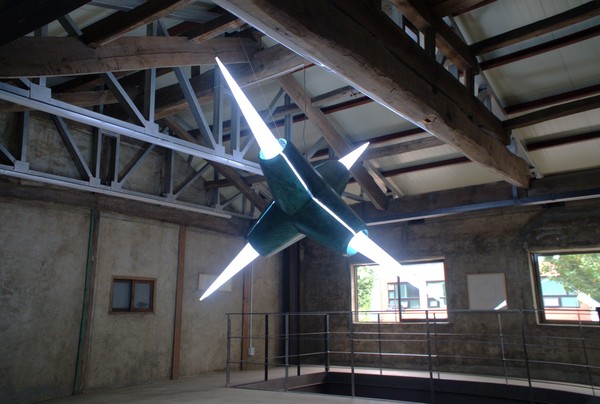
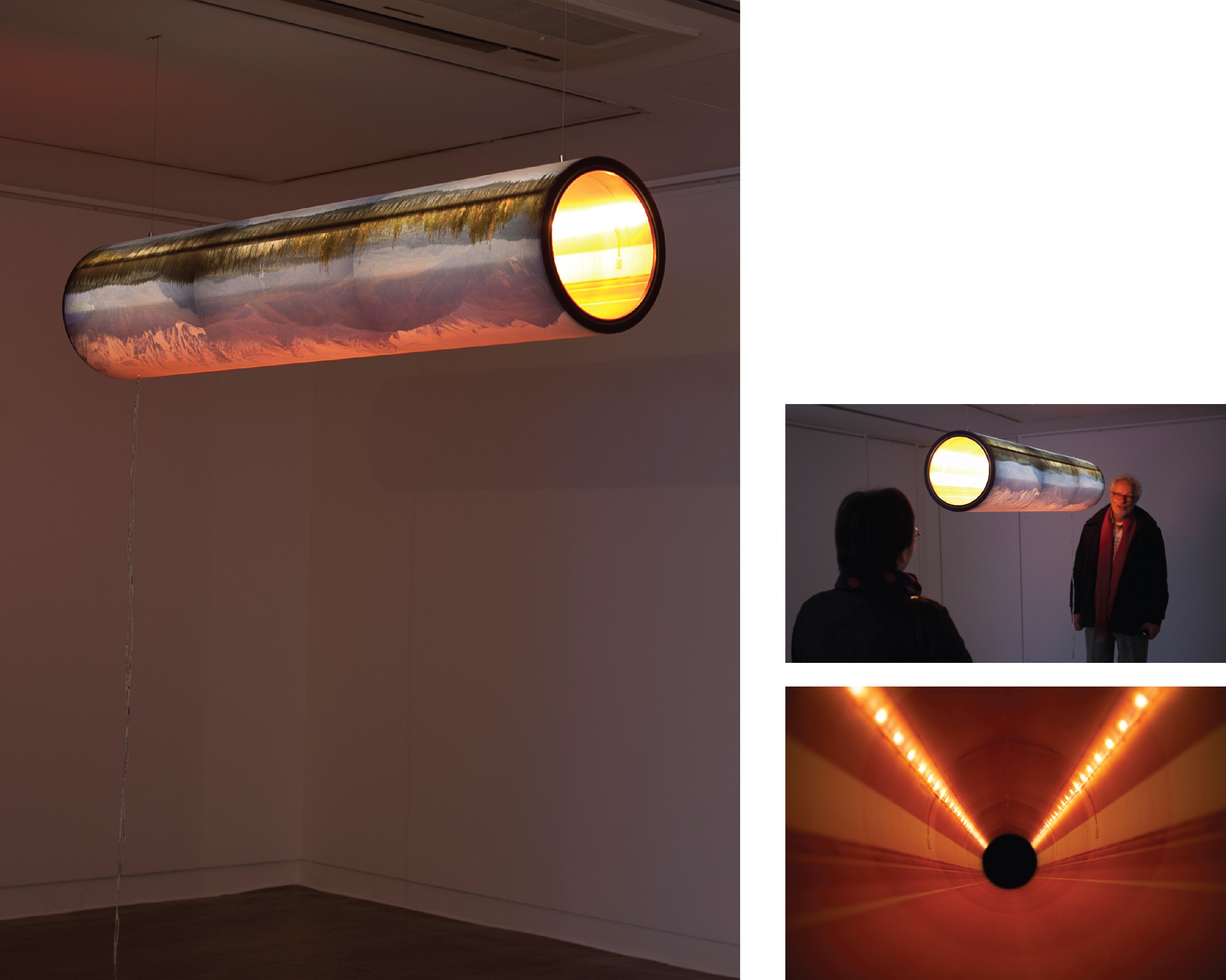
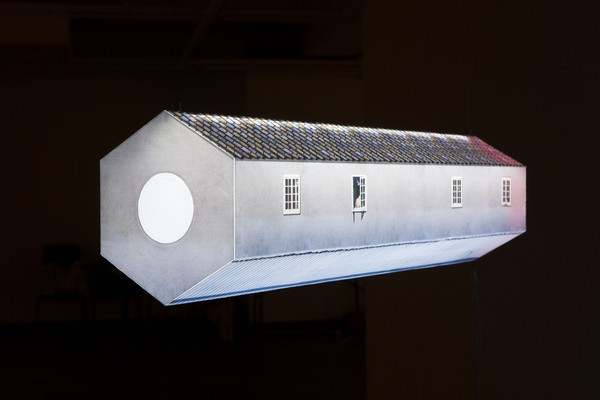
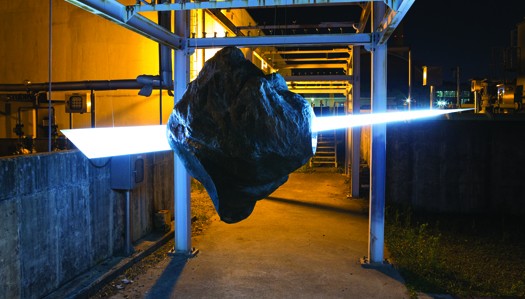
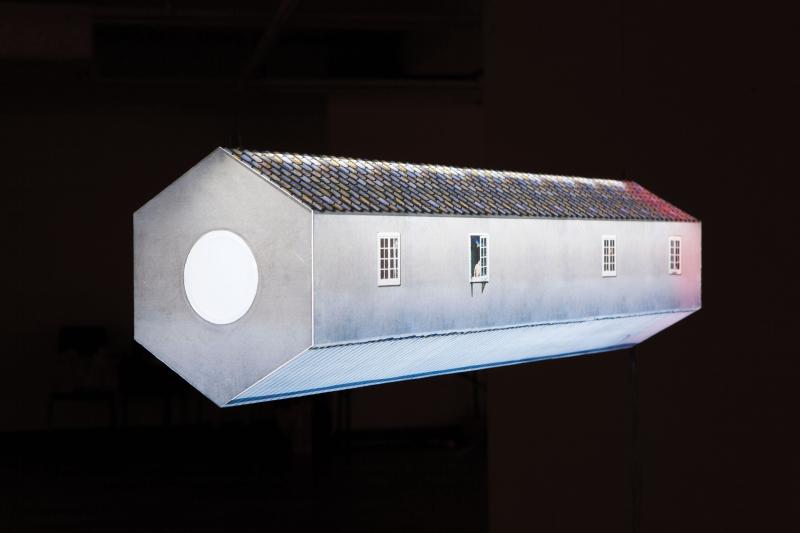
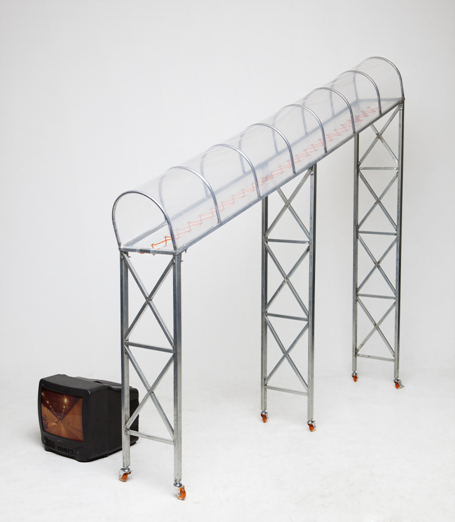
Fragile Air

2014
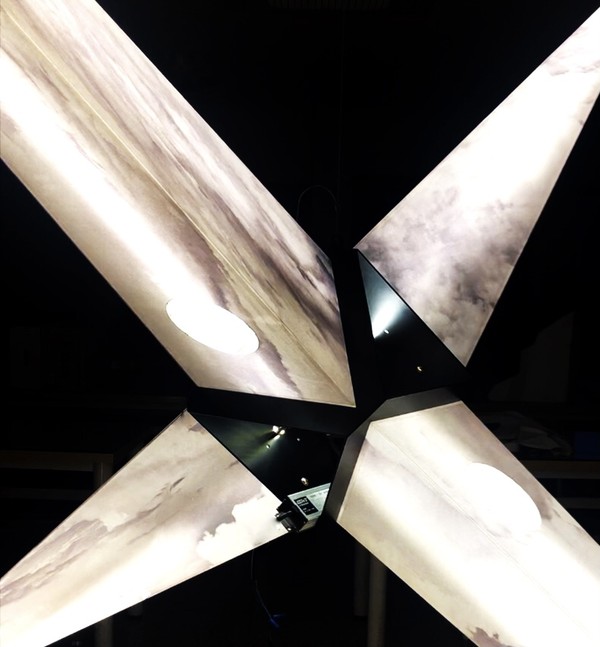
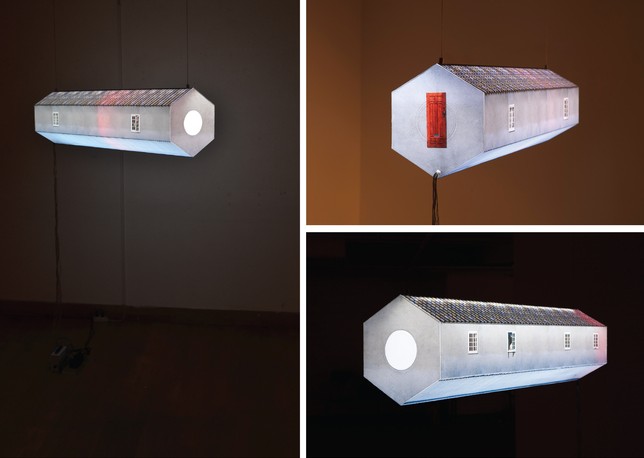
Video, fabric, steel
60 x 240 x 57 cm
About The Work

Min Jin Young takes childhood memories and ordinary, worn-out things as points of departure, continuously exploring the relationship between personal memory and the realities of the present. Her childhood experiences have served as an emotional foundation for her practice, while structures that are easily shaken and transformed, such as tents and greenhouses, recur as devices that continually evoke these memories.

Her practice begins with childhood memories and the place of the “home.” For the artist, home is an ambivalent space that represents both protection and security, while also accumulating anxiety and wounds.

By revisiting memories surrounding home and family, she has explored how emotions retained within the individual leave traces and take shape in spaces and objects. Here, memory is less a means of representing the past than a passage through which she comes to understand herself and the world in the present.

As her practice has developed, these personal memories have expanded into a broader inquiry into the structures of family and society. The family is not only a space where the most intimate relationships are formed, but also the primary unit through which social values and norms are first conveyed to the individual.

Min examines anxiety and the desire for recognition formed within the home and family, as well as issues of economic conditions and social roles, drawing attention to the fact that personal wounds do not arise solely from individual experience.

The core that runs through Min Jin Young’s practice can be understood as a belief in the possibility of “compassion.” The artist places importance on an attitude that does not consume the suffering of others as an object of momentary sympathy, but instead looks together at the conditions and structures from which that suffering arises.

Min’s practice lies in a perspective that refuses to turn away from the violence of the world and human vulnerability, while continuing to seek the dignity that does not disappear within them and the human capacity to care for one another.

Solo Exhibitions (Brief)

Min Jin Young has held major solo exhibitions at Shinhan Gallery in 2012, OCI Museum of Art in 2014, and CHA Studio in 2021.

Group Exhibitions (Brief)

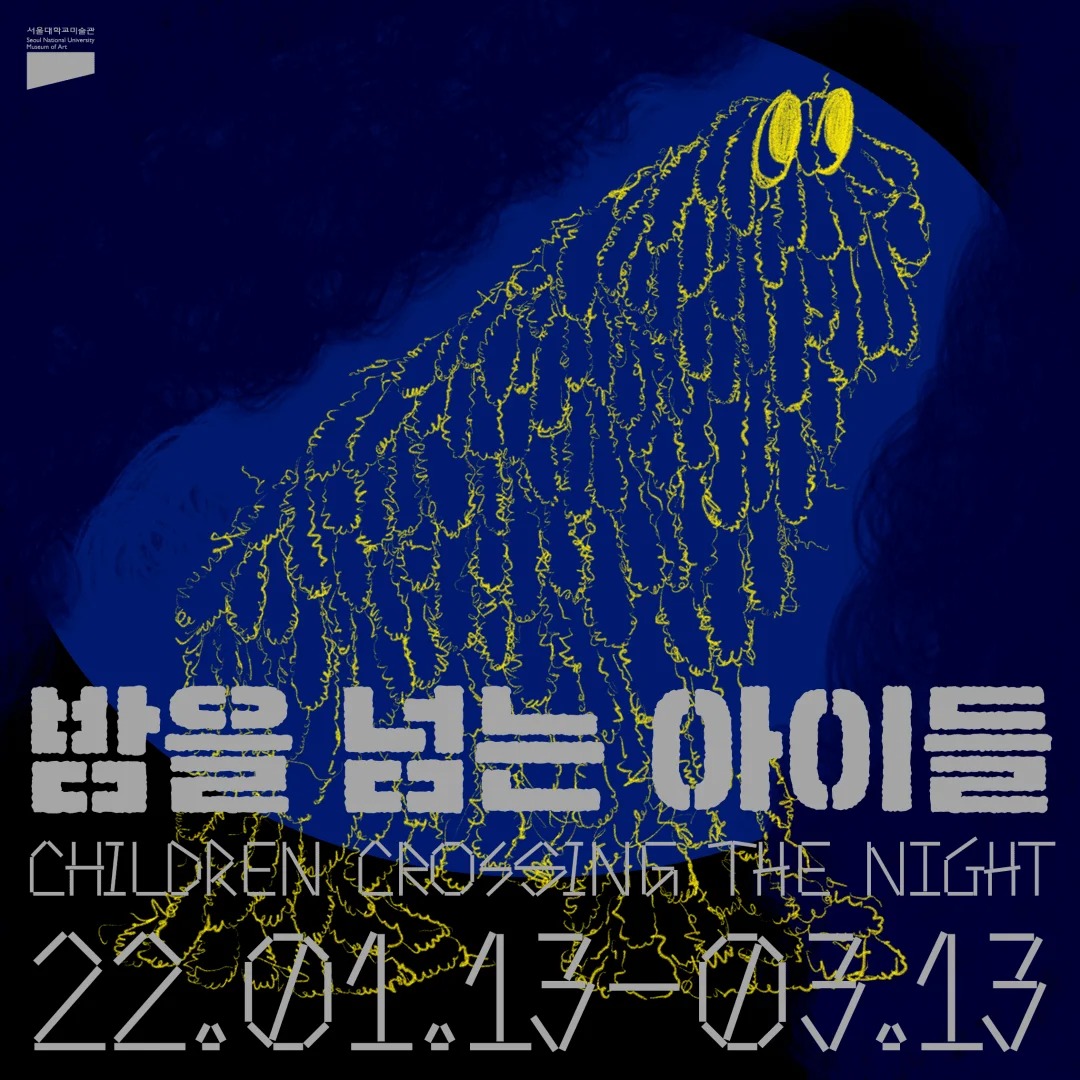
Min Jin Young has participated in major group exhibitions at Gyeonggi Museum of Modern Art in 2013, Buk-Seoul Museum of Art in 2014, OCI Museum of Art and Savina Museum of Contemporary Art in 2015, and Seoul National University Museum of Art in 2022. 

Awards (Selected)

Min Jin Young was selected for the 33rd JoongAng Fine Arts Prize in 2011.

Residencies (Selected)

Min Jin Young participated in the Nanji Art Studio residency in 2014.

Collections (Selected)

Min Jin Young’s work is held in the collection of the Seoul Museum of Art.

Works of Art

Where Personal Memory Meets Reality

Originality & Identity

Min Jin Young’s practice begins with childhood memories and the place of the “home.” For the artist, the home is an ambivalent space that symbolizes protection and stability while also accumulating anxiety and wounds. Her childhood experiences have long formed the emotional foundation of her work, and easily shaken and transformable structures such as tents and greenhouses repeatedly evoke these memories.

By revisiting memories surrounding the home and family, the artist has explored how emotions that remain within the individual take shape in spaces and objects. Memory is not something used to reproduce the past, but a place one must pass through in order to understand the self and the world in the present.

As her practice developed, these personal memories expanded into a broader concern with the structures of family and society. The family is both the site of the most intimate relationships and the first unit through which social values and norms are transmitted to the individual.

Min Jin Young examines anxiety formed within the home and family, the desire for recognition, and questions of economic conditions and assigned roles, drawing attention to the fact that individual wounds do not arise solely from the individual. In particular, she has persistently questioned a reality in which human value is reduced to economic capacity and achievement within social structures that prioritize competition and efficiency.

In this context, childhood memory moves beyond private narrative and becomes a point of departure for examining how a person is formed as a social being and the vulnerabilities that emerge in that process.

The concepts at the center of her recent work are “vulnerability” and “compassion.” In the 'Fragility, Greatness' series, the artist looks at people who continue living and create meaning for themselves under different conditions. While acknowledging that not everyone is given the same starting point, she locates human dignity in the attitude of enduring one’s circumstances and moving forward little by little.

Here, vulnerability does not signify deficiency or defeat. The very condition of being capable of being shaken and wounded creates the possibility of sensing the suffering of others and becoming connected to them. The greatness the artist speaks of likewise emerges not so much through exceptional achievement as through the process of continuing one’s life without giving up.

From this perspective, the core that runs through Min Jin Young’s practice can be understood as a belief in the possibility of “compassion.” The artist places importance on an attitude that does not consume the suffering of others as an object of momentary sympathy, but instead looks together at the conditions and structures from which that suffering arises.

This is also connected to the way her work, which began with personal wounds, has expanded toward socially vulnerable people and universal forms of human suffering. Min Jin Young’s practice lies in a perspective that refuses to turn away from the violence of the world and human vulnerability, while continuing to seek the dignity that does not disappear within them and the human capacity to care for one another.

Style & Contents

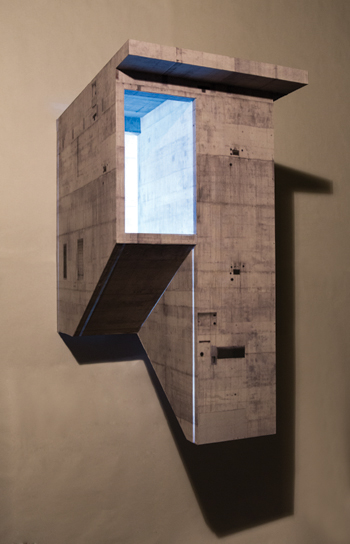
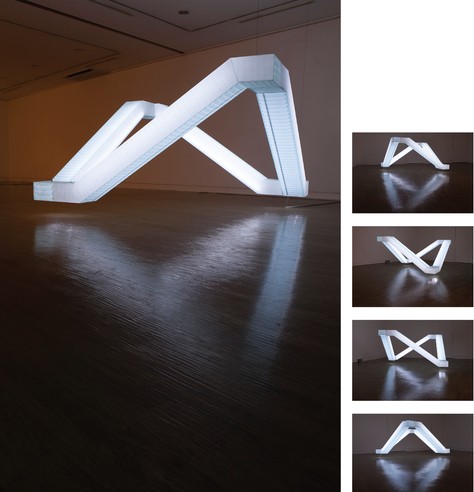
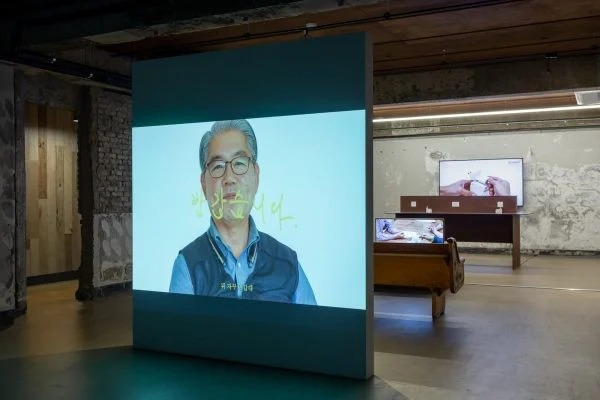
Min Jin Young approaches installation works and the spaces in which they are situated as an expanded pictorial field. She treats the scale and structure of the work, the viewer’s movement, and even the position and intensity of light as elements that constitute space, exploring how thought can be sensed within an actual site.

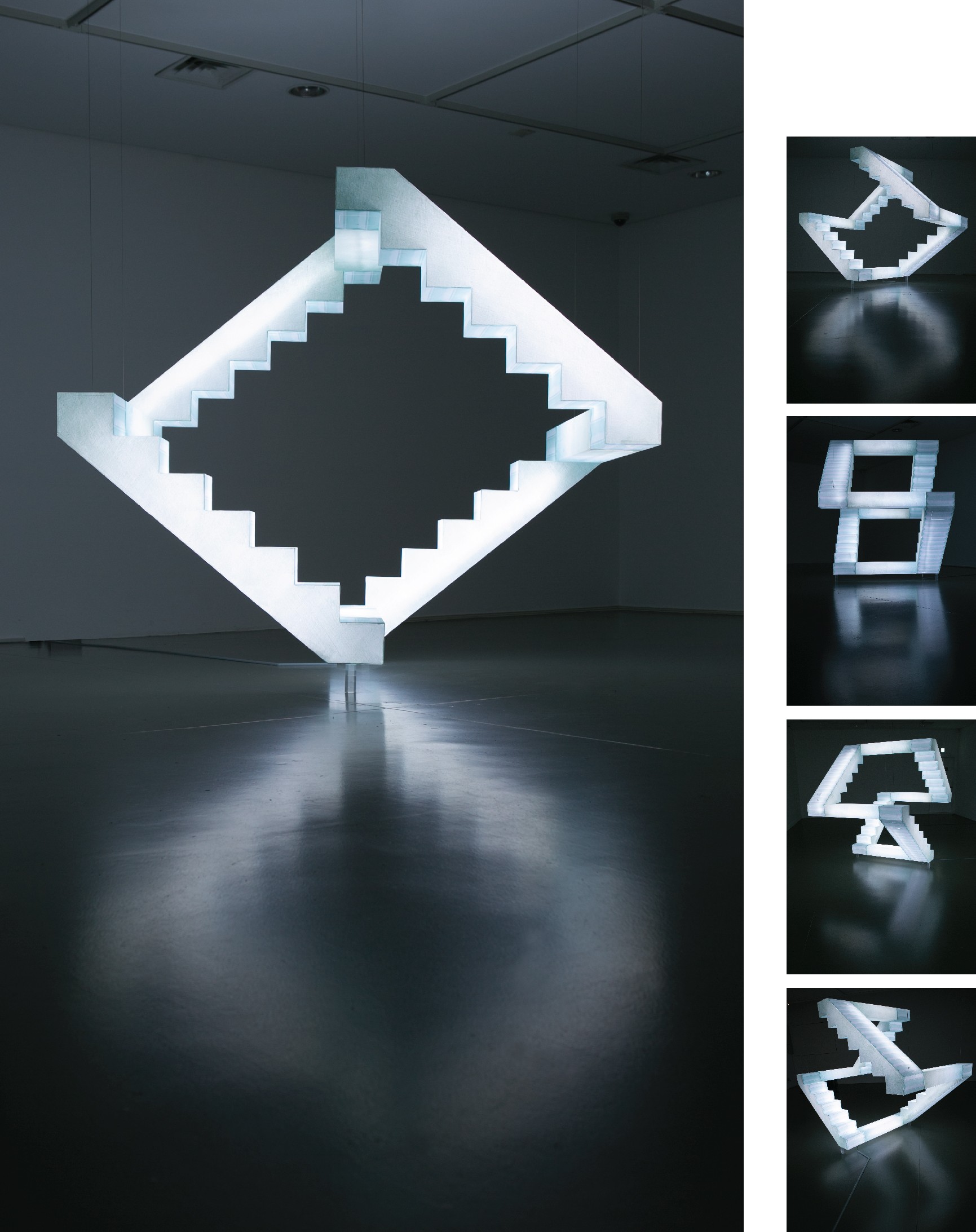
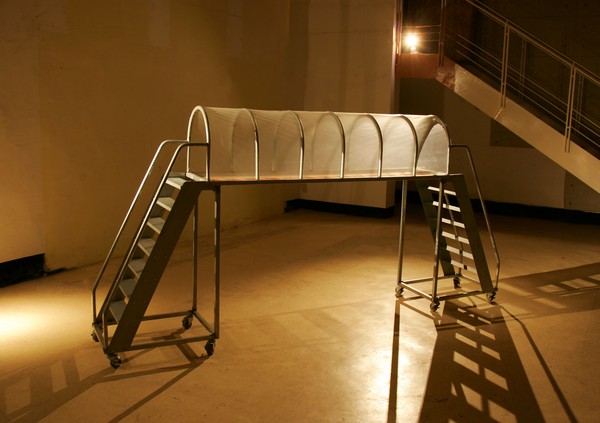
The recurring appearance of spatial forms such as houses, rooms, stairs, and tunnels—spaces through which the human body passes or in which it remains—has been closely connected to this concern since her early practice.

Rather than simply observing the work from the outside, viewers walk around the structures and experience the relationship between interior and exterior, physically encountering sensations of instability and tension, protection and isolation.

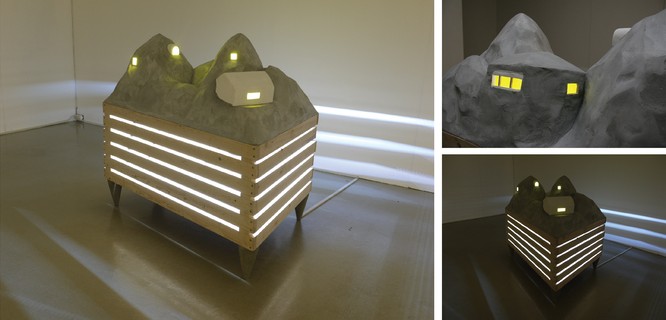
Temporary and mutable architectural structures such as tents, greenhouses, and skeletal frames frequently appear in the artist’s installations. In the 'Reading Home' series in particular, the house is not presented as a solid, enclosed structure, but takes the form of a thin framework that appears vulnerable to shaking or collapse.

Such forms reveal both the protective image associated with the home and the anxiety latent within it. Unfixed structures, empty interiors, and recurring frames visualize an emotional instability rooted in childhood memories without directly reproducing a specific personal experience. As a result, the work leaves room for viewers to overlay their own memories and emotions onto it.

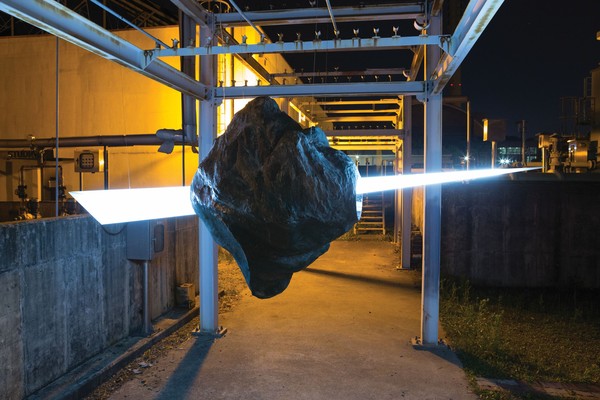
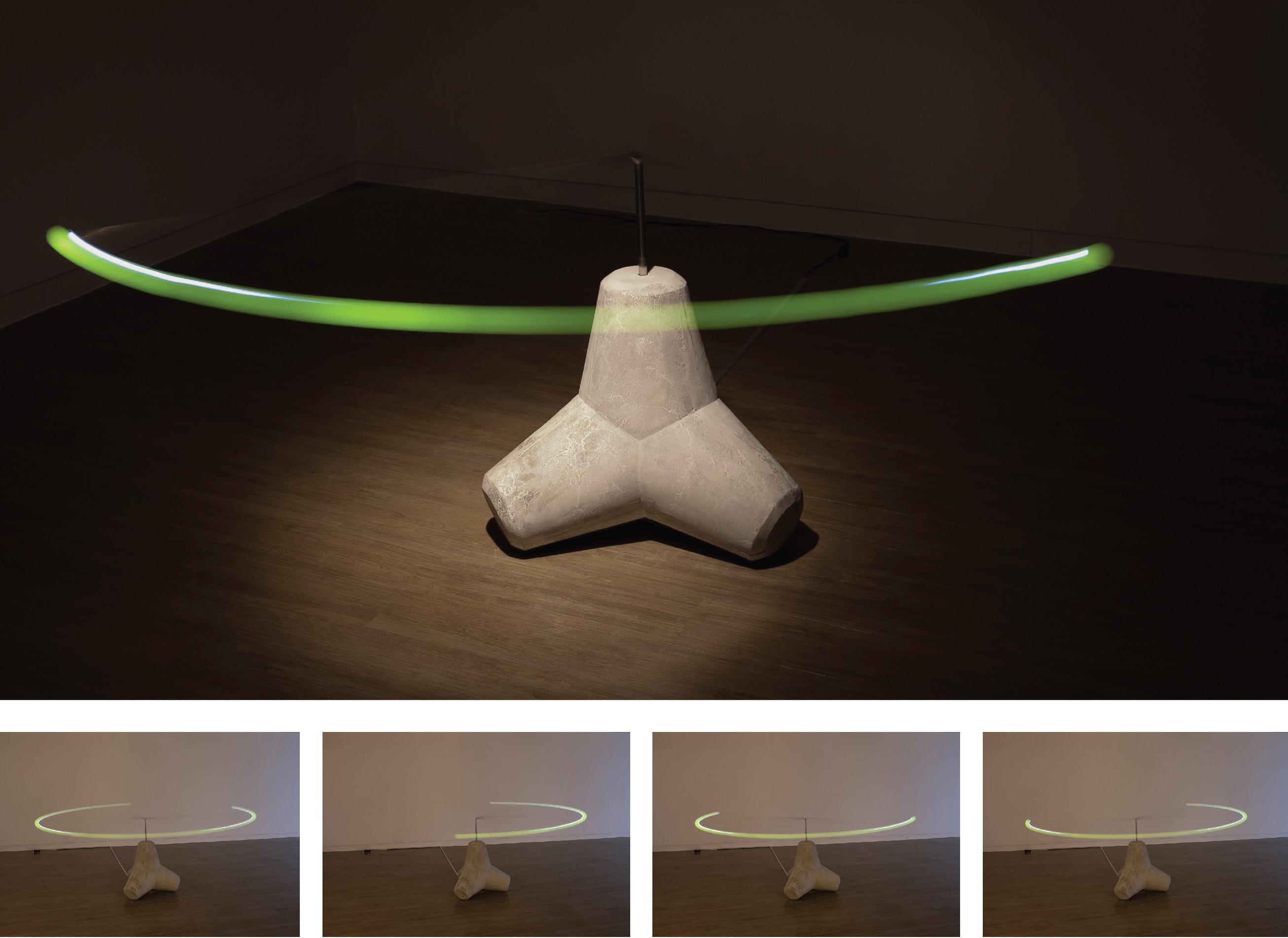
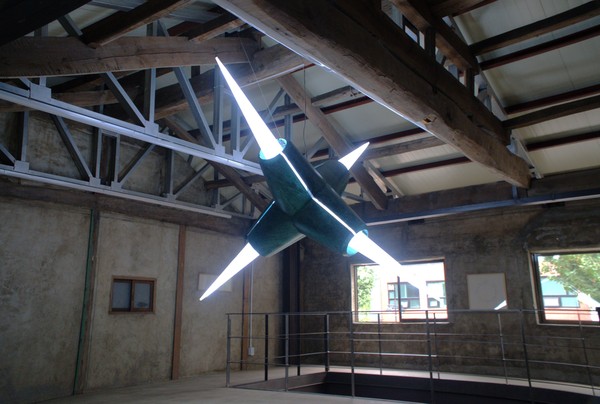
The choice of materials is also closely intertwined with the conceptual concerns of the work. Min Jin Young has employed a wide range of media, including cement, acrylic, resin, fabric, motors, LEDs, video, and two-dimensional works, without fixing any particular material as a consistent formal language.

The weight and rough physicality of cement, for instance, can evoke an unyielding reality or suppressed memories, while light functions as a sensation that reveals what lies within or offers a subtle sense of direction in darkness. By bringing together contrasting qualities—solid materials and immaterial light, unstable structures and mechanical movement—the artist transforms human vulnerability and tension into material states.

For Min Jin Young, shifts in medium do not signify breaks within her practice. Acknowledging that thought changes through time and experience, she has continually selected forms capable of most effectively conveying the questions of each period.

From works addressing personal memory and the home, to video works documenting the wounds of children, and more recent installations concerned with human vulnerability and dignity, her forms have continued to evolve, while her tendency to avoid overexplaining emotions or presenting narratives too directly has remained consistent.

By maintaining a certain distance among symbols, space, and materials, she begins from her own experience while leaving interpretation open to the viewer, a method that has become a defining formal characteristic of her practice.


Topography & Continuity

Min Jin Young’s practice has developed since the early 2010s around installations that bring together personal memory and space. Through solo and group exhibitions at venues such as Shinhan Gallery, Gyeonggi Museum of Modern Art, Buk-Seoul Museum of Art, and OCI Museum of Art, she has consistently presented works that interpret the home, family, and childhood memories through spatial structures and light.

In these works, the home functioned both as a site containing personal history and as a structure that revealed human psychology and relationships. Her approach of beginning with private memory and creating spaces into which viewers can project their own experiences became an important foundation for understanding her later practice.

The artist’s roles as a teacher and a mother of two have not existed as separate spheres outside her artistic practice. Her life on Baengnyeongdo and in Incheon, her experience of both nature and isolation, and her ongoing relationships with students in educational settings have deepened her interest in how people endure and grow within given circumstances.

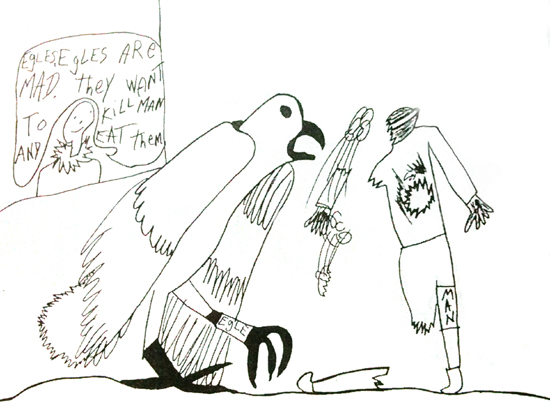
As seen in a video work composed of drawings made by children during art psychotherapy sessions, her attention to the wounds of others gradually expanded from personal memory toward educational and social experience. Although the pace and methods of her practice have changed over time, the experiences accumulated through life have continually reentered the work and broadened the scope of her concerns.

The recent 'Fragility, Greatness' series marks a development of this trajectory toward questions of human dignity and compassion. If the home in her earlier work served as a structure containing the wounded interiority of the individual and the instability of the family, her current work extends its focus to the vulnerability of people who continue living under different social and economic conditions.

By connecting personal wounds to social structures and maintaining an unwavering gaze toward the suffering of the vulnerable, the artist expands her practice from autobiographical narrative toward ethical and social questions. Throughout this process, her interest in memory, wounds, and states of instability has remained, continually reinterpreted within new contexts.

The continuity of Min Jin Young’s practice can be found less in the repetition of a single form or material than in the persistence of her questions. Elements such as the home, light, unstable structures, children, and wounds recur in different forms across different periods, yet at the center remains an enduring concern with how vulnerable beings sustain their lives and form relationships with others.

The trajectory from personal childhood memories to family and society, and further toward universal human suffering and compassion, demonstrates how the artist has continually renewed her practice through her own life and the experiences of her time. This attitude forms an important axis connecting Min Jin Young’s work across shifts in media, from installation and video to two-dimensional works.

Works of Art

Where Personal Memory Meets Reality

Articles

Exhibitions

Activities