NAM - K-ARTIST

NAM

2025
Single-channel video, ceramic
19 min
About The Work

Yoonah Kim works across a range of media, including painting, installation, video, text, and ceramics, focusing on what is omitted in the process through which individuals’ private records and emotions are quantified and organized within social systems.

While her practice begins with personal concerns, she continues to work from an observational perspective, examining how the ways in which systems guide and operate upon us can ultimately reach the fundamental wounds within each of us.

Kim’s practice begins by attending to traces and emotions that remain largely invisible in individual lives. Her interests have expanded from addressing inward experiences such as personal memories and emotions, loneliness, and absence through painting and installation, toward examining the social conditions that determine what is recognized as present and what is easily erased.

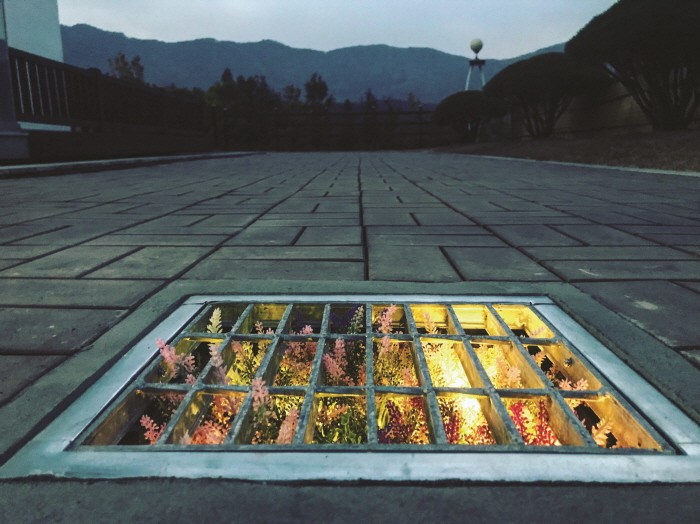
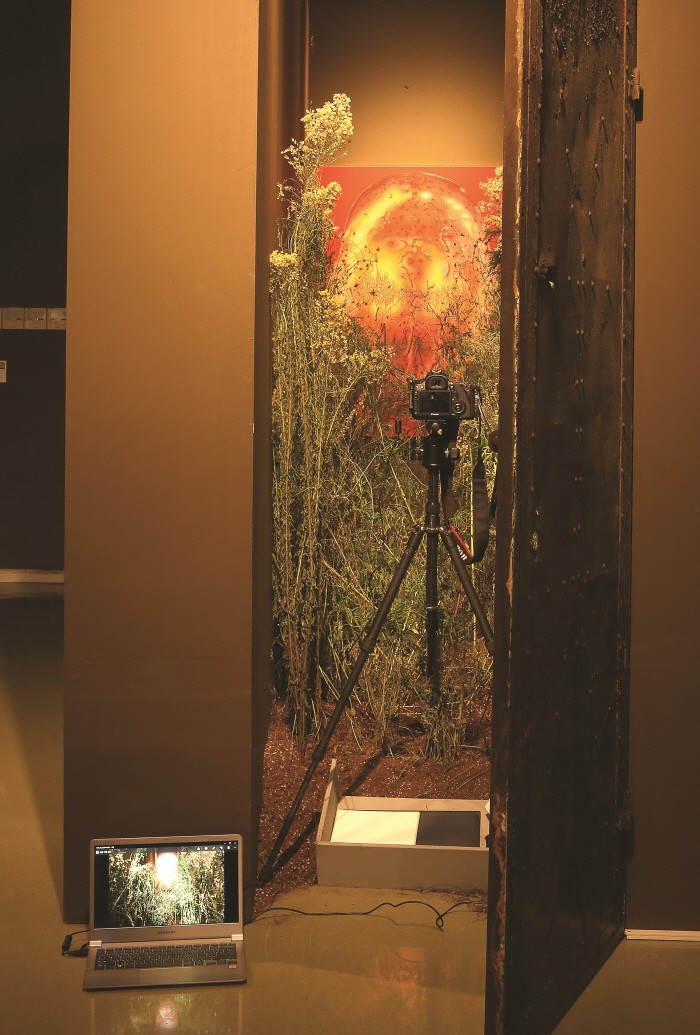
In particular, Kim has focused on forms of life that are easily overlooked, such as inconspicuous life forms like weeds, discarded clothing, and objects that have lost their functions, as well as the lives of people pushed to the margins by criteria such as productivity and efficiency, occupation and gender, and class.

Moving freely between painting, installation, ceramics, video, text, and community-based projects, Kim’s practice visualizes beings that are rarely noticed or recorded, bringing those omitted from view back into relationships with others.

Solo Exhibitions (Brief)

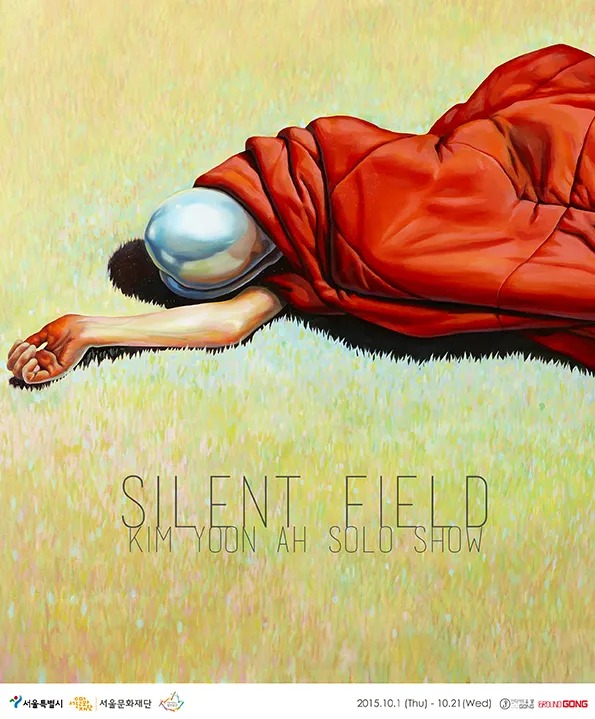
Yoonah Kim has held solo exhibitions at HONGTI ART CENTER in 2017, Artforum Rhee in 2019, Sahng-up Gallery in 2021, and Cheongju Art Studio in 2022.

Group Exhibitions (Brief)

Yoonah Kim has participated in group exhibitions at Clayarch Gimhae Museum in 2018, Heima Art Residency in Iceland in 2019, Osan Museum of Art in 2020, and Cheongju Museum of Art in 2023.

Awards (Selected)

Yoonah Kim received the Outstanding Artist Award from the Seoul Art Foundation in 2016.

Residencies (Selected)

Yoonah Kim participated in residencies at Kim Whanki Creative Studio in 2015, Daegu Art Factory in 2016, HONGTI ART CENTER in 2017, Clayarch Gimhae Museum in 2018, Heima Art Residency in Iceland in 2019, and Cheongju Art Studio in 2022.

Collections (Selected)

Yoonah Kim’s works are held in the collections of Art Center White Block, Artforum Rhee, and various private collections.

Works of Art

Discovering Personal Records and Emotions in the Gaps of the System

Originality & Identity

Yoonah Kim’s practice begins with an examination of traces and emotions that are not easily visible within individual lives. “Presence and absence,” a recurring concern in her earlier works, encompasses states that resist clear articulation, such as lost memories, solitude, deficiency, and ruptured relationships.

Her interest in things that exist yet remain unrecognized, or that reveal their place only after disappearing, became increasingly concrete through works such as Island and Step Passed Me. Here, absence does not simply indicate an empty state. Instead, it functions as a means of asking what becomes invisible according to particular standards and whose lives and emotions are easily omitted.

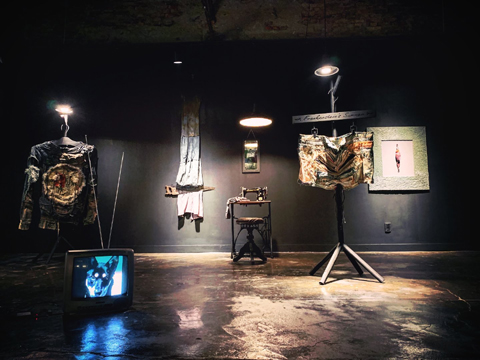
This concern expanded into a broader inquiry into social systems as Kim began to incorporate discarded clothing more extensively into her practice. Clothing that was once closest to someone’s skin retains traces of the body and the passage of everyday life, yet the moment it enters a collection bin, it is subsumed under the uniform category of “used clothing.”

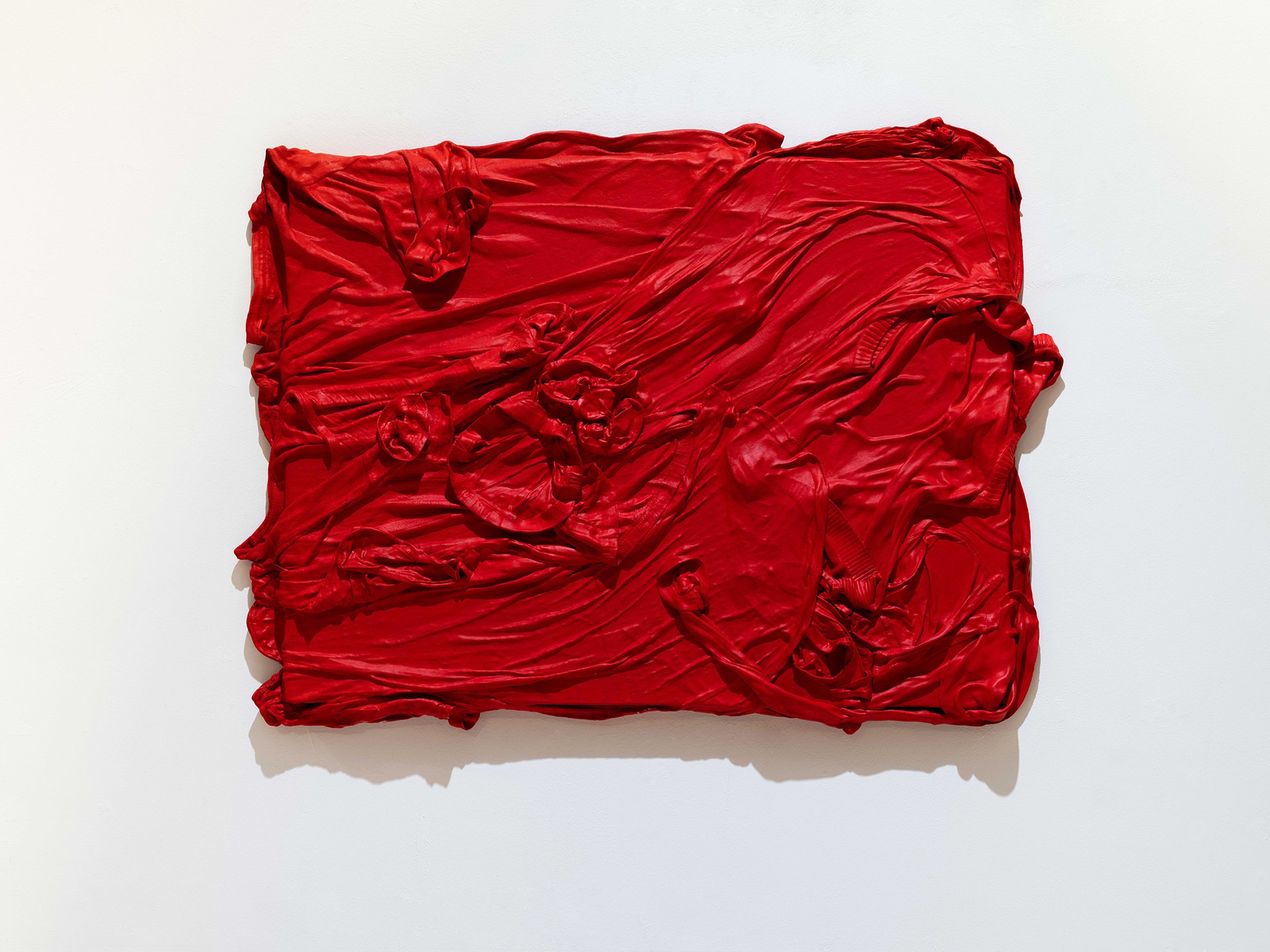
Kim recognized in this process a social tendency to reduce complex individual lives to a limited set of characteristics, functions, and measures of utility. Her sustained collection and use of nearly two tons of discarded clothing has therefore involved more than the reuse of abandoned materials; it has also become a way of examining what is erased when the logic of classification and disposal is applied to human beings.

In works such as Good Citizens, discarded clothing serves both as a trace standing in for an anonymous individual and as a medium connecting different lives.

The artist’s attention gradually extended toward people pushed aside by standards of productivity and utility, as well as toward forms of labor and conditions of life that receive insufficient social protection.

In 《GOD STRESS YOU》, she invoked figures excluded from systems through the image of the “ghost,” while a project set in the former entertainment district of Bamgogae in Cheongju addressed the point at which the labor of women working in the nightlife industry collides with social perception.

Later, in the Naedeok-dong Natural Market Project, she translated the histories of individual merchants into the language of advertising and community-based projects, making visible records of lives that were at risk of disappearing.

As questions that began with personal wounds moved toward the labor and memories of others and the histories of local communities, Kim’s practice broadened into an effort to bring overlooked forms of existence back into relationships.

In more recent works, including 《Colorless People》, The Story of Nam, and All of Us, these concerns develop into questions of the social standards used to distinguish and define human beings, as well as the possibility of community.

Kim examines how categories created to describe people—such as race, gender, class, and occupation—can become grounds for discrimination and exclusion, while also proposing ways in which different individuals might continue to live in relation to one another.

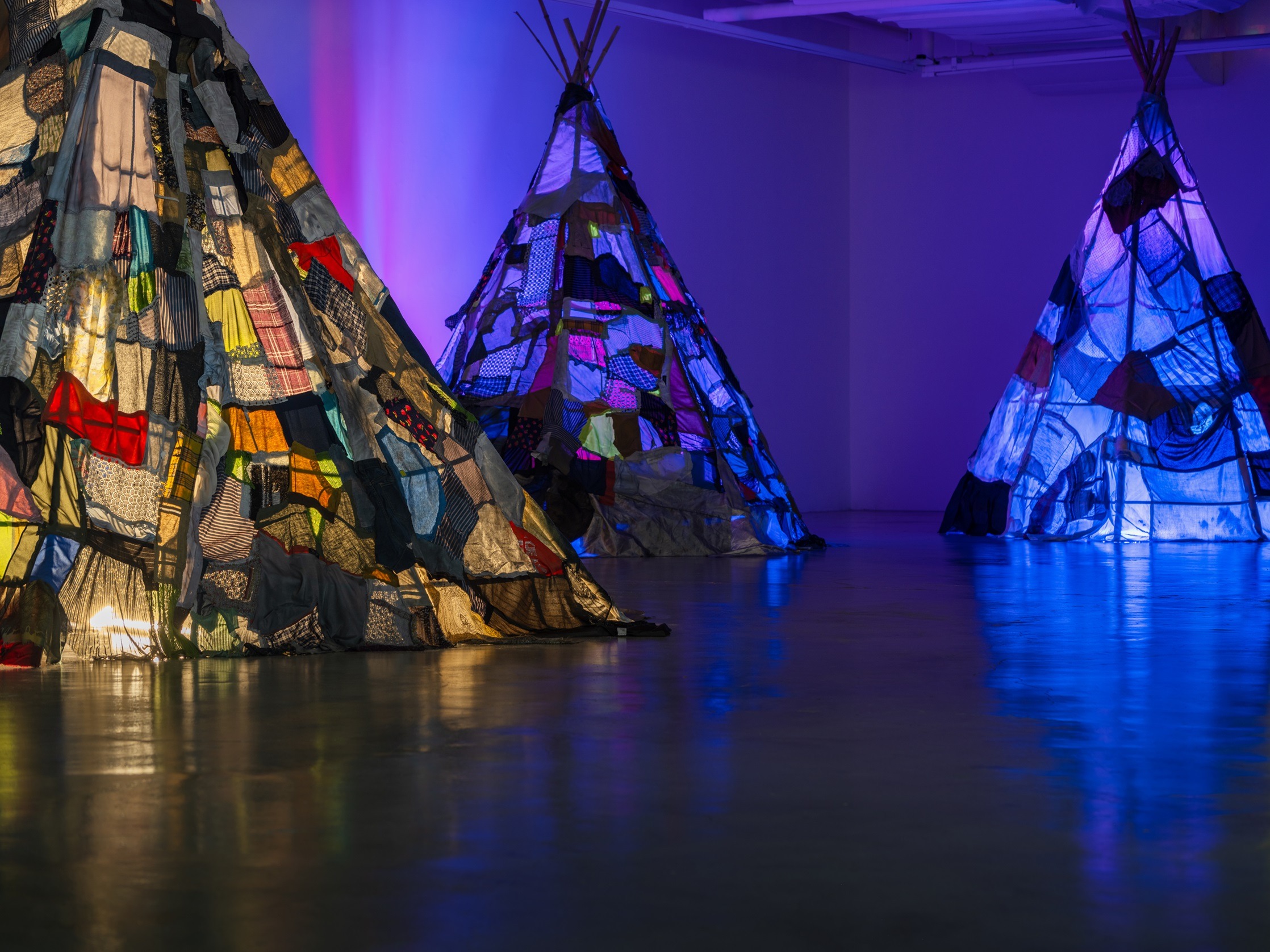
All of Us, made by stitching together discarded garments once worn by many different people, is particularly suggestive of a community formed without erasing the traces of its individual members.

The question of “presence and absence” that Kim has pursued over many years thus leads to broader social questions: who is recognized as present, and what is deemed worthy of remembrance? Beginning with individual experience and extending toward the lives of others and the conditions of community, these questions form a sustained axis within her practice.

Style & Contents

Yoonah Kim’s practice has developed across a range of media, including painting, installation, video, text, and ceramics. In her early paintings, she juxtaposed figures, landscapes, urban imagery, and symbolic signs reconstructed from photographs within a single pictorial field, creating scenes in which memory and reality, consciousness and the unconscious intersect.

As the focus of her practice gradually shifted toward installation and objects, she began to engage more actively with the material qualities of objects and the traces left by their use. Rather than fixing her work within the conventions of a particular medium, Kim chooses her modes of expression according to the subject and site at hand, an approach that has remained consistent throughout her practice.

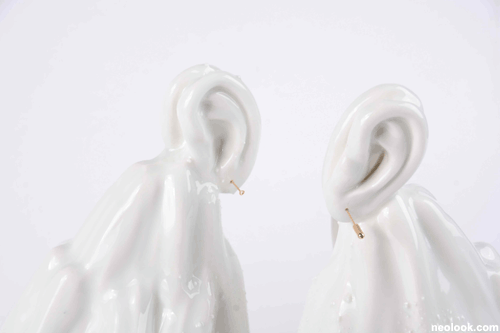
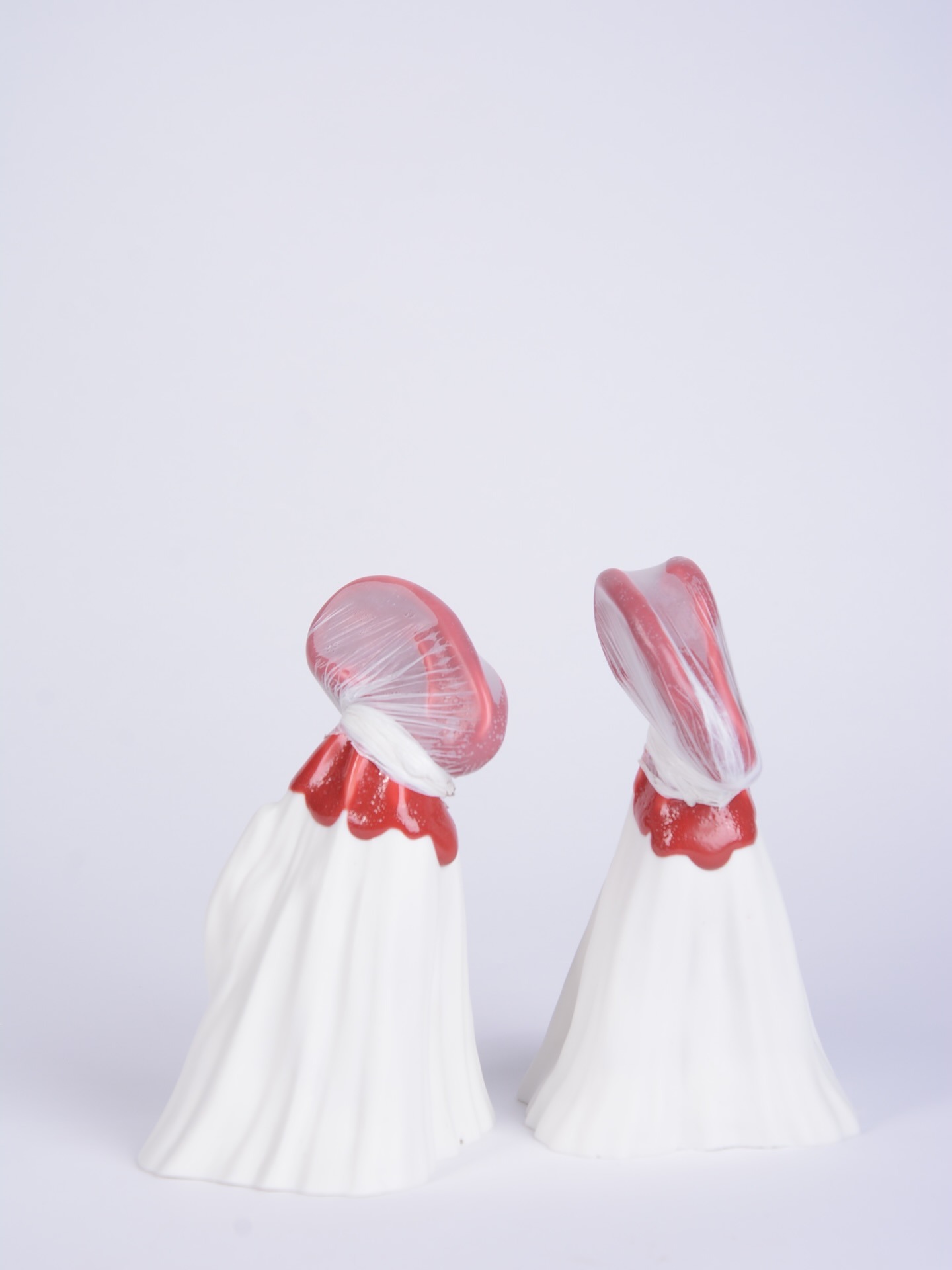
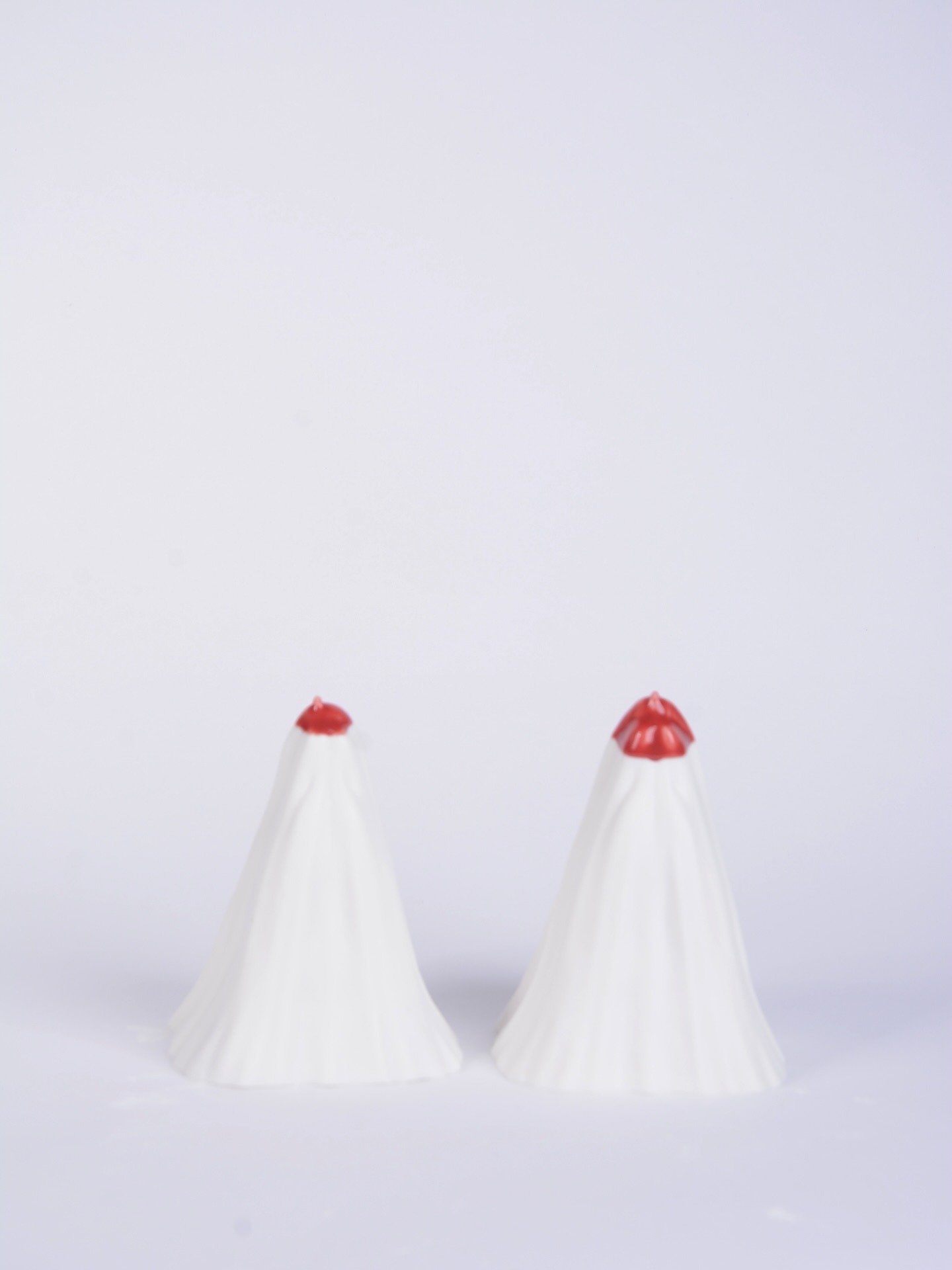
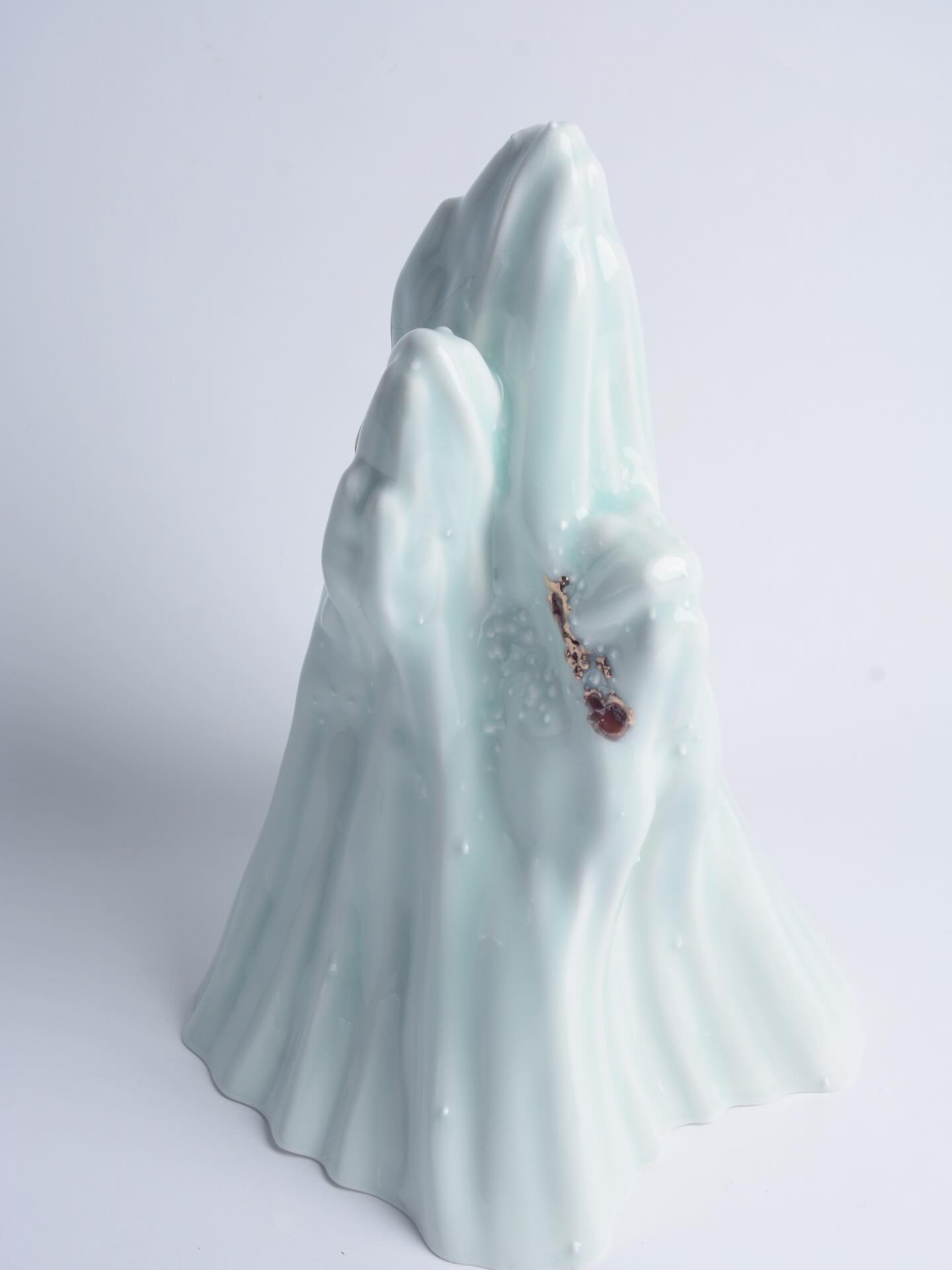
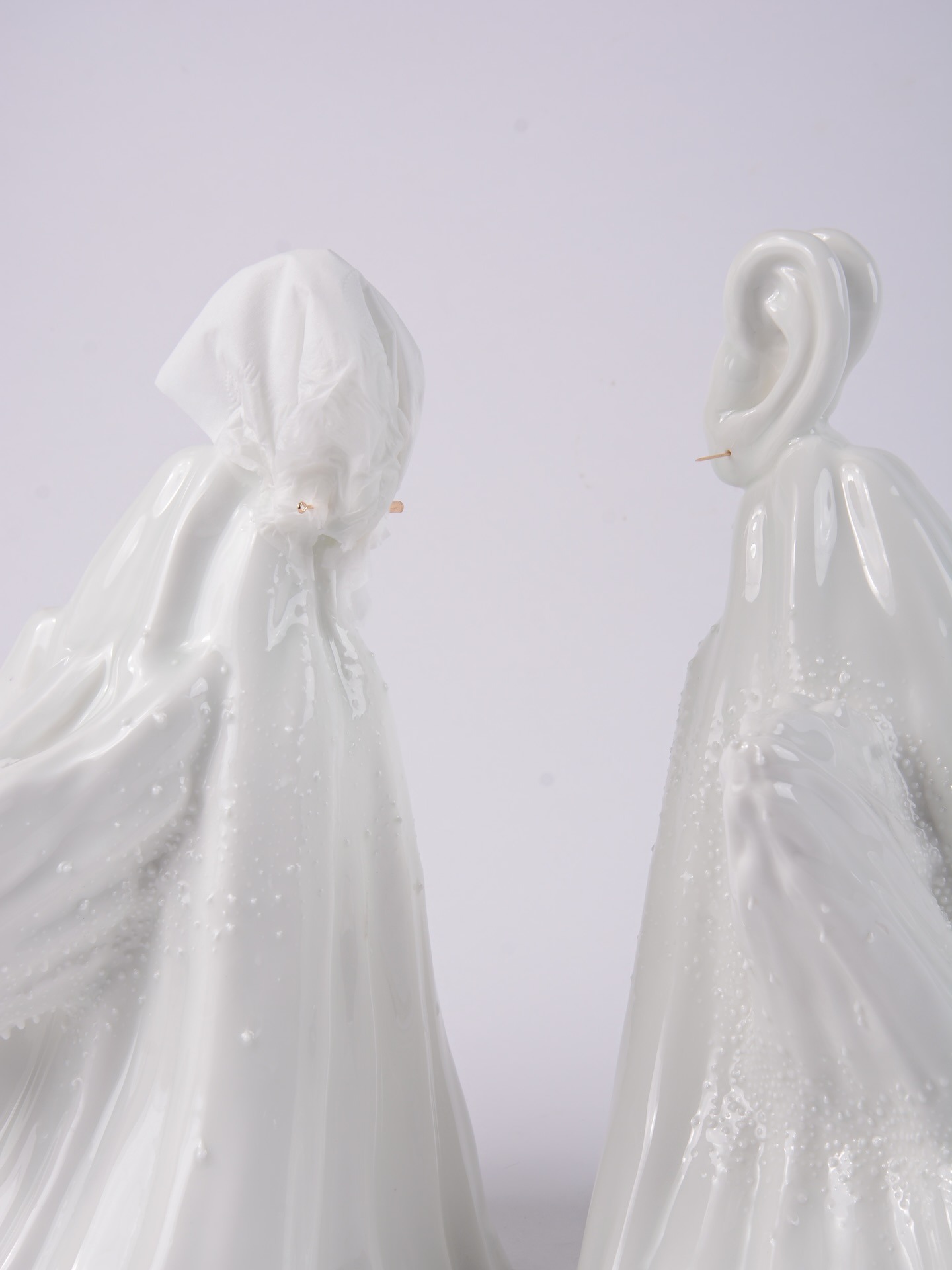
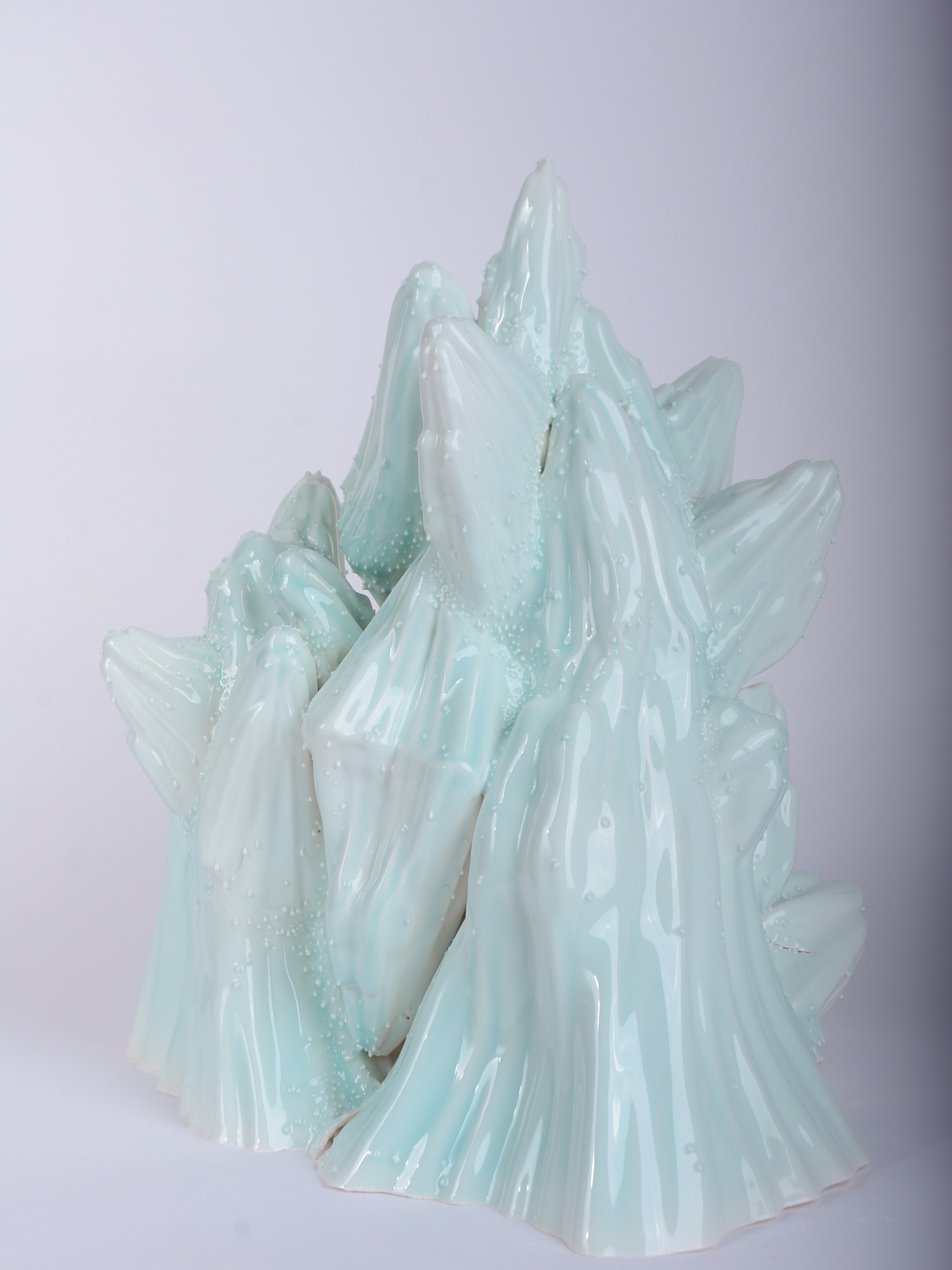
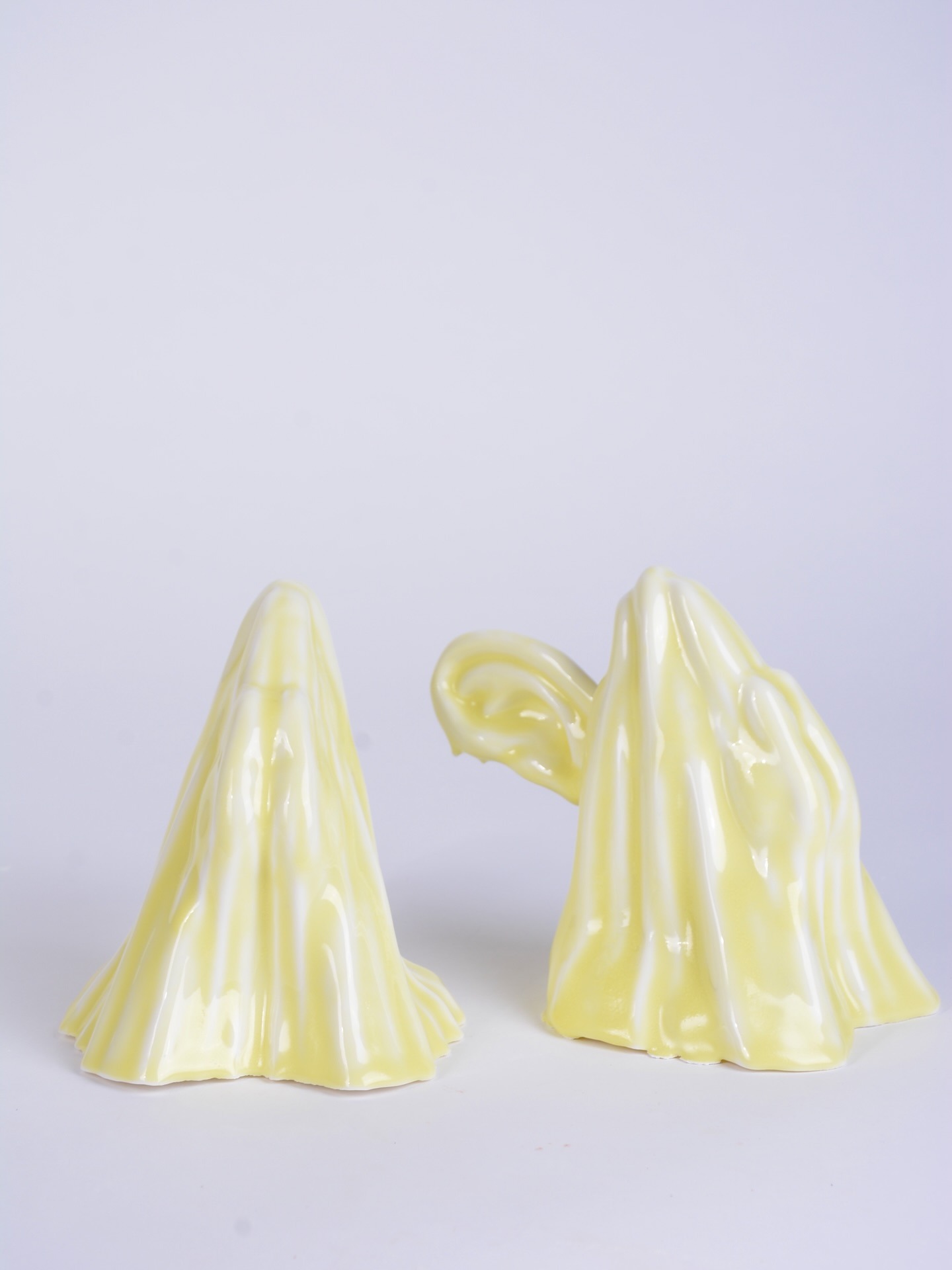
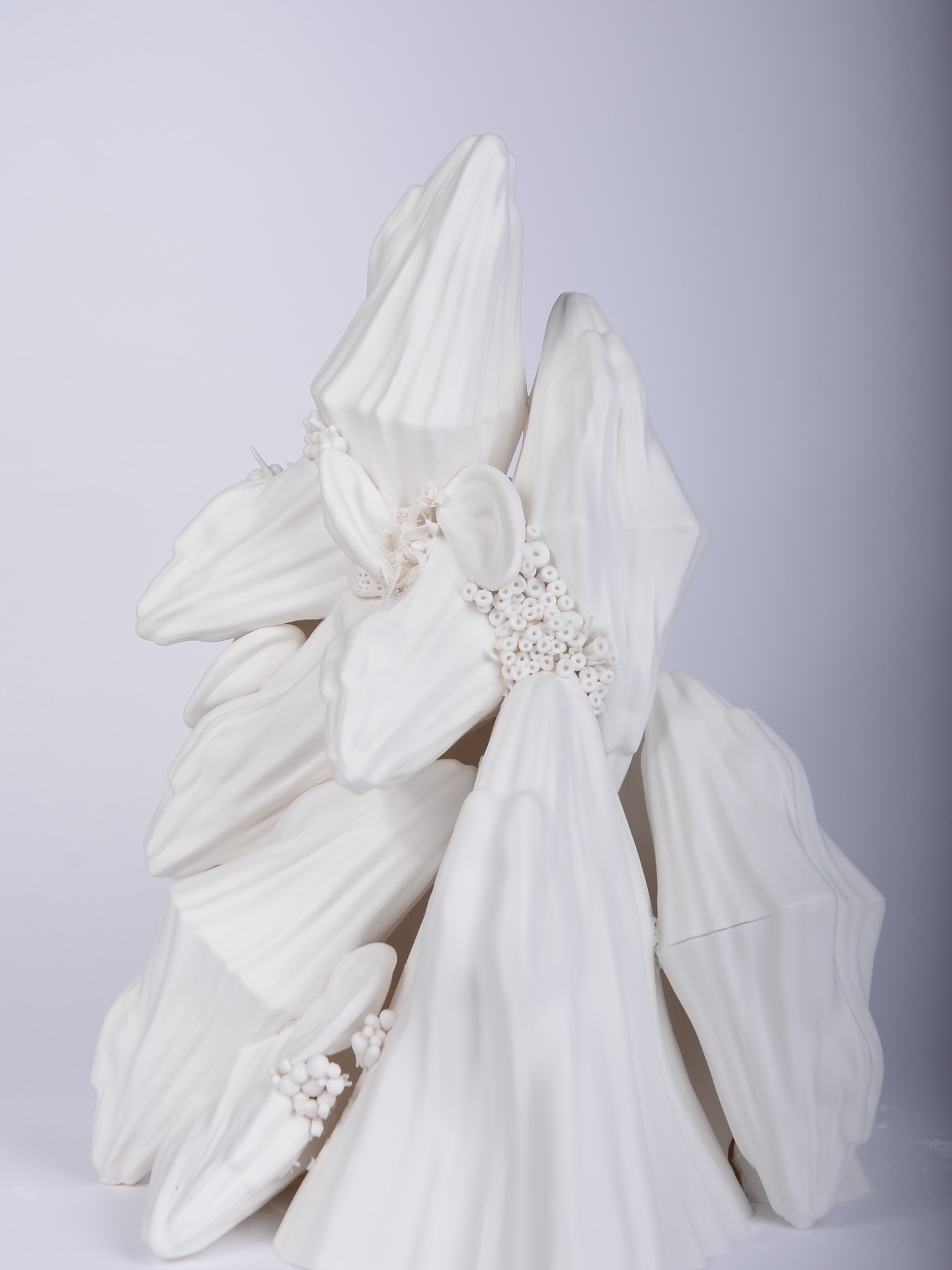
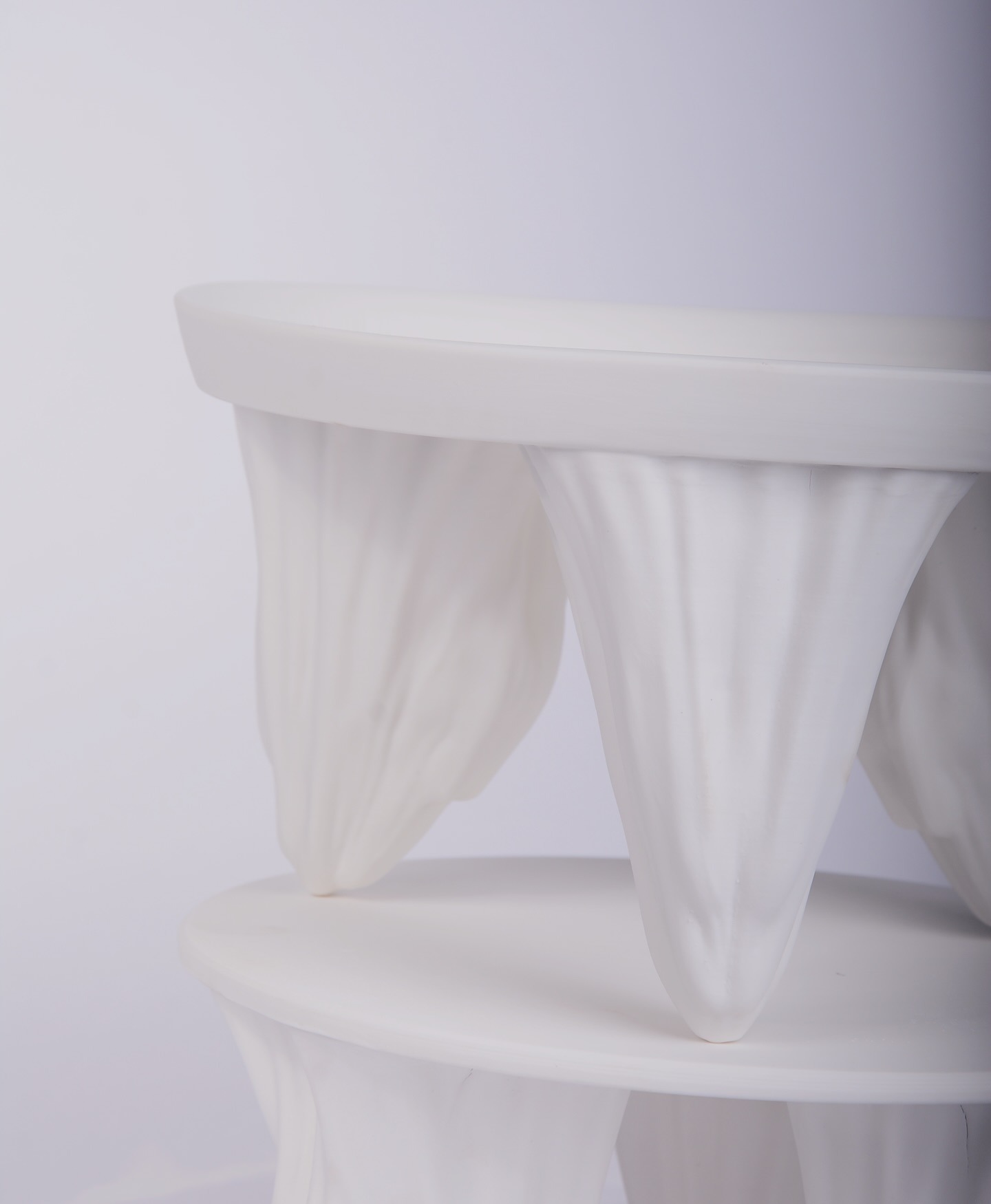
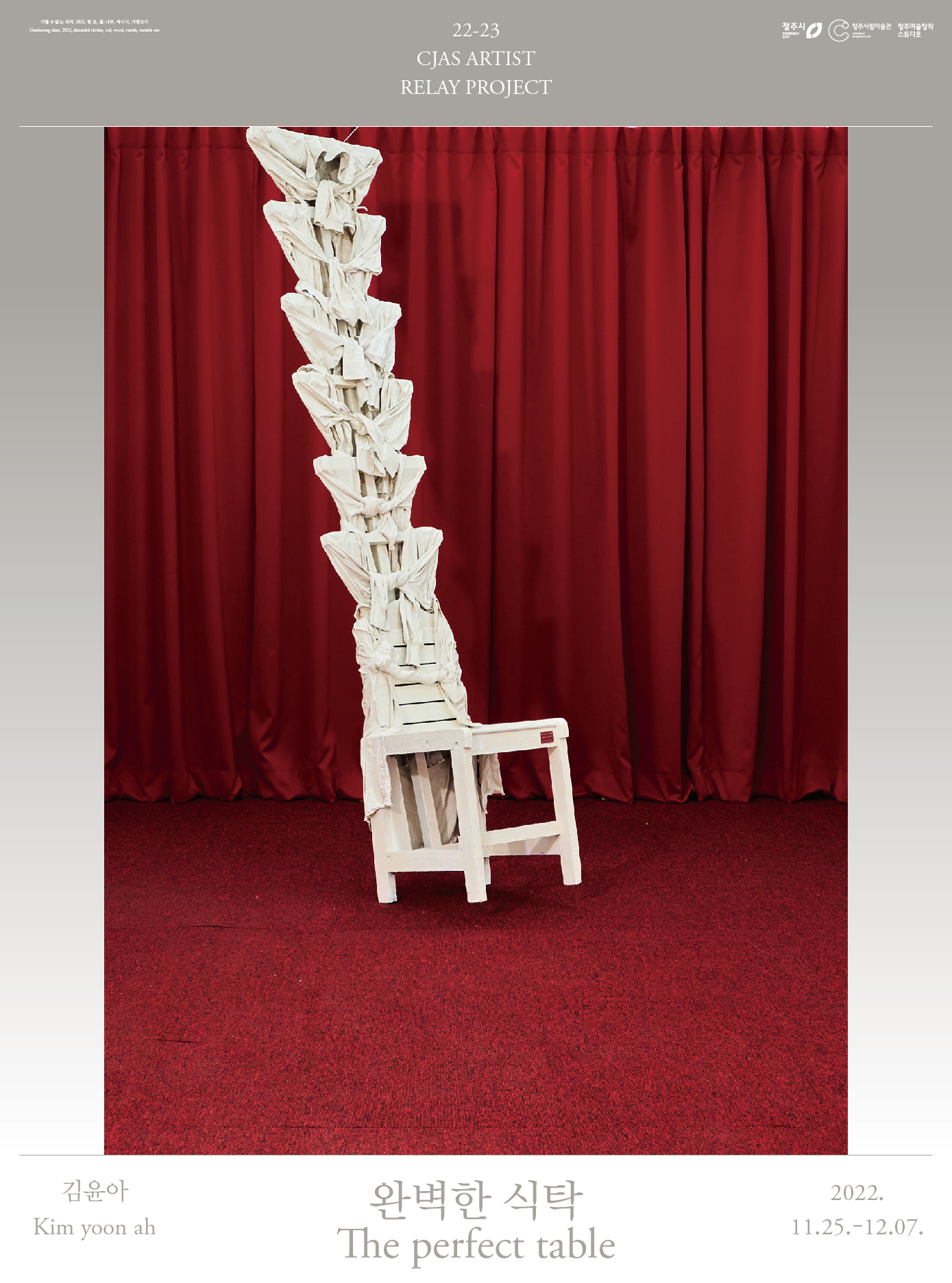
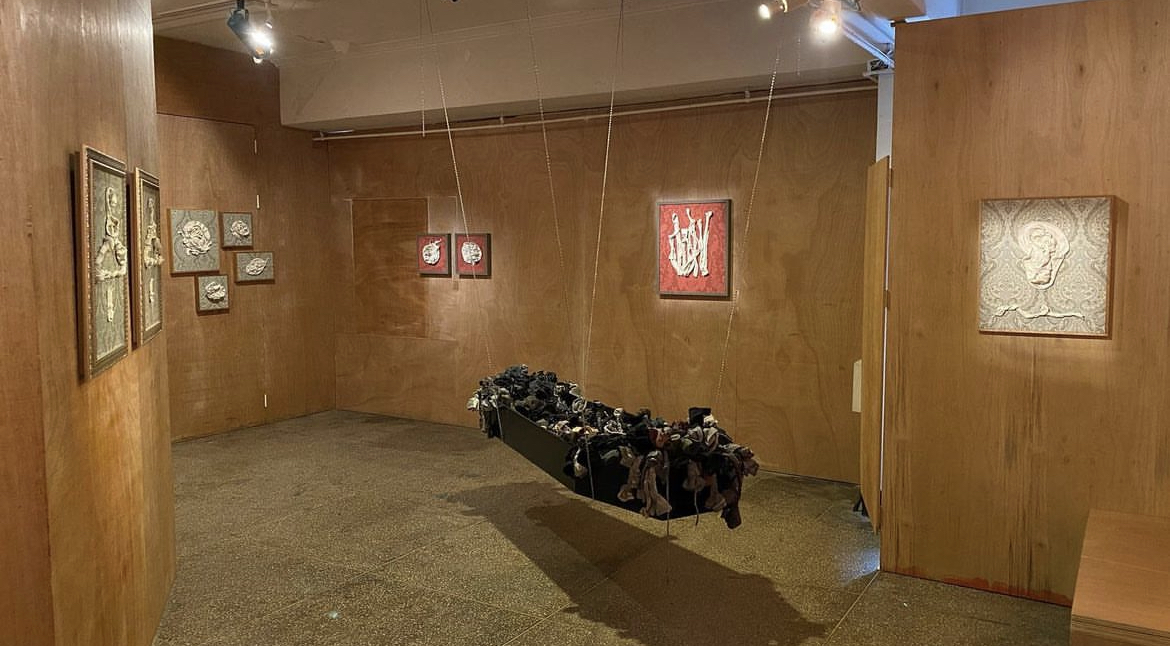
Discarded clothing is the material through which this approach becomes most clearly visible. Kim transforms the original function and form of collected garments by stacking, twisting, bleaching, dyeing, and sewing them together. In Good Citizens, in particular, she soaks clothing in porcelain slip and fires it in a kiln, burning away the textile itself while preserving its form and folds in ceramic.

Clothing that once remained close to the body and carried the specific passage of an individual life loses the identity of its former owner through this process, while becoming a trace that evokes an anonymous human presence.

In Layer upon Layer, Deep in the Mountains, she similarly solidifies the sagging silhouettes of clothes hanging on a wall in ceramic, allowing an absent body to be sensed through material traces. This process of simultaneously producing disappearance and residue inscribes Kim’s longstanding questions of presence and absence directly into the material itself.

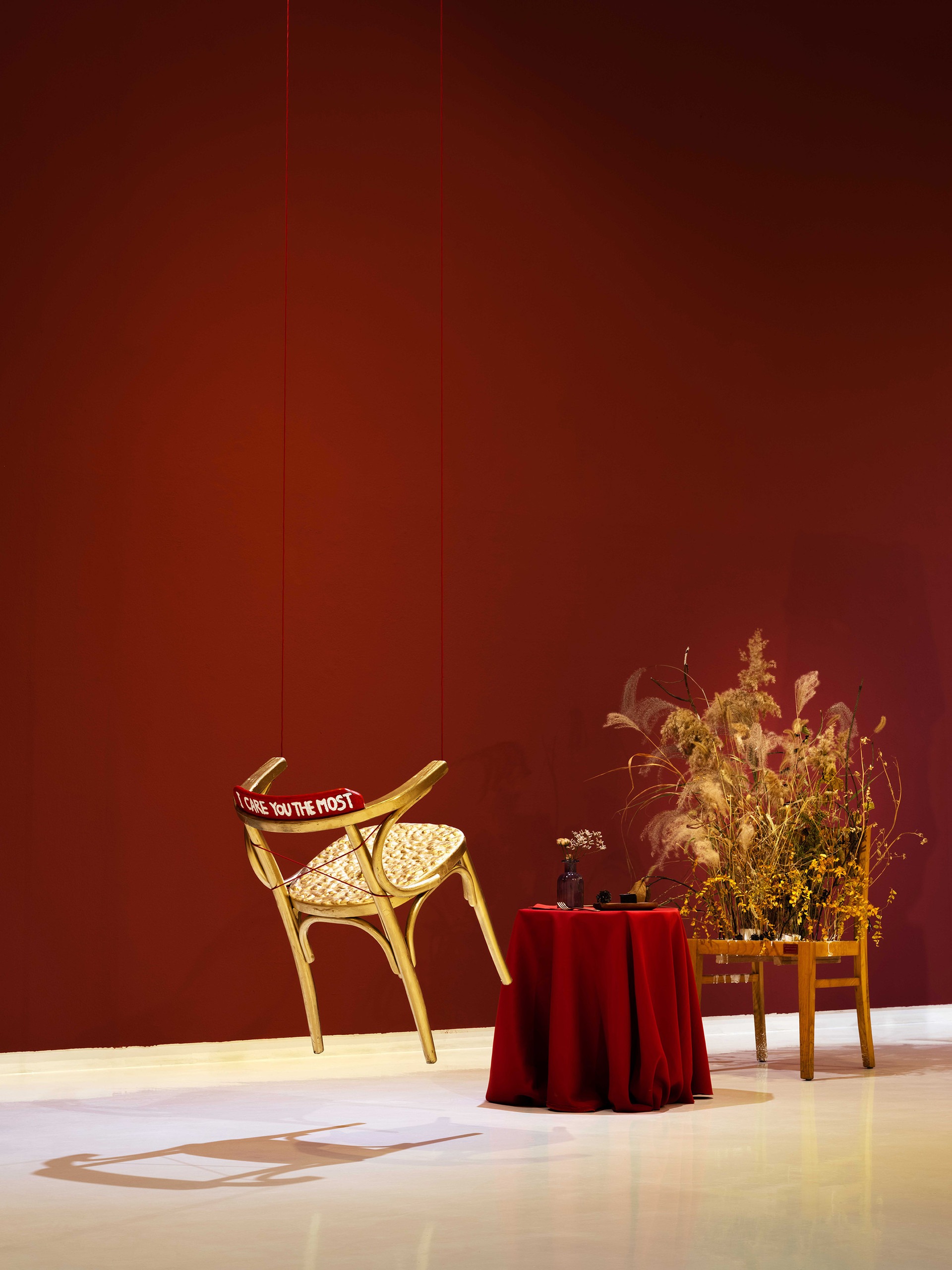
In her installations, the relationship between individual objects and the exhibition space as a whole plays an important role. Island, which creates tension between balloons and razor blades, and Step Passed Me, which brings easily overlooked forms of life such as weeds into the exhibition space, incorporate the viewer’s movement, distance, and gaze into the work itself.

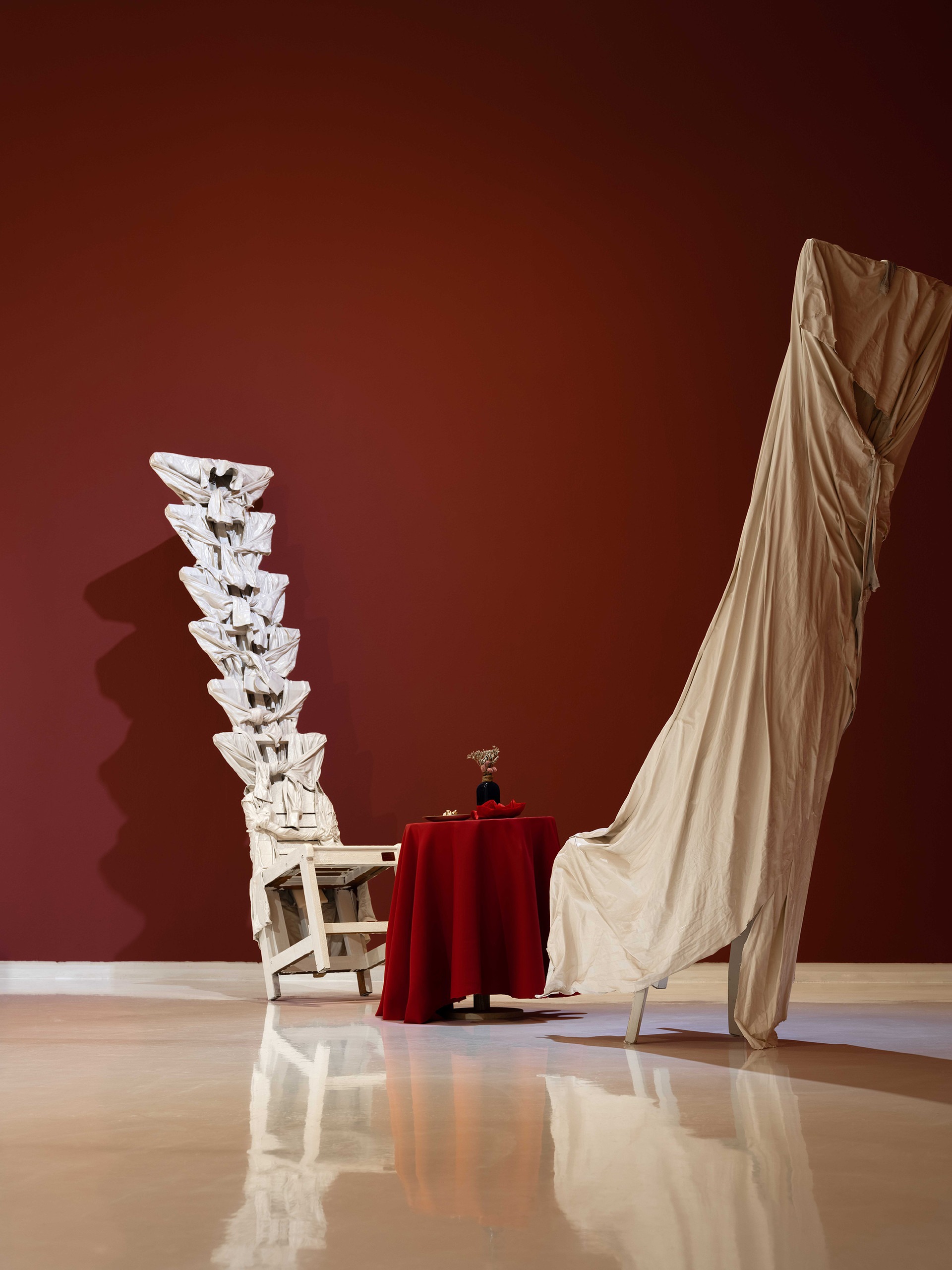
In the more recent All of Us, Kim stitches together garments once worn by different people to construct six enormous tents, combining them with light, voices, and other signs of human presence from within.

Each fragment of clothing retains traces of an individual life while simultaneously becoming part of a larger structure, and viewers move between the interior and exterior of the tents, physically experiencing the relationship between individual and community. For Kim, the exhibition space is not merely a backdrop for completed objects but an element that organizes both the meaning of the work and the viewer’s position within it.

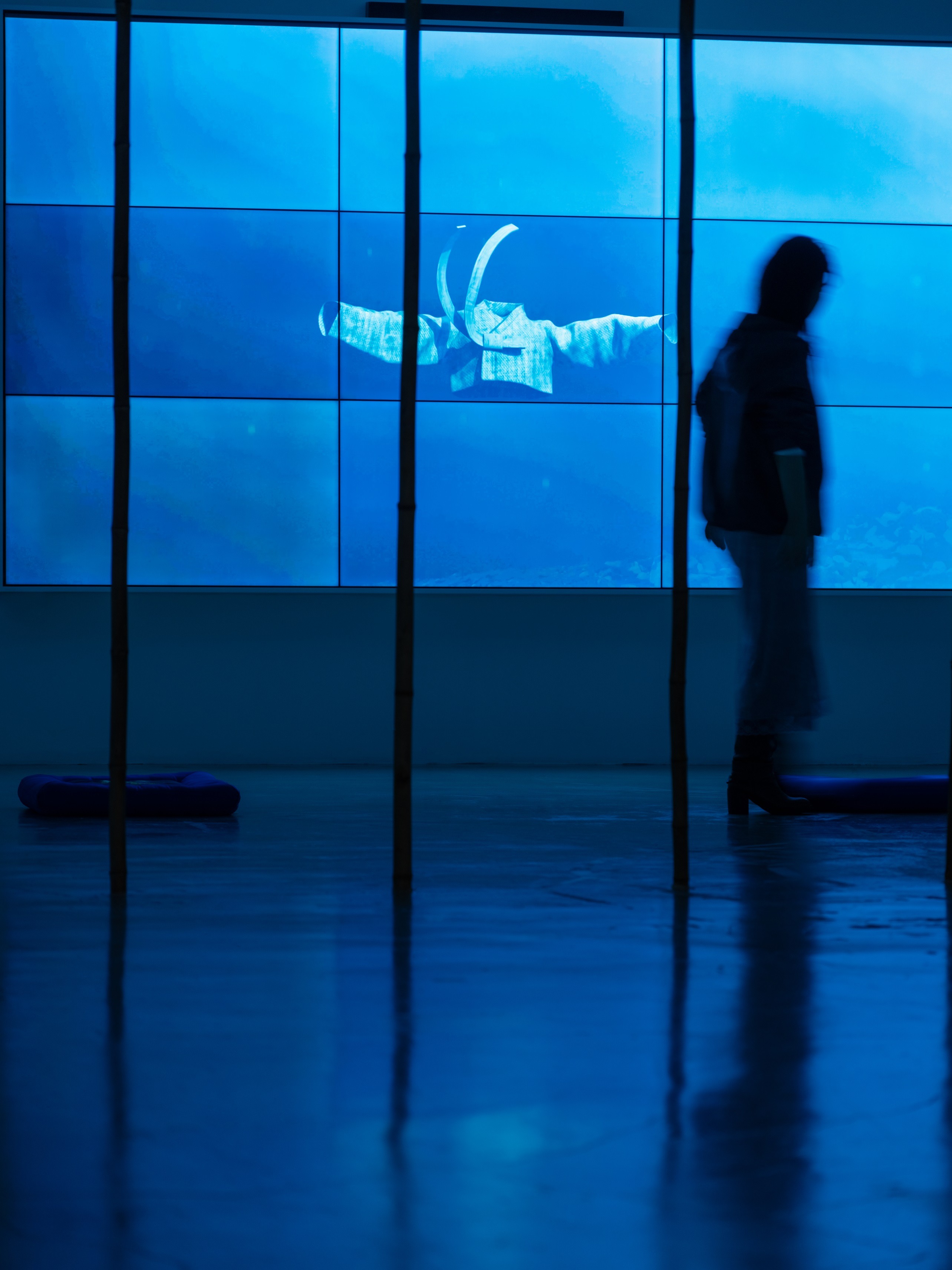
In recent works that actively incorporate video and text, the perspective through which a narrative is viewed has itself become an important formal device. The Story of Nam unfolds through a main video narrative alongside side stories devoted to individual characters, allowing the same world to be viewed alternately from collective and individual perspectives.

The contrast between the characters’ eventful lives, conveyed through rapidly unfolding subtitles, and the jeogori repeating the same movement on screen visualizes the tension between unstable reality and a fixed ideal. Through such methods of transforming materials, reorganizing sites, and shifting narrative perspectives, Kim brings previously unseen traces into a perceptible state.

Her formal experimentation is therefore closely connected to the process of revealing how individual memories, emotions, and relationships remain, disappear, and become connected again.


Topography & Continuity

Yoonah Kim’s practice has long centered on questions of “presence and absence,” while steadily expanding the scope toward which those questions are directed. In her earlier work, she addressed inward concerns such as personal memory, emotion, solitude, and deficiency through painting and installation.

Over time, her attention shifted toward the social conditions that determine what is recognized as present and what is easily erased. Her gaze moved from overlooked forms of life such as weeds, discarded clothing, and objects that had lost their function toward the lives of people pushed to the margins by standards of productivity and efficiency, occupation and gender, and class.

Although the subjects and formats of her work have changed, her commitment to making overlooked or unrecorded forms of existence visible has remained consistent.

Discarded clothing, in particular, most clearly demonstrates this continuity in Kim’s practice. Since the late 2010s, the garments she has collected have been stacked, dyed, twisted, fired as ceramic, and sewn into large-scale structures, taking on different forms from one work to another.

In Good Citizens, clothing carrying traces of individual lives remains as a ceramic surface, while in All of Us, garments once worn by many different people are joined together to form tents that symbolize community.

Even through repeated use of the same material, its meaning does not remain fixed, but expands from individual absence, anonymity, and social classification toward questions of solidarity and the possibility of community. This capacity for continual transformation is a defining feature of Kim’s practice.

The scope of her work has also extended beyond the exhibition space into local communities and sites of everyday life. Projects carried out in places such as the former entertainment district of Bamgogae and Naedeok-dong Natural Market in Cheongju brought labor and memories accumulated within specific locations into her practice, broadening the points of contact between art and lived reality.

These experiences are also connected to later works that situate individual narratives within broader social relationships. More recently, through works such as The Story of Nam, she has interwoven the lives of multiple characters through video and text, while 《Colorless People》 expands her inquiry toward categories of distinction such as gender, race, and class, as well as the violence and exclusion produced through them.

Seen across this trajectory, Yoonah Kim’s practice begins with personal experience but continually reexamines it through the lives of others and through social relationships. Her early concerns with presence and absence, memory and disappearance developed into questions of disposal and classification, and from there into explorations of human relationships, community, and solidarity.

At the same time, her media have expanded from painting to installation, ceramics, video, text, and community-based projects. Even as she introduces new forms, she does not abandon the questions accumulated through earlier works, but transforms and carries them forward.

Works of Art

Discovering Personal Records and Emotions in the Gaps of the System

Articles

Exhibitions

Activities