Peillacasanstmartinsurousthanampipriacivrysurseinesene… - K-ARTIST

Peillacasanstmartinsurousthanampipriacivrysurseinesene…

2022
Mixed media
Dimensions variable
About The Work

Ye-eun Min views the “home” not as a fixed space of residence, but as a mutable structure where time and memory, language and relationships, and matter and thought intersect. Her practice explores how the boundaries between its interior and exterior become blurred and reconfigured.

Drawing on her personal experiences between France and Korea, she addresses migration, cultural intersections, and hybridity, using objects such as furniture, lighting, wallpaper, tiles, curtains, clocks, and intercoms that carry traces of someone’s time and use as key materials.

Min collects, cuts, and rearranges materials from different sources and periods—including secondhand furniture, wax, wire mesh, plywood, clay, lighting, mirrors, wallpaper, and tiles—to create new relationships between them. These objects function not simply as vessels of traces from the past, but as devices that connect and bring different times and spaces into collision.

By incorporating light and shadow, as well as the movement and participation of viewers, she creates spatial experiences that resist fixed interpretation.

For Min, the home is less a stable foundation for individual identity than a mutable structure in which different cultures, languages, places, and times temporarily coexist. Her installations create situations in which distinctions between inside and outside, past and present, and reality and imagination become difficult to define, revealing how different realities can enter into temporary relationships and find a fragile balance.

Ultimately, her practice asks how things that cannot be fully integrated can coexist within the gaps between different cultures, languages, places, and times.

Solo Exhibitions (Brief)

Ye-eun Min has held solo exhibitions including 《The Common Illusion: No Change》 (ten to the n, Seoul, 2025), 《The Fairly Balanced Place》 (Cheongju Art Studio, Cheongju, 2024), 《A Mass That Won’t Mix》 (Dorossy Salon, Seoul, 2023), and 《Cannot Be Conveyed in Words》 (Incheon Art Platform, Incheon, 2021).

Group Exhibitions (Brief)

Min has also participated in numerous group exhibitions, including 《Still-we are connected》 (Wumin Art Center, Cheongju, 2025), 《SYMBIOTIC PLANET》 (Seoul Art Space Geumcheon, Seoul, 2025), 《Elsie & Marshall: Feedback #7》 (Alternative Space LOOP, Seoul, 2024), 《Sensorimotor Stadium》 (Suwon Art Space Gwanggyo, Suwon, 2024), 《HEXED, VEXED and SEXED》 (West Den Haag, The Hague, Netherlands, 2023), and 《Refugia》 (Alternative Space LOOP, Seoul, 2021).

Awards (Selected)

Min was selected as one of the Young Artists of the Year by the Cheonan Foundation for Arts and Culture in 2020 and as a Notable Artist by the Korean Cultural Center in France in 2014/2015.

Residencies (Selected)

Ye-eun Min has participated in various residency programs, including Seoul Art Space Geumcheon (2025), Cheongju Art Studio (2024), Kerguehennec Art Center in France (2023), and Incheon Art Platform (2020).

Works of Art

Reconstructing the Symbolic and Material Qualities of Home

Originality & Identity

Ye-eun Min approaches the “home” not as a fixed place of residence, but as a structure in which time and memory, language and relation, materiality and thought become entangled. Rather than clearly dividing inside and outside, interior and exterior, private and public, she focuses on how these boundaries are reversed, blurred, and reconfigured.

Her personal experience of moving between France and Korea runs through her practice as a concern with migration, cultural intersection, hybridity, and what she calls “mixed-blood thinking.” For Min, furniture, lights, wallpaper, clocks, tiles, curtains, urns, and old intercoms are not simply domestic objects; they are mediums that carry someone’s time, habits, traces of use, and clues to identity.
 
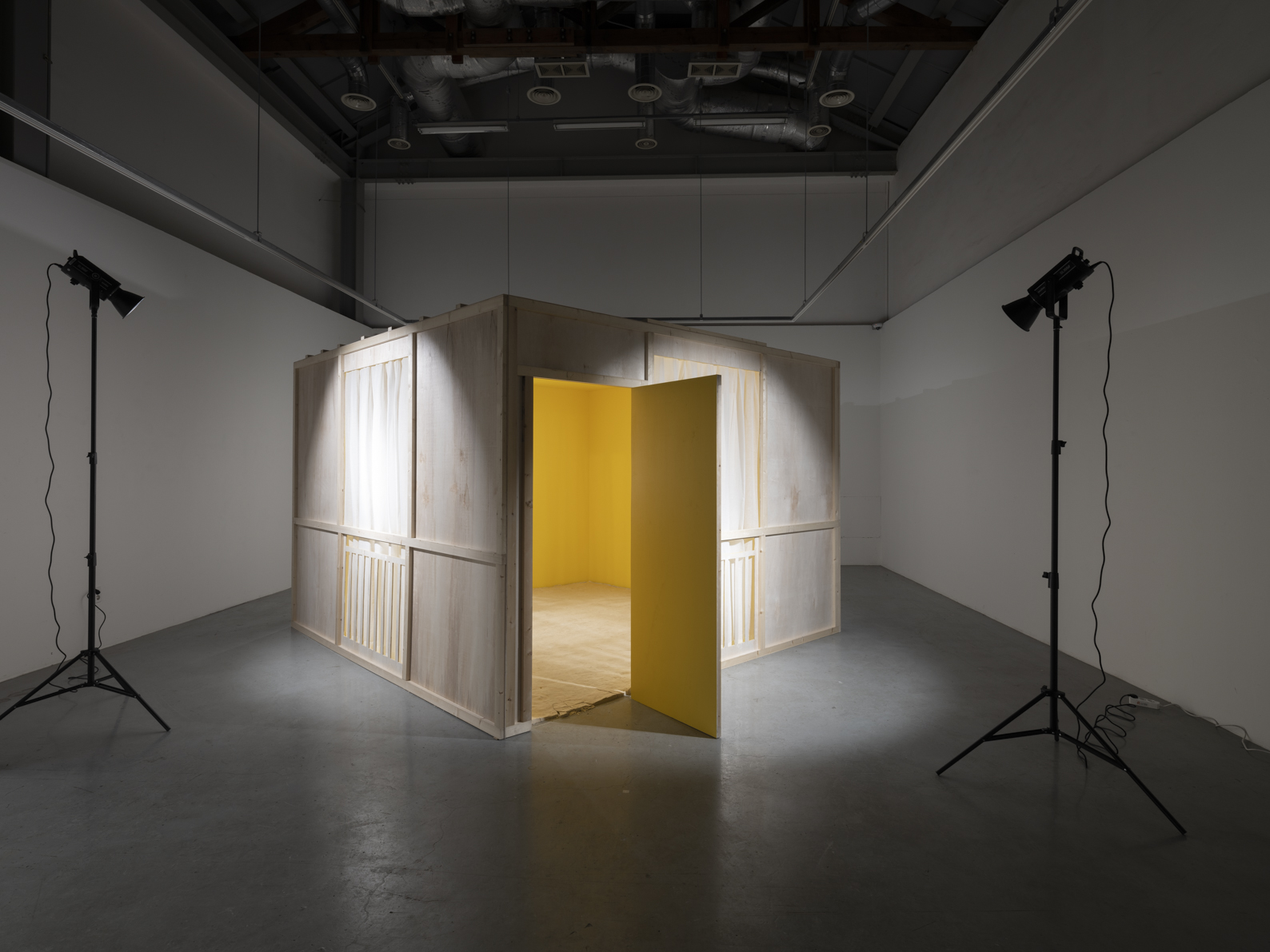
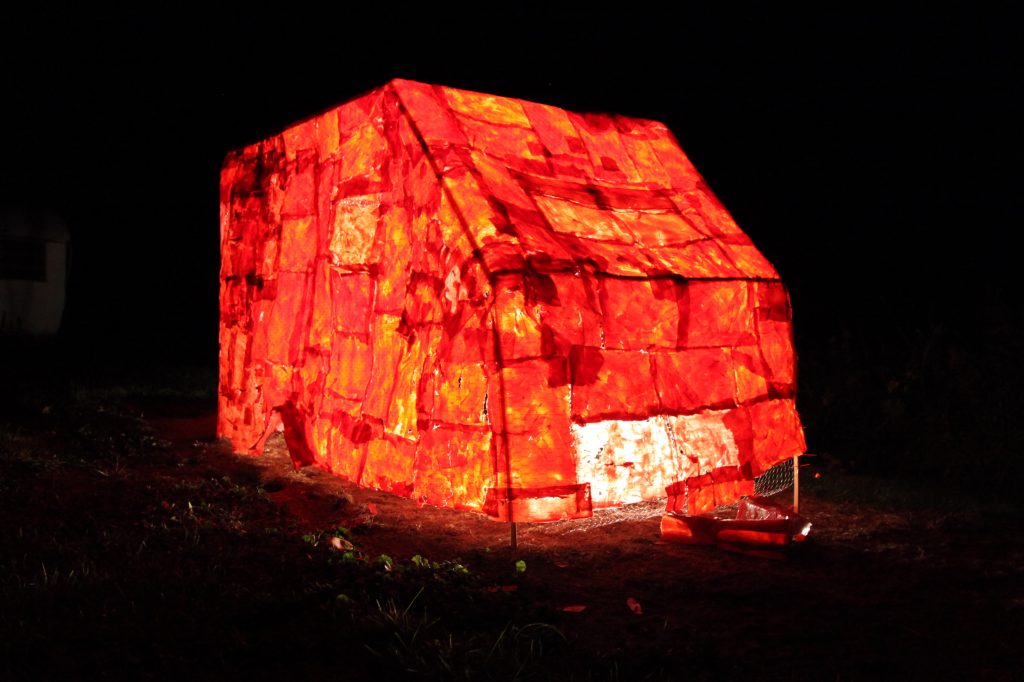
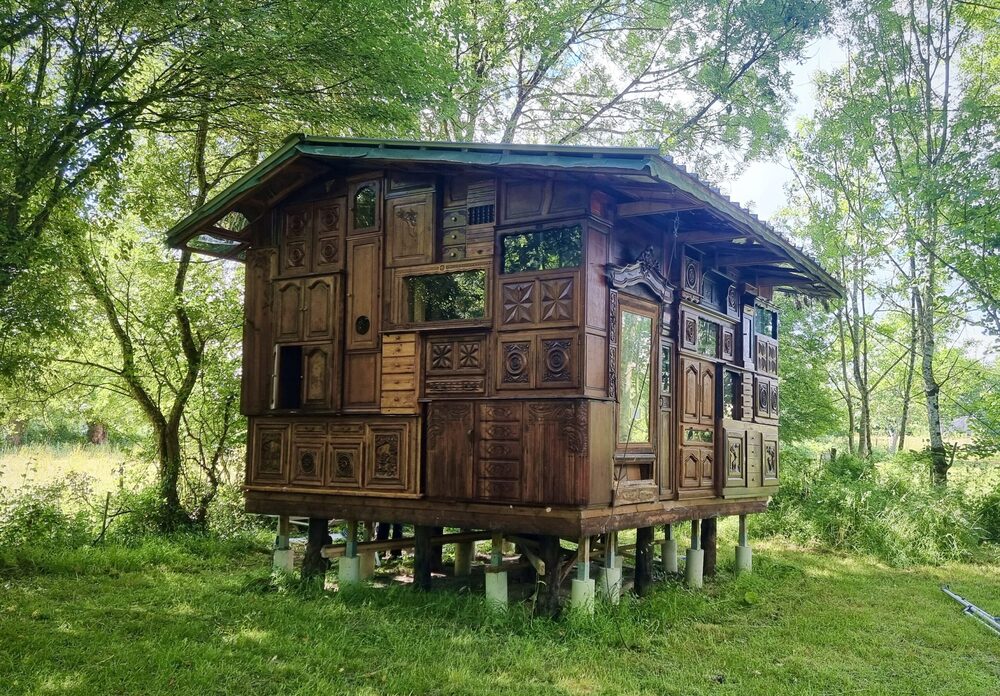
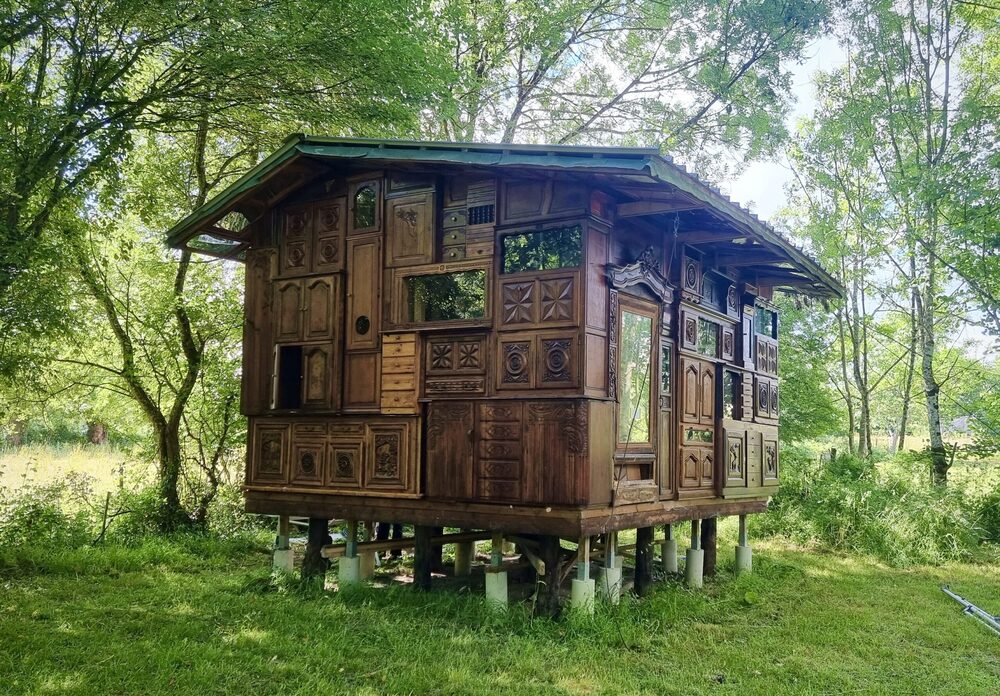
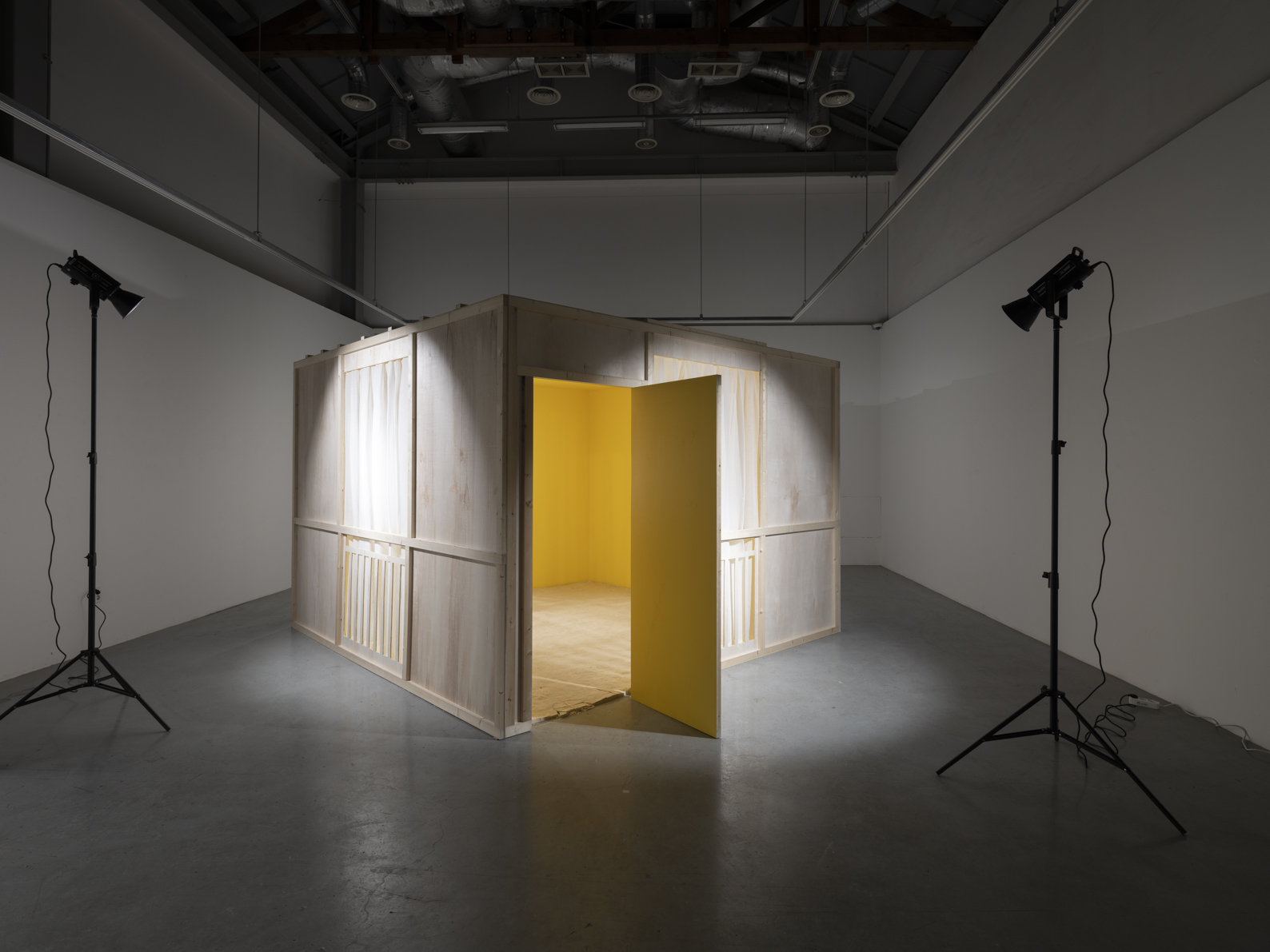
Min’s full-scale exploration of the “home” begins with Furniture House(2013–). Initiated in Brittany, France, this project constructs an inhabitable hut by using secondhand furniture as its walls. Furniture that would normally belong inside the house becomes the exterior wall, so that the interior turns outward and the exterior begins to function like an interior. Caravan(2015) shifts this idea of home toward mobility and temporariness.

Based on the trace of the caravan where the artist stayed during the Triangle Artists’ Workshop in New York, the work was made with wax, chicken wire, and wood. It changes according to temperature and sunlight, showing that home and identity are not fixed, but continue to shift and reform in relation to time and environment.
 
Since 2019, Min has expanded the idea of home by cutting, fragmenting, and rearranging it, rather than presenting it as a complete structure. In 《Unpredictable invisibility》(Alternative Space LOOP, Seoul, 2019), Lavihamahamahyunchuchuhappyj33atomausepponssugizetteblackbyungddoungkkeong…(2019) cuts a rectangular structure, conceived as a house, into six fragments, installs them on the ceiling of the exhibition space, and fills them with objects collected from various people.

The title is composed of the online IDs used by the previous owners of those objects. Through this process, the artist creates a shared space where the times and memories of anonymous others, rather than those of a single person, are mixed together. Works from the same exhibition, such as Sahk(Lunar Conjunction)(2019), Trans-migration(2019), and Single Slit(2019), also address relationships between matter and time, the visible and invisible, through celestial alignment, death and mourning, and the moment when ground furniture dust disperses.
 
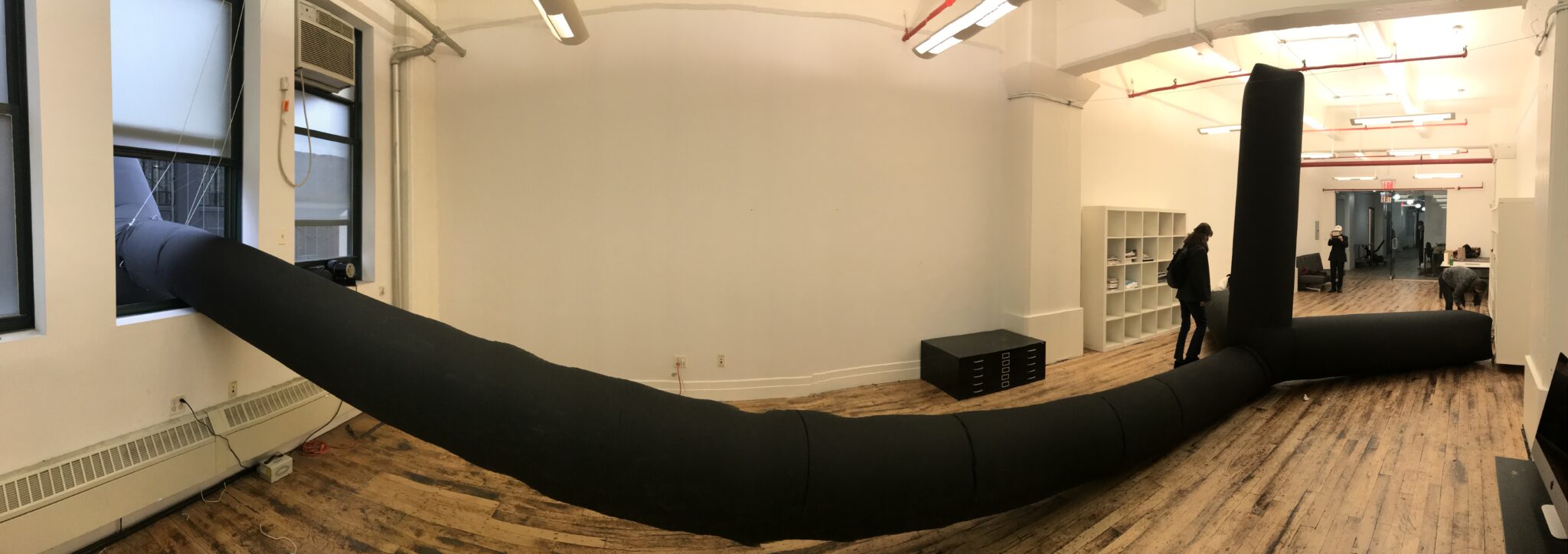
Min’s later work expands from the home toward questions of language, memory, and the perception of reality. Because Not Everything Is Apparent(2020) connects the inside and outside of the exhibition space through a single line, layering another reality onto the existing one through a structure that can be seen but not touched or fully known.

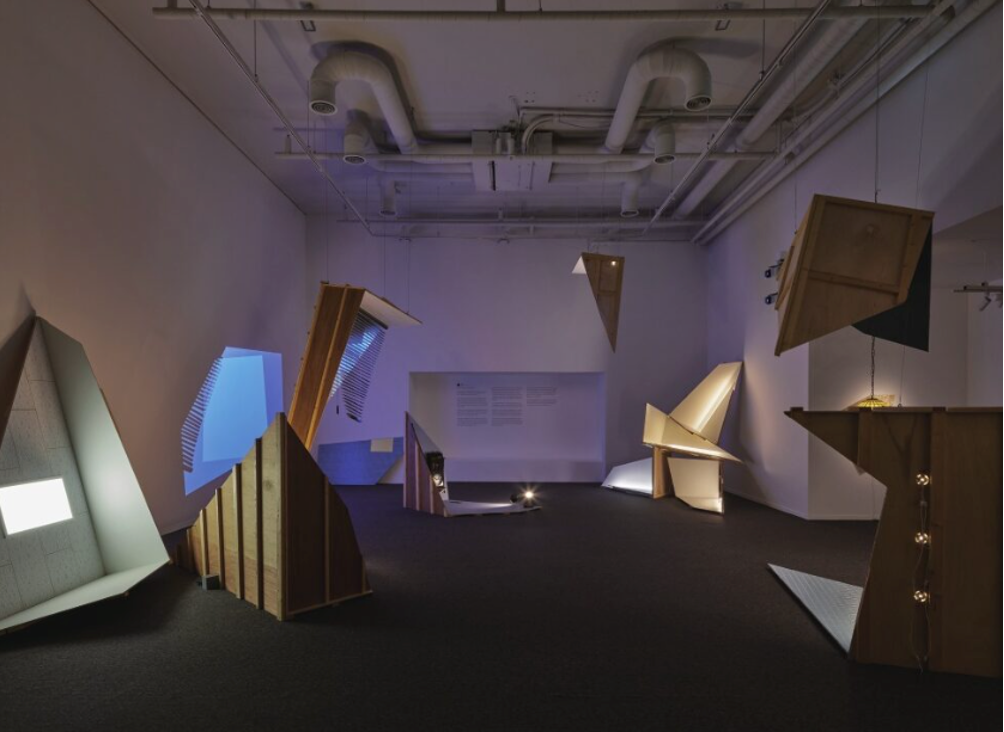
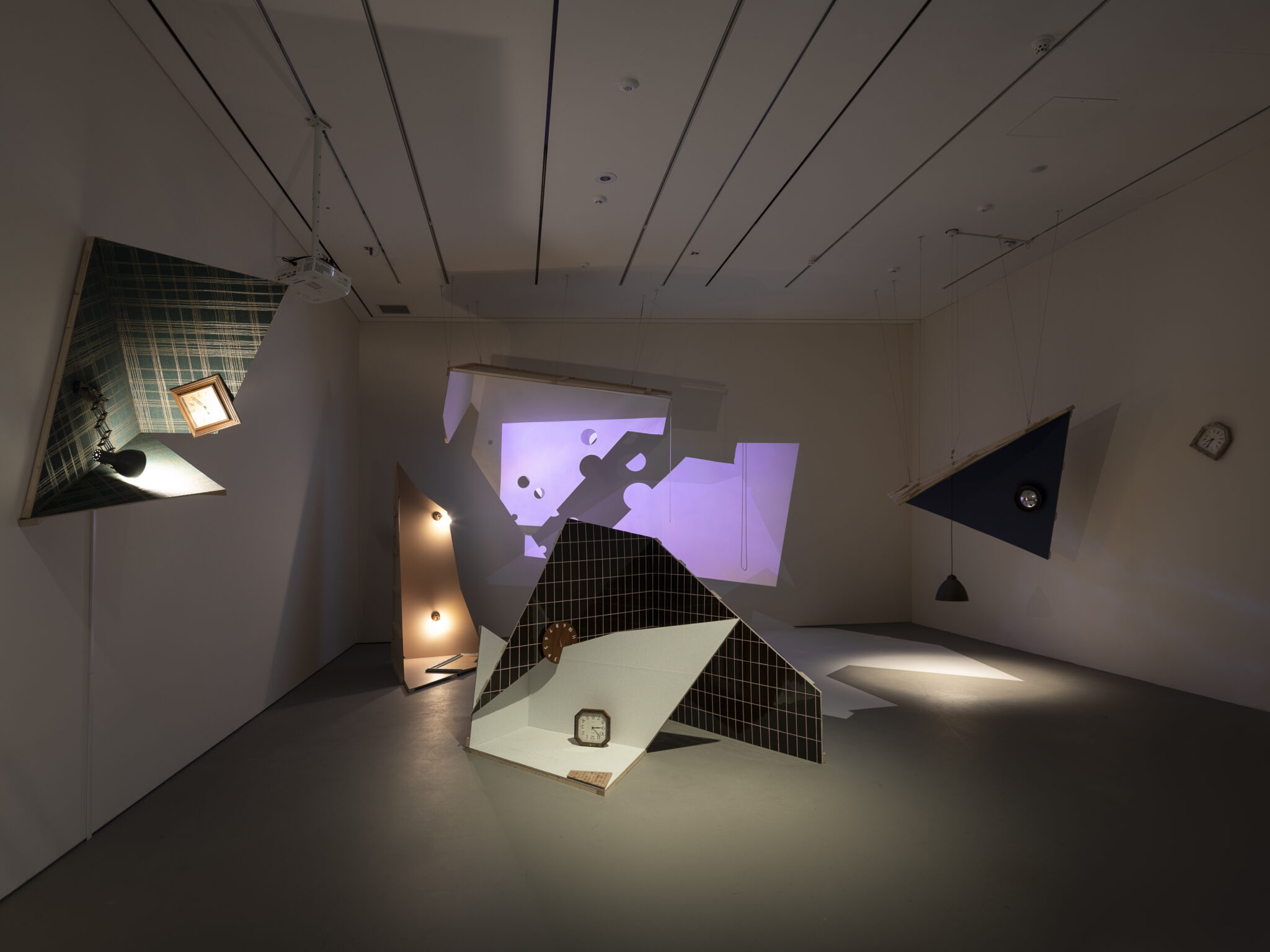
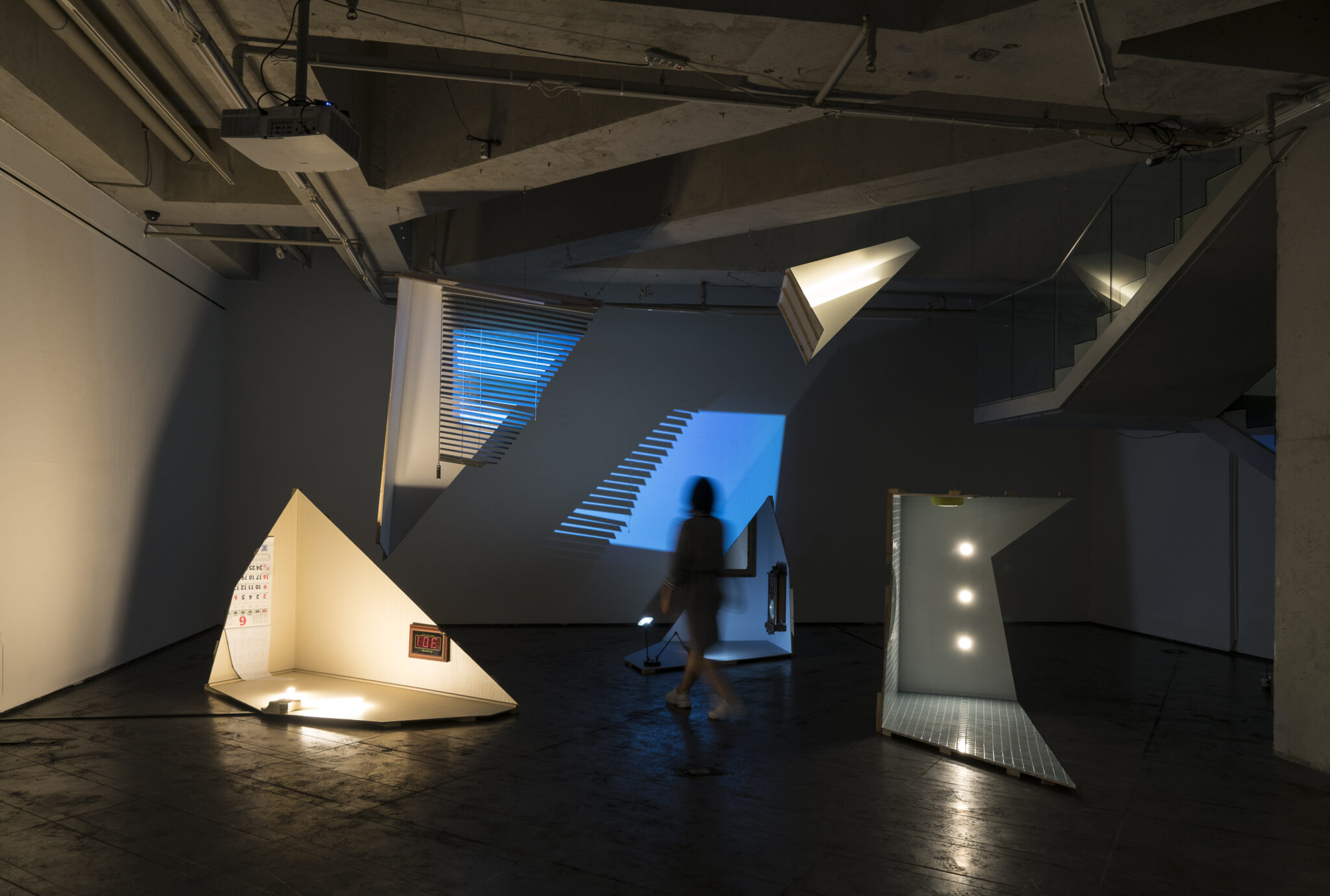
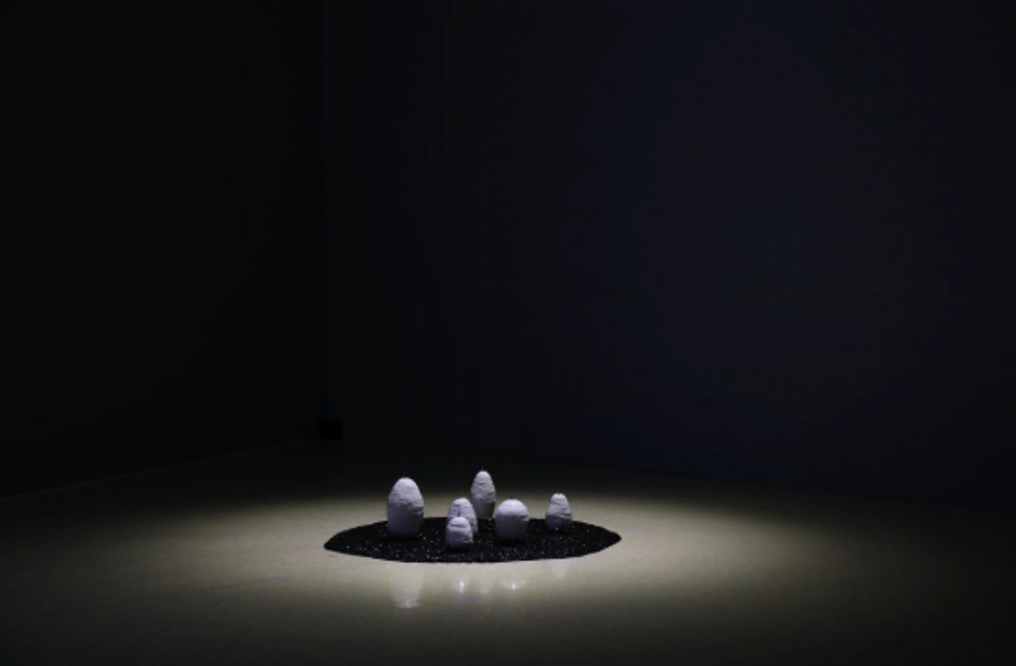
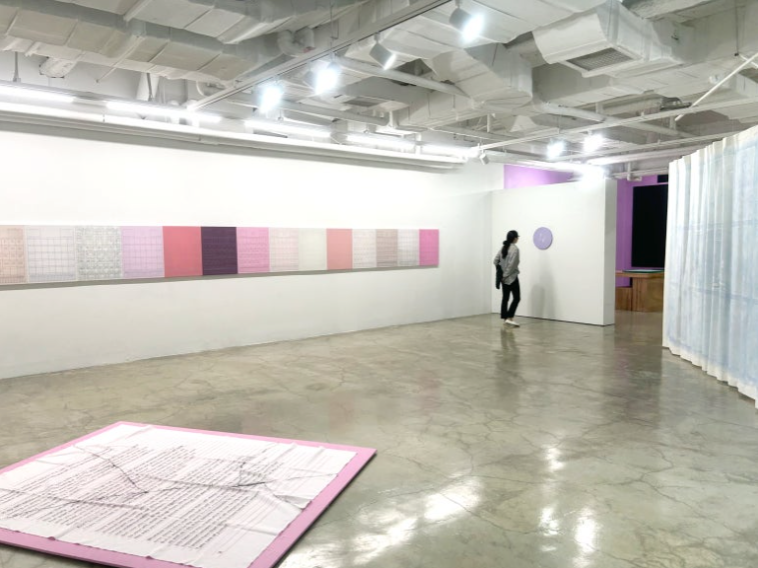
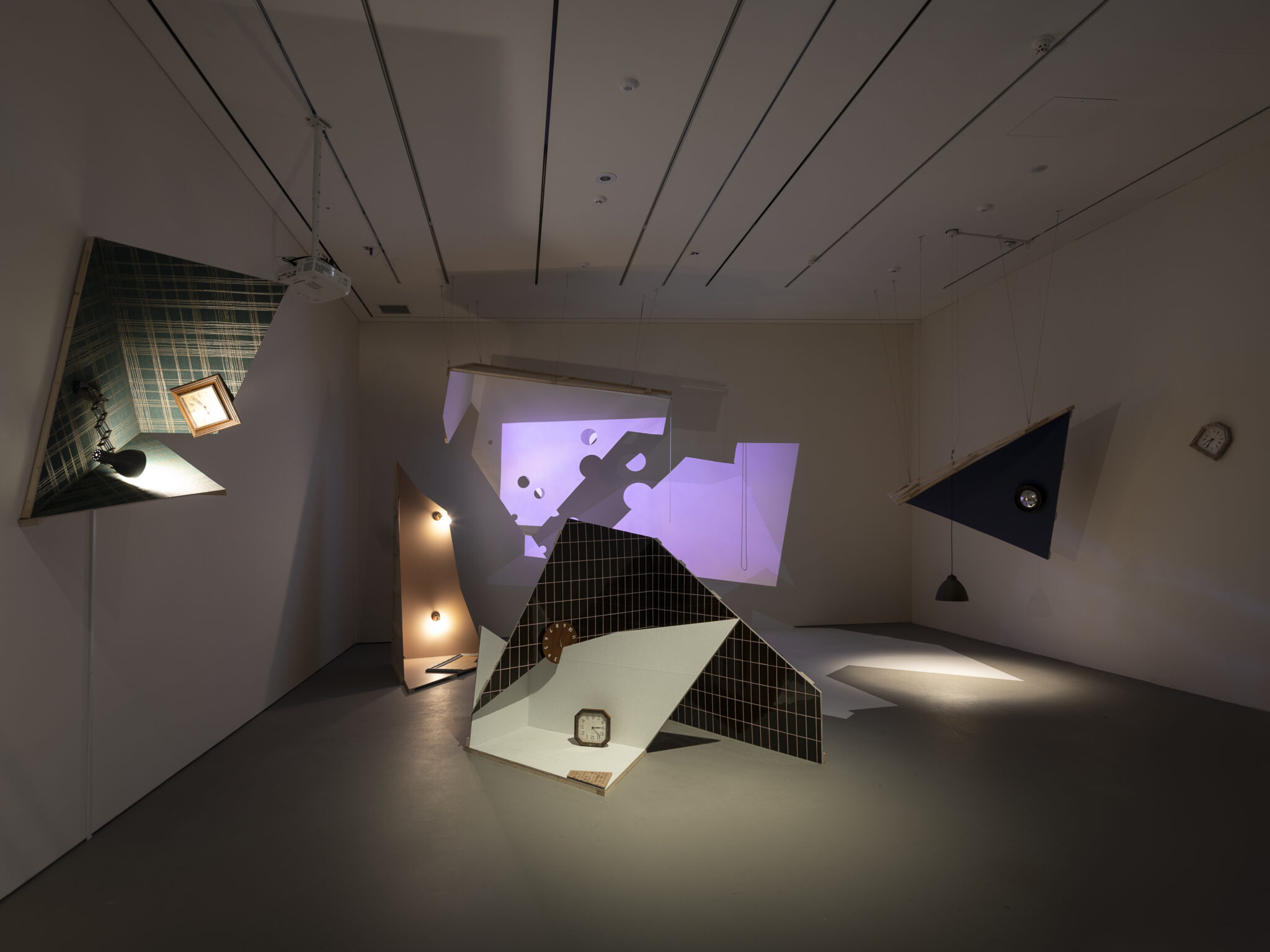
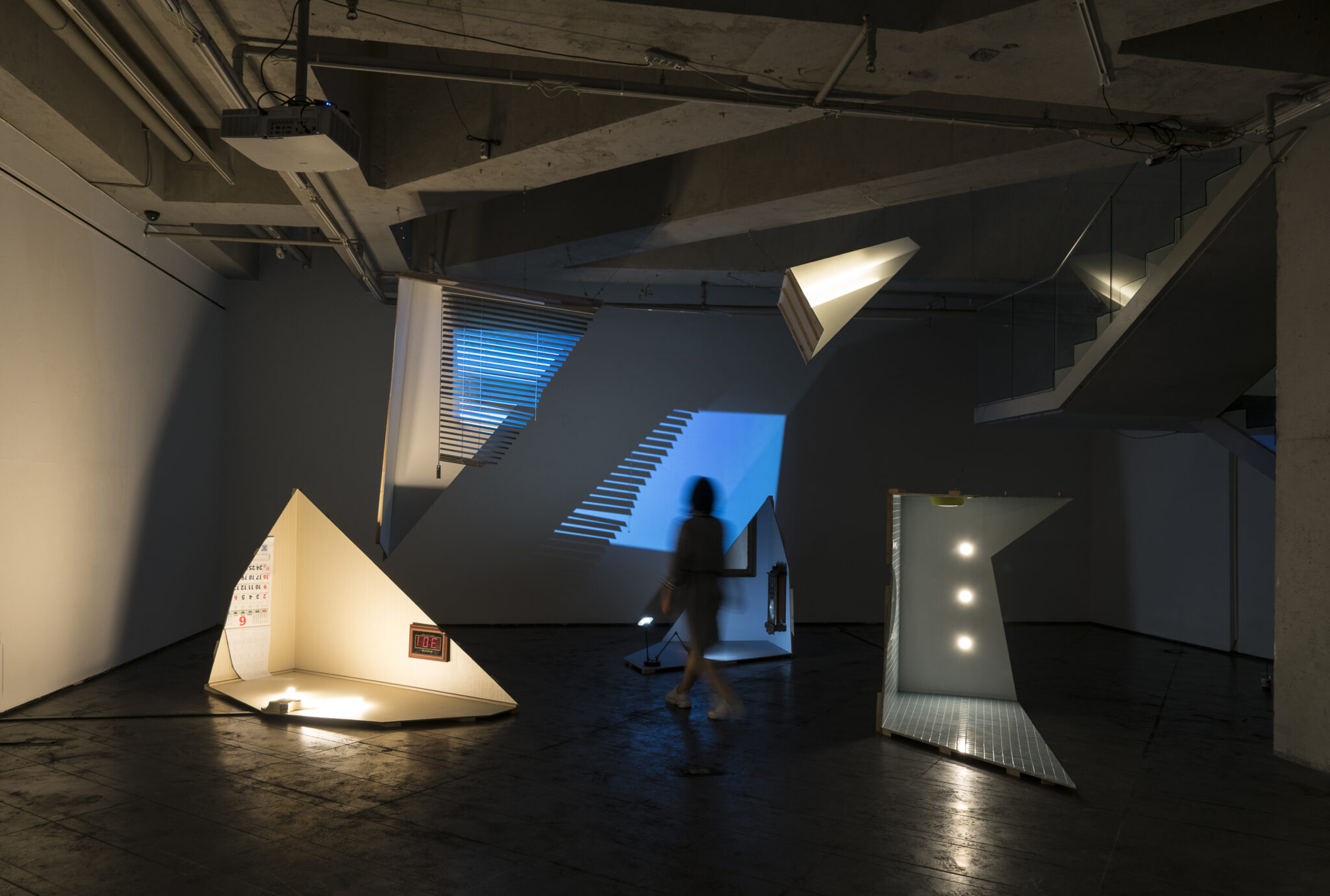
《Cannot Be Conveyed in Words》(Incheon Art Platform, Incheon, 2021) uses light, windows, curtains, clay, and shadows to construct a situation in which four different times and spaces meet in one place, presenting an experience between the virtual and the real that cannot be fully explained in words. Peillacasanstmartinsurousthanampipriacivrysurseinesene…(2022) intersects multiple timelines through objects collected from different places and time devices that refer to the rotational principles of planets.

When Memories Assume Particular Forms
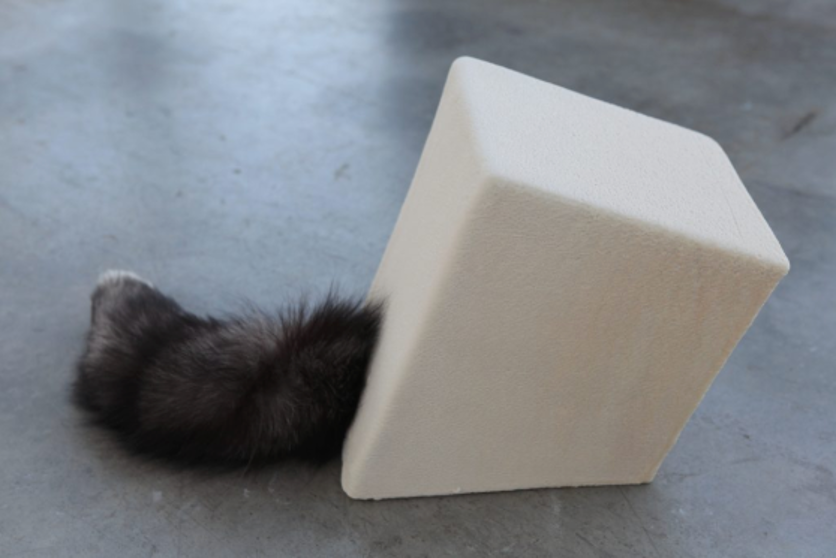
(2024) and Temporary States(2024) dismantle and recombine parts of previous works, spatializing the way memory is formed through omission, error, repetition, and reconstruction. In 《A Mass That Won’t Mix》(Dorossy Salon, Seoul, 2023), the artist addresses the point where the universality of language collides with the specificity of individual thought, visualizing the limits of what is lost or generalized once something is expressed in words.

Style & Contents

Min’s work unfolds through installation, built from collecting, cutting, rearranging, lighting, shadows, and viewer participation. She gathers objects that have been used by others and places them within prepared frames, or embraces the changing properties of materials as part of the work.

Secondhand furniture, wax, chicken wire, plywood, curtains, clay, lights, clocks, mirrors, wallpaper, tiles, ceramic plates, and objects collected from the street all carry different origins and times, forming new relations within the exhibition space. In this process, objects are not simply traces of the past; they become devices that connect and collide different times and spaces.
 
Furniture House most directly shows this method. By using indoor furniture as exterior walls and reversing the relationship between inside and outside, the work transforms both the structure of architecture and the function of furniture.

In Caravan, wax becomes the central material. Because the wax panels melt and harden according to the temperature difference between day and night, sunlight, and the passage of time, the work is not fixed as a completed form but changes together with its surroundings. In this way, Min’s installations do not establish solid structures so much as reveal spatial conditions through the fragility and transformability of materials.
 
After 2019, fragments and corners become important formal elements in Min’s cut-house works. Lavihamahamahyunchuchuhappyj33atomausepponssugizetteblackbyungddoungkkeong… divides a rectangular structure into six pieces and disperses ceiling-only fragments without walls or floor across the exhibition space. In Peillacasanstmartinsurousthanampipriacivrysurseinesene…, this method expands into a more complex structure of time.

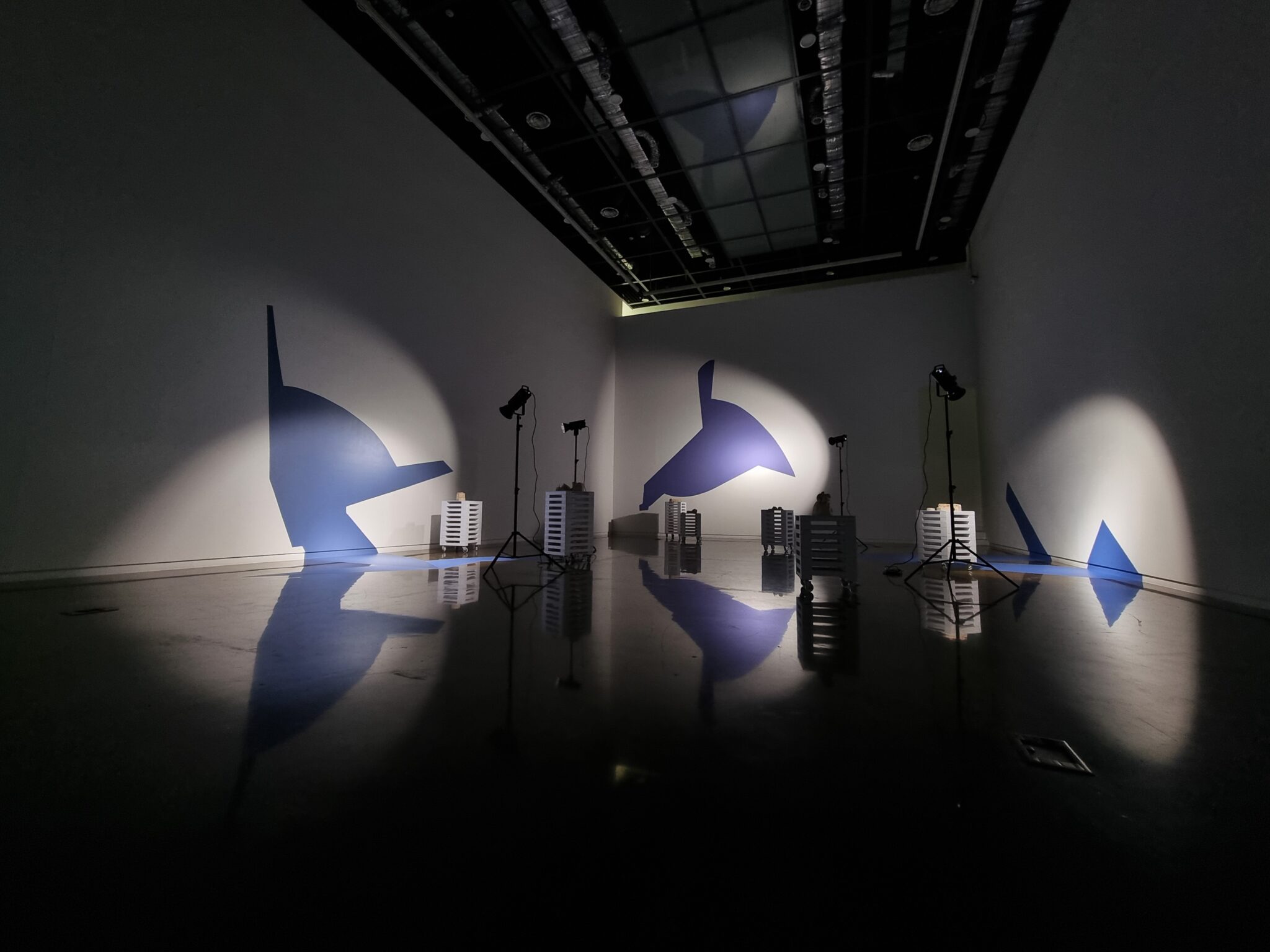
Clocks, videos, lights, tilted frames, and clocks with only focal points move according to different logics, including the rotational speeds of planets. Although these objects are familiar, they operate outside the ordinary rules of reality. Geometric forms and colors painted on the floor and walls follow the shadows of the corners, and viewers encounter multiple directions of time and shadow in a space where a single light or coordinate has disappeared.
 
In her recent works, Min brings parts of existing works into new times and contexts. When Memories Assume Particular Forms reconstructs parts of Lavihamahamahyunchuchuhappyj33atomausepponssugizetteblackbyungddoungkkeong…, adding newly made corners, lights, clocks, mirrors, wallpaper, tiles, and an old intercom to show how memory takes material form.

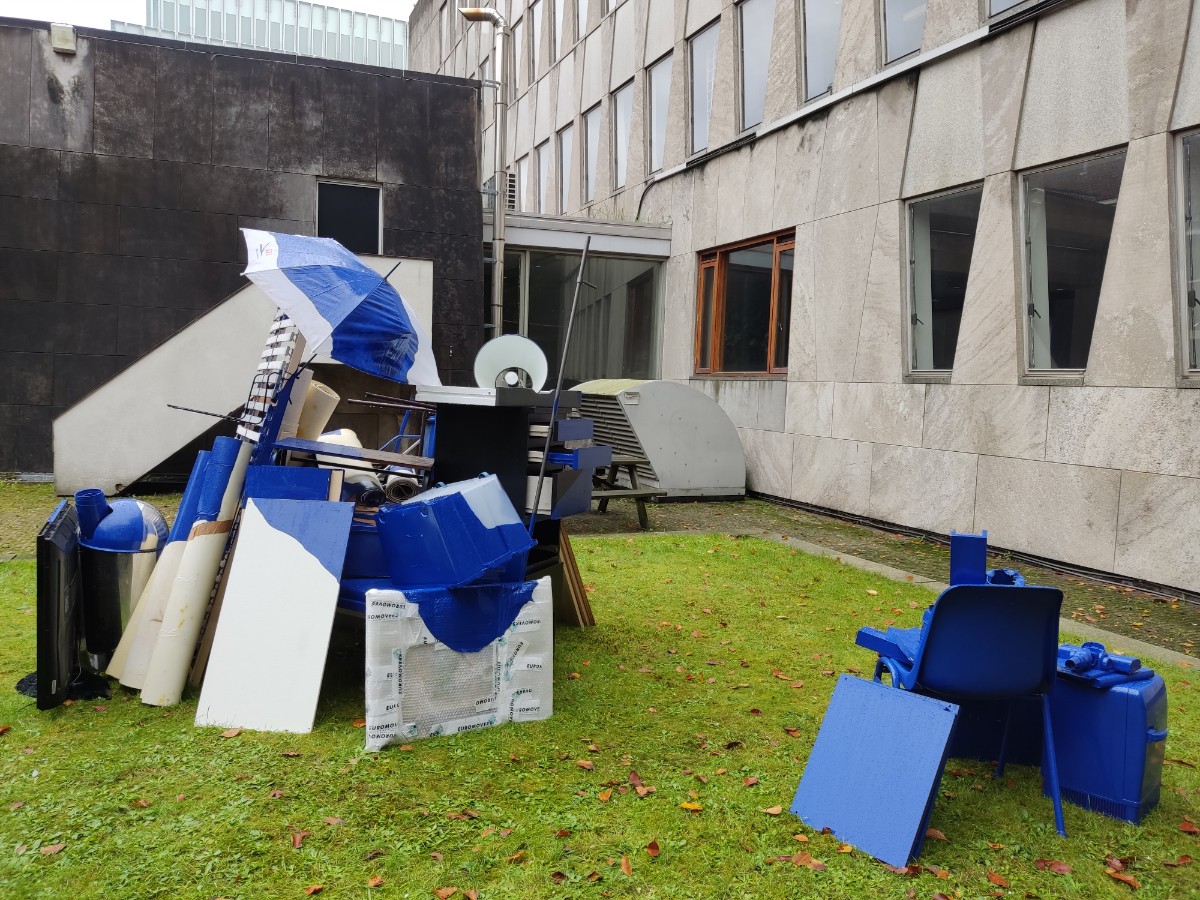
Temporary States combines elements from Hidden Images(2017), Cannot Be Conveyed in Words, and parts of an unpublished work to address a reality in which different temporalities coexist depending on place and circumstance. Connecting the Unconnected(2023) uses paint and objects collected from the street to experiment with the condition in which seemingly unrelated things become loosely connected.

In 《A Mass That Won’t Mix》, the artist brings corner structures, wall lamps, decorative ceramic plates, and reflections in mirrors into relation, connecting the differences between things that appear the same but are not identical to the incompleteness of language.

Topography & Continuity

The distinctiveness of Ye-eun Min’s work lies in the fact that she treats the home as a metaphor for identity, yet does not explain it narratively; instead, she breaks it down and rebuilds it through actual objects and spatial structures. While many practices dealing with the home center on emotional themes such as memory, family, dwelling, and loss, Min shows how identity is made and blurred through concrete components: exterior walls and interiors, furniture and decoration, ceilings and corners, light and shadow.

In her work, the home is not a stable foundation for the individual, but a variable structure where different cultures and languages, places and times, anonymous objects and memories temporarily coexist.
 
Tracing the development of her work, Min began by unsettling conventional ideas of the form and stability of the home in Furniture House and Caravan. She then transformed the home into cut fragments and gatherings of anonymous objects through Lavihamahamahyunchuchuhappyj33atomausepponssugizetteblackbyungddoungkkeong… and 《Unpredictable invisibility》.

In 《Cannot Be Conveyed in Words》, she created a real experience of the virtual, where four times and spaces meet in one space. By the time of Peillacasanstmartinsurousthanampipriacivrysurseinesene… and When Memories Assume Particular Forms, the fragments of the home are no longer materials for restoring a single past, but elements of parallel worlds where multiple times and places coexist according to their own logics.

In Temporary States and 《A Mass That Won’t Mix》, this concern expands toward the incompleteness of memory and language, and toward individual sensations that cannot be fully contained within universal concepts.
 
Min’s installations do not rely only on monumental form or overwhelming scale. Instead, she creates multiple centers through materials that have already passed through someone’s time: old lights, secondhand furniture, clocks, wallpaper, tiles, clay, and anonymous objects. Placed without hierarchy, these elements affect one another, while viewers walk among them, cast light, follow shadows, and participate in the time of the work.

In this sense, her practice goes beyond arranging objects; it creates situations in which different realities enter temporary states of balance. The inability to clearly distinguish inside from outside, past from present, or reality from imagination becomes the central force of the work. Min’s work continues to ask how things that cannot be fully merged—cultures, languages, places, times, and memories—can nevertheless exist together.

Works of Art

Reconstructing the Symbolic and Material Qualities of Home

Articles

Exhibitions

Activities