Time-Art Exchange - K-ARTIST

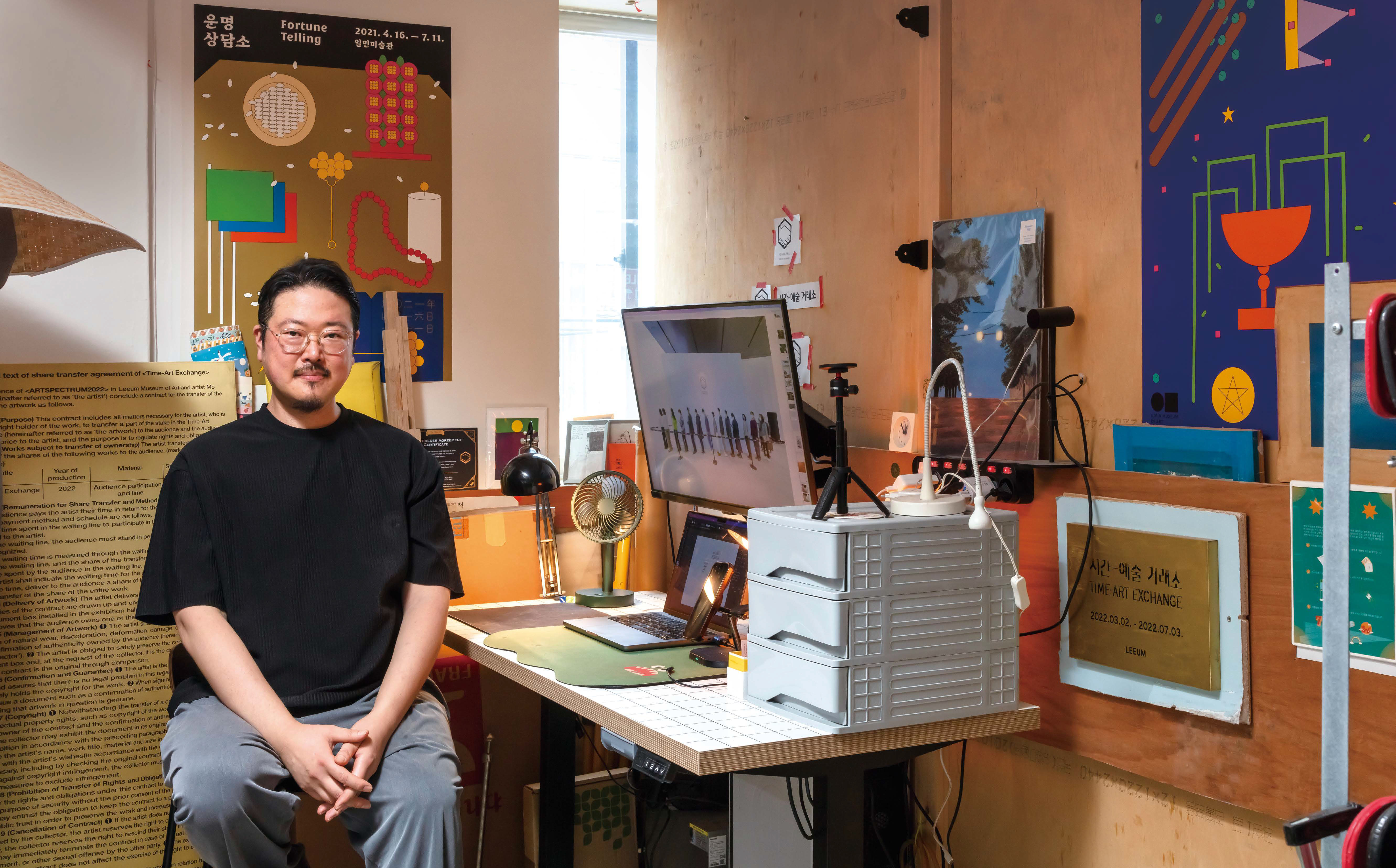
Time-Art Exchange

2022
Audience participation and time
Dimensions variable
About The Work

Mo Kim’s practice begins with questions about the rules and social agreements that lead individuals to accept reality as natural and self-evident. He examines the ways in which social rules and institutions organize reality, as well as the value systems of a society that prioritizes autonomy and productivity.

Based on these inquiries, he has developed his practice through a range of approaches, including sculpture and installation, audience participation, simulations of social systems, performance, and ecological practices.

A defining characteristic of Kim’s work is his insertion of small variables into familiar environments or established rules, thereby revealing conditions of reality that ordinarily remain unnoticed. In this process, audience participation functions as an essential element in completing the work.

Rather than presenting a fully resolved object or situation in the exhibition space, Kim incorporates the process through which viewers follow particular rules, make choices, and spend their time as part of the work itself.

By introducing rules that subtly deviate from familiar forms, he encourages viewers to become conscious of the procedures and value systems they normally follow without question. After designing these structures, the artist steps back, leaving the work open to change and completion through the choices and responses of its participants.

Over the course of more than a decade, Kim has expanded his interests from urban transformation and the workings of art institutions to climate and ecology, while maintaining a consistent interest in bringing experiences that are difficult to capture through conventional measures of efficiency and value to the center of his practice.

Through this approach, he invites us to view the rules and values we have come to take for granted, as well as the relationships formed within them, from an unfamiliar perspective, opening up new possibilities for perceiving and sensing familiar realities.

Solo Exhibitions (Brief)

Mo Kim held solo exhibitions at Cyart Gallery in Seoul in 2013, the Reid Building at The Glasgow School of Art in Glasgow in 2016, and Instant Roof in Seoul in 2019.

Group Exhibitions (Brief)

Mo Kim has participated in group exhibitions at Transmission Gallery in Glasgow, UK, in 2016; Culture Station Seoul 284 in 2017; Nam June Paik Art Center and SeMA Bunker in 2018; Ilmin Museum of Art in 2021; Leeum Museum of Art in 2022; Incheon Art Platform in 2024; and ARKO Art Center in 2025.

Residencies (Selected)

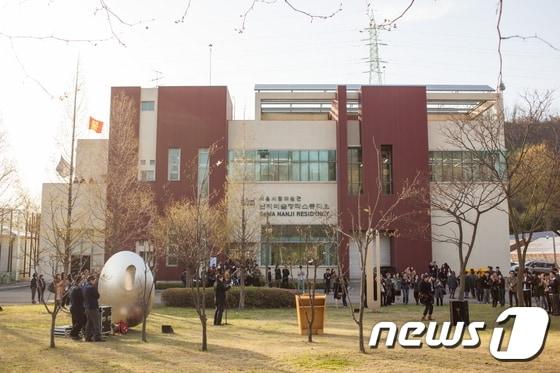
Mo Kim participated in residency programs at Agora AFFECT in Berlin in 2015, SeMA Nanji Residency in 2017, Incheon Art Platform in 2018, and MMCA Residency Goyang in 2019.

Works of Art

Ways of Seeing and Sensing the Familiar Anew

Originality & Identity

Mo Kim’s practice begins with questions about the rules and conventions that lead individuals to accept reality as natural and self-evident. His early works focused on the sensation of familiar places suddenly becoming strange amid rapidly changing urban environments.

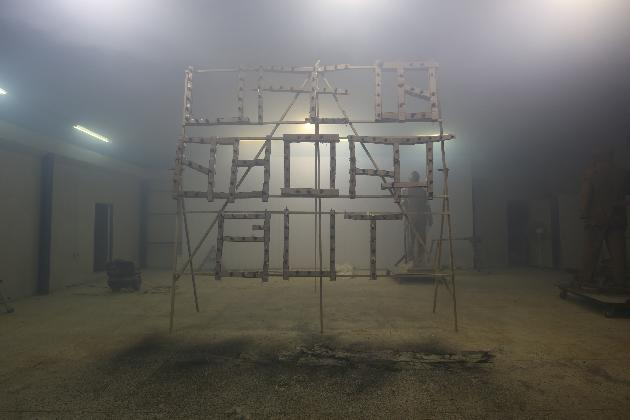
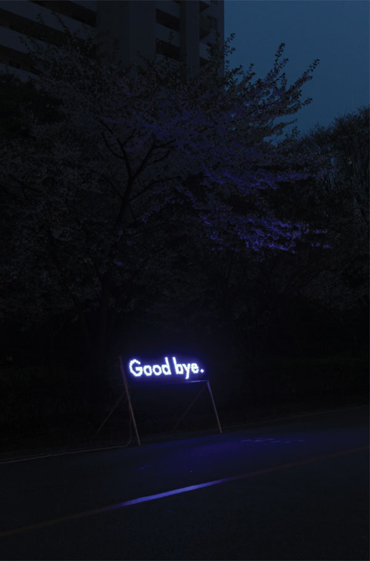
In Good bye, he installed phrases modeled after advertising signs throughout the city and photographed them, creating temporary moments of rupture within ordinary streets and architecture. As unfamiliar signs intervene in spaces routinely passed through, the urban landscape is perceived anew between familiarity and estrangement. This concern gradually expanded from the individual perception of space toward the ways in which social rules and institutions organize reality.

Audience participation serves as a central method through which Kim gives concrete form to these concerns. Rather than simply presenting completed outcomes in the exhibition space, he incorporates processes in which viewers follow particular rules, make choices, and expend time as part of the work itself.

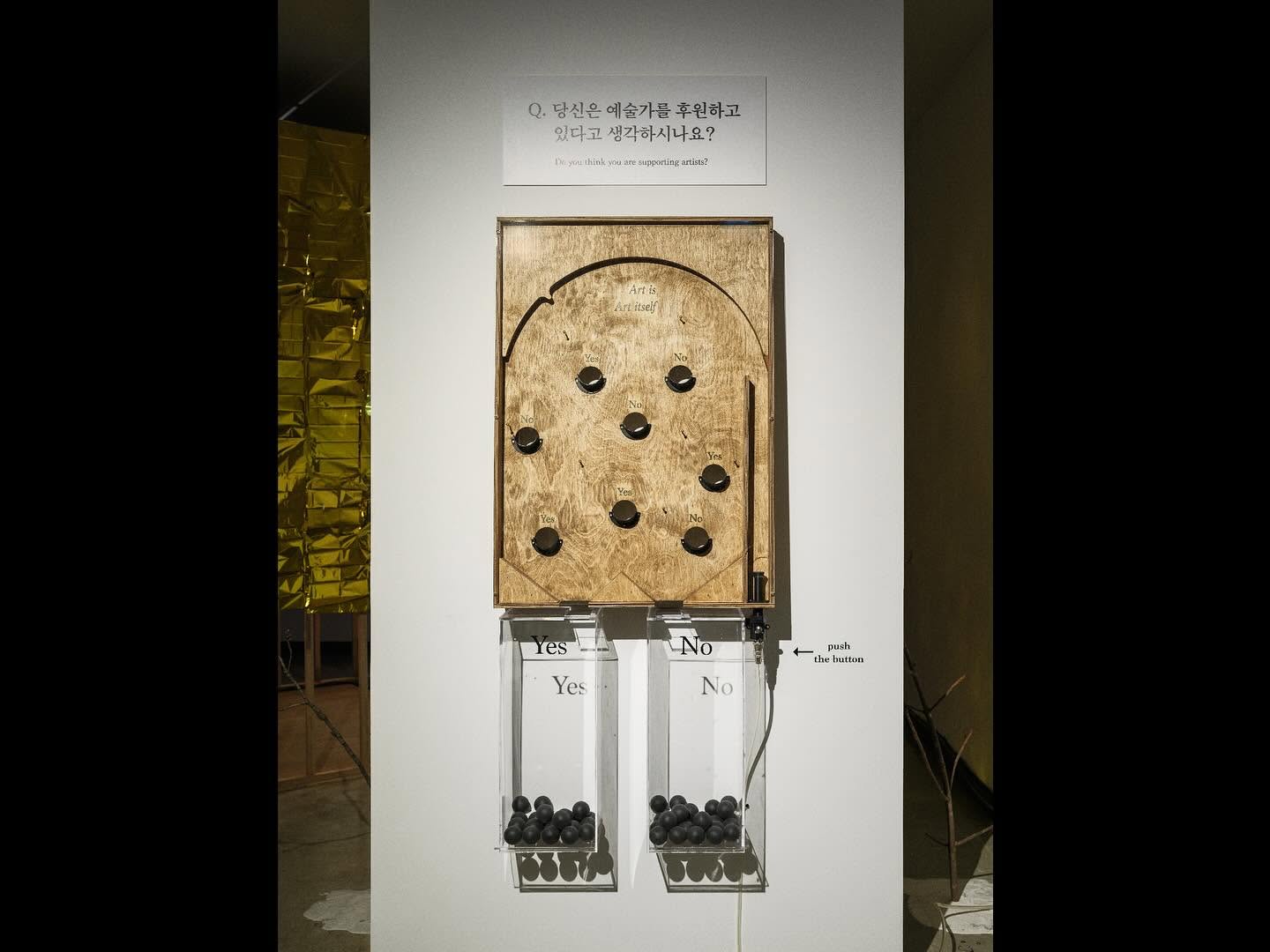
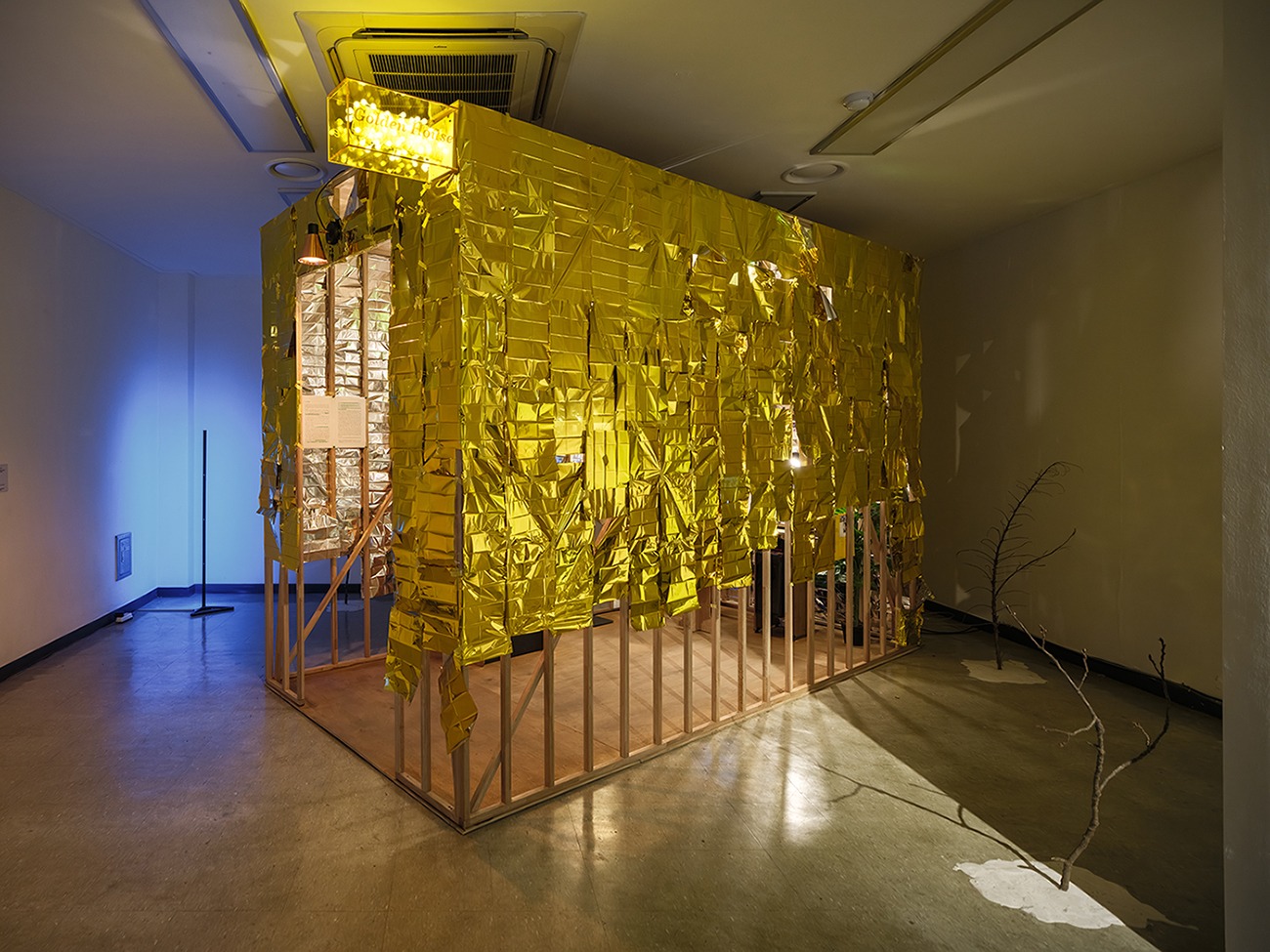
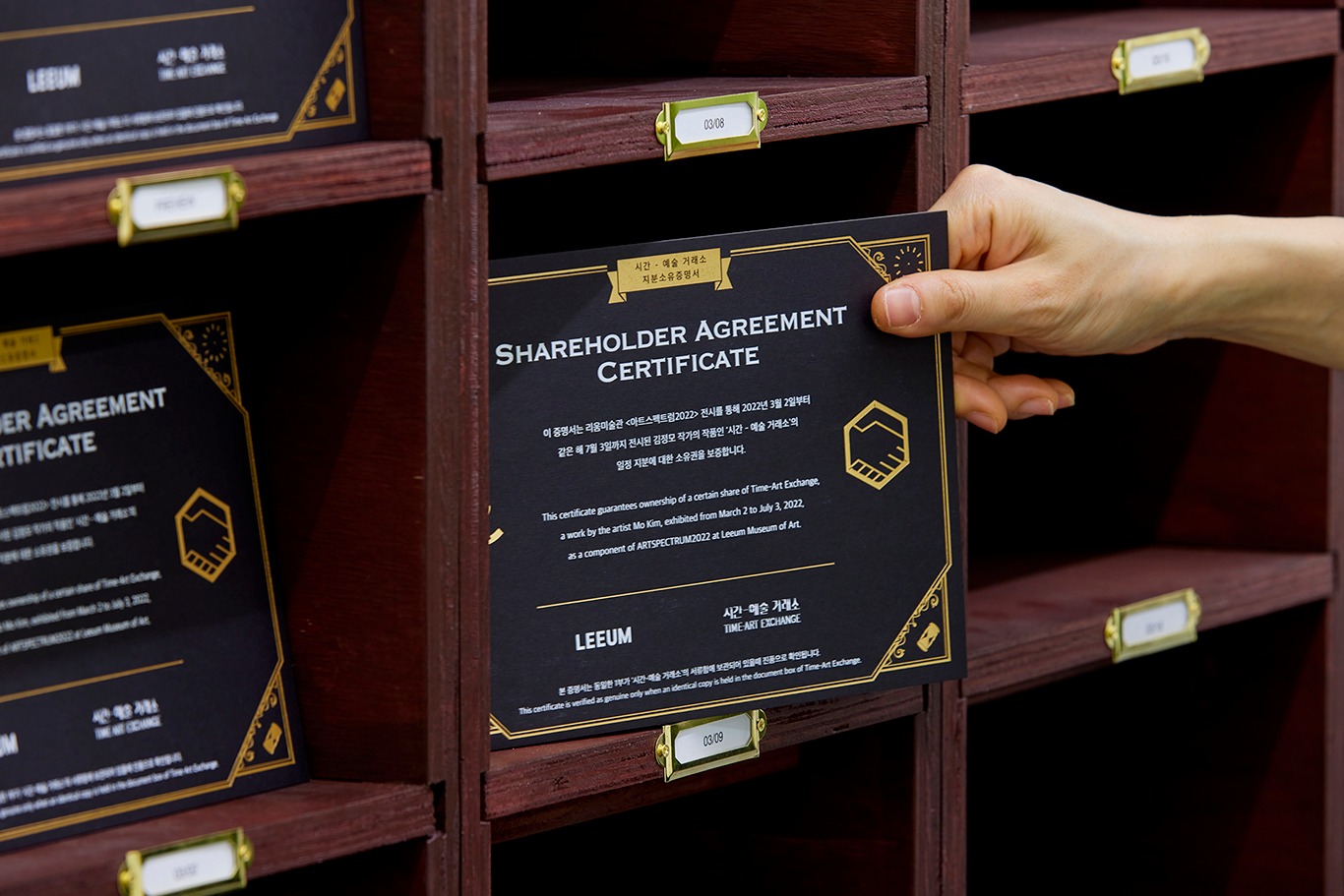
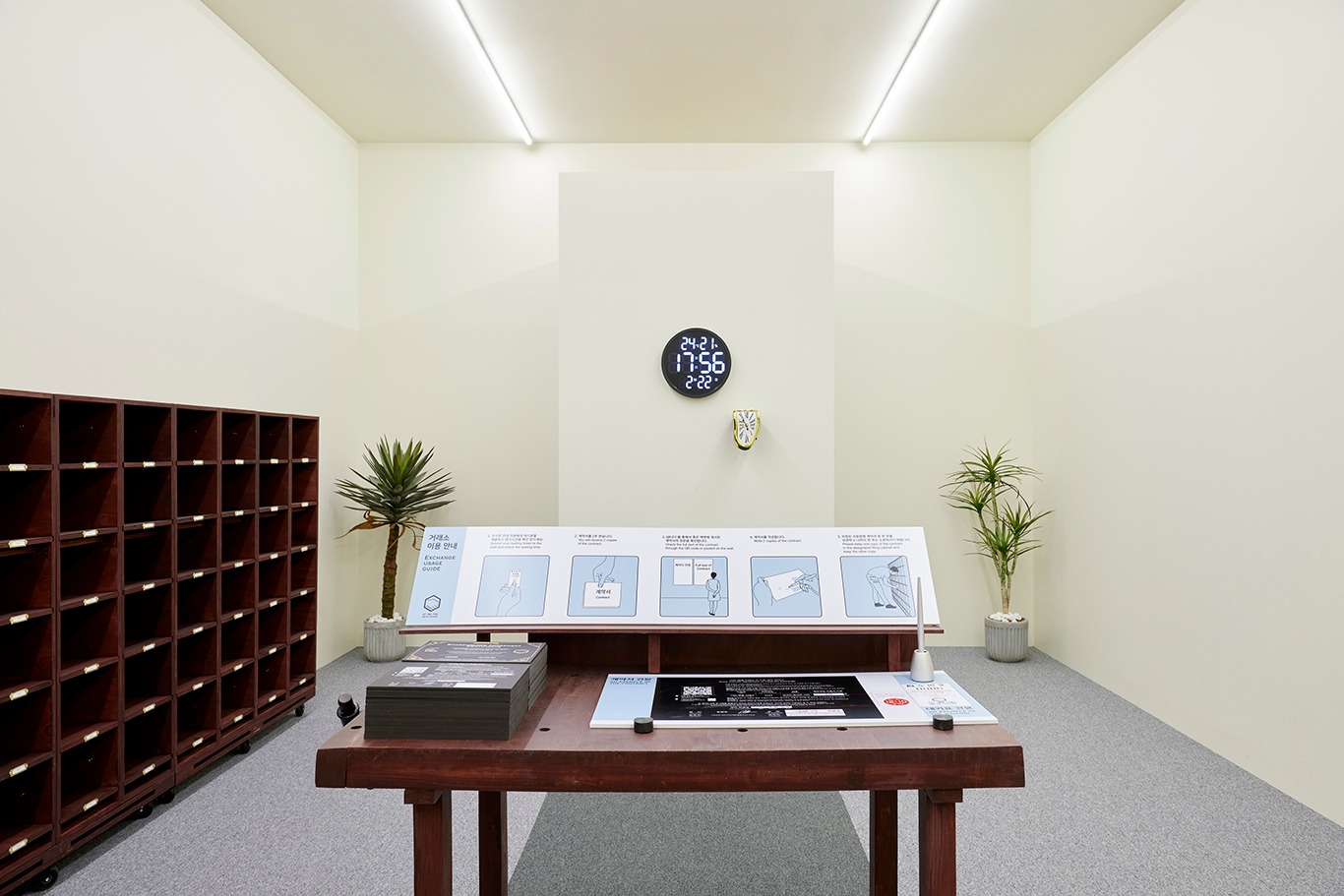
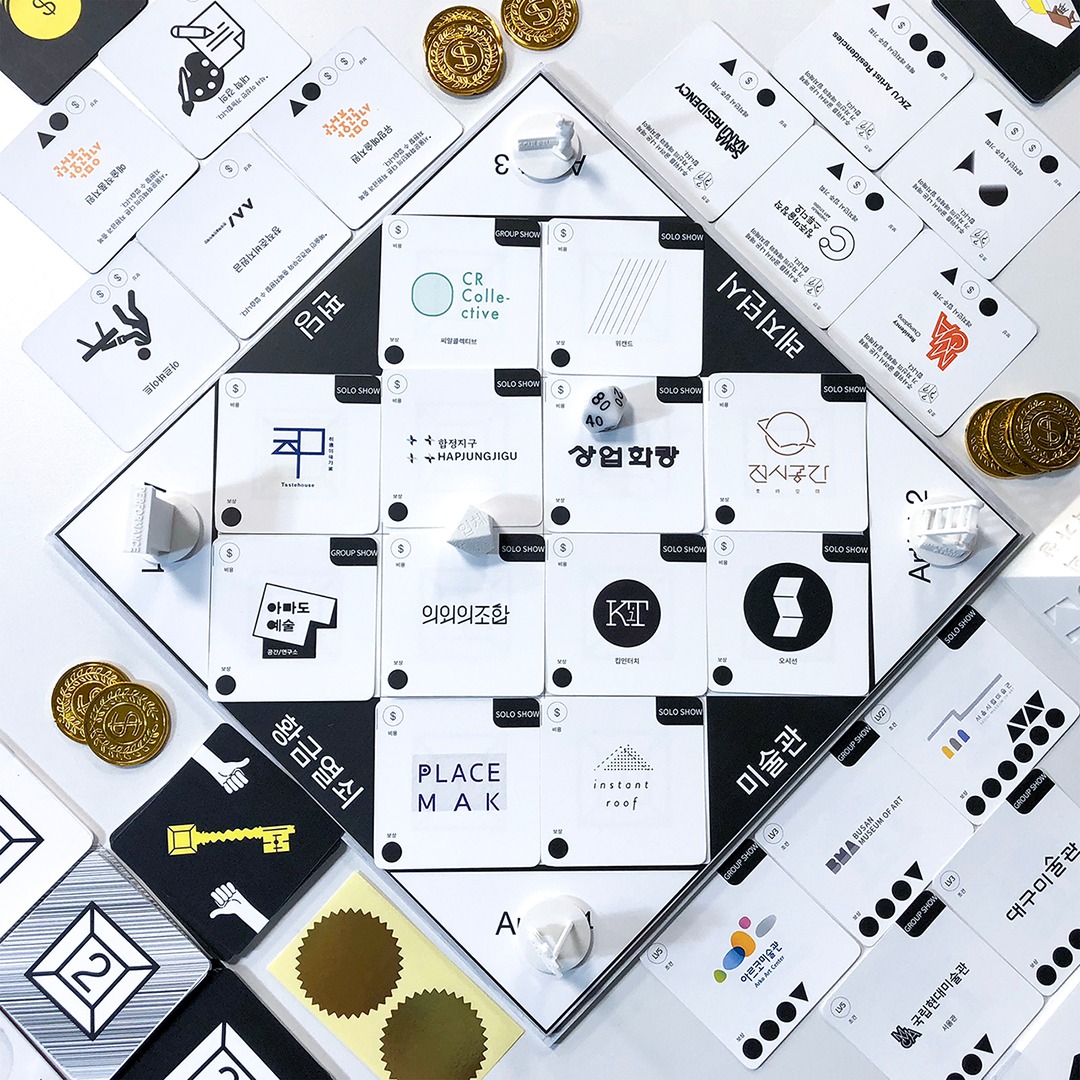
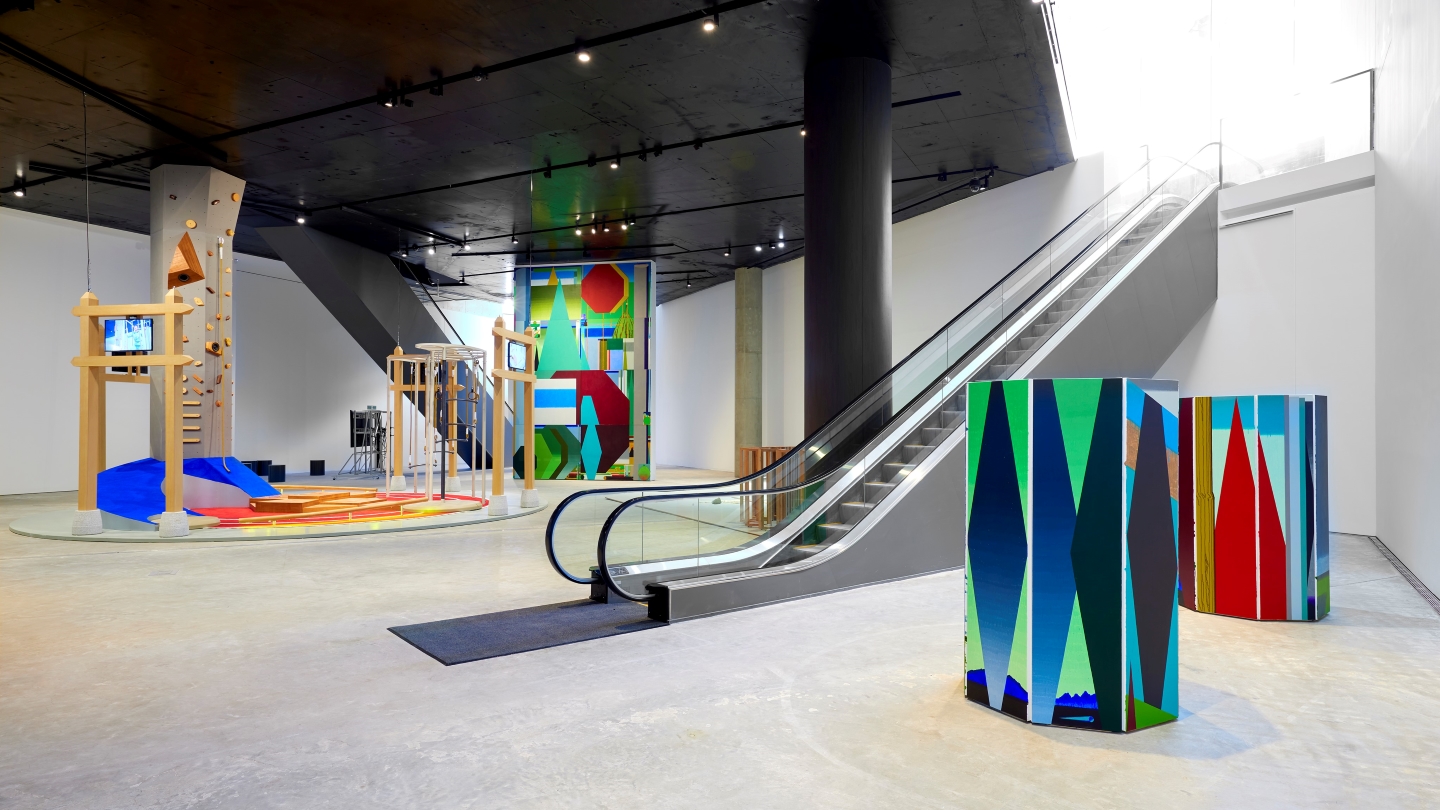
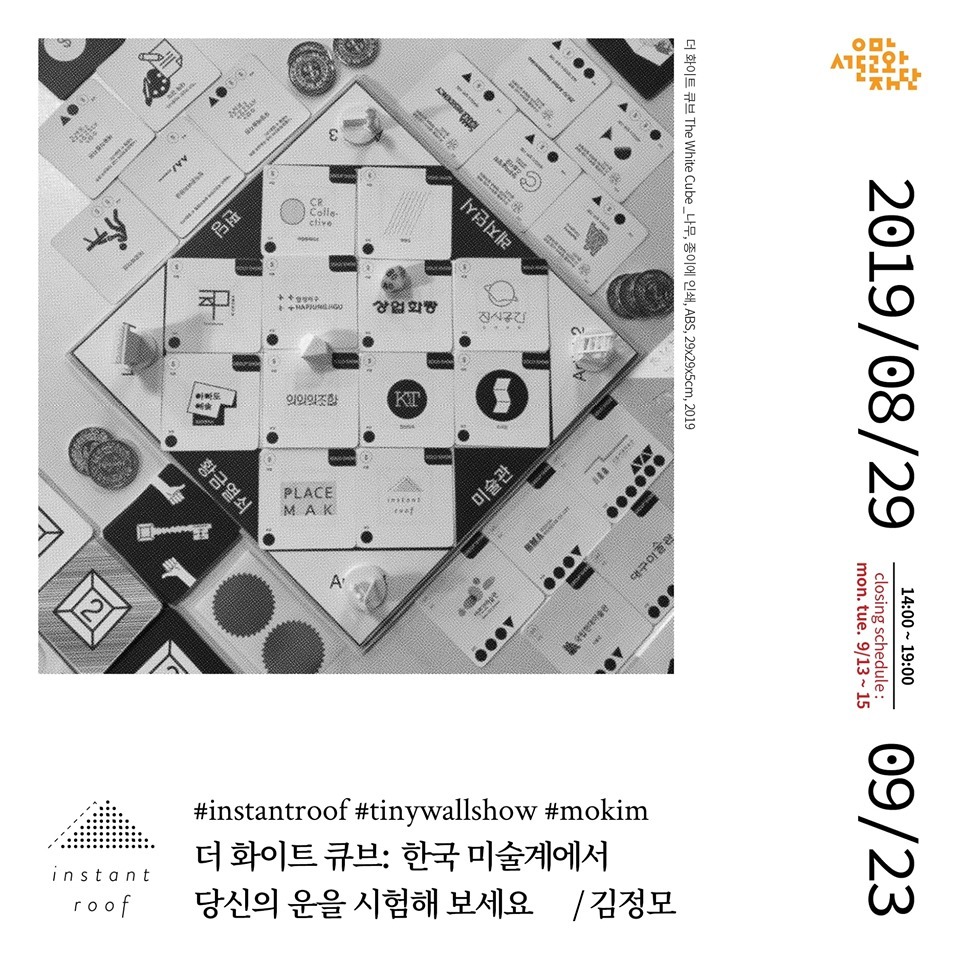
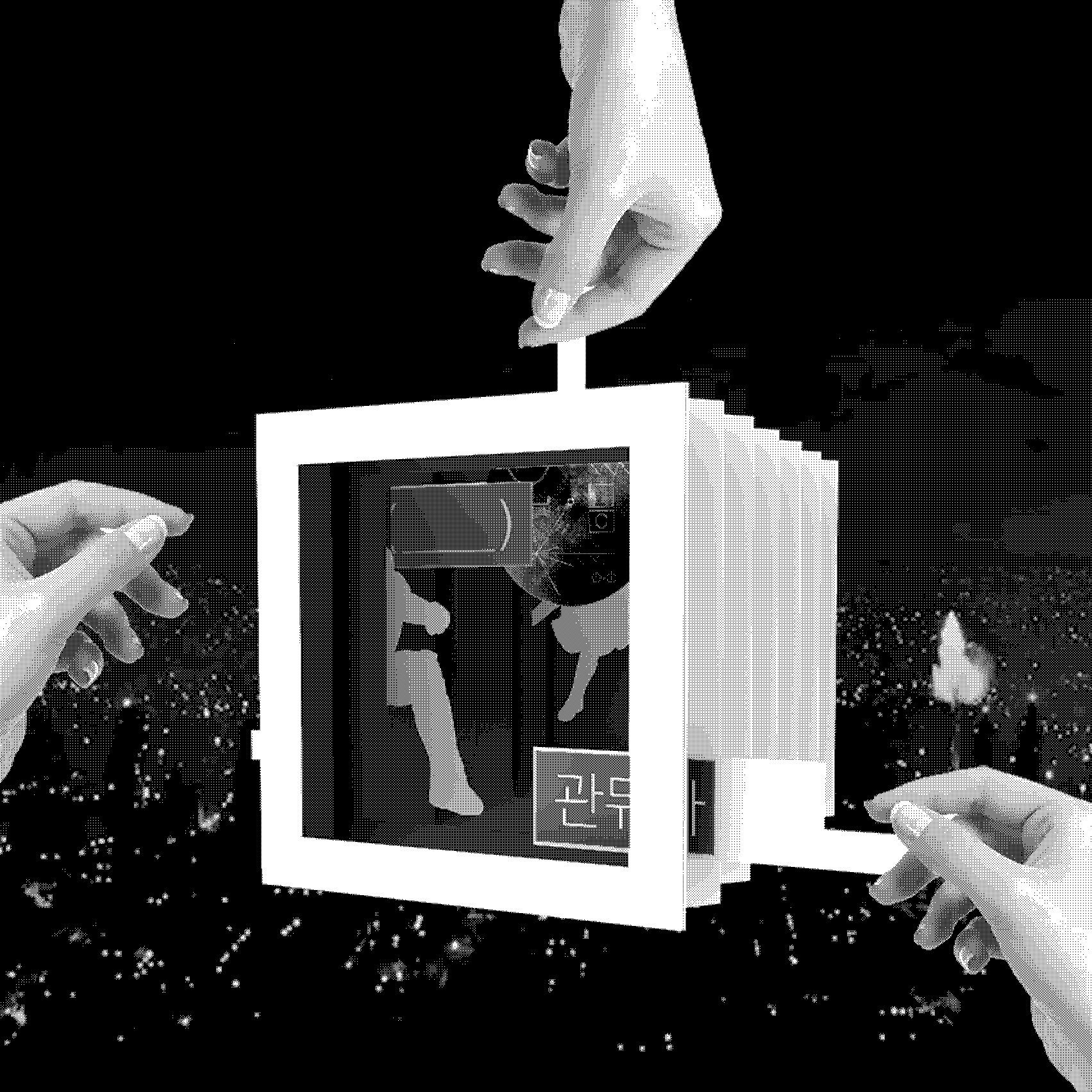
In The White Cube, the rules of a board game condense the structures and competition of the Korean art world, while in Time-Art Exchange, viewers exchange the time they spend waiting in line for shares in the artwork. Familiar social devices such as exchanges, contracts, certificates, and games establish temporary systems resembling actual institutions.

Within them, viewers become participants while simultaneously experiencing the conditions imposed upon them by the system, encountering firsthand how concepts such as artistic value, ownership, and fairness are constituted through conventions and procedures.

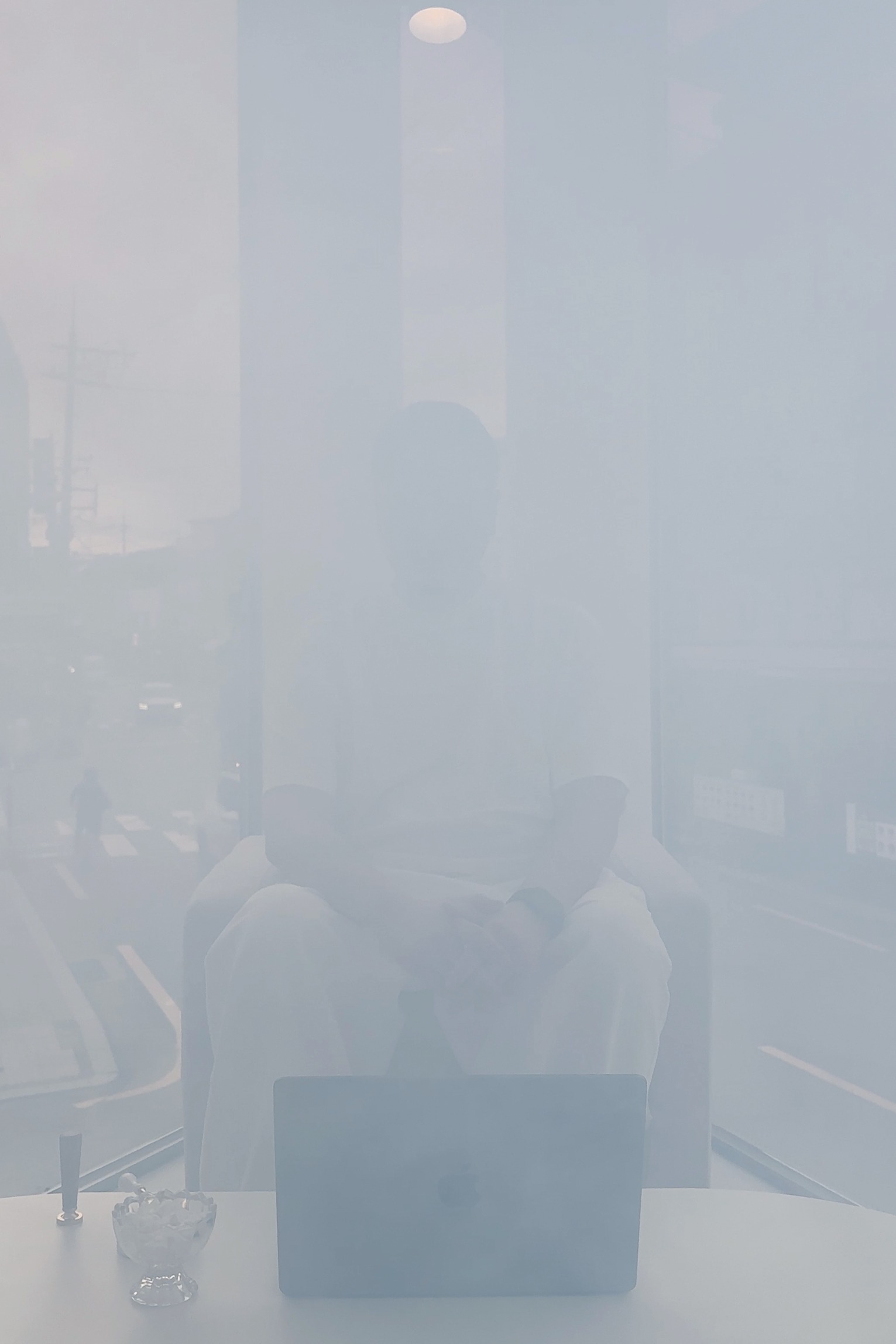
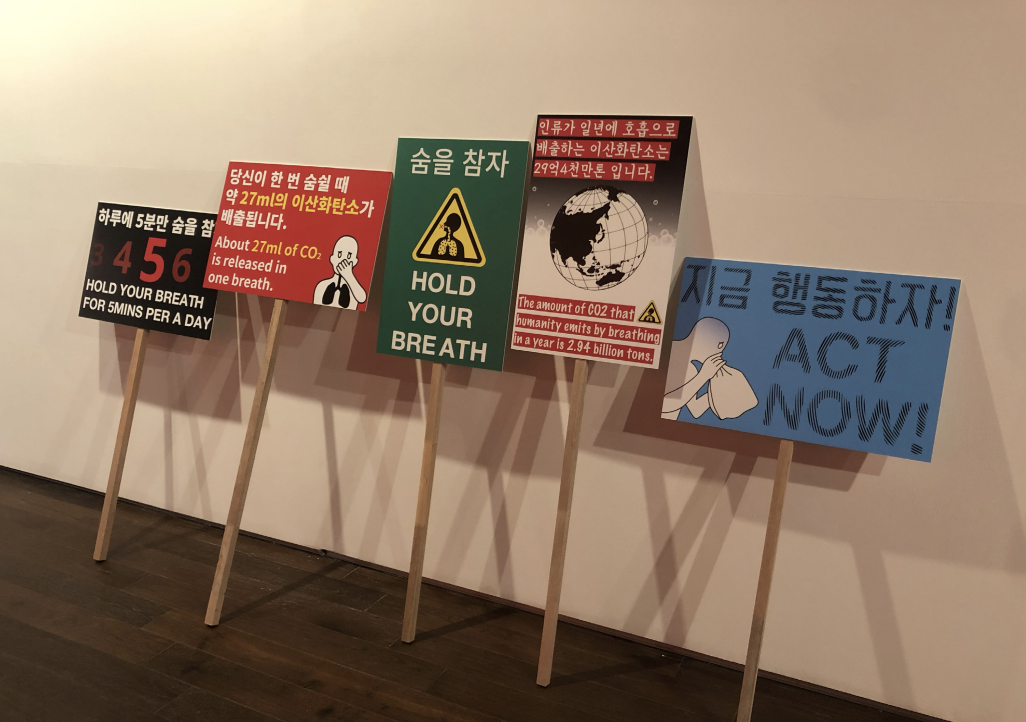
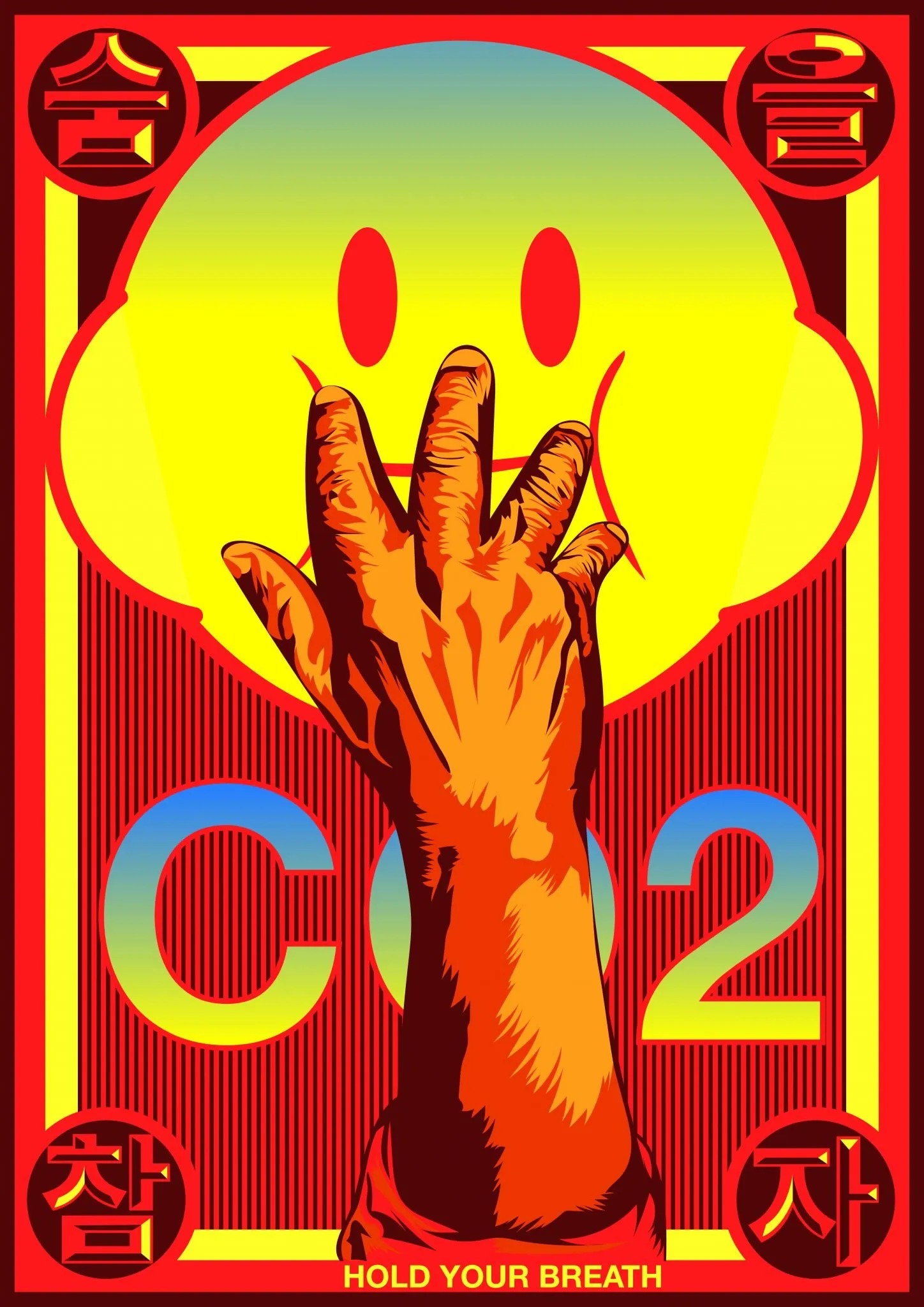
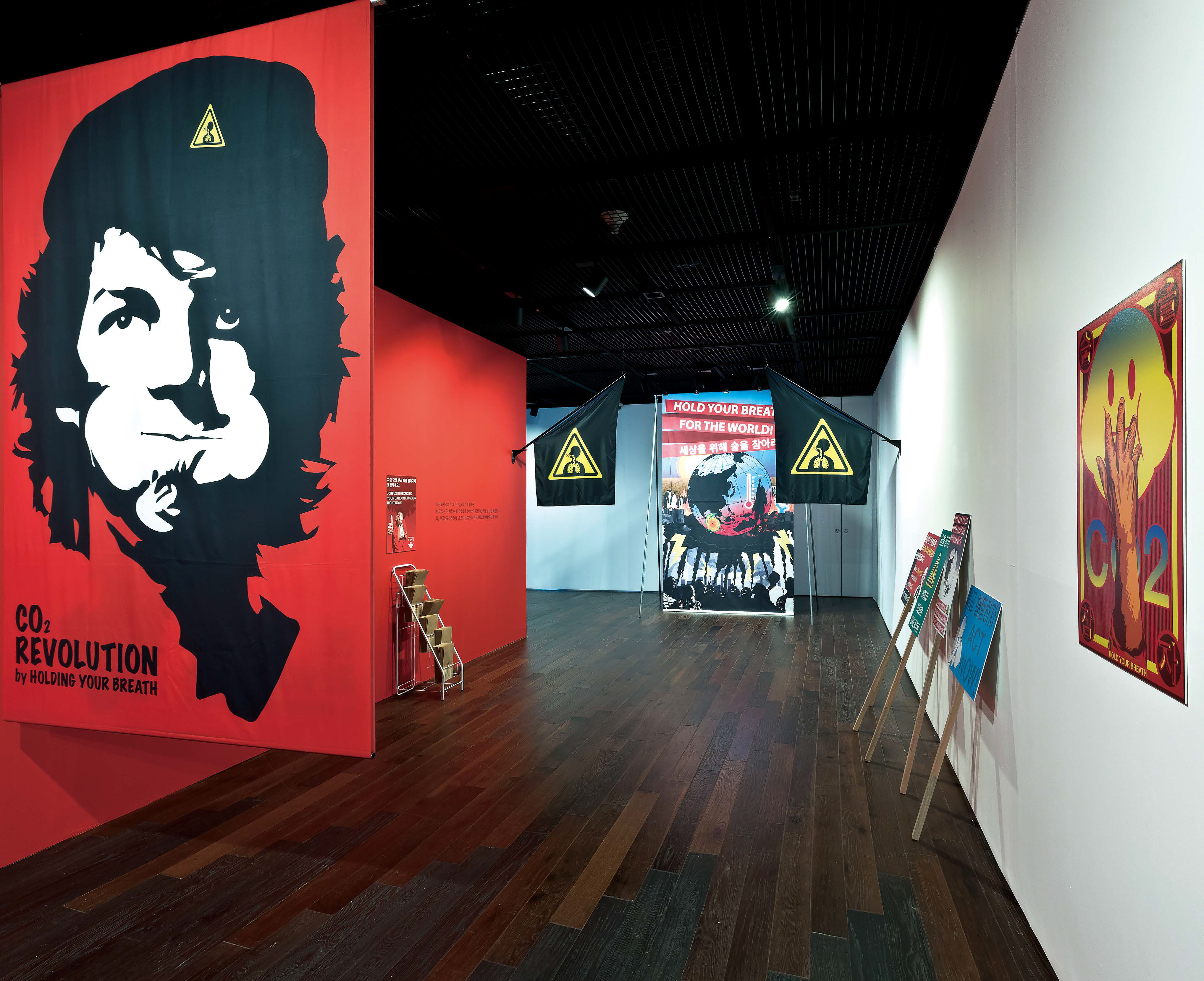
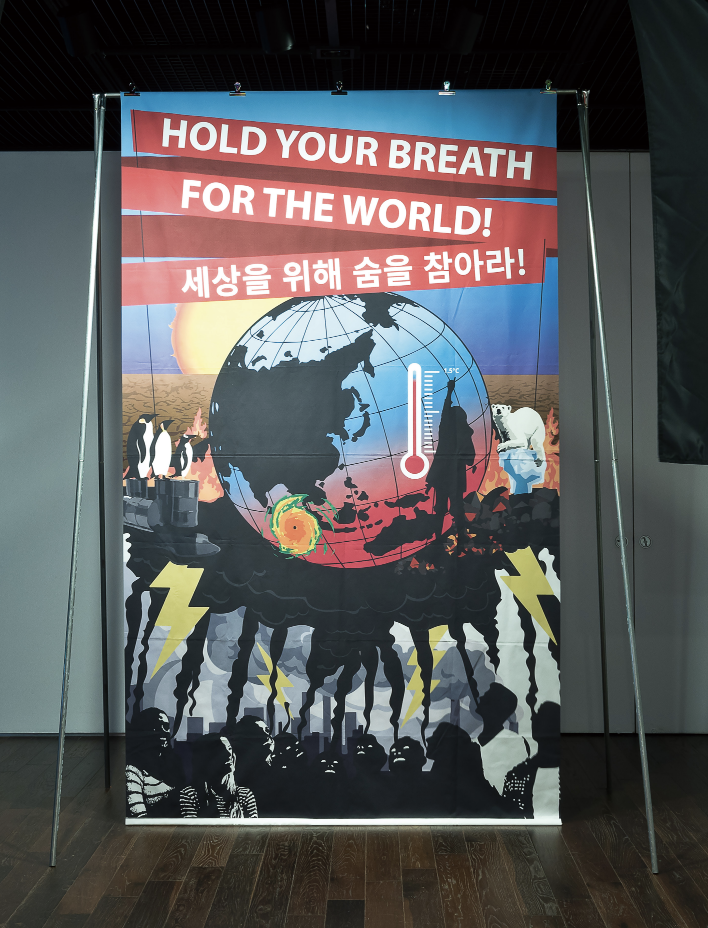
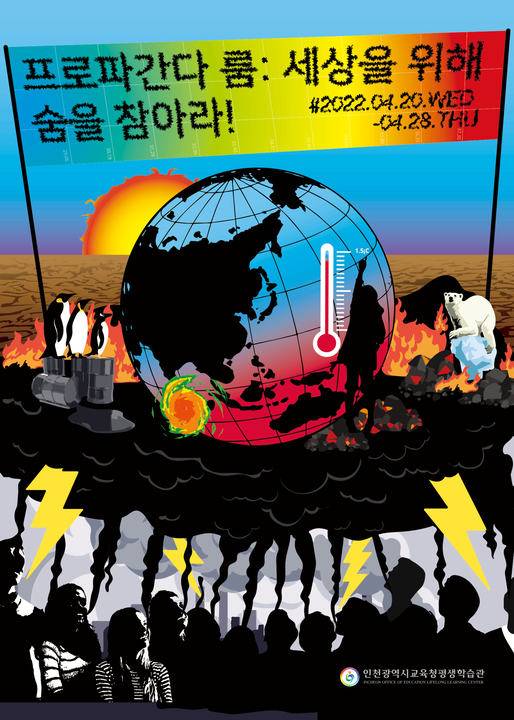
In more recent works, these concerns have developed into questions about social value systems centered on efficiency and productivity. Propaganda Room proposes the ineffective action of “holding one’s breath to reduce carbon emissions” under the pretext of responding to the climate crisis, inviting participants to consider the meaning of such a futile practice for themselves.

In Ritual for Unproductive Art, unrealized artworks, empty envelopes, and expended time become conditions of the work. Waiting, breath-holding, contracts, and rituals repeatedly staged by Kim are actions that resist easy conversion into visible results. By foregrounding time and sensation that cannot readily be valued according to standards of efficiency, the artist questions what is recognized as productive activity and what is excluded as useless.

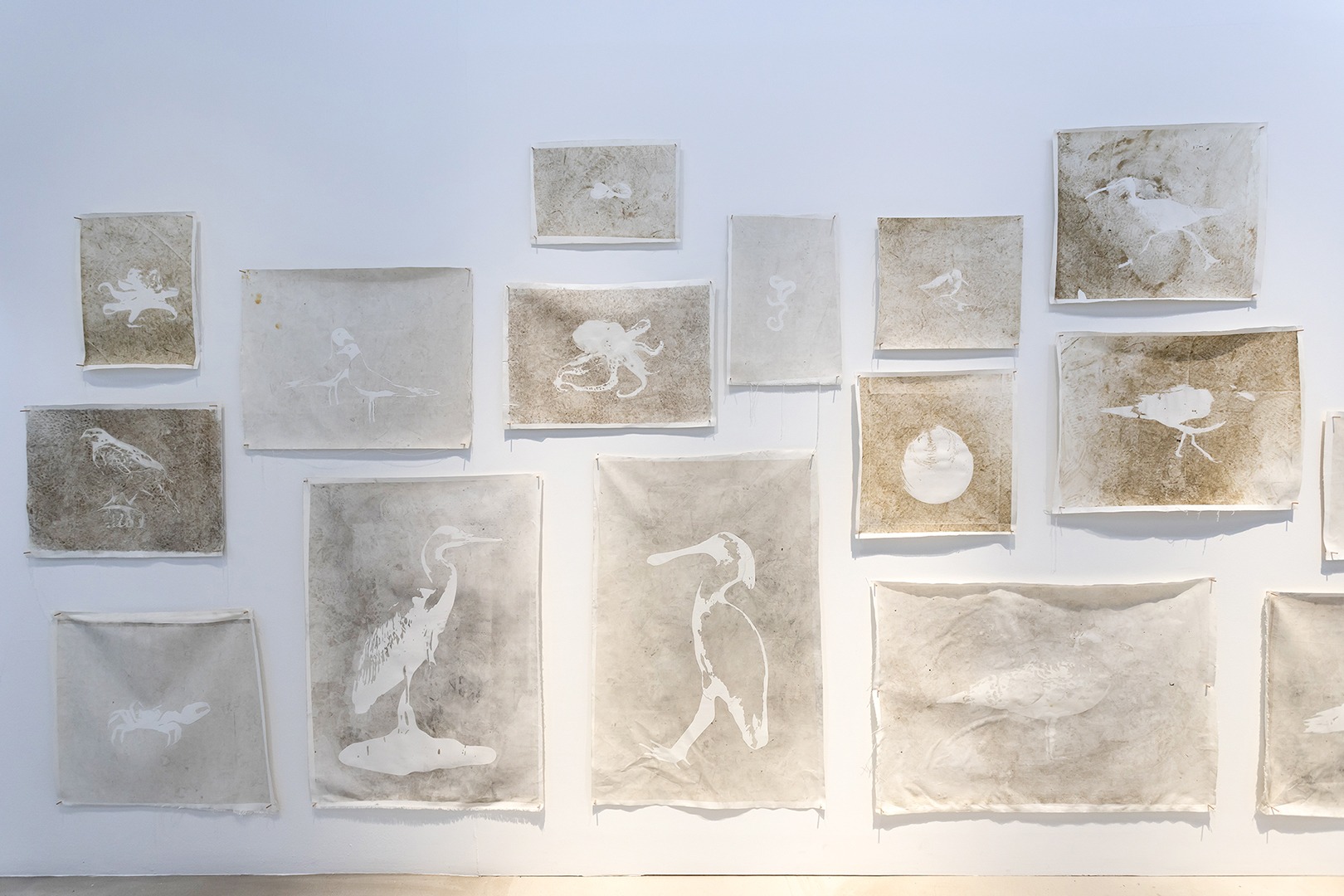
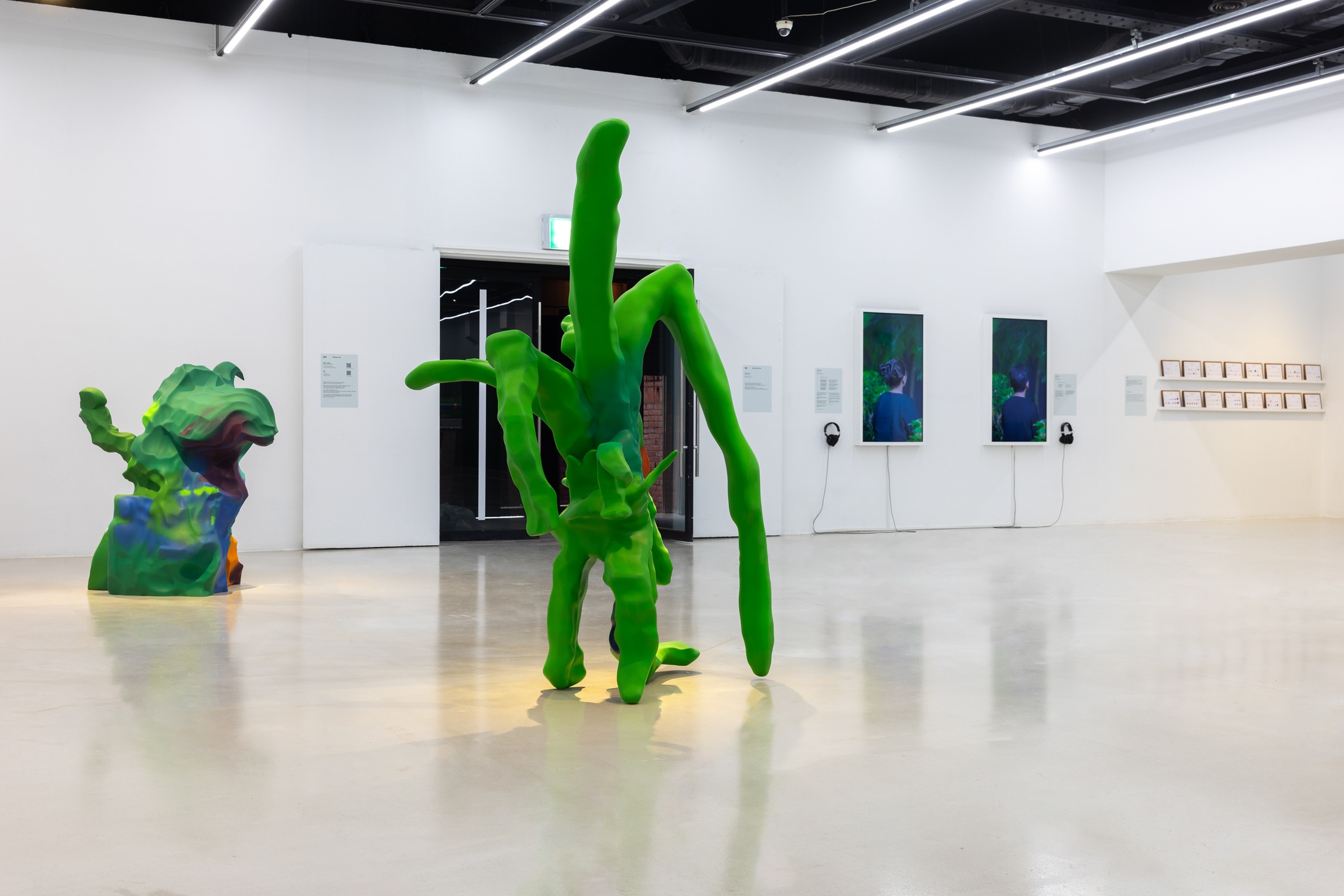
This inquiry into unproductivity is also connected to Kim’s growing interest in ecological relationships. In Under Your Feet, footprints inadvertently left by viewers become material traces that reveal the forms of protected wild species in Seoul, transforming ordinary human movement into an occasion for sensing previously invisible nonhuman beings.

Participation in Kim’s practice is less a form of efficient collaboration toward a shared objective than an event through which participants become newly aware of one another’s existence and of the structures to which they belong.

The sense of estrangement arising from urban transformation, experiments surrounding value and ownership within the art system, and his recent engagement with the climate crisis and nonhuman life all converge in an ongoing effort to create temporary fissures in the familiar order of reality and to explore, within those openings, possibilities for other forms of relation and perception.

Style & Contents

Mo Kim’s practice draws on the spatial thinking developed through his training in sculpture and encompasses installation, performance, video, photography, games, and participatory projects. In his early works, he intervened directly in specific urban sites and documented the results through photography.

In Good bye, he installed structures resembling advertising signs in actual urban spaces and photographed them, constructing artificial scenes within real landscapes. The decision to physically install and document images that could just as easily have been produced through digital manipulation became a recurring characteristic of Kim’s practice. He creates situations that operate within actual spaces and through people’s actions, incorporating the time and experience generated in the process as components of the work.

His subsequent works make more active use of rules and procedures that viewers themselves are required to perform. In The White Cube, which takes the form of a board game, rolling dice and moving along a prescribed route becomes a process through which participants experience the structures of the art world.

In Time-Art Exchange, a sequence of procedures—waiting, completing a contract, and receiving a certificate—constitutes the work. Kim appropriates social formats such as exchanges, counseling centers, campaigns, and contracts without reproducing the functions of actual institutions exactly.

By inserting subtly displaced rules into familiar formats, he prompts viewers to become conscious of procedures and value systems they ordinarily follow without reflection. After designing these structures, the artist steps aside, leaving the work open to transformation through the choices and responses of its participants.

The materials Kim employs are also closely connected to this approach. Objects that perform specific functions within everyday life and institutional systems—signboards, contracts, numbered tickets, certificates, badges, and envelopes—frequently appear in his works, while experiences that leave no lasting physical form, such as holding one’s breath, waiting, and walking, also function as important media.

The campaign imagery and breath-holding in Propaganda Room, the canvases and footprints in Under Your Feet, and the empty envelopes and synthesized voice in Ritual for Unproductive Art involve different materials and sensory registers, yet all acquire meaning through the intervention of the viewer’s body and time. A defining aspect of Kim’s installations lies in the way the material outcome of a work remains inseparable from the experience actually undergone by its participants.

Kim approaches the audience demographics, social context, and functions associated with each venue as conditions of the work and structures his projects accordingly. The context of collecting and ownership surrounding the museum informs the transactional system of Time-Art Exchange, while an exhibition addressing urban ecology makes use of visitors’ circulation through the space to generate the images in Under Your Feet.

Form in Kim’s practice therefore functions as an operative structure through which viewers, spaces, rules, and objects enter into actual relationships. Installed devices and prescribed procedures establish the initial conditions of the work, while its eventual form emerges through the time participants spend and the actions they perform within that structure.


Topography & Continuity

Mo Kim’s practice has expanded from sculpture and installation to audience participation, simulations of social systems, performance, and ecological practices. While his early work Good bye addressed the estrangement and sense of loss experienced by individuals within rapidly changing urban environments through interventions in space, his encounter with audiences during a residency in Berlin marked a shift toward treating viewers’ actions and judgments themselves as essential components of the work.

Although the outward forms and media of his practice have continued to evolve, a consistent approach has remained since his early works: inserting small variables into familiar environments or systems in order to reveal conditions of reality that ordinarily go unnoticed.

Within this trajectory, Kim has developed audience participation both as a device for forming relationships and as a means of examining social and artistic institutions. While The White Cube condensed the conditions of competition and opportunity operating within the Korean art world through the structure of a game, Luck Exchange and Time-Art Exchange asked viewers to directly enact processes through which exchange and ownership, reward and value are established.

As institutional languages surrounding the production and circulation of art—including the museum, exchange, contract, and collecting—entered his works, his focus expanded from individual experiences of space to the ways in which value is socially authorized and distributed. Throughout this development, Kim has continued to place viewers within temporary systems and allow them to experience their operations firsthand, rather than limiting his practice to commentary on institutions from an external position.

Since the 2020s, the scope of Kim’s practice has broadened to encompass the climate crisis, urban ecology, productivity, and expenditure. The futile act of holding one’s breath in Propaganda Room and the accumulating footprints in Under Your Feet connect large-scale social and ecological issues with individual experience through ordinary bodily actions.

Although nonhuman life and the environment emerge as new subjects during this period, these works remain connected to his earlier practice through a recurring structure: viewers are given specific conditions for action, and the process of carrying them out unsettles established perceptions and judgments. His engagement with institutions likewise persists, extending into questions about broader social orders that determine the logic of productivity and ecological crisis.

The concepts of “unproductivity” and “immateriality,” which come to the fore in the recent Ritual for Unproductive Art, can be understood as a culmination of this trajectory. The elements Kim has repeatedly explored—time spent waiting, disappearing breath, inadvertently left footprints, unrealized artworks, and empty envelopes—resist reduction to clear outcomes or material possession.

Over more than a decade, his practice has shifted its focus across urban transformation, the mechanisms of art institutions, climate, and ecology, while consistently bringing experiences that evade conventional measures of efficiency and value to the center of the work.

The continuity of Kim’s practice therefore lies less in the repetition of a particular medium or form than in structures that allow viewers to pass directly through the rules that constitute reality and, in the process, reconsider values and relationships they had previously taken for granted.

Works of Art

Ways of Seeing and Sensing the Familiar Anew

Articles

Exhibitions

Activities