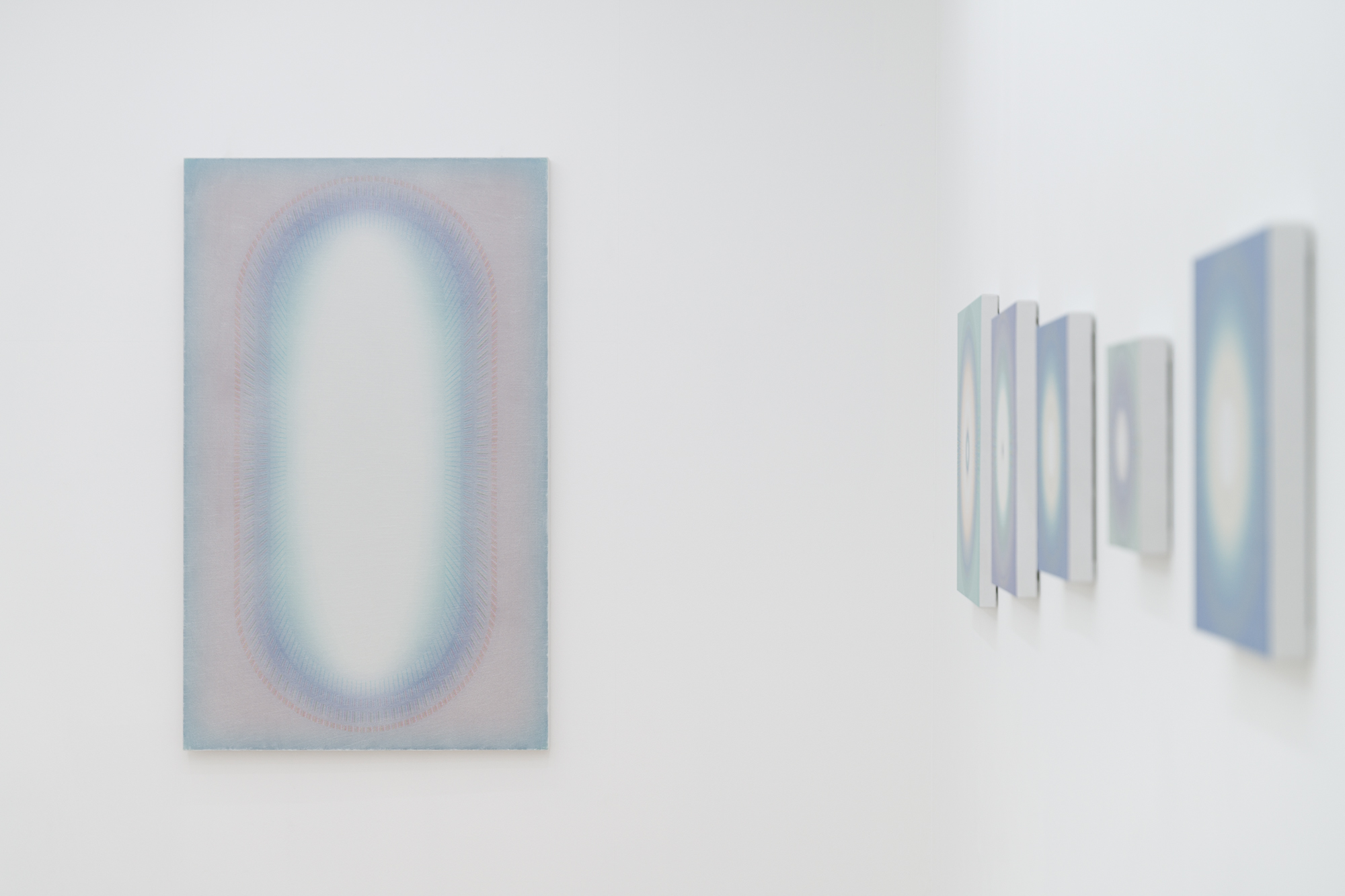
Ji’s
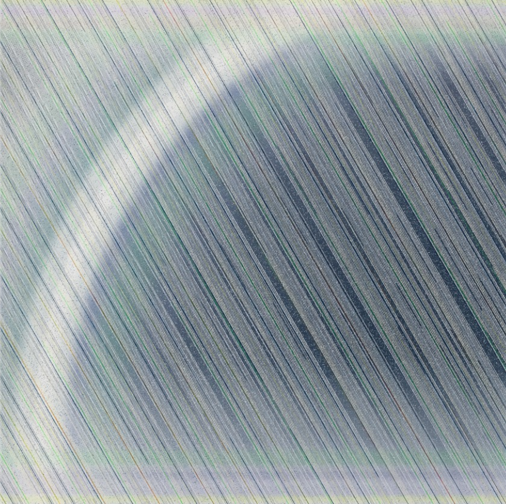
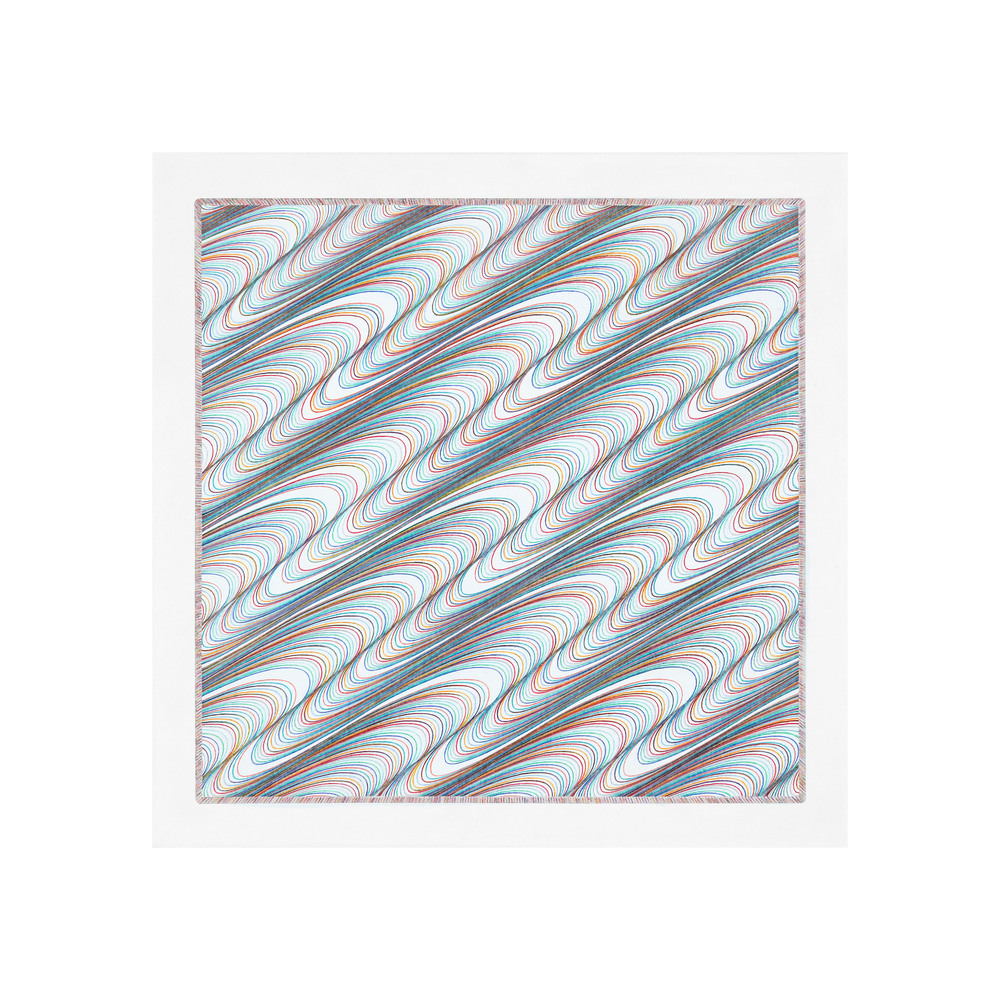
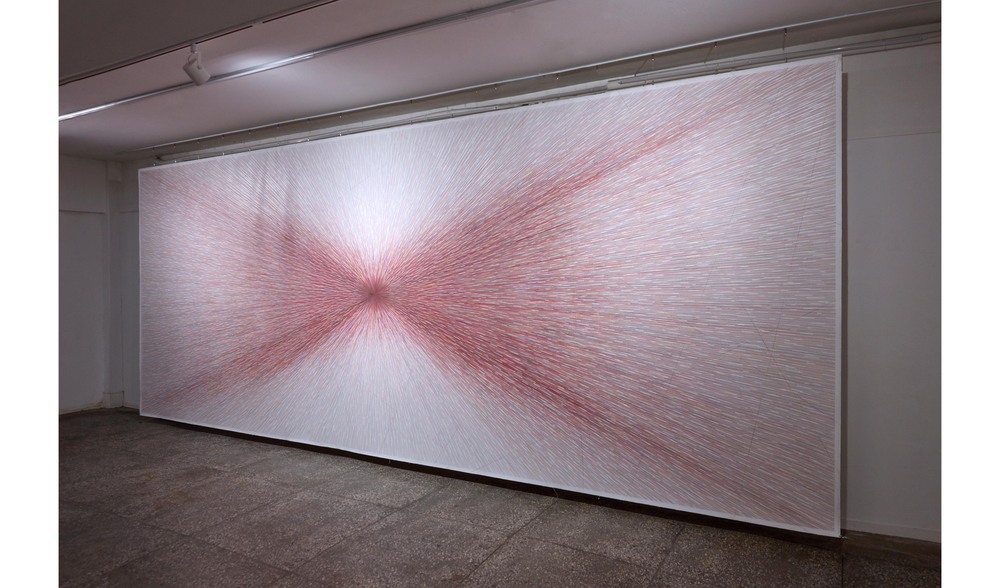
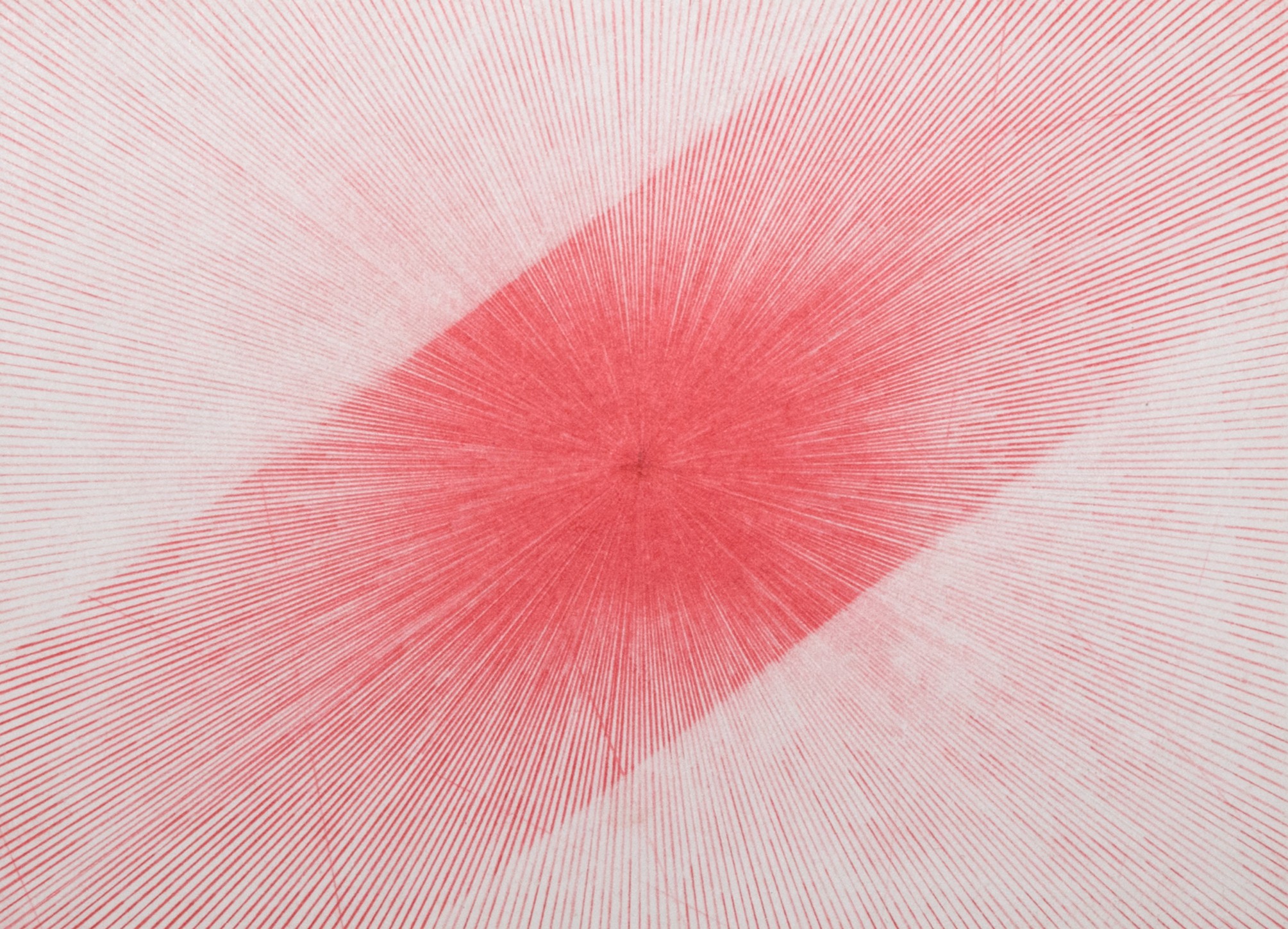
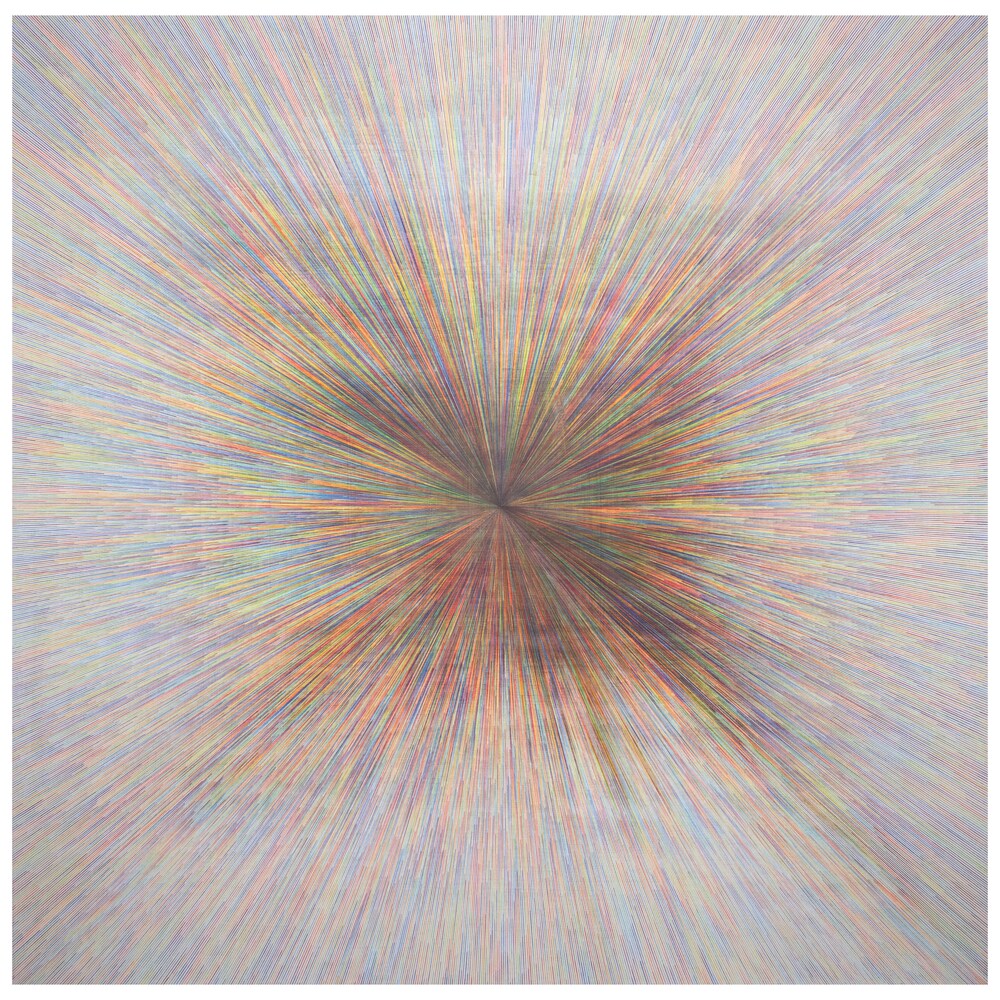
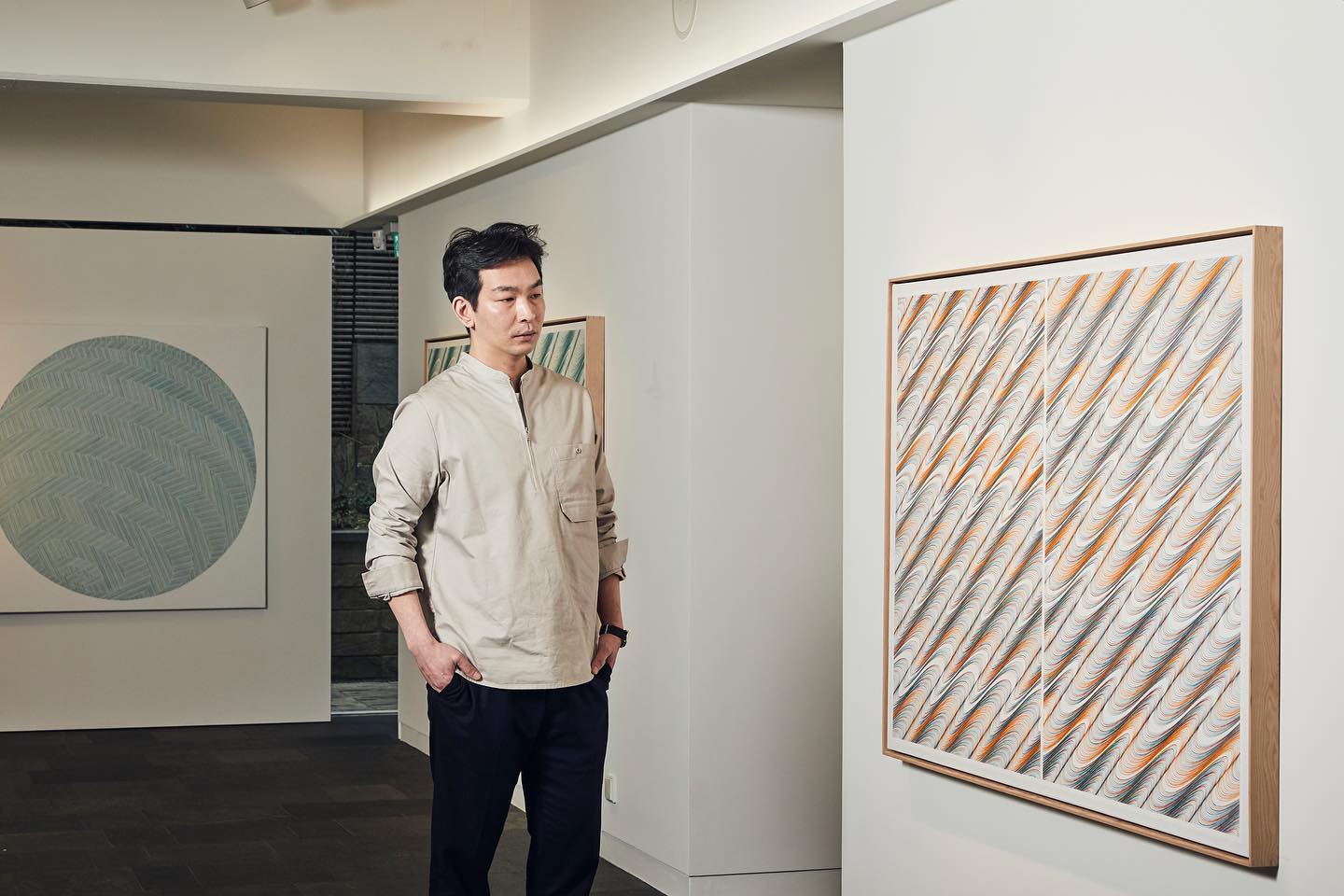
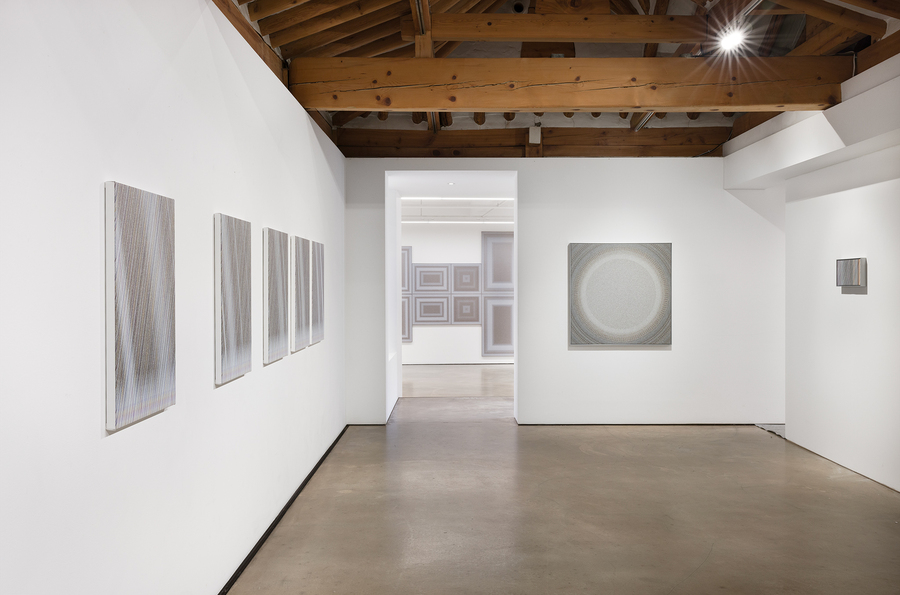
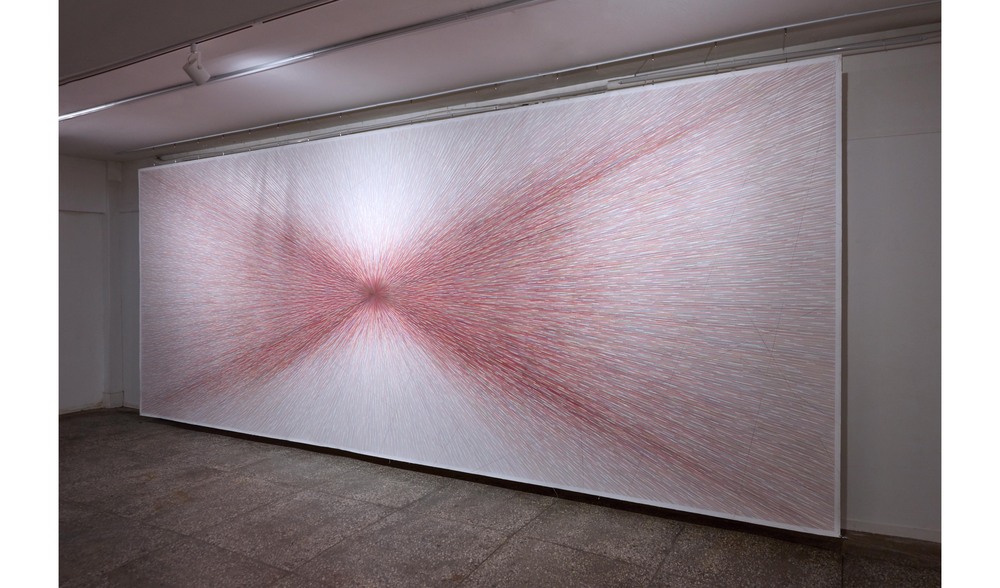
surfaces are produced by repeatedly drawing lines with colored pencils and
rulers according to predetermined directions and intervals. Compared with
conventional painting media, the colored pencil is a light and familiar tool,
but when applied thousands of times, its pigment particles and fine ridges
accumulate to form a distinctive density and surface.
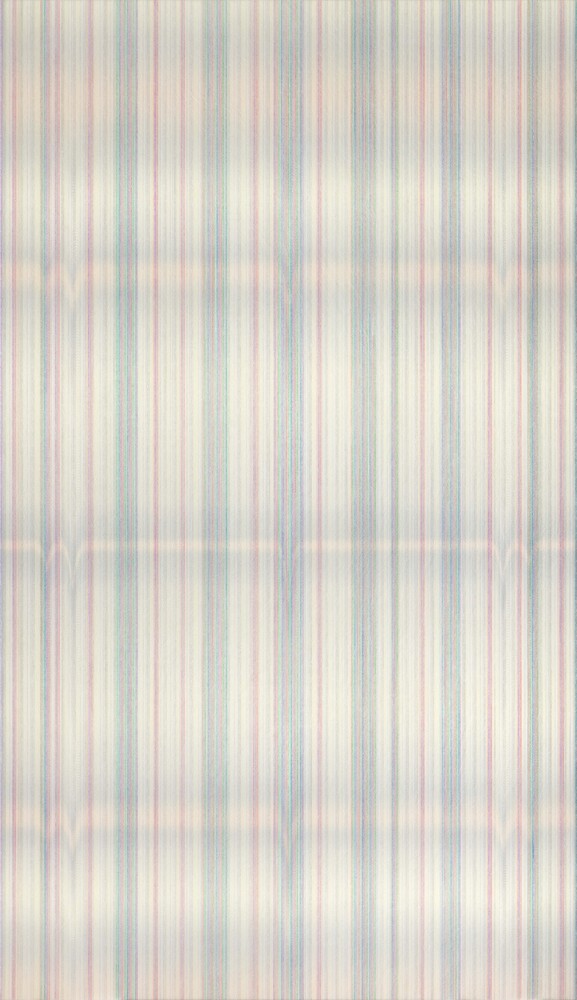
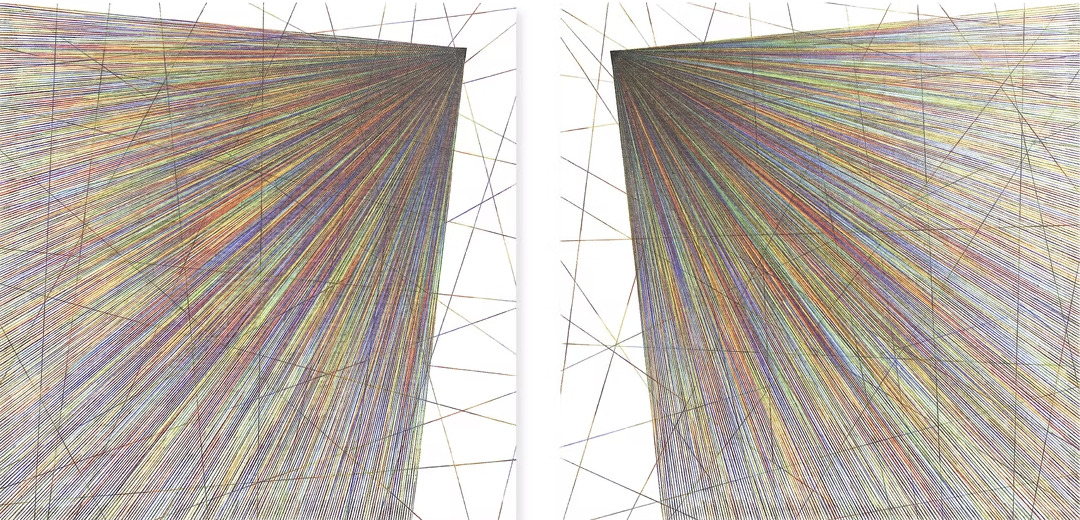
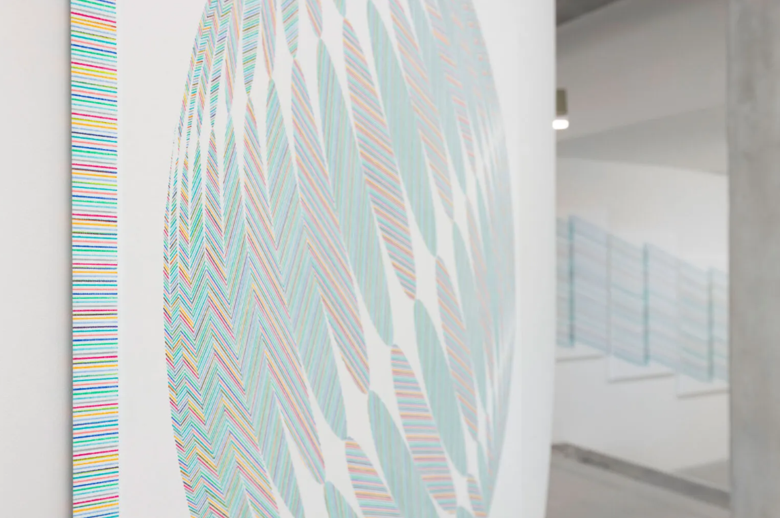
From a distance, the
lines merge into planes or geometric structures, while at close range,
individual strokes, particles, variations in pressure, and minute errors become
visible. The artist plans the working process from its first stage to its final
stage, and when an error occurs, he may begin again from the start. This method
retains the sequential and irreversible working structure he acquired through
his undergraduate training in printmaking.
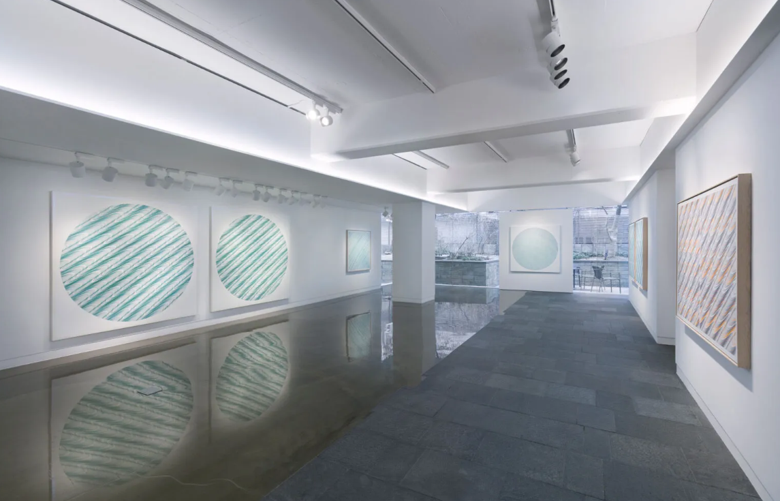
Up to 《Linear Ground》(Hakgojae Gallery, Seoul,
2019), the central elements of the work were the perspective, vibration, and
optical effects created by straight and curved lines. In later works, however,
Ji began layering acrylic paint and opaque media beneath the lines and combining
them with UV printing, placing greater emphasis on the collision between
colored-pencil marks and other materials.
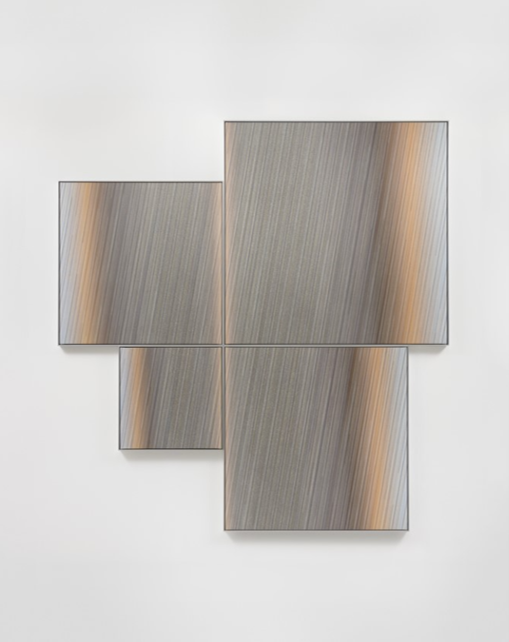
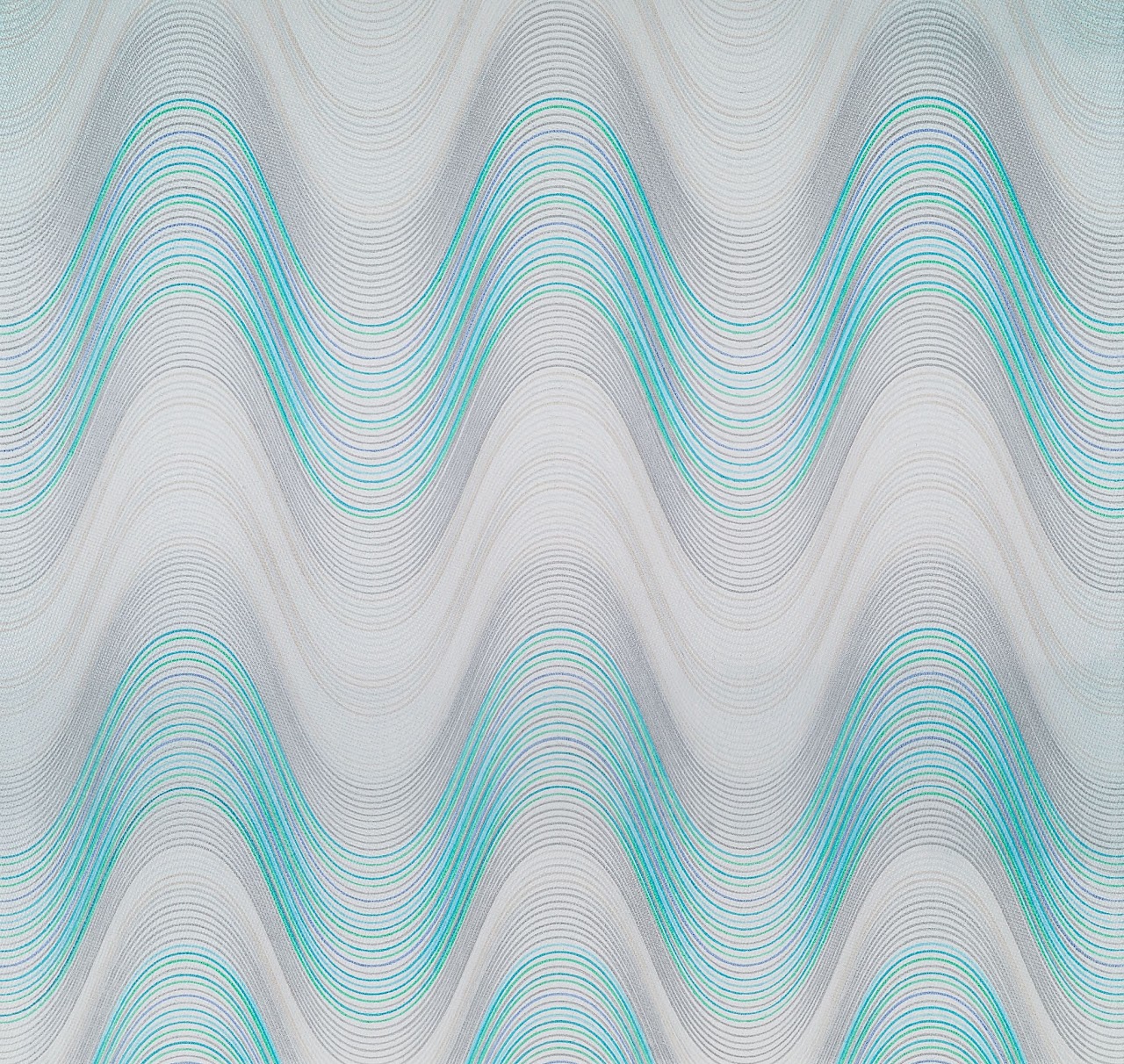
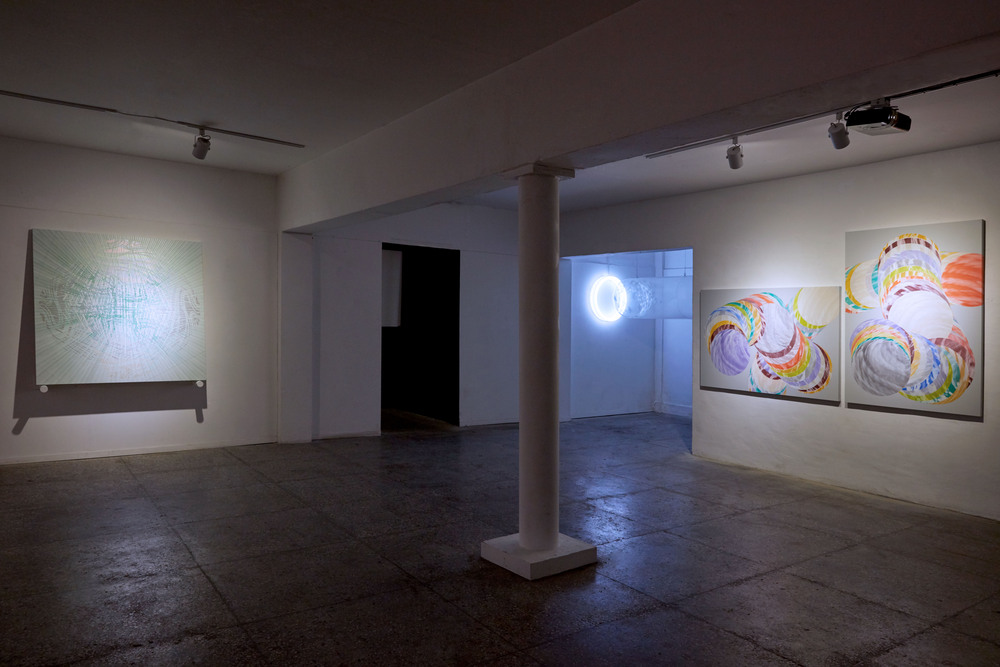
Inter-shape
Collider(2023) creates different levels of depth by overlapping pale
chromatic strata with darker surface layers. At points where straight lines and
curves intersect, the work produces a rhythm that appears simultaneously firm and
gentle. In the artist’s terms, “hardboiled” corresponds to the rigor of
planning and structure, while “breeze” describes the soft movement generated
through line and color.
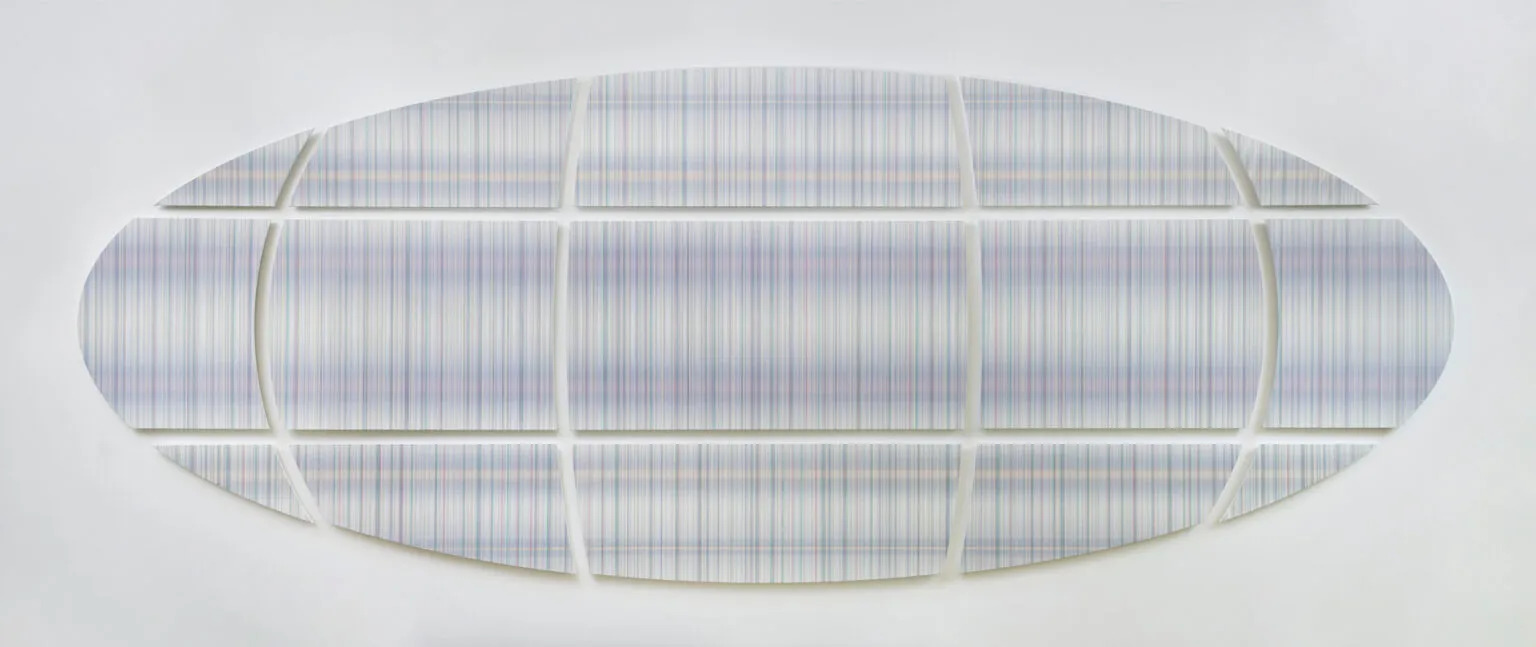
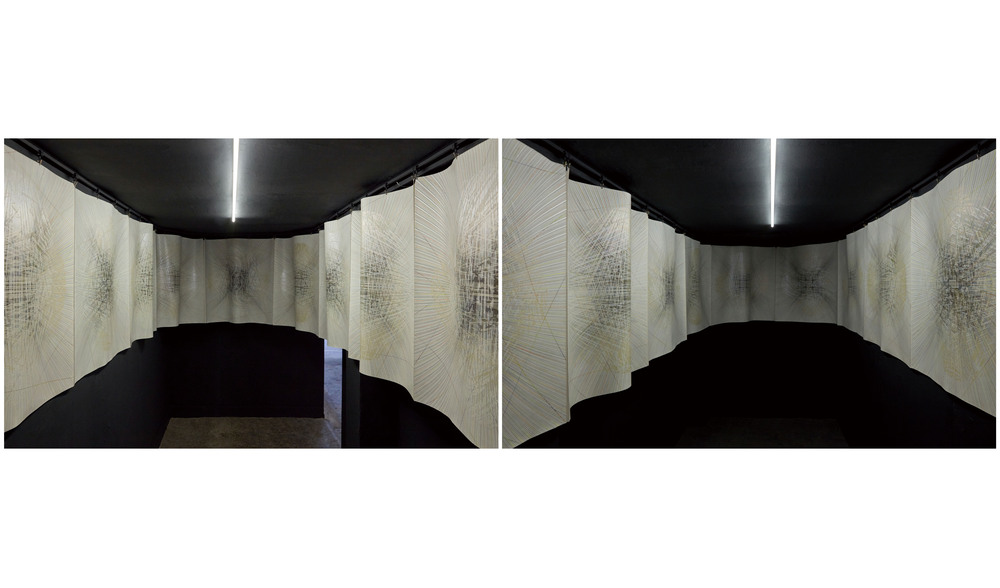
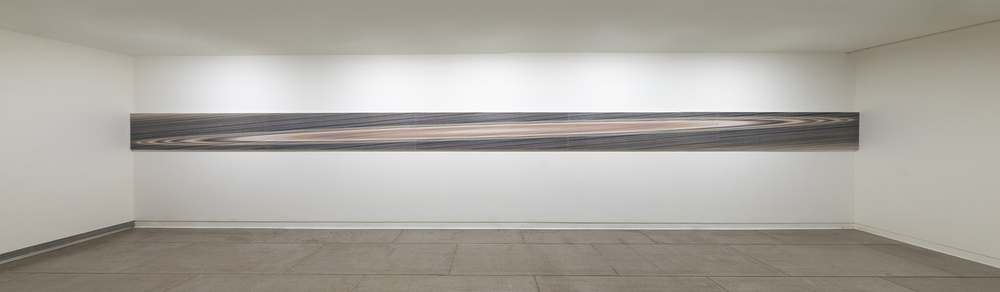
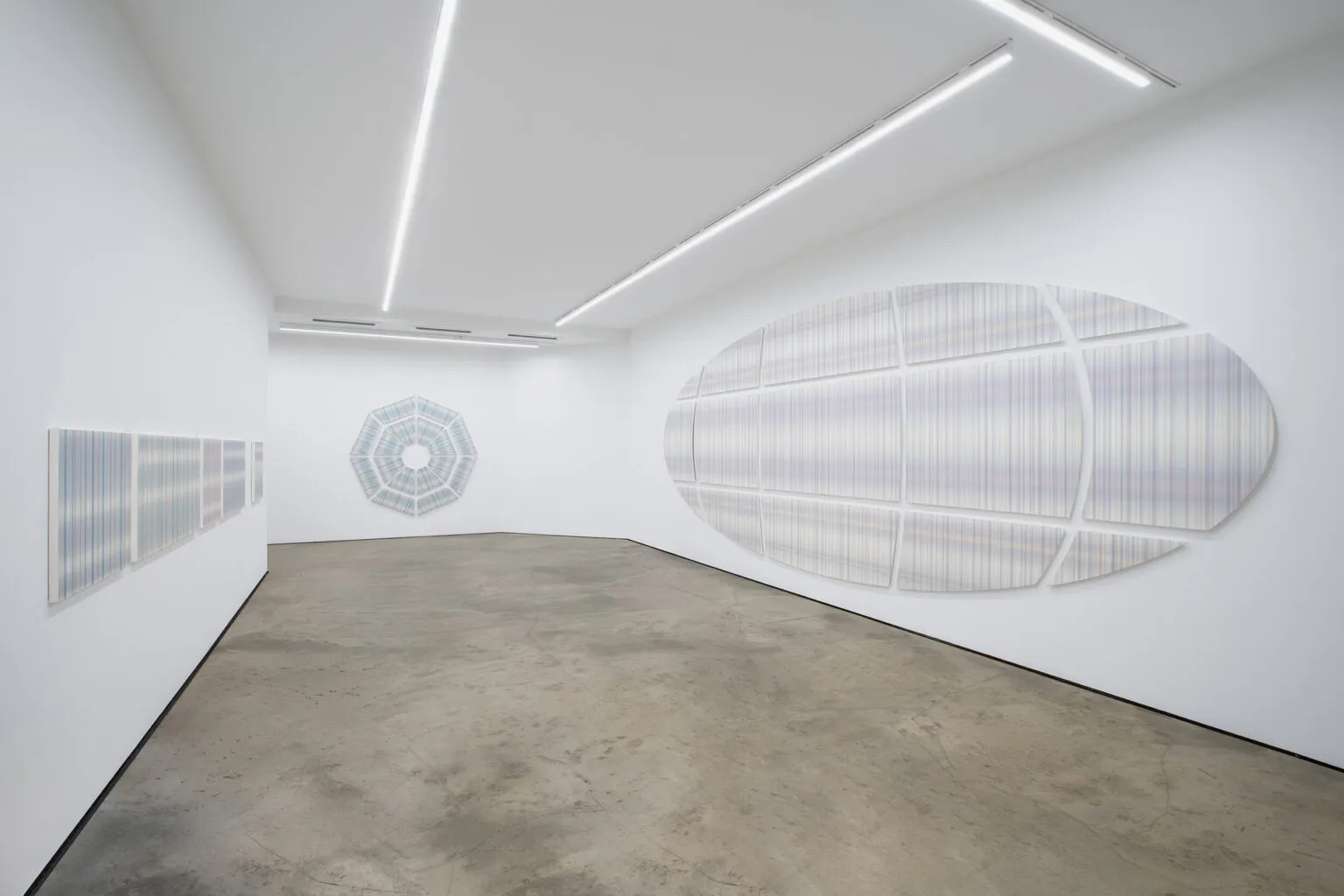
Inter-shape
Radiation(2023) combines fifteen canvases into an elliptical
structure measuring approximately eight meters in width. The curved edges of
the individual canvases and the straight lines crossing their surfaces connect
the internal movement of the image with the flow of the physical exhibition
space.
The intervals between the canvases and the white wall behind them
function as passages through which the pictorial waves continue. Rather than
observing the entire work from a single position, viewers move alongside it and
repeatedly adjust the direction of their gaze. The irregular contour and
monumental scale transform painting from an image mounted on a wall into a
spatial structure surrounding the viewer’s body.
More
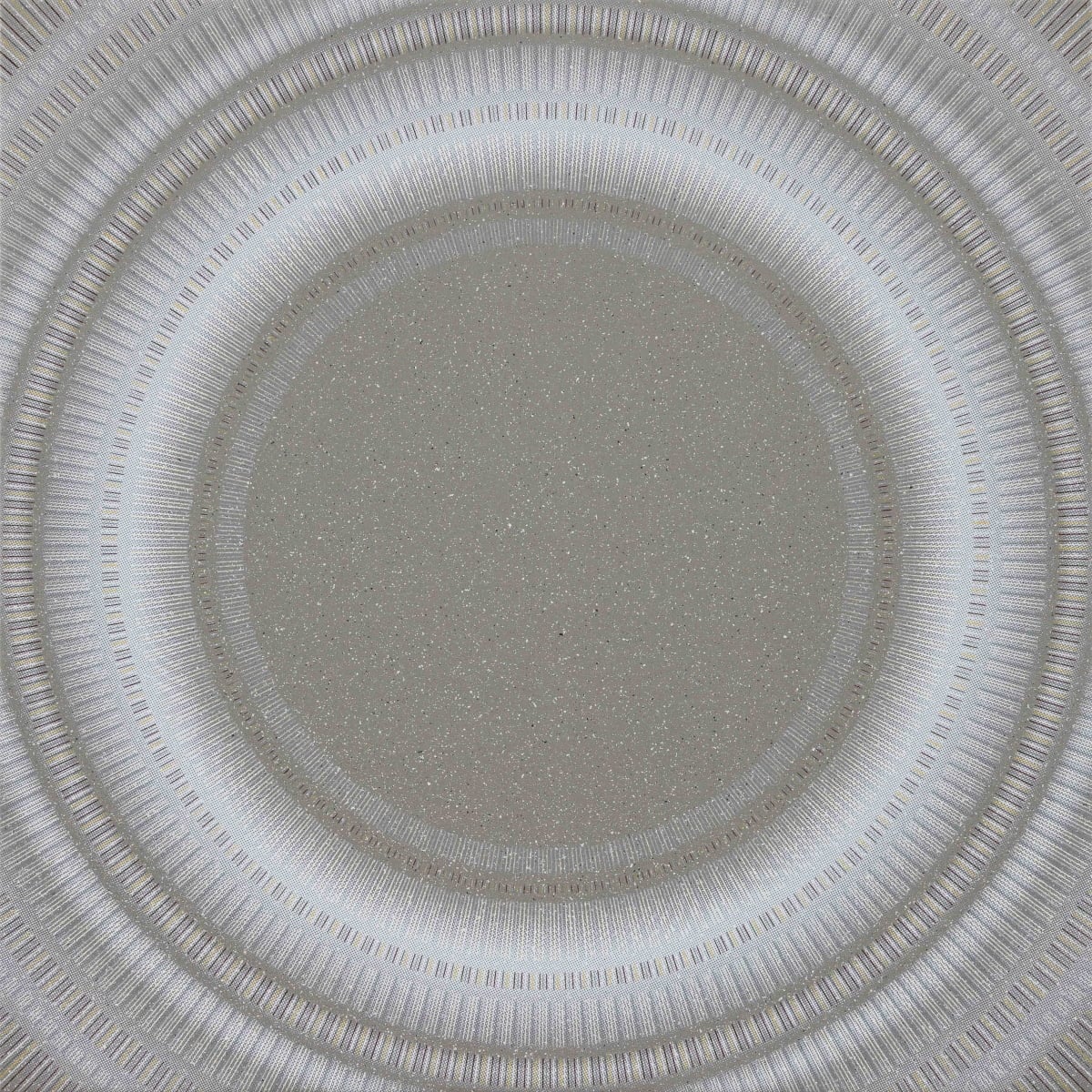
recently, imagery collected through the virtual universe simulator Space Engine
and metallic materials have introduced additional layers to the work. In 《Qua-o-ar》, Space Engine - Disc
002(2024) and Space Engine - Paths
001~010(2024) incorporate visual references gathered while navigating
a non-experiential universe, transferring them through UV printing and overlaying
them with colored pencil and acrylic.
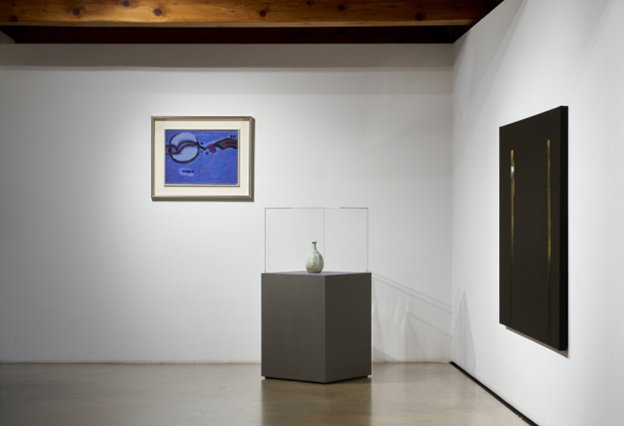
In 《Metallic
Wings》(Hakgojae Gallery, Seoul, 2026), Ji used
stainless-steel-based pigments and reflective surfaces to produce paintings
that shift according to light and the viewer’s position. Metal is treated not
only as a solid material but also as a substance containing time, formed
through long periods of pressure and transformation. The “wings” suggest a
movement through which matter escapes its weight and given conditions,
extending beyond the picture plane.



.jpg)