Untitled (cube No.14) - K-ARTIST

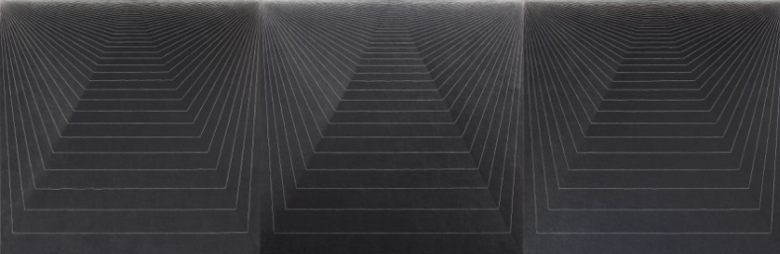
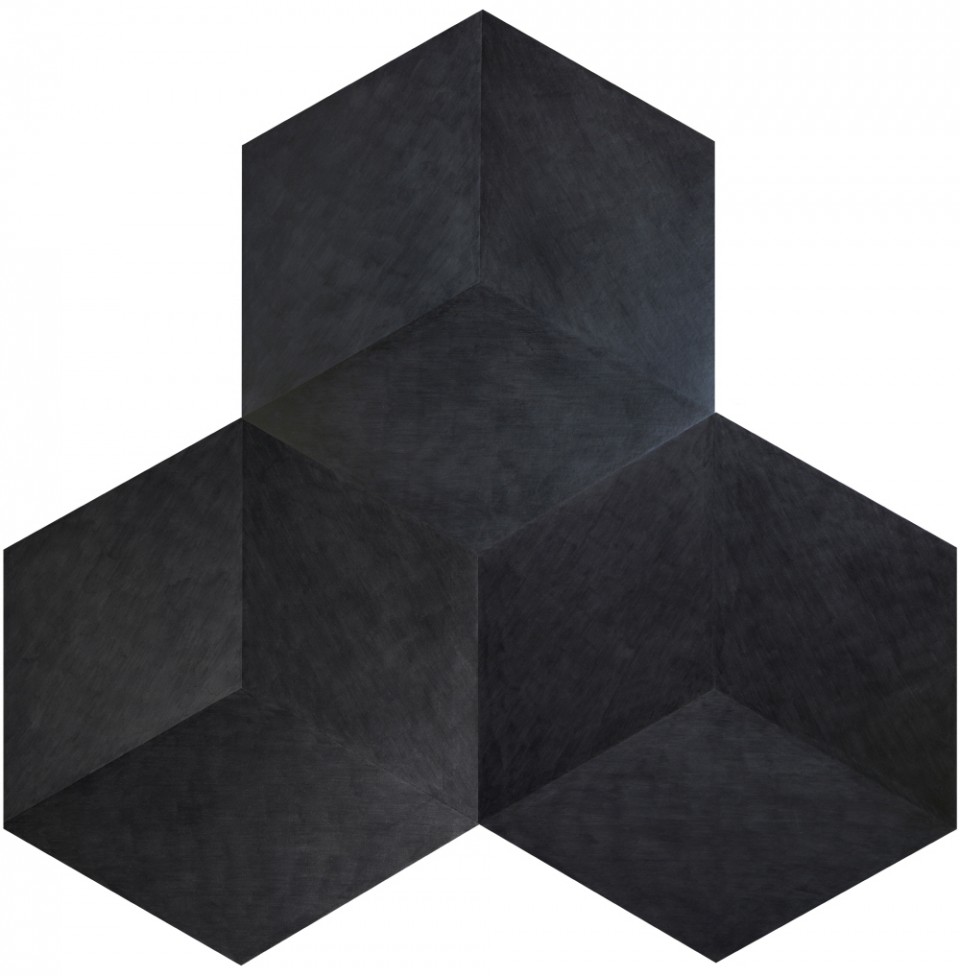
Untitled (cube No.14)

2011
Pencil on hanji 
150 x 130 cm
About The Work

Pyoun Daesik has explored painting through questions concerning the relationship between image and temporality. Through the laborious, repetitive act of applying and building up pencil marks on the surface, he develops a painterly practice that translates the invisible flow of time into material layers. Through accumulation and repetition, the picture surface becomes a kind of recording device, while time emerges as a sensory trace condensed into matter.

Pyoun’s practice begins with an exploration of the relationship between the visual image perceived by the human eye and the material properties inherent to an object. He has experimented with minimizing the representational function traditionally assigned to images in visual art while bringing to the fore a materiality formed through the traces of time. 

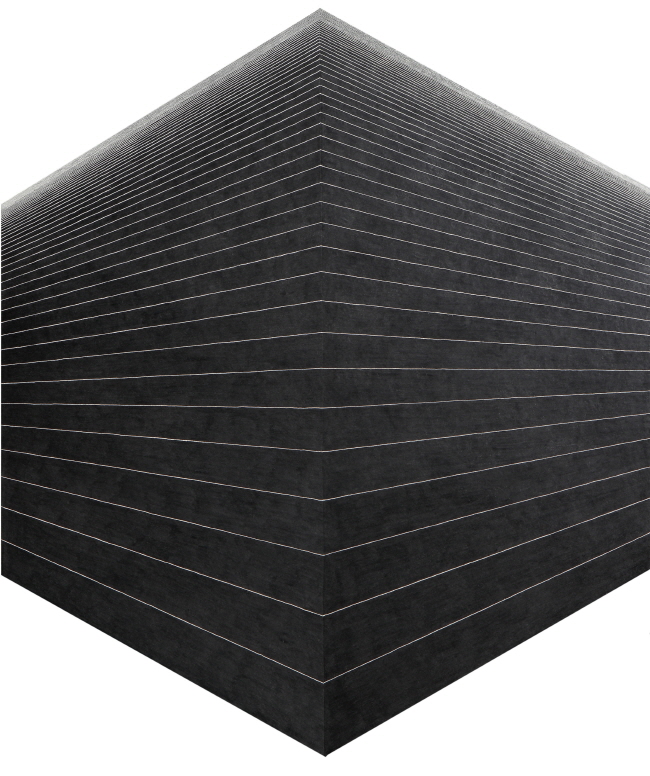
His primary medium, pencil, possesses a deep, dark blackness while also reflecting subtle traces of light across its surface. By repeatedly building up pencil marks stroke by stroke, he transforms the process of accumulation itself into a painterly method for recording the passage of time.

The subtle irregularities and imperfectly straight lines that emerge through this labor-intensive process reveal the inherent imperfections of human action while simultaneously producing a form of optical illusion on the picture surface. Through these effects, viewers are invited to experience the limitations and potential distortions of human vision. 

Furthermore, Pyoun’s paintings extend beyond the physical limitations of the two-dimensional plane by actively engaging the exhibition space and the viewer’s body. In doing so, viewing becomes more than a purely visual experience; it is transformed into a complex event that moves between light and darkness, present and past, surface and interior, and reality and illusion.

Solo Exhibitions (Brief)

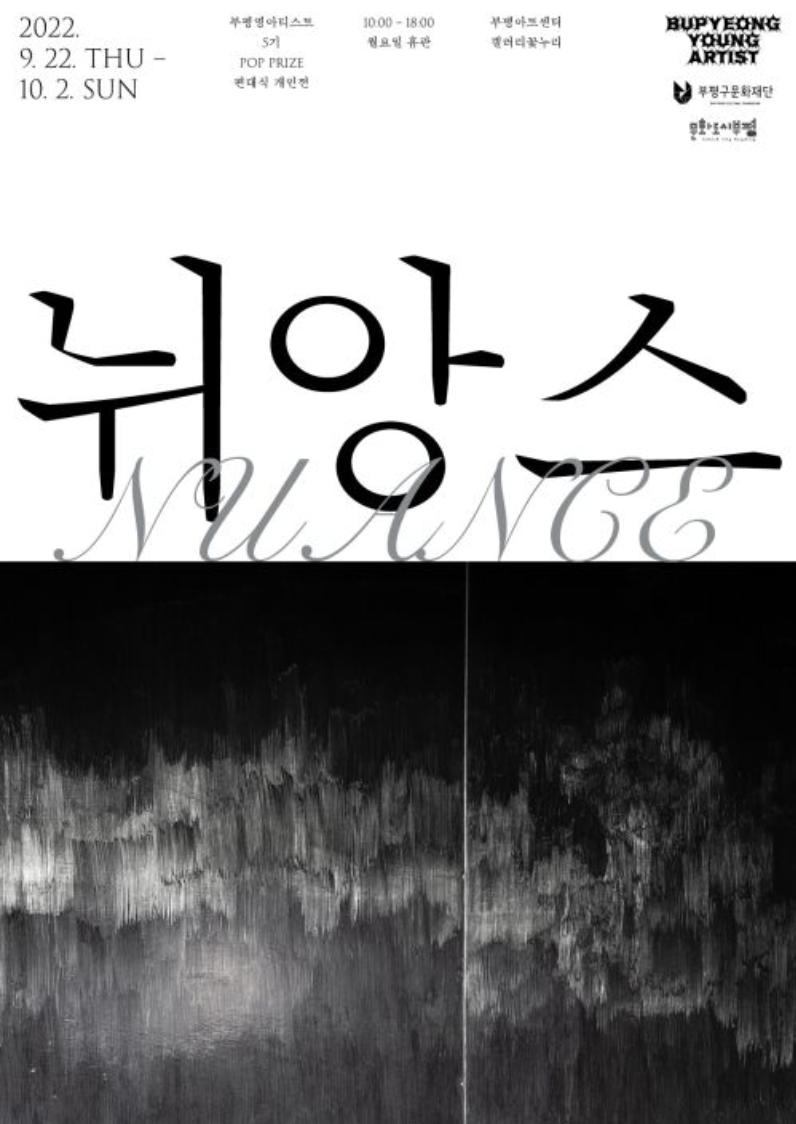
Pyoun has held solo exhibitions include 《Proxy Data》 (Art Project CO, Seoul, 2025), 《Frozen Time》 (New Spring Project, Seoul, 2024), 《Time Trial》 (Cheongju Art Studio, Cheongju, 2023), and 《Nuance》 (Bupyeong Arts Center, Incheon, 2022).

Group Exhibitions (Brief)

Pyoun has also participated in numerous group exhibitions, including 《Layers of Condensation and Resonance》 (Art Project CO, Seoul, 2025), 《An Atypical Encounter》 (Cheongju Art Studio, Cheongju, 2024), 《UNBOXING PROJECT 2: Portable Gallery》 (New Spring Project, Seoul, 2023), 《Bupyeong Young Artist 2020》 (Bupyeong Arts Center, Incheon, 2020), 《The Accumulated Ghosts》 (Daecheong Ho Museum of Art, Cheongju, 2019), and 《Minimal Variation》 (Seoul National University Museum of Art, Seoul, 2018).

Residencies (Selected)

Pyoun has been selected for several residency programs, including the Art Lab Sanyang (2025), Cheongju Art Studio (2023–2024), and Incheon Art Platform (2021).

Collections (Selected)

Pyoun’s works are held in the collections of the MMCA Government Art Bank, the Seoul Museum of Art, the Yangju City Chang Ucchin Museum of Art, among others.

Works of Art

Painting That Translates Invisible Temporal Flows into Material Layers

Originality & Identity

Pyoun Daesik’s practice begins with the question of how far the images before our eyes can be trusted. In his early experiments with the “blind spot,” he directly observed phenomena in which a clearly existing dot disappeared from view or a broken line appeared continuous through the workings of the brain.

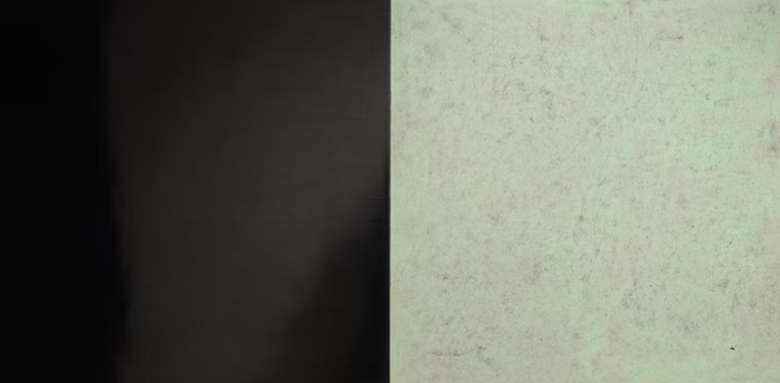
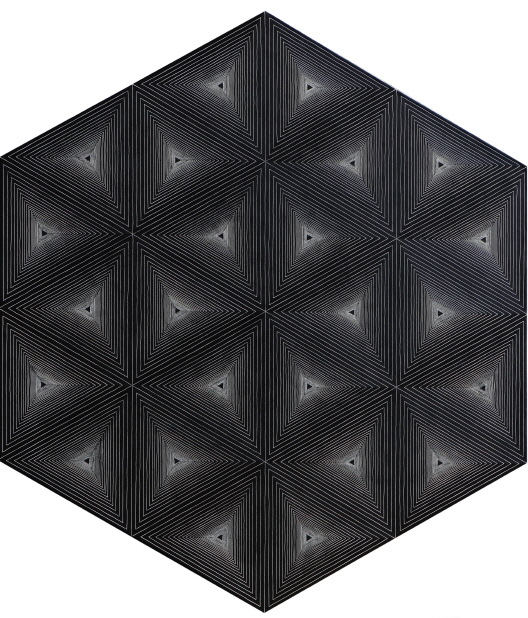
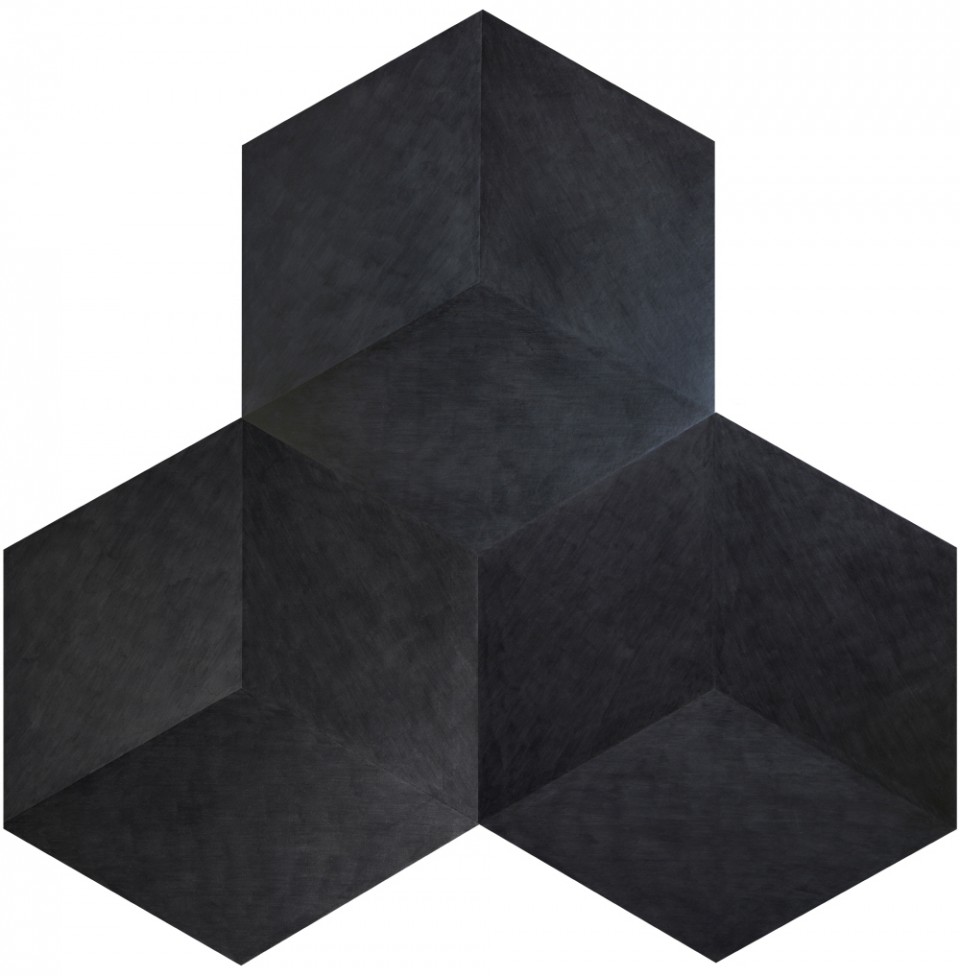
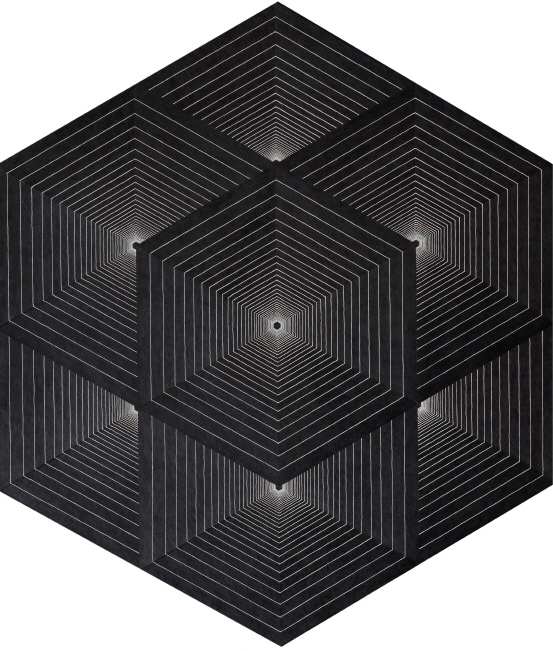
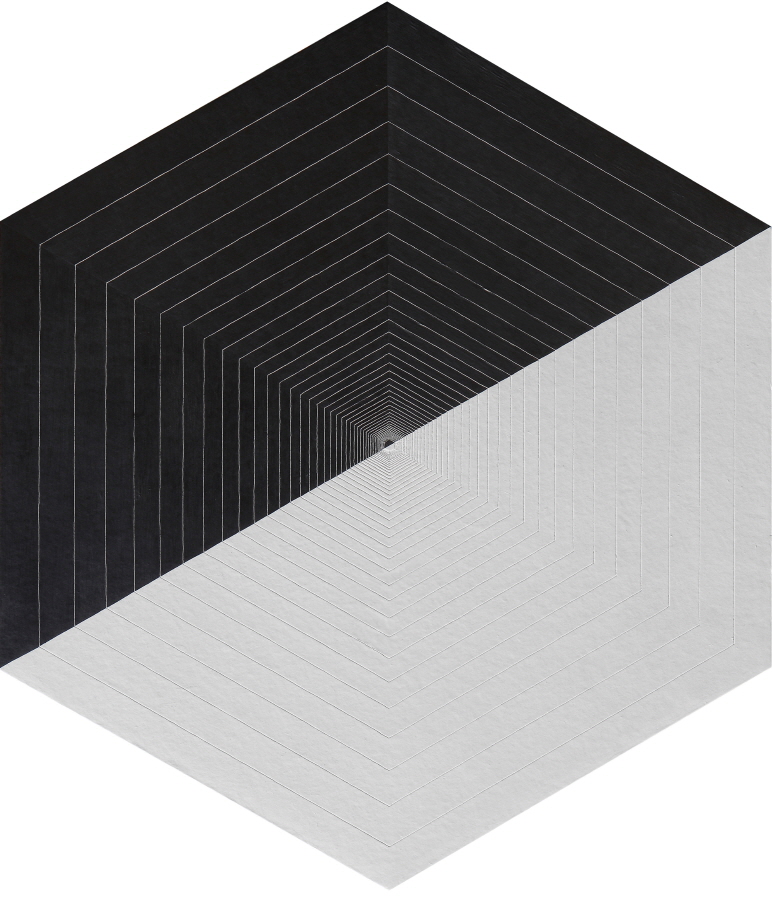
These experiences led him to recognize that vision is not a faculty that receives objects exactly as they are, but a perceptual system that arbitrarily supplements and reconstructs what remains unseen. In works such as Untitled (cube No.14)(2011), Untitled (cube No.8)(2011), and Untitled (vacant cube)(2012), lines and areas of black and white on a flat surface appear to project forward or recede, producing different three-dimensional structures according to the viewer’s gaze.

For Pyoun, painting is not so much a surface for representing images as a field of experimentation that reveals the limits and distortions of seeing.
 
The trembling lines and uneven surfaces found within his precise geometric structures extend these questions of vision into a reflection on human existence. From a distance, the surface of Untitled (valley)(2014) appears as precise and complete as a digital image, but at close range, irregular traces produced by the pressure of the hand and the texture of the paper become visible.

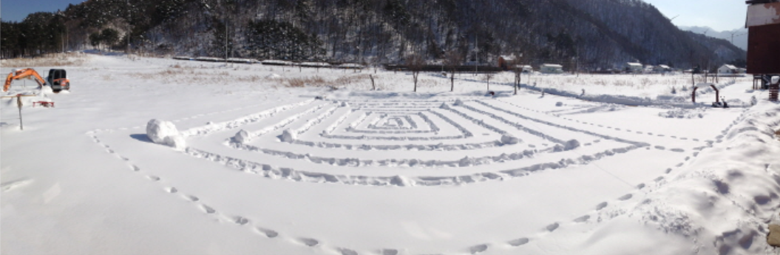
Pyoun does not regard these discrepancies as defects that must be eliminated. Instead, he understands them as elements that reveal the human condition, which remains inevitably imperfect even while striving toward a perfect standard. The video work Rolling Snow(2014) and the installation Untitled (variable cube)(2014) similarly extend beyond painting the difference between plans and reality, repeated attempts, and unforeseen variables.
 
The artist’s attention subsequently shifted from what an image makes visible to how invisible time might be preserved in material form. Presented in 《A Series of Moments》(Hanwon Museum of Art, Seoul, 2017), Untitled (moments)(2017) is a work in which a roll of hanji measuring more than fifty meters was filled with pencil, bringing the duration of its production and the movement of the artist’s body to the foreground rather than emphasizing an individual image.

The engraved white line crossing the black surface resembles a trace of existence passing through successive moments more than it describes a particular geometric form. From this point onward, repetitive action becomes more than a means of producing a completed image; it becomes a central subject of the practice, through which the present is endured and recorded.
 
This attitude is further clarified by the artist’s comparison of his working process to playing a game. In 《Time Trial》(Cheongju Art Studio, Cheongju, 2023), he explains that the process of becoming immersed in fixed rules, repetitive labor, and an anticipated sense of achievement resembles the structure of online gameplay. Repetition is not romanticized here as a transcendental practice or spiritual discipline.

Rather, it is closer to a way of life in which the artist constructs a small world at a distance from uncertain reality and continues a prescribed set of actions within it. In Pyoun’s paintings, time is not an abstract philosophical concept but a concrete measure of the labor accumulated by a person who establishes certain rules and endures before the surface.

Style & Contents

In his early practice, Pyoun mounted several layers of hanji, pressed geometric plans into the surface, and repeatedly covered the areas surrounding the engraved lines with pencil. The paintings presented in 《ILLUSION》(2014) and 《ENGRAVE》(2015) used geometric diagrams, black-and-white contrast, and the reflective quality of graphite to create optical illusions between flatness and three-dimensionality.

As mathematically calculated structures were combined with shading executed by hand, precision and error remained together on the surface. Lines that appeared rigid from a distance revealed subtle tremors at close range, while the white texture of the paper remained visible within the blackened areas. These qualities demonstrate the difference between a mechanically perfect image and the traces left by a working body.
 
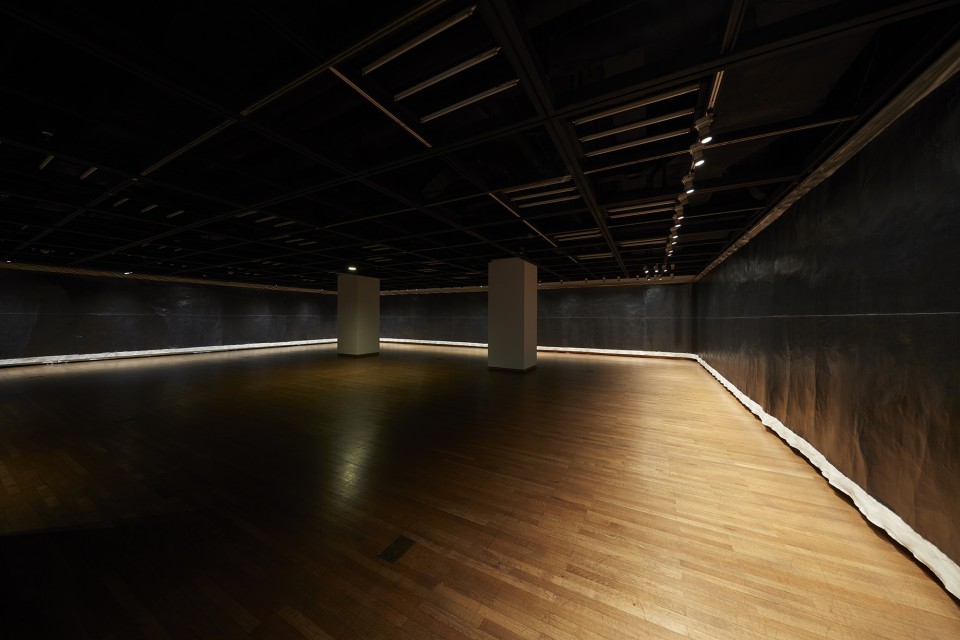
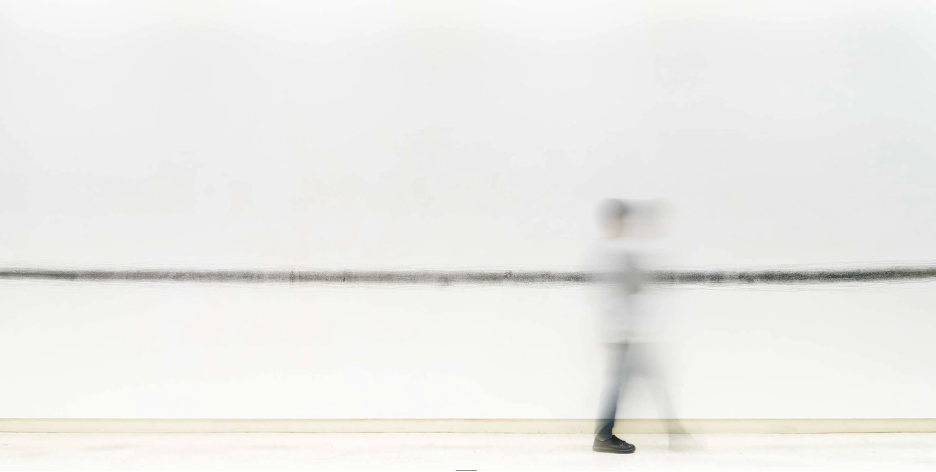
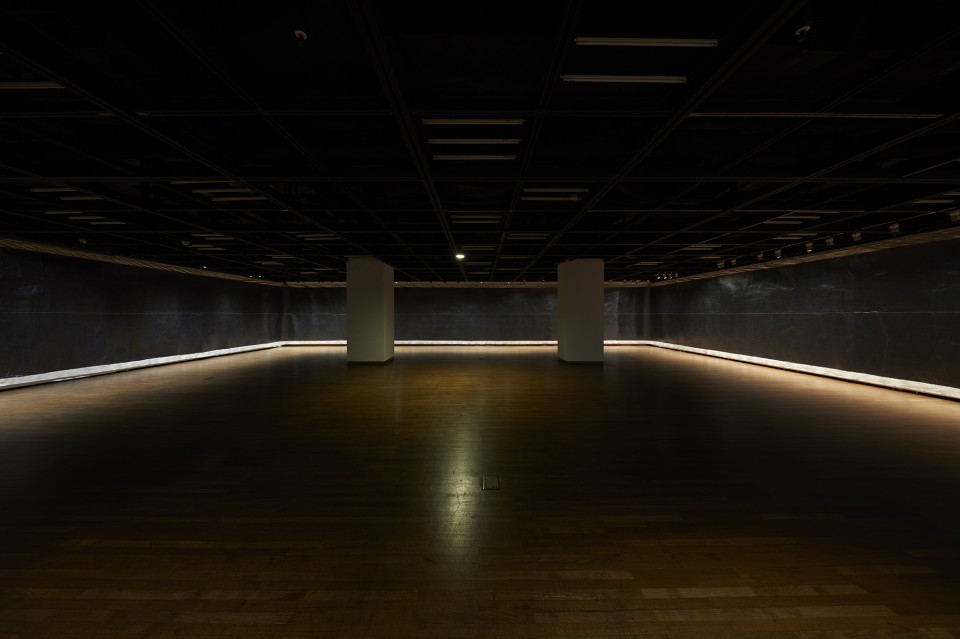
As the scale of his works increased, the surface expanded from an autonomous painting into a space surrounding the viewer’s movement. Untitled (moments) and Moment, installed in the group exhibition 《The Accumulated Ghosts》(Daecheong Ho Museum of Art, Cheongju, 2019), extend long rolls of paper along the gallery walls, allowing repeated lines and layers of graphite to be experienced as an environment.

Because their scale makes them difficult to grasp at a single glance, viewers must walk alongside the surfaces and encounter different moments and sections sequentially. The content of painting is formed here not through a specific object or narrative, but through the duration accumulated in the work and the viewer’s movement as they experience that duration.
 
Beginning with 《ENCOUNTER》(Hongti Art Center, Busan, 2020), Pyoun expanded his supports from hanji to wooden panels and the walls of the exhibition space. When pencil is repeatedly applied to a smoothly sanded wooden surface, the graphite produces a sheen resembling polished metal or a mirror. Viewers encounter the traces of the past accumulated on the surface while simultaneously seeing their own bodies and the surrounding space reflected upon it.

In 《Equivalence》(Incheon Art Platform, Incheon, 2021), this approach extended to the architecture of the exhibition space itself. Over fourteen days, the artist sanded sections of the walls and covered them with pencil, incorporating the dust that settled on the floor, his movements through the space, visitors’ footprints, and the changing light entering through the doorway into the exhibition. Painting no longer remains confined to a fixed surface but operates as a site where past labor and present events continuously overlap.
 
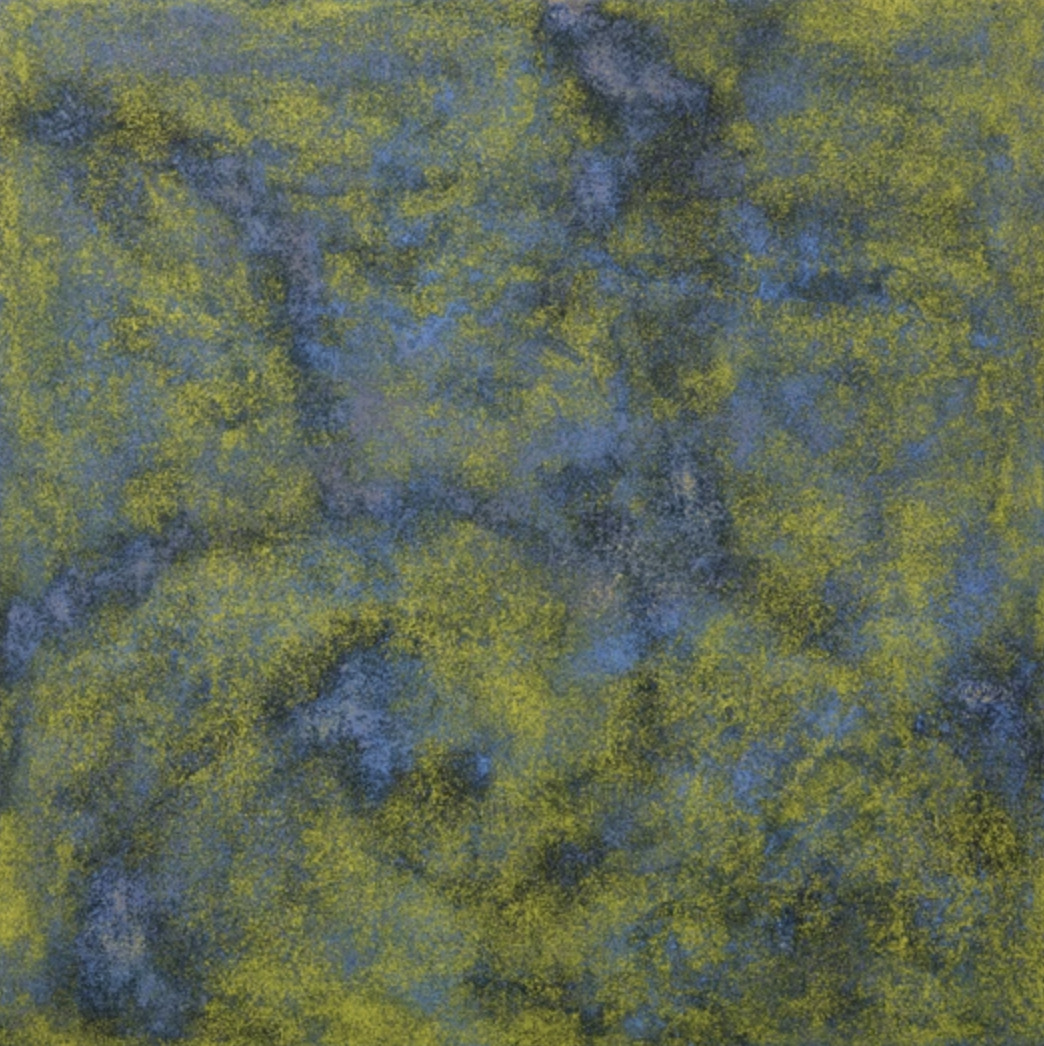
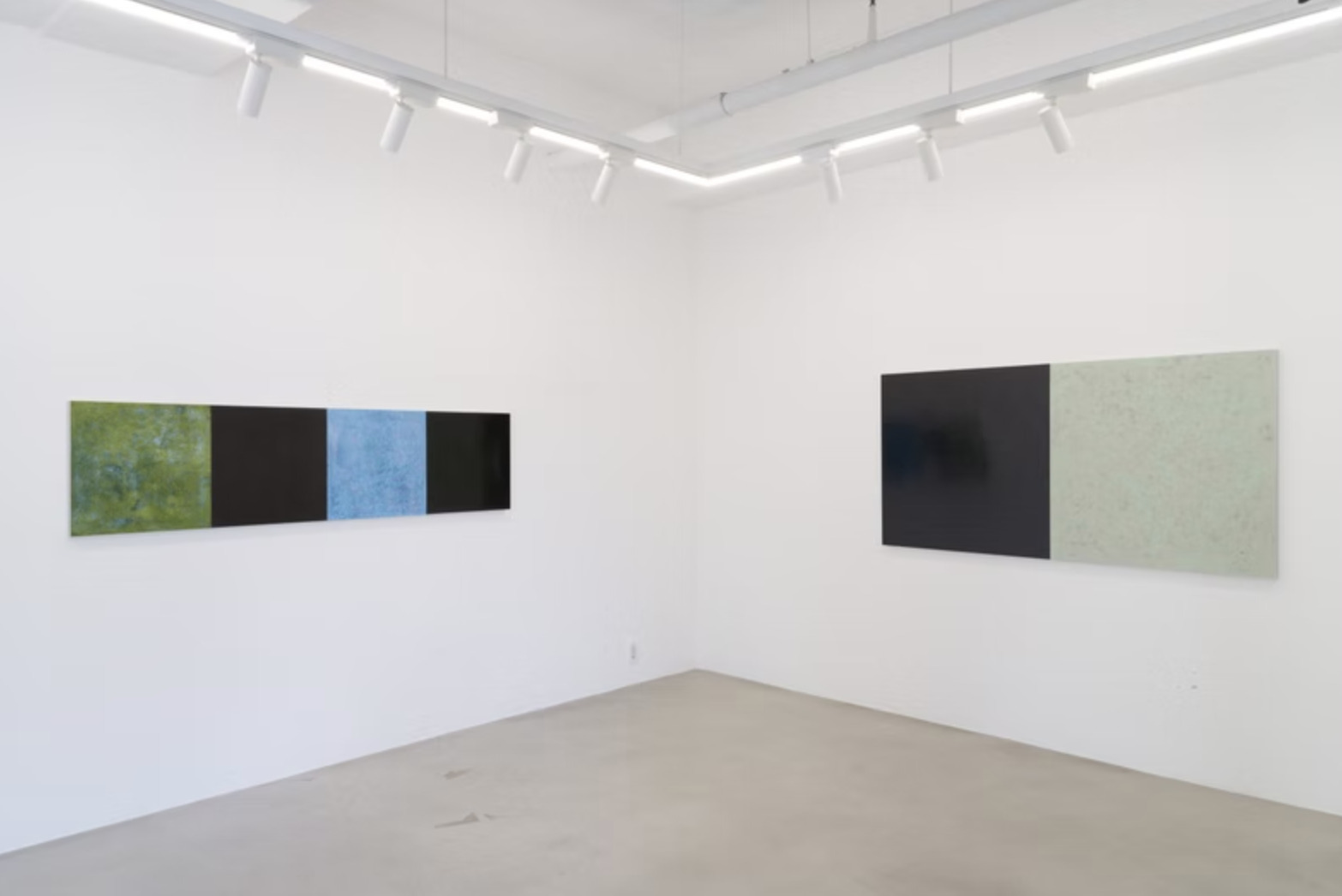
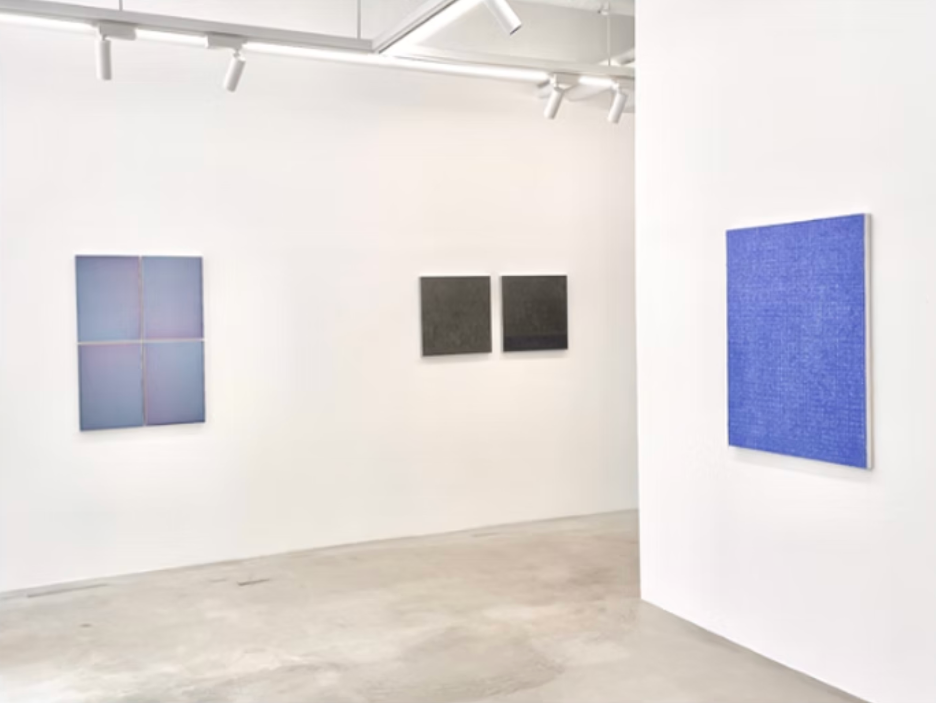
In the recent exhibition 《Proxy Data》(Art Project CO, Seoul, 2025), color and the observation of nature were added to the artist’s predominantly black-and-white graphite surfaces. During his residency at Art Lab Sanyang in Jeju, Pyoun recorded colors observed along the coast and in the forest, translated them into acrylic paint, layered them repeatedly on wooden panels, and then sanded them down. As a result, the processes through which colors emerged and disappeared remain on the surface of Proxy Data(2025) like a cross section of geological strata.

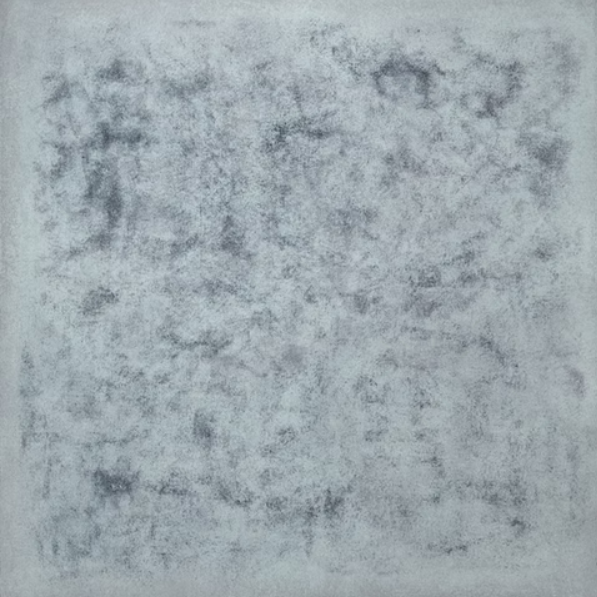
Presented alongside it, ‘The Record’ series densely accumulates traces of graphite on surfaces prepared with putty and paint, directly recording time through the repetition of pencil. The two series visualize time respectively through layers of color and the density of action, expanding the artist’s long-standing materialization of time through the different painterly languages of black and white, color, record, and observation.

Topography & Continuity

Pyoun’s practice can be connected to the lineages of minimalism and Dansaekhwa through its use of repetitive actions and reduced formal elements. He has participated in exhibitions addressing materiality and repetition in Korean abstract painting, including 《Minimal Variation》(Seoul National University Museum of Art, Seoul, 2018) and 《Layers of Condensation and Resonance》(Art Project CO, Seoul, 2025).

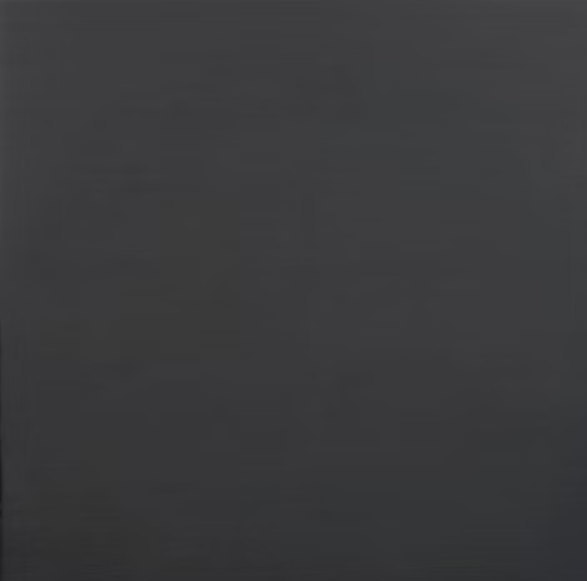
His paintings, however, are not primarily concerned with arriving at a purified surface through the reduction of color and form. Instead, they actively reveal the errors left by the repetitive body, the time required to produce the work, and the perceptual confusion generated by the viewer’s vision. Even the smooth black surfaces are not complete monochrome fields but sites where past labor and present reflection, physical surface and illusory depth, collide.
 
Even in comparison with other artists who use lines or graphite, Pyoun’s distinctive quality lies less in the formal variation of the line itself than in his transformation of the time and conditions required to produce a line into the content of painting. From the geometric illusions of his early works and the bodily duration of his large-scale roll works to present images reflected upon graphite surfaces, the dust and footprints generated through wall-based projects, and his recent strata of color, his practice is not fixed to a single material or style.

Instead, these different forms are connected by a consistent question: how can invisible time be transformed into perceptible material traces? Because of this continuity, the central concerns of his work remain intact even as its appearance changes from geometric images to black surfaces, site-specific installations, and multilayered fields of color.
 
Recent developments demonstrate that Pyoun’s painting is expanding from recording the time of individual labor toward reading the time preserved within natural environments and specific places. In the ‘Proxy Data’ series, colors collected from nature do not serve as materials for depicting a landscape. Instead, they function as records that indirectly testify to a particular place and period.

Just as past environments may be inferred through tree rings or geological strata, the artist reconstructs the places and periods through which he has passed by exposing layers of color and sanding down the surface. This approach preserves his established method of accumulating time through repetitive pencil work while creating room for observation, collection, and environmental memory within painting.
 
Considering how Pyoun’s practice has developed from his early investigation of the instability of visual perception toward questions of time, materiality, and the records of nature, his future work is also likely to continue by connecting the temporalities contained within different places and materials to his own bodily actions, rather than by repeating a fixed form. Through this process, painting may acquire a broader context not as a completed image, but as a recording device through which a person and an environment leave traces upon one another.

Works of Art

Painting That Translates Invisible Temporal Flows into Material Layers

Articles

Exhibitions

Activities