Mulsan_01 - K-ARTIST

Mulsan_01

2025
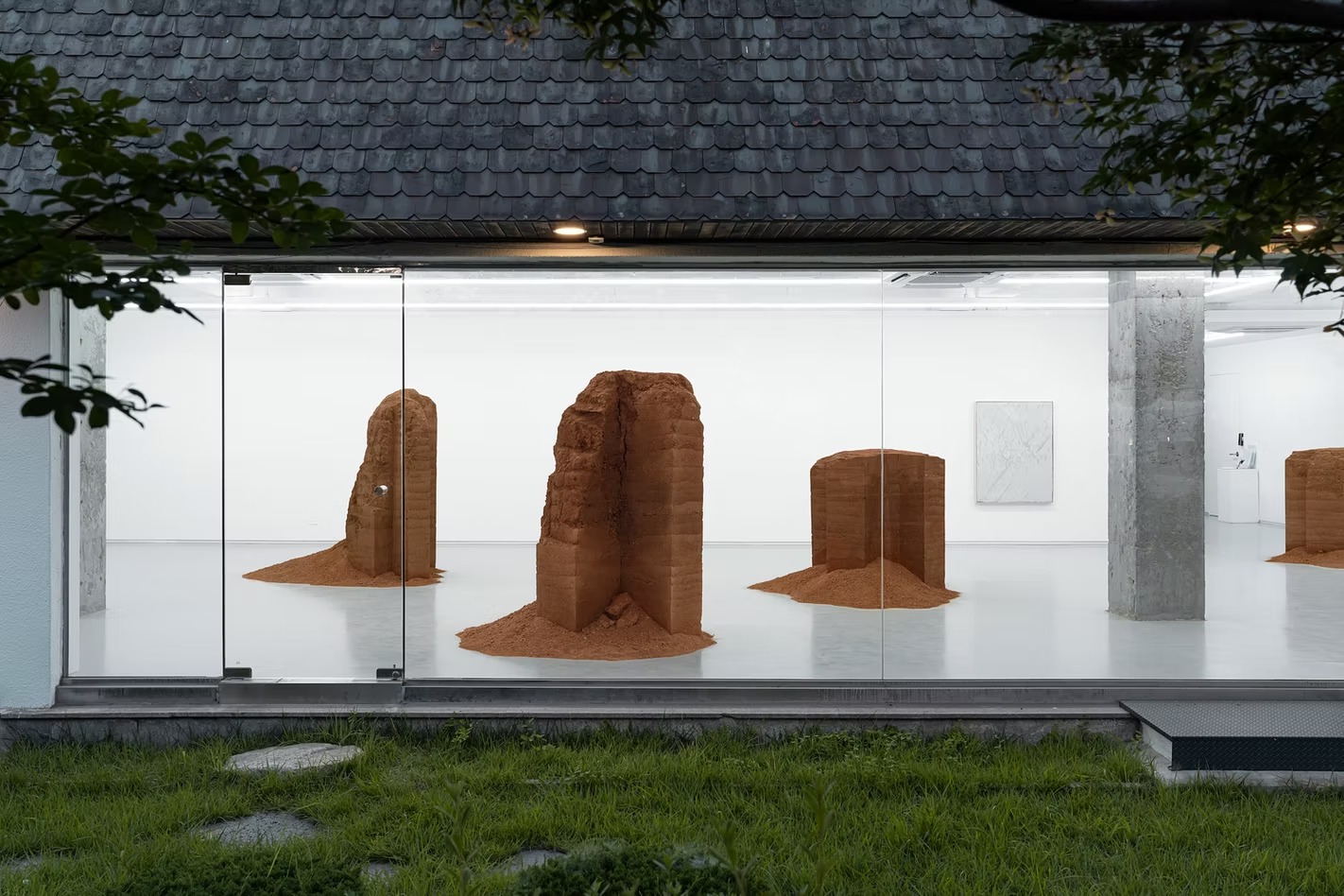
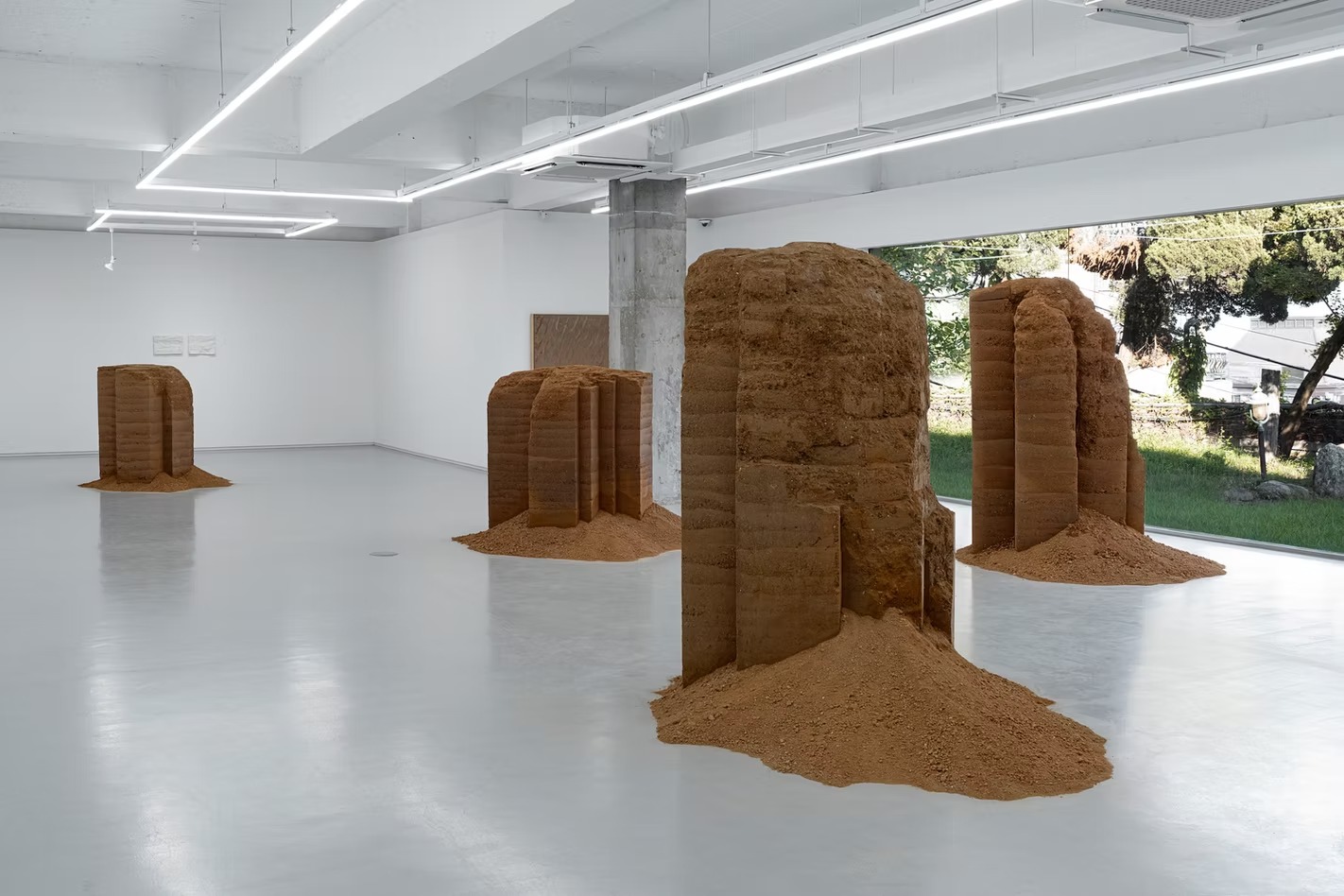
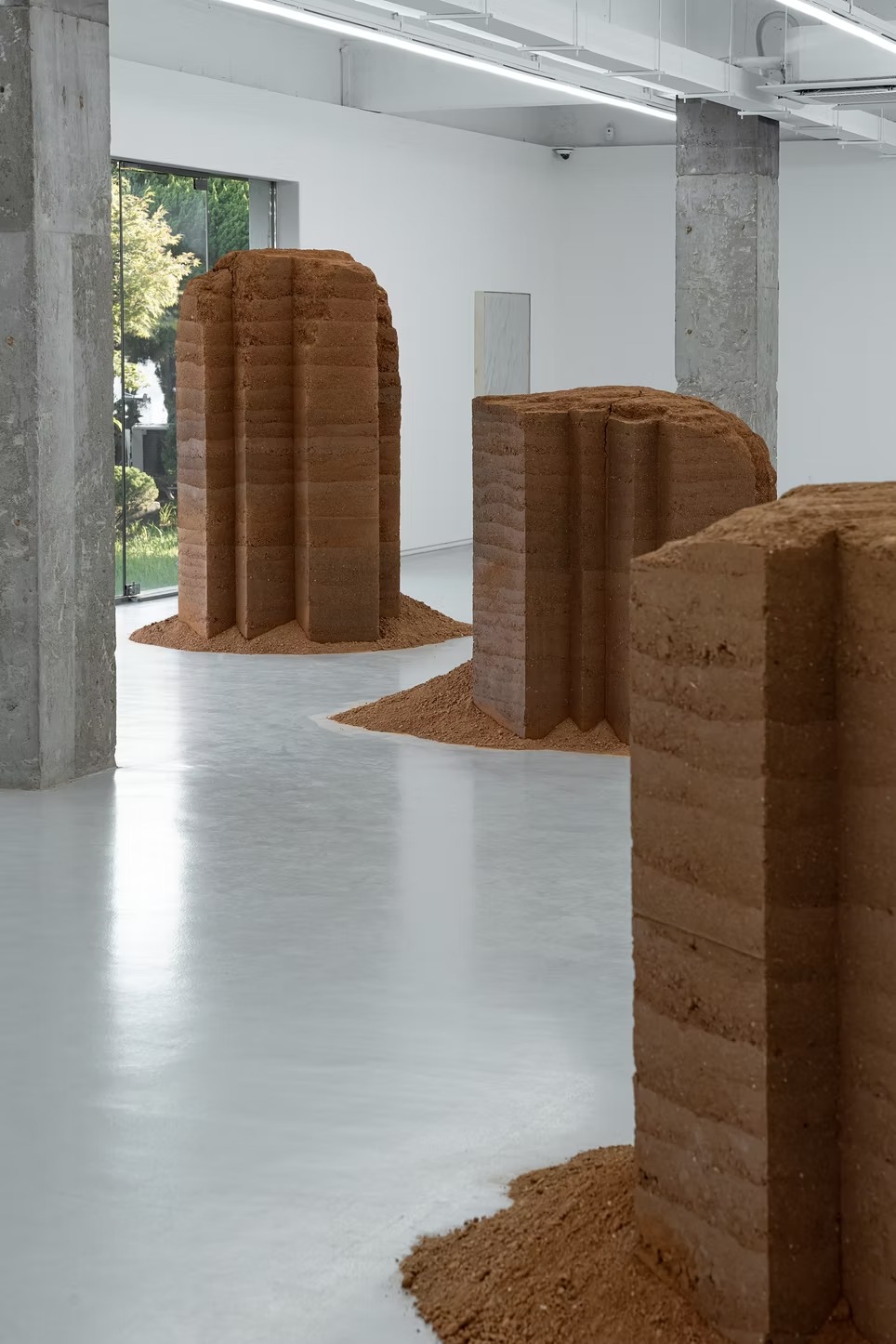
Soil
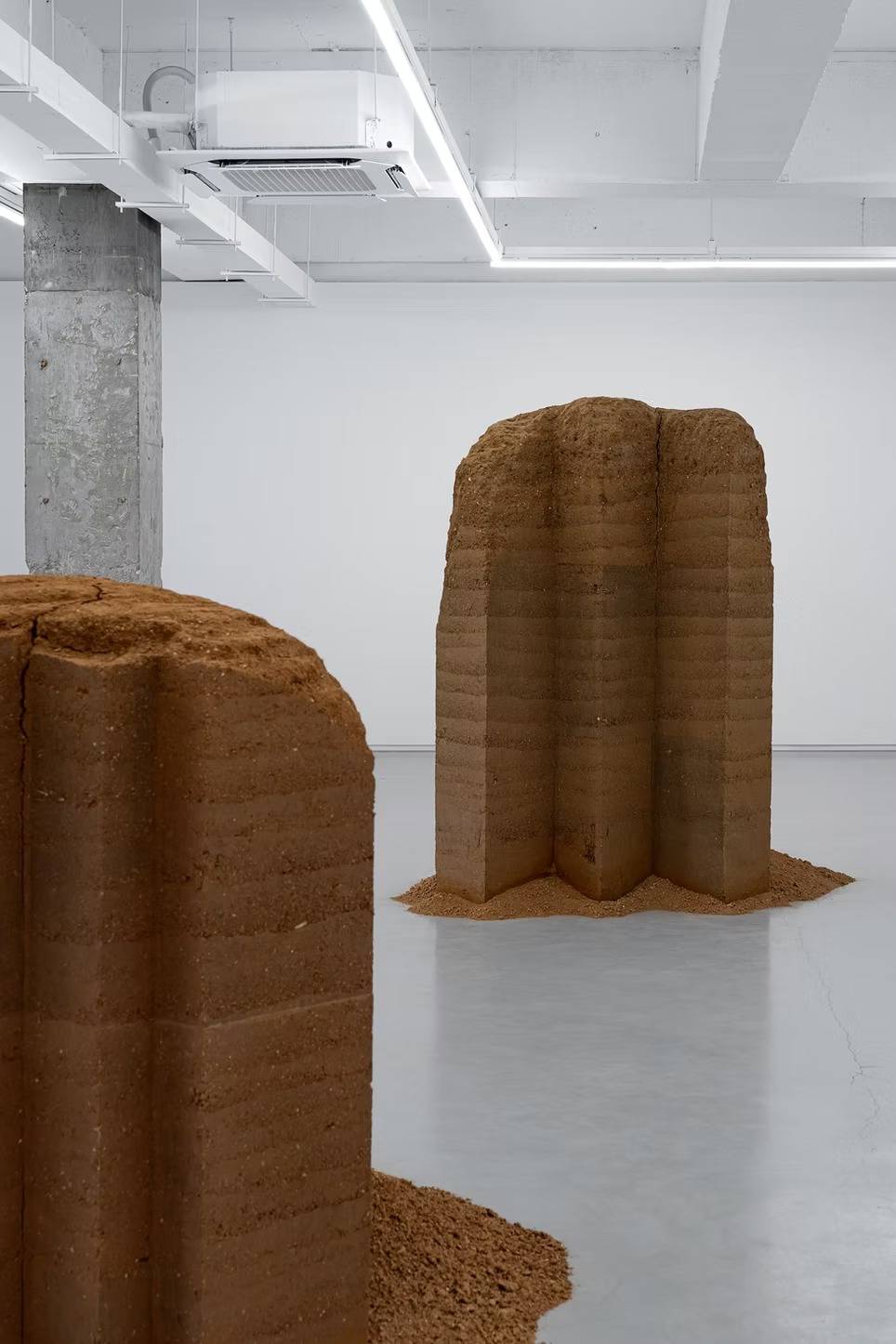
133 x 95 x 126 cm
About The Work

Juree Kim’s work explores how creation and dissolution coexist in the process through which earth and water come together to form structures and then break them down again. While using earth as a material for constructing solid sculptural forms, the artist leaves it unfired and allows conditions such as water, gravity, temperature, and humidity to intervene in the work. 

Structures completed in a solid state erode and collapse over time, eventually returning to a condition closer to earth. Completion thus becomes not an endpoint but a temporal state that encompasses transformation and dissolution. The recurring intersection of materiality and immateriality, permanence and transience, constitutes a central concern running throughout Kim’s sculptural practice.

In her work, earth and water operate as agents that reveal social realities while simultaneously embodying natural cycles. Water enables life but also erodes and destroys structures, while earth accepts form yet retains the possibility of dispersing once again. Once the artist pours water onto a work, she can no longer fully control the speed of erosion or the direction of its collapse, and the work changes according to the inherent properties of its materials and the surrounding environment. 

This autonomy of matter prevents sculpture from being confined to an object completed according to the artist’s intention and instead allows it to be understood as an open relationship in which humans and nature, civilization and environment, continually affect one another. Creation and dissolution are presented not as two opposing moments but as a continuous movement through which each gives rise to the other.

Through states of matter in which the past, present, and future remain simultaneously latent, Kim invites reflection on both the finitude of human civilization and the continuous cycles of nature. 

Solo Exhibitions (Brief)

Juree Kim has held solo exhibitions at TINC (2022), SongEun ArtSpace (2020), and Project Space SARUBIA (2017).

Group Exhibitions (Brief)

Juree Kim has participated in group exhibitions at the Philadelphia Museum of Art (2023), Buk-Seoul Museum of Art (2022), National Museum of Modern and Contemporary Art, Korea (2021), Saatchi Gallery (2020), Victoria and Albert Museum, and British Ceramics Biennial (2017).

Awards (Selected)

Juree Kim was selected as a Public Art New Hero in 2017 and received the Grand Prize at the 10th SongEun ArtAward in 2010.

Residencies (Selected)

Juree Kim participated in the Guest Artist Program at The Clay Studio (2023), as well as residencies at the Princessehof National Museum of Ceramics (2021), MMCA Residency Goyang (2020), the Victoria and Albert Museum (2017–2018), and the Cité internationale des arts (2016).

Collections (Selected)

Juree Kim’s works are held in the collections of the Government Art Bank, National Museum of Modern and Contemporary Art, Korea; the Victoria and Albert Museum; Henan Museum; Gyeonggi Museum of Modern Art; and the SONGEUN Art and Cultural Foundation.

Works of Art

Where Materiality and Immateriality, Permanence and Ephemerality Intersect

Originality & Identity

Juree Kim’s work explores how creation and dissolution coexist in the process through which earth and water come together to form structures and then break them down again. While using earth as a material for constructing solid sculptural forms, the artist leaves it unfired and allows conditions such as water, gravity, temperature, and humidity to intervene in the work.

Structures completed in a solid state erode and collapse over time, eventually returning to a condition closer to earth. Completion thus becomes not an endpoint but a temporal state that encompasses transformation and dissolution. The recurring intersection of materiality and immateriality, permanence and transience, constitutes a central concern running throughout Kim’s sculptural practice.

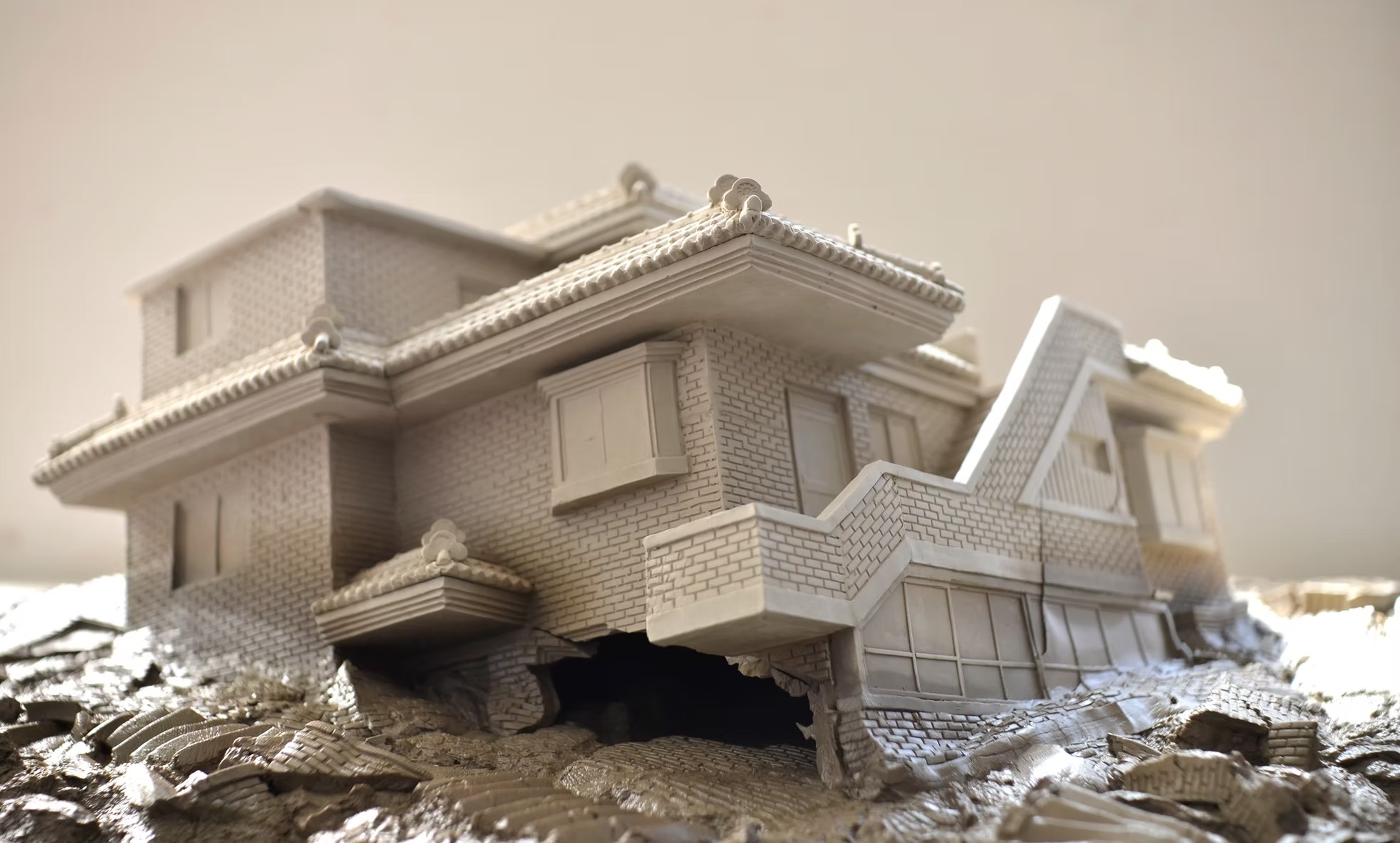
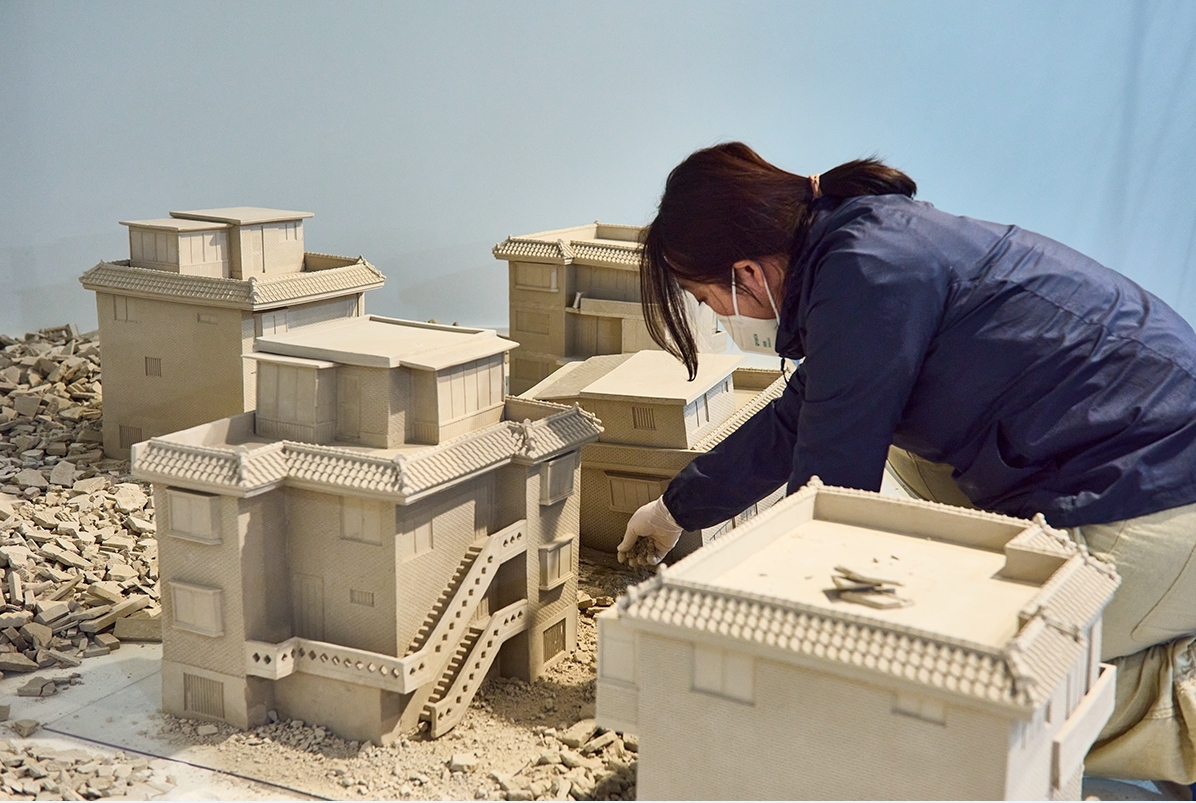
This structure of creation and dissolution extends to her interest in the human body, residential space, and urban transformation. Having addressed the deterioration and disappearance of the body in her early work, the artist came to understand the house as an externalization of the body and an environment that sustains life. She subsequently developed the 'Hwigyeong_Evanescent Landscape' series, in which she meticulously reconstructed buildings from redevelopment areas in earth and then caused them to collapse through water.

In cities where the demolition of old houses and the construction of new buildings are rapidly repeated, the dismantling of a house becomes an event that erases not only a physical structure but also the memories and ways of life of its residents and the accumulated time of the area. Kim expands these scenes beyond records of particular locations to address capital and development, displacement and forgetting as forces that shape the contemporary city.

In her work, earth and water operate as agents that reveal social realities while simultaneously embodying natural cycles. Water enables life but also erodes and destroys structures, while earth accepts form yet retains the possibility of dispersing once again. Once the artist pours water onto a work, she can no longer fully control the speed of erosion or the direction of its collapse, and the work changes according to the inherent properties of its materials and the surrounding environment.

This autonomy of matter prevents sculpture from being confined to an object completed according to the artist’s intention and instead allows it to be understood as an open relationship in which humans and nature, civilization and environment, continually affect one another. Creation and dissolution are presented not as two opposing moments but as a continuous movement through which each gives rise to the other.

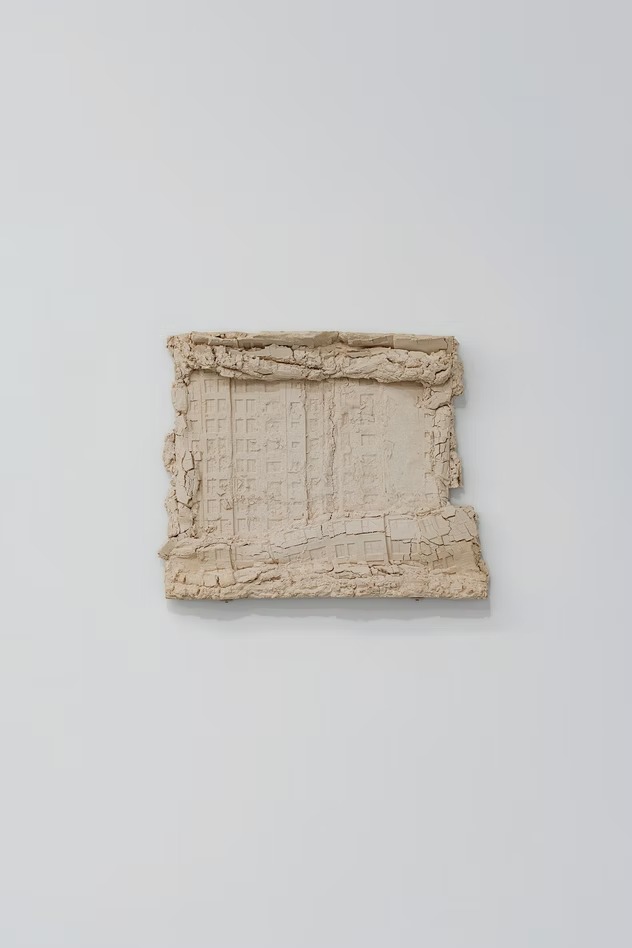
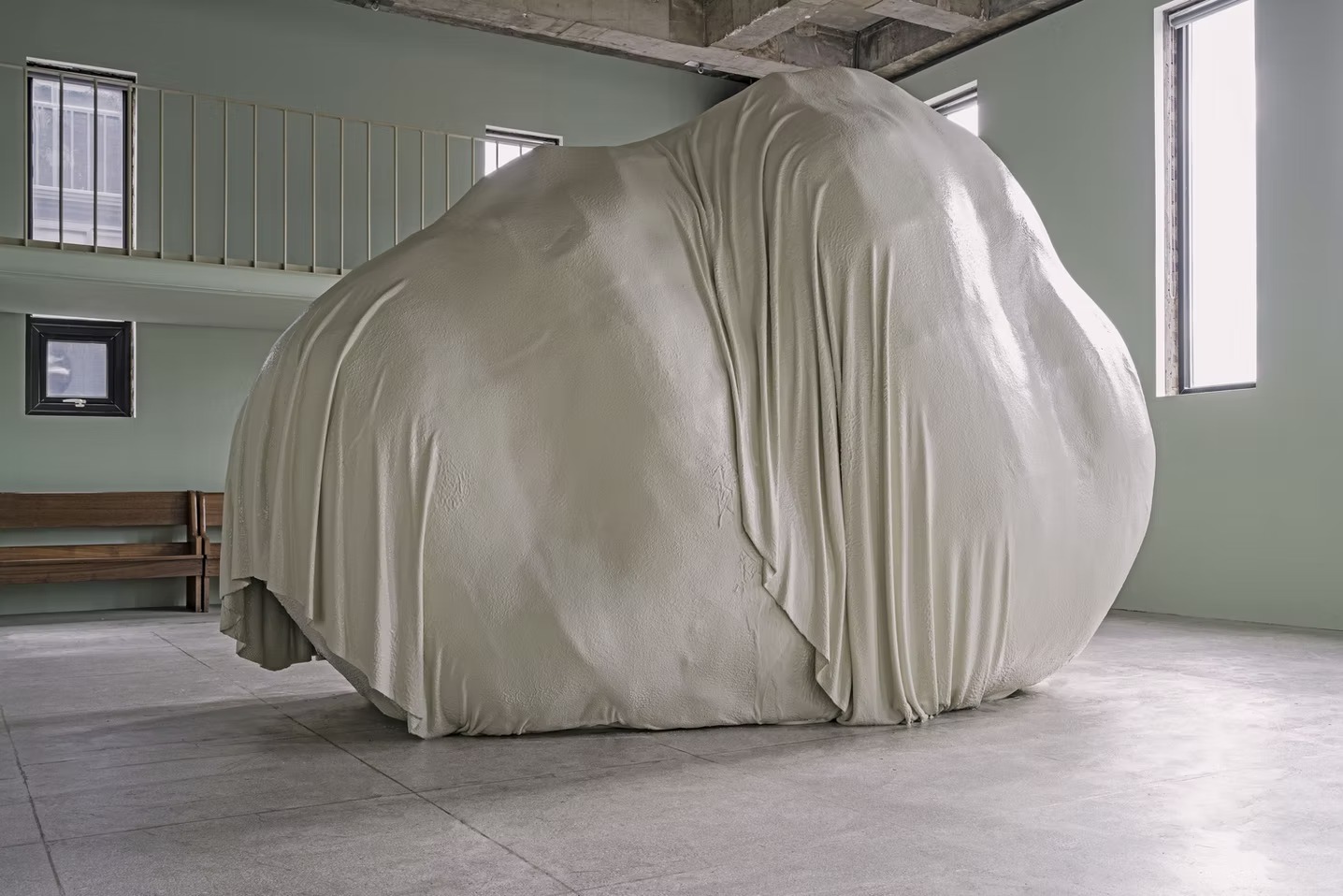
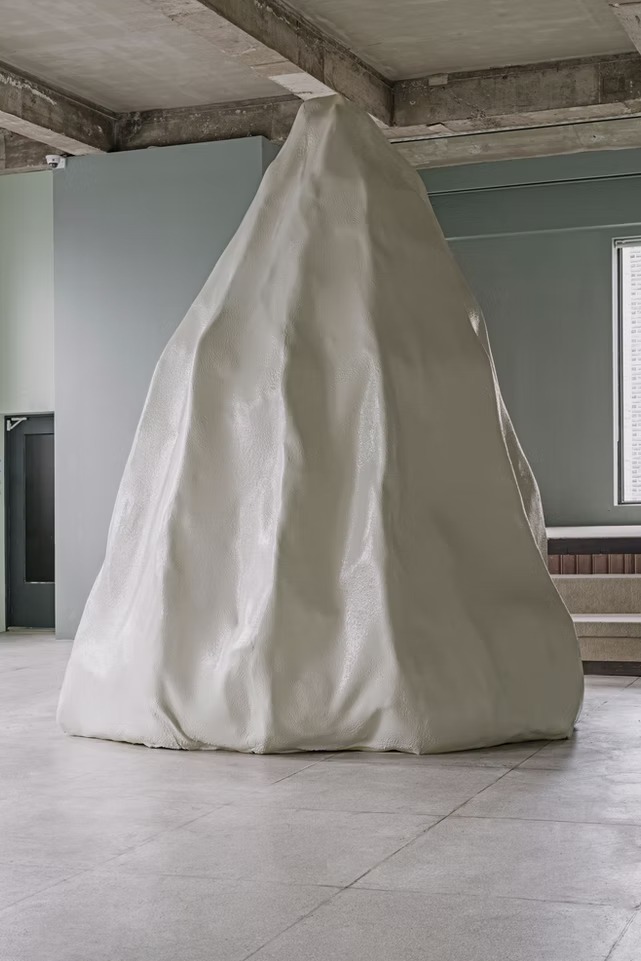
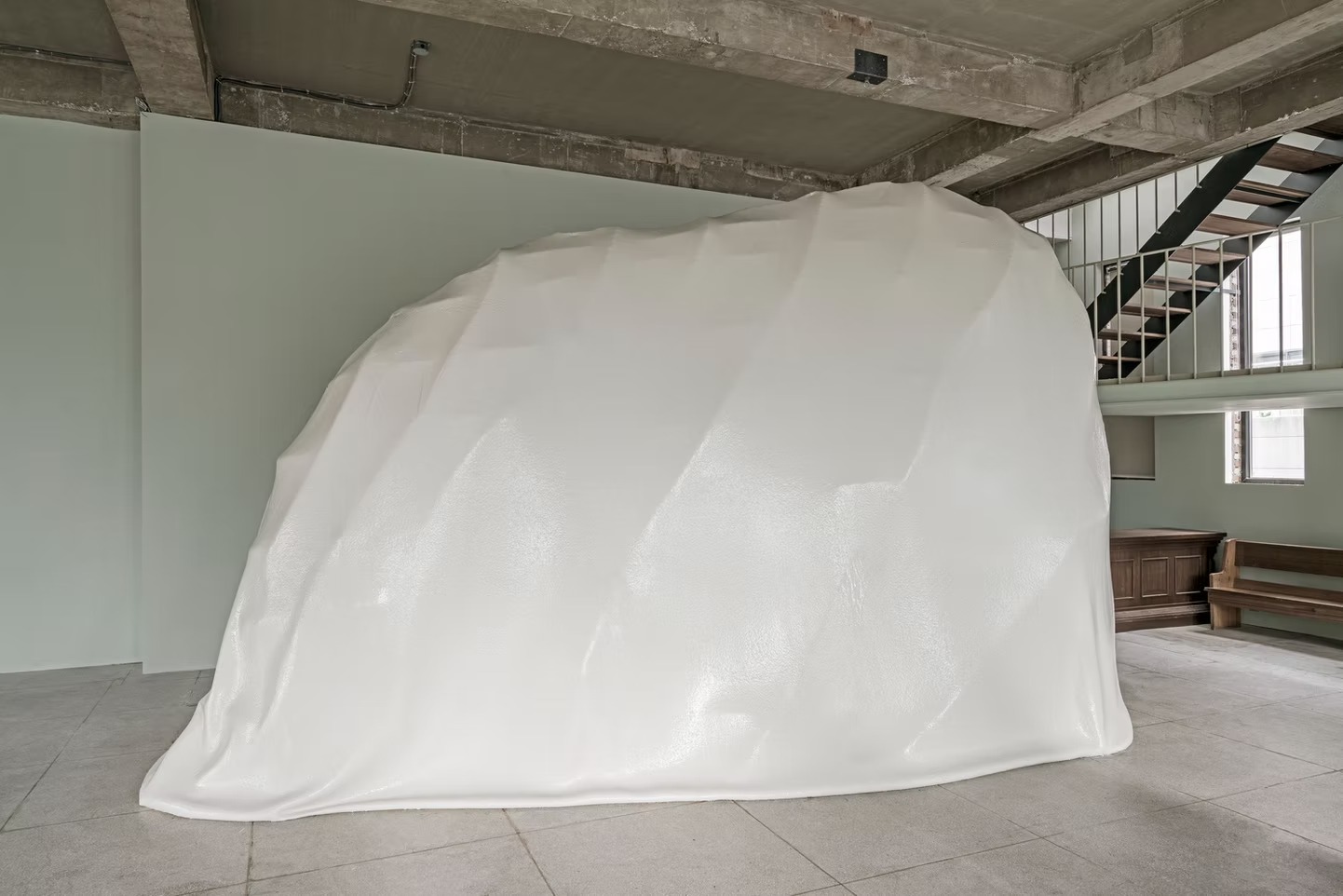
In her recent work, Kim’s interest has expanded from specific urban landscapes to sedimentation and weathering, geological time, and the structures of memory. The monumental masses of earth in the 'Wet Matter' series and works from the 'Clay Tablet', 'Column', and 'Peaks' series move between architectural traces and natural forms, condensing scenes in which civilization ultimately returns to earth.

Here, sedimentation refers not only to the physical accumulation of earth but also encompasses memories layered within places, traces of vanished lives, and contemporary environments in which images and data are stored. Through states of matter in which the past, present, and future remain simultaneously latent, Kim invites reflection on both the finitude of human civilization and the continuous cycles of nature.

In her work, ruins are not remnants of events that have ended but transitional states in which new formation is underway, prompting questions about what we remember and how we preserve it through traces of disappearance.

Style & Contents

Juree Kim directly incorporates the physical properties of earth and water into the forms of her works and the processes through which they change. By using earth in an unfired state, she preserves its capacity to absorb moisture, expand, crack, and collapse, while water and gravity intervene as forces that reshape the completed sculptural forms.

The artist controls the composition and viscosity of the earth, the thickness of the surface, the amount of water, and the timing of its introduction, but does not fully control the erosion and collapse that occur once the two materials come into contact. As meticulous construction coexists with unpredictable change, the work exists as an event that continues to unfold throughout the exhibition period.

In the 'Hwigyeong_Evanescent Landscape' series, the artist researched houses and historic buildings awaiting demolition and reproduced them as scale models, down to details such as exterior tiles, window frames, and railings. When water is poured onto the completed structures, erosion begins at the base, and the meticulously constructed forms gradually turn into ruins.

The gap produced by the precision of the representation and the irreversibility of the collapse brings disappearing places and traces of everyday life into sharper relief. In some works, the artist joins disparate architectural elements or constructs structures composed solely of interconnected railings without entrances or exits, thereby giving sculptural form to residential environments that have been added to and transformed over long periods of time, as well as to the improvised networks of life within the city.

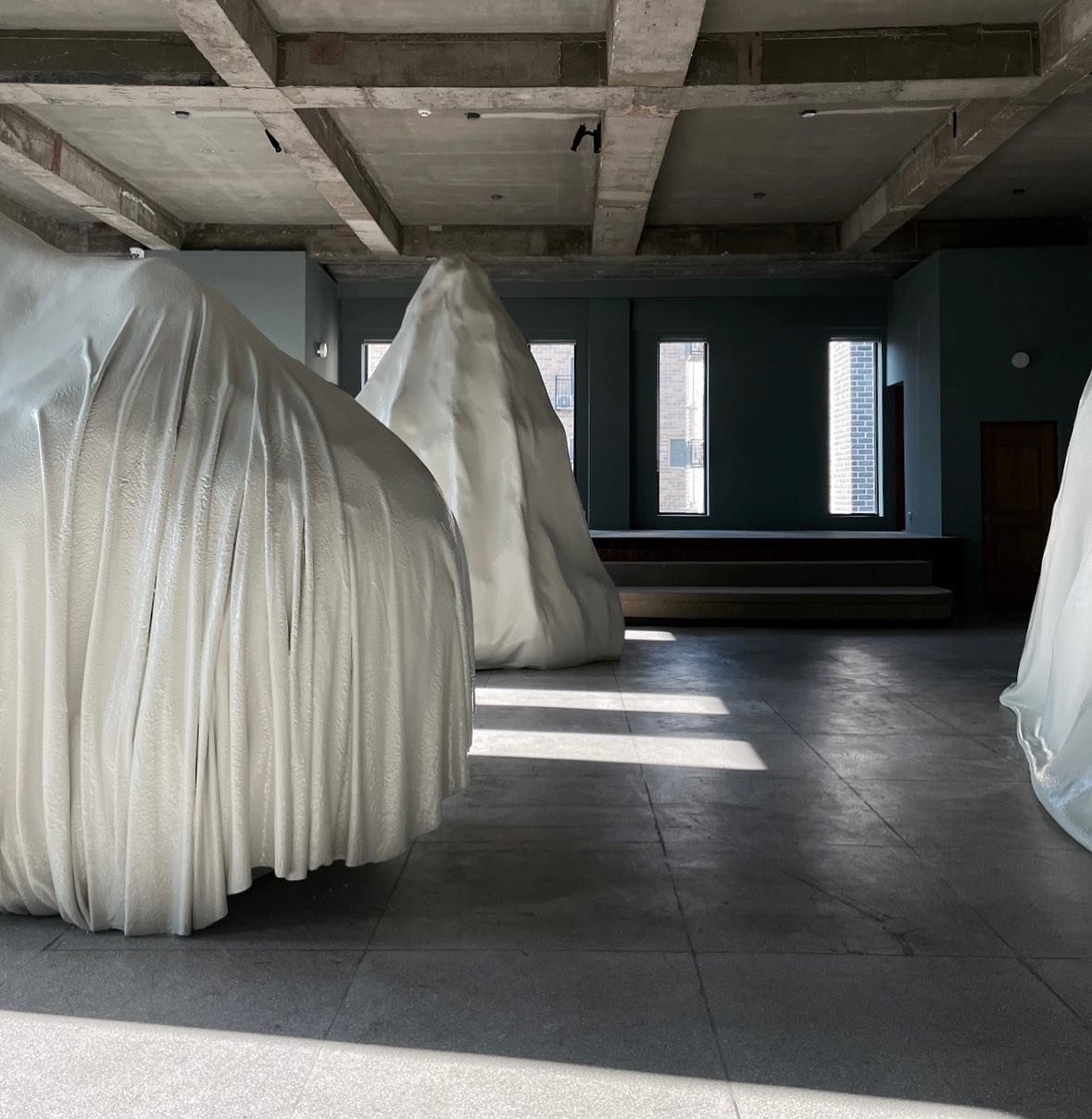
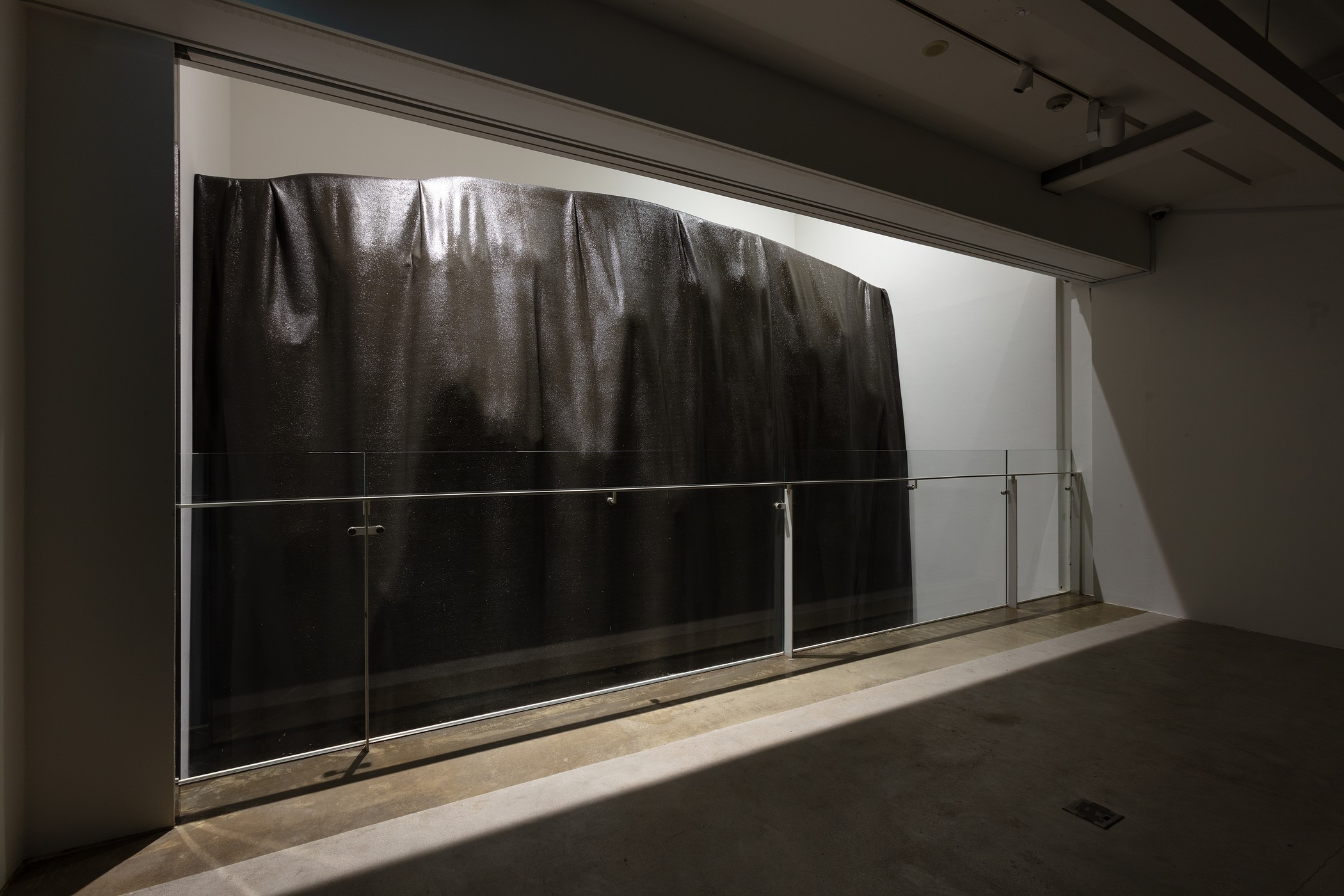
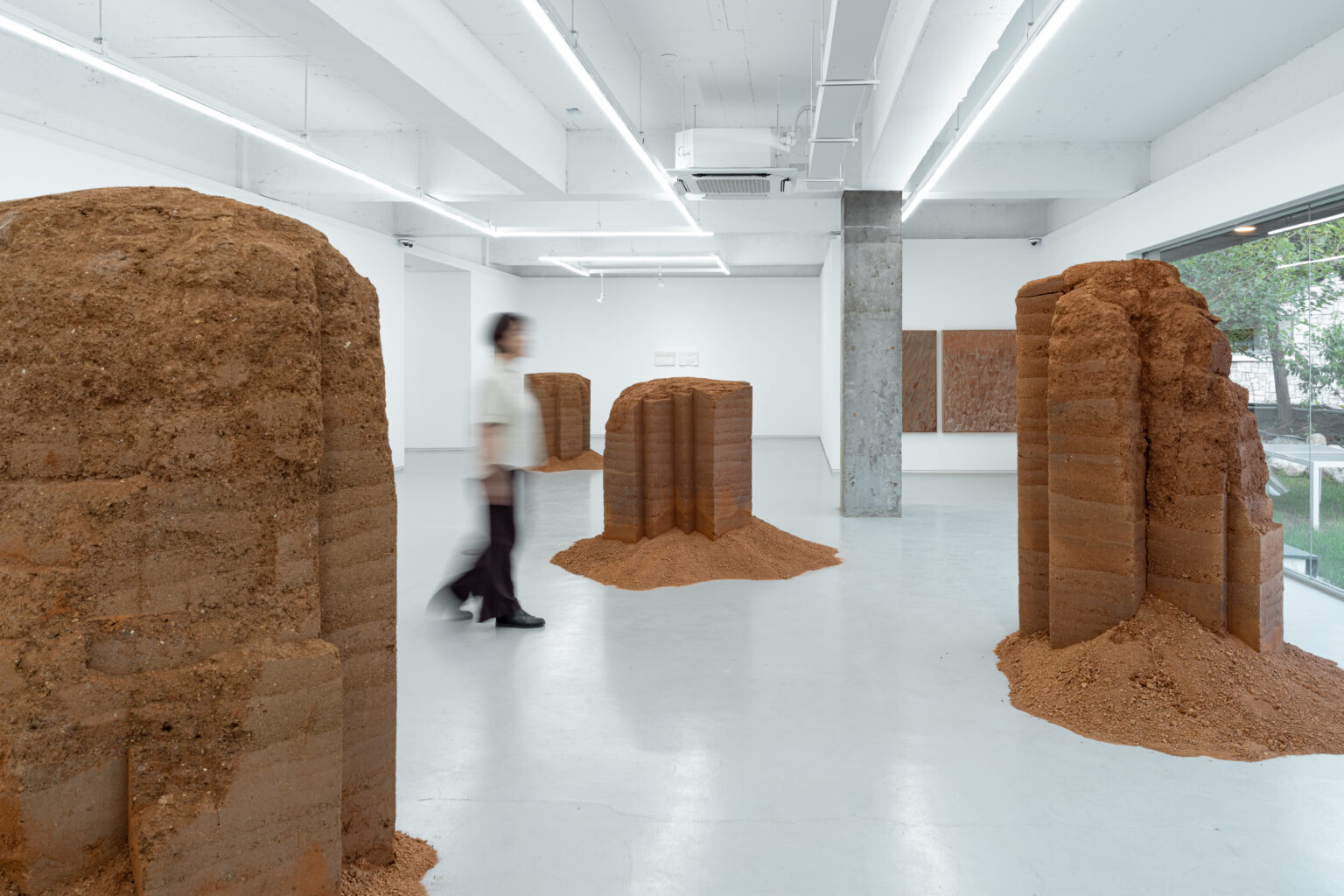
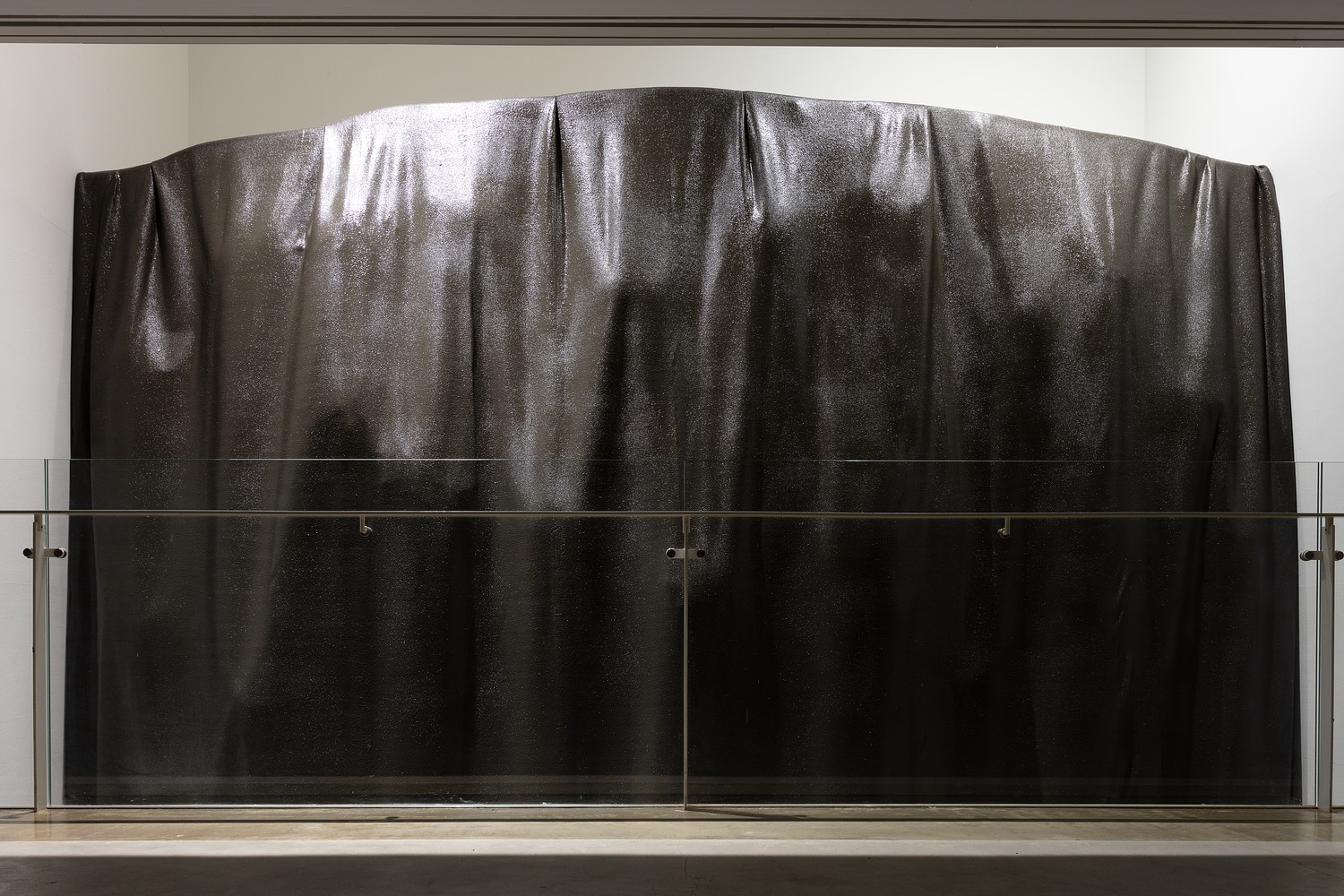
Since the 'Wet Matter' series, concrete architectural forms have shifted into monumental masses, wrinkled surfaces, and indeterminate silhouettes. The artist builds up, presses, and cuts away layers of wet earth to create forms that simultaneously evoke geological strata and skin, rock and the body.

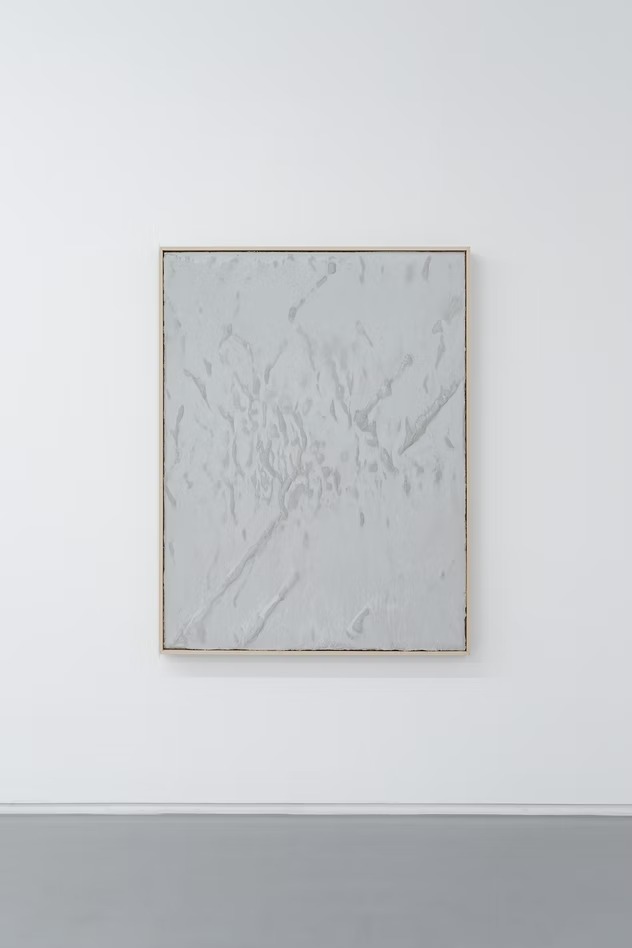
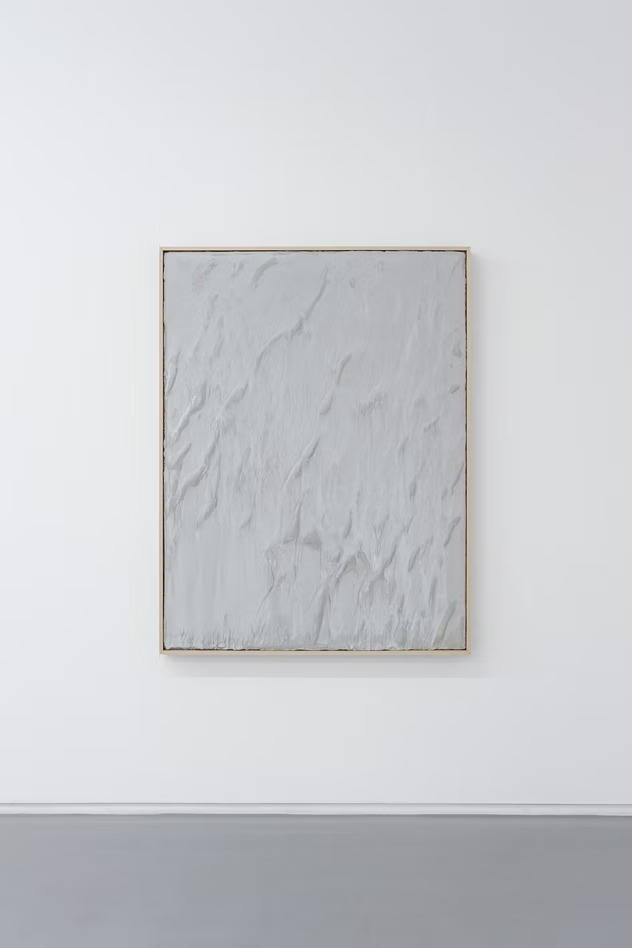
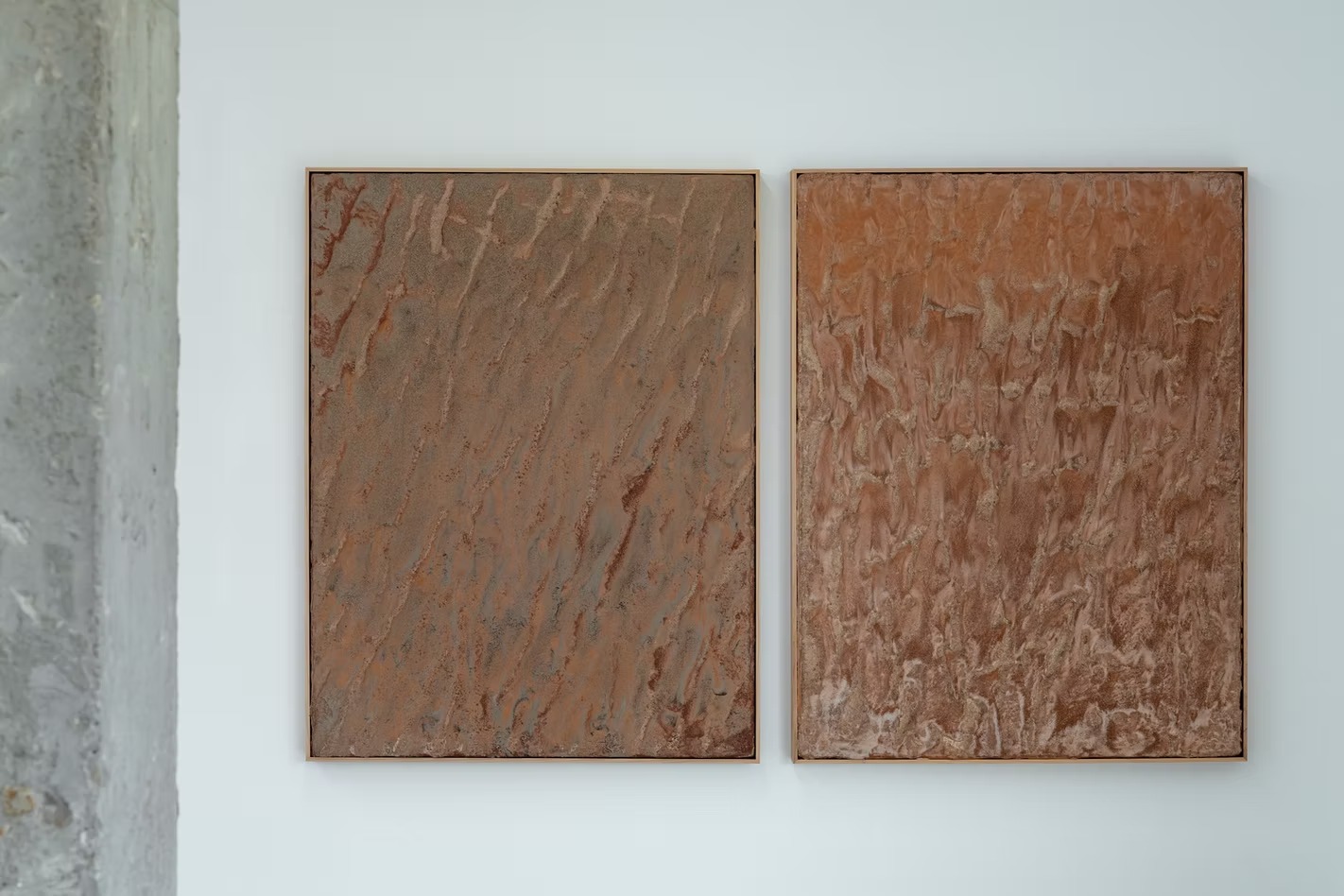
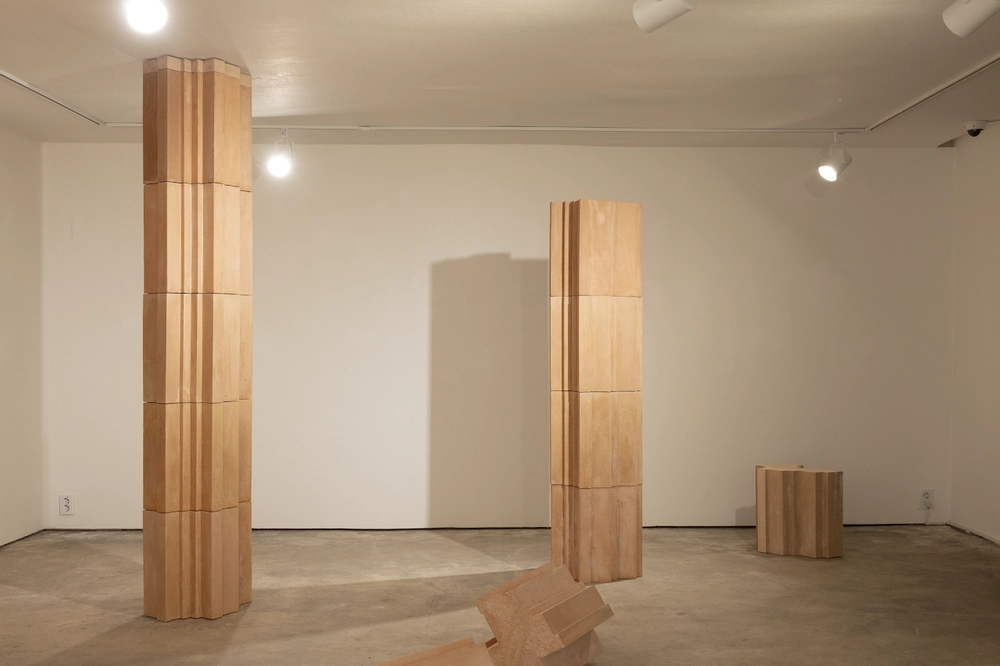
The folds and ridges left on the surfaces of the works bear traces of the artist’s direct bodily involvement and labor, while their difficult-to-gauge volumes and damp textures make the sculptures feel like living bodies. In the recent 'Clay Tablet', 'Column', and 'Peaks' series, architectural floor plans, ancient clay tablets, columns, and mountain peaks intersect, condensing the relationship between civilization and nature, construction and weathering.

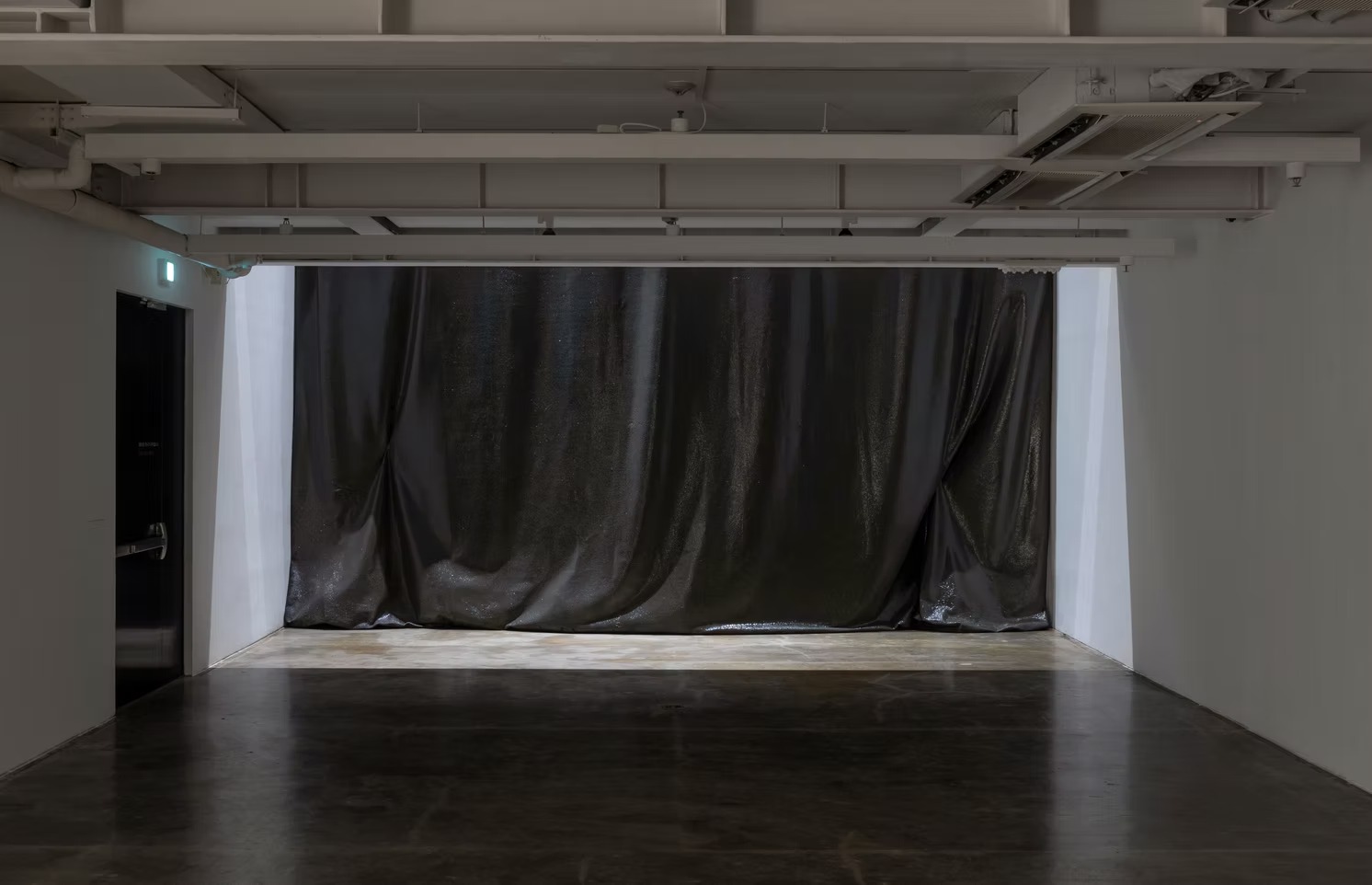
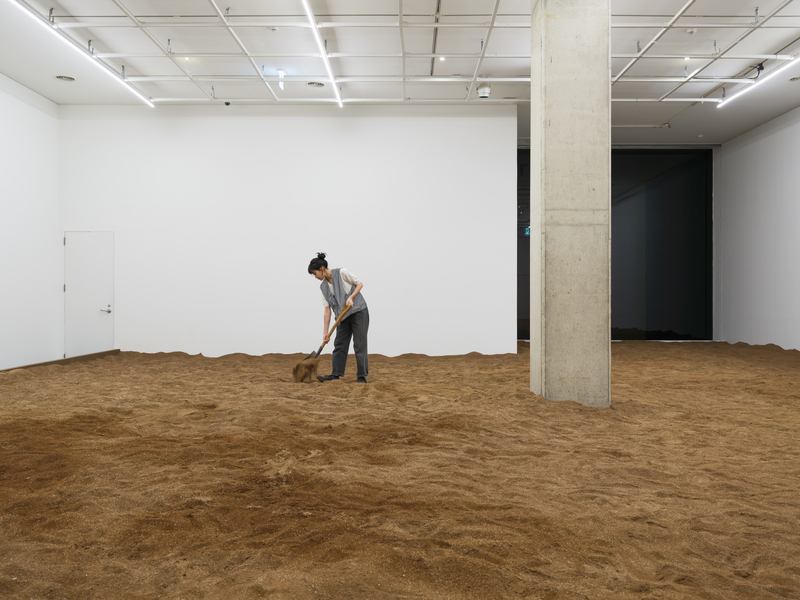
Space does not remain a mere backdrop for the works but functions as a condition that determines their form and sensory experience. Kim configures the scale and orientation of her sculptures in response to ceiling height, wall width, and viewing routes, and at times positions monumental masses of earth so that they block passageways, requiring viewers to move through narrow gaps or walk around the works in order to experience them as a whole.

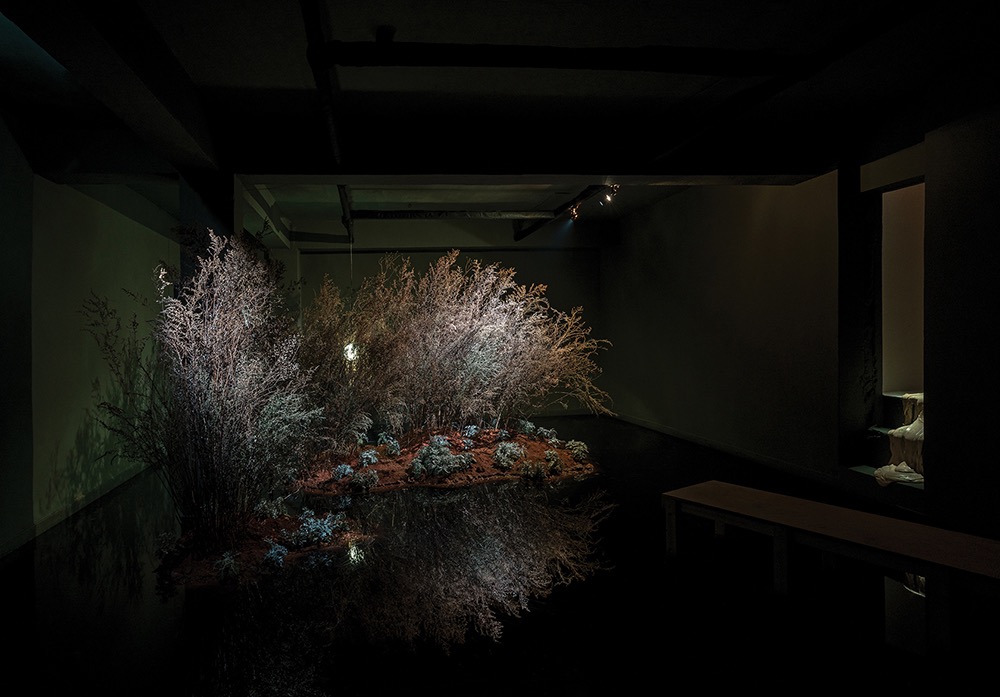
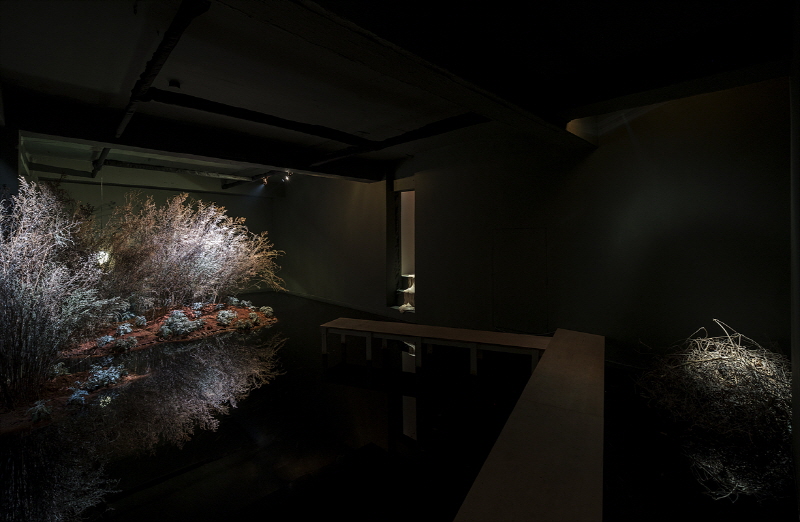
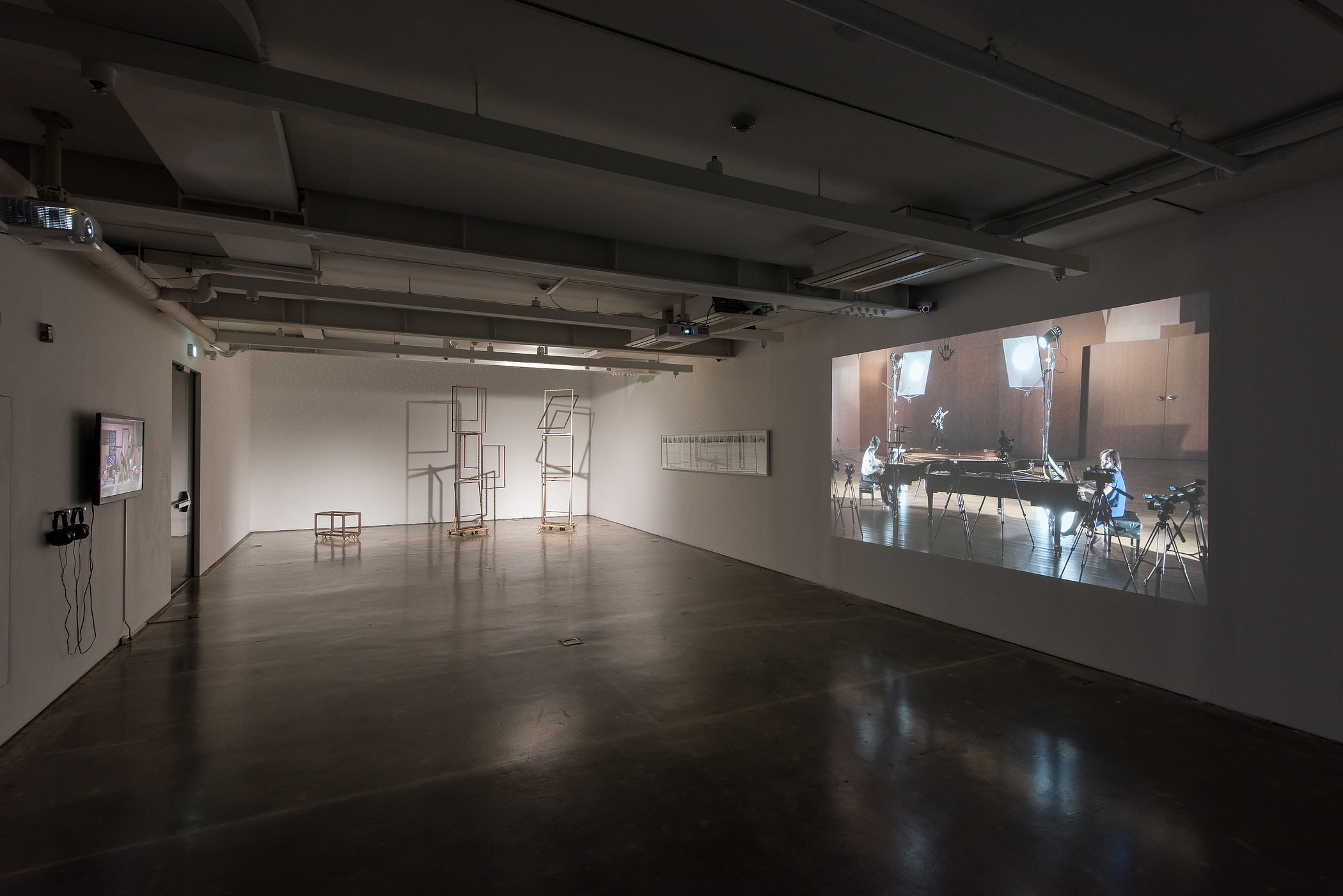
In installations that combine darkness and lighting, temperature and humidity, the sounds and vibrations of water, and the scents of earth and plants, hearing, touch, smell, and bodily distance become integral to the work alongside vision.

Topography & Continuity

Juree Kim’s practice has expanded from an early interest in the deterioration and dissolution of the body to encompass the house and the city, as well as the temporalities of civilization and nature. Regarding the house as an externalization of the body and a place where memories of life accumulate, she began the 'Hwigyeong_Evanescent Landscape' series after witnessing the redevelopment of Hwigyeong-dong, Seoul, around 2009.

Her method of researching buildings awaiting demolition, meticulously reconstructing them in earth, and then eroding them with water became an important foundation for her subsequent practice. Although this work began by documenting the disappearance of specific places, it developed to address the repeated demolition and construction of cities, displacement and forgetting, and the finitude of human-built environments.

The 'Hwigyeong_Evanescent Landscape' series is not confined to a single region or architectural style, but has expanded into a method of investigating places and translating their accumulated temporalities into matter. In Henan, China; Jaipur, India; Philadelphia, United States; and elsewhere, Kim researched local architecture, urban environments, and historical contexts, reconstructing them as structures made of earth.

Although the specific locations and architectural details vary from work to work, the process through which solidly constructed forms encounter water, disintegrate, and return to their original state as earth remains consistent. This repetition does not reduce the development and destruction of different regions to an identical narrative; instead, it situates the distinct time and memory of each place within the broader cycle of civilization’s creation and dissolution.

Around the time of Impermanence in 2017, Kim began moving away from architectural representation and constructing sensory environments that combined light, sound, scent, plants, and movement. In the subsequent 'Wet Matter' series, concrete architectural forms were transformed into monumental masses of earth, wrinkled surfaces, and amorphous bodies whose interiors are difficult to discern.

Despite these changes, the fundamental conditions of her practice—unfired earth and water, along with the intervention of time and environment—have remained constant. While her earlier works directly presented the collapse of completed structures, the more recent works propose material states in which solidification and liquefaction, sedimentation and erosion, remain simultaneously latent, condensing the passage of transformation within sculpture.

The recent 'Clay Tablet', 'Column', and 'Peaks' series reconnect the memories of cities and architecture addressed in her early practice through the languages of geological strata and weathering, ruins, and natural cycles. Columns resembling apartment floor plans, clay tablets made from pulverized architectural debris, and masses evocative of mountain peaks and sedimentary layers contain both traces of civilization and the process through which they return to the earth. The development of Kim’s series does not proceed by severing or replacing earlier concerns.

As her focus shifts from the body to the house, and from the city to geological time, she continually reworks the encounter between earth and water and the relationships between construction and dismantling, memory and dissolution. This continuity is grounded in her approach to sculpture as a process shaped collectively by material, place, environment, and time, rather than as a fixed outcome.


Works of Art

Where Materiality and Immateriality, Permanence and Ephemerality Intersect

Articles

Exhibitions

Activities