Meat & Clothes - K-ARTIST

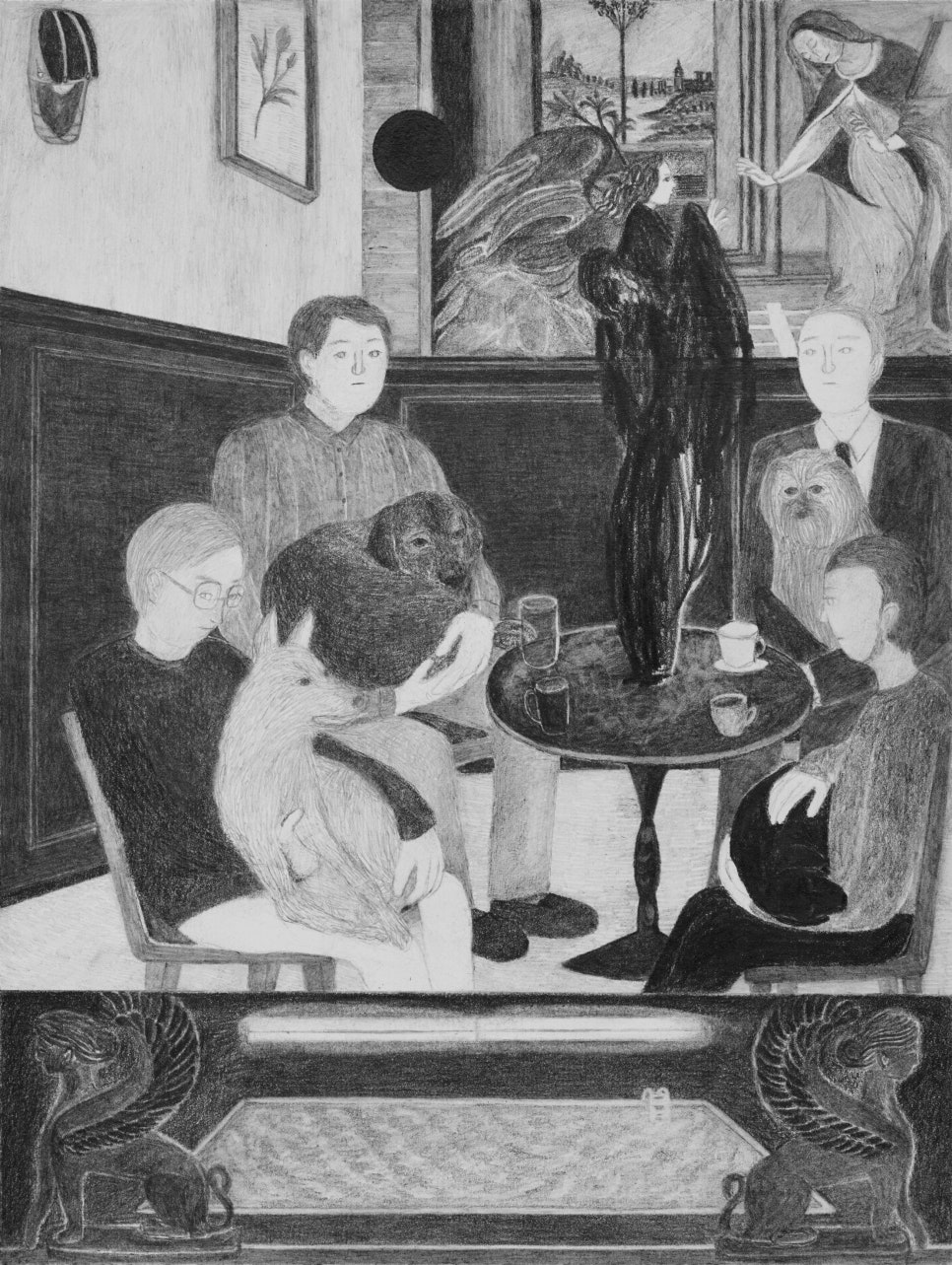
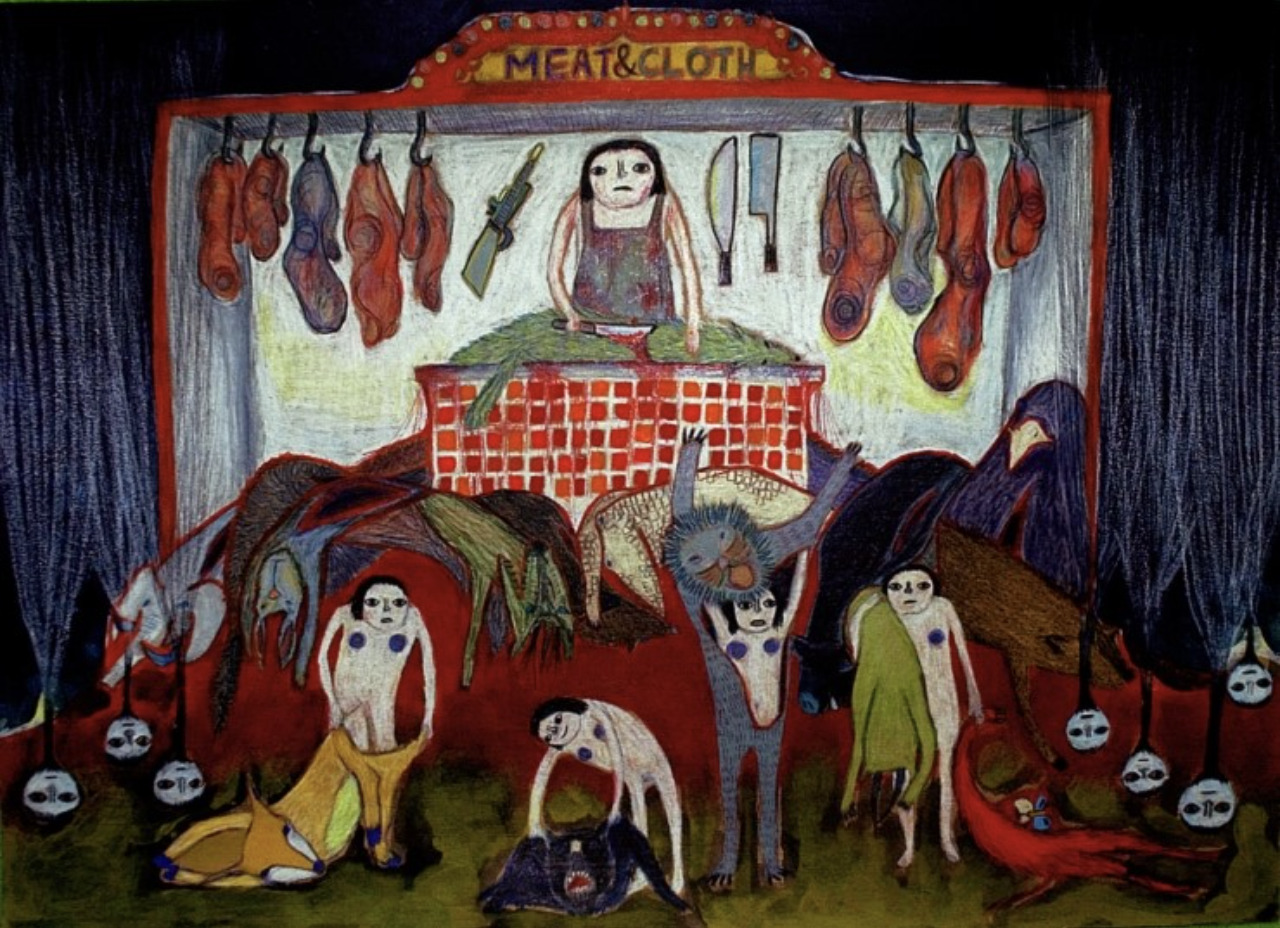
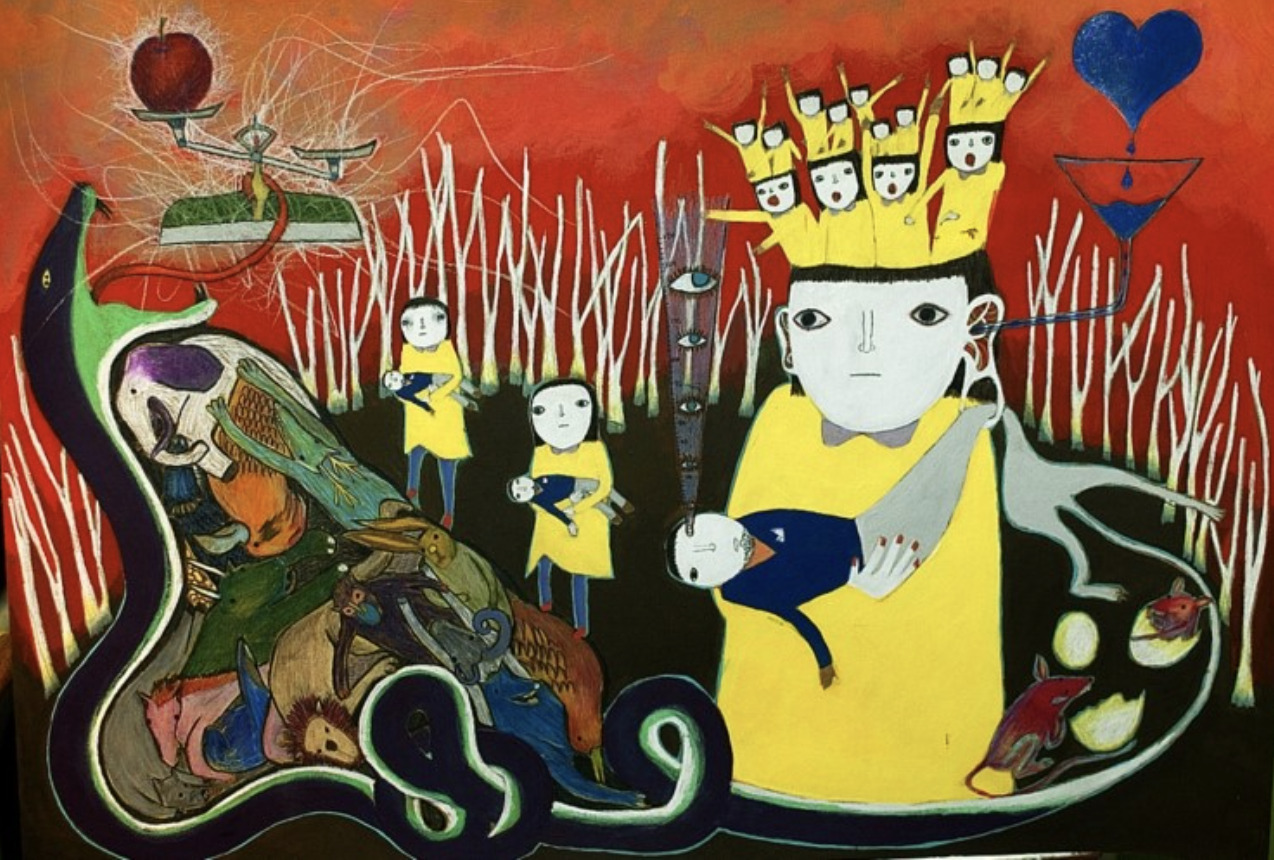
Meat & Clothes

2008
Acrylic, colored pencil on paper
42 x 59.4 cm
About The Work

Mackerel Safranski’s practice originates from her autobiographical experience of living with an eating disorder for many years and her sustained interest in the ways the body is perceived and constructed.

Focusing on what she calls the “second body”—a body formed through its connection with bodies outside the self and with others—she reconsiders her own corporeality while exploring the possibilities of subject formation beyond the boundaries of the individual body.

Drawing from literature, news media, and scenes encountered in everyday life, Safranski constructs narratives and characters within her paintings. Anonymous objects and fragmented compositions frequently appear throughout her works, creating an uncanny atmosphere charged with the tension of an event that seems on the verge of unfolding.

Embedded within these images are social narratives of migration, labor, violence, desire, relationships, and isolation, reflecting the artist’s interest in investigating the “extensional body” as it is shaped by and responds to broader social structures.

Safranski approaches the body not as an object of representation but as an ontological site through which experience is lived and negotiated. She considers events such as labor, sex, and violence through the framework of the traces borne by the body, expressing these concerns across drawing, painting, installation, text, and sound.

By examining the relationships between anxiety and the body, as well as the boundaries between self and other, her practice seeks new possibilities for subjectivity through a sustained inquiry into the body as an extensional and relational entity.

Solo Exhibitions (Brief)

Mackerel Safranski has held recent solo exhibitions including 《Room Tone: room, stain and sounds for the sequence》 (A-Lounge Contemporary, Seoul, 2024), 《The hours, 3 lights》 (A-Lounge Contemporary, Seoul, 2021), and 《Accident of Flesh》 (SOMA Drawing Center, Seoul, 2017).

Group Exhibitions (Brief)

Mackerel Safranski has also participated in numerous group exhibitions, including 《8 Chapters》 (Everyart, Seoul, 2025), 《Unboxing Project: Reading》 (New Spring Project, Seoul, 2025), 《Next Painting: As We Are》 (Kukje Gallery, Seoul, 2025), 《Weaving Relations》 (Nam-Seoul Museum of Art, Seoul, 2024), 《This Is Not Just Local: Tactical Practices》 (MOCA Busan, Busan, 2024), 《Walkie Talkie Shaking》 (Art Space Boan, Seoul, 2022), and the Seoul Mediacity Biennale 《One Escape at a Time》 (Seoul Museum of Art, Seoul, 2021).

Residencies (Selected)

Safranski has participated in residency programs at Seoul Art Space Geumcheon (2023), Nanji Residency (2021), and Incheon Art Platform (2016–2017).

Collections (Selected)

Safranski’s works are held in the collections of the MMCA, the MMCA Art Bank, and the Seoul Museum of Art.

Works of Art

“External Body” Formed Through Relations with Others

Originality & Identity

Mackerel Safranski’s work begins with the question of how the body is perceived, transformed, and made into a subject again. The artist, who studied German Language and Literature rather than fine art, began drawing out of her personal experience of living with an eating disorder and the need for psychological healing, and this point of departure forms an important foundation for her early work. Olympia’s Vomiting(2008) references Édouard Manet’s Olympia, while revealing the anxiety caused by anorexia and the social gaze surrounding the female body.

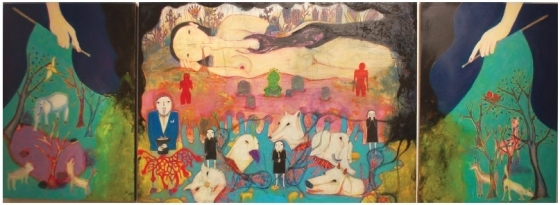
Here, the female body does not remain an object of the classical nude, but appears as an unstable being undergoing her own body through an act that seems to induce vomiting. In works from the same period, such as Meat & Clothes(2008) and When Adam gives himself to Adam(2008), the man in the blue suit, the gender-ambiguous girl, and the goddess-like figure function respectively as allegories of an oppressive social structure, a body lost within it, and the possibility of recovery.
 
Safranski’s interest later expands from the personal body to the social and relational body. The ‘Labor Song’(2014) project is based on the artist’s actual experience of working as a waitress, and addresses how the individual body is consumed and reorganized within structures of labor and capital. 《Romance of Anxiety》(Corner Art Space, 2015) asks how the body left after love and sex is remembered, and whether that remembered body can become an expanded body of the present.

Here, anxiety is not simply a psychological state, but a sensory trace left on the body at the moment of closest contact with another. Love and sex contain the desire to fully accept one another, while also carrying the premonition that the relationship will fail. Through this ambivalent sensation, Safranski considers another body that arises within a relationship, one that is neither “I” nor “you.”
 
《Accident of Flesh》(SOMA Drawing Center, 2017) is the exhibition in which this line of thought becomes most clearly structured. The exhibition is organized around three axes: ‘Accident of Flesh,’ ‘The Body of Tomorrow,’ and ‘Distorted Body,’ showing how love and fighting, sex and violence, private contact and social gazes transform the body.

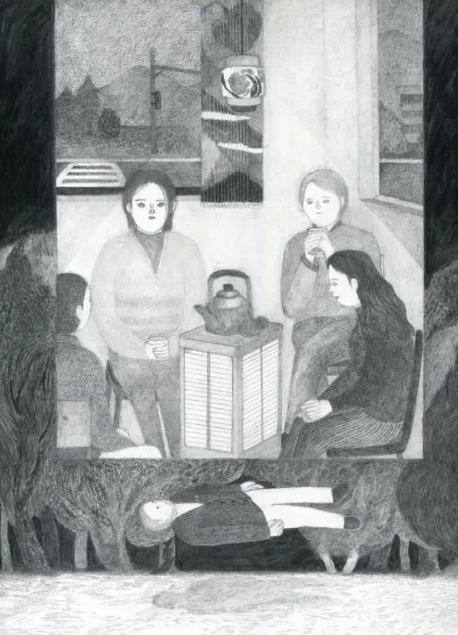
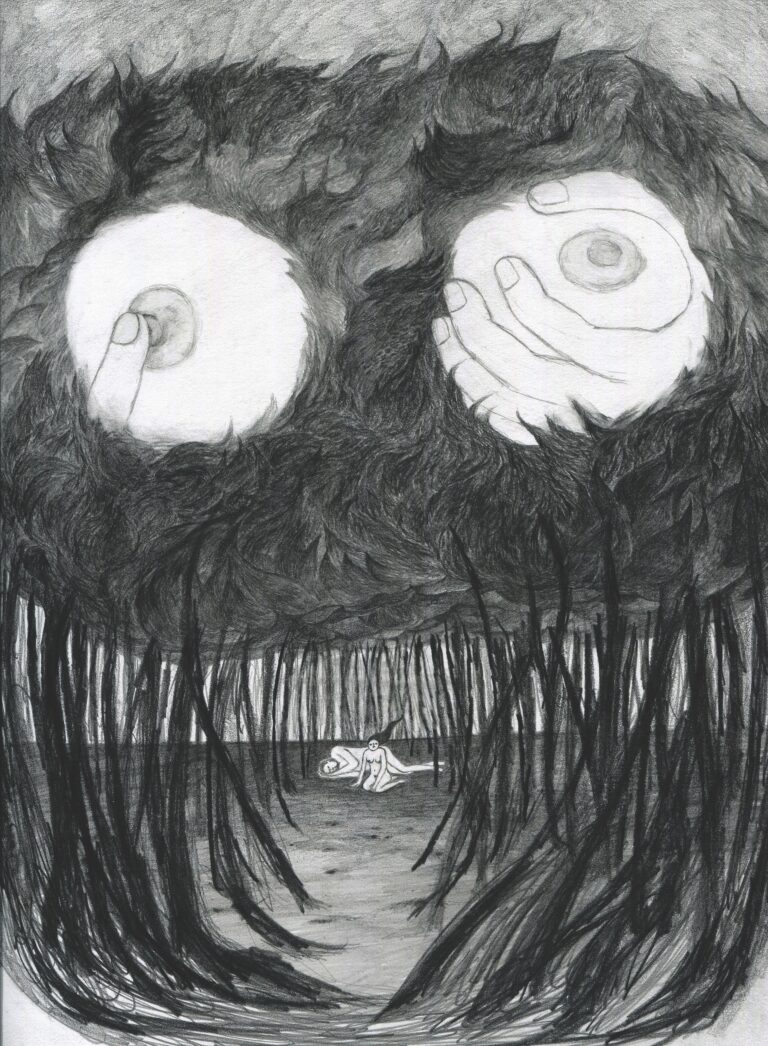
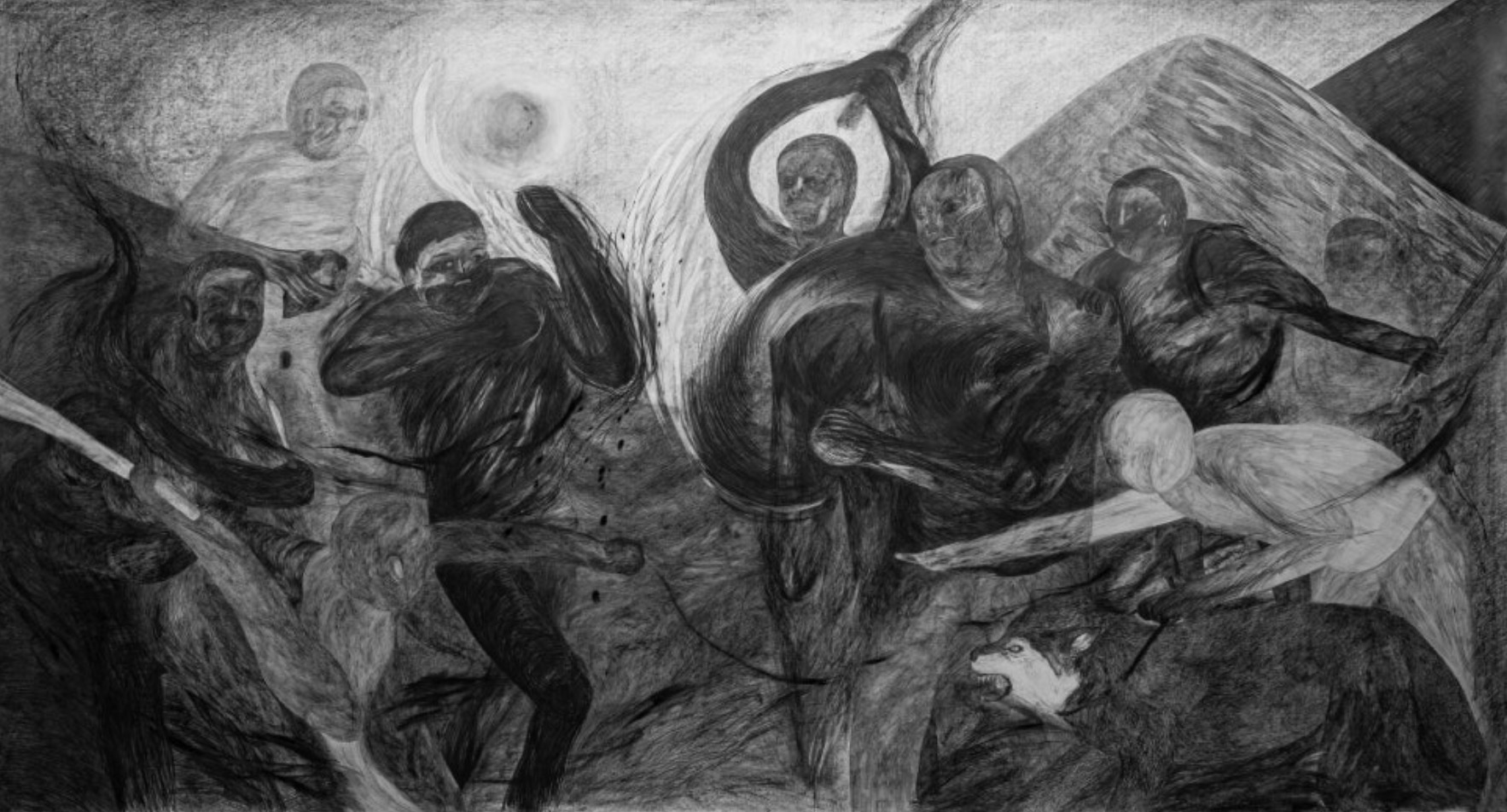
Accident of Flesh(2017) captures in drawing the shadow of anxiety that arises within an affectionate relationship between a man and a woman, while Pencil Drawing for Body of Tomorrow(2017) explores the possibility of a new body generated at the point where two bodies touch. Struggle 120(2017) takes as its subject the physical clashes of forced eviction and protest scenes, addressing the body transformed by social prejudice and violent gazes.

In this process, the artist’s concept of the body expands beyond the individual body enclosed within the skin into an “external body” formed together by others and institutions, labor and violence, memory and sensation.
 
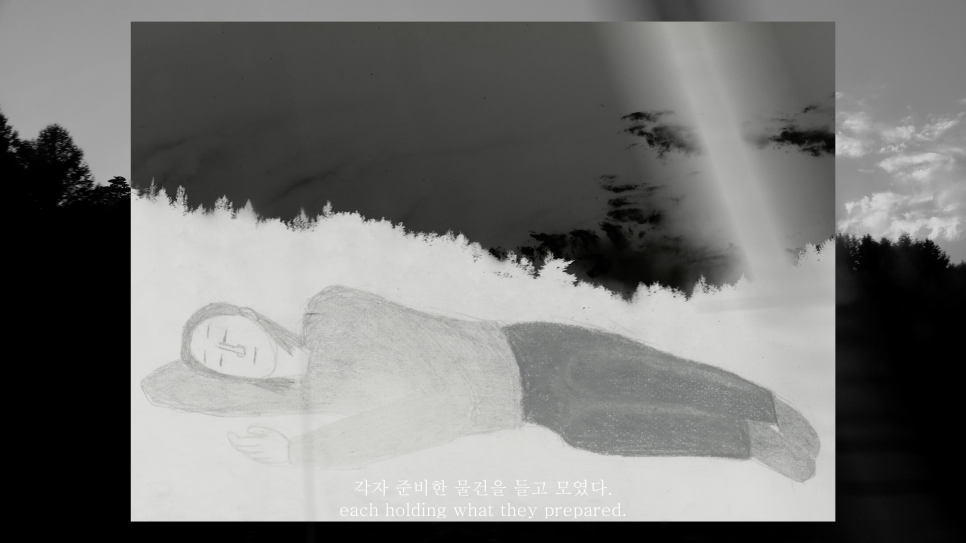
In recent work, Safranski unfolds the question of the body again through trauma, memory, light, room, and sound. DHAK(2022) is a video work that evokes incident, trauma, and physical and emotional symptoms through images of lightning and the sound of thunder. Even after an incident has passed, it returns like sound, and sensations that are not fully healed remain somewhere in the body and mind like residue.

《Room Tone: room, stain and sounds for the sequence》(A-Lounge Contemporary, 2024) is an exhibition that addresses, through the concept of “room,” the nonverbal and abstract space where such residual sensations remain. The room appears as one person’s body, a space of memory, an interior space, and a space for a dead body.

In particular, the Sequence works, which imagine images that may have been omitted or left unpublished from Charcot and Albert Londe’s photographic studies of hysteria, invite us to reconsider, within the gaps of historical records, the issue of the female body as an object of the gaze, a concern that has continued from the artist’s early work.

Style & Contents

The form of Safranski’s work began with pencil drawing and has expanded into painting, installation, video, sound, and text. Her early works developed through the layering of heterogeneous materials such as acrylic, colored pencil, and alcohol on paper. As seen in Olympia’s Vomiting and Meat & Clothes, works from this period reveal the unstable state of the body through stains, overlaps, and unstable lines and colors, rather than through smoothly finished images.

In 2012, she also published these drawings in the book BAROQUE PORNO. VOL2. This shows that, from early on, the artist treated drawing not only as an image inside the exhibition space, but also expanded it into the formats of book, narrative, and private record.
 
Between 2015 and 2017, pencil drawing became the center of her practice. While the ‘Accident of Flesh’ series densely captured moments of intimacy and anxiety within relatively small compositions, Struggle 120 visualized the traces that social violence leaves on the body by rendering scenes of protest and eviction on a large 140x260cm surface with overwhelming scale.

Perfect Body(2017), presented in the same exhibition, is an installation in which debris from a demolished house is raised and arranged in the exhibition space. The artist understood the conditions for becoming a body as “gaze” and “verticality,” and translated the structure of the house into a metaphor for the body. Here, the body is no longer an organism limited by skin, but becomes a structure in which dwelling and collapse, memory and violence, objects and space are intertwined.
 
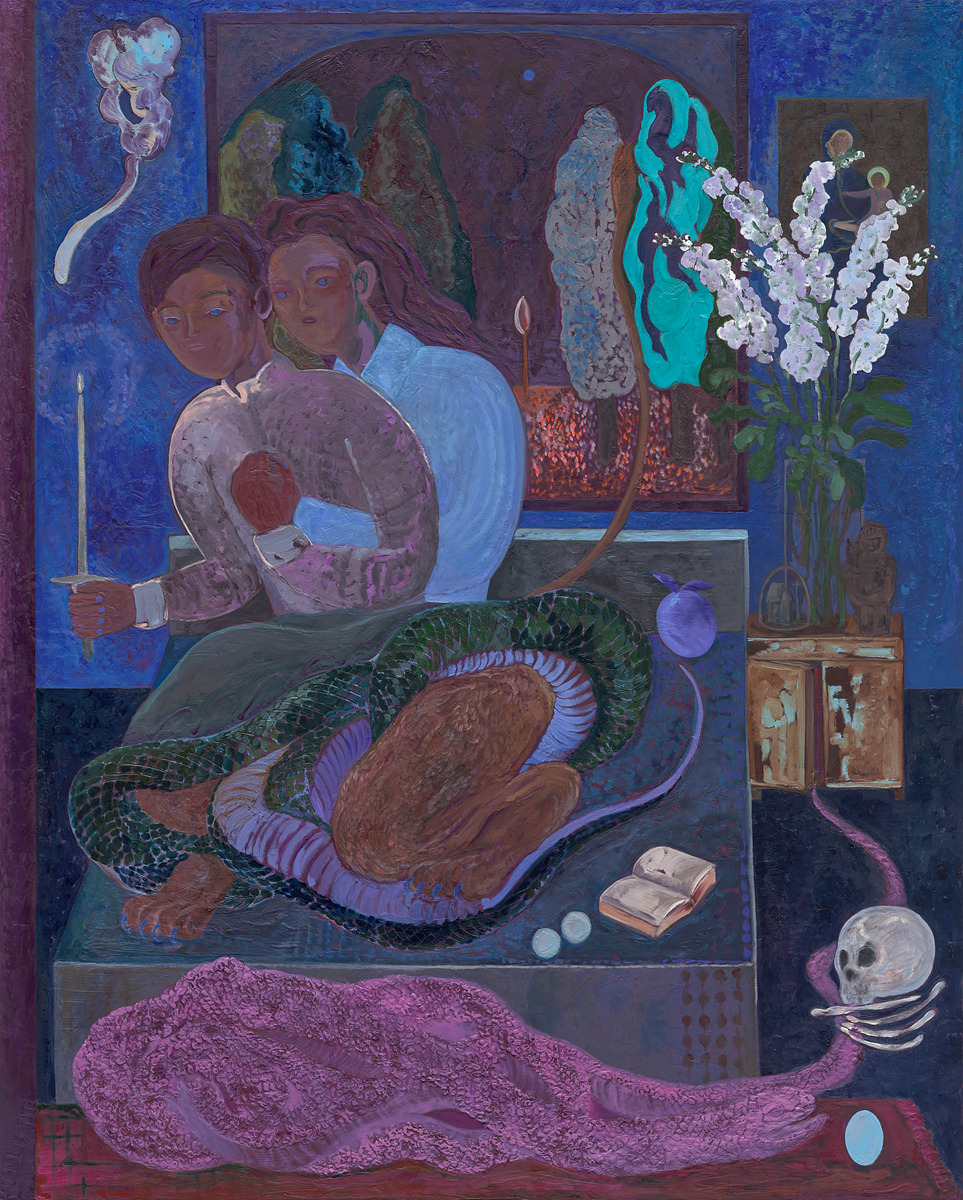
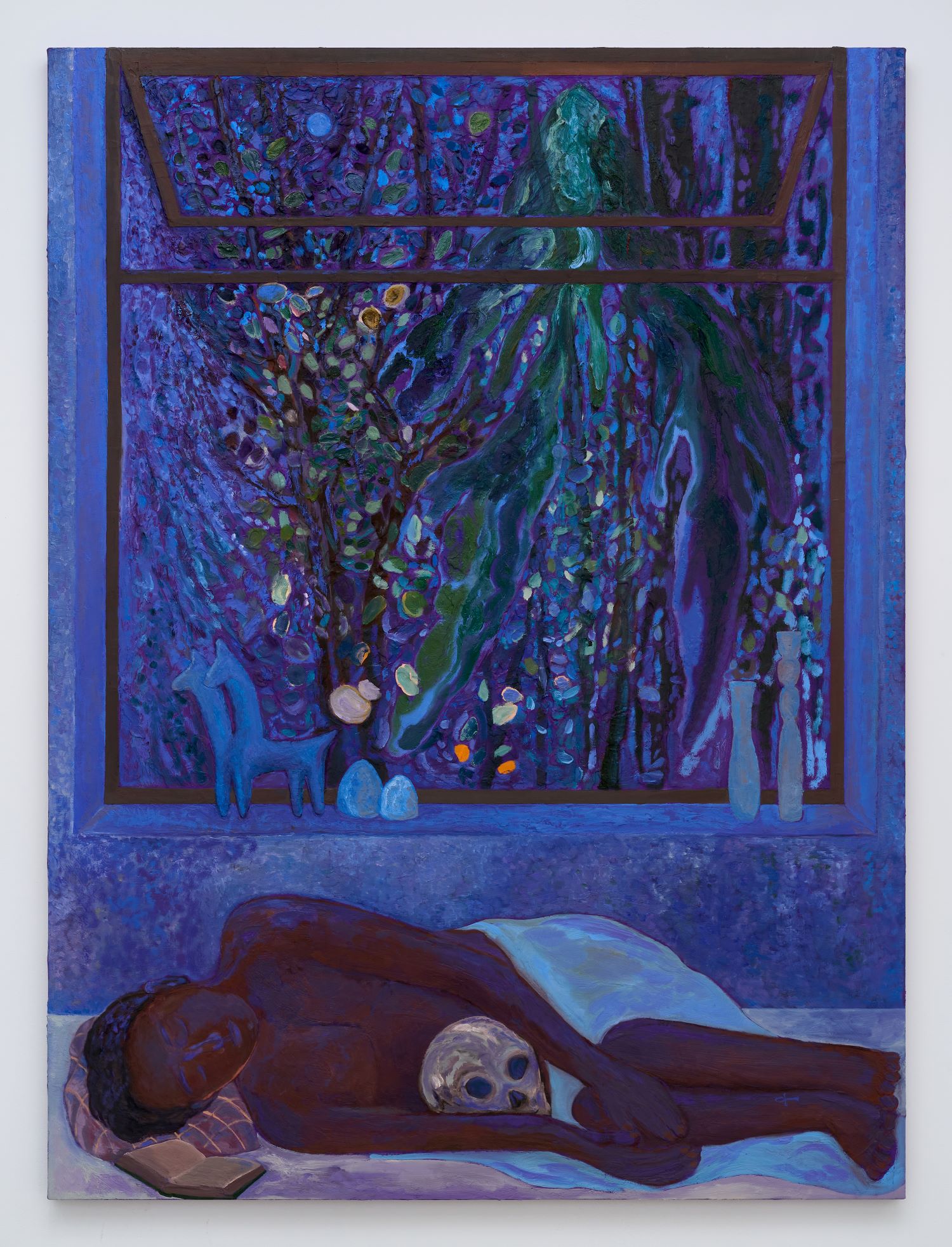
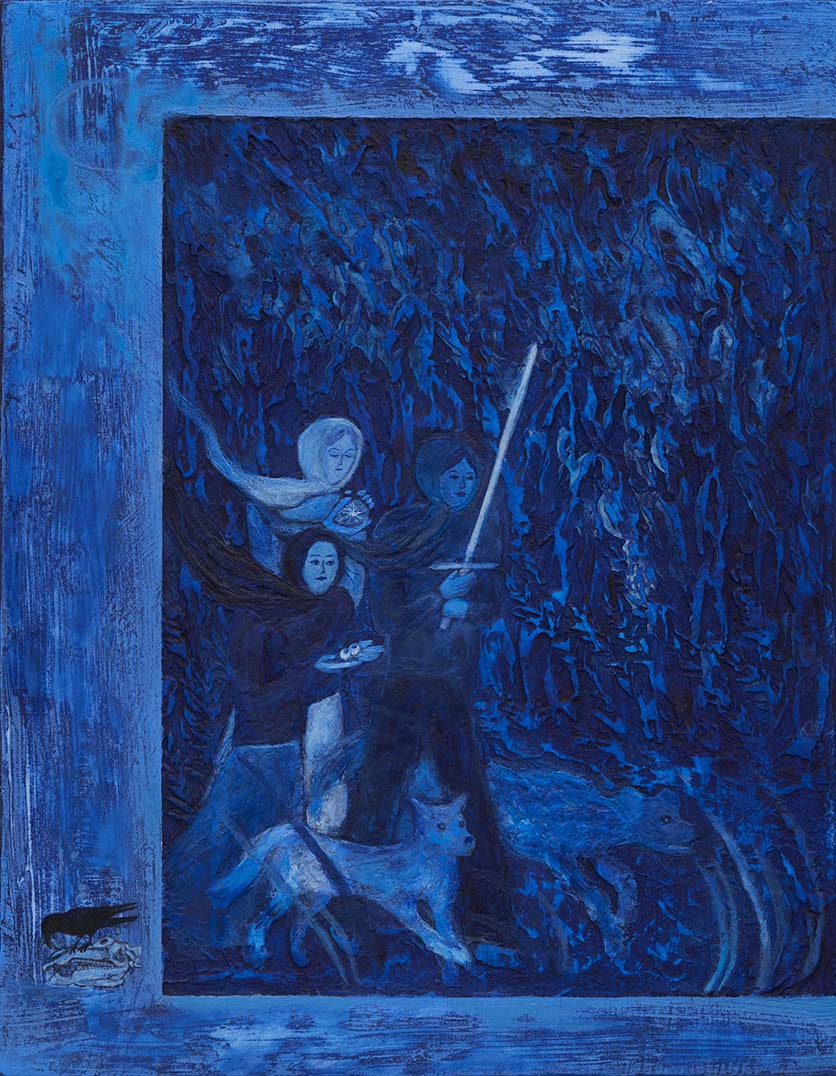
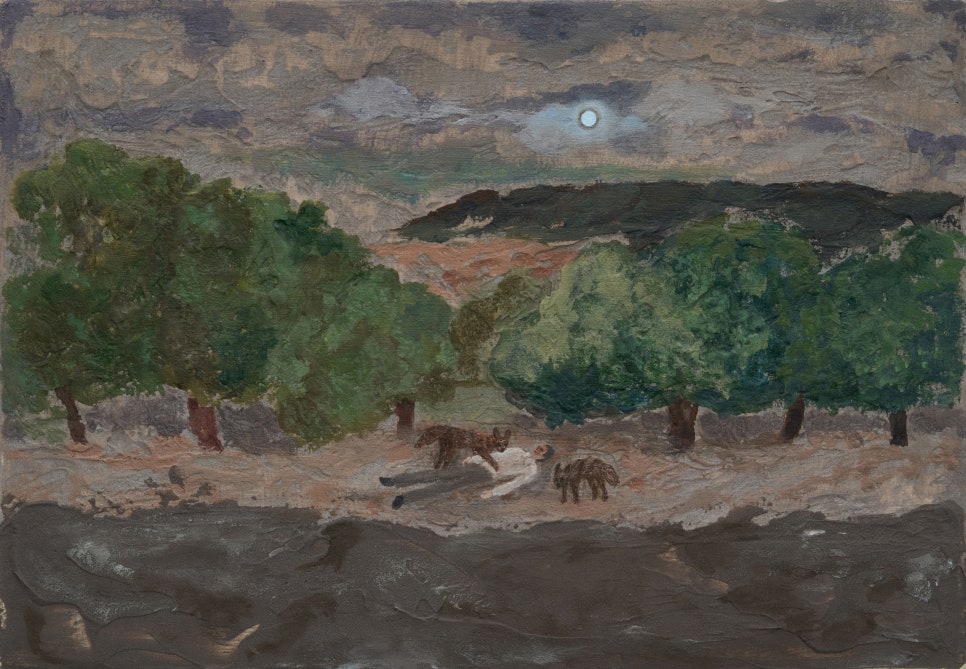
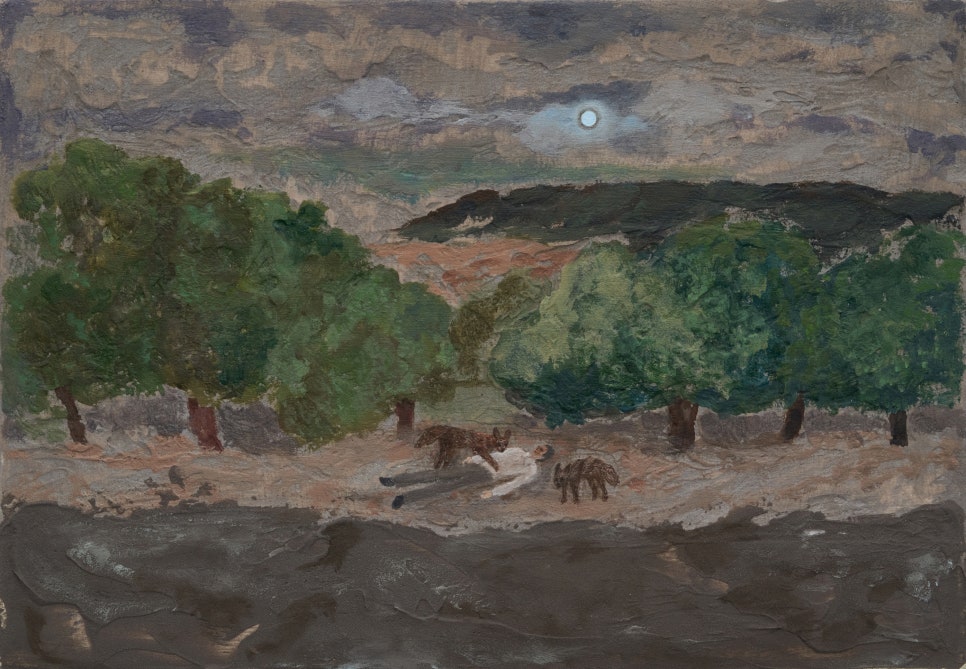
《The hours, 3 lights》(A-Lounge Contemporary, 2021) marks an important turning point in Safranski’s move from a drawing-centered practice toward painting. In this exhibition, rather than directly constructing narrative, the artist chose to evoke the texture and affect of events through color and light. Yellow light is connected to the light of the setting sun, blue light to moonlight and the atmosphere of dawn, and white light to forms whose colors have been bleached away under a strong spotlight.

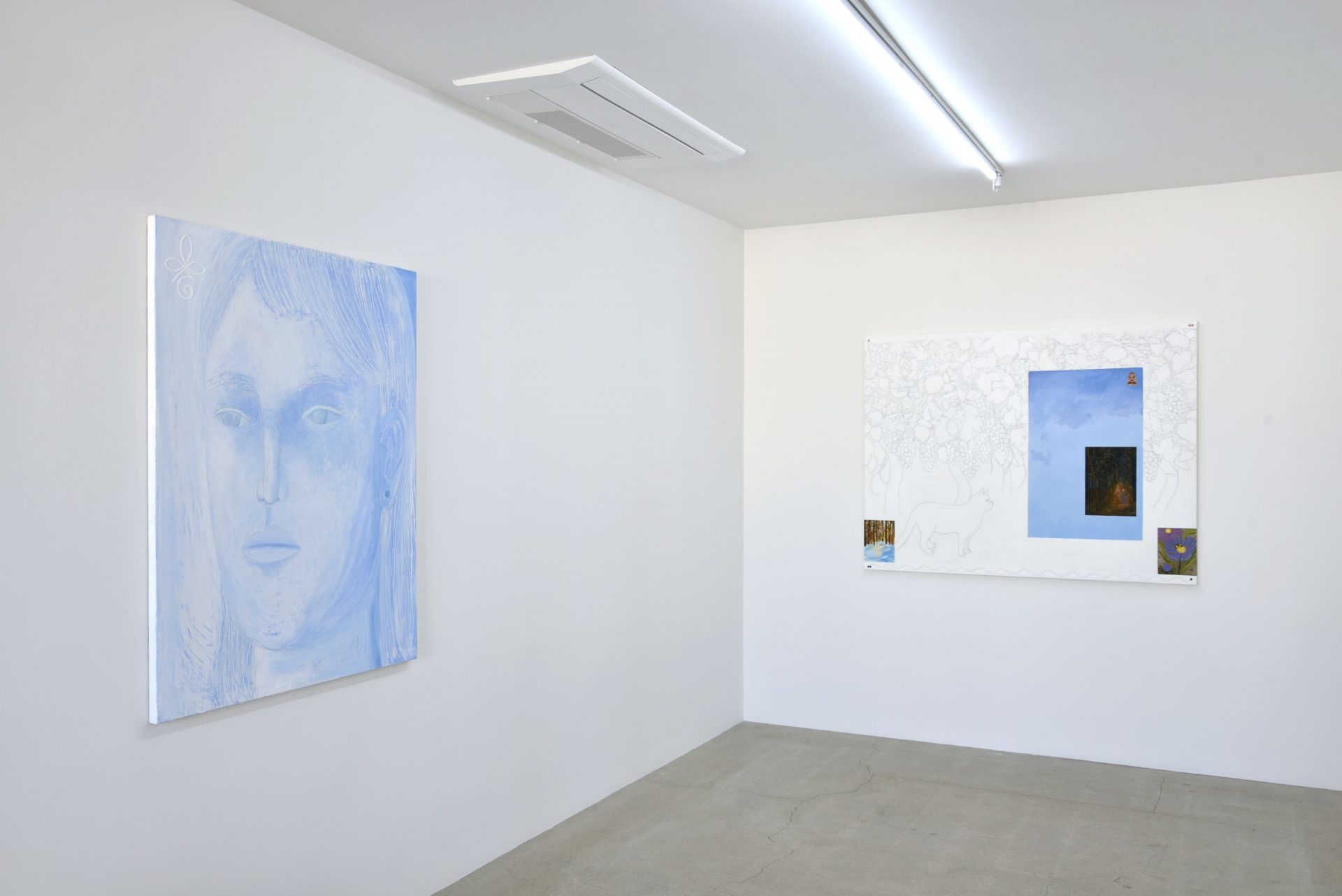
In particular, when expressing white, the artist creates a relief-like surface by repeatedly applying, rubbing, and scraping away oil paint, rather than painting an image with a brush. This white is not an empty ground, but a surface where color evaporates and stories briefly emerge and disappear. Even after this period, pencil drawings such as Body Image 28(2021) continued in parallel, and drawing and painting coexist as different layers of sensation rather than replacing one another.
 
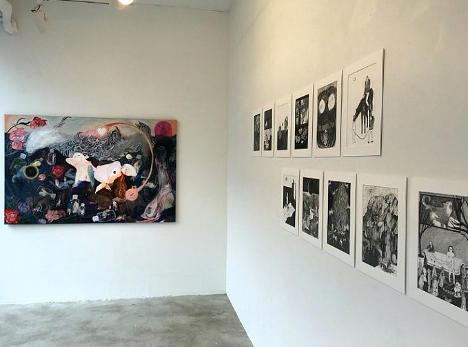
In 《Room Tone: room, stain and sounds for the sequence》, Safranski connects painting, drawing, text, and sound into a single sequence. The exhibition consisted of 26 works in total and was divided into groups of works created by enlarging, cropping, and redrawing biblical images and pairing them with the artist’s texts; paintings containing the affect of the room as an intimate space; and sequence drawings based on photographs from hysteria studies.

The story of Claire, a figure in the texts, is juxtaposed with images, and viewers newly read a narrative that is never fully explained between painting and writing. The Sequence works imagine what the women standing before the camera may actually have felt and thought, looking back differently at bodies that were historically observed and classified.

The recent work Room tone_The snake shed its skin(2025) shows how this sense of “room tone” continues into oil painting on canvas. Safranski’s formal language, which began with drawing, is now expanding into a multisensory structure that deals with surface, sound, sentence, moving image, and the state of space together.

Topography & Continuity

The originality of Safranski’s work lies first in its point of departure. The artist, who studied German Language and Literature rather than fine art, began creating from her personal experience of illness, and treats the body not as an object of representation but as an ontological place that experiences and undergoes itself.

In particular, the fact that she has thought through heterogeneous events such as labor, sex, and violence within a single framework of “traces carried by the body,” and that she has consistently pursued this inquiry while moving from drawing to painting, installation, text, and sound, forms a clear axis of her practice.
 
The artist’s career traces a trajectory that has widened from personal narrative to social narrative, and then to historical and documentary narrative. Beginning with Olympia’s Vomiting, which dealt with her own experience of illness in 2008, and after holding her first solo exhibition 《Laughing, Red Silence》(Sogul Gallery, Seoul, 2008), she addressed the laboring body and the relational body through 《Labor Song vol.1 Waitress_Landscape of Survival》(Gallery SUKKARA, Seoul, 2014), 《Romance of Anxiety》(Corner Art Space, Seoul, 2015), and 《Accident of Flesh》(SOMA Drawing Center, Seoul, 2017).

Later, in 《Room Tone: room, stain and sounds for the sequence》(A-Lounge Contemporary, 2024), she incorporated medical-historical materials from nineteenth-century hysteria studies to reconstruct the history of the gaze surrounding women’s bodies. Even as the temporal and geographical scope of her materials has expanded, the fundamental concern with the body and subjectivation has remained consistent.
 
This body of work has received steady recognition from institutions in Korea and abroad. Beginning with her selection for 《Young Korean Artists 2008》 at the National Museum of Modern and Contemporary Art, Korea, she has participated in major residency programs including Goyang National Residency(2010), Incheon Art Platform(2016-2017), SeMA Nanji Residency(2021), and Seoul Art Space Geumcheon(2023).

Her works are held in the collections of the National Museum of Modern and Contemporary Art, Korea, the MMCA Government Art Bank, and the Seoul Museum of Art. Internationally, she participated early on in the three-person exhibition 《Asian Young Artists》(Gumsan Gallery, Tokyo, 2009), and later expanded her activities through 《VIA Animation Festival》(Viborg Museum, Viborg, 2019) and 《Hexed, Bexed & Sexed》(West Den Haag, The Hague, 2023). In 2025, she participated in 《Next Painting: As We Are》(Kukje Gallery, Seoul, 2025), presenting the direction of her work after its painterly expansion.
 
Having begun with drawing, the most personal and immediate medium, and expanded her language into painting, installation, text, sound, and video, Safranski’s work moves flexibly across media while holding onto questions of the body and subjectivity. Her attitude, which begins from personal wounds and embraces labor, violence, and the gaps in historical records, functions as an important axis for reading her work as it encounters different regions and audiences.

Works of Art

“External Body” Formed Through Relations with Others

Articles

Exhibitions

Activities