

Form and Frame – Orchid - K-ARTIST

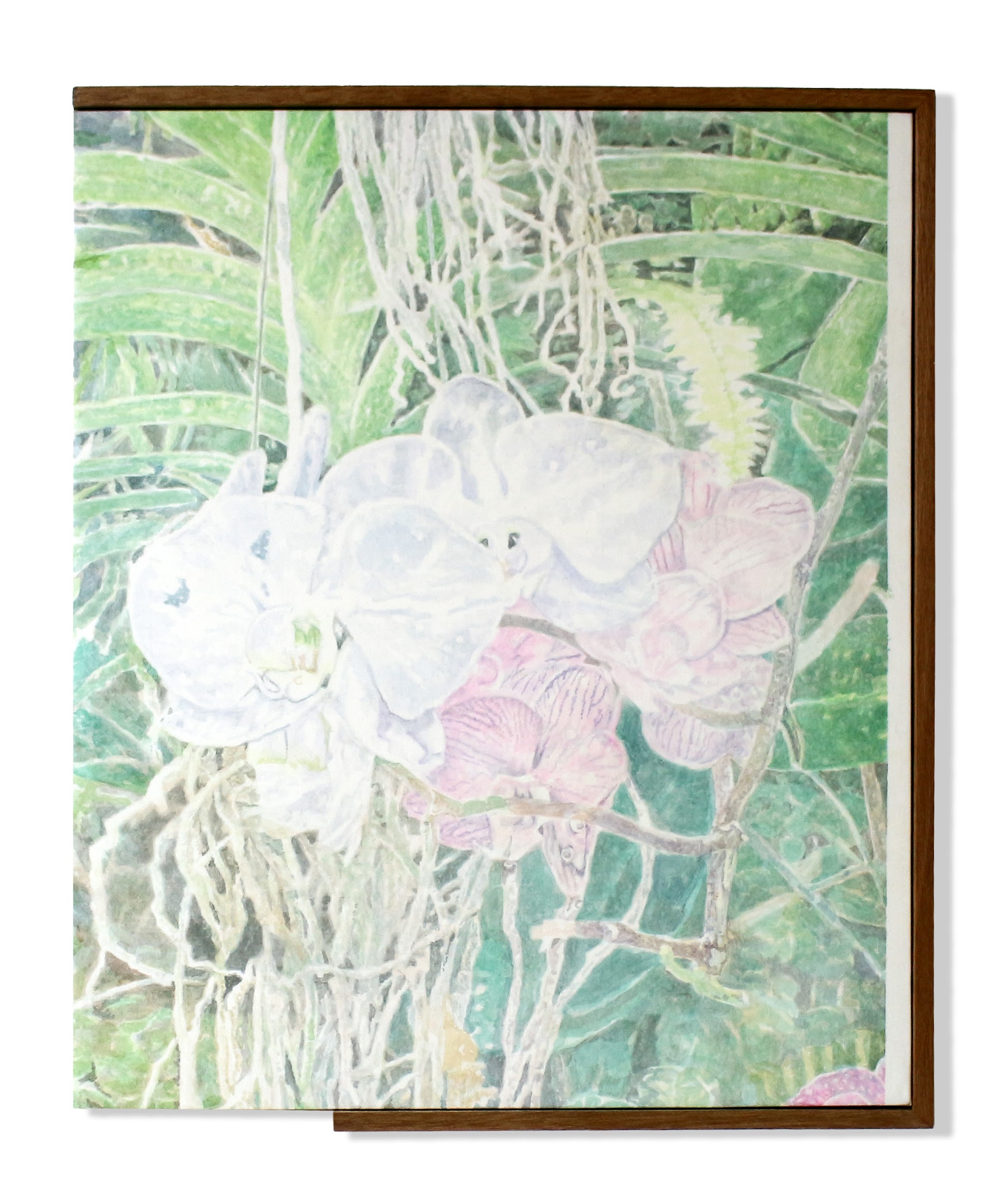
Form and Frame – Orchid

2026
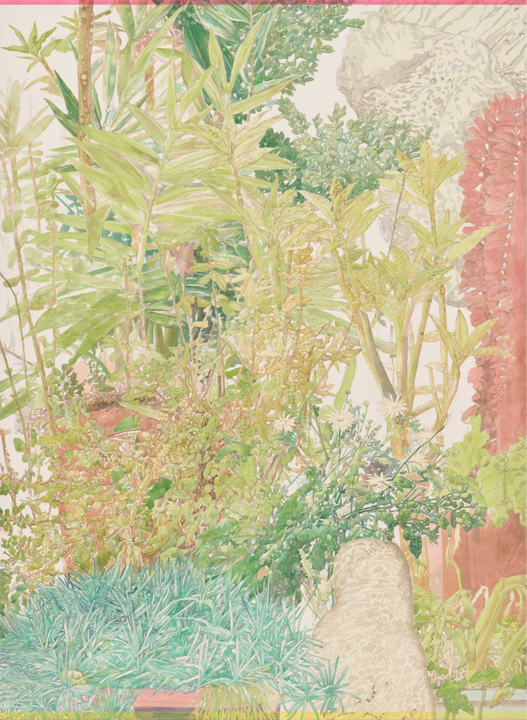
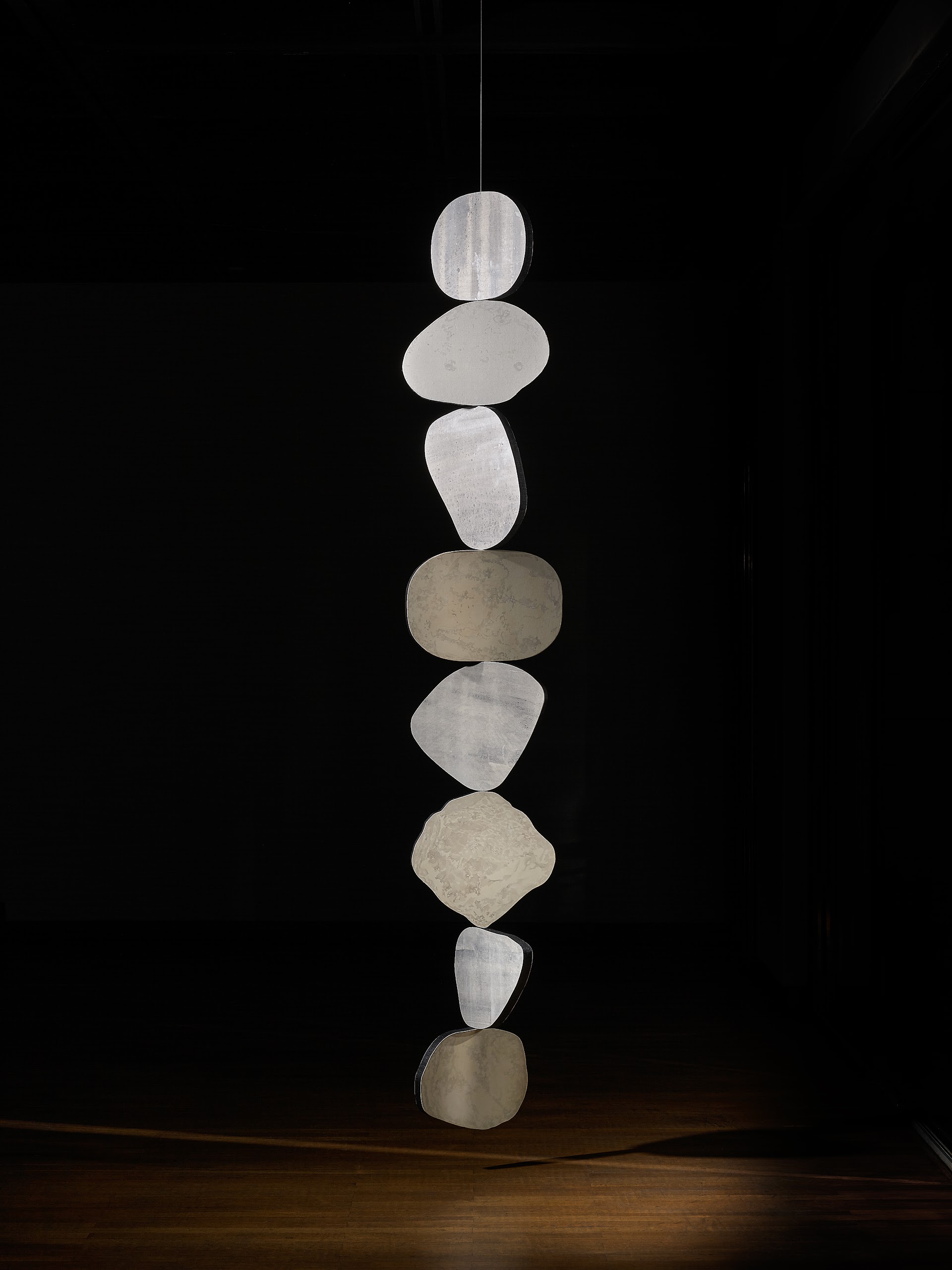
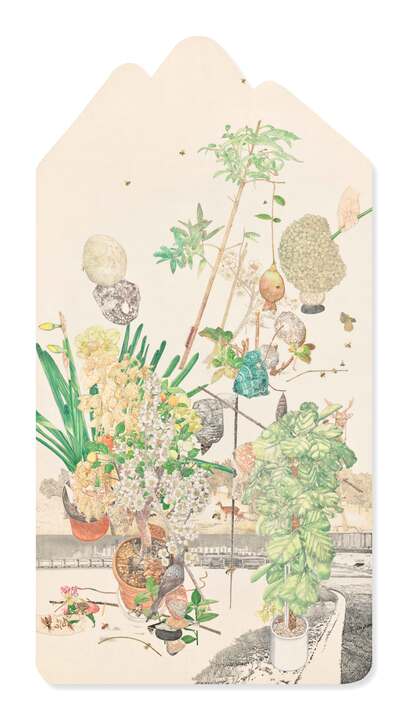
Ink, pigments, and acrylic on silk mounted on hanji, wooden frame
43 x 38 cm
About The Work

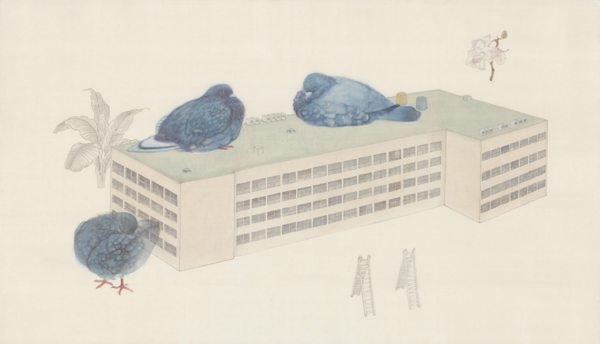
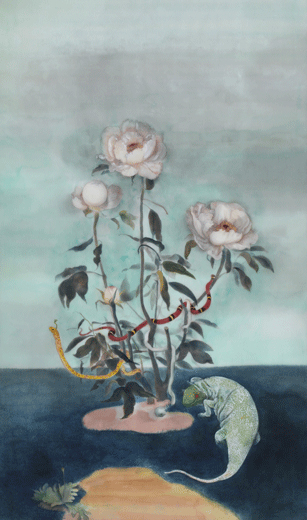
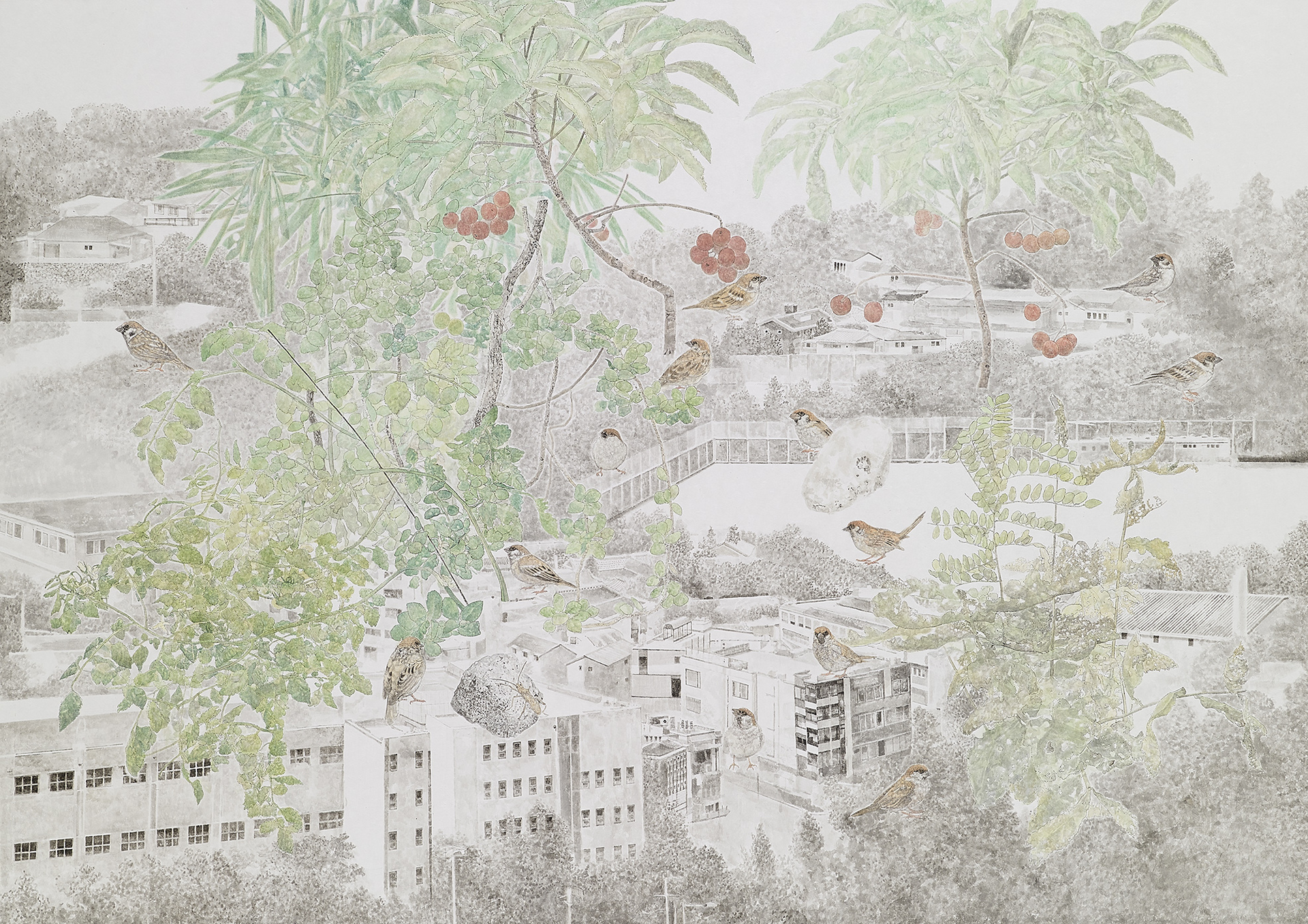
JIN Minwook explores landscapes shaped by small fragments of urban nature and the movement of the gaze, using ink and pigments on jangji paper and silk. Her practice begins with recording the flowers, birds, insects, trees, rocks, and buildings encountered within the places she has inhabited, passed through, or frequented in everyday life. Through these observations, she captures contemporary environments in which humans and nature coexist yet remain insufficiently connected.

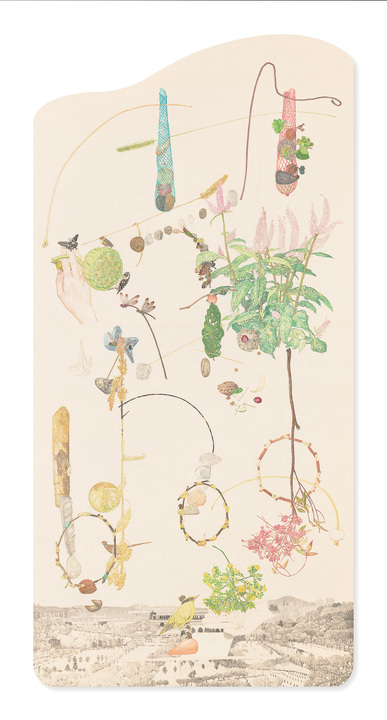
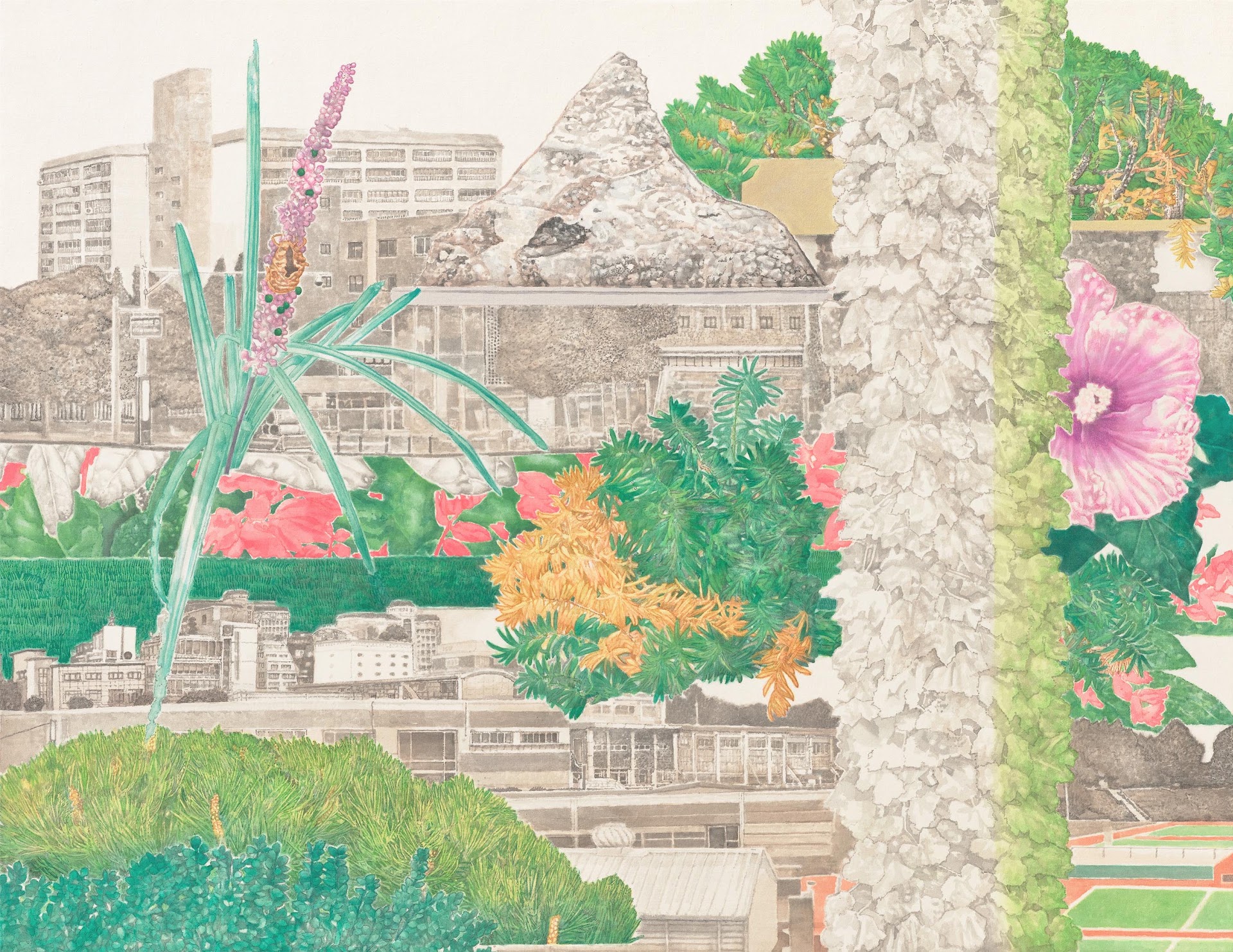
The artist separates the elements that compose a landscape—trees, buildings, animals, and rocks—into individual units before rearranging them according to sensations and emotions preserved in memory. Subjects observed across different times and places converge within a single composition, while perspective, proportion, and spatial depth are freely adjusted, and certain forms are exaggerated or omitted.

As meticulous observation of lived experience intersects with the imagination’s impulse to reshape inner images, her works give rise to landscapes that resemble reality yet cannot be traced to any specific location.

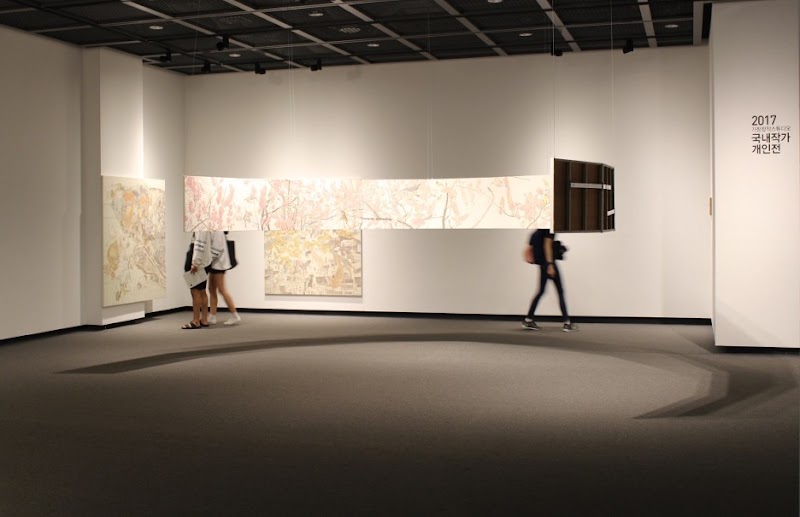
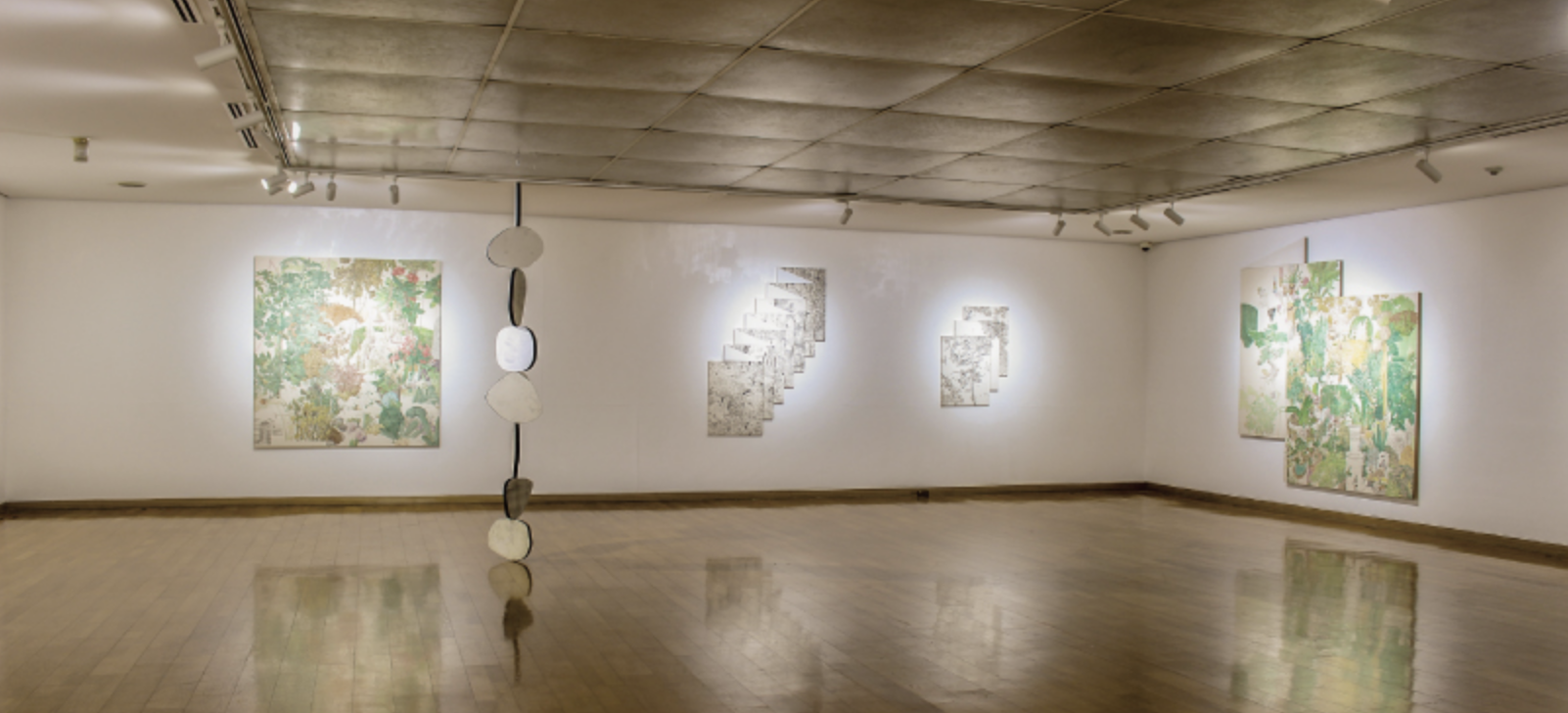
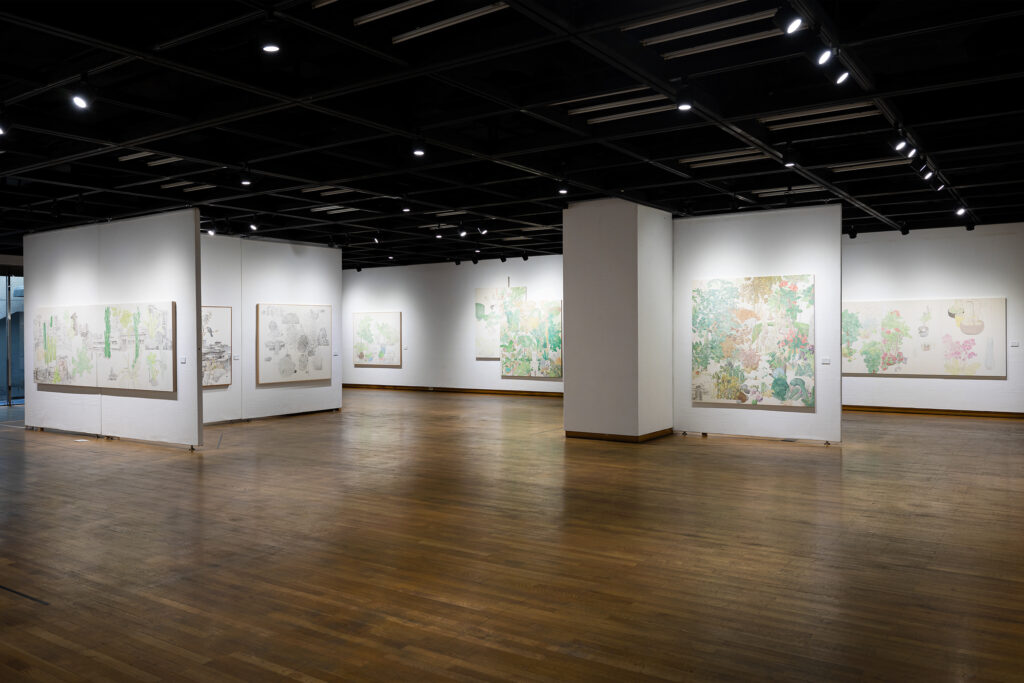
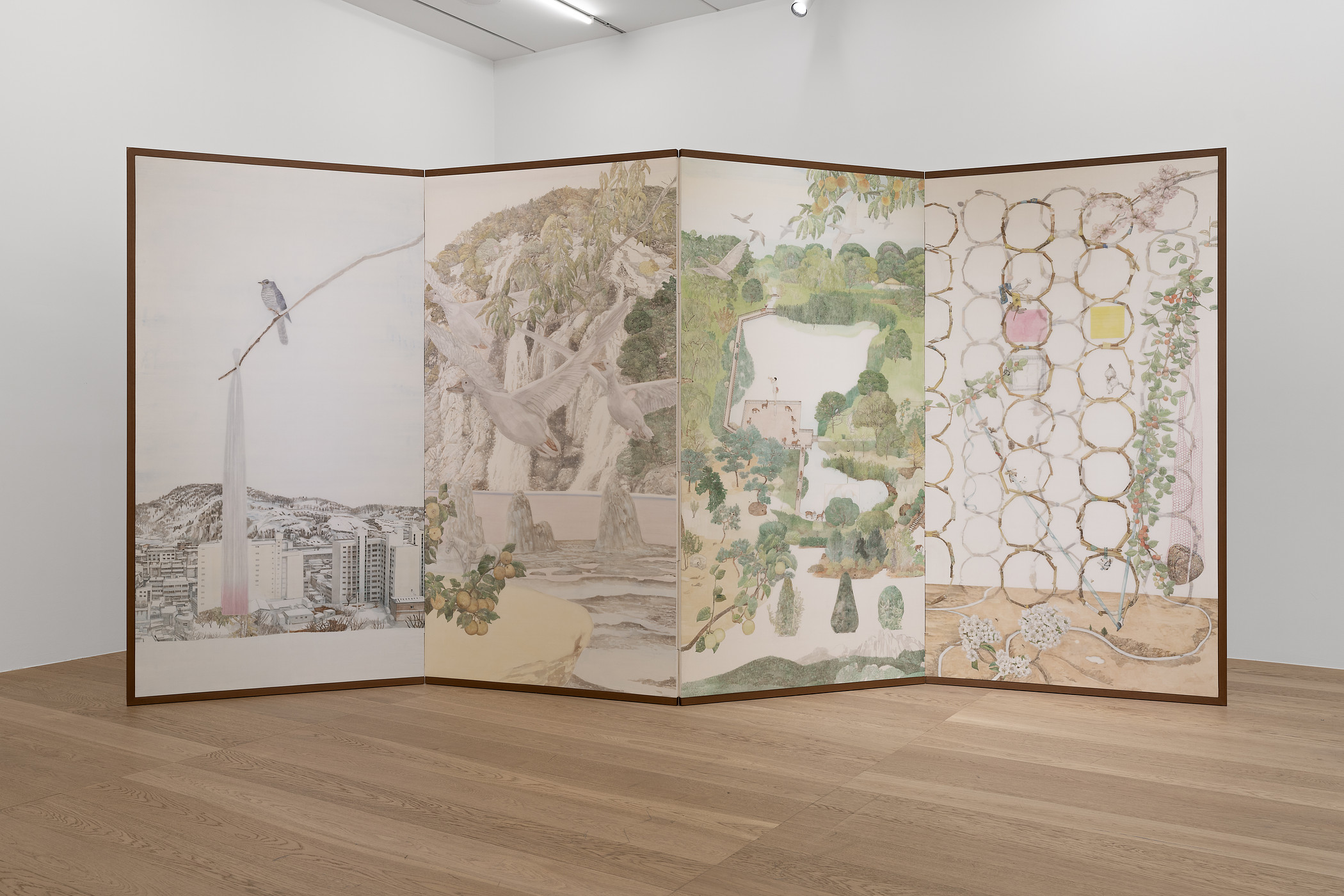
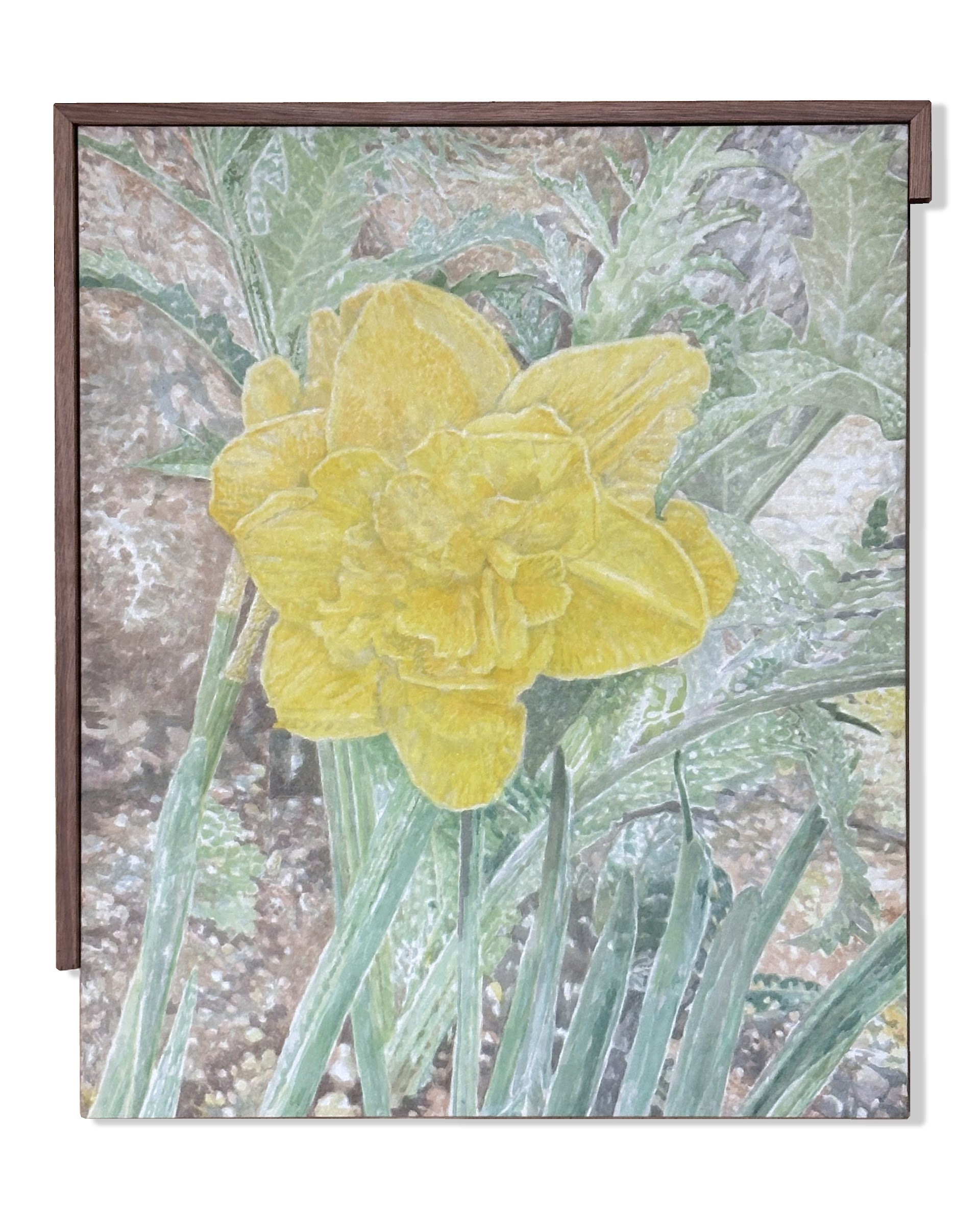
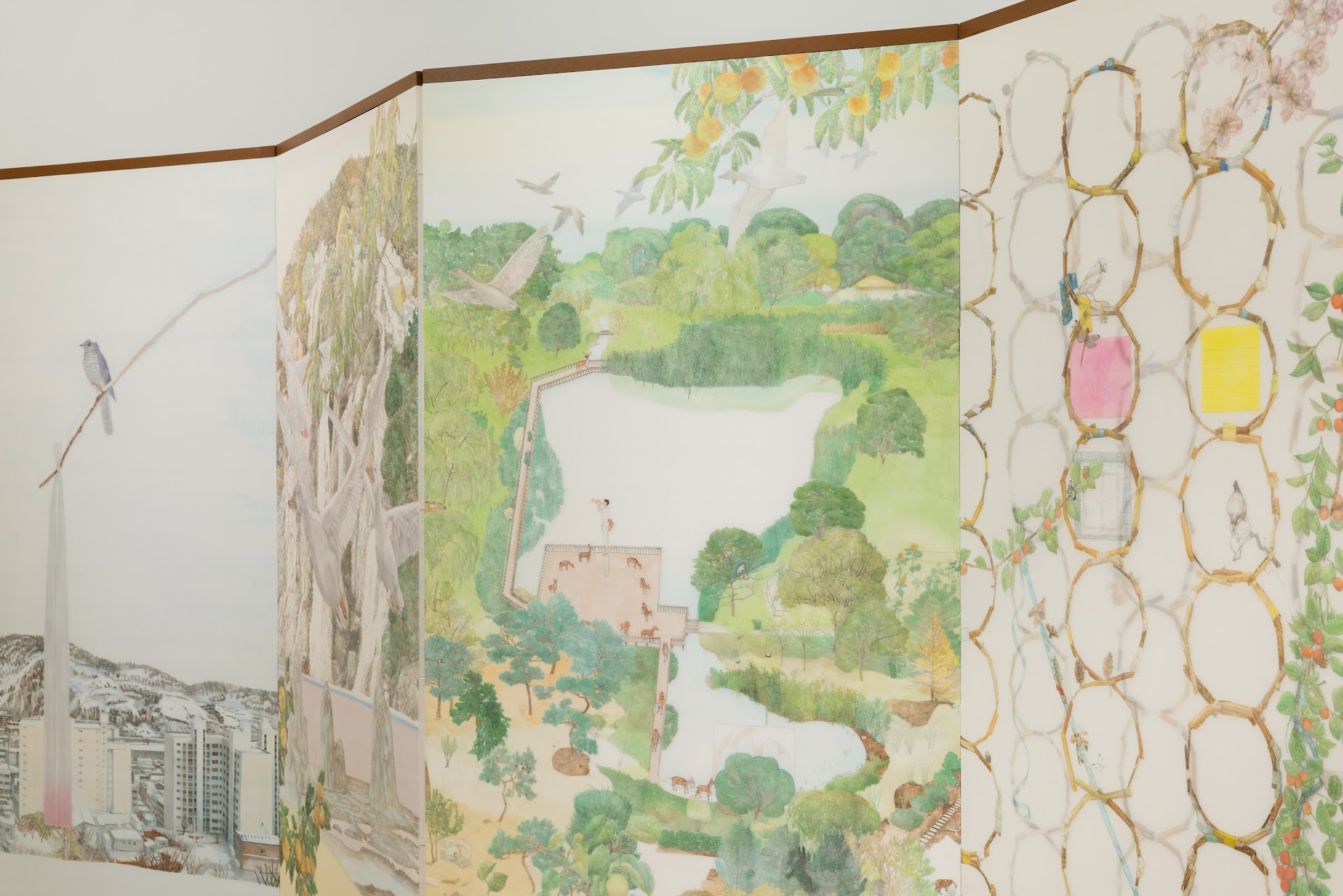
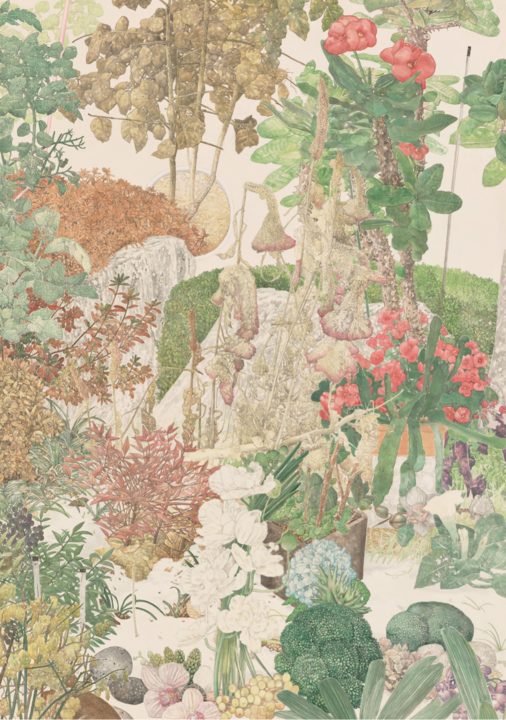
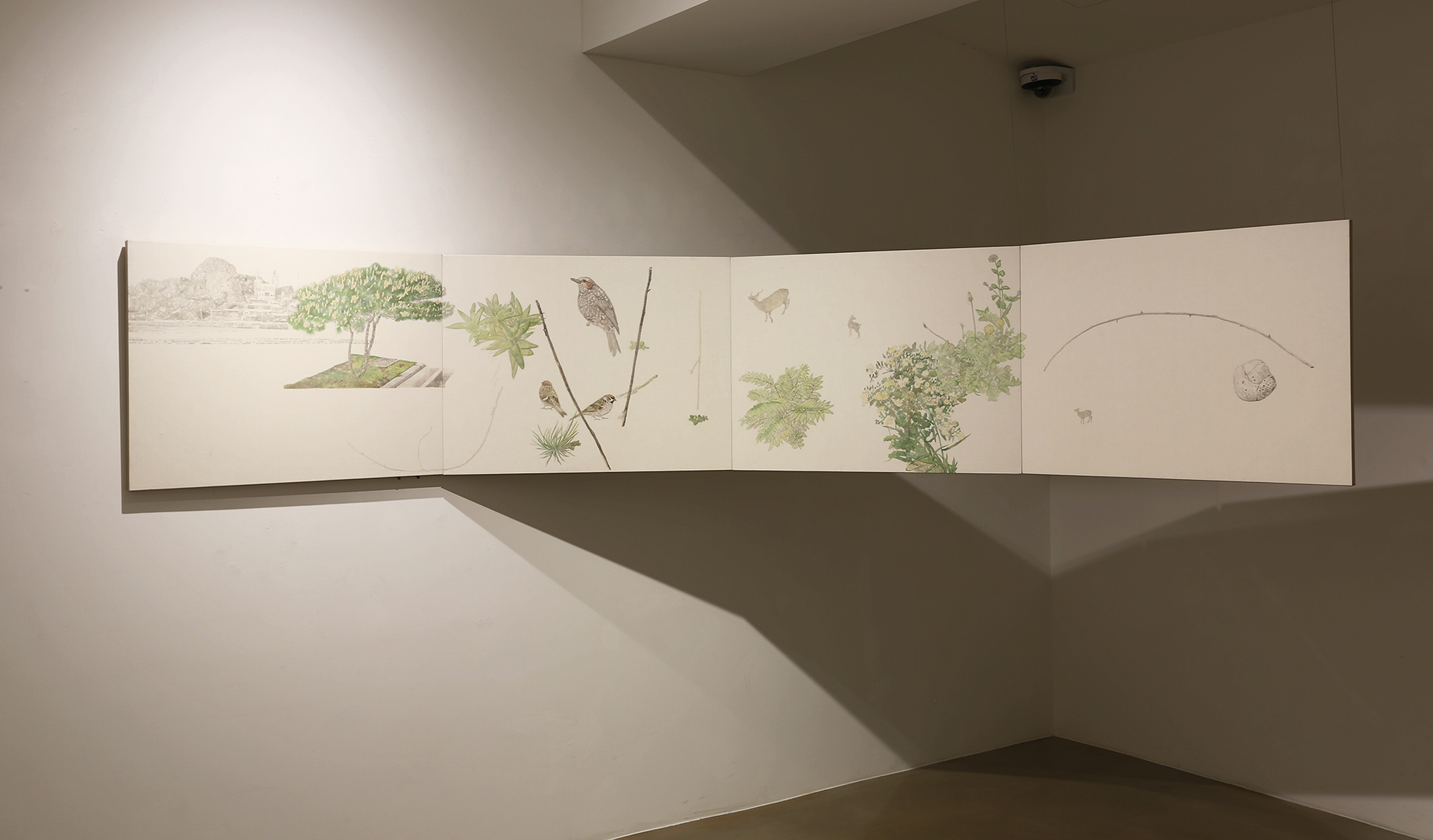
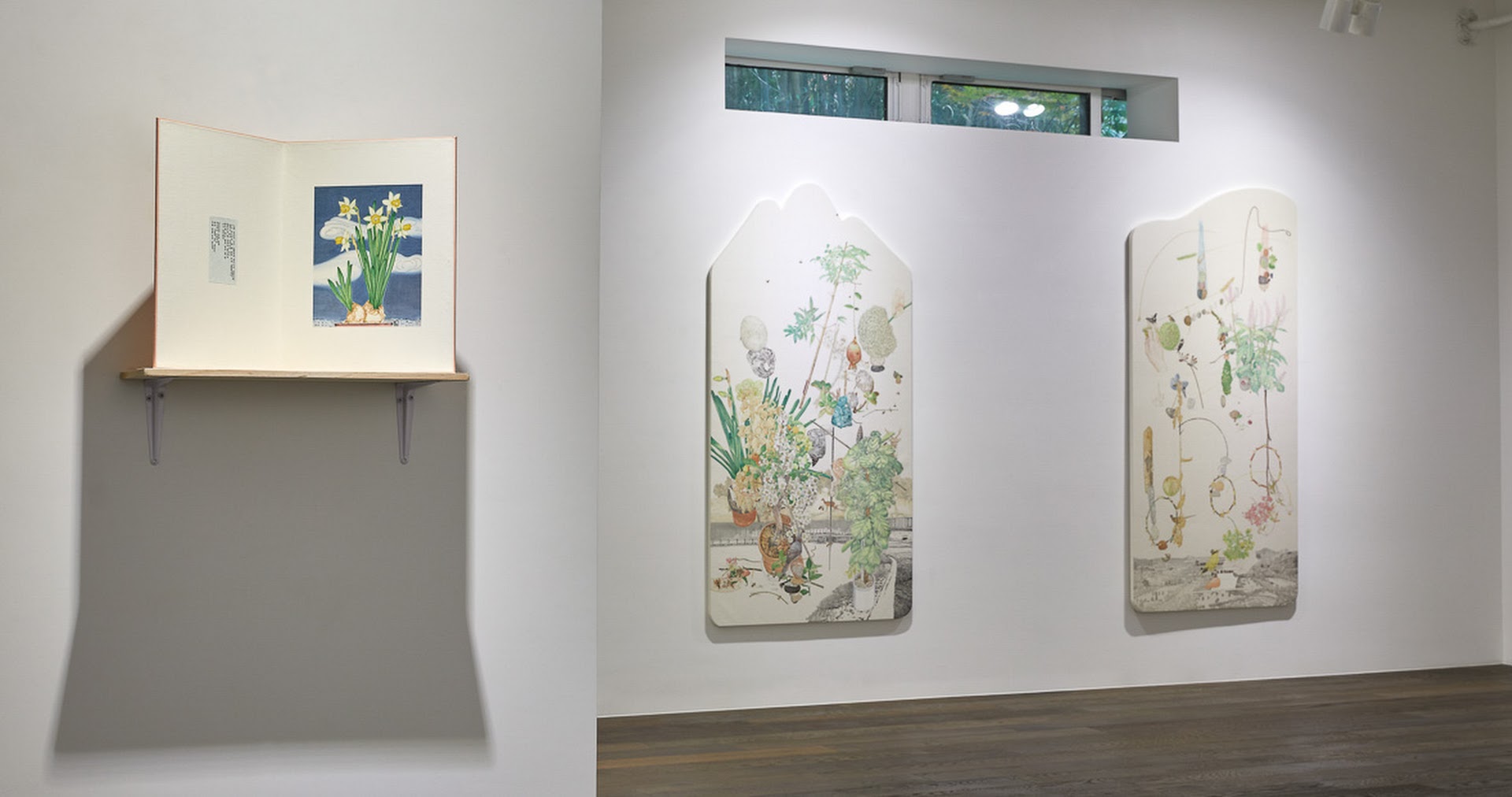
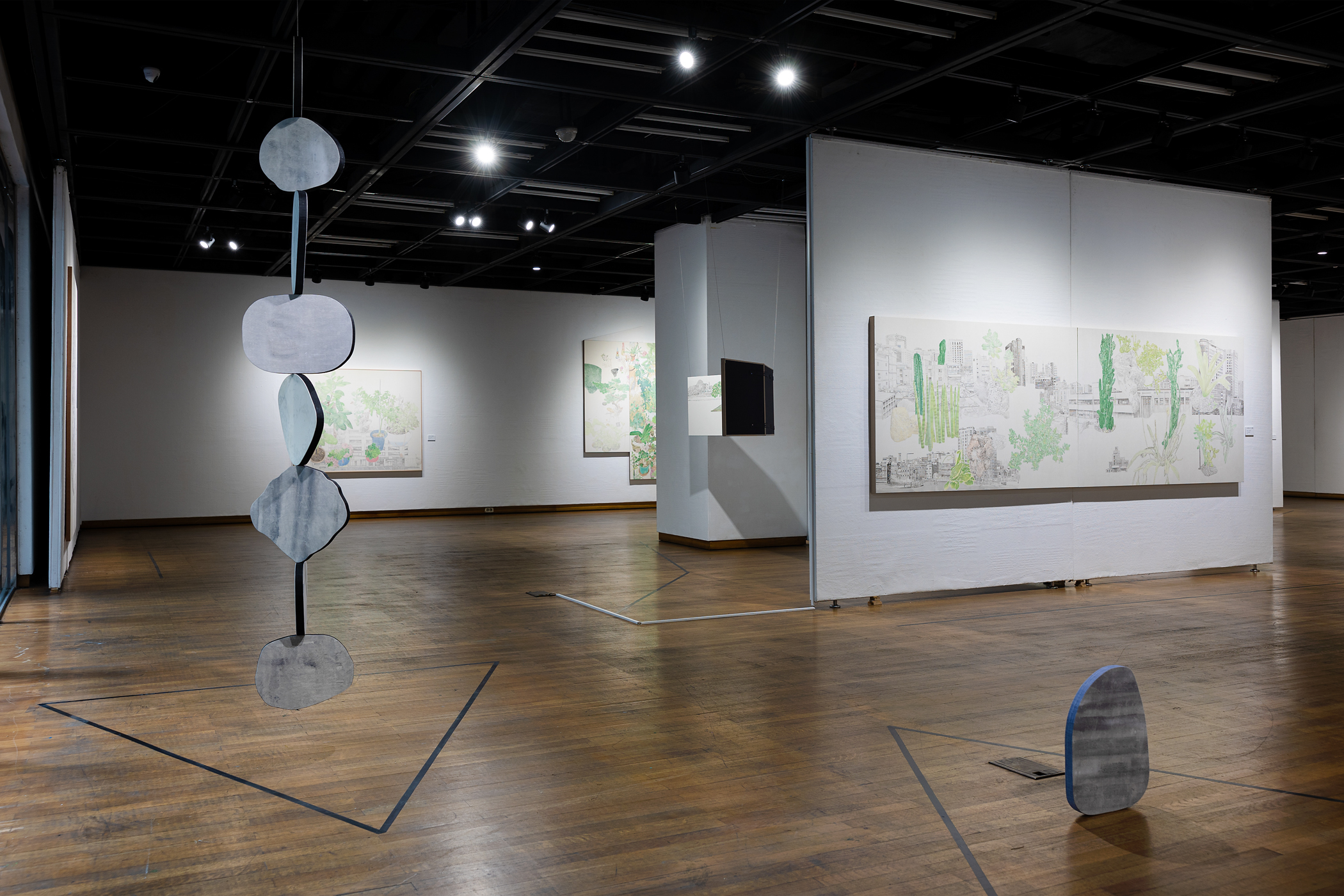
Through the use of fine brushwork, baechae (reverse-coloring techniques), and repeated layers of pigment, JIN creates luminous yet richly nuanced fields of color while rendering plants and animals with remarkable precision. At the same time, she expands beyond the conventional format of a rectangular painting, developing panoramic compositions that connect multiple panels, shaped canvases, and installations reminiscent of folding screens. These spatial configurations encourage viewers’ movements and shifting perspectives to become active components of the work.

In JIN’s paintings, the urban landscape functions not merely as a backdrop but as a site where small living beings and objects reveal their presence and enter into relationships with one another. Personal memories and emotions permeate these scenes, intertwining contemporary living environments with inner sensibilities and weaving scattered fragments of time into a larger narrative. For the artist, painting serves as both a refuge for remembering vanishing beings and fragile forms of life, and a narrative space through which the meaning of life may be reconsidered.

Solo Exhibitions (Brief)

JIN Minwook has held solo exhibitions at Gallery Dam (2012), Project Space WUMIN (2018), Hanwon Museum of Art (2022), Youngeun Museum of Contemporary Art (2023), and Hwang Chang Bae Museum of OMIIIO SEOUL and Tong-in Gallery (2024).

Group Exhibitions (Brief)

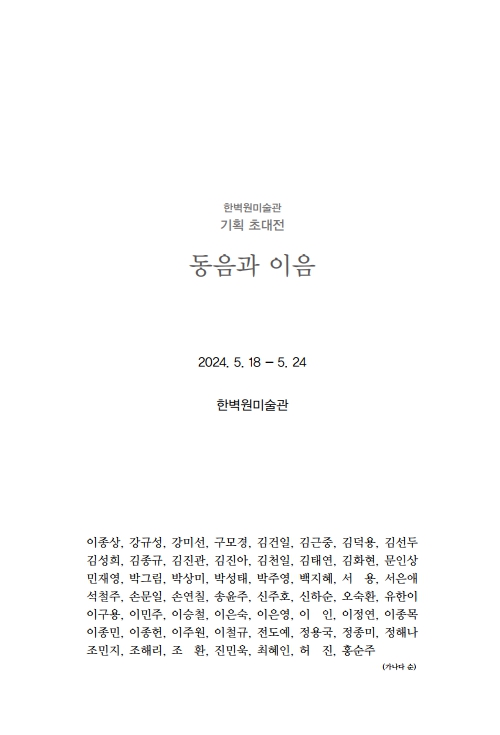
JIN Minwook has participated in group exhibitions at Today Art Museum (2008), Sungkok Art Museum (2015), Songzhuang Art Museum (2016), the Jeonnam International SUMUK Biennale (2018, 2024), Seongnam Cube Art Museum and Hanwon Museum of Art (2019), the National Museum of Kazakhstan (2021), Seoul National University Museum of Art and Woljeon Museum of Art Icheon (2022), and Hanbyeokwon Art Museum (2024).

Awards (Selected)

JIN Minwook received the Minister of Foreign Affairs Award at 《The Beauty of Korea》, a Korean painting competition for young artists organized by the Ministry of Foreign Affairs, in 2018, and the Excellence Award at the Young Artists Special Exhibition of the An Gyeon Painting Spirit Exhibition in 2012.

Residencies (Selected)

JIN Minwook was an artist-in-residence at Beijing B-Space in 2016 and Artstudio Gachang in 2017, and participated in the 12th short-term residency program at Youngeun Art Studio in 2022.

Collections (Selected)

JIN Minwook’s works are held in the collections of the MMCA Art Bank, Government Art Bank, Ewha Womans University Seoul Hospital, Kangdong Sacred Heart Hospital, Zaha Museum, and private collections.
Works of Art

Landscapes Shaped by a Moving Gaze

Originality & Identity

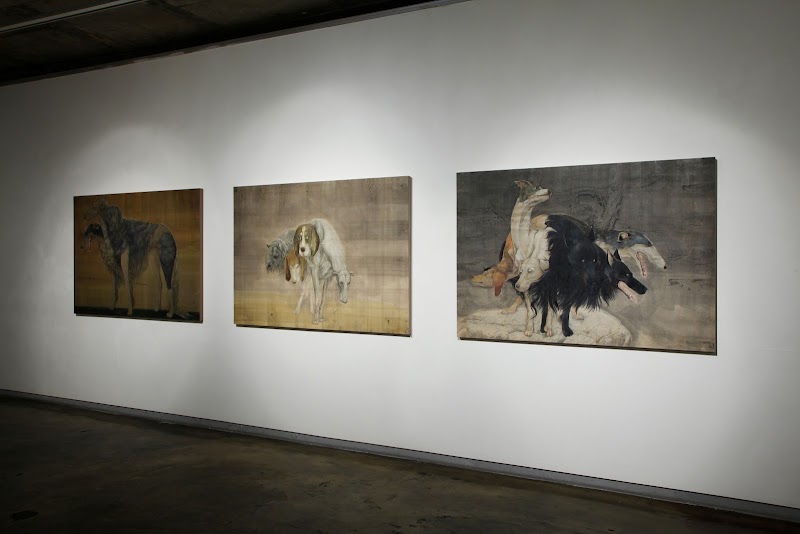
JIN Minwook’s practice begins with the question of how an individual perceives the self within society and through relations with others. In her early ‘Nostomania’ and ‘I Want to Ask You’ series and her animal paintings of 2011–2012, experiences of isolation, inferiority, a fragmented sense of self, and the burden of defining relationships were projected onto creatures such as dogs, snakes, and multi-headed animals.

Their entangled bodies and multiple heads embody an inner self that resists resolution and remains in tension with others, forming unstable psychological landscapes where reality and fantasy, familiarity and strangeness converge.

Her attention later expanded from private psychological experience to the networks of everyday relationships and the latent values of ordinary things. Combining experience and memory with elements of nature, JIN seeks to capture an ambiguous current or energy beneath the surface of phenomena. She attends to moments when an insignificant object or an incidental scene prompts reflection on life.

Landscape in her work therefore exceeds the record of a specific place: memories, emotions, and sensations from different moments overlap, while elements collected from reality enter new relationships within the artist’s own system of values and constitute a singular world.

Since the ‘How to See a Plum Blossom and Wild Birds’ series in 2017, the question of how to see has occupied a central position in her practice. JIN walks around a subject and observes it across multiple viewpoints and moments, unsettling the fixed images of nature lodged in the mind.

Walking becomes a means of forming relationships with easily overlooked beings in the city—plants, birds, insects, and rocks—as well as a process of rereading place through bodily movement and memory. Her gaze also registers the uneasy condition in which humans and nature occupy the same urban environment without fully achieving symbiosis.

In the recent ‘Little Seclusion’ series, the experience of observation and walking deepens into themes of death, mourning, solitude, and childhood memory. Verses from The Classic of Poetry and the symbolism of flowers and birds become intertwined with the artist’s experiences of bereavement and her memories of vanished places.

Motifs such as orioles, thorn trees, and snares function simultaneously as visible subjects and as agents that give voice to memory. For JIN Minwook, painting becomes a secluded space in which to remember absent beings and small forms of life, connecting scattered fragments of time and renewing the question of what gives life meaning.

Style & Contents

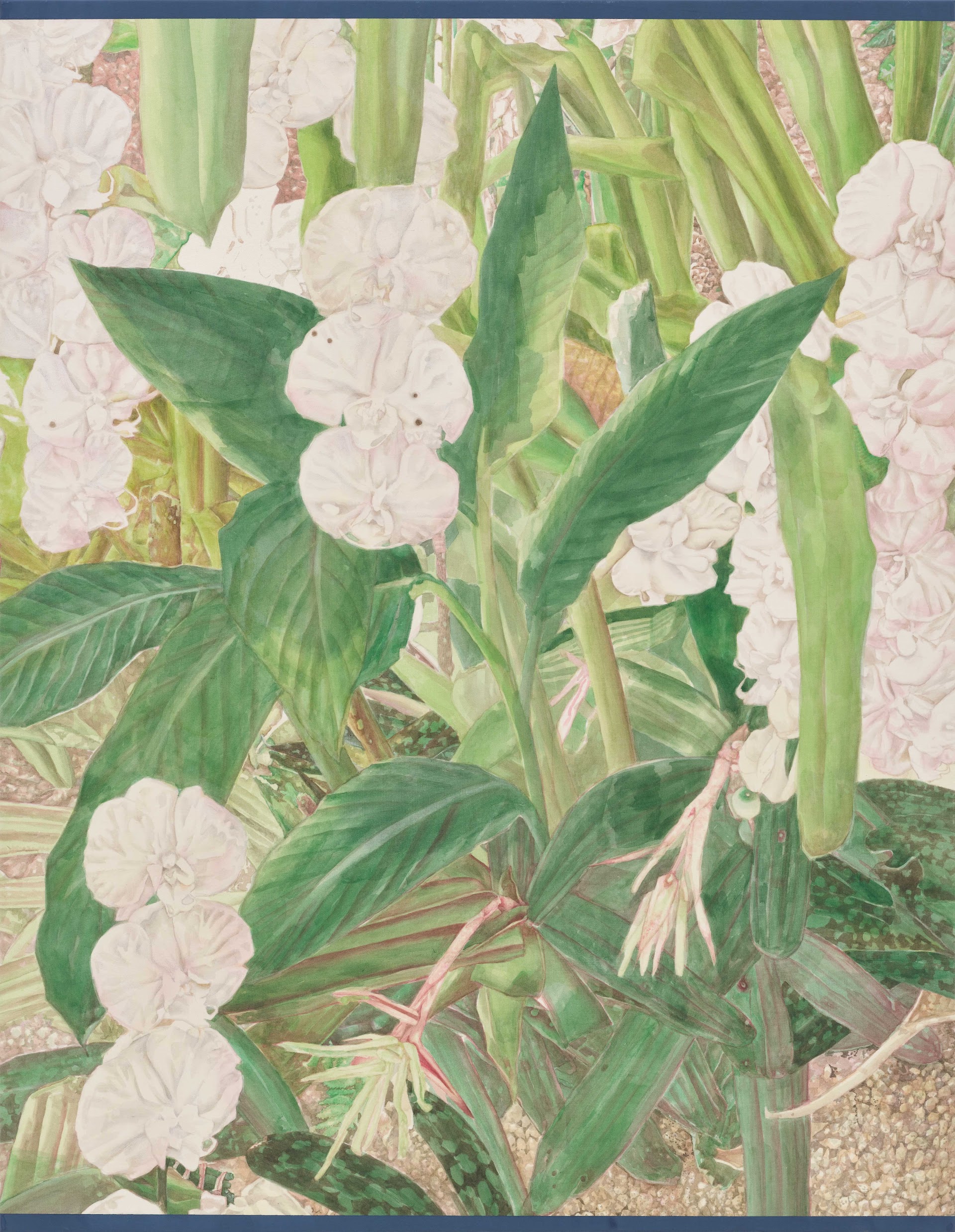
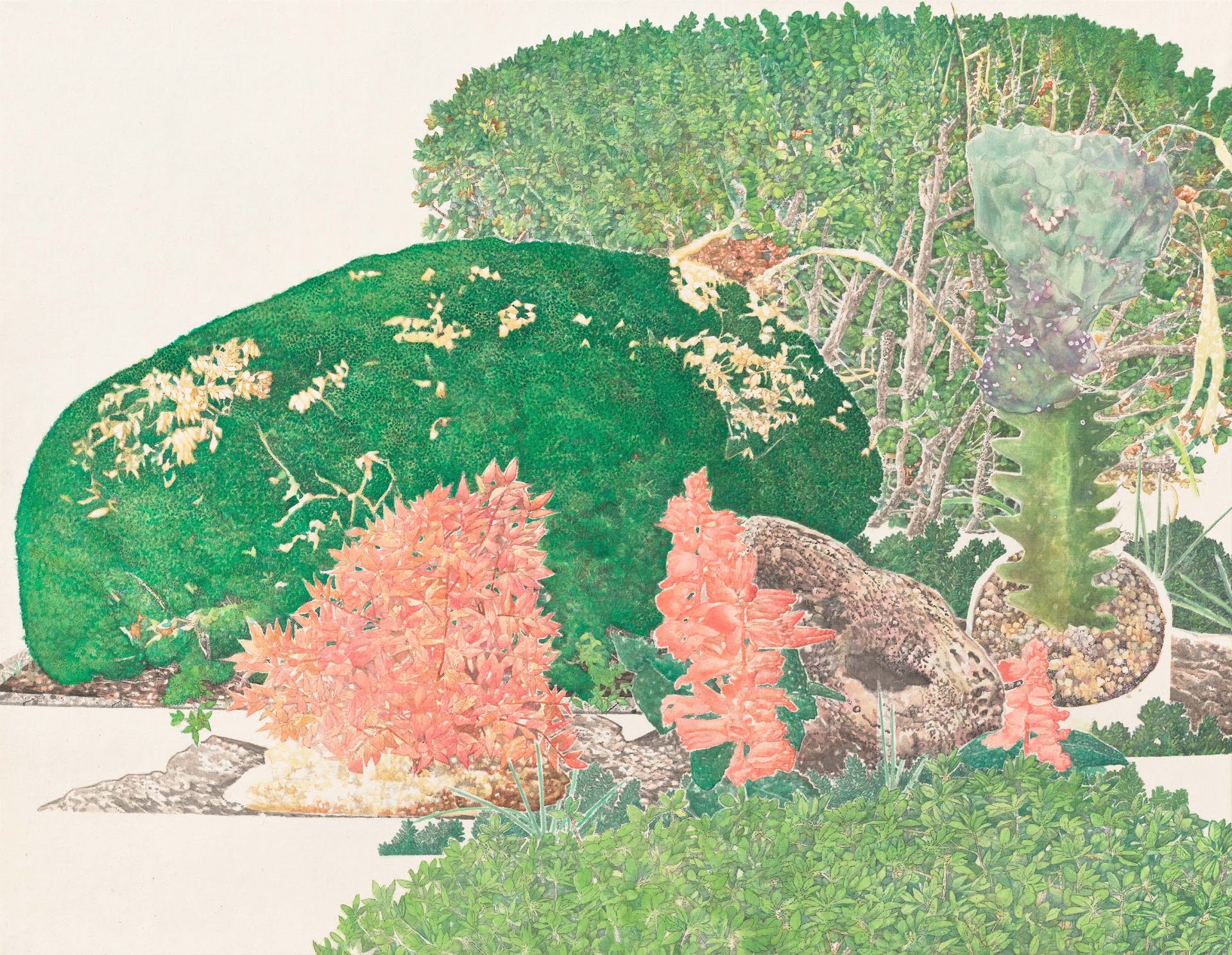
JIN Minwook constructs her pictorial surfaces by layering ink, powder pigments, and mineral pigments on silk and jangji. In her works on silk, she repeatedly applies color to both the front and reverse of the support, allowing the pigments to filter through the fabric and produce a subtle luminosity.

Precisely rendered flora and fauna are combined with transparent, restrained hues, leaving traces of close observation while creating an atmosphere slightly removed from ordinary reality. Her process gradually deepens the image until observation, memory, and emotion have sufficiently permeated its surface.

Her images originate in field drawings, photographs, and the forms of objects collected over time. JIN separates trees, buildings, animals, rocks, and other components of a landscape into individual units, then rearranges them according to remembered sensations and emotions.

Subjects observed in different places and at different times coexist within the same pictorial field, while viewpoint, proportion, and perspective shift fluidly through exaggeration and omission. Her desire to record experience in detail operates alongside an impulse to transform the scene through inner imagery, producing landscapes that seem to belong somewhere in reality yet cannot be located precisely.

The structure of the pictorial field is closely connected to the movement of the observer. In the ‘How to See a Plum Blossom and Wild Birds’ and ‘Stroll & See’ series, scenes captured from multiple viewpoints are joined horizontally, guiding the viewer’s gaze along an extended surface reminiscent of a handscroll.

More recent works employ shaped canvases and vertical installations evocative of folding screens, expanding the relationship between painting and exhibition space. Because the transitions between panels and viewpoints are not fully concealed, viewers experience not only the continuity of the image but also the pauses and renewed beginnings involved in looking.

The flowers, birds, insects, dogs, deer, and urban buildings that populate her paintings carry specific memories and symbolic associations without settling into fixed meanings. While the multi-headed dogs and snakes of her early works gave direct form to anxiety and a fragmented self, natural motifs in her later practice function as mediators of observation and memory, as well as agents within narratives of mourning and care for small beings.

Gaps in causality and improbable arrangements leave room for viewers to superimpose their own memories onto the scene. Combining meticulously described figures with loosely open narratives, JIN Minwook’s paintings move between reality and memory, observation and imagination, like quiet visual riddles.

Topography & Continuity

Although the focus and atmosphere of JIN Minwook’s work have shifted over time, her practice has consistently examined how individuals perceive their relationships with themselves, others, and the surrounding world. In 2011–2012, dogs, snakes, and multi-headed creatures articulated isolation, anxiety, and a fragmented self.

Around 2014, she turned toward landscapes reconstructed from fragments of experience and memory through everyday objects and natural forms. Since 2017, her work has increasingly emphasized how the observer’s body, movement, and the passage of time shape visual experience, while recent works have deepened walking and observation into narratives of bereavement, mourning, and childhood places.

These developments form an expanding trajectory in which earlier concerns acquire additional layers of observation, memory, relationship, and narrative rather than being abandoned for entirely separate subjects. 

Her sustained use of silk, ink, and pigments provides another central thread throughout her practice. Through fine brushwork, reverse coloring, and repeated applications of pigment, JIN creates surfaces that are at once translucent and deeply layered, meticulously rendering flora and fauna derived from close observation.

At the same time, she has expanded beyond the single rectangular picture plane through horizontally connected panels, shaped canvases, and installations evocative of folding screens. While maintaining long-developed material and technical skills, she continues to alter the structure and presentation of painting so that the viewer’s movement and shifting gaze become active elements of the work. 

Within this trajectory, JIN Minwook connects the materials and pictorial language of Korean painting with experiences of the contemporary city. She records flowers, birds, insects, trees, rocks, and buildings encountered in places where she has stayed or passed through, recognizing situations in which humans and nature occupy the same environment without forming a fully reciprocal relationship.

The city does not serve merely as a background; it becomes a relational field in which small lives and ordinary things reveal one another’s presence. Personal memory and emotion permeate these landscapes, bringing the material conditions of contemporary life together with an intimate register of perception. 

The continuity of JIN Minwook’s practice does not depend solely on repeating particular motifs or compositions. Her work is sustained by an attitude of discovering small beings, walking, observing, remembering, and forming narratives among dispersed elements.

More recently, she has connected verses from The Classic of Poetry and the symbolism of flowers and birds with personal experiences of loss and childhood memory, extending her long-standing engagement with nature toward questions of mourning and existence.

Works of Art

Landscapes Shaped by a Moving Gaze

Articles

Exhibitions

Activities