

Circled Stair #01 - K-ARTIST

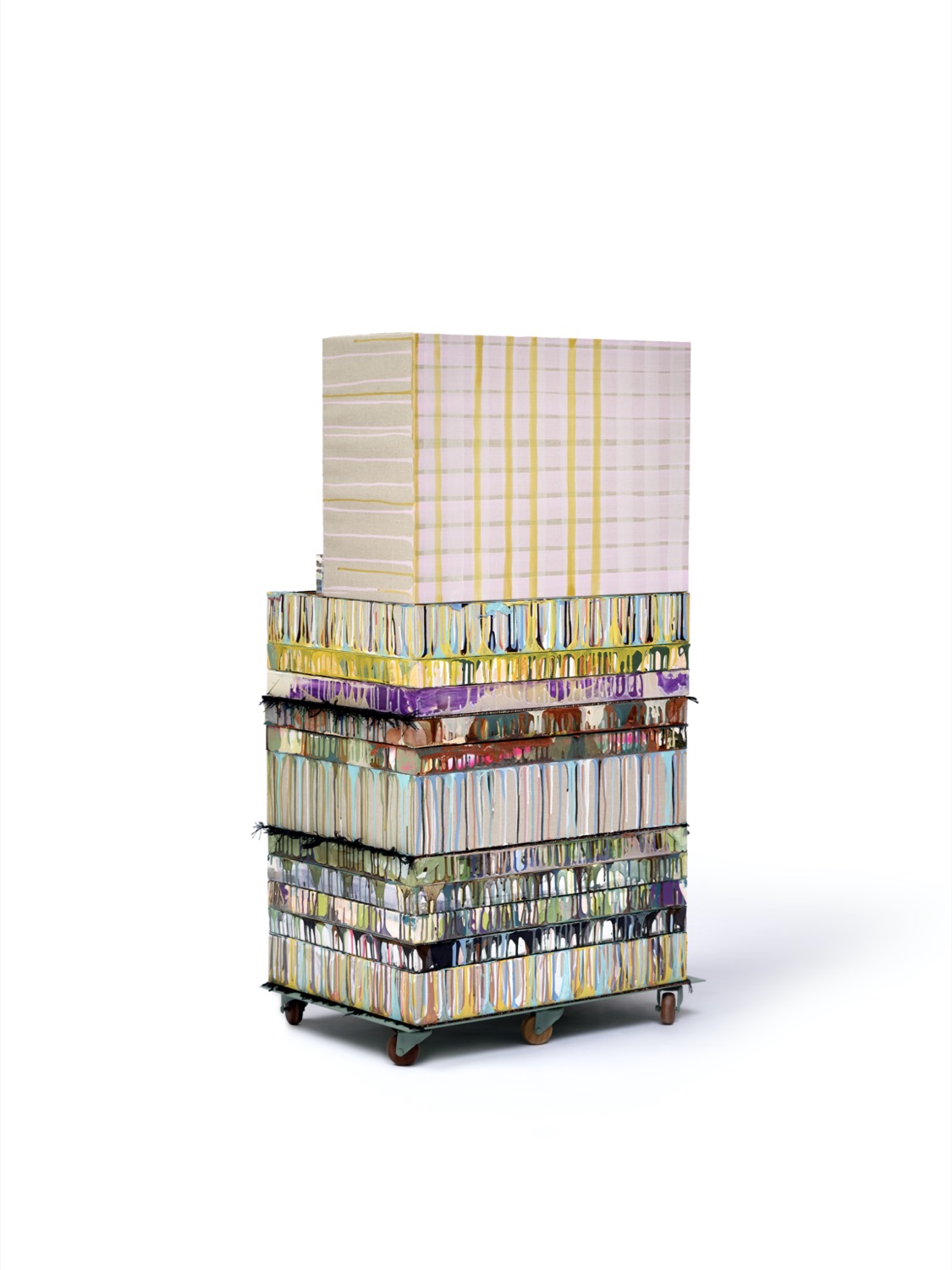
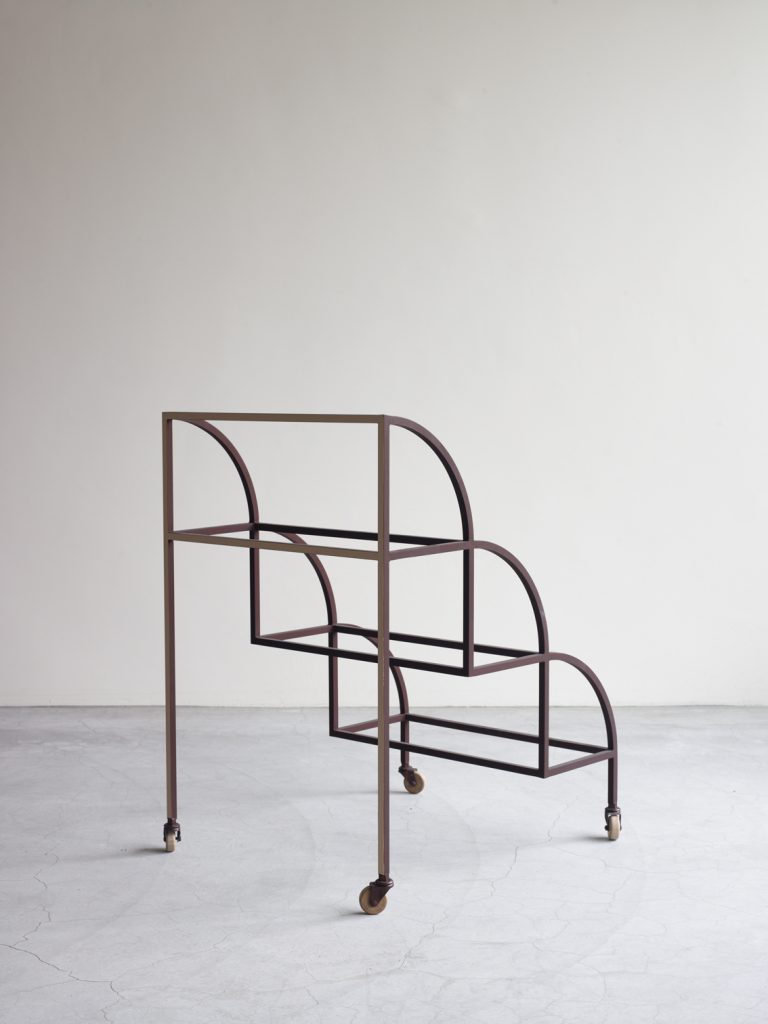
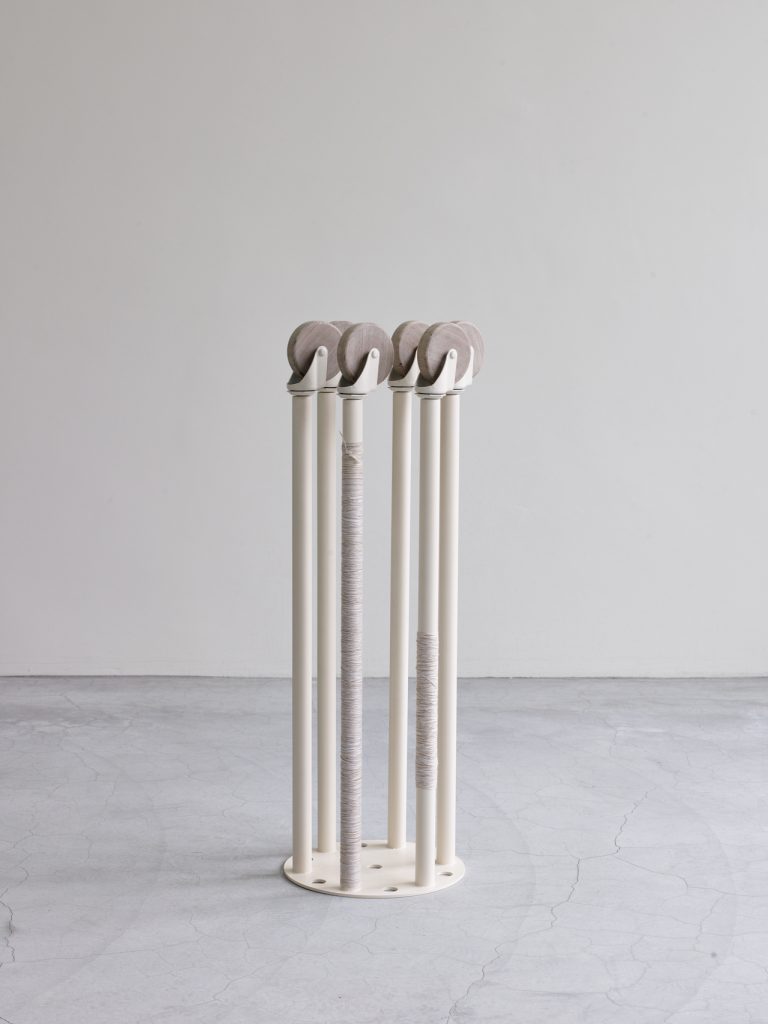
Circled Stair #01

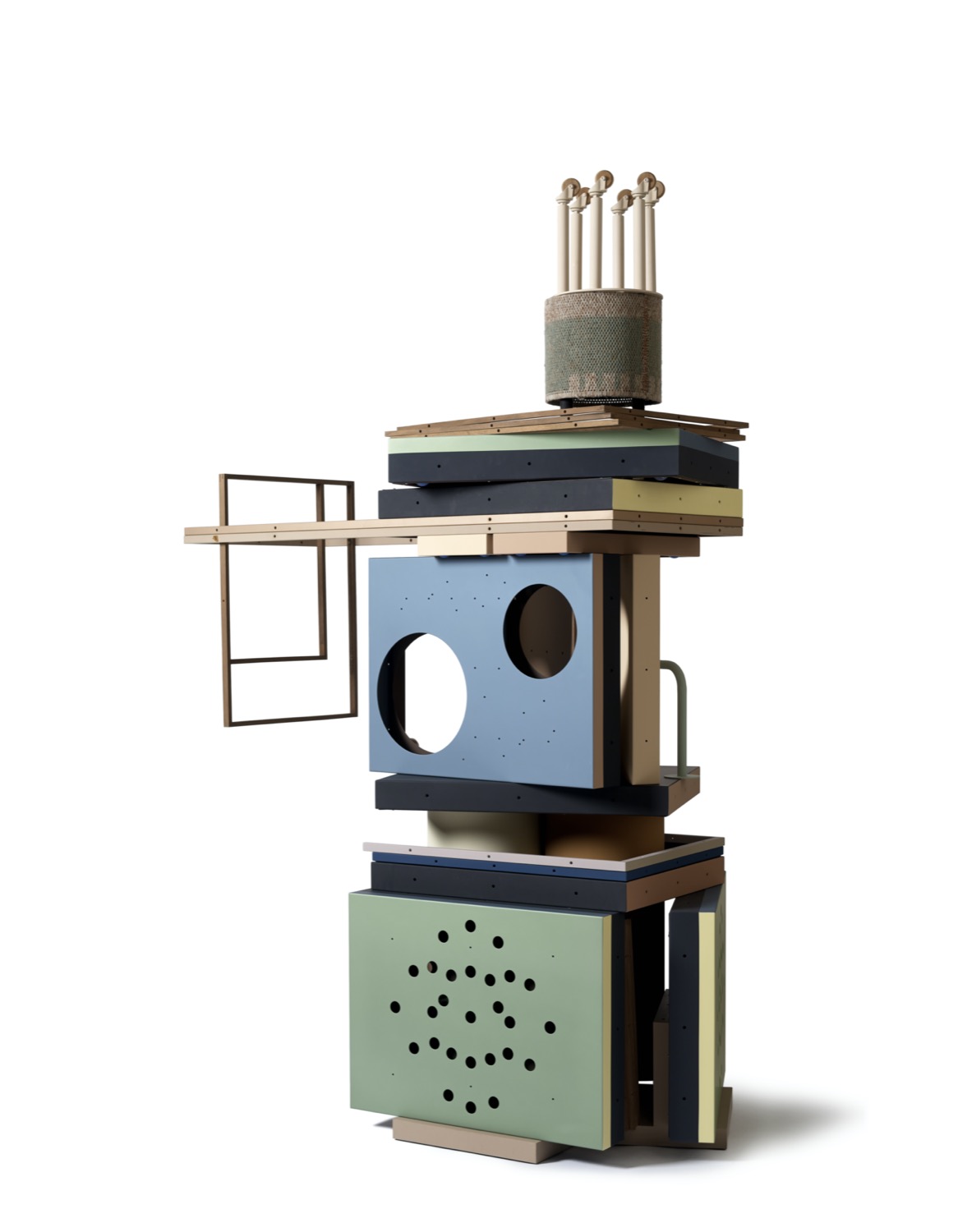
2011-2015
Painted steel, thread, wooden wheels
91 × 60 × 72 cm
About The Work

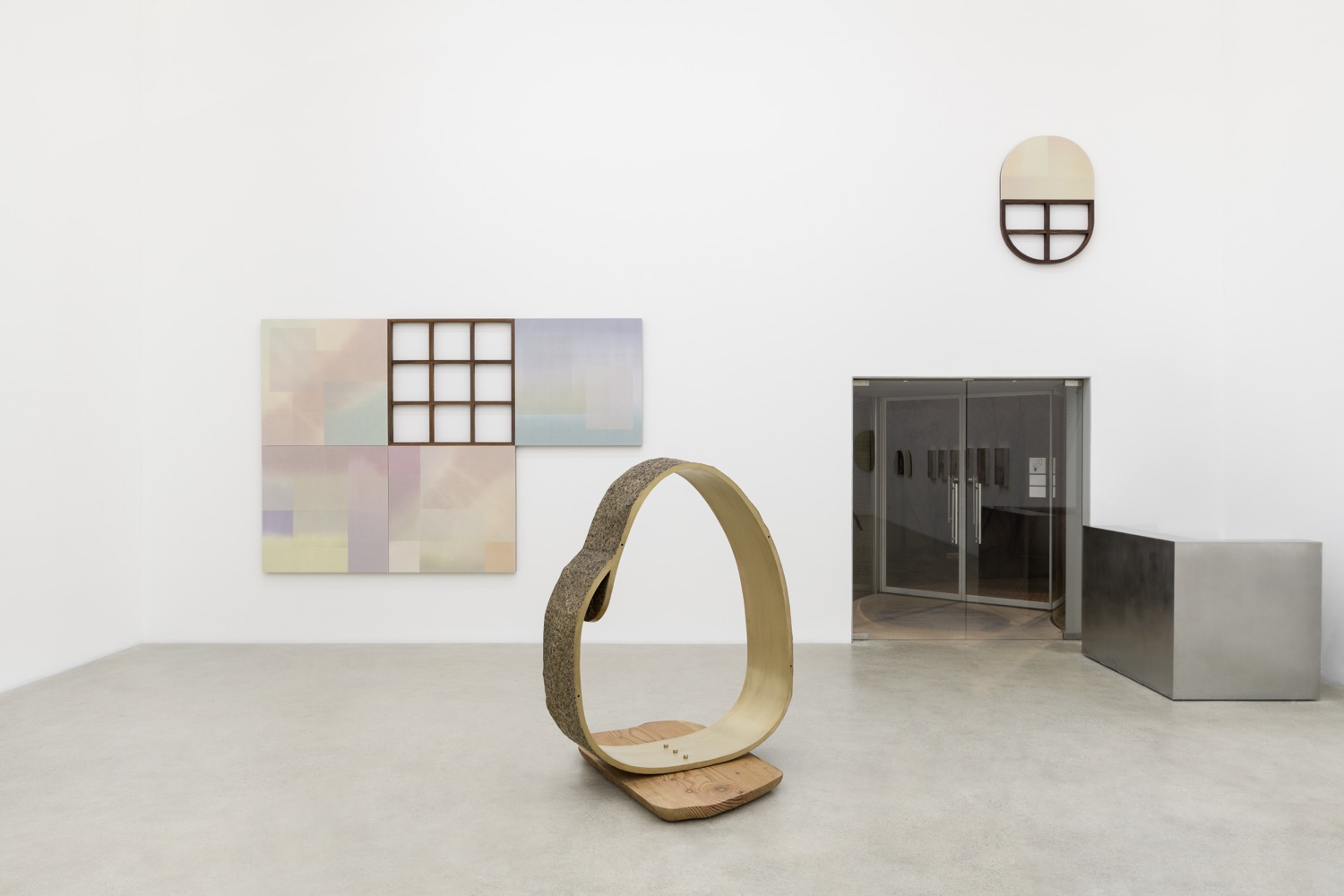
Suki Seokyeong Kang has consistently explored the intersections of form and performance, body and space, tradition and modernity, and space and time, translating these conceptual dichotomies into a distinct visual language. Her work is primarily developed around the ‘Jeong (井)’ series, inspired by the grid structure of Jeongganbo (井間譜), a traditional Korean musical notation system, and the ‘Mora’ series, derived from the linguistic concept of a mora, a unit of syllabic length. She transforms these two frameworks into arbitrary units within painting, using them as the foundation for exploring movement and rhythm within space.

Solo Exhibitions (Brief)

Recent Suki Seokyeong Kang’s solo exhibitions include 《MARCH》(2024, Kukje Gallery, Seoul, Korea), 《Willow Drum Oriole》(2023, Leeum Museum of Art, Seoul, Korea), 《Square See Triangle》(2019, Buk-Seoul Museum of Art, Seoul, Korea), 《Black Mat Oriole》(2018, Institute of Contemporary Art, Philadelphia, USA), 《Foot and Moon》(2015, Audiovisual Pavilion, Seoul, Korea), 《Polite Owl in the Valley 鴟鴞鴟鴞》(2013, Gallery Factory, Seoul, Korea), and 《GRANDMOTHER TOWER》(2013, Old House, Space Can, Seoul, Korea).

Group Exhibitions (Brief)

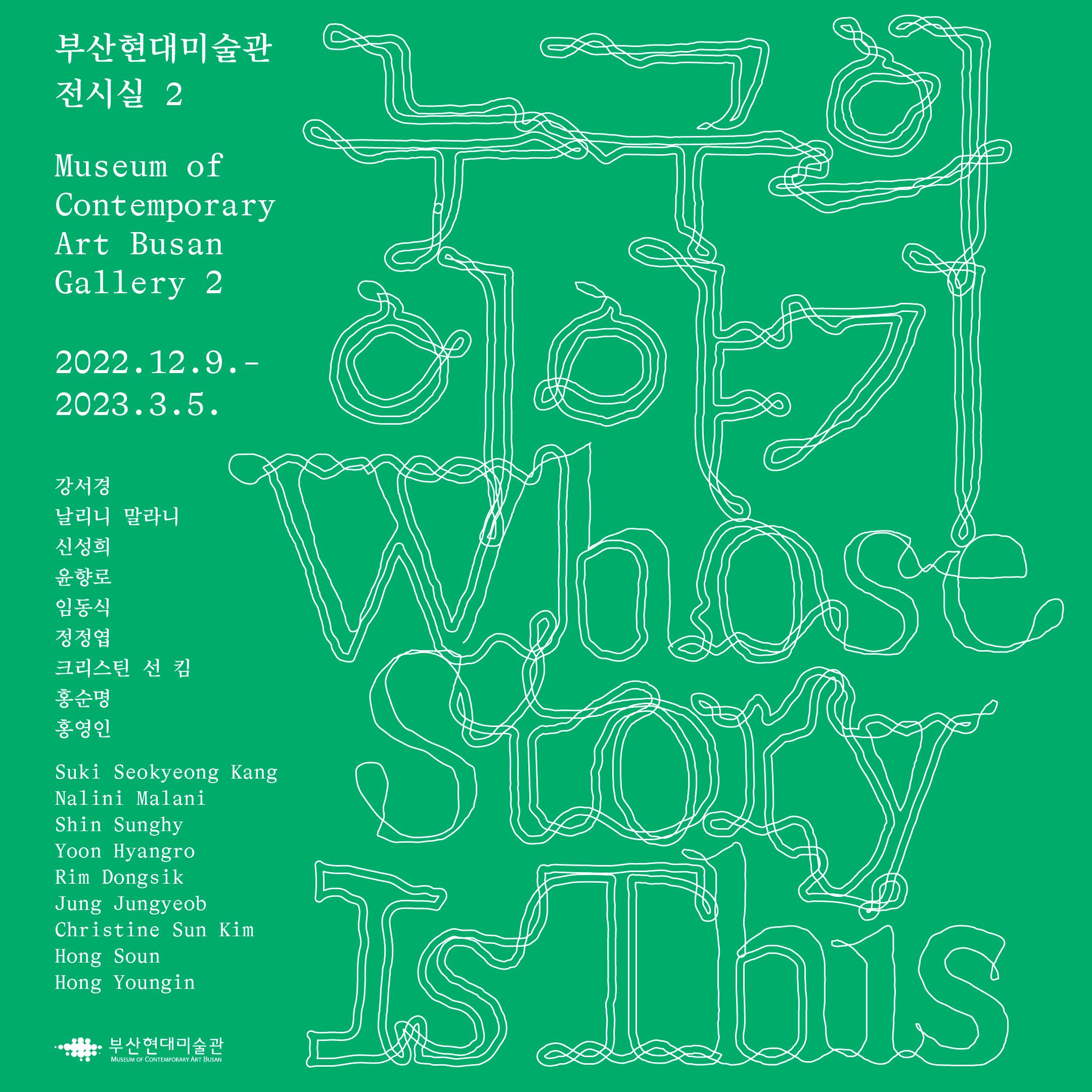
Recent group exhibitions include 《The Shape of Time: Korean Art after 1989》(2023, Philadelphia Museum of Art, Philadelphia, USA), 《Whose Story Is This》(2022, Museum of Contemporary Art Busan, Busan, Korea), 《Scoring the Words》(2022, Seoul Museum of Art, Seoul, Korea), 《The Brilliant Days》(2022, Ulsan Art Museum, Ulsan, Korea), 《Hiding in Plain Sight》(2021, PACE Gallery, New York, USA), 《Dependent Objects》(2021, Museum of Contemporary Art Chicago, Chicago, USA), 《Interlaced》(2020, OCI Museum, Seoul, Korea), 《Unclosed Bricks》(2018, Arko Art Center, Seoul, Korea), 《As the Moon Waxes and Wanes》(2016, National Museum of Modern and Contemporary Art, Gwacheon, Korea), and 《Groupe Mobile》(2016, Villa Vassilieff, Paris, France).

Additionally, she has participated in major international biennials, including the Venice Biennale (2019), Shanghai Biennale (2018), Liverpool Biennial (2018), and Gwangju Biennale (2018, 2016).

Awards (Selected)

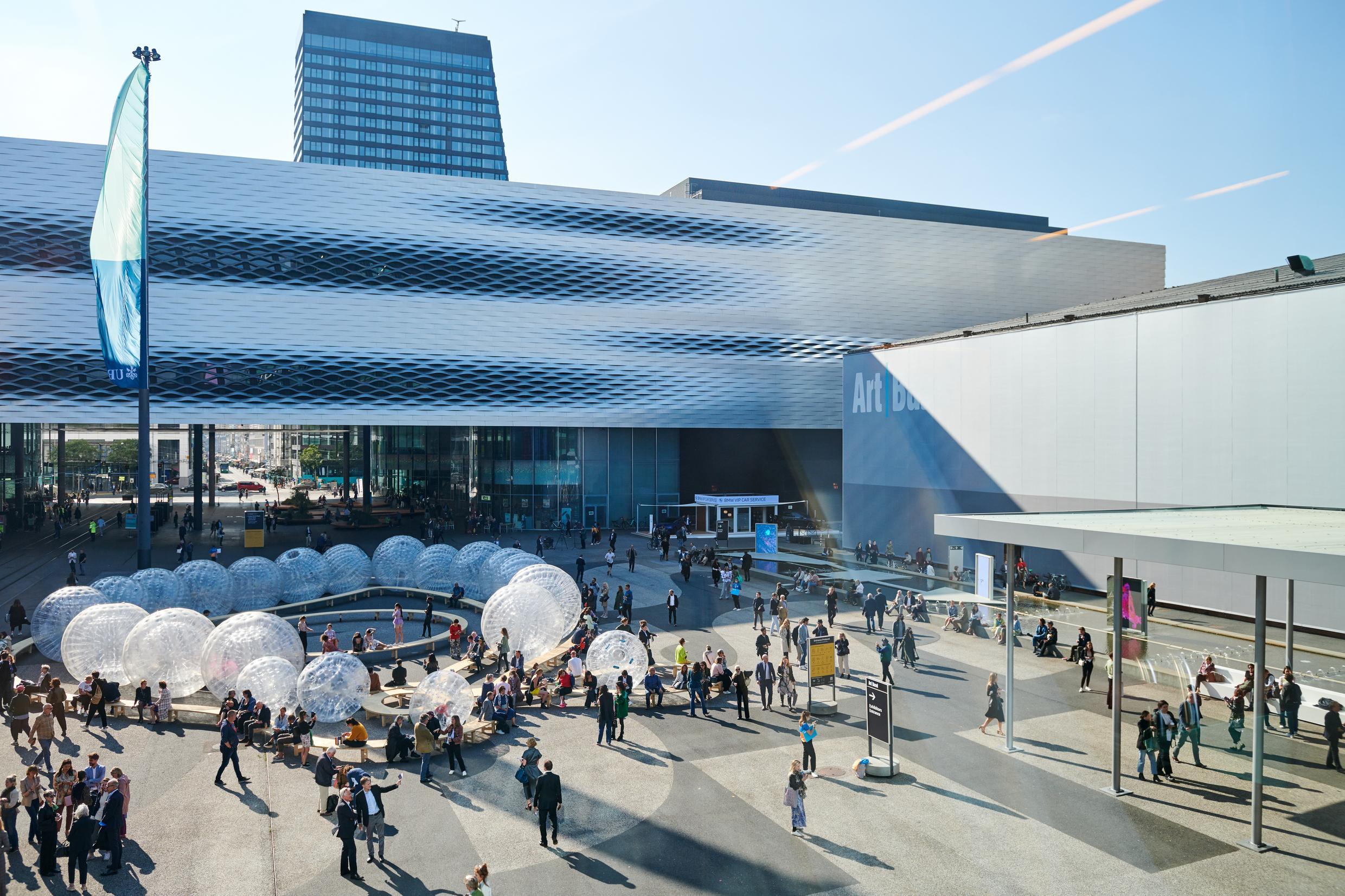
In 2018, she was awarded the Baloise Art Prize at Art Basel, and in 2013, she received the Excellence Prize at the 13th SongEun Art Award.

Collections (Selected)

Suki Seokyeong Kang’s works are housed in the collections of major institutions, including MMCA(National Museum of Modern and Contemporary Art)(Korea), Seoul Museum of Art(Korea), Leeum Museum of Art(Korea), Arario Museum(Korea), Ulsan Art Museum(Korea), Los Angeles County Museum(USA), San Francisco Museum of Modern Art(USA), Walker Art Center(USA), Museum Of Contemporary Art Chicago(USA), Princeton Museum(USA), Booth Collection-University of Chicago(USA) etc.
Works of Art

‘Paintallation’: On the True View

Originality & Identity

Suki Seokyeong Kang has consistently explored the intersections of form and performance, body and space, tradition and modernity, and space and time, translating these conceptual dichotomies into a distinct visual language. Her work is primarily developed around the ‘Jeong (井)’ series, inspired by the grid structure of Jeongganbo (井間譜), a traditional Korean musical notation system, and the ‘Mora’ series, derived from the linguistic concept of a mora, a unit of syllabic length. She transforms these two frameworks into arbitrary units within painting, using them as the foundation for exploring movement and rhythm within space.

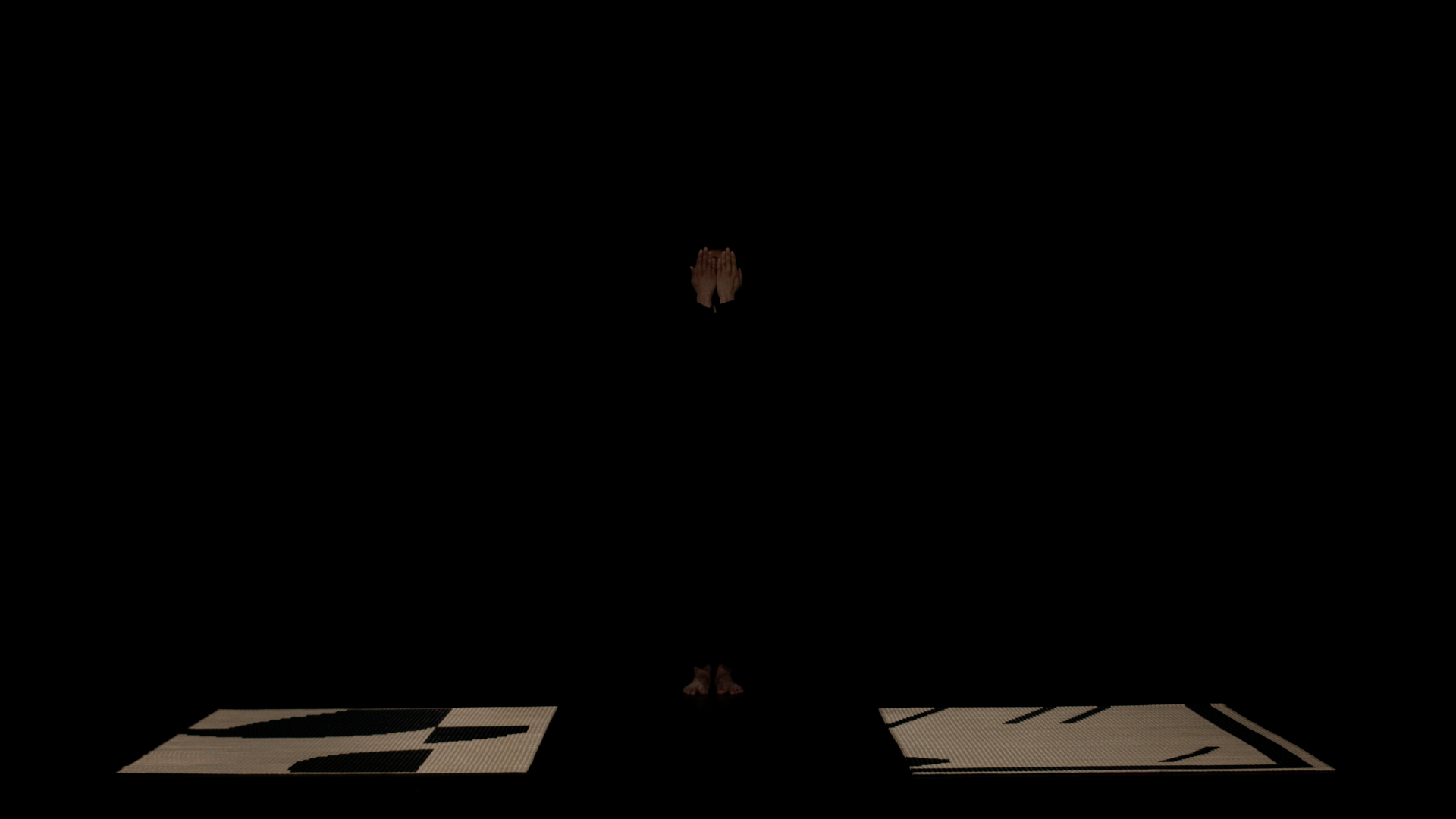
Her solo exhibition 《Black Mat Oriole》 (2018, Institute of Contemporary Art, Philadelphia) featured 〈Black Mat Oriole〉 (2018), a representative example combining an installation inspired by Jeongganbo's grid format with a video performance reflecting the movements of Chunaengmu, a traditional Korean court dance. Furthermore, 〈Activation〉 (2018), presented at the 2018 Liverpool Biennial, experimented with the abstraction of movement (time) within painting (space). This work utilized the structured spatial unit of ‘Mat’, referencing Hwamunseok, a Korean traditional woven mat, and allowed the dancer’s bodily gestures to visualize ‘the form of action’ within a confined grid space. Through these approaches, Kang continuously reinterprets traditional structures in relation to the body, expanding the pictorial language into spatial experimentation.

Style & Contents

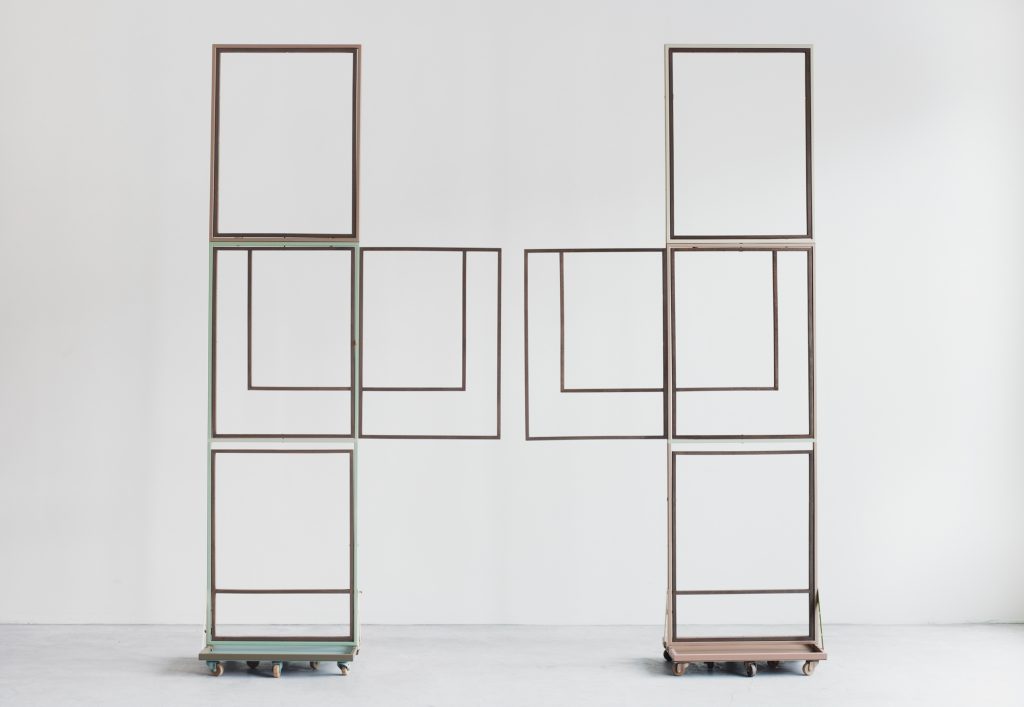
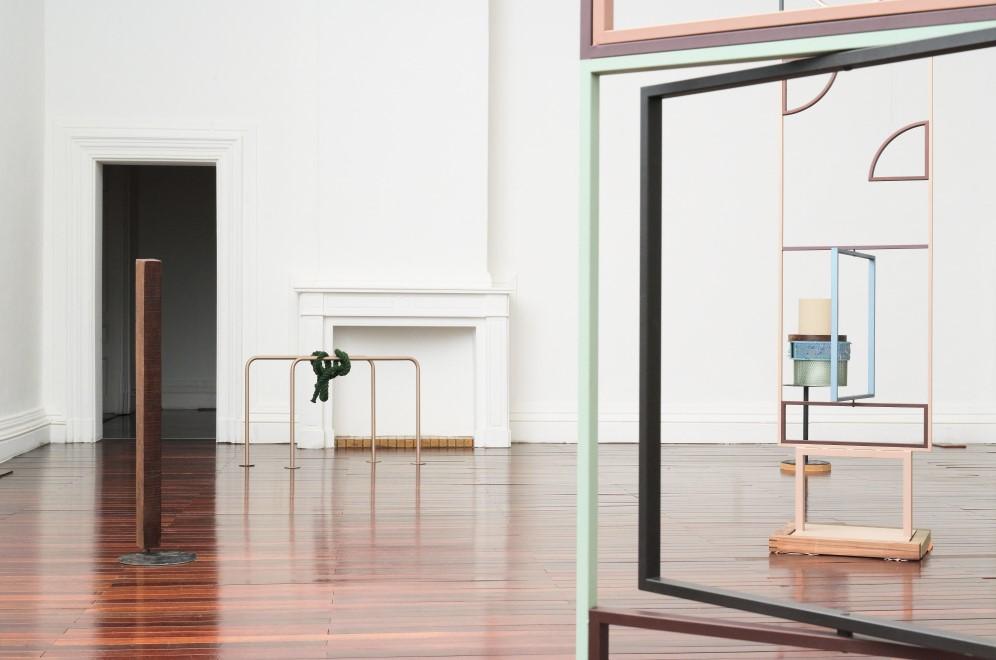
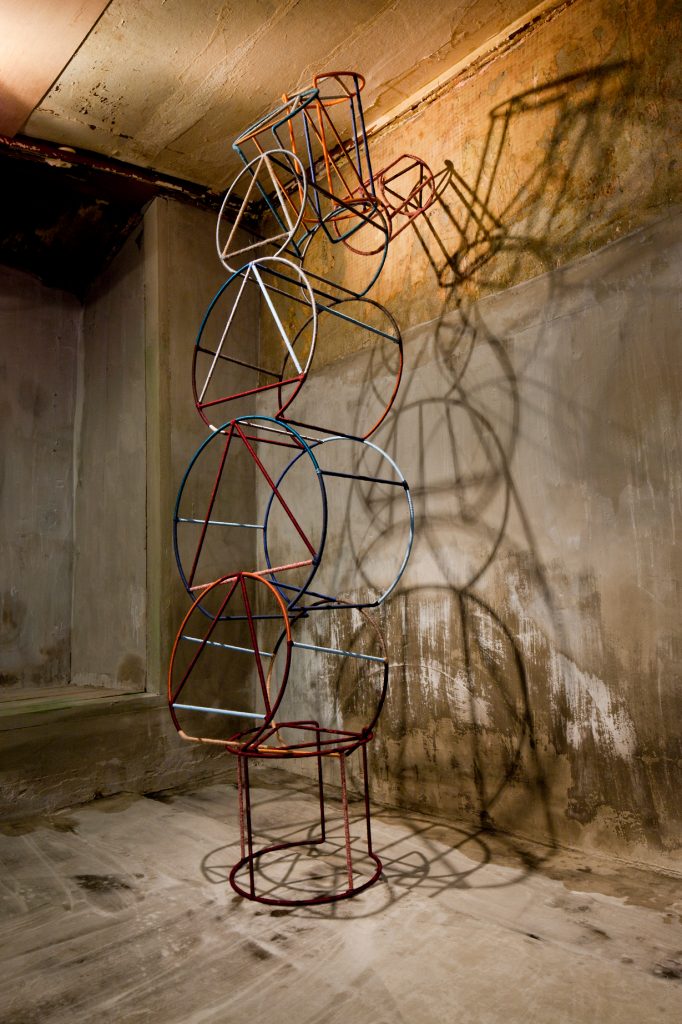
Kang’s practice spans sculpture, painting, and video, exploring the interconnection between formal elements and bodily movement. Her early works focused on object-based installations that merged personal memory with spatial structures. The ‘Grandmother Tower’ (2012–2019) series, first introduced in her solo exhibition 《GRANDMOTHER TOWER》 (2013, Space CAN), exemplifies this approach. Using steel structures and threads, she abstracted the space where her grandmother once stood, visually translating the relationship between space and memory.

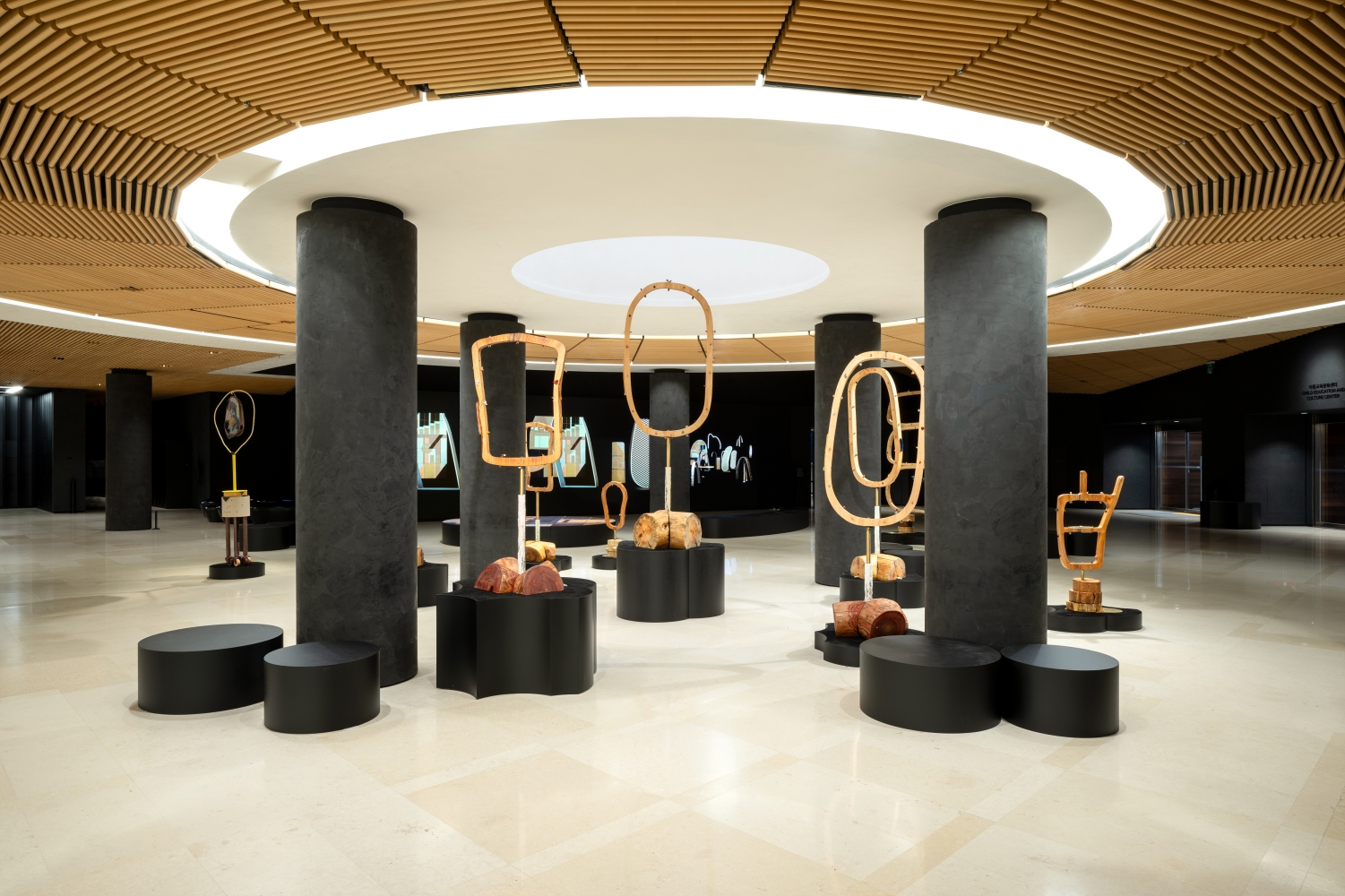
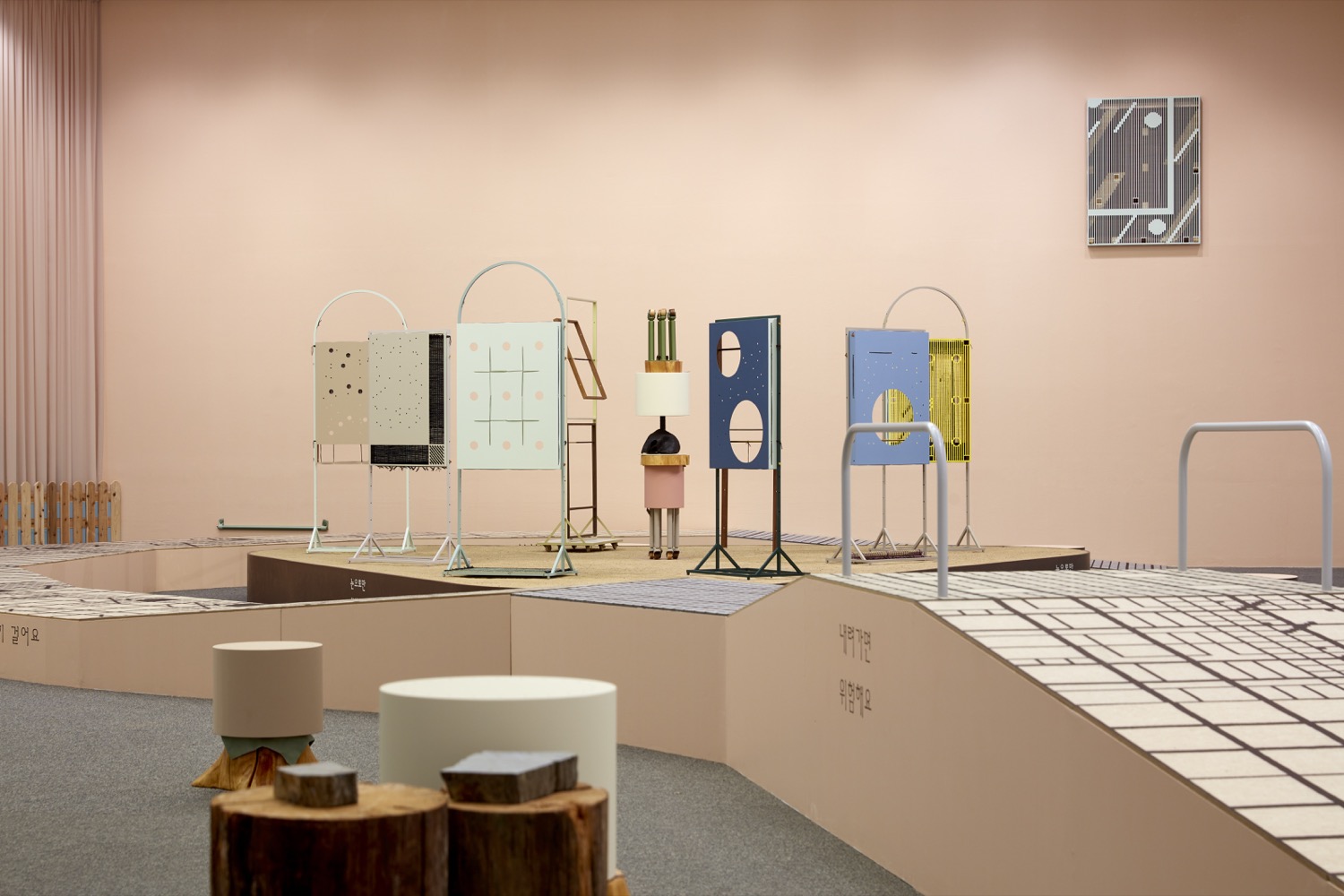
Her work subsequently moved beyond static object installations, incorporating performative elements to examine the interaction between space, structures, and the body. In her 2023 solo exhibition 《Willow Drum Oriole》 at Leeum Museum of Art, she further refined the ‘Jeong’ series, which embodies sound, movement, time, and narrative, as well as the ‘Mat’ series, where a dancer’s body defines spatial boundaries while performing Chunaengmu on Hwamunseok. This exhibition presented a more intricate articulation of structured abstraction, where objects, regulated space, and the human body dynamically interconnect to generate temporality.

Topography & Continuity

Kang’s work continues to evolve, using painting, sculpture, installation, video, and performance to refine the interplay between formal elements and the rhythm of bodily motion, thereby redefining the relationship between time and space. Particularly in 《Willow Drum Oriole》, she metaphorically addresses the natural world’s transformation over time and the coexistence of diverse beings within it, constructing an environment where formal structures and bodily gestures coalesce.

Her prominence in major biennials and international museums stems from her innovative reinterpretation of traditional Korean visual and linguistic structures through a contemporary lens. By experimenting with the organic relationship between space and the body, she presents a unique and experimental approach to contemporary art. Having exhibited at the Venice Biennale (2019), Gwangju Biennale (2016, 2018), Shanghai Biennale (2018), and Liverpool Biennial (2018), Kang is continuously invited to global art platforms, demonstrating her ability to expand the boundaries between various media while maintaining a distinct visual language.

Works of Art

‘Paintallation’: On the True View

Exhibitions