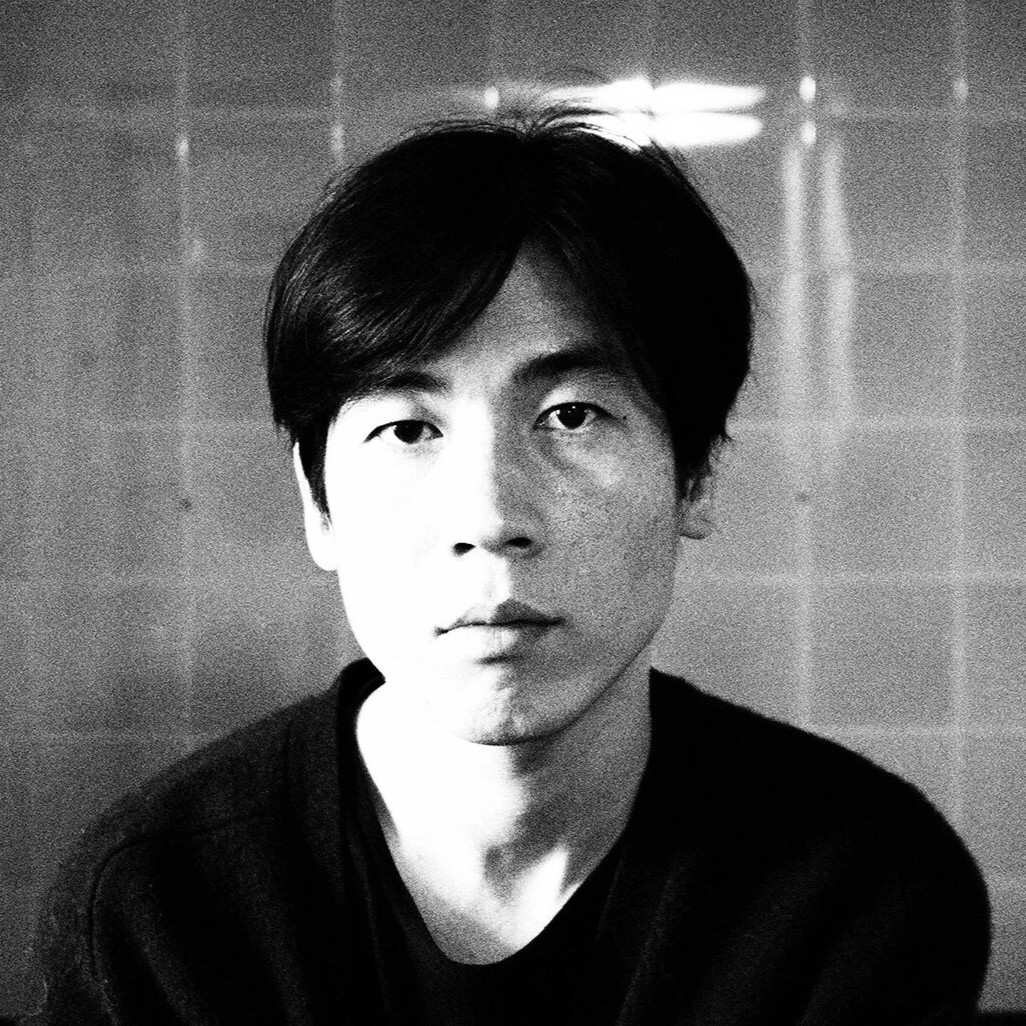
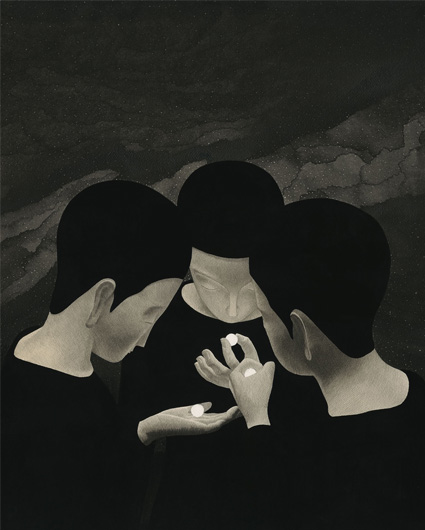
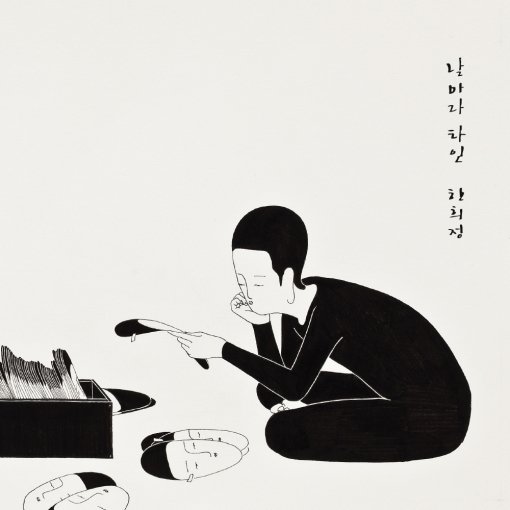
Moonassi’s practice has developed across the fields of illustration and painting. He first gained public recognition through concise black-and-white drawings and collaborations spanning brands, publishing, and music, while simultaneously presenting an independent exhibition practice concerned with the relationship between the self and others.
He subsequently expanded the scale and density of his paintings centered on ink and hanji, establishing a visual language that combines the clarity of graphic imagery with the material qualities of brush and ink. His trajectory may therefore be understood less as a linear transition from illustration to painting than as a sustained examination of his imagery across different modes of circulation and viewing.
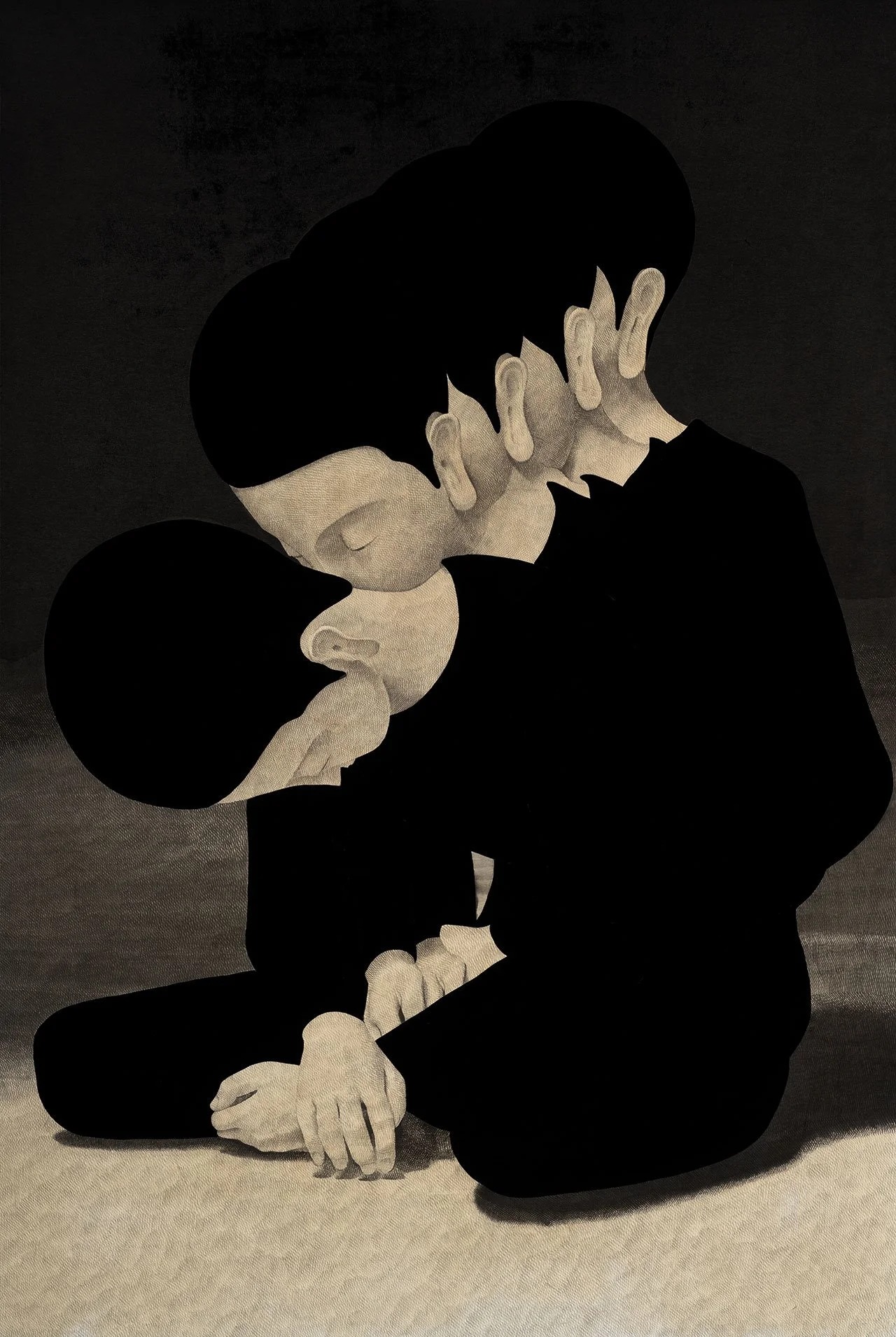
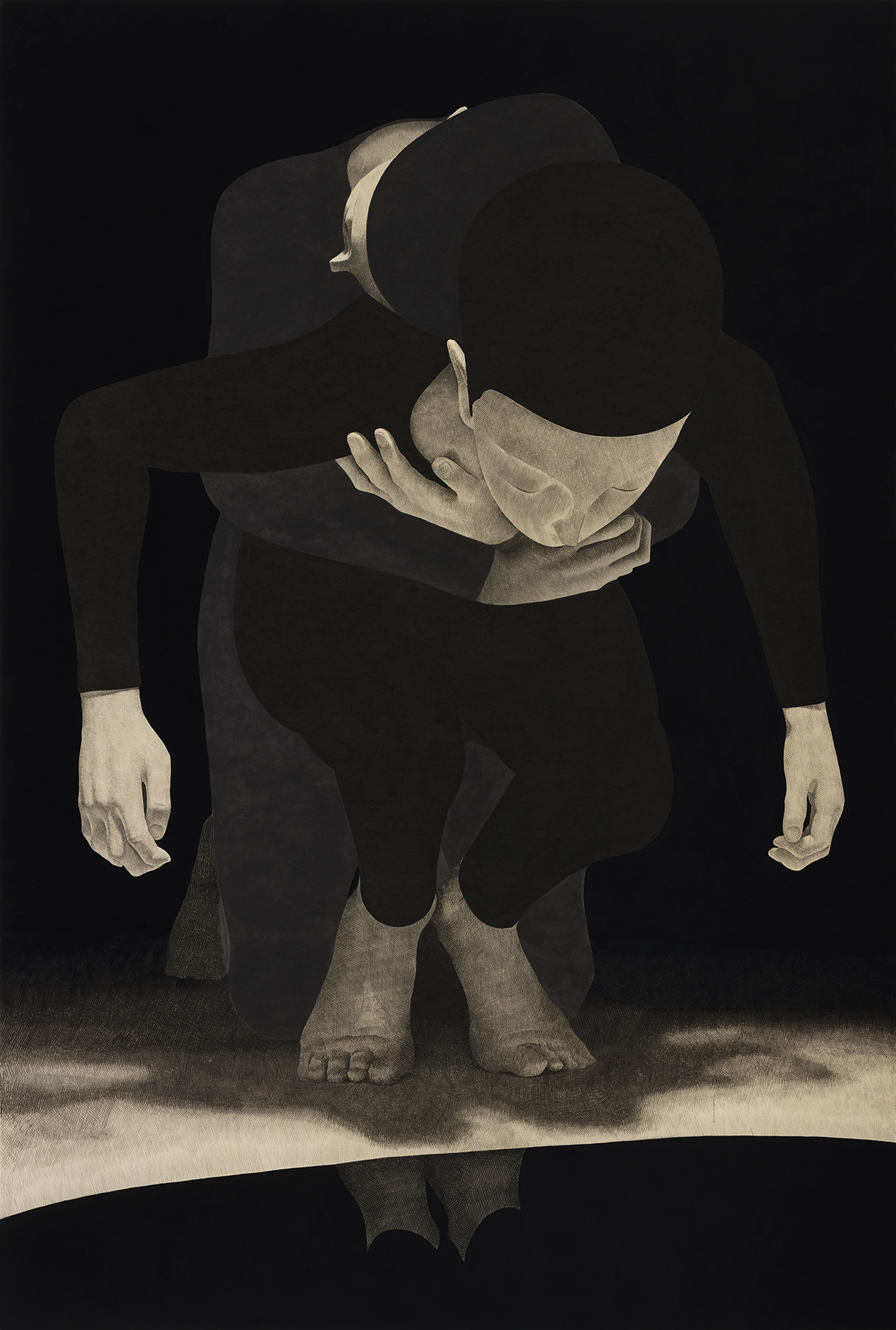
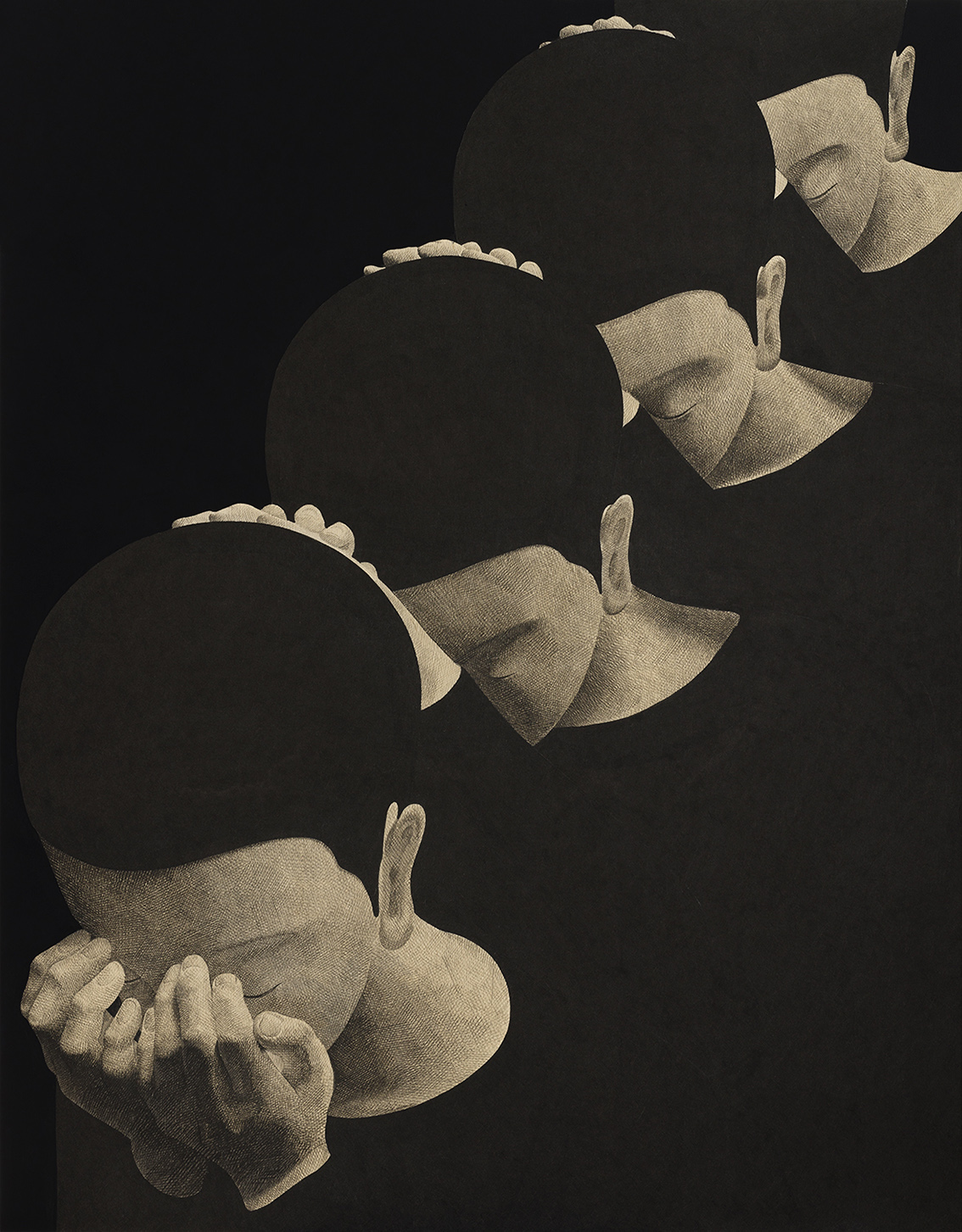
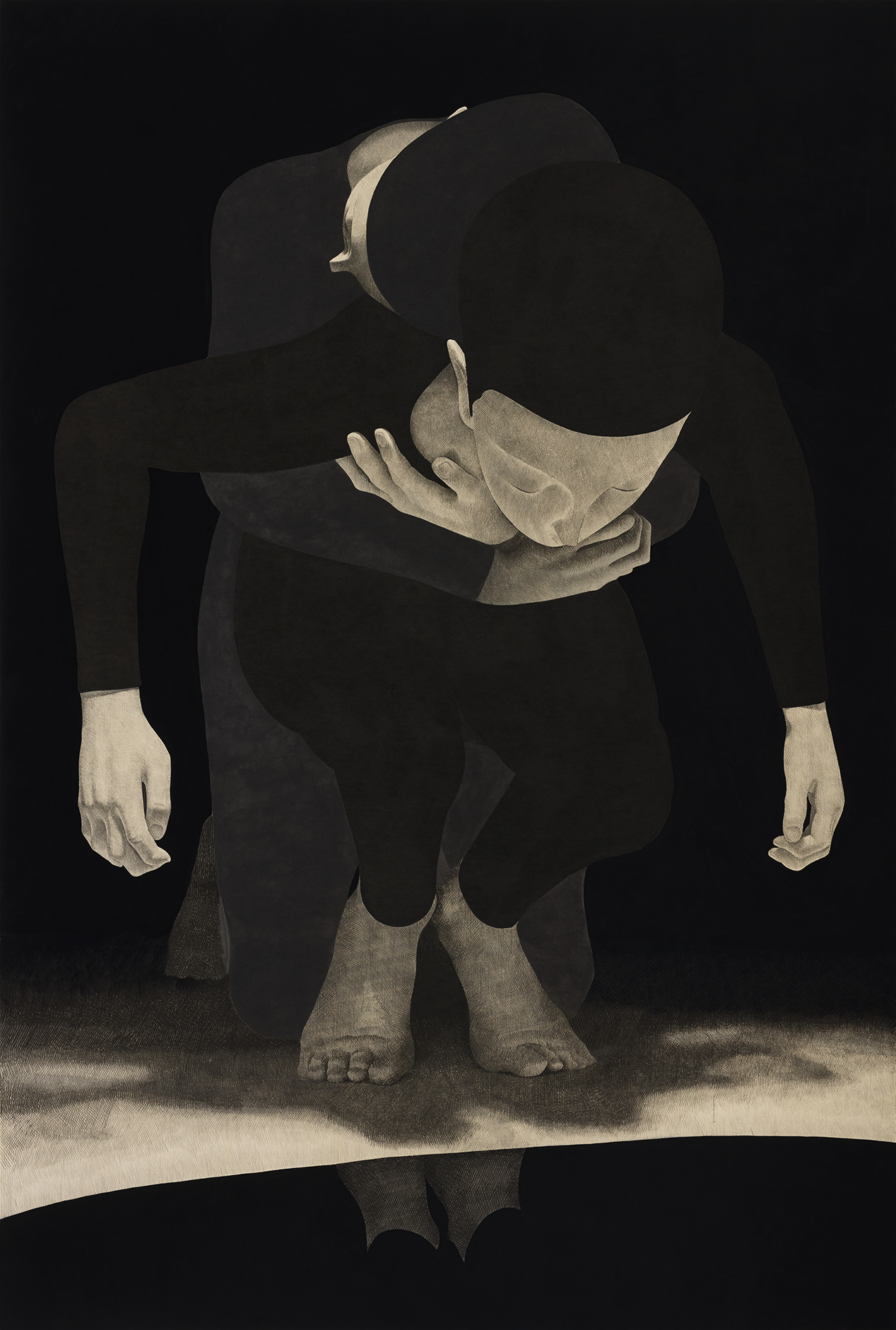
The recurring figure, monochromatic surface, and questions surrounding the self, the other, and boundaries have remained central throughout his career. By the mid-2010s, repeated and superimposed images of “I” and “you” were already articulating the difficulties of relationships and the transformations they produce within the self.
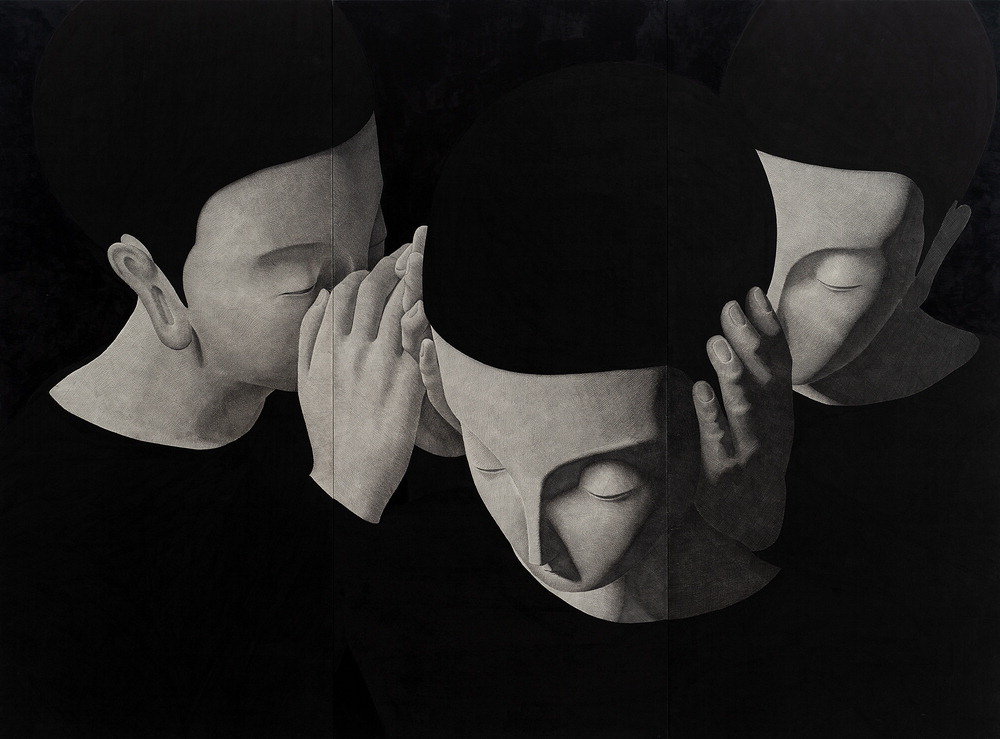
He has continued to investigate the emotional ripples generated through human interaction, addressing isolation, anxiety, ambiguity, affection, consolation, and balance through a consistent set of forms and materials. Continuity in his work lies not simply in the repetition of established symbols, but in his use of a familiar visual vocabulary to reconsider changing conditions of life and relationships.
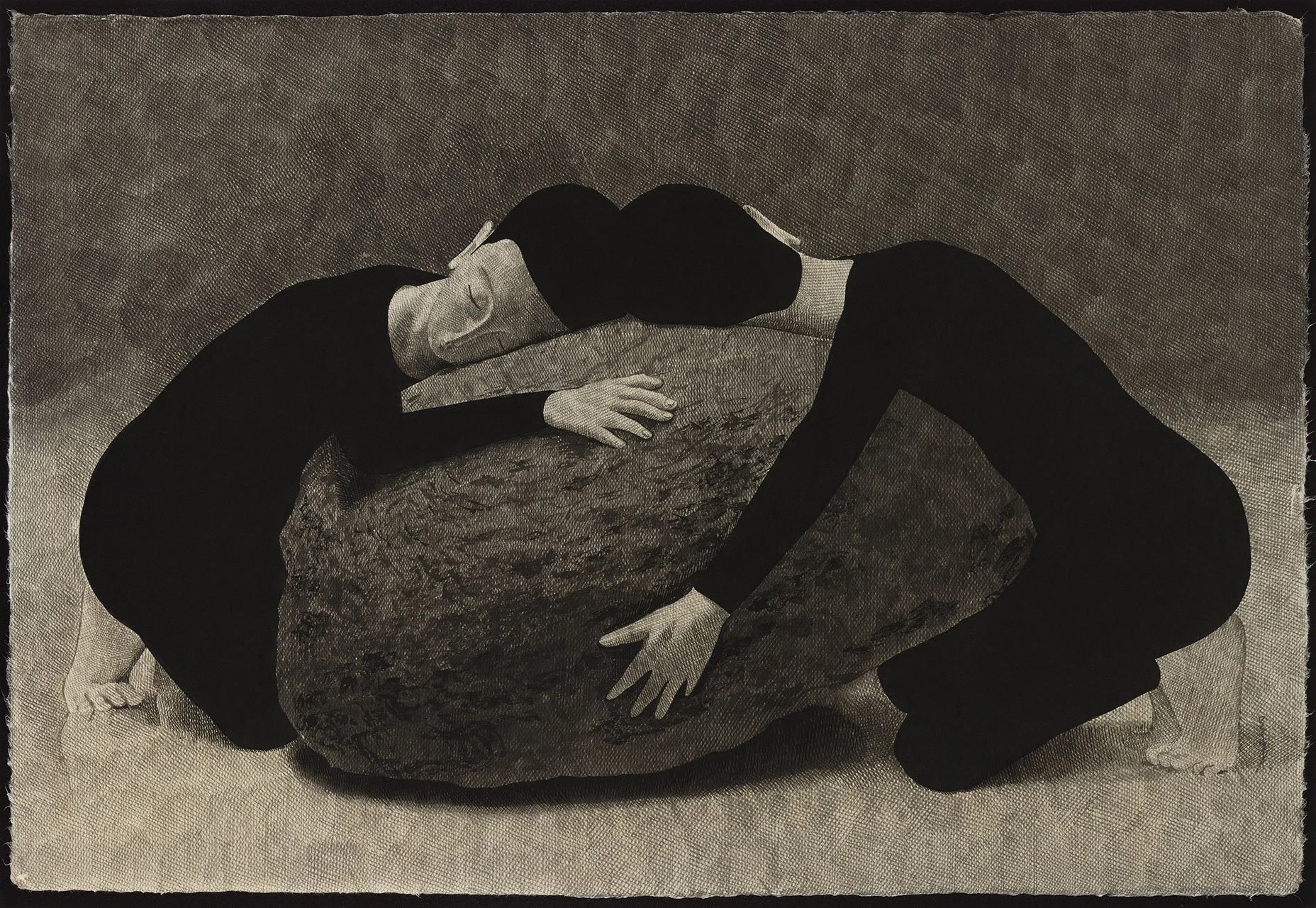
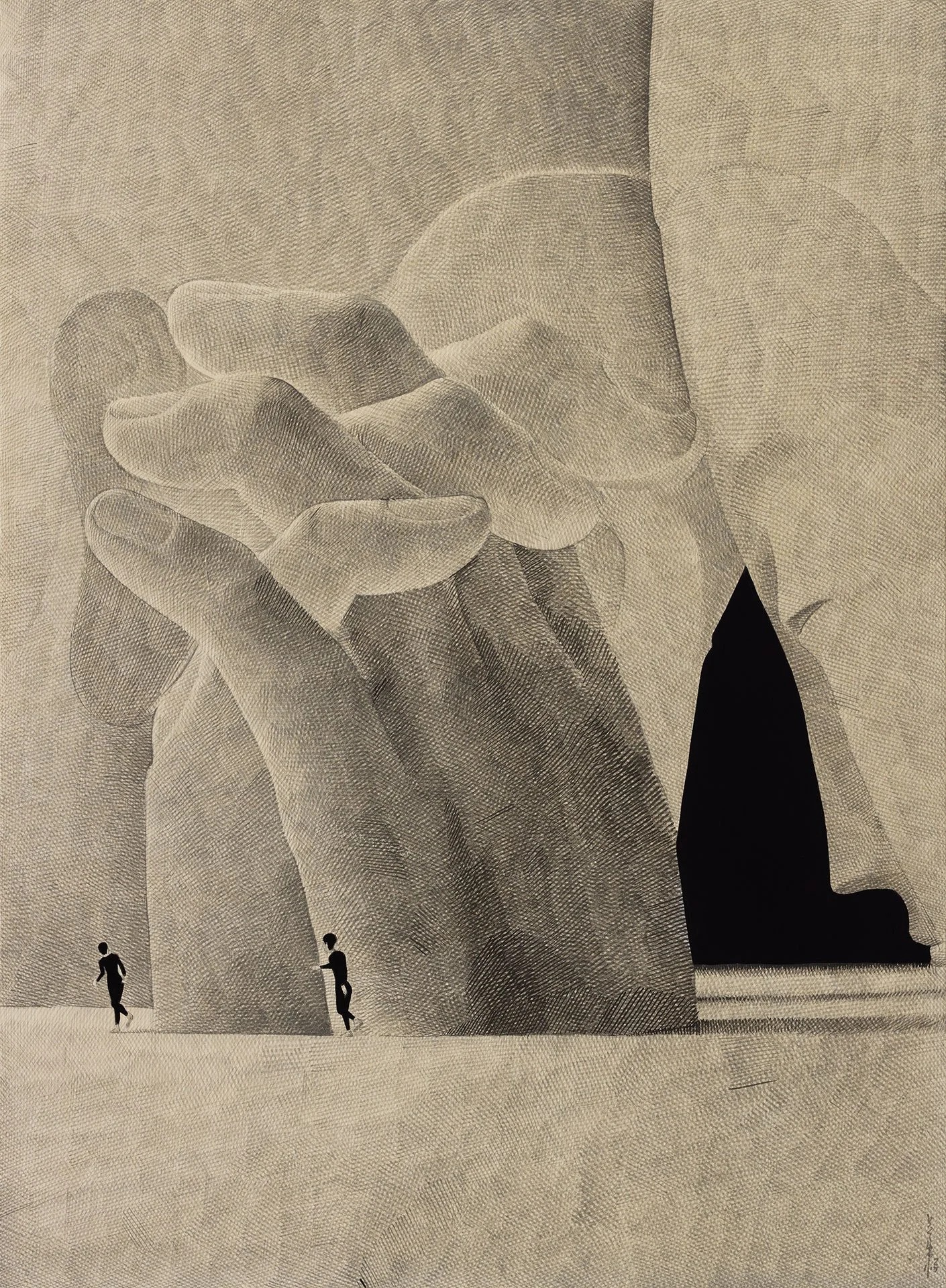
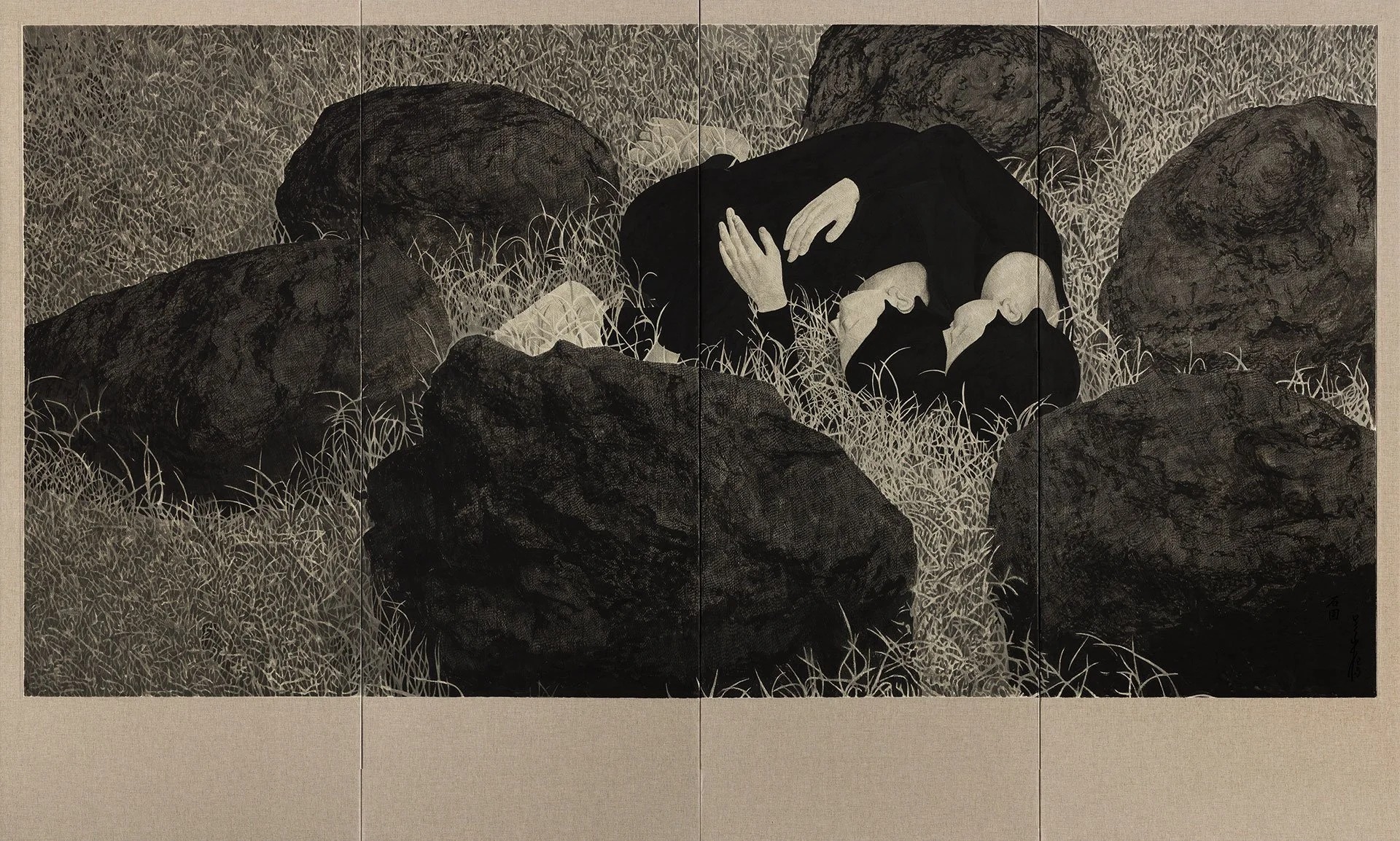
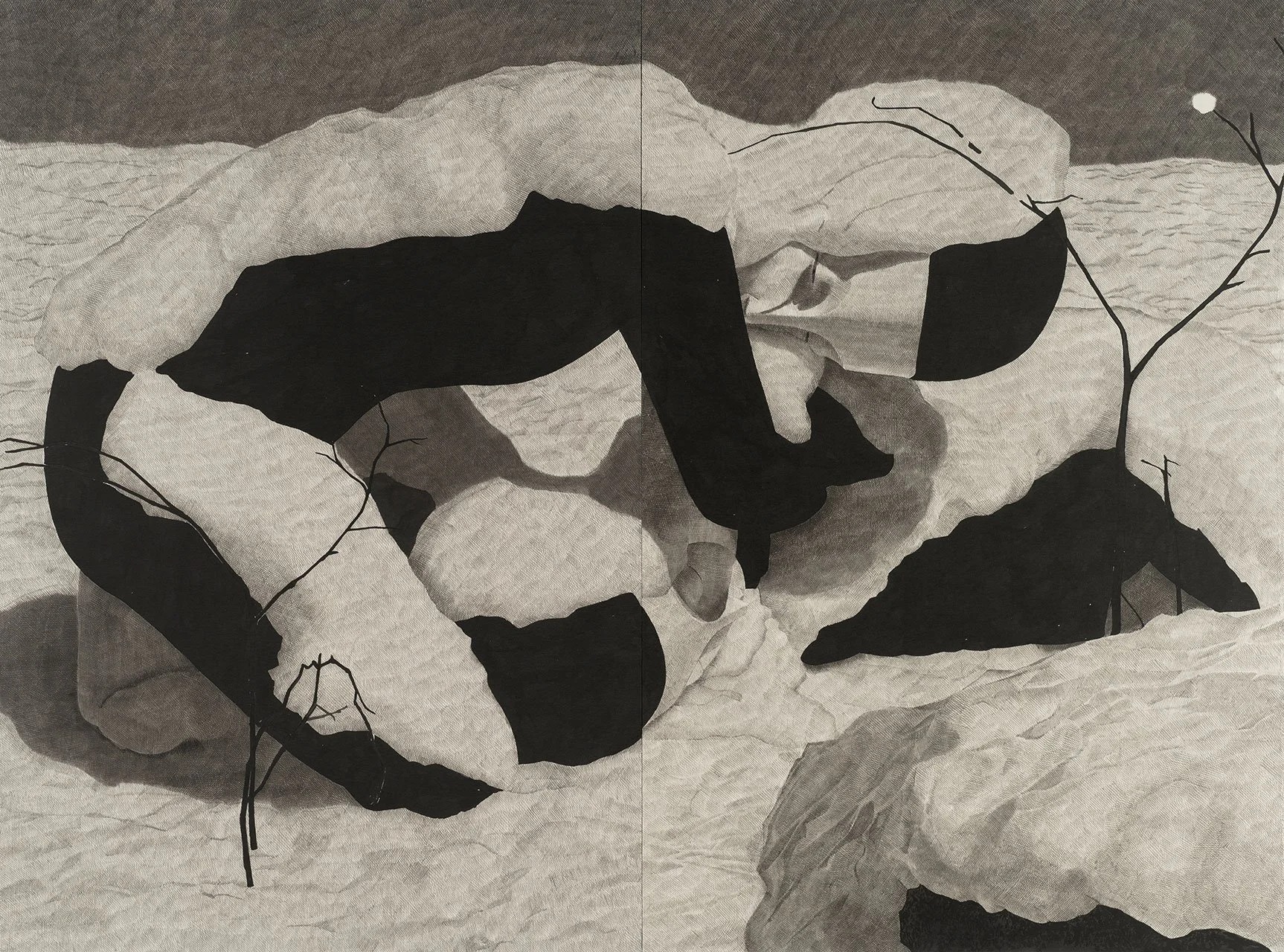
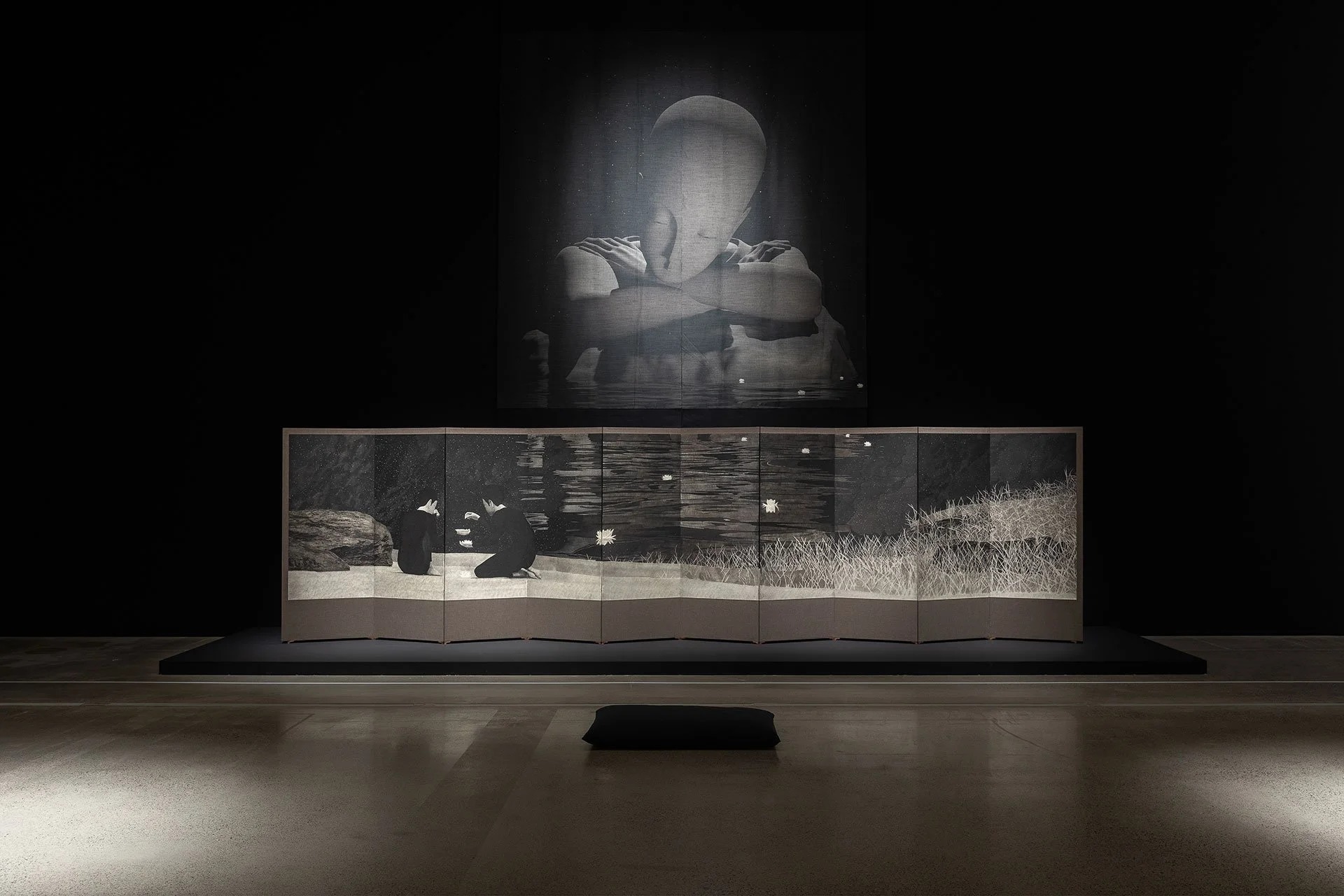
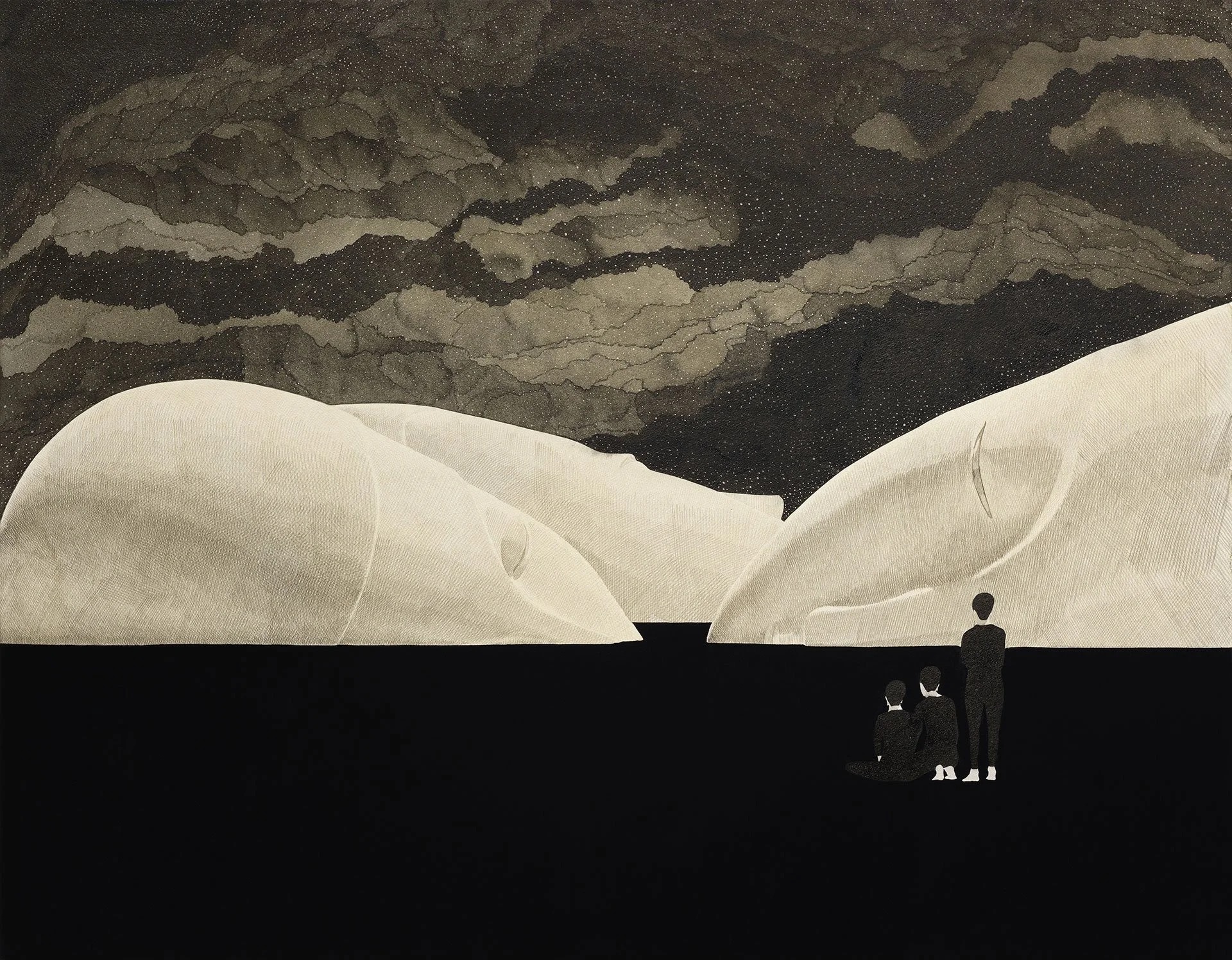
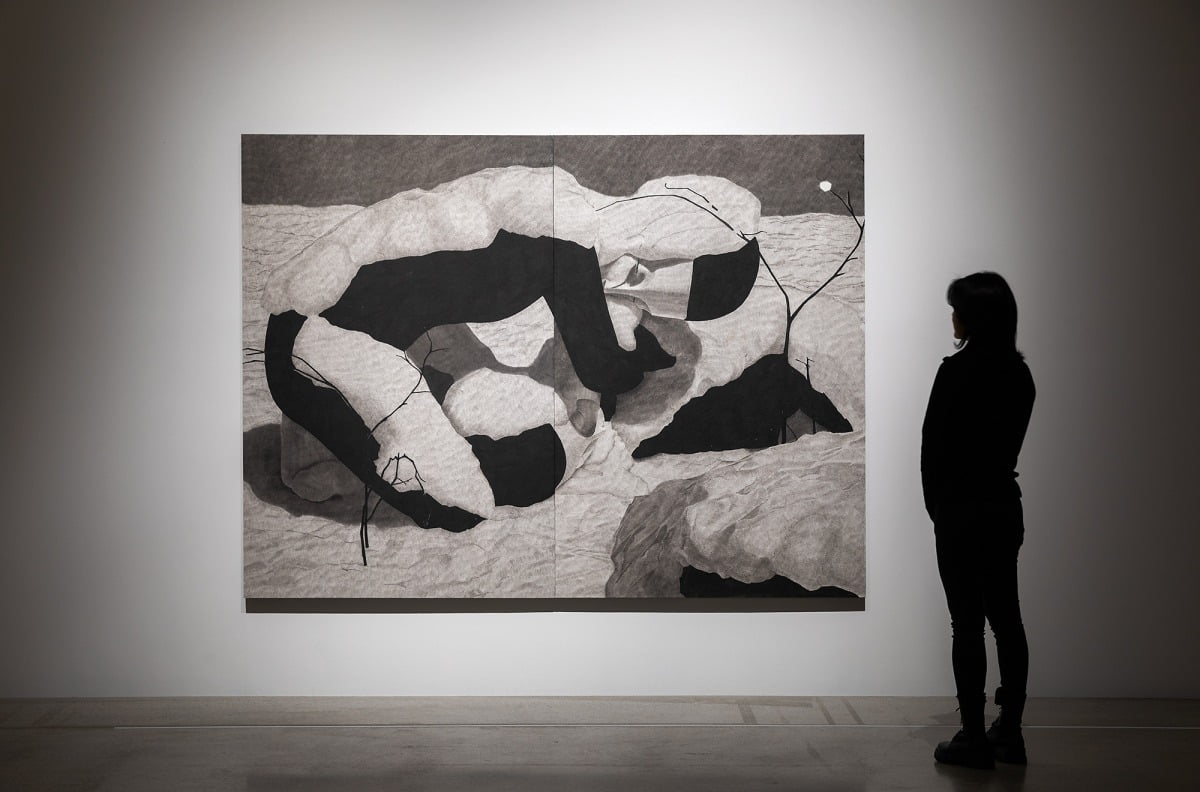
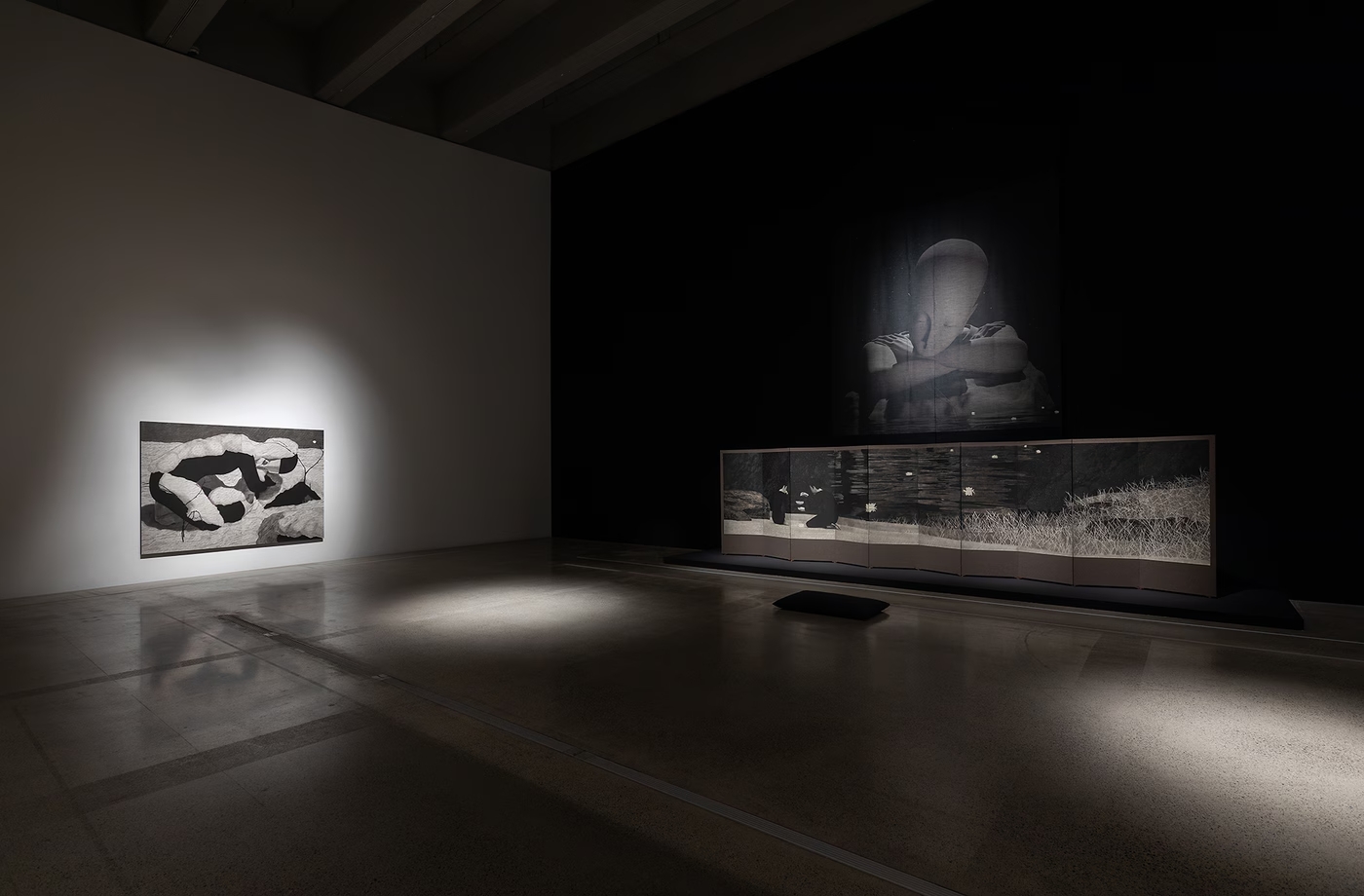
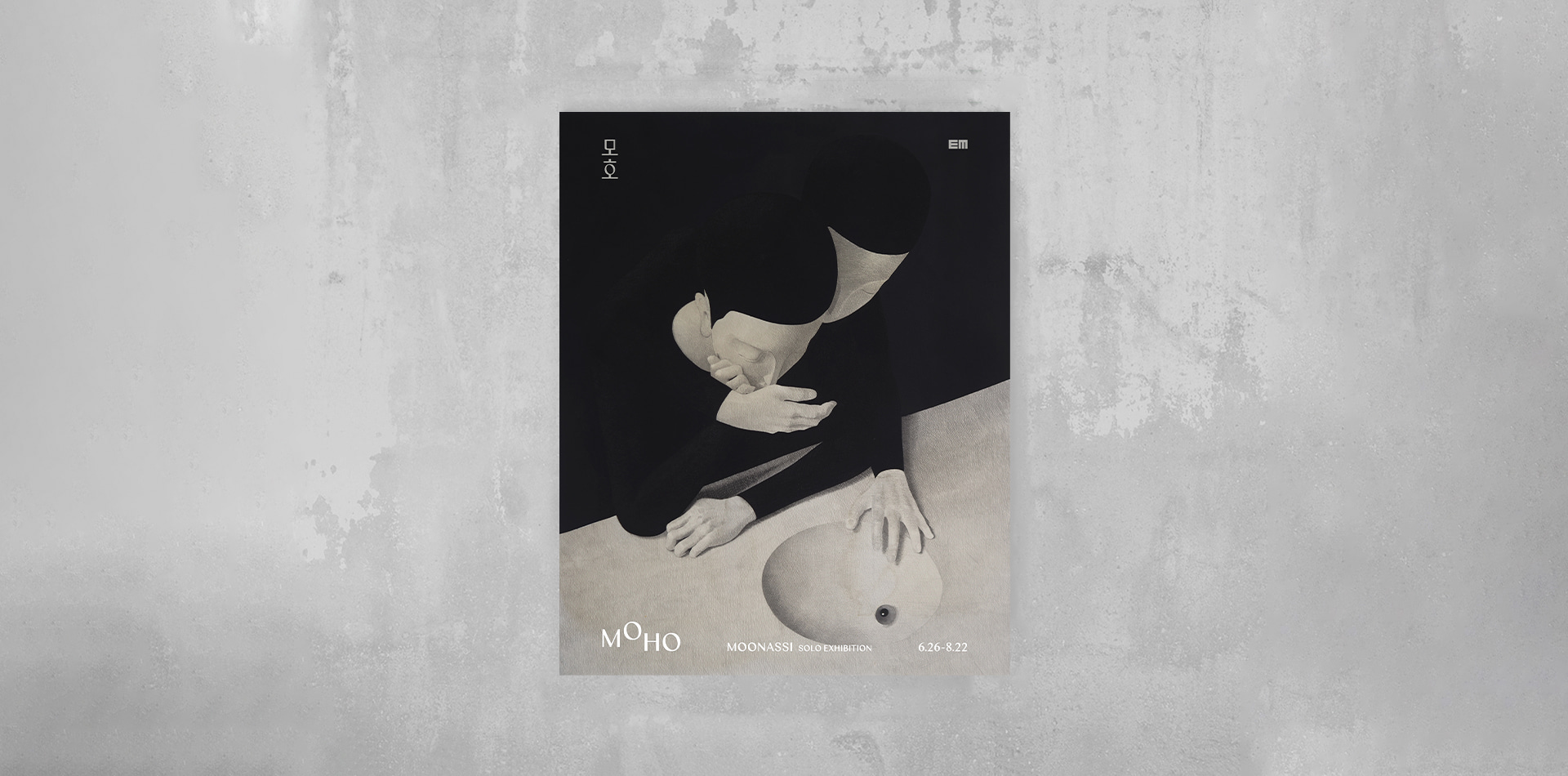
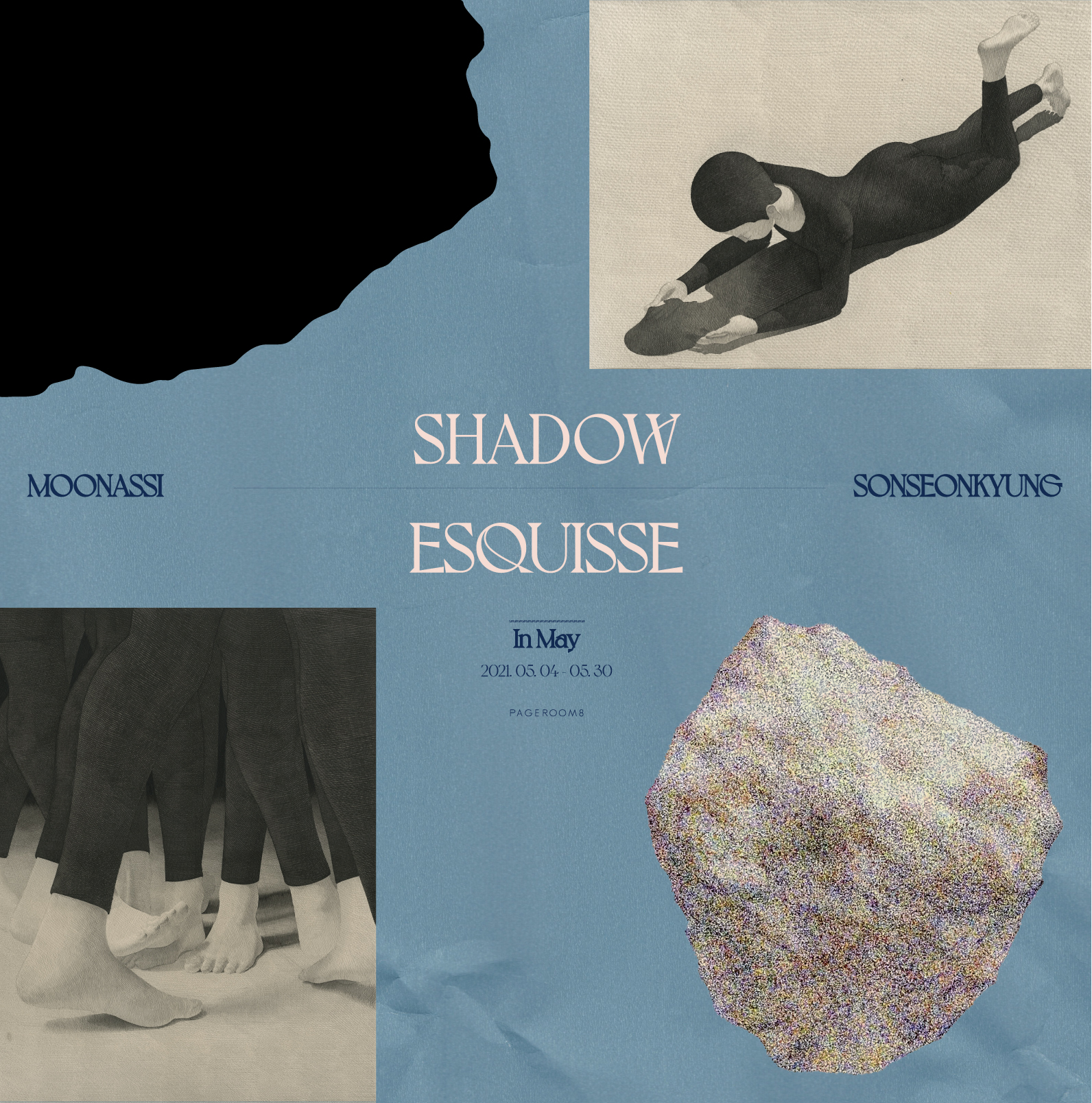
Within this continuity, the physical form of the work has gradually expanded. His earlier drawings compressed figures and relationships onto relatively small sheets of paper using pen, marker, and ink, while recent works have developed into large-scale paintings in ink and acrylic on hanji.
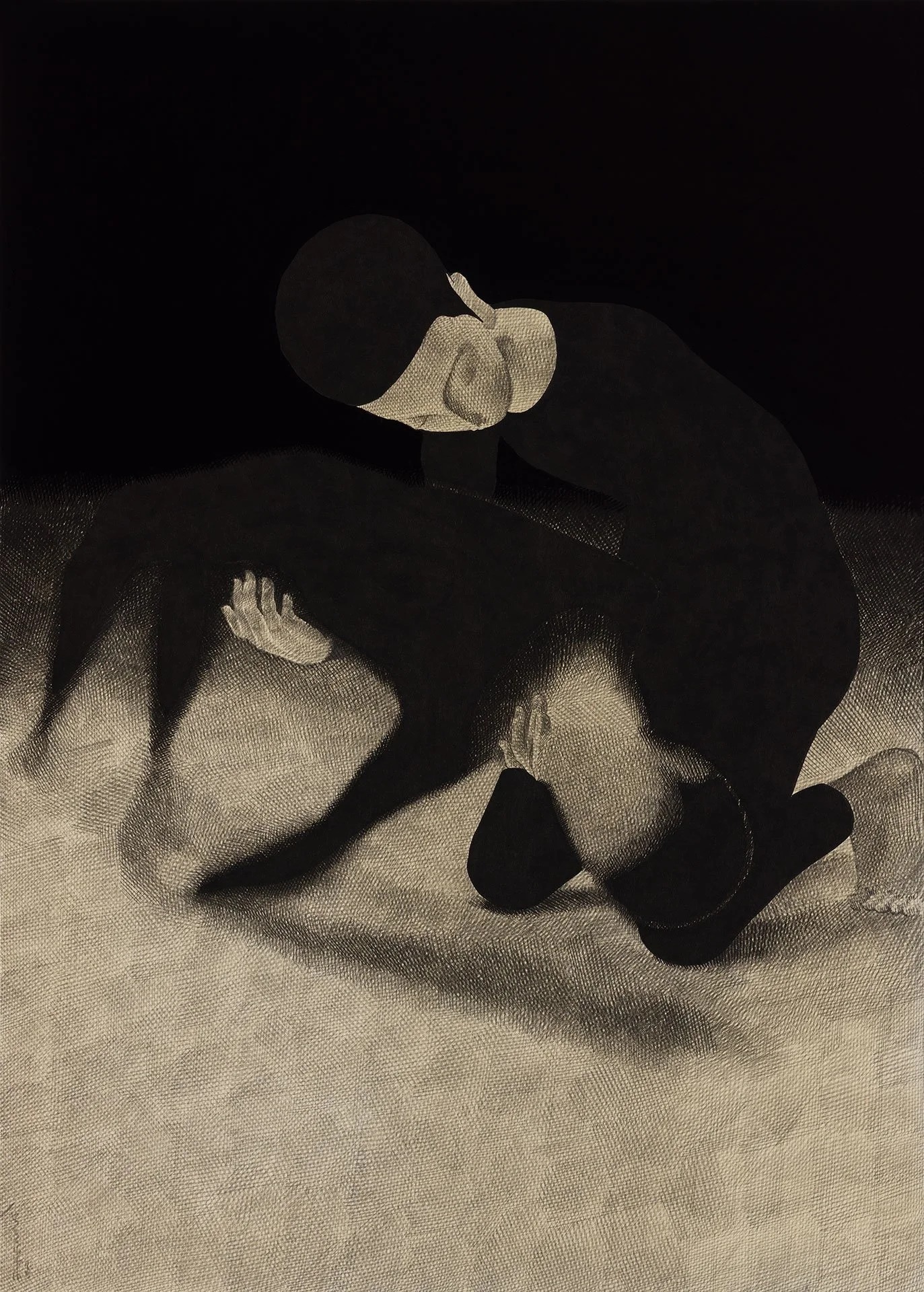
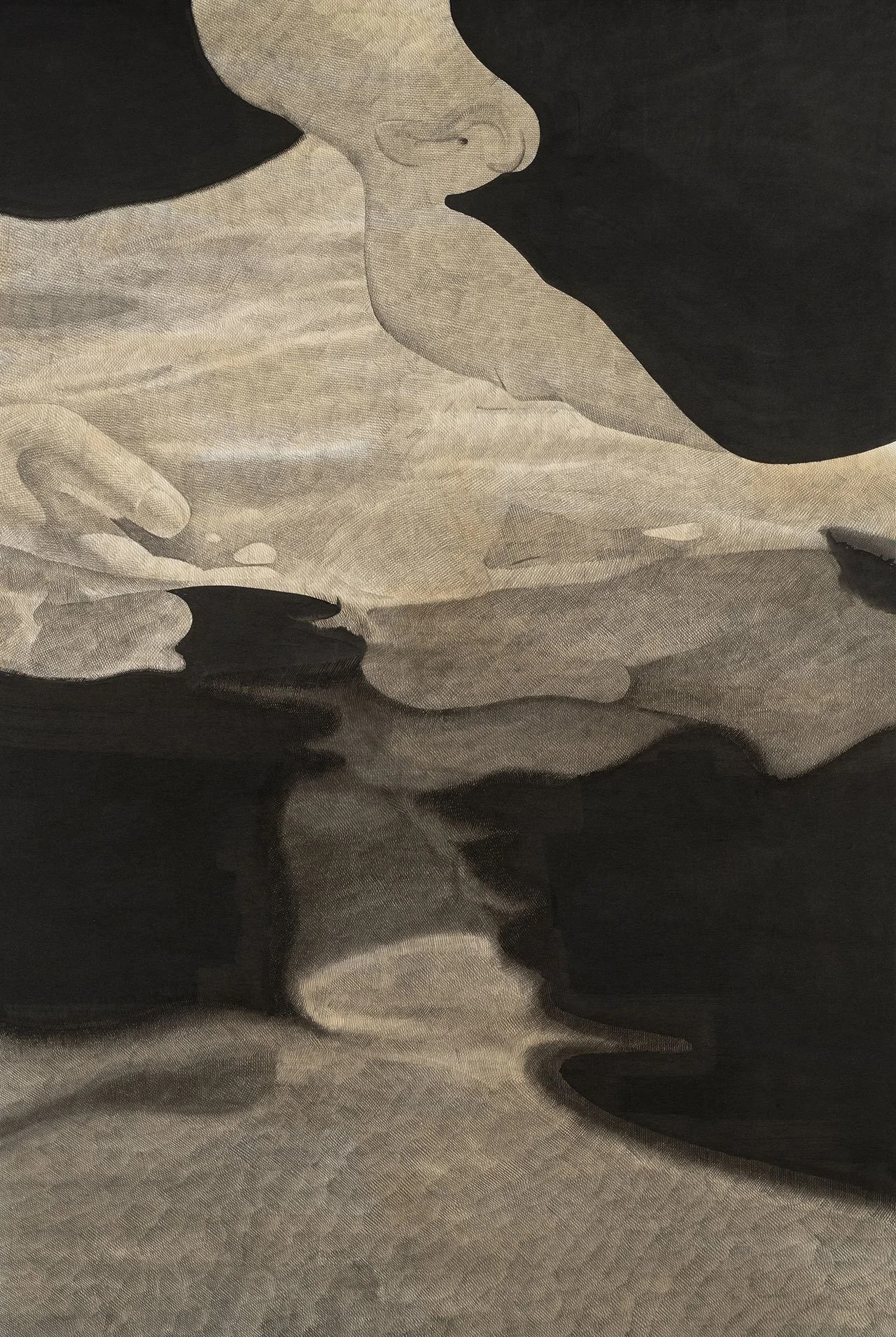
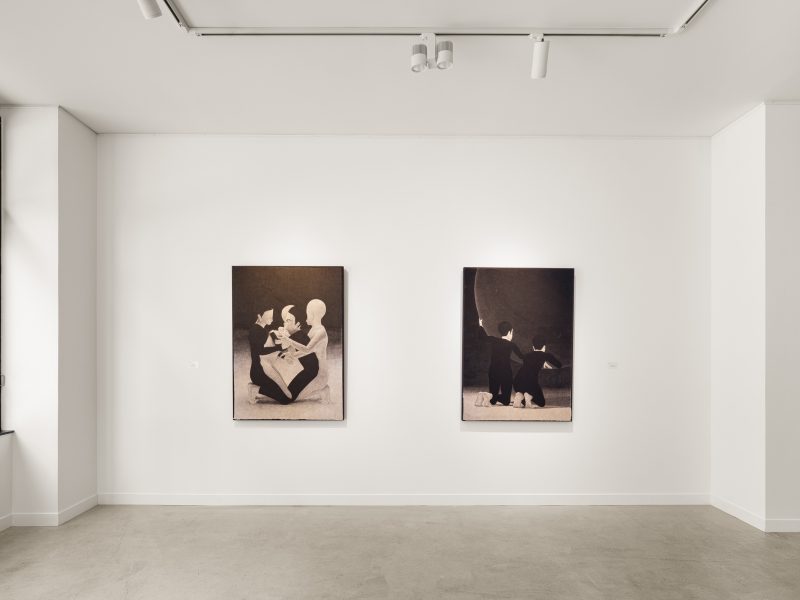
The number of figures and the spatial depth of the compositions have increased, and dark backgrounds have opened into environments resembling lakes, caves, stones, and snow-covered landscapes. Despite shifts in scale and exhibition format, his restrained palette, accumulated lines, and ambiguous bodily gestures remain consistent, creating a clear connection between the early drawings and recent paintings.
The most notable development in his recent work concerns the emotional direction of his approach to relationships. Where earlier works explored solitude and the freedom maintained by drawing boundaries between the self and others, recent paintings attend to the fear and liberation that emerge when those boundaries loosen, as well as the possibility of leaning on and caring for another person.
This development does not abandon his earlier questions; it deepens an inquiry sustained over many years. By retaining a recognizable visual identity while renewing its meanings through personal experience and changing relationships, Moonassi has constructed an enduring practice grounded in repetition, variation, and continual self-revision.



.jpg)