Sleepless Days - K-ARTIST

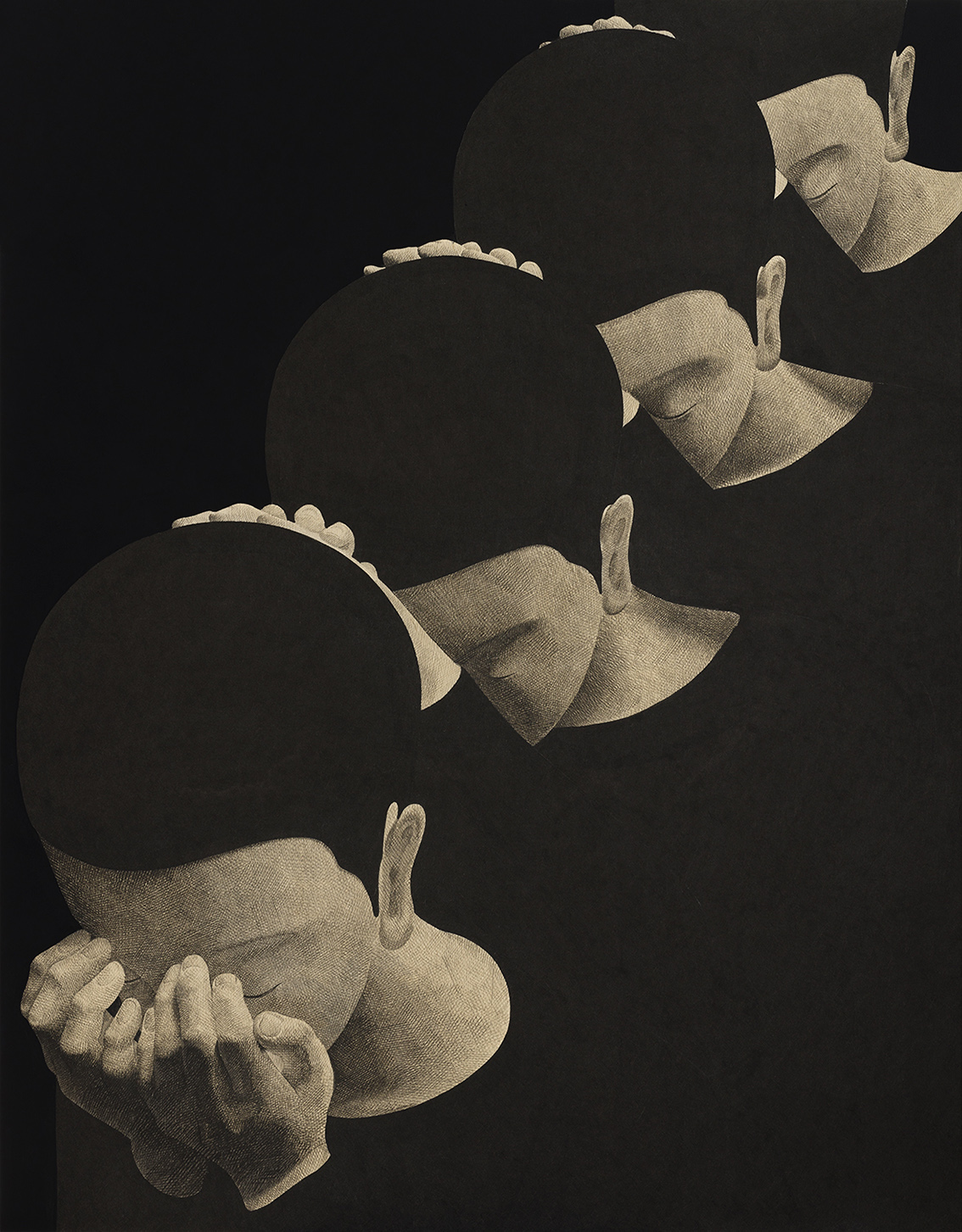
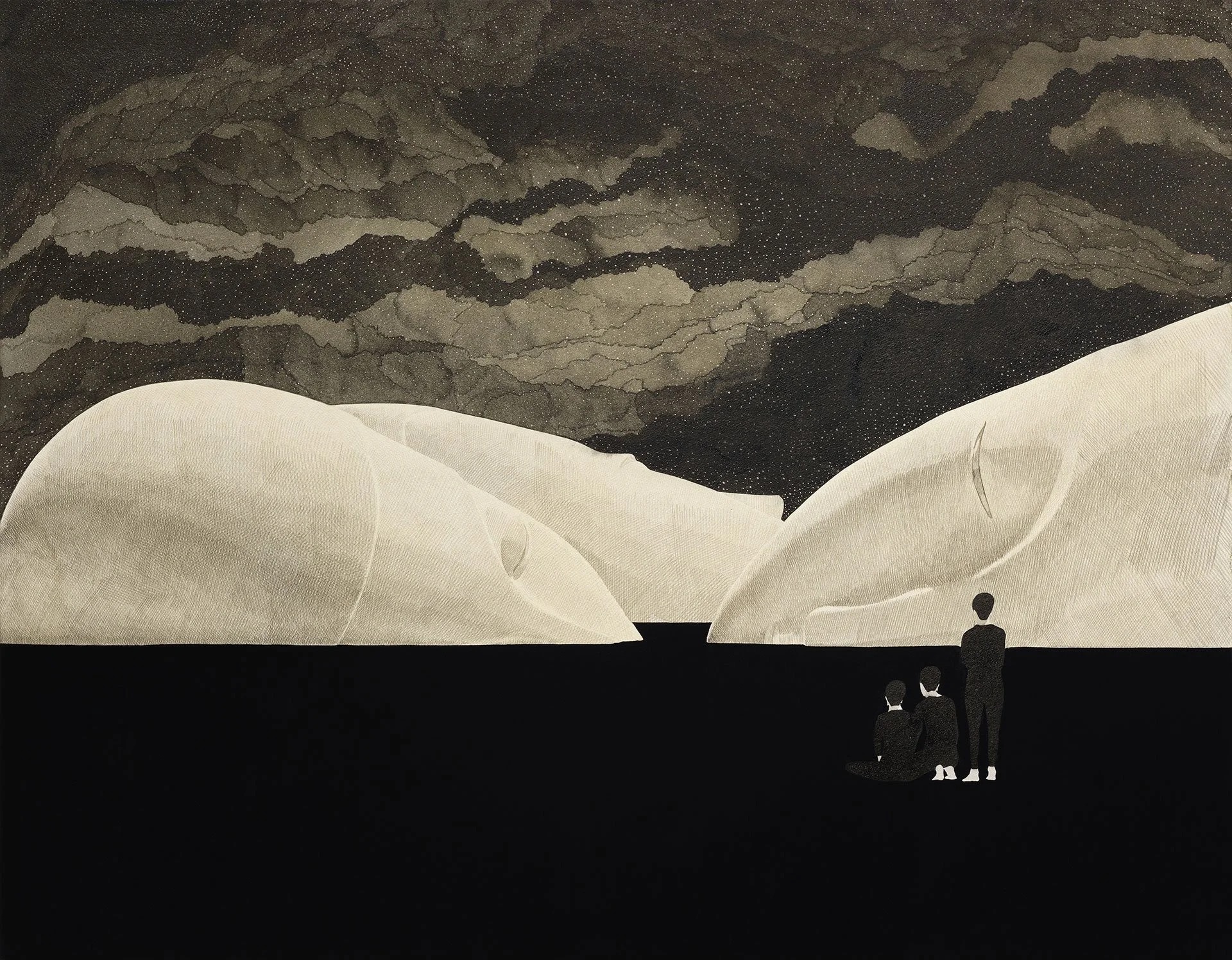
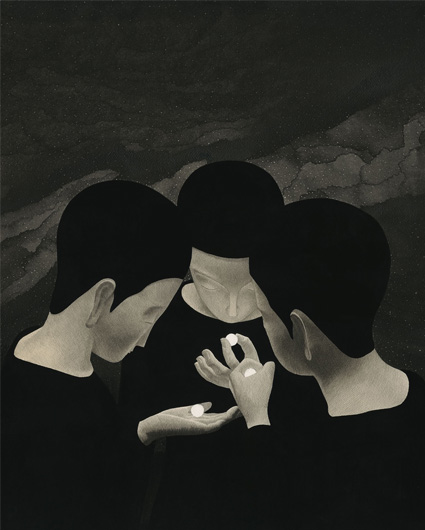
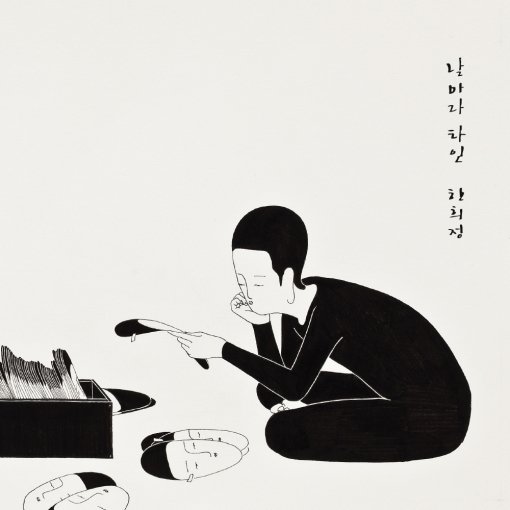
Sleepless Days

2009
Pigment liner and marker on paper
42 x 29.7 cm
About The Work

Moonassi’s practice begins with a tension between the desire to grasp the self and the desire to escape it. The artist’s name combines the Buddhist concept of *anatta* (non-self) with the honorific *ssi*, reflecting an intention to regard oneself as an other. Yet over time, Moonassi came to recognize the impossibility of completely erasing the self from any narrative, instead asking whether the individual “I” might gradually fade as one’s relationships with the world continue to expand.

Rather than seeking a fixed identity, Moonassi’s exploration of the self centers on observing multiple selves that continually emerge, shift, and dissolve through relationships. In this framework, the other is not an independent being positioned opposite the self, but a mirror through which one comes to recognize oneself and a force that transforms one’s inner world. Relationships are thus understood not as matters of possession or unity, but as unstable points of contact where differences are sustained even as mutual influence takes place.

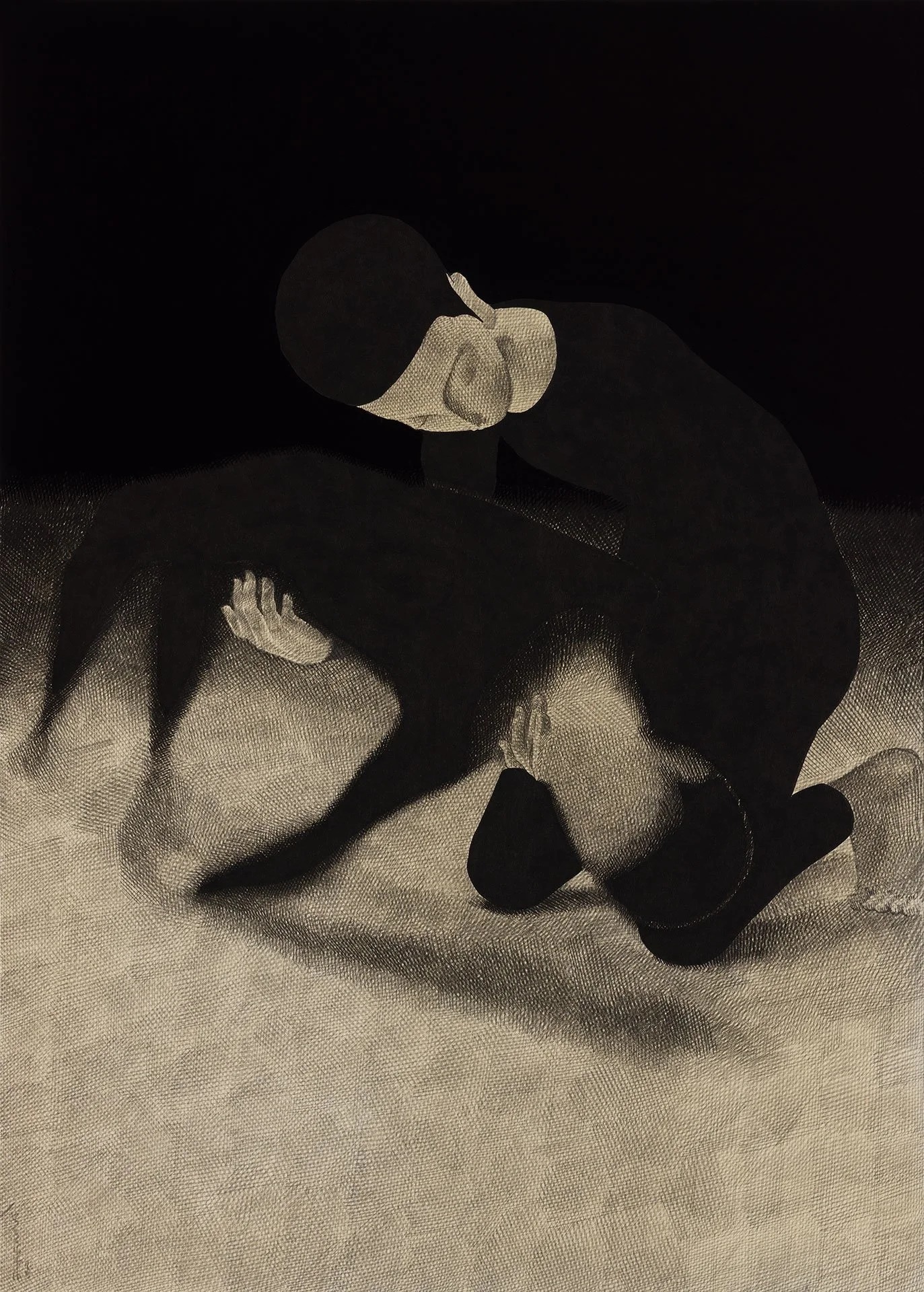
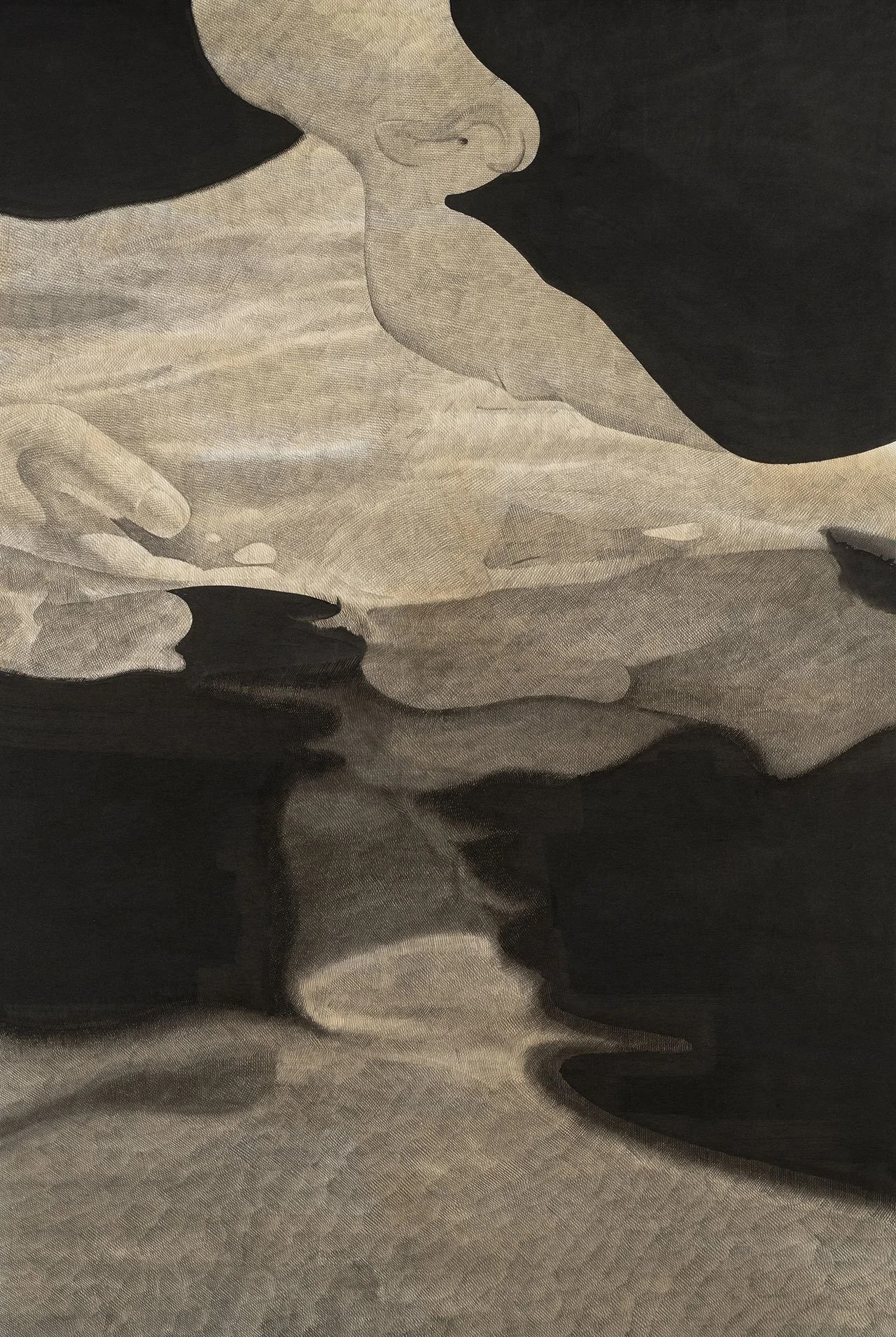
Working primarily with hanji paper and ink, Moonassi incorporates acrylic paint and ink washes to orchestrate the density and texture of monochromatic compositions. Deep, uniform fields of black sharply delineate forms and generate visual tension, while diluted ink spreads and permeates the paper, leaving traces that resist prediction. The interplay between clear boundaries and diffuse expansion reveals both moments when emotions become palpable and states that remain beyond verbal definition.

Through these works, Moonassi approaches emotion not as something to be resolved or clearly defined, but as a condition to inhabit and observe in motion. Like waves, emotions seep into others and return transformed; anxiety and comfort, affection and fear persist by continually changing shape. The empathy the artist seeks is not the communication of a singular interpretation.

Rather, when viewers recognize their own experiences in the relationships and figures depicted on the surface, what begins as a deeply personal inner world expands into a shared emotional space connecting different lives.

Solo Exhibitions (Brief)

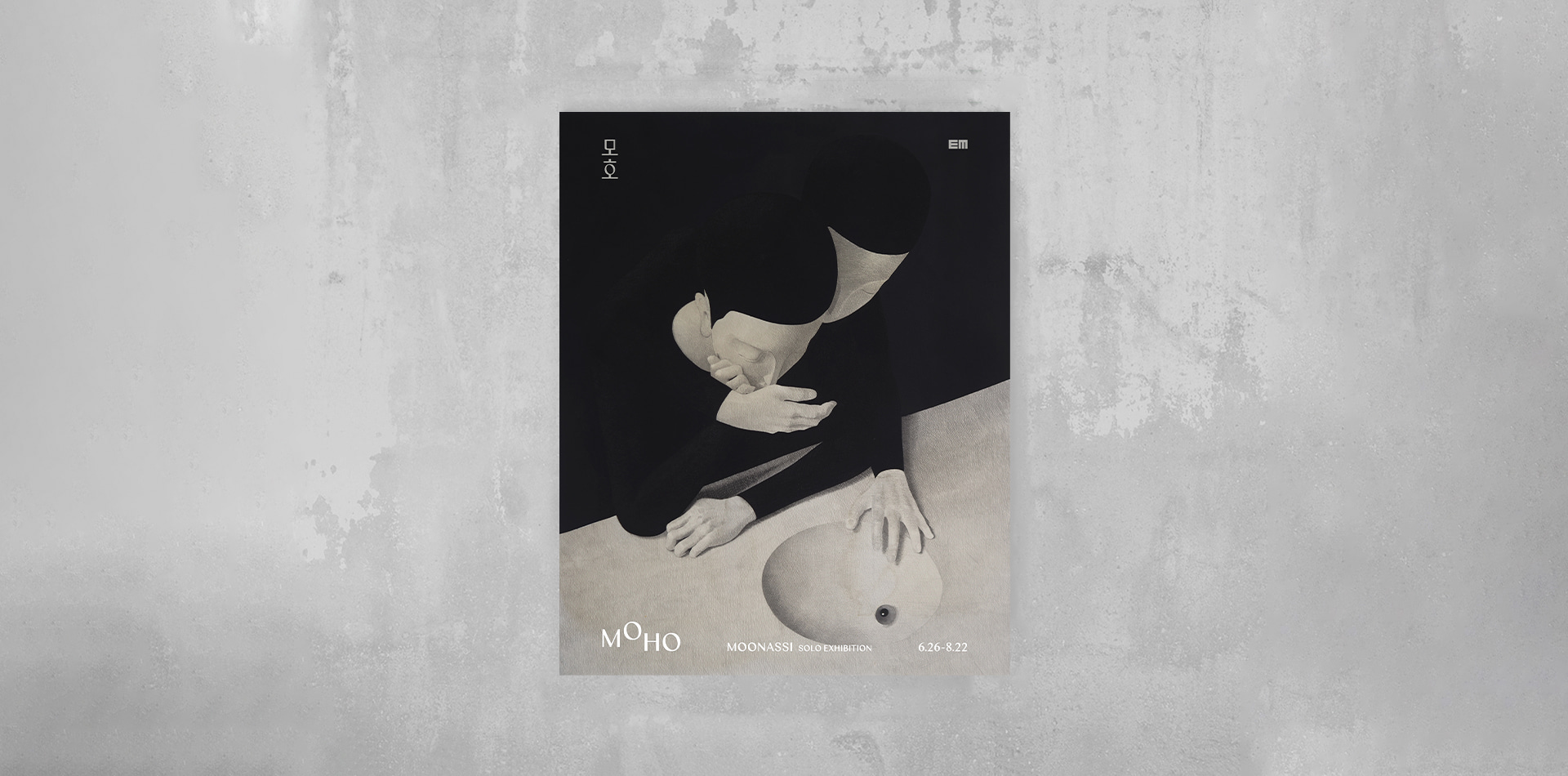
Moonassi has held solo exhibitions at Brain Factory Gallery in 2010, Daelim Museum D Project Space in 2015, K+ Art Space in Singapore in 2017, Art Projects Gallery in Hong Kong in 2018, the Center of Contemporary Art Busan in 2020, Everyday Mooonday in 2021 and 2022, Gallery Ascend in Hong Kong in 2022, and Galerie Vazieux in Paris in 2024.

Group Exhibitions (Brief)

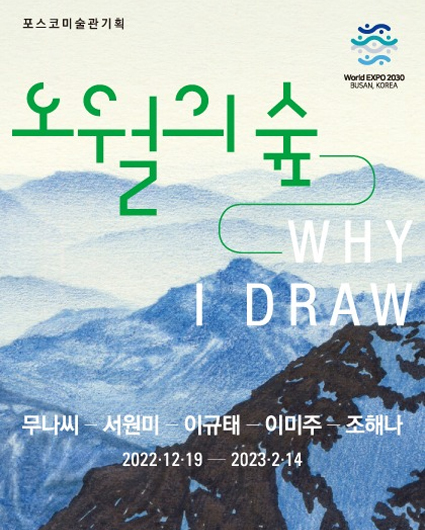
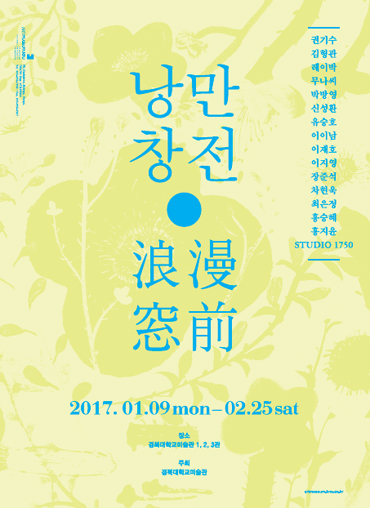
Moonassi has participated in group exhibitions at Gallery Jungmiso in 2009, the Museum of American Illustration in New York in 2014, 24b Galerie in Paris in 2015, Lateral Artspace in Romania and Spoke Art in New York in 2017, Espace Commines in Paris and the Taipei World Trade Center in 2018, D Museum in 2019, and Seoul Museum and POSCO Art Museum in 2022.

Awards (Selected)

Moonassi won the Illustration category at the YCN Professional Awards in 2013 and 2014.

Residencies (Selected)

Moonassi participated in residency programs at Kunstnarhuset Messen in Norway, ComPeung in Thailand, Arts Letters & Numbers in the United States, and CAMAC in France in 2017.

Works of Art

Painting as a Journey Through the Flow of Emotions

Originality & Identity

Moonassi’s practice begins with the tension between the attempt to grasp the self and the desire to escape from it. His artist name combines the Buddhist concept of “no-self” with “ssi,” an honorific used to address another person, reflecting an impulse to regard himself as an other.

As his practice developed, however, he came to recognize the impossibility of a narrative entirely devoid of the self and began asking whether the individual “I” might gradually recede as the world of his relationships expands. His exploration of identity thus observes the multiple selves that continually emerge and fluctuate through relationships rather than confirming a fixed sense of self.

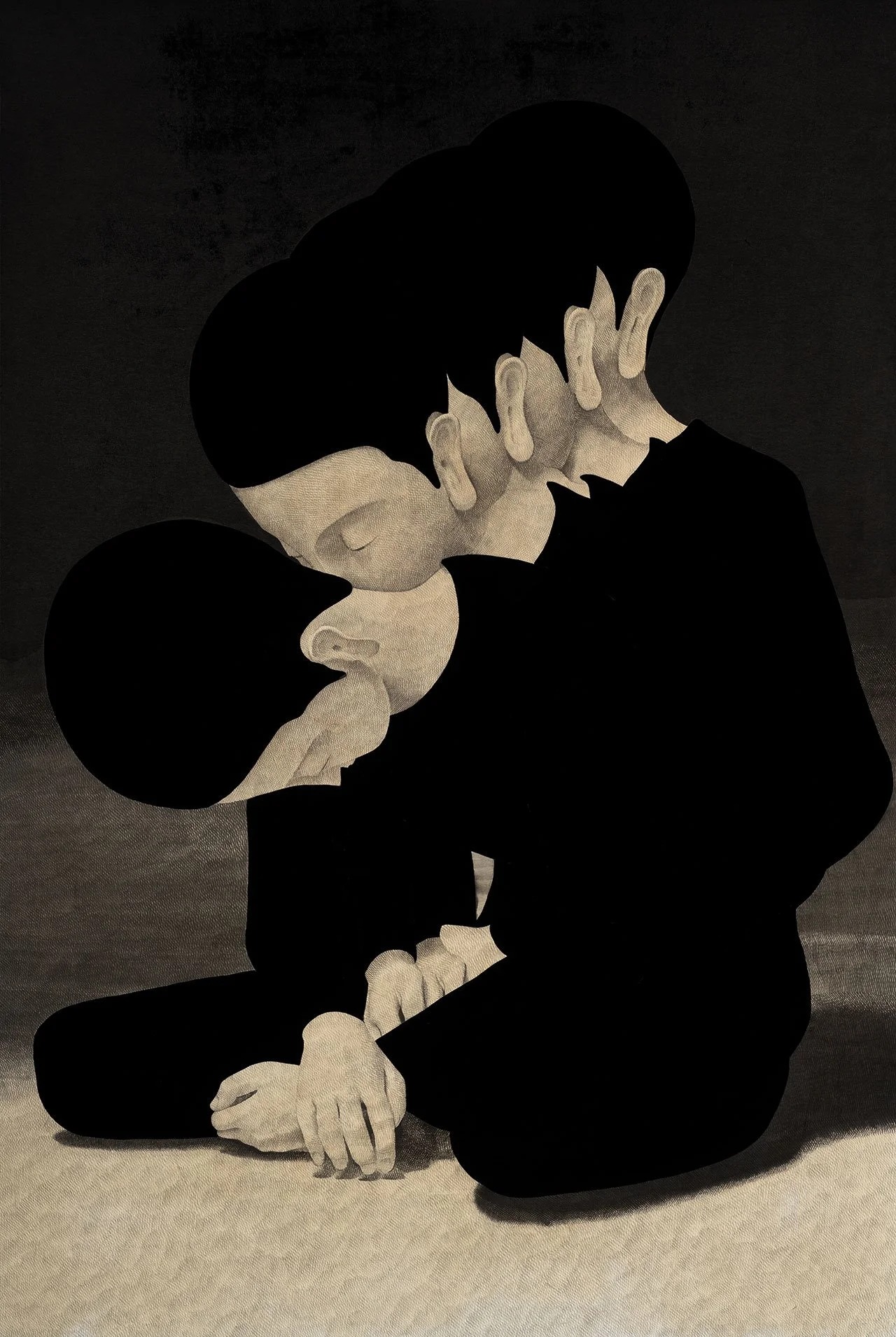
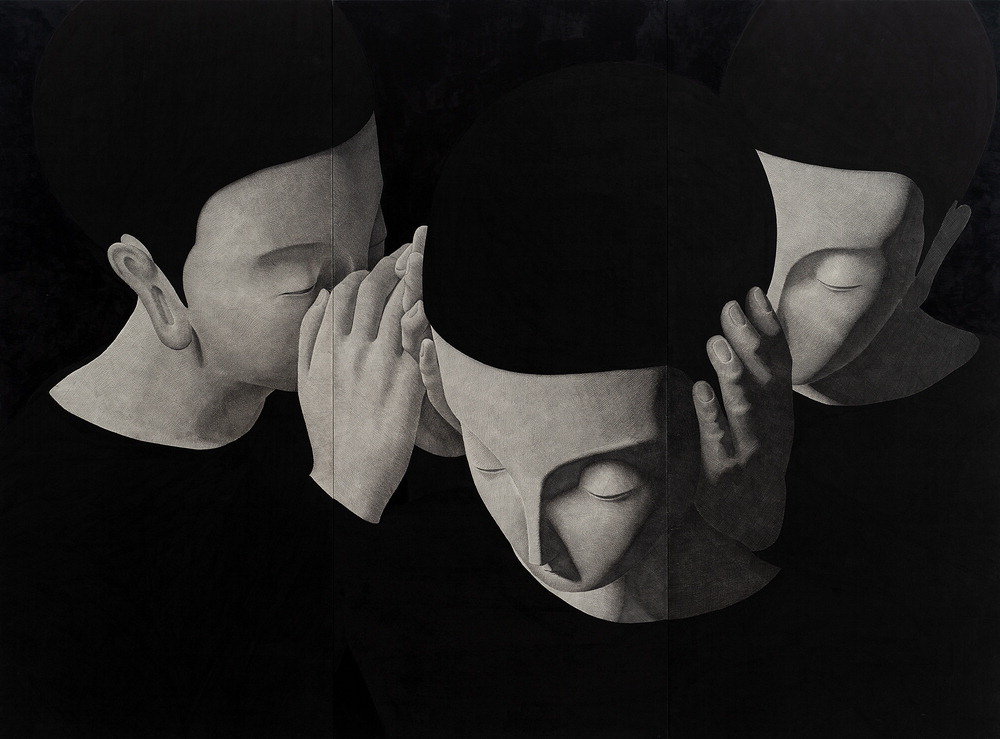
The two or more figures recurring throughout Moonassi’s paintings simultaneously suggest the self and the other, as well as the multiple selves coexisting within a single person. Since the early stages of his practice, he has investigated the boundaries dividing inside and outside, “I” and “you,” and subject and object.

He considers each self formed through an encounter with another person to remain as “another me,” even after the relationship has ended. The other therefore functions as both a mirror through which the self recognizes itself and a force that transforms the inner world, placing relationships on an unstable point of contact where differences persist and mutual influence continues.

The significance of boundaries in Moonassi’s work has changed over time. His earlier paintings frequently drew distinct lines between the self and others, associating solitude with personal freedom. Recent works explore both the fear and liberation that arise when these divisions become blurred or disappear.

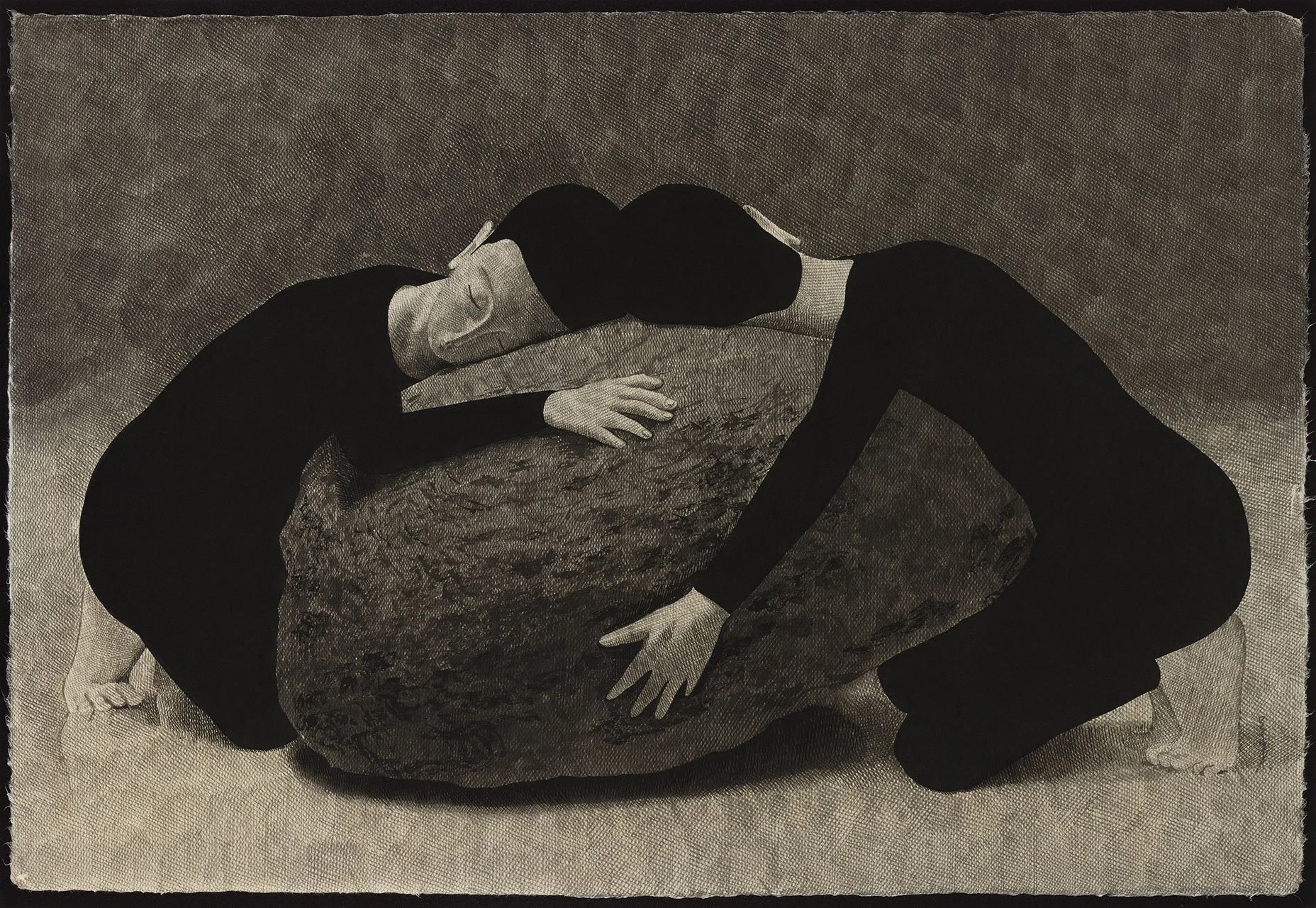
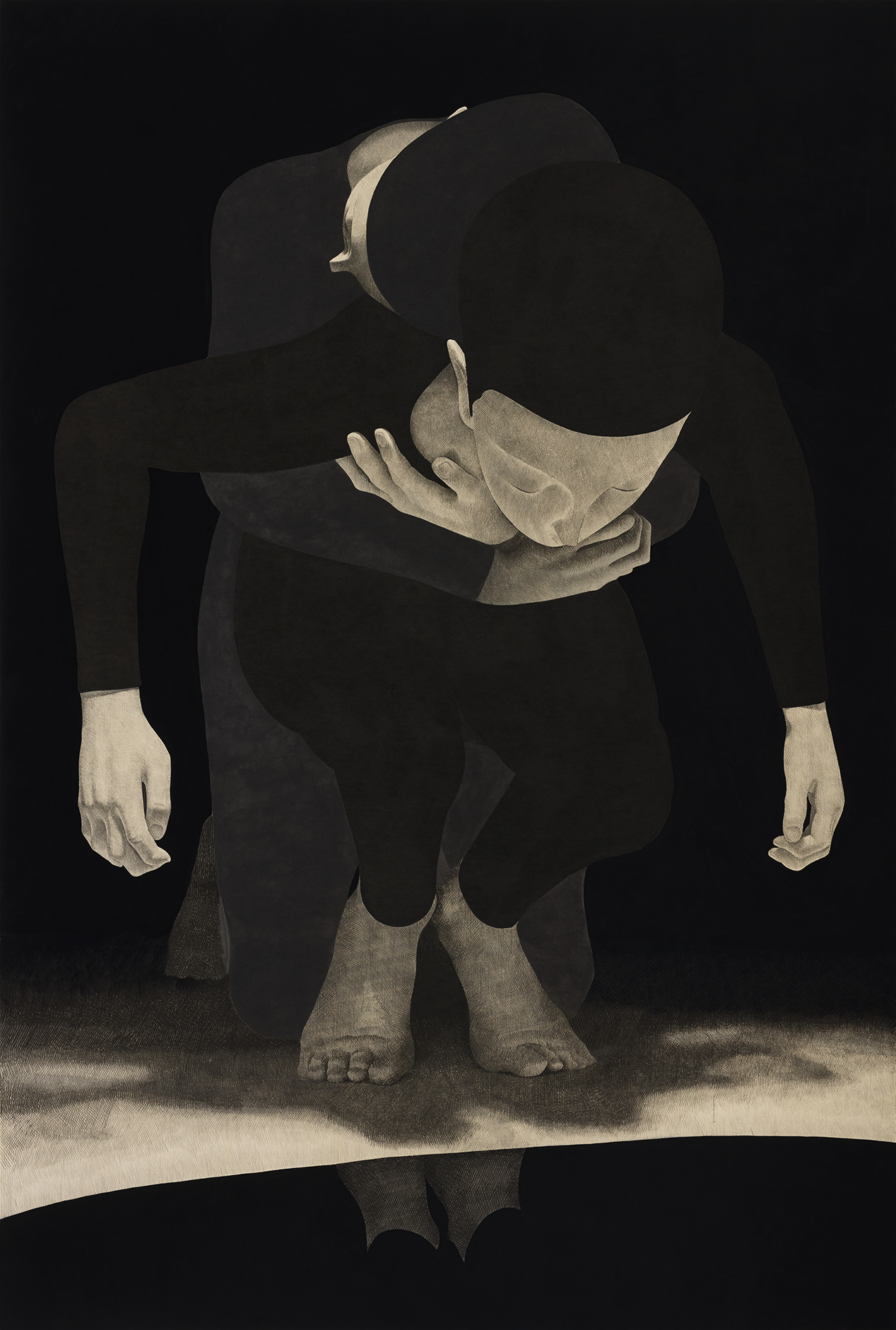
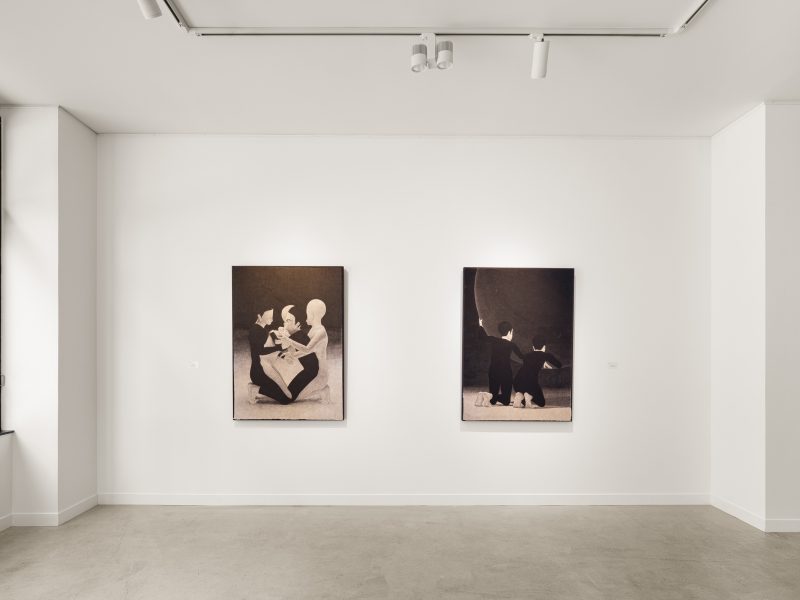
Following his marriage, scenes of two figures leaning upon, embracing, or balancing one another have also become increasingly prominent. Relationships emerge as a possible threat to personal autonomy as well as a catalyst that allows an isolated mind to flow again, locating freedom within a loosening of boundaries as well as within solitude.

In his recent practice, Moonassi treats emotions as experiences to inhabit and observe rather than problems to resolve or define. The mind seeps into others and returns like a ripple, while anxiety and consolation, affection and fear persist by changing form rather than remaining separate. The empathy he seeks through painting likewise does not depend on communicating a predetermined interpretation.

When viewers recognize that they too have experienced the emotions suggested by his figures and their relationships, the artist’s intimate inner world opens into a shared emotional field connecting different lives.

Style & Contents

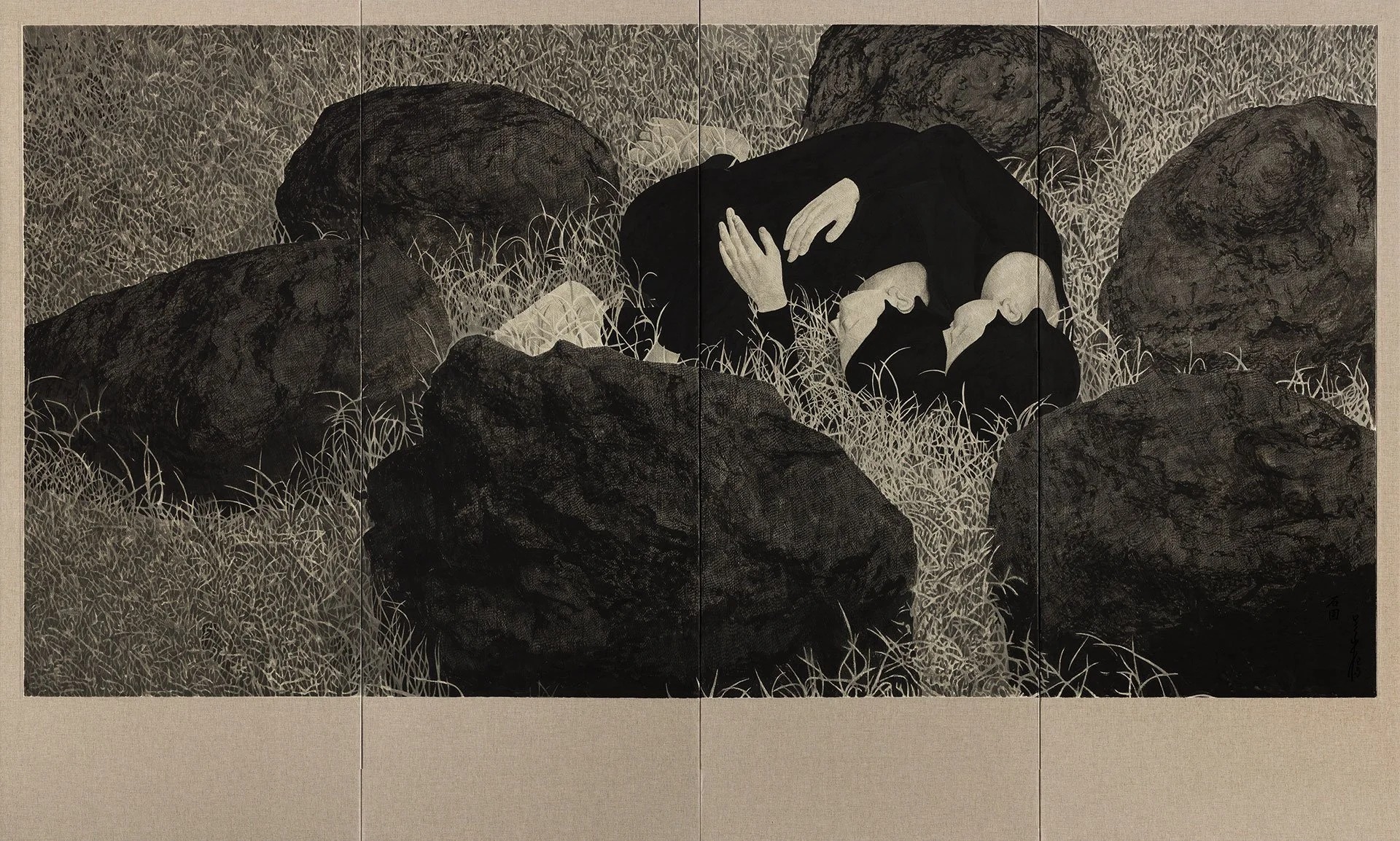
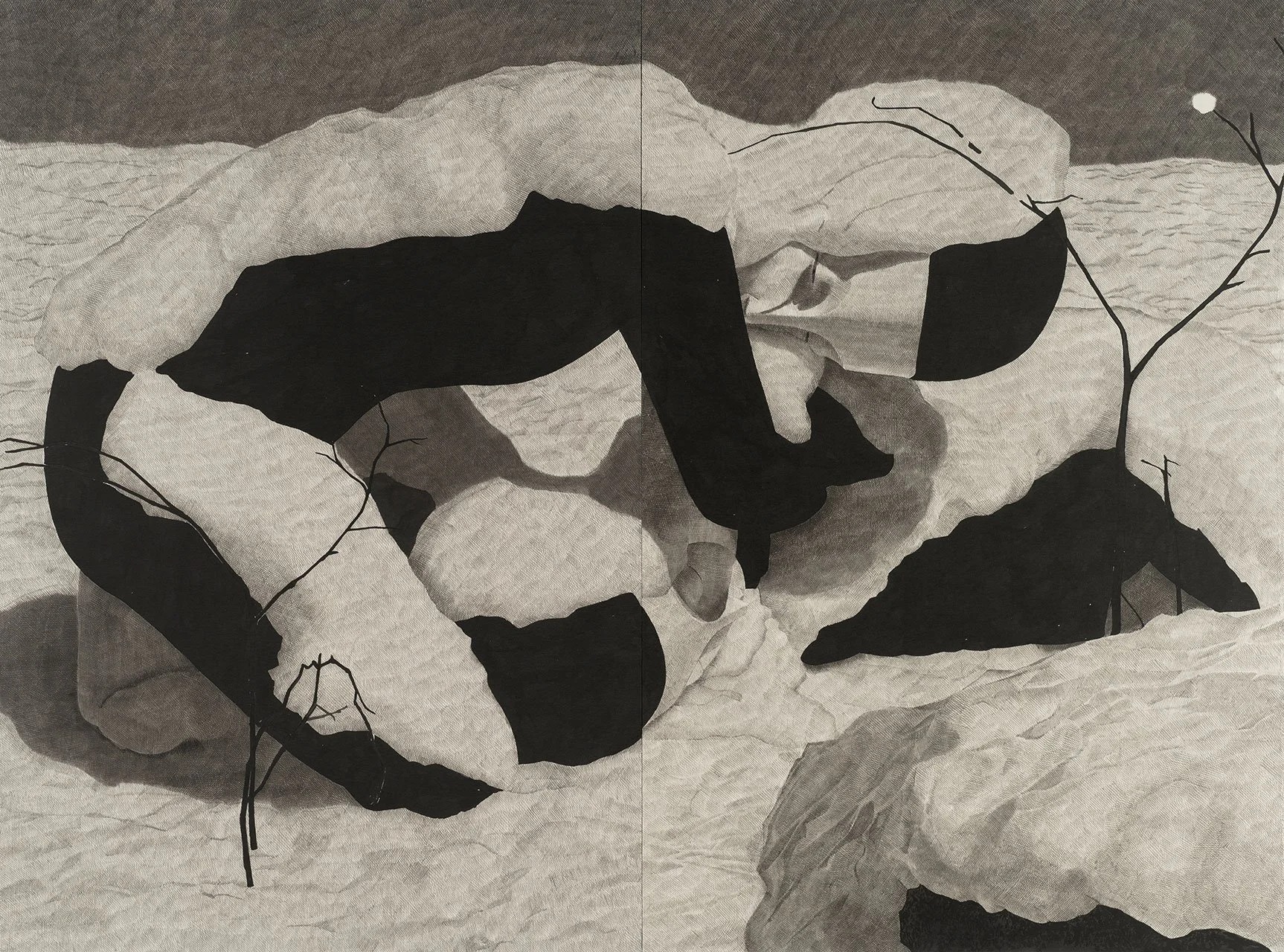
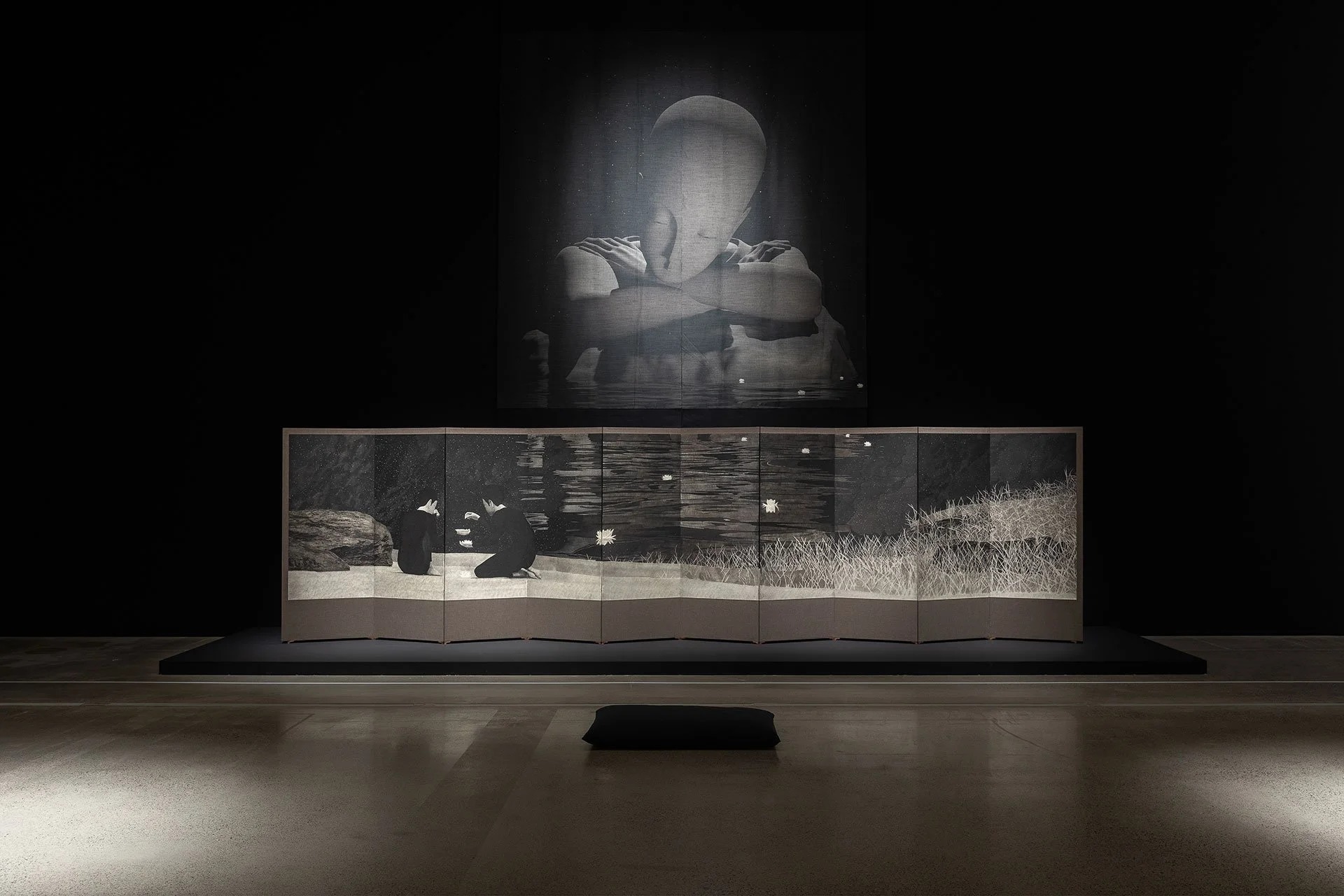
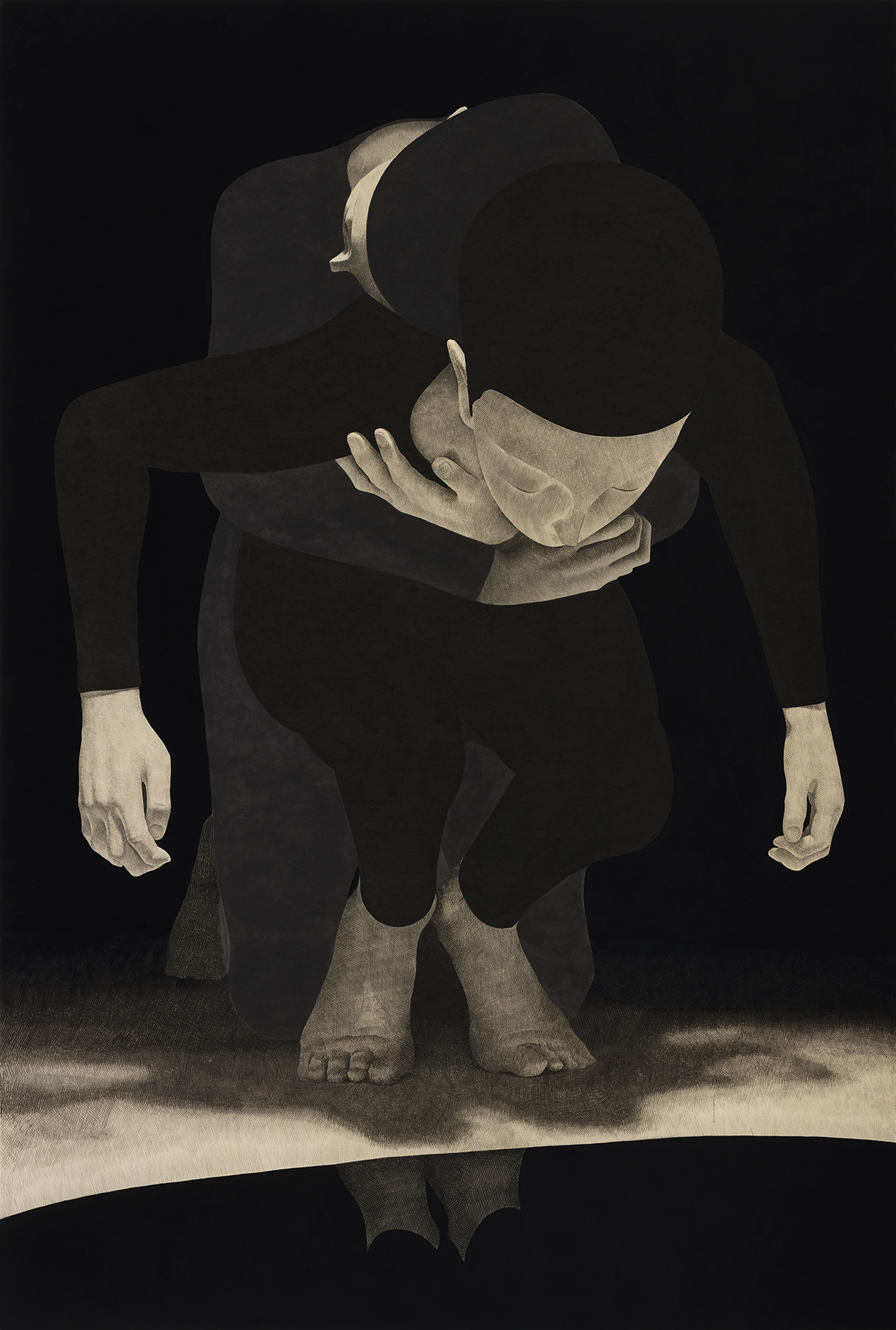
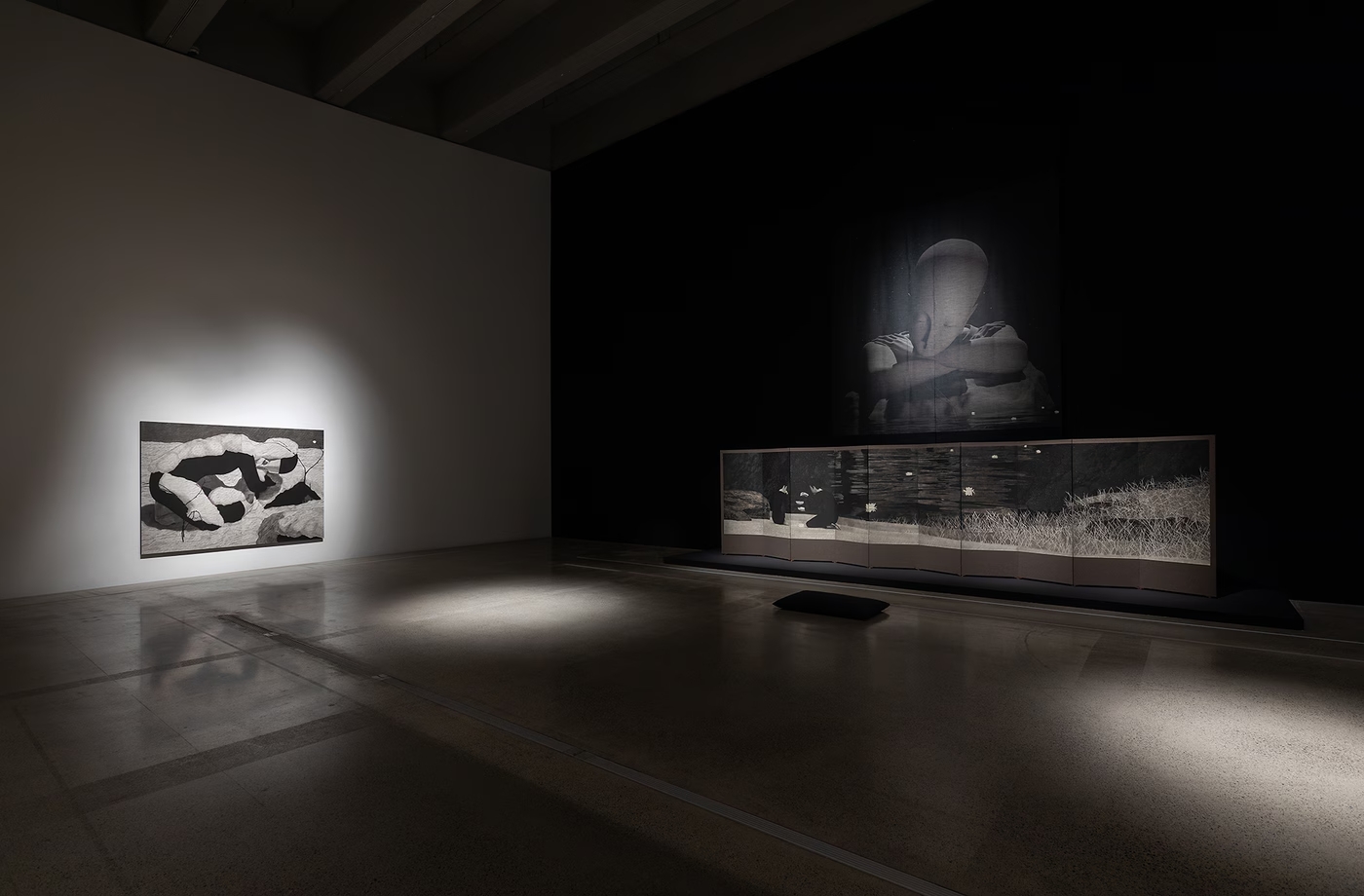
Moonassi works primarily with ink on hanji, incorporating acrylic paint and ink to modulate the density and texture of his monochromatic surfaces. Deep, uniform fields of black separate forms with visual clarity and tension, while diluted ink spreads unpredictably through the paper.

The intersection of sharp divisions and ambiguous diffusion conveys both moments when emotion becomes distinctly perceptible and states that resist verbal definition. His restricted palette and materials concentrate attention on the extensive expressive range produced through tonal variation, seepage, and accumulation. 

The recurring figures in his work are defined by simplified contours, nearly expressionless faces, and large, elongated ears. Their gazes tend to drift beyond the picture plane or downward into an indeterminate depth, subtly eluding the viewer’s attempt to read their emotions. Their vacant faces and restrained gestures diminish the specificity of individual narratives, leaving room for viewers to project their own emotions and relationships.

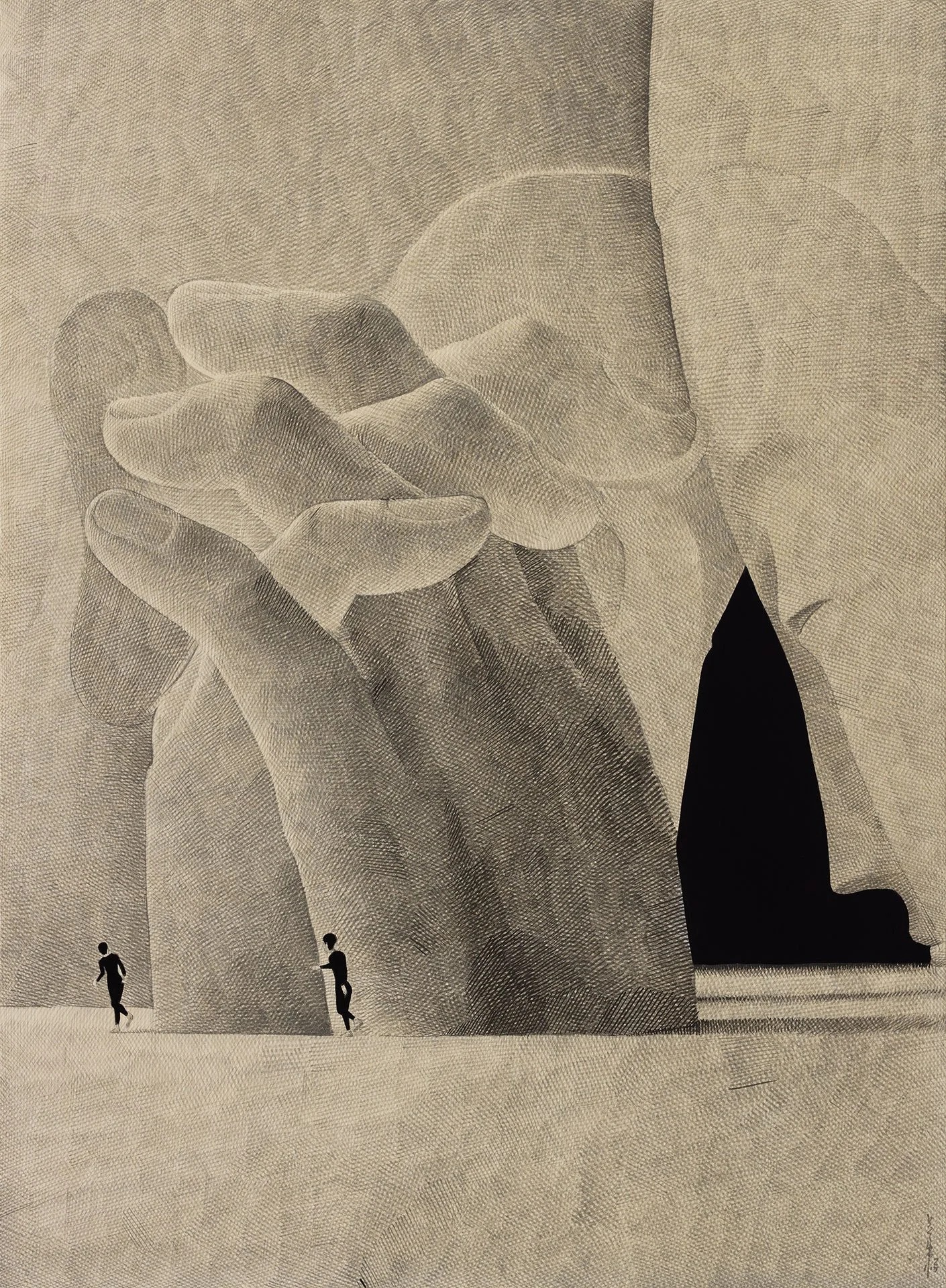
Set against black lakes, deep darkness, and unreal spaces, the figures face or turn away from one another, lean, embrace, and expand from individual bodies into relational structures through repetition and superimposition. 

His compositions translate the qualities of emotion into bodily movement and spatial relationships rather than directly reproducing lived events. Moonassi first clarifies an unfamiliar experience through conversation and writing, then imagines gestures, textures, weights, and directions associated with the emotion.

The resulting image condenses the experience into the distance, posture, contact, and gaze shared between figures. By withholding explicit narration, these scenes avoid imposing a fixed message and allow viewers to construct meaning through their own experiences. 

The delicate lines composing each surface accumulate through prolonged and repetitive labor. Seeking to embed time within the painting, Moonassi builds his images stroke by stroke, approaching repetition as meditation, discipline, and a means of calming the mind. From a distance, the works appear as quiet and refined black forms; upon closer inspection, hundreds or thousands of lines generate their density and texture.

These sustained brushstrokes materially convey the gradual transformation of inner turbulence into ripples and visible forms, making the process of production integral to the content of the work.

Topography & Continuity

Moonassi’s practice has developed across the fields of illustration and painting. He first gained public recognition through concise black-and-white drawings and collaborations spanning brands, publishing, and music, while simultaneously presenting an independent exhibition practice concerned with the relationship between the self and others.

He subsequently expanded the scale and density of his paintings centered on ink and hanji, establishing a visual language that combines the clarity of graphic imagery with the material qualities of brush and ink. His trajectory may therefore be understood less as a linear transition from illustration to painting than as a sustained examination of his imagery across different modes of circulation and viewing. 

The recurring figure, monochromatic surface, and questions surrounding the self, the other, and boundaries have remained central throughout his career. By the mid-2010s, repeated and superimposed images of “I” and “you” were already articulating the difficulties of relationships and the transformations they produce within the self.

He has continued to investigate the emotional ripples generated through human interaction, addressing isolation, anxiety, ambiguity, affection, consolation, and balance through a consistent set of forms and materials. Continuity in his work lies not simply in the repetition of established symbols, but in his use of a familiar visual vocabulary to reconsider changing conditions of life and relationships. 

Within this continuity, the physical form of the work has gradually expanded. His earlier drawings compressed figures and relationships onto relatively small sheets of paper using pen, marker, and ink, while recent works have developed into large-scale paintings in ink and acrylic on hanji.

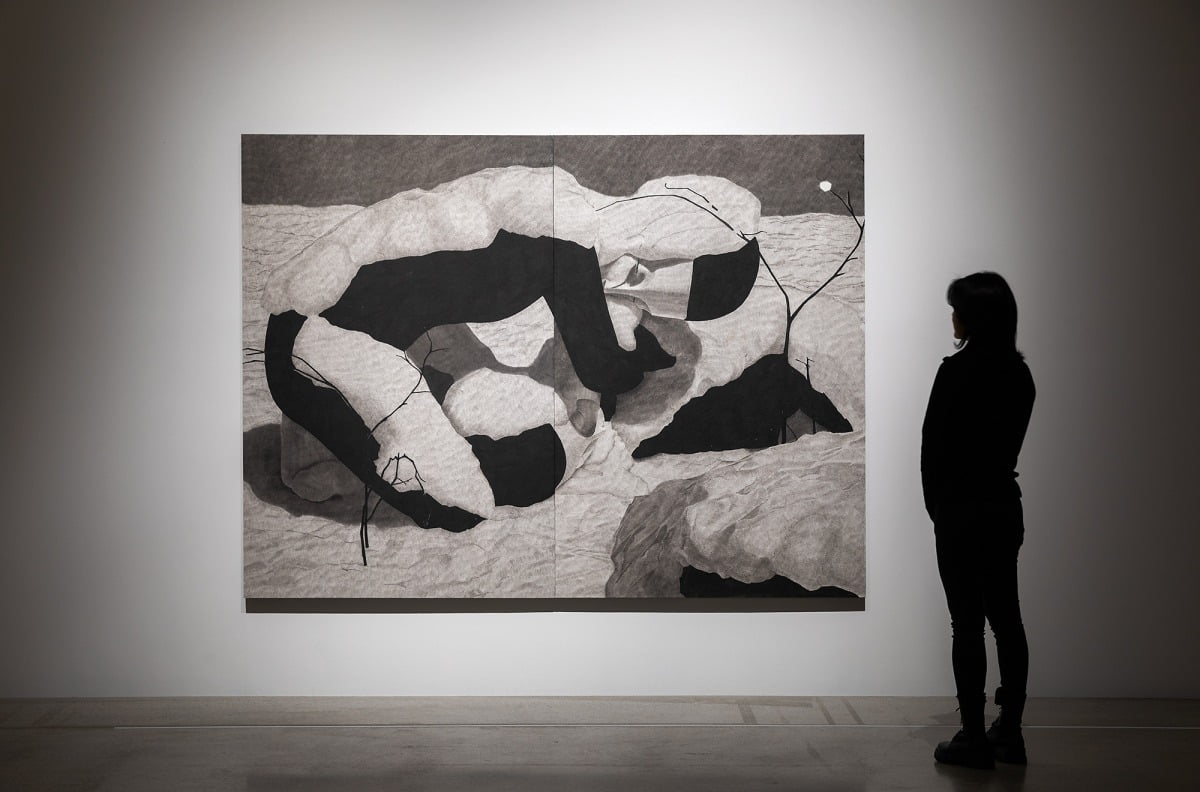
The number of figures and the spatial depth of the compositions have increased, and dark backgrounds have opened into environments resembling lakes, caves, stones, and snow-covered landscapes. Despite shifts in scale and exhibition format, his restrained palette, accumulated lines, and ambiguous bodily gestures remain consistent, creating a clear connection between the early drawings and recent paintings. 

The most notable development in his recent work concerns the emotional direction of his approach to relationships. Where earlier works explored solitude and the freedom maintained by drawing boundaries between the self and others, recent paintings attend to the fear and liberation that emerge when those boundaries loosen, as well as the possibility of leaning on and caring for another person.

This development does not abandon his earlier questions; it deepens an inquiry sustained over many years. By retaining a recognizable visual identity while renewing its meanings through personal experience and changing relationships, Moonassi has constructed an enduring practice grounded in repetition, variation, and continual self-revision.


Works of Art

Painting as a Journey Through the Flow of Emotions

Articles

Exhibitions

Activities