Painted Painting 1 - K-ARTIST

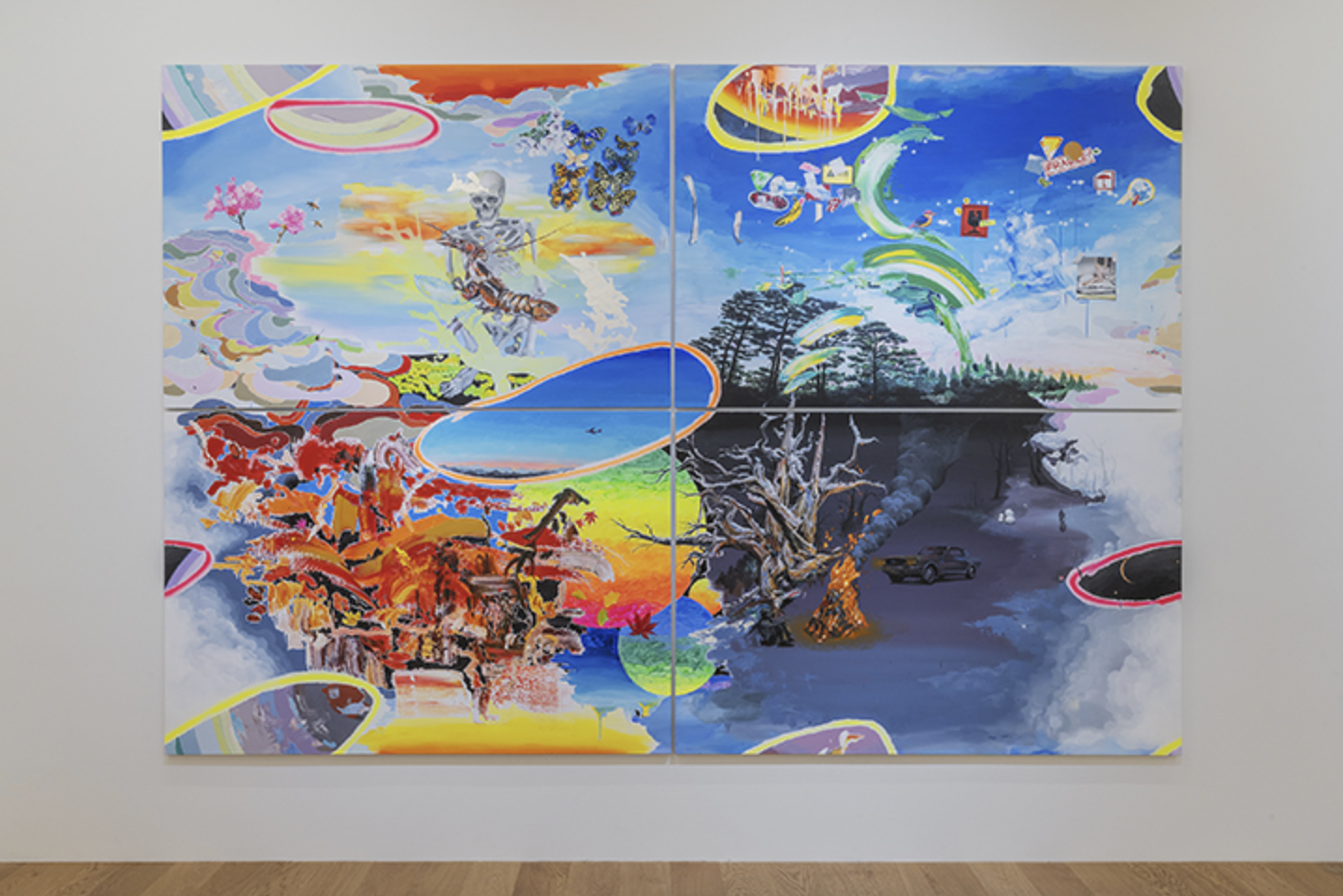
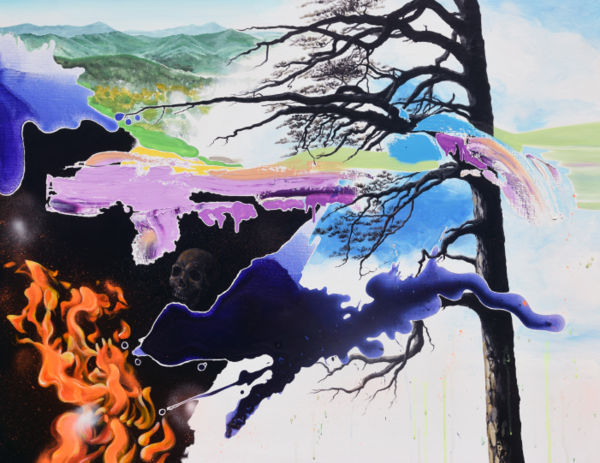
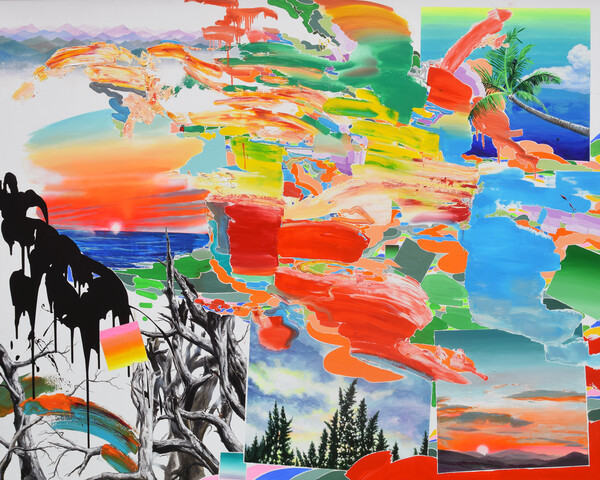
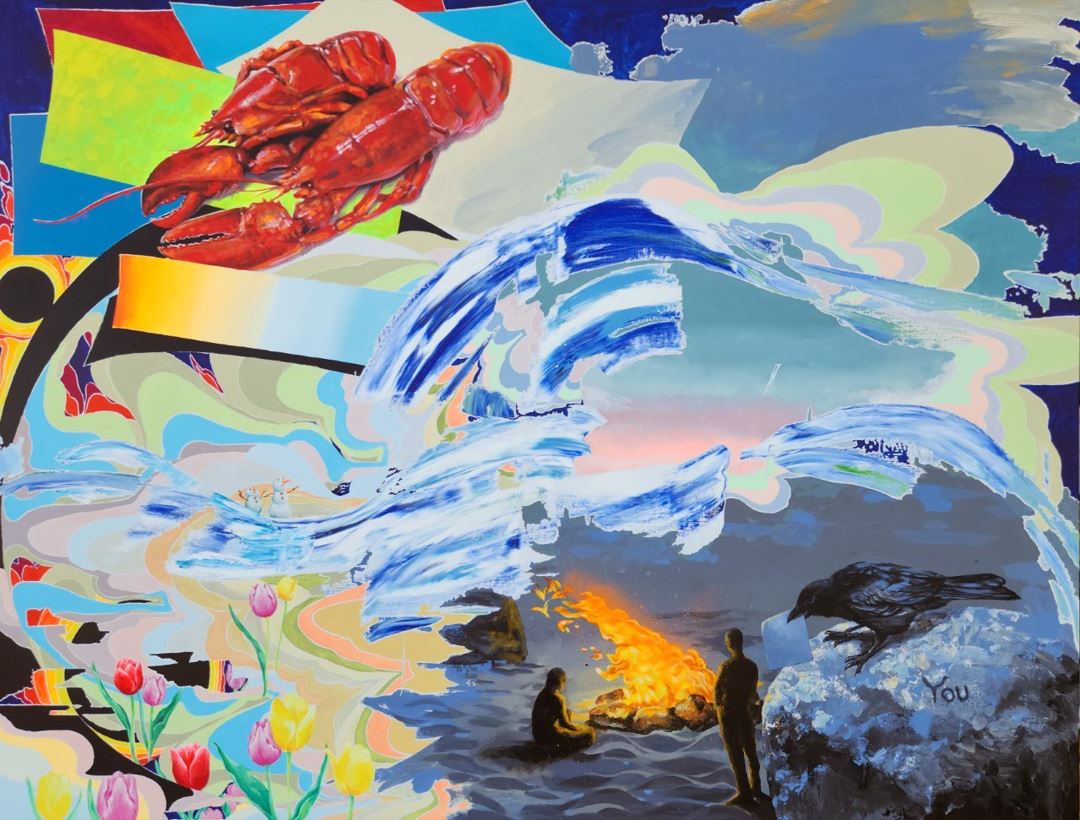
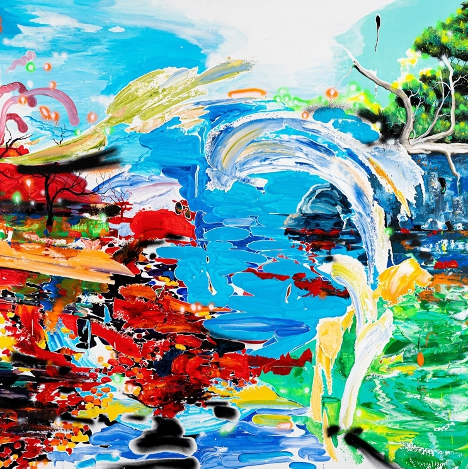
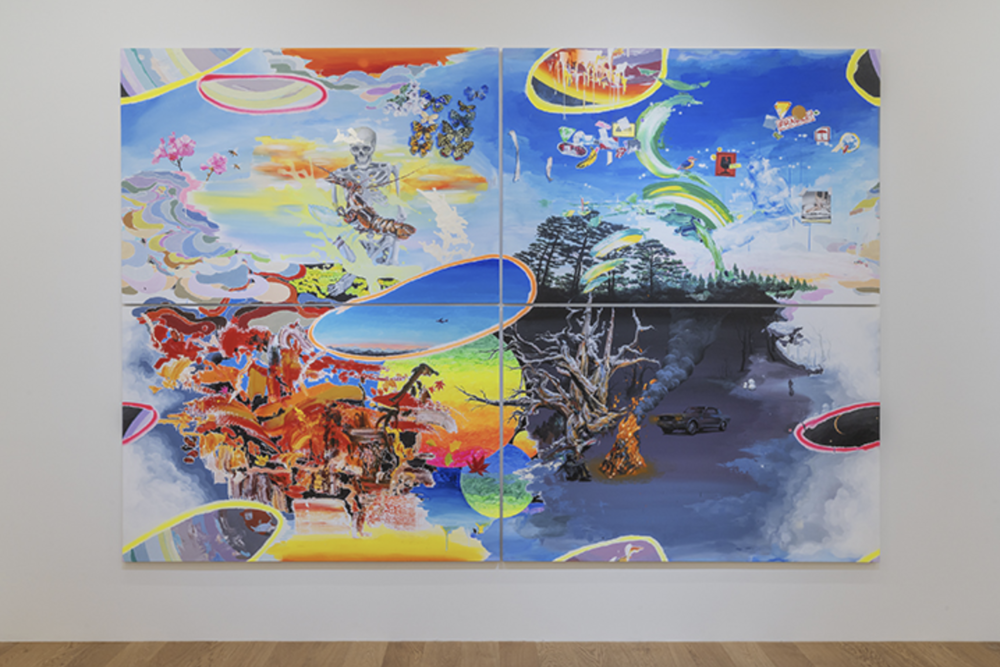
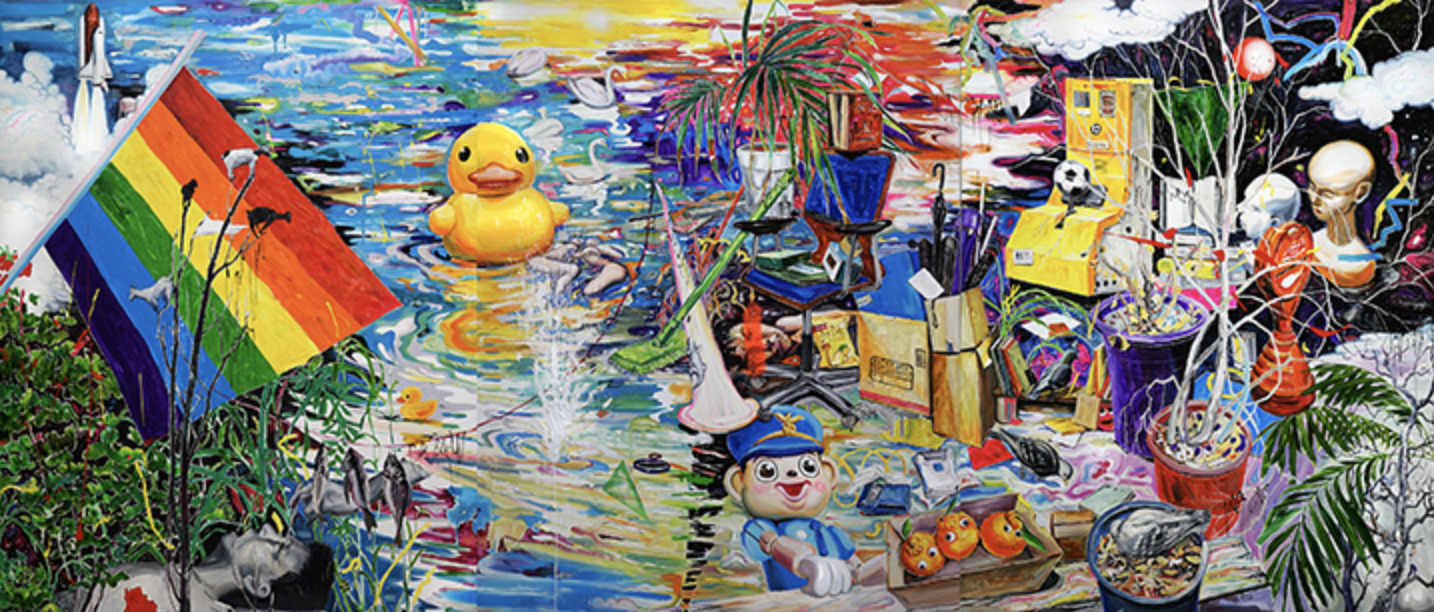
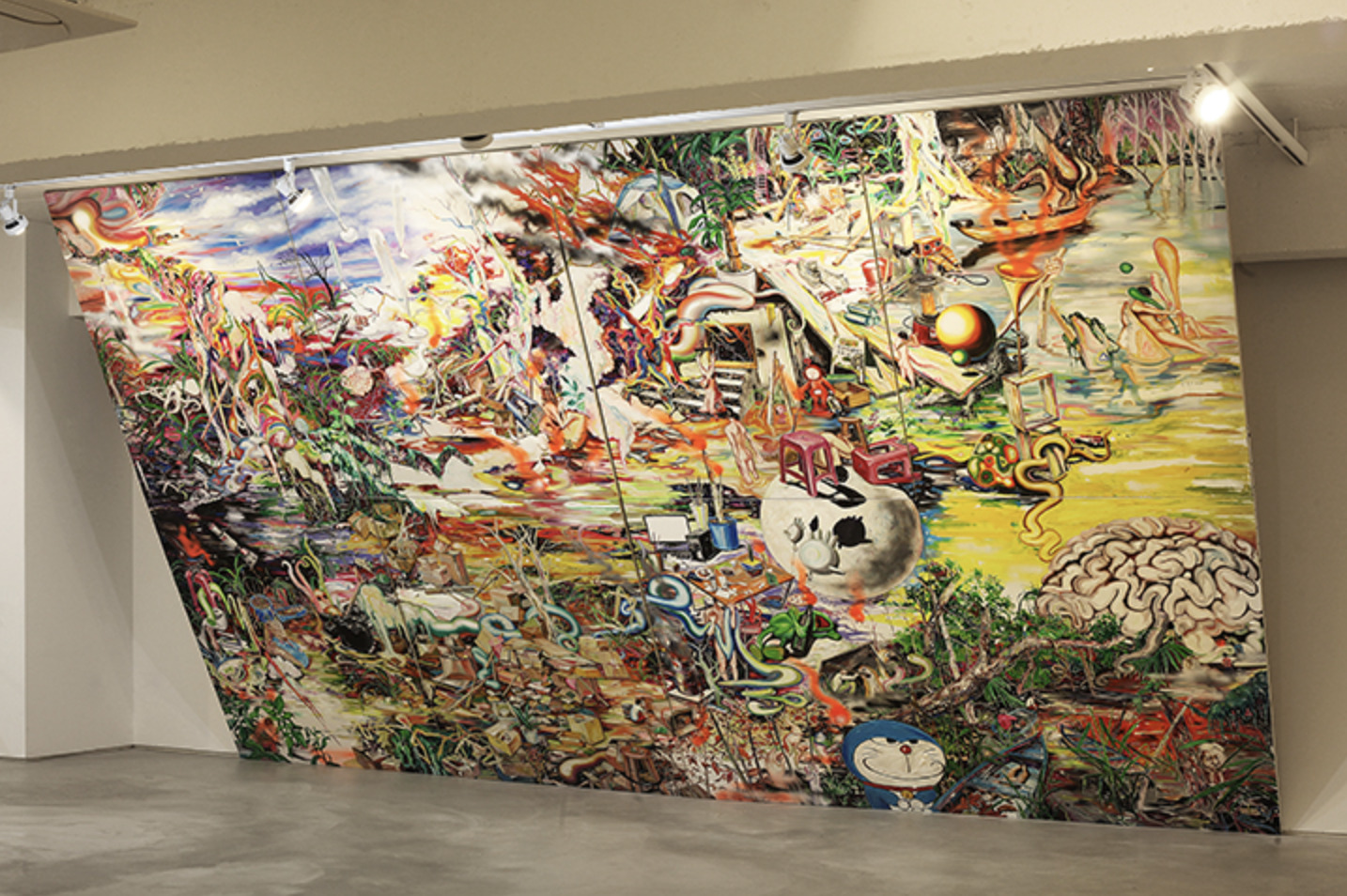
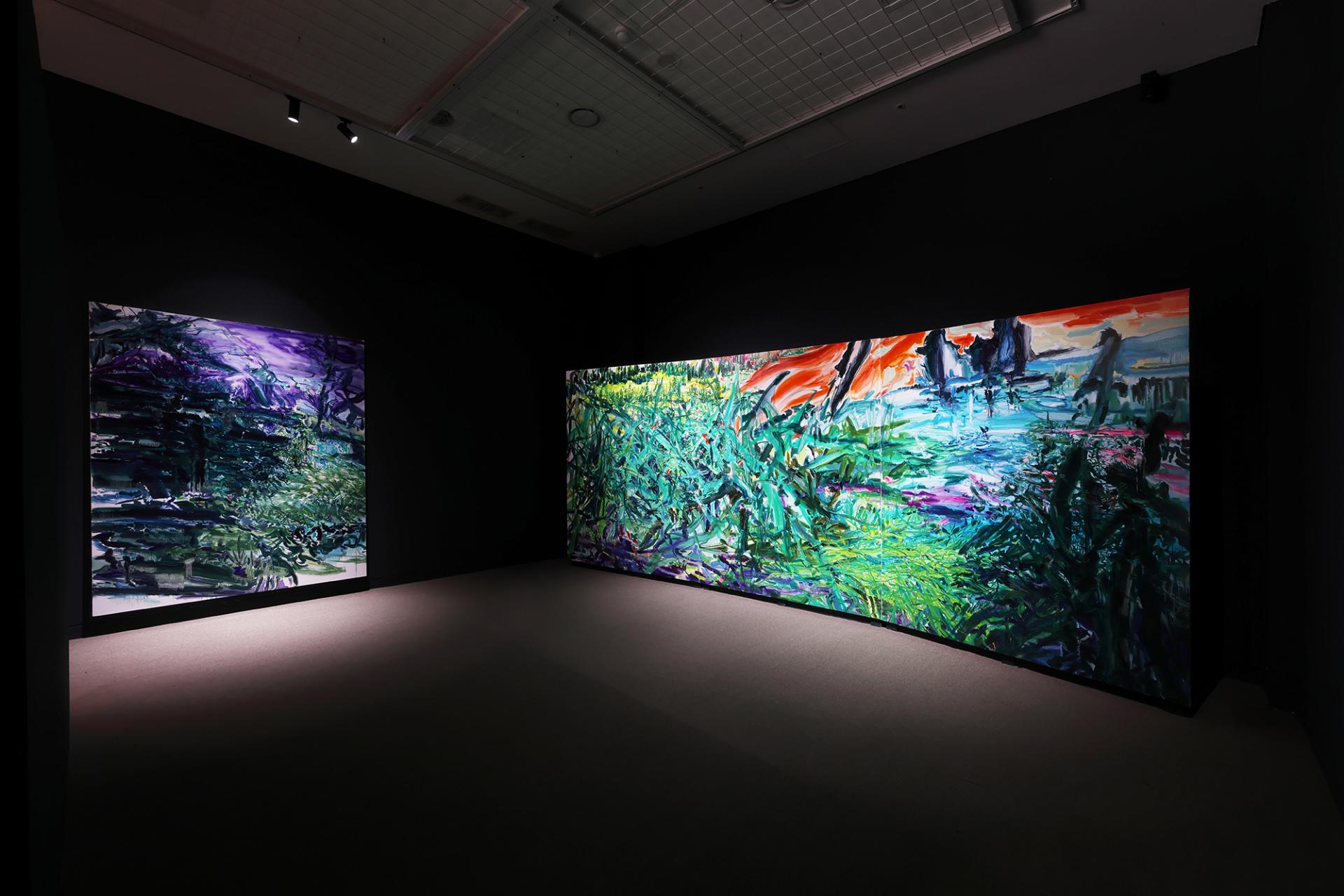
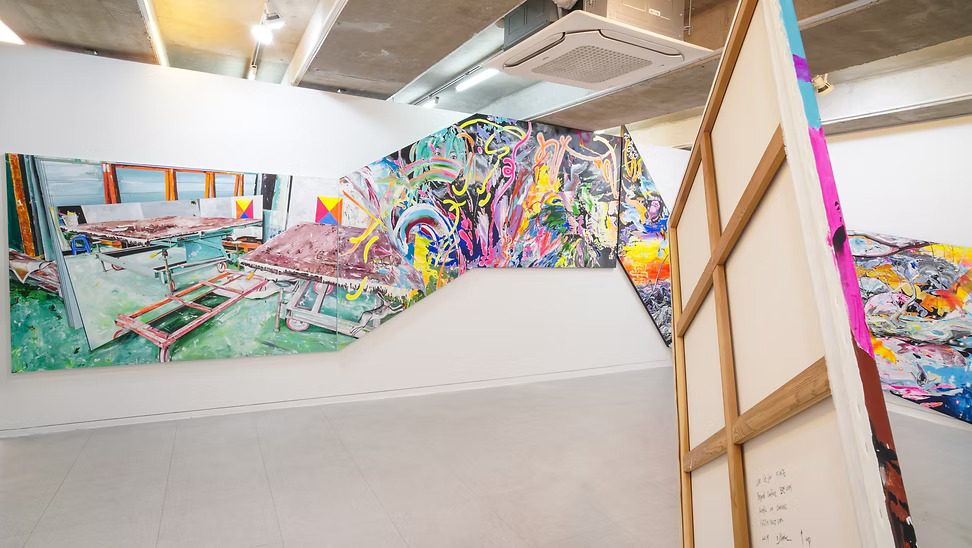
Painted Painting 1

2023
Oil, acrylic on linen
260.6 x 387.4 cm (4 pieces)
About The Work

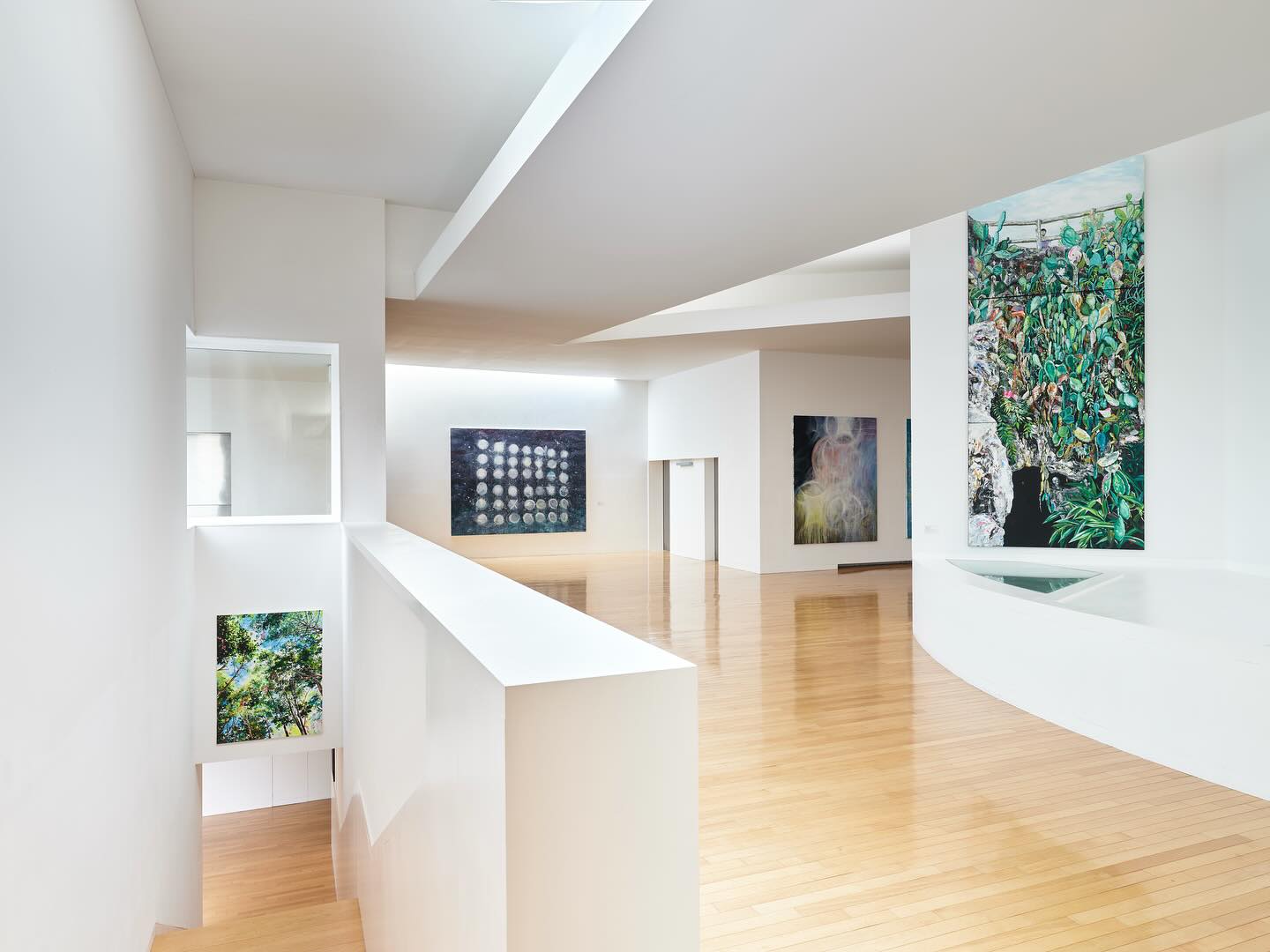
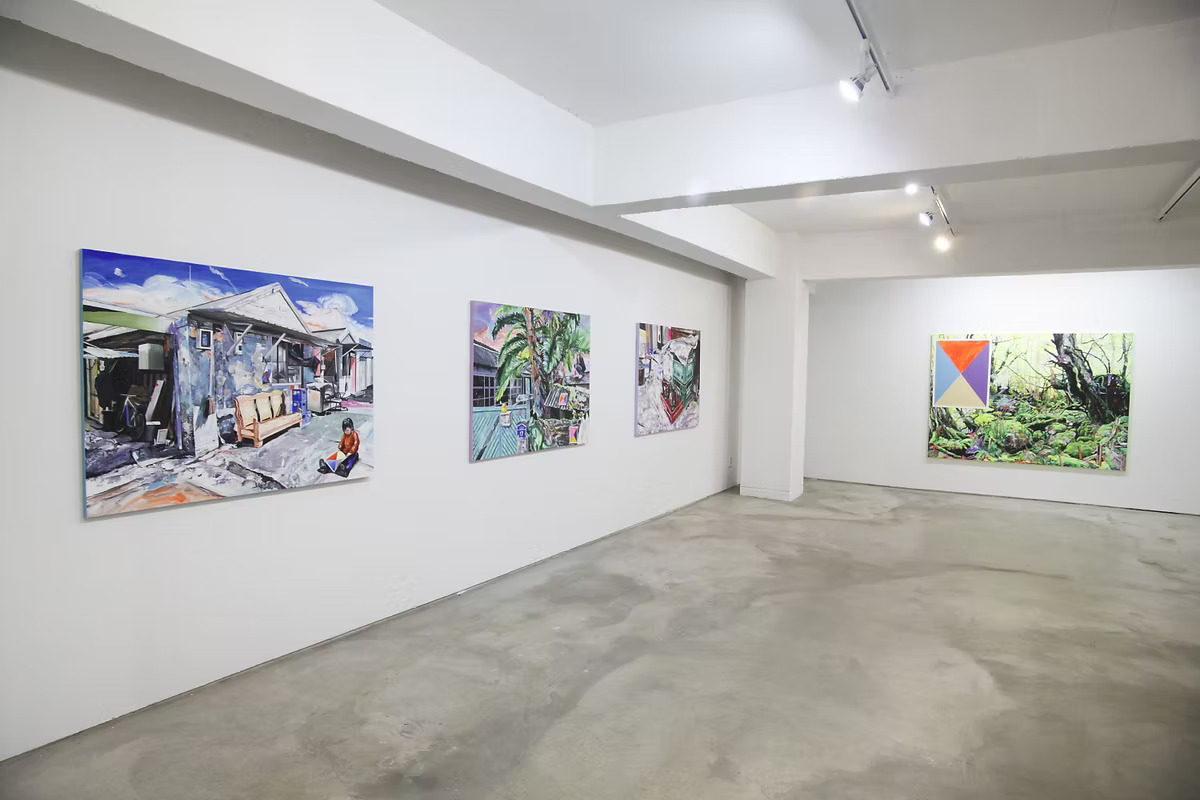
Sejun Lee has developed a distinctive painterly language by bringing together figurative and abstract forms within a single composition, grounded in bold and vibrant color. Through the juxtaposition of unconventional imagery, material elements, and conflicting visual vocabularies, he constructs complex scenes in which reality and unreality intersect.

Filled with a multitude of objects, landscapes, and forms, Lee’s paintings are driven less by a desire to represent the world as it appears than by an interest in exploring how the world operates. For the artist, the world is a fluid network of relationships in which disparate elements continually encounter, collide with, and transform one another. 

This understanding manifests in layered compositions that combine diverse subjects and motifs through both figurative and abstract modes of representation, making it impossible for viewers to grasp a scene from a single, fixed perspective.

Central to Lee’s practice is the question: “What exactly is this world in which we live?” In seeking possible answers, he has drawn parallels between the structure of painting and the structure of the world itself. 

He views the world as a vast organism in which different beings, events, and sensations interact and evolve, and understands painting as an open field capable of embodying such relationships and movements. Accordingly, his works allow multiple narratives and images to coexist within the same pictorial space, continually expanding the formal and conceptual possibilities of painting.

In this way, Lee regards painting not as a fixed outcome but as an organic entity that is constantly emerging and transforming. His practice moves beyond representation to question what painting can contain and how it can serve as a means of understanding the world. 

Moreover, each work functions as an open arena in which new meanings and relationships are generated through the viewer’s engagement, allowing individual narratives and worlds to unfold through interpretation and experience.

Solo Exhibitions (Brief)

Sejun Lee has held solo exhibitions including 《Picturescape》 (Space Willing N Dealing, Seoul, 2025), 《Paintings of Possible Worlds》 (Pyeongtaek Northern Center for Culture and Arts, Pyeongtaek, 2024), 《Finally When You and I Meet》 (Space Willing N Dealing, Seoul, 2023), and 《Meta Fiction》 (Space Hwangumhyang, Seoul, 2023).

Group Exhibitions (Brief)

Lee has also participated in numerous group exhibitions, including 《Moments That Form a Landscape》 (OCI Museum of Art, Seoul, 2026), 《The Story of That Day》 (Art Museum VERSI, Yongin, 2025), 《Euphoria》 (Mimesis Art Museum, Paju, 2025), 《Connecting the dots》 (Aram Museum of Art, Goyang, 2024), 《The 23rd SONGEUN Art Award Exhibition》 (SONGEUN, Seoul, 2023), and 《This Is (Not) My (Your) Painting》 (Space Willing N Dealing, Seoul, 2022).

Awards (Selected)

Lee received the Grand Prize at the inaugural KSD Art Award in 2019.

Residencies (Selected)

Lee has been awarded residencies at Seoul Art Space Geumcheon (2025), Goyang Artist Residency Haeum (2022–2024), and SeMA Nanji Residency (2020), among others.

Collections (Selected)

Lee’s works are held in the collections of the MMCA Art Bank, Seoul Museum of Art, Pyeongtaek Cultural Foundation, Osan Museum of Art, and Yangju City Hall.

Works of Art

Painting as a Site of Continuous Becoming

Originality & Identity

Sejun Lee’s work begins with the question, “What is this world we live in?” This question leads to a concrete attempt to map the act of painting itself onto the structure of the world. The world as the artist sees it is not a completed single image, but closer to an organic structure in which different objects and images, memories and ideas, sensations and narratives collide and constantly transform.

For this reason, his paintings do not clearly reproduce a single scene, but unfold by constructing on the picture plane a state in which multiple stories arise simultaneously and affect one another. From early works such as Things Adrift(2015) and What Have We Burned?(2015), in which multiple canvases are connected or expanded, the artist has revealed both the desire to grasp the world as a whole and the fact that this desire is inevitably impossible.
 
Around 2014, Lee began collecting images and thoughts about each person’s worldview from viewers and people around him. This was not simply a collection of materials, but a painterly process of confirming the fact that, even within a single world, each person perceives and constructs the world in entirely different ways. 《Weltanschauung》(Space Willing N Dealing, 2019) is the exhibition in which this concern becomes fully visible.

Different cosmologies and worldviews drawn from religion and mythology, genre fiction, cinema, and individually imagined settings collide and are juxtaposed within the artist’s picture planes, while The 7.7 Billion Names of God(2019), composed of 124 paintings, shows how each person’s beliefs and imagination can be connected into a single painterly installation.

Picture planes where figurative scenes and abstract brushstrokes, painted stickers and actual stickers are mixed together visualize the fact that, even if we live in the same world, each of us sees a different world and believes in or dismisses it according to different standards.
 
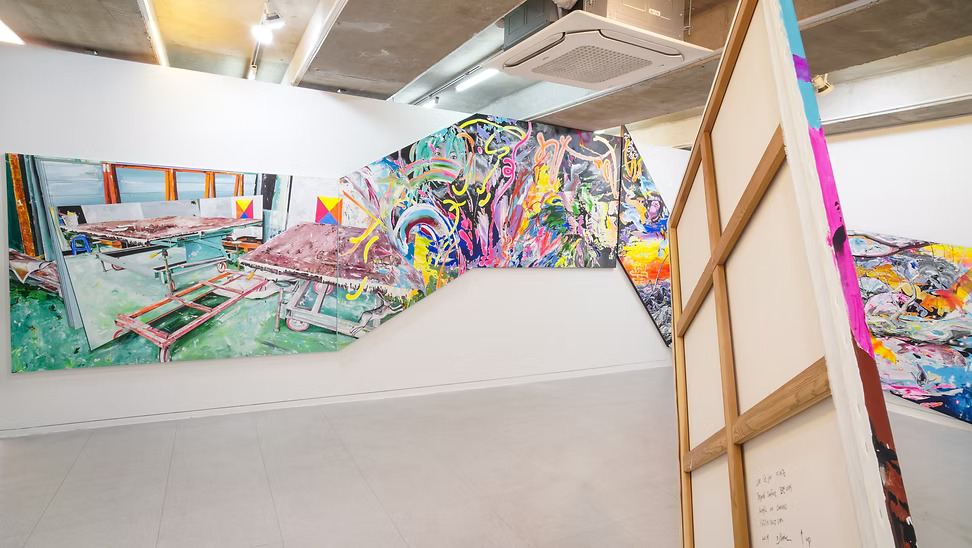
What is compelling in Lee’s work is that he holds the desire to contain the whole world while also proving the impossibility of that desire within the structure of the work itself. Anti Plot_Space Arcade(2019-2023), presented in the solo exhibition 《Finally When You and I Meet》(Space Willing N Dealing, 2023), connects 13 paintings like one enormous scene, but is structured so that perceiving the whole at once is impossible from the outset.

Viewers move in front of the work, encountering part after part, and imagine connections between them on their own. This structure reveals the fact that the artist cannot exist as everything in the world, cannot fully sense the experiences of others, and that the project of “painting everything in the world” must therefore always remain incomplete. Yet this incompletion is not a failure; rather, it is the force that keeps his paintings moving.
 
In recent works, this line of thought continues into the concepts of “possible worlds” and “image transition.” 《Paintings of Possible Worlds》(Pyeongtaek Northern Center for Culture and Arts, 2024) is an exhibition that brings into the structure of painting a philosophical concept imagining worlds that could exist in ways different from reality.

In works such as Painting of Possible Worlds_Lobster Letter(2024), Paintings of Possible Worlds(2024), and All the Moments I Thought of You(2024), the artist places together, within a single picture plane, what has been chosen and what has not, what has been actually experienced and what has been received as an image, personal emotion and grand narrative.

All the Moments I Thought of You begins from photographs exchanged with friends, a lover, and family, and contains the feeling that the act of taking a picture of a landscape and sending it to someone already presupposes that person’s absence. For the artist, such materials sometimes function like MacGuffins that draw out a larger story about painting, but that does not mean they are completely meaningless.

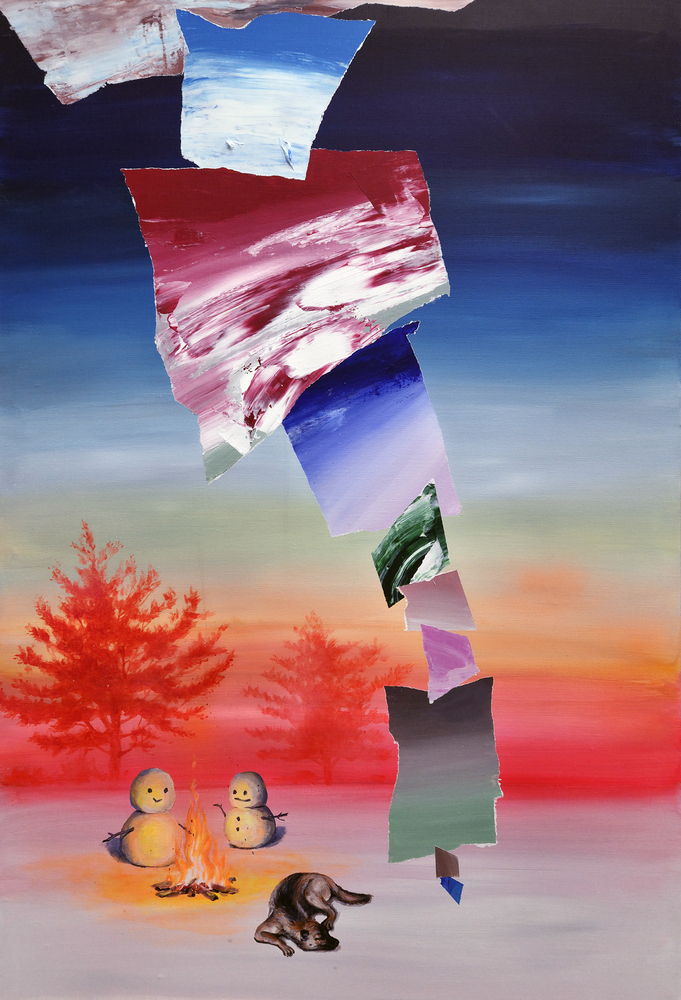
Small photographs and messages, images such as snowmen that are cute yet destined to disappear, and vast spans of time such as the birth and death of the universe are placed with equal weight within his picture planes, showing that the world is made through the simultaneous collision of grand narratives and personal emotions.

Style & Contents

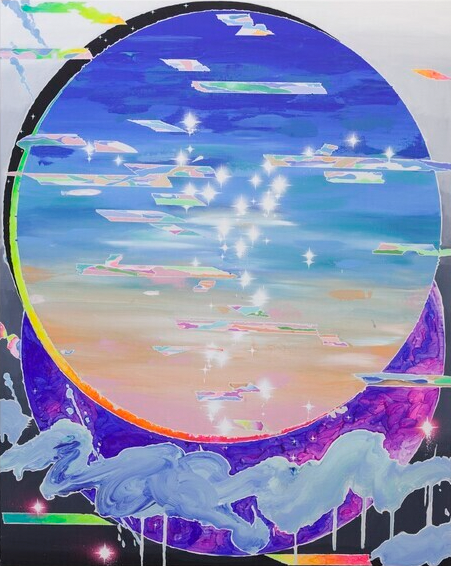
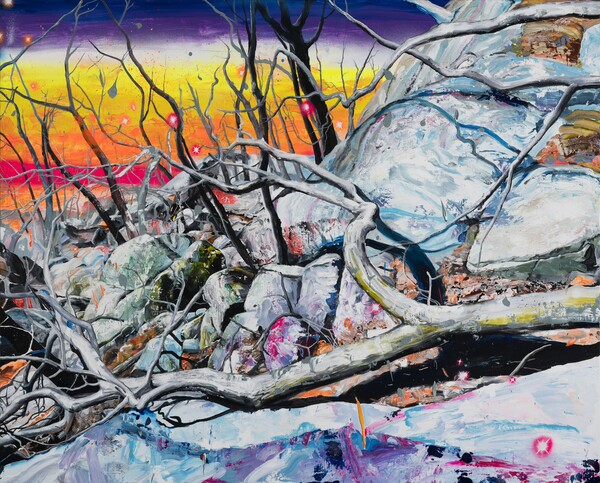
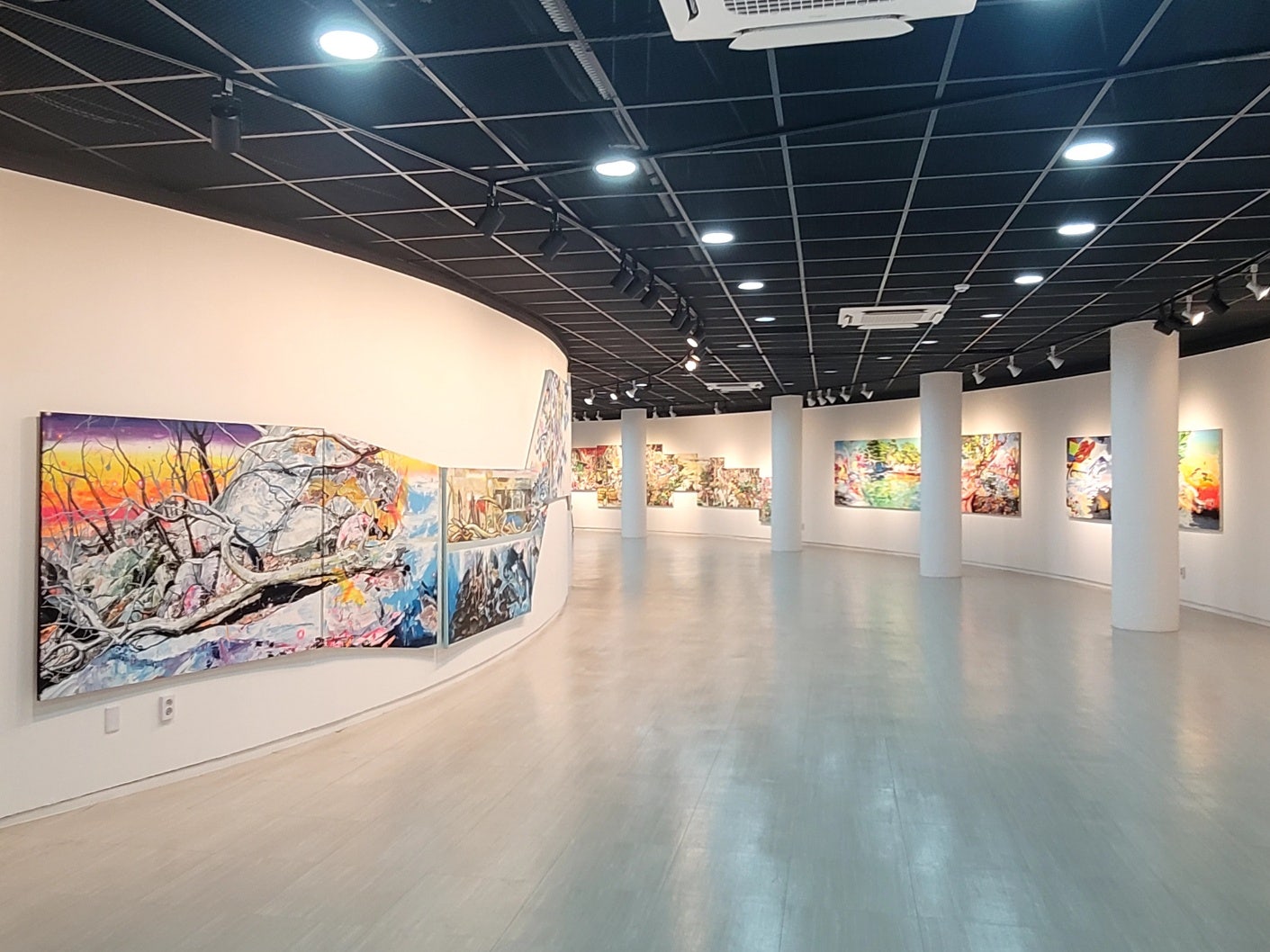
Lee’s paintings first come into view through intense and bold colors, especially color fields that actively use fluorescent pigments and primary colors, and through structures where figuration and non-figuration are mixed within a single picture plane. Yet his picture planes are not simply collections of vivid or complex images. The artist places large brushstrokes and small detailed renderings, accidental traces of paint and deliberately inserted concrete images together on one surface.

When rough strokes made by squeezing out and pushing paint sit beside delicate marks rendered one by one at close range, a shift between different bodily sensations occurs on the picture plane. The difference between the sense of grasping the overall form from a distance and the sense of completing details up close—the two modes of looking repeatedly involved in learning and making painting—is maximized within his work. This collision is not decorative excess, but a method for making painting’s embodiment, materiality, illusion, narrative, and ornamentality operate simultaneously.
 
In his early works, the artist expanded the physical scale and narrative range of painting by connecting multiple canvases. From his first solo exhibition, presented through the Seoul Museum of Art’s Emerging Artist Support Program in 2012, he composed large-scale paintings by continuously joining canvases, and this approach became an important point of departure for his later multi-canvas works.

Works composed of multiple panels, such as What Have We Burned? from 《What will it burn?》(Space Willing N Dealing, 2015), were attempts to contain the plurality of the world within a single picture plane. Later, in 《Weltanschauung》, actual stickers and painted stickers, figurative landscapes and abstract brushstrokes, and religious, mythological, and popular-cultural images operate together.

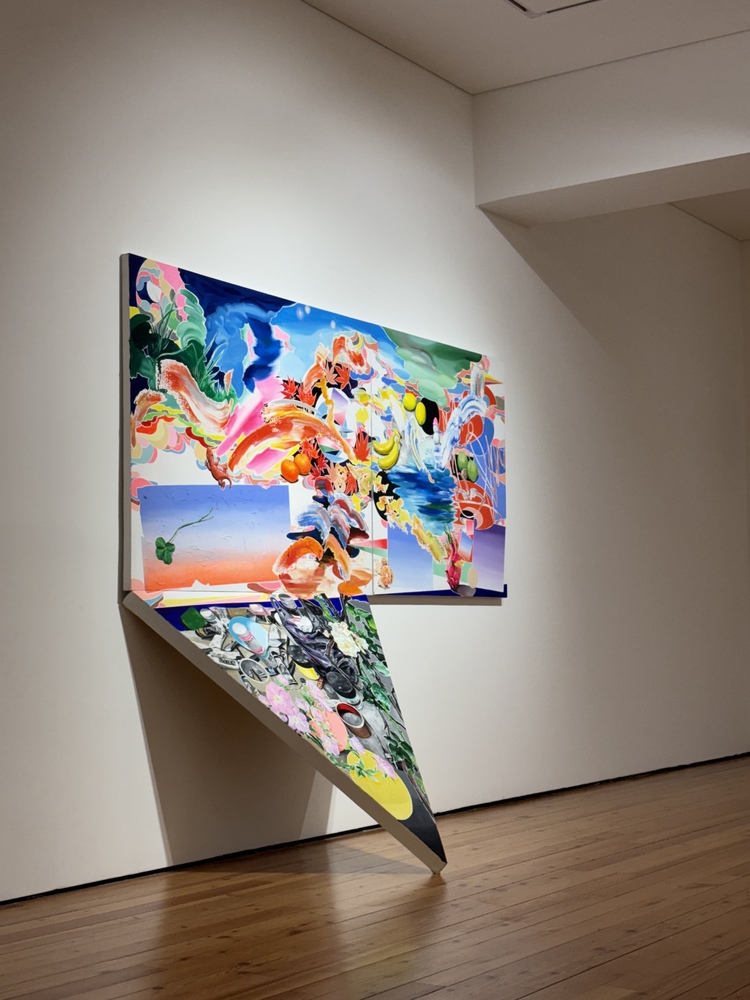
In works such as With a Crocodile(2019), where the artist paints on canvas and then cuts and layers it, actual thickness is created as images and layers conceal and reveal one another, physically expanding the condition of painting as a flat surface.
 
The ‘Bridge’ works, which began in earnest around 2020, extend this visual language into the problem of temporality. The artist places a new canvas between two earlier paintings and paints so that the images coming from both sides naturally mix in the middle. He then repeats the process of removing one work from the result and inserting a new canvas, causing the original image to gradually disappear and leaving only traces of the image behind.

The artist describes this state as something like the “gene of an image.” Between Seasons(2024) shows a structure in which existing images are transformed and replaced several times, until the original disappears and only a genealogy of fragmentary images remains. Circle 1-1(2020-2024) also arranges images derived from the Bridge works and new canvases in a circular formation, revealing the accumulation of invisible time in a physical form. What matters here is less what has been painted than how images move, derive, and form relationships with other images.
 
Beyondscape(2022-2023) and Painted Painting(2023), presented in the group exhibition 《The 23rd SONGEUN Art Award Exhibition》(SONGEUN, 2023), push these experiments one step further. Each work consists of four canvases, and during the exhibition their positions were changed vertically and horizontally. As a result, the same work appeared in different compositions depending on when viewers encountered it.

While Beyondscape takes the very concept of “landscape painting” as the subject of the painting by disassembling and recombining the motifs, composition, brushwork, and picturesque elements of the landscape genre, Painted Painting takes the medium of painting itself as its subject. Although this work presents the form of the four seasons on the surface, it also brings into one picture plane painting’s representational quality, embodiment, ornamentality, symbolism, narrative, and materiality.
 
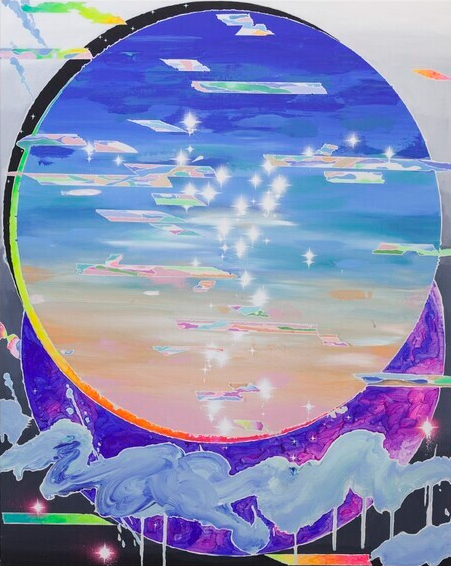
Later, in 《Picturescape》(Space Willing N Dealing, 2025), the artist focuses on the afterimage and rhythm that arise in the moment of moving from one painting to the next. The slight delay in which a viewer receives the next scene while still not having fully forgotten the landscape seen before appears in his paintings as resonance between images. Each canvas placed in the exhibition space functions less as a fixed single painting than as an entity that autonomously proliferates and responds to others, showing how widely painting can expand even within the physical condition of flatness.

Topography & Continuity

Lee’s work persistently continues to ask what painting can still do. In an era when photographs and digital images are rapidly produced and consumed, painting can instead become a medium that stays for a long time and can be revisited repeatedly. The artist’s picture planes cannot be fully read at a glance, and parts and whole operate at different speeds.

From a distance they may appear like abstract landscapes, but up close, small objects, fragments of memory, unfamiliar color fields, concrete images, and traces flowing in from other works are discovered one after another. In this sense, his painting has the structure of a slow image that stands against the rapid consumption of images.
 
Many contemporary paintings deal with the fragmentary nature of images or the visuality of digital environments, but Lee’s distinctive quality lies in the fact that he does not consume these elements as a surface style, but turns them into the structure of painting itself. He brings into painting images collected online, photographs sent by friends, travel scenes, everyday messages, science-fictional imagination, religion and mythology, and forms from art history, but he does not organize them into a single clear narrative.

Instead, he firmly structures an inductive process whose conclusion cannot be known in advance. In the Bridge works, the original image disappears and only traces remain; in the position-changing experiments, a single work takes on a different face depending on when it is viewed; and Anti Plot_Space Arcade is one work that still refuses to show the whole at once. These are all concrete realizations of this attitude. The artist acknowledges that the world cannot be fully understood, but chooses to keep painting rather than give up on that impossibility.
 
His work has steadily changed from the expanded multi-canvas paintings of the 2010s to the collection of worldviews in 2019, the Bridge works and movable paintings after 2020, the possible worlds of 2024, and the resonance between images and the concept of landscape in 2025. Yet this change is not a matter of adding a new theme each time. It is closer to a repeated renewal of how painting can contain, connect, and make the world appear differently again.
 
Looking at his recent group exhibitions, his work was read in 《The Story of That Day》(Art Museum VERSI, 2025) as painting that deals with fragmented memory and nonlinear narrative, and in 《Euphoria》(Mimesis Art Museum, 2025) it was introduced as a puzzle-like canvas in which everyday and non-everyday images, important and meaningless images are mixed together.

In 《Einstein on the Beach》(Gallery Royoon, 2026), it connects with moments of boundary where different orders and sensations intersect, while in 《Seeds of Fire》(CIAN Museum of Art, 2026), it is placed within an exhibition context dealing with memory and recovery after disaster. In this way, his painting begins from the accumulation of personal images, but expands according to exhibition contexts into questions of memory, boundary, disaster, community, and possible worlds.
 
Rather than settling into a specific format, Lee is expected to continue experimenting within broader exhibition structures with how images connect, move, and recompose the world. For an artist who asks whether the old medium of painting is still valid, the answer may lie not in a completed proposition, but in picture planes and exhibition structures that continue to renew themselves.

Works of Art

Painting as a Site of Continuous Becoming

Articles

Exhibitions

Activities