Landscape without Super Mario - K-ARTIST

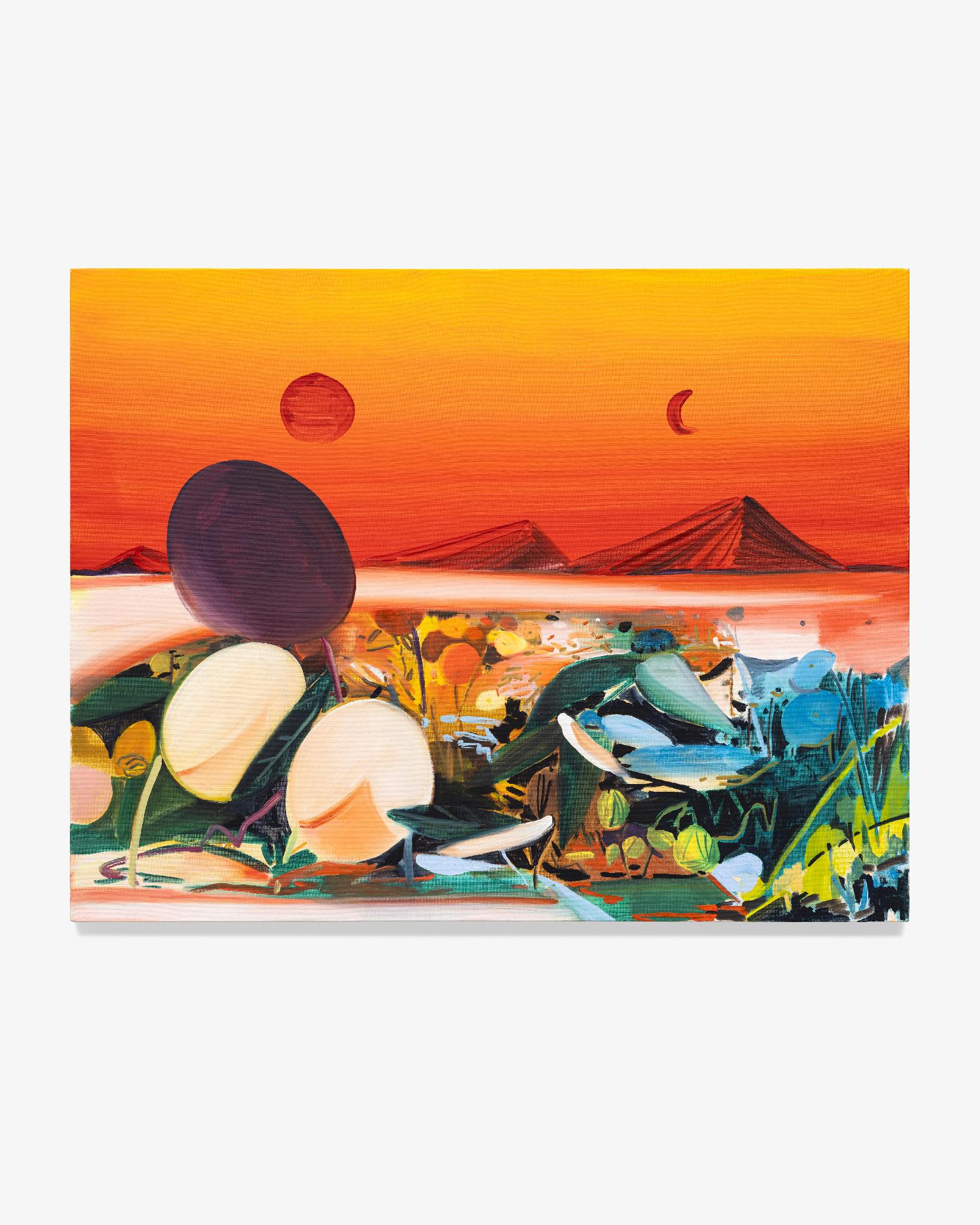
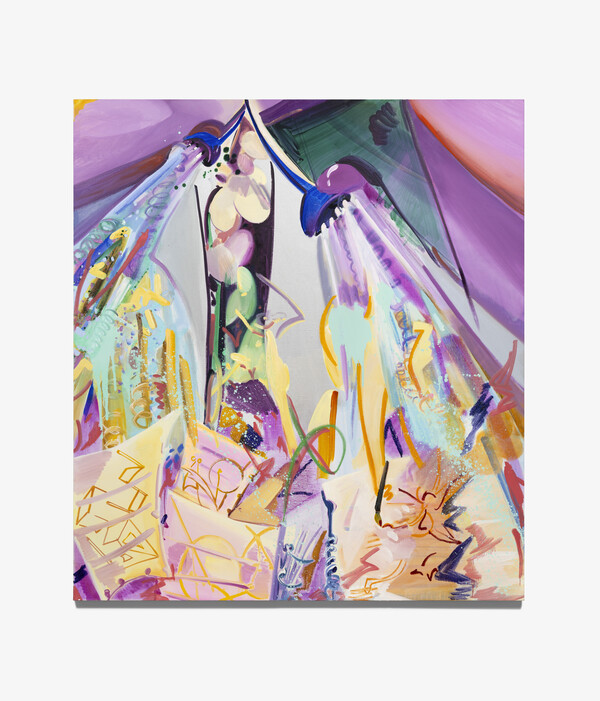
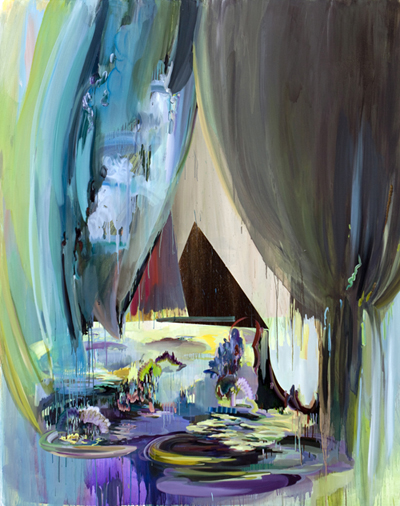
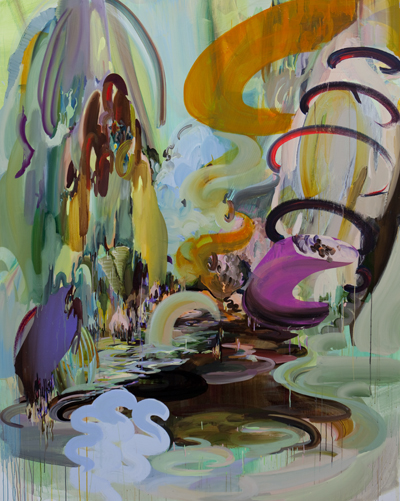
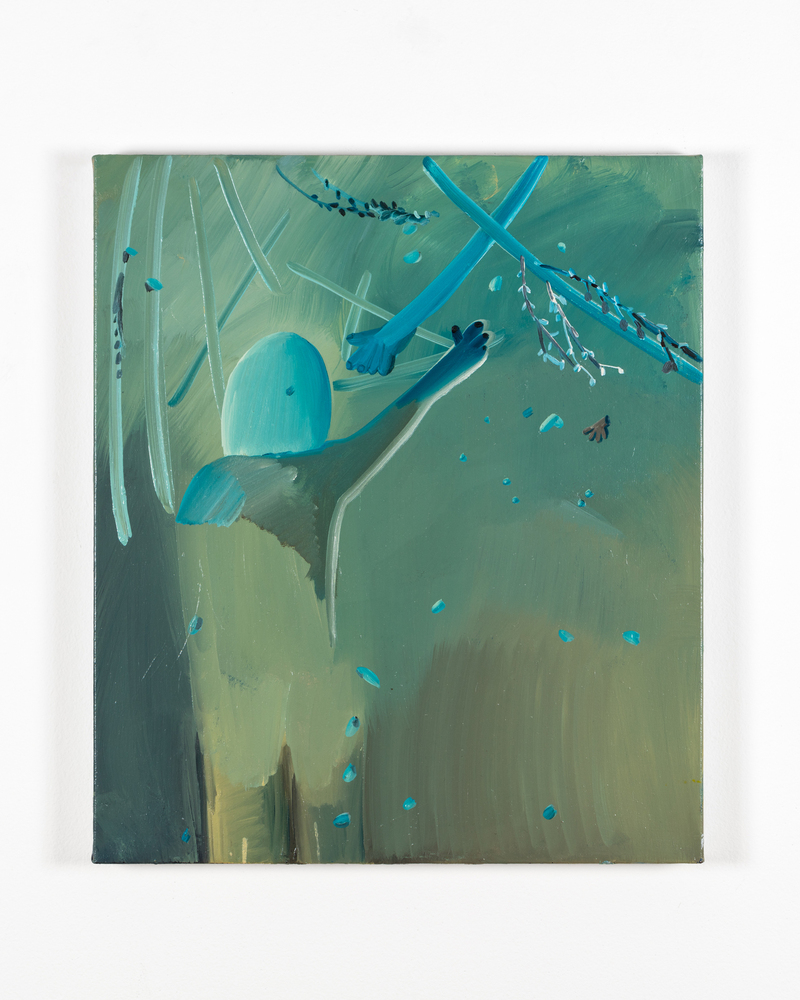
Landscape without Super Mario

2011
Oil, acrylic, gouache, glitter on canvas
250 x 200 cm
About The Work

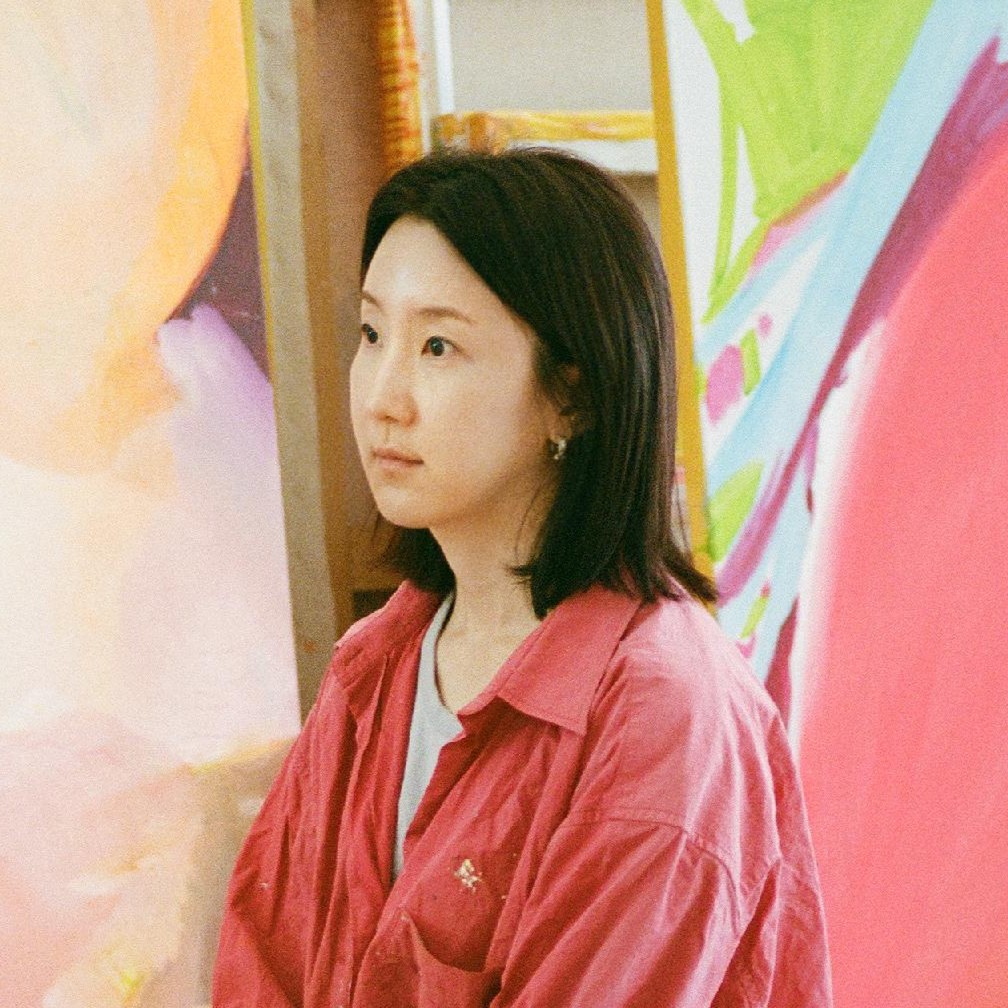
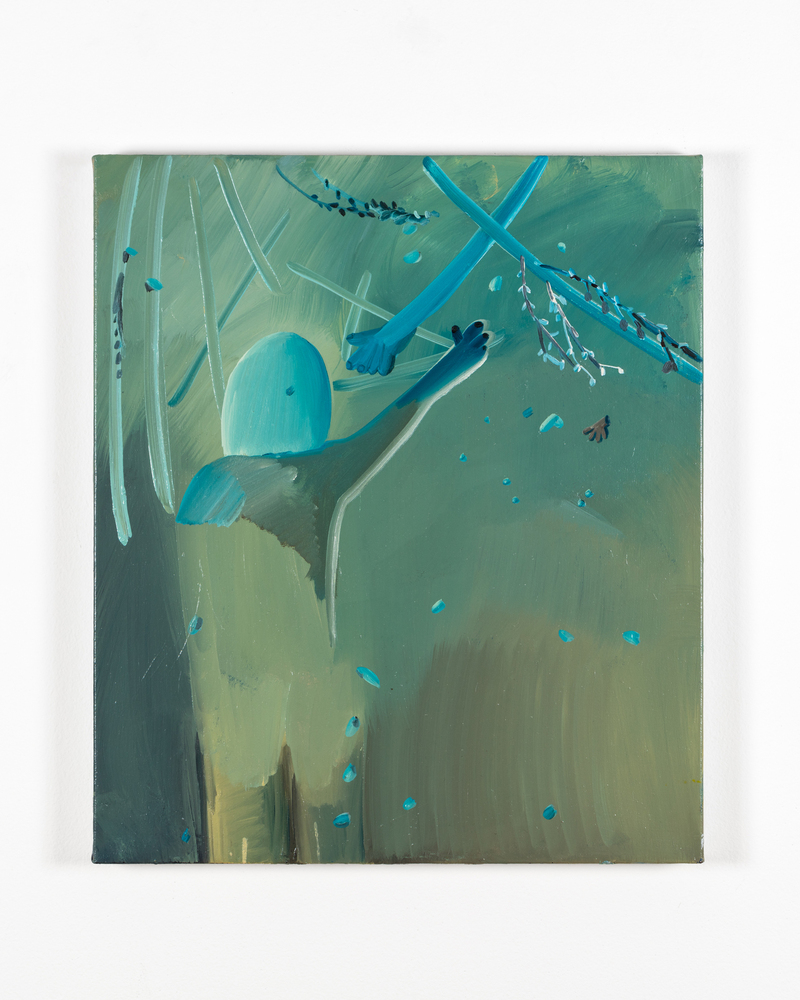
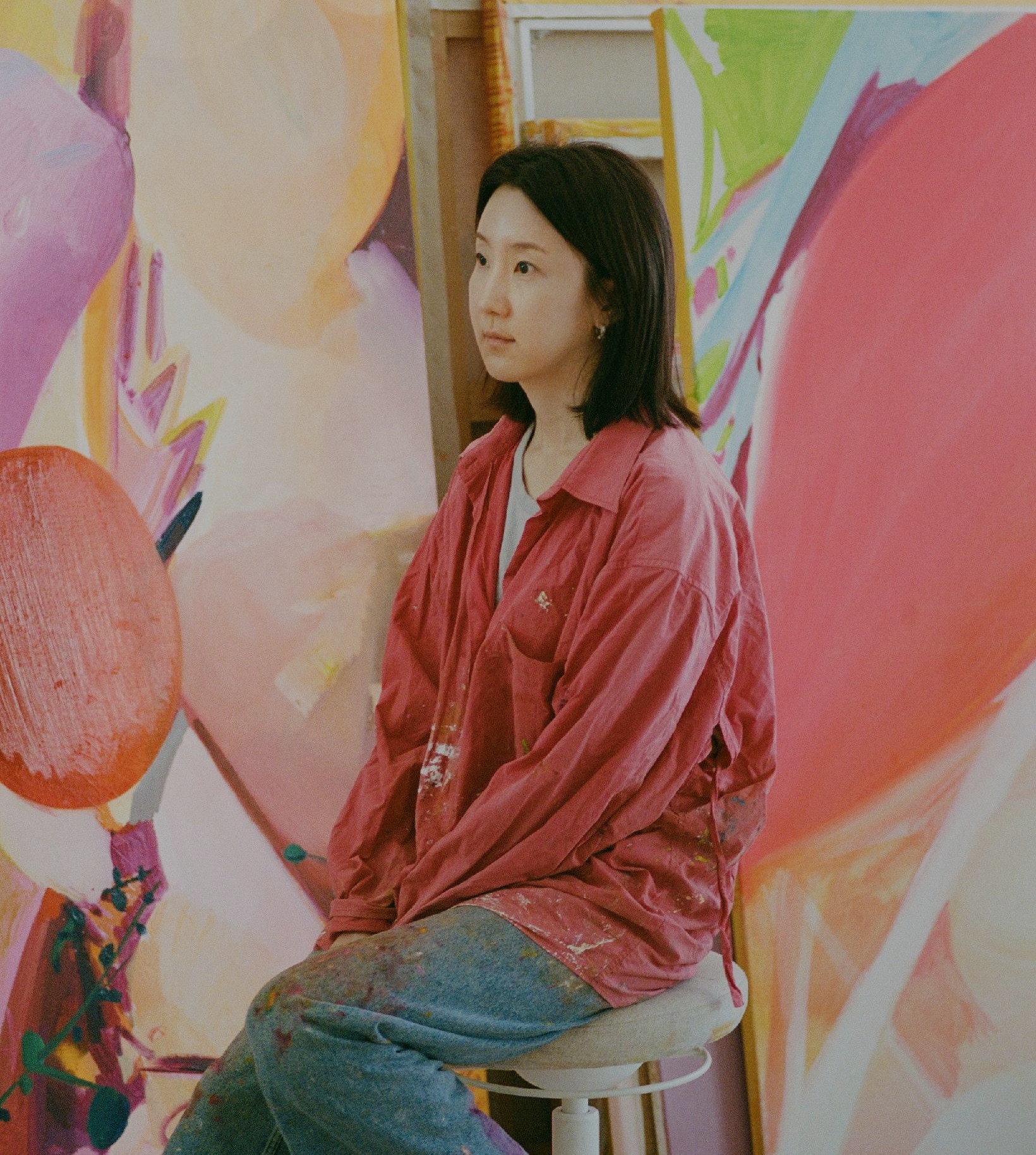
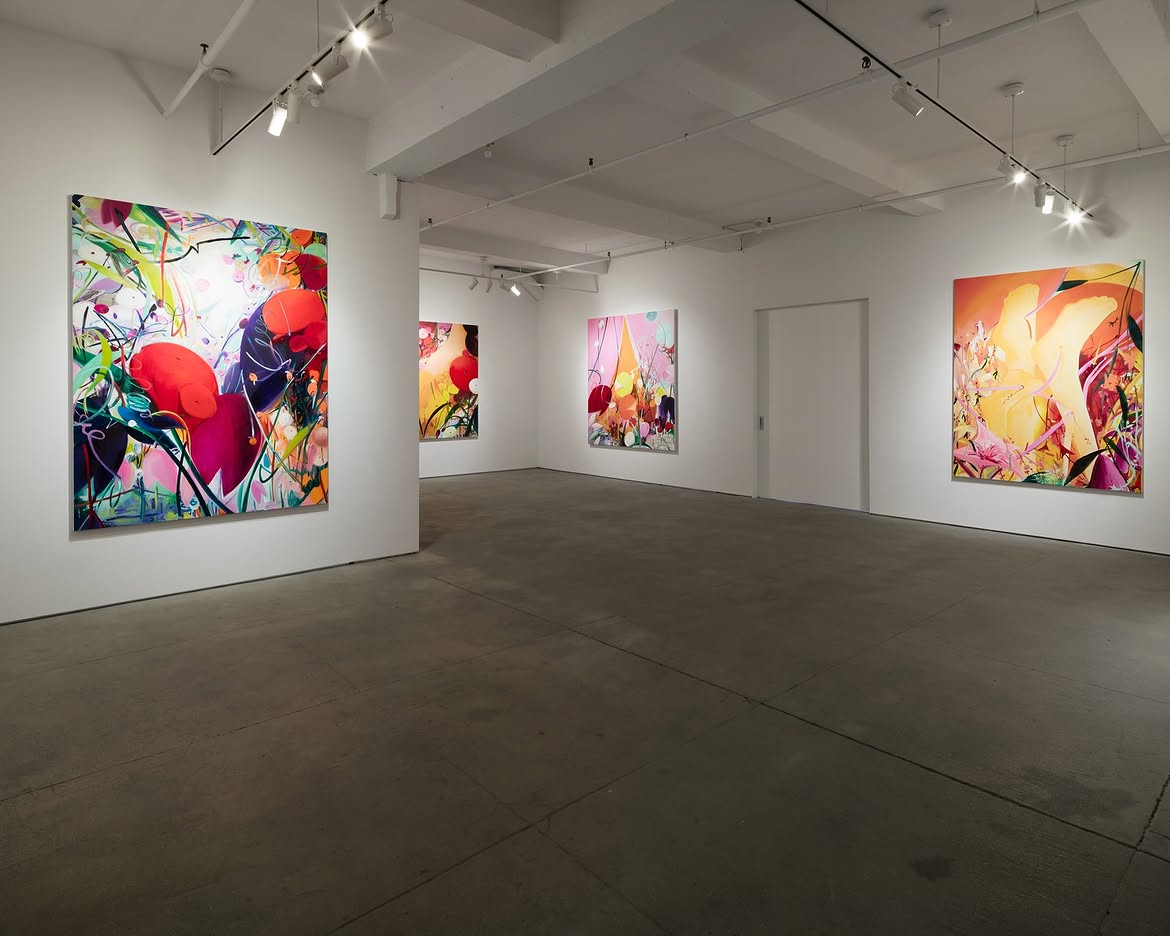
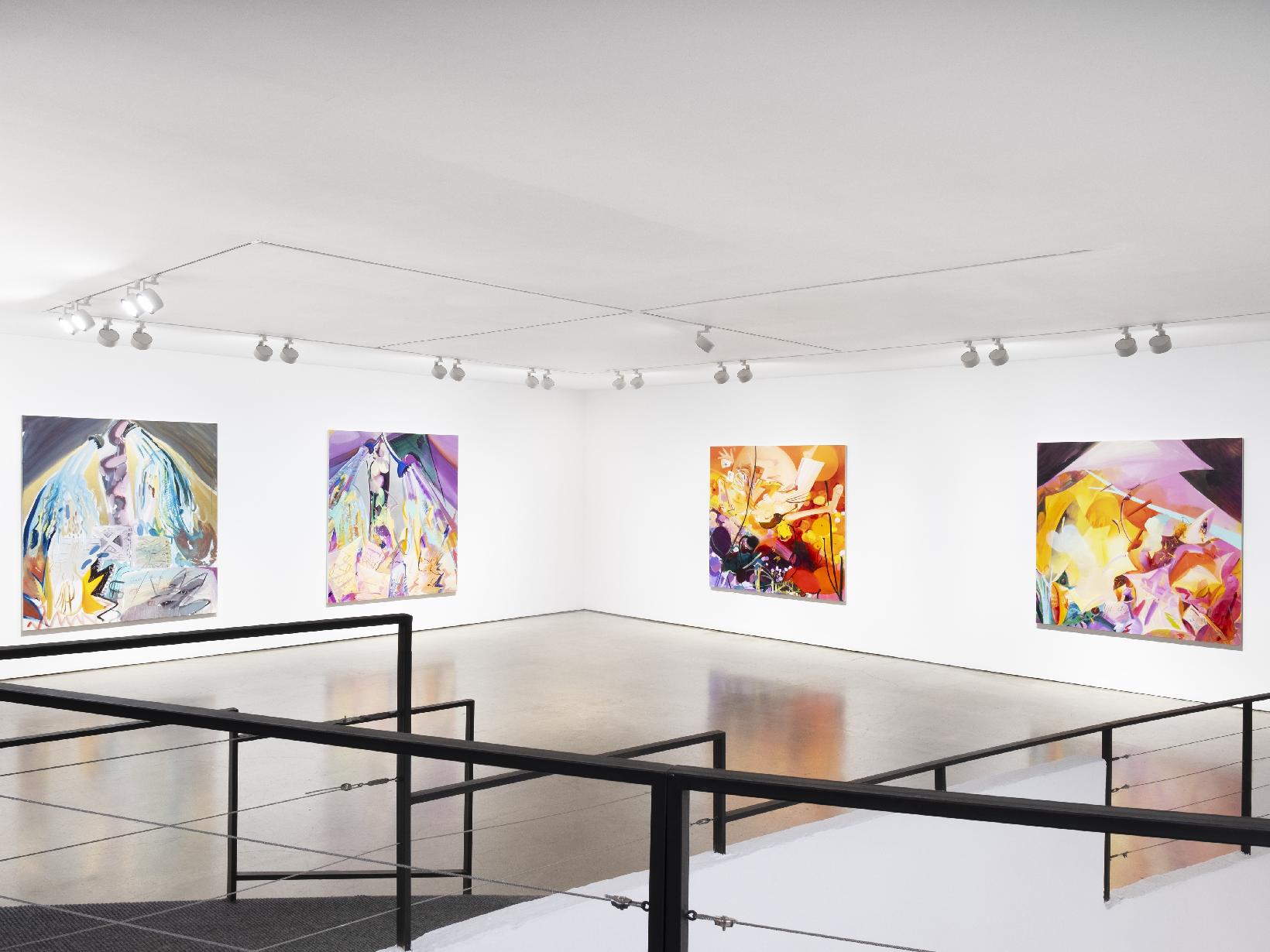
Working between Seoul and London, Jin Han Lee creates lively paintings that cut across the abstract and figurative to channel ideas and senses that escape language, such as the feeling of alienation in a foreign country, parting from a lover, and intimacy shared through warmth across bodies.

Jin Han Lee brings into the structure of painting concrete moments in which language fails: a moment when she could not understand a joke in a foreign language, a moment of parting immediately after greeting a friend, a moment when love could not be explained in words, and intimacy conveyed only through bodily warmth or the touch of feet.

This is why her work does not easily fall into conceptual abstraction. There is always a concrete source of memory in the picture plane, and at the same time, that memory opens into a universal scene that anyone can sense.

Motifs such as feet, flowers, the sun and moon, and trees begin from the artist’s personal memories, but through repetition and variation they become a symbolic system. The artist also does not simply mix the formal languages of East and West.

She brings Western art history’s perspective, modernist flatness, the pulling brushstroke of East Asian calligraphy, the materiality of oil painting, and images and languages from popular culture into collision within the picture plane, then takes that collision itself as the vitality of the work. In this respect, her painting is closer to the operation of sensation than to an explanation of identity.

In this way, Jin Han Lee’s painting holds untranslated sensations on the picture plane in a way that arrives later than words but remains longer. At that point, her work continues to open beyond the individual story toward those rare moments when we come to believe that we can understand one another even without language.

Solo Exhibitions (Brief)

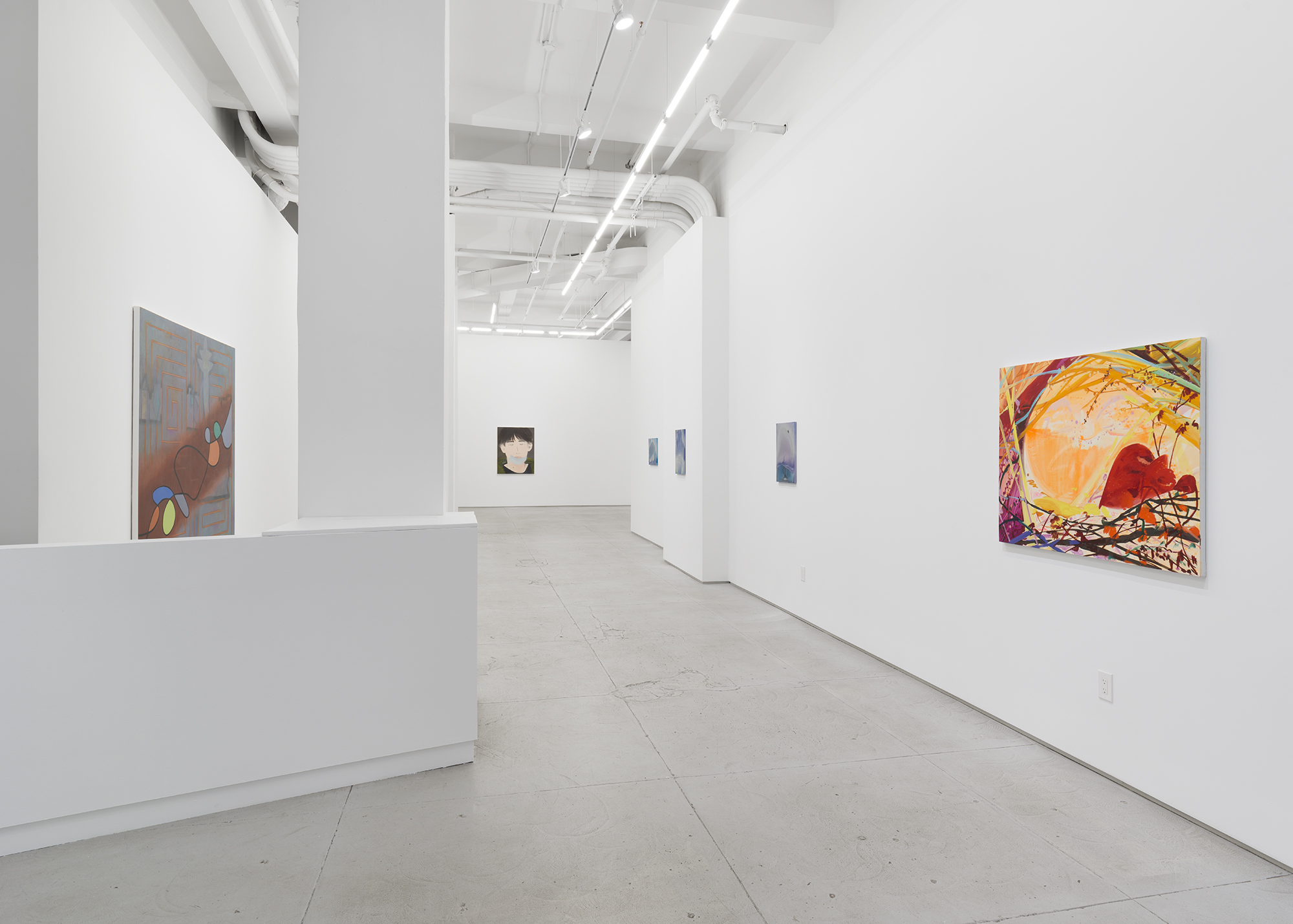
Lee’s recent solo exhibitions include 《Whispers》 (Gallery Hyundai New York Project Space, New York, USA, 2025), 《Lucid Dreams》 (Gallery Hyundai, Seoul, 2024), 《Hi, Bye》(Space ISU, Seoul, 2023), 《Martha’s Rumour》 (Nook Gallery, Seoul, 2021), among others.

Group Exhibitions (Brief)

Lee has also participated in numerous group exhibitions, including 《Vampire Problem?》 (N/A, Seoul, 2024), 《Drop Scene》 (Chapter NY, New York, 2024), 《Alone Time》 (Union Pacific, London, 2023), 《Magnetic Fields》 (BB&M, Seoul, 2022), and 《The Day in the Evening》 (Space K, Gwacheon, 2018).

Residencies (Selected)

She has been selected for the Beaconsfield Residency (2021), Windsor and Newton Elephant Lab Residency (2019), The Lee Alexander McQueen Foundation Residency (2015), Bloomberg New Contemporary (2015), and Saatchi Gallery New Sensation (2012).

Collections (Selected)

Lee’s works are included in the collections of the Institute of Contemporary Art, Miami, HSBC London, Hyundai Capital, JoongAng Ilbo, Sarabande: The Lee Alexander McQueen Foundation, and Soho House Barcelona, among others.

Works of Art

Where the Artist’s Private Language Meets the Language of the World

Originality & Identity

Jin Han Lee’s world of painting began to take shape in earnest around the geographical turning point of her relocation to London in 2007. The driving force behind her early work was relatively clear: the linguistic disconnection she felt within a foreign language, the loneliness that came from separation from loved ones, and the urgency of being unable to express those emotions accurately in words.

After studying painting in Korea, the artist entered the field of art education and discourse in the United Kingdom, but there she often encountered the feeling that she was not naturally included in the central narrative of Western art history. The question, “Were we absent from modernism onward?” did not remain a simple sense of cultural alienation, but led to questions about why she should paint and what painting could stand in for.
 
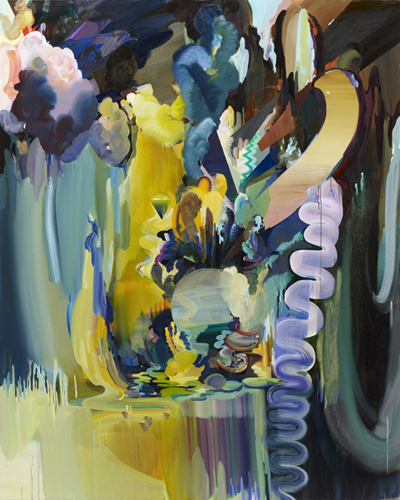
Around 2010, this question began to combine with formal experimentation and form a concrete structure on the picture plane. Works such as Landscape with a Spiderman #3.3(2011), Landscape without Super Mario(2011), and Supersaturation(2011), introduced in the solo exhibition 《Postmodernism of the Beholder – Landscape of the Concept》(Alternative Space LOOP, 2012), bring Renaissance perspective, the flatness of modernist painting, images from popular culture, and abstract gestures into coexistence within a single picture plane.

Here, the canvas becomes less a unified scene than a place where different times and spaces collide and then form relationships again. By layering heterogeneous layers on a single surface, the artist explored how past and present, East and West, the institutional language of art history and personal sensation could exist together.
 
In Jin Han Lee’s work, “untranslatability” gradually expands into a more private and sensory question. The linguistic alienation she experienced while living in the United Kingdom does not simply mean a situation in which one cannot speak a foreign language fluently. It is closer to the experience in which an emotion, the moment it is translated into language, already slips away, is misunderstood, and transforms into another meaning.

The artist took as materials for painting the dislocations she found in neologisms, K-pop lyrics, English expressions, and everyday conversations. In this process, painting became not a tool that compensates for the lack of language, but a field that reveals, in another way, the sensations language has missed. The more a scene cannot be fully explained in words, the more strongly it returns within her picture plane as color, movement, sign, and motif.
 
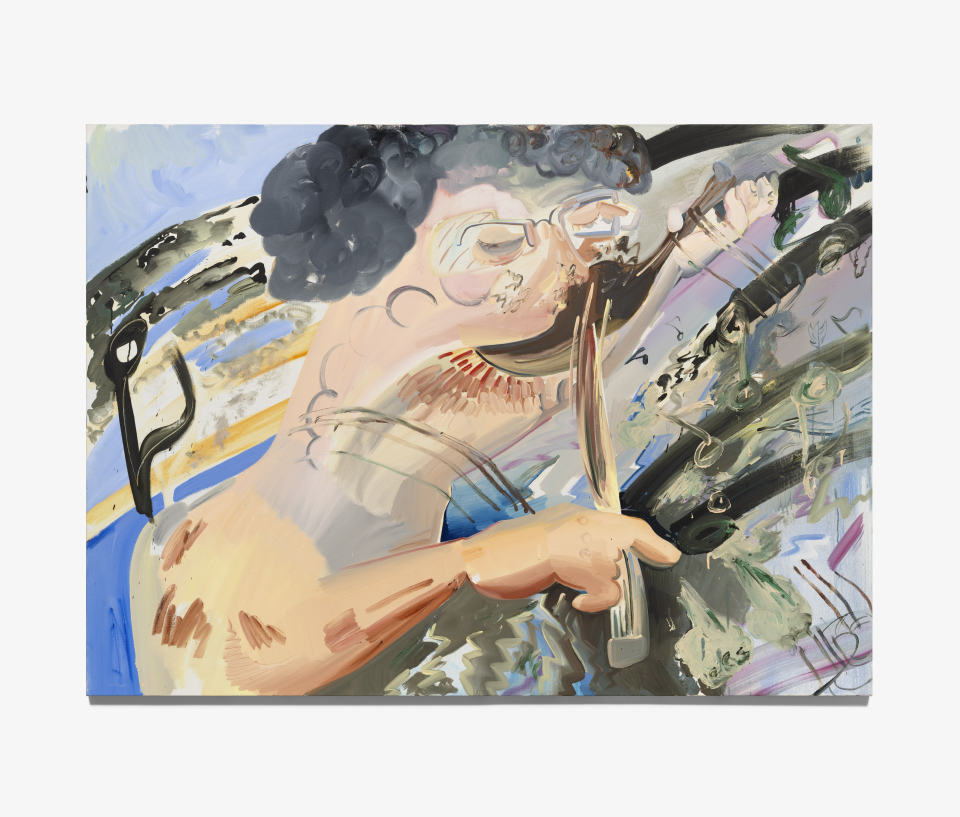
The incident in which she witnessed a gesture by conceptual artist Martha Rosler in 2015 shifted Lee’s thinking once again. When Rosler made a gesture of “playing a tiny violin” during a lecture, the expression could be used mockingly in English-speaking contexts, but the artist received it on site not as cynicism, but as humor, hospitality, and a kind of intimate communication.

Martha Playing Her Tiniest Violin(2015), Martha’s Red Violin(2021), and the solo exhibition 《Martha’s Rumour》(Nook Gallery, 2021) begin from this very ambiguous moment. What matters here is not the “accurate meaning” of the gesture, but the atmosphere and sensation actually felt by the people who were present.

This experience confirmed for Lee that meaning is not a fixed definition, but something that continually arises anew between misunderstanding and interpretation, emotion and relationship.
 
After returning to Korea, the artist focused on transforming personal narratives into more universal scenes of emotion. Hi, Bye(2016) is a work that expresses, through the motif of cherry blossoms, the fleeting emotion of greeting a foreign friend on the street with “hi” and then moving away immediately after saying “bye.” If the Korean word “annyeong” holds both meeting and parting within a single word, the English words “hi” and “bye” separate the two into distinct utterances.

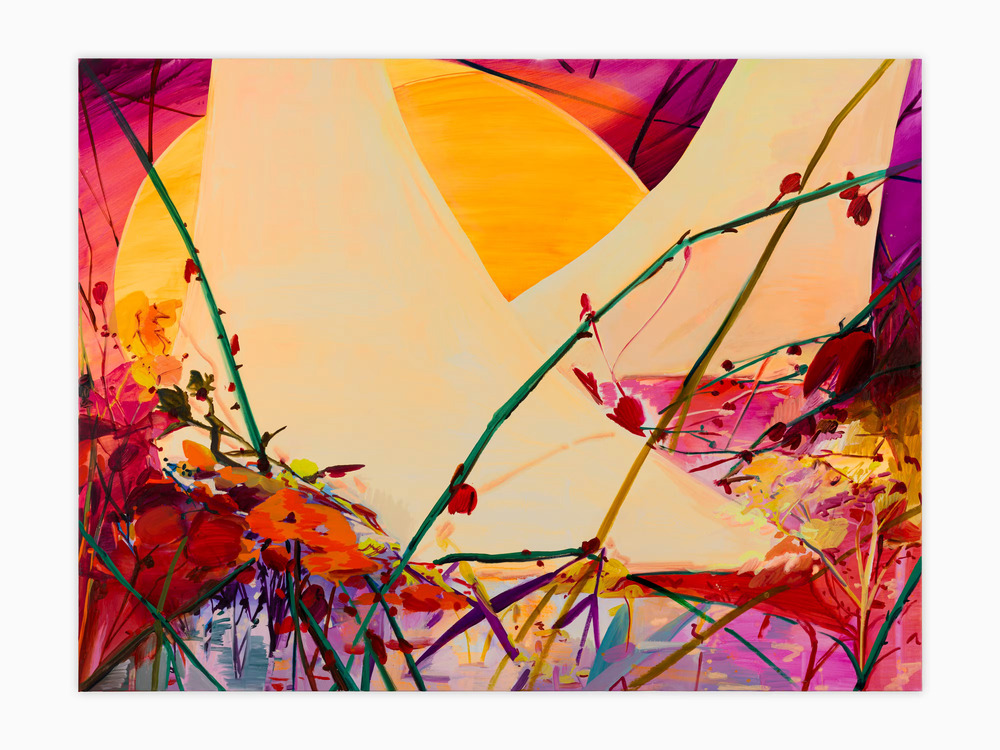
The artist expands this linguistic difference into a sensation of relationships and time that cannot be held onto. In 《Hi, Bye》(Space ISU, 2023), works such as Falling(2023), Moonbow(2023), Sun and Moon(2023), and Two Lovers Walking in the Spring(2023) unfold impossible moments where meeting and parting, night and day, sun and moon, dream and reality touch, through the language of plants and landscapes.
 
In recent work, Lee’s subjects broaden toward love, failure, intimacy, self-perception as a woman, and an attitude that seeks to overturn the negative emotions of life. Rather than treating failed love, parting, or hardship simply as sad and deficient experiences, the artist tries to hold onto the beauty and humor that remain within them—in other words, the sensations that keep life moving. This becomes clearer in her recent solo exhibitions 《Lucid Dreams》(Gallery Hyundai, 2024) and 《Whispers》(Gallery Hyundai New York Project Space, 2025).

If linguistic disconnection and the position of the foreigner were central concerns in the early period, those experiences have recently expanded into a more open symbolic system through recurring motifs such as feet, flowers, the sun and moon, trees, light, and night. While her paintings increasingly embrace more scenes from life, they still do not let go of a single question: how can painting hold onto sensations that cannot be fully translated into words?

Style & Contents

Jin Han Lee’s painting begins with questions about traditional forms of painting. The Renaissance picture plane, which constructs space around a vanishing point, was her first point of departure in exploring the historical structure of painting, and the artist introduces postmodern ruptures into this stable space. In works such as Landscape with a Spiderman #3.3, Landscape without Super Mario, and Supersaturation, perspective no longer operates as a single order.

Over it are layered traces of glitter, acrylic, oil paint, gouache, masking tape, and dripping, while images from cartoons and popular culture appear. The picture plane turns not into a space organized toward depth, but into a site where multiple layers of image and material collide simultaneously.
 
The core of this period lies in the uneasy and heterogeneous relationships between layers. The artist attaches masking tape onto the background, paints over it, and then removes the tape to create unexpected forms. Through the dripping technique, paint forms new physical layers between the artist’s intention and chance.

In this process, painting becomes not simply a flat surface that contains images, but a place where different materials and times directly form relationships. What makes Lee’s early experiments compelling is that she rejects the flatness of painting while still remaining within painting. Rather, through materials and devices that appear anti-painterly, she asks again what painting can do.
 
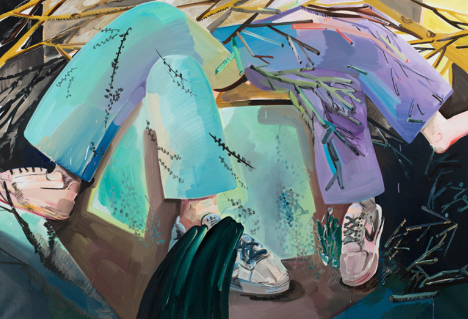
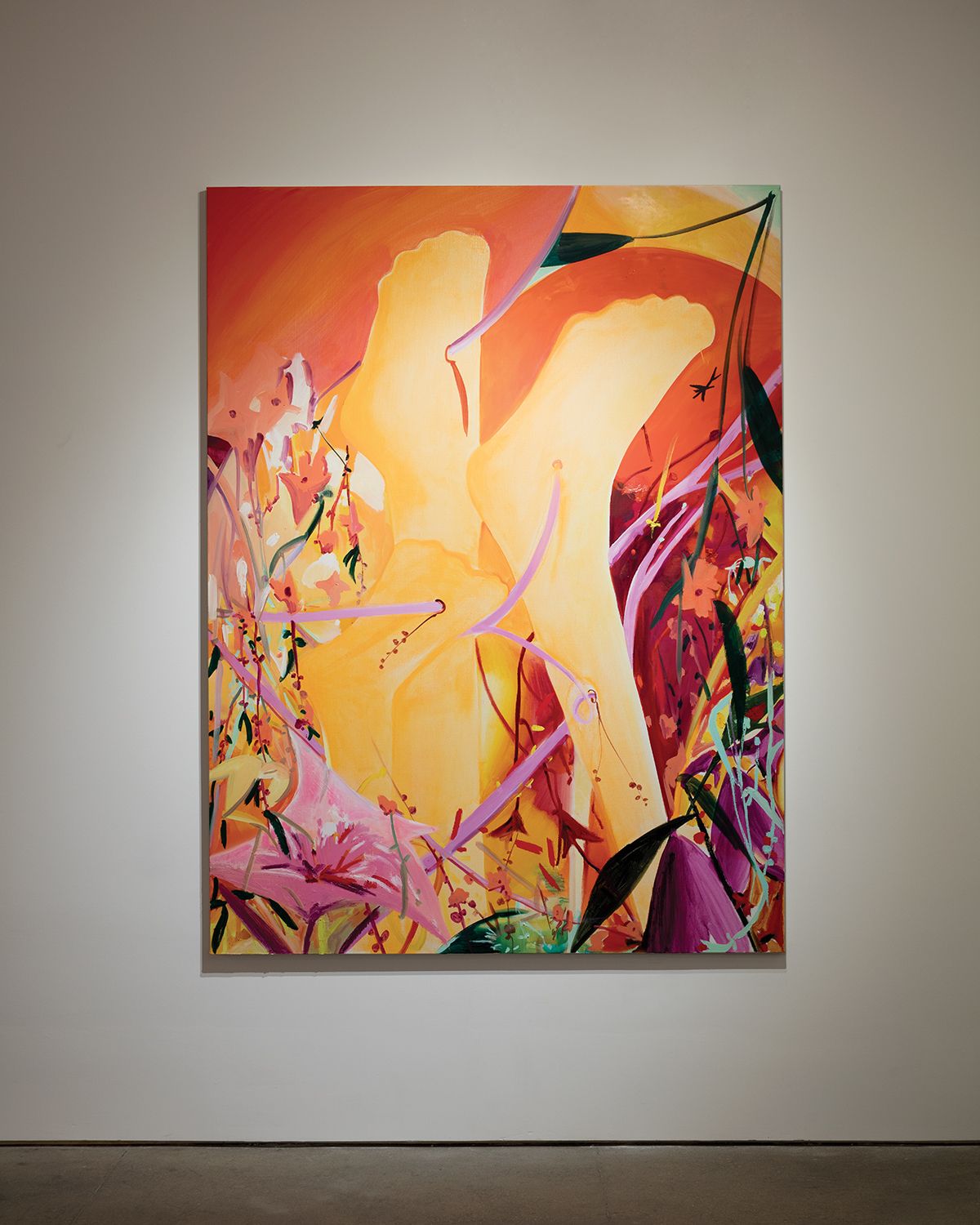
After 2016, motifs take on a more important role in the artist’s picture planes. “Feet” are an important bodily sign for understanding Lee’s work. The artist grew up in a large family where four generations lived together, watching her mother carefully avoid exposing her bare feet to others. This memory imprinted the foot on her as an intimate boundary of the body, permitted only within the closest relationships.

In her paintings, therefore, feet become a painterly language that conveys the sensation of love instead of speaking of love directly. The sense of relationship that began in Hi, Bye later continues into variations on the motif of feet in Two Lovers Walking in the Spring and 《Lucid Dreams》, gradually becoming abstracted from a concrete body part into a symbolic space where intimacy resides.
 
“Flowers” have also become an important motif in her recent work. The artist has spoken of experiencing, within a patriarchal family order, the norm that “a daughter ought to be like this,” and of feeling herself to be like a withering flower. For this reason, her flowers do not appear only as bright and decorative images.

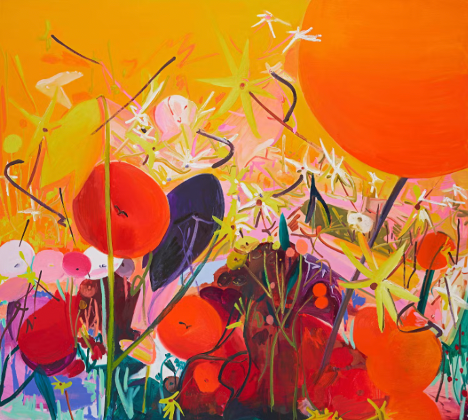
In works such as Heatwave(2023), Light Night(2025), and The Glitch in the Garden(2026), flowers and plants often take on faded, dark, or intense colors, metaphorizing the roles demanded of women, internalized emotions, and self-perception. The artist’s flowers are closer not to the beauty of nature, but to emotional states that are alive while continually transforming, being damaged, and blooming again.
 
Color and brushwork also become important content in Lee’s painting. Her picture planes directly reveal emotional pressure through intense brushstrokes, vivid colors, and clear contrasts of light and dark. In particular, her VR experiment during a 2021 residency became an opportunity for the artist to newly recognize the difference between Eastern and Western modes of brushwork.

If the brushstroke of Western painting is closer to a sensation of pushing the picture plane outward, the brushstroke of East Asian painting and calligraphy carries a sensation of pulling inward. Through experiencing “pulling” movement inside VR, the artist rediscovered the calligraphic sensation familiar to her, and this sensation later led to a three-dimensional spatiality that seems to protrude outward from the picture plane or be drawn inward. Her brushwork is not a means of depicting form, but a trace of emotion and body moving directly across the surface.
 
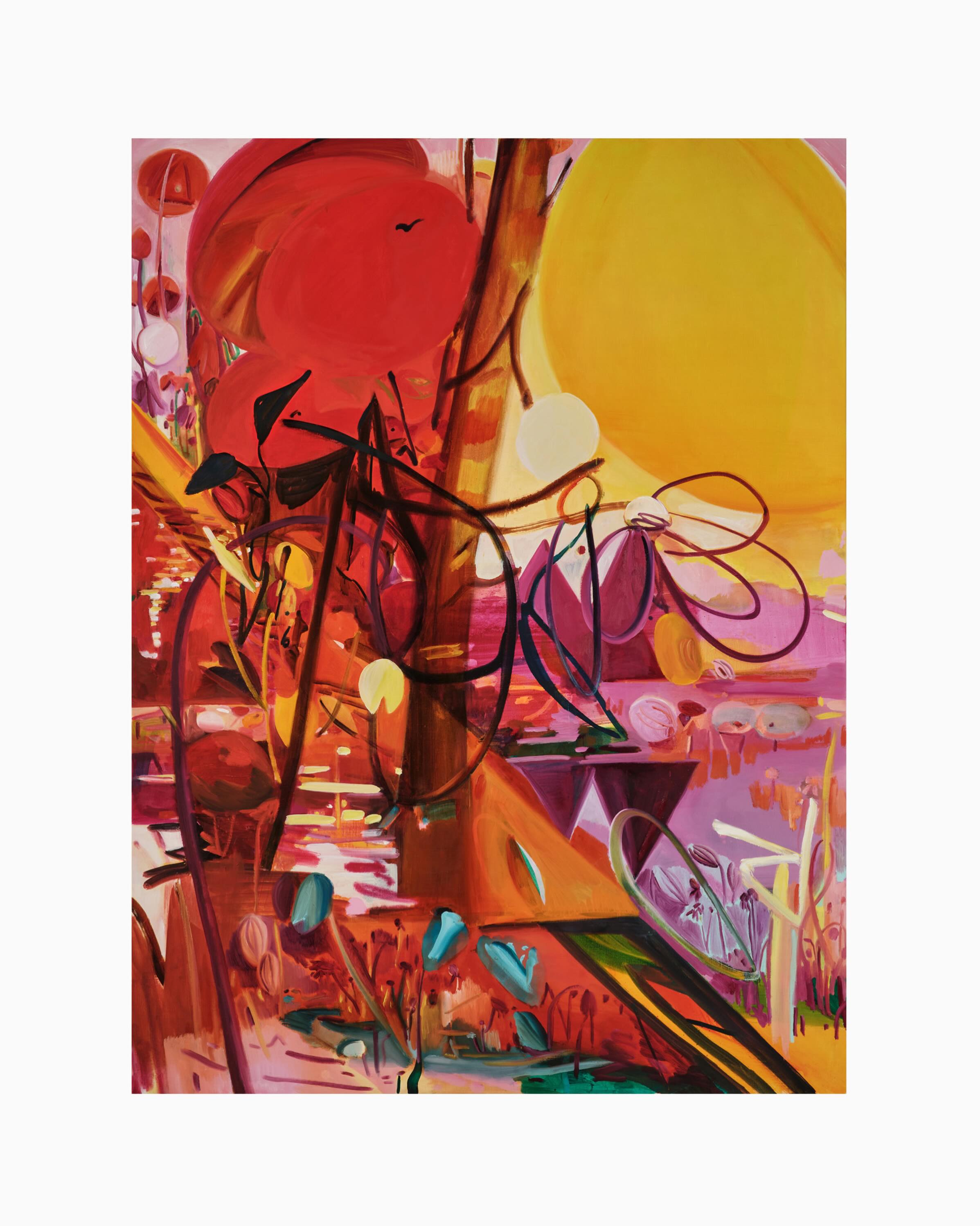
A particularly prominent feature of the recent works is the way multiple motifs accumulate densely within a single picture plane. Whereas earlier works often placed one motif relatively clearly in one picture plane, recent works intertwine elements such as the sun and moon, plants, feet, trees, light, and darkness, forming complex rhythms.

《Whispers》 is an exhibition that clearly reveals this change. The motifs in the picture plane do not explain one another; they spread into, replace, and connect with one another, creating a new narrative atmosphere. This is also why Lee’s picture planes appear surreal. They are not fantasies detached from reality, but inner landscapes made from emotions and memories experienced in actual life rushing in all at once.

Topography & Continuity

Jin Han Lee brings into the structure of painting concrete moments in which language fails: a moment when she could not understand a joke in a foreign language, a moment of parting immediately after greeting a friend, a moment when love could not be explained in words, and intimacy conveyed only through bodily warmth or the touch of feet.

This is why her work does not easily fall into conceptual abstraction. There is always a concrete source of memory in the picture plane, and at the same time, that memory opens into a universal scene that anyone can sense.
 
Motifs such as feet, flowers, the sun and moon, and trees begin from the artist’s personal memories, but through repetition and variation they become a symbolic system. The artist also does not simply mix the formal languages of East and West.

She brings Western art history’s perspective, modernist flatness, the pulling brushstroke of East Asian calligraphy, the materiality of oil painting, and images and languages from popular culture into collision within the picture plane, then takes that collision itself as the vitality of the work. In this respect, her painting is closer to the operation of sensation than to an explanation of identity.
 
Lee’s work shows clear differences between the 15 years she spent in London and the period after her return to Seoul, yet the two remain connected as one continuous flow. If the works from the London period were strongly conscious of the position of the foreigner, linguistic alienation, and her own place within Western art history, the works after her return release that tension through freer combinations of color and motif.
 
The artist now gradually moves away from the compulsion to explain herself, allowing the experiences and images already accumulated within her to meet on the picture plane by themselves. The brighter colors, organically intertwined fragments of plants and bodies, and atmosphere that embraces both love and failure in 《Lucid Dreams》 and 《Whispers》 clearly show this change.

Her international activities are also an important factor in expanding Lee’s position. Her painting is being recognized beyond the record of personal emotion, as a case that shows how contemporary painting can address questions of language, culture, identity, and sensation.
 
Lee’s future work seems likely to continue varying the motifs she has already built within broader picture planes and contexts. Feet will remain spaces of intimacy; flowers, metaphors for feminine self-perception and social emotion; the sun and moon, scenes of impossible encounter; and calligraphic brushwork, a bodily language linking the senses of East and West. What matters, however, is that these elements do not harden into fixed symbols, but move again each time within different emotions and memories.

Lee’s painting holds untranslated sensations on the picture plane in a way that arrives later than words but remains longer. At that point, her work continues to open beyond the individual story toward those rare moments when we come to believe that we can understand one another even without language.

Works of Art

Where the Artist’s Private Language Meets the Language of the World

Articles

Exhibitions

Activities