Misty Evening - K-ARTIST

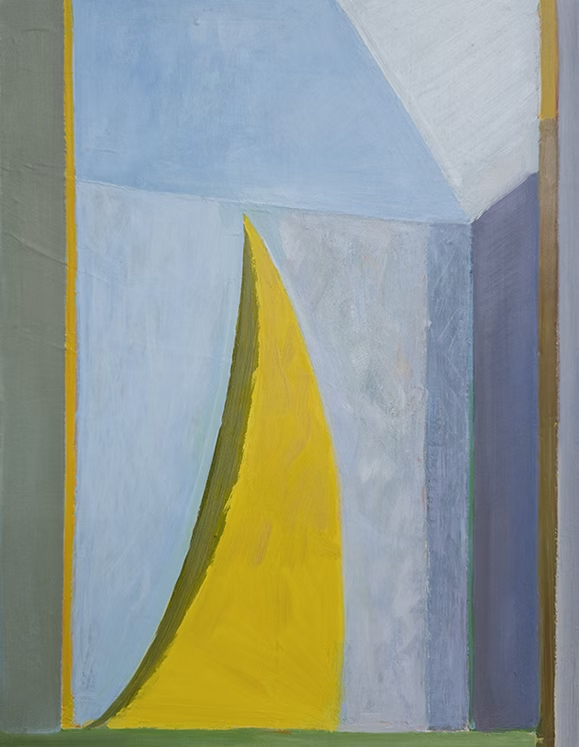
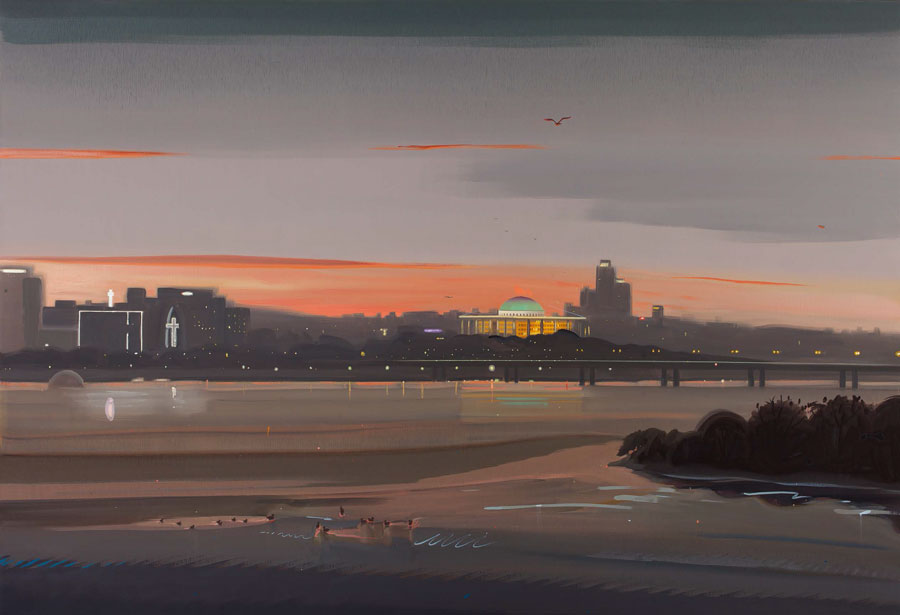
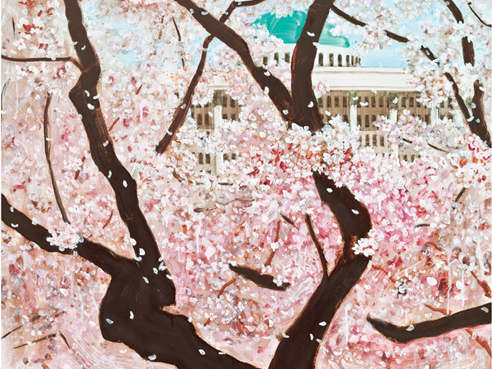
Misty Evening

2015
Oil on canvas
162 x 227 cm
About The Work

Hoin Lee’s practice centers on the relationship between nature and humanity. He focuses on the condition in which humans have separated themselves from the natural world and translates the resulting sense of estrangement and loss into landscape painting.

For Lee, landscape serves as both an observation of the external world and a site for reflecting on his own existence. His interest in broad concepts such as the universe, the Earth, nature, humanity, love, and freedom develops into questions including: Where do we come from, and where are we going? What is truly valuable in life? 

The small human figures placed within immense natural environments invite reflection on anthropocentric ways of thinking while simultaneously conveying fear and awe before the world. Nature thus becomes both a source of consolation and an overwhelming force that reveals the vulnerability of human existence.

Compassion is another central emotion running throughout Lee’s work. For the artist, compassion is not limited to sorrow or sympathy; it encompasses frustration, discomfort, hope, and love. A deer staring anxiously from its habitat, a building barely visible behind dense trees, and fragile vegetation overwhelmed by urban light all evoke this complex emotional state. 

Lee has described his practice as an effort to communicate to others the compassion and love for humanity that he experiences in confronting the world. His landscapes therefore operate not only as representations of beautiful scenery but also as ethical reflections on the incomplete and often troubled relationship between humans and their surroundings.

In this way, Lee does not present nature and the city as two entirely separate realms. Instead, he examines how they invade, reshape, and depend upon one another. Across his practice, landscape ultimately becomes a means of asking where humanity belongs within the world and how it might continue to live within it.


Solo Exhibitions (Brief)

Since his first solo exhibition at Gallery SUN Contemporary in 2009, Hoin Lee has presented solo exhibitions at venues including 16 bungee (2012) and DOOSAN Gallery New York (2018), consistently developing a painting practice that explores the relationship between nature and humanity.

Group Exhibitions (Brief)

Hoin Lee has presented his work in exhibitions at venues including BTAP in Beijing, Walsh Gallery in Chicago, HITE Collection, and Leeum, Samsung Museum of Art, steadily exhibiting in Korea and internationally.

Awards (Selected)

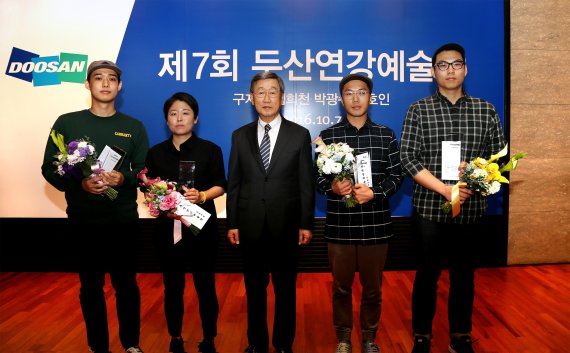
Hoin Lee received the DOOSAN Yonkang Arts Awards in 2016.

Residencies (Selected)

Hoin Lee has undertaken residency programs at Mongin Art Space (2009), Harlem Studio Fellowship, New York (2010), and the Lee Jung-seop Art Museum Creative Studio Residency, Jeju (2013), expanding his practice through opportunities in Korea and abroad.

Works of Art

Human–Nature Relations Embedded in the Landscape

Originality & Identity

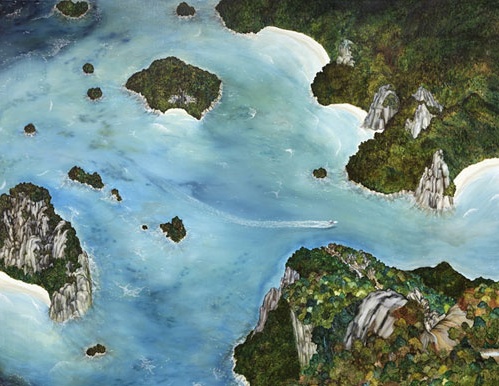
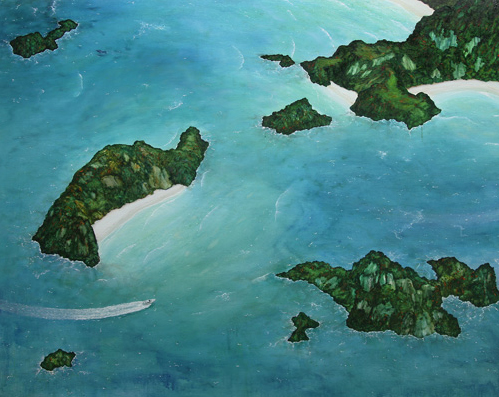
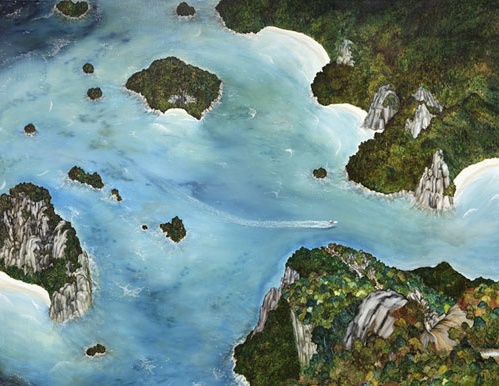
Hoin Lee’s practice centers on the relationship between nature and humanity. He focuses on the condition in which humans have separated themselves from the natural world and translates the resulting sense of estrangement and loss into landscape painting. His early works featured islands, seas, and forests where human presence appeared almost absent, expressing a longing for primordial nature.

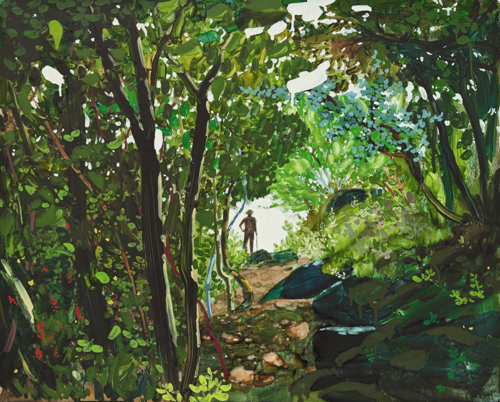
Yet these landscapes never remain images of an untouched paradise. Boats, buildings, hikers, roads, and artificial lights continually intrude upon the scenes, exposing both the human desire for nature and the impulse to possess and transform it.

For Lee, landscape serves as both an observation of the external world and a site for reflecting on his own existence. His interest in broad concepts such as the universe, the Earth, nature, humanity, love, and freedom develops into questions including: Where do we come from, and where are we going? What is truly valuable in life?

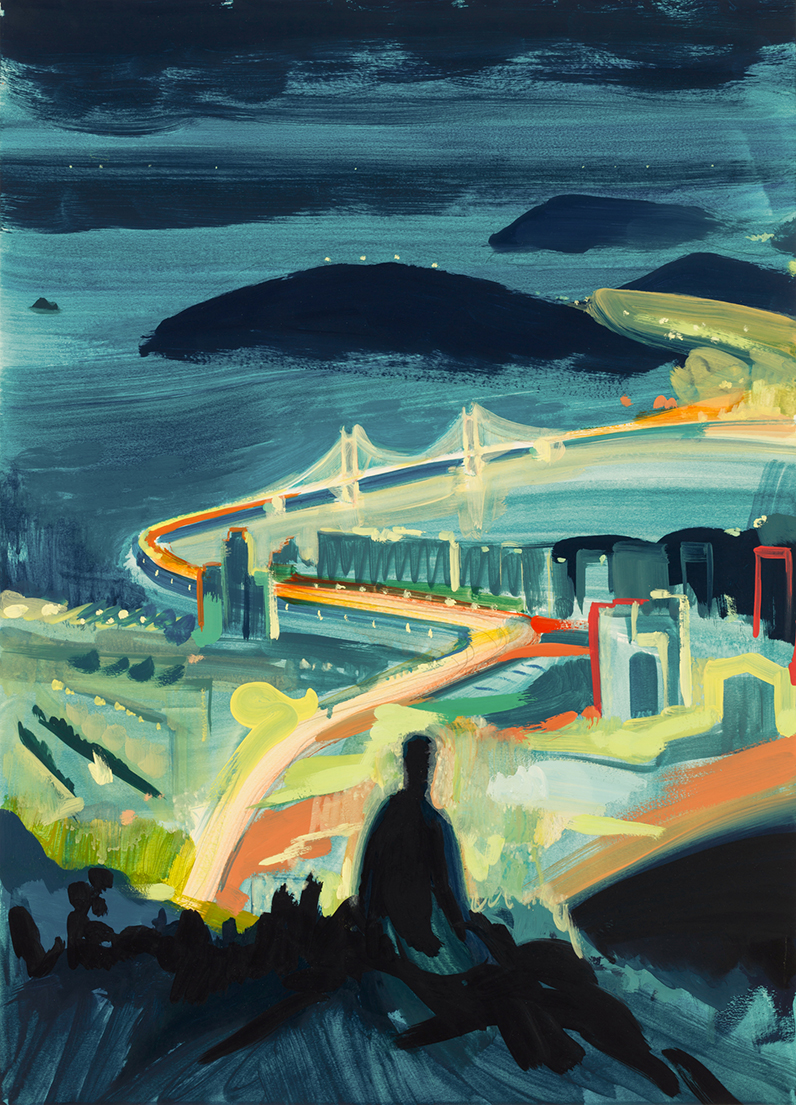
The small human figures placed within immense natural environments invite reflection on anthropocentric ways of thinking while simultaneously conveying fear and awe before the world. Nature thus becomes both a source of consolation and an overwhelming force that reveals the vulnerability of human existence.

Compassion is another central emotion running throughout Lee’s work. For the artist, compassion is not limited to sorrow or sympathy; it encompasses frustration, discomfort, hope, and love. A deer staring anxiously from its habitat, a building barely visible behind dense trees, and fragile vegetation overwhelmed by urban light all evoke this complex emotional state.

Lee has described his practice as an effort to communicate to others the compassion and love for humanity that he experiences in confronting the world. His landscapes therefore operate not only as representations of beautiful scenery but also as ethical reflections on the incomplete and often troubled relationship between humans and their surroundings.

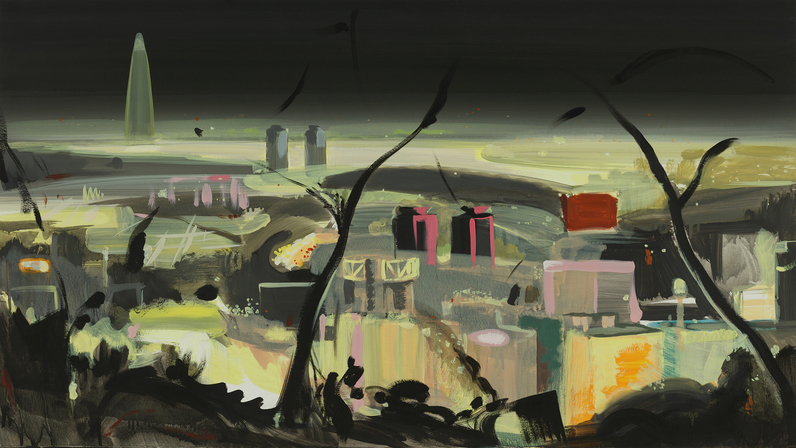
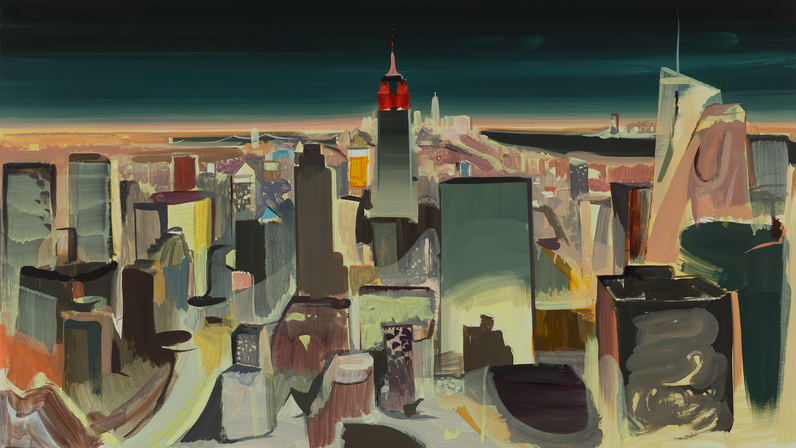
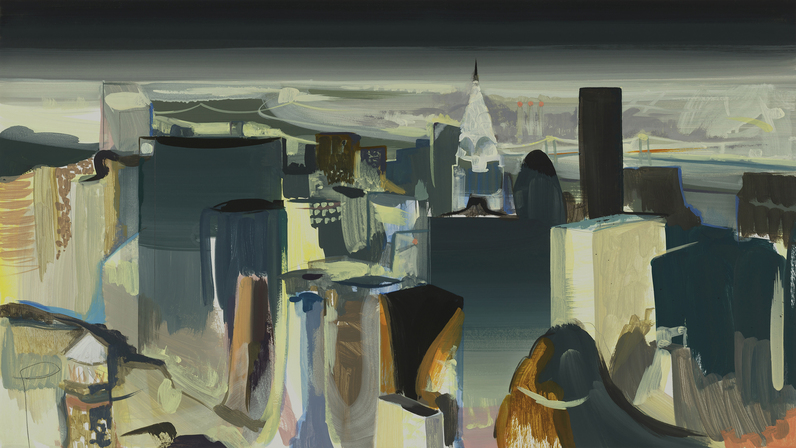
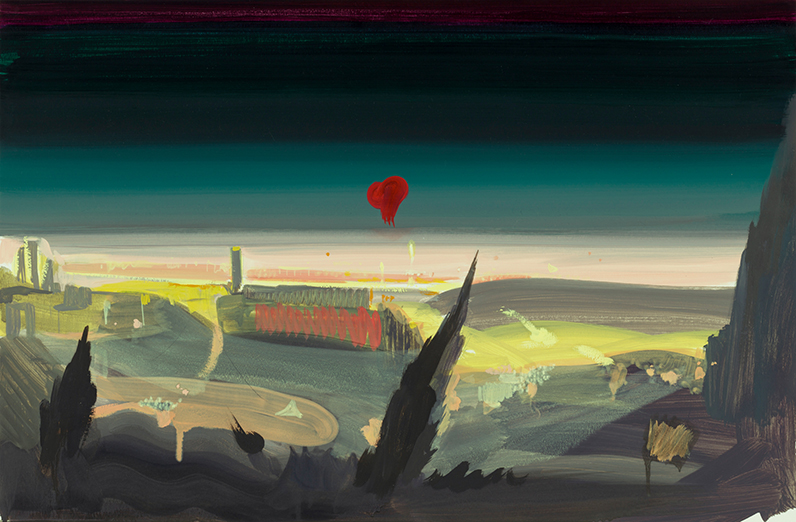
This concern continues in his more recent paintings of urban nightscapes. Whereas artificial traces once appeared small within vast natural settings, the city now dominates the composition, while nature is buried in darkness or reduced to a surface reflecting artificial light. This shift is more than a change in subject matter; it reveals the altered balance of power between human construction and the natural environment.

Lee does not present nature and the city as two entirely separate realms. Instead, he examines how they invade, reshape, and depend upon one another. Across his practice, landscape ultimately becomes a means of asking where humanity belongs within the world and how it might continue to live within it.

Style & Contents

Landscape serves as the foundation of Hoin Lee's paintings, yet his works are not intended as documentary representations of specific places. Instead, he layers observed scenery with memory, reflection, and emotion to construct landscapes where physical reality and psychological experience intersect.

His early paintings combined internet-sourced imagery with imagined natural environments, while later works increasingly drew upon places he encountered directly, including forests, the landscapes of Jeju, and the nocturnal cityscape of Seoul. Even these recognizable locations are transformed through subjective perception, becoming pictorial spaces in which the relationship between humanity and nature can be contemplated.

Lee's compositions condense complex narratives into carefully structured spatial relationships. Vast forests, seas, and urban environments dominate the picture plane, while human figures and architecture appear on an almost insignificant scale. Buildings are frequently obscured by dense vegetation, and figures such as hikers or wildlife occupy the landscape in ways that generate subtle psychological tension.

These shifts in proportion and distance not only visualize the physical relationship between humanity and nature but also underscore the relative fragility of human existence. His detached viewpoint and restrained compositions encourage viewers to discover these relationships for themselves rather than directing them toward a fixed interpretation.

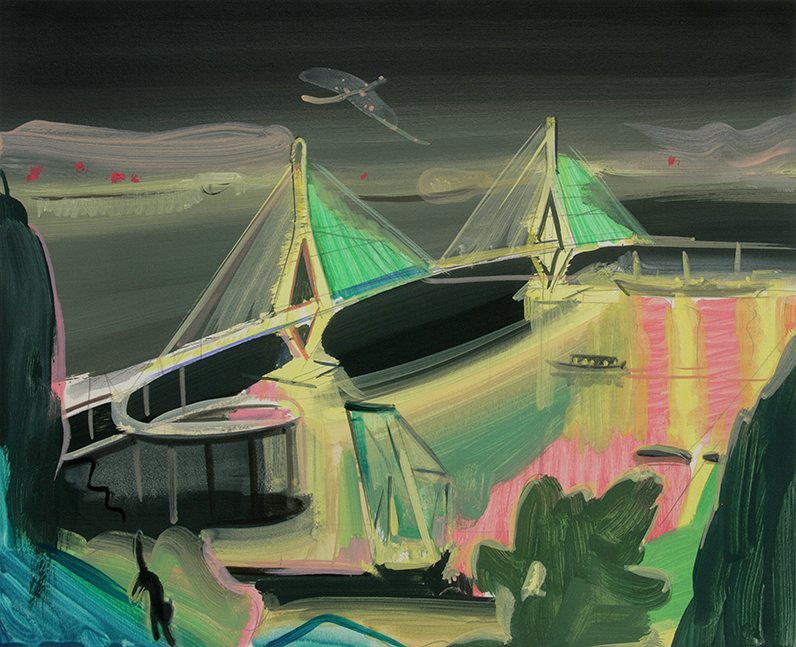
Material experimentation forms another essential aspect of Lee's practice. In earlier works, traces of human presence emerged through the physical act of scraping away layers of paint. He later painted on transparent PVC acrylic panels, allowing brushstrokes to slide across the surface without fully merging with the support.

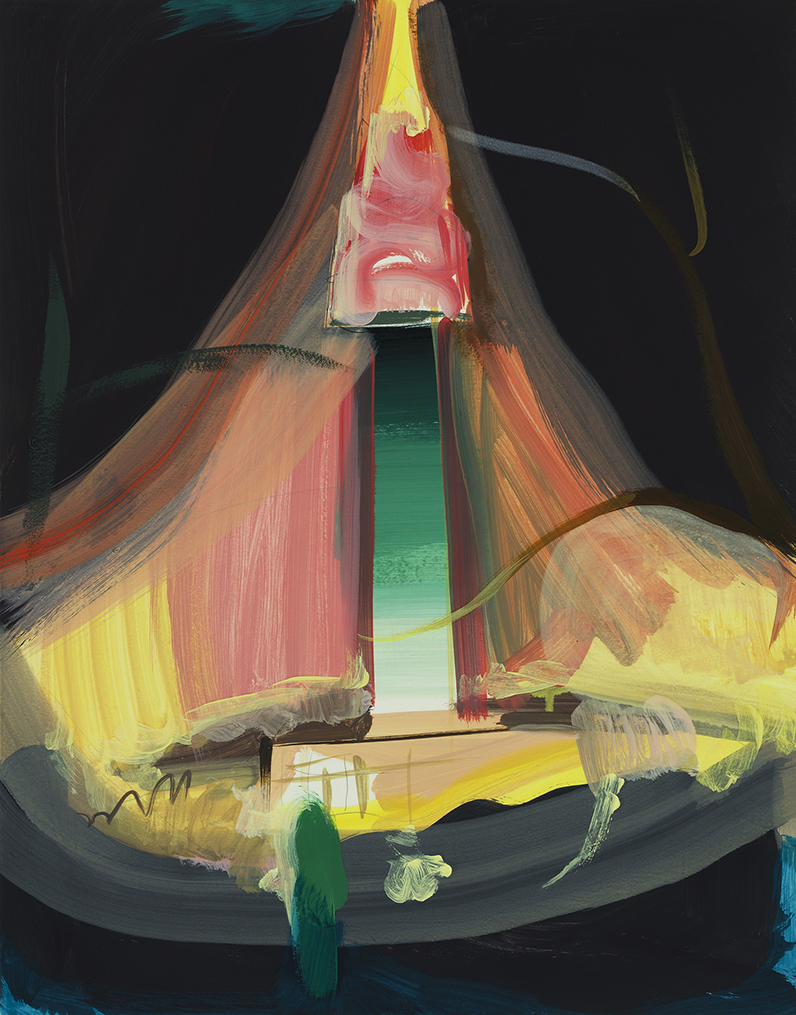
These experiments questioned the possibility of faithfully representing nature through painting while drawing attention to the distance between the materiality of the medium and the reality of the natural world. More recent paintings introduce broader gestures, chance-driven marks, heavier applications of paint, and bolder color relationships, revealing a pictorial language that embraces greater spontaneity and physical immediacy.

Despite these formal developments, a consistent emotional atmosphere runs throughout Lee's work. The relationships between nature and the city, light and darkness, and the artificial and the organic are presented through quiet tension rather than dramatic confrontation. His landscapes do not seek visual spectacle alone; instead, they invite reflection on how humans perceive nature and position themselves within the world.

Through this approach, Lee has developed a distinctive painterly language that balances material experimentation with emotional resonance, using landscape as a vehicle for exploring both physical space and inner experience.

Topography & Continuity

Since the late 2000s, Hoin Lee has maintained a sustained engagement with landscape while continuously expanding its scope in response to changing environments and personal experience. His early paintings explored imagined natural settings assembled from internet-sourced imagery, depicting landscapes where traces of humanity were almost entirely absent.

Over time, his attention shifted toward forests, gardens, the natural environment of Jeju, and eventually urban nightscapes. Although the settings have evolved, his fundamental inquiry into the relationship between humanity and nature—and the broader questions of existence that arise from it—has remained remarkably consistent.

This continuity is defined not by the repetition of imagery but by the ongoing development of a shared conceptual foundation across different contexts.

The evolution of his practice is equally evident in its formal language. Earlier works relied on meticulous rendering and carefully controlled compositions to articulate the tension between nature and the artificial. More recent paintings embrace broader brushwork, denser layers of paint, and the role of chance within the painting process.

His exploration of urban nightscapes has further expanded his visual vocabulary, introducing the luminous structure of artificial light and heightened chromatic intensity as central pictorial elements. These formal shifts demonstrate not only an expanding painterly language but also the changing sensibility through which Lee approaches the relationship between humanity and the environment.

Nature, for Lee, is never simply a motif to be depicted. His extended experience of living within natural environments and his sustained observation of them have transformed landscape into a site where lived experience and reflection accumulate. Following his residency in Jeju, his paintings increasingly began to address the realities of development, environmental degradation, and urbanization alongside his enduring fascination with the natural world.

Rather than presenting overt social commentary, Lee allows these conditions to emerge quietly through the landscapes themselves, revealing how contemporary realities become embedded within the environment.

His recent series of urban nightscapes continues this trajectory. The illuminated city appears simultaneously as a compelling visual spectacle and as a reminder of nature's diminished presence within contemporary life. While human constructions now occupy the foreground of the image, Lee continues to search for signs of life and resilience within their margins.

Through this sustained expansion of landscape—across materials, places, and painterly approaches—his practice has developed into an ongoing reflection on contemporary environments and humanity's place within them.

Works of Art

Human–Nature Relations Embedded in the Landscape

Articles

Exhibitions

Activities