Cheonggye Sea - K-ARTIST

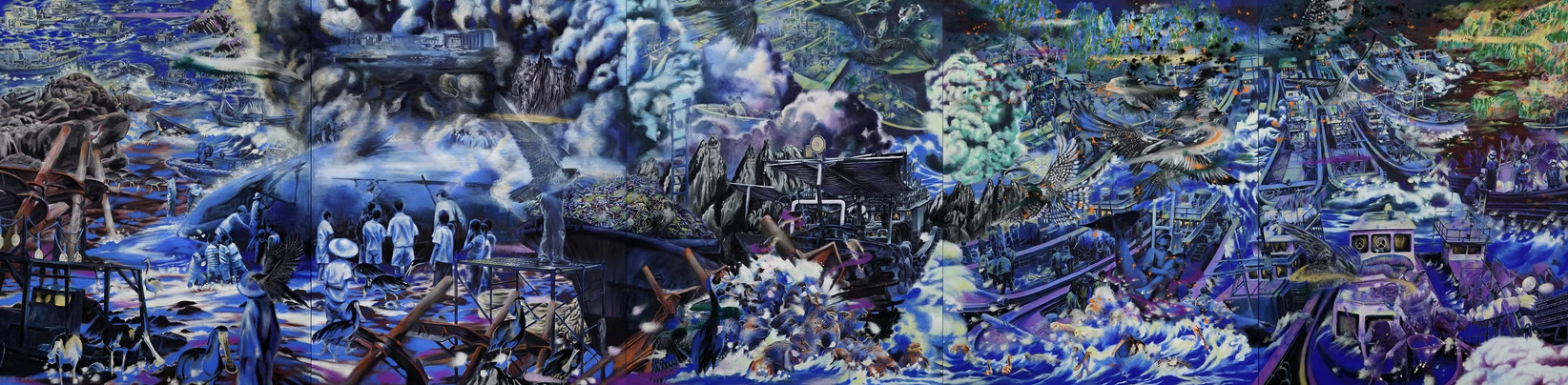
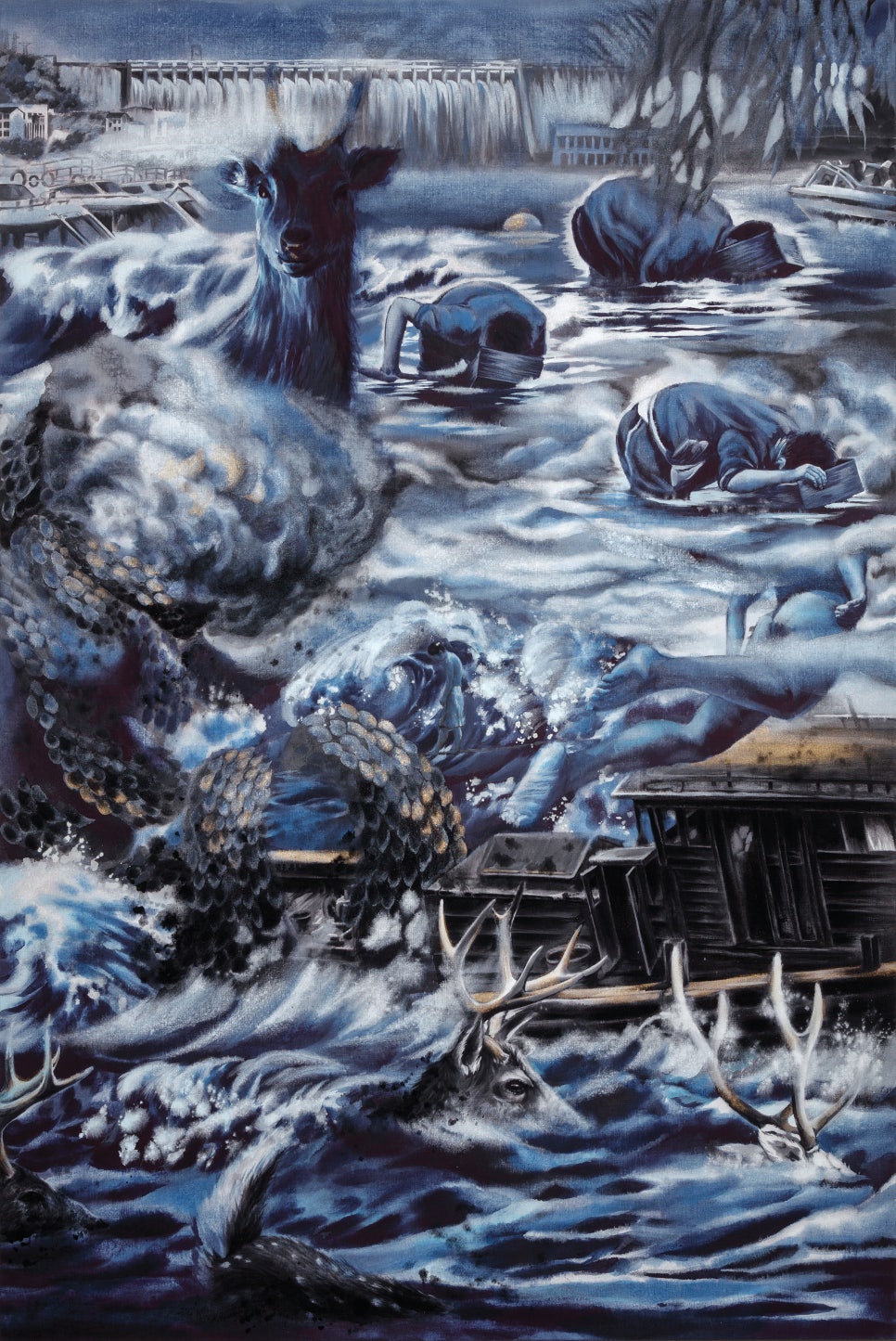
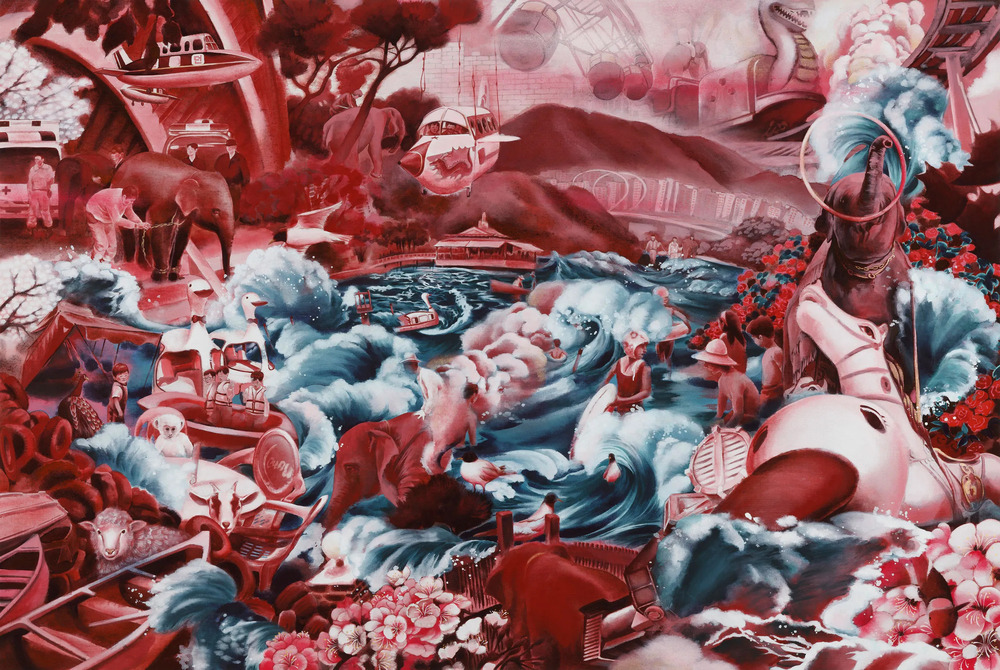
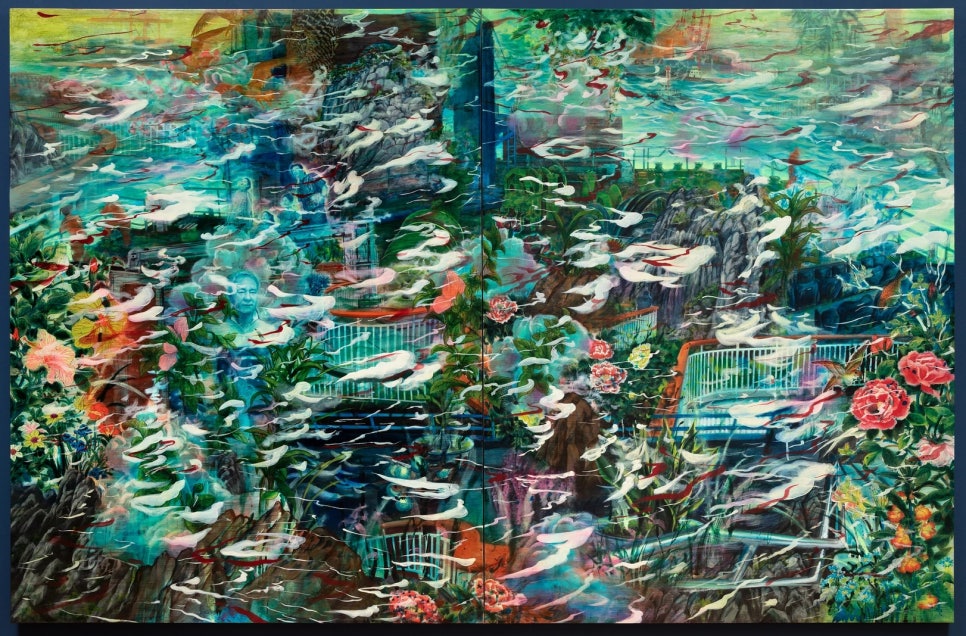
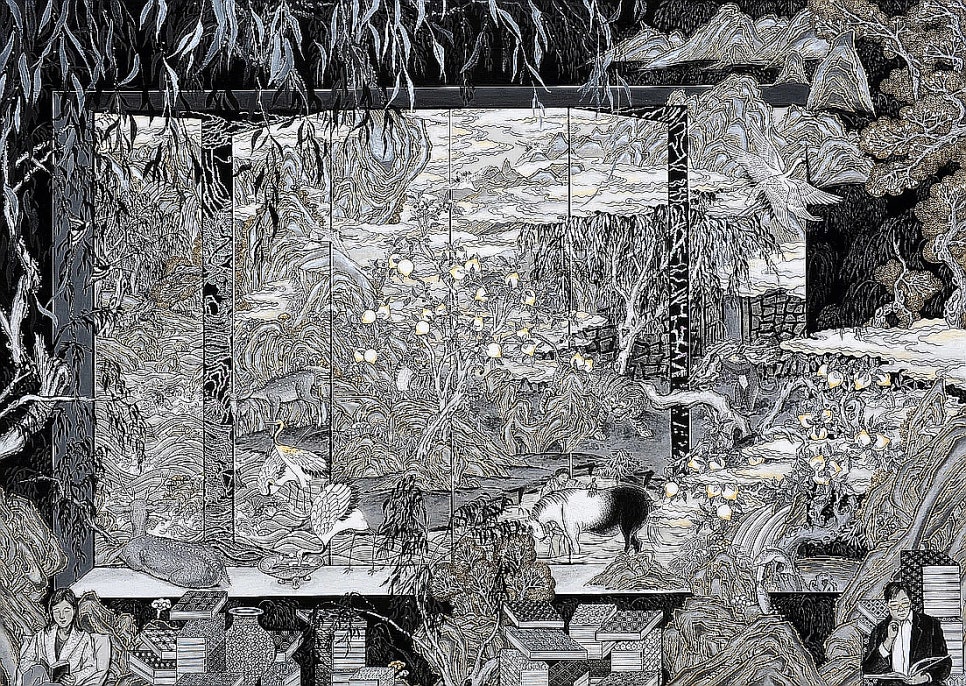
Cheonggye Sea

2018
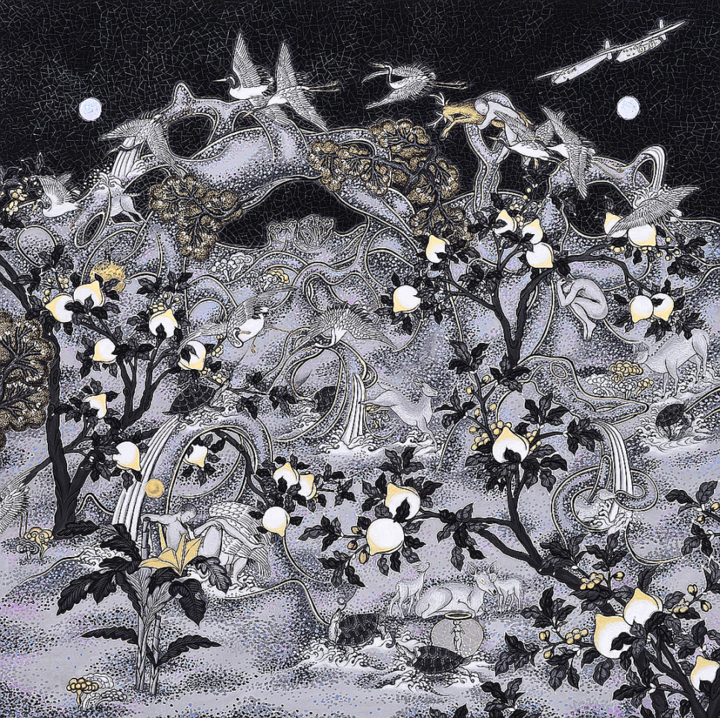
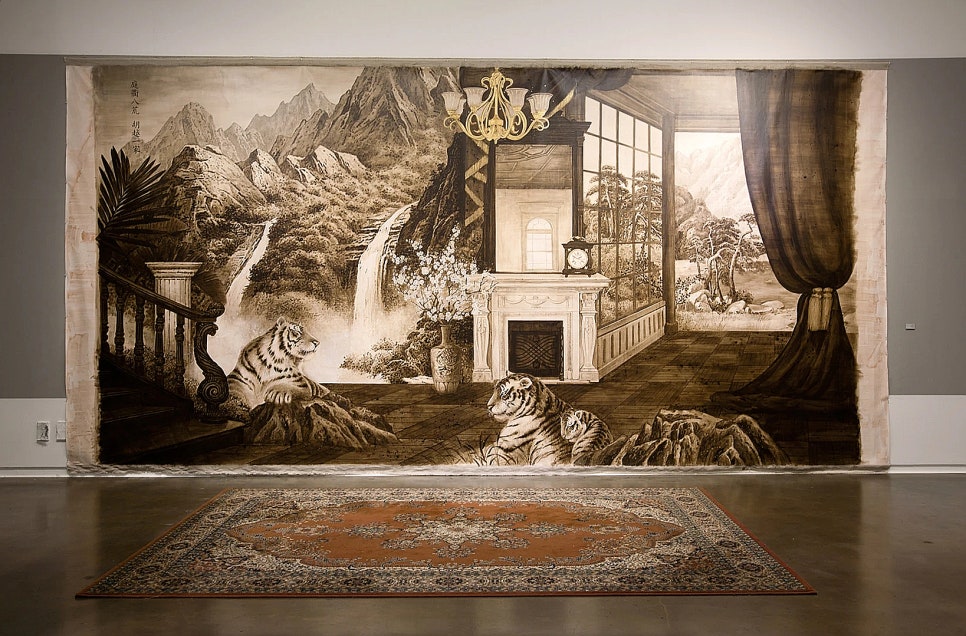
Mineral pigment on Korean jangji paper
130 x 194 cm
About The Work

Naomi investigates the historical identity of specific places by juxtaposing past events with their present-day landscapes. Through comparative research spanning personal oral histories, archival documents, and local folklore, the artist examines how places acquire and transform their historical and cultural meanings.
 
Tracing the ways in which collected images are translated, reinterpreted, or disappear across different places, ideologies, and historical periods, Naomi transforms these fragments of records and memories into diorama-like painterly scenes, where multiple layers of time and narrative converge.

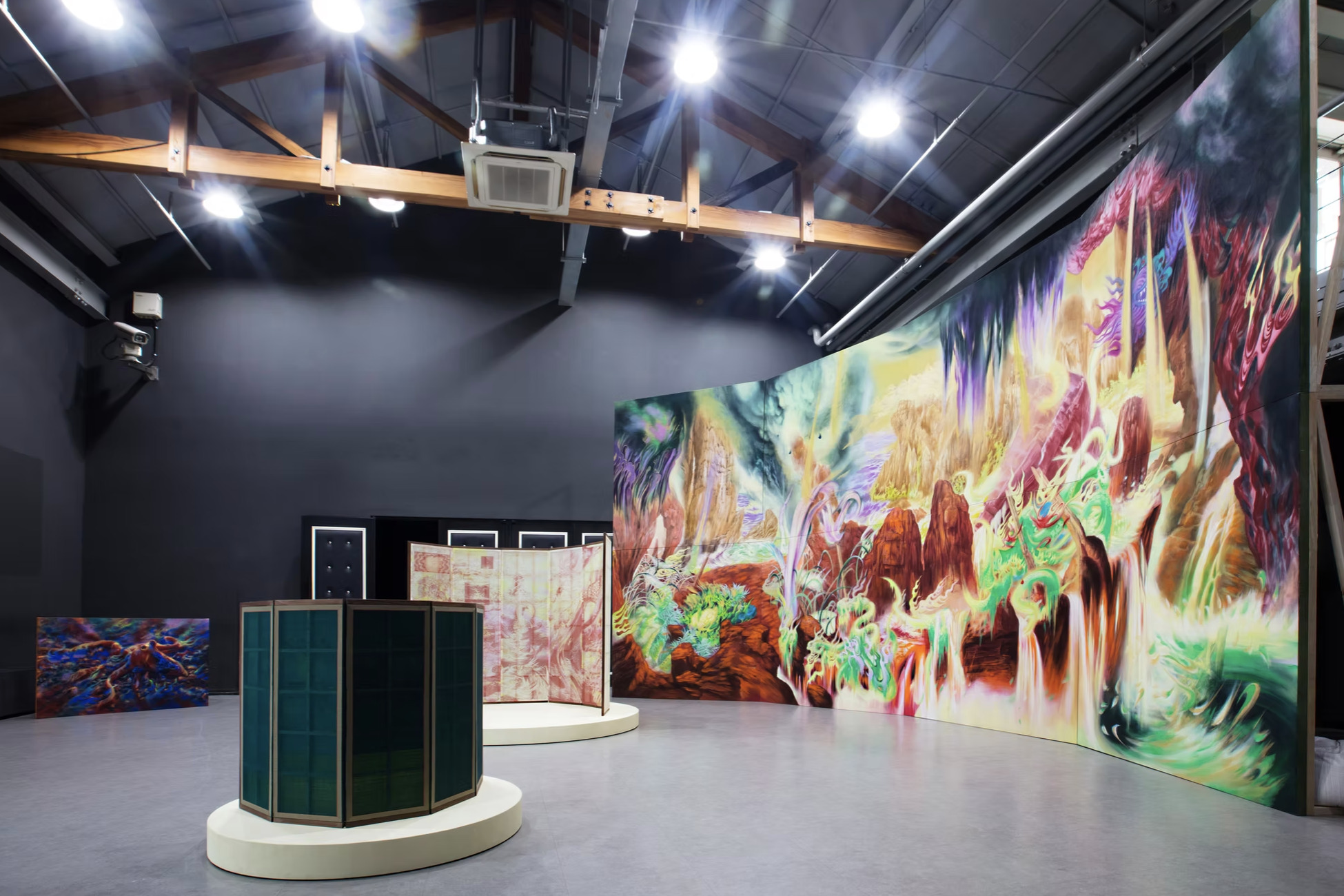
Naomi conducts on-site research and collects and rearranges historical materials before completing monumental paintings using traditional painting techniques. Created with traditional painting materials such as sunji (mulberry paper), hemp cloth, and mineral pigments, Naomi's works do not merely replicate the conventions of traditional East Asian painting. 

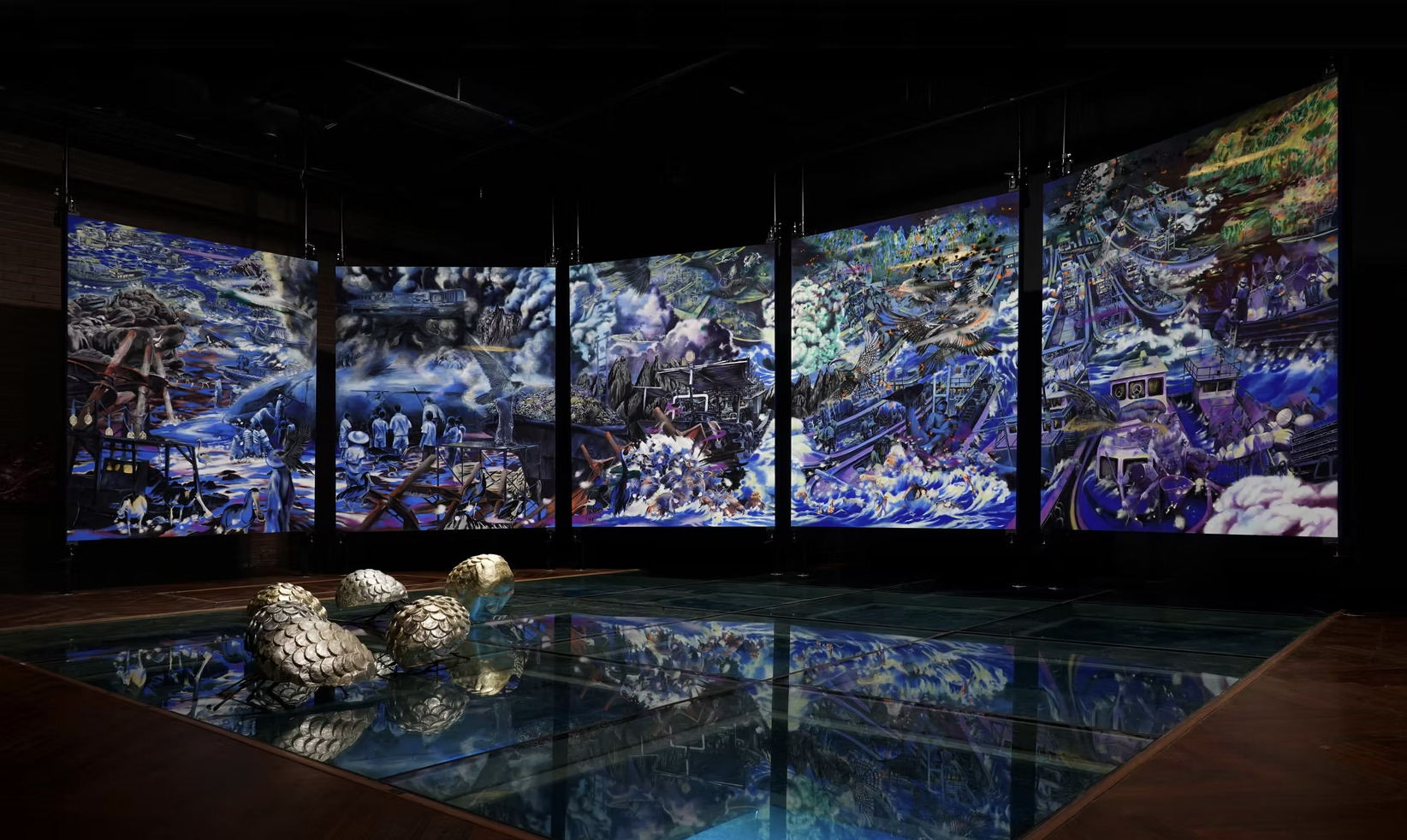
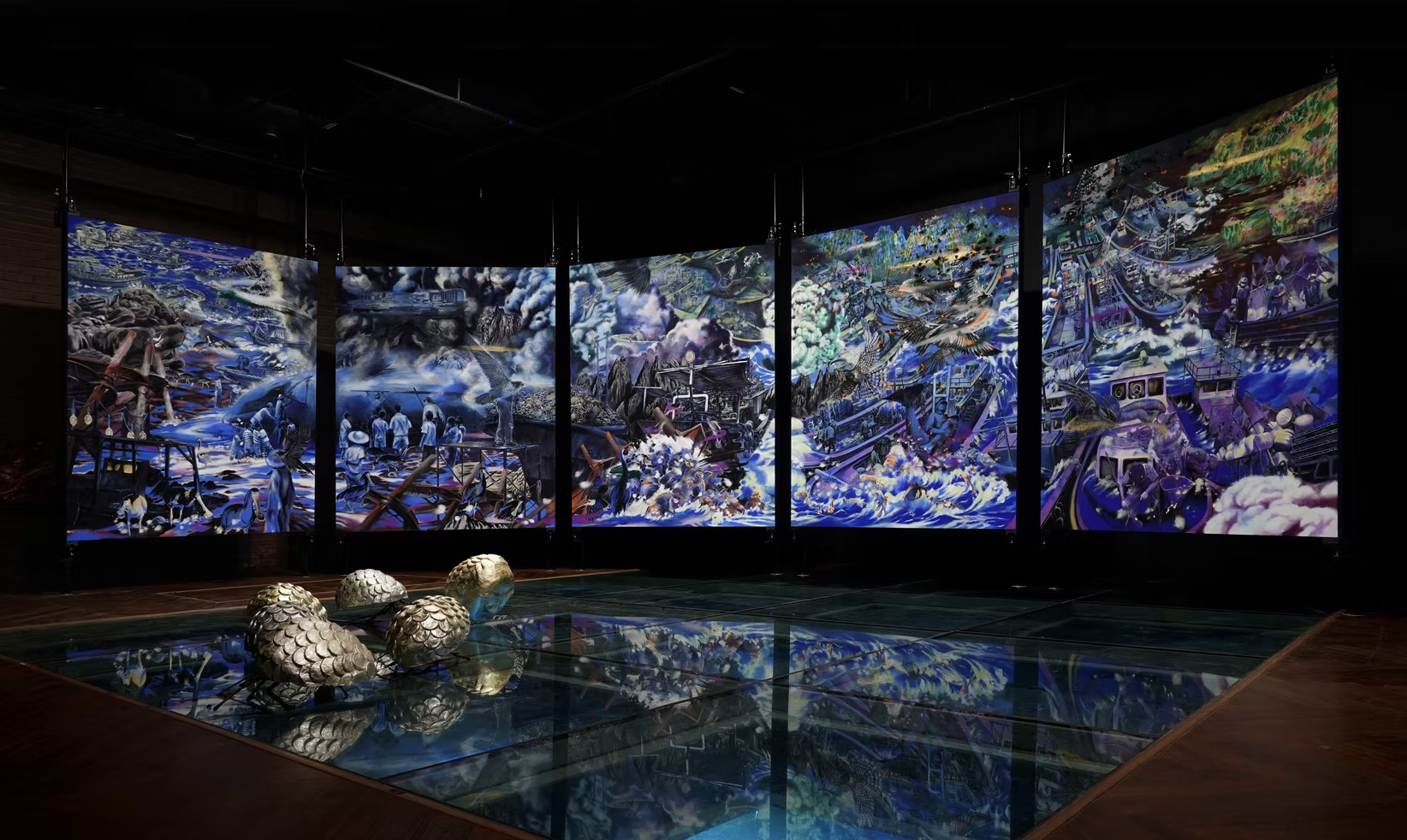
Rather, they engage with contemporary issues including nationalism, the cultural erasure of ethnic minorities, and women's narratives. Furthermore, beginning with the physical structure of the folding screen, Naomi adopts a large-scale diorama format composed of multiple connected canvases, creating a spatially immersive experience that transforms the reality upon which viewers stand into another place.

Within these imagined gardens—where historical facts and conjectures drawn from archival sources, stories rooted in people's memories, and the artist's own imagination converge—viewers encounter the narratives Naomi constructs while adding their own interpretations and imaginative associations.

Layering the boundaries between past and present, life and death, and reality and imagination, her paintings transcend the conventional landscape genre to become expansive narrative stages. By reinterpreting places shaped by specific historical contexts and the emotions once shared by the people who inhabited them from a contemporary perspective, Naomi evokes a sense of universal empathy.

Solo Exhibitions (Brief)

Naomi has held recent solo exhibitions including 《From the Edge of the Yellow Sea》 (Incheon Art Platform/Buyeon, Incheon, 2025), 《From the Edge of the Yellow Sea》 (Space Beam, Incheon, 2024), and 《Floating Islands, Day for Night》 (TINC, Seoul, 2023).

Group Exhibitions (Brief)

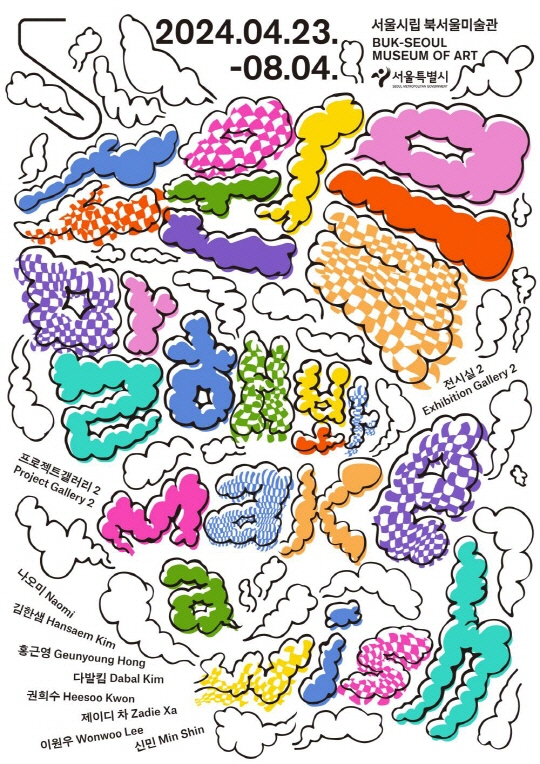
Naomi has also participated in numerous group exhibitions, including 《Signs of Bukahyeondong 2026》 (Nook Gallery, Seoul, 2026), 《As She Descends》 (Aranya Art Center, Qinhuangdao, China, 2025), 《DMZ OPEN EXHIBITION: PASSAGE》 (Imjingak Pyeonghwa Nuri, Paju, 2024), 《Make a Wish》 (Buk-Seoul Museum of Art, Seoul, 2024), 《Korea in Color: A Legacy of Auspicious Images》 (San Diego Museum of Art, California, USA, 2023), and 《Summer Love》 (SONGEUN, Seoul, 2022).

Residencies (Selected)

Naomi was an artist-in-residence at the MMCA Residency Goyang (2026), the SeMA Nanji Residency (2022), and the OCI Museum of Art Residency (2017–2018).

Collections (Selected)

Naomi’s works are held in the collections of the Sigg Collection, the OCI Museum of Art, and the Korea University Museum.

Works of Art

Painting as a Stage for Layered Narratives

Originality & Identity

Naomi's practice begins with a long-standing interest in things that vanish and are forgotten. From Waterspout(2014) onward, the artist filled her compositions with signs and symbols, choosing to mark traumatic contemporary events — such as the Sewol ferry disaster — with something as small as a single ribbon woven into the image.

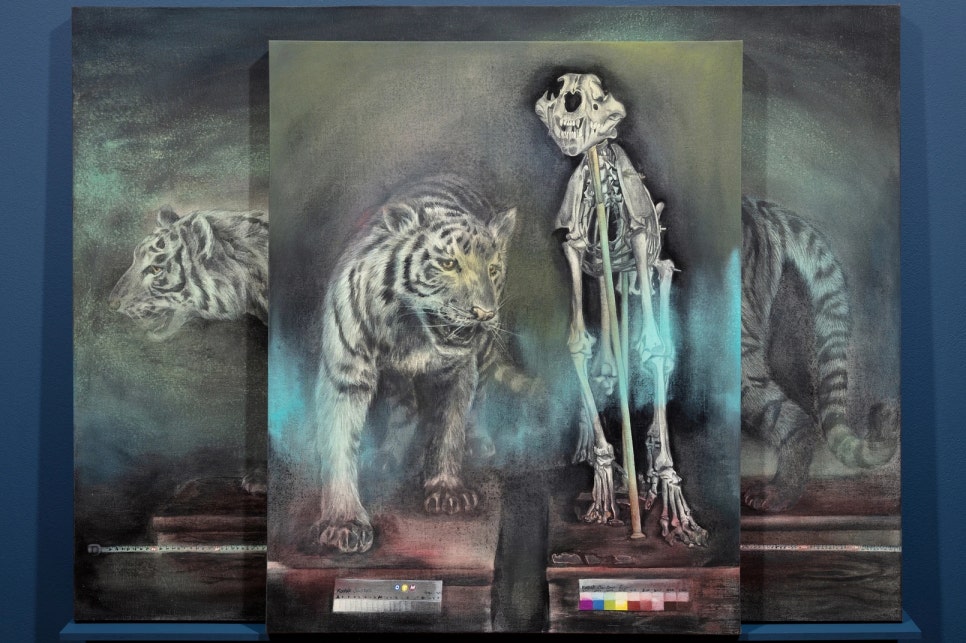
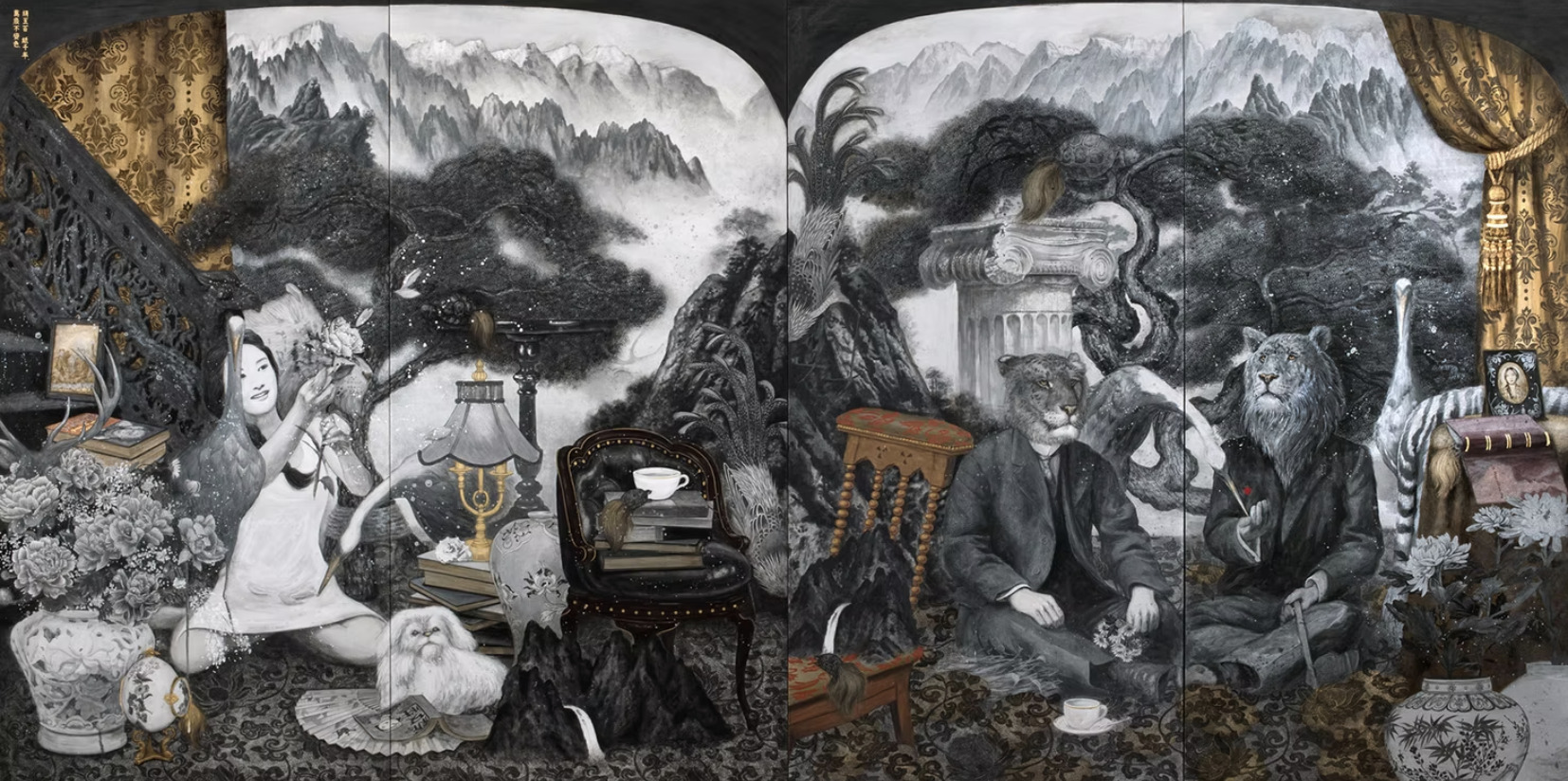
In this period, painting functioned for the artist as a medium for recording events large and small, and the Korean tiger, driven to extinction on the peninsula, recurs across works such as Portrait of Liger and Tigon(2017) and Jeongho-gi (征虎記)(2019) as a kind of self-projection onto a vanished being.
 
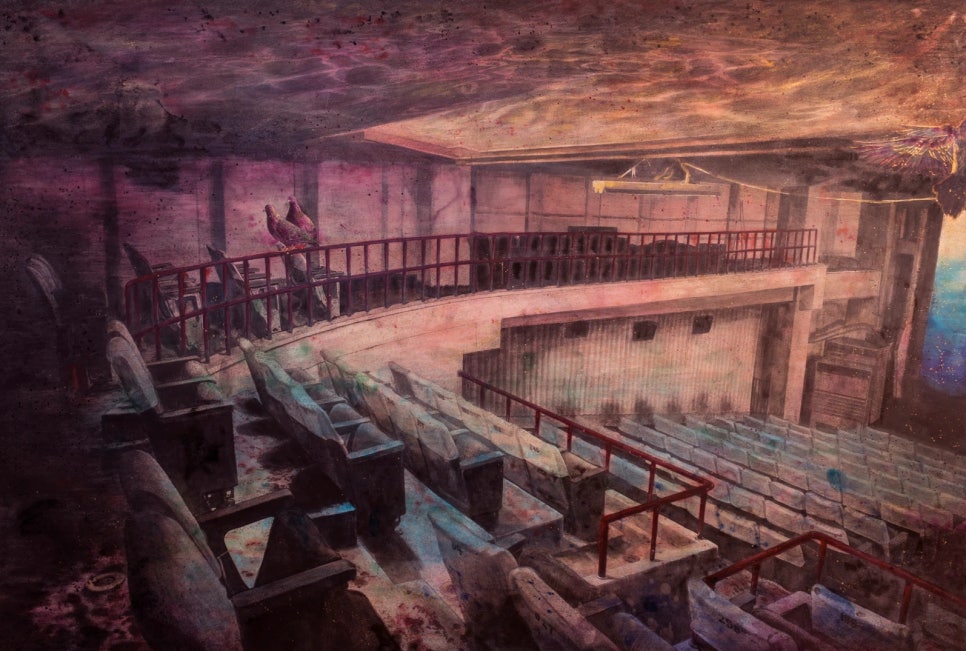
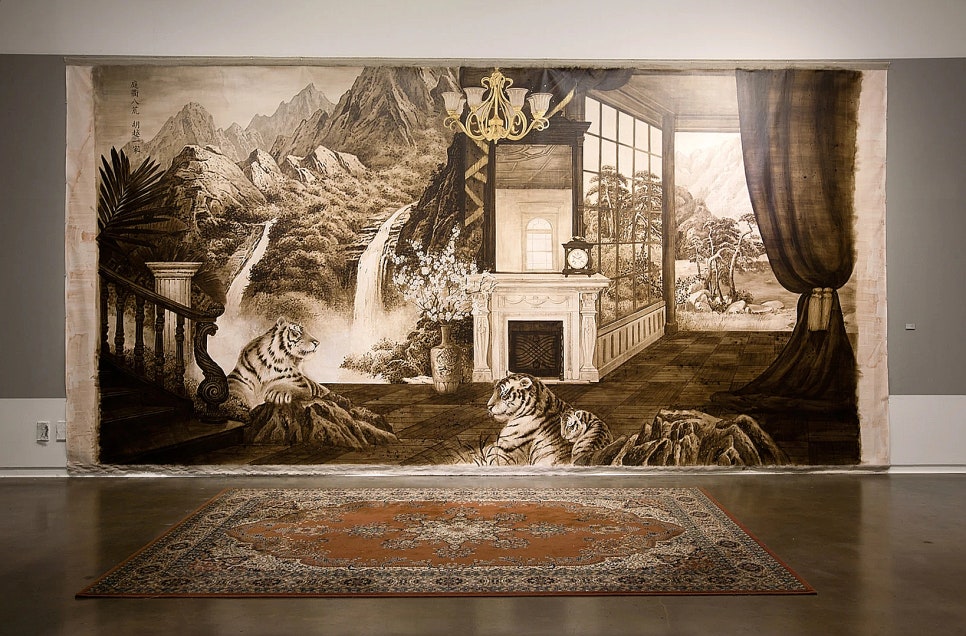
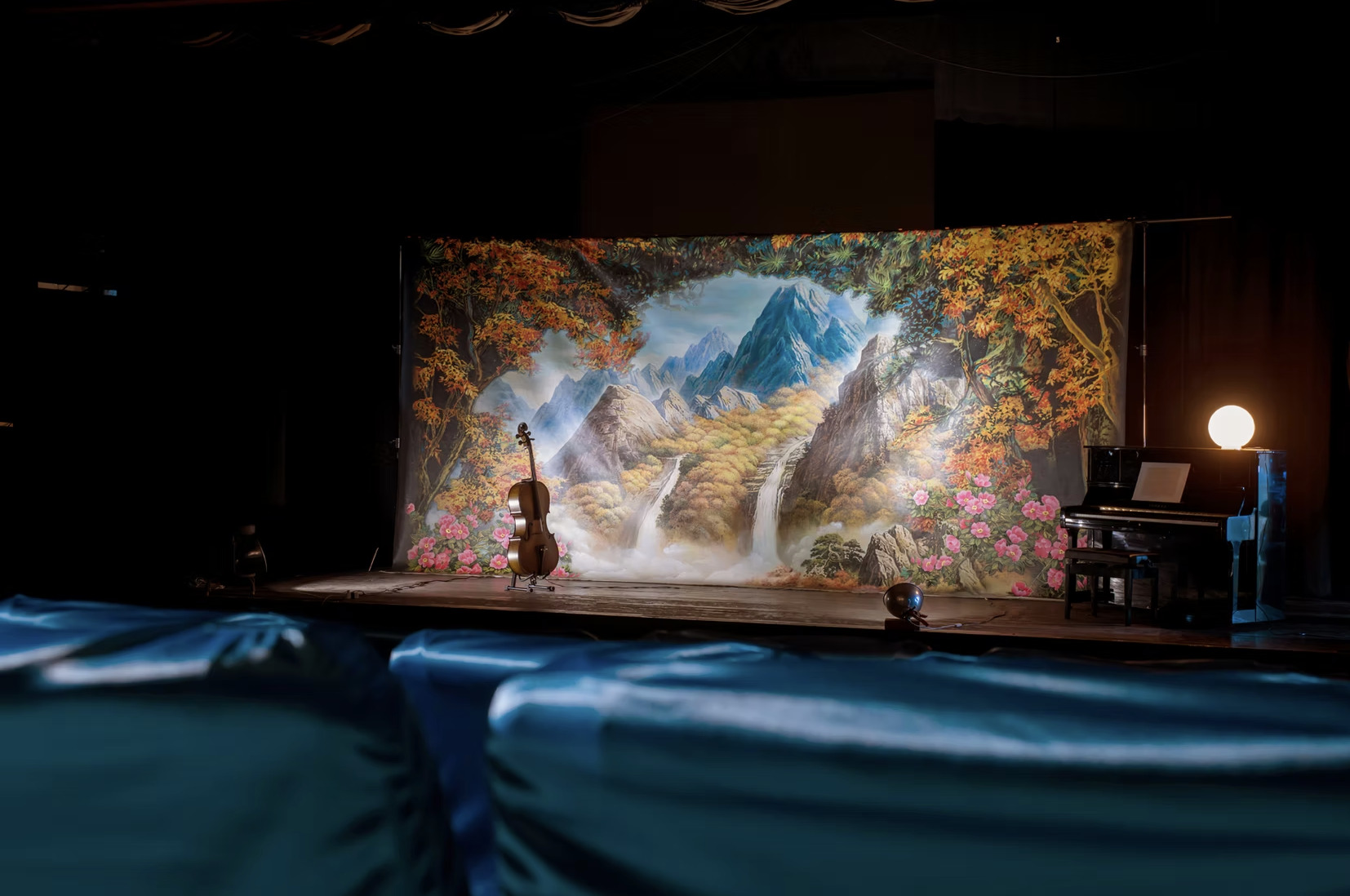
The theater works begun around 2017 extended this concern into a sense of place. Starting from the 1930s Diamond Mountain (Geumgangsan) sketches of scenographer Won Woo-jeon, in 《Simultaneous Screens》(Bada Theater/Mirim Theater, 2018) — staged in a shuttered theater in Seoul's Cheonggyecheon and a reopened theater in Incheon — Naomi reinterpreted the theater as a place suspended between reality and an ideal world.

For the artist, the past here was not an object of escape but a model for reflecting on present-day problems, an attitude that has continued to run through her work since.
 
After 2019, Naomi's attention expanded from individual sites to the regional scale of port cities. Grounded in a journey from Incheon to the Chinese port of Dandong, 《Imaginary Gardens with Real Toads》(SONGEUN Art Cube, 2020) and the 'Liberation of Coastline'(2019–) project trace a shared phenomenon — coastal reclamation and disappearance — by comparing Korean and Chinese border regions.

Around this time, the artist also began attending to narratives excluded from official history, such as Korean-Chinese (Joseonjok) folktales and North Korean storybooks; a work such as 《River of Shadows》(Post-Territory Ujeongguk, 2021) shows this concern expanding into questions of ethnic minority identity across national borders.
 
With 《波市_Lost village on the sea》(Artspace Boan 3, 2022), the artist's thematic focus shifts decisively toward sea deities and the narratives of women and goddesses. In The God of the Sea, God Who Crossed the Sea(2022), which weaves together a shaman painting of General MacArthur worshipped as a sea god with the story of Ungnyeo from the Dangun myth, now standing as a massive statue in China, Naomi captures deification itself as a mirror reflecting the lack and desire of an era.

In subsequent exhibitions — 《Floating Islands, Day for Night》(TINC, 2023) and 《From the Edge of the Yellow Sea》(Space Beam, 2024; Incheon Art Platform/Buyeon, 2025) — the stories of women transmitted through the sea, such as Mazu, Shim Cheong, Yeongdeung, and Lady Meng Jiang, move to the center of the work, extending, as seen in her recent participation in 《As She Descends》(Aranya Art Center, 2025), into a broader horizon of narratives about women across Asia.

Style & Contents

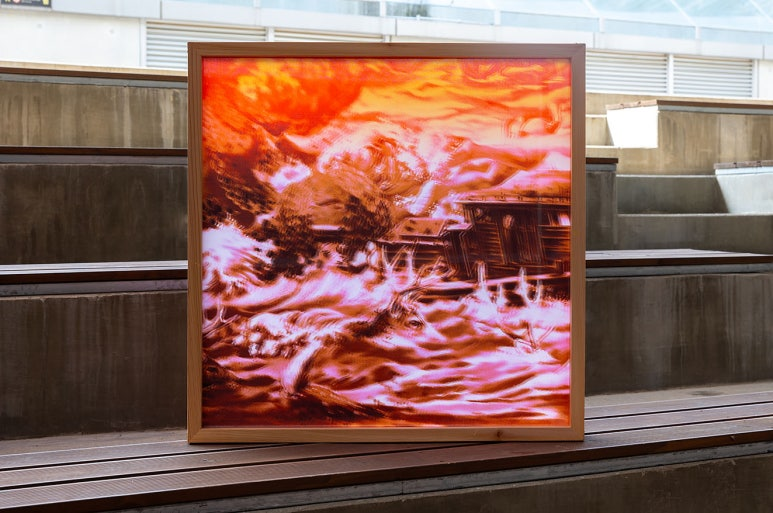
Naomi's paintings can also be traced through the evolution of their materials. Early works followed the grammar of traditional Korean color painting, using mineral pigment and gold powder on mulberry paper (sunji or jangji); as the scale of her canvases grew, she replaced paper with woven supports such as hemp or ramie cloth.

Rather than layering pigment on the surface as in oil painting, she has consistently let it soak into the support, and more recently has extended this experimentation to silk, a semi-transparent material that allows her to hold flatness and spatial depth at once. This choice of material is not merely technical; it is bound up with the artist's narrative intent to layer past and present, the real and the imagined, within a single picture plane.
 
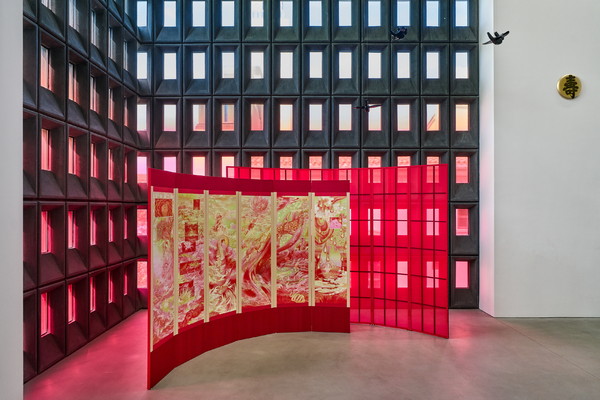
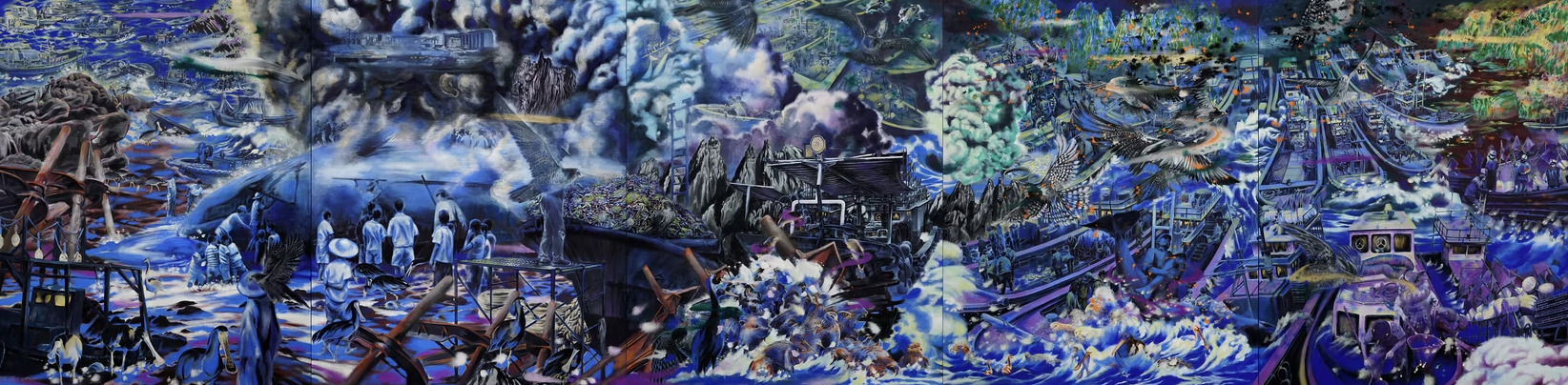
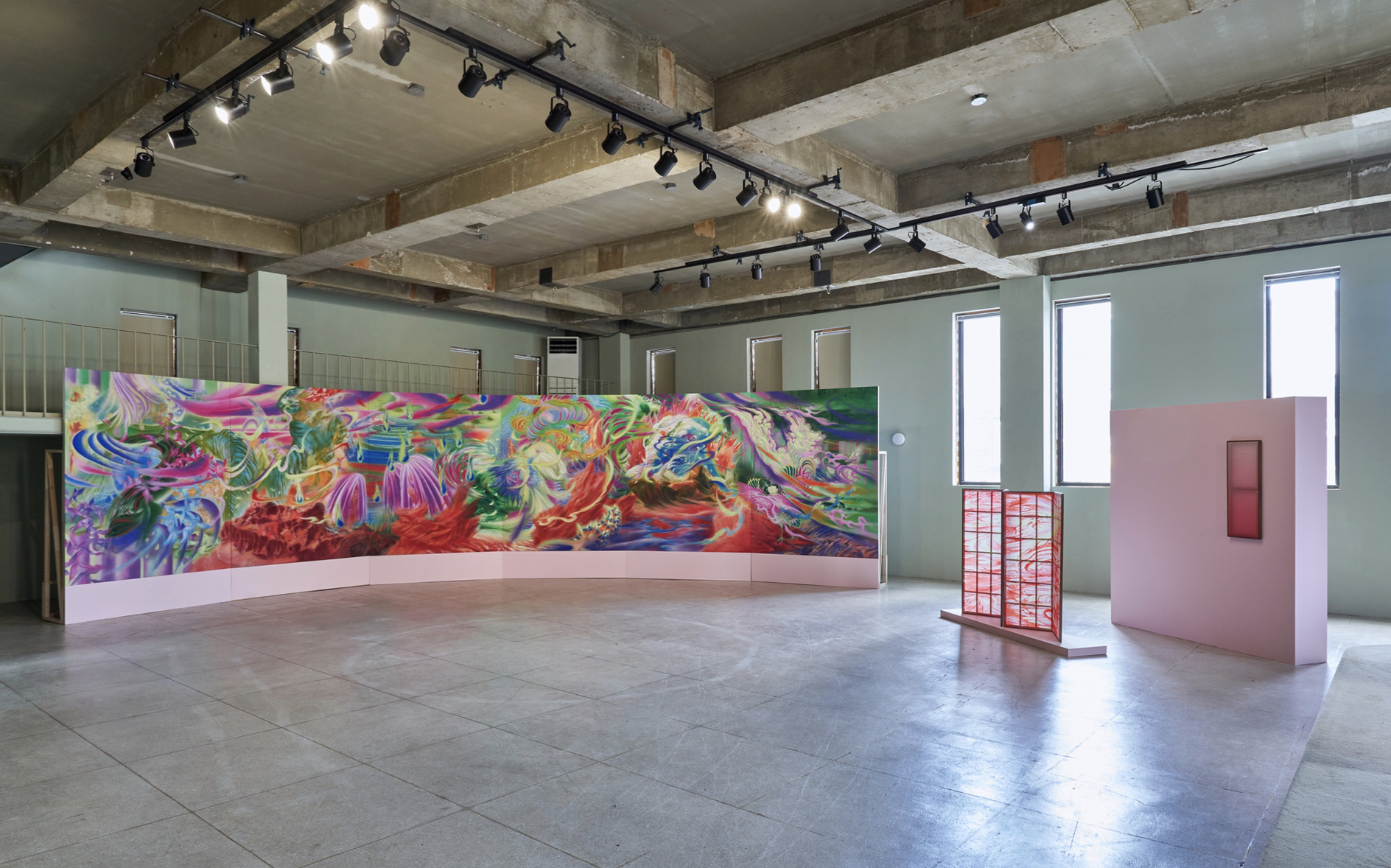
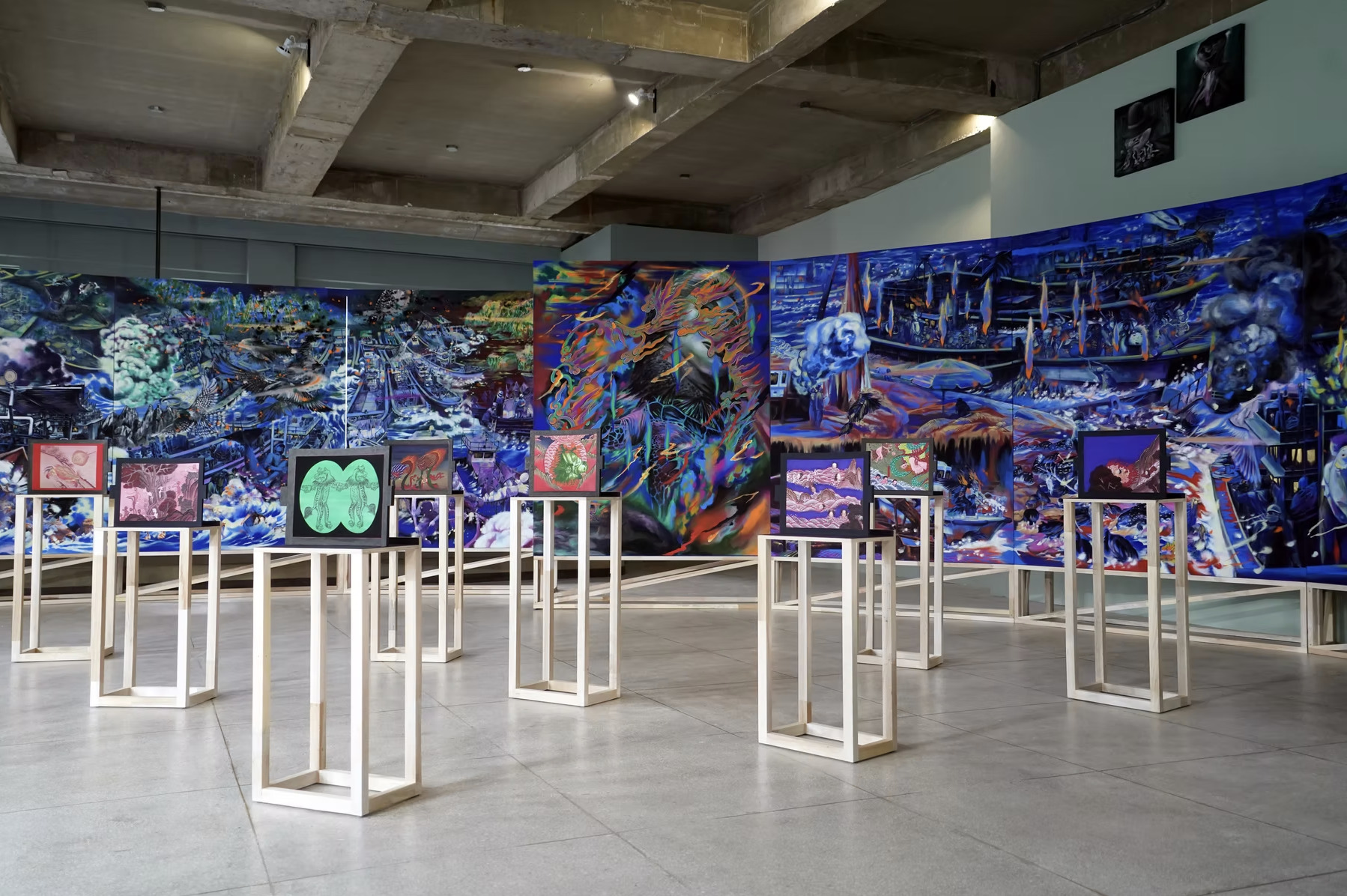
Formally, one striking line of development runs from the folding screen to the diorama. Early works such as Imaginary Gardens with Real Toads(2019), which used the physical structure of the folding screen directly, evolve by the time of 波市_Lost village on the sea(2022) into large-scale, multi-panel diorama paintings made of joined canvases.

The narrow gaps left between panels function not as mere seams but as a kind of curtain dividing one scene from another, inviting each viewer to imagine a different narrative within that gap. Endless Bliss, to You(2020–2021), which filled an entire arched wall in 《Borderless Site》(Culture Station Seoul 284, 2021), and Graceful Ghost, to My Mothers(2025), made as a six-panel folding screen for 《From the Edge of the Yellow Sea》, both show how the painting itself becomes a stage and a spatial device.
 
At the level of content, Naomi has consistently placed heterogeneous materials — modern and contemporary photographs, personal oral testimony, regional documents and folklore — side by side within a single picture plane.

In 波市, records of whale hunting at Daecheong Island by the Japanese-founded Oriental Whaling Company during the colonial period coexist with images of a present-day migratory bird habitat vanishing to land reclamation; in The God of the Sea, God Who Crossed the Sea, the oral testimony of the shaman Yi Jeong-ja is woven together with the Dangun myth and memories of the Korean War. This method of setting different times and stories in collision has become Naomi's signature compositional principle, one that holds documentary factuality and painterly fiction at once.
 
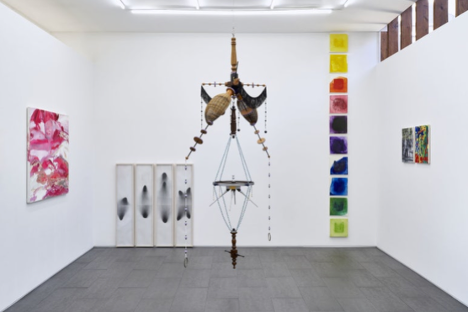
More recently, the medium itself has been expanding. To hold narratives that a still painted image alone cannot contain, the artist has broadened her formal vocabulary to include video — Yeonbulsinbul (煙火神火)(2023) — photography, objects such as Fish Mask, and publications such as the book We Cannot Fall Out of the World(2024). Her recent description of painting as a kind of still film suggests that work moving between still and moving images is likely to become more central going forward.

Topography & Continuity

What distinguishes Naomi's work is the way archival research and traditional painting technique are fused together. Collecting and rearranging historical material is not, in itself, an unfamiliar method in contemporary art, but Naomi sets herself apart by refusing to let that material rest as conceptual statement, photograph, or object alone — instead completing it as an enormous, hand-painted image made with age-old materials such as mulberry paper, hemp, and mineral pigment.

Where other artists working in traditional color-painting techniques tend to remain within the nostalgia or decorative pull of the form itself, Naomi uses the same materials and techniques to speak to present-day concerns — nationalism, the cultural erasure of ethnic minorities, the narratives of women.
 
Retracing the artist's path, one can see her radius of concern widening steadily: from the theater, a closed and private stage, to the coastal region linking Incheon and Dandong, and on to the sea shared across Asia, where Mazu, Shim Cheong, and Lady Meng Jiang cross paths. Over this course, the artist's personal memory shifted naturally into regional memory, and regional memory into the stories of women crossing national borders.

As Naomi herself has said, painting is a medium that can collapse time and space — and for her, expansion has meant making more times and places breathe together within a single picture plane.
 
Going forward, Naomi seems likely to extend her research-based method to other parts of Asia. Her own stated intention to seek out further motifs in the histories and folklore of other Asian countries that share a comparable experience of modernization, together with her recent movement into publishing and video alongside painting, suggests that her practice is less a single painting series than an open-ended, cross-media storytelling project.

Just where that next destination will be, though, seems to be something even the artist will only discover once she is on site, meeting people face to face.

Works of Art

Painting as a Stage for Layered Narratives

Articles

Exhibitions

Activities