La table éphémère - K-ARTIST

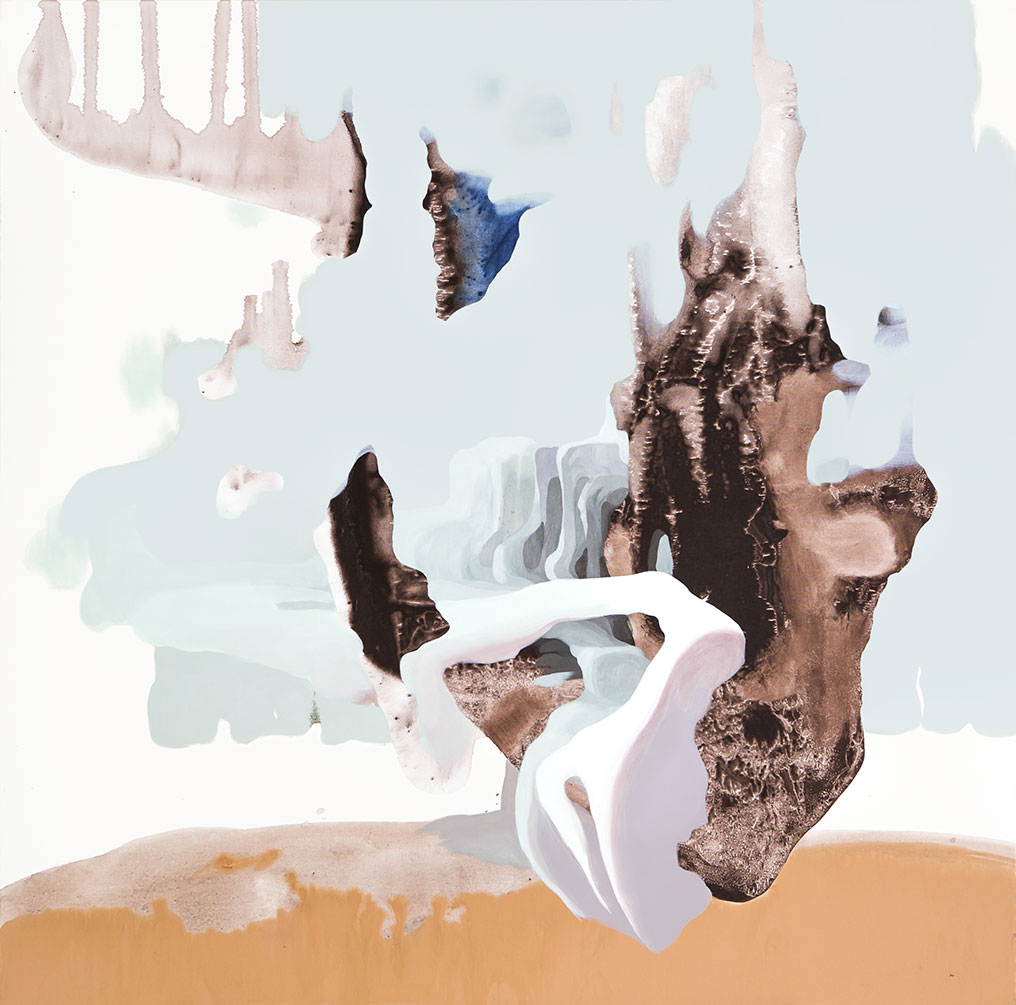
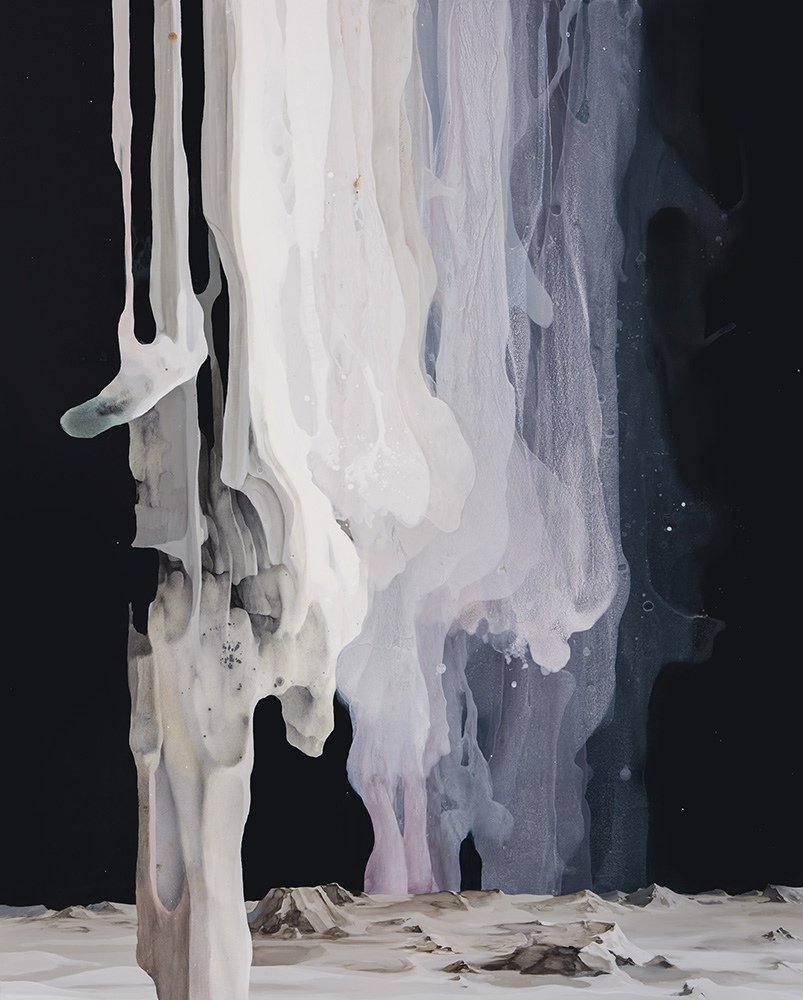
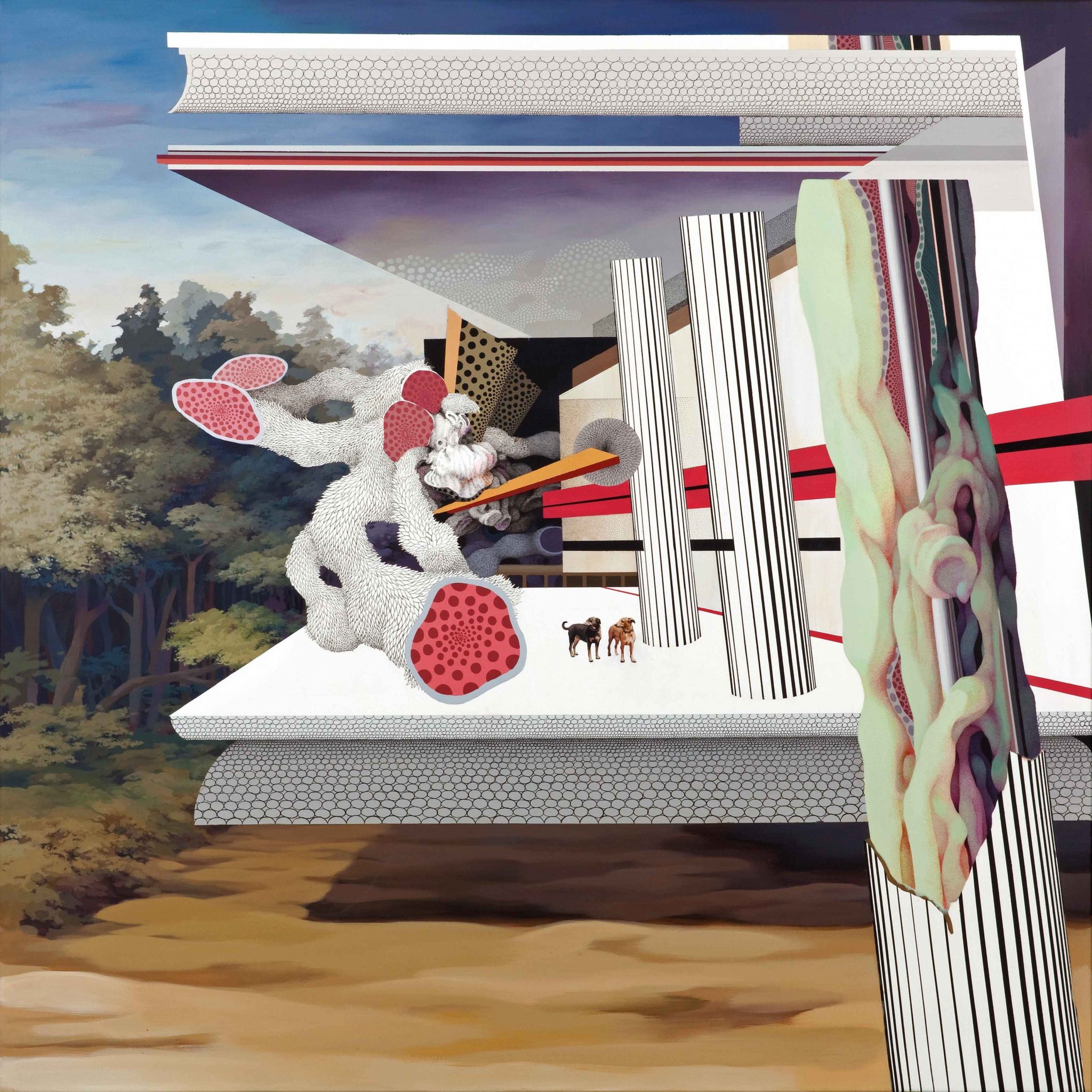
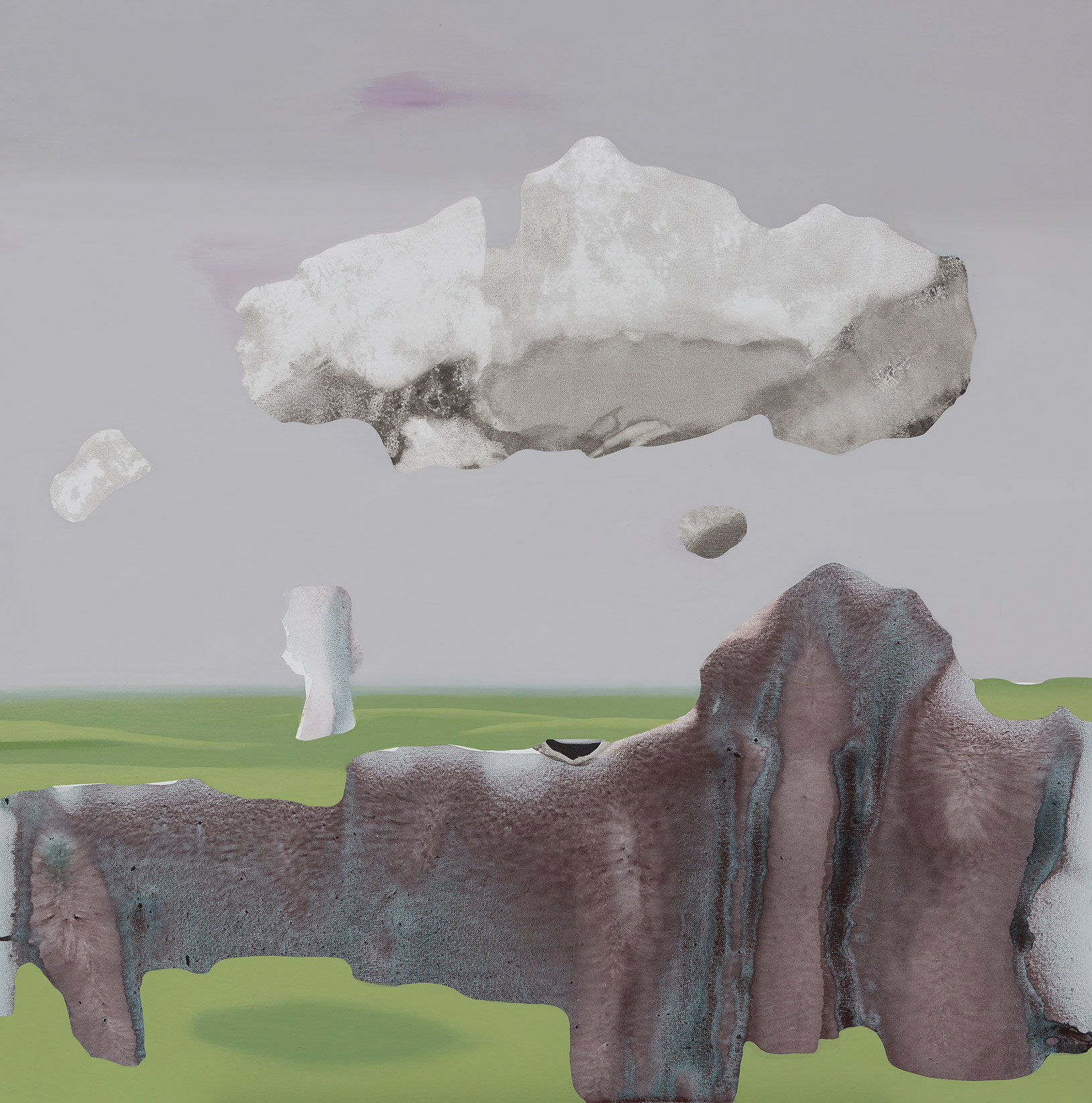
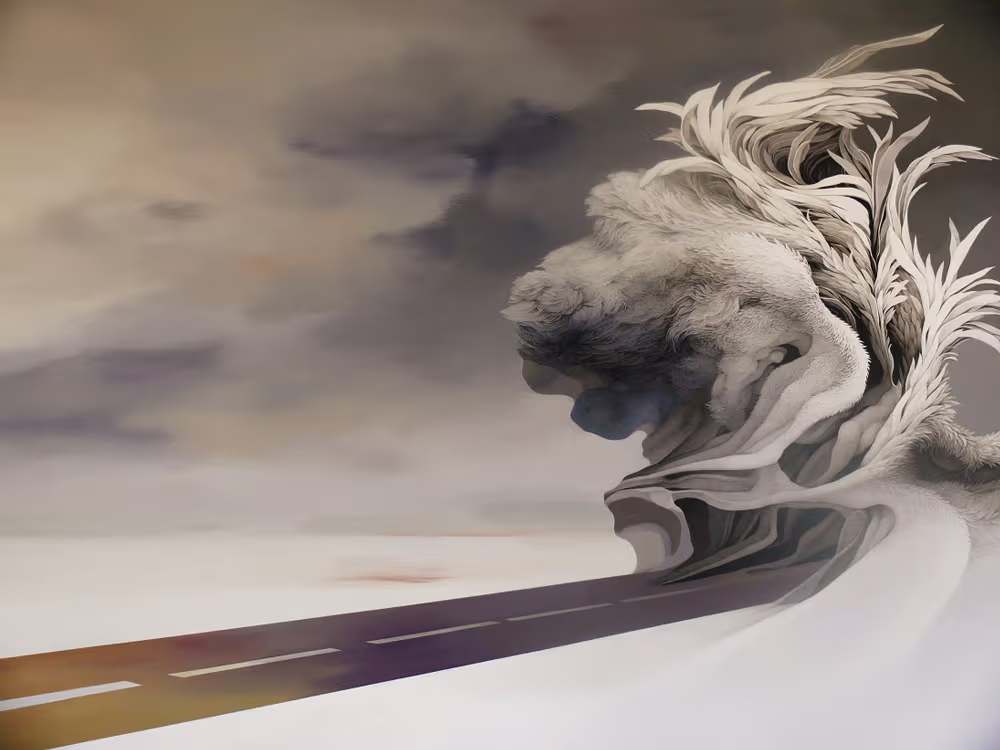
La table éphémère

2022
Acrylic on canvas
130 x 162 cm
About The Work

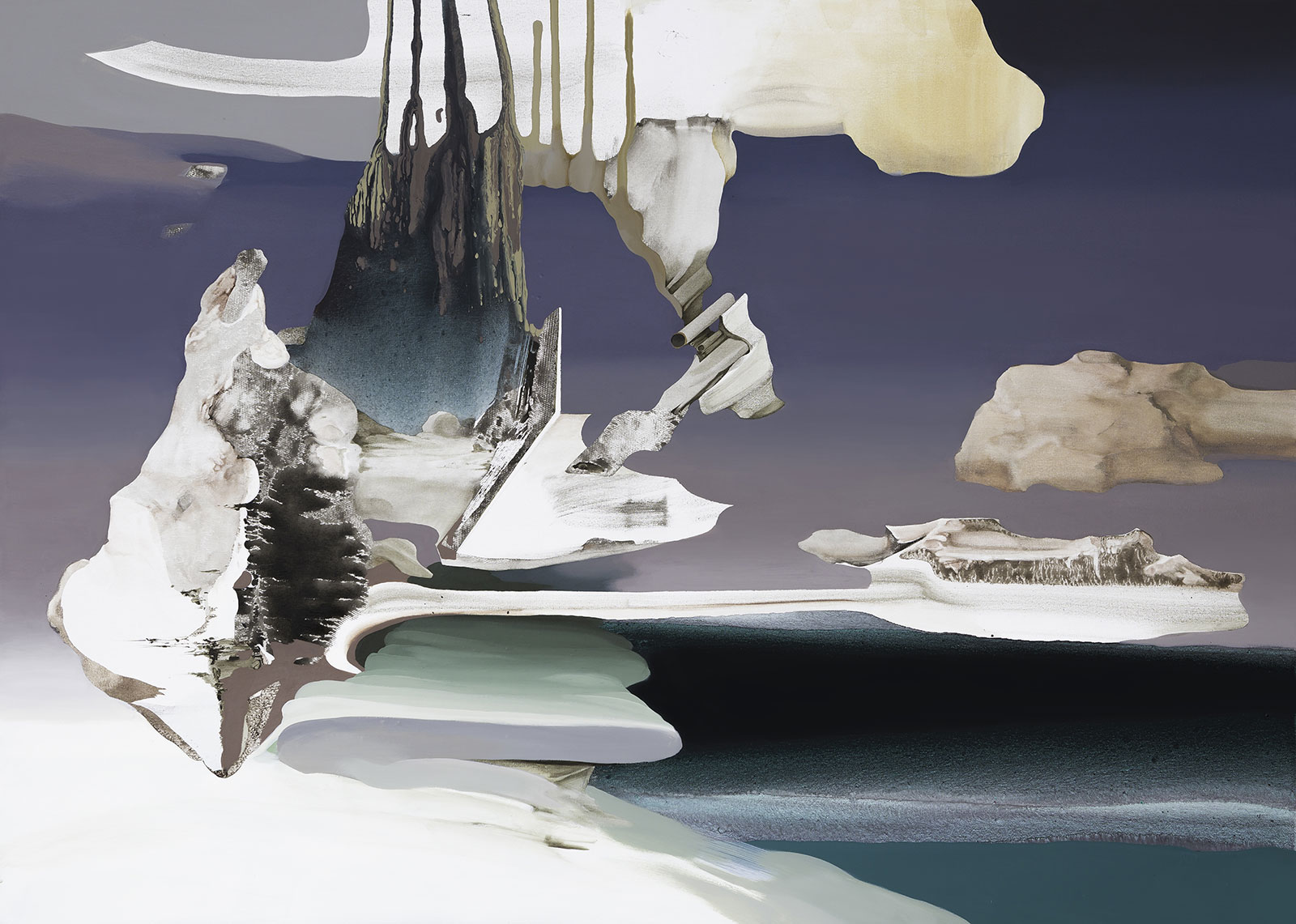
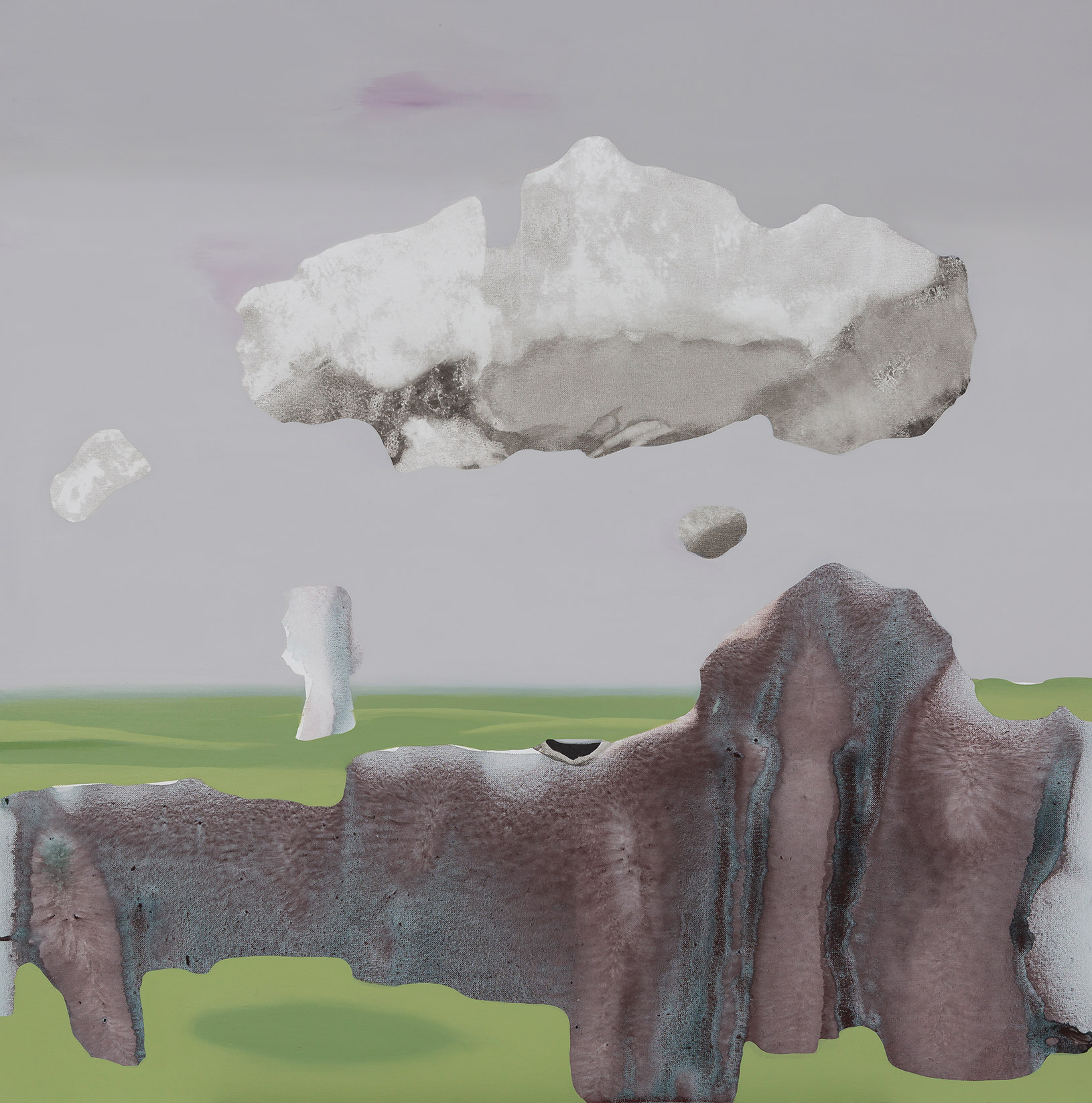
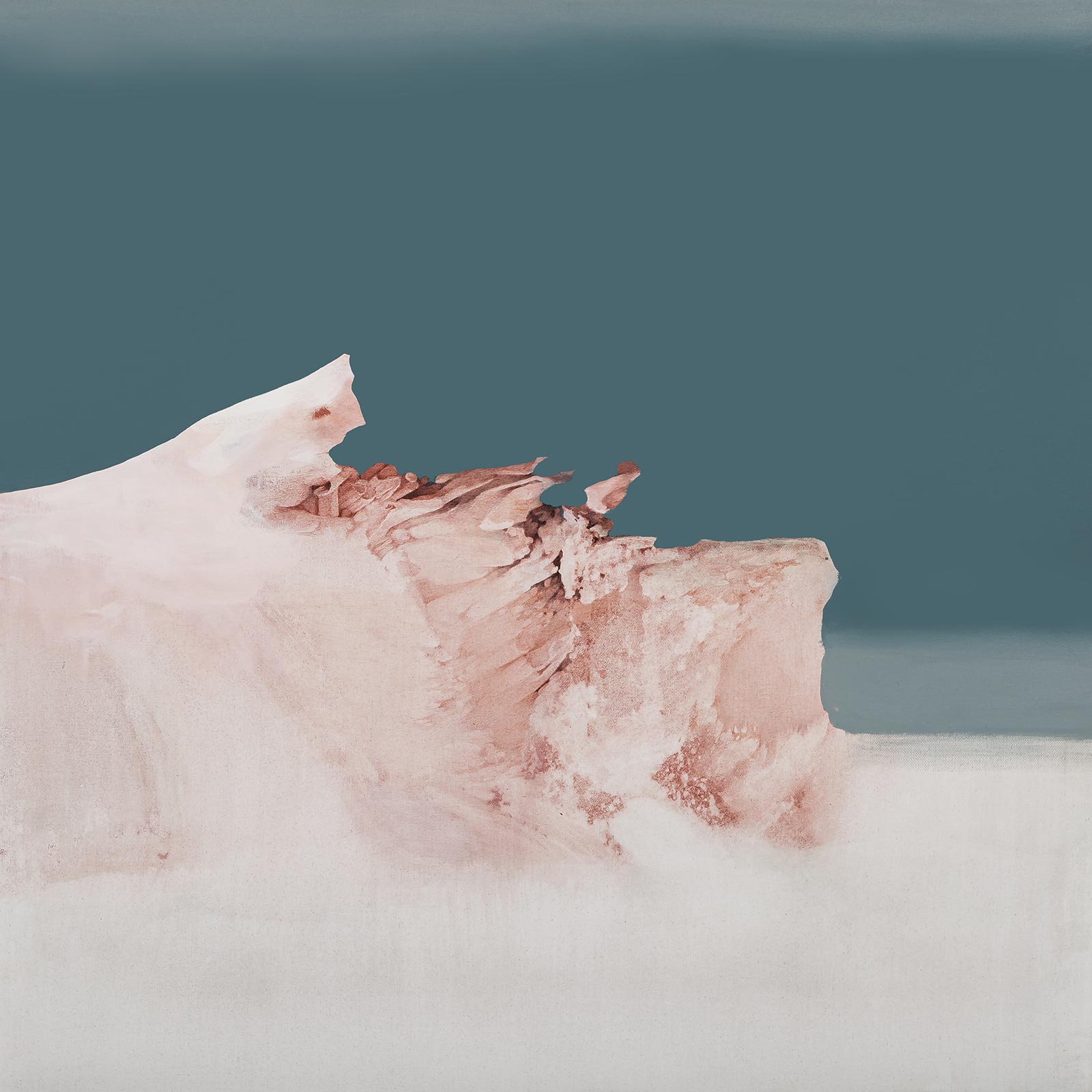
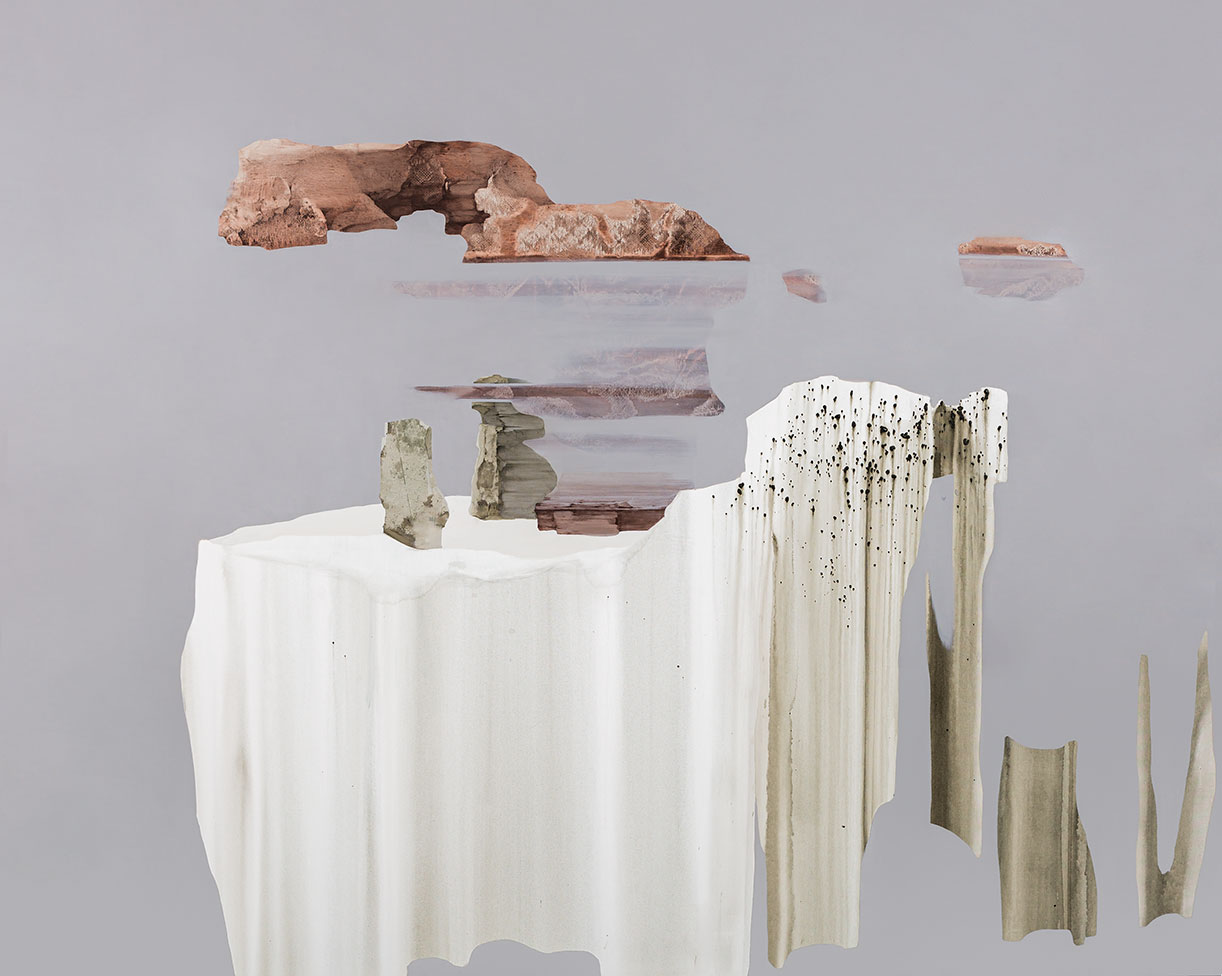
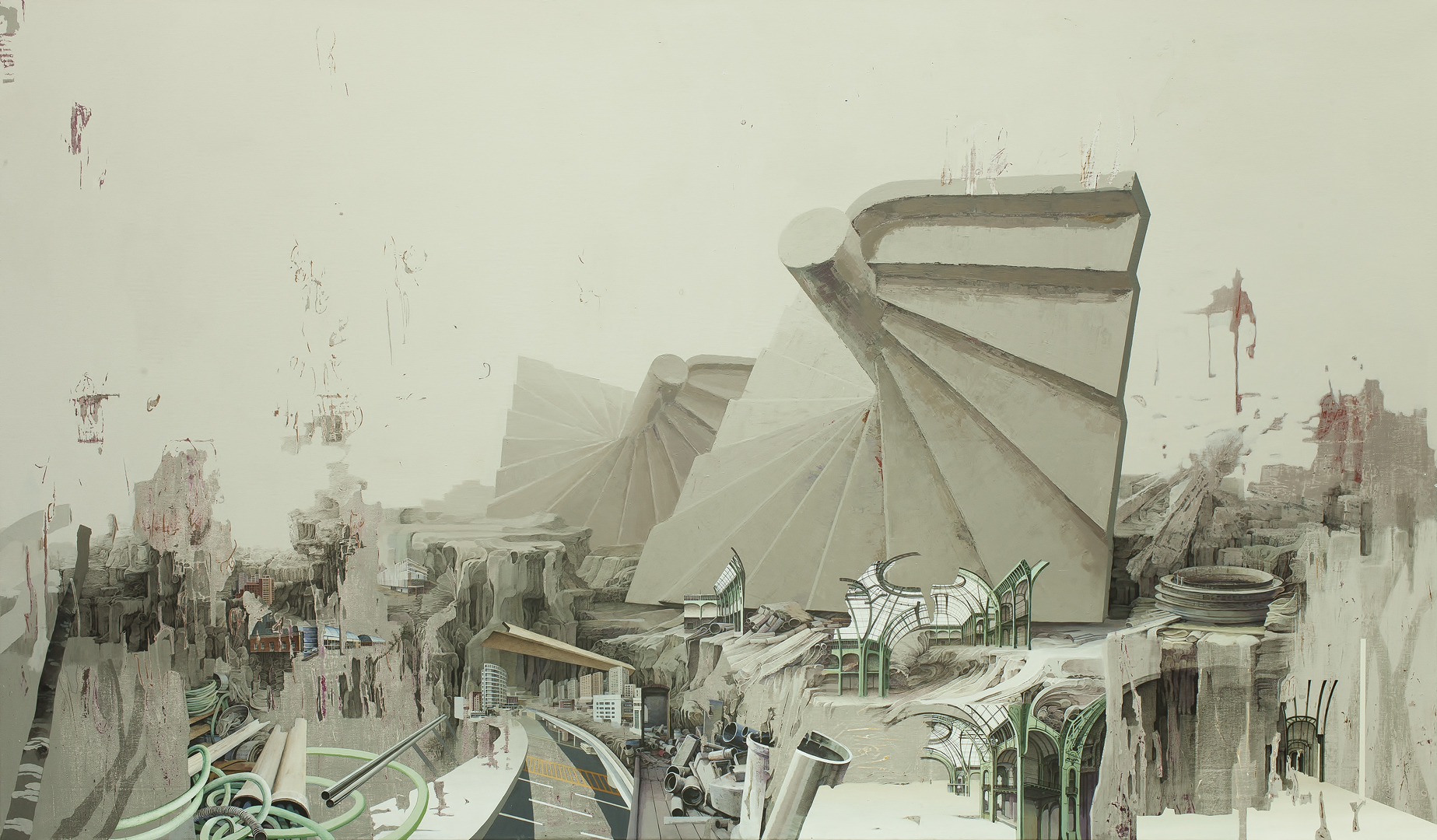
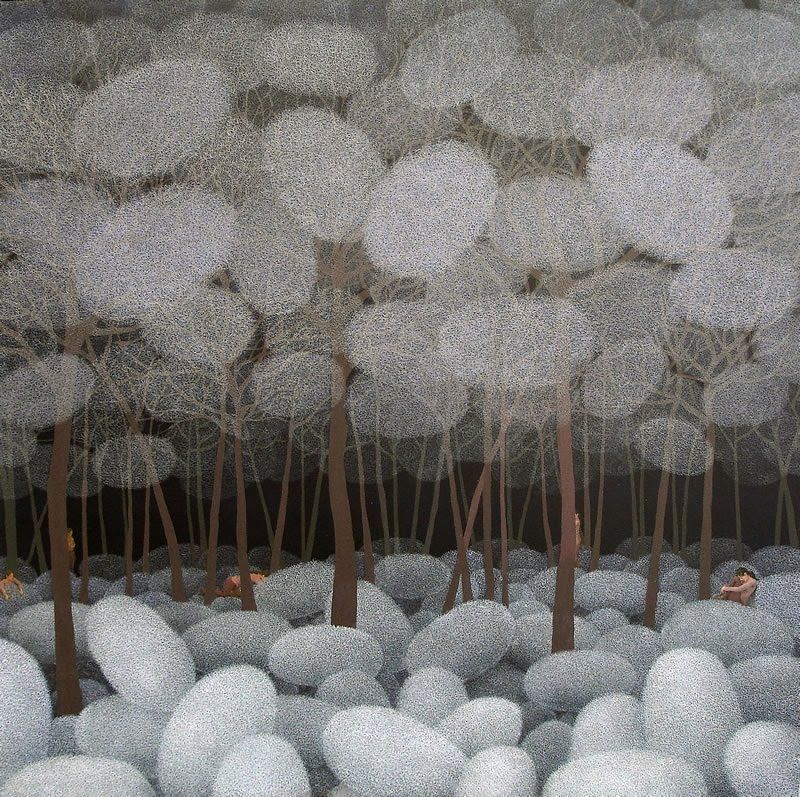
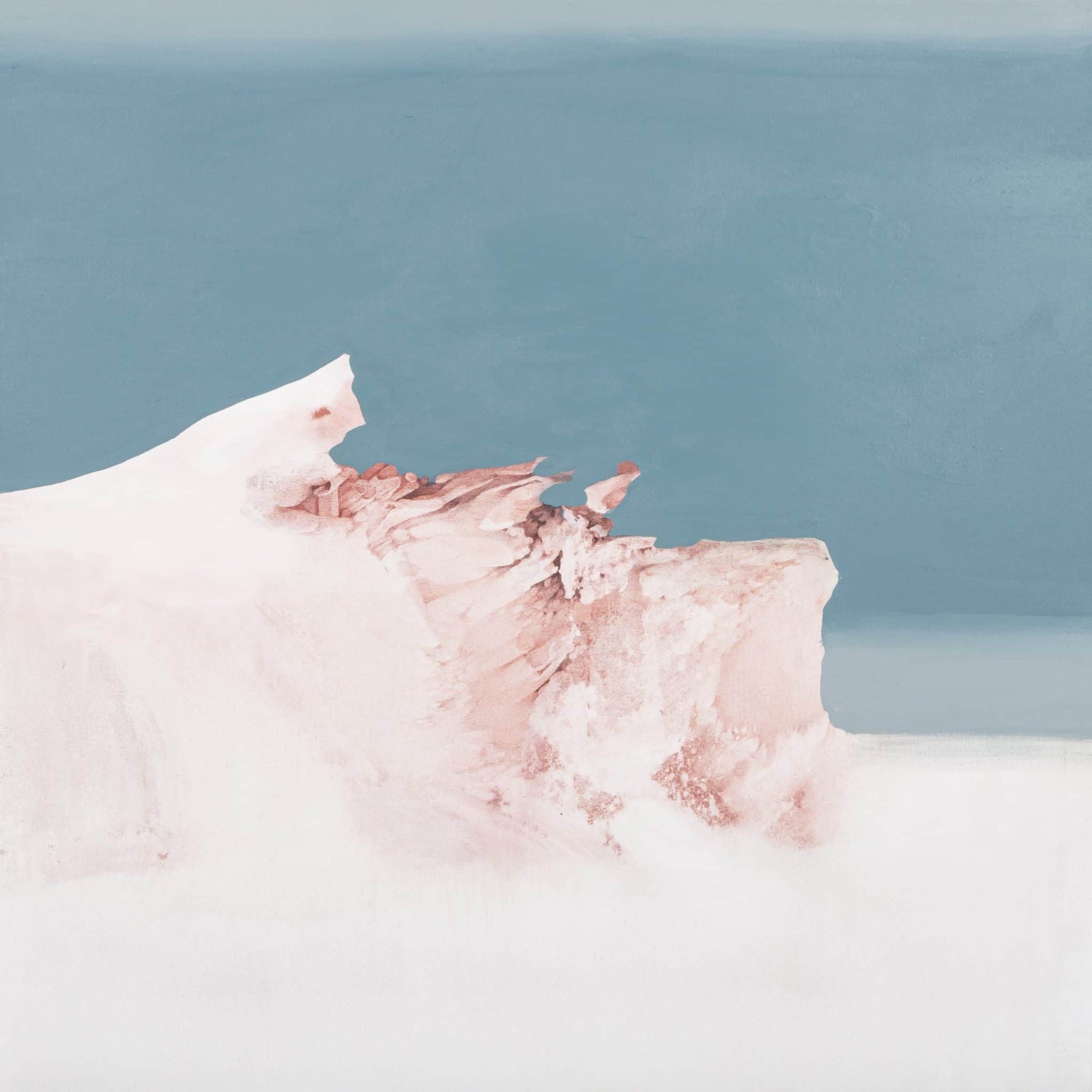
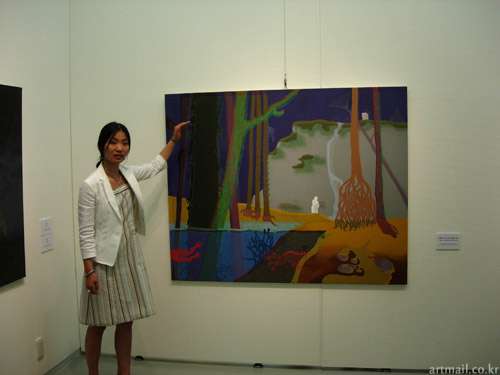
Min Jungyeon focuses on the boundaries where reality and imagination, memory and experience, science and myth intersect. Through organic forms such as roots, stalactites, internal organs, clouds, and mushrooms, she explores a world in a constant state of transformation and becoming.

Within her work, these forms traverse the boundaries between nature and the artificial, the living and the inanimate, reality and fantasy, resisting reduction to any fixed meaning.

Min's paintings construct virtual spaces in which actual places overlap with memories and experiences, blurring the distinction between reality and fantasy while creating a sense in which familiarity and unfamiliarity coexist. Through this process, the artist reveals alternative worlds of possibility latent beneath the surface of reality.

In other words, the worlds she creates, while fantastical, are not escapist realms detached from reality; rather, they serve as sites of perception that invite us to recognize and reimagine the reality we inhabit.

Ultimately, Min Jungyeon's practice poses a question about the possibility of existing otherwise. Through the transformation and coexistence of beings that move across the boundaries between human and nonhuman, reality and virtuality, past and present, her work encourages us to imagine fluid and multilayered modes of existence that extend beyond a human-centered worldview.

In doing so, her imagined worlds poetically reconfigure contemporary concerns surrounding boundaries and identity, proposing new ways of sensing and perceiving the world.

Solo Exhibitions (Brief)

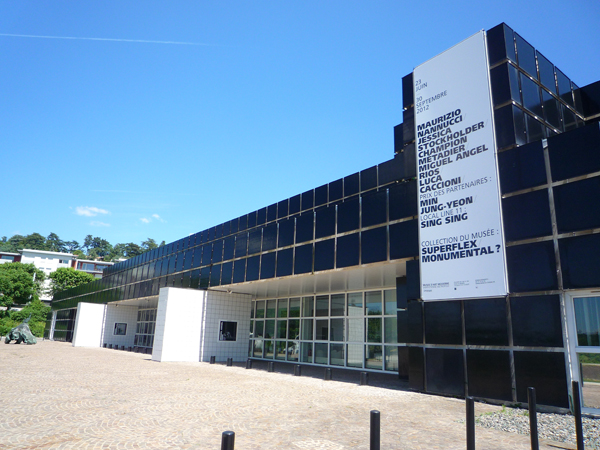
Min Jungyeon has presented solo exhibitions at Galerie Maria Lund in Paris (2012, 2015), Galerie Kashya Hildebrand in Zurich (2006, 2007, 2009, 2011), Musée d'art moderne et contemporain - Saint-Étienne Métropole (2011), and the National Museum of Oriental Art in Moscow (2017), developing an active international exhibition career across Europe.

Group Exhibitions (Brief)

Min Jungyeon has participated in group exhibitions at the Petit Palais in Paris (2013), the Musée Cernuschi in Paris (2015), the Musée d’Art Moderne de Saint-Étienne Métropole in Saint-Étienne (2014), the Asian Art Biennale at the National Taiwan Museum of Fine Arts in Taichung (2011), and the Seoul Arts Center in Seoul (2005, 2008). She has also presented her work at international art fairs including Drawing Now Paris (2011–2013), Art Paris (2011, 2016), ARCO Madrid (2010), Scope Basel (2009–2011), Art Dubai (2007–2009), and Asia Now Paris (2017–2019).

Awards (Selected)

Min Jungyeon received the Prix du Club des Partenaires from the Musée d’Art Moderne de Saint-Étienne Métropole in 2011.

Collections (Selected)

Works by Min Jungyeon are included in the collection of the Musée d’Art Moderne de Saint-Étienne Métropole, France.

Works of Art

A World of New Possibilities Beneath Reality

Originality & Identity

Min Jungyeon’s practice unfolds at the intersection of reality and imagination, memory and experience, science and myth. Influenced from an early age by her father’s fascination with collecting fossils, she developed a lasting interest in natural formation and deep time. Following her move to France, these concerns evolved into broader philosophical inquiries about existence and the nature of the world.

The roots, stalactites, internal organs, clouds, and mushroom-like forms that recur throughout her paintings do not function as representations of specific objects; rather, they symbolize states of continual transformation and becoming. Moving fluidly between the organic and the artificial, the living and the inanimate, the real and the imaginary, these forms resist fixed interpretation.

Rather than depicting reality as it appears, Min explores worlds of latent possibility that exist beneath the surface of everyday experience. Her spaces are often grounded in recognizable environments, yet they are transformed into virtual terrains where multiple layers of time, memory, and perception overlap.

These environments simultaneously evoke familiarity and estrangement, challenging conventional distinctions between reality and fiction. While fantastical in appearance, Min’s worlds are not escapist realms detached from reality; instead, they function as alternative frameworks through which reality itself may be reimagined and reconsidered.

The philosophical thought of Gilles Deleuze provides an important conceptual foundation for Min’s work. Ideas such as the rhizome, becoming, and difference resonate deeply with her understanding of how the world is structured and experienced. The root-like formations that appear throughout her paintings are more than recurring visual motifs; they operate as rhizomatic networks that connect disparate beings, temporalities, and spaces.

Rejecting hierarchy and fixed centers, these structures expand outward indefinitely, generating new relationships and possibilities. Through such imagery, Min presents the world not as a stable order but as an evolving and interconnected field of continual transformation.

Ultimately, Min Jungyeon’s work revolves around the question of how things might exist otherwise. Human figures, animals, plants, and architectural structures lose their fixed boundaries and enter into processes of mutation, coexistence, and exchange. These acts of becoming encourage viewers to move beyond anthropocentric perspectives and imagine more fluid and plural modes of existence.

Bringing together the real and the virtual, the past and the present, the human and the nonhuman, Min’s paintings poetically reconfigure contemporary questions surrounding identity, perception, and boundaries, proposing new ways of sensing and inhabiting the world.

Style & Contents

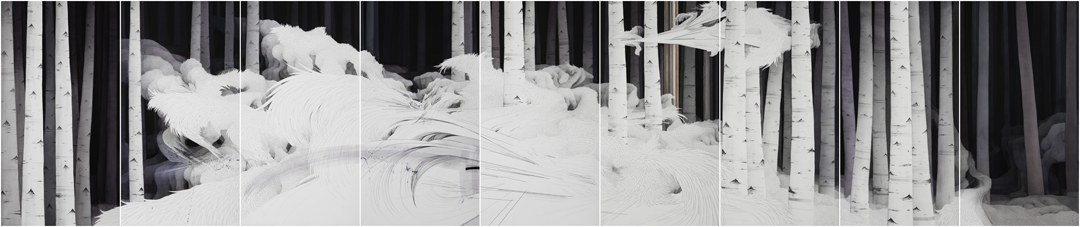
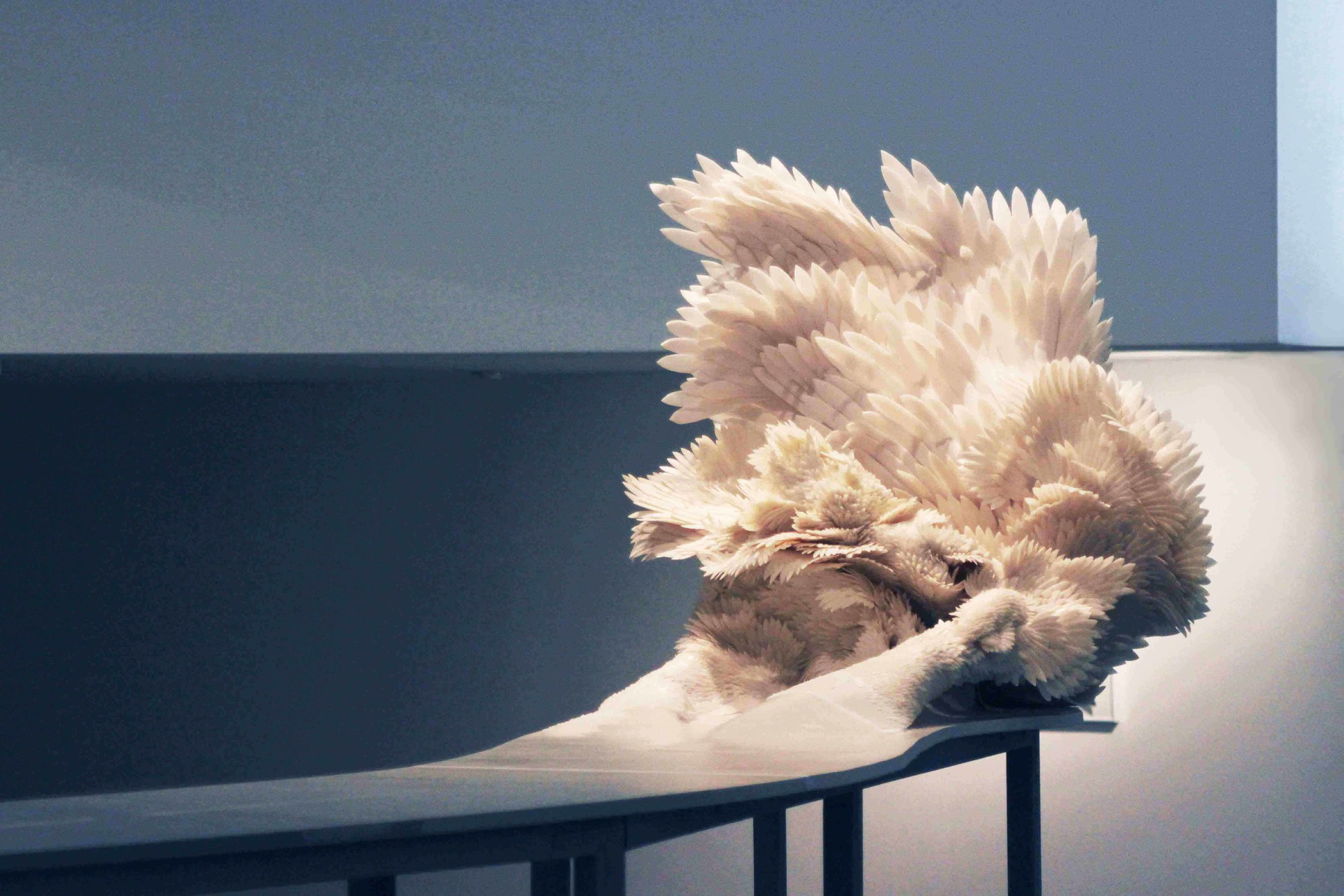
While painting and drawing form the core of Min Jungyeon’s practice, her recent work has expanded into installation and spatial interventions that extend the physical boundaries of painting. Rather than presenting images as self-contained scenes, she constructs complex environments in which multiple temporalities and spaces intersect.

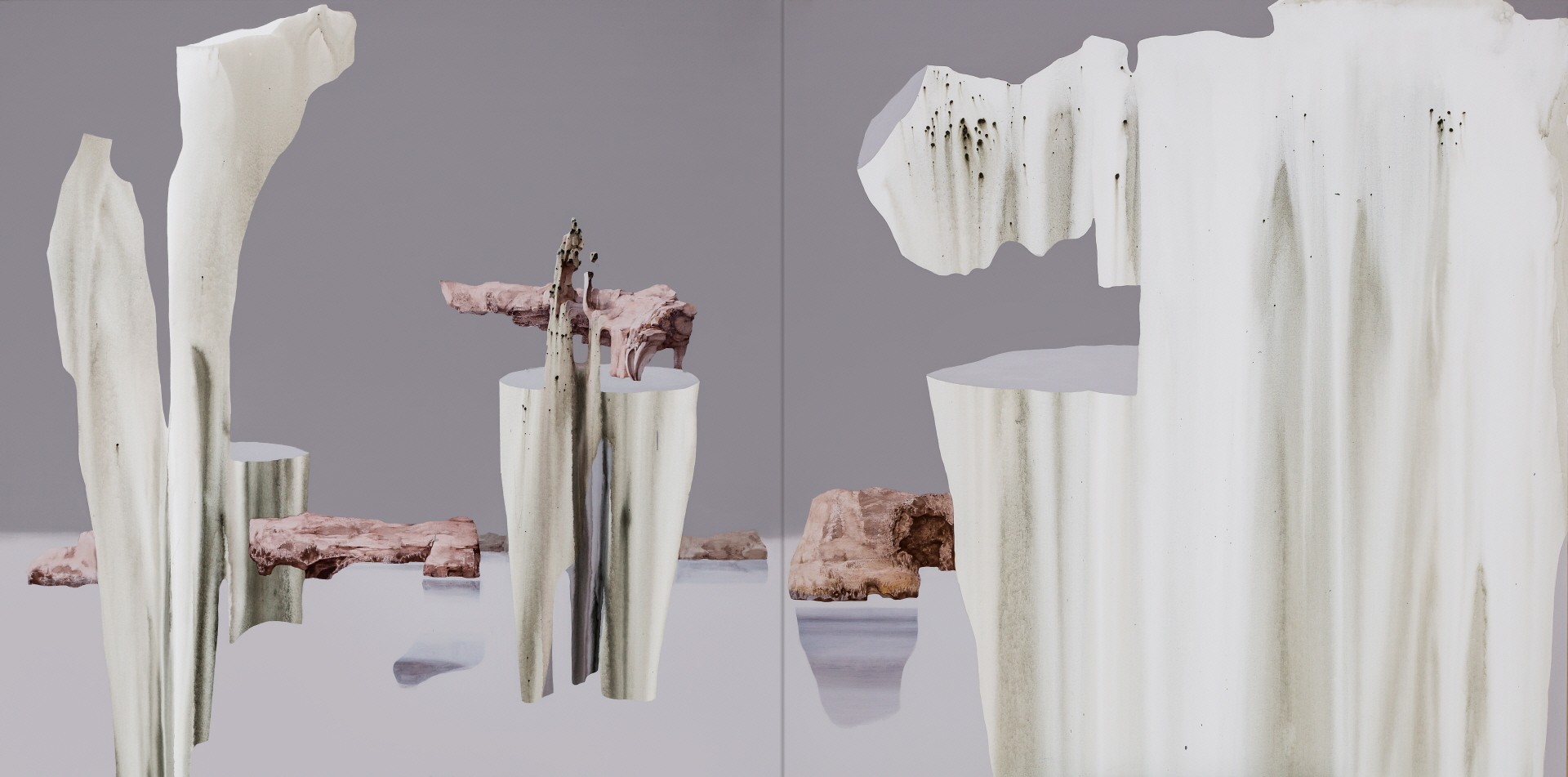
Within her compositions, landscapes, architectural elements, and organic forms coexist, while perspective and flatness, figuration and abstraction, narrative and non-narrative structures operate simultaneously. These layered compositions encourage viewers to move through the pictorial space, discovering shifting relationships rather than occupying a single fixed point of view.

One of the defining characteristics of Min’s work is her distinctive visual vocabulary. Roots, stalactites, internal organs, fungal networks, clouds, and seed-like forms appear throughout her paintings, not as representations of identifiable objects but as hybridized entities that merge multiple references. These forms seem to grow, proliferate, and transform continuously, connecting organically with other elements within the composition.

In doing so, they blur conventional distinctions between living and non-living matter, nature and artifice, interior and exterior space. Viewers are often confronted with forms that feel simultaneously familiar and unclassifiable, producing a persistent tension between recognition and uncertainty.

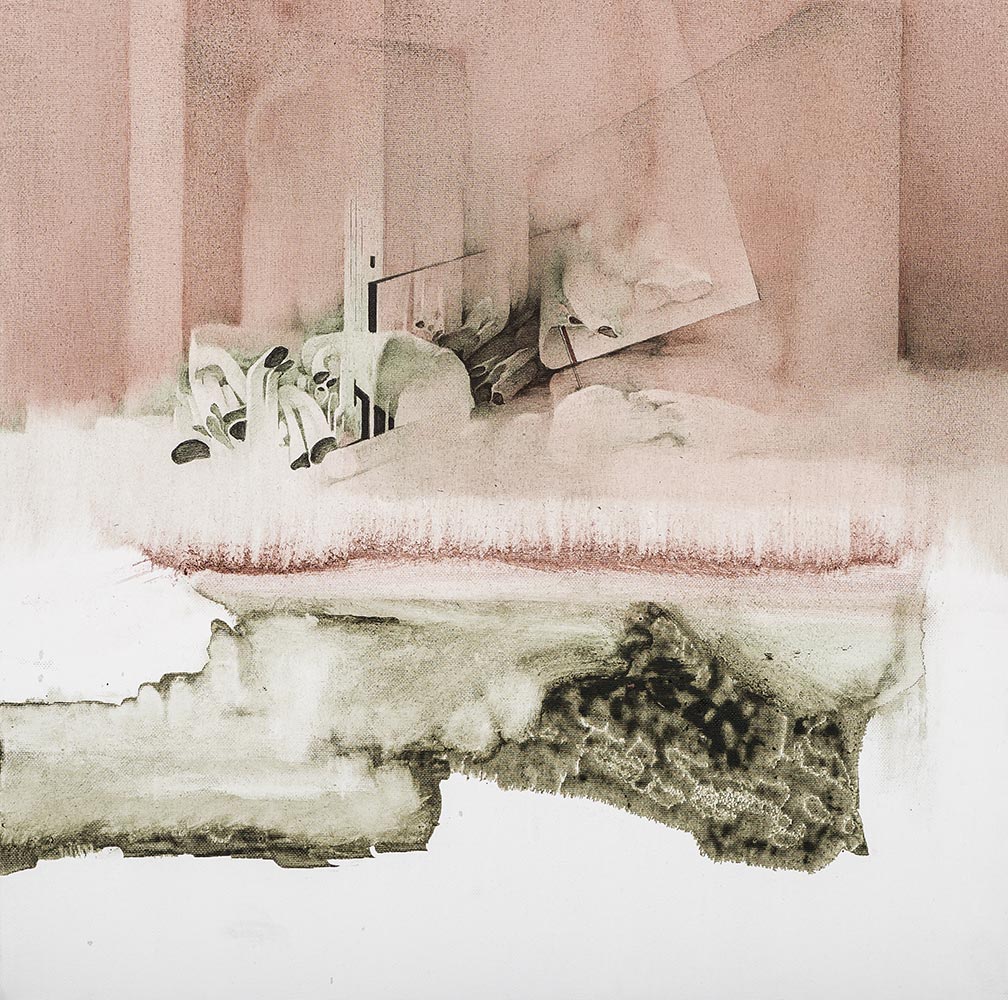
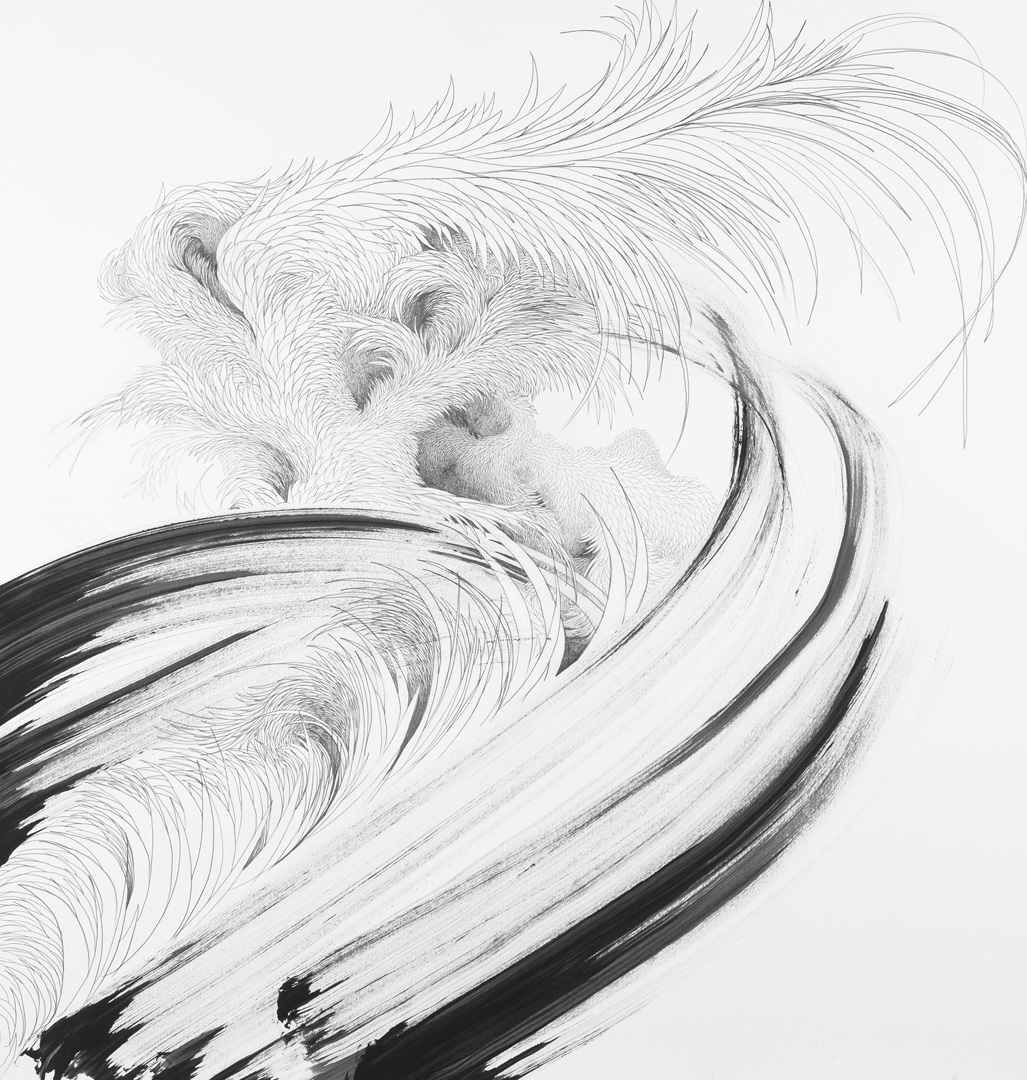
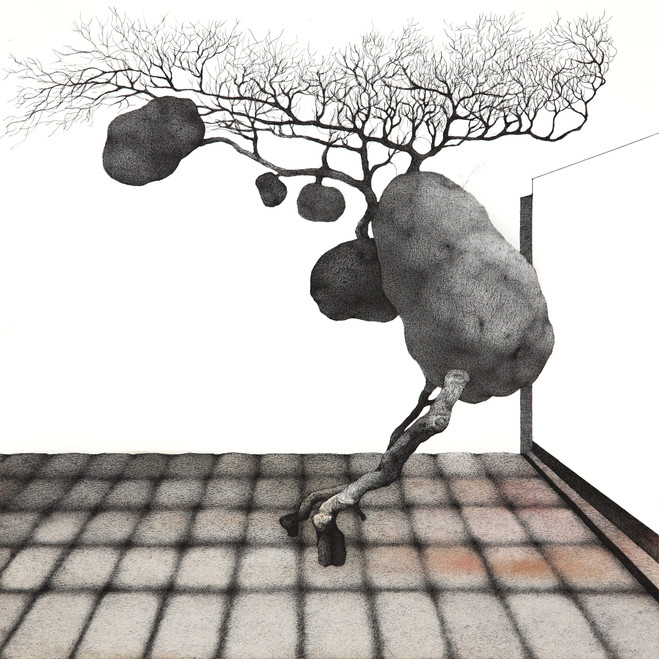
Min’s paintings emerge through highly meticulous and labor-intensive processes. Developed from her early experiments with repetitive mark-making, her dense accumulations of dots and lines embody the passage of time through the act of construction itself. Drawing, in particular, functions as a form of breathing for the artist.

Using Indian ink, pencil, and colored pencil, she builds intricate surfaces through the repetition of countless marks, generating a distinctive visual rhythm. Acrylic painting, by contrast, involves a more structured and deliberate approach, serving as a field in which she investigates relationships between color, form, and spatial organization. Although drawing and painting employ different methodologies, they operate in a complementary manner within her practice.

Despite the fantastical imagery that populates her work, Min’s paintings remain distinct from Surrealist attempts to visualize the unconscious. Her images emerge from imagination, but they are equally rooted in observation and lived experience.

The fantastical therefore exists not as an escape from reality but as another dimension embedded within it. Rather than imposing fixed narratives, Min maintains an open structure that allows viewers to construct their own meanings. Through this approach, painting becomes both a space of reflection and a site for expanded sensory experience.


Topography & Continuity

Although Min Jungyeon’s practice has evolved considerably over the past two decades, it has remained anchored by a remarkably consistent set of formal and conceptual concerns. From her earliest paintings to her most recent works, she has continually explored themes of time and space, memory and experience, growth and transformation.

While the imagery and narrative structures of her work have shifted over time, her interest in the connections between different beings, environments, and modes of existence has remained constant. This continuity allows her oeuvre to be understood not as a sequence of stylistic changes but as an ongoing trajectory of inquiry.

Organic forms such as roots, stalactites, seeds, clouds, and internal organs constitute a recurring vocabulary that traverses her entire body of work. Rather than functioning as fixed symbols, these motifs continually generate new meanings as they appear in different contexts.

Forms that initially emerged as components of fantastical landscapes later evolve into metaphors for rhizomatic networks, processes of becoming, or the accumulation of memory and time. Through repetition and transformation, these elements create connections across works and periods, linking her practice into a coherent and evolving ecosystem.

Min’s sustained engagement with temporality has likewise deepened throughout her career. The overlapping spaces and multiple perspectives that characterized her early paintings gradually developed into more complex temporal structures involving repeated figures, fragmented scenes, and multiple manifestations of the same presence. In her paintings, time rarely unfolds in a linear manner.

Past and present, memory and imagination, anticipation and recollection coexist within the same pictorial field. As a result, her works are experienced not as static images but as environments shaped by continual temporal movement and transformation.

The continuity of Min’s practice ultimately lies less in the repetition of specific motifs than in the persistence of a particular way of seeing the world. For many years she has questioned the boundaries between the familiar and the strange, reality and virtuality, the human and the nonhuman. In recent works, these inquiries have expanded through references to myth, cosmology, quantum physics, and ecological thought.

Yet regardless of the subject matter, her work consistently returns to questions of possibility, becoming, and interconnectedness. Rather than forming a closed system, Min Jungyeon’s artistic universe continues to expand through rhizomatic processes of growth and connection. This openness and capacity for renewal remain central to the enduring relevance of her practice within contemporary painting.

Works of Art

A World of New Possibilities Beneath Reality

Articles

Exhibitions

Activities