
Fan for a Struggling Novelist Last Summer - K-ARTIST

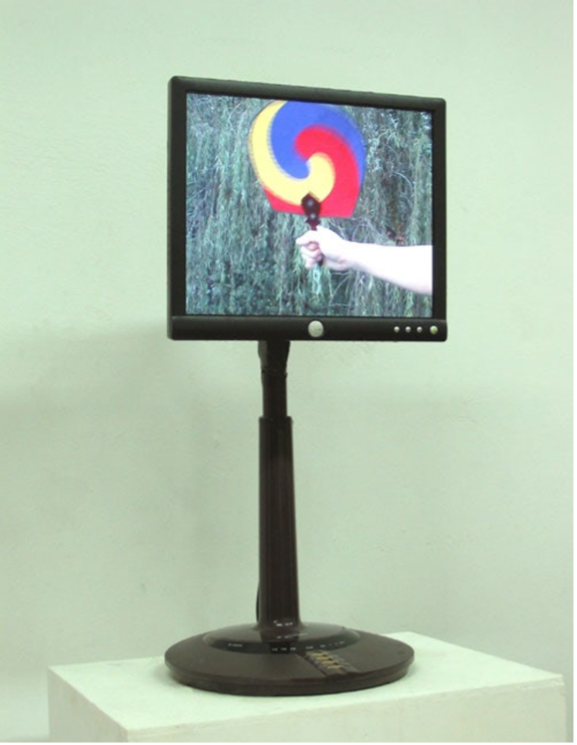
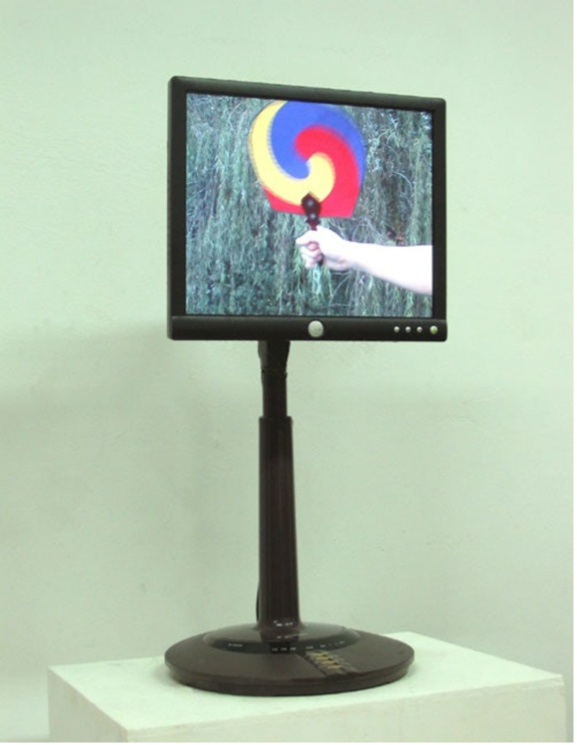
Fan for a Struggling Novelist Last Summer

2010
Single channel DVD, fan
3 min 30 sec, 100 x 50 x 40 cm
About The Work

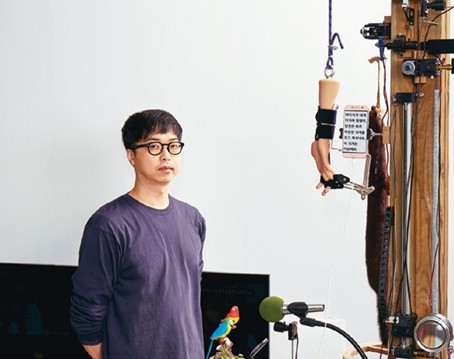
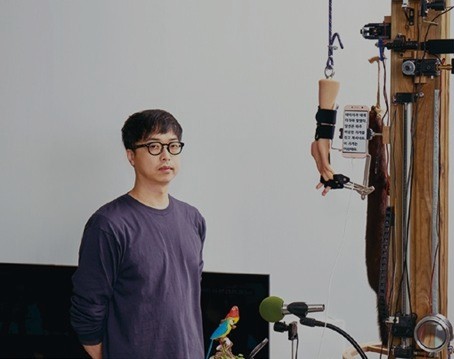
Yoo Hwasoo (b. 1979) focuses on how technological advancements impact both humans and non-humans, examining the diverse relationships formed within technological environments. While observing broader social phenomena, the artist also explores the lives of ordinary individuals engaged in daily repetitive labor or the "leftover" beings deemed "useless."

Solo Exhibitions (Brief)

Since 2013, he has held 9 solo exhibitions at venues such as Gonggan Hyung (Seoul, Korea), Oil Tank Culture Park T1 (Seoul, Korea), Space K (Seoul, Korea), Basis (Frankfurt, Germany), and Organ Haus (Chongqing, China). Notable solo exhibitions include 《Ecometropolis》 (2024, Gonggan Hyung, Seoul, Korea), 《The Place of Weeds》 (2021, Oil Tank Culture Park T1, Seoul, Korea), and 《Shadow Labor》 (2018, Organ Haus, Chongqing, China).

Group Exhibitions (Brief)

From 2010 to 2023, Yoo has participated in 16 group exhibitions at institutions including SongEun (Seoul, Korea), Busan Museum of Contemporary Art (Busan, Korea), Power Plant (Seoul, Korea), Suwon Museum of Art (Suwon, Korea), DDP (Seoul, Korea), Seoul Museum of Art Nam-Seoul (Seoul, Korea), Savina Museum of Contemporary Art (Seoul, Korea), and Sichuan Museum of Contemporary Art (Chongqing, China).

Recent notable exhibitions include 《Seoul Arts & Tech Festival Unfold X 2024》(2024, Culture Station Seoul 284, Seoul, Korea), 《RIGHT NOW SEOUL 2024: Global Contemporary Art Project》 (2024, Hana Bank Place1, Seoul, Korea), 《Behind the Highlights: Intersecting Scenes》 (2024, Geumcheon Art Factory, Seoul Foundation for Arts and Culture, Seoul, Korea), 《The 23rd SongEun Art Award Exhibition》 (2023, SongEun, Seoul, Korea), 《2023 Busan MoCA Platform_Material Collection》 (2023, Busan Museum of Contemporary Art, Busan, Korea), 《Living the Bodies》 (2023, Power Plant, Seoul, Korea), and 《Whirling, Wallowing~ Bump!》 (2022, Suwon Museum of Art, Suwon, Korea).

Awards (Selected)

Yoo Hwasoo has also been recognized for his achievements with major awards. In 2017, he received the Tomorrow’s Artist Award at Sichuan Fine Arts Institute (Sichuan Museum of Contemporary Art, China). More recently, in 2024, he won the Grand Prize at the 23rd SongEun Art Award (SongEun, Seoul, Korea), further establishing himself as a prominent figure in the Korean contemporary art scene.

Collections (Selected)

Yoo Hwasoo's works are part of the collections of SongEun Art and Cultural Foundation and Seoul Museum of Art.
Works of Art

Coexistence in a Technological Environment

Originality & Identity

Yoo Hwasoo’s work explores the intersections of technology, labor, and the environment, focusing on how human-created technological systems impact nature and society. His early works examined the utility and value of mass-produced objects by modifying or reconstructing their functionality and purpose. In his solo exhibition 《It’s Difficult for Me to Use》 (2012, Insa Art Space), Yoo transformed everyday industrial objects to fit individual physical conditions and needs, emphasizing the personal dimensions excluded by standardized production systems.

Gradually, his interest expanded to systemic issues surrounding labor. In 《Brilliant Labor》 (2013, CAN Foundation), he highlighted the repetitive construction and demolition cycles of TV drama sets, emphasizing the perpetual loop of "labor for the sake of labor" and questioning its purpose.

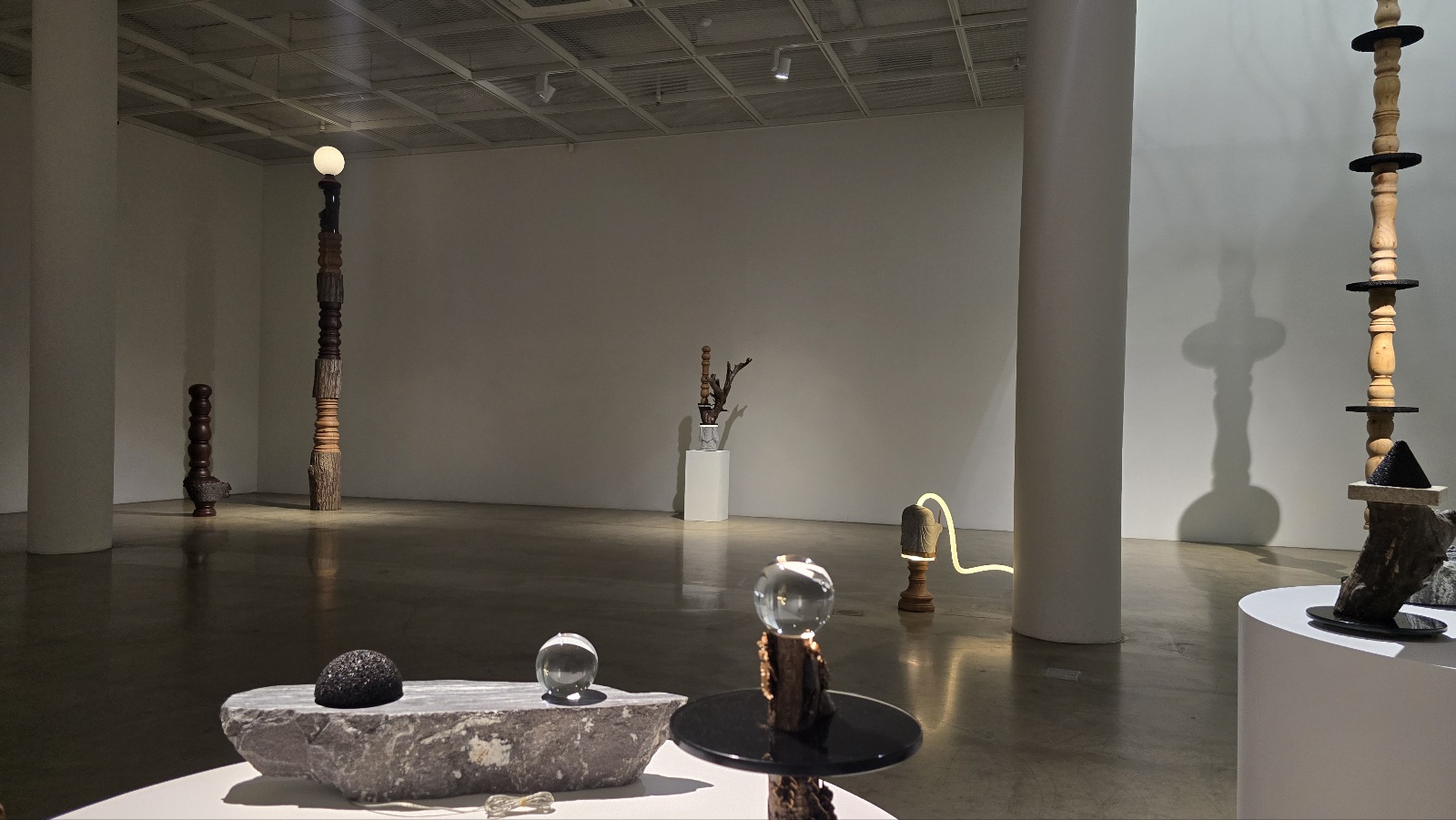
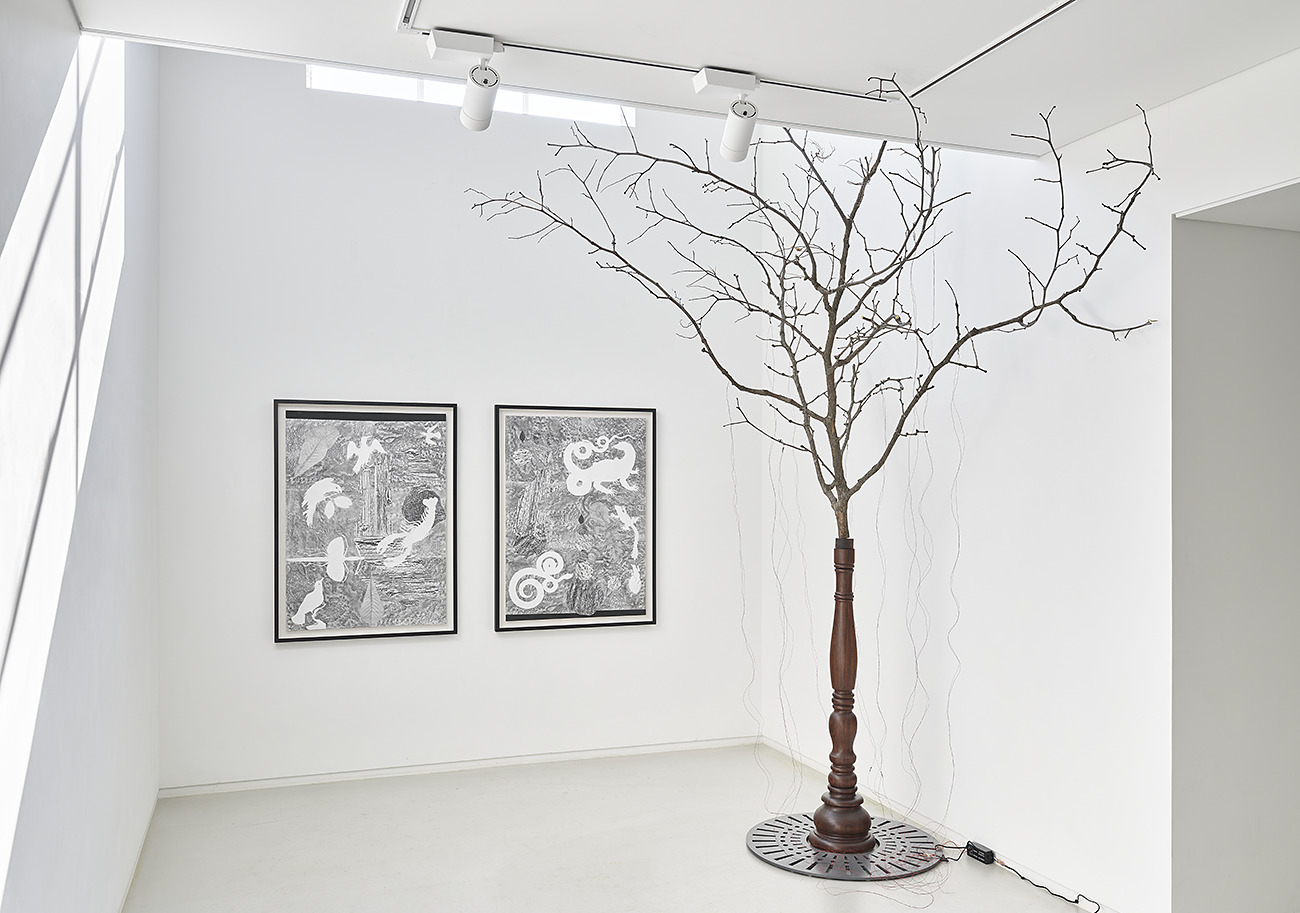
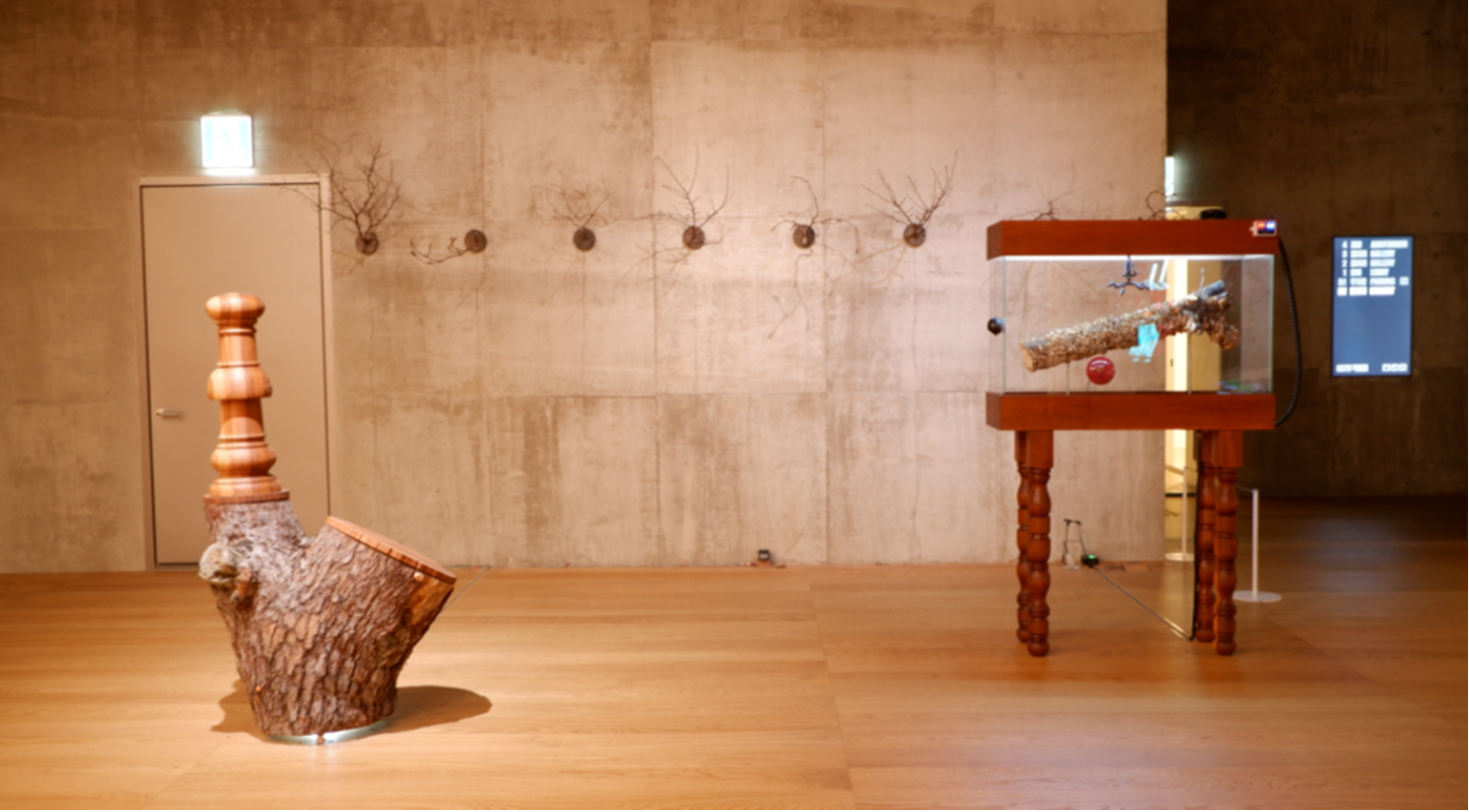
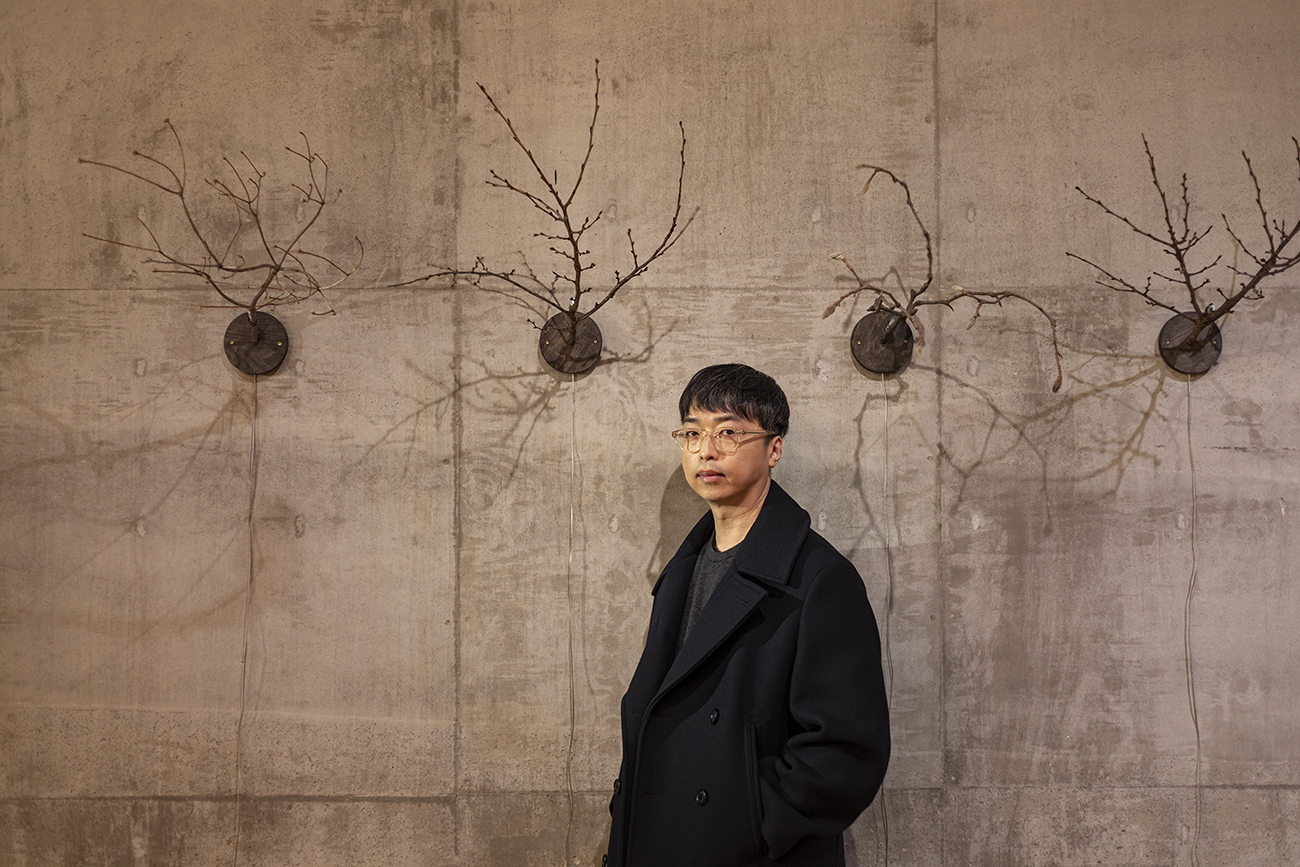
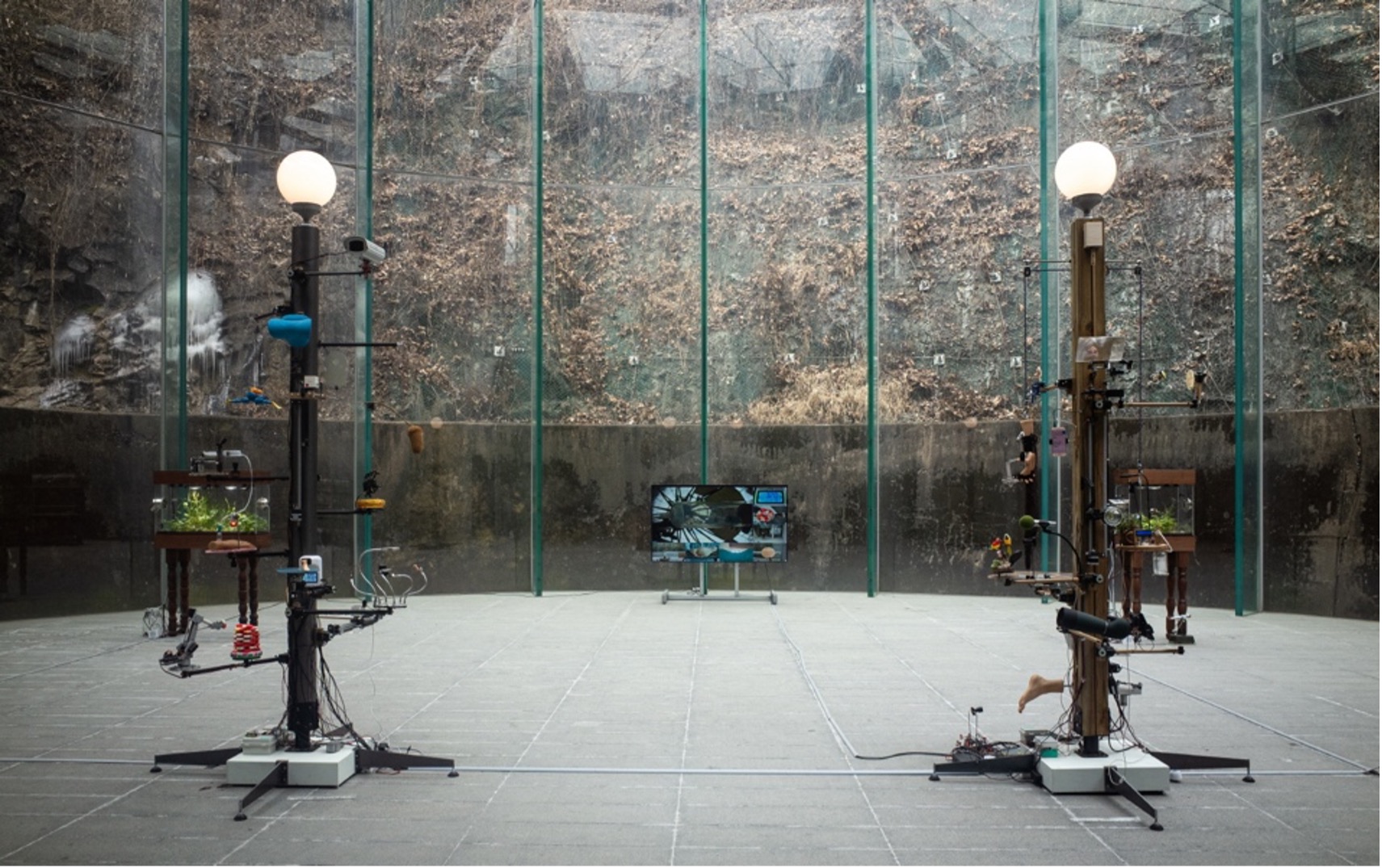
Later, Yoo’s focus shifted to the relationship between nature and technology, investigating how environmental management is framed through human-centric perspectives. In his ‘Eco Metro Palace’(2024) series, he examined the fate of roadside trees planted and removed during urban development, exposing the contradictions in the role nature is expected to play as a public resource and the underlying inequalities within this system.

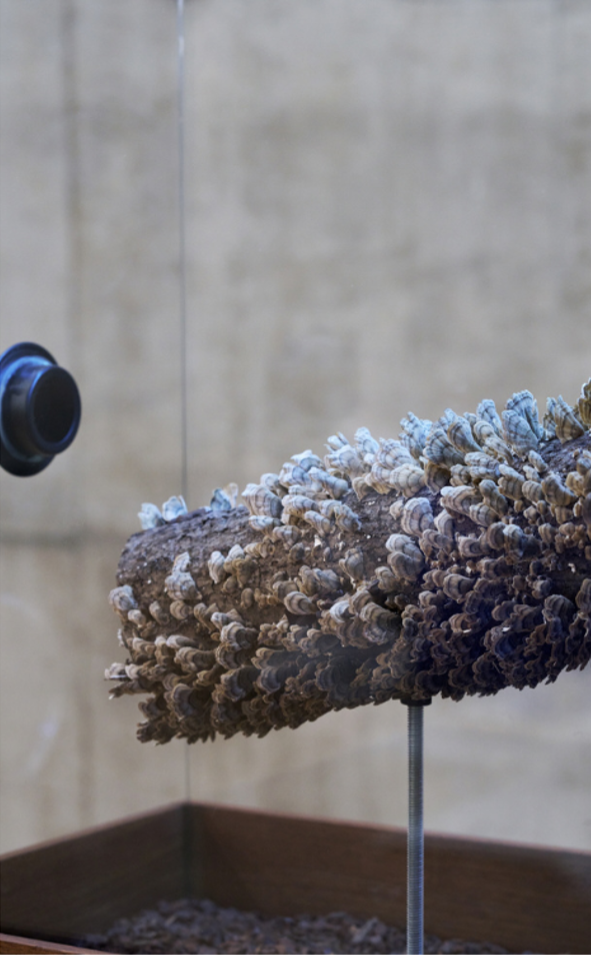
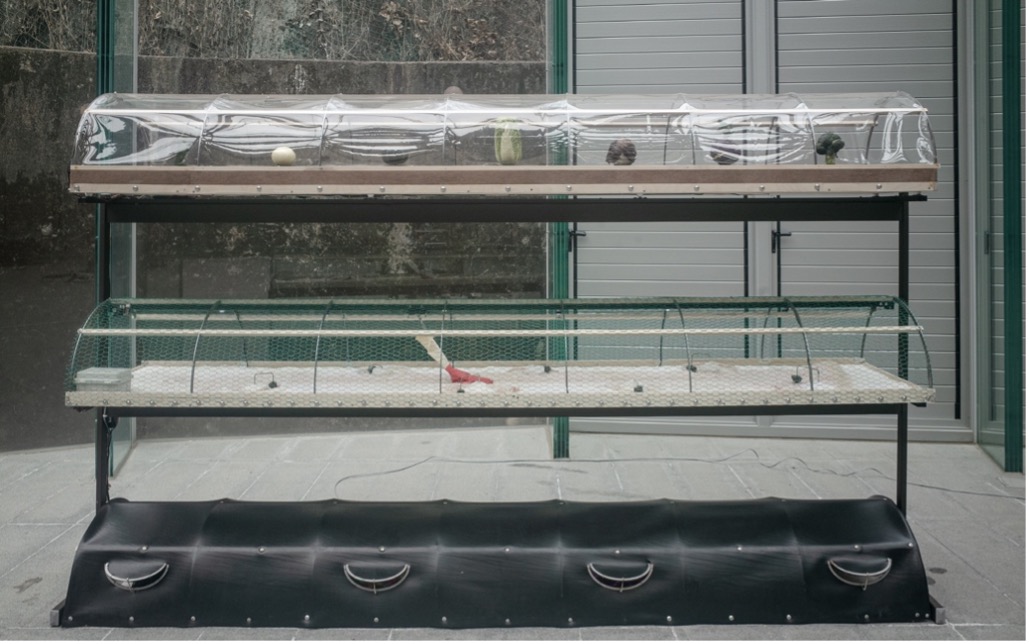
Yoo investigates various ways in which humans intervene in the environment through technology, highlighting the structural contradictions that arise from such interventions. His ‘Gestures of Cultivation’(2023) series experiments with the possibility of technology operating not solely for human benefit but for non-human entities. By using smart farm systems to cultivate fungi and moss on removed trees, he challenges the notion that technology must exclusively serve human needs.

Style & Contents

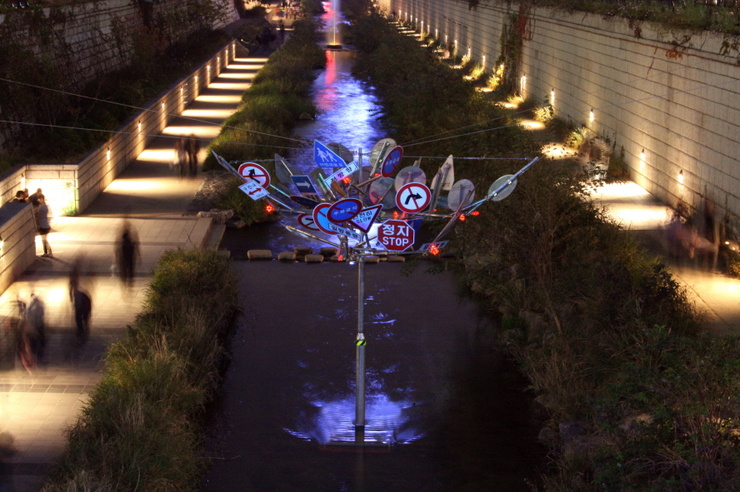
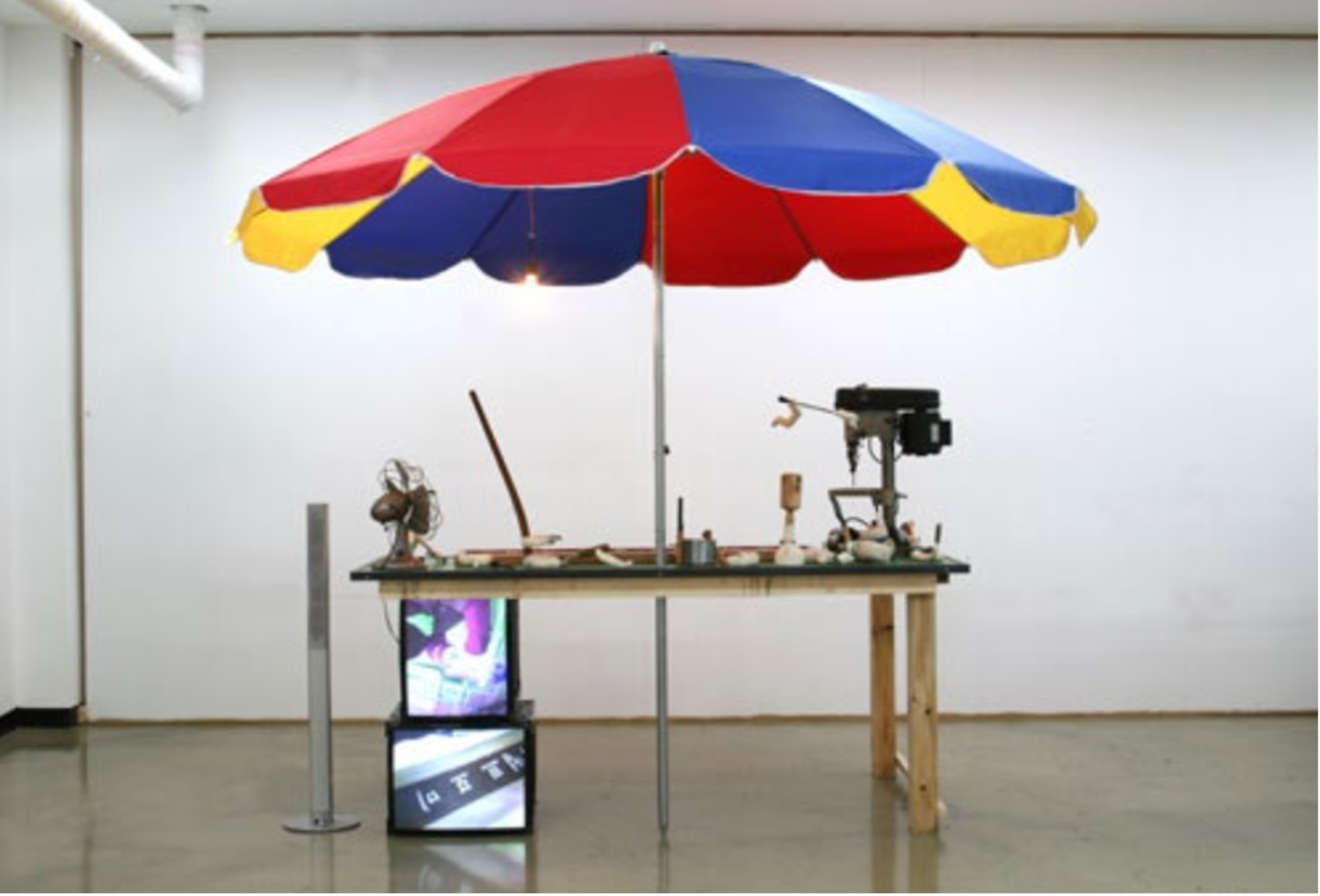
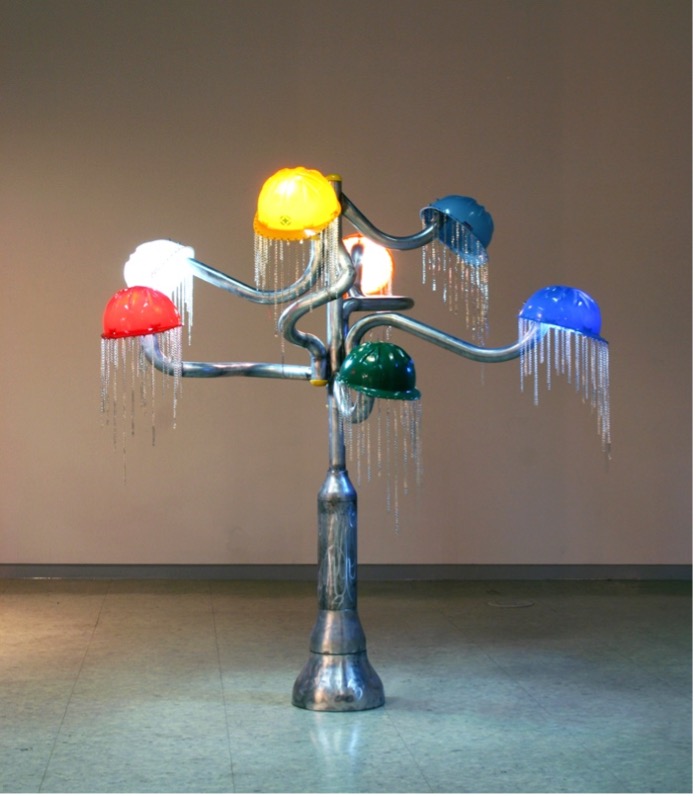
Yoo Hwasoo’s sculptural approach actively incorporates industrial materials and technological media. His early works reconstructed discarded materials, structures, and everyday tools, subverting their original functions. In Dolce Vita (2010), presented along Cheonggyecheon-ro, he repurposed construction materials and traffic signs to visually articulate the paradox of urban development and the overexpansion of infrastructure projects. This work was not merely a formal experiment but an effort to reinterpret the socio-political implications of industrial and technological byproducts.

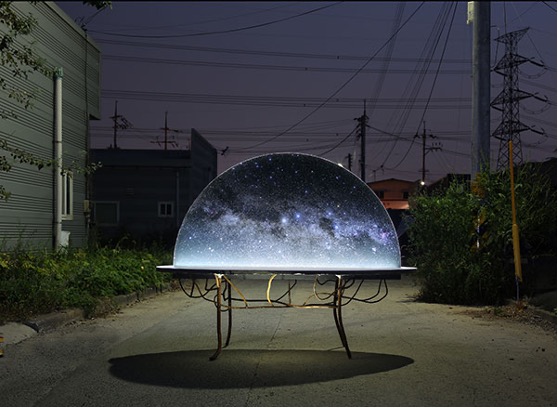
Recently, his artistic practice has expanded to include advanced cultivation technologies and holographic elements. In Gestures of Cultivation (2023), he employed smart farm systems to explore the coexistence of nature and technology, as well as the interrelations between human and non-human entities. In ‘Eco Metro Palace’, he used hologram projections of tree cross-sections to question the meaning of environmental restoration by juxtaposing physical destruction with virtual preservation.

One of the defining aspects of Yoo’s work is the evolving role of the audience. While his earlier works emphasized participatory elements, encouraging direct interaction with objects, his recent projects shift toward an observational approach. Much like smart farm systems that autonomously sustain ecosystems, his installations now create self-sustaining environments that continue to evolve and function without human intervention. This shift reflects his ongoing exploration of how technology and nature can form relationships independent of human control.

Topography & Continuity

Yoo Hwasoo’s work plays a crucial role in shaping contemporary Korean art at the intersection of technology and environmental discourse. His early projects focused on analyzing how labor and production systems shape human experience, later expanding to investigate the ways in which technology manages and manipulates the environment. In a rapidly developing society like South Korea—where urbanization and technological innovation continue at an accelerated pace—Yoo’s work challenges the assumption that technology is merely a tool for efficiency and progress, instead presenting it as a critical lens through which relationships between humans, environments, labor, and systems can be re-examined.

His work does not merely critique technology or advocate for environmental protection. Instead, Yoo proposes that technology can serve as a platform for new interactions between human and non-human entities. By visually demonstrating the limitations of human-centric technological frameworks while simultaneously exploring their potential for alternative applications, his practice aligns with critical discourses in contemporary art that seek to redefine the relationship between technology, ecology, and society.

Works of Art

Coexistence in a Technological Environment

Exhibitions