
Woman with a Movie Camera - K-ARTIST

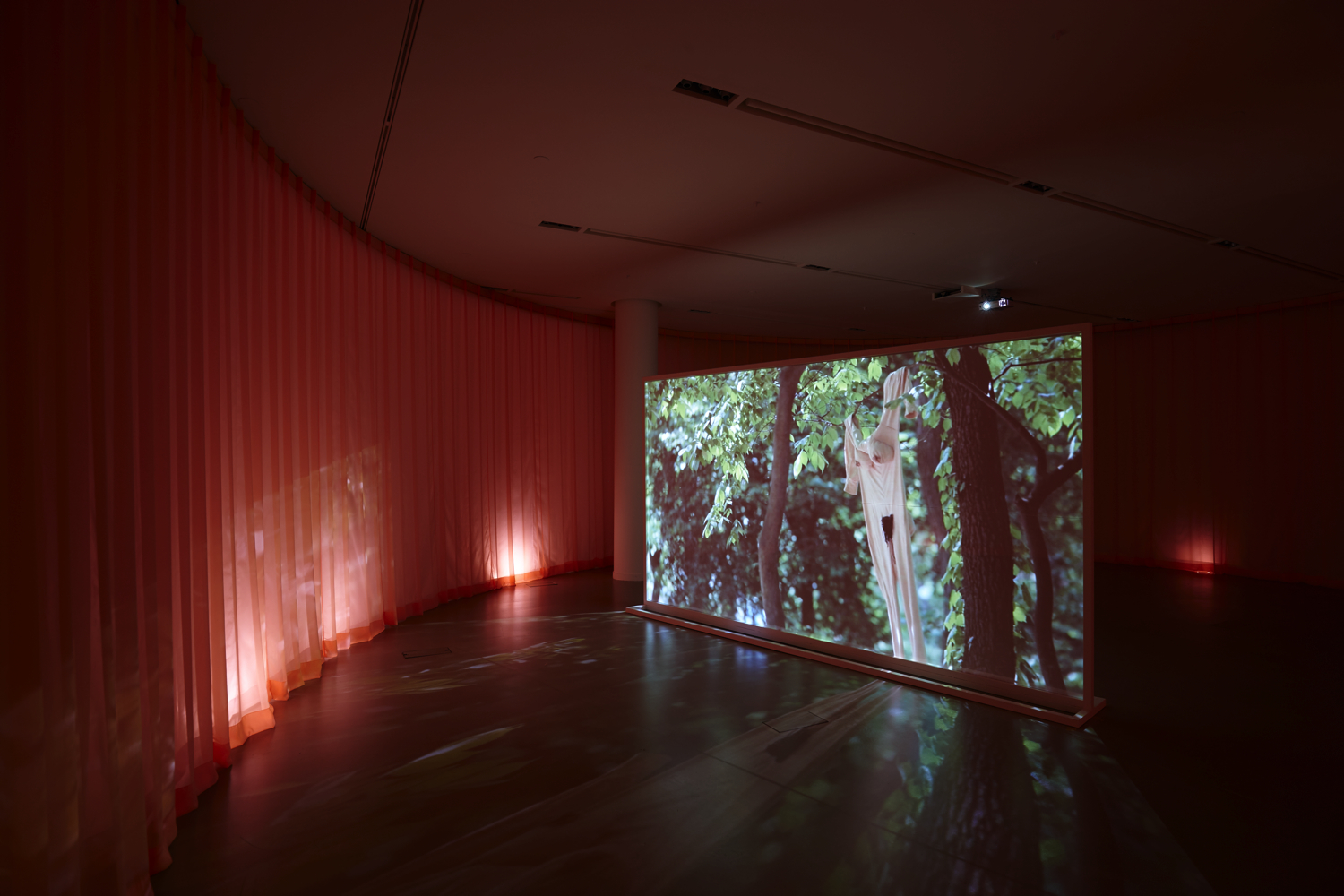
Woman with a Movie Camera

2015
Single channel video, stereo sound
36 min 10 sec
p.2 project
About The Work

An Jungju has consistently questioned social structures, sensory rhythms, and the mechanisms of human perception through experimental works employing a range of media, including video, sound, and photography. His practice is constructed through the repetition, fragmentation, distortion, and layering of images collected from everyday life and sounds extracted from mass media.

While engaging with large-scale structures such as the nation-state, institutions, collective memory, and media environments, An has always been concerned with how these forces are experienced through the individual body and the senses. As a strategy for addressing this question, he has adopted a method of “reframing,” reassembling familiar realities in unfamiliar ways.

Through this approach, rather than representing reality directly, he dismantles and rearranges existing relationships between images and sounds, thereby shifting the ways in which reality is perceived. By continually invoking social mechanisms that have become deeply embedded in everyday life, he encourages viewers to reconsider the systems of order and perception that are often taken for granted.

Instead of relying on conventional narrative structures, An constructs sensory relationships between image and sound through repetition, fragmentation, juxtaposition, and rhythm. His works operate less through the events that occur within individual frames than through the intervals and collisions between images, as well as the layered rhythms generated by sound.

This approach invites viewers to actively connect sensory cues and construct meaning for themselves, rather than simply following a singular narrative. In his work, video functions not merely as a recording device but as a spatial apparatus for reorganizing time and perception.

In this way, An Jungju has continued to make work that reveals the latent anxieties, rhythms, tensions, and sensory layers embedded within familiar environments, rather than attempting to define or explain reality in definitive terms. His practice can therefore be understood as a long-term cartography of contemporary society rendered through sensation, as well as an ongoing effort to perceive reality amid the transformations of a changing era.

Solo Exhibitions (Brief)

An Jungju has held solo exhibitions at Platform-L Contemporary Art Center (2021), DOOSAN Gallery New York (New York, 2016), DOOSAN Gallery (2015), Makeshop Art Space (Paju, 2014), Project Space SARUBIA (2012), Künstlerhaus Bethanien (Berlin, 2009), Kumho Museum of Art (2007), and Artforum Newgate (2005). A solo exhibition at Ilwoo Space is scheduled for 2027 in conjunction with the Ilwoo Art Awards.

Group Exhibitions (Brief)

An Jungju has participated in group exhibitions at major Korean museums including the National Museum of Modern and Contemporary Art, Korea (Gwacheon and Seoul, 2006, 2009, 2015, 2017, 2018), Buk-Seoul Museum of Art (2017), SONGEUN (2017), Atelier Hermès (2015), Culture Station Seoul 284 (2014), Seoul Museum of Art (2009), and Insa Art Space (2006), as well as overseas institutions including Chelsea Art Museum (New York, 2011), Fukuoka Asian Art Museum (Fukuoka, 2009, 2010), Cité des Sciences et de l’Industrie (Paris, 2008), Canal de Isabel II (Madrid, 2007), and the Korean Cultural Centre Australia (Sydney, 2012).

Awards (Selected)

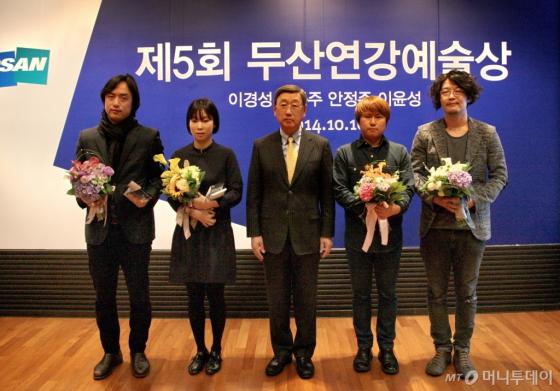
An Jungju received the Ilwoo Art Awards in 2025, the Excellence Prize at the 17th SONGEUN Art Award in 2017, and the Doosan Yonkang Arts Awards in the visual arts category in 2014.

Residencies (Selected)

An Jungju has participated in residency programs including Delfina Foundation (London, 2018), Han Nefkens Foundation (Barcelona, 2016), Doosan Residency New York (New York, 2016), Fukuoka Asian Art Museum Residency (Fukuoka, 2009), Künstlerhaus Bethanien Residency (Berlin, 2008), and Helsinki International Artist Programme (Helsinki, 2007).

Collections (Selected)

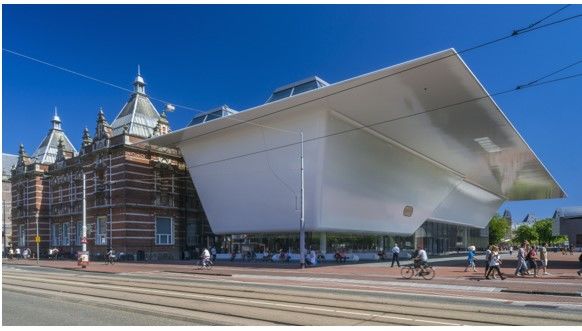
Works by An Jungju are included in the collections of the National Museum of Modern and Contemporary Art, Korea, Seoul Museum of Art, Gyeonggi Museum of Modern Art, Gyeongnam Art Museum, and the Stedelijk Museum, Netherlands.
Works of Art

A Narrative of Multilayered Sensations

Originality & Identity

An Jungju’s work has explored the structures of social reality and sensory perception through the medium of video, yet it cannot simply be reduced to political filmmaking or documentary practice.

While addressing large-scale structures such as the nation, institutions, collective memory, and media environments, he consistently questions how these systems are experienced through the body and senses of the individual. In his early works, An Jungju continuously investigated social structures, collective order, and the ways in which they affect individual sensation and movement.

Over time, he has persistently invoked social mechanisms naturally embedded within everyday life — including election campaigns, athletic events, national ceremonies, and tourist spaces — prompting viewers to perceive as strange the systems of order and perception that are otherwise taken for granted.

Rather than directly criticizing social structures themselves, his work is distinguished by its attention to the subtle sensory layers through which such structures operate.

One of the key aspects of An Jungju’s practice is his strategy of “reframing.” Rather than merely representing reality, he transforms the ways in which reality is perceived by dismantling and rearranging preexisting relationships between image and sound.

In Harmony_Lip-Sync Project II, for instance, ambient sound is removed from scenes filmed in front of monumental gates in European cities, after which participants are asked to reconstruct sound through onomatopoeic and mimetic vocalizations. Through this process, sound emerges not as simple background noise but as a sensory layer shaped by social experience and cultural difference.

The artist demonstrates that image and sound do not exist within fixed relationships, but instead remain intertwined in a state resembling a Möbius strip, continuously affecting one another. For An Jungju, what matters is not the delivery of a singular message, but rather the re-experiencing of the processes through which sensation and meaning are formed.

An Jungju’s work also expands into an exploration of how moving images acquire social meaning. In Rolling Papers, he juxtaposes scenes from everyday life with images of newspaper printing processes, examining the structures through which images and information are produced and consumed.

Rapidly intersecting screens and repetitive rhythms evoke the sensory conditions of an age saturated with information, encouraging viewers to construct meanings for themselves among the shifting images. Rather than presenting a fixed narrative or conclusion, An Jungju experiments with the ways in which moving images generate meaning beyond the limits of language.

This approach reflects his sustained interest in understanding video not merely as a tool of representation, but as a medium possessing its own autonomous system of language.

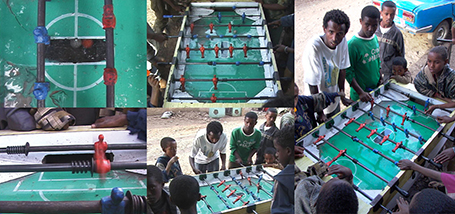
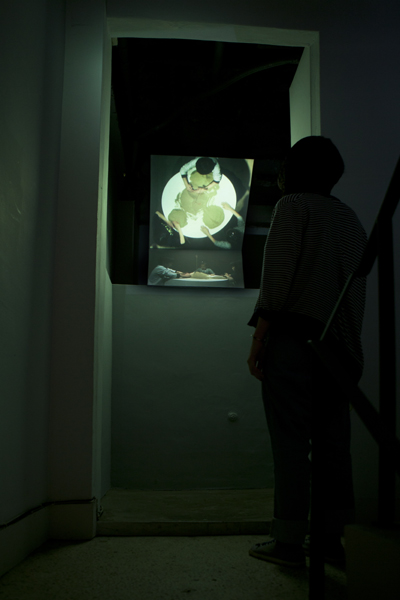
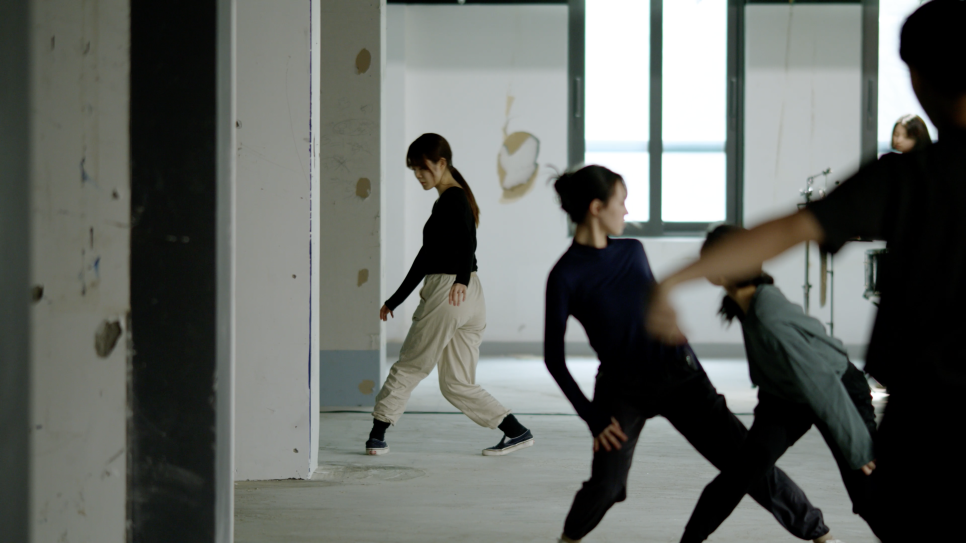
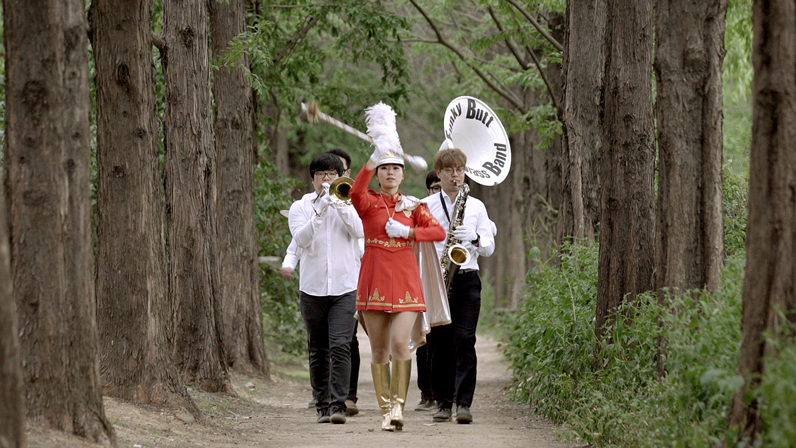
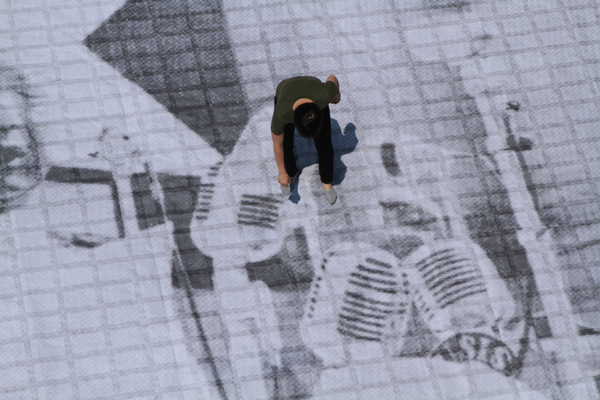
At the same time, alongside his critical perspective on institutions and reality, profound questions regarding art itself also occupy a central place in his practice. Through the p.2 project, created in collaboration with JUN Sojung, works such as Woman with a Movie Camera, Nude Model, and Makers multilayeredly explore the artist’s gaze, acts of creation, and the structures of fantasy and institutional systems surrounding art.

Rather than fixing art as a sublime ideal, An Jungju approaches it through an ongoing process of doubt and reconsideration. For him, art is not a completed declaration but a continuous attitude toward sensing and interpreting reality.

In this regard, his practice may be understood as a critical endeavor that constantly traverses society and image, sound and body, reality and fiction, while exploring the sensory structures of the contemporary world.

Style & Contents

Although An Jungju’s practice is primarily centered on video, sound, and installation, its formal characteristics emerge less from experimentation with a specific medium than from the way he organizes sensory relationships between image and sound.

Rather than constructing scenes through conventional narrative structures, as is often the case in video art, he composes the very flow of perception through structures of repetition, fragmentation, juxtaposition, and rhythm. In particular, his works operate not through events unfolding within a single frame, but through the intervals between screens, the collisions between images, and the layered rhythms generated by sound.

This approach encourages viewers not to follow a singular storyline, but to connect sensory clues themselves and construct meaning through their own perceptual experiences. In his work, video functions not merely as a recording device, but as a spatial apparatus that reorganizes time and sensation.

Sound constitutes one of the most essential formal elements within An Jungju’s practice. Rather than using sound as a supplementary component subordinate to the image, he treats it as an autonomous structure possessing a sensory hierarchy equal to, and at times surpassing, that of the visual image.

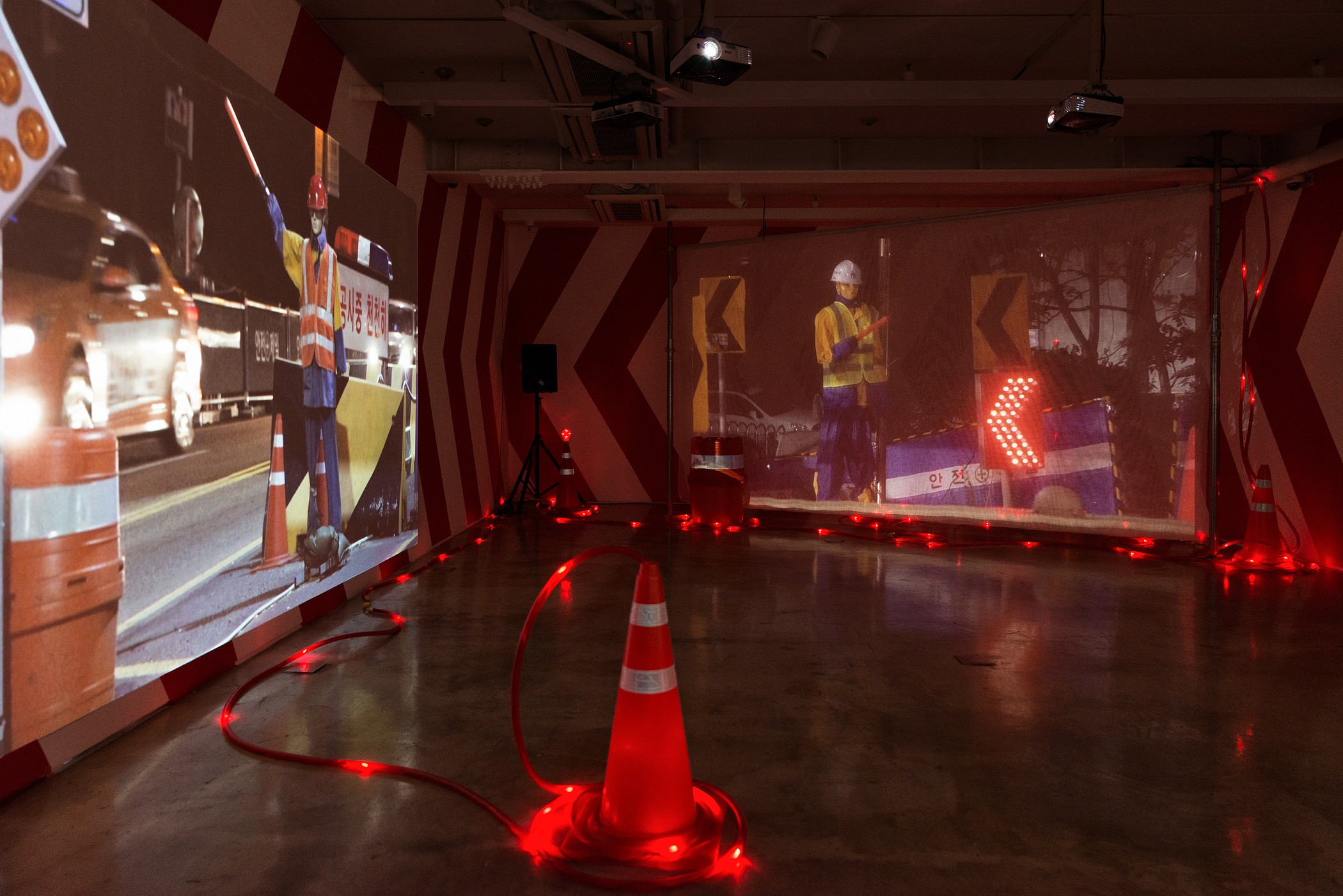
The noises of construction sites, the friction of bottles, sirens, chants, and the warning sounds emitted by safety-guiding robots — sounds ordinarily overlooked in everyday life — acquire new rhythms and emotional textures through processes of repetition, editing, and rearrangement within his works.

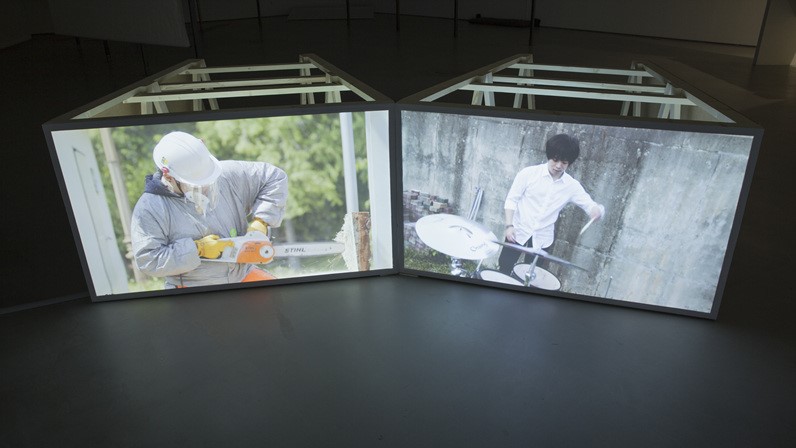
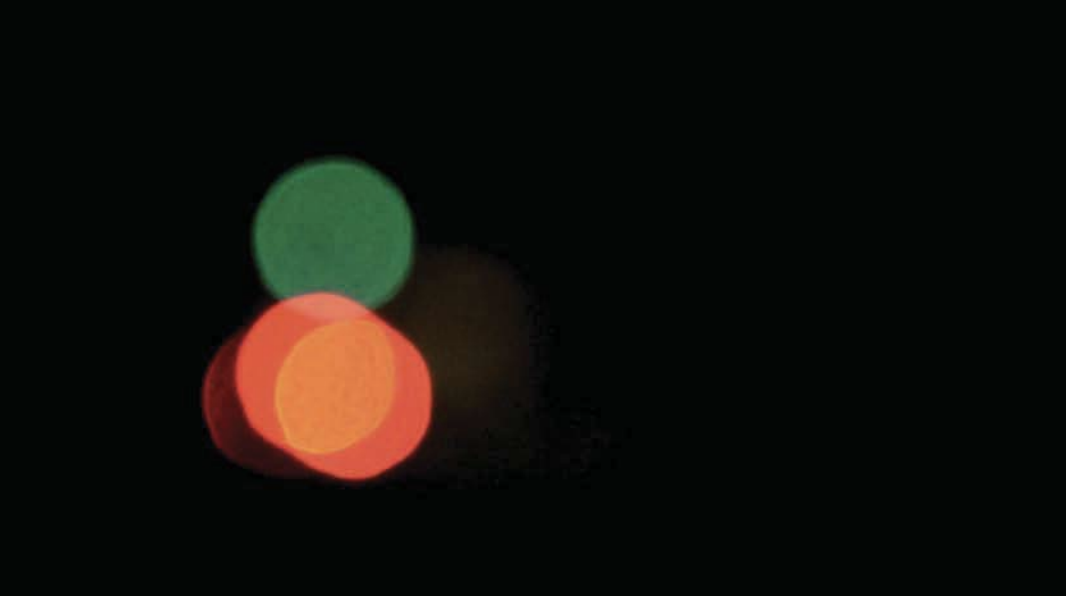
n Breaking to Bits and The Bottles, the mechanical sounds of industrial sites are transformed into musical rhythms, while in Siren, the unstable sensations of urban life are physically conveyed through repetitions of red lighting and warning sounds. In this way, An Jungju approaches sound not simply as ambient noise, but as a material element that reveals social environments and structures of perception.

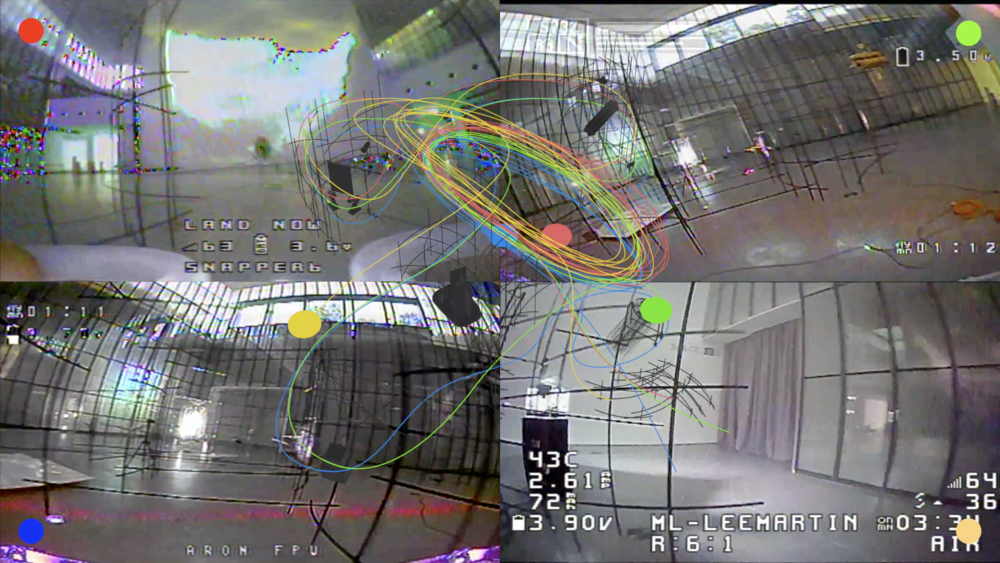
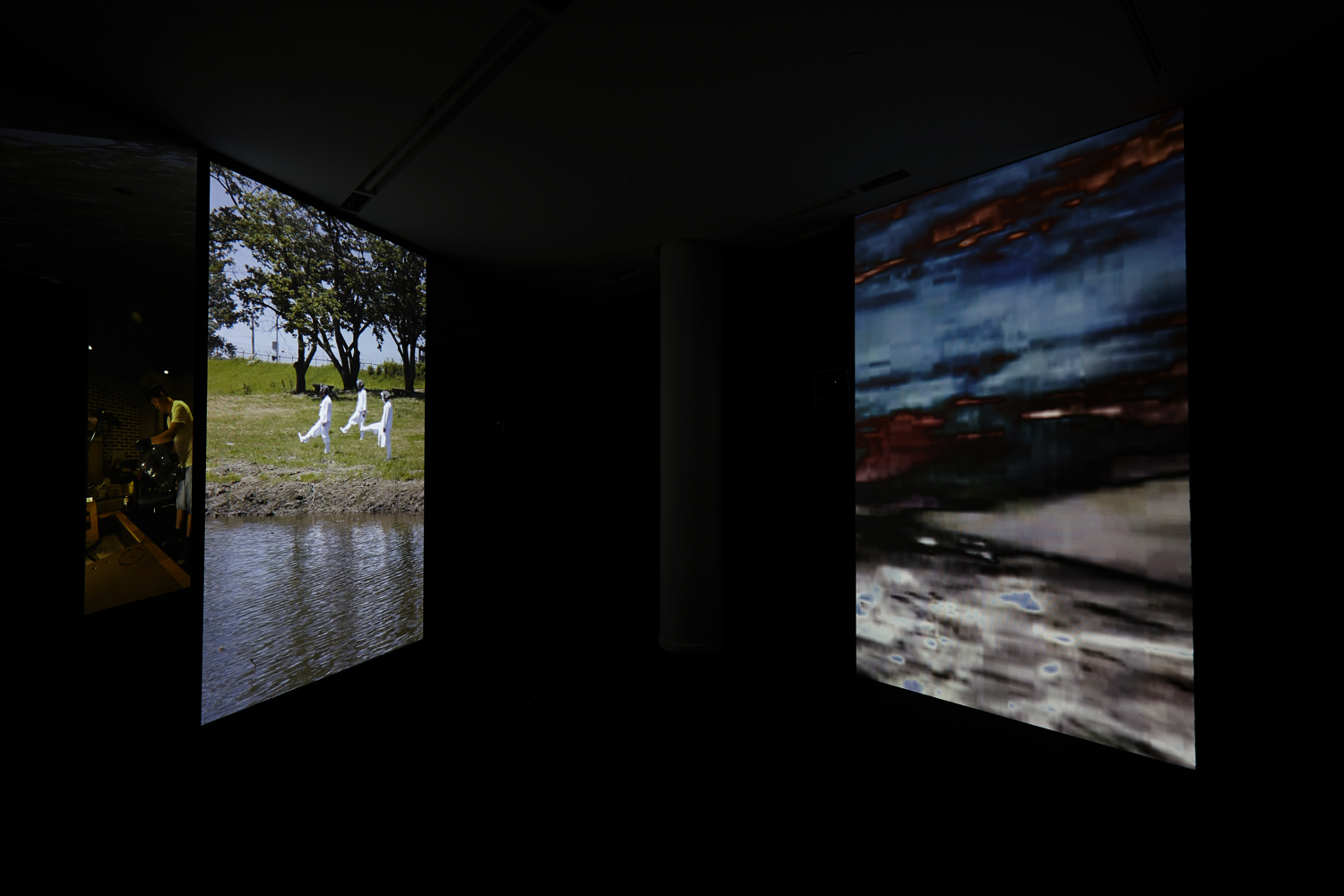
An Jungju’s work has also continually expanded beyond single-channel video into multichannel installation and spatial composition. Through the arrangement of monitors and screens, the choreography of audience movement, and the directional layering of sound, he organizes the entire exhibition space as a sensory environment.

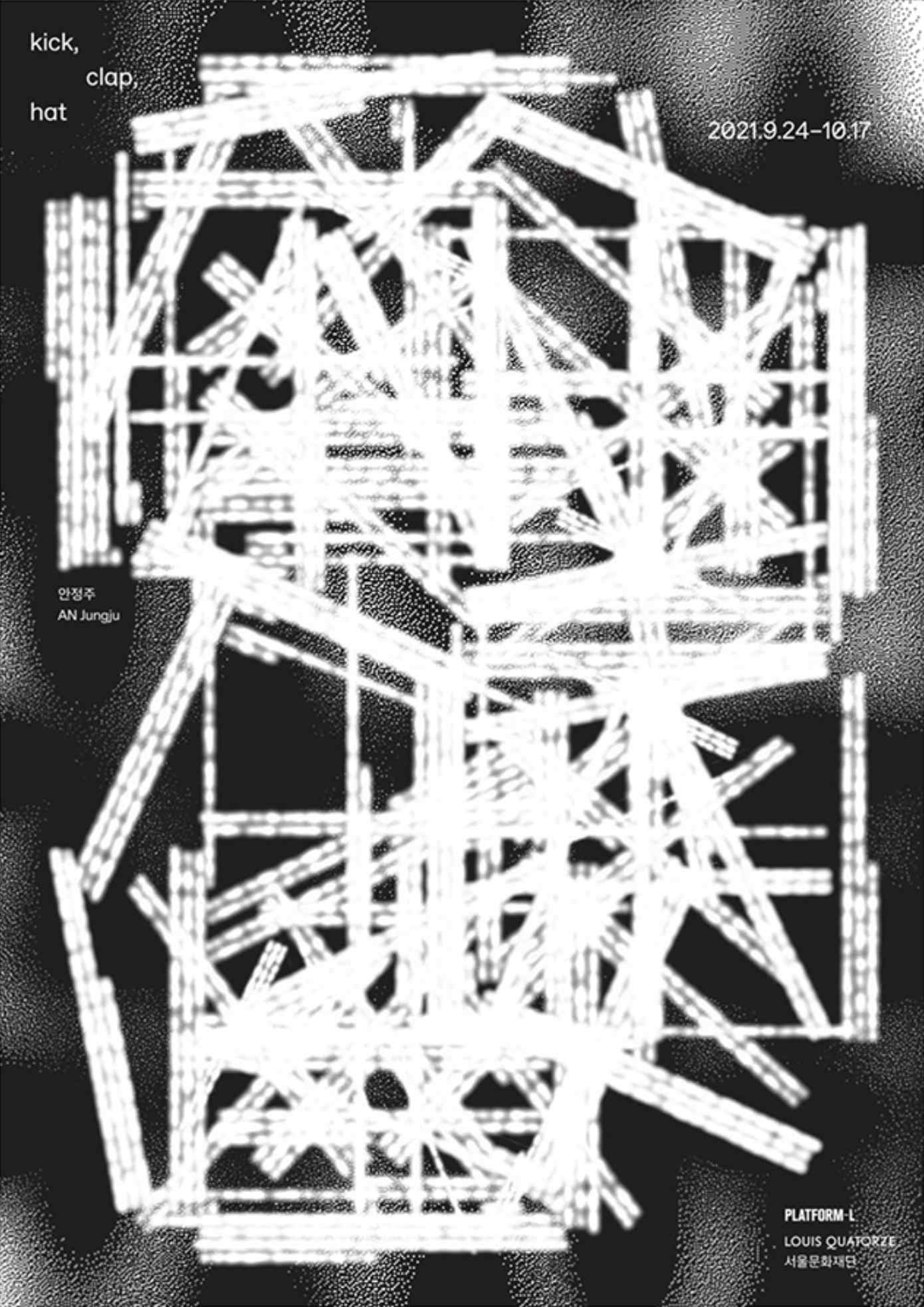
In Hand in Hand with Amigos para Siempre, nine cathode-ray tube televisions are fragmentarily arranged so that Olympic imagery and sound are experienced like fractured memories, while in kick, clap, hat, video, choreography, and VR environments are combined to immerse viewers within a multilayered sensory structure.

Such installation strategies transform moving images from objects merely to be viewed into spatial events through which viewers physically pass and experience.

Another important aspect of An Jungju’s formal language lies in its looseness and non-fixed structure. His works are less concerned with completed narratives or tightly controlled direction than with capturing accidental scenes, peripheral movements, and minor rhythms. The camera maintains a measured observational distance rather than dramatizing its subjects, often leaving empty durations and slow temporal rhythms within the frame.

Rather than directly representing grand events or ideological systems, this approach operates by revealing subtle ruptures within reality and minute vibrations of sensation. Ultimately, in An Jungju’s practice, form is not merely a visual style, but something deeply intertwined with ways of sensing and perceiving reality itself.

Topography & Continuity

Although An Jungju’s practice has unfolded over the past two decades through video, sound, and installation, several key sensory axes have remained consistently present throughout his work. From his earliest works to her most recent projects, he has continuously explored social structures, collective perception, and the ways in which these systems are experienced through individual bodies and everyday life.

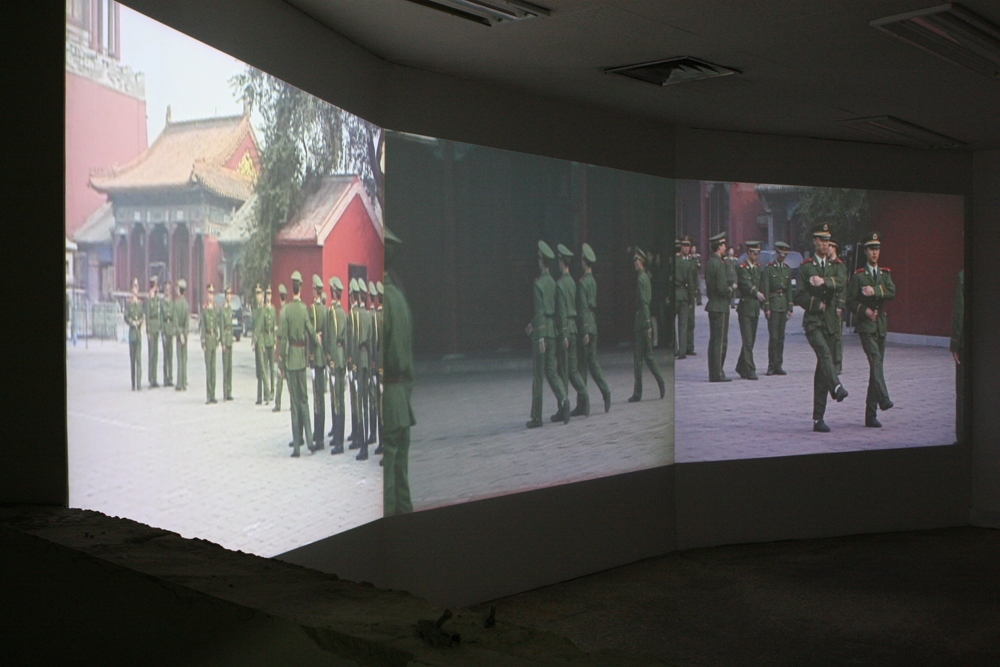
Subjects such as Chinese military drills, the deafening sounds of demolition sites, factory machinery, Olympic imagery, and urban warning sirens may belong to different times and places, yet they are all connected through their revelation of the rhythms and sensory structures generated by social systems.

Rather than reproducing specific events, An Jungju’s work has persistently traced the ways in which society organizes individual perception through repetitive movements and sounds.

Another recurring characteristic in his practice is the sensation of “the city” and “movement.” Works produced while passing through cities such as Berlin, Paris, Rome, Barcelona, and Seoul do not merely document local landscapes, but reveal sensory structures shared across contemporary urban environments. Crowds at tourist sites, the noise of intersections, borders and monuments, large-scale events, and the movements of masses overlap within his work as a kind of global urban sensibility.

At the same time, he does not view the city solely as a space of grand spectacle, but persistently captures subtle movements and peripheral scenes that are easily overlooked within it. This perspective reveals that even within globalized urban environments, differences and fractures in perception continue to exist, forming an important topography within An Jungju’s practice.

The continuity of An Jungju’s work can also be found in its formal dimensions. While actively embracing new technologies and environments, he has consistently maintained a fundamental interest in exploring the relationship between moving image and sound. The fragmentation and rearrangement of image and sound that began in his early single-channel works later expanded into multichannel installations, performances, and VR-based projects, yet his concern with reconstructing structures of perception has remained unchanged.

Rather than emphasizing the novelty of media technology itself, his work develops toward examining how human perception transforms within technological environments. This demonstrates that his practice extends beyond experimentation with media technology alone and critically reflects upon the sensory conditions of the contemporary world itself.

Above all, the most significant continuity within An Jungju’s practice lies in his attitude toward reality. Rather than relying on grand narratives or direct political declarations, he has revealed the structures of contemporary society through images, sounds, and movements naturally embedded within everyday life.

This approach has remained remarkably consistent from his early works to his recent projects, while gradually expanding into increasingly complex and multilayered forms. Rather than definitively defining or explaining reality, An Jungju has continued to work by exposing the latent anxieties, rhythms, tensions, and sensory layers concealed within familiar environments.

In this sense, his practice can be understood both as a long-term topography that sensorially records contemporary society and as an ongoing endeavor to continue sensing reality amid changing times.

Works of Art

A Narrative of Multilayered Sensations

Articles

Exhibitions

Activities