Camouflage1 - K-ARTIST

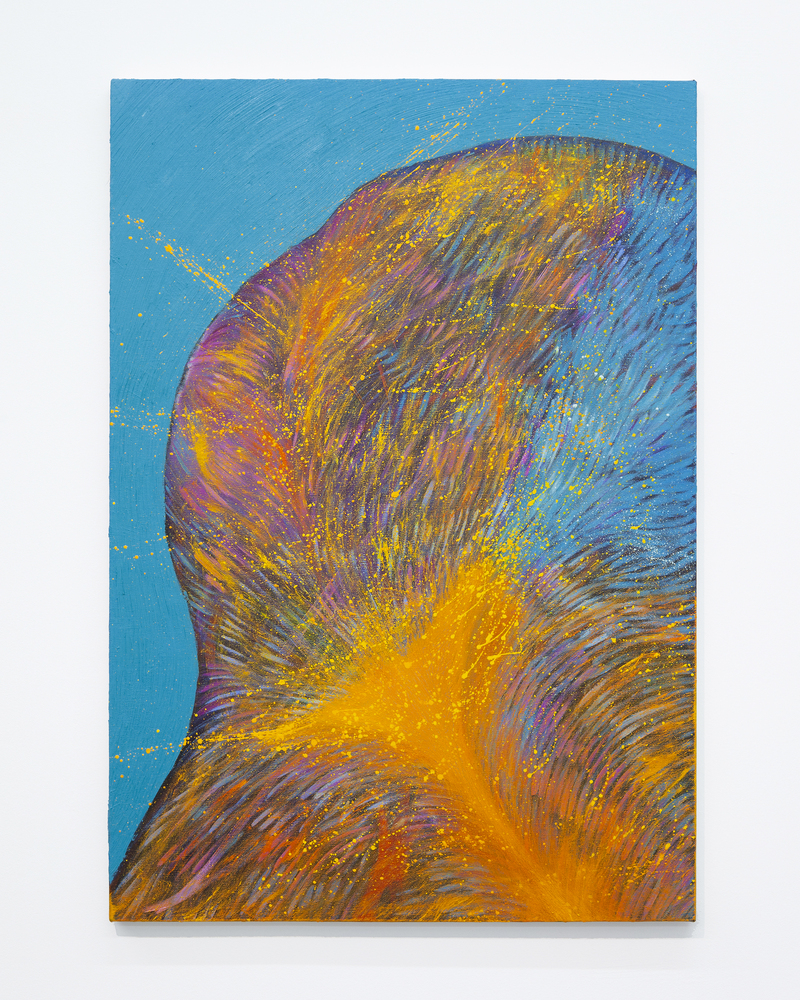
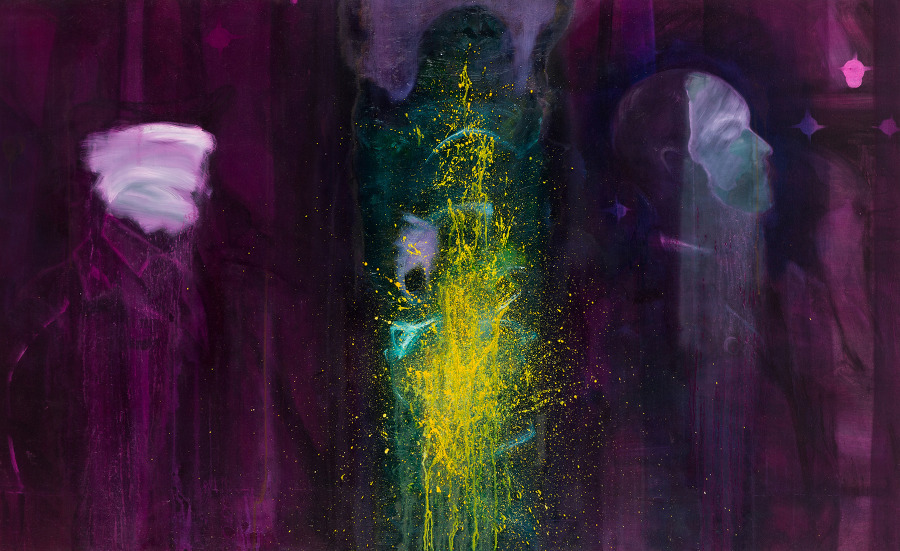
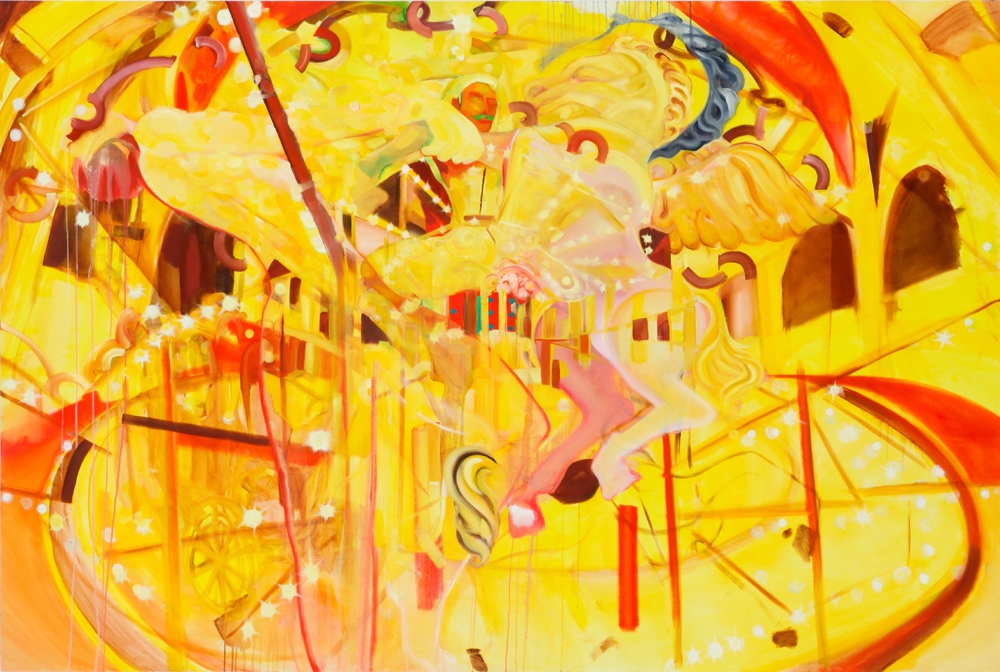
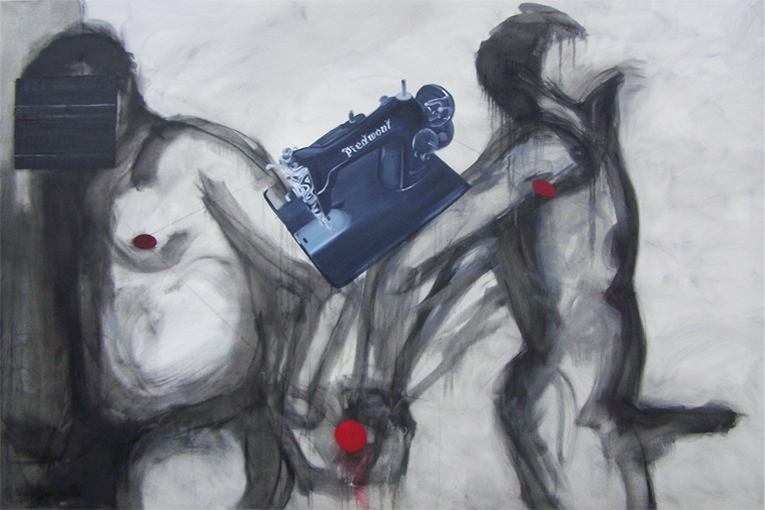
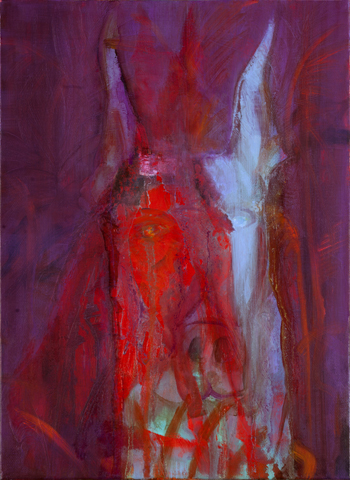
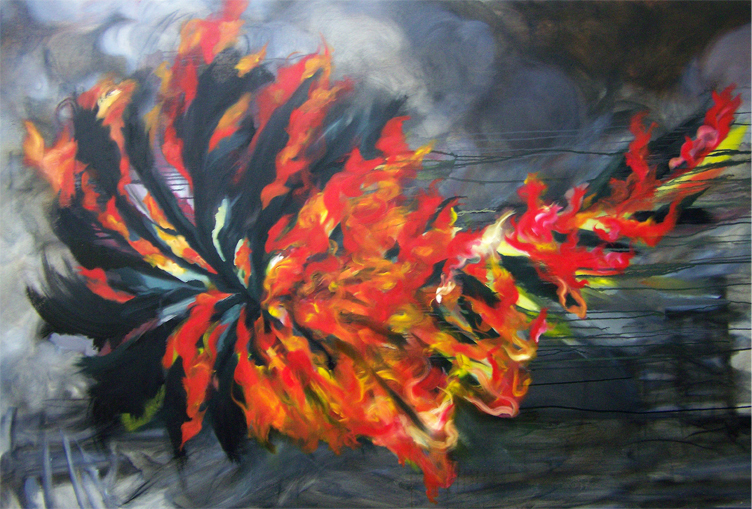
Camouflage1

2011
Oil on canvas
91 x 71 cm
About The Work

Yongseok Oh’s paintings move beyond simple representation, focusing instead on constructing invisible worlds in which disparate images and beings collide and become bound together. Drawing from visual materials of differing origins and layers—including internet imagery, popular culture, mythology, historical figures, and photographic archives—the artist juxtaposes collected images in ways that infiltrate familiar forms with sensations of strangeness and unease. 

The images within his paintings resist reduction into fixed narratives or symbols; instead, they are continuously transformed and rearranged as different temporalities, identities, desires, and memories overlap. Through this process, painting becomes not merely a site of depiction, but an “ecosystem” in which beings that deviate from established orders generate new relationships.

While his earlier works explored scenes in which desire and violence, death and eroticism intersected through historical figures, bodily imagery, and tragic narratives, his later works gradually expanded toward an interest in the relationships between images and beings themselves. 

His work has also consistently focused on beings that disrupt fixed identities and normative systems within contemporary society. Images traversing boundaries between human and nonhuman, male and female, reality and fantasy, center and periphery have continued to recur even as times and formal approaches have changed, forming a crucial axis of continuity within his practice. 

Solo Exhibitions (Brief)

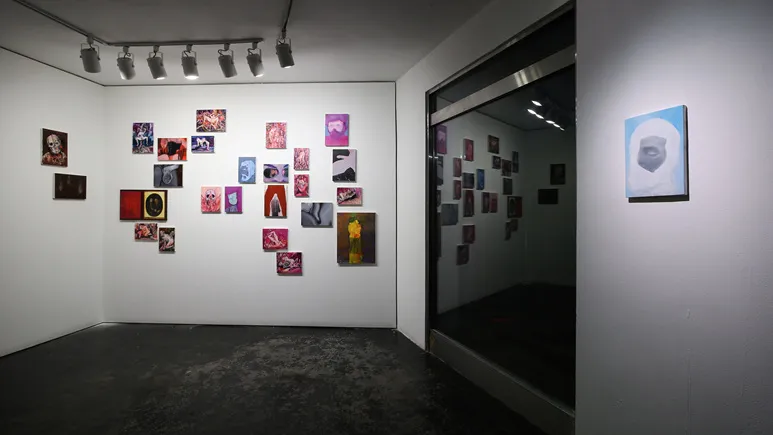
Yongseok Oh has presented solo exhibitions at Gallery Jungmiso (2007), Kumho Museum of Art (2011), Lotte Gallery Gwangju (2012), Gallery Chosun (2016), Space Heem (2017), and Vohm (2022, 2024), while actively working across Seoul, Gwangju, Busan, and Beijing.

Group Exhibitions (Brief)

Yongseok Oh has participated in group exhibitions at major institutions and exhibition spaces in Korea and abroad, including the Gwangju Biennale, DOOSAN Gallery Seoul (2014), Seoul Museum of Art (2013), Kumho Museum of Art (2012), Art Space Pool (2016), Hapjungjigu (2017), and Centre d’Art Contemporain in Meymac, France (2016).

Awards (Selected)

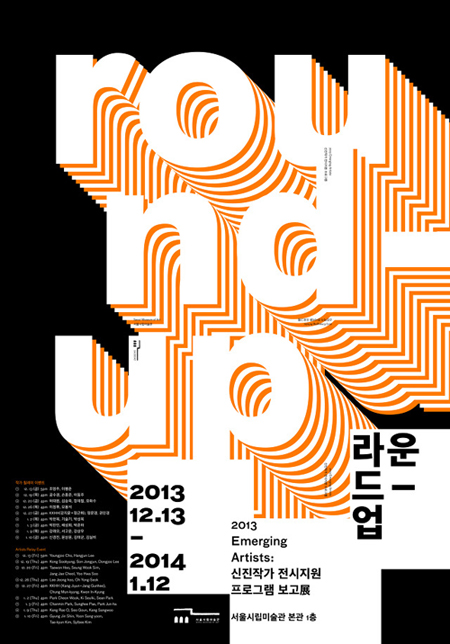
Yongseok Oh received the 16th Gwangju Shinsegae Art Award (2014) and was selected for the SeMA Emerging Artists Support Program (2013) and Kumho Young Artist (2010).

Residencies (Selected)

Yongseok Oh participated in residency programs including the Gwangju Museum of Art Palgakjeong Studio (2009), C.O.L Residency in Beijing (2011), National Goyang Studio (2012), and Künstlerhaus Schloss Balmoral (2012).

Works of Art

Painting as an Ecosystem of Beings Deviating from Established Orders

Originality & Identity

Yongseok Oh’s paintings move beyond simple representation, focusing instead on constructing invisible worlds in which disparate images and beings collide and become bound together. Drawing from visual materials of differing origins and layers—including internet imagery, popular culture, mythology, historical figures, and photographic archives—the artist juxtaposes collected images in ways that infiltrate familiar forms with sensations of strangeness and unease. The images within his paintings resist reduction into fixed narratives or symbols; instead, they are continuously transformed and rearranged as different temporalities, identities, desires, and memories overlap. Through this process, painting becomes not merely a site of depiction, but an “ecosystem” in which beings that deviate from established orders generate new relationships.

The artist has consistently explored themes of desire and love, loss and mourning, relationships and attachment. Figures that appeared in his earlier works—tragic historical figures, distorted bodies, severed faces, and male torsos—function not simply as images of eroticism or shock, but as devices that reveal the incompleteness and loneliness of beings that can only exist through relations with others. Bodies in his work always appear in unstable and indeterminate states, while gender, identity, and individuality are continually destabilized and disrupted. These forms simultaneously reveal states of existence that resist normative systems while also suggesting attempts to discover new sensory possibilities through the processes of union and separation between different beings.

One of the central concepts in Yongseok Oh’s paintings is “bonding.” Rather than presenting disparate images and beings as fully unified wholes, he focuses on states in which differences remain intact while loosely connected. The artist describes this through acts of stitching and joining, at times comparing his painting process to the principle of a “sewing machine.” The images within his canvases do not form a completely closed world; instead, different memories, emotions, and beings coexist in temporarily stitched-together states. Such structures resonate with the human condition of continuously longing for connection with others even after loss, without ever fully severing relationships.

His work also forms close connections with queer sensibilities. Rather than remaining within the framework of identity politics alone, this expands into an interest in modes of existence that traverse boundaries between normality and abnormality, human and object, male and female, reality and fantasy. Instead of presenting stable identities or fixed meanings, the artist foregrounds unstable states in which disparate elements collide and intermingle as an essential condition of painting itself. This attitude ultimately extends into the core conceptual foundation of his practice: the exploration of possibilities for existing otherwise through painting.

Style & Contents

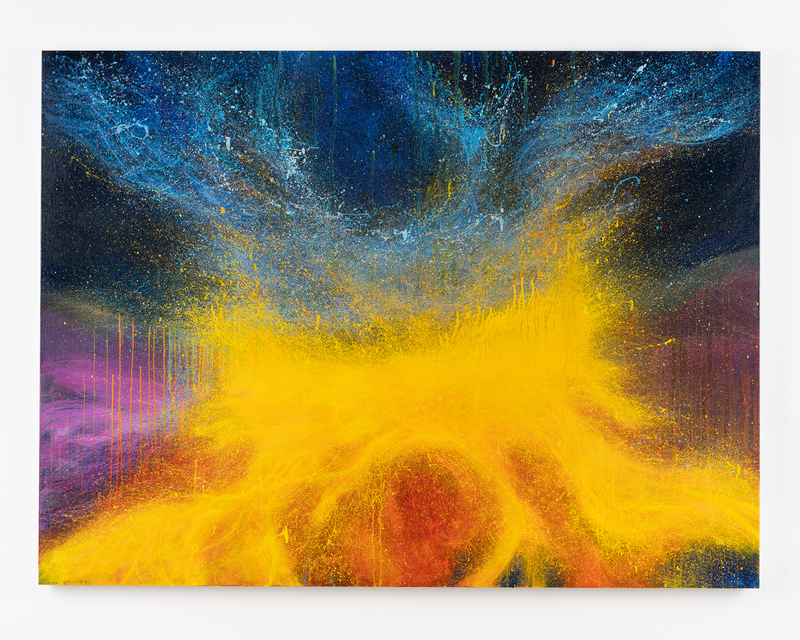
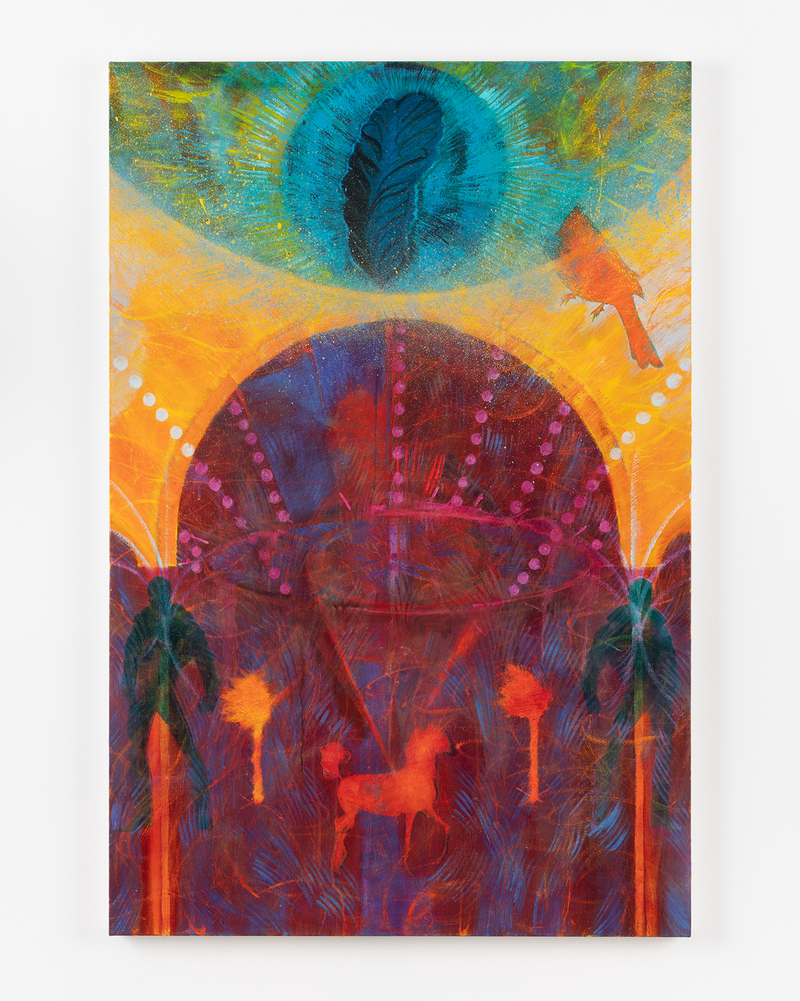
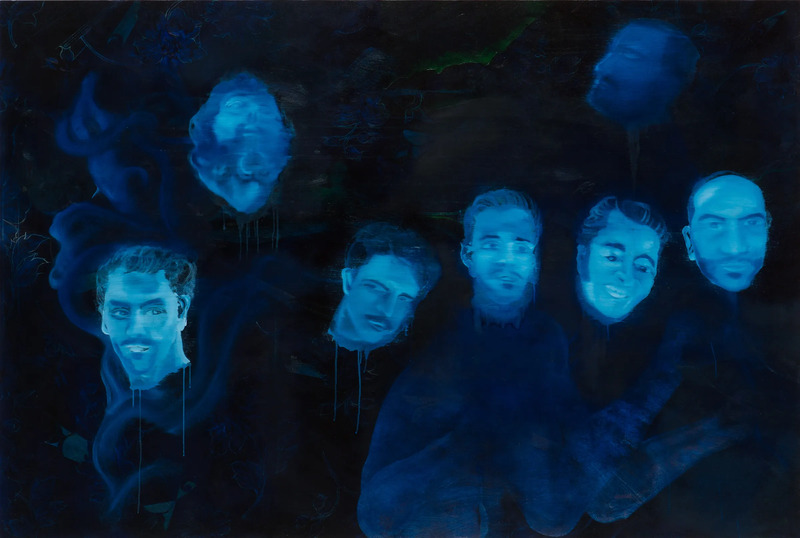
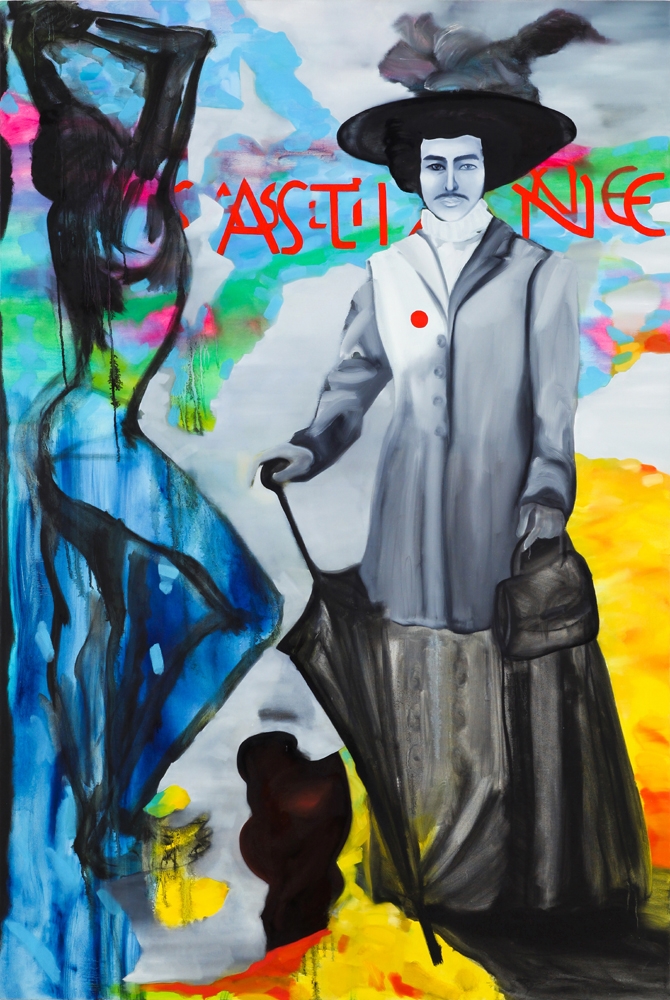
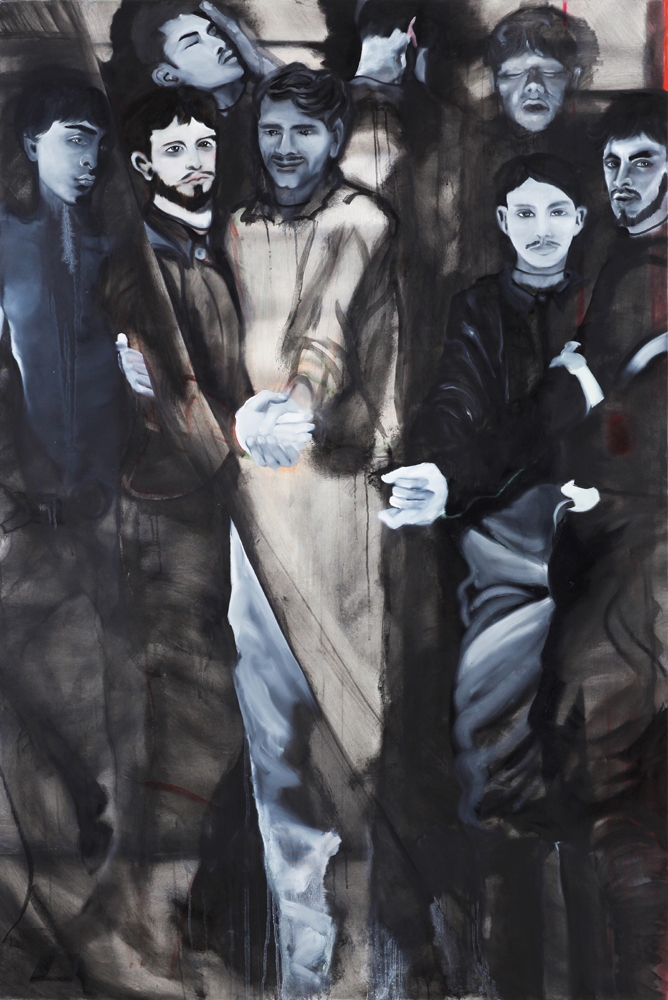
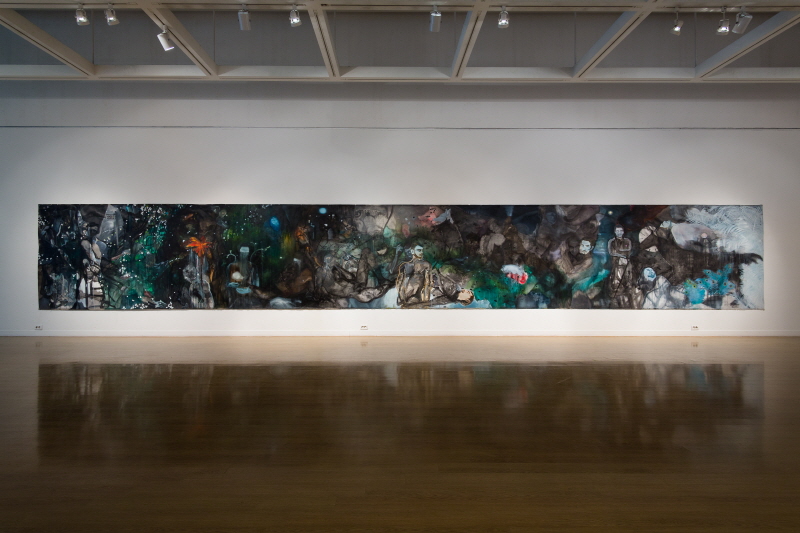
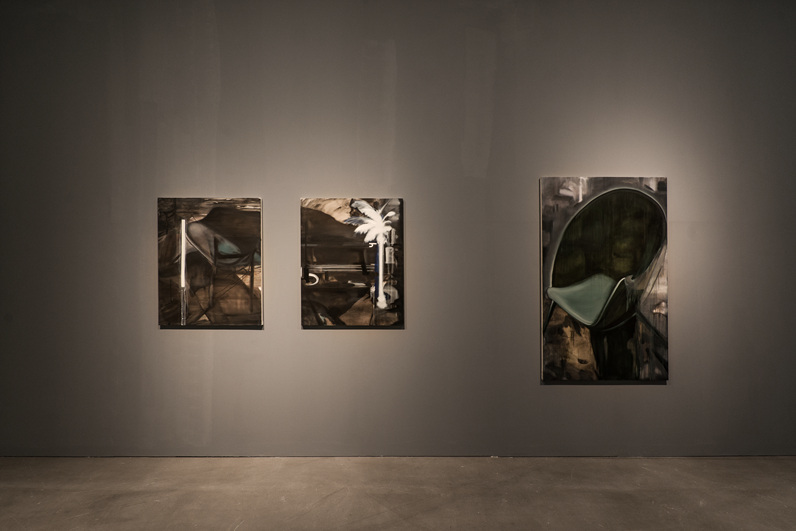
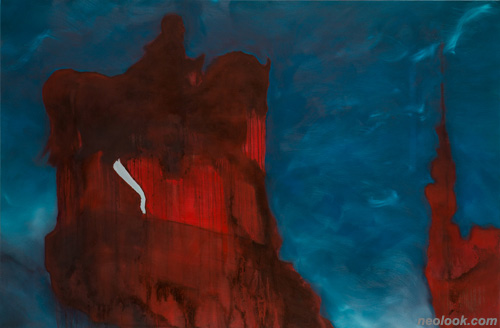
Yongseok Oh’s paintings generate a distinctive visual tension through intense colors, flattened compositions, and collisions between heterogeneous images. Human figures, animals, plants, mythological beings, and photographic imagery frequently overlap within his canvases, yet rather than forming a unified narrative, they function by juxtaposing different layers of sensation and emotion. In particular, vivid colors such as red, blue, and black transform the entire pictorial surface into an emotional space, leading viewers not toward narrative interpretation but into atmospheres and sensory experiences. As a result, his paintings resemble psychological landscapes in which dreams, hallucinations, memories, and the unconscious intermingle, rather than realistic spaces.

His paintings deliberately weaken traditional perspective and representational spatial structures while emphasizing flatness. Indistinct vanishing points, severed bodies, floating faces, and overlapping backgrounds remove conventional depth and allow images to exist simultaneously across the surface. Within this flattened structure, the artist recombines and stitches images together, encouraging collisions between forms that originate from different sources and meanings. In this sense, his use of appropriated visual materials—such as photographs, film stills, and internet imagery—is not simply an act of reproduction, but a process of transforming them into new relational networks within painting itself.

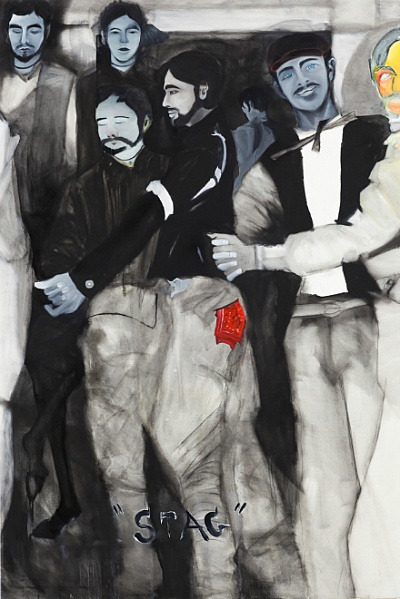
Recurring bodily imagery functions as a major formal element within Yongseok Oh’s practice. His figures often appear with ambiguous gender identities or fragmented bodies, and at times emerge as forms entangled and sutured together. These bodies do not serve as straightforward representations of the human figure, but rather as devices for revealing invisible emotional states such as desire, anxiety, absence, and relational instability. Faces and bodies appear not as complete entities but as fluid presences that are continuously transformed and dismantled, and this instability contributes to the grotesque yet dreamlike atmosphere of his paintings.

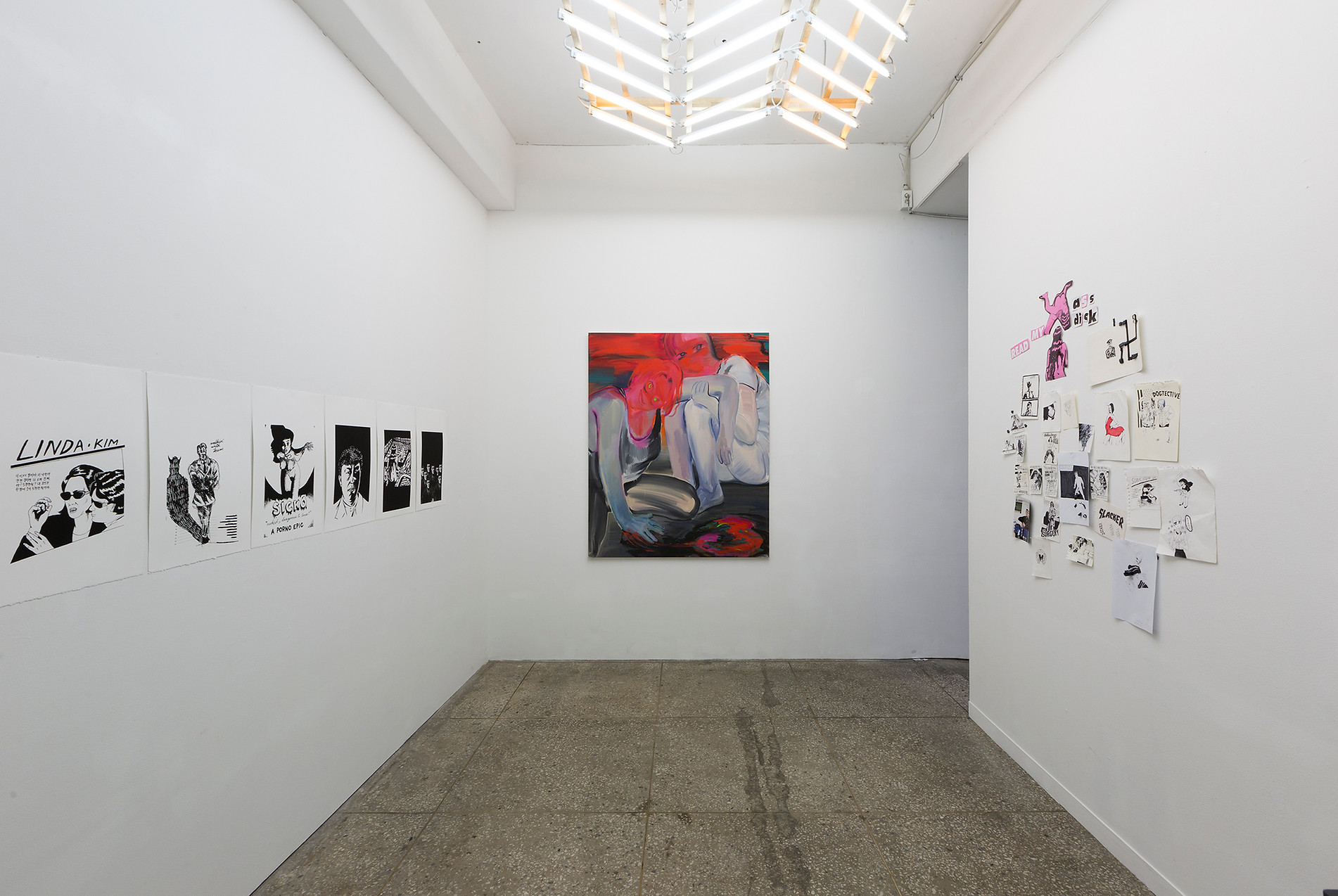
The artist has also maintained an ongoing interest in text and narrative structures alongside painting. Words appearing within exhibitions, novelistic forms of writing, and images suggesting incidents or hidden events imply narratives beyond the canvas while never fully explaining them. In this way, Yongseok Oh’s work operates less through the delivery of fixed meanings than through the accumulation of clues and sensations, encouraging viewers to construct their own interpretations by connecting fragmentary images and narratives. His paintings therefore function not as closed images, but as open structures in which disparate sensations and memories are continually stitched together.


Topography & Continuity

Since the mid-2000s, Yongseok Oh has continuously developed a painting-centered practice, establishing a distinct visual world within the context of contemporary Korean painting. While his earlier works explored scenes in which desire and violence, death and eroticism intersected through historical figures, bodily imagery, and tragic narratives, his later works gradually expanded toward an interest in the relationships between images and beings themselves. In particular, his methods of juxtaposing and suturing disparate images, along with his sustained exploration of structures of relation and attachment, have remained central methodologies throughout the formal transformations of his practice over time.

Through repetition and transformation, his paintings form a vast constellation of images. Elements such as severed faces, male torsos, animalistic forms, clustered bodies, and ambiguous landscapes recur across different works, with images from earlier paintings reappearing in altered forms within later ones. This repetition is not intended to reproduce identical imagery, but rather to examine how images shift into different meanings and sensations across time and context. For this reason, his work is best understood not as isolated individual pieces, but as part of an organic structure of accumulation and continuity.

Alongside painting, Yongseok Oh has expanded his artistic world through writing, fictional narratives, and exhibition texts. The emotions and sentences that emerge within his notes and texts remain closely connected to the images within his paintings, creating structures in which painting and language either complement or disrupt one another. This reflects an attitude that refuses to limit painting to a purely visual result, instead extending it into a narrative field through which memories, sensations, and relational structures continue to accumulate.

His work has also consistently focused on beings that disrupt fixed identities and normative systems within contemporary society. Images traversing boundaries between human and nonhuman, male and female, reality and fantasy, center and periphery have continued to recur even as times and formal approaches have changed, forming a crucial axis of continuity within his practice. This attitude reflects the artist’s longstanding interest in exploring contemporary sensibilities and modes of existence through painting, ultimately positioning his work as a fluid and expandable cartography of images.

Works of Art

Painting as an Ecosystem of Beings Deviating from Established Orders

Articles

Exhibitions

Activities