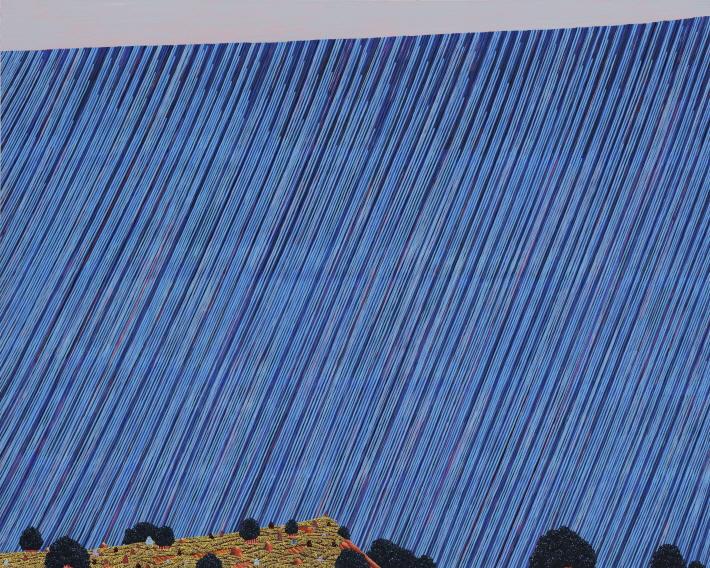
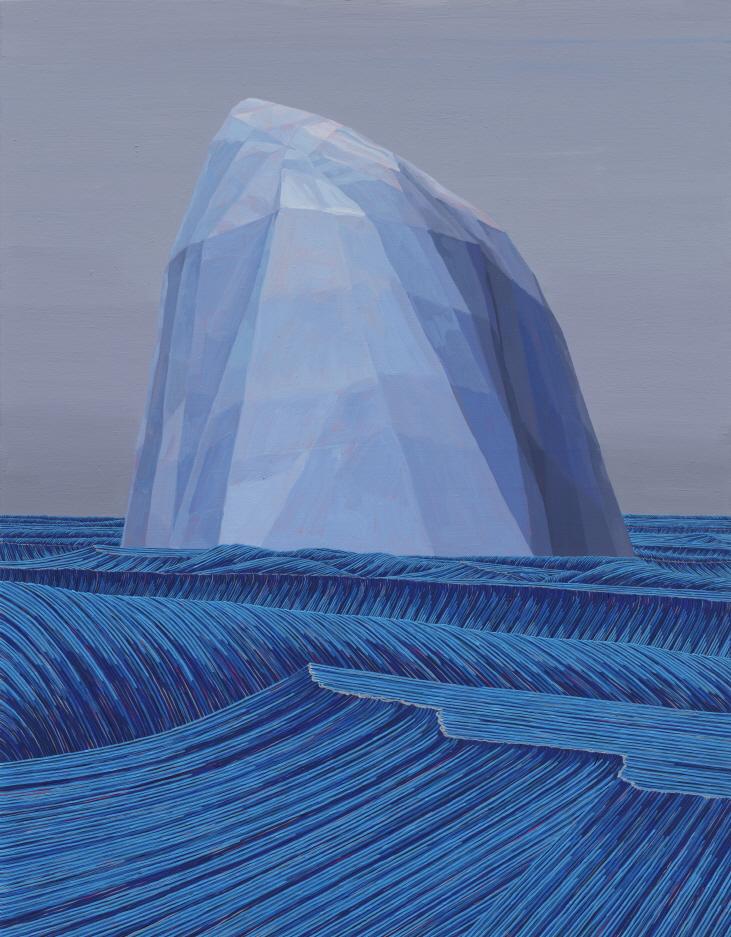
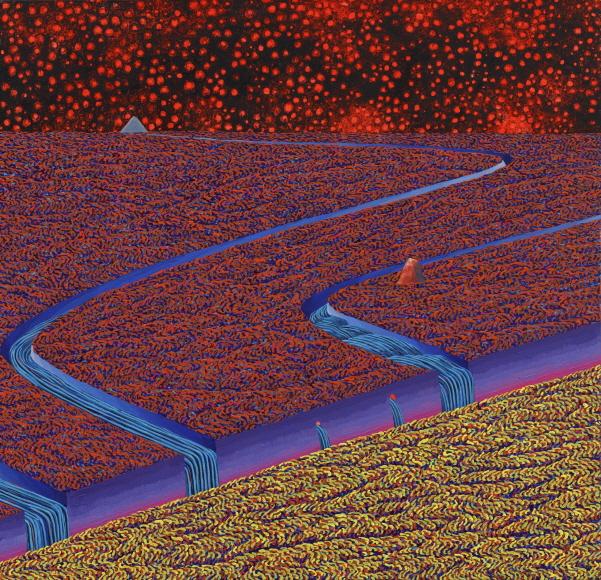
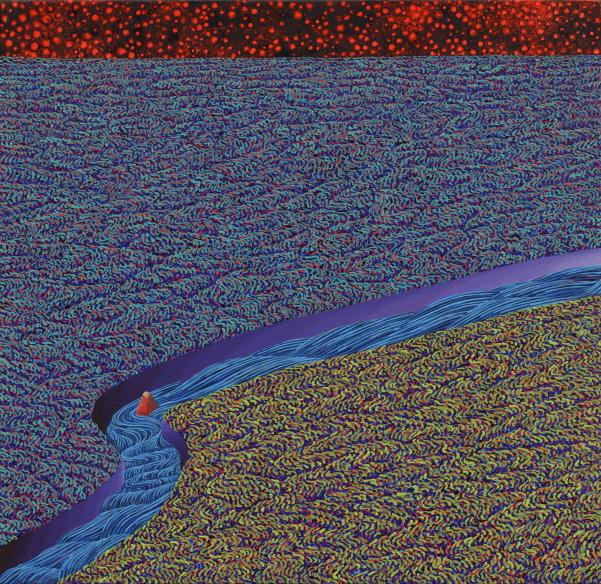
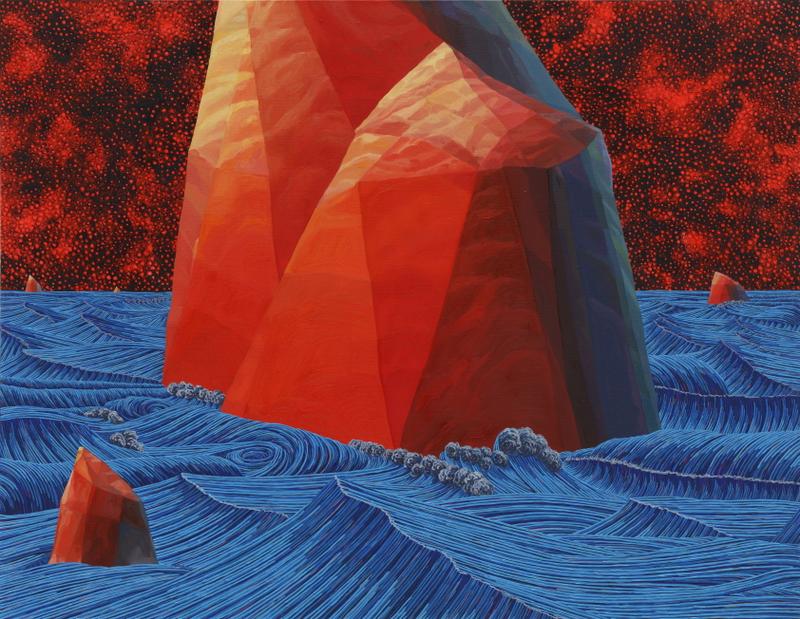
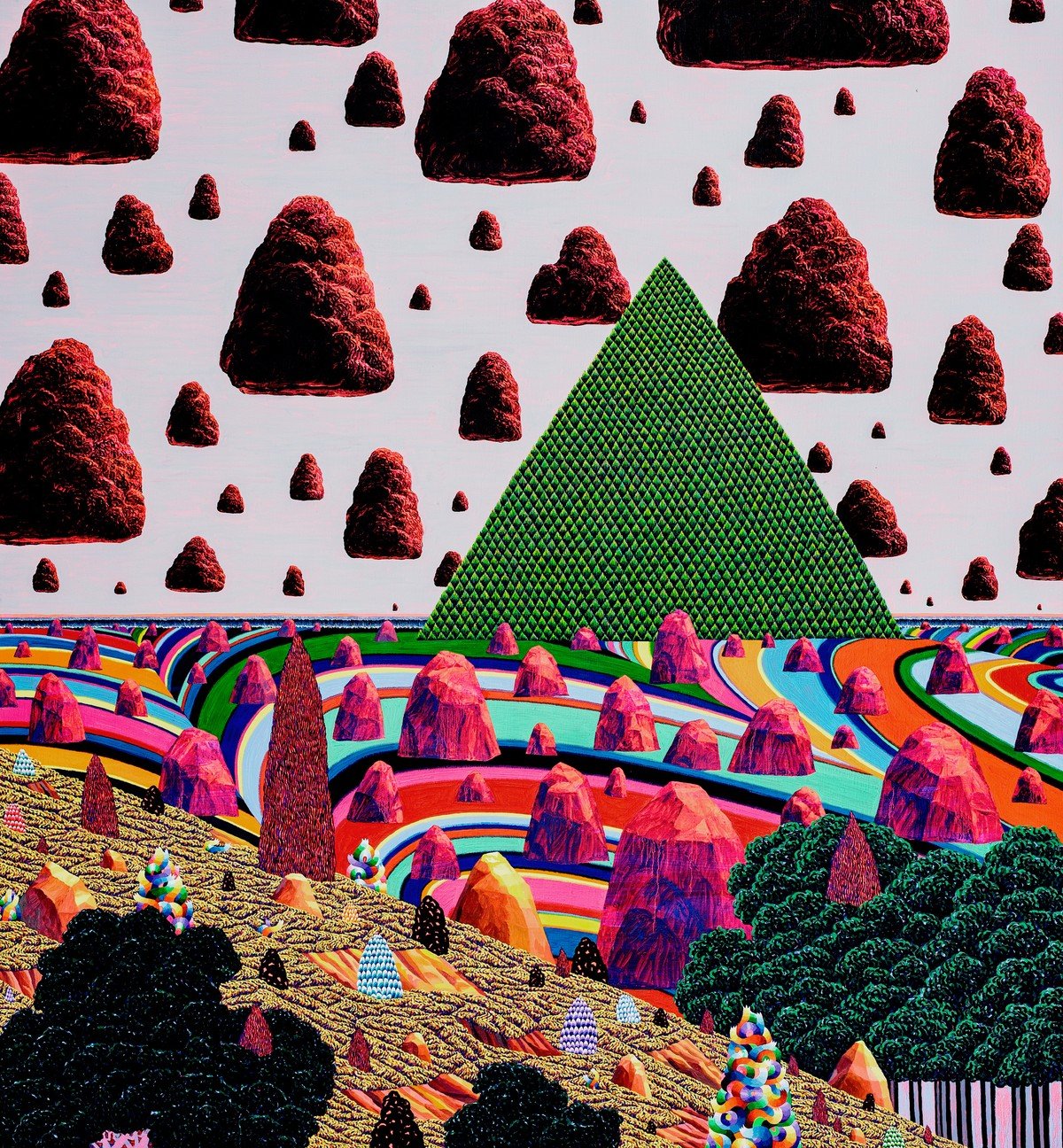
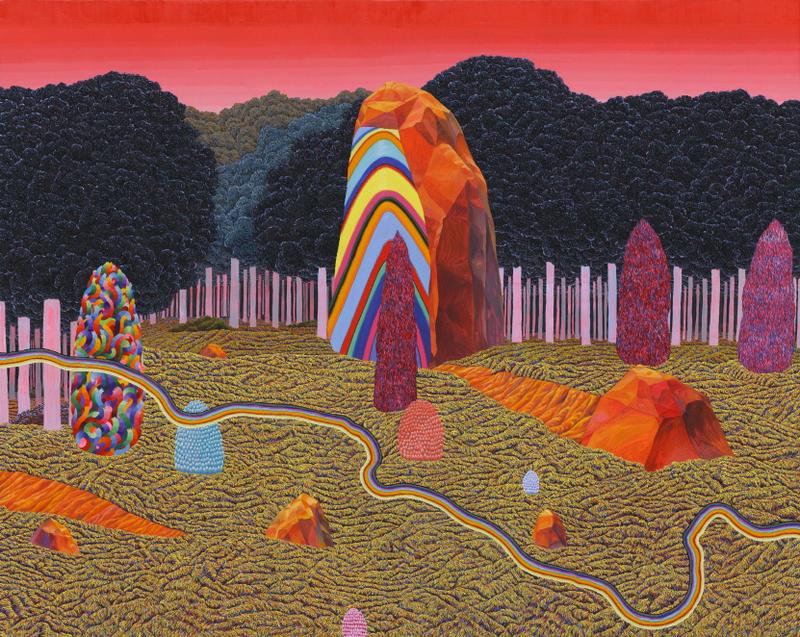
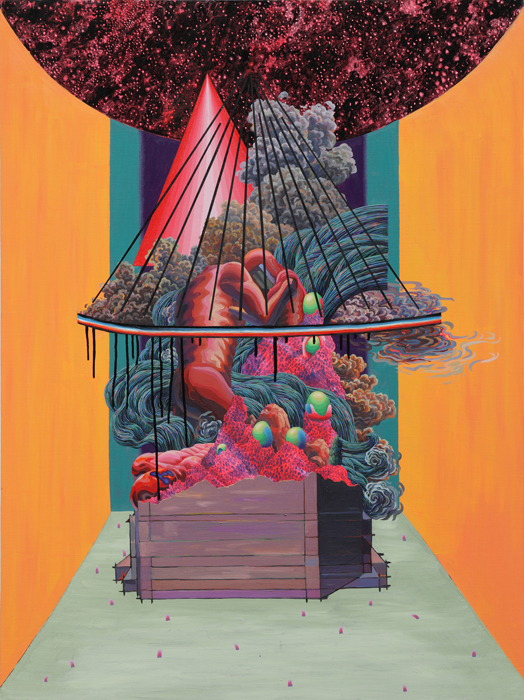
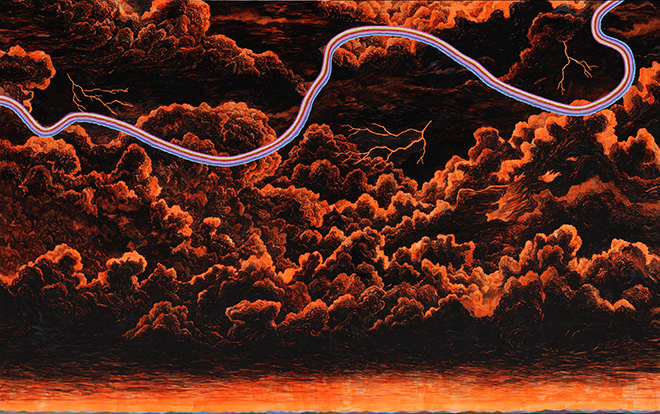
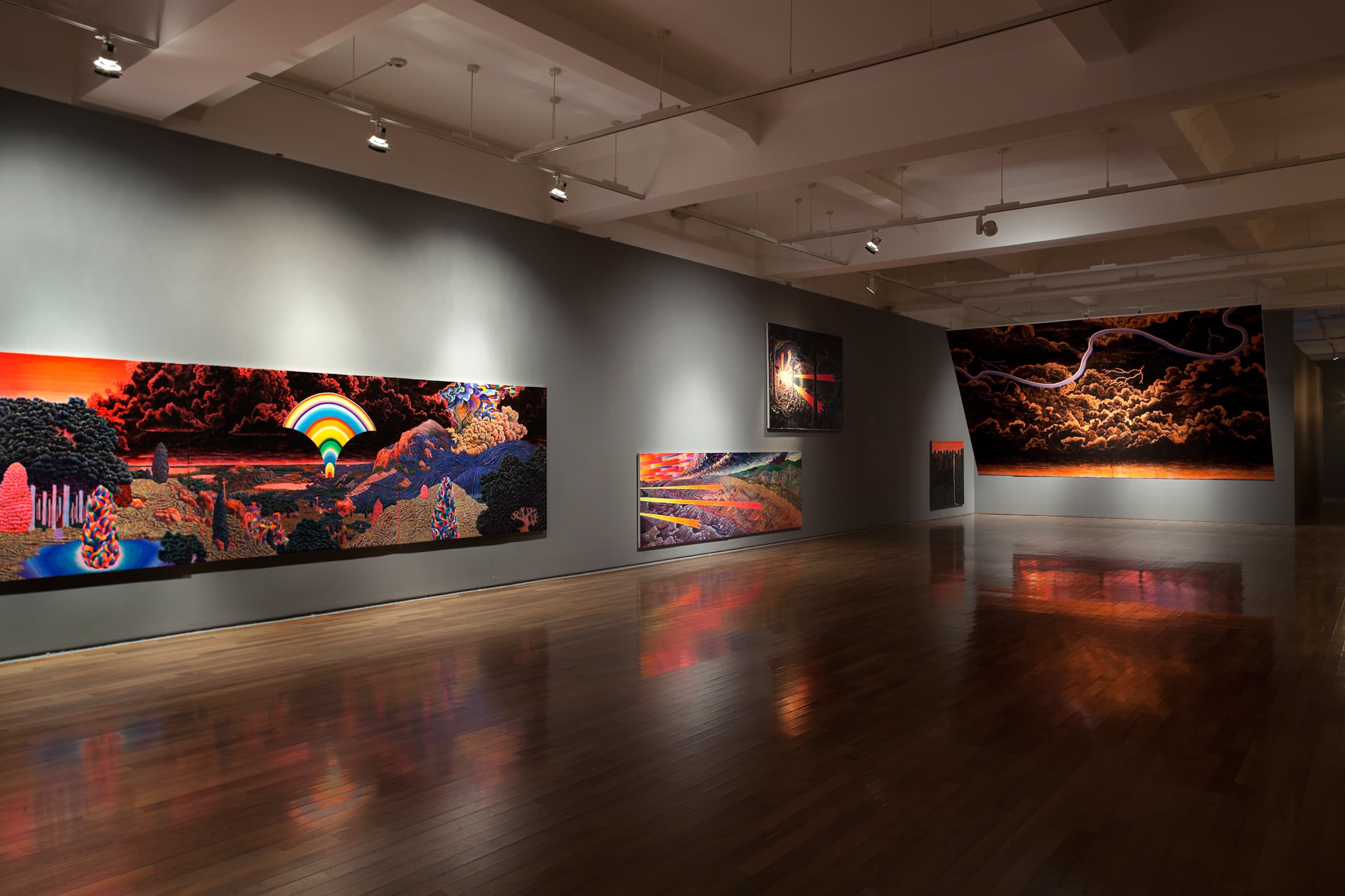
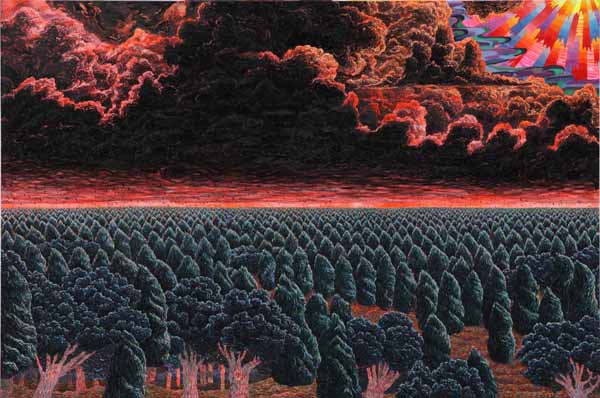
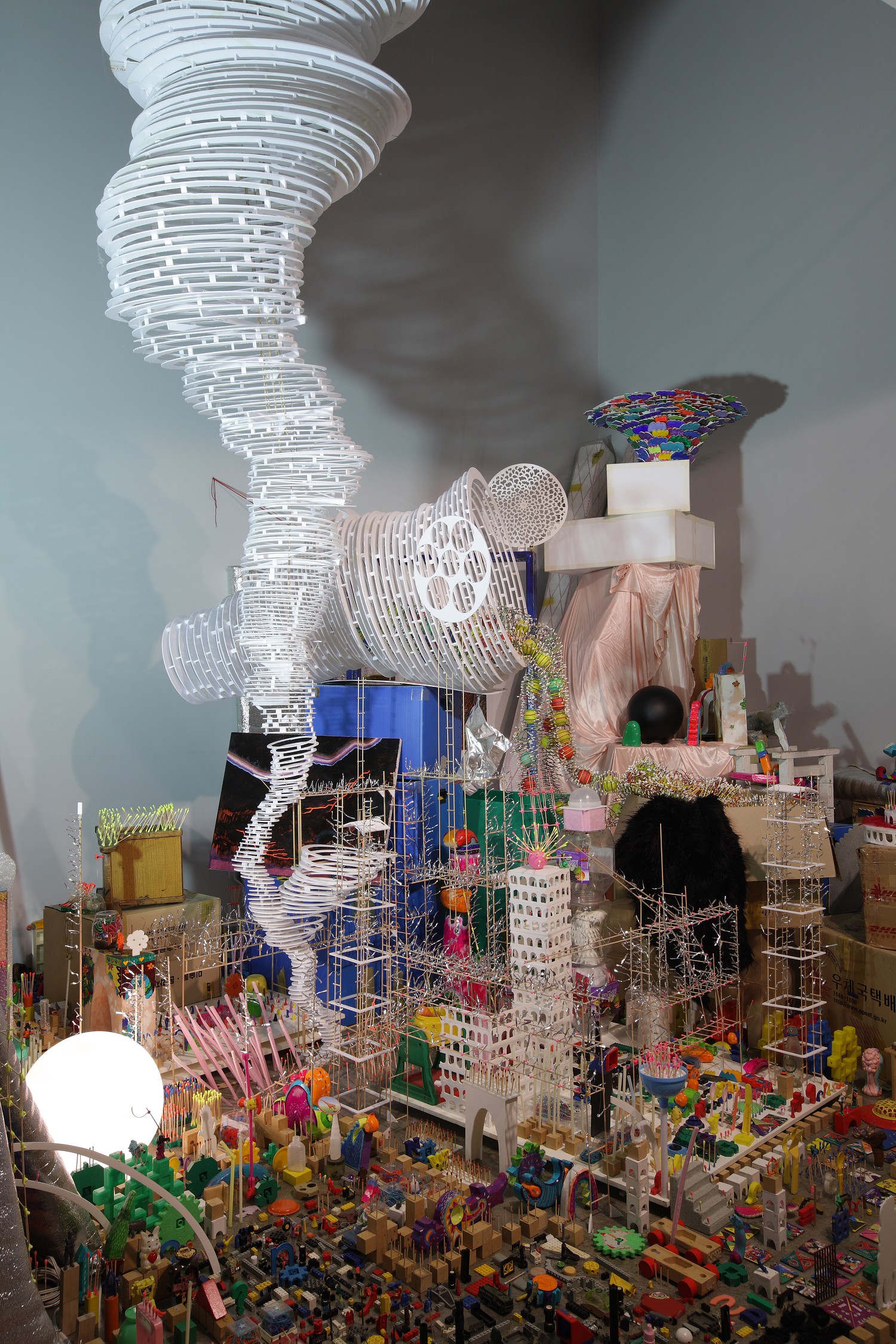
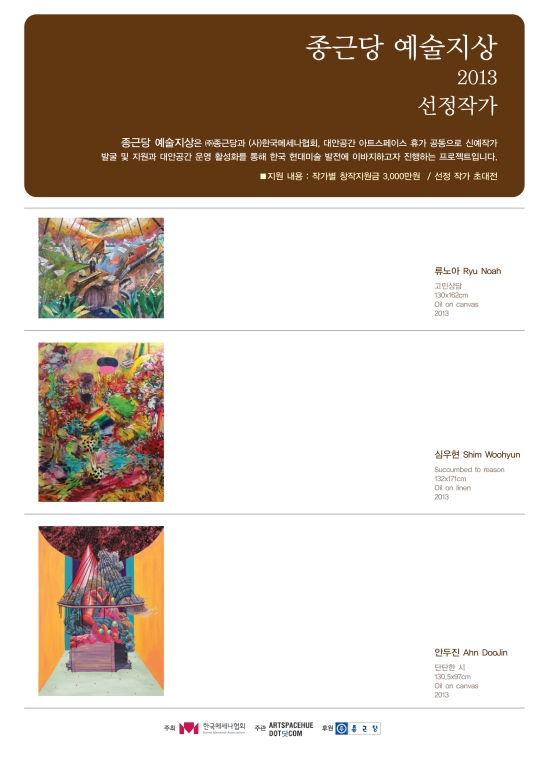
Ahn Doojin’s practice possesses a strong sense of continuity in that it has consistently explored the possibilities of painting and the structures of image generation from his early works to the present. His early exhibitions at spaces such as Brain Factory and Sarubia in the mid-2000s marked experiments with the smallest units of image, the sensation of the sublime, and the relationship between painting and space.
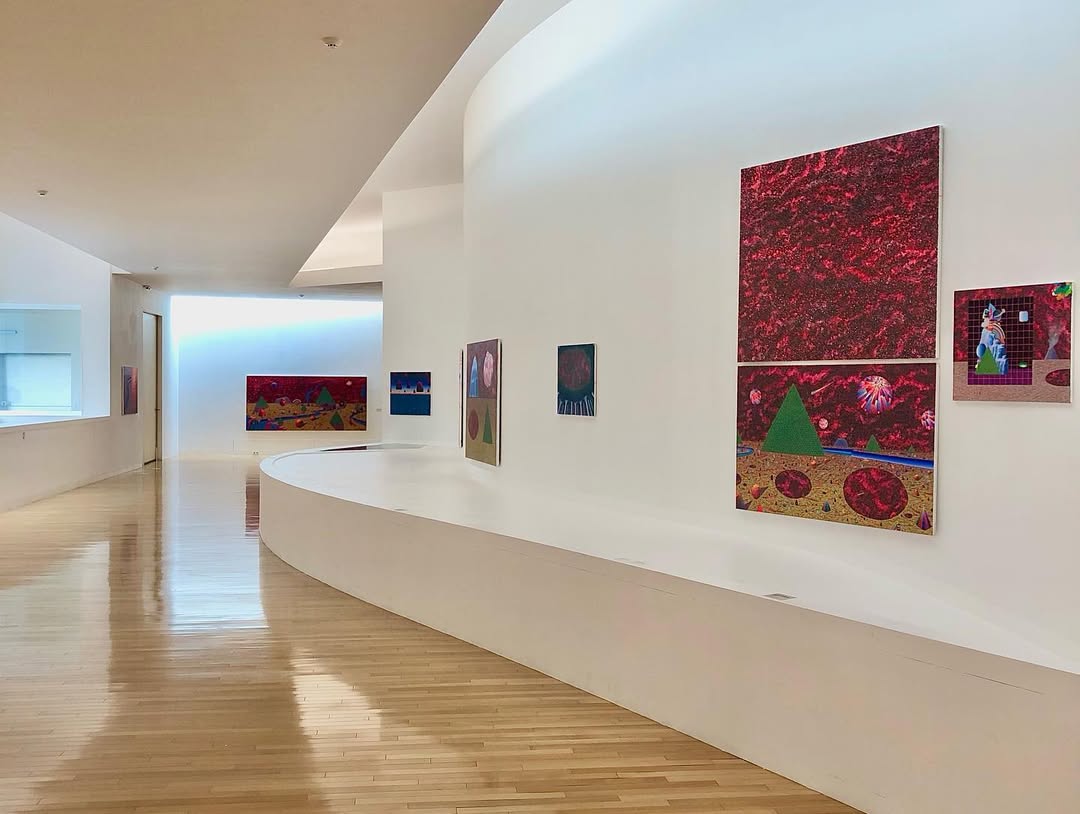
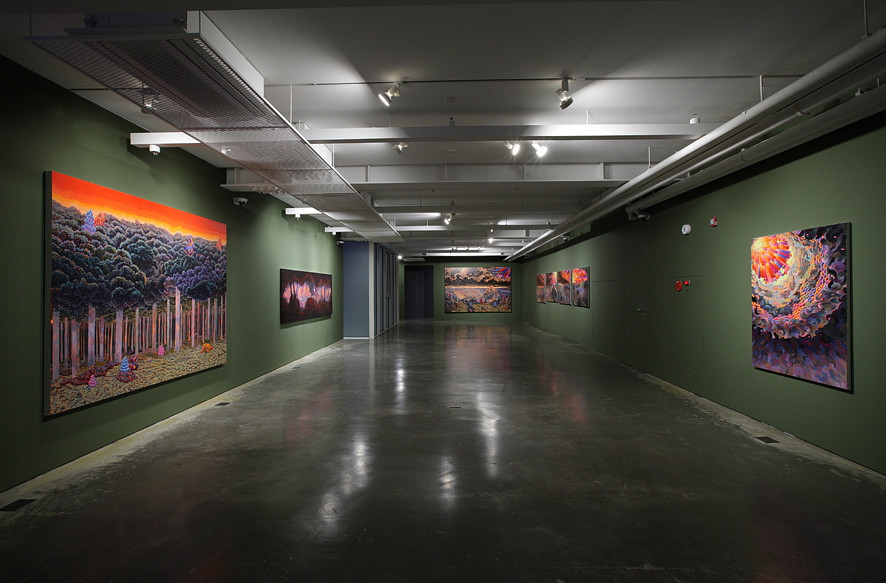
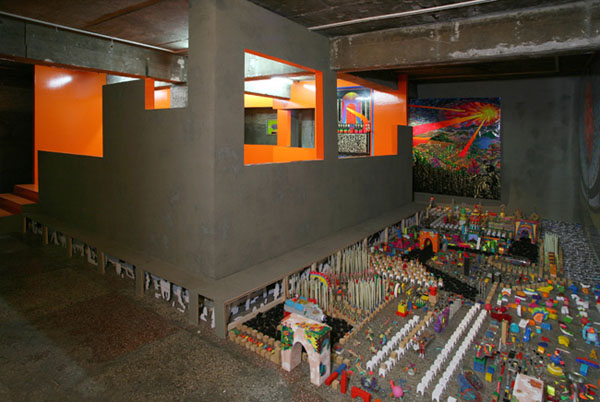
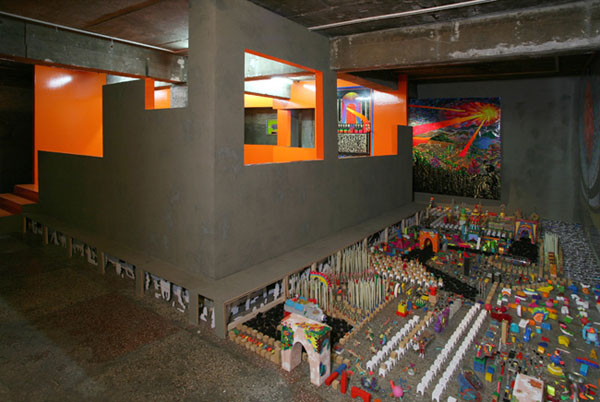
From the outset, he approached painting not as a flat image alone, but as an environment into which viewers could physically enter and experience. Installations structured like ceiling paintings and altars, along with spatial configurations incorporating architectural forms and objects, became important points of departure that continued throughout his later practice.
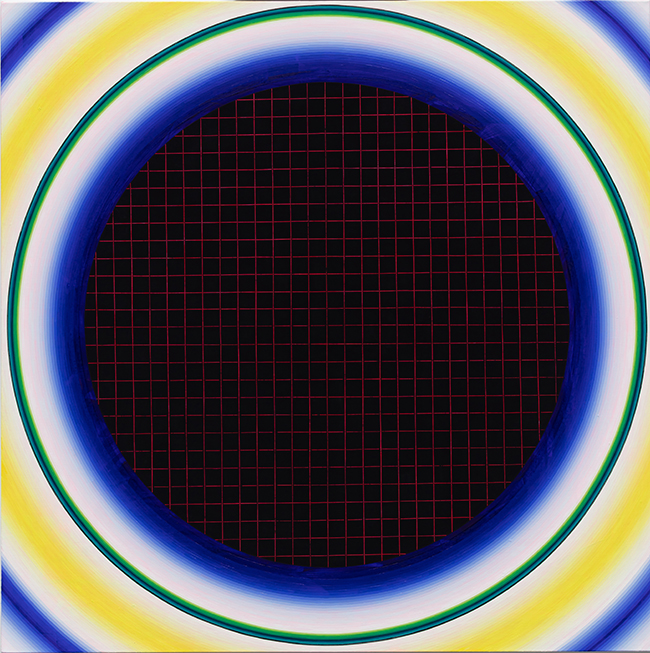
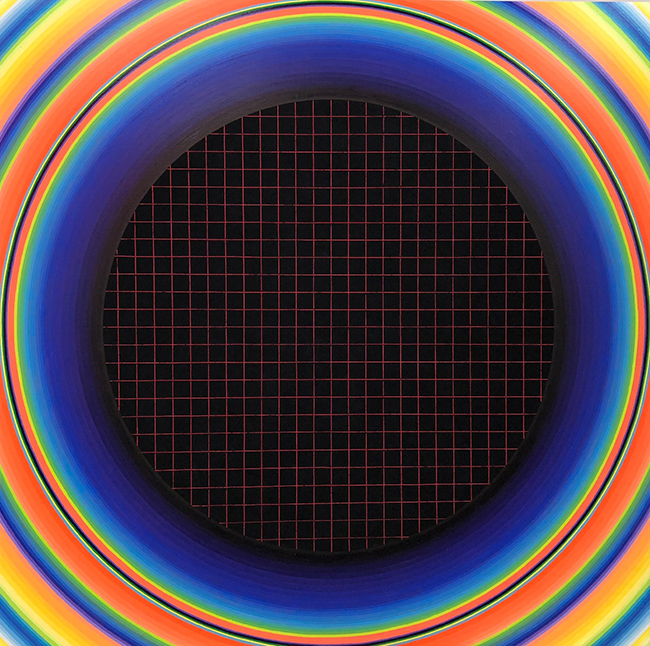
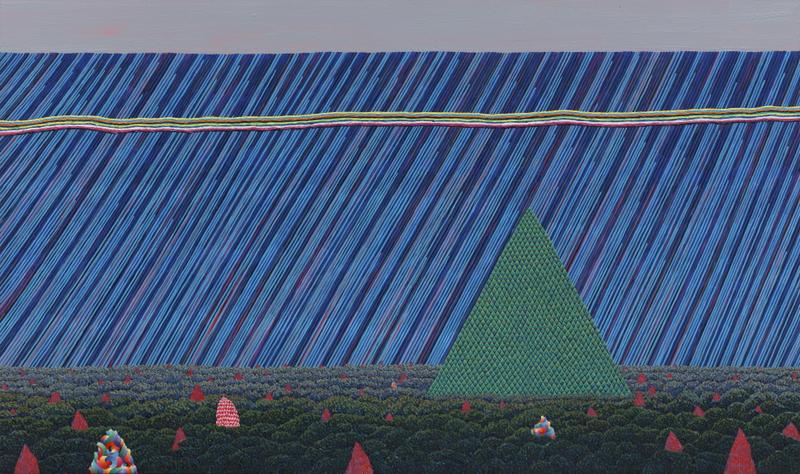
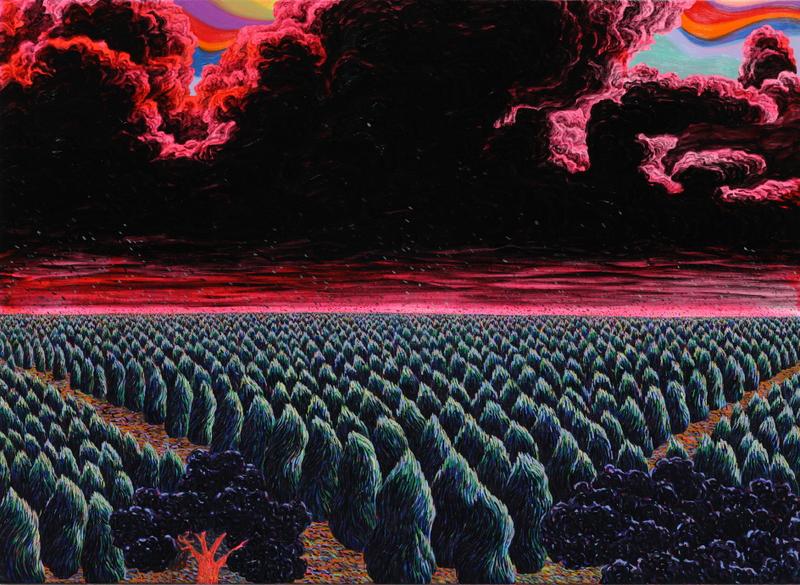
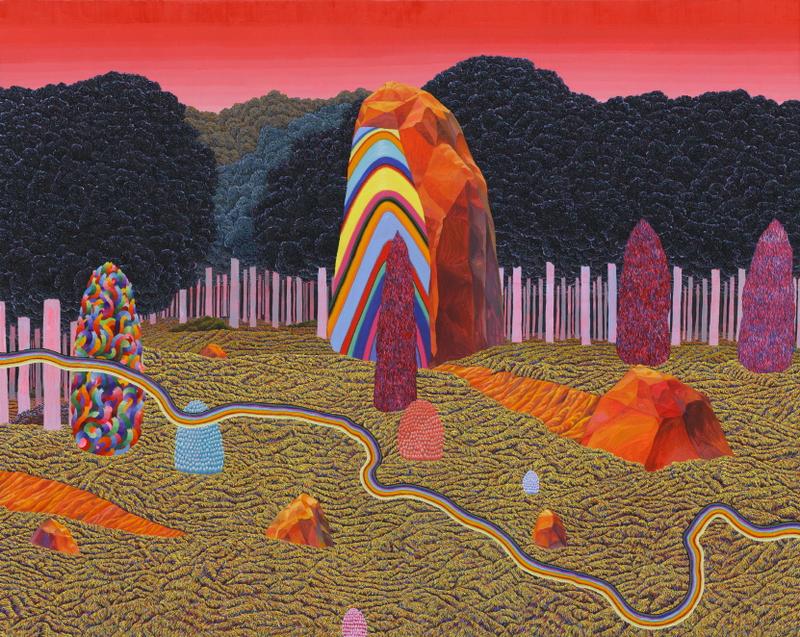
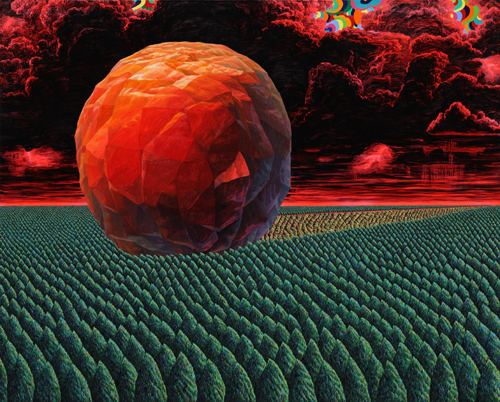
Since then, Ahn Doojin has sustained his investigation into self-generative systems of painting through the concept of the “imaquark.” In his earlier works, imaquarks appeared as fragmented and proliferating image particles, whereas in recent works they evolve into more organic and structural orders, forming vast systems of landscape. Recurrent forms such as rocks, waves, clouds, black circles, and squares are transformed into different formal languages across different periods, yet they consistently share the artist’s underlying concern with worlds generated through continuous collision and transformation. In this sense, Ahn Doojin’s work is not the repetition of a singular style, but the long-term evolution and mutation of a conceptual system.
One of the most notable developments in his recent work is the gradual movement away from anthropocentric narratives toward a more nonhuman and material sense of time. While his earlier works were closer to narrative landscapes filled with collision, tension, crowds, and warfare, his recent paintings focus instead on slow and nonhuman temporalities, such as the gradual erosion of massive rocks into small stones. This shift reflects the artist’s attempt to understand the world not through human emotion or event-driven narratives, but through the perspectives of materiality, particles, movement, and duration. Although his paintings continue to retain sensations of sublimity and tension, those sensations increasingly move away from dramatic narrative toward ontological contemplation.
Moving between the history of painting and contemporary visual culture, Ahn Doojin has constructed his own painterly topography. His work is connected to traditions of Romantic painting, Expressionism, and Surrealism, while at the same time actively embracing the sensibilities of contemporary visual culture such as comics, graphic novels, game imagery, and digital environments.
More recently, through his doctoral dissertation, A Study of Painting in Imaquark’s Self-Generative Ways, he has theoretically systematized his methodology, expanding painting into a generative system in itself. In this way, Ahn Doojin’s practice does not remain fixed within the style of a particular moment, but continually renews the structures and sensibilities of painting while constructing an independent painterly world of his own.



.jpg)