Conversation Between Three People - K-ARTIST

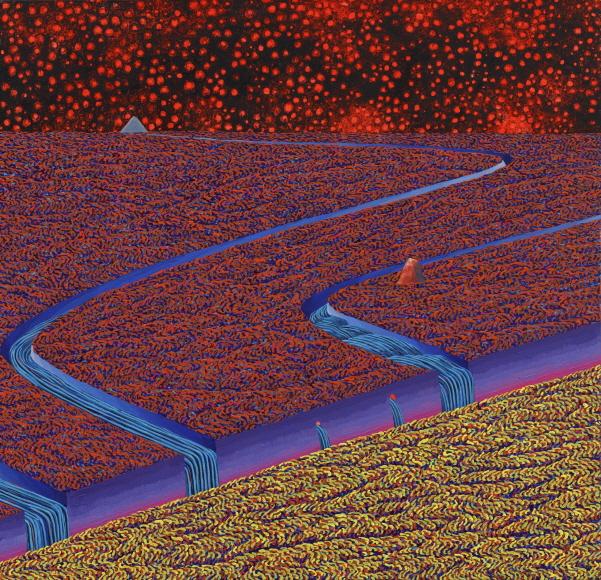
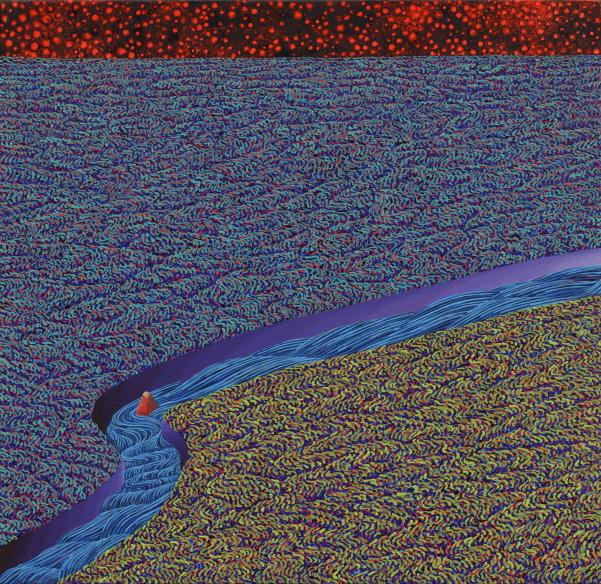
Conversation Between Three People

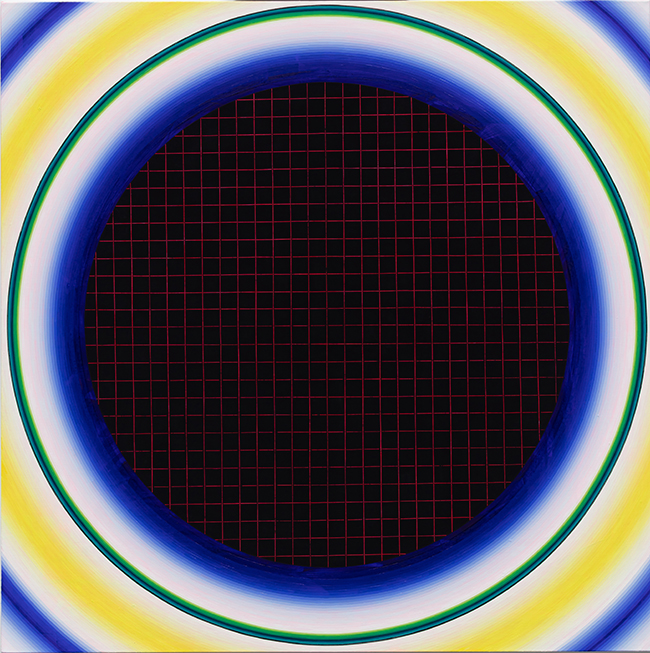
2013
Pen, pencil, sticker, watercolor on paper
32 x 32 cm
About The Work

Ahn Doojin has long explored unreal and surreal landscapes through the language of painting. The worlds unfolding across his canvases resemble natural forms such as trees, rocks, oceans, and clouds, yet rather than reproducing nature itself, they reveal moments in which familiar reality shifts into an unfamiliar dimension. 

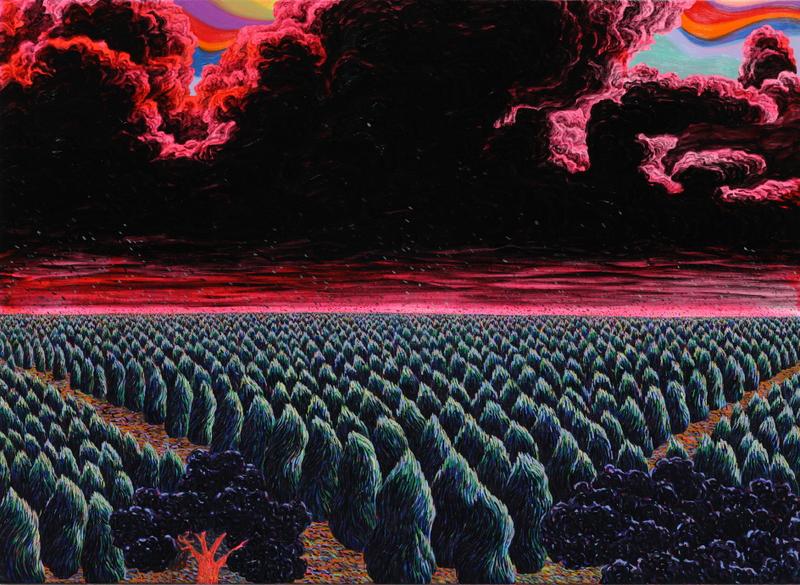
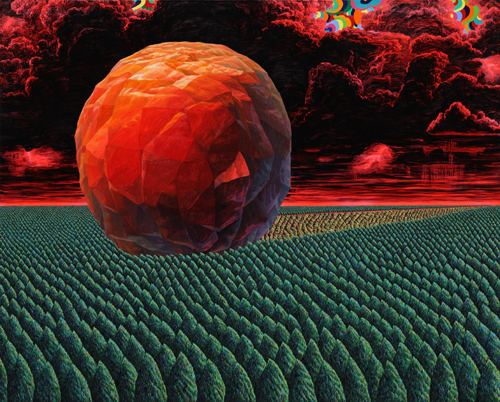
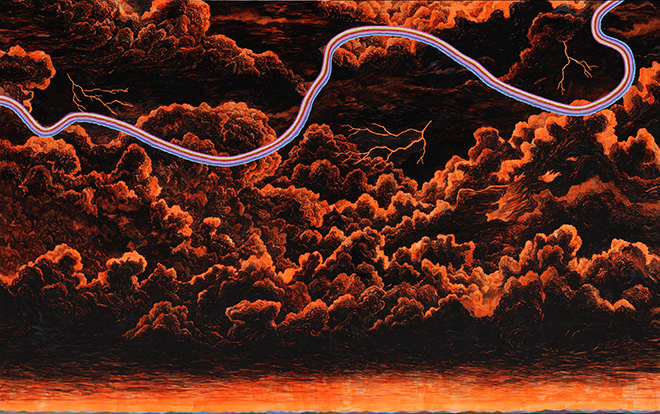
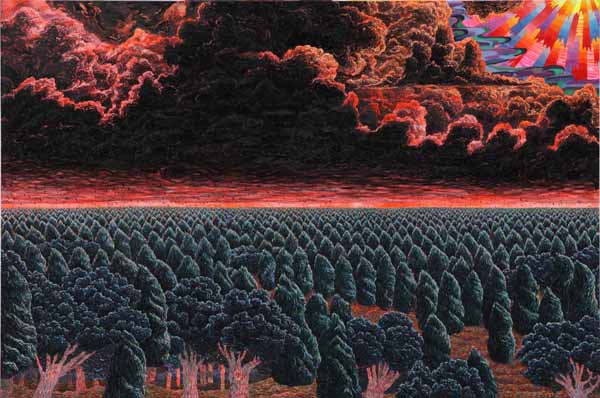
Crimson skies, fluorescent terrains, and landscapes charged with the tension of an impending storm simultaneously evoke apocalyptic narratives and sensations of the sublime, drawing viewers into sensory experiences where the boundary between reality and fantasy becomes unstable. 

Rather than explaining a specific narrative or message, his paintings visualize states in which worlds continuously generate, collide, and transform. At the core of Ahn Doojin’s practice is the concept of “Imaquark,” a term he devised by combining “ima” from “image” with “quark,” the smallest unit of matter. 

Through this concept, painting is understood not as a complete system of representation, but as a field of generation in which innumerable image-units interact to produce temporary orders. His paintings may initially appear as monumental landscapes, yet they are simultaneously assemblages of endlessly dividing and multiplying image particles. 

Solo Exhibitions (Brief)

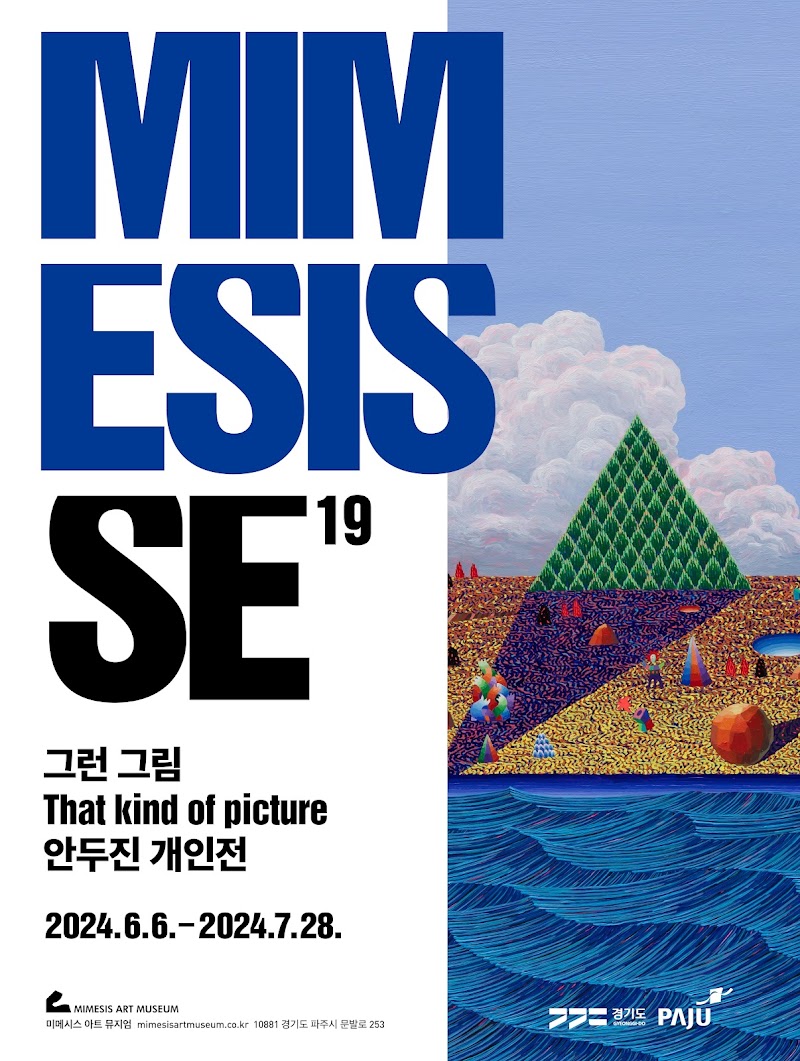
Ahn Doojin has held solo exhibitions at Gyeonggi Cultural Foundation, Brain Factory, Project Space SARUBIA, CAIS Gallery, SONGEUN Art Space, Space CAN, Johyun Gallery, LEEHWAIK Gallery, Trade Tower, and Mimesis Art Museum.

Group Exhibitions (Brief)

Ahn Doojin has participated in group exhibitions at major institutions including the National Museum of Modern and Contemporary Art, Korea, Daegu Art Museum, Gwangju Museum of Art, Sejong Museum of Art, Wooyang Museum of Contemporary Art, Ilmin Museum of Art, and SONGEUN Art Center, while also presenting his works through international biennales and art fairs such as 《Busan Biennale Sea Art Festival》, 《Changwon Sculpture Biennale》, 《KIAF》, 《Art Miami》, 《Art Stage Singapore》, 《Abu Dhabi Art Fair》, and 《Korean Eye》.

Awards (Selected)

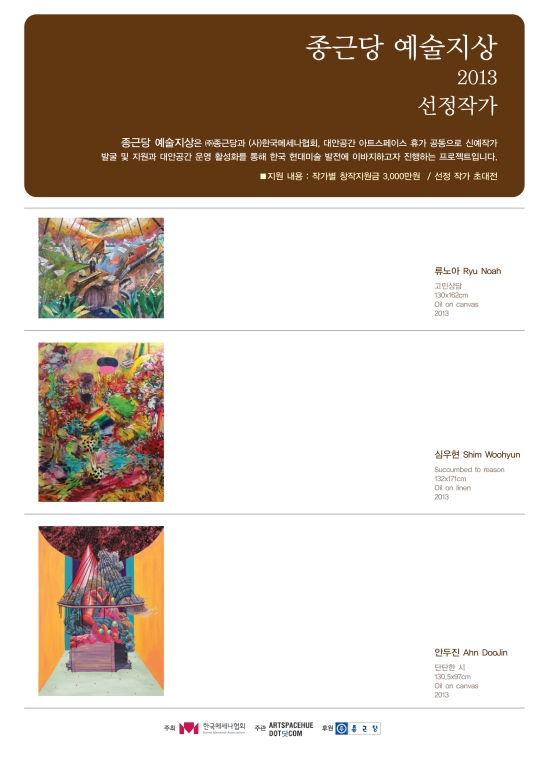
Ahn Doojin received the Chong Kun Dang Art Award in 2013 and the JoongAng Fine Arts Prize in 2005.

Residencies (Selected)

Ahn Doojin has participated in residency programs including Nanji Creative Studio of the Seoul Museum of Art, Changdong Studio of the National Museum of Modern and Contemporary Art, Korea, Mongin Art Space, Hanok Project–CAN Foundation Residency, and the Harlem Studio Fellowship.

Collections (Selected)

Works by Ahn Doojin are held in the collections of the National Museum of Modern and Contemporary Art, Korea, Seoul Museum of Art, Gyeonggi Museum of Modern Art, SONGEUN Art Space, as well as the Oliver Stone Collection (US) and Colección SOLO (Spain).

Works of Art

A Surreal World of Continuous Generation and Collision

Originality & Identity

Ahn Doojin has long explored unreal and surreal landscapes through the language of painting. The worlds unfolding across his canvases resemble natural forms such as trees, rocks, oceans, and clouds, yet rather than reproducing nature itself, they reveal moments in which familiar reality shifts into an unfamiliar dimension. Crimson skies, fluorescent terrains, and landscapes charged with the tension of an impending storm simultaneously evoke apocalyptic narratives and sensations of the sublime, drawing viewers into sensory experiences where the boundary between reality and fantasy becomes unstable. Rather than explaining a specific narrative or message, his paintings visualize states in which worlds continuously generate, collide, and transform.

At the core of Ahn Doojin’s practice is the concept of “Imaquark,” a term he devised by combining “ima” from “image” with “quark,” the smallest unit of matter. For the artist, the imaquark is not simply a formal module, but a particle of movement that continuously collides, proliferates, and generates new forms. Through this concept, painting is understood not as a complete system of representation, but as a field of generation in which innumerable image-units interact to produce temporary orders. His paintings may initially appear as monumental landscapes, yet they are simultaneously assemblages of endlessly dividing and multiplying image particles.

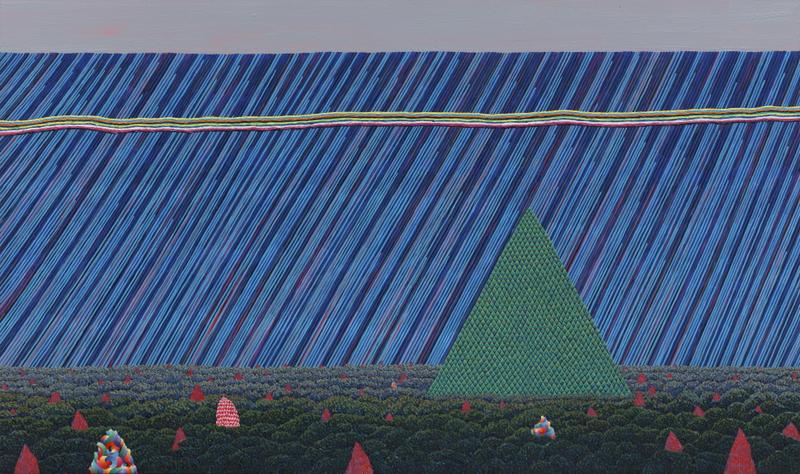
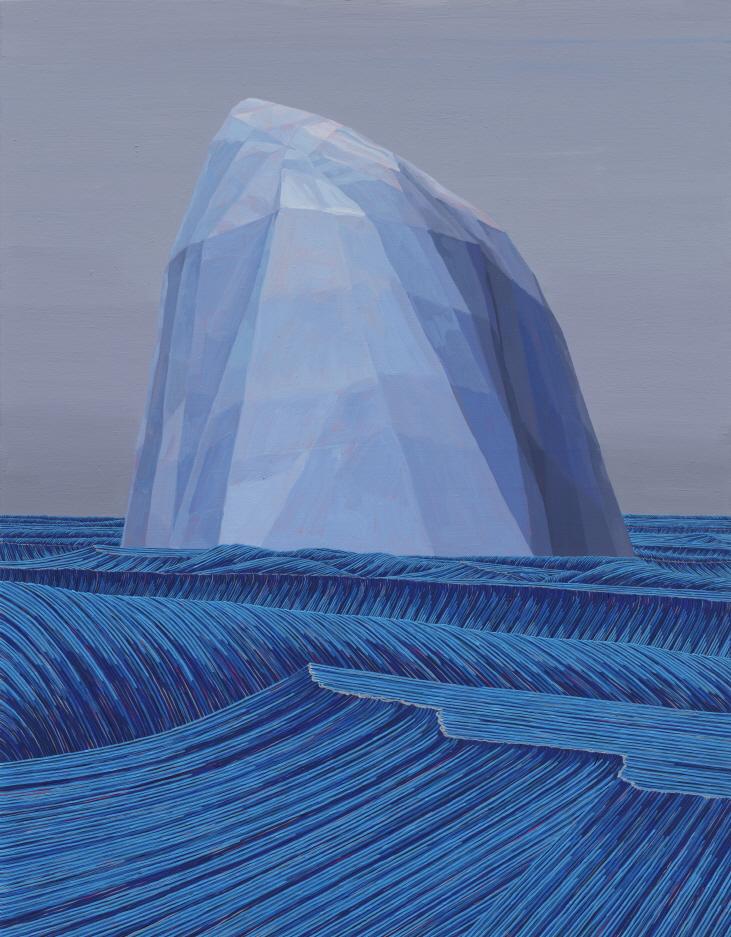
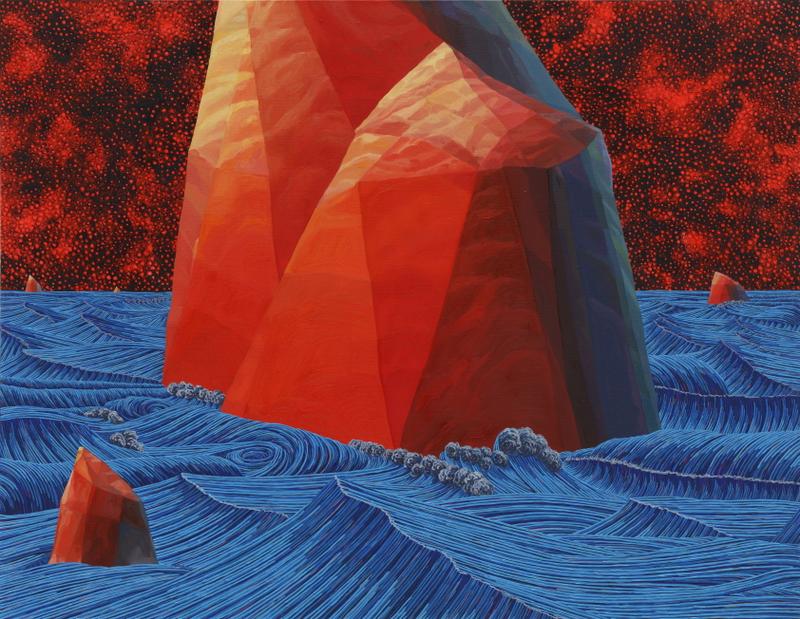
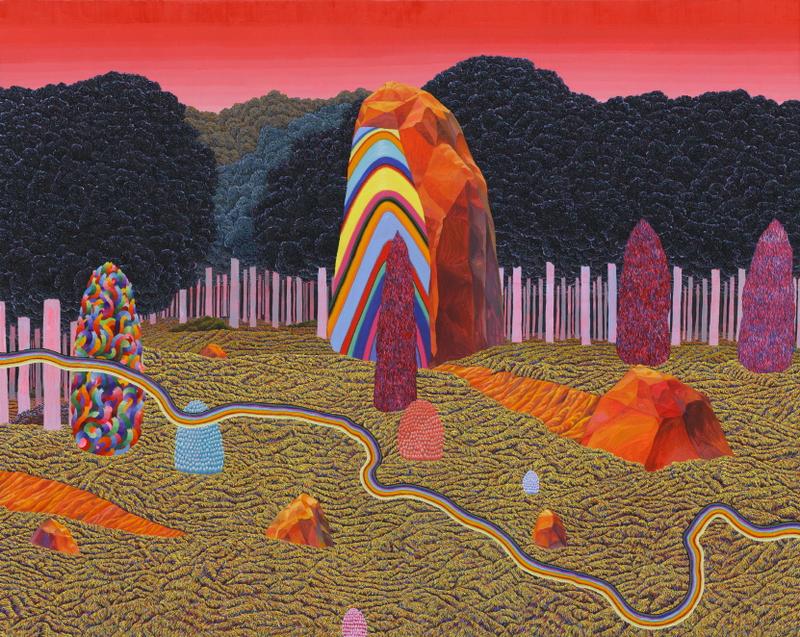
Through painting, Ahn Doojin proposes a perception of the world that departs from an anthropocentric viewpoint. The recurring forms of rocks, vast natural forces, and whirlwinds within his work symbolize temporalities and materialities that exceed human emotion and narrative. In particular, recent works repeatedly depict the gradual erosion of enormous rocks into tiny stones, revealing tensions between transformation and permanence. While the world moves ceaselessly through disorder and collision, the rock remains silently rooted in place. In this way, his paintings invoke a sense of time that is older and nonhuman, constructing surreal worlds in which eternal duration and fleeting moments coexist simultaneously.

His practice also questions the very notion of authorship through what he calls “painting without an owner.” Rather than understanding painting as a tool for conveying personal intention or expression, the artist approaches it as a process in which paint and surface, image and color, sensation and movement collide and generate themselves. As paint slips, overlaps, and produces accidental forms upon fluorescent surfaces, the artist no longer occupies the position of an all-controlling creator, but instead becomes a mediator of collisions. Such an attitude allows painting to be understood not as the outcome of an individual artist’s signature or style, but as an independent existence emerging through relationships between image and material, sensation and time.

Style & Contents

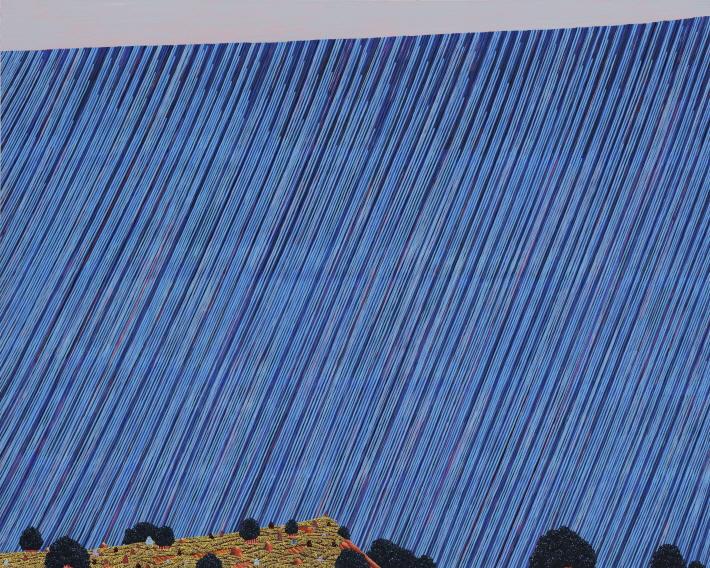
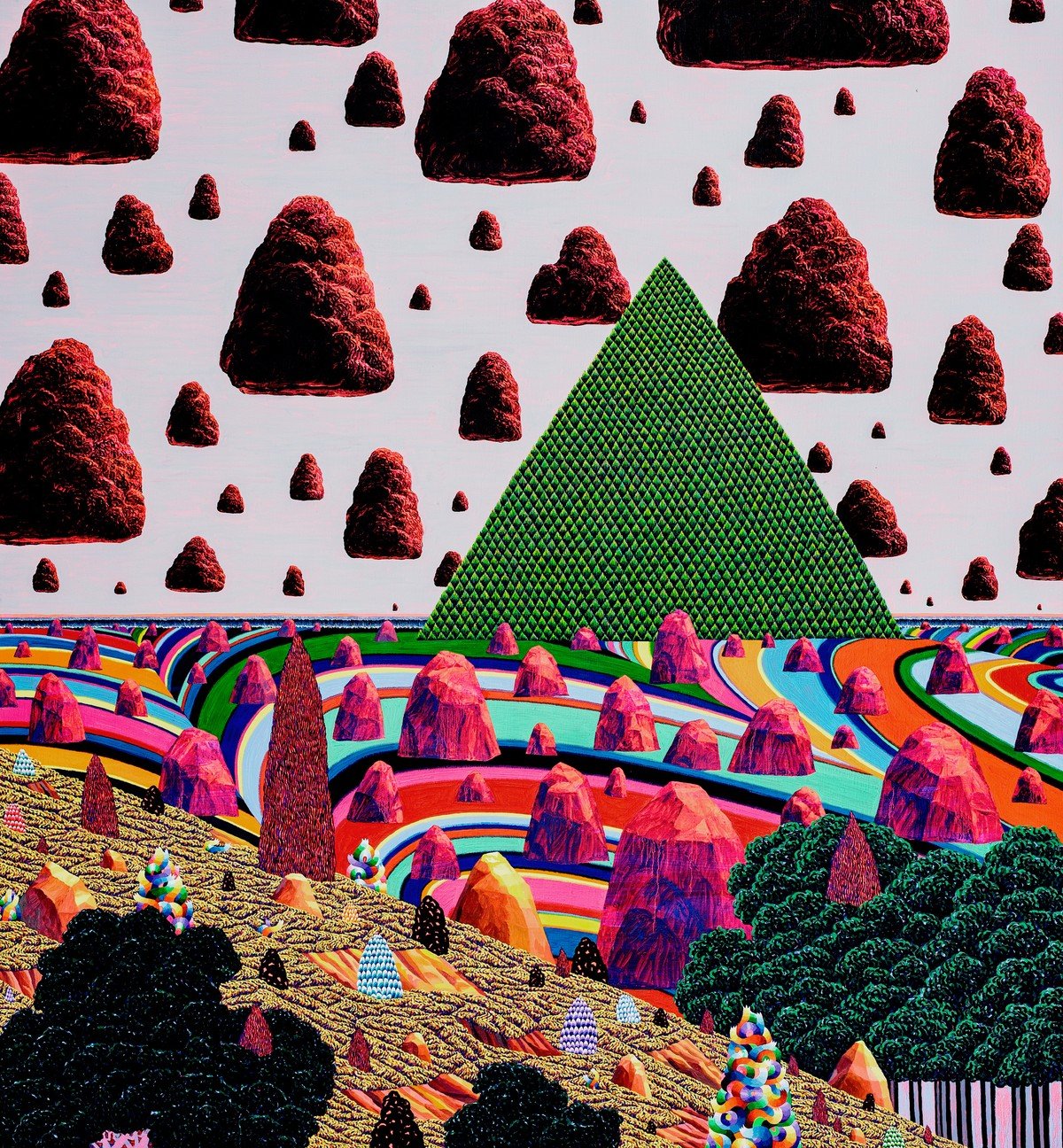
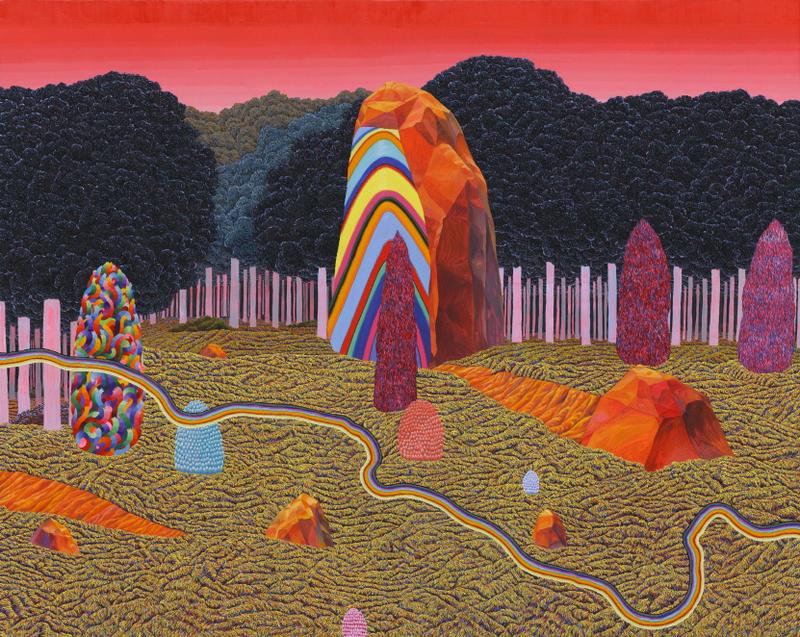
Ahn Doojin’s paintings possess a distinctive structure in which monumental panoramic landscapes coexist simultaneously with microscopic units of image. From a distance, his canvases appear as vast natural scenes, yet upon closer inspection, viewers discover innumerable particles of imaquark overlapping, colliding, and assembling into form. This method constructs a unified representational image while simultaneously revealing it to be a temporary structure founded upon the accumulation and collision of countless units. The density and rhythm of images covering the entire surface lead painting to be perceived not as a fixed scene, but as a field of continuous vibration and generation.

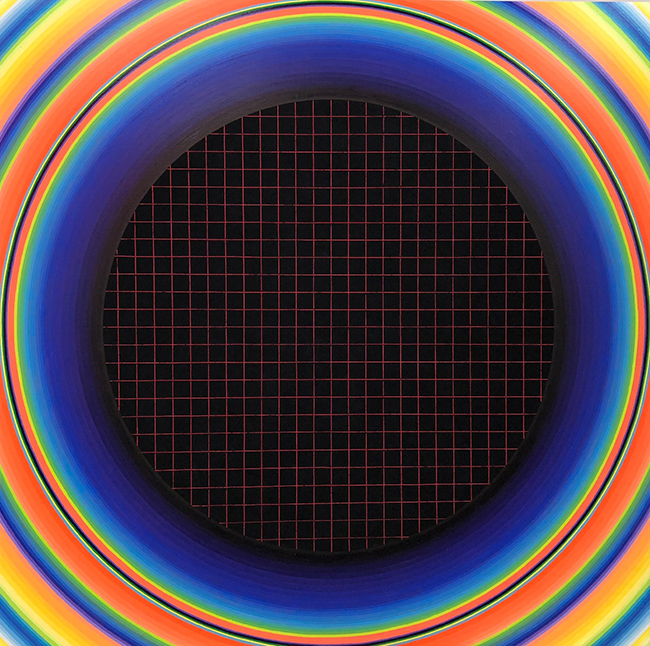
Fluorescent pigments and intense primary colors function as essential formal elements within his work. The fluorescent surface is not merely a background, but a site where image and material collide, a plane through which what the artist calls the “diagonal force” passes. Fluorescent color erases depth and perspective, transforming the entire surface into a state of dazzling intensity, while paint slips, cracks, and accumulates into masses upon it. In this process, color loses its original meaning and becomes transformed into an unfamiliar material sensation. Through these material collisions, Ahn Doojin creates sensory states in which sublimity and anxiety, exhilaration and confusion coexist simultaneously.

His paintings are also distinguished by their complex fusion of expressionistic energy, Romantic sublimity, and the visual language of popular culture. The dramatic contrasts of light and shadow and exaggerated movements found throughout the canvas recall Baroque and Romantic painting, while simultaneously connecting to the sensibilities of contemporary visual culture such as graphic novels, comics, and game imagery. In particular, the “Black Series,” where black surfaces collide with fluorescent colors, reveals noir-like atmospheres alongside religious symbolism. By juxtaposing the sensibility of the classical sublime with subcultural imagery, his paintings experiment with new sensory structures that painting can inhabit within contemporary visual culture.

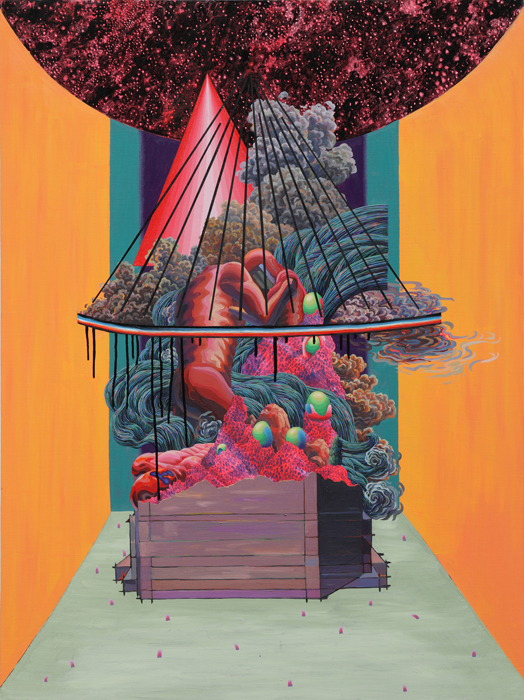
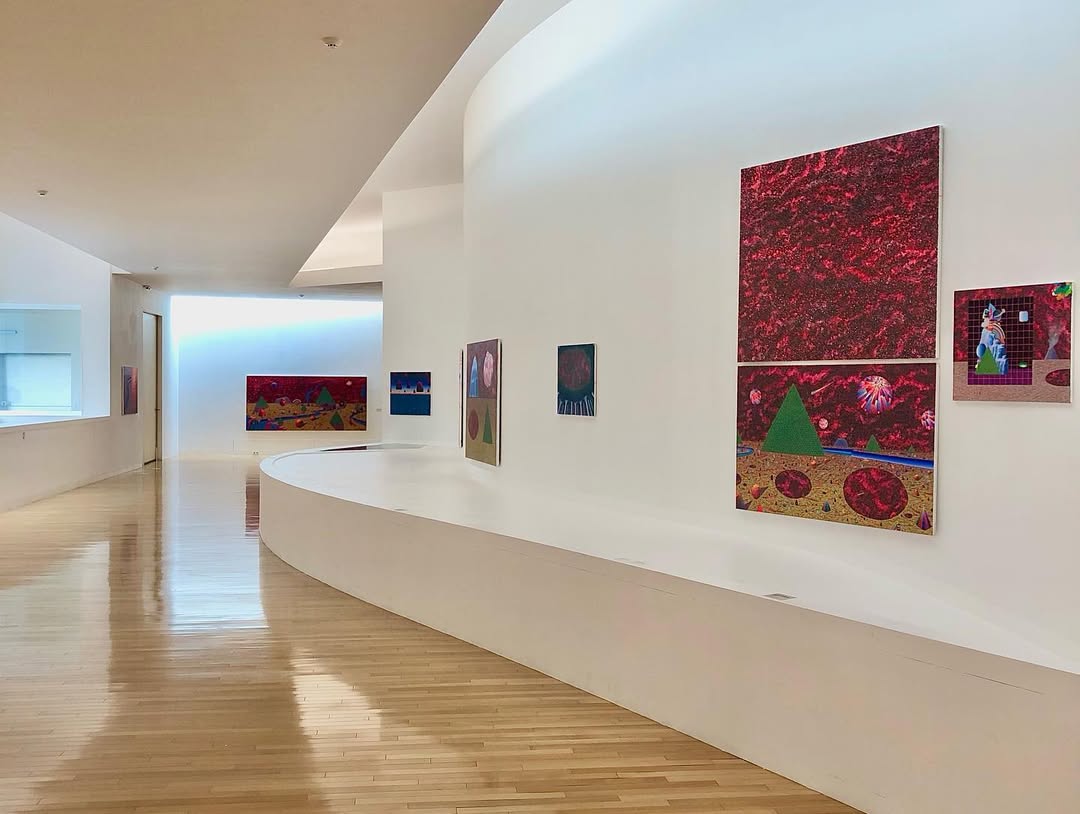
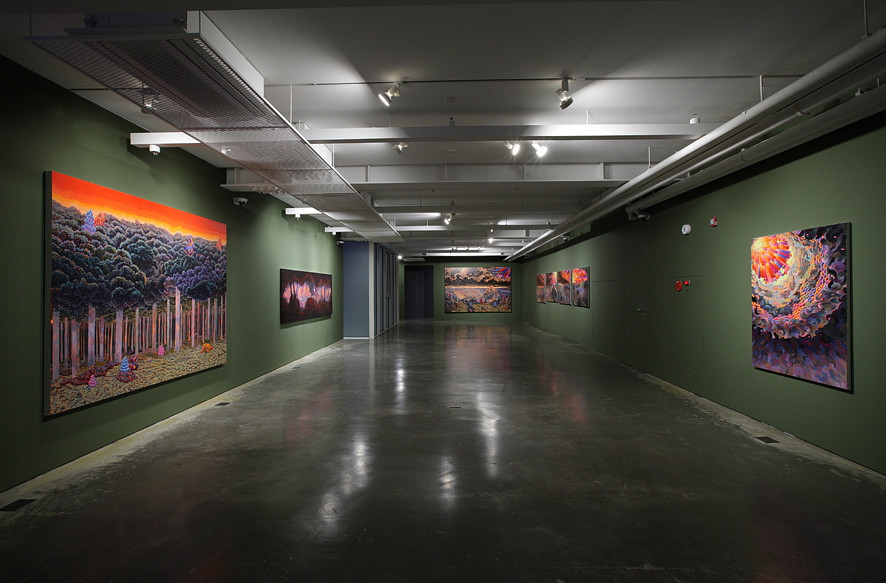
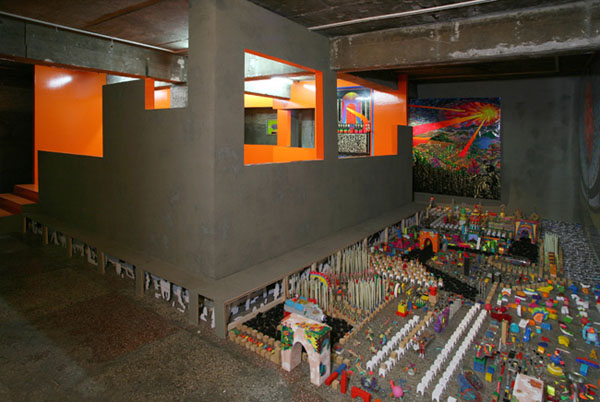
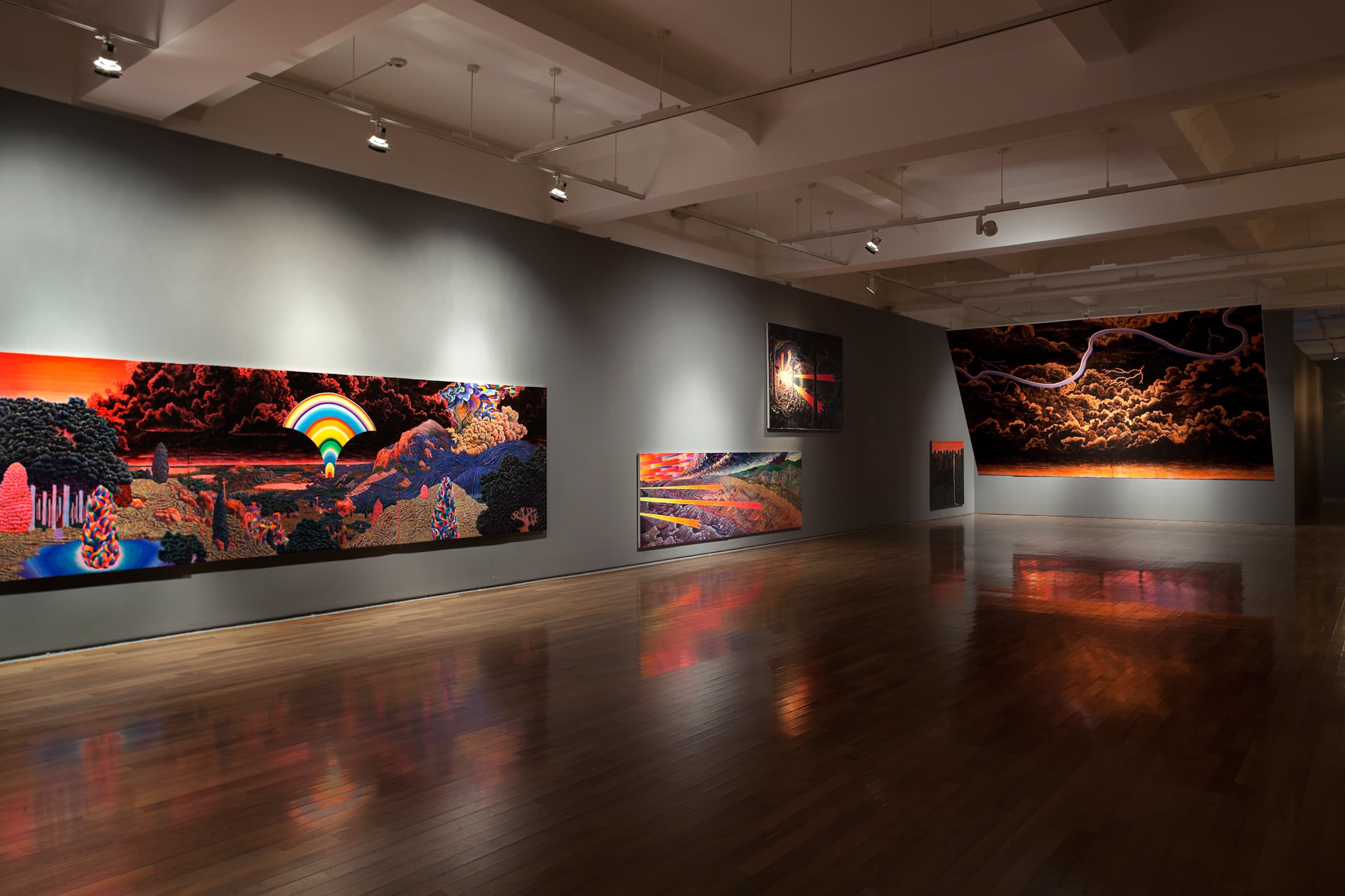
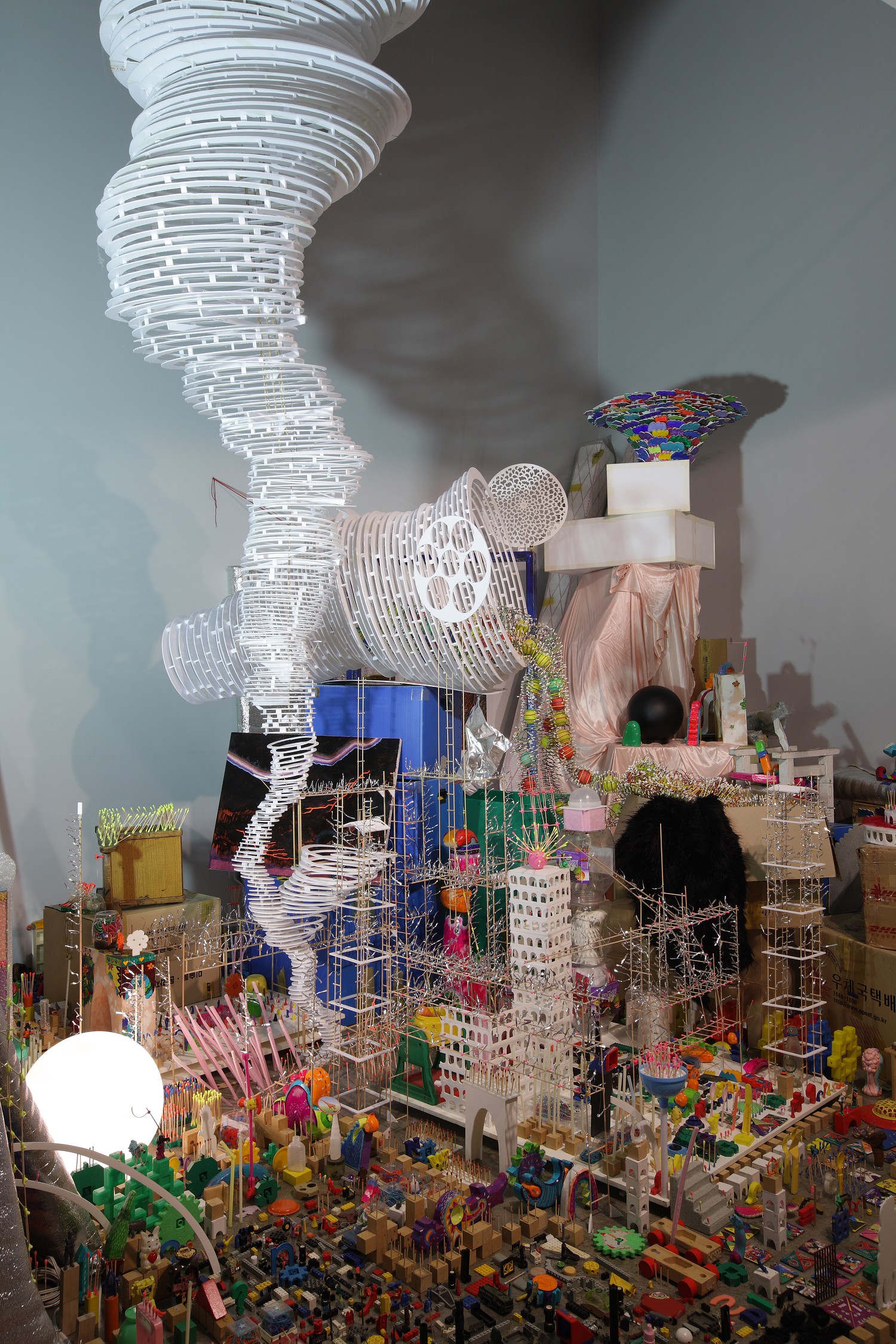
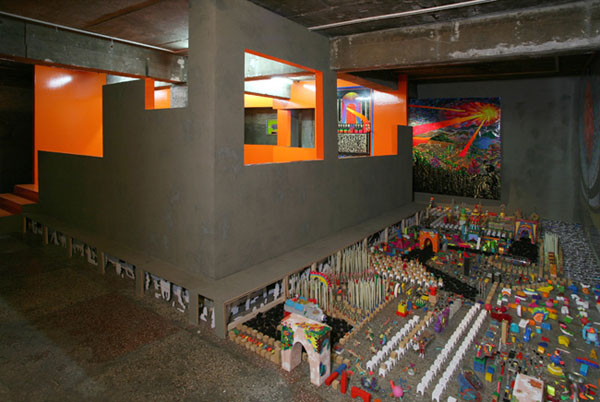
Ahn Doojin furthermore expands painting beyond the flat image into an immersive spatial field. Structures and objects installed within exhibition spaces, paintings hung at elevated heights, and installation methods that direct viewers’ movement transform the act of viewing itself into part of the work. In his practice, painting is not simply an image hung on a wall, but a total environment encompassing light and color, structure and movement, and even the viewer’s bodily perception. Through this installation-based sensibility, Ahn Doojin’s paintings expand beyond singular images into sensory worlds that viewers physically enter and experience.

Topography & Continuity

Ahn Doojin’s practice possesses a strong sense of continuity in that it has consistently explored the possibilities of painting and the structures of image generation from his early works to the present. His early exhibitions at spaces such as Brain Factory and Sarubia in the mid-2000s marked experiments with the smallest units of image, the sensation of the sublime, and the relationship between painting and space.

From the outset, he approached painting not as a flat image alone, but as an environment into which viewers could physically enter and experience. Installations structured like ceiling paintings and altars, along with spatial configurations incorporating architectural forms and objects, became important points of departure that continued throughout his later practice.

Since then, Ahn Doojin has sustained his investigation into self-generative systems of painting through the concept of the “imaquark.” In his earlier works, imaquarks appeared as fragmented and proliferating image particles, whereas in recent works they evolve into more organic and structural orders, forming vast systems of landscape. Recurrent forms such as rocks, waves, clouds, black circles, and squares are transformed into different formal languages across different periods, yet they consistently share the artist’s underlying concern with worlds generated through continuous collision and transformation. In this sense, Ahn Doojin’s work is not the repetition of a singular style, but the long-term evolution and mutation of a conceptual system.

One of the most notable developments in his recent work is the gradual movement away from anthropocentric narratives toward a more nonhuman and material sense of time. While his earlier works were closer to narrative landscapes filled with collision, tension, crowds, and warfare, his recent paintings focus instead on slow and nonhuman temporalities, such as the gradual erosion of massive rocks into small stones. This shift reflects the artist’s attempt to understand the world not through human emotion or event-driven narratives, but through the perspectives of materiality, particles, movement, and duration. Although his paintings continue to retain sensations of sublimity and tension, those sensations increasingly move away from dramatic narrative toward ontological contemplation.

Moving between the history of painting and contemporary visual culture, Ahn Doojin has constructed his own painterly topography. His work is connected to traditions of Romantic painting, Expressionism, and Surrealism, while at the same time actively embracing the sensibilities of contemporary visual culture such as comics, graphic novels, game imagery, and digital environments.

More recently, through his doctoral dissertation, A Study of Painting in Imaquark’s Self-Generative Ways, he has theoretically systematized his methodology, expanding painting into a generative system in itself. In this way, Ahn Doojin’s practice does not remain fixed within the style of a particular moment, but continually renews the structures and sensibilities of painting while constructing an independent painterly world of his own.


Works of Art

A Surreal World of Continuous Generation and Collision

Articles

Exhibitions