Infinite room and someone’s track - K-ARTIST

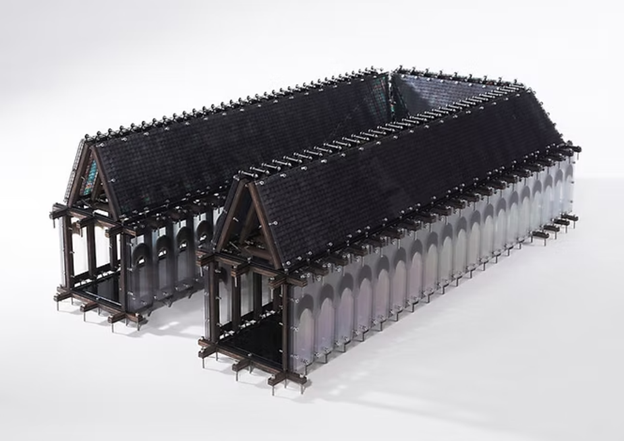
Infinite room and someone’s track

2025
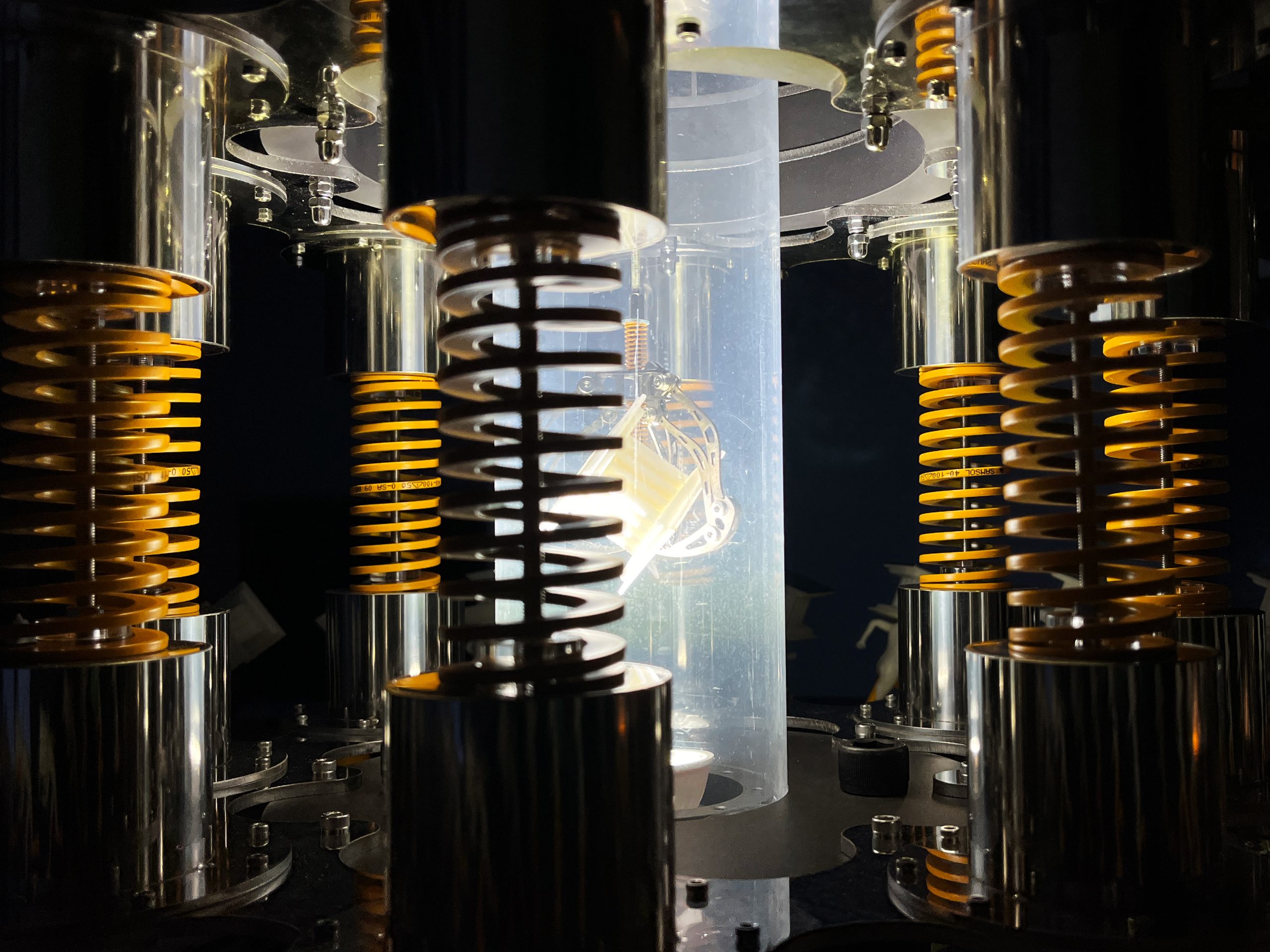
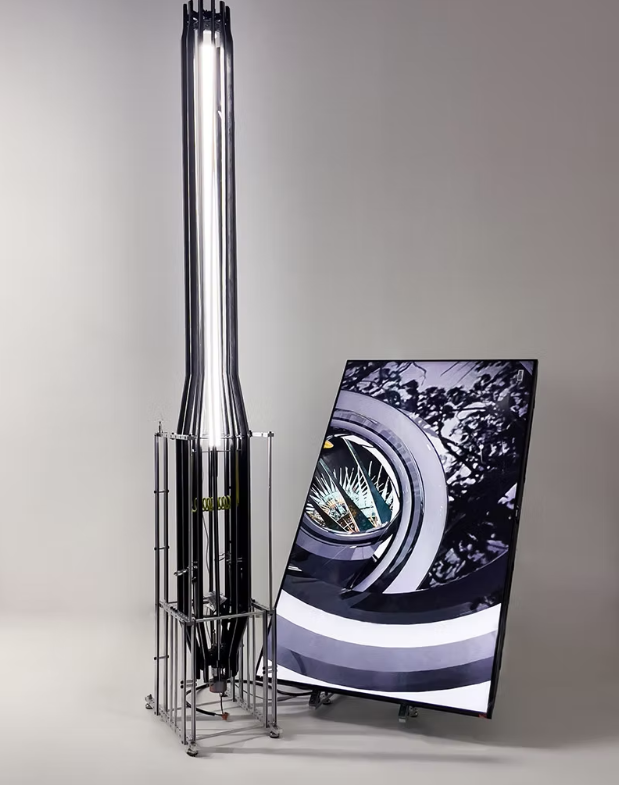
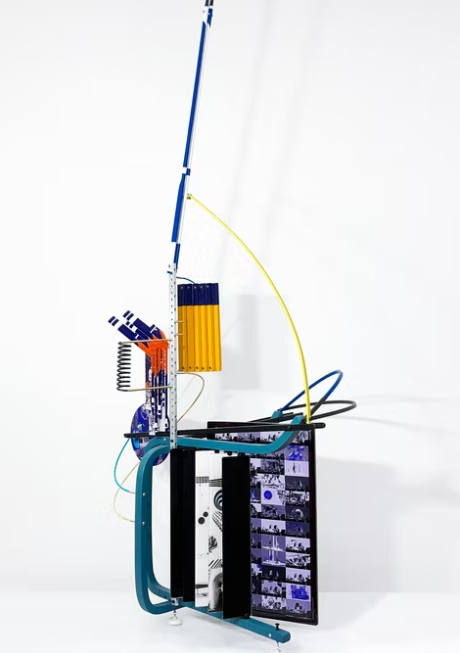
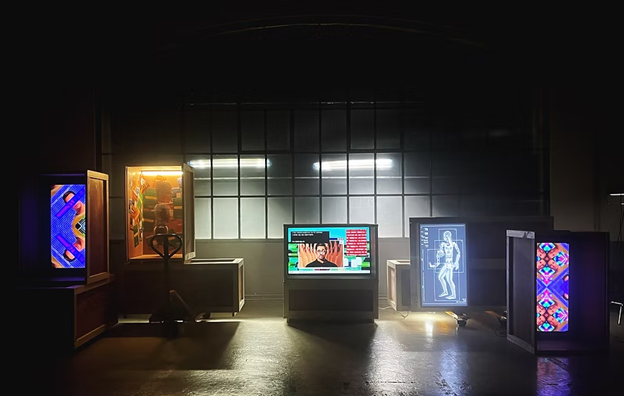
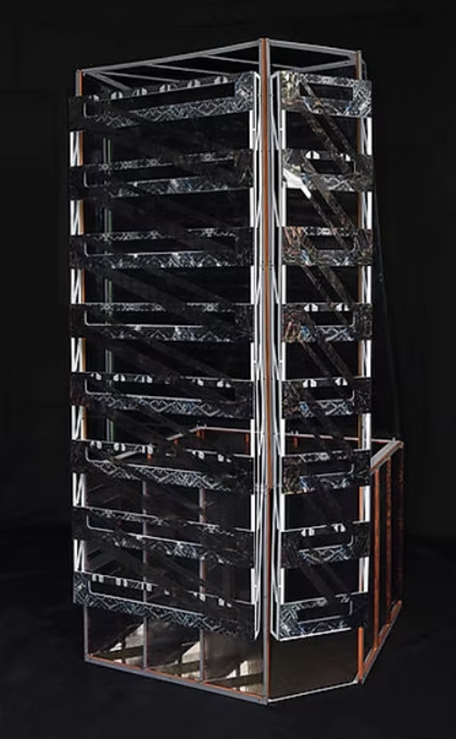
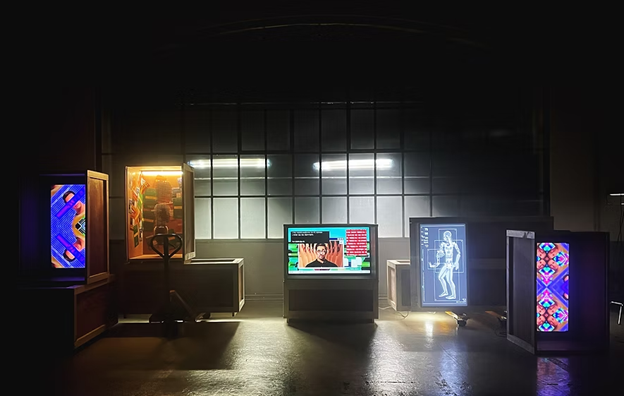
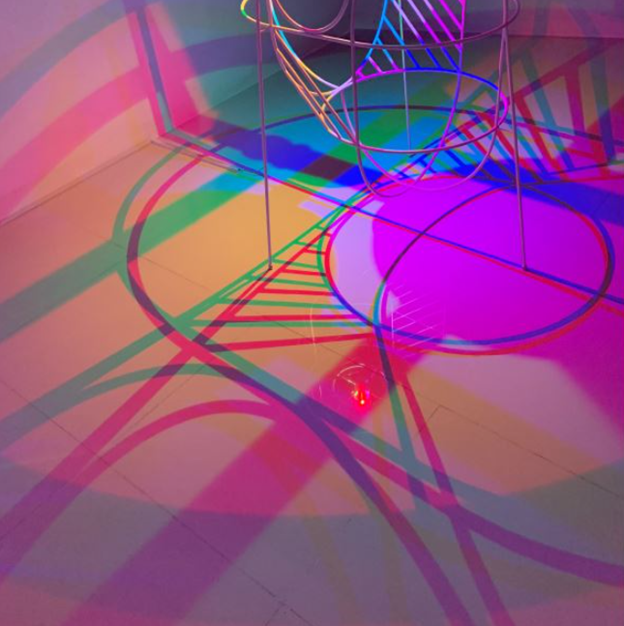
Installation, video, stainless steel, 3D-printed components, steel plate, LED panel, motor 
205 x 230 x 230 cm
About The Work

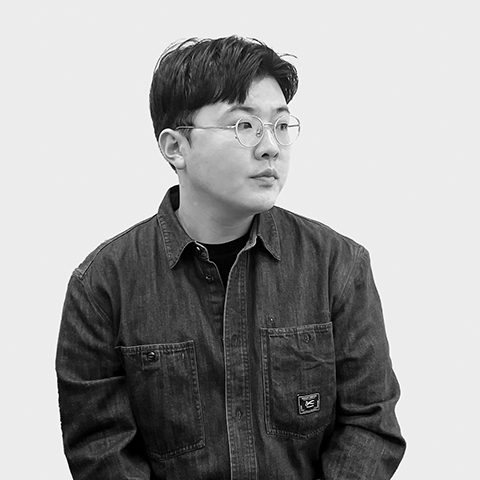
Minkyoo Choi works across the boundaries of installation and new media, exploring the points at which the material and the immaterial, the familiar and the unfamiliar intersect. 

Drawing from the anxiety and sense of dislocation that emerged as he adapted to a new environment, the artist reassembles unfamiliar visual images of the places he encountered and lived in, along with his personal experiences, into his own form of architectural sculpture that transcends time, space, and culture.

He combines visual elements from different cultures to construct hybrid structures that cannot be reduced to a single origin. In this context, sculpture does not function as a representation of form, but rather as a device that holds the accumulation and transformation of experience. 
This line of inquiry extends into a perspective that approaches “architecture” as a mode of thought. The artist understands architecture as a result shaped by the ideologies and modes of thinking of its time, and through it, he structures personal emotions and memories. 

Each component, initially designed on a two-dimensional plane, is assembled into a three-dimensional form through processes of planning and construction. This process reflects how the subject—the “self”—absorbs and assimilates environment and culture.

More recently, he explores changes in individual perception and cognition within the rapidly evolving information environment, working at the intersection of installation and new media. His practice reconstructs the relationship between sensation and perception within an invisible yet vast data environment, proposing a new space for visual thinking where material experience and digital sensibility coexist.

Solo Exhibitions (Brief)

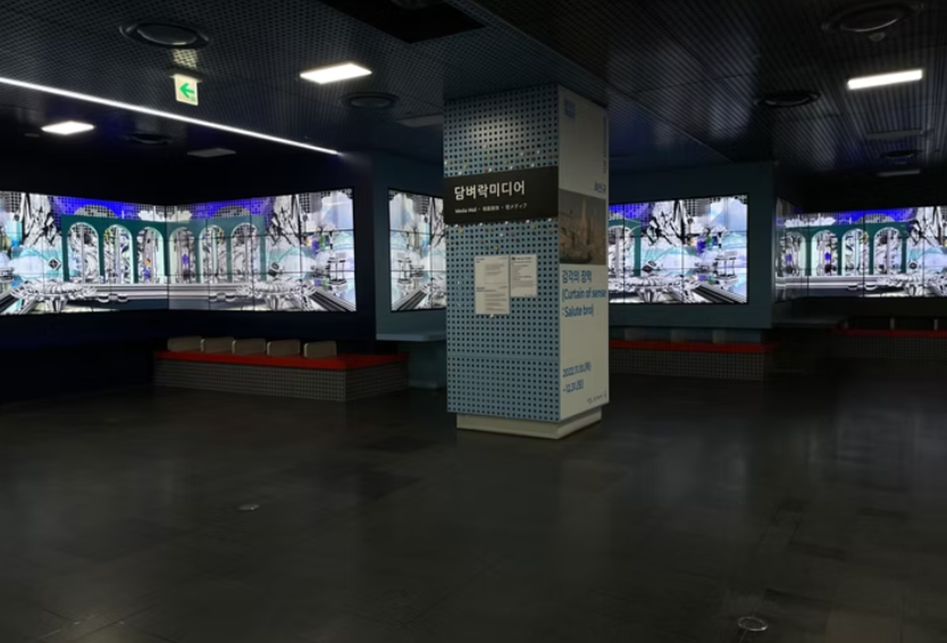
Choi has held solo exhibitions including 《Salute Bro》 (Seoul Citizens Hall, Seoul, 2022), 《Blank–Hide and Seek》 (Gallery Chosun, Seoul, 2018), and 《Drift Grid》 (Shinhan Gallery, Seoul, 2017).

Group Exhibitions (Brief)

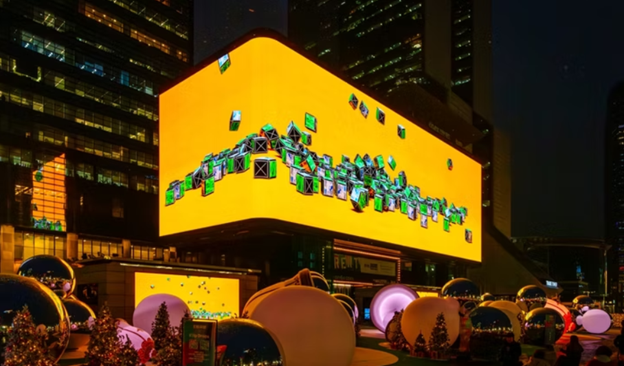
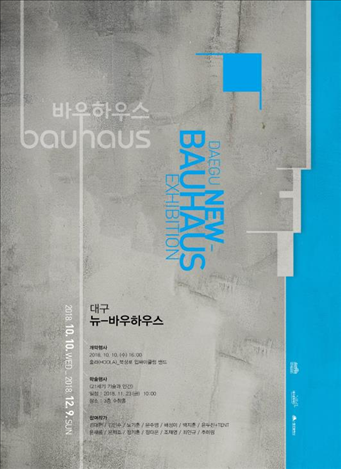
Choi has also participated in numerous group exhibitions, including Unfold X 2025 《Let Things Go: Relations of Relations》 (Culture Station Seoul 284, Seoul, 2025), 《Public Art New Hero》 (K&L Museum, Gwacheon, 2024), Seoul Media Art Week 2023 (around Samseong Station, Seoul, 2023), 《Collecting Cities》 (LG U+ Gallery C, Seoul, 2020), 《Love of Light》 (My Art Museum, Seoul, 2019), and 《New Bauhaus》 (Daegu Art Factory, Daegu, 2018), among others.

Awards (Selected)

Choi was selected as a “New Hero” artist by Public Art magazine in 2024, and in 2021, he was also named a selected artist for the Scientific Technology × Media Art Davinci Project by the Korea Creative Content Agency.

Collections (Selected)

Choi’s works are included in the collections of the National Museum of Modern and Contemporary Art, Government Art Bank, and Gyeonggi-do Province Jangja Lake Park.

Works of Art

‘Architectural Sculpture’ as a Framework for Emotion and Memory

Originality & Identity

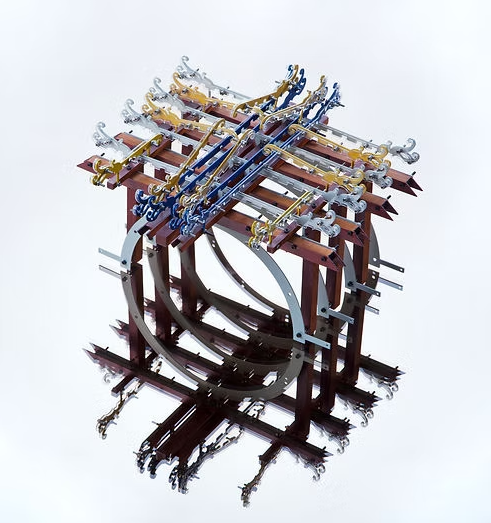
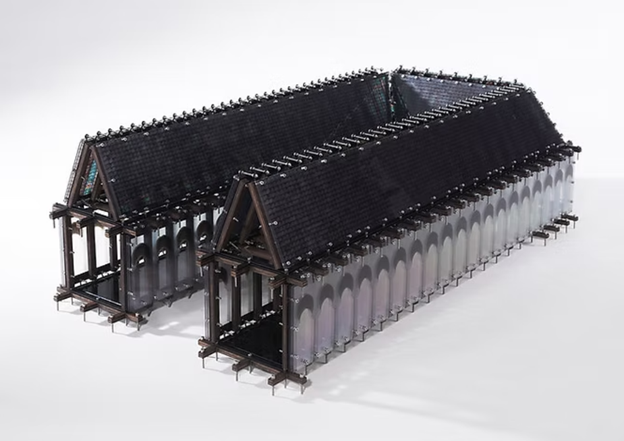
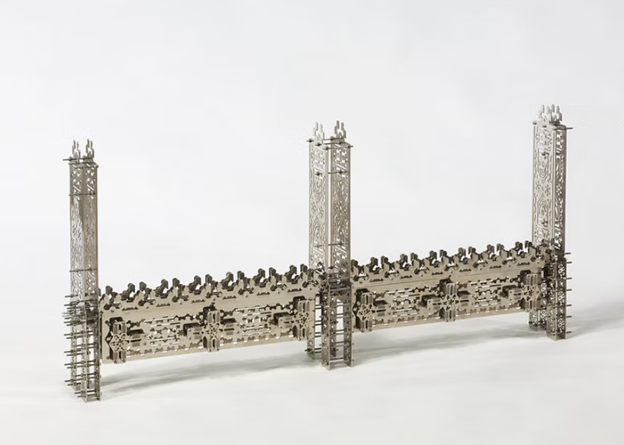
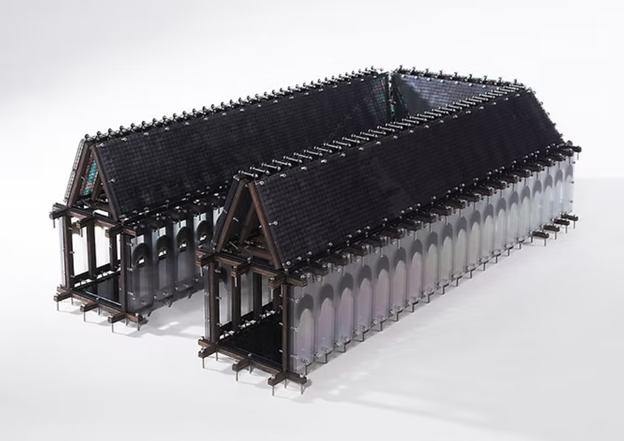
Minkyoo Choi’s work unfolds from experiences of unfamiliarity and shifts in perception encountered within new environments, developing as a process of reconfiguring these experiences into an architectural sculptural language. His childhood relocation to the Middle East left him with a sensibility in which familiarity and estrangement operate simultaneously, and this condition becomes a central premise that recurs throughout his practice. As seen in early works such as Permeate module 1(2015) and Permeate structure Ⅰ, he combines visual elements from different cultures to construct hybrid structures that cannot be reduced to a single origin. In this context, sculpture does not function as a representation of form, but rather as a device that holds the accumulation and transformation of experience.
 
This line of inquiry extends into a perspective that approaches “architecture” as a mode of thought. The artist understands architecture as a result shaped by the ideologies and modes of thinking of its time, and through it, he structures personal emotions and memories. In works such as Permeate structure, the combination of mosque patterns and the tiled roofs of hanok goes beyond a simple visual mixture, revealing a state in which different cultural experiences coexist within a single structure. In this way, Choi’s work begins from personal experience but expands by translating it into architectural form, traversing layers of time, space, and culture.
 
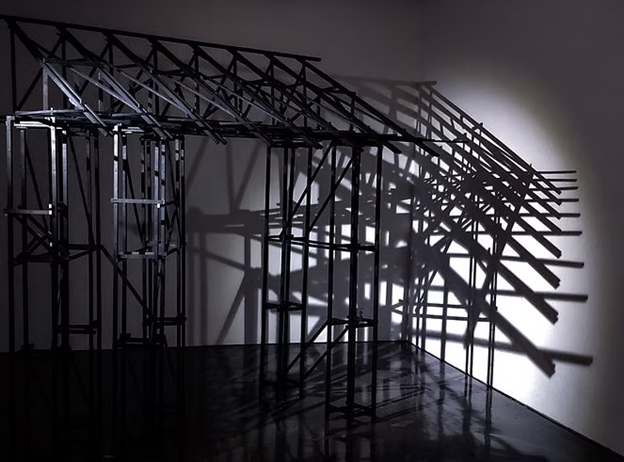
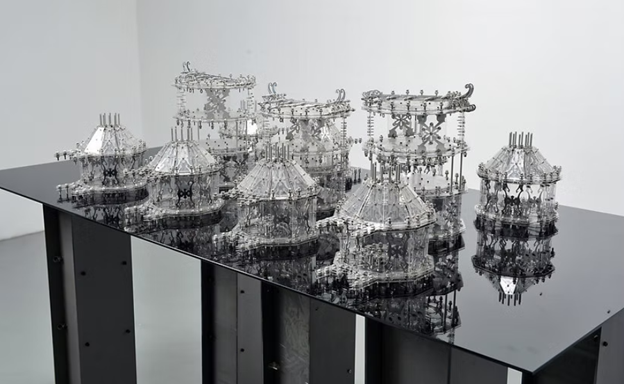
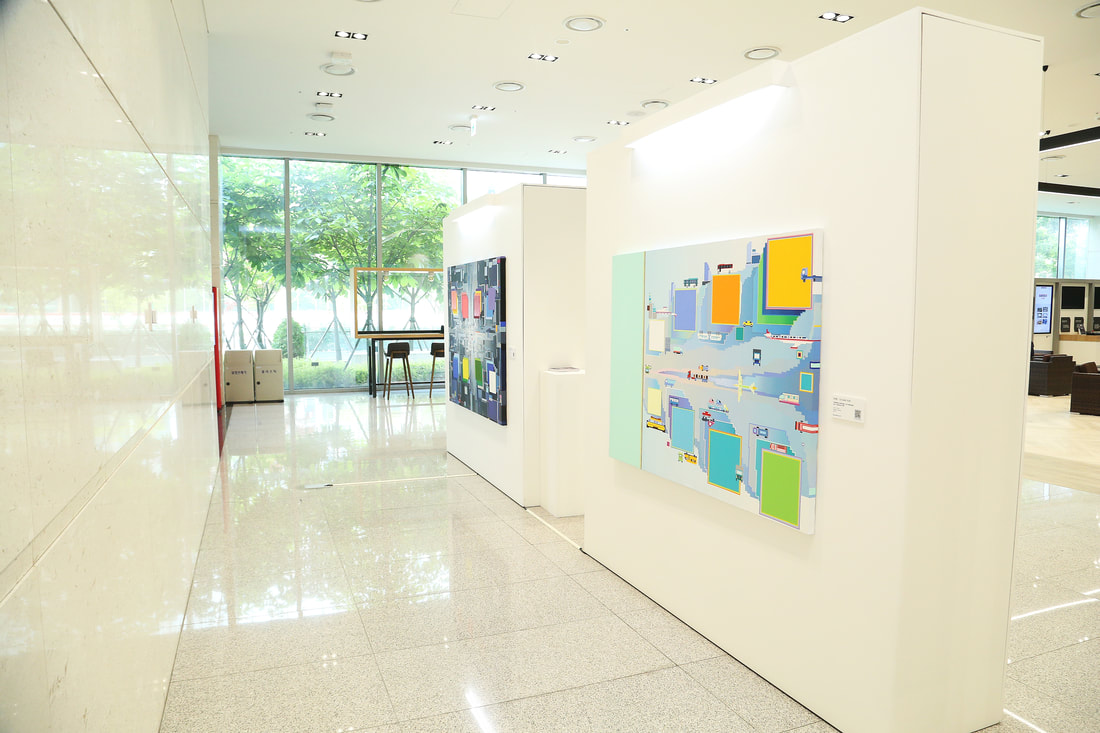
The 2017 solo exhibition 《Drift Grid》(Shinhan Gallery, Seoul, 2017) marks a point where this trajectory becomes more clearly articulated. The ‘Drift Grid’ series presents not completed architecture but structures and conditions prior to completion, emphasizing a state in which identity remains unfixed. In Drift grid-scene 867, the juxtaposition of structures with different functions and characteristics as if in collision demonstrates how a space does not converge into a single meaning but remains open to continuous interpretation. In this period, sculpture operates not as a stable structure but as a field that reveals the instability of perception and cognition.
 
This inquiry is further expanded through viewer participation in 《Blank-Hide and Seek》(Gallery Chosun, Seoul, 2018). The processes of ‘Blank,’ ‘Hide,’ and ‘Seek’ do not present a completed work, but instead guide viewers to reconstruct space based on given clues. In the recent work Infinite room and someone’s track(2025), this interest extends into the digital environment, engaging with structures of generation, disappearance, and circulation of information. In this way, his work evolves from personal experience toward an expanded awareness of relationships, structures, and information environments.

Style & Contents

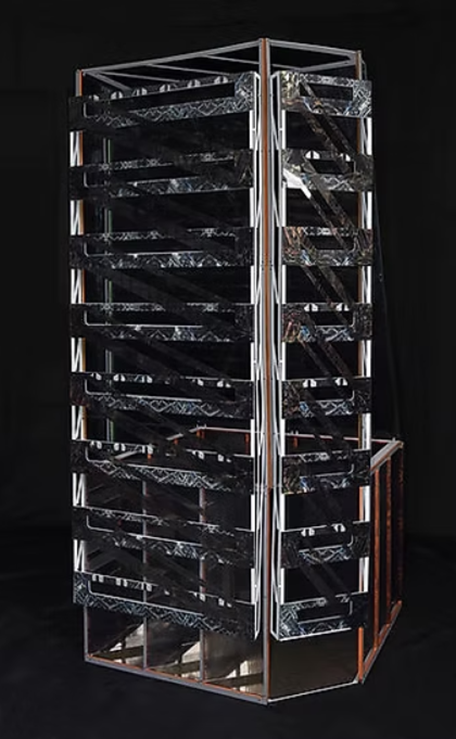
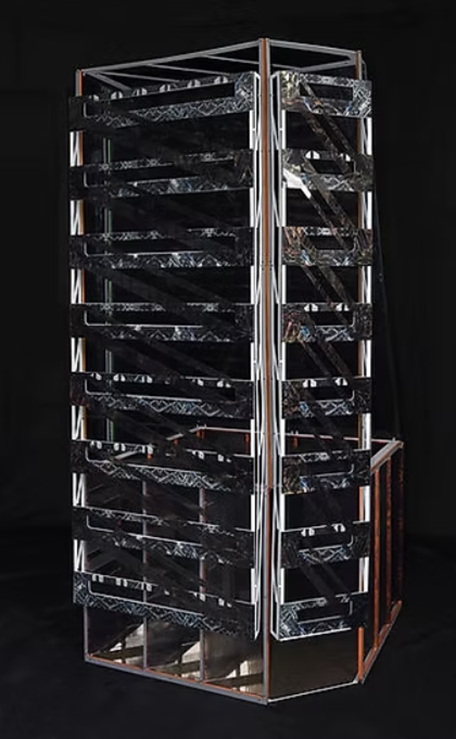
Choi’s work is grounded in architectural form, yet it focuses less on realizing actual architecture than on revealing the logic of construction itself. In early works, structures made with materials such as bolts, nuts, polycarbonate, and mirrors appear as precisely engineered systems, while simultaneously maintaining the tension of disparate elements combined within them. The method of assembly seen in works such as Permeate structure Ⅱ demonstrates how each component remains independent while acquiring meaning within its relationship to the overall structure.
 
The process of making also functions as a key formal element. He completes his structures through stages of sketching, digital image reconstruction, 3D modeling, and CAD design, and this process carries conceptual significance beyond mere fabrication. The transformation from two-dimensional design to three-dimensional structure metaphorically reflects the way an individual absorbs and reorganizes environment and culture. Thus, form is not simply an outcome, but a device that reveals the accumulation of thought and experience.
 
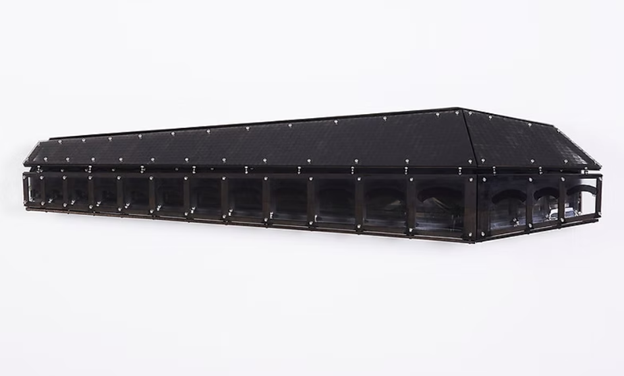
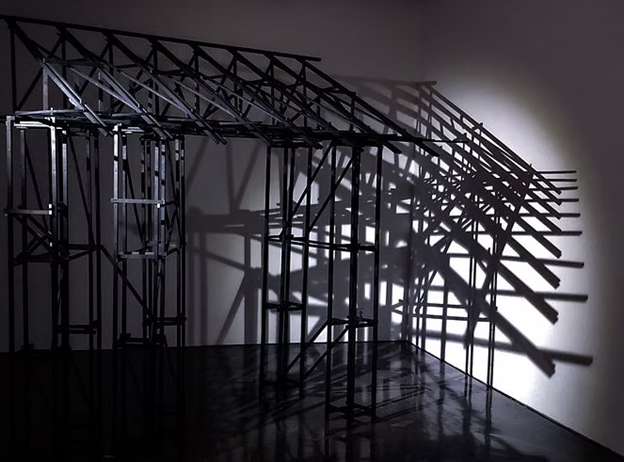
In the 2018 ‘Blank-Hide and Seek’ series, this structural logic shifts toward a more open mode. The black skeletal form of ‘Blank’ is presented in a state stripped of function and meaning, while surrounding fragments act as clues for interpretation. Here, sculpture becomes not a finished object but a variable structure that changes according to the viewer’s perception and imagination. This approach shifts the notion of sculpture from a fixed object to a set of conditions that can be constructed.
 
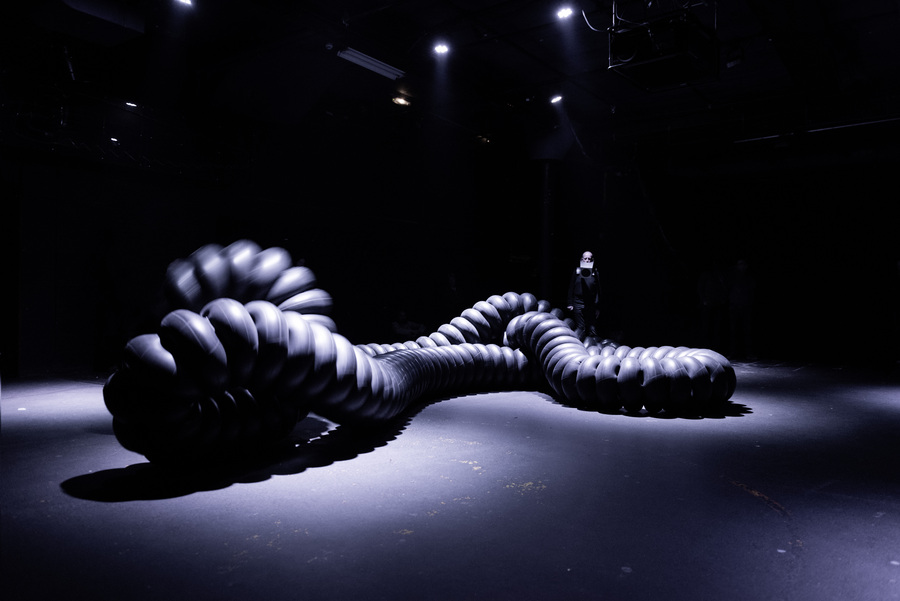
In recent works, the incorporation of digital media further expands this formal language. In works such as Something You Believe In(2021) and Infinite room and someone’s track, elements such as video, motors, and LED are combined to emphasize temporality and movement. In particular, the one-minute cycles of rotation and imagery in Infinite room and someone’s track render the generation and disappearance of information as rhythm, transforming sculpture into a time-based system rather than a static structure. In this way, his formal approach evolves from material structures toward complex media environments that integrate immaterial elements.

Topography & Continuity

Minkyoo Choi’s work has formed an intermediate zone spanning sculpture, architecture, and media. Within his practice, structure does not resolve into a singular form or function, but remains as a field where different experiences and perceptions overlap. This reflects an attitude that follows architectural order while refraining from fixing it into a stable system, instead allowing its internal fissures and disjunctions to remain visible.
 
The assembled structures that begin with Permeate structure Ⅰ are constructed through precise design and repetitive connections, yet within them, different cultural codes coexist without being fully reconciled. This sensibility becomes more complex in Drift grid-scene 867, where space does not settle into a singular function or meaning, but remains in a layered state. In this way, his work constructs order while simultaneously preserving the subtle tension that prevents that order from becoming fixed.
 
In later works such as the exhibition 《Collecting Cities》(LG U+ Gallery C, 2020) and Infinite room and someone’s track, this tension shifts into another dimension. Elements that once constituted physical structures merge with flows of time, image, and information, generating new rhythms, while architectural thinking begins to operate not within space itself but within the conditions and environments surrounding it. In this process, his work does not remain confined to a single medium or form, but continues by organizing points where different layers intersect.
 
Rather than being fixed within a single sculptural language, Choi’s work can be understood as an ongoing trajectory in which the ways that structure and perception meet are continuously reconfigured. While fundamental operations such as assembly, connection, repetition, and circulation persist, the experiences they generate are recomposed each time under different conditions. This flexibility allows his work to remain not as a unified outcome, but as an open terrain where multiple layers of perception intersect.

Works of Art

‘Architectural Sculpture’ as a Framework for Emotion and Memory

Exhibitions

Activities