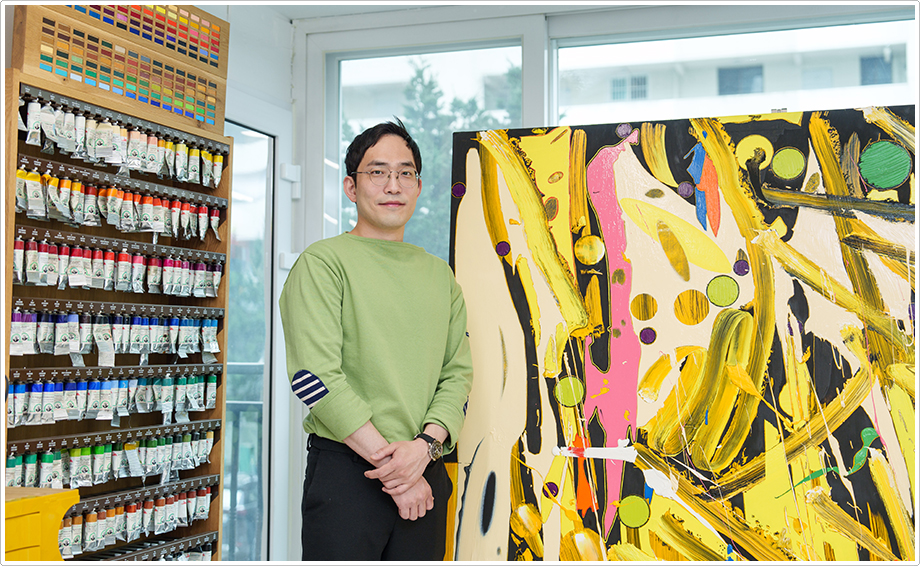
Scalar and Vector No.16 - K-ARTIST

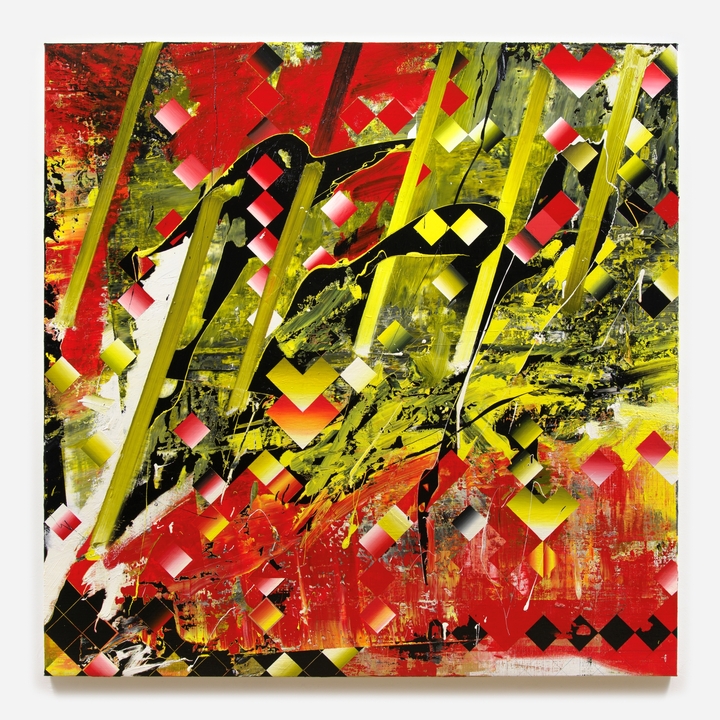
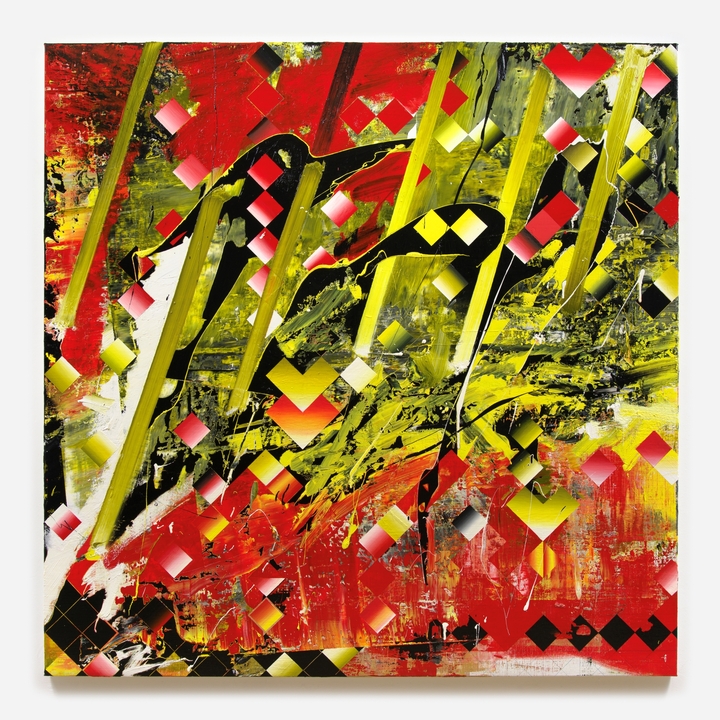
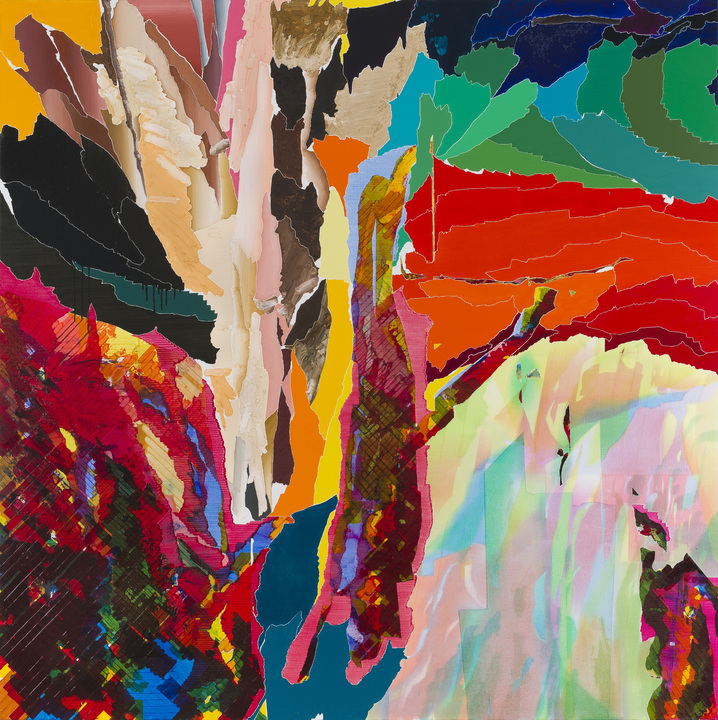
Scalar and Vector No.16

2025
Stand oil, oil on oil primed jute canvas(very rough texture)
172 x 172 cm
About The Work

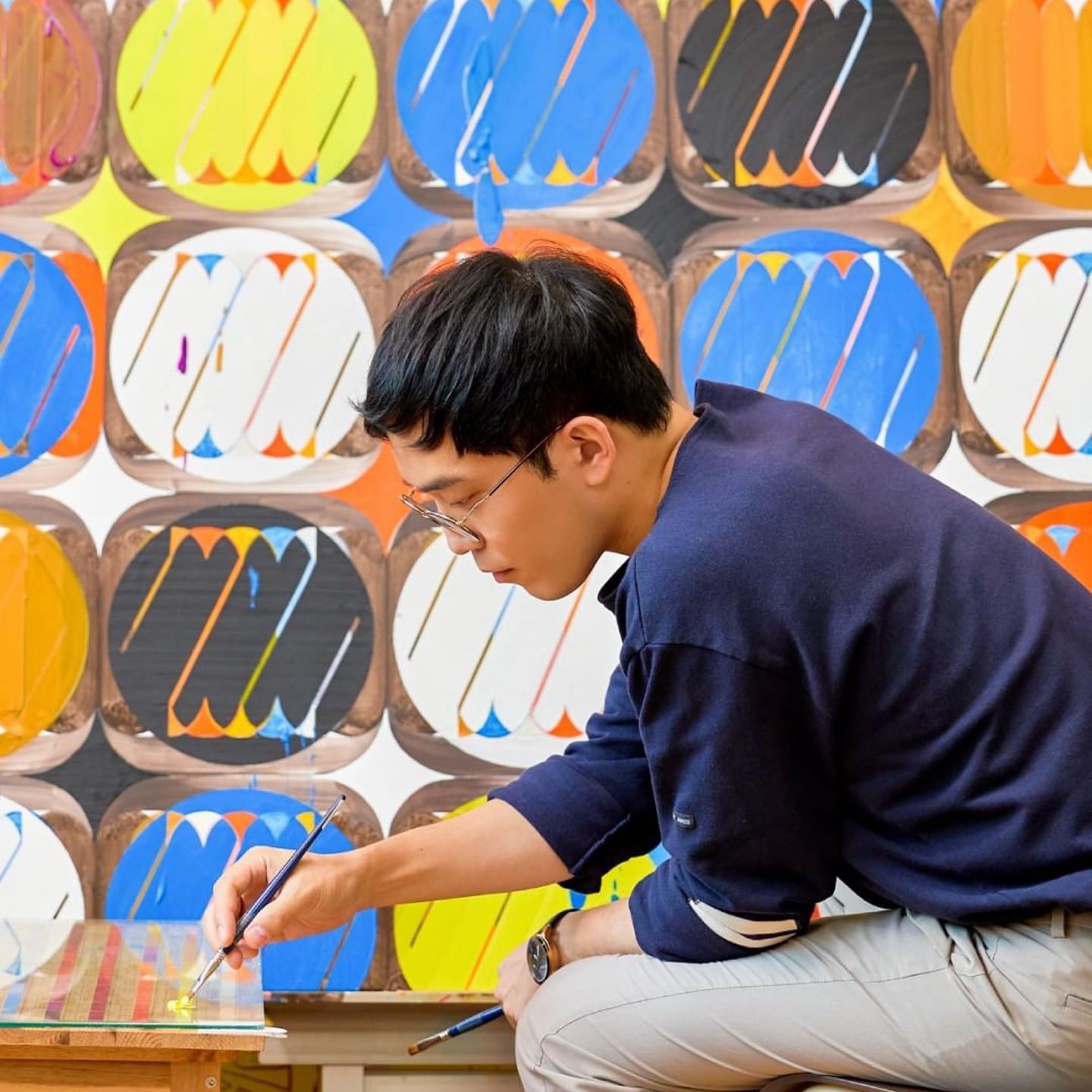
Seoul Kim has developed his practice through a sustained process of posing and responding to fundamental questions about painting as a classical medium. His work engages with the meta-exploration of the way physical elements such as brushes, paint, canvas fabric, and frames work in painting.
 
Kim engages with subjects ranging from influential predecessors in art history to commercial brands of brushes and paints, as well as the physical dynamism imposed upon the act of painting itself. Through these considerations, he gradually establishes his own set of principles for rewriting the historical references and conventions to which visual art has long been indebted, translating them into a contemporary mode.
 
Seoul Kim has stripped away emotional rhetoric and peripheral narrative, devising a mode of painting in which the canvas, brush, and pigment can reveal their inherent properties without embellishment. By layering lines, planes, and symbols with architectural precision, he achieves a seamless balance on the surface.
 
His profound understanding and appropriation of material ultimately unfold as a chain of dancing colors. This experience leads viewers beyond rational comprehension, awakening unforeseen impressions and memories, and prompting reflection on the meanings of all entities formed through multidimensional matter.

Solo Exhibitions (Brief)

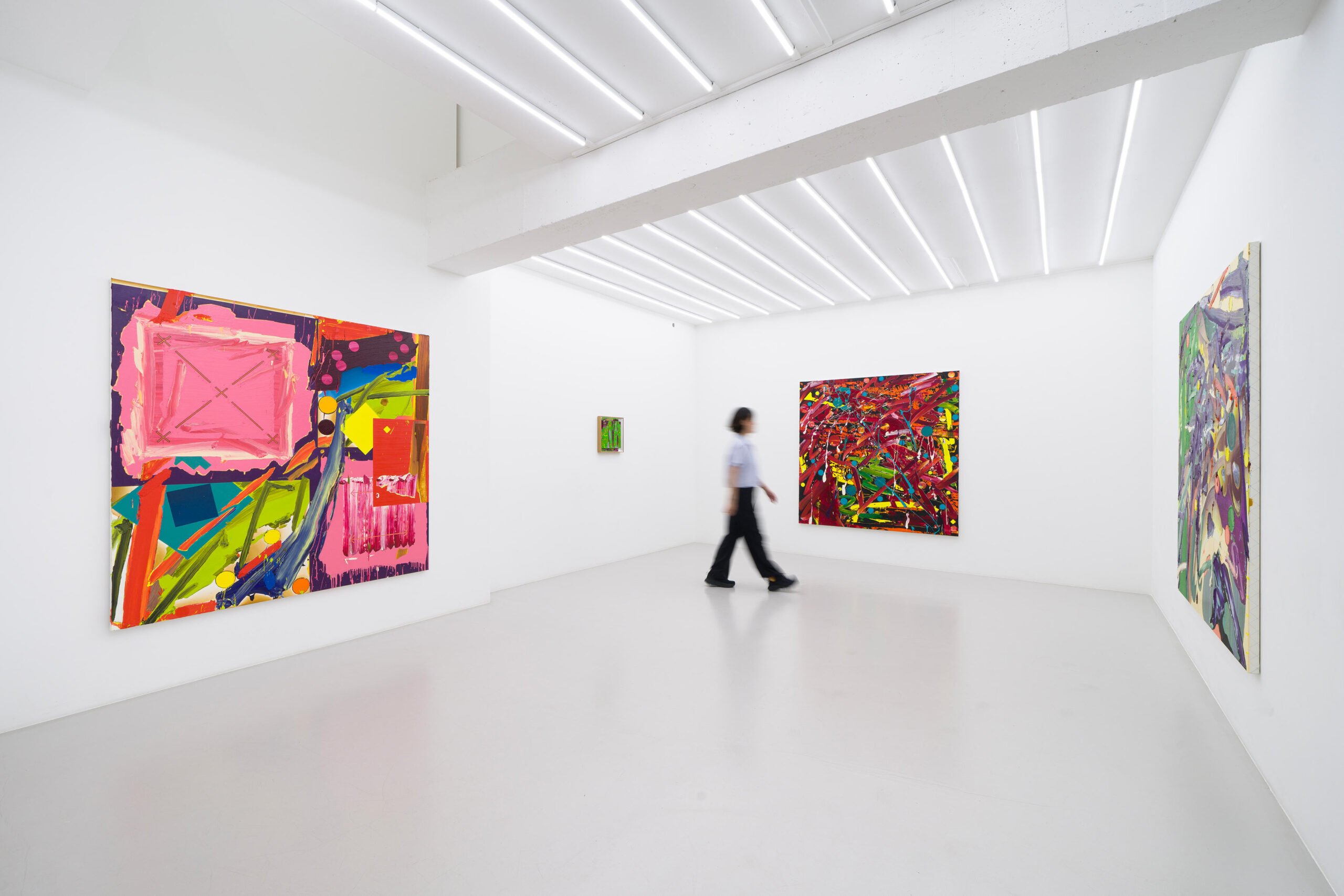
Seoul Kim has held solo exhibitions including 《Docking Waltz》 (ThisWeekendRoom, Seoul, 2024); 《Sonata for a Beautiful Soul》 (ThisWeekendRoom, Seoul, 2021); 《Beautiful Mind》 (Art Delight Gallery, Seoul, 2021); and 《Uncolored》 (Art Delight Gallery, Seoul, 2019).

Group Exhibitions (Brief)

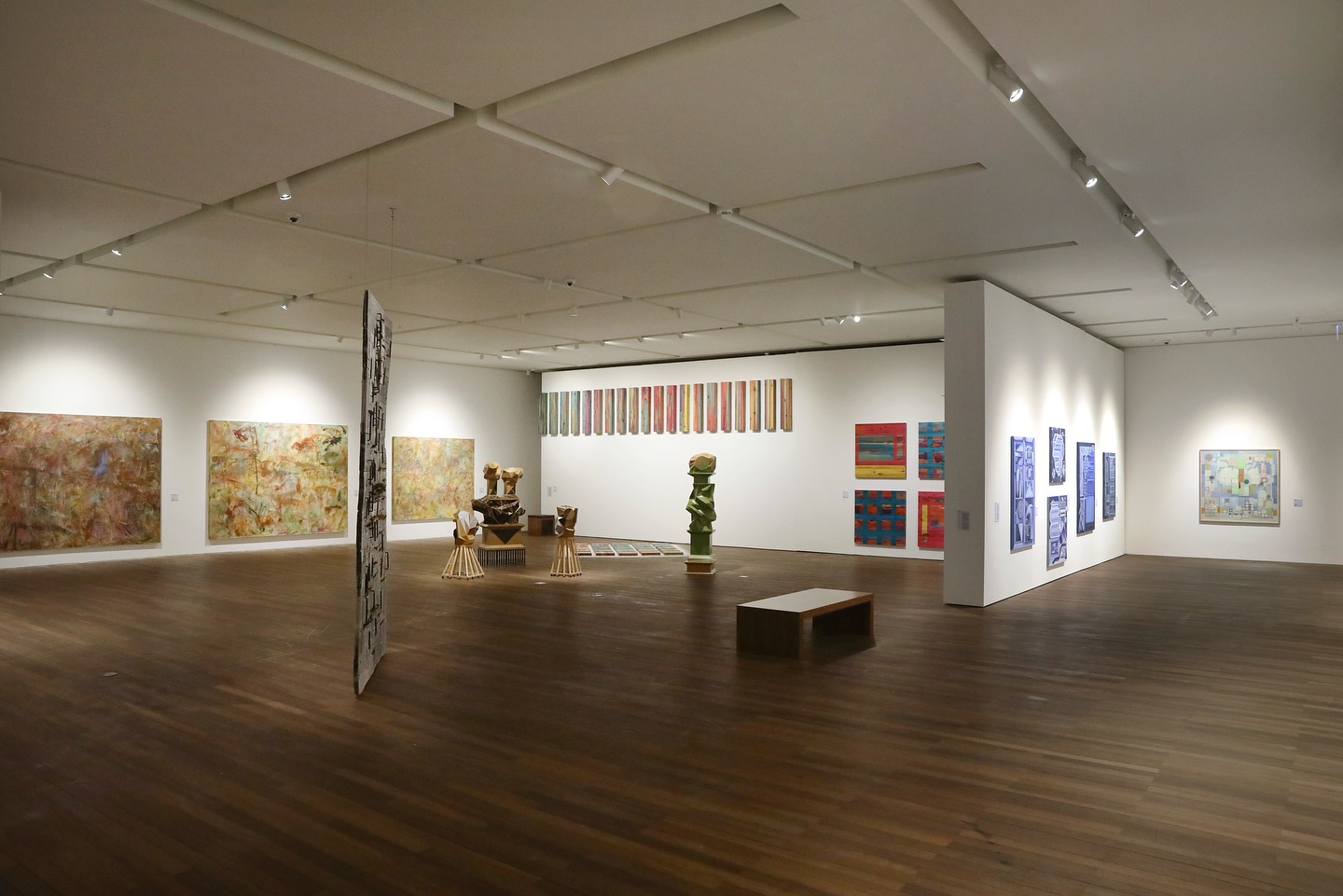
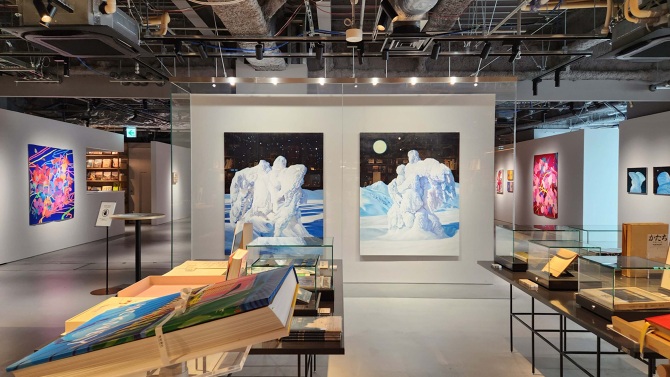
Seoul Kim has also participated in numerous group exhibitions, including 《Deep into Abstraction – On the Way》 (Seoul National University Museum of Art, Seoul, 2025); 《Bloom Vision》 (Kyoto Tsutaya Books, Kyoto, 2024); 《Transparent Window, Glass Table》 (KICHE, Seoul, 2023); 《Hand to Eye》 (BOL Gallery, Singapore, 2023); 《Layered》 (IBK Art Station, Seoul, 2022); and 《Perigee Winter Show 2021》 (Perigee Gallery, Seoul, 2021), among others.

Awards (Selected)

Kim was the recipient of the 1st Keimyung Art Prize (2024).

Collections (Selected)

Kim’s works are included in the collections of the Government Art Bank of MMCA Korea and the PARKSEOBO FOUNDATION.

Works of Art

Unfold as a Chain of Dancing Colors

Originality & Identity

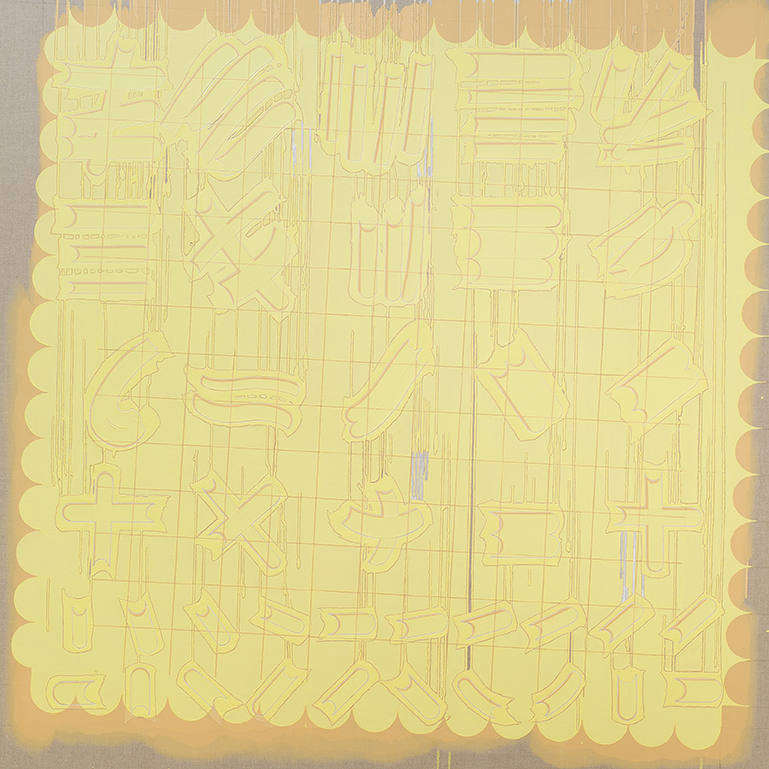
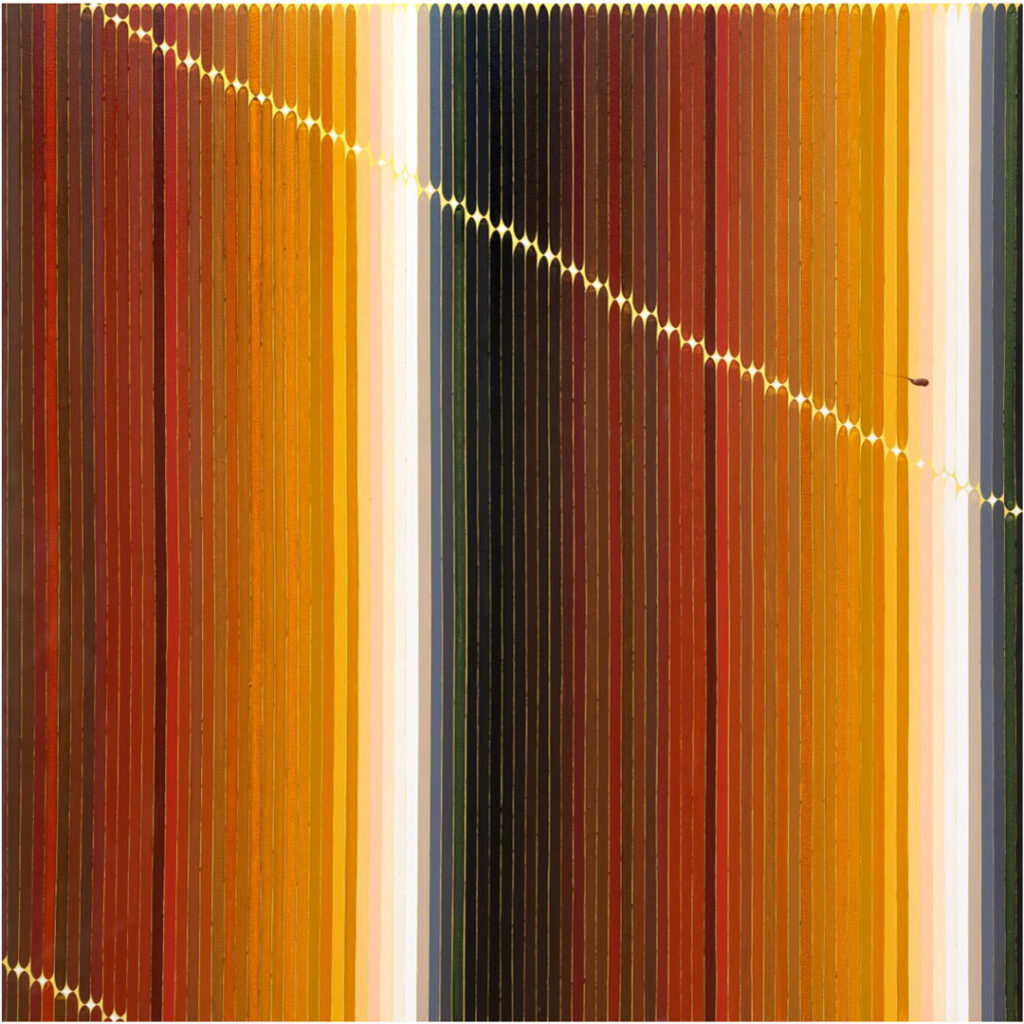
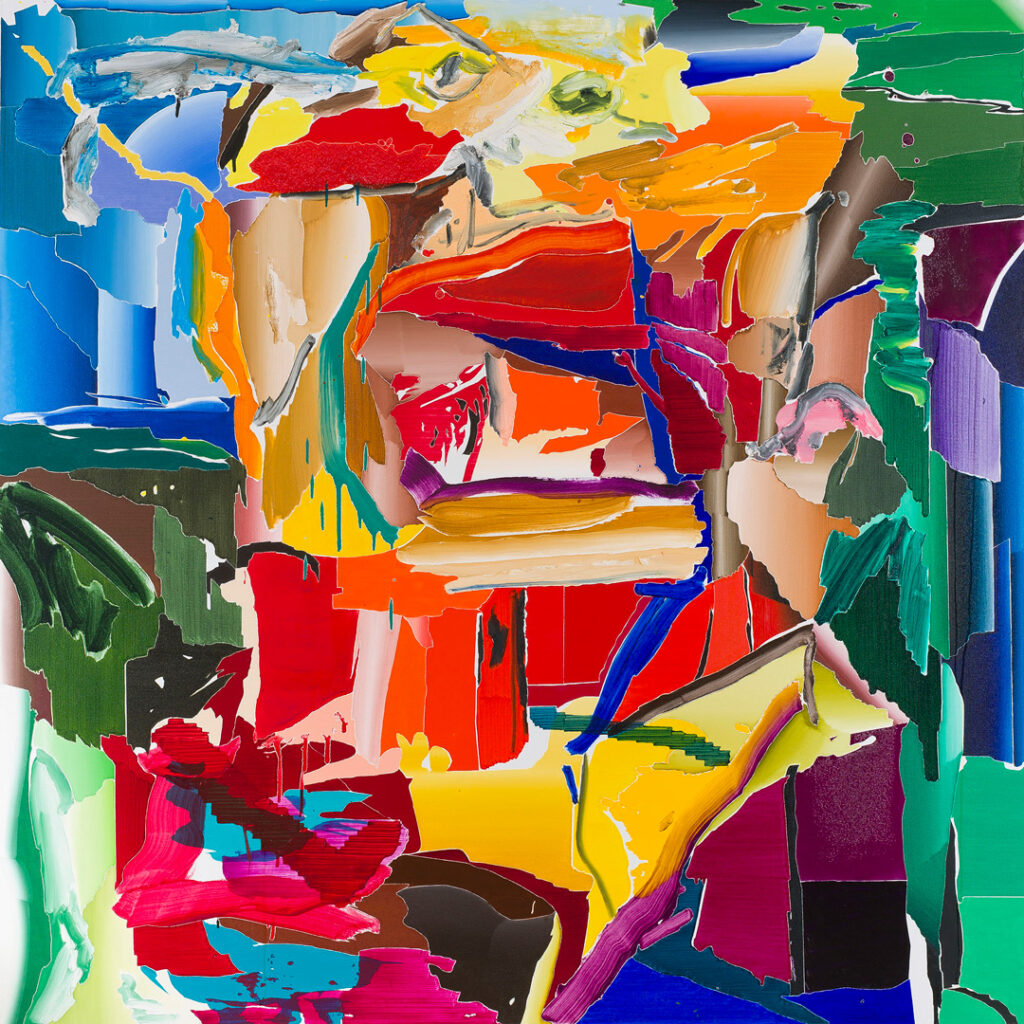
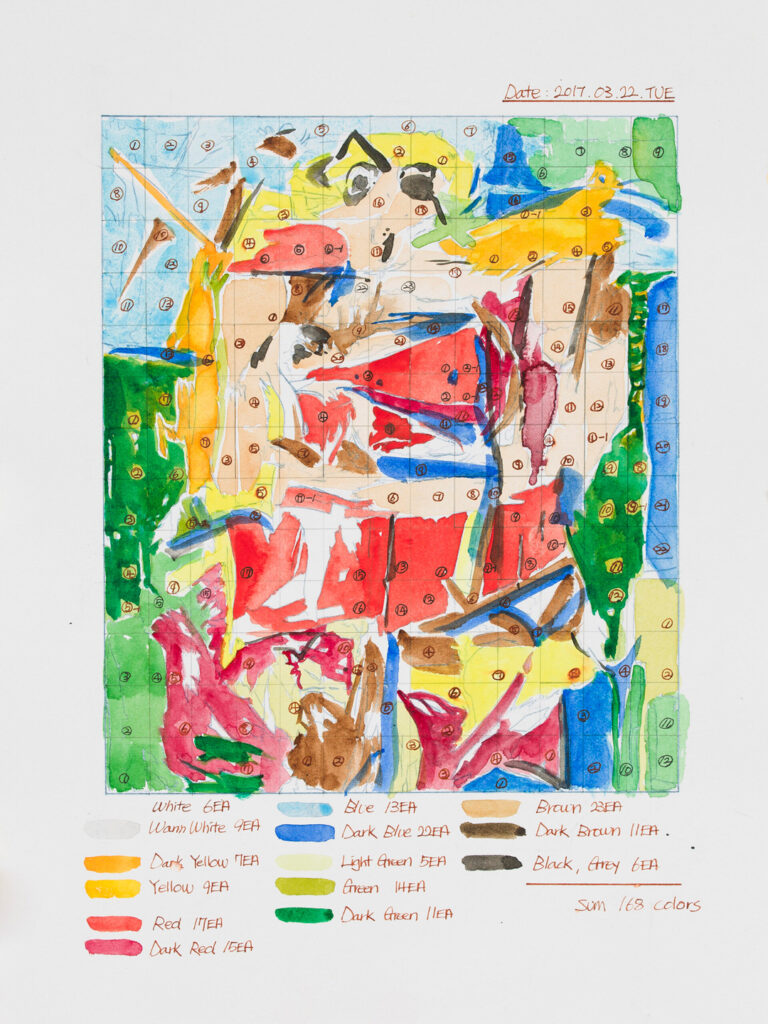
Seoul Kim (b. 1988) approaches painting not as a genre of “image production,” but as an inquiry into the very conditions that constitute painting. He analyzes how physical elements—brush, paint, canvas, and frame—operate, and sets his own rules upon those material conditions. Works such as After De Kooning No.10(2018), presented in his first solo exhibition 《Uncolored》(Art Delight Gallery, 2019), clearly demonstrate this stance. While referencing the historical context of Abstract Expressionism, he foregrounds a condition—“to use 168 colors democratically without mixing”—in place of expressive freedom, thereby shifting painting from an outlet of emotion to a process of executing conditions.
 
In this period, the ‘After De Kooning’ series functioned as both a homage to a specific art-historical figure and, at the same time, an experimental apparatus that uses the name as a device. Dividing the surface into 168 color fields and leaving gaps of less than 1 mm reconfigures the free gesture of abstract painting under rational control. What matters here is not what color symbolizes, but what material properties color possesses and under what conditions it is placed. Painting no longer unfolds as an inner psychological drama; it becomes an experimental space in which matter and rules collide and are arranged.
 
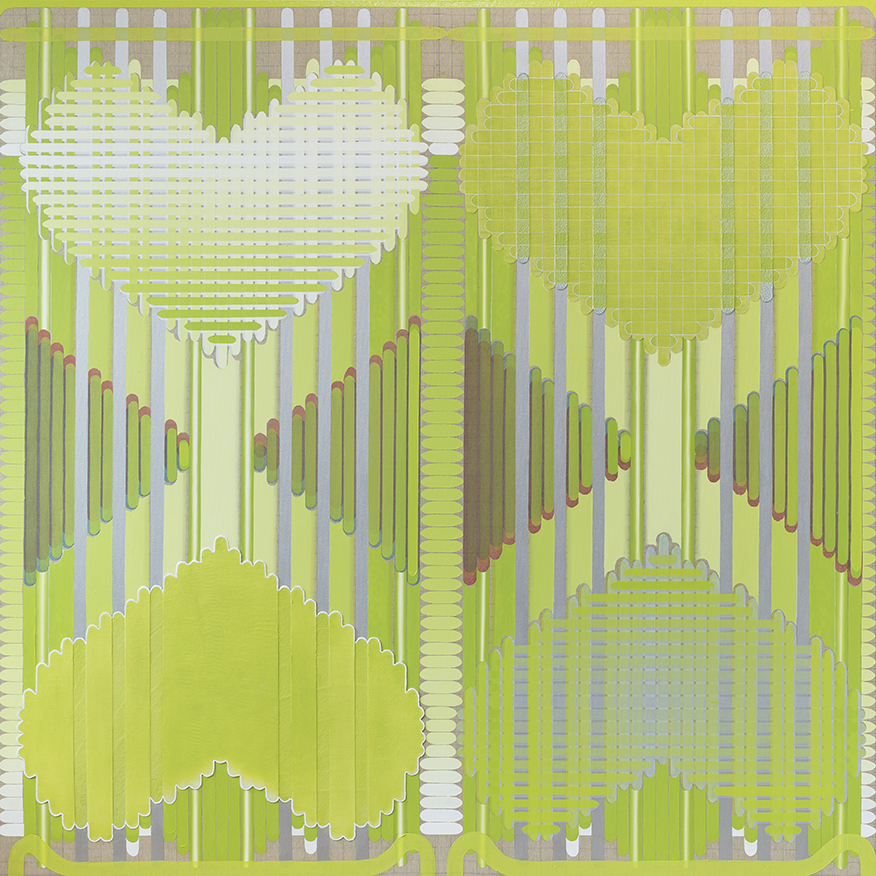
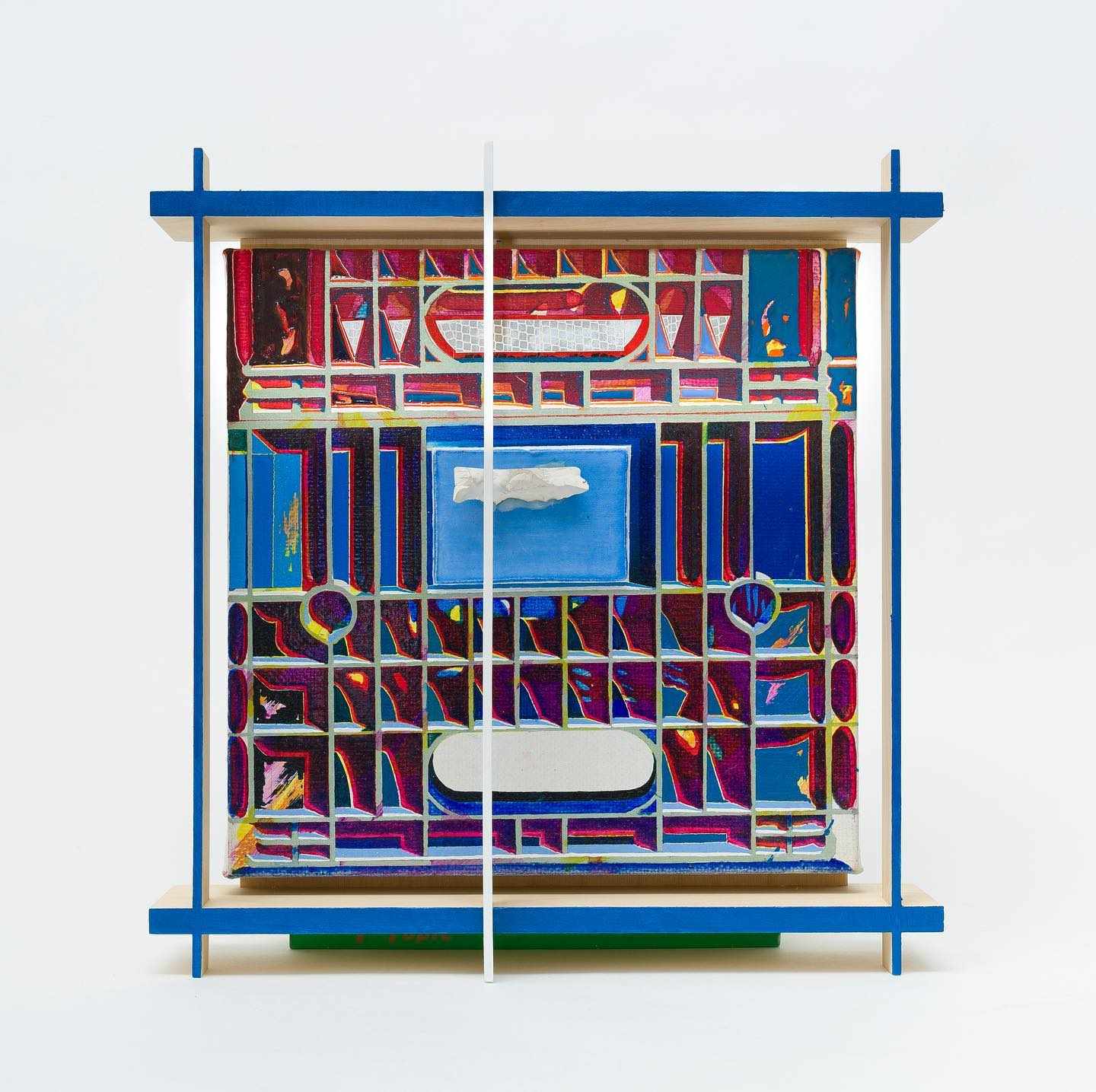
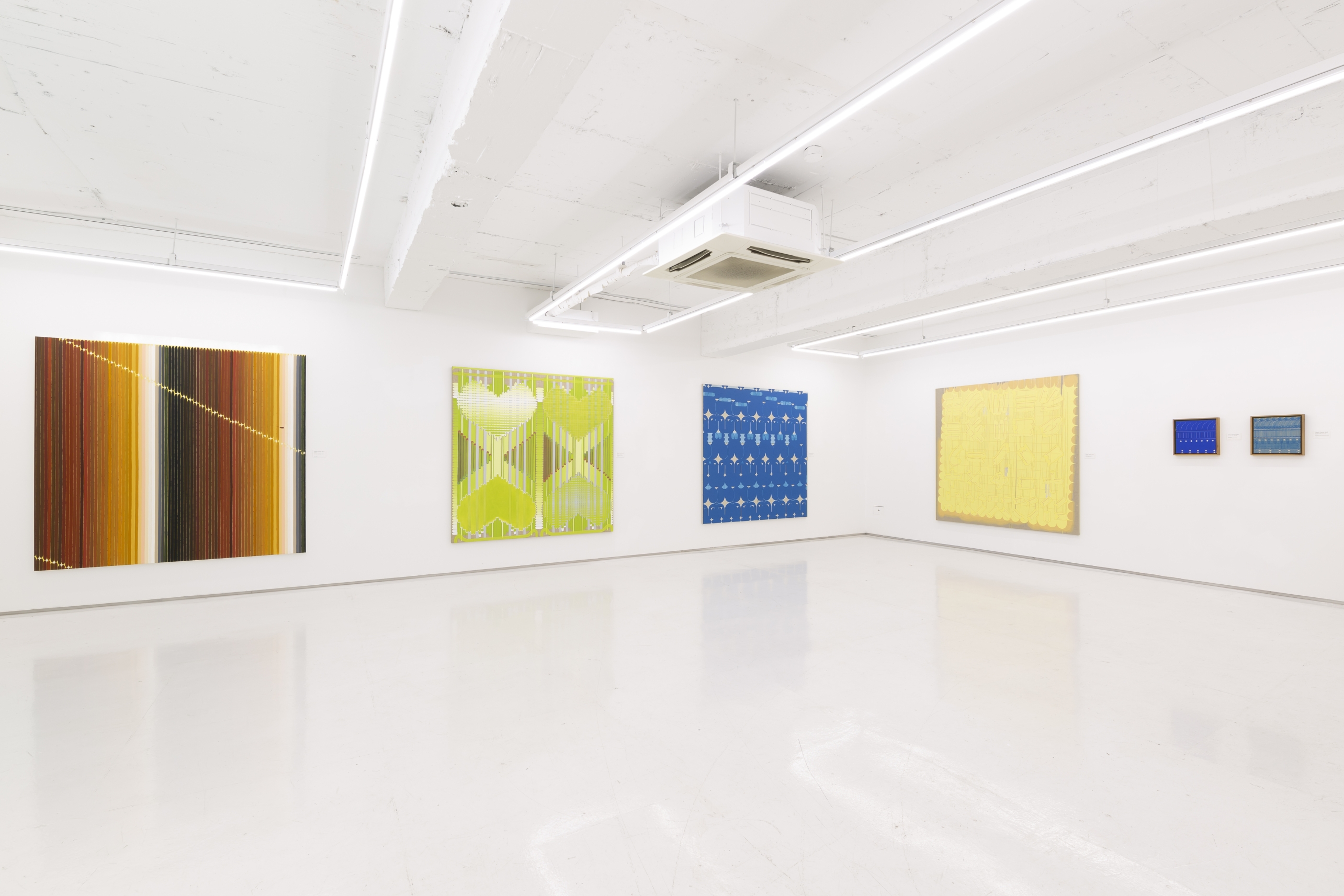
The ‘Filbert Family’ series, developed through the solo exhibitions 《Beautiful Mind》(Art Delight Gallery, 2021) and 《Sonata for a Beautiful Soul》(ThisWeekendRoom, 2021), pushes this problem consciousness one step further. Here, he shifts his focus from art-historical reference to the brush—the most basic tool of painting. In works such as Filbert Family No.9(2020), the oval cross-section of a filbert brush becomes a modular unit, and diverse patterns—diamonds, grids, hearts—emerge from repetitions and variations of that module. The core question becomes not what to paint, but how far the forms a brush can produce can be extended.
 
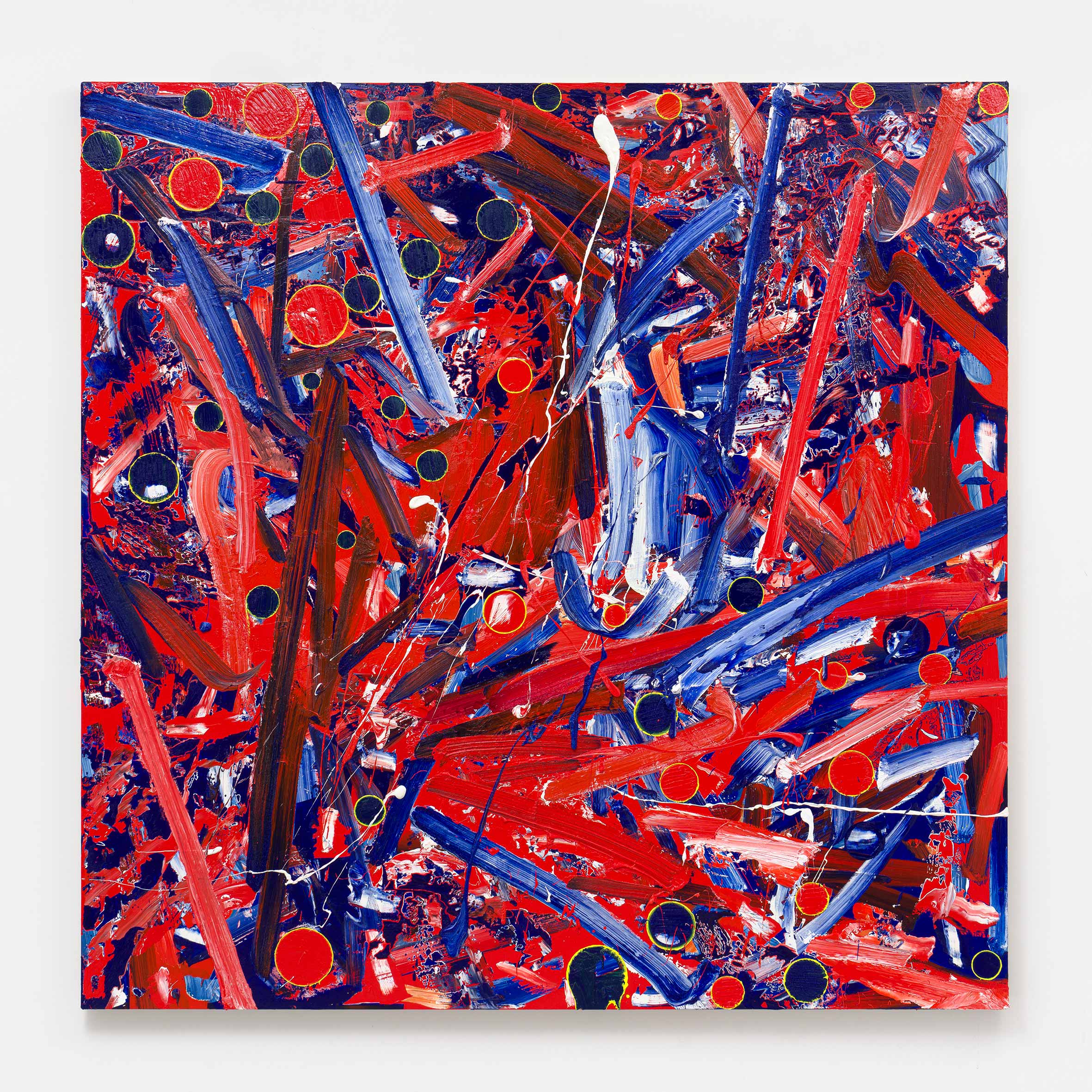
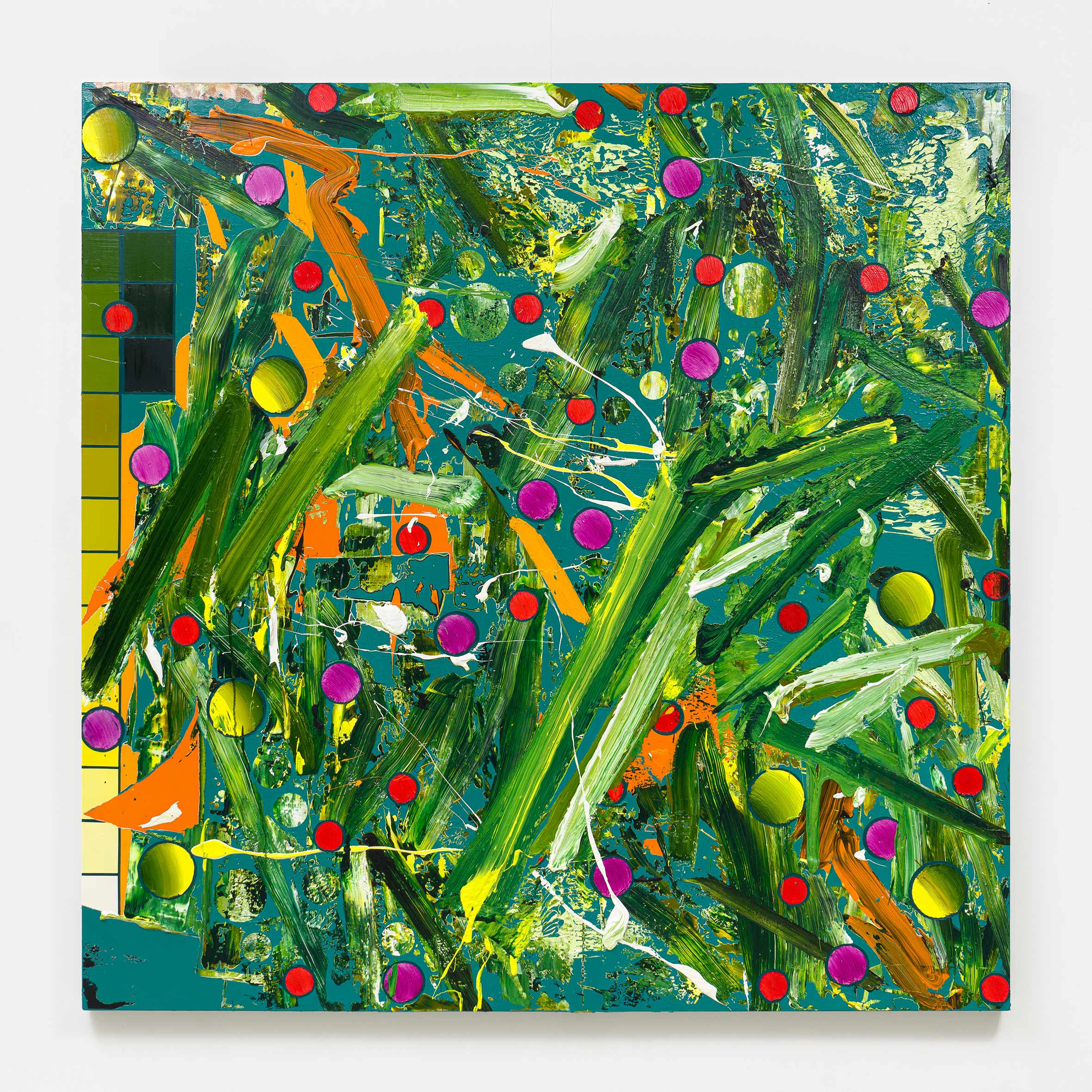
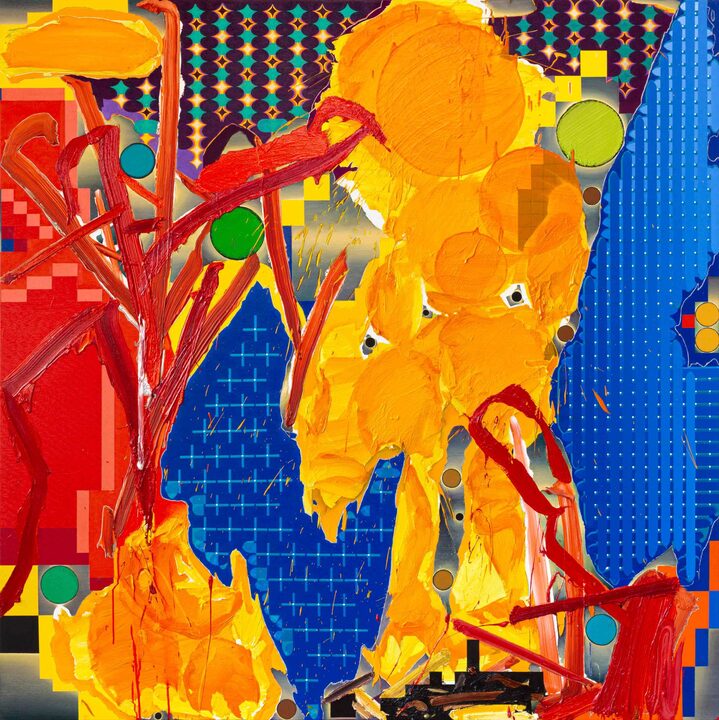
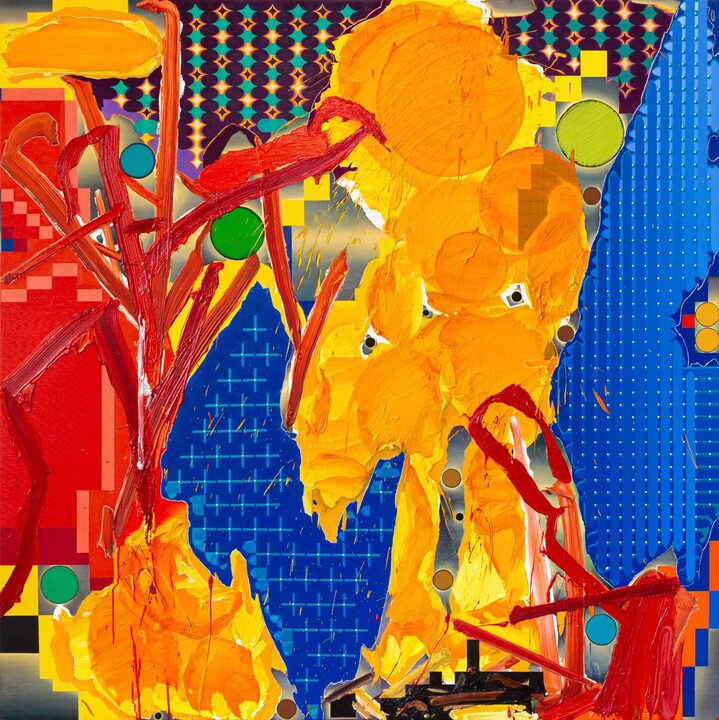
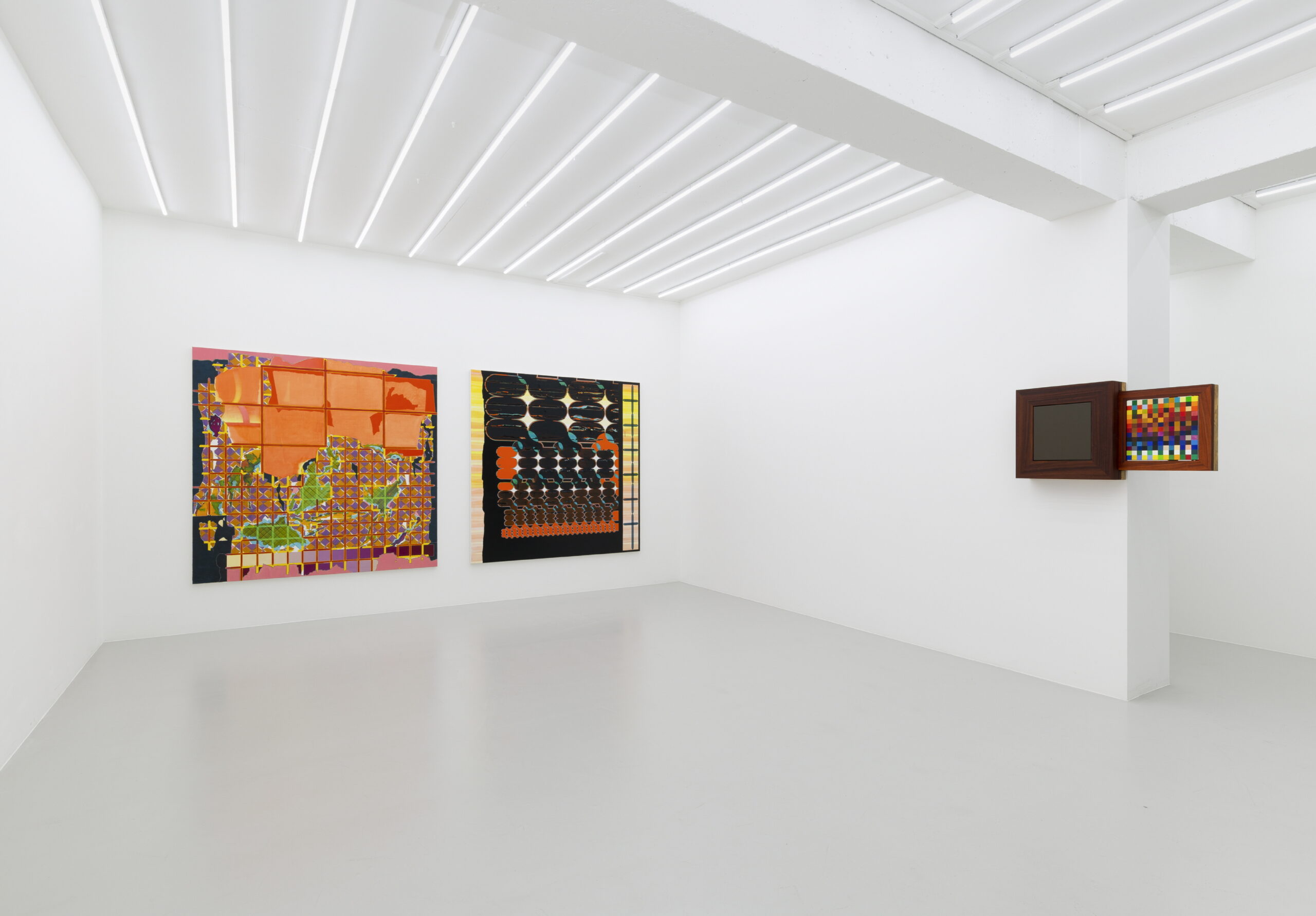
From 2023 onward, with the ‘Scalar and Vector’ series, his interest moves from the materiality of color to the force of color. In works such as Scalar and Vector No.5(2023), Scalar and Vector No.12(2024), and Scalar and Vector No.16(2025), color is no longer an element distributed in equal proportions, but is treated as energy with mass and directionality. Area, density, and direction of entry function like physical forces within the composition, and painting is reconstituted as a field. In this shift, his practice expands from a painting of conditions into a painting of dynamics.

Style & Contents

Formally, Seoul Kim’s work begins rigorously from the flat plane, yet its internal structure is closer to architectural thinking. In works such as After De Kooning No.5(2017), the 172 x 172 cm square surface operates like a schematic drawing. To place 168 colors under identical conditions, he experimented with the properties of color over two years, and built layers differently depending on each pigment’s transparency, viscosity, and material characteristics. His decision not to use varnish was likewise a choice to avoid concealing the final state of the paint.
 
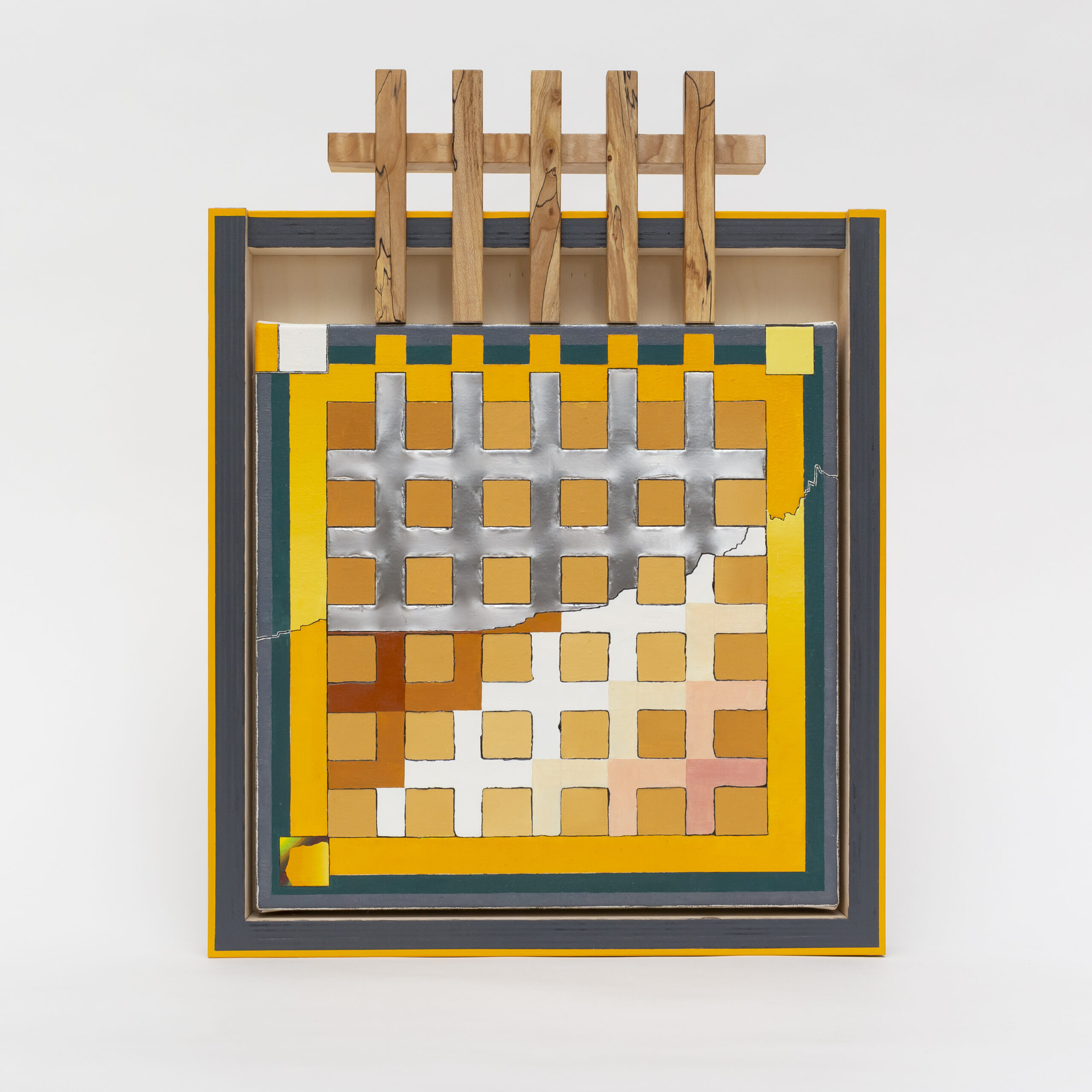
With the ‘Filbert Family’ series, the form becomes more structured. In works such as Filbert Family No.6(2021) and Filbert Family No.10(2021), the filbert brush functions as a formal unit and as an algorithm. In particular, in the small versions—such as Filbert Family No.13 (small ver.)(2020) and Filbert Family No.19 (small ver.)(2021)—the frame takes on a central role. The frames presented in 《Beautiful Mind》 and 《Sonata for a Beautiful Soul》 use mirrors, chrome, hard maple wood, and other materials to repeat or reflect internal structures. The frame is no longer a protective device; it functions as a structure that extends the grammar of painting outward.
 
The ‘Scalar and Vector’ series, centered in the recent solo exhibition 《Docking Waltz》(ThisWeekendRoom, 2024), demonstrates the accumulation of intuitive judgments grounded in material analysis. In a work such as Scalar and Vector No.11(2024), he places a primary color over an underlying grid and decides intuitively how the next color will enter. Through acts of drawing, pushing, and throwing, colors “dock” sequentially into the pictorial space. Broad planes, long straight lines, scattered short strokes, and the circles that support them operate as elements that calibrate balances of force.
 
Through this process, the surface gradually transforms beyond a two-dimensional plane into a field with material density. Linen and jute canvases of various textures, stand oil, cold wax, iridescent acrylic, and other materials each generate different resistances and responses. After analyzing these material conditions, the artist makes formal decisions. His painting, therefore, can be understood less as a record of emotional gesture than as the result of accumulated understanding of materials and conditions.

Topography & Continuity

Seoul Kim’s practice has unfolded through a process of dismantling and reassembling the conditions surrounding painting. In After De Kooning, he pushed the problem of the total amount and distribution of color; in ‘Filbert Family,’ he reconstructed the basic unit of painting by setting the brush as a module. By the time he arrives at ‘Scalar and Vector,’ color is no longer an element arranged evenly, but is handled as a force with mass and direction. This trajectory is less a series of breaks than an accumulation. The conditions of one period become the premises of the next.
 
What stands out in his work is an attitude that refuses to consume painting as a conduit for emotion or image. Color is not a symbol but a type of industrial pigment; the brush is not merely an instrument of expression but a physical device with a specific cross-section and elasticity. The frame, too, shifts from a protective apparatus into a structure that extends the painting’s logic. This approach treats painting as a material event, and the work exists less as a narrative awaiting explanation than as the outcome of conditions being executed.
 
In particular, his active intervention into the frame prevents his work from remaining confined within the plane. As in Filbert Family No.19 (small ver.), the repetition of internal modules as external structures, or the configuration in which mirrors reveal all four sides of a painting at once, expands the scope of thought to include the space in which painting is situated. In ‘Scalar and Vector,’ the docking of color unfolds in a way that is almost bodily, and the viewer’s gaze likewise moves along the surface. The plane gradually becomes a field of forces.
 
The question of why one makes images by hand in an age of image overflow runs through his practice. Seoul Kim’s painting does not offer an immediate answer; instead, it suspends the answer through the process of setting and executing conditions. His stance—analyzing materials, experimenting with tools, and handling color as force—remains as a coordinate that prompts a rethinking of painting.

Works of Art

Unfold as a Chain of Dancing Colors

Exhibitions

Activities