Jaeyeon
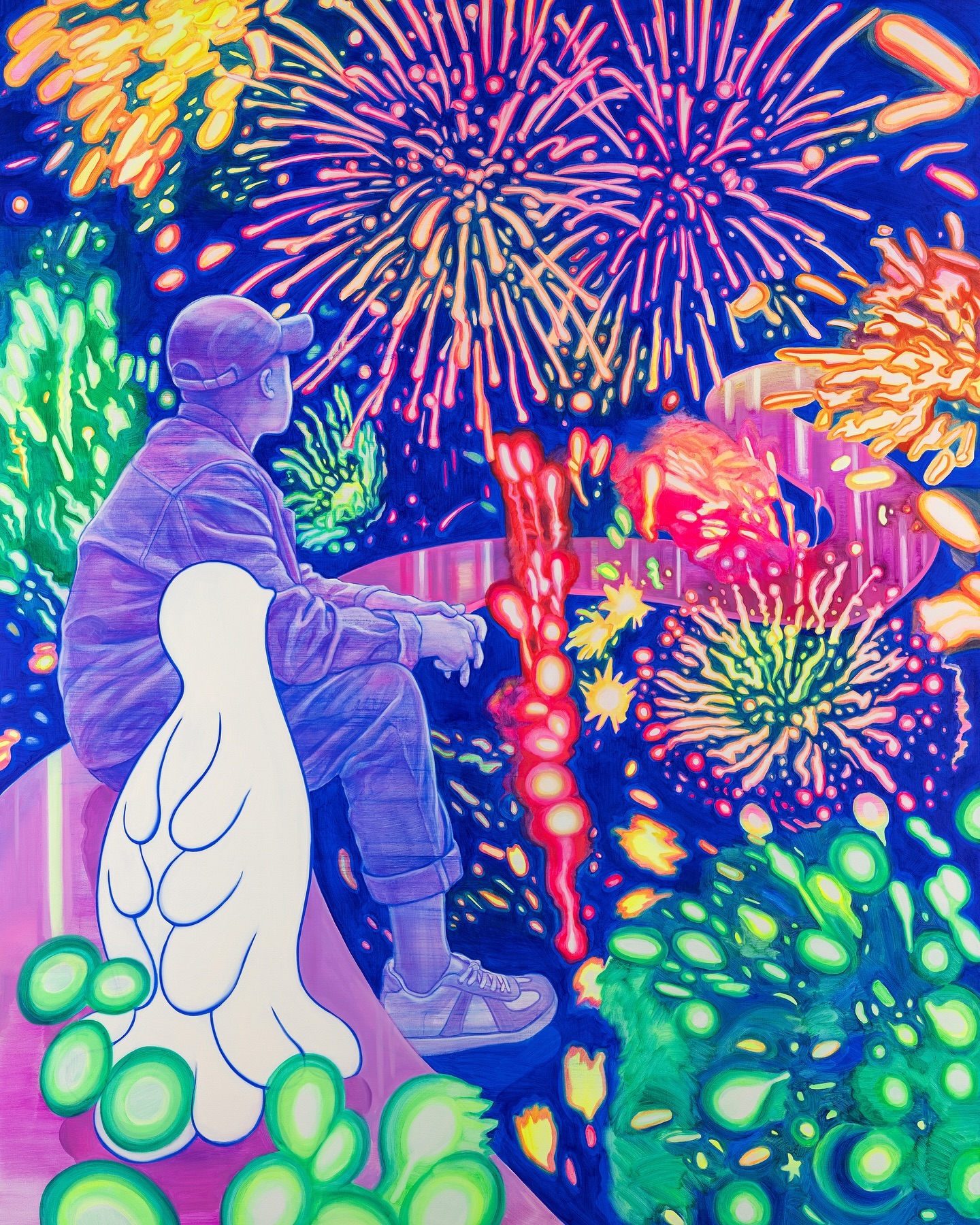
Yoo’s practice has explored the point at which reality and fantasy intersect,
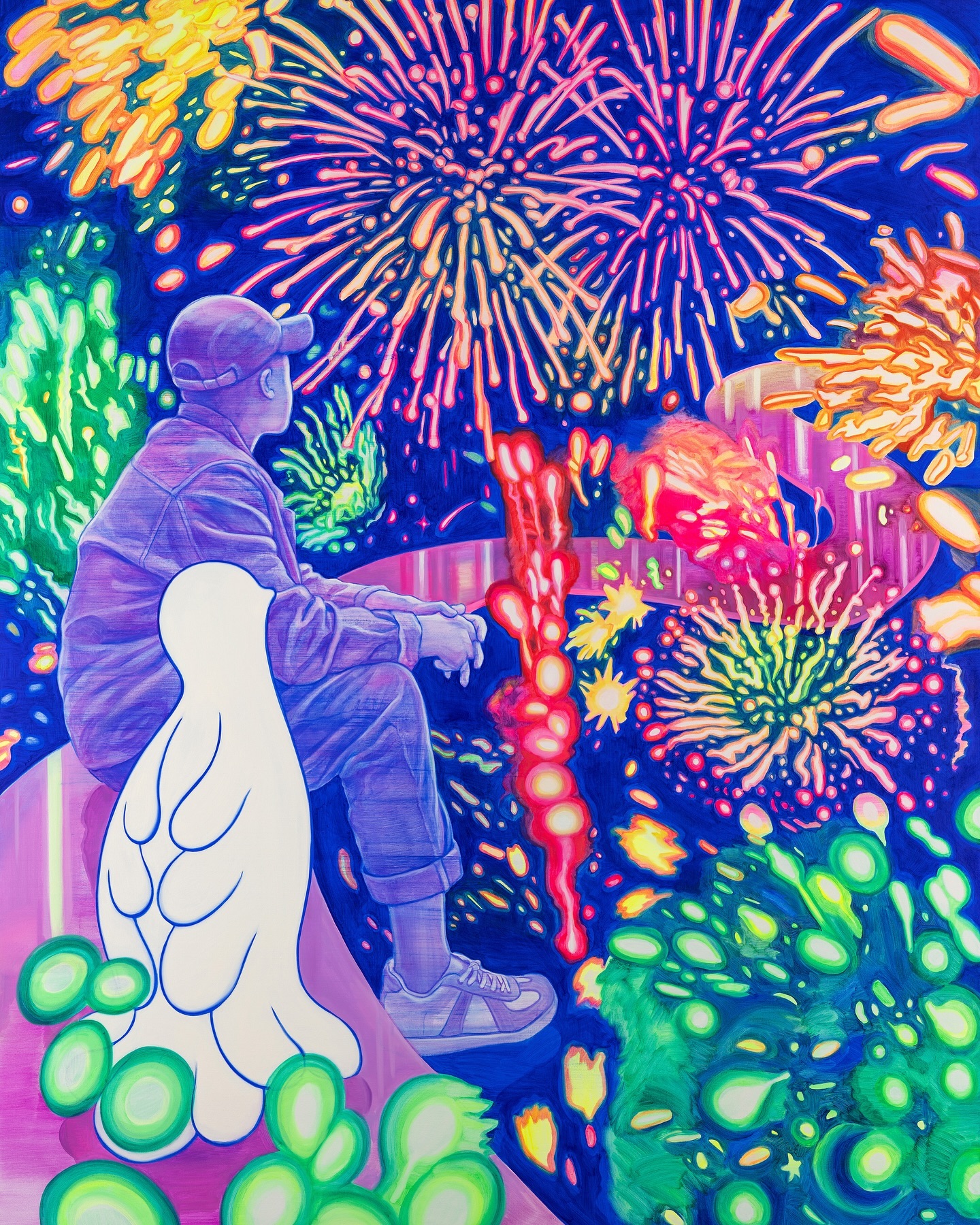
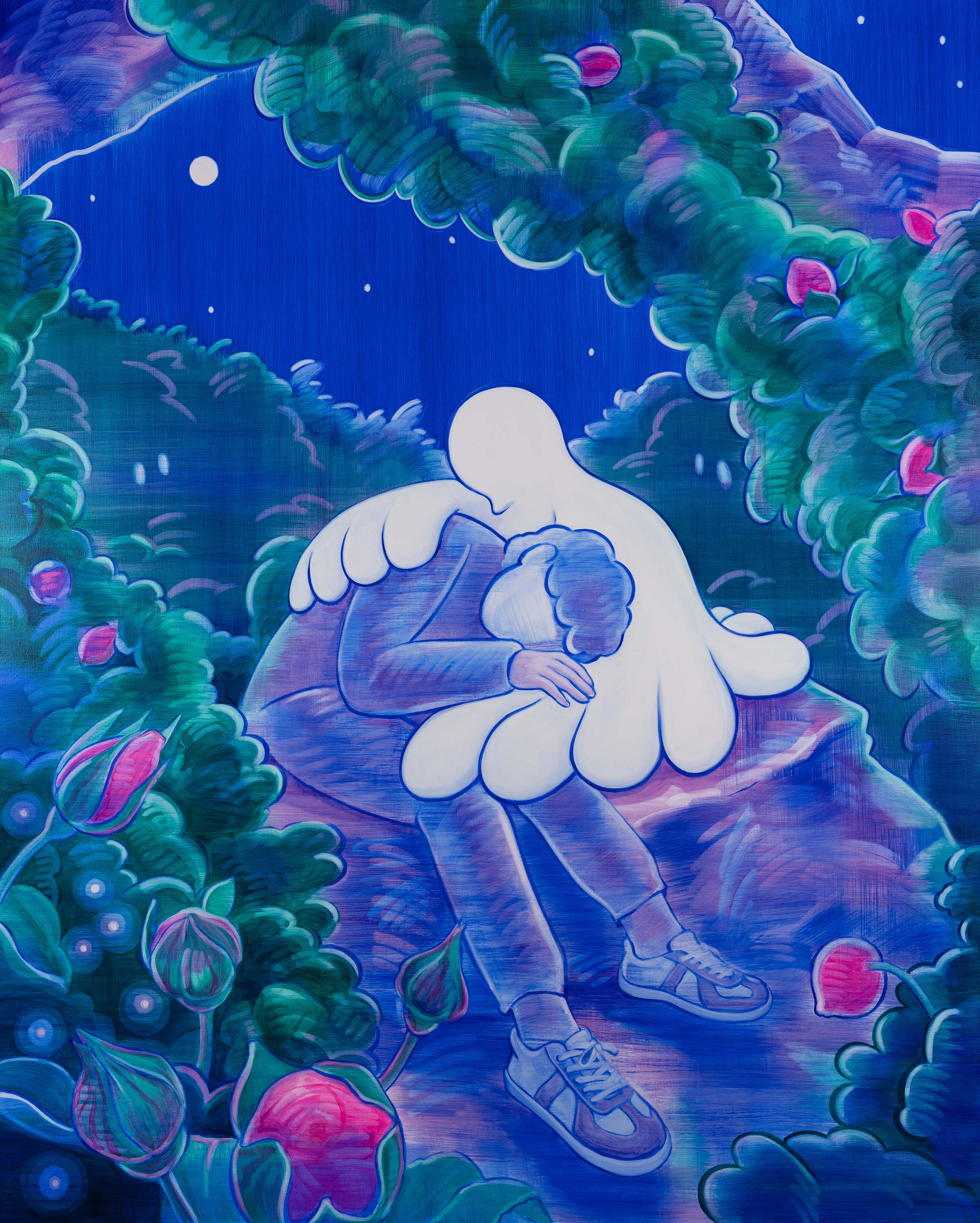
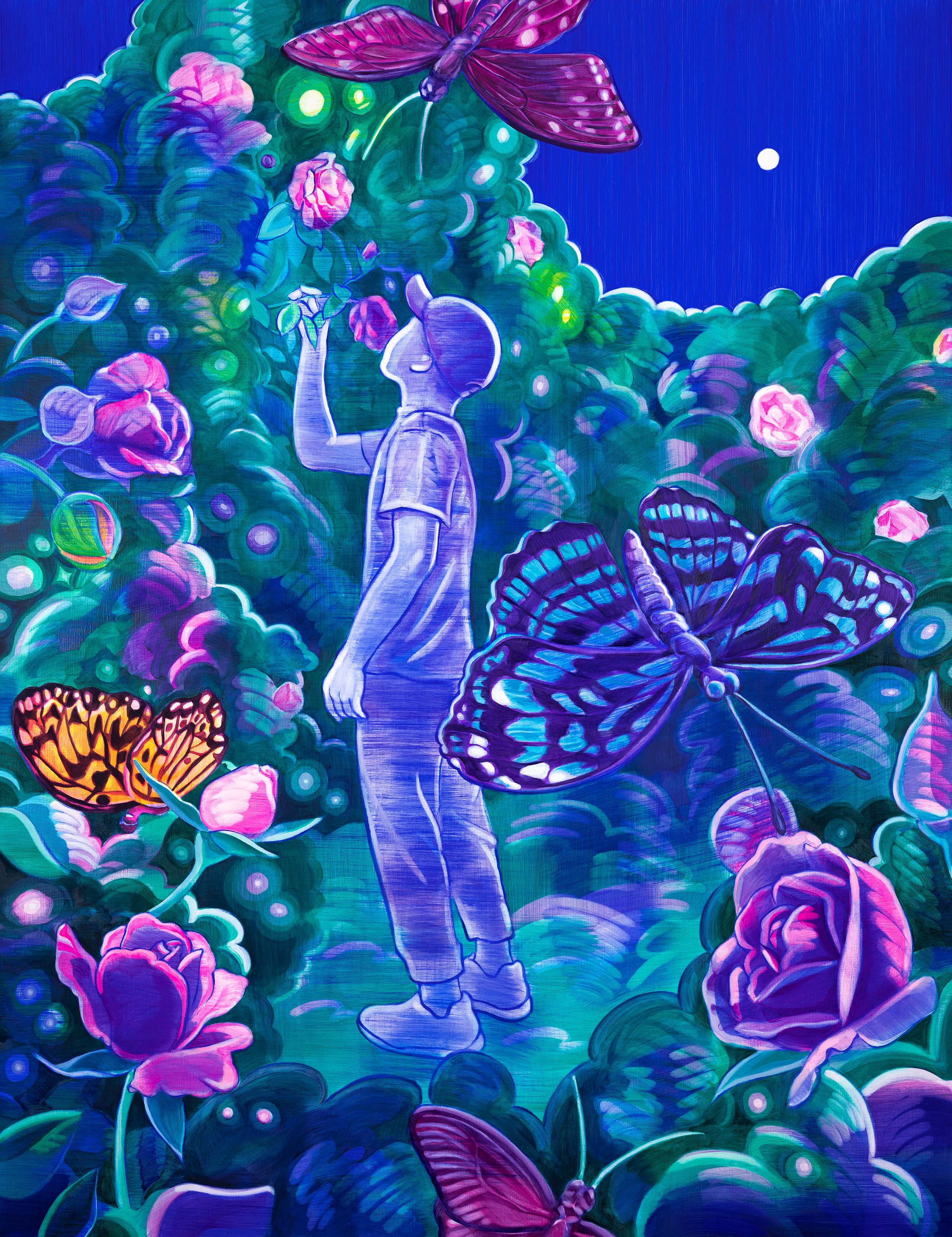
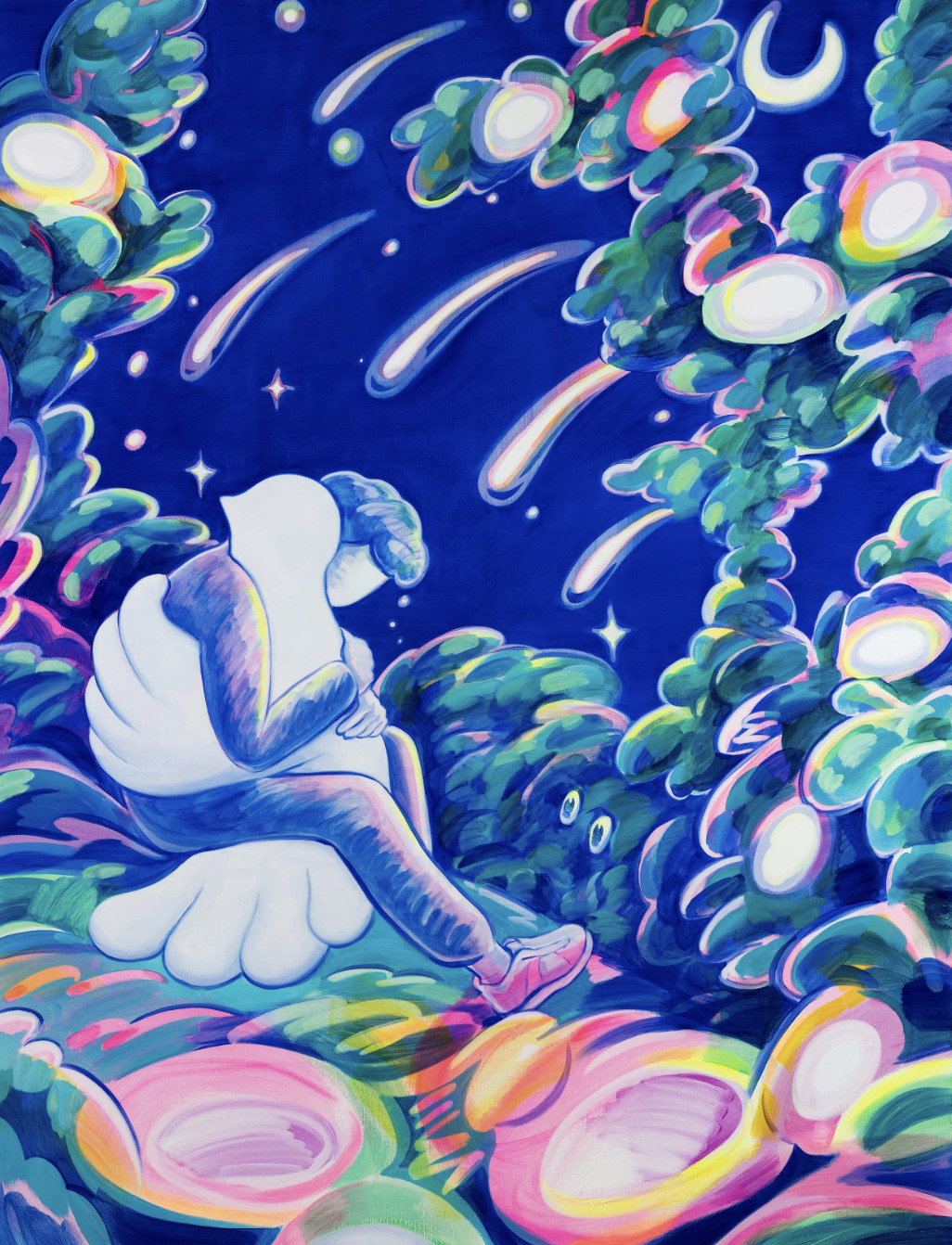
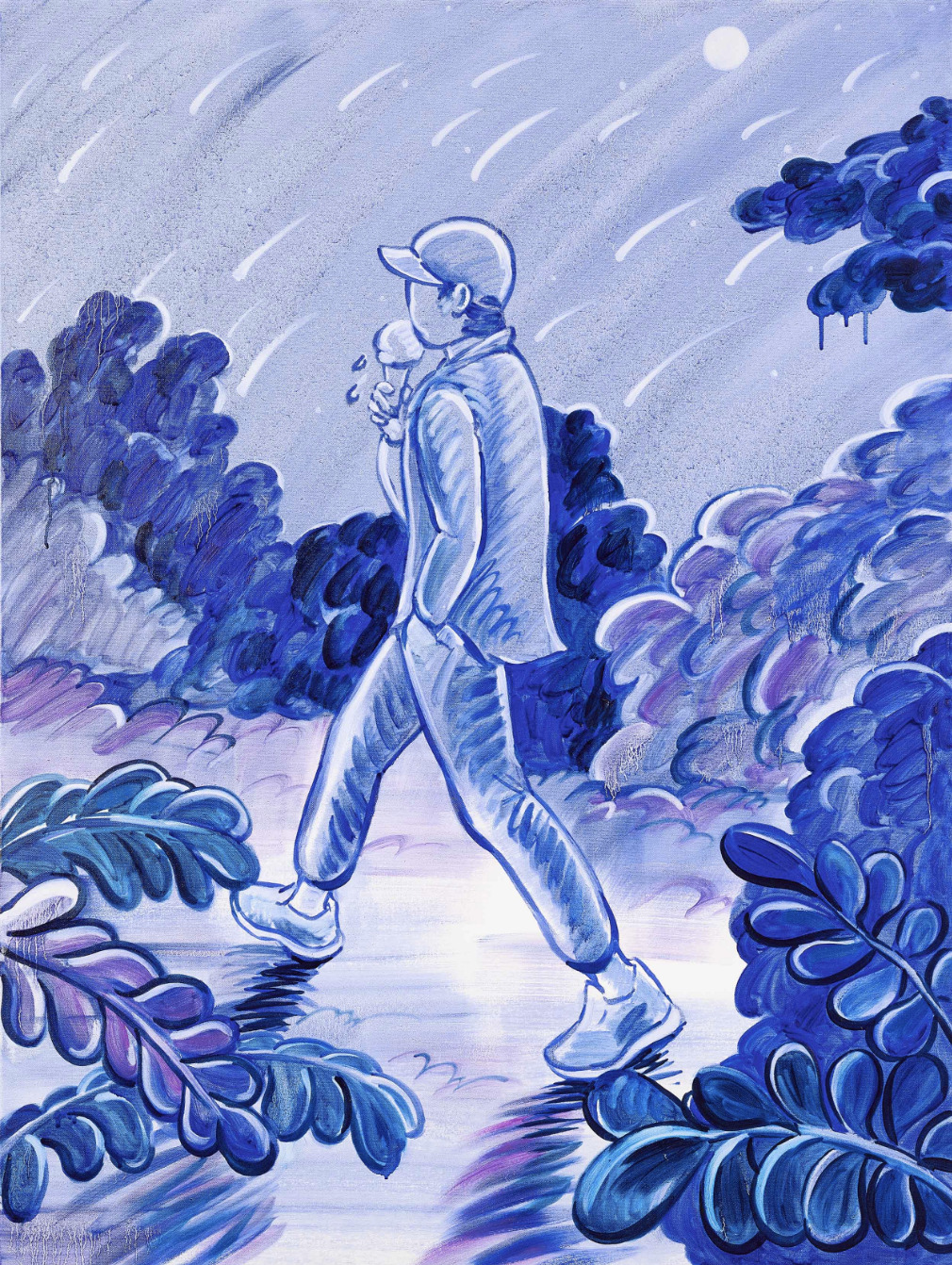
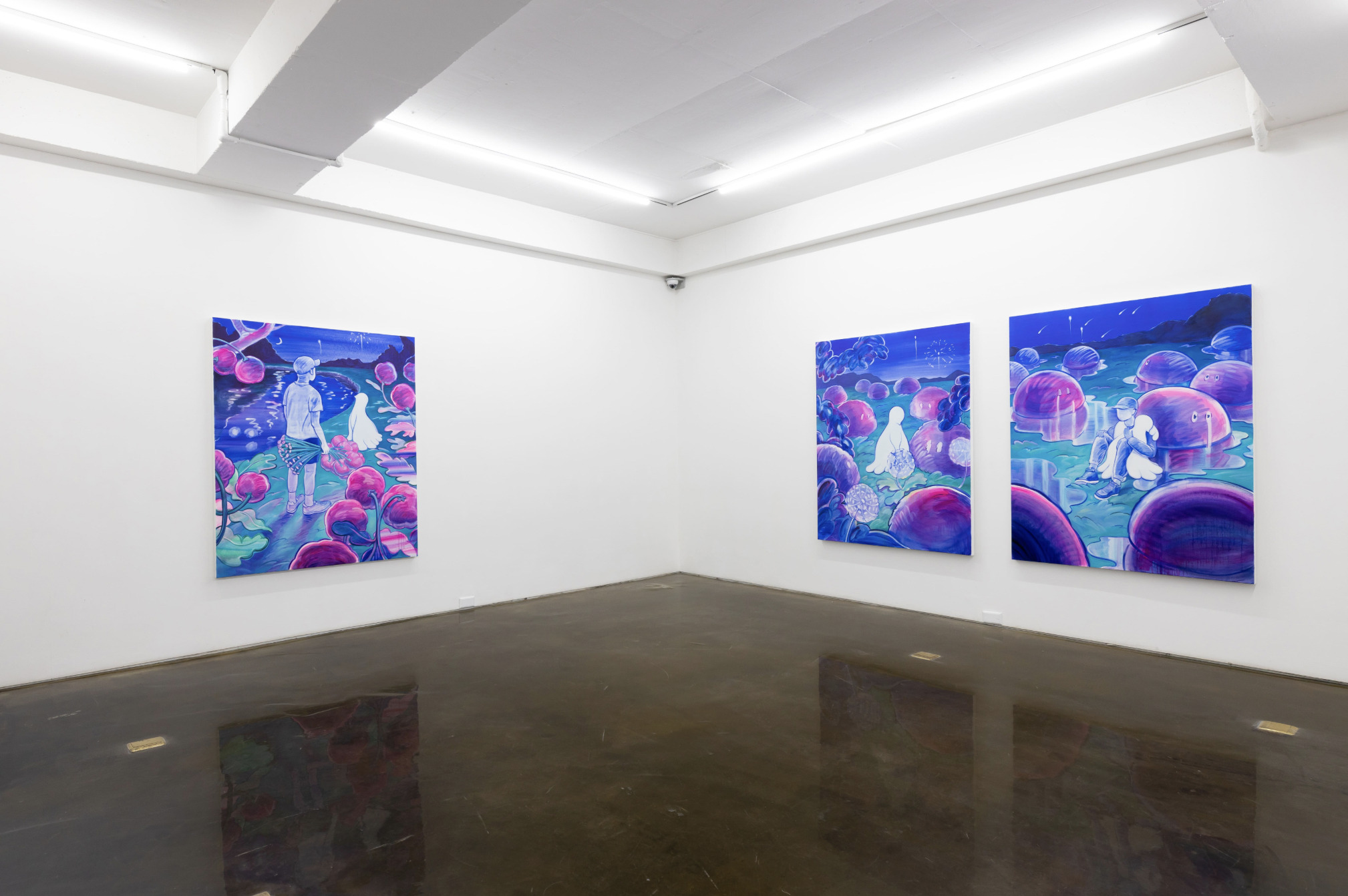
mediated through the time frame of “night.” Beginning with Night
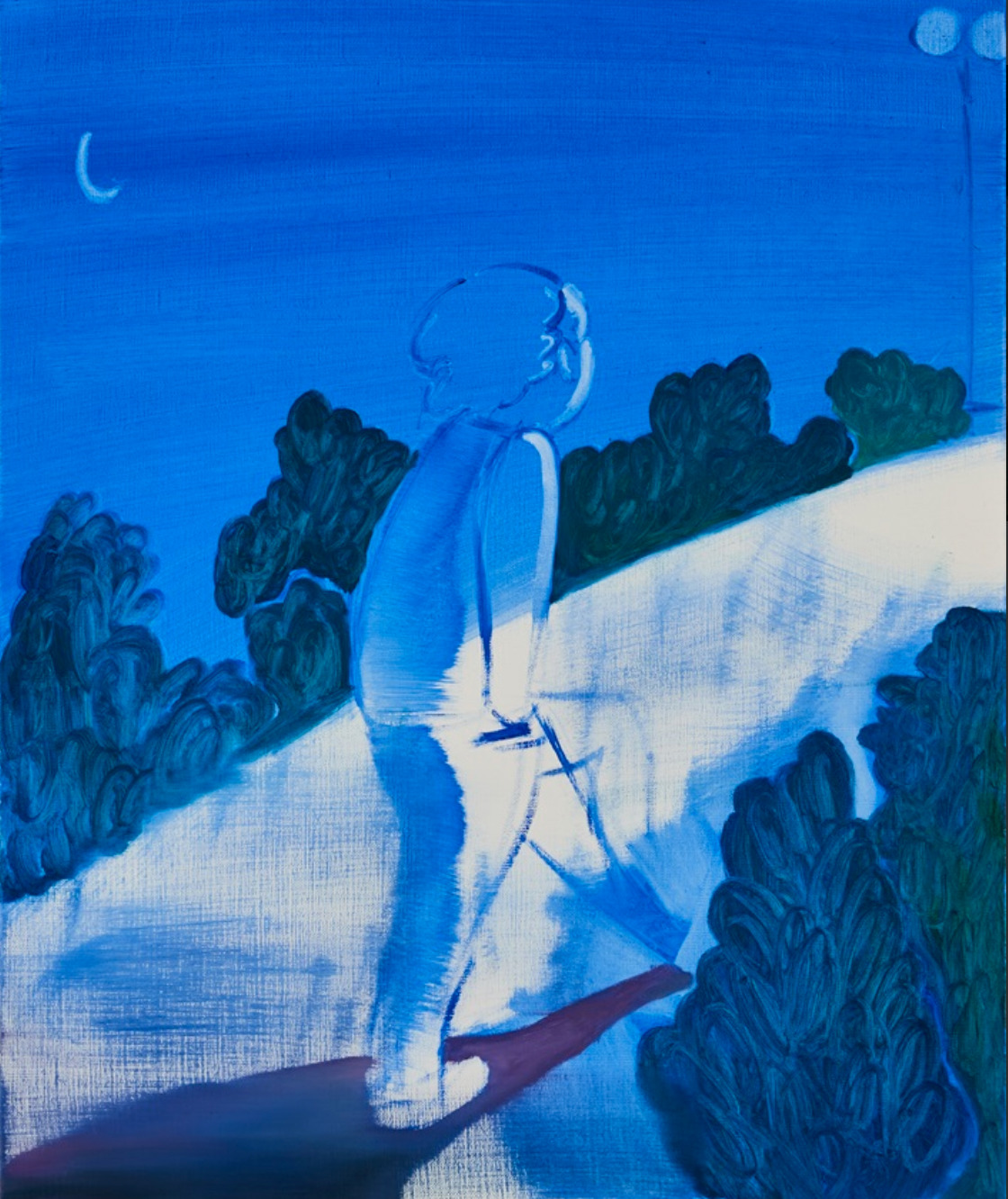
Walker(2016), the ‘Night Walker’ series centers on figures walking
alone through quiet nocturnal parks. These figures are not protagonists with
fixed narratives; rather, they embody the “gaps” that arise between society and
the individual, past and present, reality and ideal. The dual sensations of
isolation and freedom that the artist has repeatedly referenced operate
simultaneously within these night landscapes.
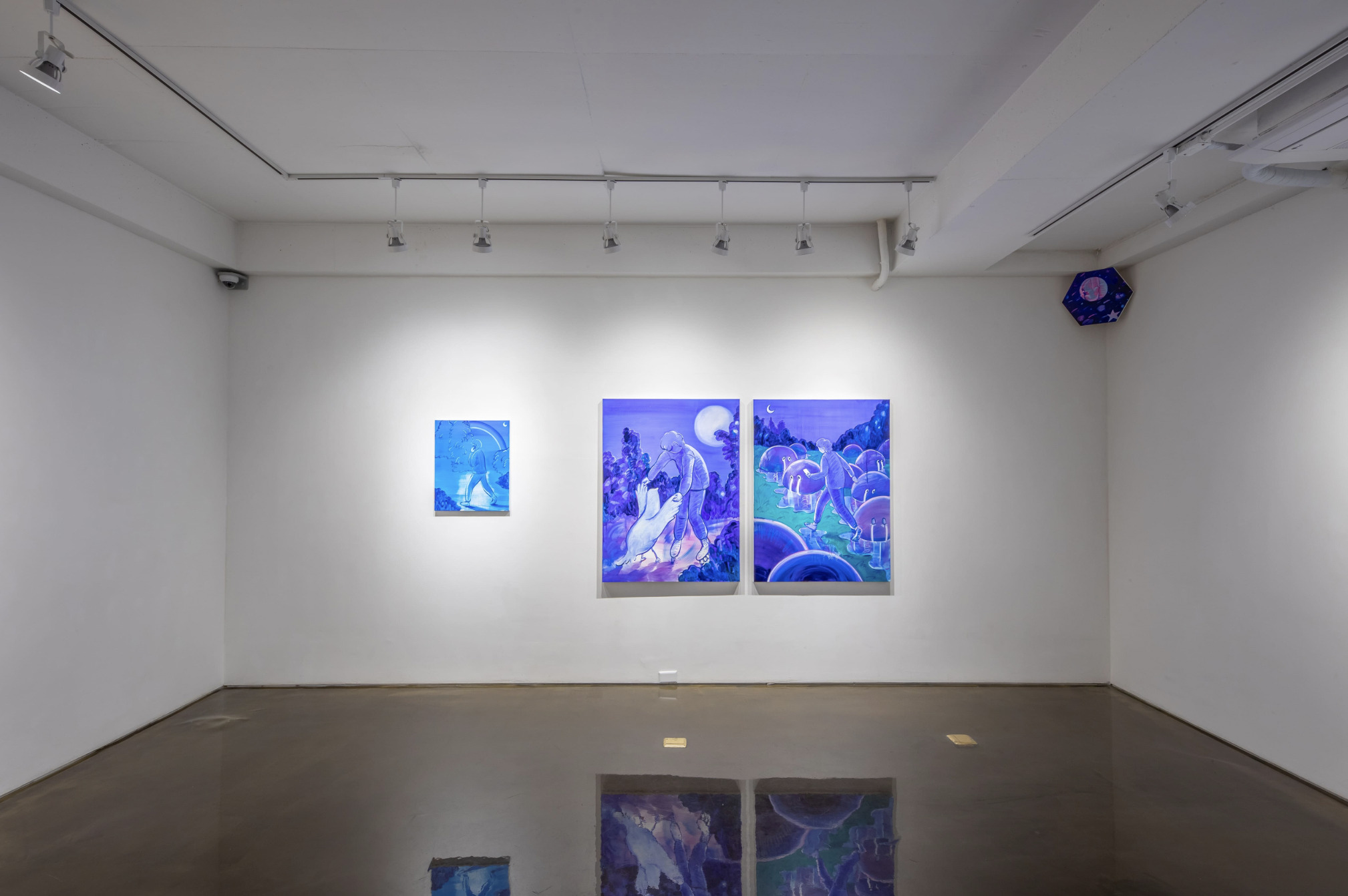
In works
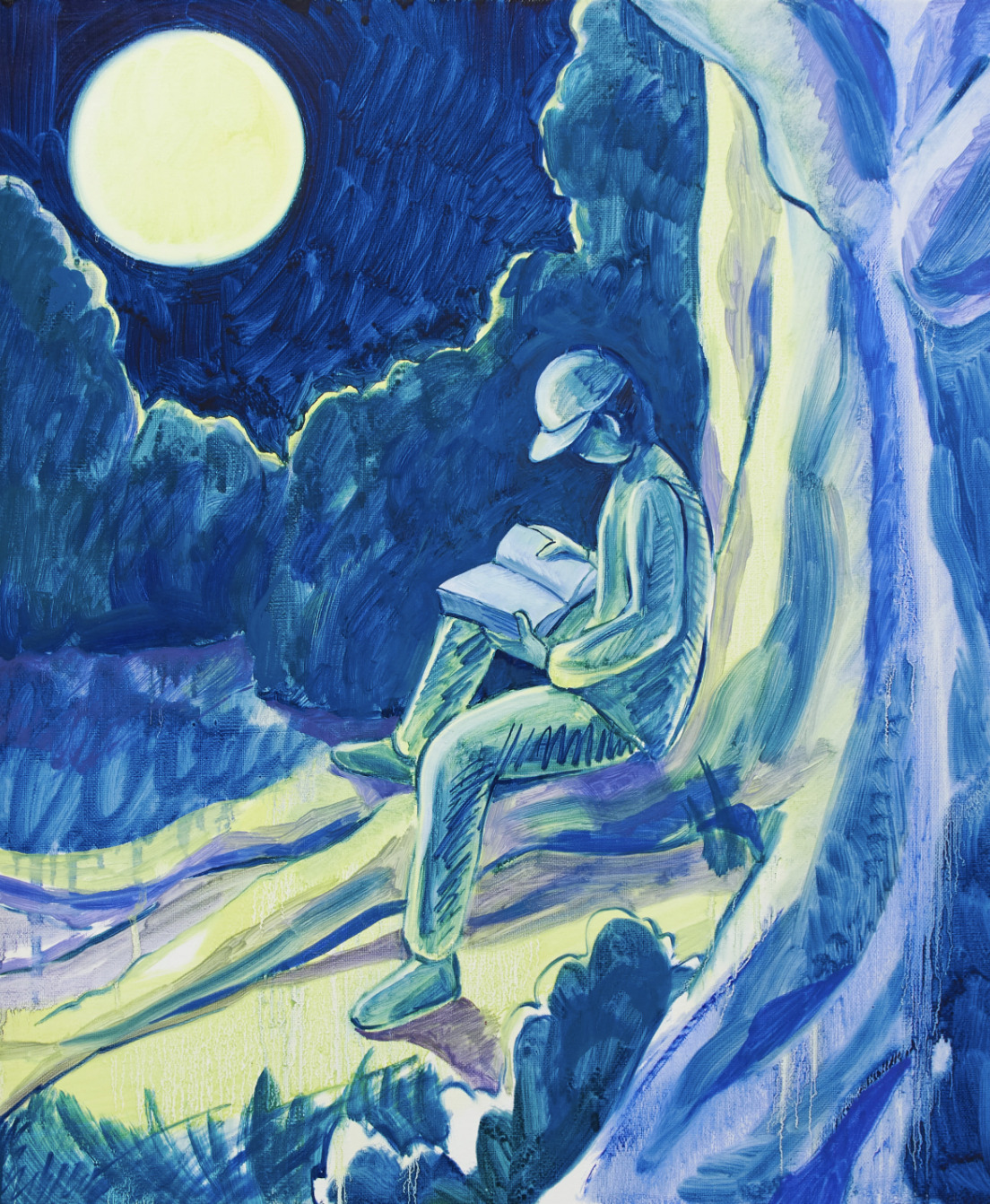
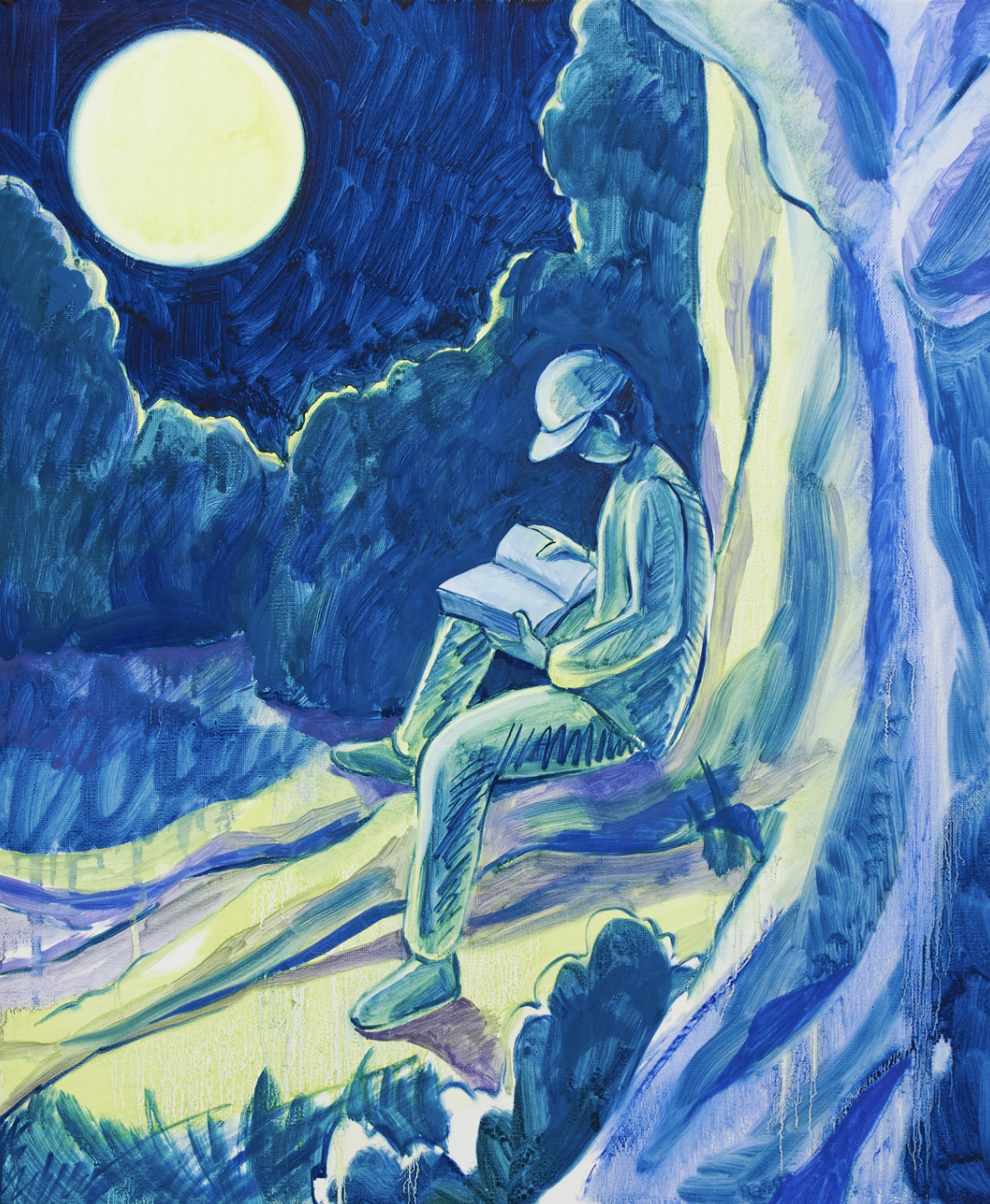
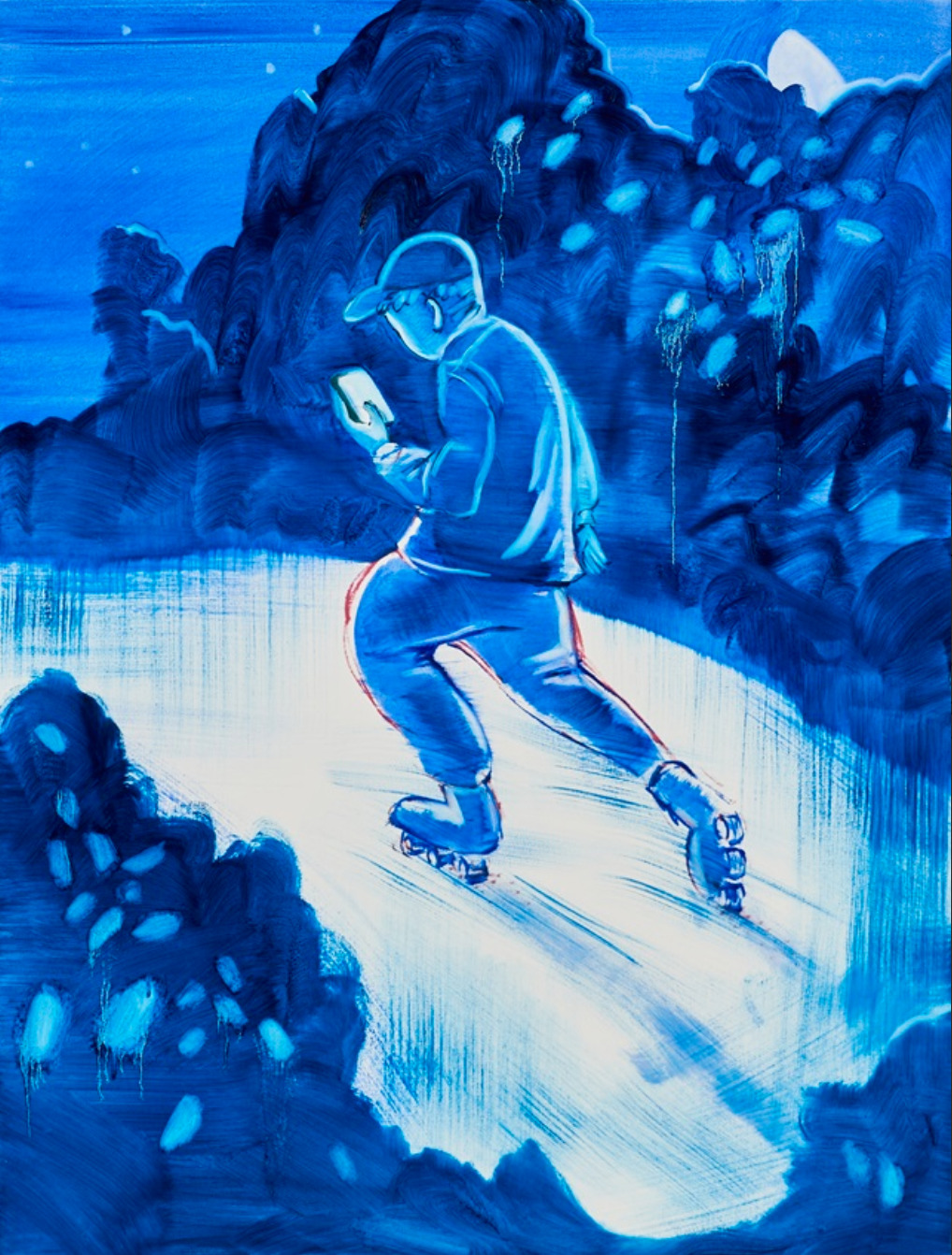
such as Night Skater(2018), Moon
Reader(2019), and Wetland Stroller(2019),
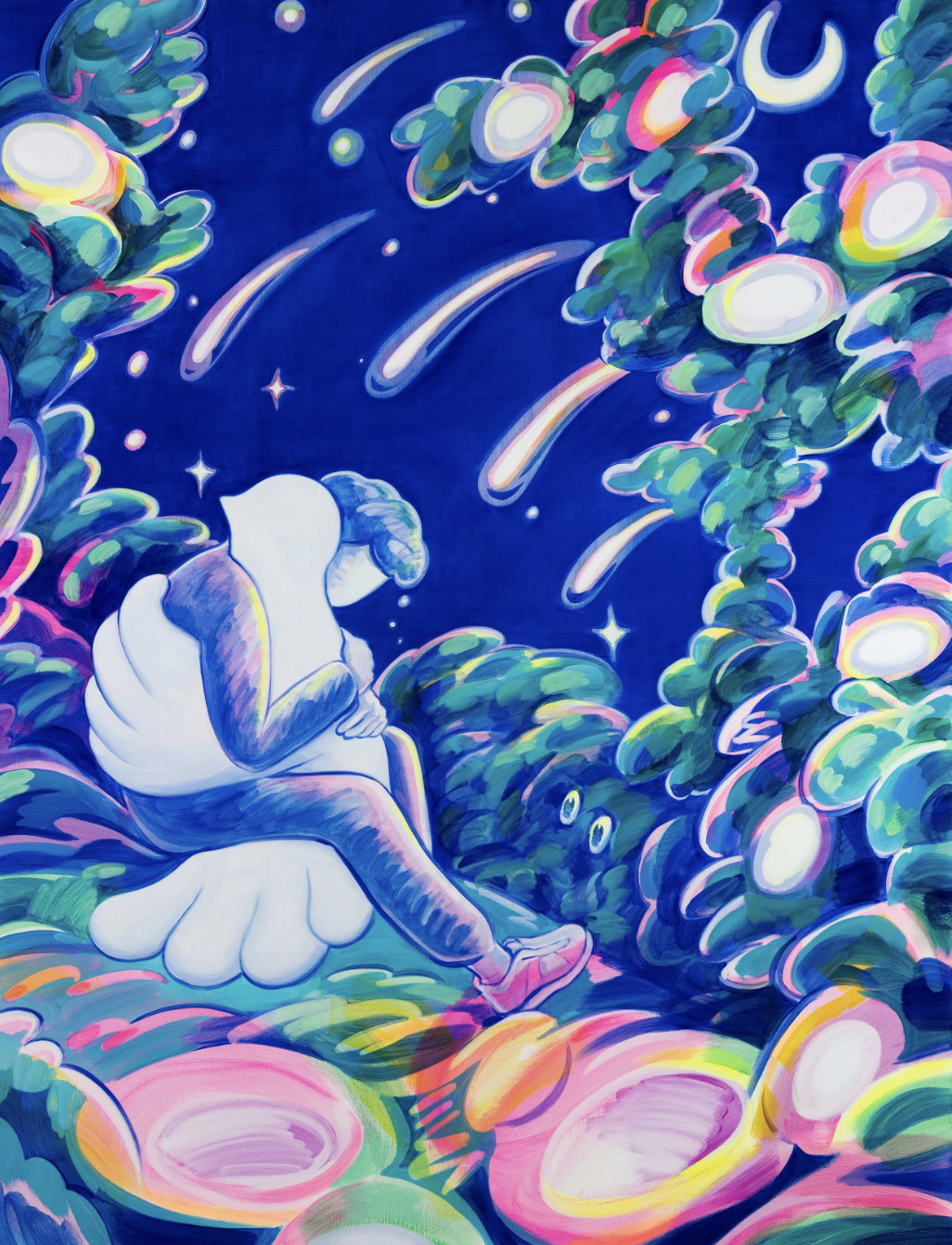
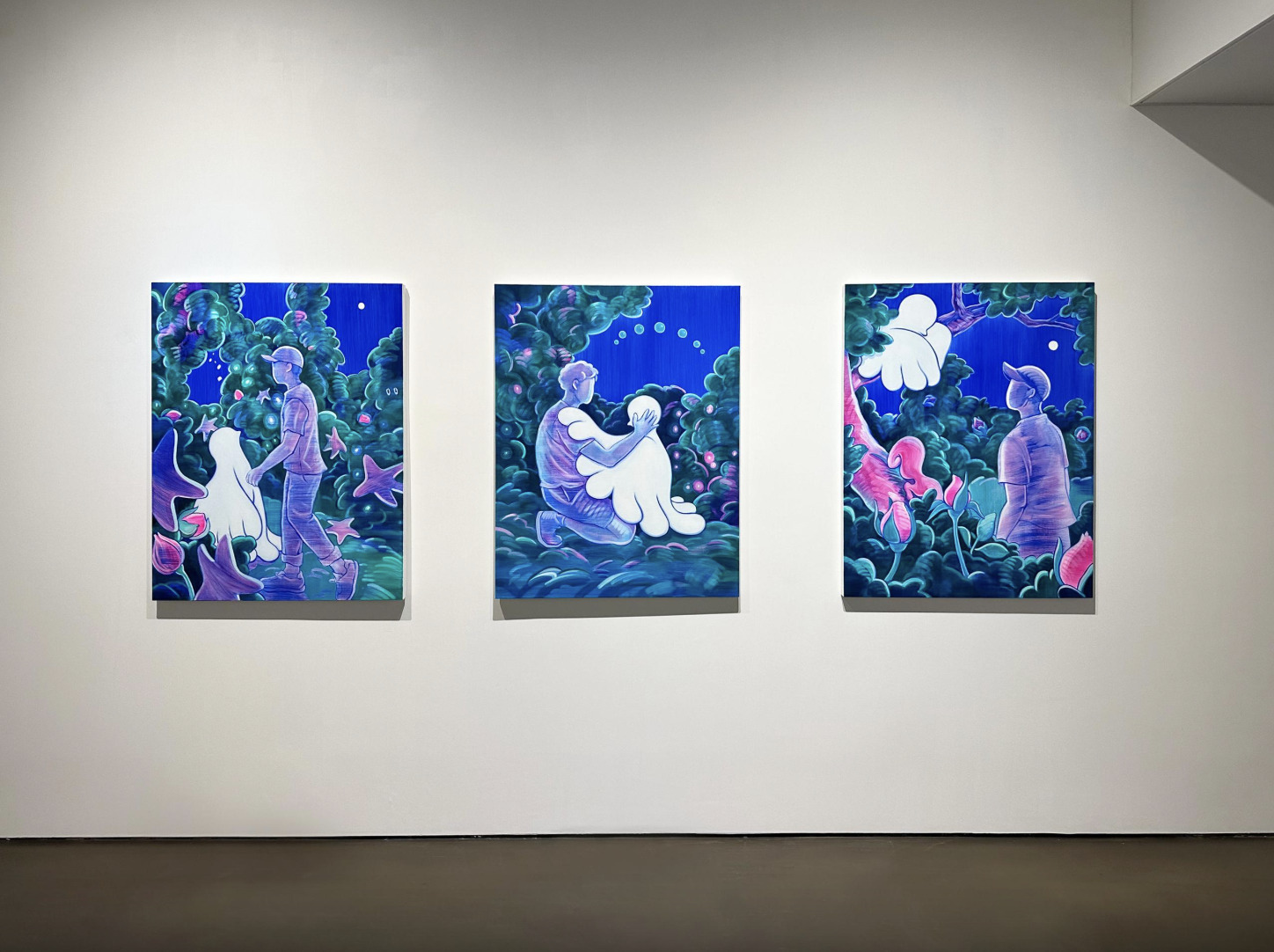
night functions not merely as a background but as a device that amplifies
perception. The “Blue Time” she experienced while living in London is
visualized through a pervasive blue tonality that envelops the canvas, blurring
the boundary between the real and the unreal. The scenes depicted appear to
belong to an actual city, yet they maintain a subtle estrangement, as though
standing slightly apart from reality.
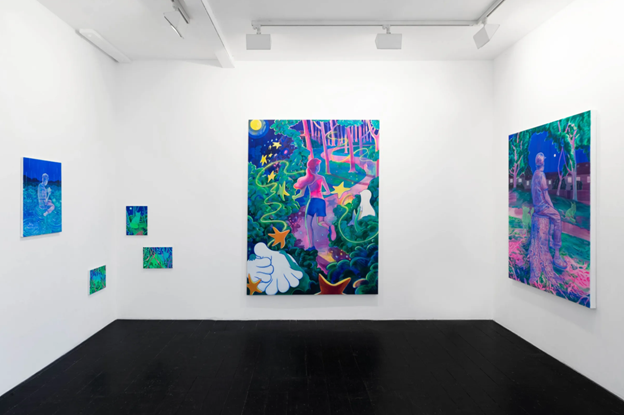
In her
solo exhibition 《The Night is
Young》(Gallery Lux, 2019), Yoo described these works as
“fragments produced when the symbolic order constructed by the individual
encounters the reality of society.” This awareness became further internalized
in 《Great to see you》(Gallery
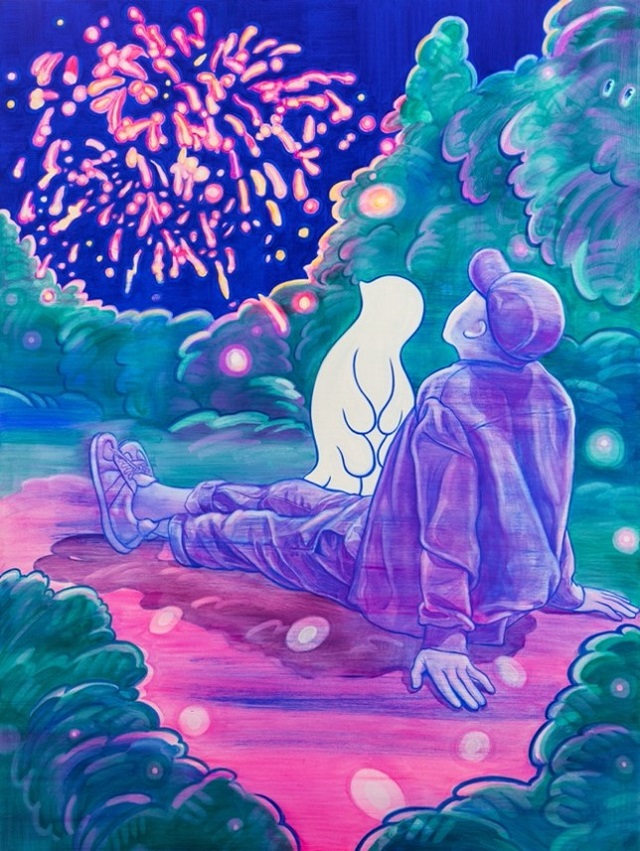
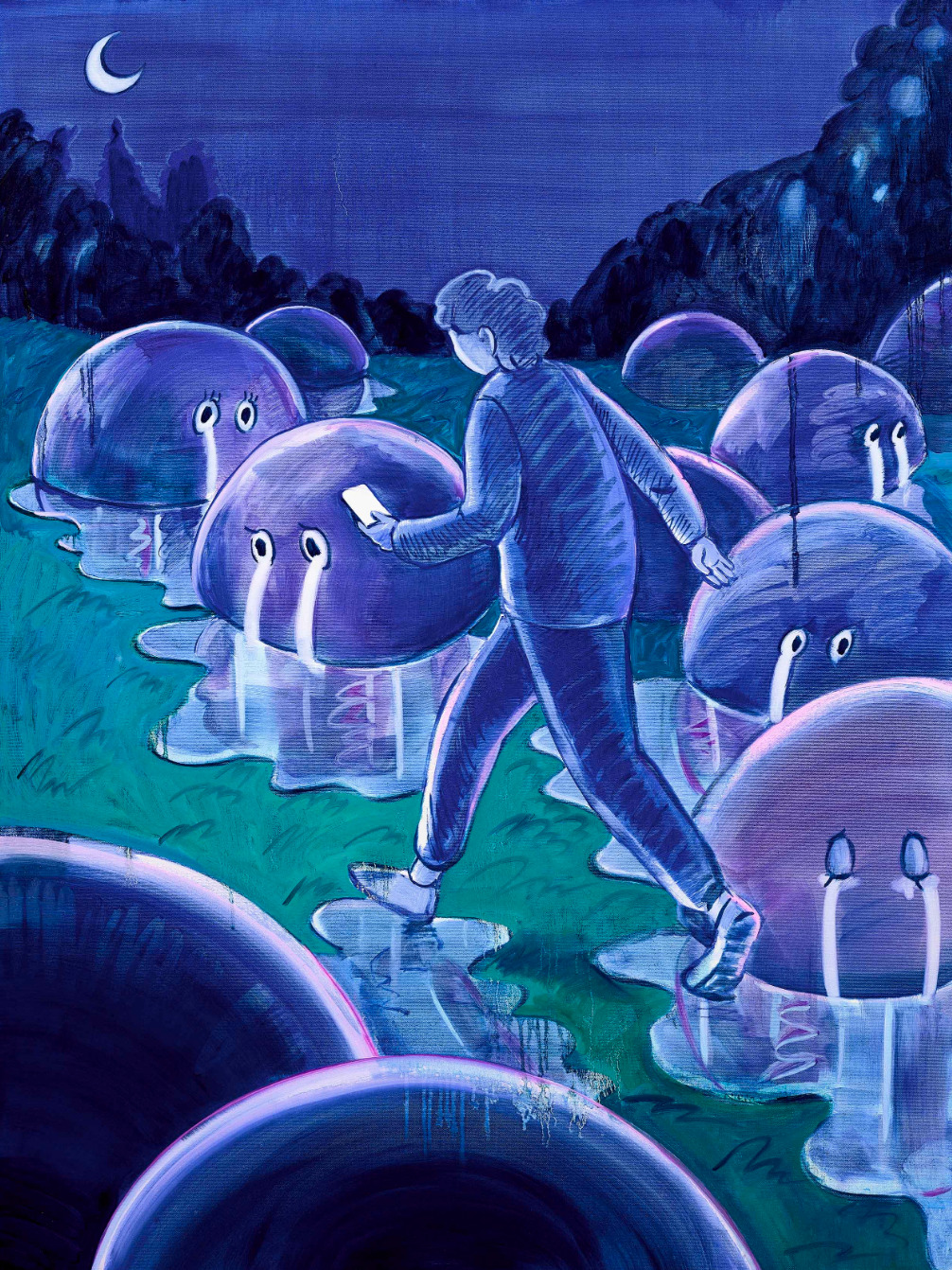
Lux, 2021), following the pandemic period. During lockdown, the outside
world—perceived only indirectly through a window—appeared flattened and
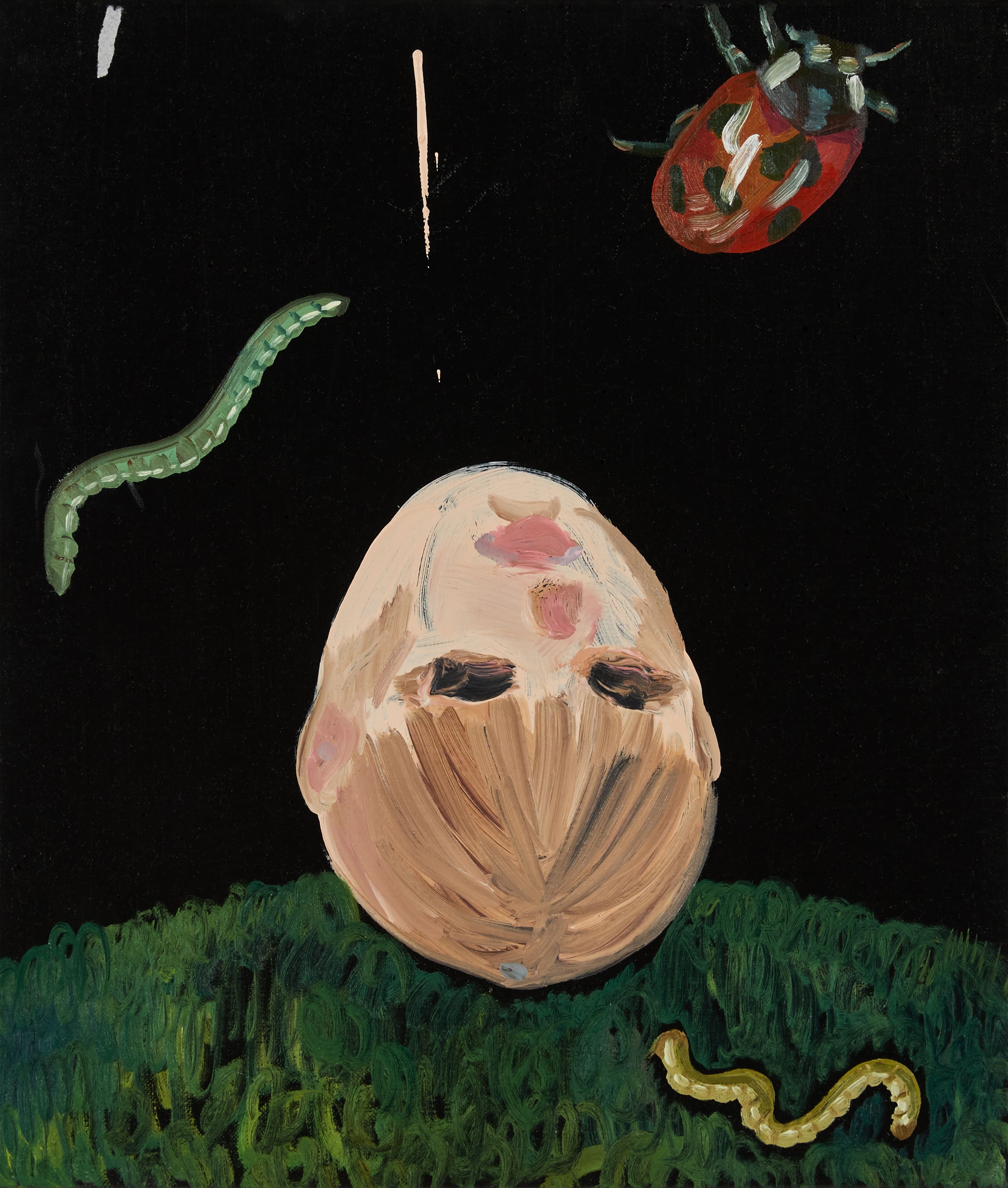
subdued, while surreal scenes and symbolic presences increasingly filled the
canvas.
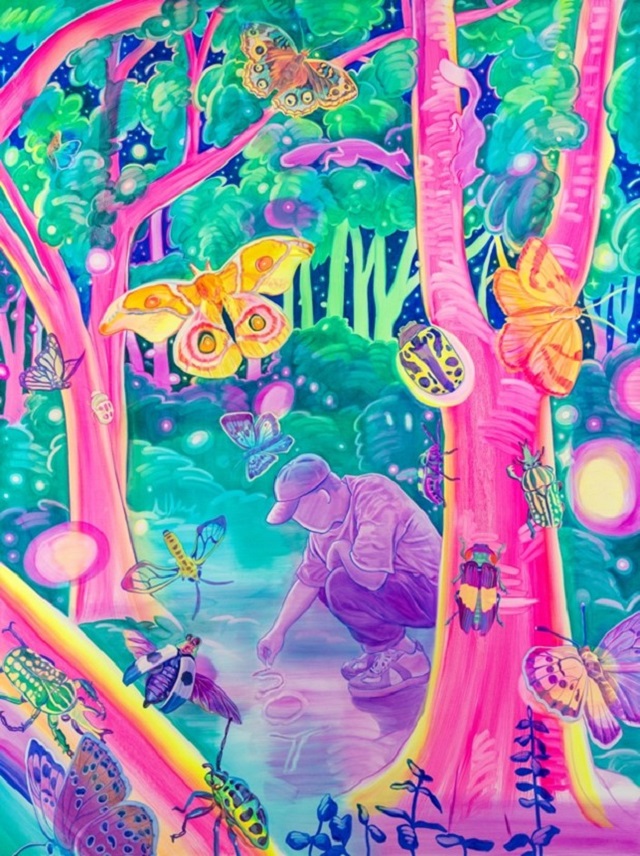
In her
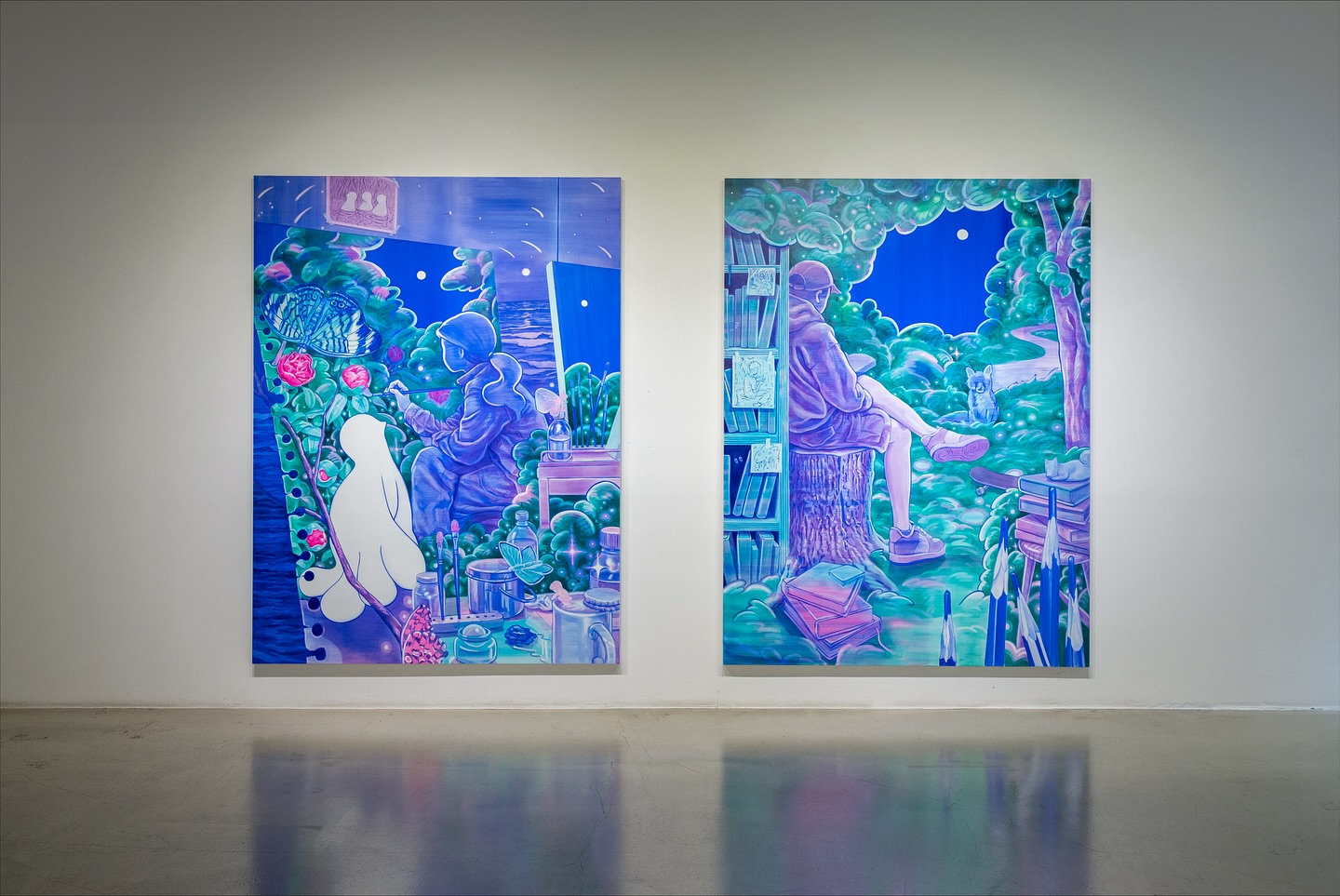
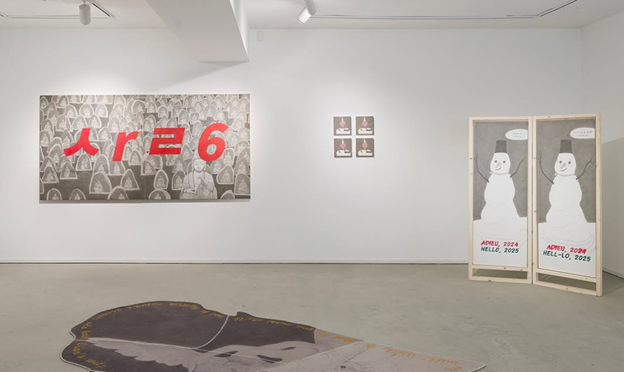
more recent solo exhibitions 《Run Hide Tell》(Art Sohyang, 2023) and 《Weeping Brushes》(Dohing Art, 2025), her focus shifts from external landscapes to the
internal space of creation. In 《Run Hide Tell》, “drawing” is metaphorically framed as running from reality, hiding
within the canvas, and returning to the world to speak. The act of painting
itself becomes a narrative structure. In 《Weeping
Brushes》, she turns to the nocturnal studio and its
tools, reconsidering the notion of “gap” not through landscape, but through the
relationship between artistic practice and its instruments.