

Frontier - K-ARTIST

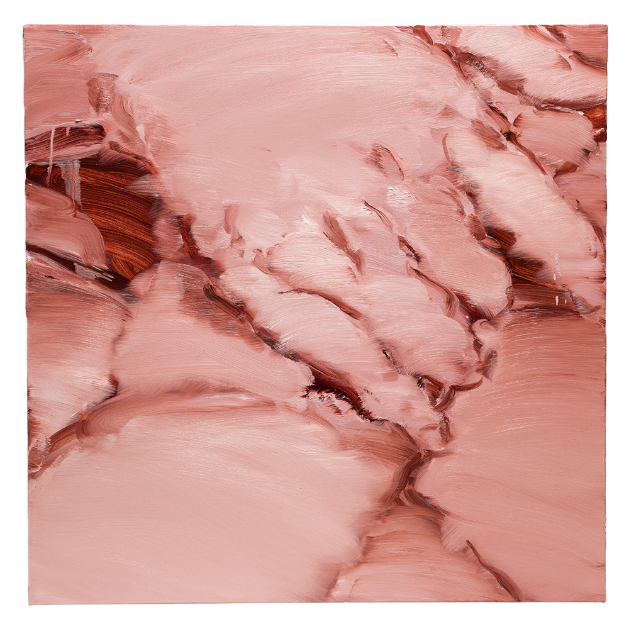
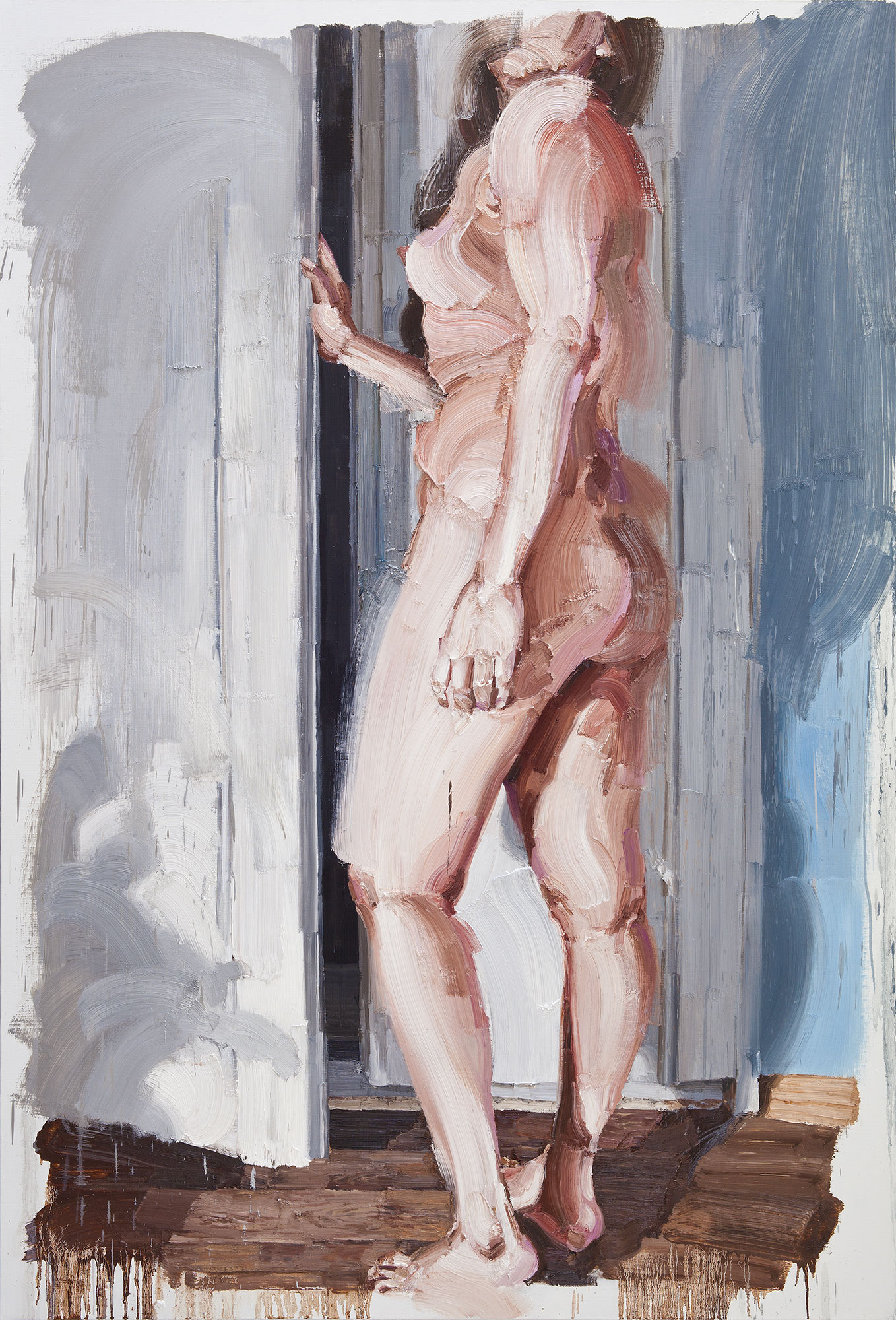
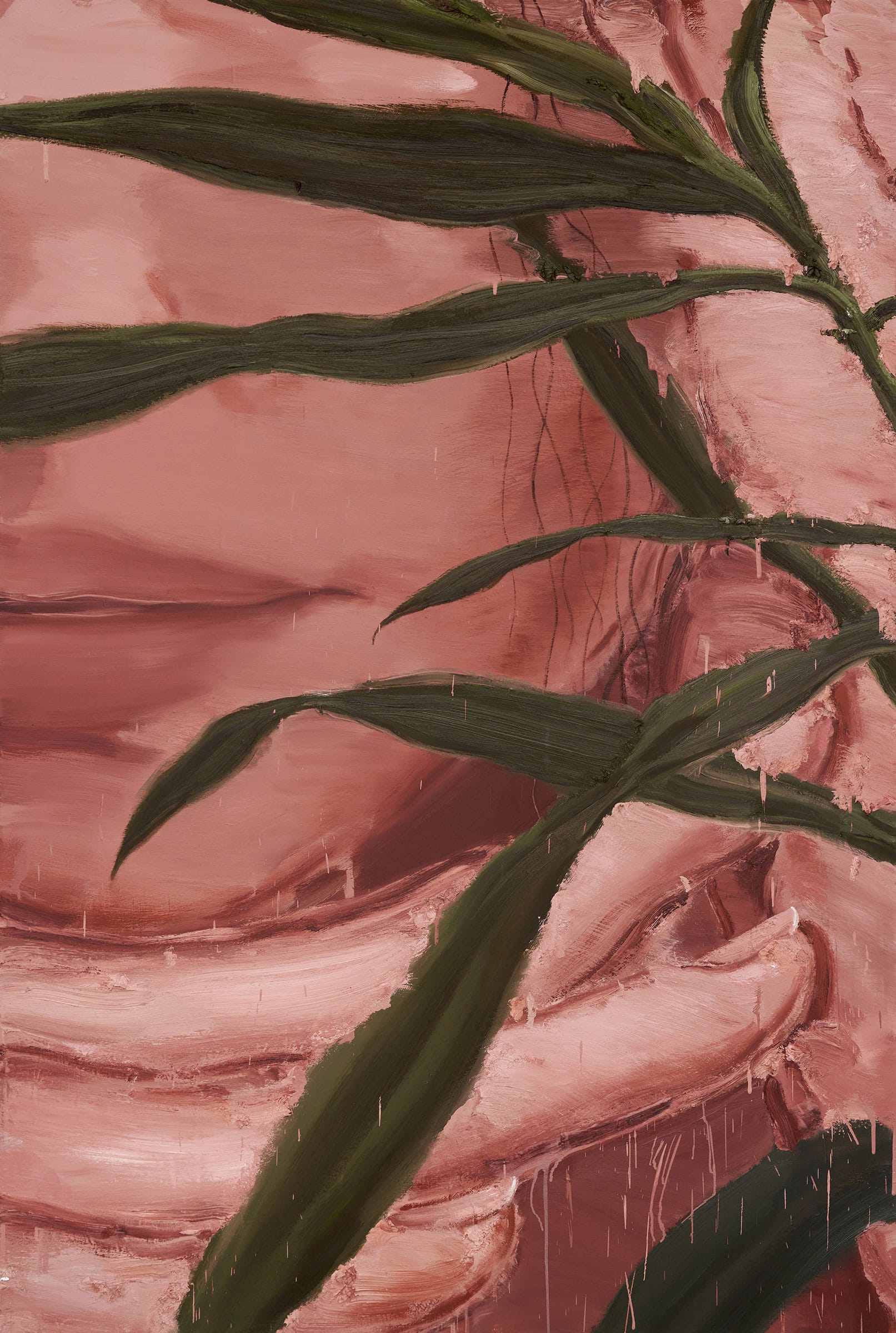
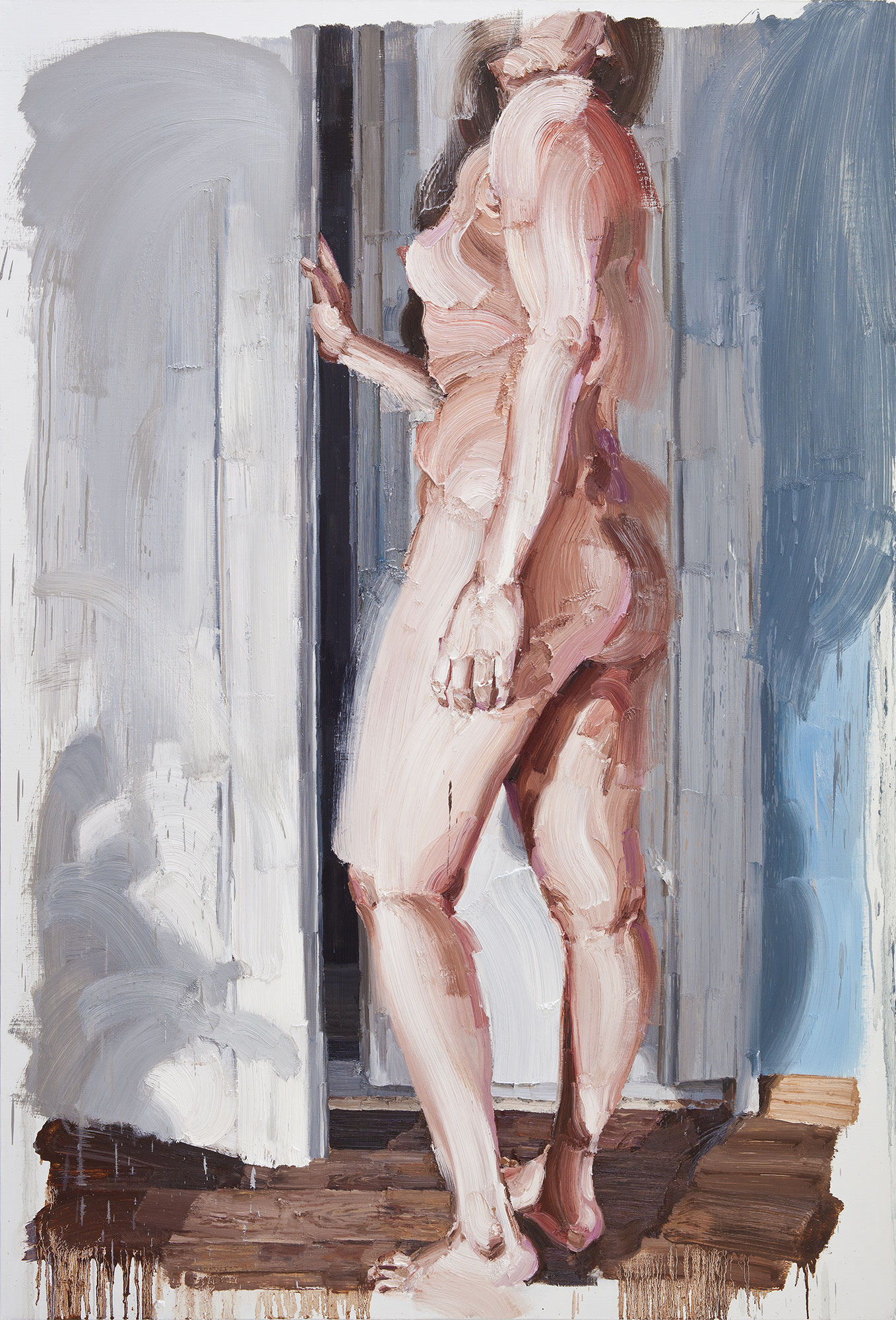
Frontier

2015
Oil on canvas
193.9 x 130.3 cm
About The Work

Chansong Kim focuses on fleeting moments when the solidity of existence blurs and becomes fluid. In particular, she has long contemplated the “body,” paying close attention to instances when her once-familiar body suddenly feels unfamiliar and is perceived as a material presence.
 
Her practice begins with the discovery of passing emotions or moments once considered insignificant, reflecting on the boundaries between the subject and what lies beyond it as they are revealed in unfamiliar instances that break from the ordinary.
 
Chansong Kim has long contemplated what constitutes the self, what surrounds it, and the boundaries in between, translating these inquiries into the language of painting. The unfamiliar yet intimate images of bodies and nature in her work invite viewers to become newly aware of their own senses, and to recognize the traces of emotion, memory, and energy that vibrate both within and beyond the boundary of the body.

Solo Exhibitions (Brief)

Kim has held solo exhibitions including 《Vein and Fever》 (Pipe Gallery, Seoul, 2025), 《Collapsing, Colliding》 (PARKSEOBO FOUNDATION, Seoul, 2025), 《Border of Skin》 (Mimesis Art Museum, Paju, 2023), and 《The Blue Hour》 (Pipe Gallery, Seoul, 2022).

Group Exhibitions (Brief)

Kim has also participated in numerous group exhibitions, including 《Small Paintings – My Bijou》 (Kimreeaa Gallery, Seoul, 2025), 《My World in Your World》 (New Spring Project, Seoul, 2024), 《Discovery : 12 Contemporary Artists from Korea》 (Rockefeller Center, New York, USA, 2023), 《The Body of Non-body》 (Brownie Project, Shanghai, China, 2022), 《Hardener》 (Eulji Art Center, Seoul, 2022), and 《Boundary》 (Artside Gallery, Seoul, 2021).

Awards (Selected)

Chansong Kim was selected as Young Artist of the Year (2020) at the GAMMA Young Artist Competition, Korea. She also received the Drawing Award (2016) from the Chang Ucchin Museum of Art, Yangju, Korea, and the Tomorrow’s Artist Prize (2011) from the Kyumjae-Jeongseon Art Museum, Seoul, Korea.

Residencies (Selected)

Kim has been an artist-in-residence at Artist Residency TEMI (Daejeon, 2021) and the Leeungno Residency in Paris (Vaux-sur-Seine, France, 2018).

Collections (Selected)

Kim’s works are included in the collections of Mimesis Art Museum, PARKSEOBO FOUNDATION, and the Cheongju Museum of Art.

Works of Art

The Moment When Boundaries Collapse

Originality & Identity

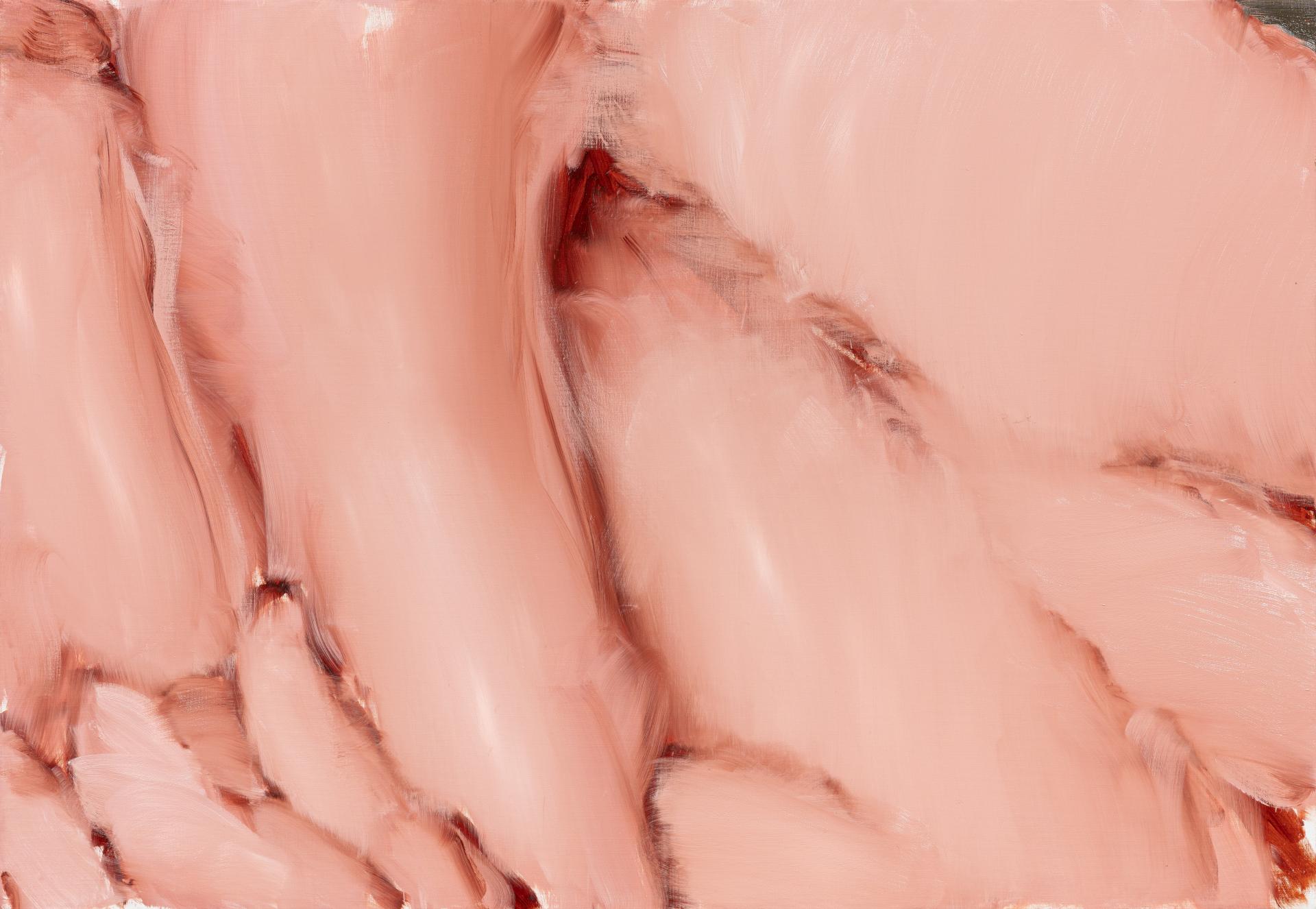
Chansong Kim’s practice can be understood as a sustained inquiry into “the moment when boundaries collapse.” Its point of departure lies in an experience of the body becoming othered. In the 'Uncanny Gap'(2014) series, which includes Canvas in Gray(2014) and Frontier(2015), she translated into painting the faceless image of her own body that she had encountered by chance during a photographic process. In the instant when the body she believed to be most familiar appeared as a strange object, it ceased to function as the center of the subject and instead became “an object that unsettles the subject.” Here, the boundary is not a line dividing inside and outside, but an unstable site where self and other intermingle.
 
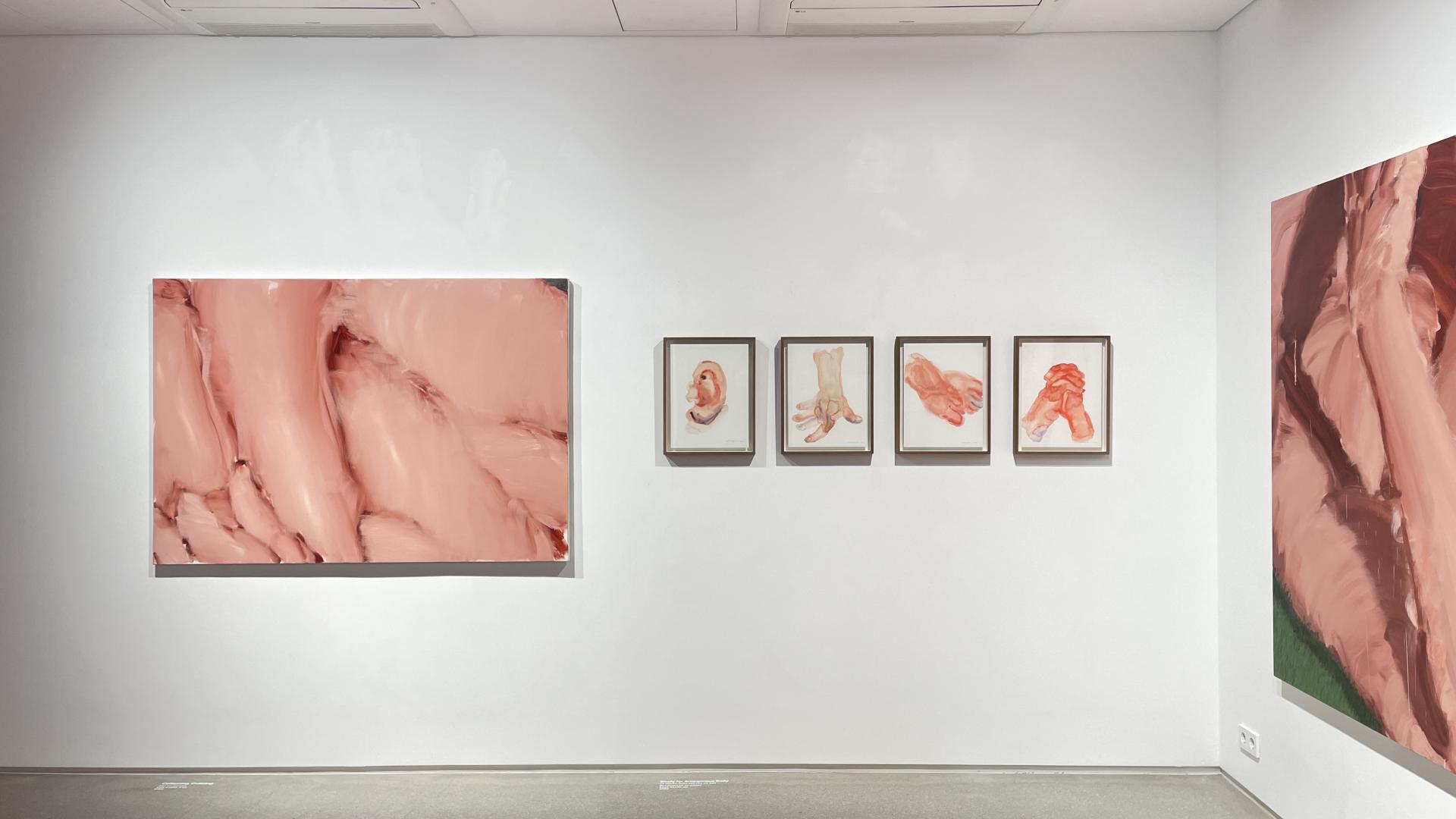
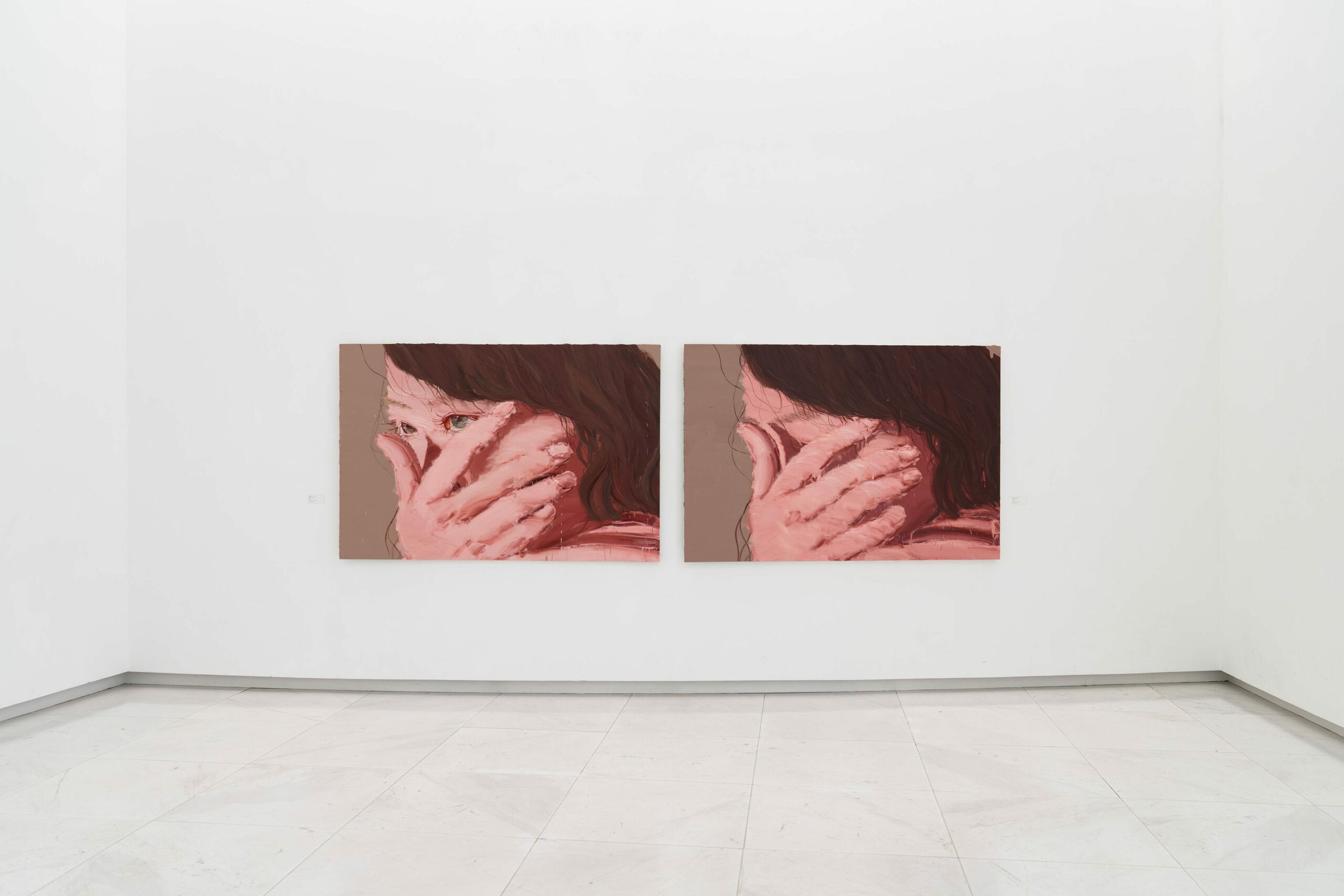
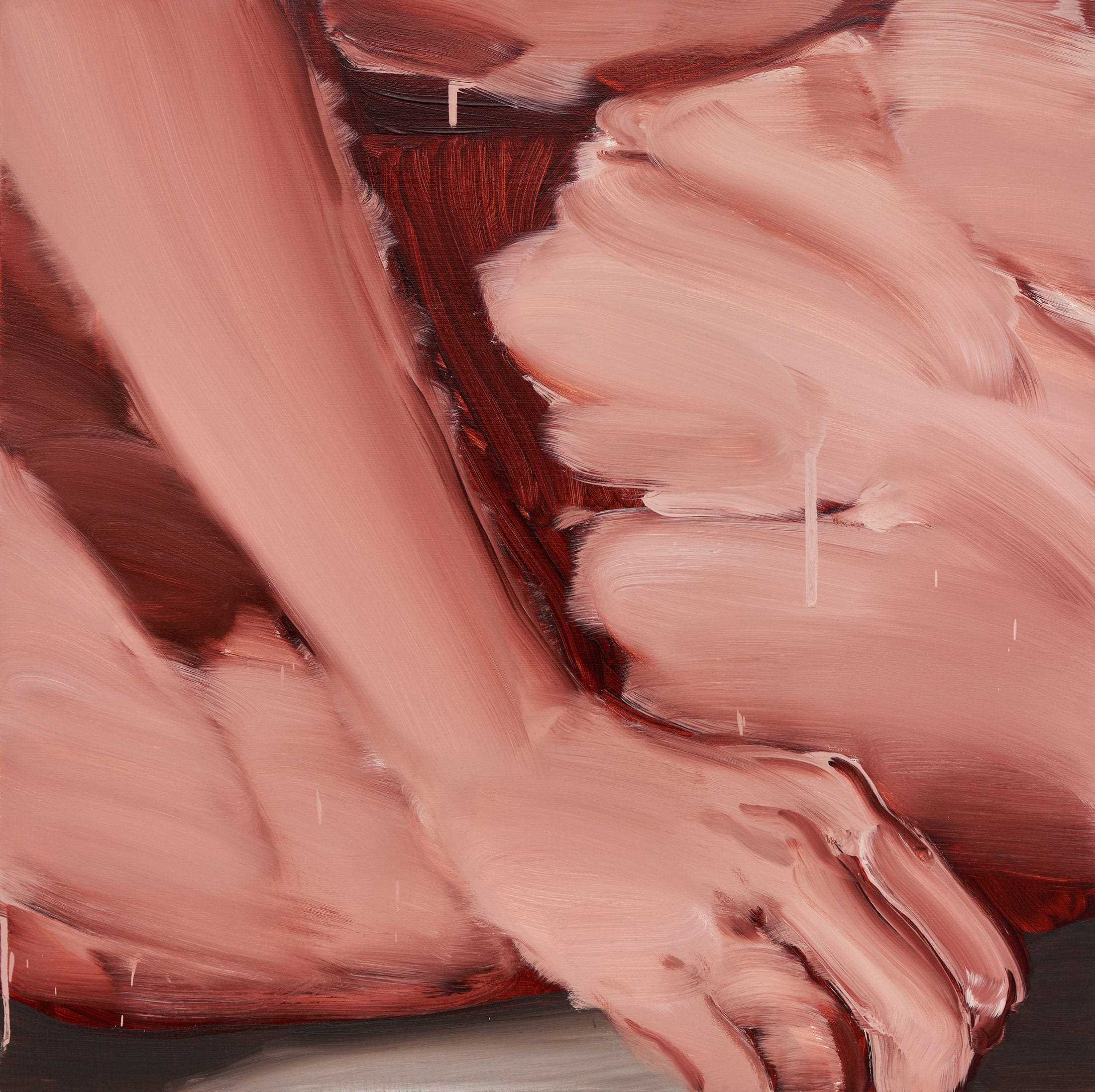
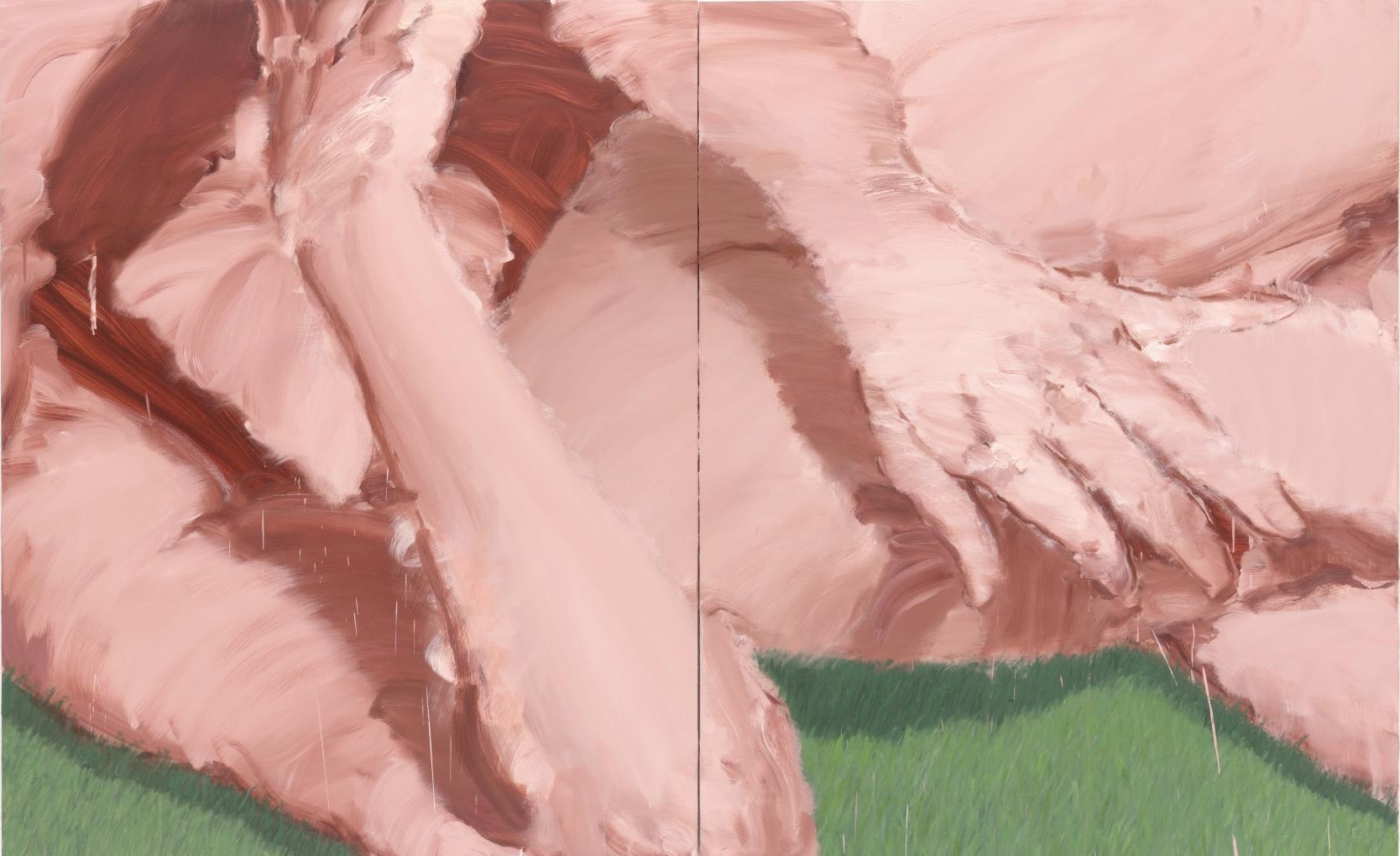
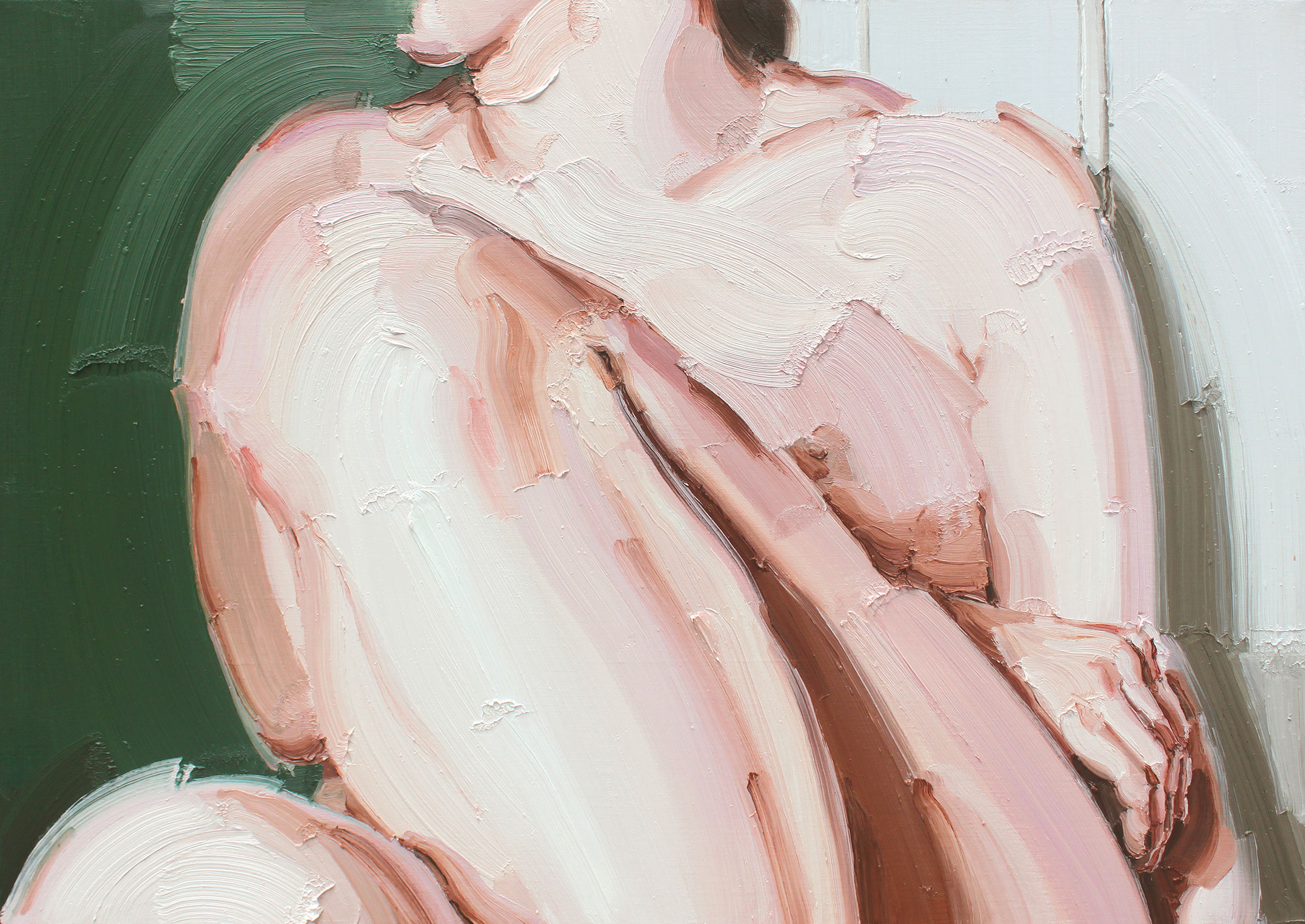
Beginning with Island of Loss(2016), the body becomes further fragmented and enlarged. Specific parts—hands, feet, and upper torso—fill the canvas, intensifying anonymity. The body no longer operates as a marker of individual identity but transforms into a mass that reveals materiality and sensation. In this process, the relationship between subject and object does not remain fixed but shifts fluidly. Through this ambiguity, the artist exposes how precariously the notion of the “self” is constructed.
 
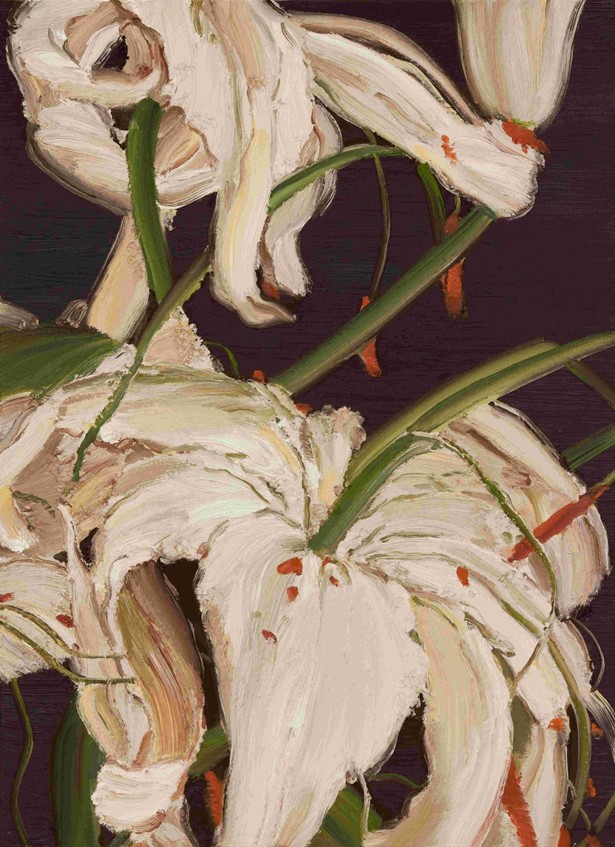
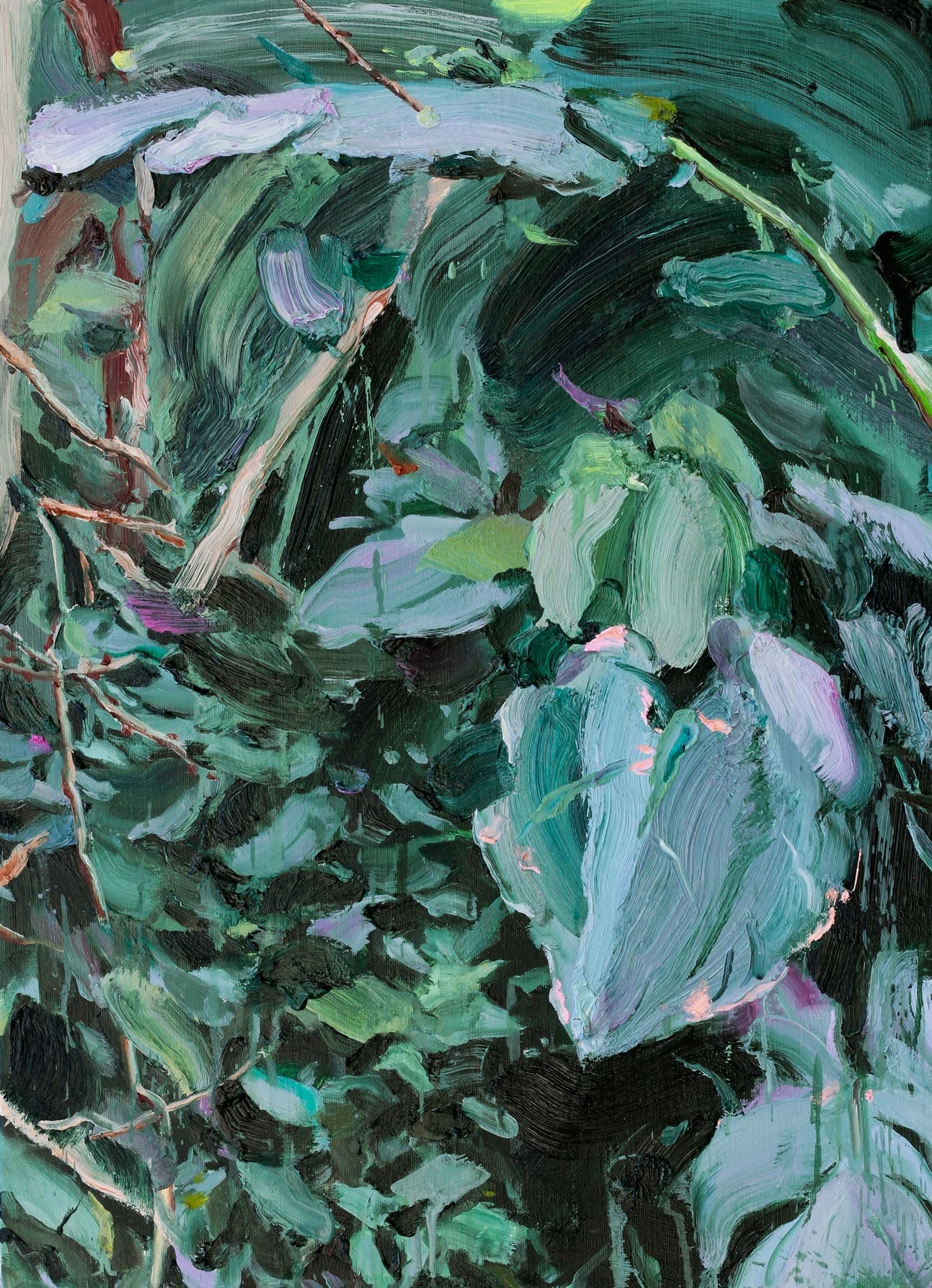
This line of inquiry extends beyond the body in the 'Garden of Mistrust'(2018) series. Initiated during her stay in Paris, the series addresses scenes in which non-native plants collide and intermingle with existing ecosystems. The process through which different origins confront one another within a single space and form new orders structurally parallels the internal collisions of sensation within the body. Boundary here is not a fixed line but a relational field in constant reconfiguration.
 
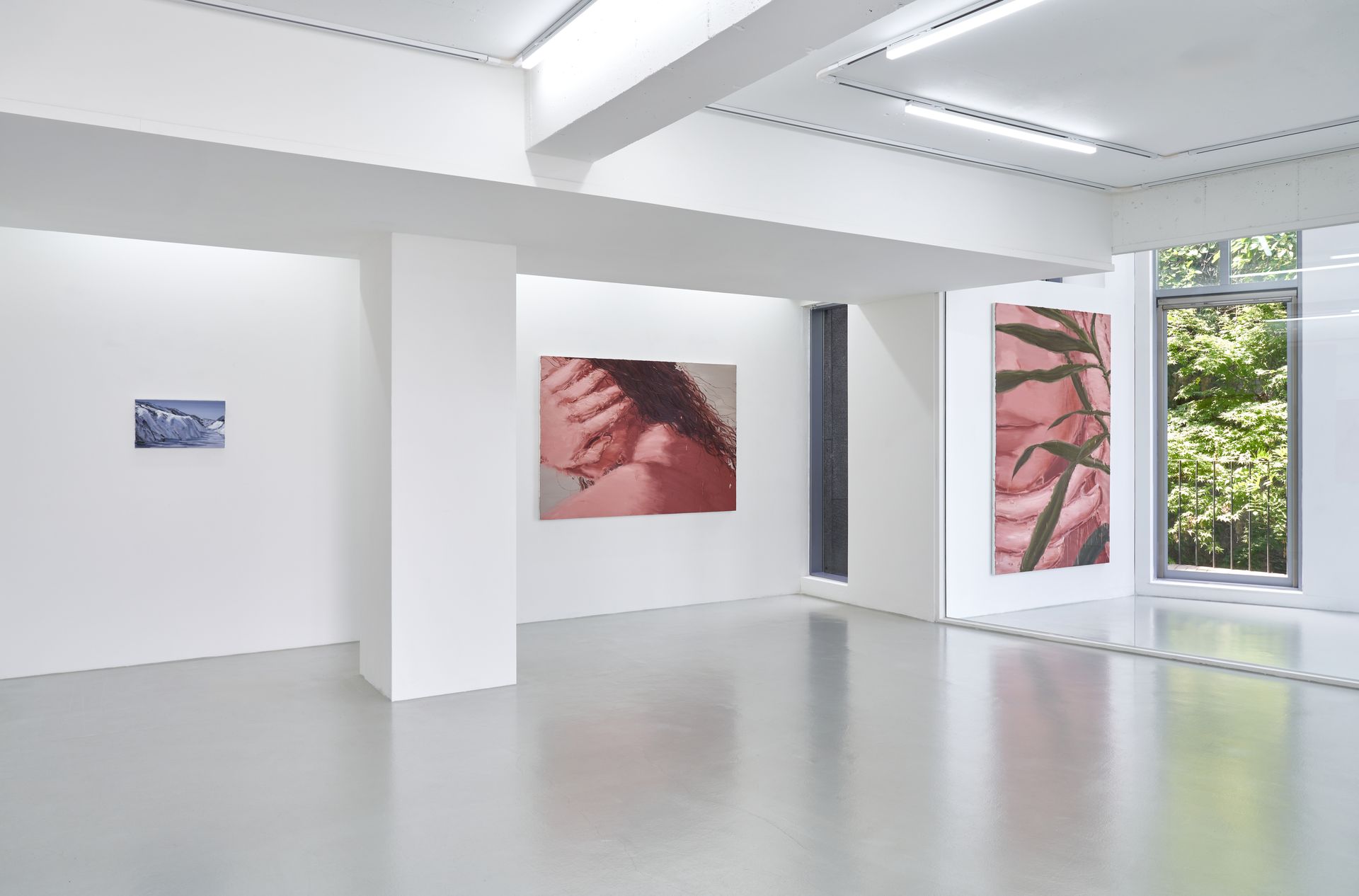
In more recent works—including Skin and Green Shadow(2023), 《Collapsing, Colliding》(PARKSEOBO FOUNDATION, 2025), and 《Vein and Fever》(Pipe Gallery, 2025)—Kim shifts her focus from the body as a whole to the surface of “skin.” Skin is presented as a membrane where interior and exterior meet, and as a site where traces of time and sensation accumulate. Boundary is thus redefined not as a point of rupture, but as a fluid contact zone through which sensation moves.

Style & Contents

Although Kim’s painting originates in photography, it does not aim at representation. In the 'Uncanny Gap' series, the repetitive act of taking hundreds of photographs transforms the body into an object. As it is translated into painting, the body becomes distorted and severed, reaching a state in which it is no longer identifiable as anyone’s body. The canvas becomes not a record of a frozen moment, but a site that contains the very process of perceptual destabilization.
 
In 'Garden of Mistrust,' the flow of paint and dynamic brushwork visualize the collision of boundaries. Broken, entangled, and layered vegetal forms articulate tensions where different orders meet. Color functions less as a description of nature and more as a trace of impact. The mixing and spreading of paint suggests the temporalities of intervention, adaptation, and transformation.
 
In 《Border of Skin》(Mimesis Art Museum, 2023), the canvas surface is equated with skin. Thick layers of oil paint construct a tactile epidermis, while variations in the speed and direction of the brush record the movement of sensation. Elements such as air brushing against skin, raindrops, or sunlight remain not as literal depictions but as tactile traces. Painting approaches the condition of accumulated sensation rather than image.
 
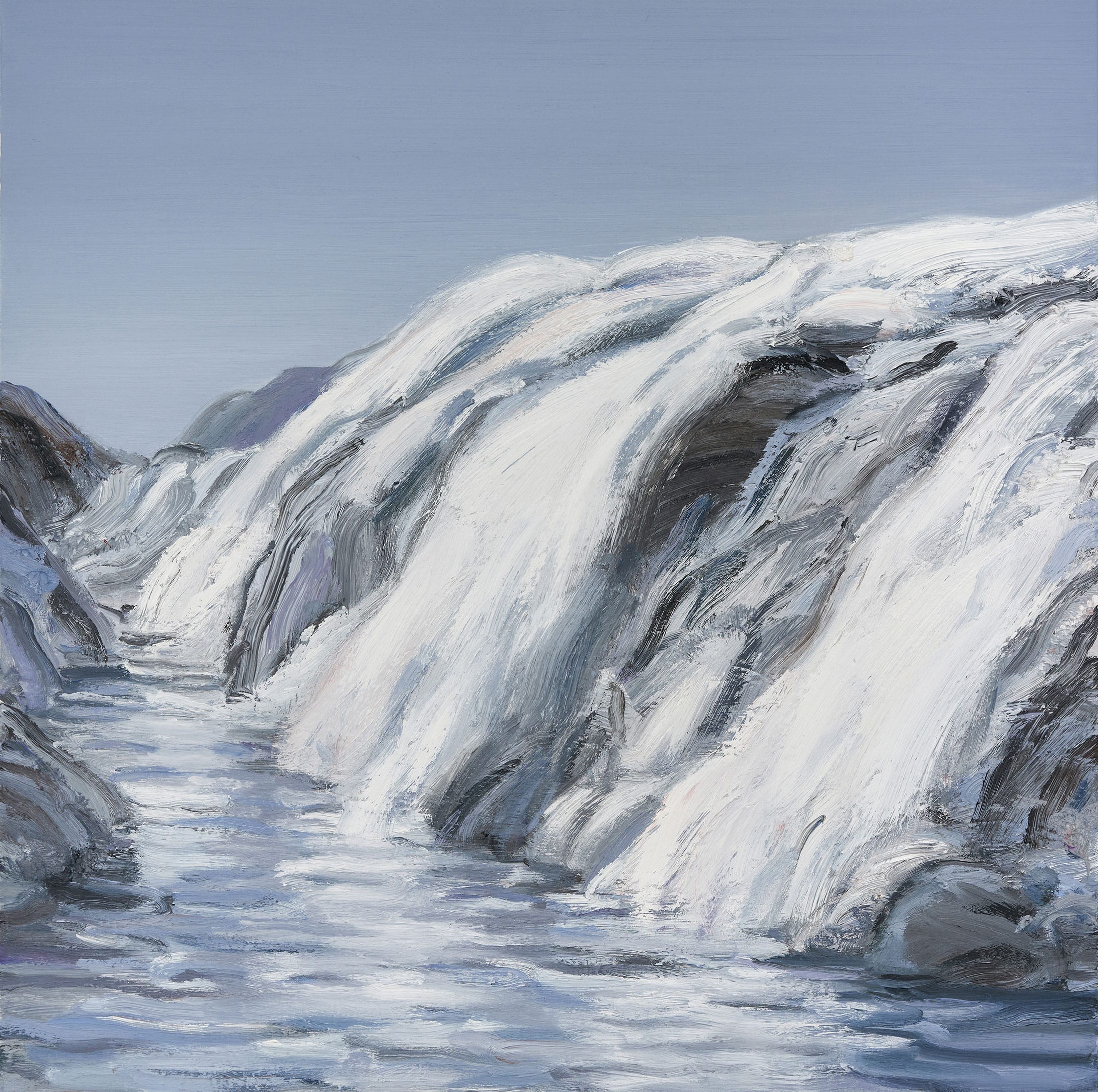
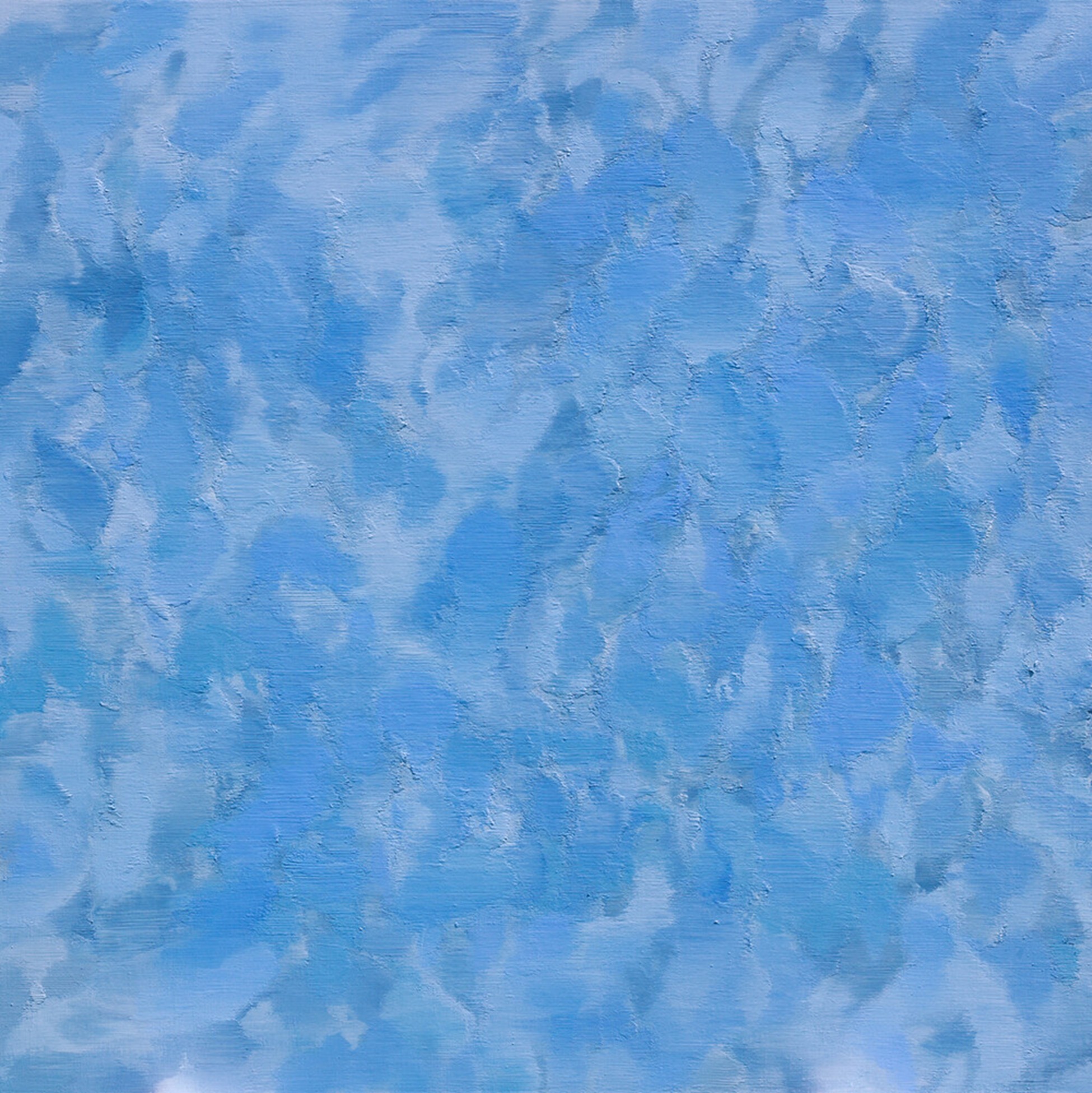
The 'Vein and Fever'(2025) series presented in 《Vein and Fever》, along with Beneath the Surface(2025), The Skin of Water(2025), and Tails(2025), engages more abstractly with the flow of sensation. “Vein” refers to subtle pulses that precede cognition, while “Fever” marks the moment when such pulses intensify at the surface. The imagined cycle of water evaporating into clouds and solidifying again as ice becomes a metaphor for the generation and condensation of sensation. Variations in texture, shifts in pace, and changes in direction compose a rhythm through which sensation rises and dissipates.

Topography & Continuity

While Kim’s work engages the body, it does not remain within the realm of figuration or identity narrative. She positions the body as a “site of boundary,” investigating the structures of sensation and relation at moments when that boundary trembles. Although this approach resonates with contemporary painting’s renewed attention to materiality and sensation, Kim’s distinction lies in its grounding in personal bodily experience.
 
The fragmentation of the body initiated in 'Uncanny Gap' expands into natural and environmental relations in 'Garden of Mistrust,' and later converges in the investigation of skin as surface. Rather than extending outward into the external world, this trajectory compresses toward the interface between interior and exterior. Her direction is not toward expanding boundaries, but toward examining their thickness.
 
Her recent works concentrate on revealing layers of sensation through the materiality of painting. The accumulation of oil paint, the density of texture, and the traces of brushwork function not merely as formal experimentation, but as devices for recording sensation. Within an image-saturated digital environment, this emphasis calls attention to the sensorial density that material painting can sustain.
 
Experiences such as the Leeungno Residency in Paris (Vaux-sur-Seine, France, 2018) and Artist Residency TEMI (Daejeon, 2021), along with participation in exhibitions such as 《Discovery : 12 Contemporary Artists from Korea》(Rockefeller Center, New York, 2023), demonstrate that her practice has extended beyond a singular regional context. Grounded in the universal themes of body and sensation, she continues to vary the question of boundary within the medium of painting. The artist will continue to deepen her exploration of sensation, material, and surface in the expansion of her practice.

Works of Art

The Moment When Boundaries Collapse

Articles

Exhibitions

Activities