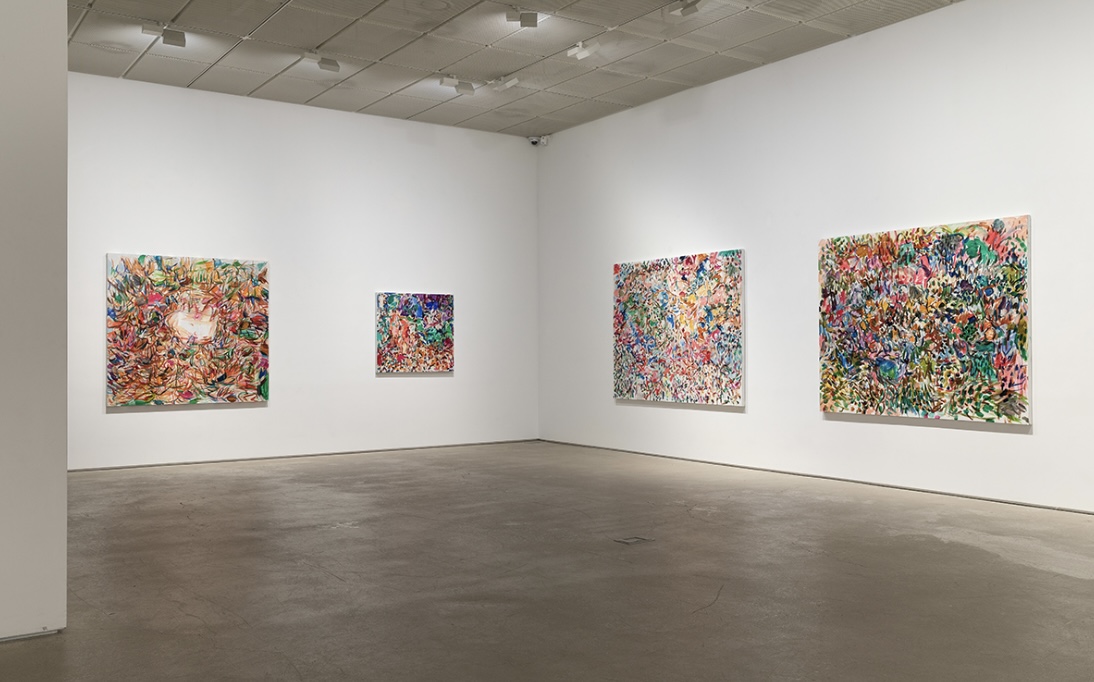
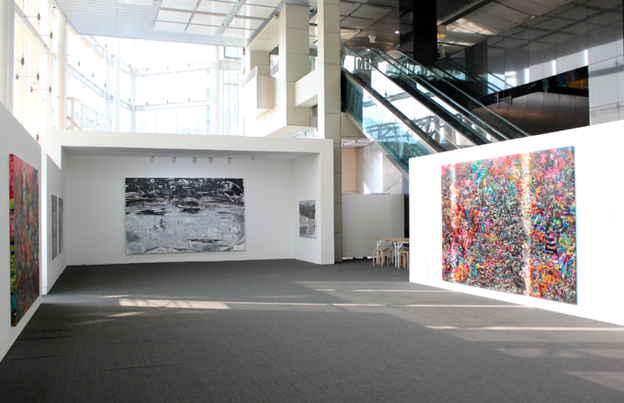
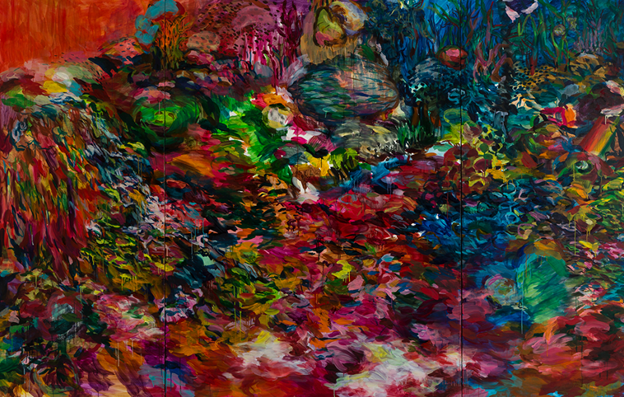
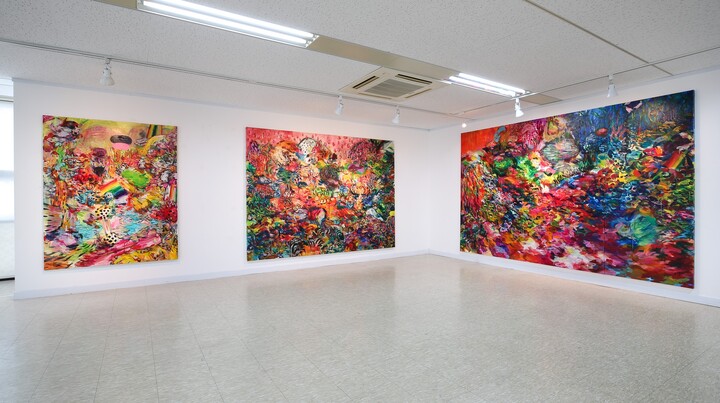
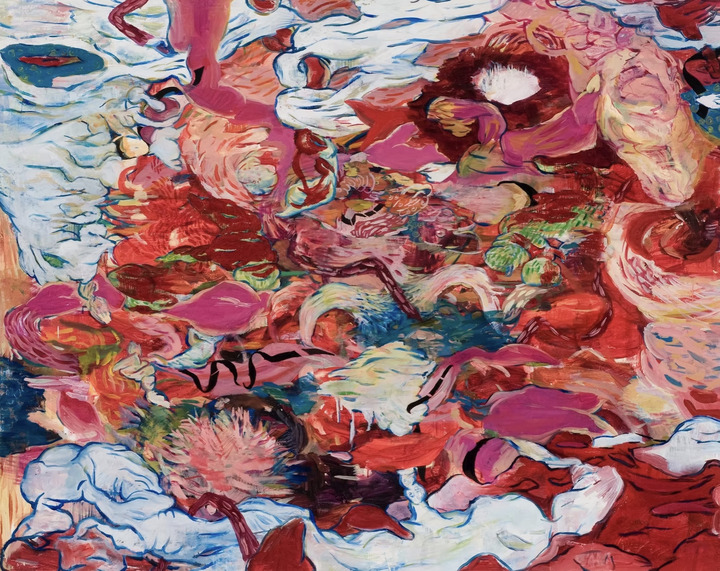
Woohyun
Shim’s practice begins with everyday places—particularly forests—but does not
remain within the bounds of simple natural representation or landscape
painting. For the artist, the forest functions both as an external world and as
a condition that activates the inner self. Memories of wandering and immersion
experienced during childhood in the ancestral forest in Paju became a sensory
archetype that has been continuously recalled throughout her painting practice.
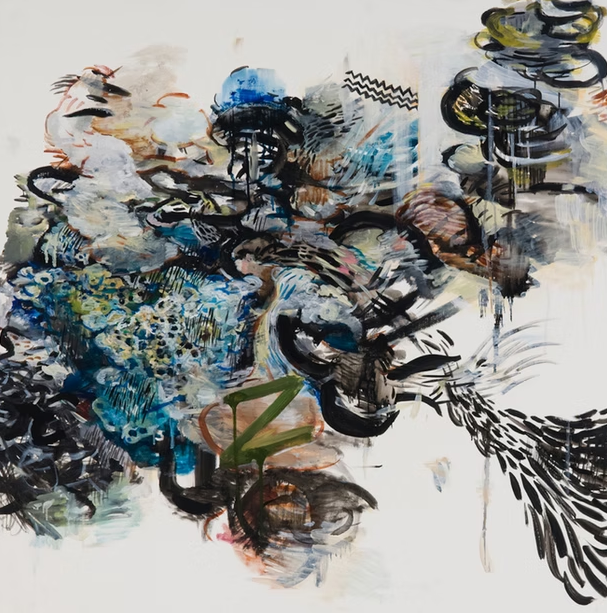
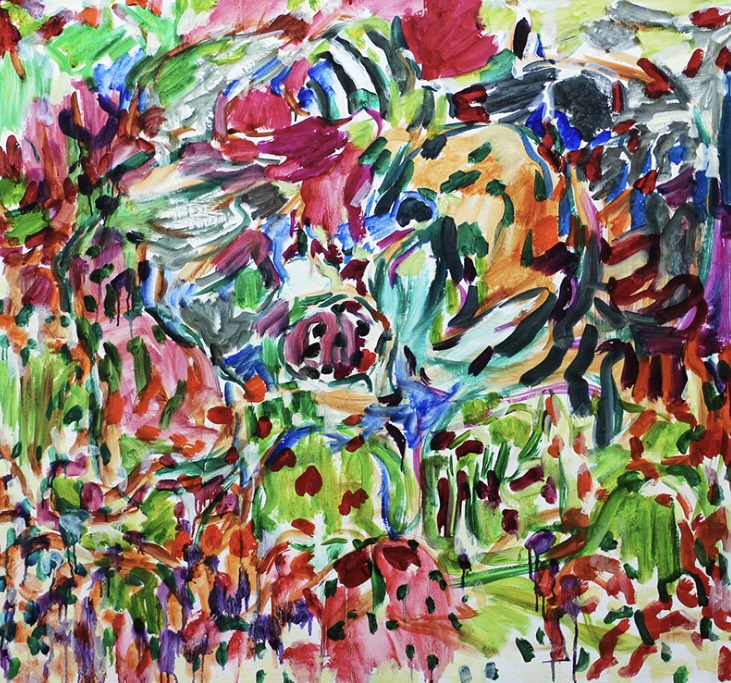
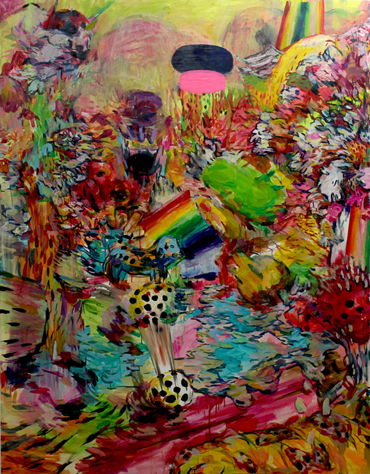
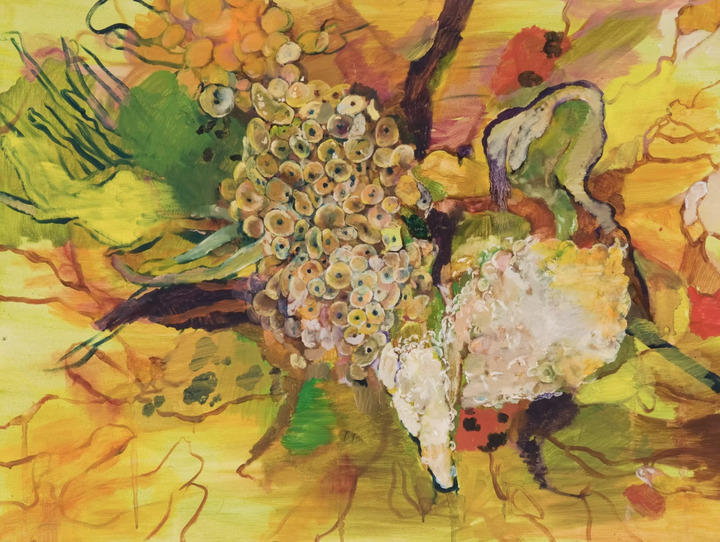
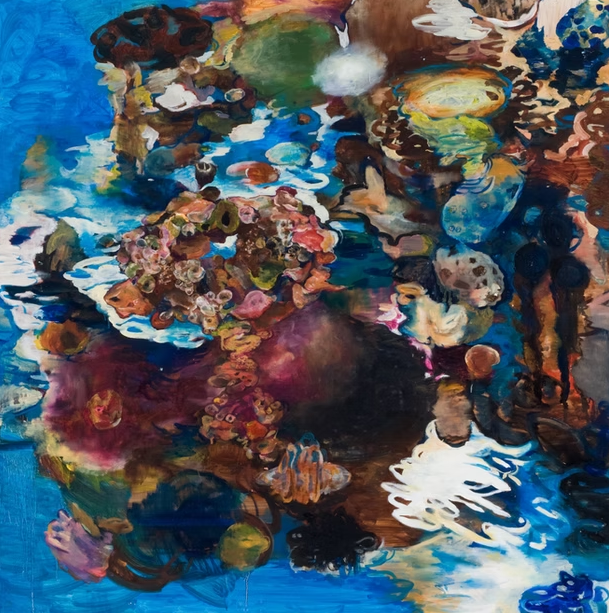
These experiences already appear in early works such as lava,
ketchup(2009) and Bubbles, Eggs, Lines(2009),
where images of nature merge with layers of memory, imagination, and sensation.
Over time,
the forest shifts from a concrete site to a field in which perception and
emotion intersect. Experiences in the forest operate not merely as visual
scenery but as events accompanied by bodily sensation and psychological states,
which are reorganized within the canvas into de-spatialized and de-temporalized
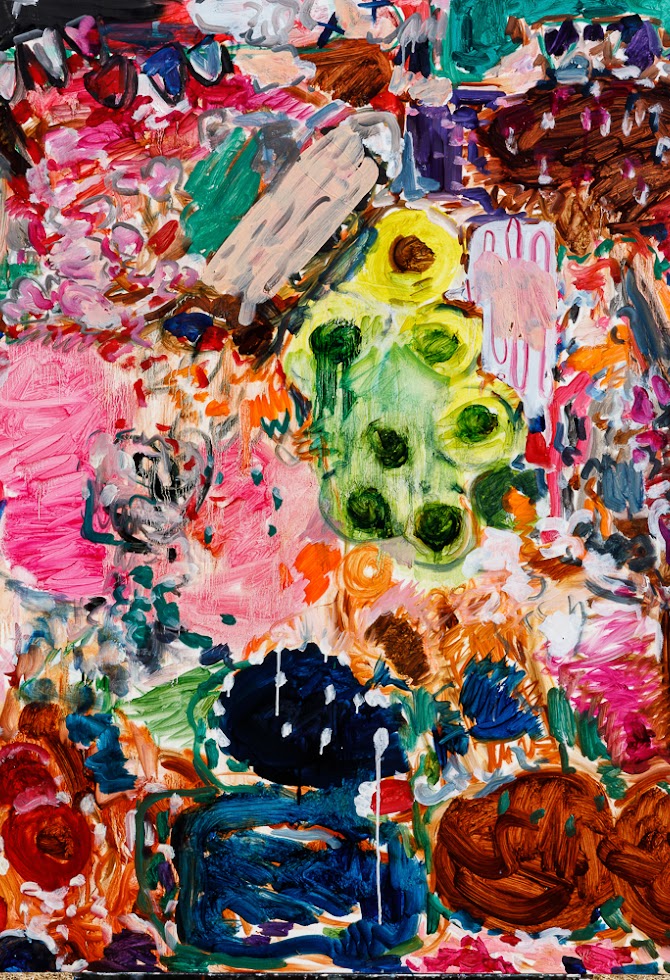
structures. In works such as Flip(2010)
and New Worship(2010), boundaries between past and
present, human and non-human, are blurred as multiple forms of existence are
juxtaposed within a single pictorial space.
The 2014
solo exhibition 《Eros-scape》(Art Space Hue, 2014) marks a turning point in which Shim situates
her painting within a more explicit conceptual framework through the notion of
“Eros.” Here, Eros is understood not in a narrowly erotic sense, but as a
primordial energy that repeatedly generates impulses, relations, and their
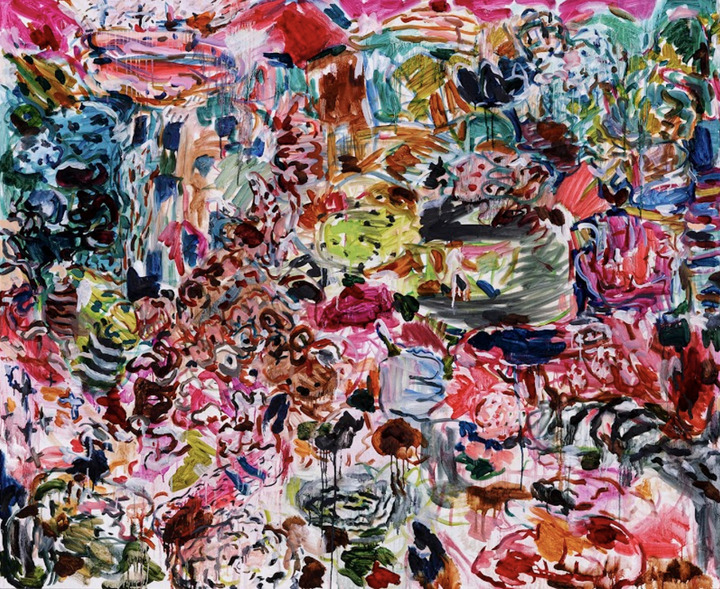
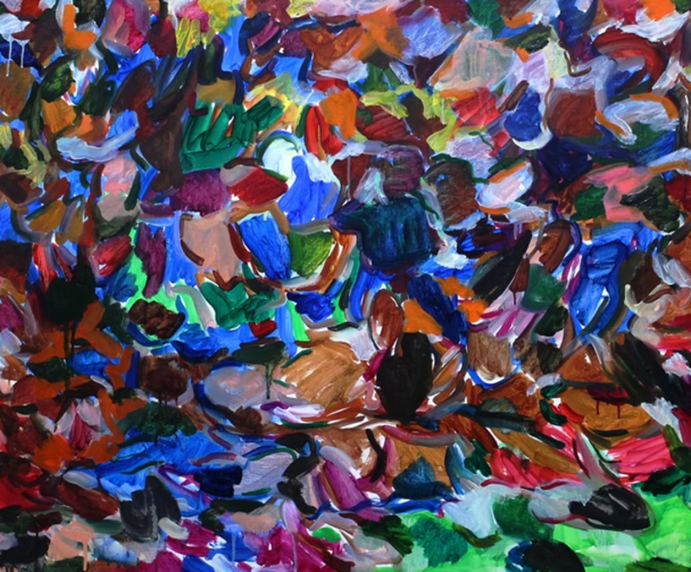
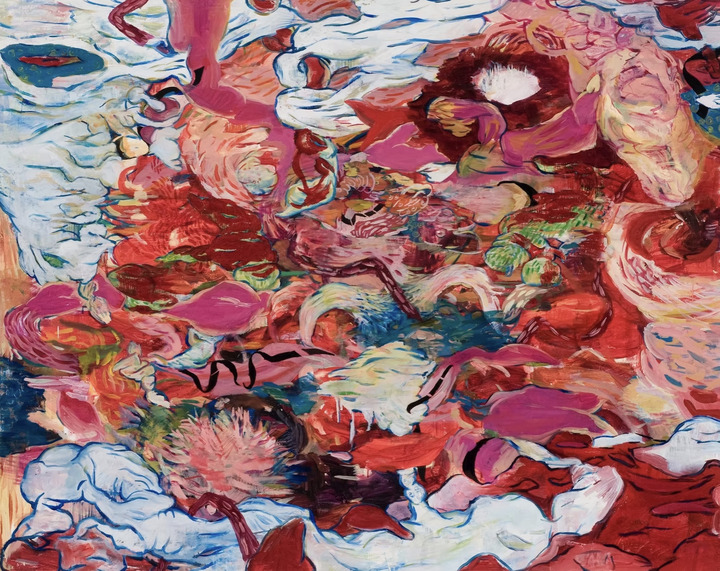
dissolution. In works such as Puff the Magic Bomb(2014)
and Naughty Forest of Diana(2014), images emerge
through chance collisions and layers, only to be erased again, revealing a
continual cycle of formation and collapse within the painting itself.
Subsequently,
Shim’s painting gradually shifts from the forest as a conduit for receiving
external scenery toward a structure in which the inner self becomes the point
of departure. This corresponds to the artist’s notion of a paradoxical “outside
(le dehors),” in which images triggered from within are projected outward as if
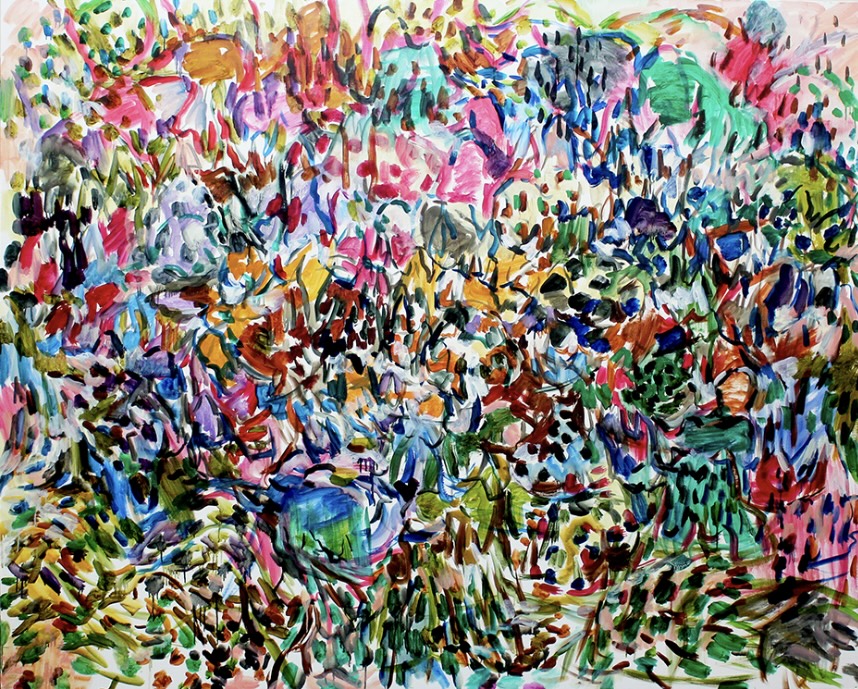
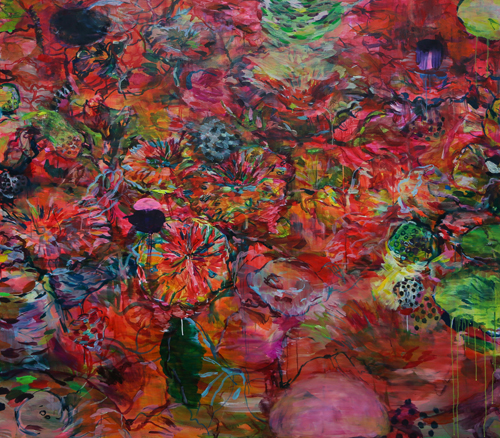
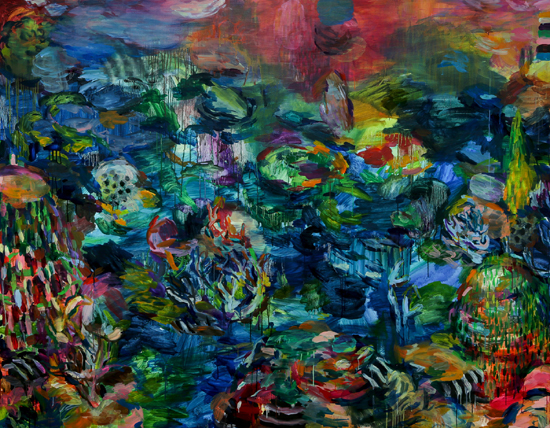
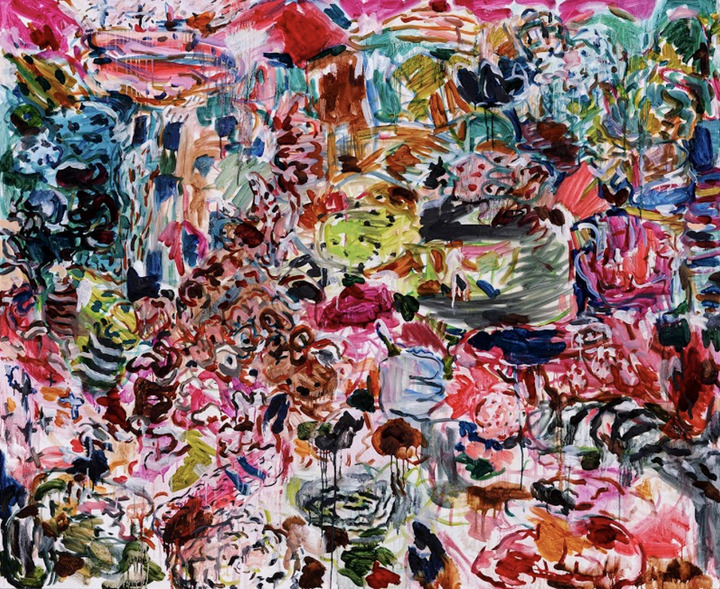
they belonged to the external world. This perspective continues in works such
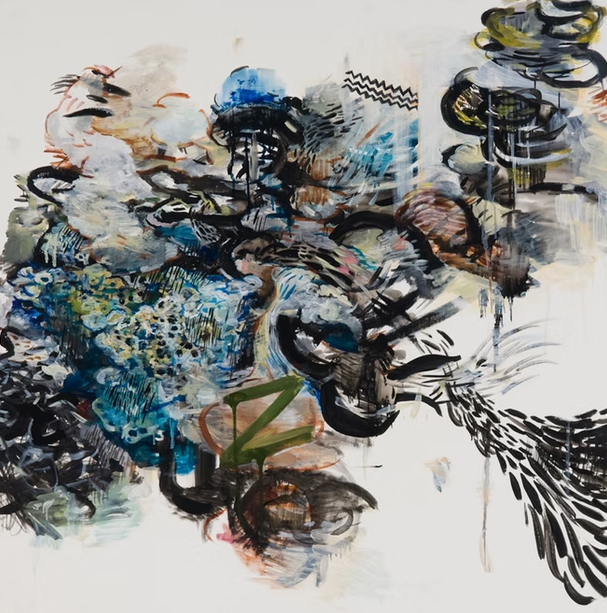
as Blind Love(2018), Fiction
#5(2018), and Can’t Stop the Music(2021),
where the forest expands into a deep, psychological space in which sensation,
memory, and impulse intersect beyond any specific location.