

City Object 3 - K-ARTIST

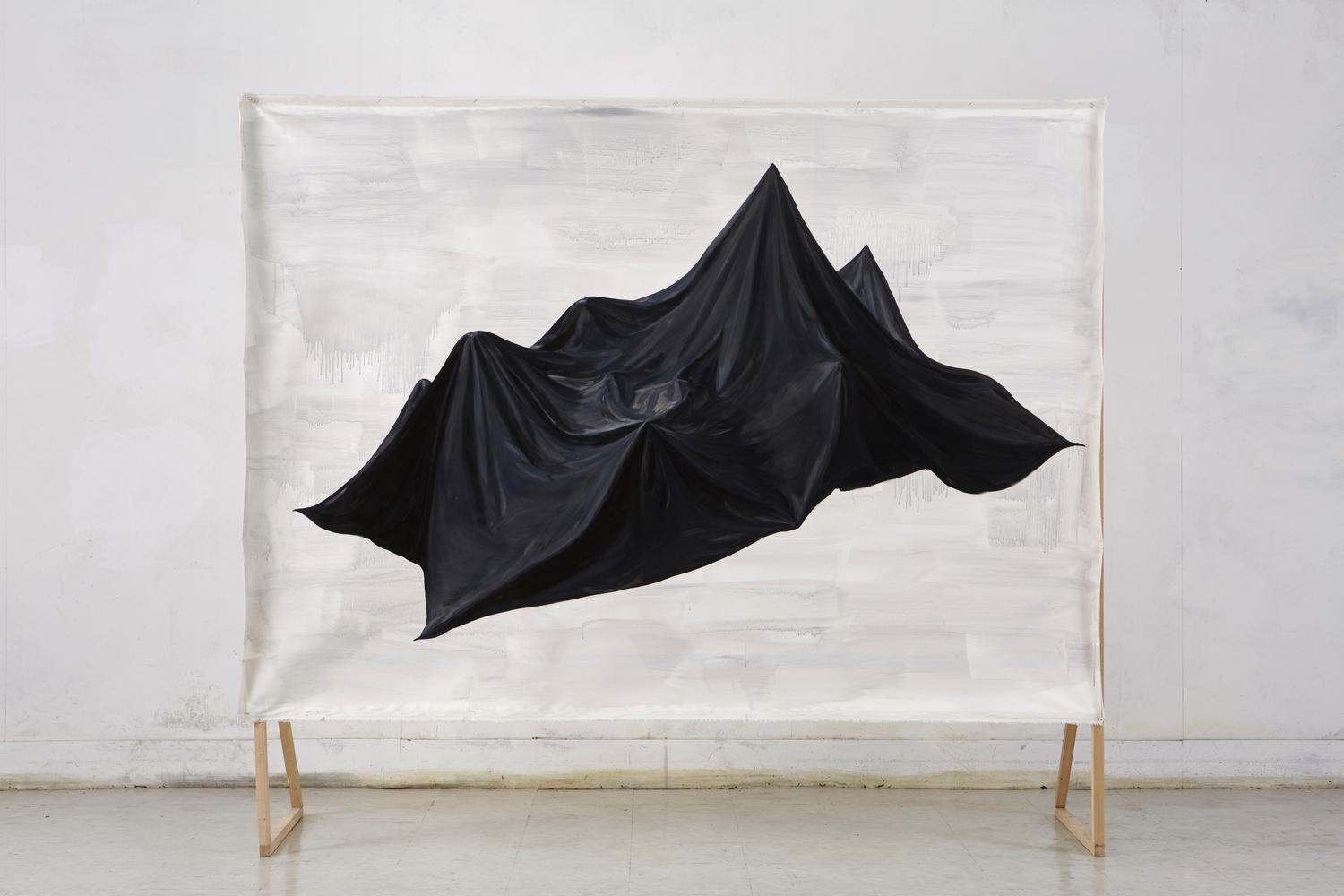
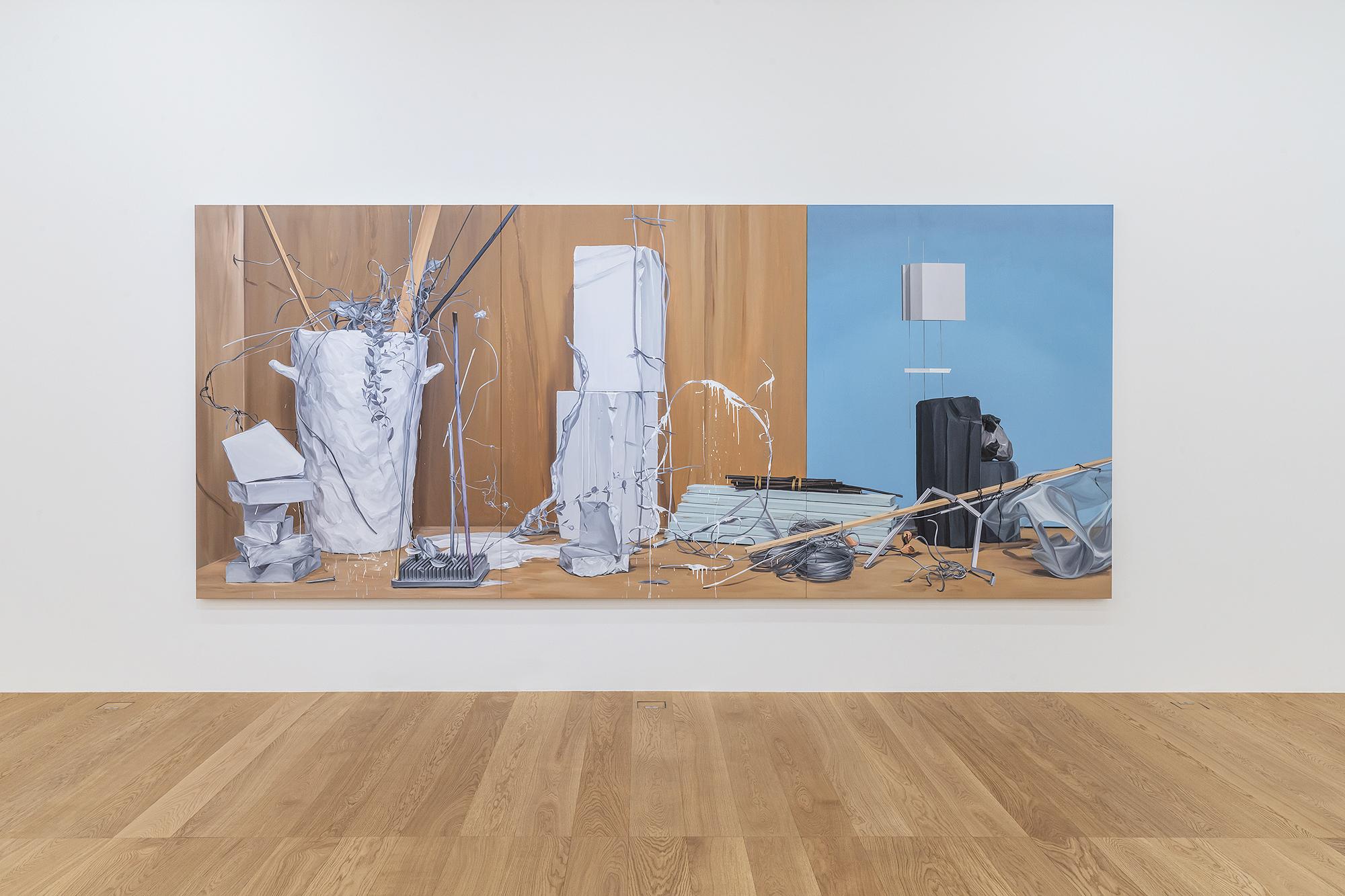
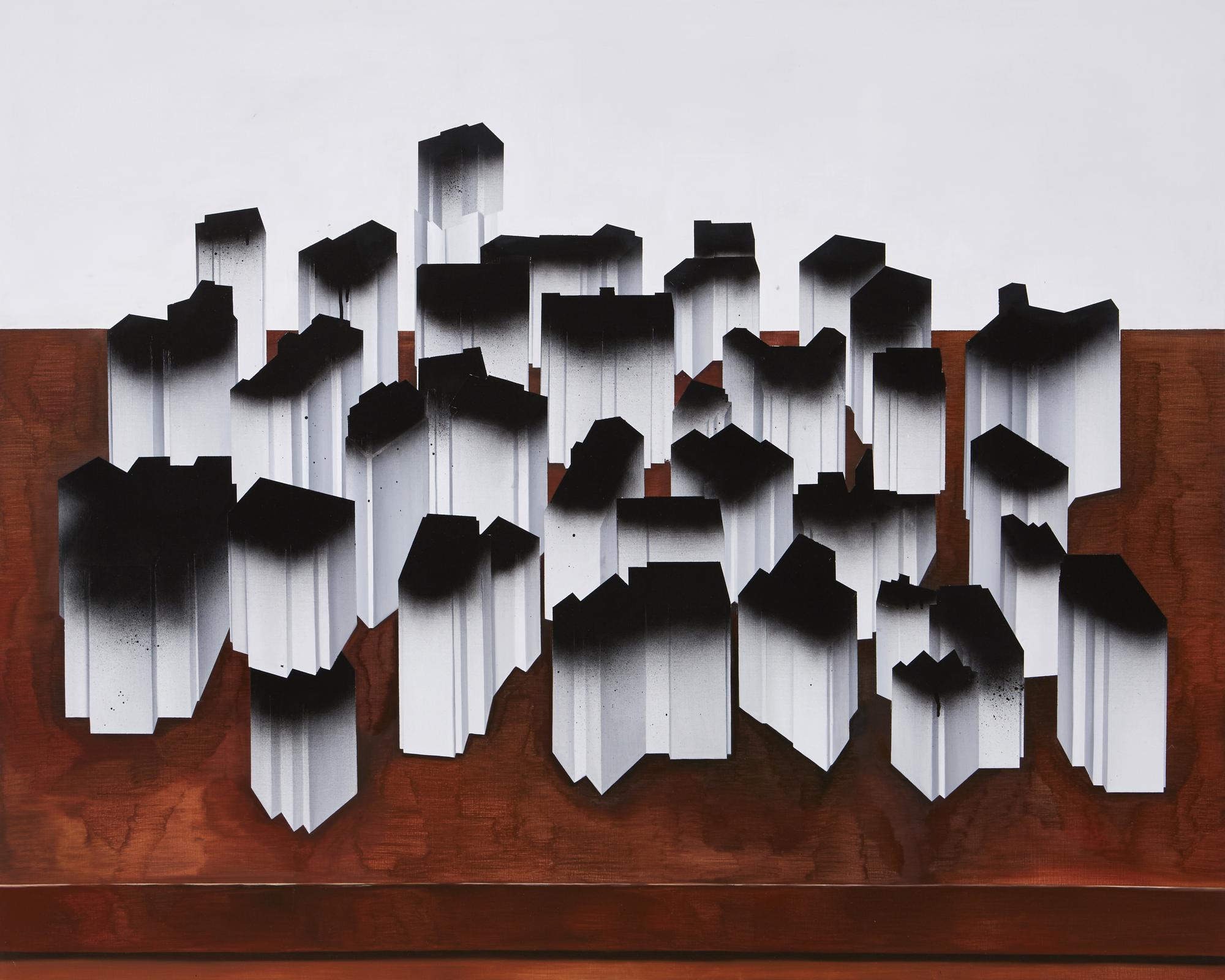
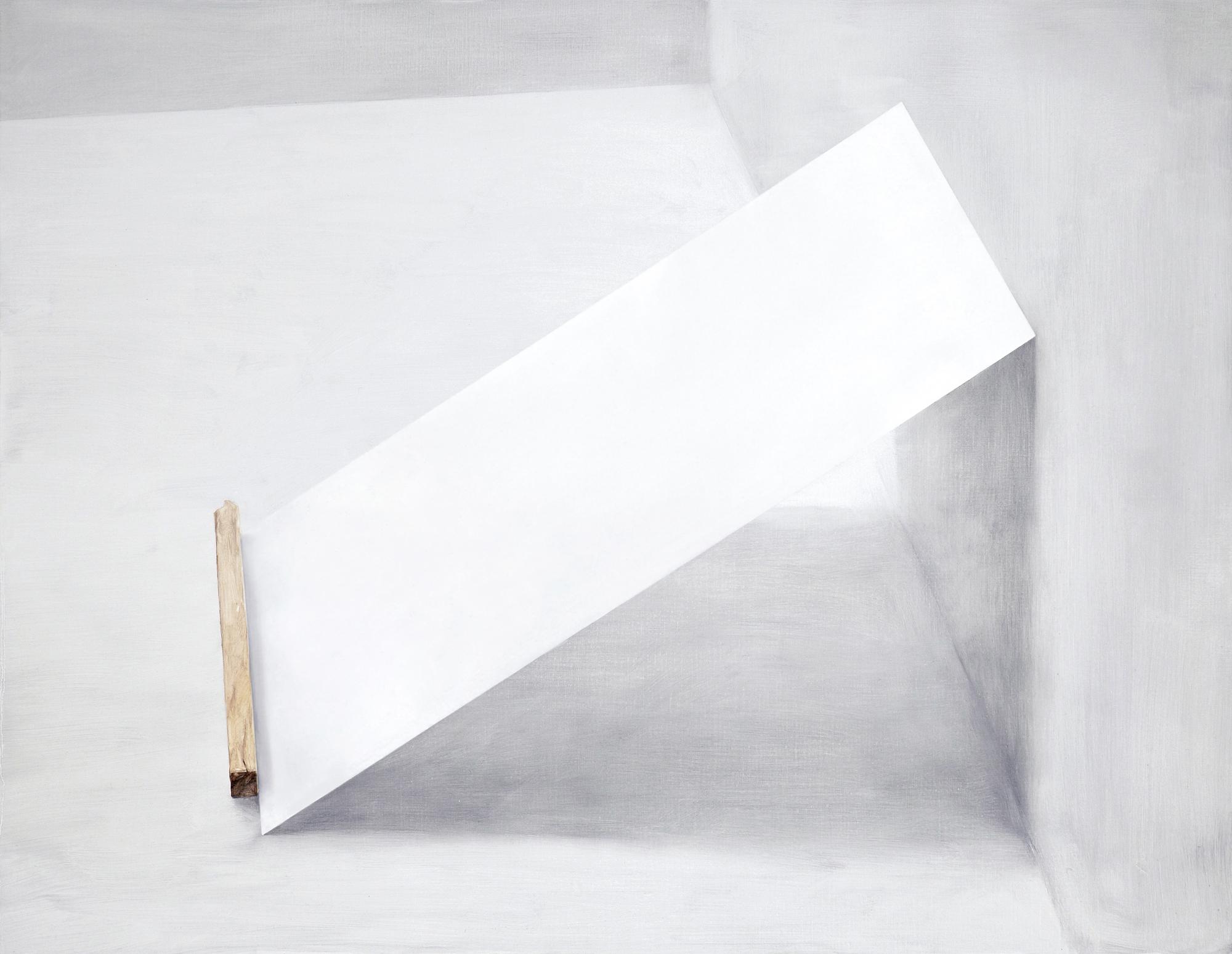
City Object 3

2015
Oil on canvas
160 x 210 cm
About The Work

Rho Eunjoo has explored ambiguous states rather than the completed form of a subject—capturing moments of indeterminacy on the canvas. Through the process of observing a subject and translating it into an image, she focuses on how sensations are conveyed as the properties of the medium and materials undergo transformation.
 
She has focused on construction sites as liminal zones—temporary spaces that form the foundation of the city yet are ultimately destined to disappear. Through multi-sensory modes of decomposition, she examines notions of form and space, seeking the underlying principles of composition and structure. Rho Eunjoo re-forms objects that move between reality and illusion by modeling actual objects or spaces and then translating them back onto the canvas. Her integration of modeling and painting extends painting beyond a fixed planar image into the result of spatial thinking. 
 
Compared to other contemporary artists working with similar media, her practice stands out in its ability to connect internal pictorial structure with the exhibition space and the viewer’s movement within it. Through this process, she records and re-presents the tensions, movements, and sense of time inherent in elements easily found in our surroundings, creating new scenes and relationships that feel at once familiar and strange.

Solo Exhibitions (Brief)

Roh has held solo exhibitions including 《Knot to Leaf》 (Chapter II, Seoul, 2023), 《Blue Window》 (Kumho Museum of Art, Seoul, 2021), and 《Walking—Aside》 (Space Willing N Dealing, Seoul, 2019).

Group Exhibitions (Brief)

Roh has also participated in numerous group exhibitions, including 《Minibus》 (ARKO Art Center, Seoul, 2025), 《遊物時間 A Thousand Ways to Objecthood》 (Yu-Hsiu Museum of Art, Nantou, Taiwan, 2025), 《SeMA Anthologia: Ten Enchanting Spells》 (Buk-Seoul Museum of Art, Seoul, 2023), 《The 22nd SONGEUN Art Award Exhibition》 (SONGEUN, Seoul, 2022), 《UNBOXING PROJECT: TODAY》 (Space Willing N Dealing, Seoul, 2022), and 《Dwindles to a Point and Vanishes》 (Art Sonje Center, Seoul, 2021).

Residencies (Selected)

In 2017, Rho Eunjoo was a resident artist at the SeMA Nanji Residency, Seoul Museum of Art.

Collections (Selected)

Roh’s works are included in the collections of the MMCA Art Bank (National Museum of Modern and Contemporary Art, Korea) and the Wumin Art Center. 
Works of Art

The Ambiguous State, Not a Complete Figure of the Object

Originality & Identity

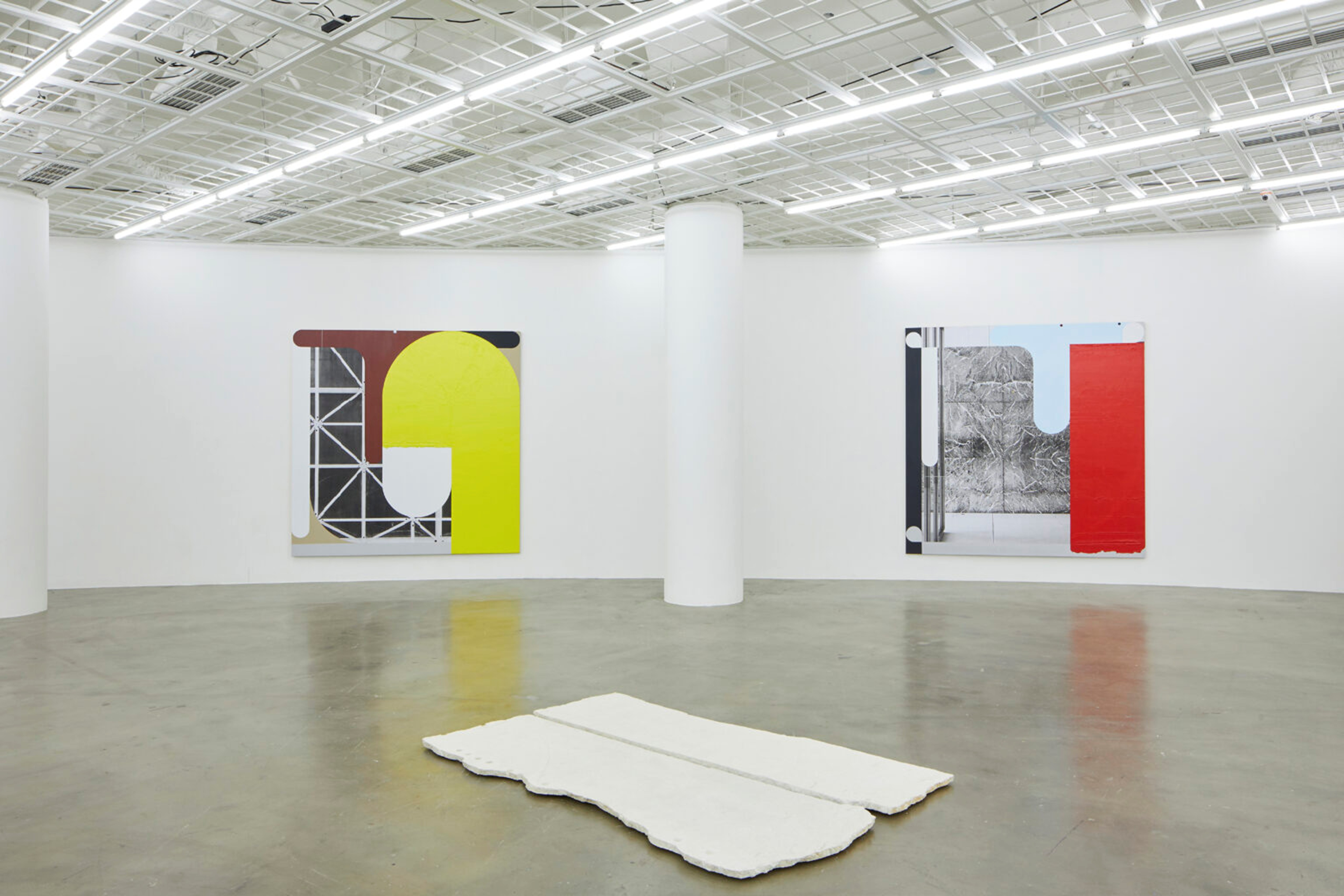
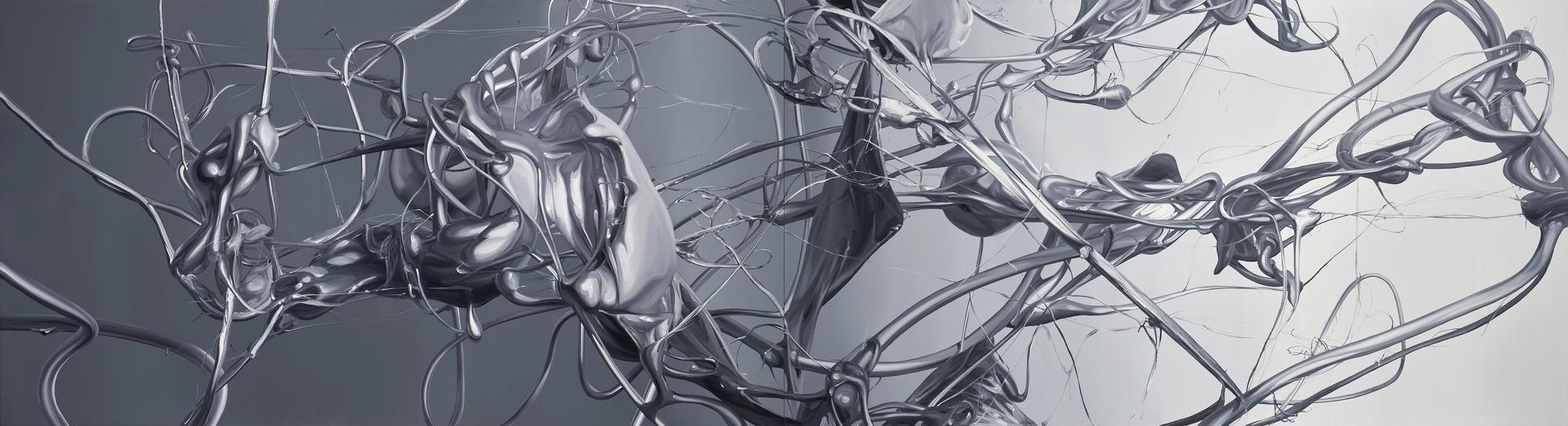
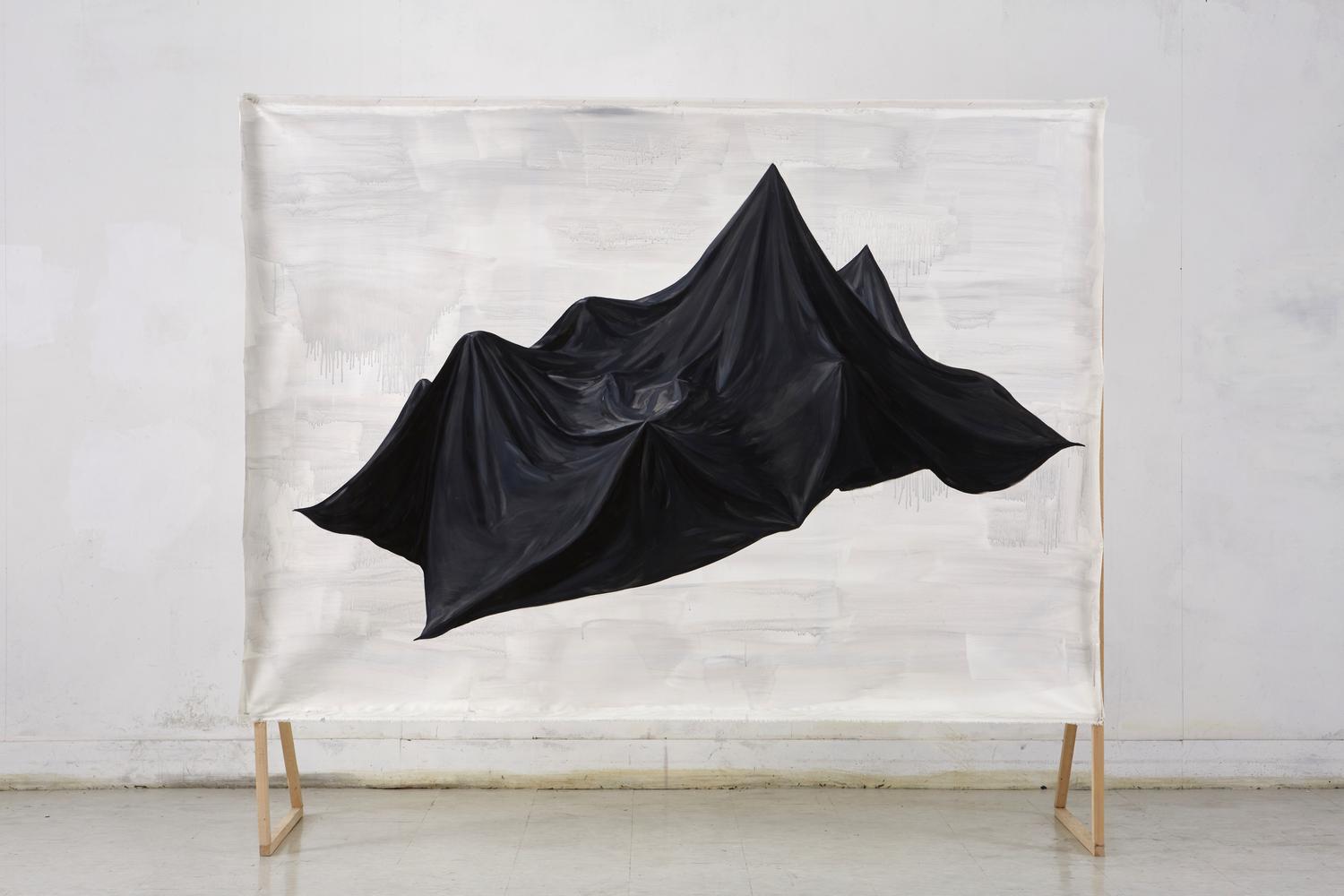
Rho Eunjoo’s practice focuses not on the completed form of an object, but on indeterminate states situated between generation and dissolution—that is, the time before and after an object becomes fixed in meaning. She observes subjects that exist only temporarily and eventually disappear, such as construction sites, demolished buildings, and provisional structures, and develops her work by holding these states within painting. As seen in City Object 3(2015) and Landscape 2(2015), the urban landscape in her work is not a stable backdrop but a field of continual transformation and disappearance.

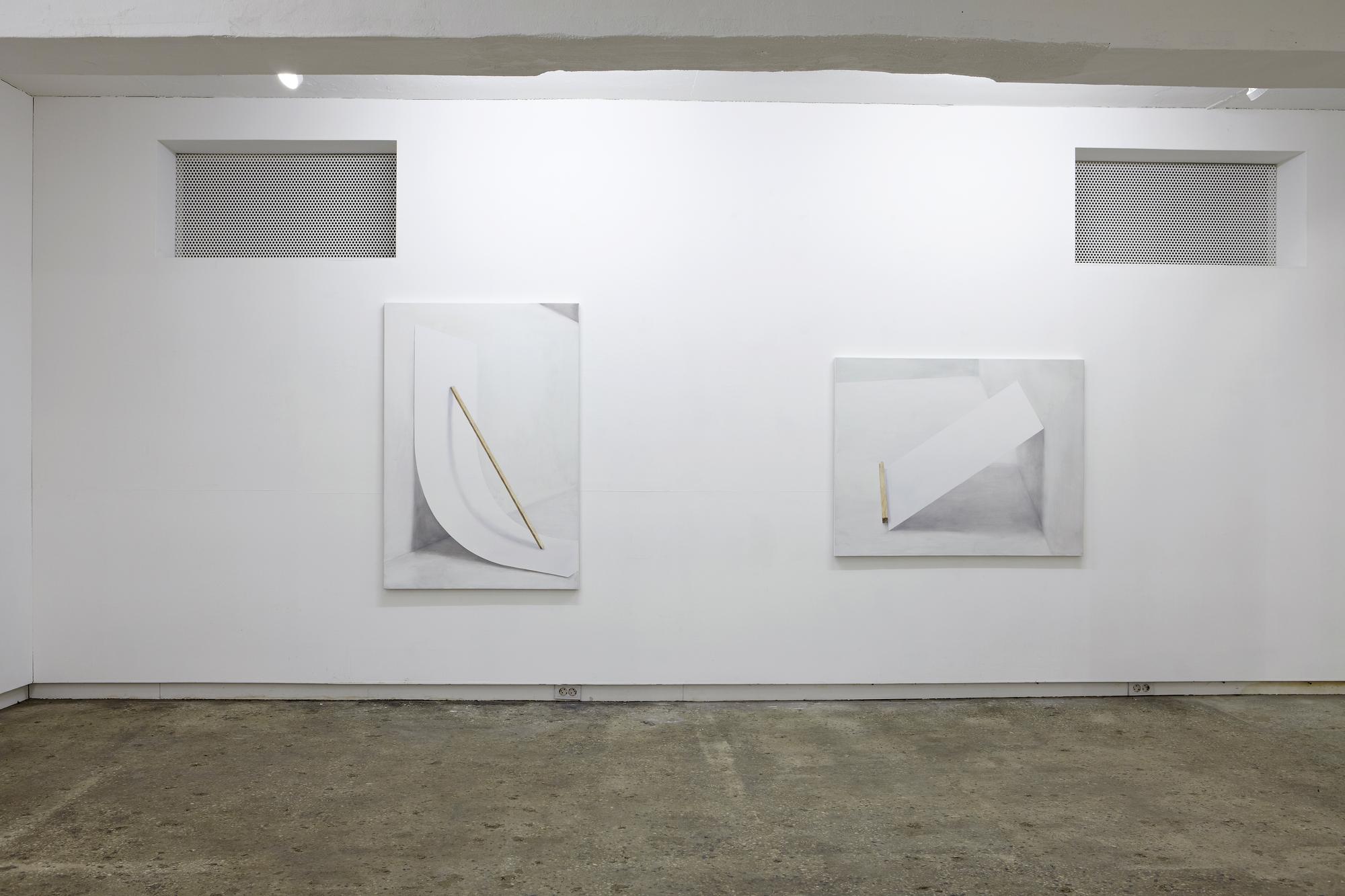
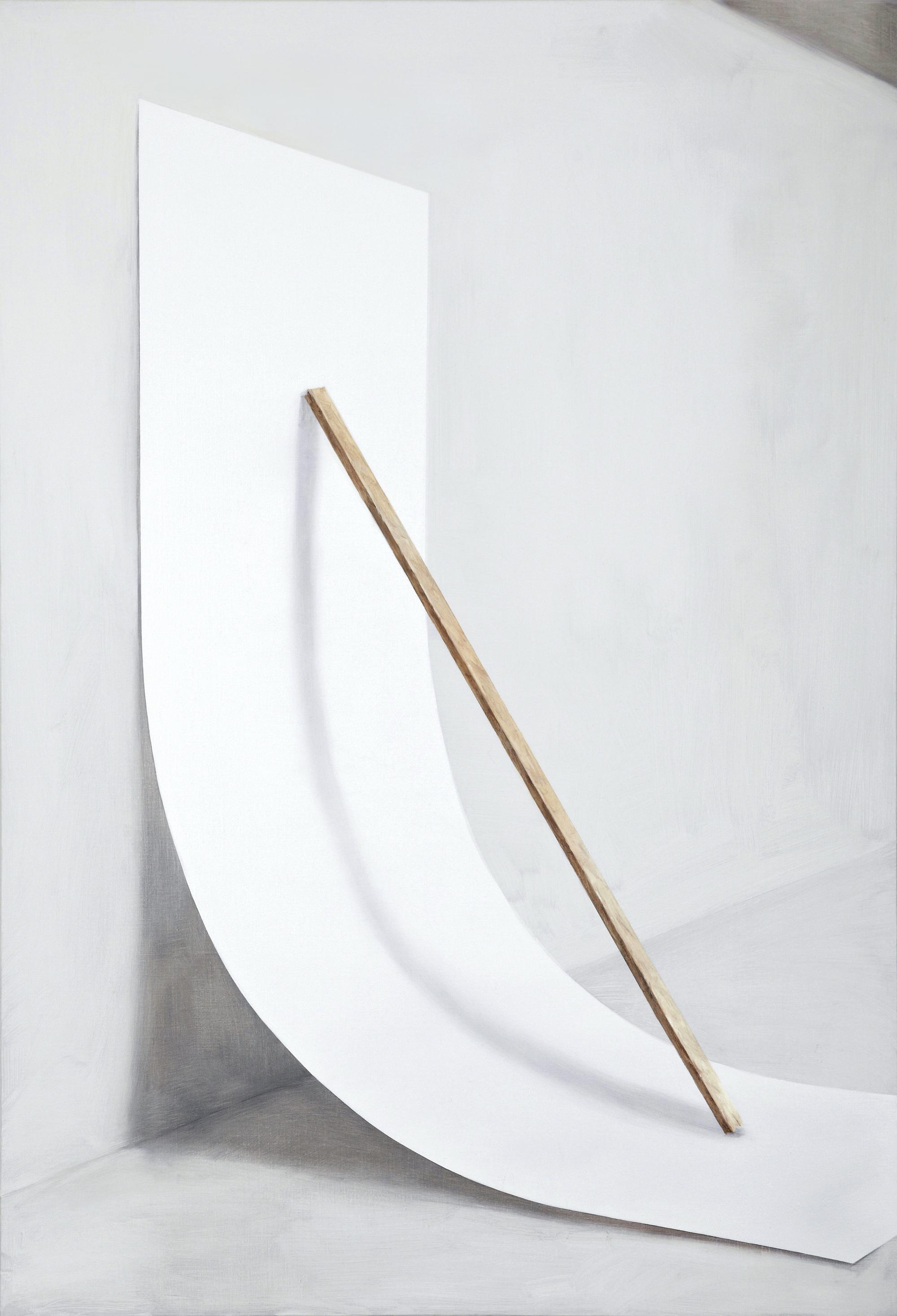
Her first solo exhibition, 《Situation/leaning against》(Space Willing N Dealing, 2013), marked the starting point of this inquiry. In this exhibition, Rho reconstructed images through structures that evoke urban debris and arbitrary boundaries, translating into painting the instability and precarious balance embedded in everyday environments. In Leaning Against(2013), forms that lean or barely sustain themselves visualize the relationships of forces that support space and the tensions generated between them.

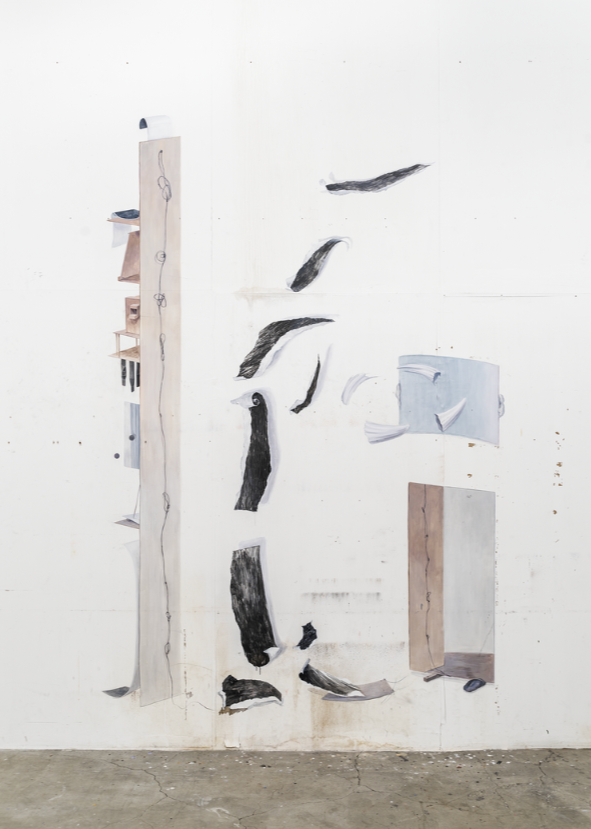
Subsequently, her attention expanded from architecture itself to the “intermediate states” in which it exists. Painting the remnants of demolished apartments based on media photographs, or producing paper models of apartment buildings, reflects her attempt to perceive architecture not as a final product but as a process. This perspective aligns with her view of the city not as a permanent structure, but as a provisional system that can be dismantled at any moment.

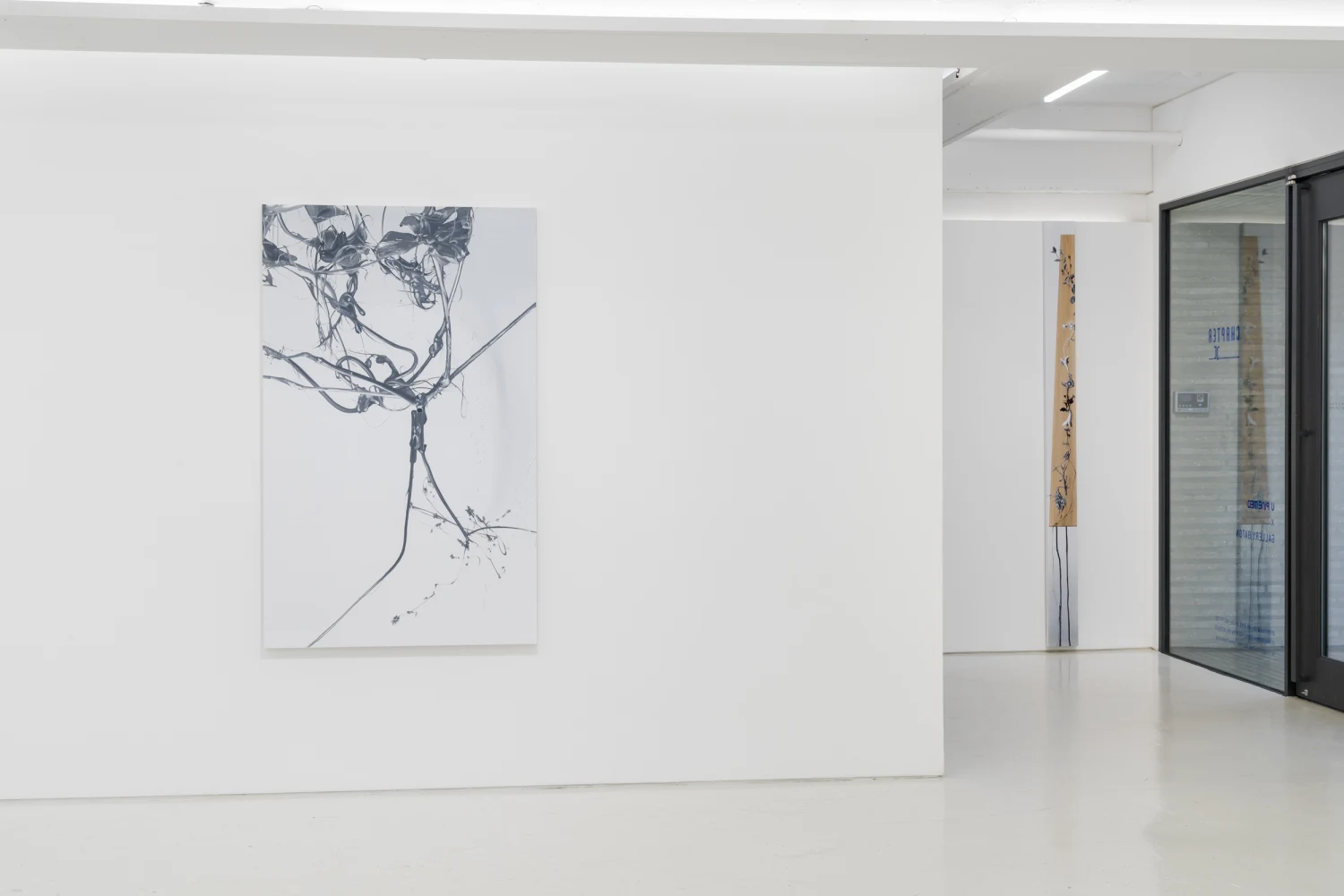
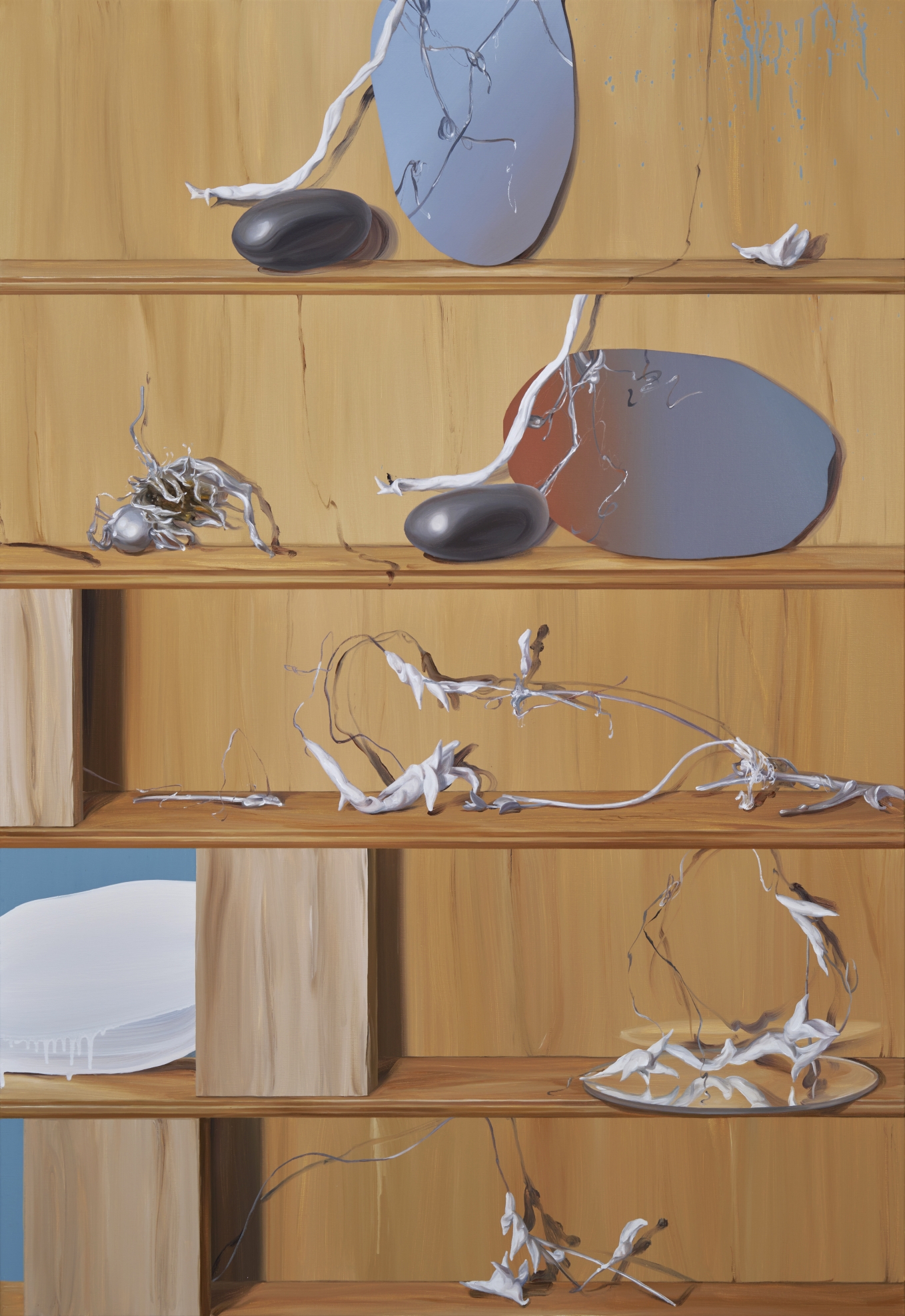
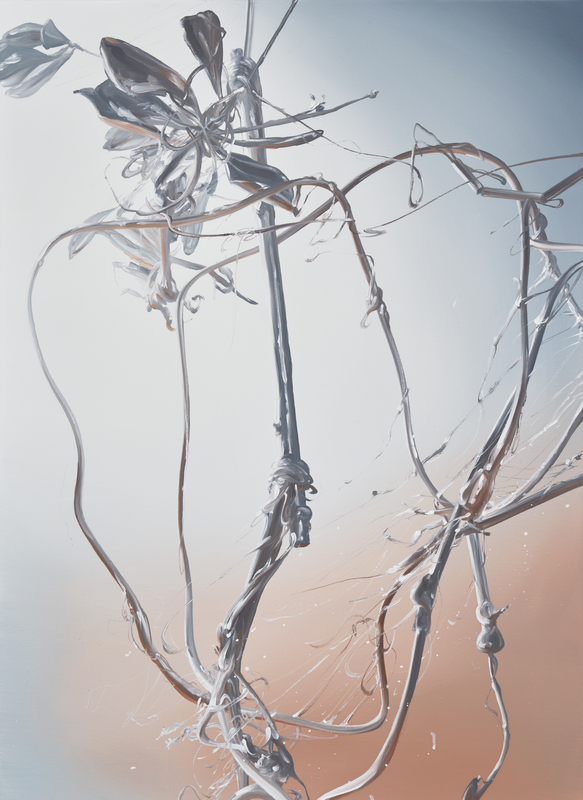
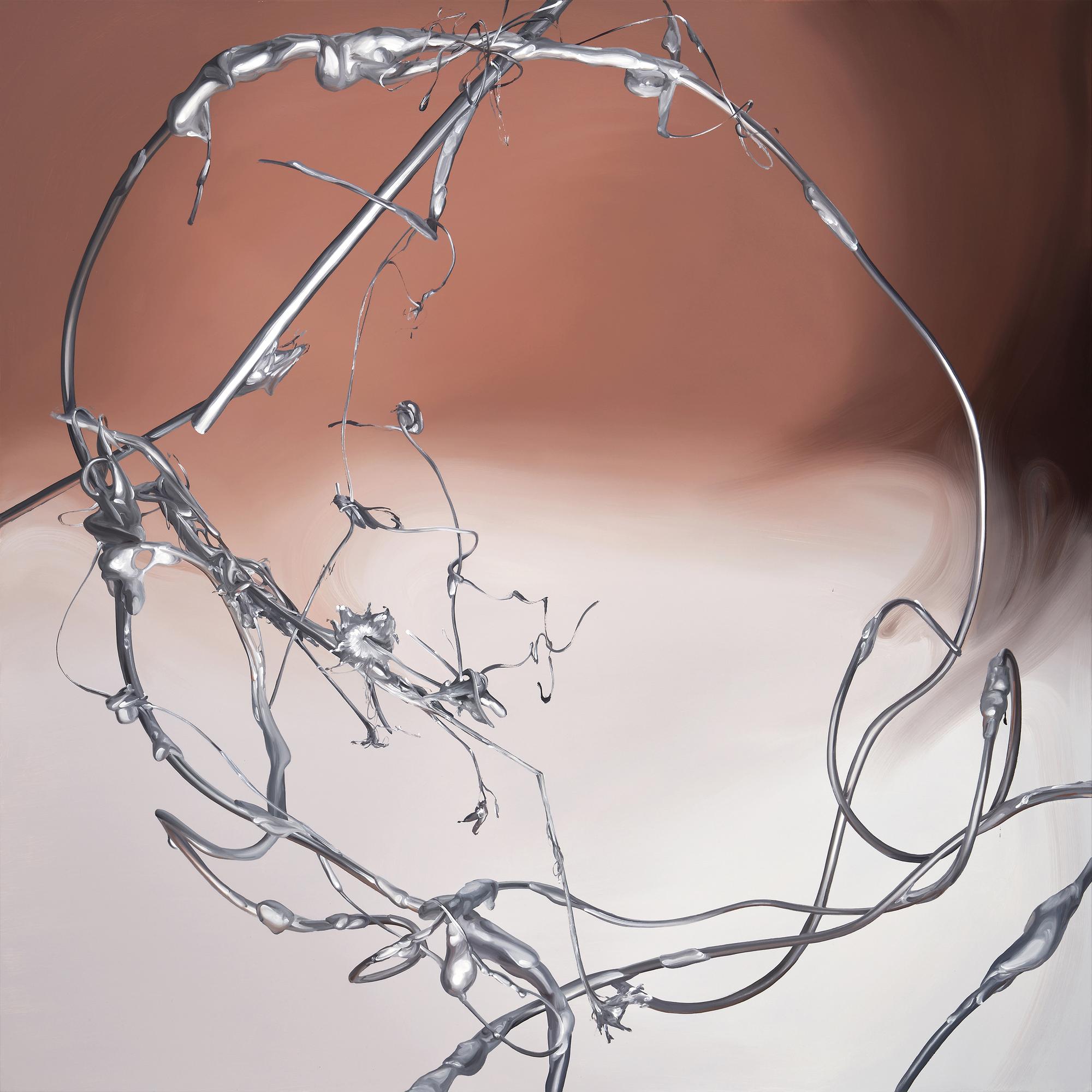
In her recent solo exhibition 《Knot to Leaf》(Chapter II, 2023), this notion of time shifts into the metaphor of a garden. Withered plants, wire, thread, and materials in the process of hardening reveal states in which generation and dissolution occur simultaneously. Through these elements, Rho addresses moments where intention and contingency intersect, and the subtle temporal changes that unfold in between.

Style & Contents

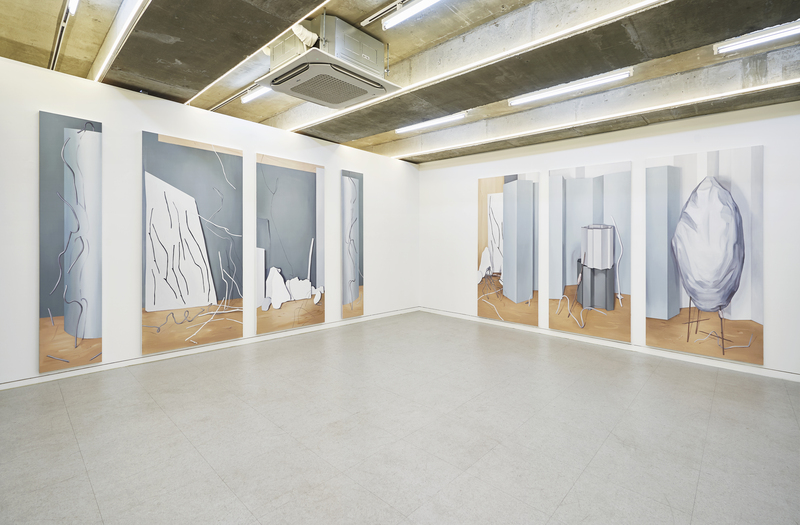
Rho Eunjoo’s working method begins prior to painting, in a sculptural process. She models actual objects or spaces in three dimensions, produces miniature sculptures using materials that can be flexibly handled by hand, documents them through photography, and then transfers them onto the canvas. Through this sequence—drawing, modeling, photography, and painting—the subject is repeatedly reinterpreted and transformed, escaping any fixed meaning.

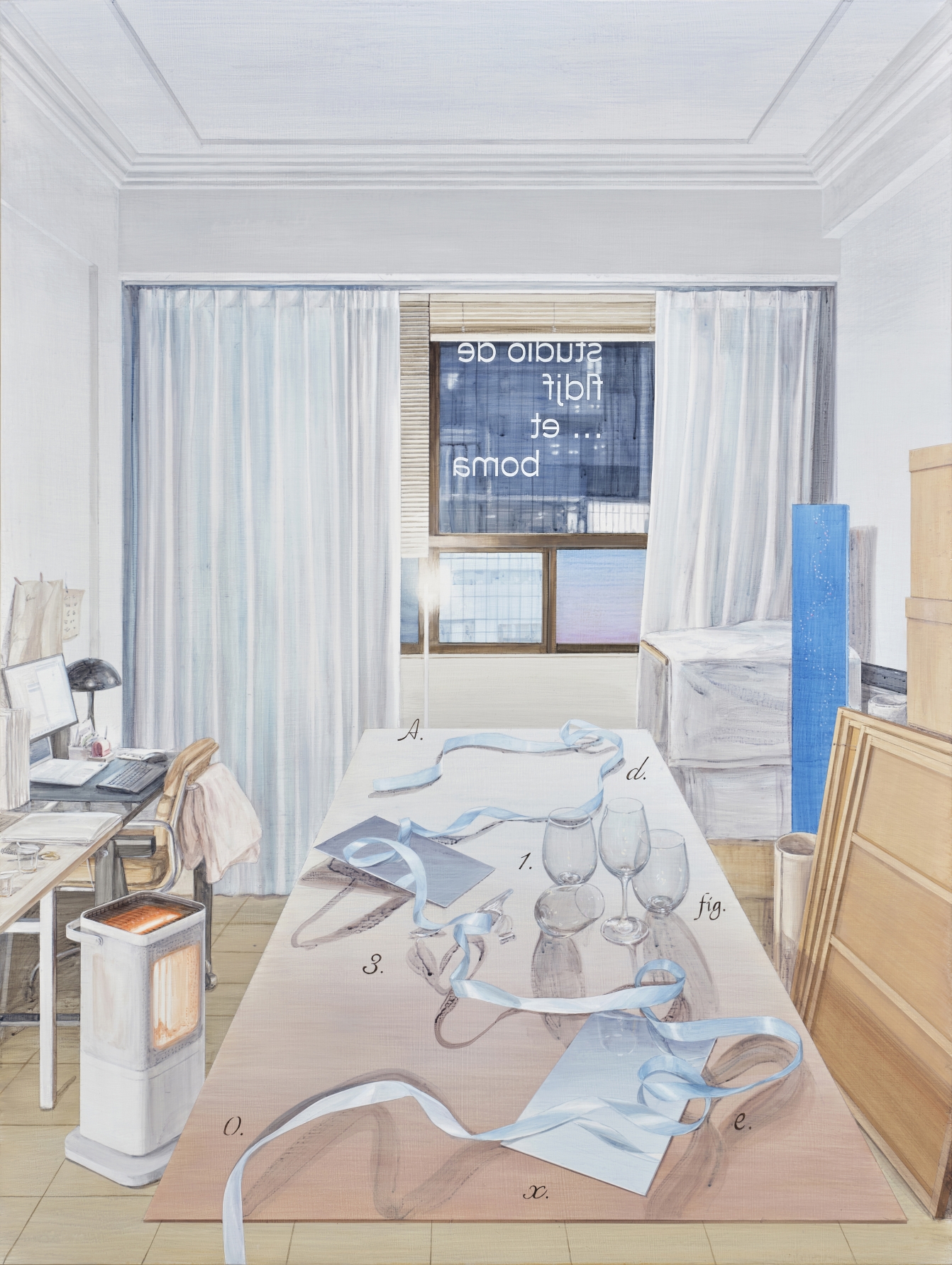
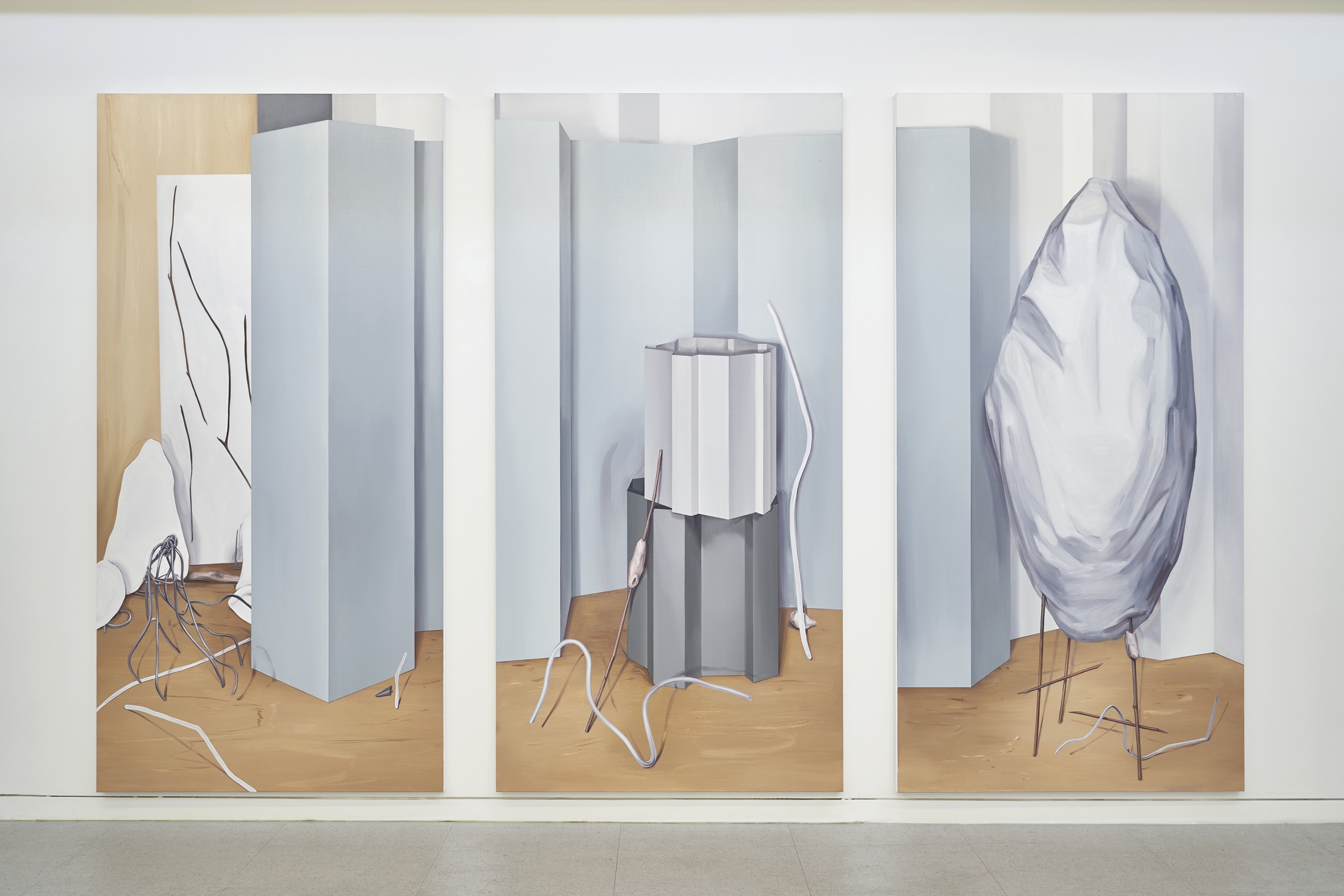
This approach continually tests the relationship between flatness and volume, illusion and reality in painting. Rendering fragile paper structures to appear like solid plaster masses, or arranging objects on a studio table within a confined space, blurs the boundary between pictorial space and real space. Painting thus functions not merely as a site of representation, but as a device that reconstructs spatial perception.

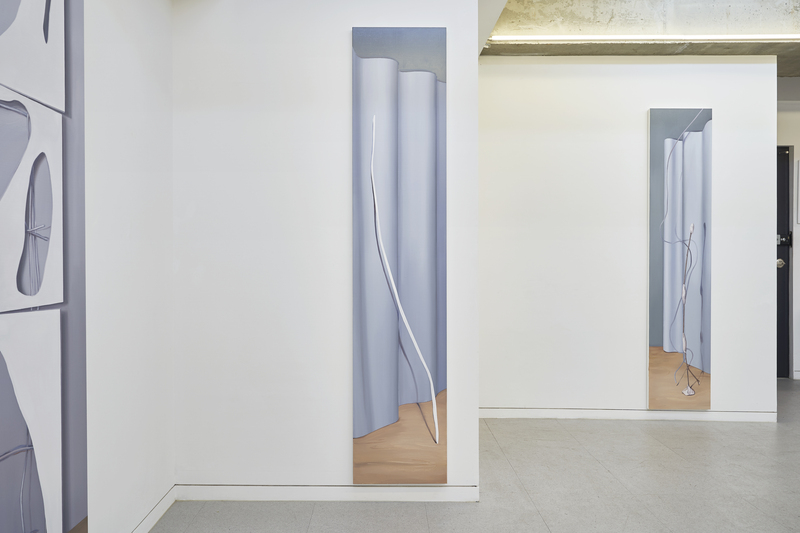
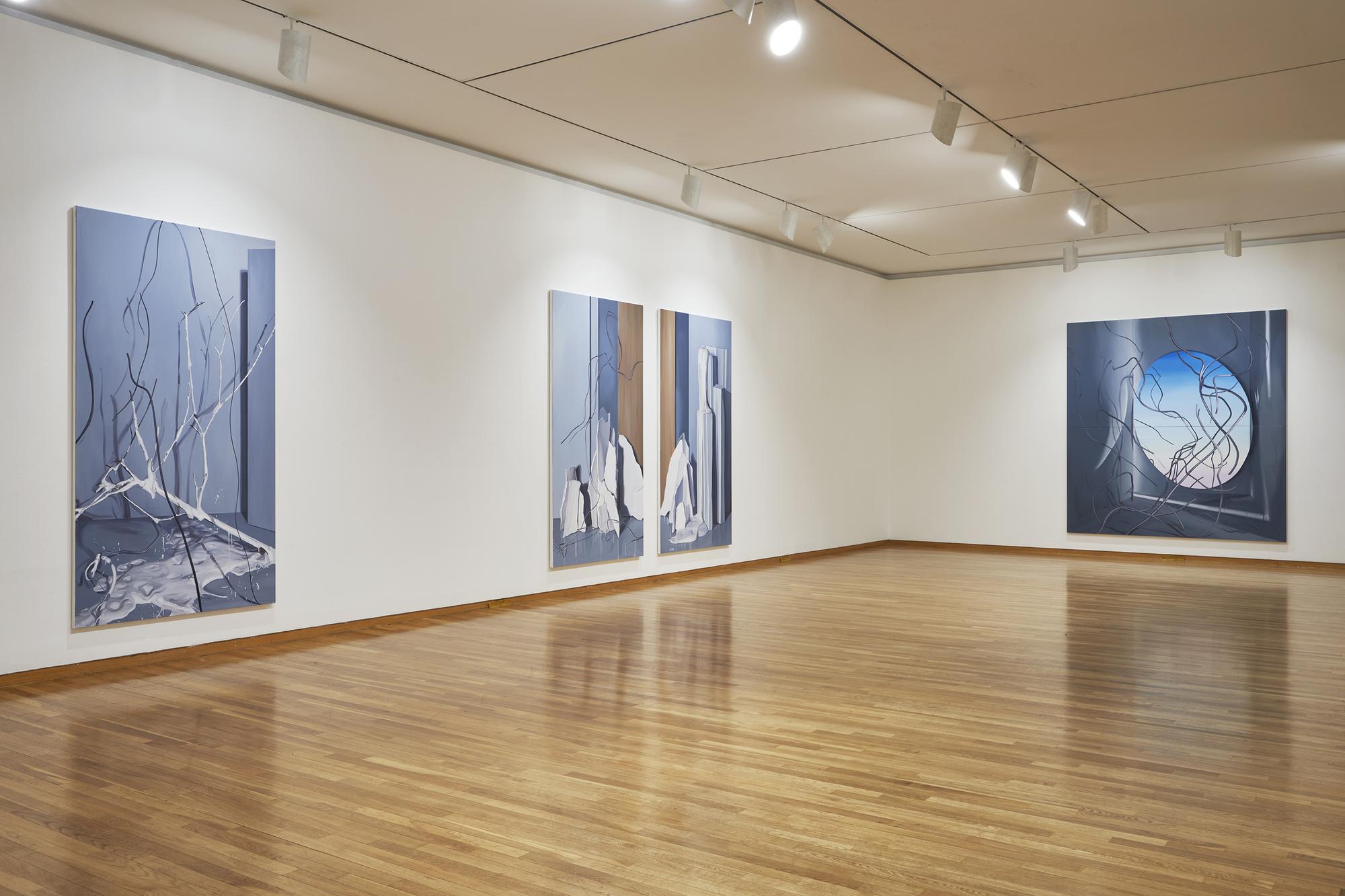
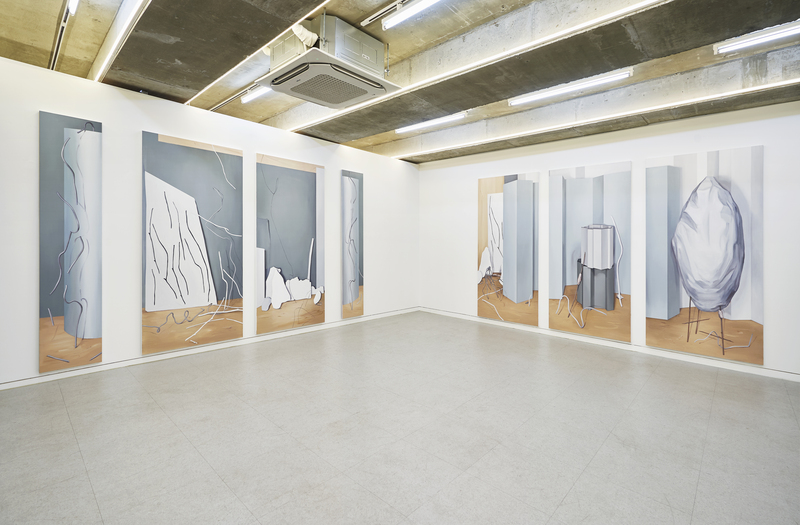
In 《Walking—Aside》(Space Willing N Dealing, 2019), these experiments expanded into the exhibition space as a whole. Multipart works configure the canvas like a stage with shallow depth, while Wall and Stone(2019) connects interior and exterior space through theatrical composition. Viewers encounter the paintings while simultaneously moving through the actual exhibition space, recalling the spatial relationships staged within the canvas.

In 《Blue Window》(Kumho Museum of Art, 2021), classical pictorial devices such as the window and reflection appear repeatedly. Objects(2022) gathers fragments of objects that have appeared throughout her practice into a single scene, forming an ambiguous image that can be read either as a studio table or as a view beyond a window. In 《Knot to Leaf》, these objects are no longer arranged on a stage; stripped of shadows and hierarchy, they are presented in a floating state. Through the 'Still Light'(2023) series, the flow of time itself emerges as a rhythm within the pictorial field.

Topography & Continuity

Rho Eunjoo’s work occupies a distinctive position within contemporary practices addressing the city and architecture, in that it prioritizes process and intermediate states over final outcomes. While many artists directly engage with urban scenery or social narratives, Rho approaches temporality and sensation through unstable states that precede the fixation of meaning in objects and spaces.

Her integration of modeling and painting extends painting beyond a fixed planar image into the result of spatial thinking. Compared to other contemporary artists working with similar media, her practice stands out in its ability to connect internal pictorial structure with the exhibition space and the viewer’s movement within it.

Beginning with urban debris and architectural structures, her work has gradually shifted toward relationships between objects, flows of sensation, and the temporal dynamics of generation and dissolution. If 《Walking—Aside》 and 《Blue Window》 explored the spatial expansion of painting, 《Knot to Leaf》 can be understood as a turning point that articulates these outcomes within a more organic and open structure.

Moving forward, Rho Eunjoo’s practice is likely to continue expanding the relationship between place and sensation through metaphorical structures such as gardens, stages, and windows, while maintaining painting as her primary medium. Her sustained attention to the city’s intermediate states extends beyond a localized context, posing broader questions about contemporary perceptions of time and space, and suggesting a practice capable of ongoing expansion across diverse exhibition environments.

Works of Art

The Ambiguous State, Not a Complete Figure of the Object

Exhibitions

Activities