To a Natural Witness - K-ARTIST

To a Natural Witness

2021
2-channel video, sound, HD, stereo
8 hours, 1 hour, 15min
About The Work

Yeoreum Jeong explores the relationship between place and the memories embedded within it through meticulous research and sustained observation, weaving together collected clues and reconfiguring them into moving-image works. Her practice interlaces autobiographical experiences with close observation, while drawing unseen elements to the surface of specific sites, uncovering the underlying structures of systems such as history and capital that lie beneath the visible layers of place.
 
By combining place, memory, and visual technologies, Yeoreum Jeong occupies a distinctive position in contemporary Korean art through her exploration of the remnants of colonialism. While her practice falls within the category of research-based moving-image work, it differentiates itself by critically revealing the structures through which images are produced, circulated, and consumed, rather than merely conveying information.
 
Yeoreum Jeong moves fluidly between and interweaves image-making methods from the past and the present—ranging from scenes she films herself to found footage embedded with historical contexts, as well as technologically generated 3D images—to probe the “invisible truths” inherent in specific places. Traversing between past and present, her works gather and weave together images of memory that are scattered like fragments or consigned to oblivion. Through this process, recorded history and the sites left behind as its residue are

Solo Exhibitions (Brief)

Yeoreum Jeong has held solo exhibitions including 《Centuries in the Distant Mist》 (SeMA Bunker, Seoul, 2023) and 《HAPPY TIME IS GOOD》 (Hapjungjigu, Seoul, 2021).

Group Exhibitions (Brief)

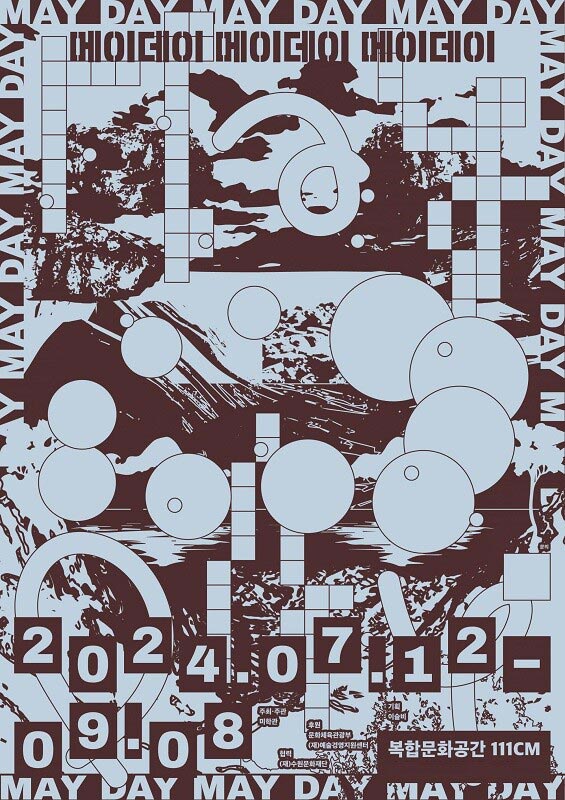
Jeong has also participated in numerous group exhibitions, including 《MAY DAY MAY DAY MAY DAY》 (111CM, Suwon, 2024), 《DOOSAN Art Lab Exhibition 2024》 (DOOSAN Gallery, Seoul, 2024), 《All the Past Comes to the Present》 (HITE Collection, Seoul, 2023), 《2022 AAMP Forum Festival》 (Manzi Art Space, Hanoi, Vietnam, 2022), and 《Objects in Mirror are closer than they appear》 (OCAT Shanghai, Shanghai, China, 2021), as well as in a number of film festivals.

Awards (Selected)

Jeong was selected as the recipient of the 15th DOOSAN Yonkang Art Award.

Collections (Selected)

Jeong’s works are held in the collection of the Korean Film Archive.

Works of Art

Memories Accumulated in a Place

Originality & Identity

Yeoreum Jeong’s practice begins with tracing how memories accumulated within specific places have been made visible—or rendered invisible—over time. She investigates how certain sites are camouflaged and administered through the operations of history, capital, and power, calling back traces that were either excluded from official records or deliberately erased, from the vantage point of the present. Through this approach, place is understood not as a fixed backdrop but as a dynamic field where past and present continuously collide.

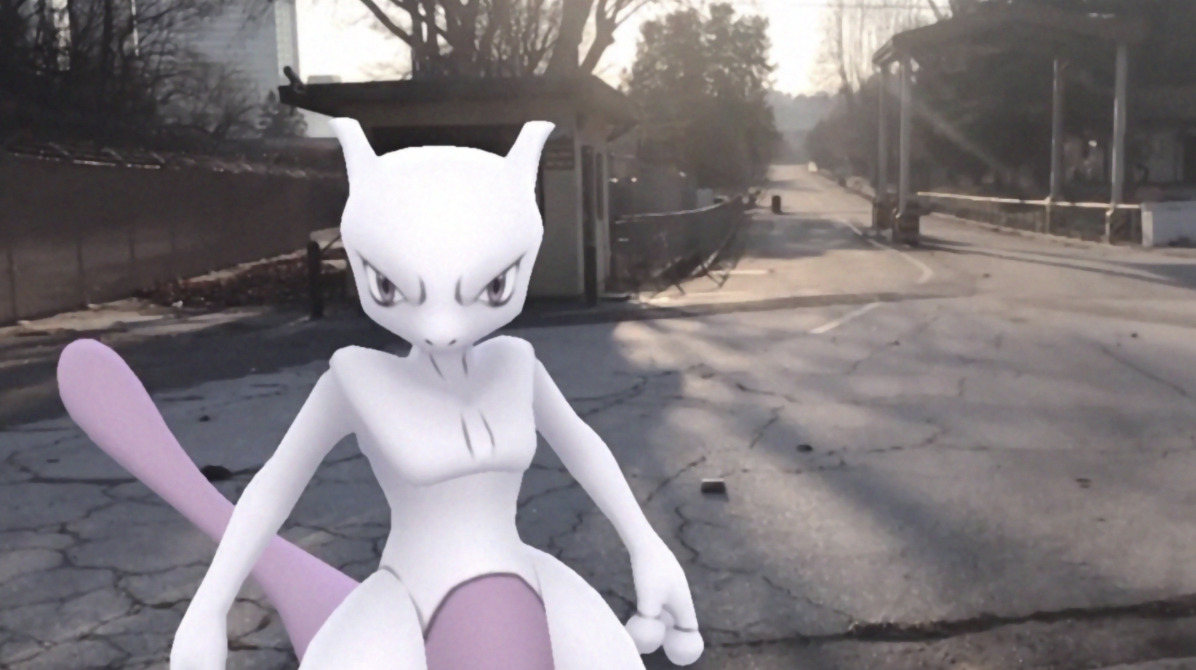
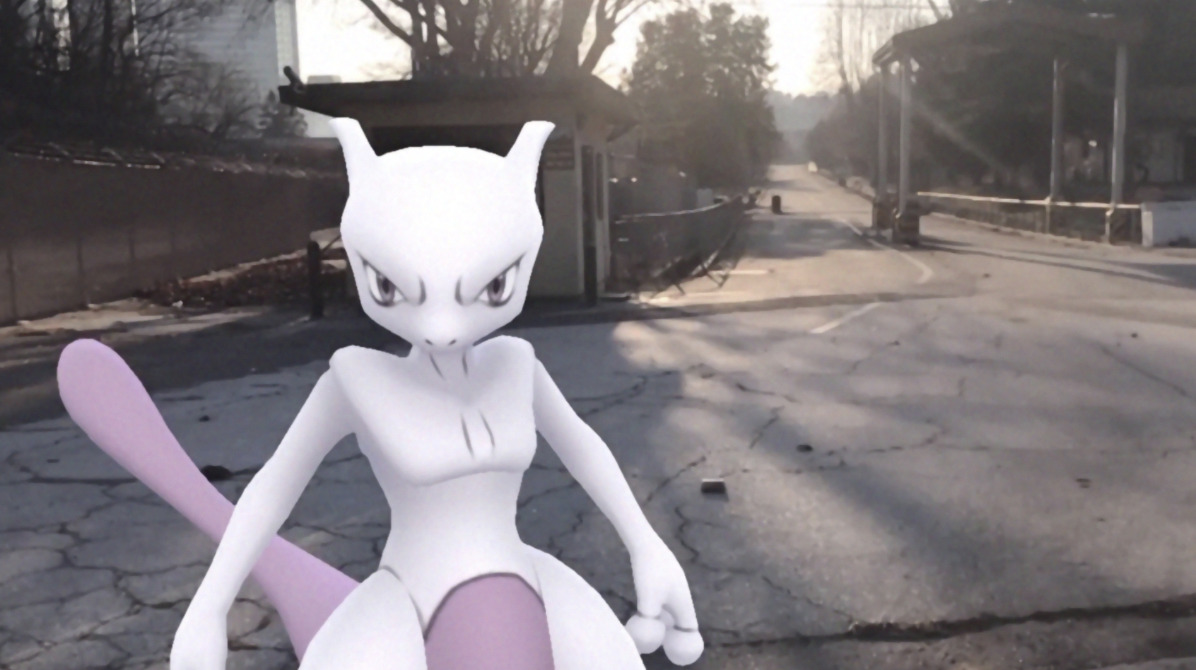
The work Graeae: A Stationed Idea (2020) originates from the artist’s attempt to access the inaccessible Yongsan U.S. military base through an indirect route—an augmented reality game. By collecting signs that leak through contemporary visual technologies such as Pokémon Go, social media, and satellite imagery, Jeong reveals “invisibility” itself as a political condition. The work foregrounds questions of visibility and invisibility surrounding spaces where colonialism and military power are condensed.

In The Long Hole (2021), this line of inquiry becomes more layered as it intersects with the artist’s own family history. Camp Long in Wonju appears as a contradictory site where Jeong’s grandparents lost their home while simultaneously sustaining their livelihood. Here, the U.S. military base is presented not as a singular historical event but as a place where survival and violence operated simultaneously, expanding into a point where memory and forgetting intersect.

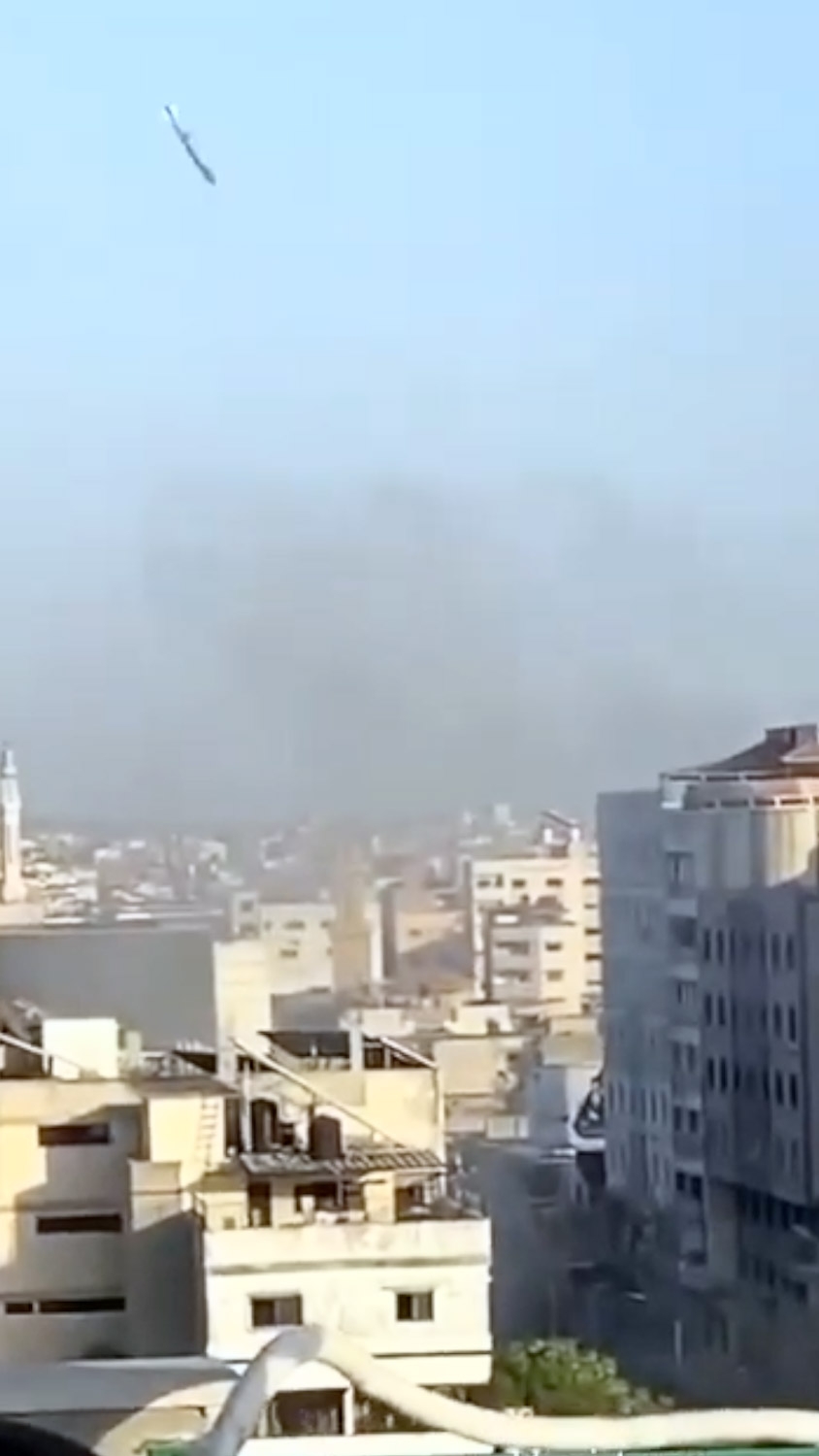
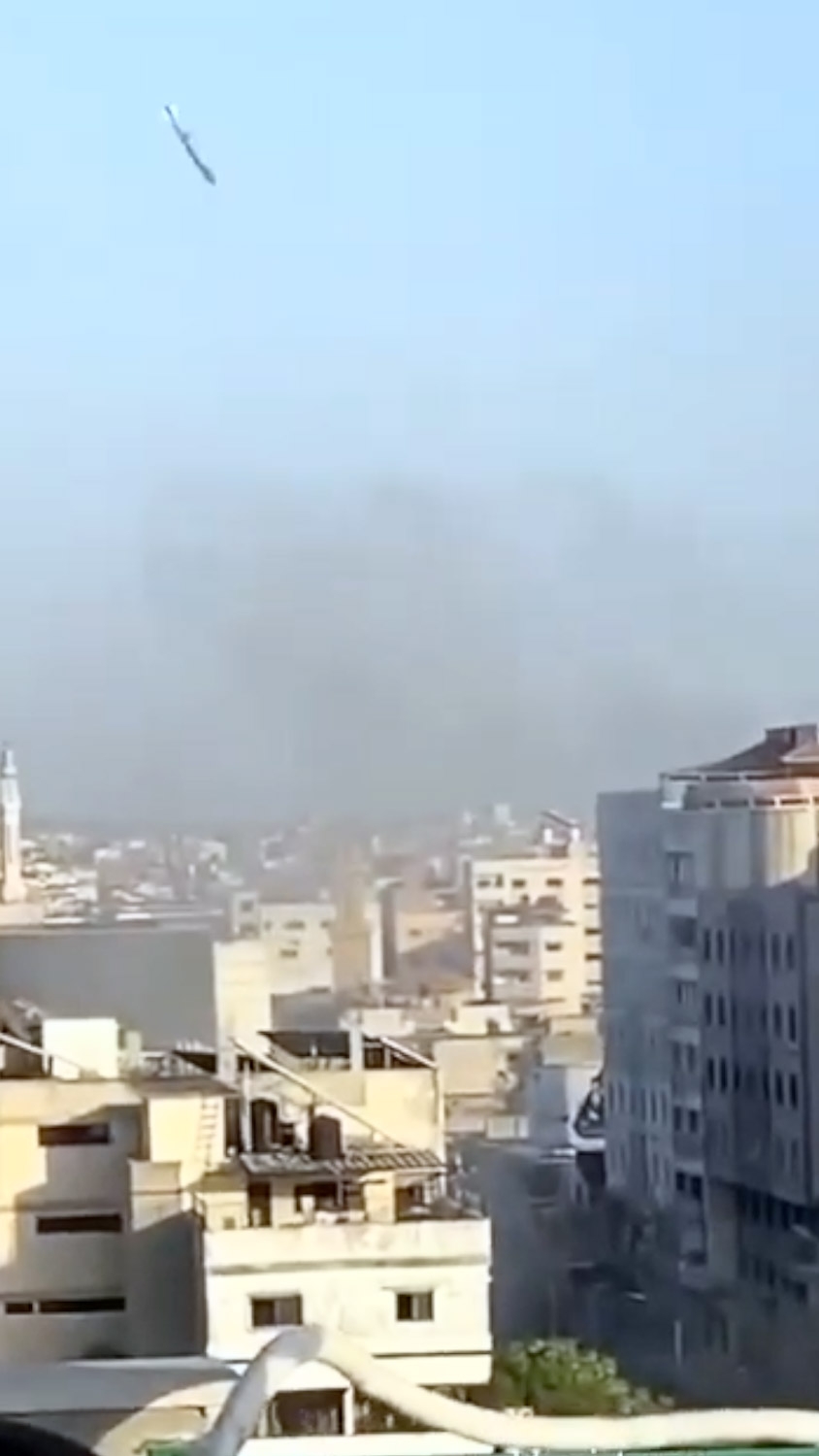
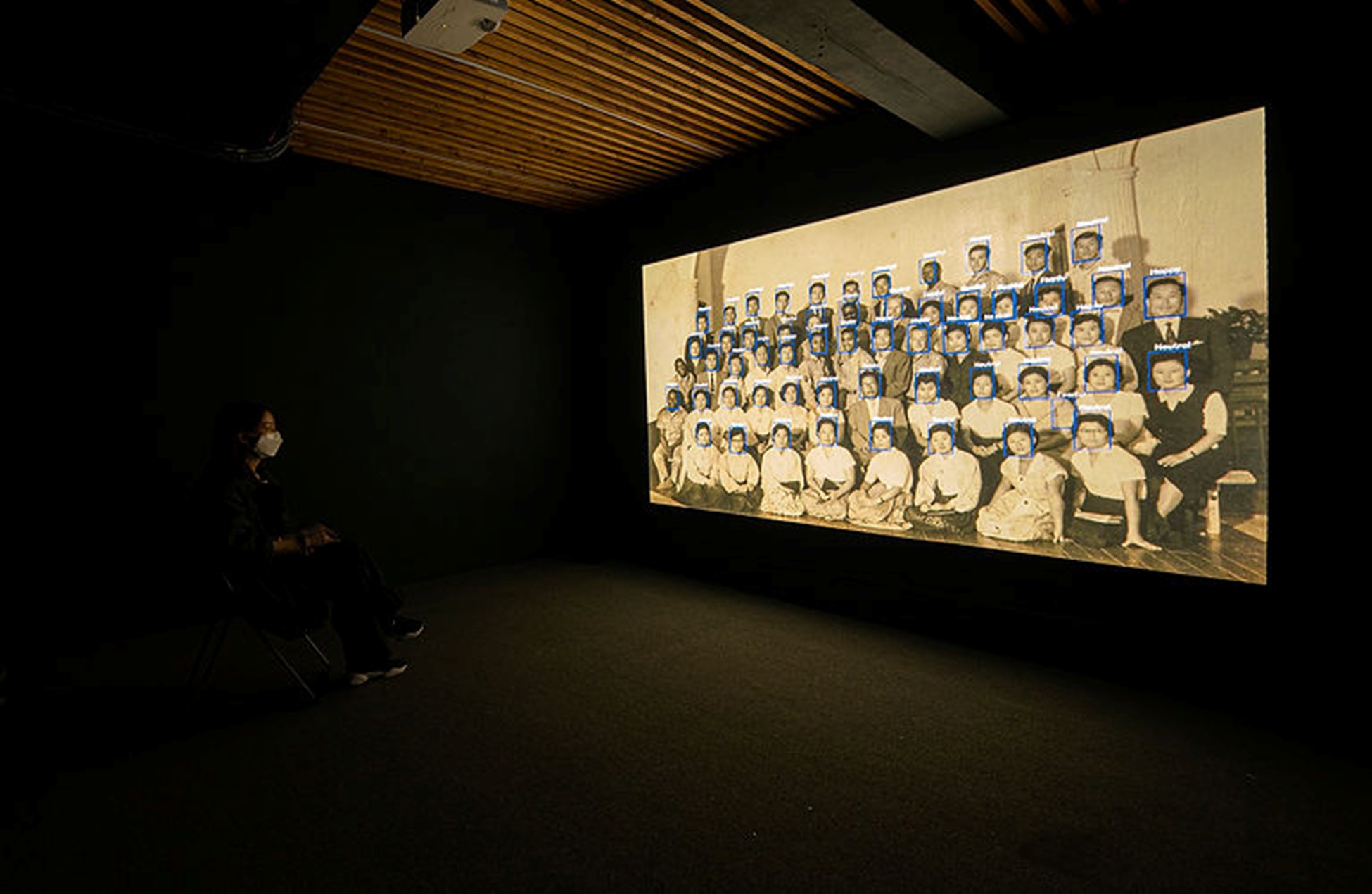
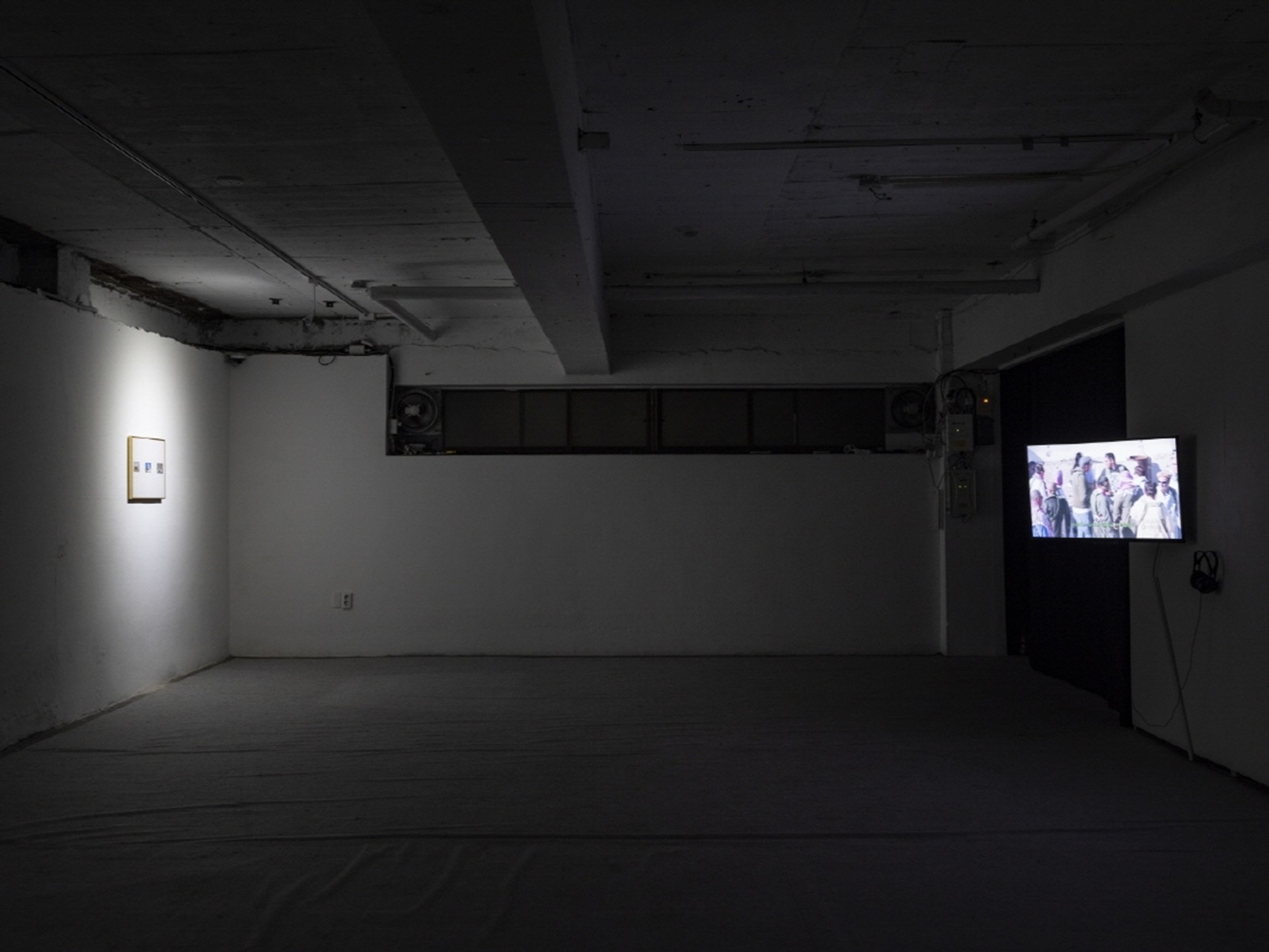
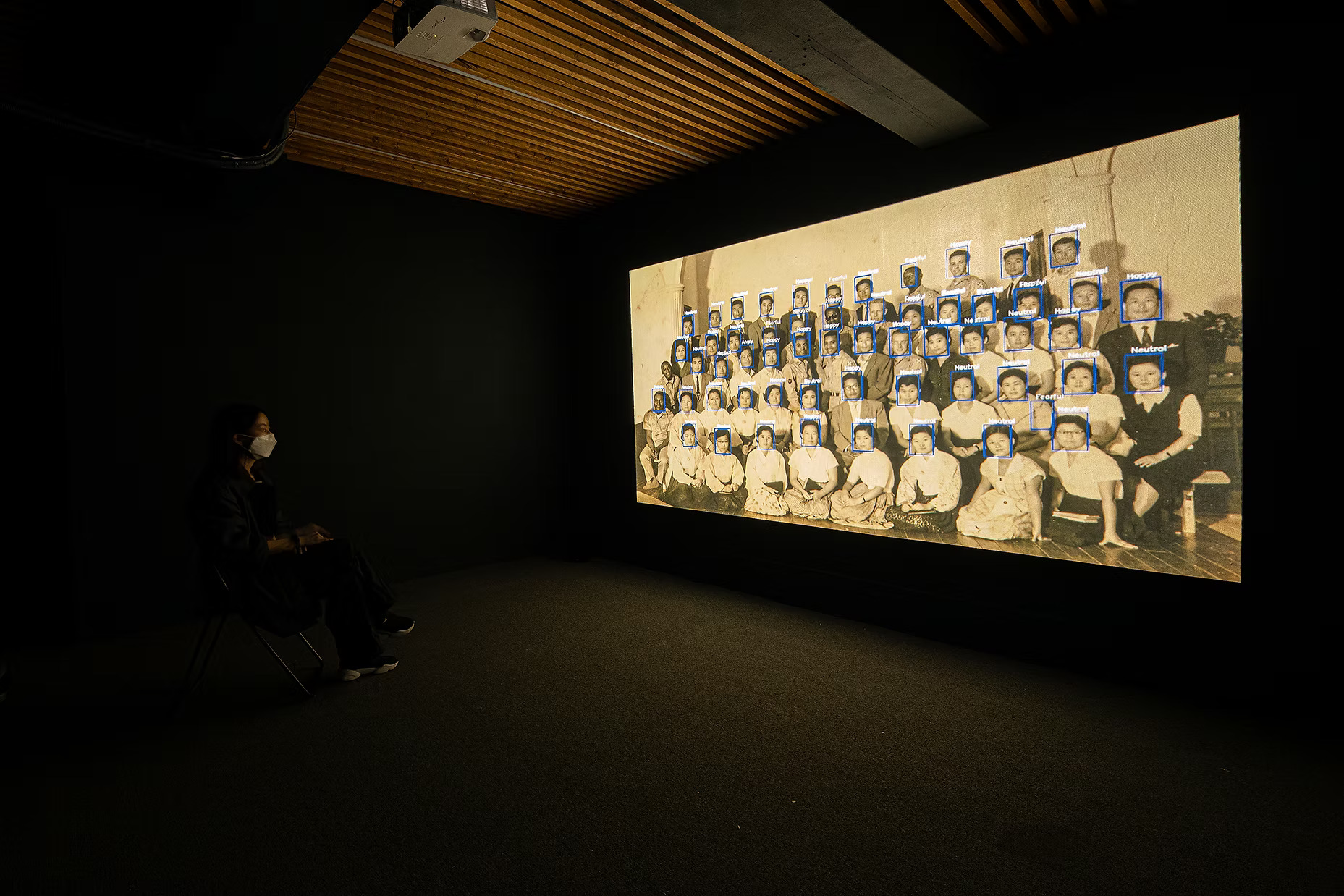
Jeong’s focus later extends beyond specific locations to the ways war and disaster are consumed through images. To a Natural Witness (2021) addresses the paradox in which reality becomes flattened amid an excess of records, drawing on images uploaded in real time by civilians during the Gaza airstrikes. Subsequently, The Silent Bearers (2023) and In God We Trust (2023) observe how postwar landscapes are transformed into sites of tourism or ritual, examining both the human desire to preserve memory and the limitations of that effort.

Style & Contents

Working primarily with moving images, Yeoreum Jeong interweaves photography, found footage, satellite imagery, and 3D rendering, crossing between different modes of image production. By actively employing visual information technologies such as GPS, satellite images, and CCTV, she reveals how the act of seeing itself already contains the gaze of power. Works such as Graeae: A Stationed Idea and The Long Hole incorporate these technologies into their narrative structures, adopting investigative formats through figures such as detectives and AI.

In The Long Hole, the form crystallizes into that of a detective report, positioning the viewer as someone who dissects the layered temporality of a site by following clues. The Google Maps coordinate “Camp Long ATM”—the only identifiable data point—functions as a symbol where financial capitalism and military power intersect, sharply contrasted with the physical traces of blood left on-site, thereby highlighting the gap between abstract data and material violence.

A notable formal shift appears in To a Natural Witness. Through its extended running time and minimal editing, the work foregrounds the duration of viewing itself rather than the delivery of information. Here, the viewer is positioned less as an interpreter of events than as a witness exposed to images, compelled to confront how ethics and sensibility are numbed within contemporary media environments.

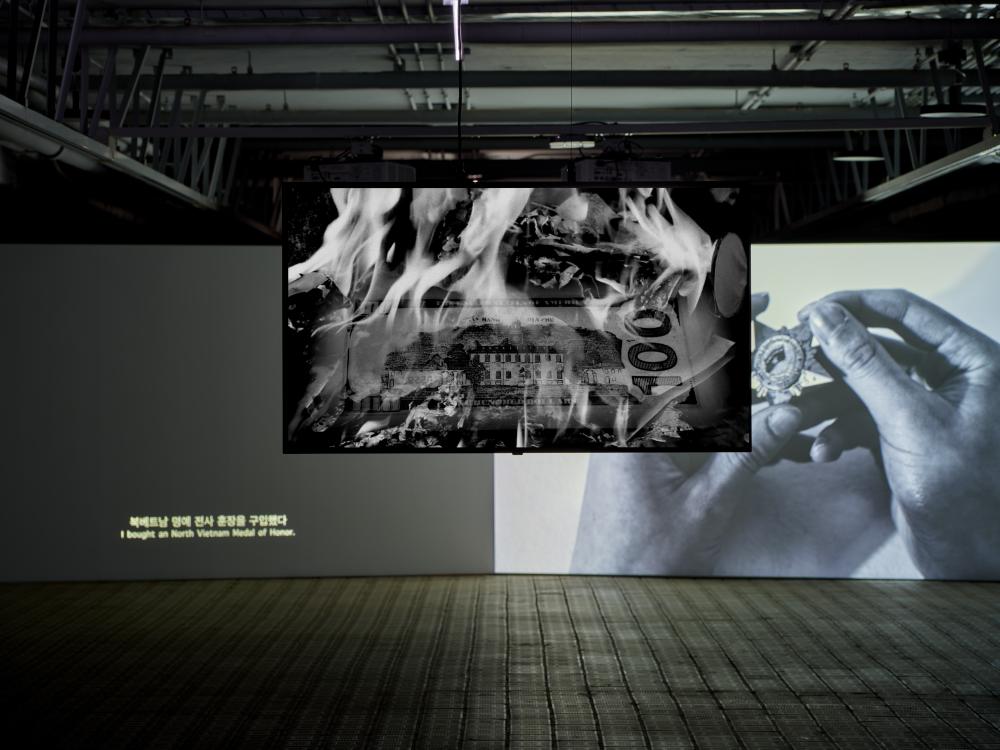
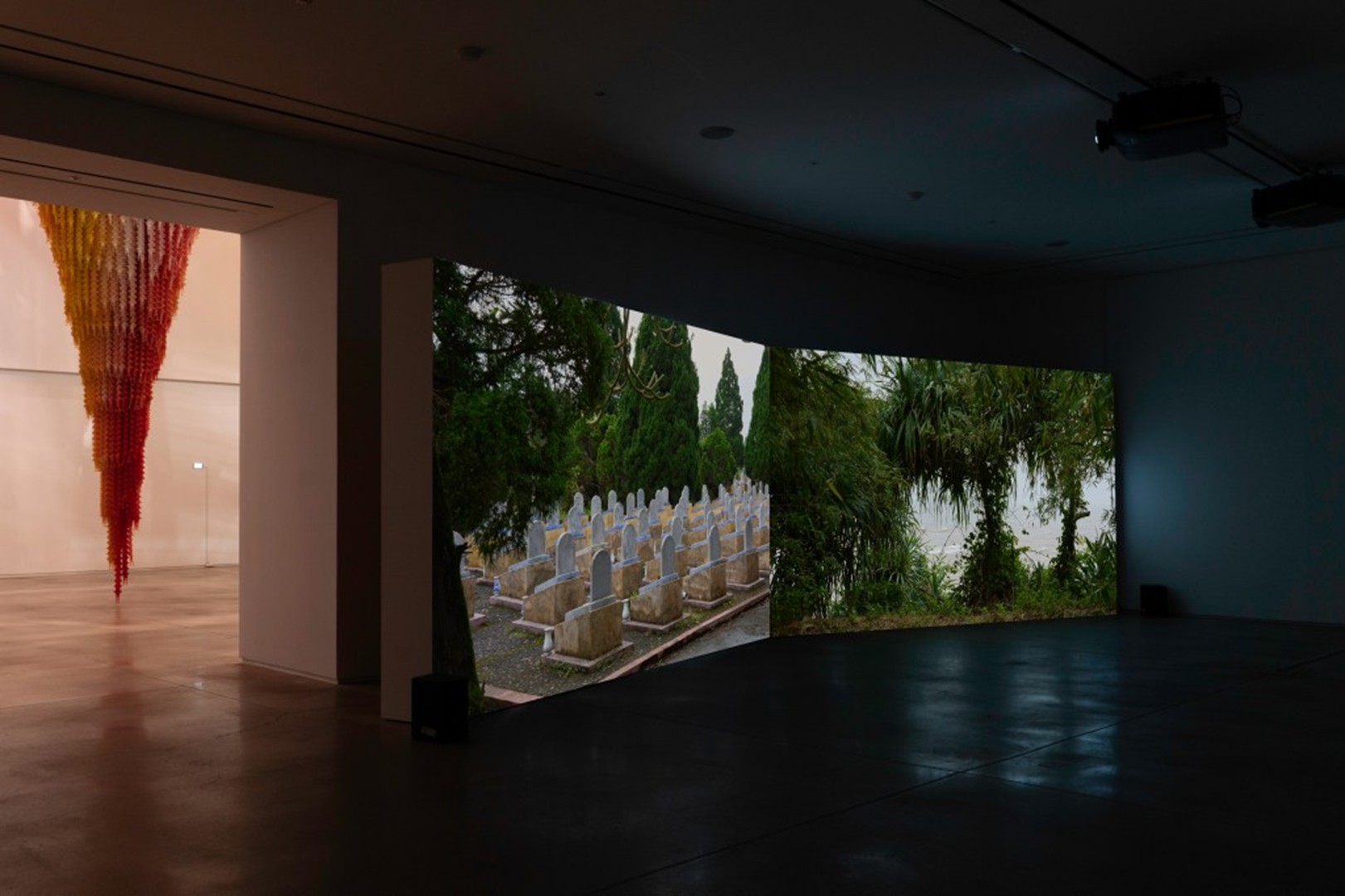
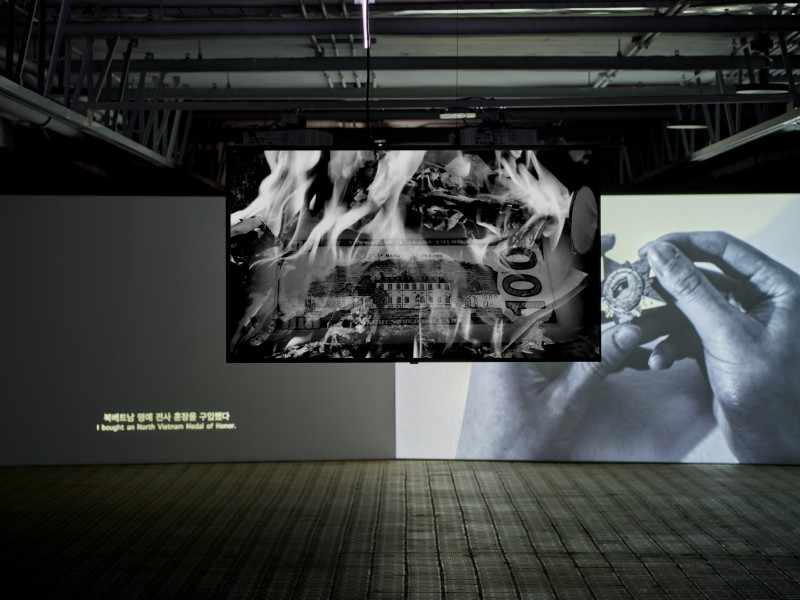
By contrast, The Silent Bearers and In God We Trust center on photographs taken directly by the artist and employ a more restrained visual language. As Jeong follows the transformation of former battlefields into tourist destinations or ritualized spaces, she slows down the tempo of images, opening room for reflection. In particular, In God We Trust juxtaposes images of spirit money with U.S. dollar bills, succinctly exposing the fissure between economic value and the persistence of memory.

Topography & Continuity

By combining place, memory, and visual technologies, Yeoreum Jeong occupies a distinctive position in contemporary Korean art through her exploration of the remnants of colonialism. While her practice falls within the category of research-based moving-image work, it differentiates itself by critically revealing the structures through which images are produced, circulated, and consumed, rather than merely conveying information. Her method of intersecting themes such as U.S. military bases, war, and disaster with personal experience simultaneously activates private memory and public history.

The trajectory of her work is marked less by abrupt thematic shifts than by an expansion of approach. If Graeae: A Stationed Idea and The Long Hole focus on uncovering the concealed structures of specific sites, To a Natural Witness interrogates the overproduction of war imagery and the ethics of viewing, while The Silent Bearers and In God We Trust explore postwar landscapes and the sustainability of memory. This progression demonstrates how Jeong’s attention gradually shifts from ways of seeing place to the conditions under which images are consumed.

Her two solo exhibitions, 《HAPPY TIME IS GOOD》(Hapjungjigu, Seoul, 2021) and 《Centuries in the Distant Mist》(SeMA Bunker, Seoul, 2023), serve as concentrated presentations of this artistic trajectory. In particular, SeMA Bunker—a former military facility converted into an exhibition space—functions as a site where the artist’s thematic concerns and spatial conditions converge, allowing the exhibition itself to operate as a narrative device.

Moving forward, Jeong’s practice holds the potential to expand beyond specific nations or locations, addressing how images replace or distort memory within global conflicts and contemporary media environments. Following her selection as the recipient of the 15th DOOSAN Yonkang Art Award and her participation in international exhibitions and film festivals, her work is poised to continue evolving—grounded in localized site-based research while persistently engaging with the shared visual conditions and ethical questions of the contemporary world.

Works of Art

Memories Accumulated in a Place

Articles

Exhibitions

Activities