

Little Dokkebi's Cradle - K-ARTIST

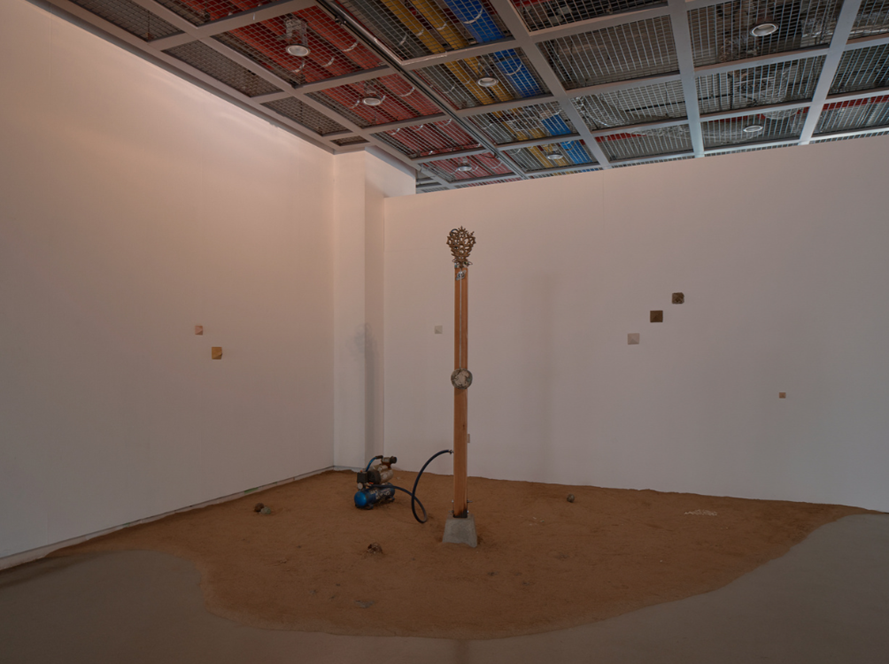
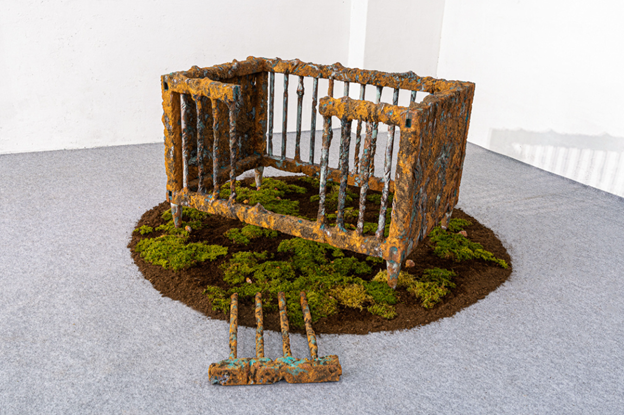
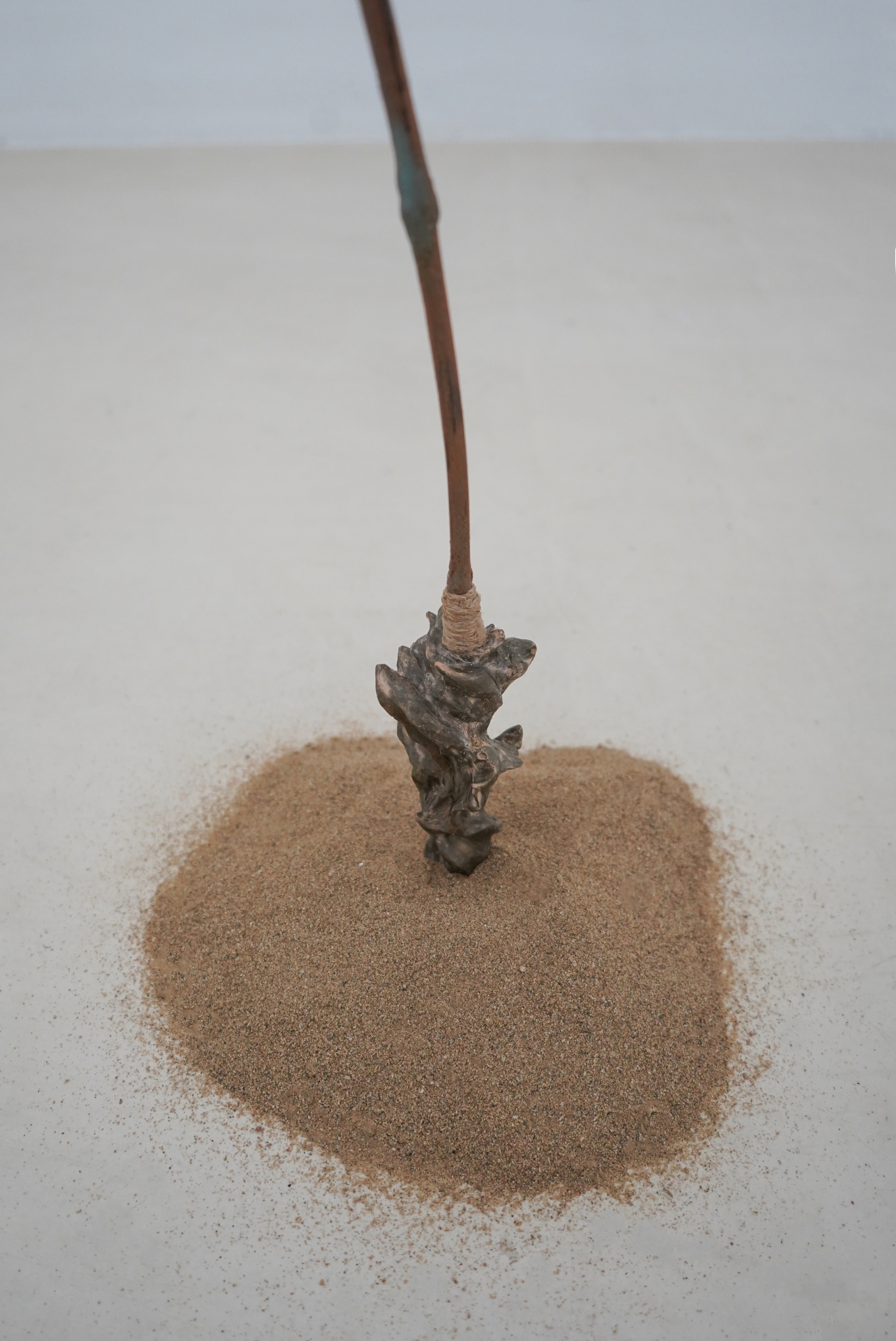
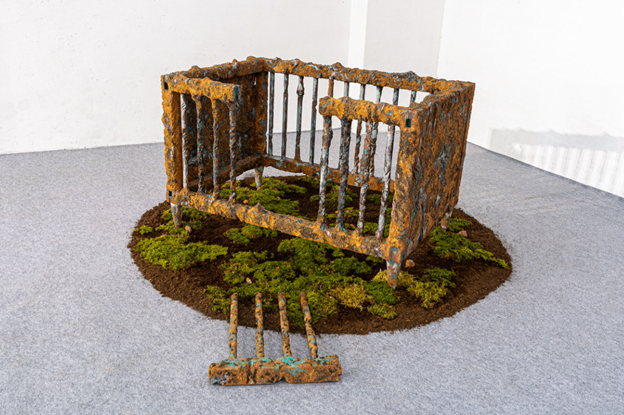
Little Dokkebi's Cradle

2022
Wood, natural soil and red clay, moss, and metal powder
95 x 160 x 174 cm
About The Work

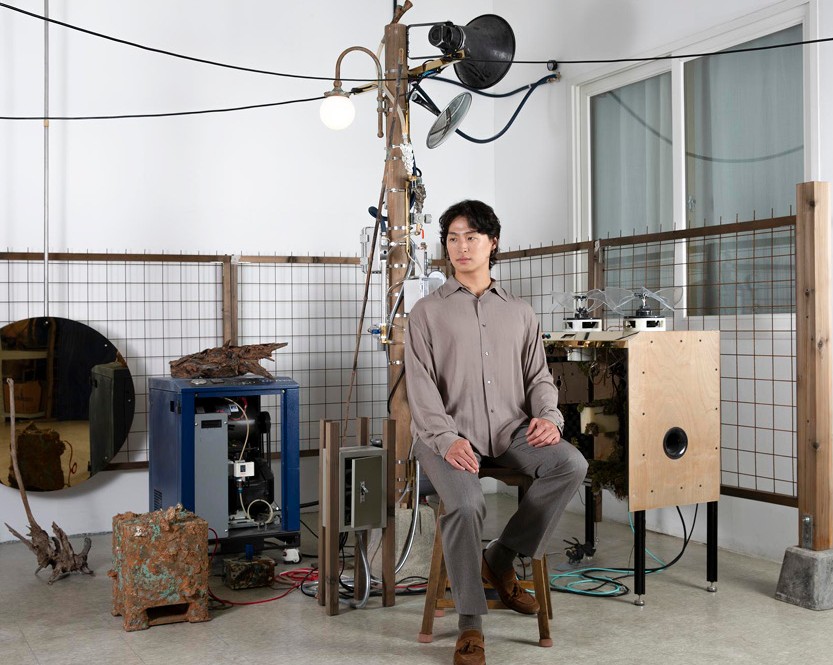
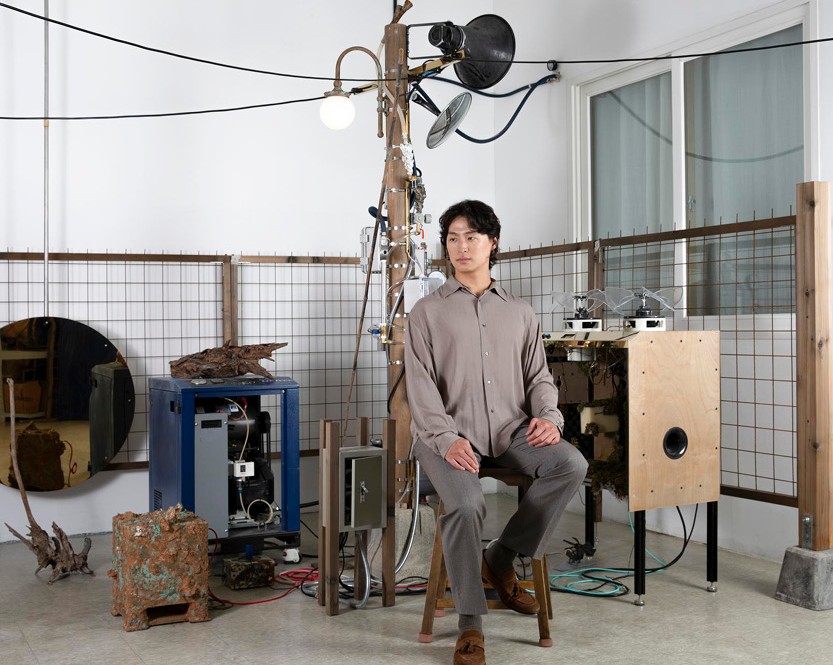
Hosu Lee explores the underlying essence of the space–time we inhabit through a wide range of media, including kinetic art, sound, sculpture, and drawing. His work articulates, in synesthetic and non-linear ways, the gaps inherent in the nature of time—those that cannot be reached through objective quantification or bodily perception—inviting viewers into realms beyond the surface of conscious experience.
 
Lee does not treat technology or machinery as symbols of the future, but rather as tools for investigating the origins of human sensation and consciousness. His sculptural language—combining sound and kinetic structures—prioritizes experiential engagement over explicit narrative or message, generating questions through bodily encounter.
 
The machine’s constant movement between inside and outside, essence and appearance, opens up unfamiliar temporalities, dismantling the walls between dimensions and creating a space for reflection. Situated within contemporary conditions marked by the absence of faith and the uncertainty of existence, Lee’s practice proposes a new performative system — a ‘mechanical ritual’ — through which new sensorial orders and spiritual protocols may emerge.

Solo Exhibitions (Brief)

Hosu Lee has held solo exhibitions including 《Time And Machine》 (OCI Museum of Art, Seoul, 2025), 《Space-Time Travel》 (Windmill, Seoul, 2023), and 《On the Verge of Consciousness》 (Greenpoint Gallery, Brooklyn, USA, 2021).

Group Exhibitions (Brief)

Lee has also participated in numerous group exhibitions, including 《We May Be Separated Like Island, But》 (Daegu Art Factory, Daegu, 2024), 《Sonic Arts Biennale》 (Het HEM, Netherlands, 2024), 《National Juried Show》 (First Street Gallery, New York, USA, 2022), 《Portraiture: Photography Now》 (Black Box Gallery, Portland, USA, 2020), and 《Data Corpse》 (Chelsea College of Arts, London, 2018).

Awards (Selected)

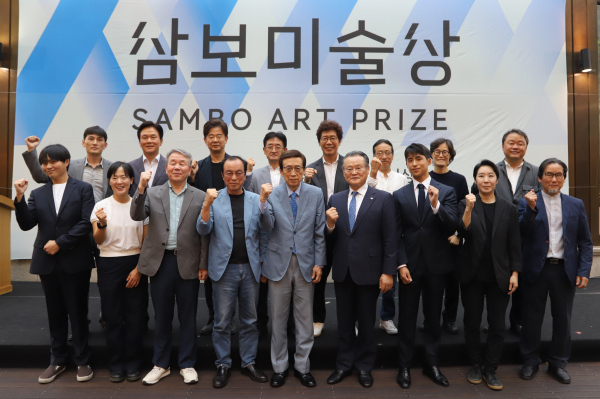
Lee was selected as a 2025 OCI YOUNG CREATIVES artist and a 2025 ARKO DAY Artist Lounge participant. In 2020, he received the Emerging Artist Prize hosted by Greenpoint Gallery, and in 2025, he was awarded the 2nd Sambo Art Award.

Residencies (Selected)

Hosu Lee participated in the National Museum of Modern and Contemporary Art, Goyang Residency in 2025.
Works of Art

New Sensorial Orders and Spiritual Protocols

Originality & Identity

Hosu Lee’s practice begins by questioning how the concepts of time and space—so often taken for granted—are formed, and how incomplete they are when grounded solely in human perception. Rather than treating time and space as objectively measurable coordinates or physical conditions, he seeks to re-examine them at a pre-conscious level, prior to their capture by language and conceptual frameworks. This approach has been consistently developed through the ‘Pendulum Project,’ which he has pursued since 2017.

Key works within the ‘Pendulum Project,’ including 〈Pendulum Project (Time Machine)〉(2017) and the ‘Time Machine’ series, originate from the question, “When did we begin to understand the concept of time?” Lee focuses on the phenomenon of infantile amnesia, considering the possibility that the sensations of space and time experienced in early childhood existed prior to conceptualization. In his work, time is not presented as a linear flow, but as a trace of sensation that can no longer be recalled yet remains embedded deep within the body.

This inquiry takes on a more synesthetic form in 〈The Symphony of Time Machine〉(2018). Childhood experiences of play—particularly the repetitive motion of a swing and the spatial memory of a playground—function as devices that recall time before it was socially encoded with meaning. Through these elements, Lee suggests that the essence of time existed first as sensory experience, prior to cultural conventions or collective agreements.

With 〈Time Machine II〉(2023), his thinking expands beyond personal memory toward the structure of human consciousness itself. Drawing on the concept of the bicameral mind proposed by American psychologist Julian Jaynes, Lee places ancient modes of consciousness and the pre-conscious state of infancy along a single continuum. This perspective frames changes in time perception and consciousness as processes linked not only to individual development, but also to the formation of civilization, marking a shift in his practice from personal memory toward broader ontological inquiry.

Style & Contents

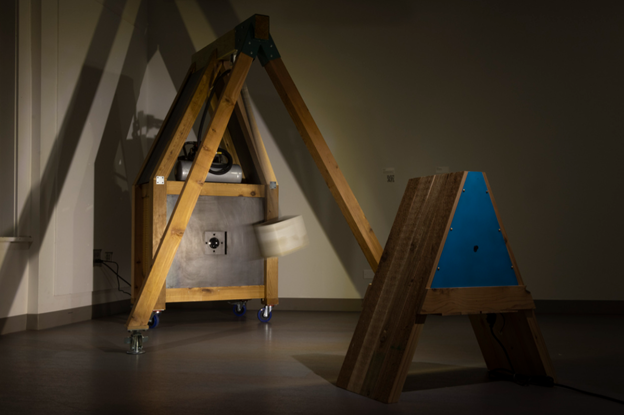
Lee’s work unfolds through hybrid forms that combine kinetic structures, sound, sculpture, and installation. In the early ‘Pendulum Project,’ pendular motion functions as a core formal element, using repetitive and hypnotic movement to draw viewers away from habitual perceptions of time. In works such as 〈Pendulum Project (Time Machine)〉 and 〈The Symphony of Time Machine〉, these structures are combined with performance, encouraging more immediate bodily engagement.

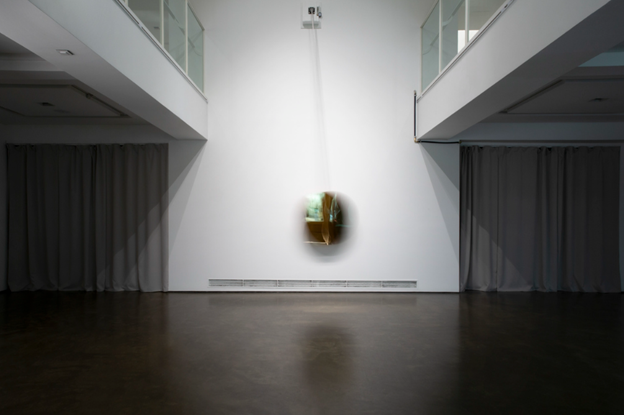
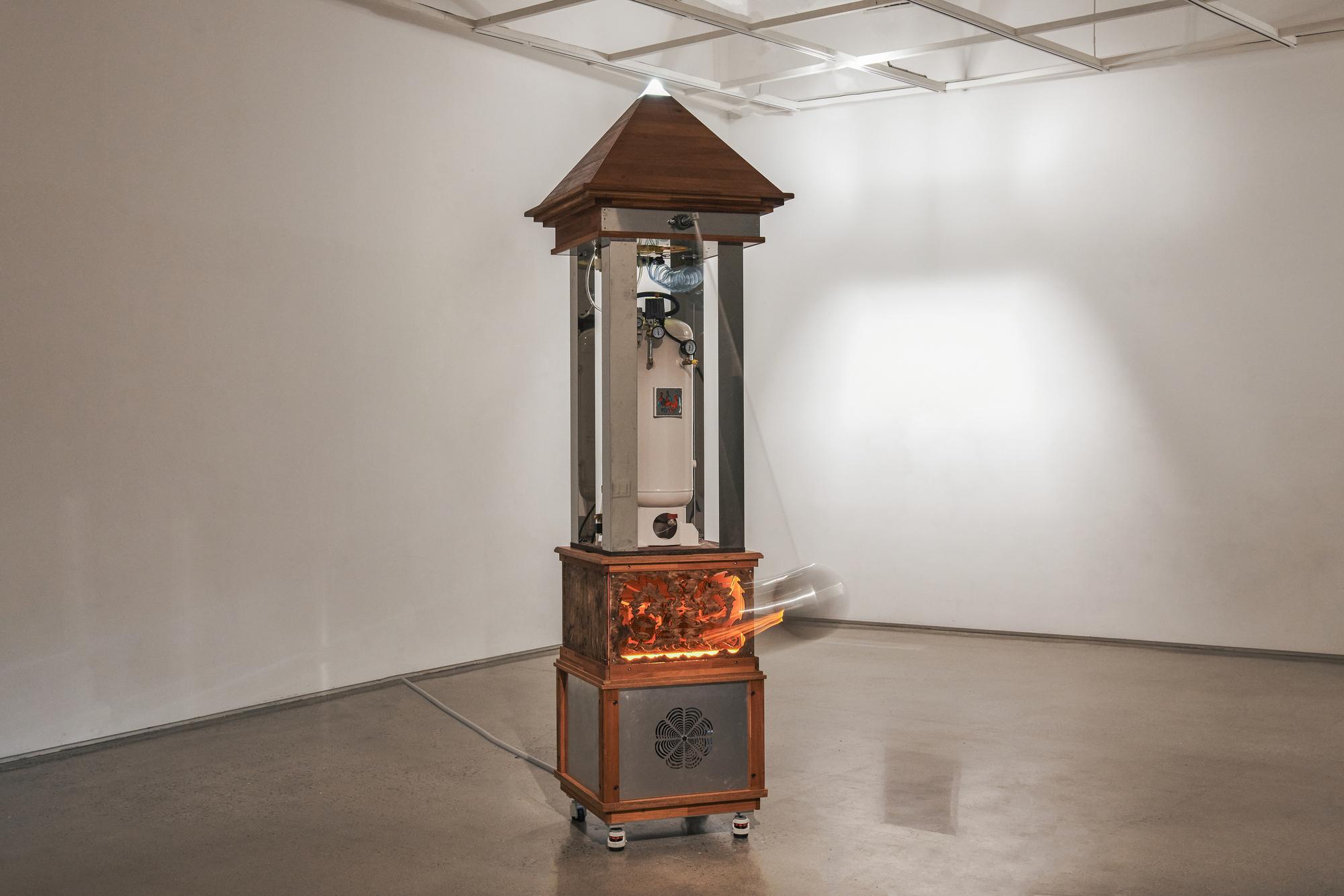
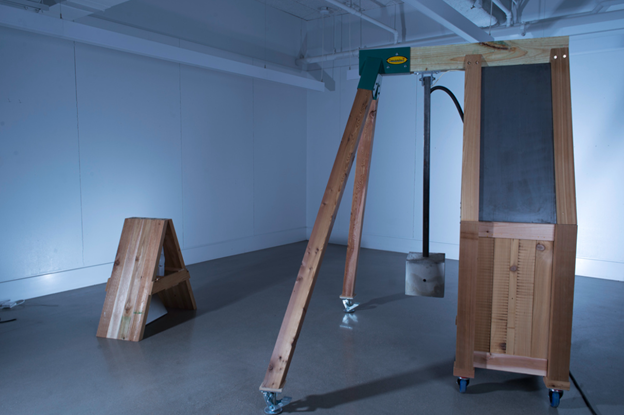
In 〈Time Machine II〉, sculptural form becomes more pronounced. A column reminiscent of a pyramid, a pendulum swinging repeatedly within it, and internal bodily sounds captured through a stethoscope create a visually and sonically immersive experience. Here, sound originates not from the external environment but from within the body, serving as a crucial medium that connects to sensations prior to conscious awareness.

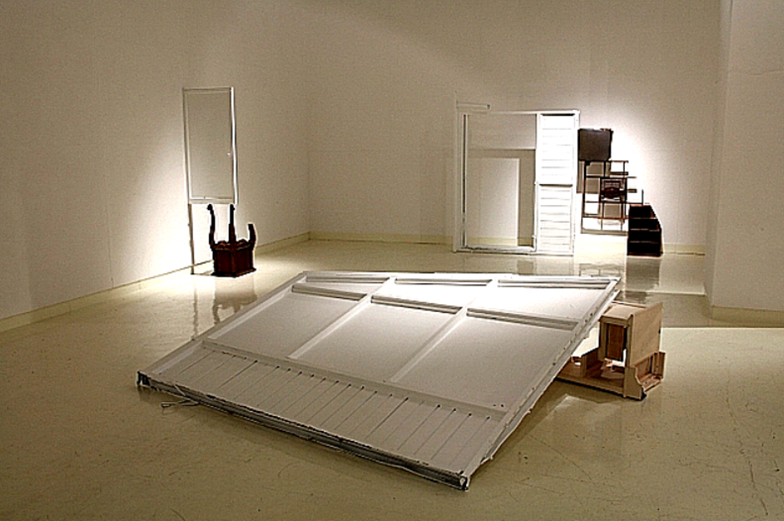
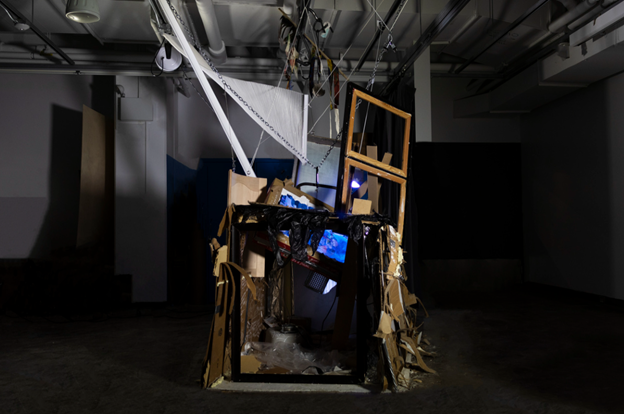
The solo exhibition 《Space-Time Travel》(Windmill, 2023) brought these works together into a non-linear environment. Rather than functioning as independent sculptural objects, the works were arranged as a constellation of events operating at different rhythms and speeds, experienced through the viewer’s movement. Through this exhibition, Lee’s practice expanded from object-centered sculpture toward a spatially organized sensory field.

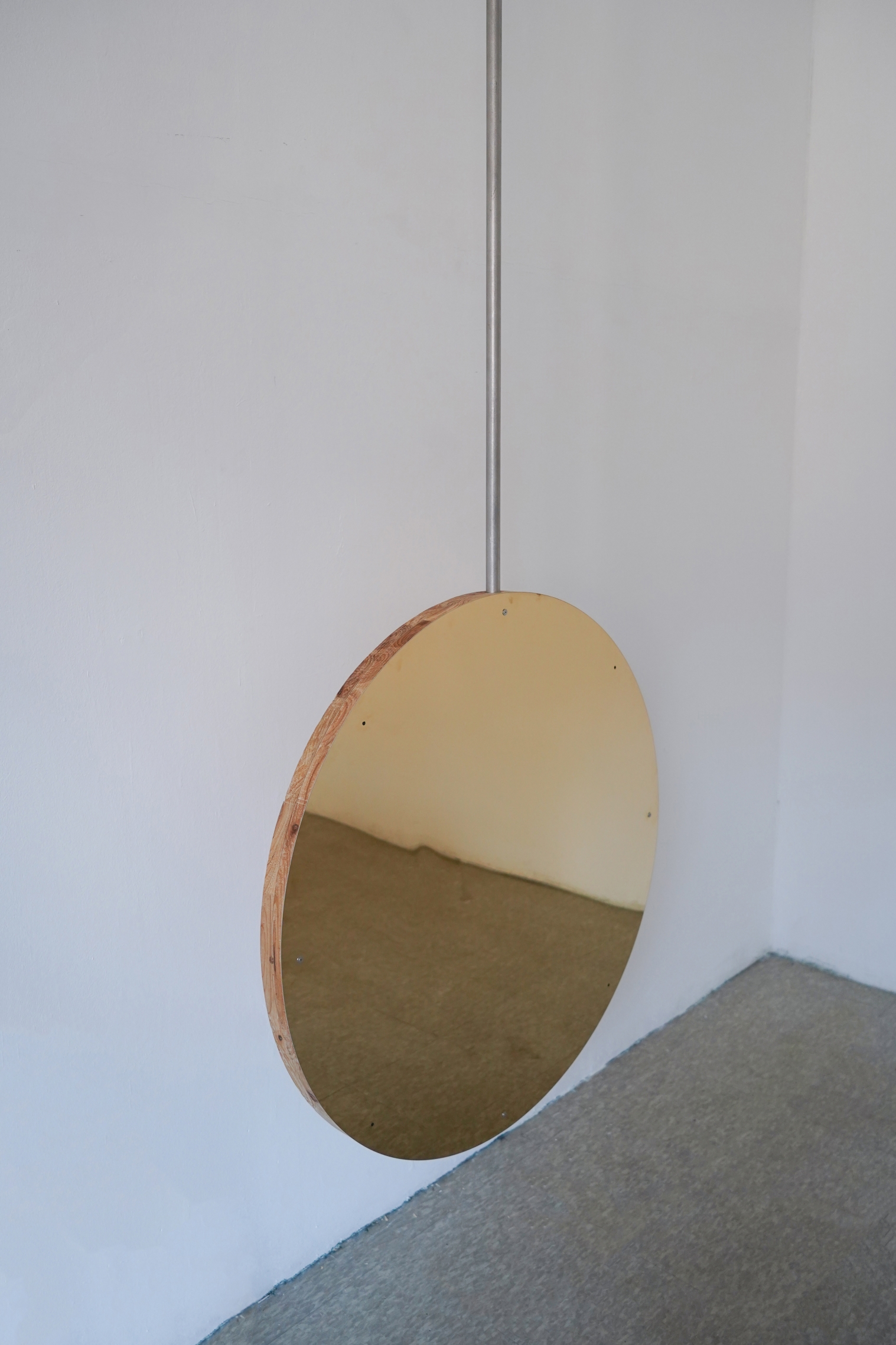
This trajectory becomes more explicit in the solo exhibition 《Time And Machine》(OCI Museum of Art, 2025). The works 〈Time〉(2025) and 〈Machine〉(2025) exist as distinct sculptural entities while remaining structurally connected across the exhibition space. Utilizing industrial materials such as pneumatic systems, metal, wood, and complex sound installations, the kinetic motion and mechanical noise render the passage of time physically perceptible. Sculpture here shifts from an object of observation into a situational environment that envelops the viewer.

Topography & Continuity

Lee does not treat technology or machinery as symbols of the future, but rather as tools for investigating the origins of human sensation and consciousness. His sculptural language—combining sound and kinetic structures—prioritizes experiential engagement over explicit narrative or message, generating questions through bodily encounter.

While his early works focus on personal memory and the sensory states of early childhood, his practice gradually expands toward the structure of human consciousness and civilizational shifts. More recently, space and place themselves have become sculptural devices. This progression reflects not a change in subject matter, but a sustained inquiry pursued across increasingly expansive scales.

In 《Time And Machine》, the exhibition space itself is organized as a form of ‘mechanical ritual,’ actively involving the viewer’s body and senses to unsettle conventional perceptions of time. Moving across sculpture, installation, and sound art, Lee’s work exemplifies a broader tendency in contemporary art toward sensory experience and performative engagement.

Lee’s practice is expected to continue expanding through site-specific installations and international exhibition contexts. Having already broadened his scope through overseas exhibitions and sound-based projects, he consistently explores the universal themes of time, machinery, and consciousness through a sensory-driven sculptural language. Rather than imposing a fixed narrative, his work encourages viewers to re-sense time and existence for themselves. He is likely to continue developing work that experimentally renews our perception of time within diverse contexts of contemporary art.

Works of Art

New Sensorial Orders and Spiritual Protocols

Articles

Exhibitions

Activities