BED TRAINING - K-ARTIST

BED TRAINING

2023
2-channel video and performance
About The Work

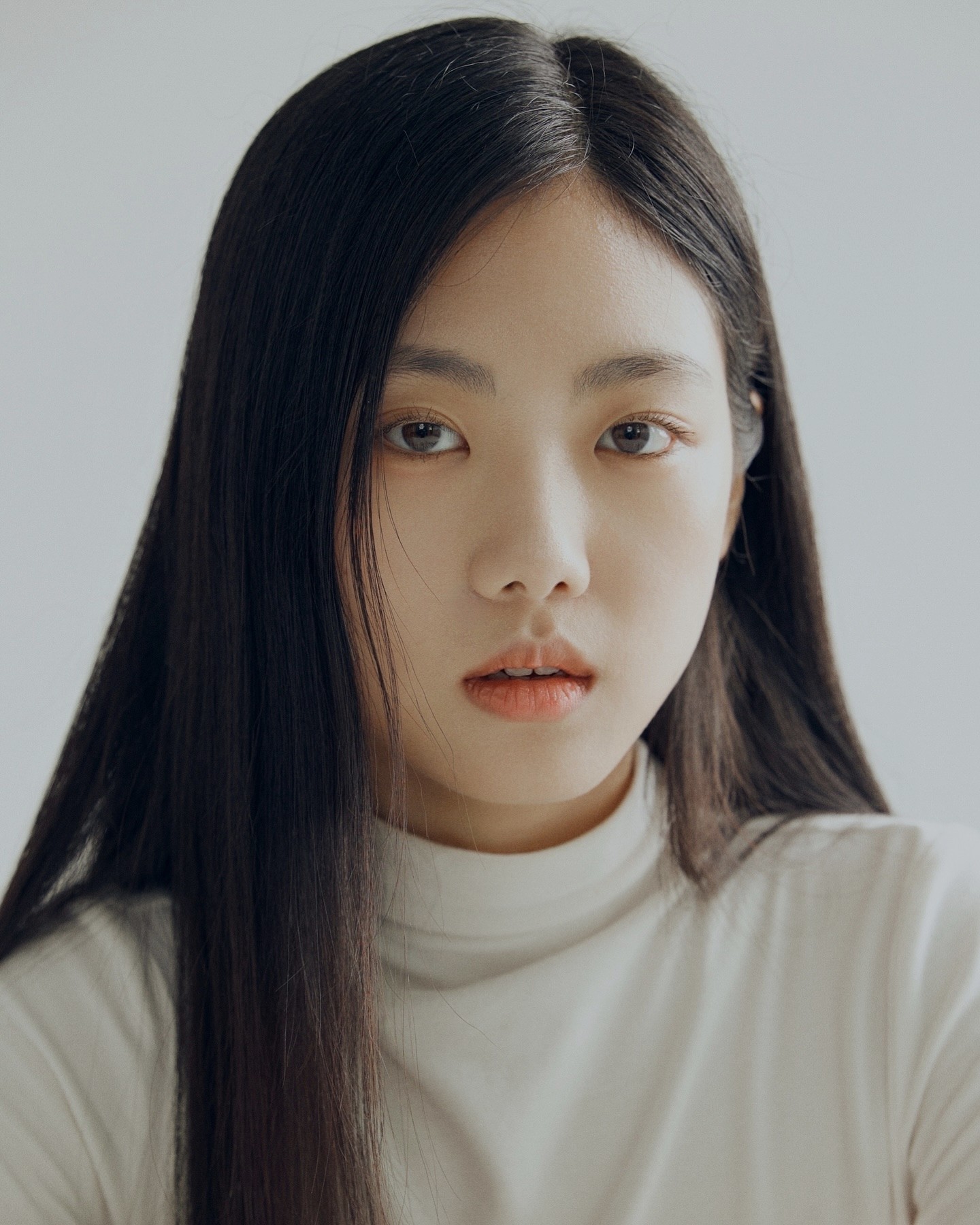
WONJEONG DEPARTMENT STORE explores desire for fantastical images and the ways these images connect the body to the world, primarily through media installations and performance. Drawing fleeting and unstable fantasies into the body and onto the screen, the artist experiments with bodily sensations experienced both online and offline.
 
WONJEONG DEPARTMENT STORE began as a brand created by artist Lee Wonjeong to offer performances to audiences in the form of a service. Through this brand, the artist produces performance-based videos and media installations, pursuing modes of practice that can be articulated within contemporary media and technological environments.
 
WONJEONG DEPARTMENT STORE explores the body and mind positioned between the boundaries of the digital and the offline through a range of sensory media. Rather than viewing images in the digital realm and bodies in physical space as oppositional, the artist understands them as interconnected, bringing the desires and fantasies contained within the digital self into close contact with reality and the flesh.

Solo Exhibitions (Brief)

WONJEONG DEPARTMENT STORE has held solo exhibitions including 《Deleted World: Dele’s Room》 (Rainbow Cube, Seoul, 2024) and 《HEARTIGURI DEBUT SHOWCASE》 (ANOV, Seoul, 2020).

Group Exhibitions (Brief)

WONJEONG DEPARTMENT STORE have also participated in numerous group exhibitions, including 《Masterful Attention Seekers》 (Busan Museum of Contemporary Art, Busan, 2024), 《The Cave Is a Stage》 (Seoripul Gallery, Seoul, 2024), 《THE CHAMBER》 (Caption Seoul, Seoul, 2024), 《The Last Things Before the Last》 (HITE Collection, Seoul, 2023), and 《All Tomorrow’s Parties》 (Art Space 3, Seoul, 2022).

Awards (Selected)

In 2021, WONJEONG DEPARTMENT STORE received the Grand Prize at the 1st Korean Culture Metaverse Content Contest, hosted by the Ministry of Culture, Sports and Tourism, Republic of Korea.

Works of Art

The Experiments with Bodily Sensations

Originality & Identity

The practice of WONJEONG DEPARTMENT STORE begins with an inquiry into how desire for fantastical images produced and circulated within digital environments becomes connected to the body. Fleeting images that appear and disappear online—reels, virtual selves, and other forms of “unstable fantasy”—are treated not merely as visual phenomena but as experiences closely bound to bodily sensation. This perspective rejects a strict separation between the digital and the real, instead approaching them as interpenetrating sensory fields.

The artist describes her practice as “providing services or chasing fantasies,” actively drawing on religious narratives and iconography to arrest images that are otherwise prone to rapid disappearance. SKINCARE MYTH (2022–2023) constructs a mythology for the digital self through the character of a “woman who steals from God,” examining moments where the virtual body on social media overlaps with the physical body in reality. Here, religion functions less as a belief system than as a language and structure for sustaining fantasy.

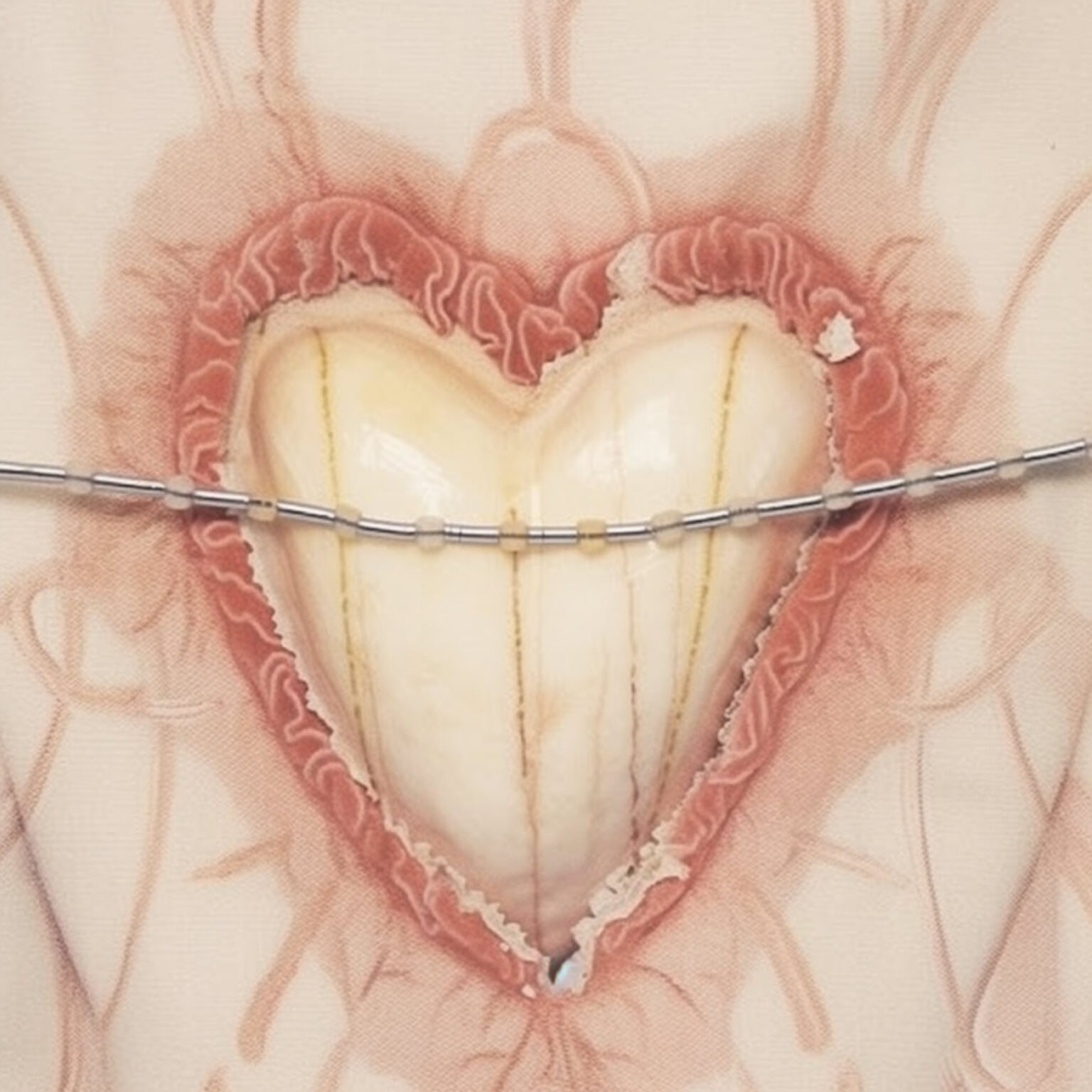
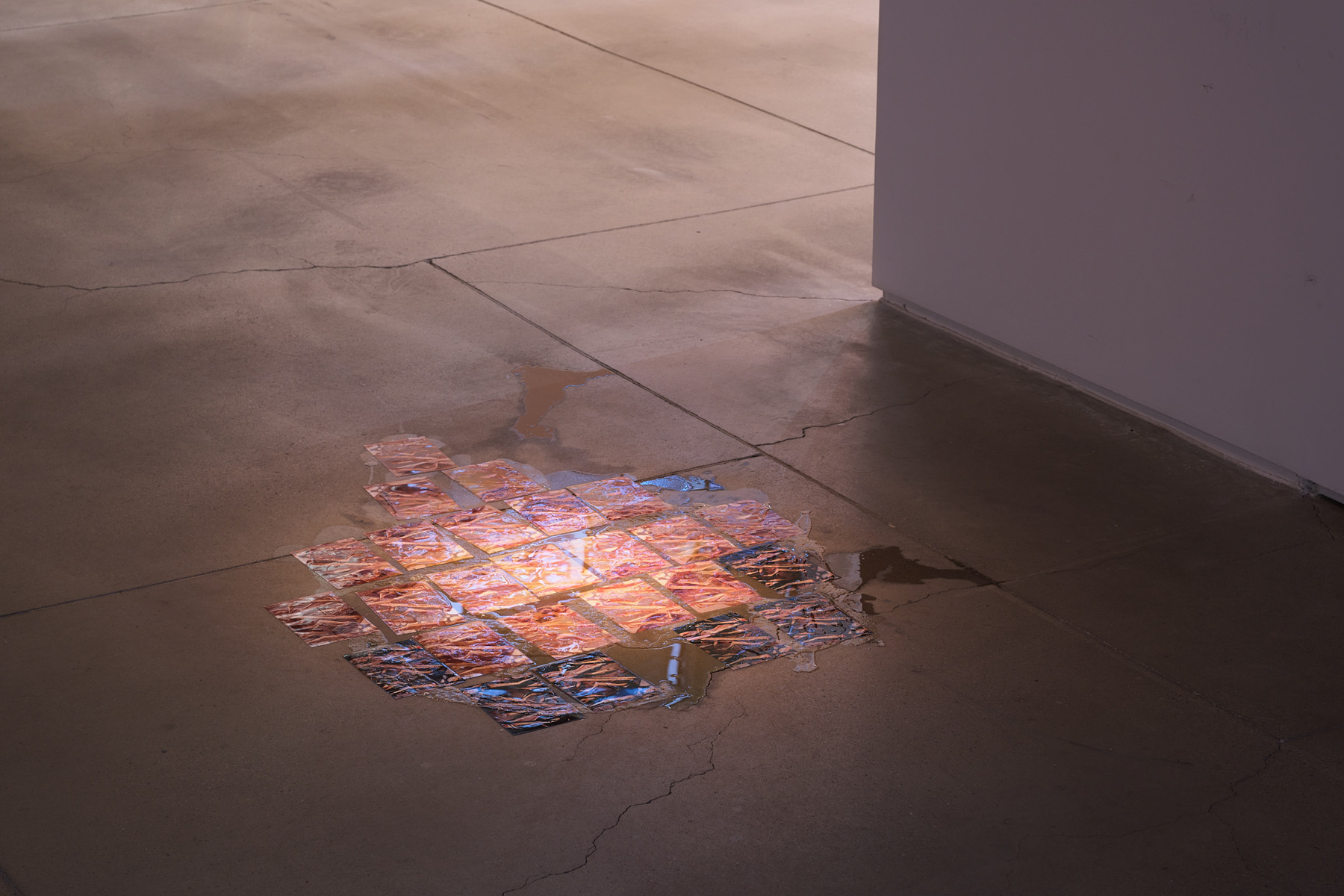
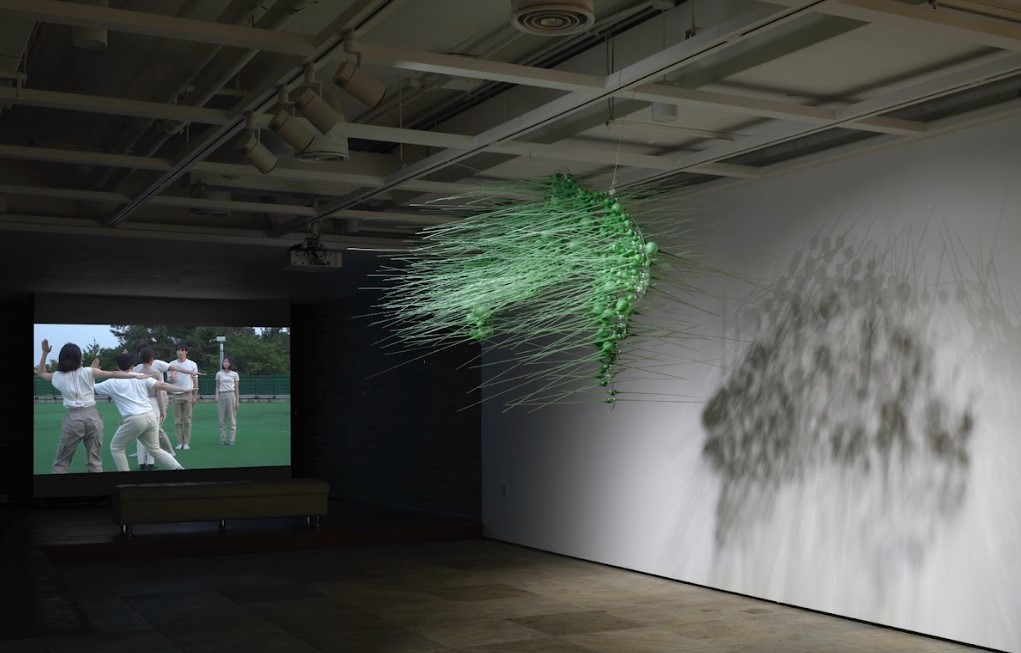
In subsequent works, bodily elements such as skin, bodily fluids, and inflammation come to the fore, transforming the residues of digital imagery into material form. Dropped Skin and Online Body Fluid Letters (2022) presents bodily remnants that appear to have leaked across the boundary between online and offline space. In the group exhibition 《The Last Things Before the Last》 (HITE Collection, 2023), these elements expand into a scene in which disparate fragments coalesce to form a single body—an approach that positions digital images and physical bodies not as opposites, but as coexisting like bone and flesh.

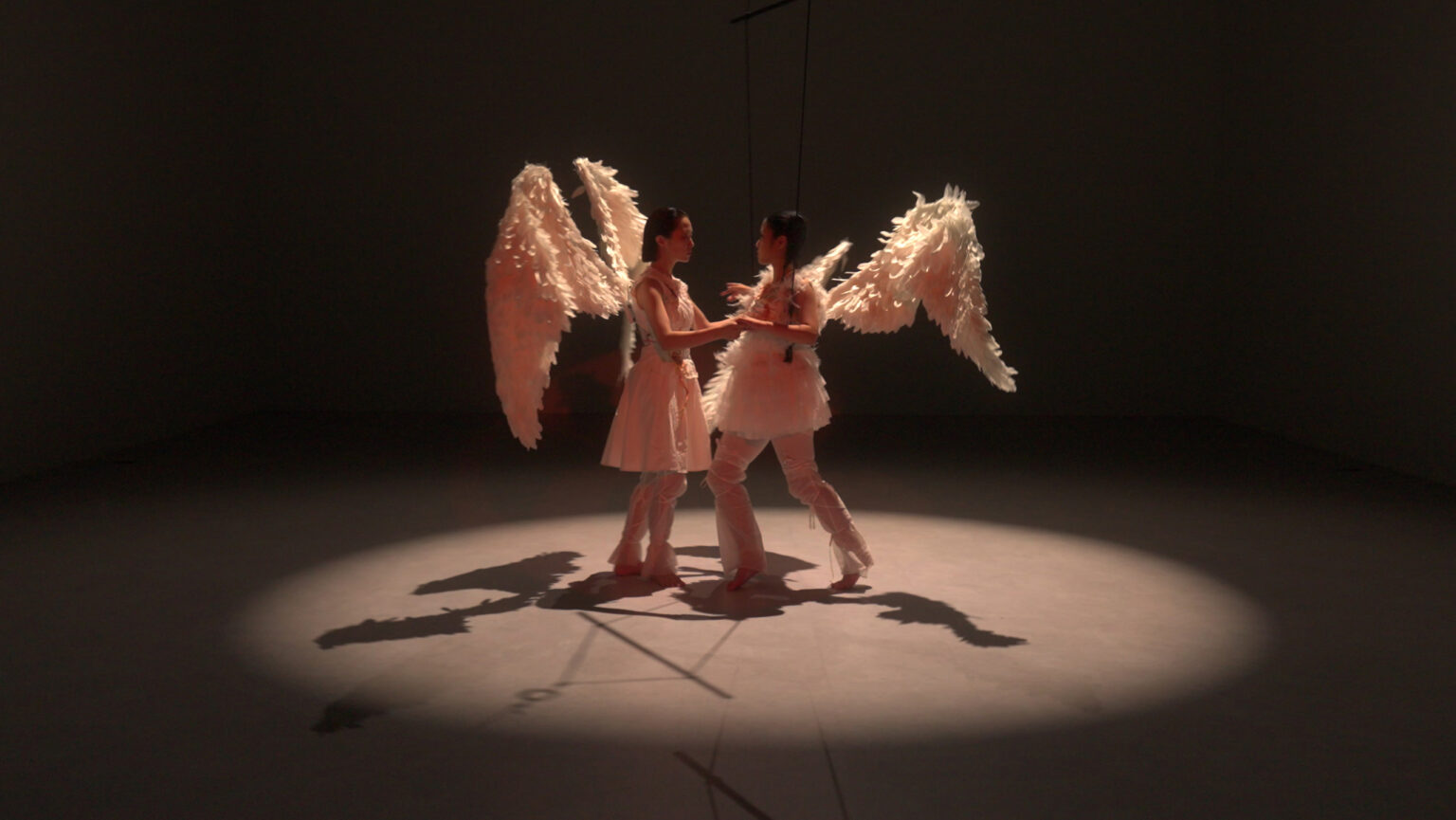
More recent works deepen the fusion of fantasy and the body into structures of transformation and circulation. In Pure Hymn (2023), AV.E-Maria (2024), and Manger for Inflammation (2024), religious and abject imagery—angels, the Virgin Mary, inflammation—overlap as the digital self emerges as a being that endlessly adds to and deletes from its own body. Through this trajectory, the artist persistently questions whether the desires of the digital self can ever be separated from the physical body.

Style & Contents

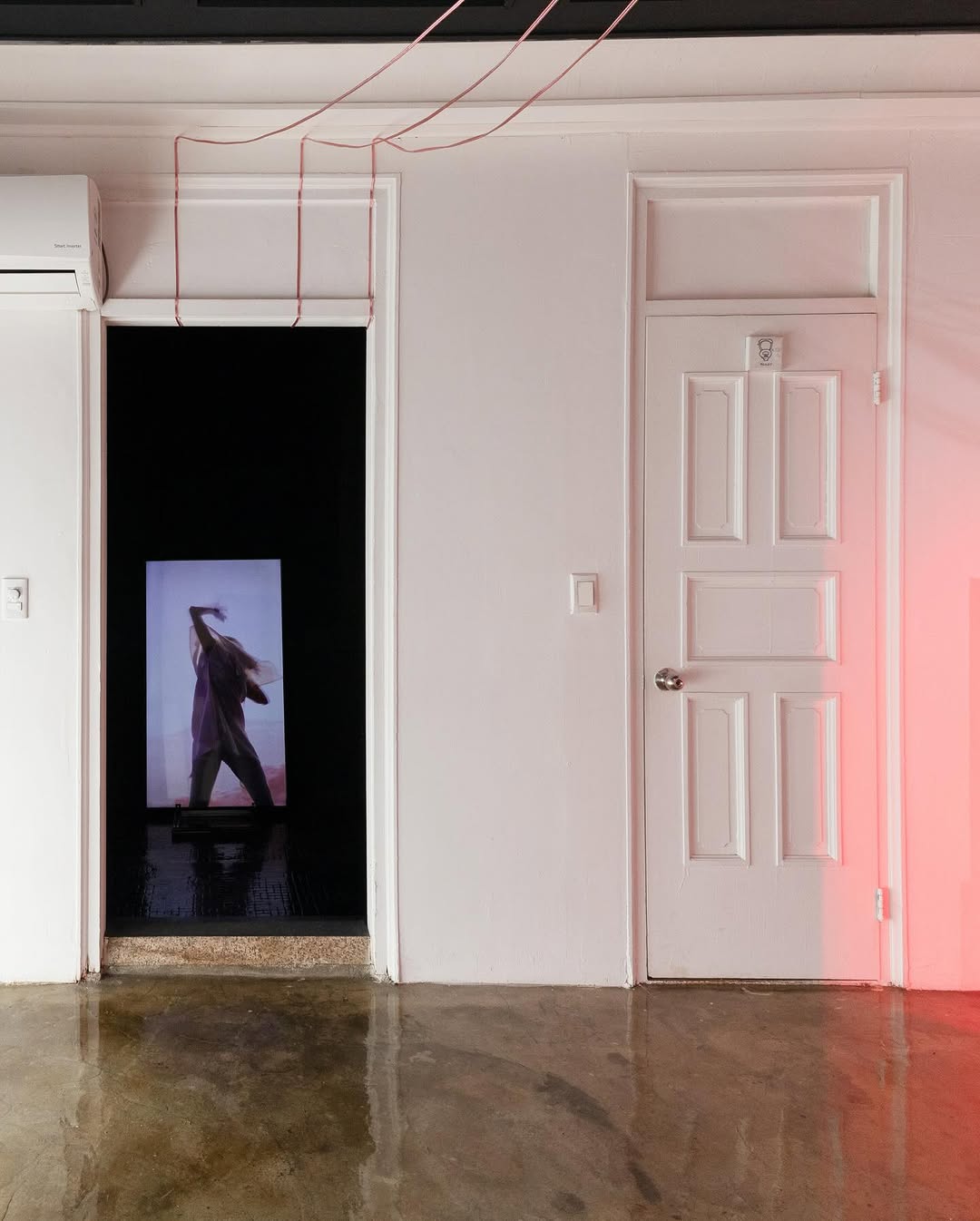
WONJEONG DEPARTMENT STORE works across media installation, performance, music albums, and music videos, resisting fixation on a single medium. Rather than treating digital imagery as content alone, she incorporates its modes of production, circulation, and consumption into the structural logic of her work. Performance functions as a key device that connects bodies on screen with bodies in physical space, positioning viewers as both visual spectators and sensory witnesses.

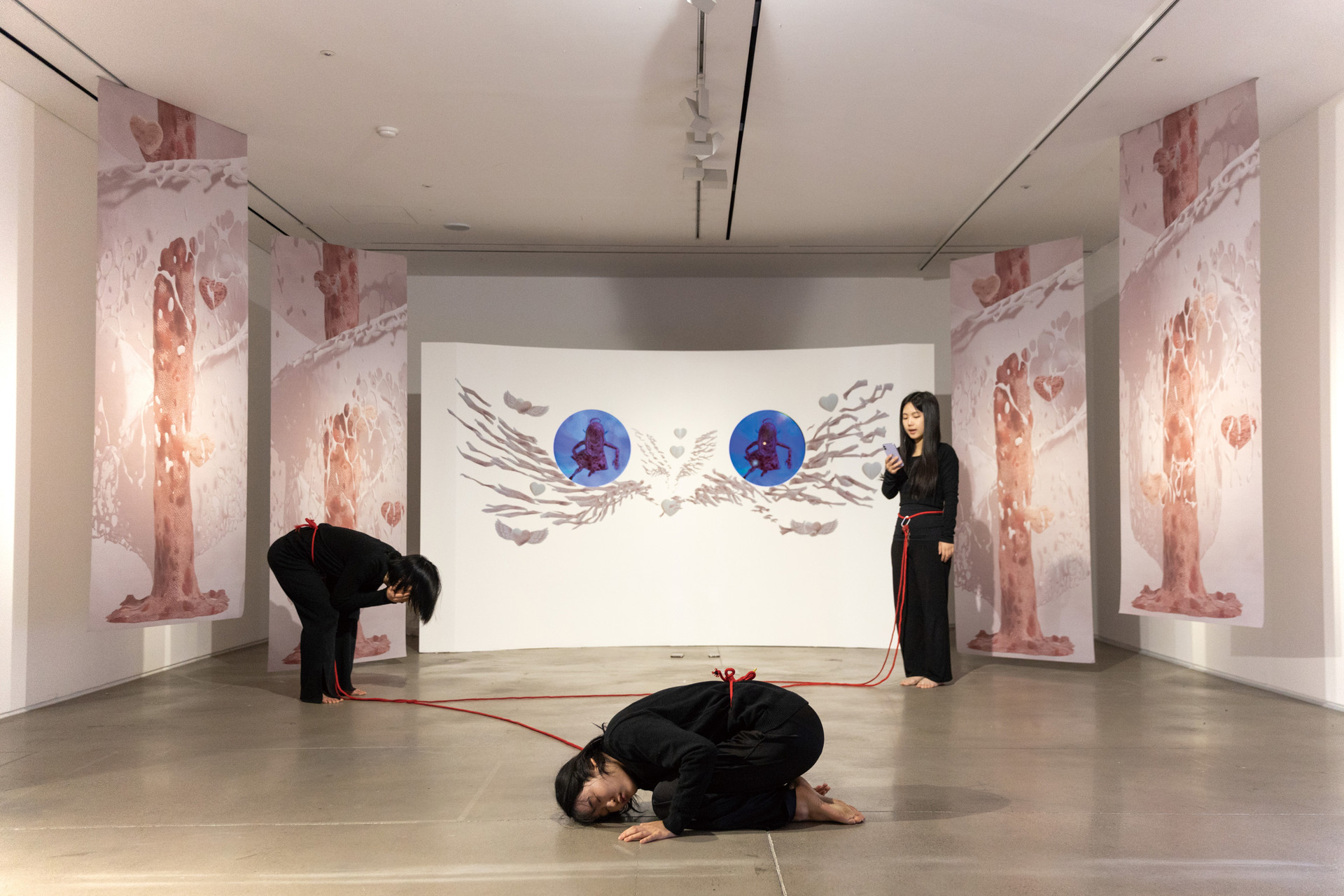
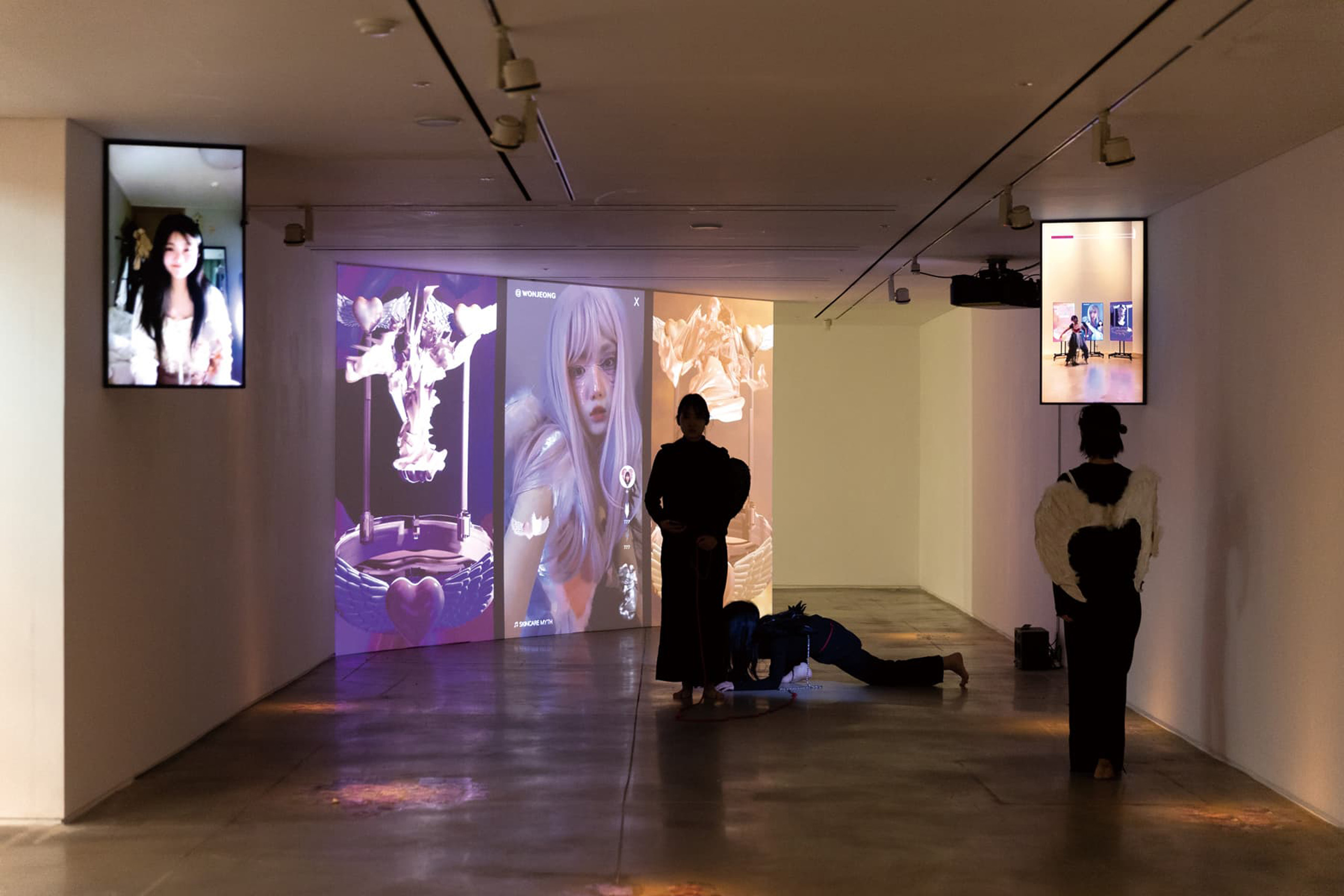
In SKINCARE MYTH, a triptych-like three-channel screen structure is combined with live performance. Selfie images at the center, flanked by angelic and monstrous figures, are staged alongside a performing body beneath the screens. This configuration simultaneously separates and links the gaze of the on-screen body and the physical body, establishing a contrast between images oriented outward and a body focused inward on sensation.

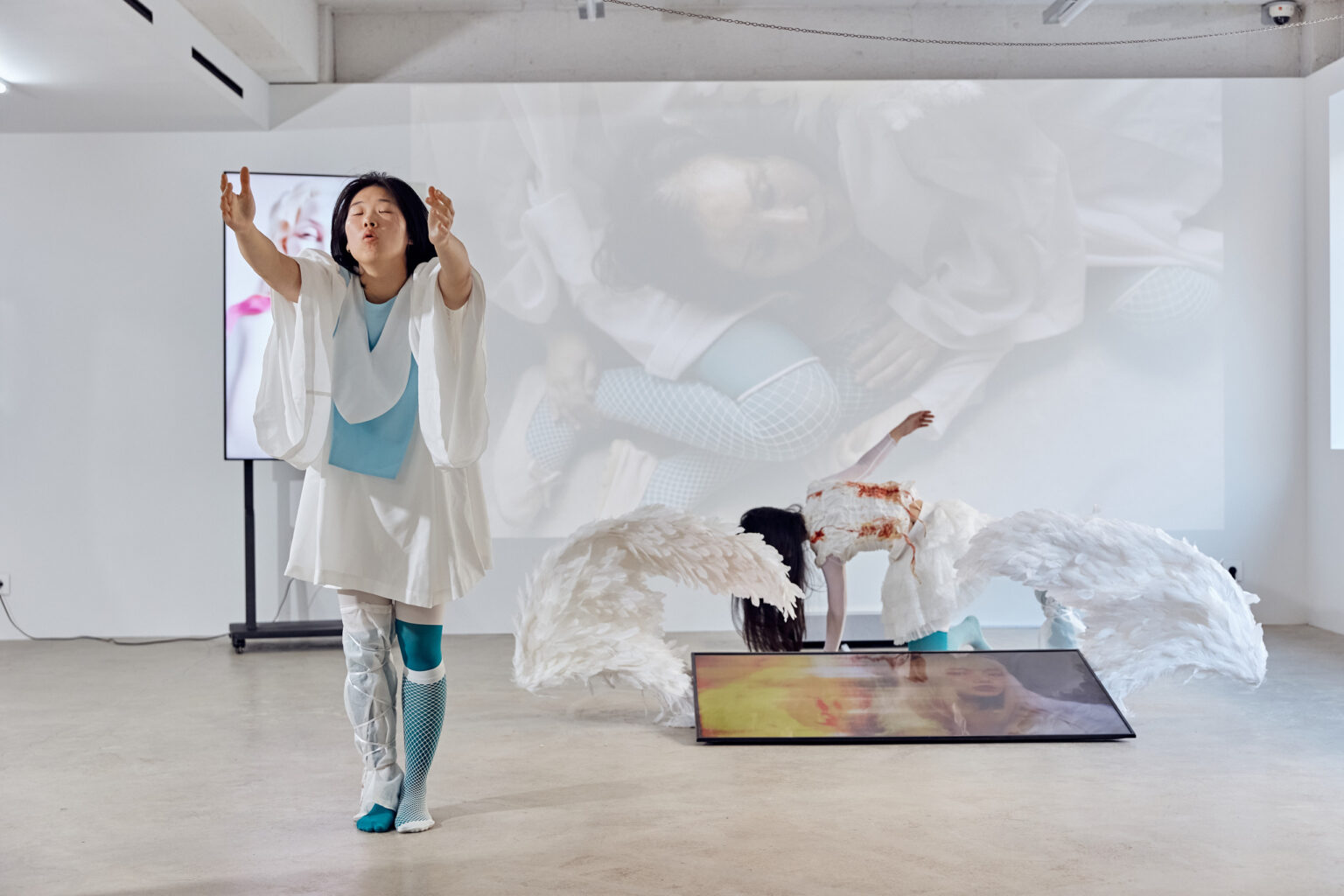
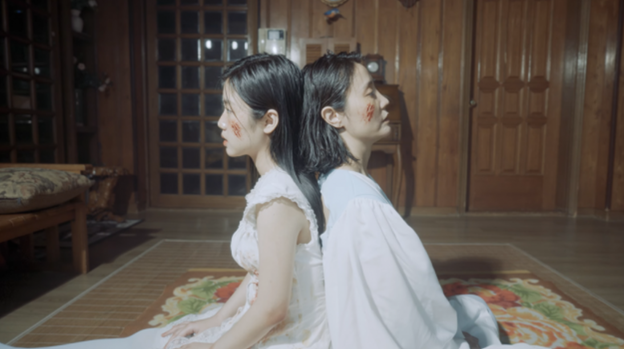
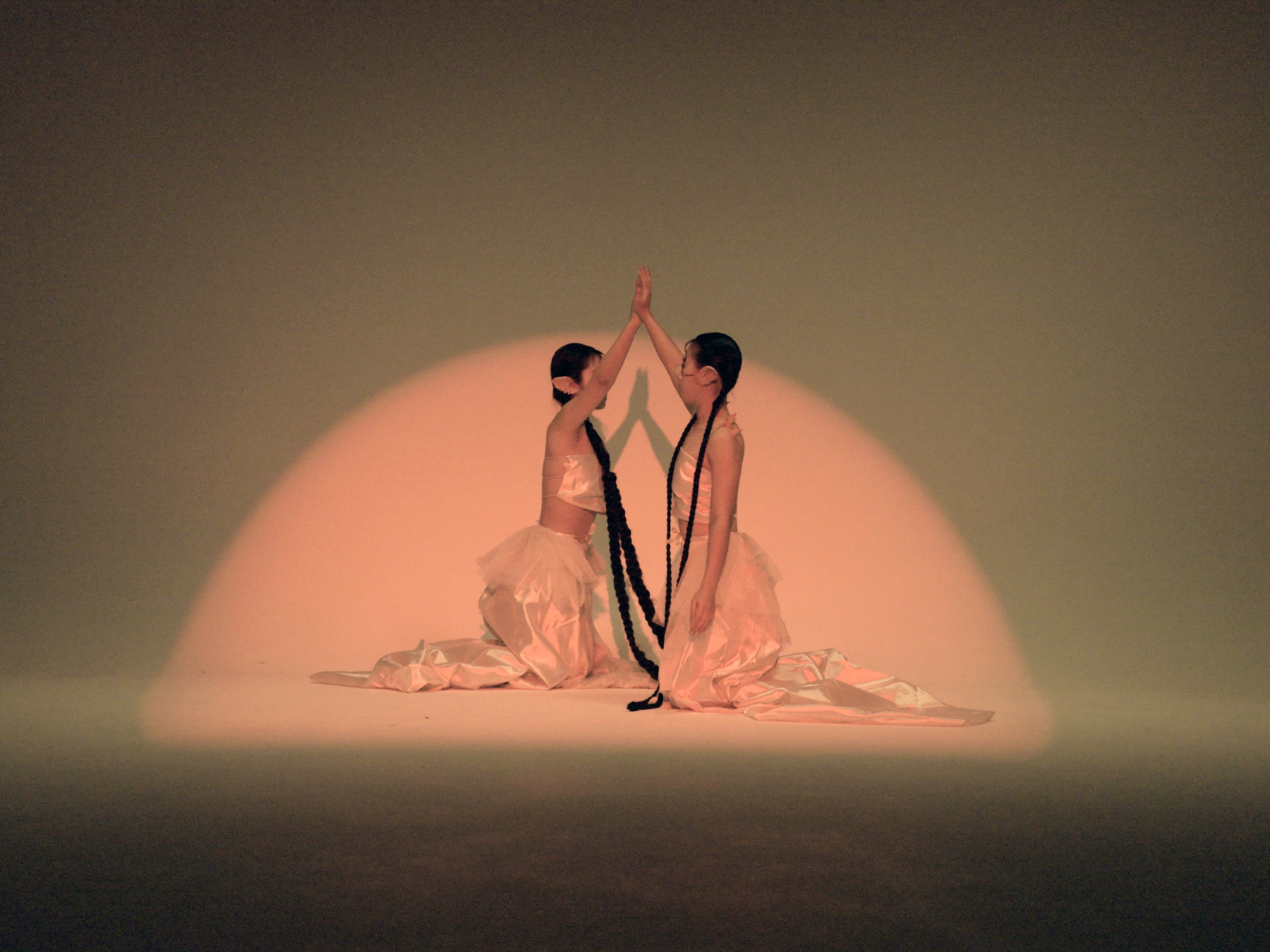
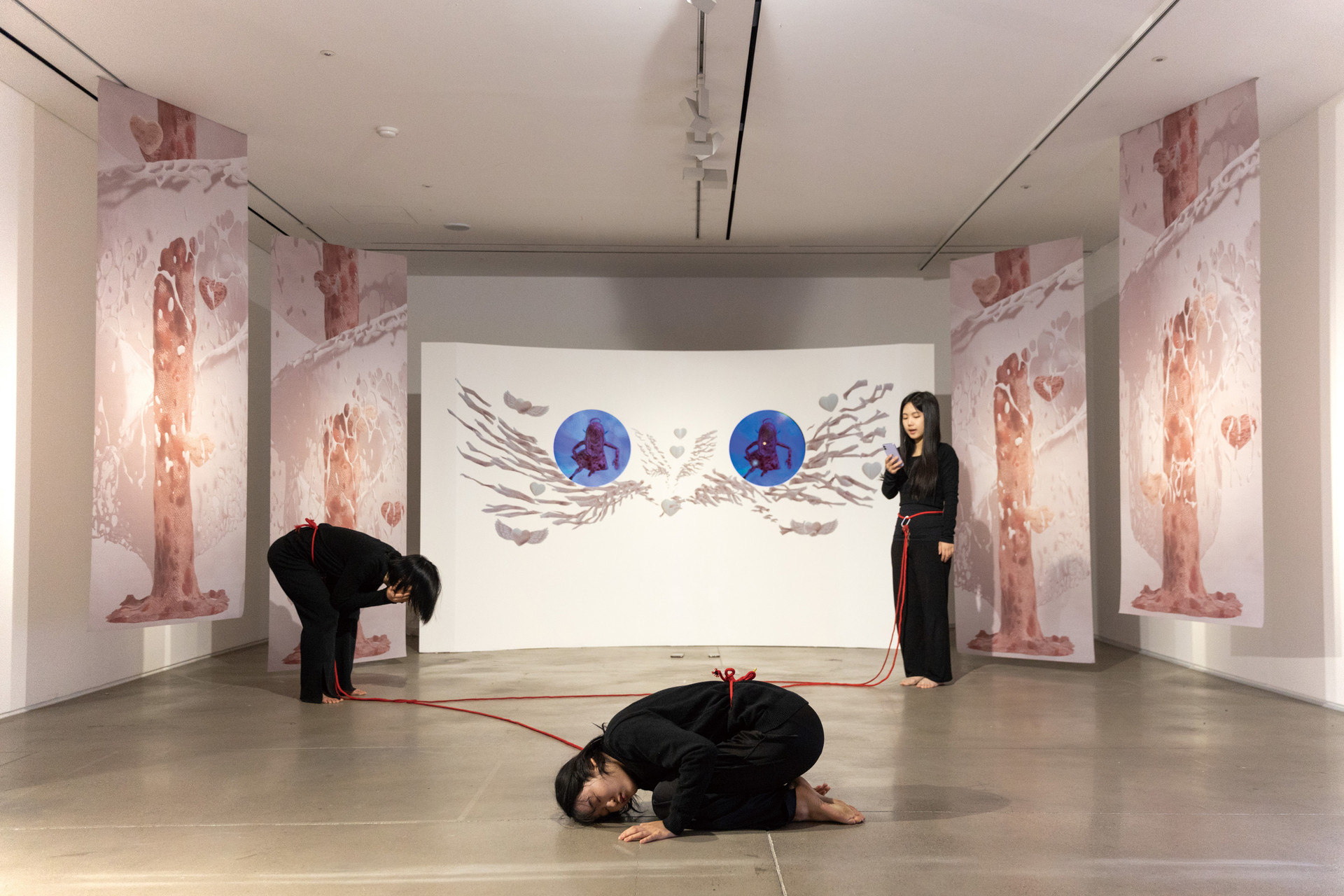
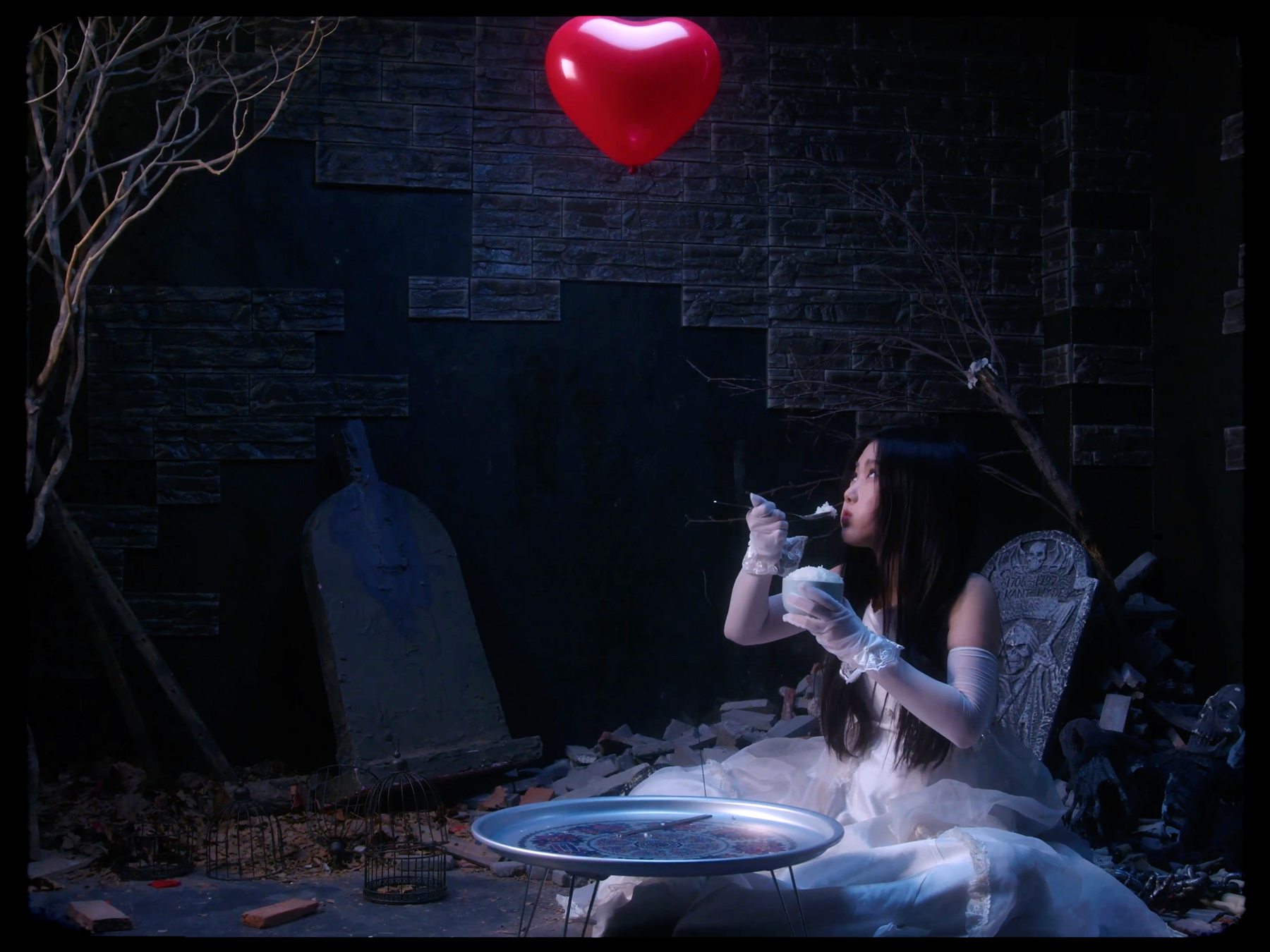
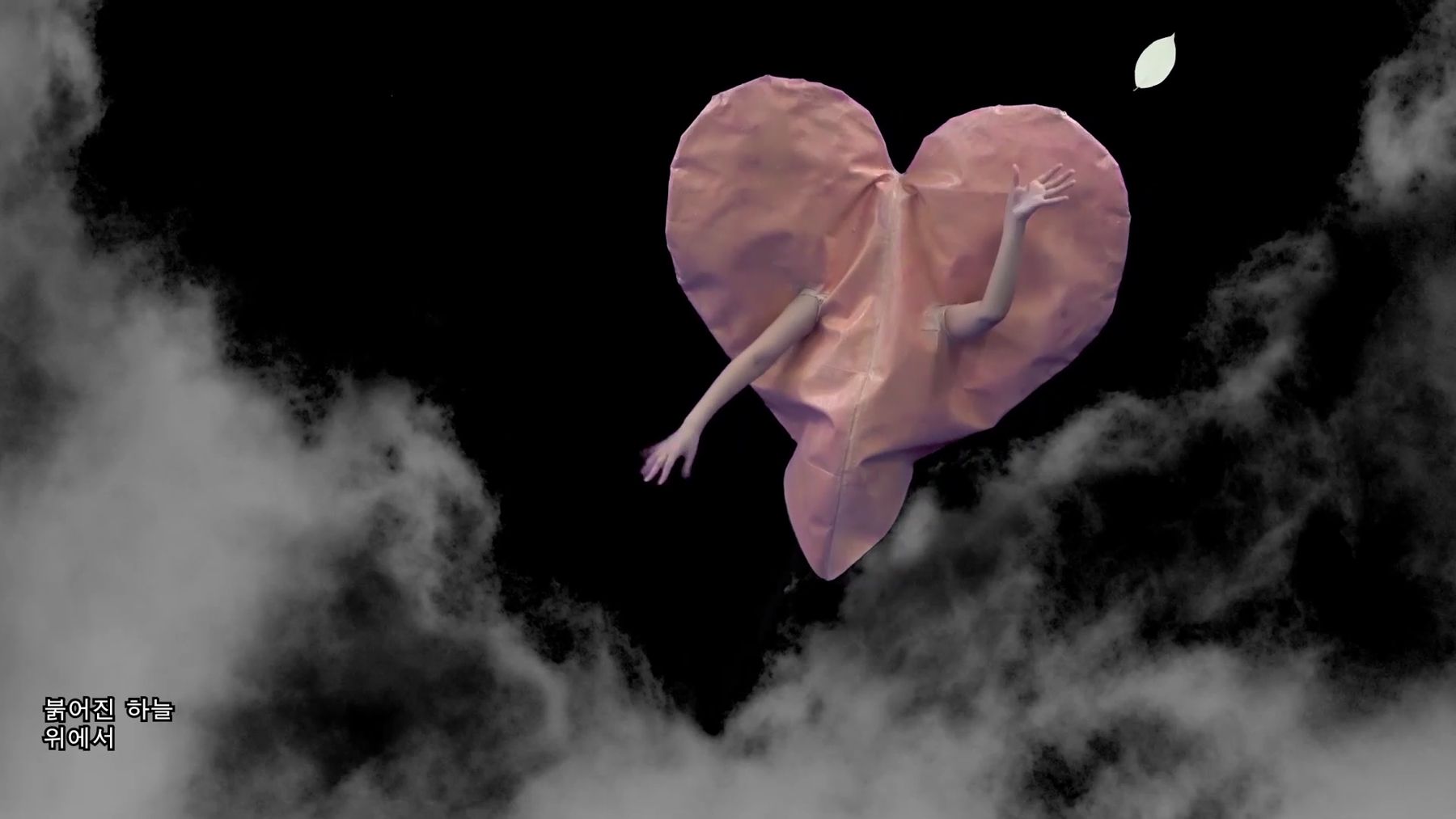
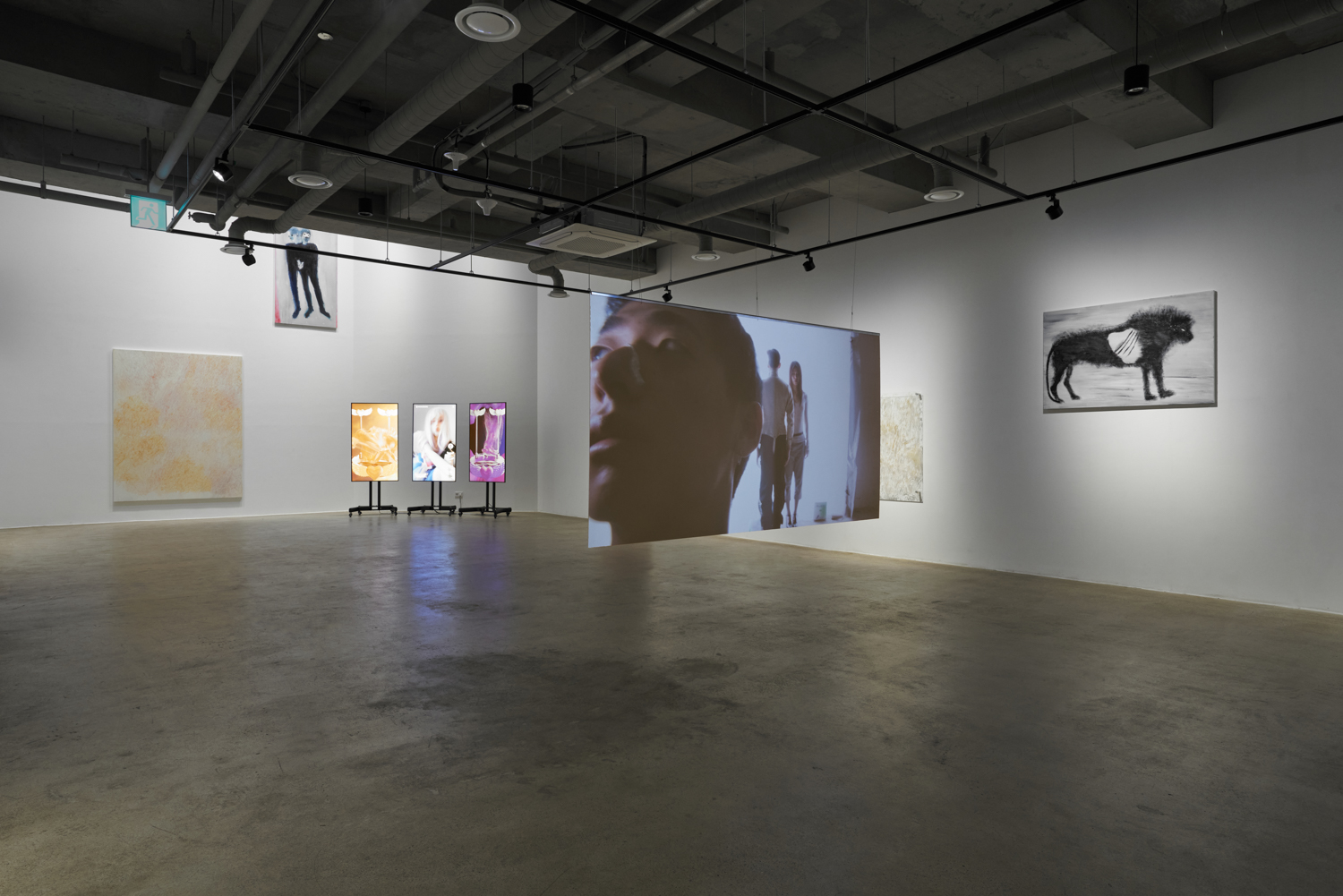
BED TRAINING (2023) and Pure Hymn further extend this structure, constructing theatrical environments that combine beds, mangers, sound, and AI-generated imagery. In BED TRAINING, performances are scripted through dialogues with ChatGPT, presenting advertising, birth, and the transfer of desire as a cyclical system. Technology here operates not simply as a tool, but as a narrative mechanism mediating bodily experience and desire.

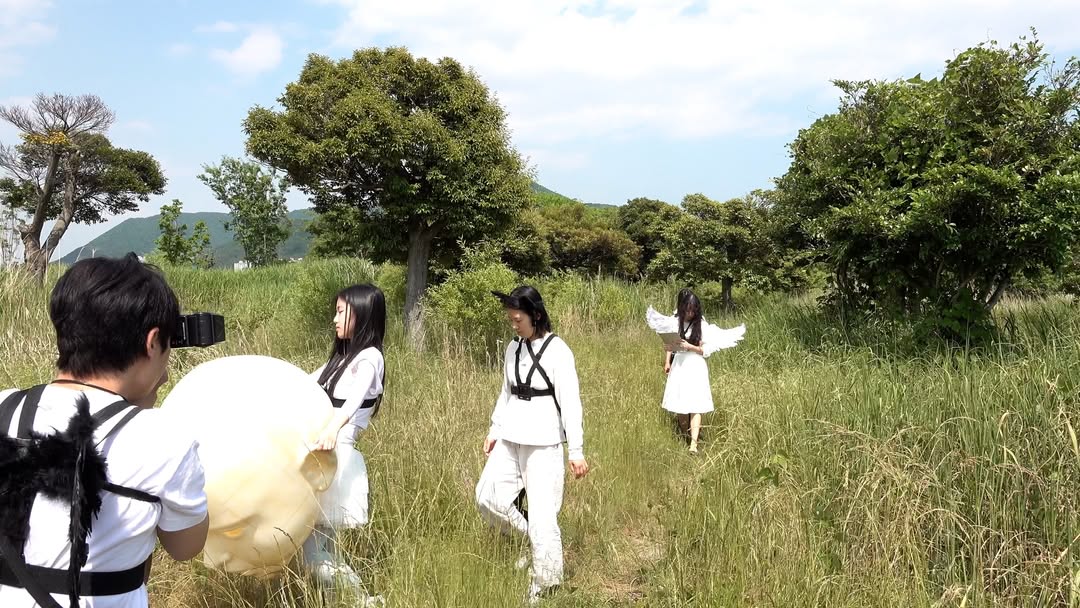
In AV.E-Maria and Puuple (2024), these strategies shift toward music videos and long-duration performance recordings. The continuously transforming body of E-Maria, the interplay of nonverbal sounds and AI-generated voices, and the unstable boundary between angel and monster collectively render the process through which the digital self reorganizes its body. These works underscore the artist’s sustained commitment to invoking bodily presence even within screen-based formats.

Topography & Continuity

Across her practice, WONJEONG DEPARTMENT STORE consistently refuses to separate the digital self from bodily sensation. Rather than treating digital images as immaterial fantasies, she translates them into corporeal languages—skin, fluids, inflammation—reframing them as sensory problems. This approach moves beyond simplistic critiques or affirmations of digital environments, instead revealing the concrete conditions under which desire is formed.

Her trajectory traces a gradual expansion from online imagery toward spatial and bodily configurations. Early works grounded in social media images and performance evolve, through exhibitions such as 《The Last Things Before the Last》 and 《THE CHAMBER》 (Caption Seoul, 2024), into environments where installation and performance intertwine. In this process, the digital self is increasingly reconstituted as a tactile, material presence.

Situated within contemporary Korean art, WONJEONG DEPARTMENT STORE occupies a distinctive position through her synthesis of digital culture, religious narrative, and performance. Her brand-based project structure and fluid movement across music, video, and live action reflect contemporary modes of image consumption while articulating a singular artistic language. Moving across online platforms, performance contexts, and exhibition spaces, her practice suggests an ongoing expansion toward rethinking the relationship between digital technology and the body on an increasingly global stage.

Works of Art

The Experiments with Bodily Sensations

Articles

Exhibitions

Activities