New Nature: Being - K-ARTIST

New Nature: Being

2025
Single-channel video, color, sound
7min 40sec
About The Work

Chang Hanna is interested in the various desires humans possess and explores through her work how those desires return to us in different ways. In particular, she focuses on the phenomenon in which artificial objects produced by human desire and capital become part of nature and take on new forms. She reveals her collected, observed, and researched findings on this subject through photography, drawing, installation, video, and other media.
 
Rather than addressing environmental issues through direct accusation or educational messaging, Chang Hanna approaches them by sensorially revealing realities that have already arrived. Instead of defining plastic rocks as a “problem,” she presents them as components of a new nature with which we are already coexisting, encouraging viewers to arrive at their own questions. In doing so, her work suggests that art can function as a valid means of thinking through and recognizing environmental issues.
 
Chang Hanna’s work confronts us with the fact that, contrary to our expectation that everything humans produce will be processed under human control, our creations return to us as part of nature in ways we could never have anticipated.

Solo Exhibitions (Brief)

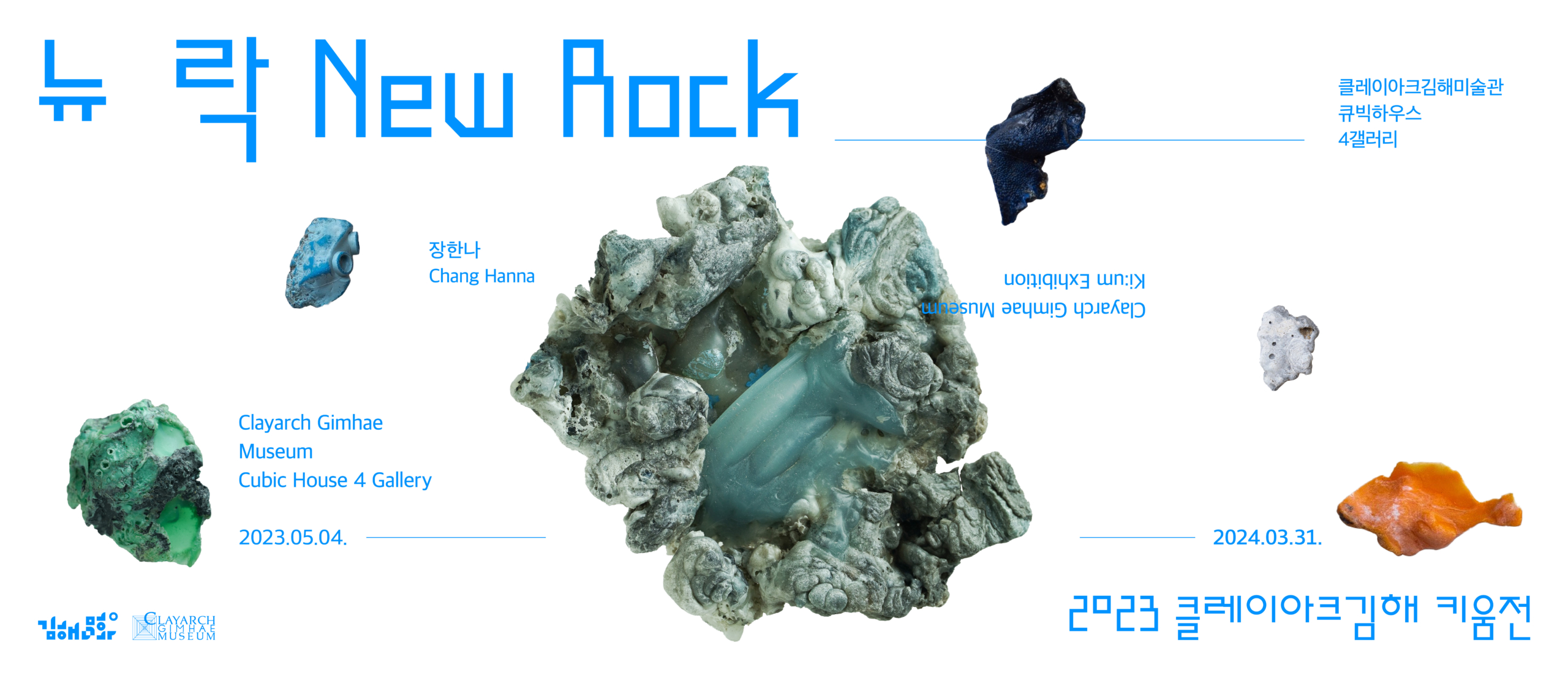
Chang has held solo exhibitions including 《Neo-Nature, Neo-Land Art》 (Chilsung Shipyard, Sokcho, 2024), 《New Rock》 (Clayarch Gimhae Museum, Gimhae, 2023), 《The Birth of New Nature》 (Mudaeruk, Seoul, 2023), and 《New Rock》 (Studio Square, Suwon, 2020).

Group Exhibitions (Brief)

Chang has also participated in numerous group exhibitions, including 《Earth, Once More: Responding with a New Sensibility》 (Art Archives Seoul Museum of Art, Seoul, 2025), 《Random Access Project 4.0》 (Nam June Paik Art Center, Yongin, 2025), 《Young Korean Artists 2025: Here and Now》 (MMCA, Gwacheon, 2025), 《Equity: Peaceful Strain》 (Gwangju Biennale Pavilion, Gwangju, 2024), 《Climate in Everyday Life and Strange Climate》 (The National Science Museum, Daejeon, 2022), and more. 

Works of Art

The Things on the Boundary

Originality & Identity

Chang Hanna’s practice begins with close observation of the ways in which diverse human desires, and the artificial objects produced to satisfy them, form relationships with nature and eventually return to human life. In her early works, she walked through redevelopment areas, paying attention to disappearing plants and animals, discarded objects, and beings pushed aside by human decisions. This interest developed into projects that involved collecting, relocating, and exhibiting things “on the boundary”—entities on the verge of disappearance or having lost their function—unfolding as a microscopic examination of the traces human choices leave on environments and ecosystems.

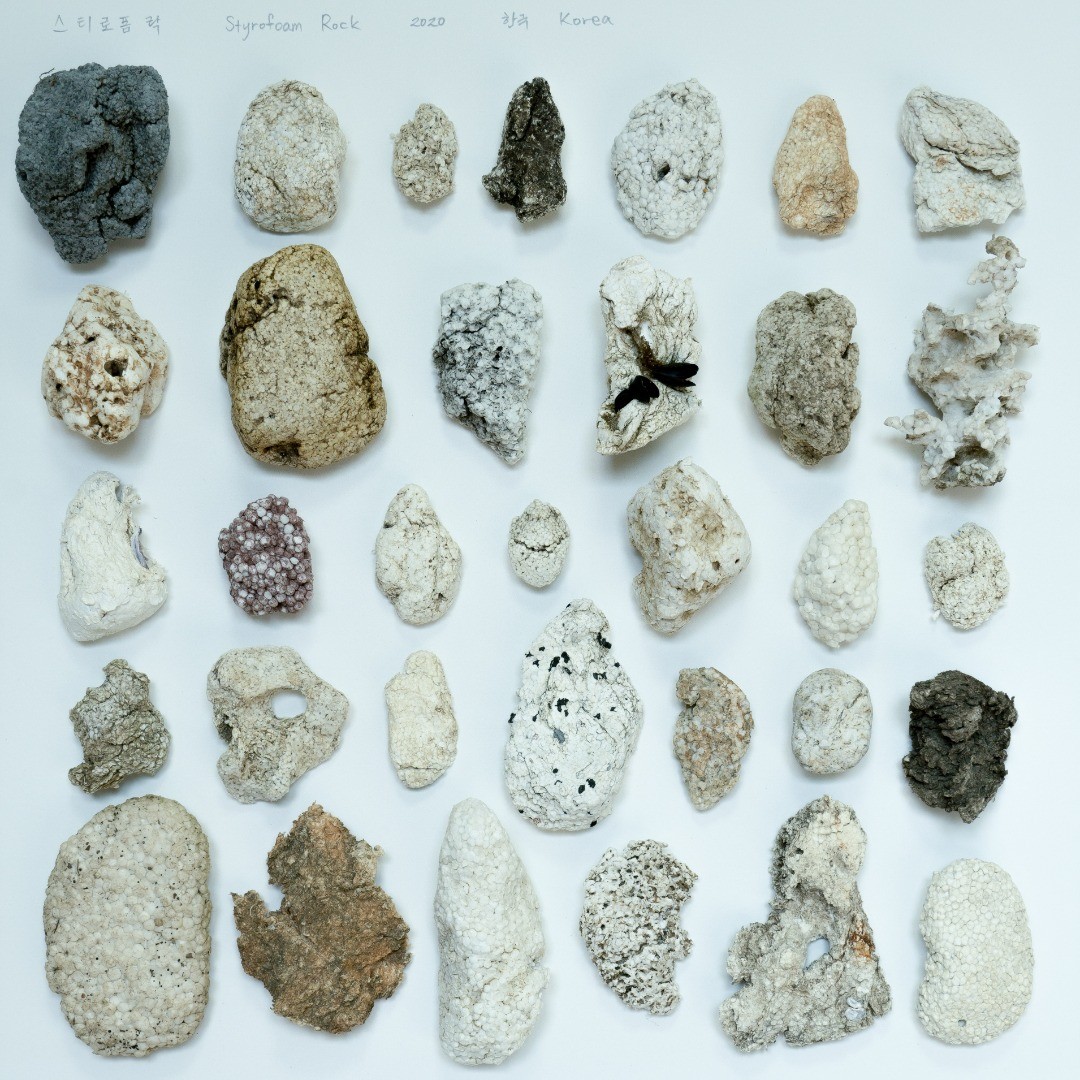
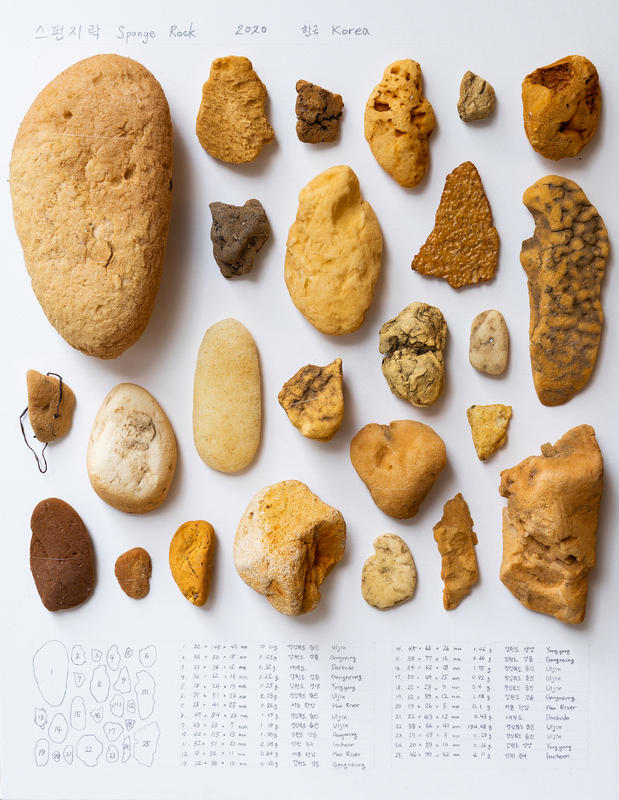
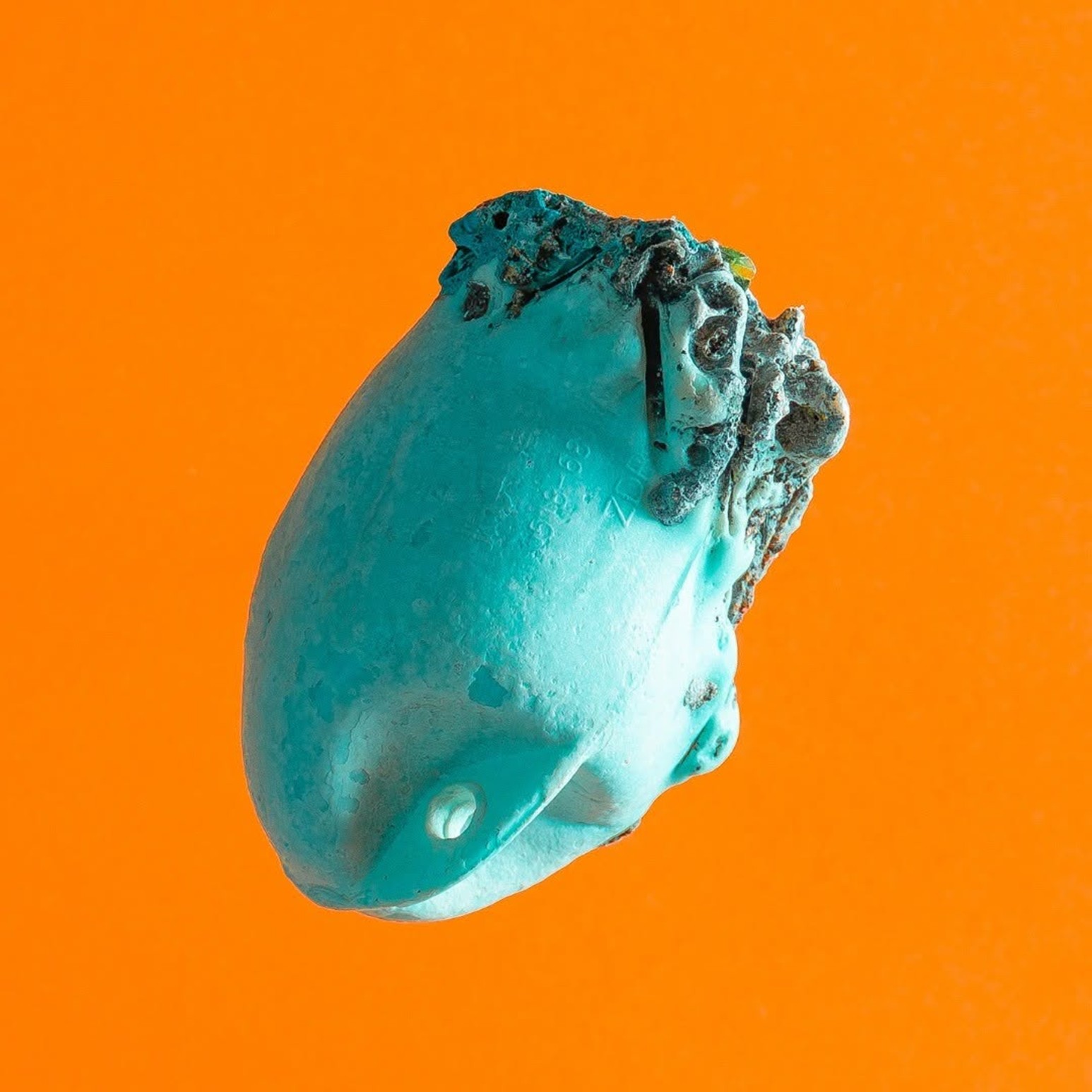
Her focus later shifted more directly toward human production systems and environmental issues. An encounter in 2017 with a plastic mass resembling a stone on the coast of Ulsan became the point of departure for the ongoing ‘New Rock’ project. Chang Hanna takes note of discarded plastics that, through the natural passage of time shaped by sea winds, sunlight, and waves, have transformed into stone-like forms. She understands these as “new stones of our time” and as a “next stage of matter” that has crossed the boundary between nature and the artificial. Here, New Rock is treated not merely as the outcome of environmental pollution, but as an entity in which human desire has acquired a different temporality and set of relationships within nature.

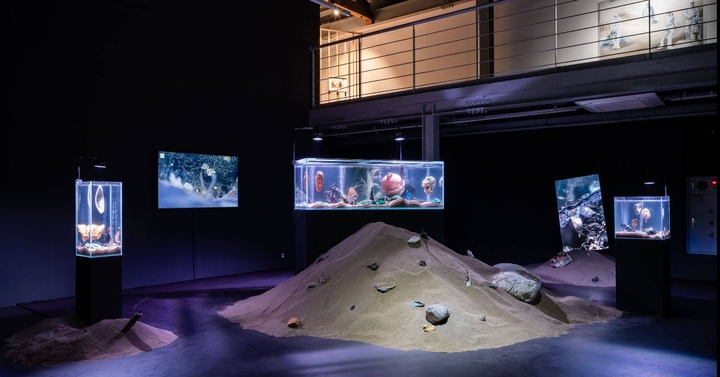
The 2021 installation New Ecosystrm further expands this line of inquiry. By constructing an underwater ecosystem composed of New Rocks, the artist reveals the reality in which plastic is no longer an external or foreign presence but functions as part of marine ecology and geology. Through this process, she arrives at the question of whether “pure nature” can truly exist, prompting a reconsideration of anthropocentric modes of thinking that have long drawn clear distinctions between nature and the artificial.

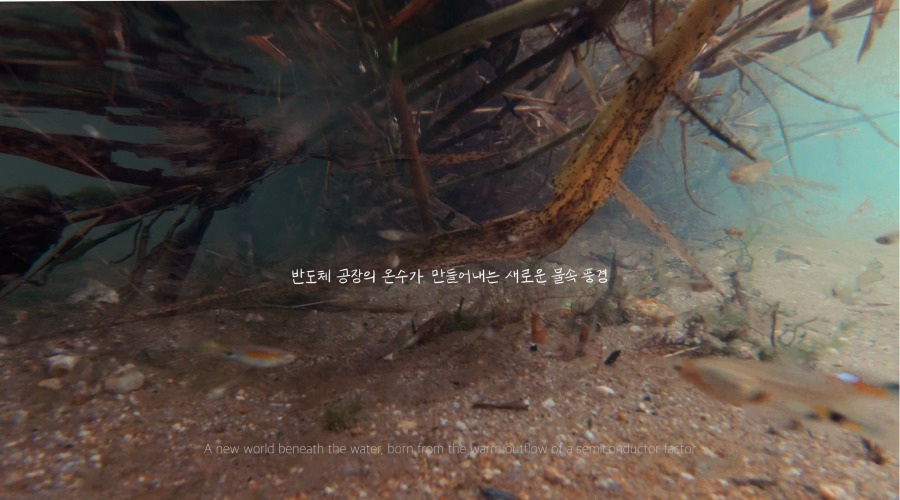
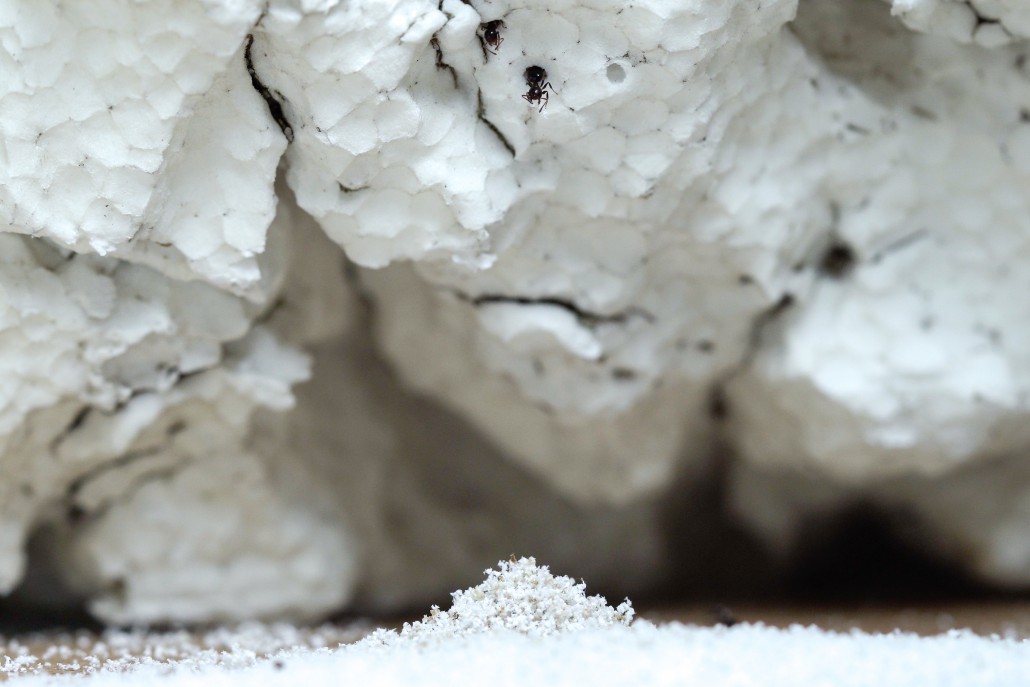
This question subsequently leads to the ‘New Nature’ project. In works such as New Nature, Ants in New Rock(2023/2025) and New Nature: Being(2025), Chang Hanna highlights the vitality of nature as it continues to adapt and survive even after contamination. Within contemporary environments where human-made objects circulate as part of nature, the artist shifts the question toward how flexibly humans themselves are able to adapt to such changes, placing the possibility of coexistence at the center of her inquiry.

Style & Contents

One of the most prominent characteristics of Chang Hanna’s working method is her attitude of minimizing production and concentrating on collection and observation. Throughout the New Rock project, she avoids artificial processing, and also minimizes movement and action during the act of collecting, in order to reduce further intervention in nature. This approach stems from an awareness of the climate crisis and functions both as an ethical condition and as a formal foundation of her work.

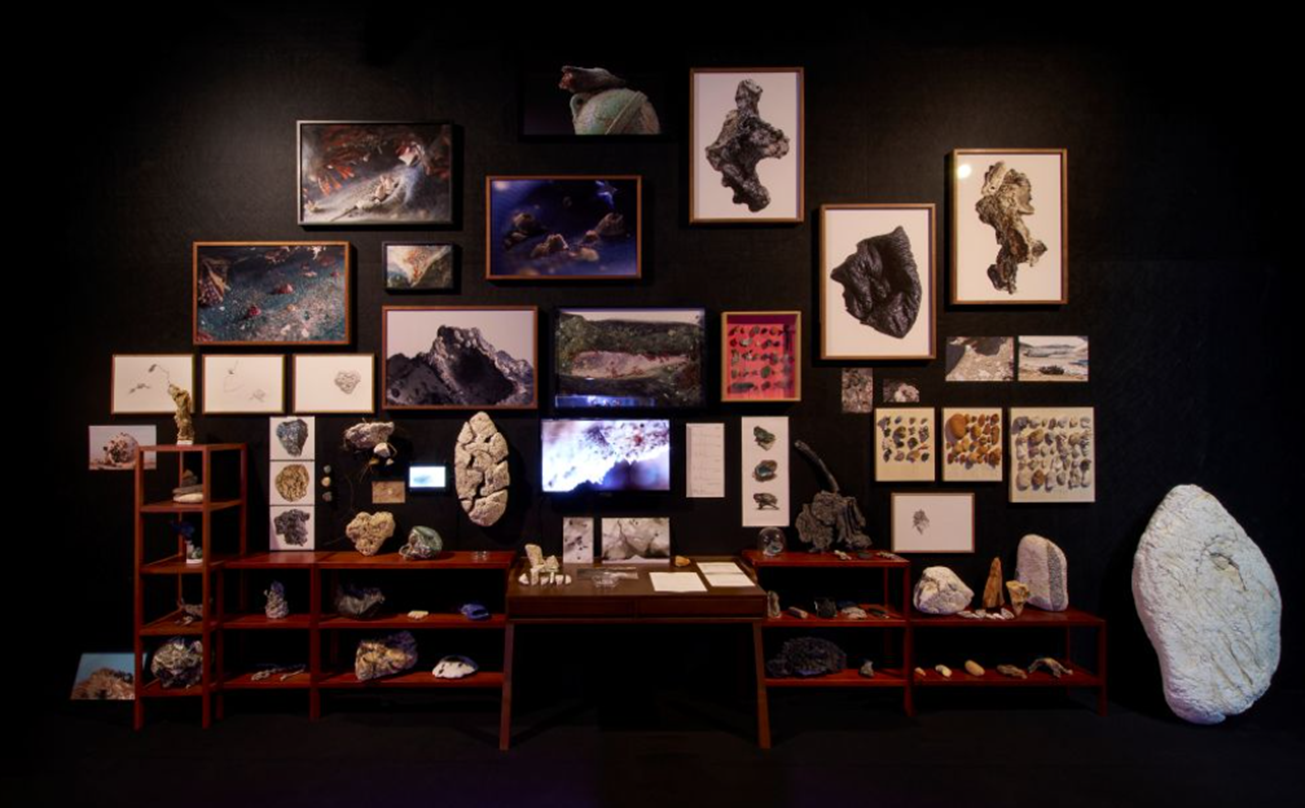
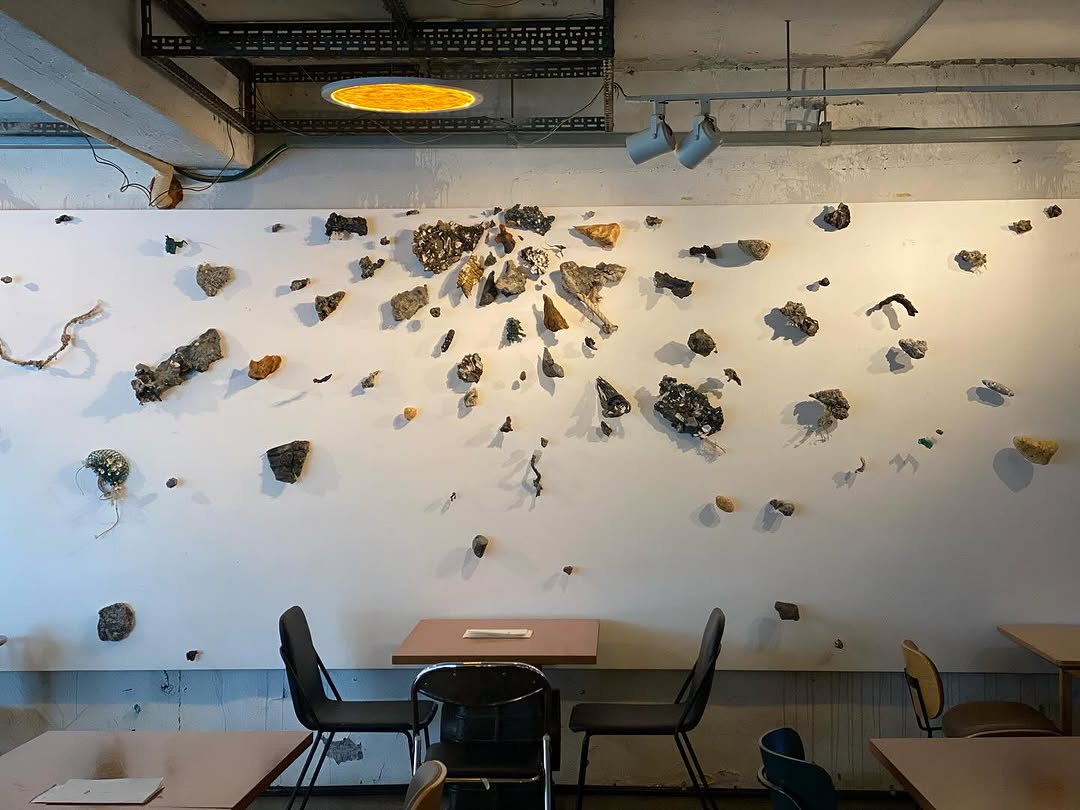
The exhibition 《New Rock》(Studio Square, 2020) was her first solo show to fully articulate this approach. Presenting New Rocks collected from coastlines across the country as specimens or as a kind of “scholar’s rock” collection, the exhibition sensorially revealed the traces of time and transformation that plastic undergoes within nature. Once-smooth plastic surfaces become irregular and textured, while hollow interiors formed by waves turn into habitats for marine organisms. The exhibition positioned New Rock simultaneously as a sculptural object and as a material in an intermediate state—neither purely natural nor artificial.

In New Ecosystem, installation and video are combined. By placing New Rocks in water tanks of varying sizes to create underwater environments where actual living organisms coexist, and by presenting two-channel video documentation of this setting, the work traces the “journey” of New Rocks and the relationships formed within it. The piece visually reveals the paradoxical situation in which plastic becomes incorporated into geological layers and marine ecosystems.

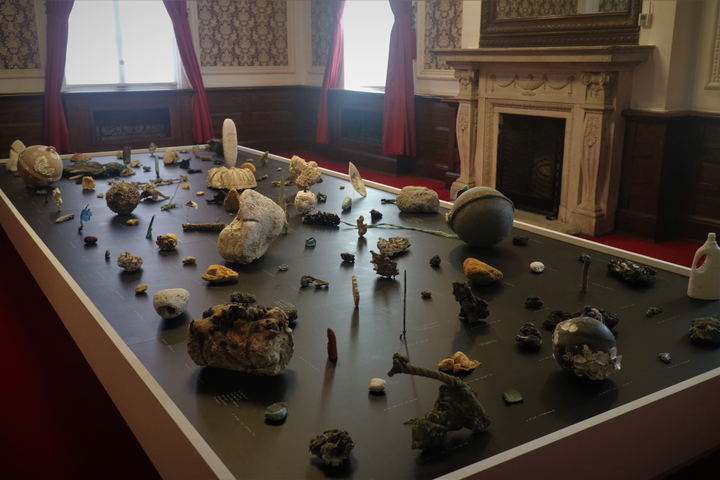
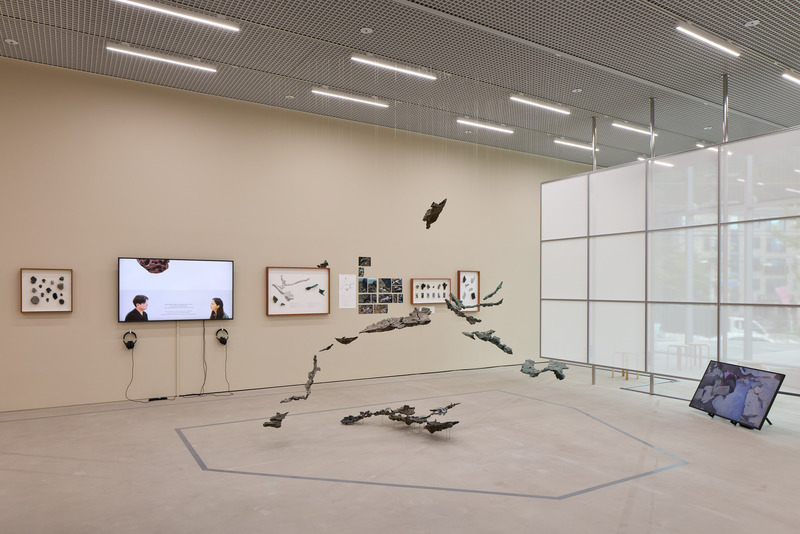
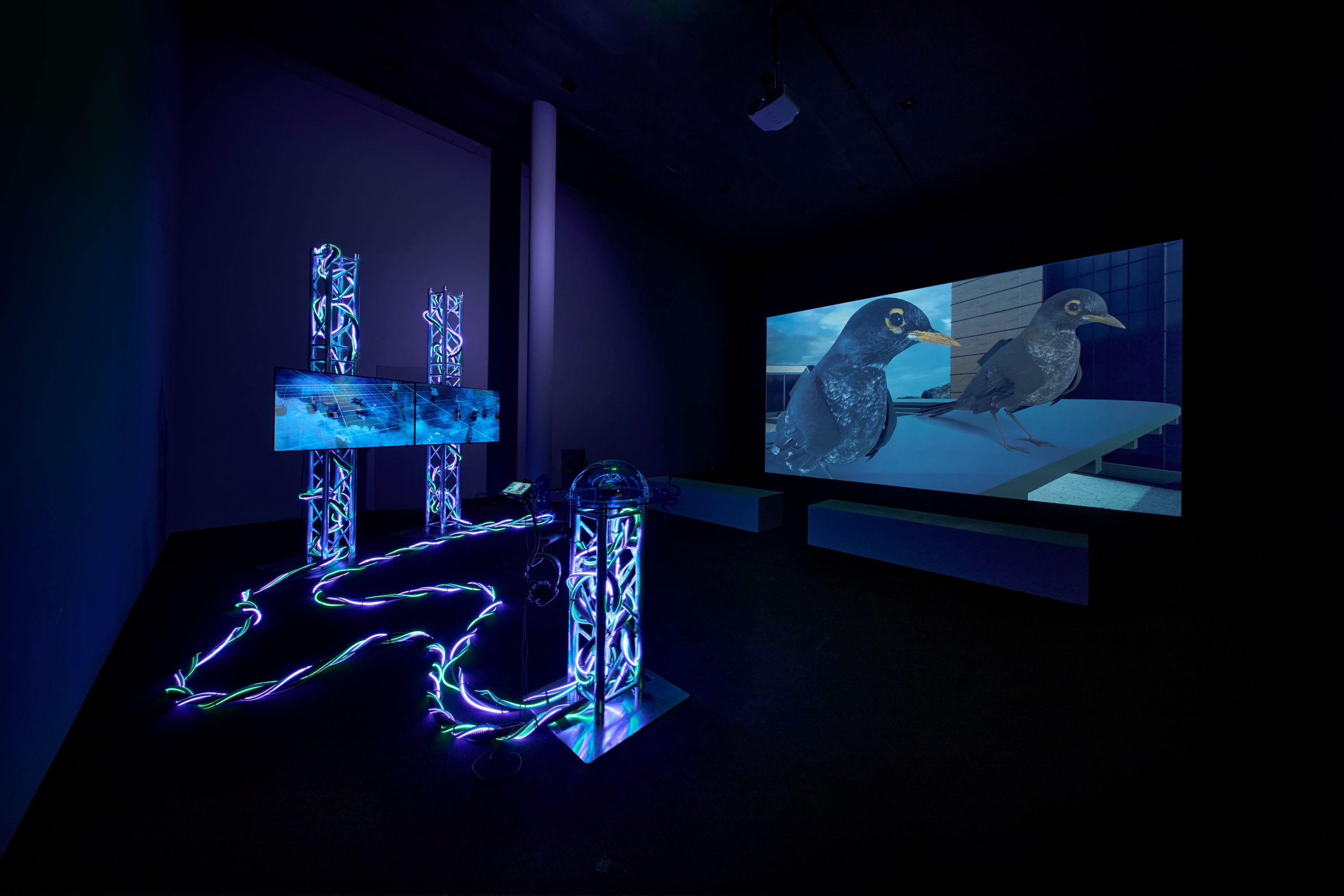
The recent work Being, presented in a group exhibition at the National Museum of Modern and Contemporary Art in 2025, marks an expansion of these formal experiments into a large-scale installation. The horizontal structure composed of over 500 New Rocks contrasts with a vertically suspended plastic structure at its center, presenting opposing orders of nature and humanity. While the vertical structure symbolizes hierarchy and accumulation, the horizontally spread New Rocks metaphorically suggest nature’s mode of circulation, which accepts the artificial without judgment or division. The accompanying video New Nature: Being further demonstrates how nature absorbs and reorganizes not only plastic, but also other human-made substances such as heated wastewater and carbon emissions.

Topography & Continuity

Chang Hanna’s practice has consistently explored entities situated at the boundary between nature and the artificial. Her early attention to plants, animals, and discarded objects in redevelopment areas gradually converged on plastic as a representative artificial material, eventually developing into a practice that reveals contemporary environmental conditions at the level of material through the concept of New Rock. Within this trajectory, her working attitude—centered on collection, observation, and minimal intervention—has remained constant.

Rather than addressing environmental issues through direct accusation or educational messaging, Chang Hanna approaches them by sensorially revealing realities that have already arrived. Instead of defining plastic rocks as a “problem,” she presents them as components of a new nature with which we are already coexisting, encouraging viewers to arrive at their own questions. In doing so, her work suggests that art can function as a valid means of thinking through and recognizing environmental issues.

As seen in her recent works, the artist’s focus has expanded beyond the observation of individual materials toward contrasts between structures and systems of order. Through spatial composition and video language, she examines how systems generated by human desire intersect and collide with the cyclical processes of nature, situating the relationships among material, environment, and humanity within a broader scale of reflection.

Works of Art

The Things on the Boundary

Articles

Exhibitions

Activities