

Happy birthday - K-ARTIST

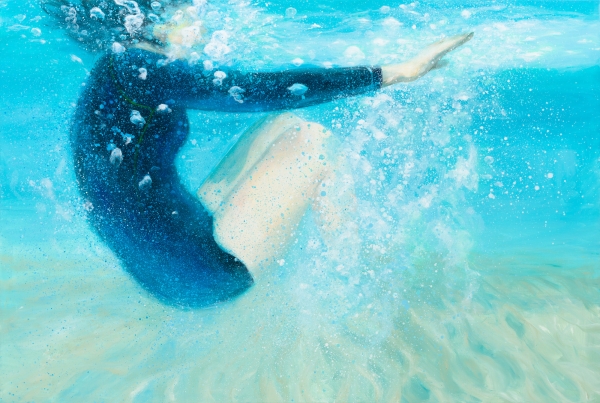
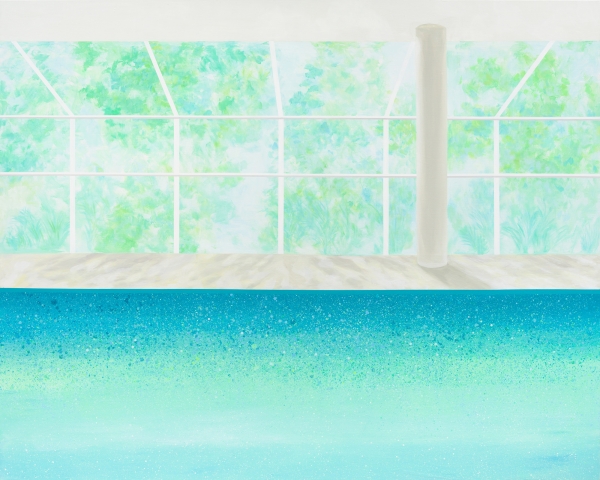
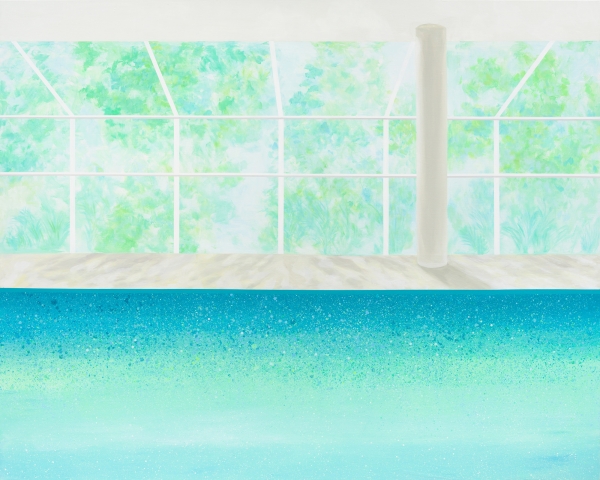
Happy birthday

2022
Acrylic on canvas
181 x 227 cm
About The Work

Hur Yeonhwa translates the landscapes encountered in everyday life through a range of media, continually exploring ways to transcend the limitations of physical space. In particular, she has sustained a long-standing interest in water, creating works that engage with rainwater, the sea, rivers, and other water-related subjects.
 
Hur Yeonhwa has visualized her interest in fluid materials and bodies—substances that behave like water—within environments where physical limitations are dissolved, rendering them in both two- and three-dimensional forms. In her practice, works that once occupied specific positions within a space are reassigned new roles and functions. Variables generated through irregular events become new forms of sediment, which in turn operate within the system and hold the potential for further transformation.
 
Free from the constraints of any one medium, her works embody multilayered sensory dimensions that invite viewers to reflect on the ever-shifting relationships embedded in everyday life, leading them to consider sustainability in artistic practice and materiality.

Solo Exhibitions (Brief)

Hur has held solo exhibitions including 《The Skin of Waves》 (Bucheon Art Bunker B39, Bucheon, 2025), 《Blue Lung》 (GalleryMEME, Seoul, 2024), 《Swimming Time》 (Gallery Minjeong, Seoul, 2022), 《Floating people》 (Post Territory Ujeongguk, Seoul, 2021), and 《Summer Squeeze》 (Exhibition Space, Seoul, 2020).

Group Exhibitions (Brief)

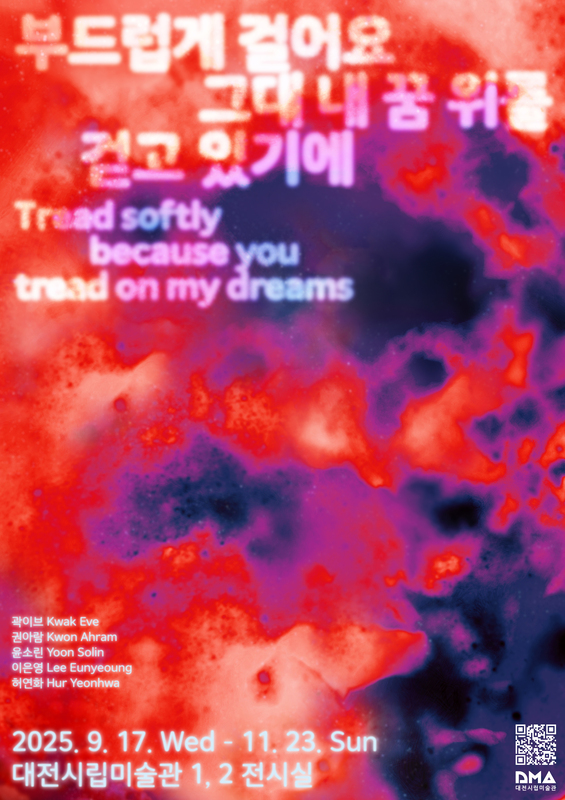
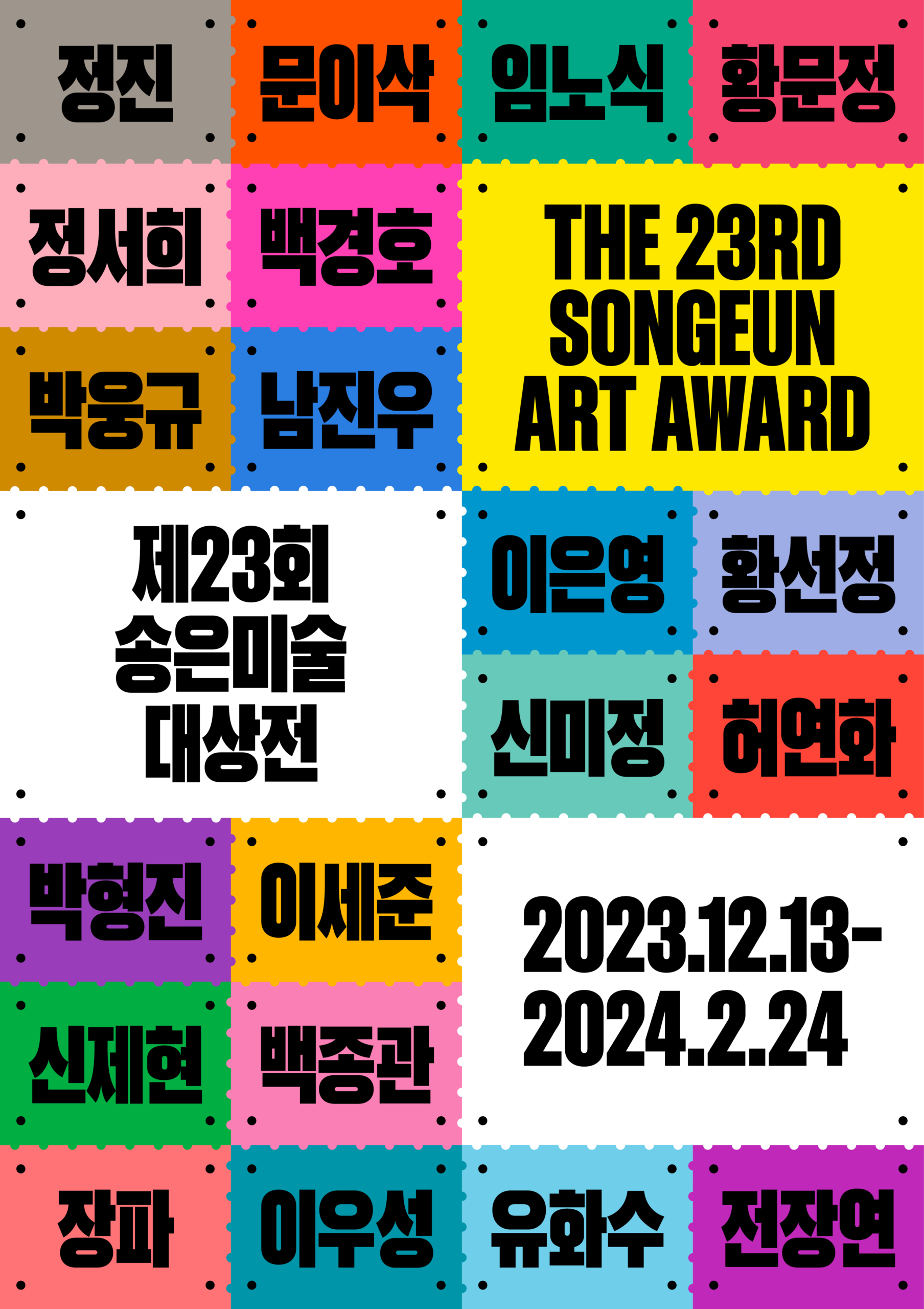
Hur has also participated in numerous group exhibitions, including 《Tread softly because you tread on my dreams》 (Daejeon Museum of Art, Daejeon, 2025), 《Ecocycle》 (KORNFELD Galerie Berlin, 68projects, Berlin, 2025), 《The 23rd SONGEUN Art Award Exhibition》 (SONGEUN, Seoul, 2023), 《The Other Face of Material》 (Seojeong Art, Seoul, 2023), 《inter-face》 (Perigee Gallery, Seoul, 2022), and 《No Space, Just a Place. Eterotopia》 (Daelim Museum, Seoul, 2020), among others.

Residencies (Selected)

Hur also participated in the residency program Deer Hunt at Art Forum Rhee (Bucheon, 2018).

Collections (Selected)

Hur Yeonhwa’s works are held in the collections of the Yangpyeong Art Museum and the Museum Department of Seoul City Hall.
Works of Art

Fluid Landscapes

Originality & Identity

Hur Yeonhwa’s practice begins with fluid landscapes and ambiguous sensations experienced in everyday life. She focuses on elements that are constantly moving and transforming—such as water, the body, space, and data—and has consistently explored a world that cannot be reduced to fixed places or singular meanings through sculptural means. Water, in particular, functions as a key medium that runs throughout her work, operating simultaneously as a natural material, a repository of sensation, and a conceptual device for thinking through flow and circulation.

Her early work Dalchon-river(2017) marks the point at which this inquiry converges with personal memory. The artist’s repeated experiences of swimming in a river accumulate as a “persistent sensation” set against the continuous flow of water, and are reconstituted as spatial memories in which specific moments overlap rather than unfold along a linear timeline. This work clearly demonstrates her perspective on water—not as a simple landscape, but as a sensory field where the body, time, and memory intersect.

Her focus subsequently expands from personal experience to social conditions. In her solo exhibition 《Floating people》(Post Territory Ujeongguk, 2021), Hur turns her attention to social structures and forms of corporeality reorganized around online space in the wake of the COVID-19 pandemic, addressing the states of individuals floating between offline and online realms, and between physical and non-physical worlds. Here, the fluidity of water overlaps with the flows of networks, data, and relationships, functioning as a conceptual metaphor for contemporary conditions of “connection” and “distribution.”

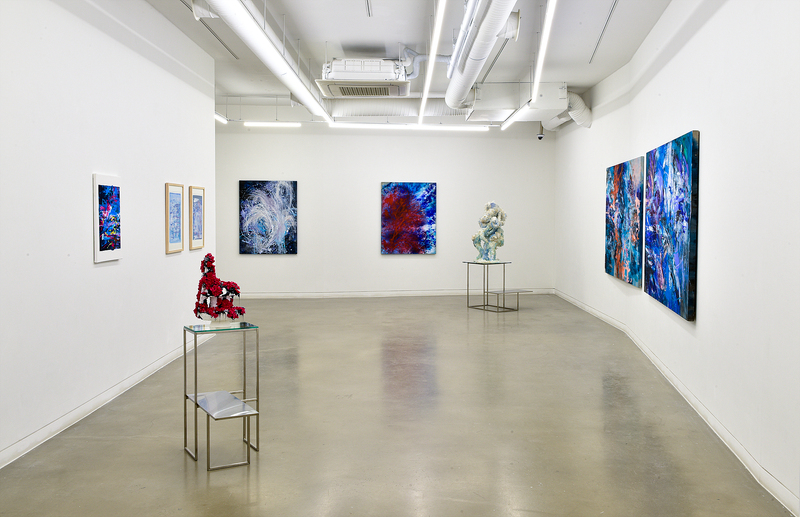
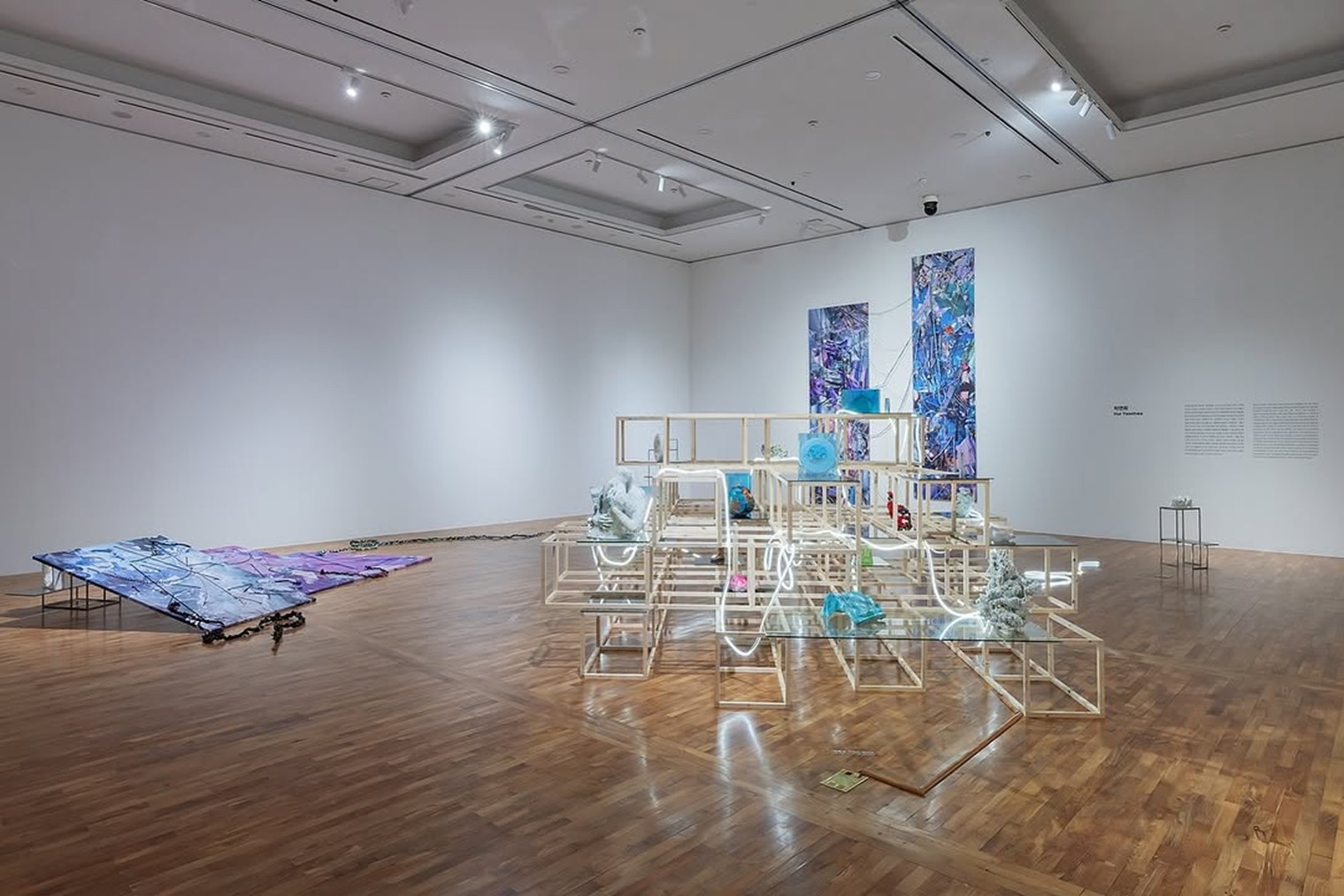
In her more recent works, this trajectory deepens into the concepts of circulation and sedimentation. Works such as Cycle(2023), presented at SONGEUN, as well as the solo exhibitions 《Blue Lung》(GalleryMEME, 2024) and 《The Skin of Waves》(Bucheon Art Bunker B39, 2025), draw past works into new structures, reuse them, and address repeated processes of generation and disappearance, accumulation and variation, through the transformation that occurs as natural materials and industrial substances combine. At this stage, the artist’s interest shifts beyond individual events toward the conditions that sustain change itself, and the ways in which existence is situated within those conditions.

Style & Contents

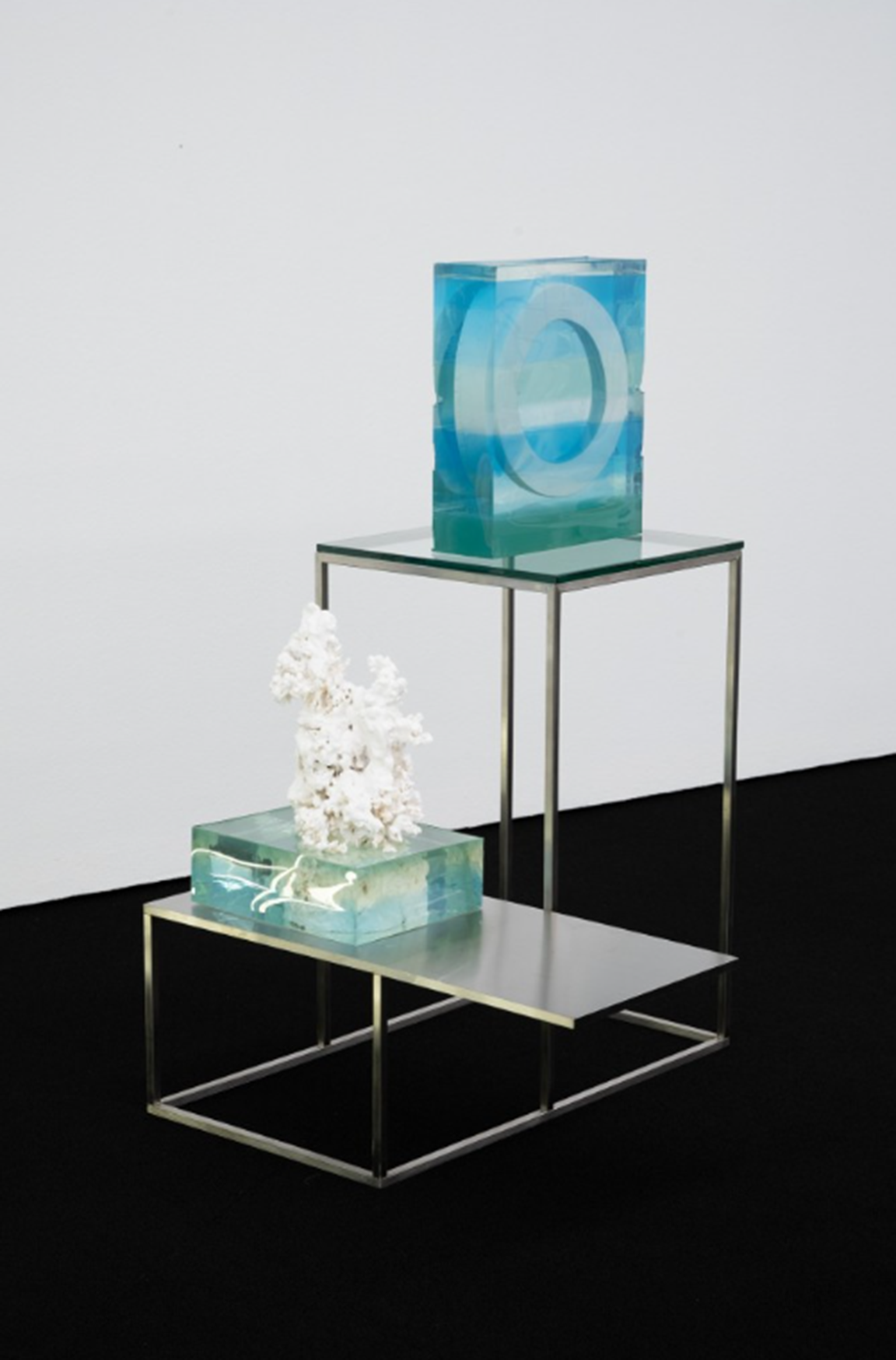
Hur Yeonhwa’s practice moves fluidly across painting, sculpture, and installation, treating formal boundaries with flexibility. In her early phase, relatively consolidated sculptural works such as Dalchon-river—made with resin and steel—formed the core of her practice. Over time, her work expanded into installations that combine flat surfaces and three-dimensional forms, images and structural elements. This shift reflects her approach of not containing sensation and space within a single medium, but rather decomposing and recomposing them across multiple layers.

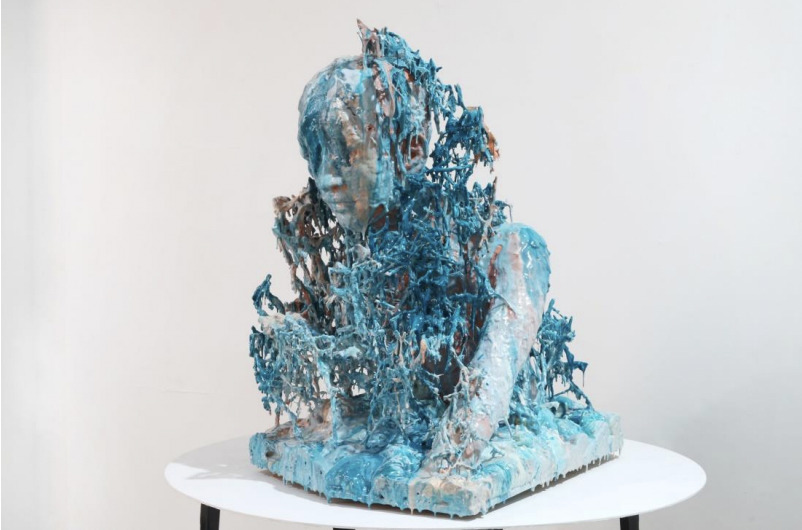
Works such as Body(2019) and Let your body relax(2020), presented in 《Floating people》, reveal excessive materiality and unstable forms through fragmented bodily figures. Materials including plastic clay, cibatool, and silicone generate textures reminiscent of flesh and bone, presenting the body not as a complete entity but as something segmented and reconfigured. This can be understood as a translation of the datafied body and reconstituted modes of existence within networks into physical materiality.

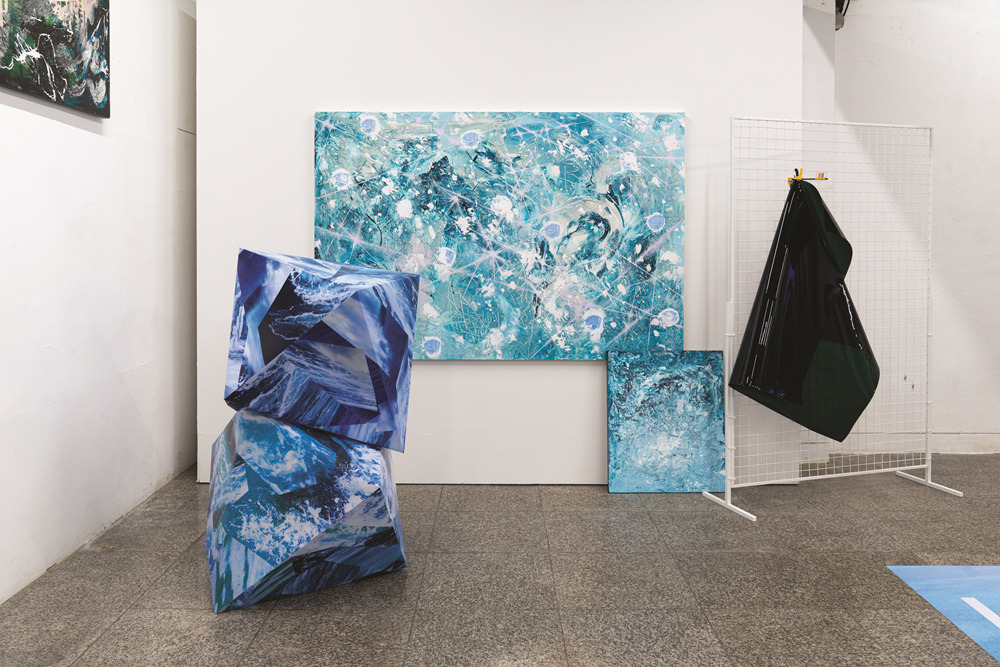
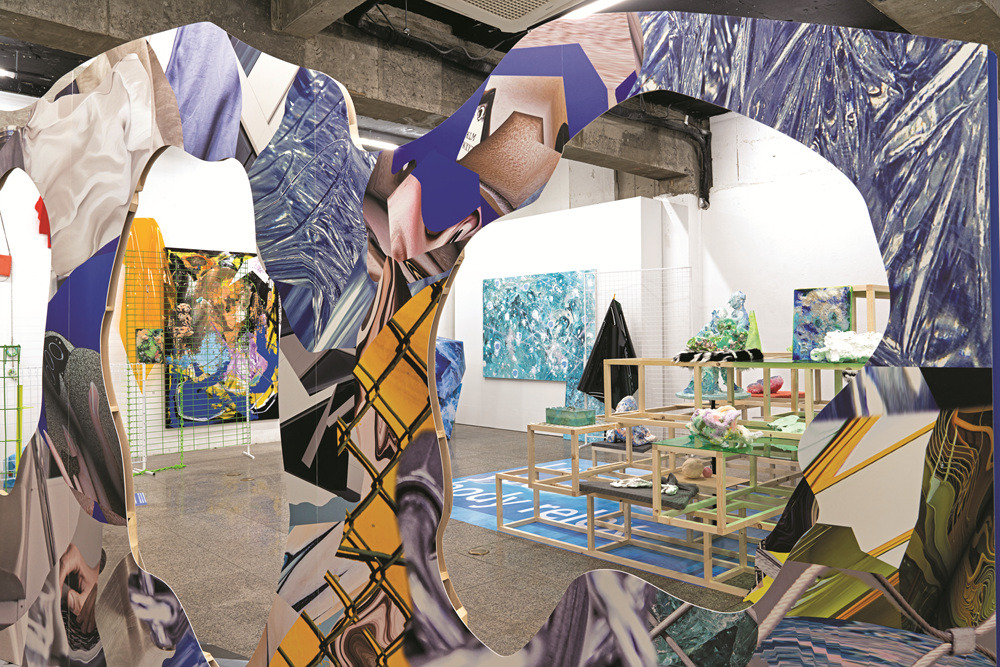
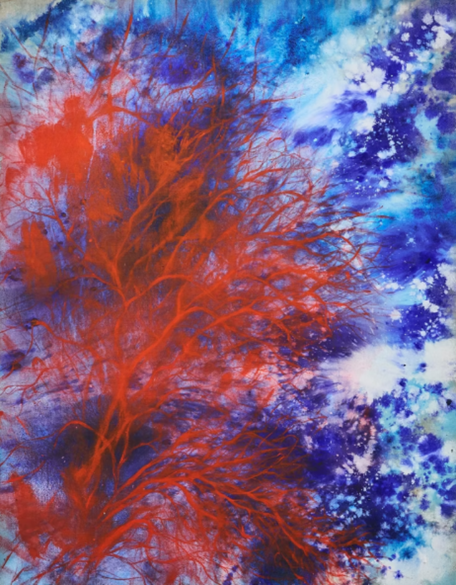
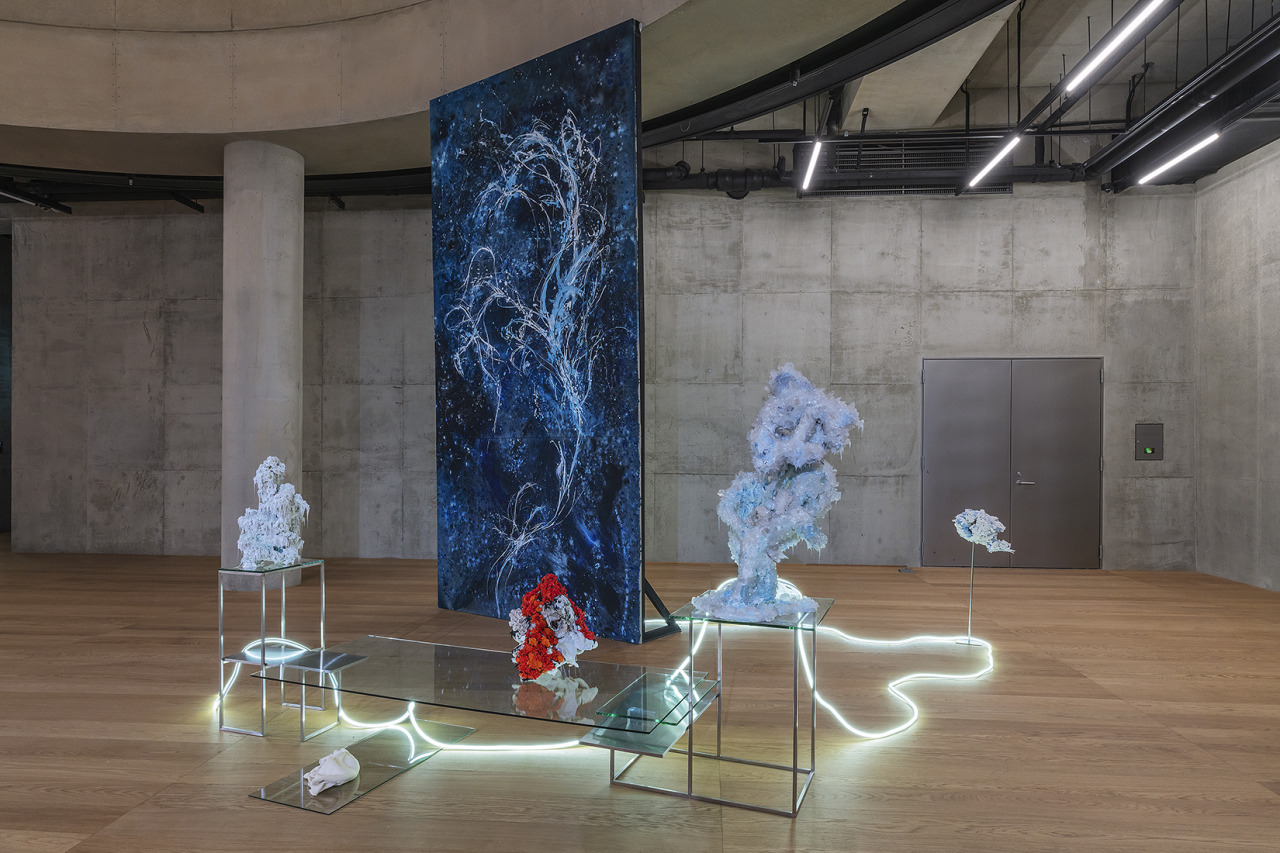
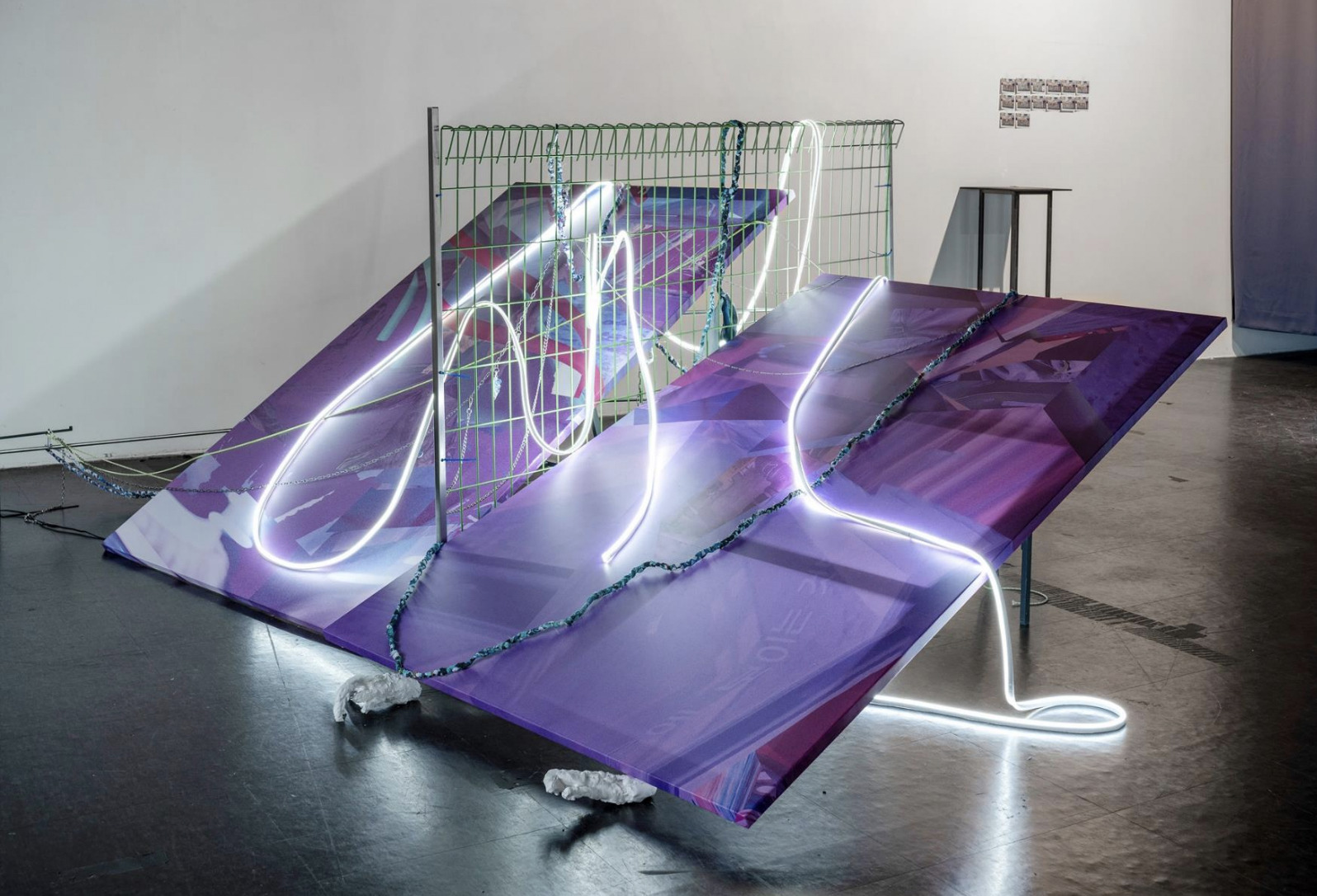
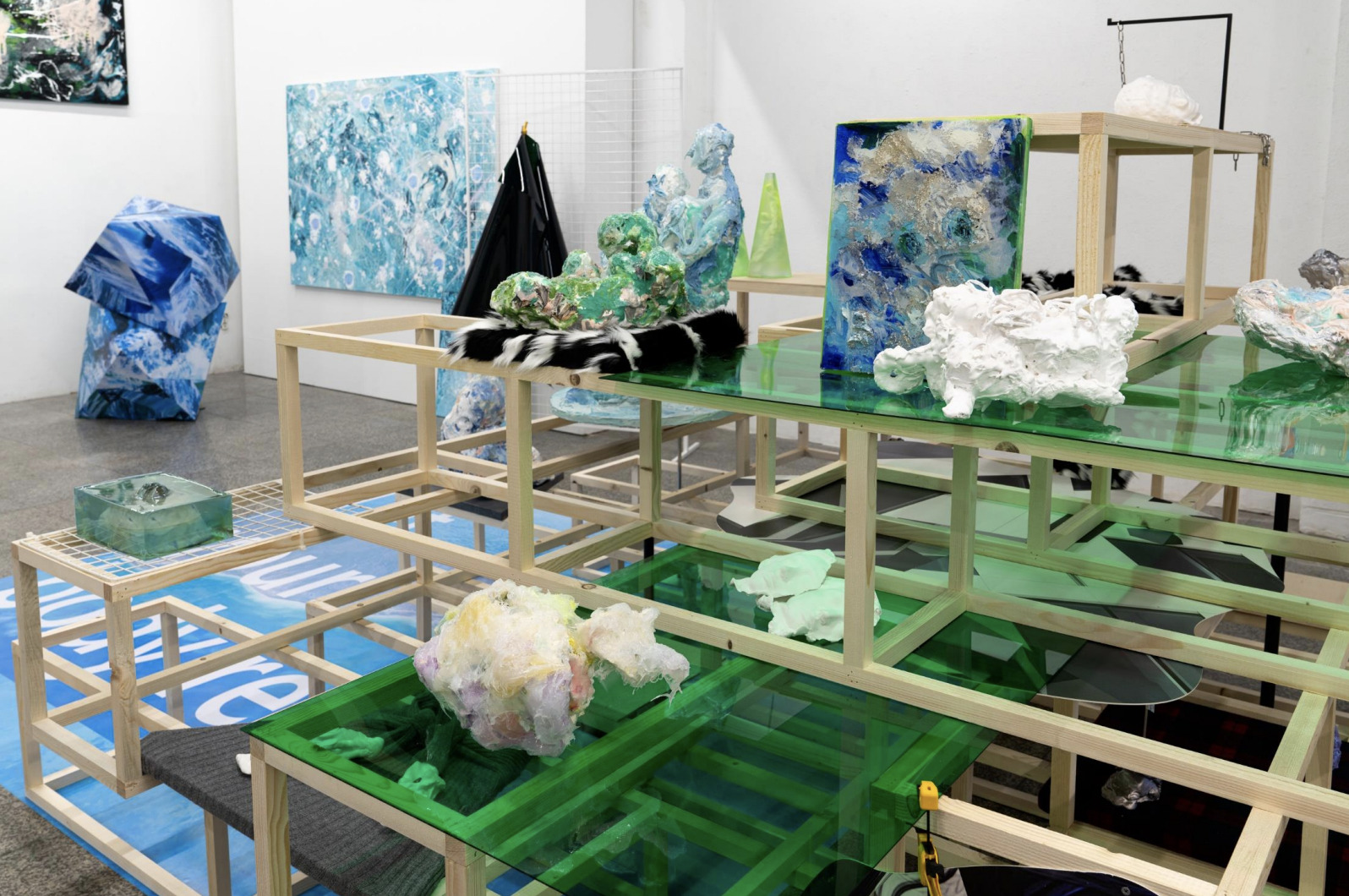
Her installations later develop toward increasingly complex material compositions. In works such as Sailing(2022), A Day When I Was Struck by Lightning(2022), and Blur face(2021), mesh fencing, digital prints, lighting, gypsum, epoxy, glass, and stainless steel are combined, allowing visual images and structures to operate together as a single interface. In particular, branching forms such as lightning, coral, and blood vessels function as visual devices that connect elements from different times and spaces.

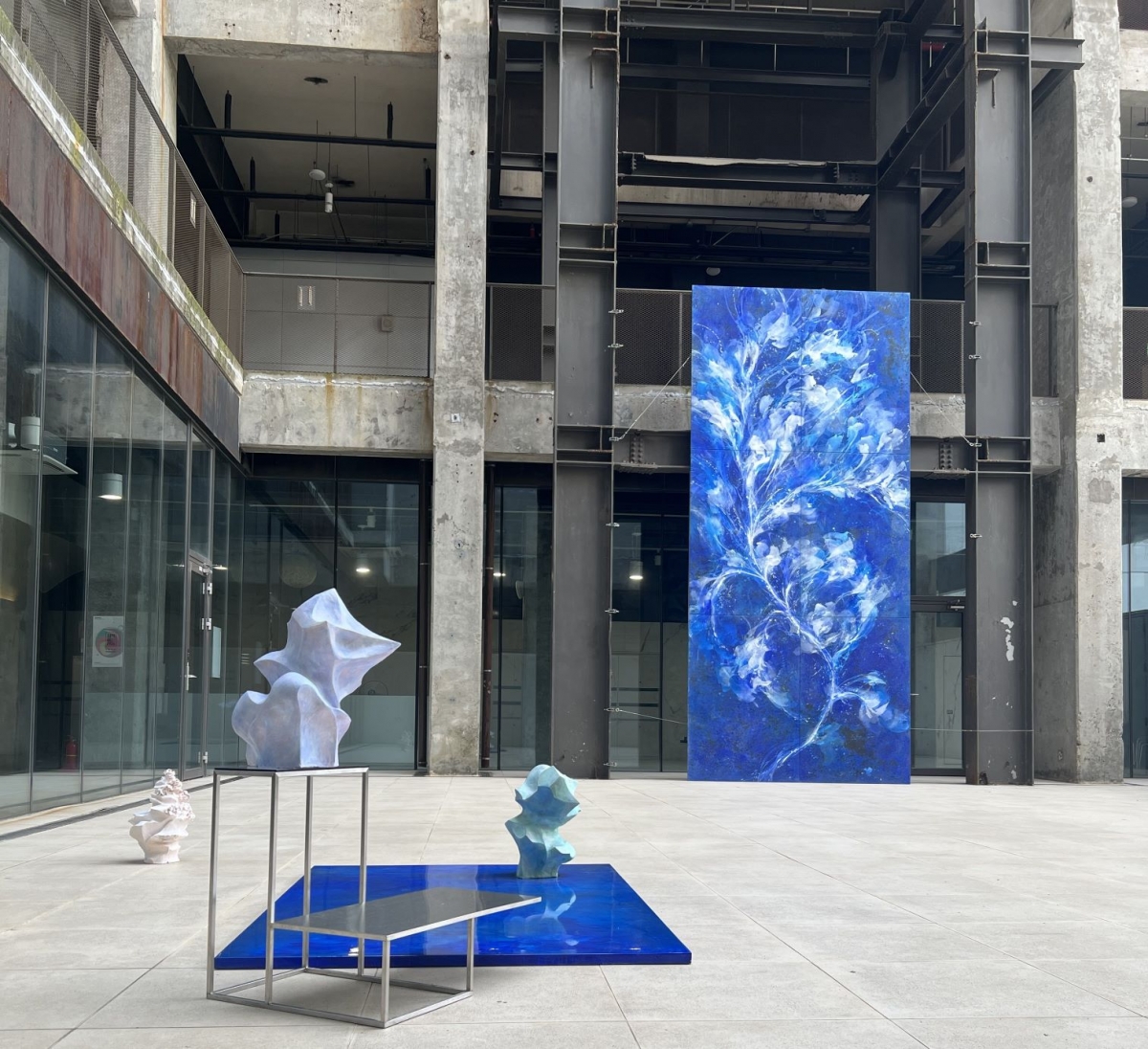
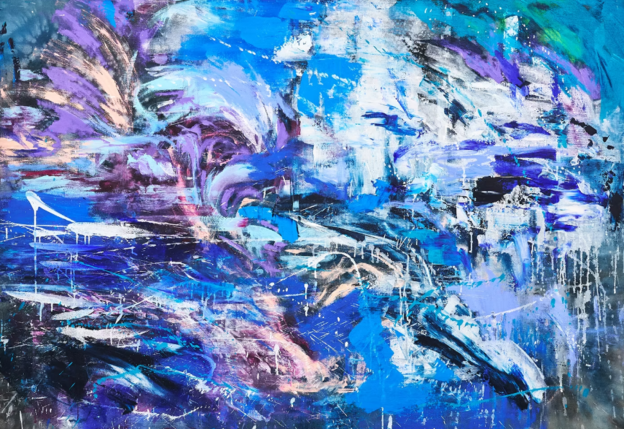
More recently, painting and sculpture, natural materials and artificial substances, are brought together within unified organic structures. Crystals, coral, minerals, terracotta, and sand are deposited onto canvases and sculptural frameworks, and the works are presented not as fixed outcomes but as states capable of continual variation. Through this process, Hur expands form beyond completion, redefining it as a cycle of circulation and reconfiguration.

Topography & Continuity

The most persistent thread running through Hur Yeonhwa’s practice is her sustained exploration of “fluidity.” Water, the body, data, and space—though distinct in nature—are all treated as entities that cross boundaries, connect, and transform. Beginning with the sensory experience of water rooted in personal memory, this inquiry has gradually expanded into social structures and ecological systems, accumulating as the artist’s distinctive sculptural language.

While grounded in sculptural materiality, Hur continues to extend her work toward networks, environments, and data sensibilities. Rather than treating sculpture as a singular mass, she employs it as a structural device that connects planes, images, and spaces, translating contemporary immaterial conditions into a material vocabulary—an approach that distinguishes her practice within the field.

Her method of reintegrating past works into new exhibitions and narratives clearly reveals her stance toward artworks as circulating entities rather than fixed results. This is evident in cases such as Cycle, where sculptures from 《Floating people》 are reused as new structural frameworks, or in 《Blue Lung》, where earlier bodily sculptures and paintings reappear and are reconstructed. Centered on the axes of water and the body, ecology and data, Hur Yeonhwa’s sculptural language—addressing fluidity and connection, sedimentation and circulation—is expected to continue evolving through ongoing variation and expansion.

Works of Art

Fluid Landscapes

Exhibitions

Activities