

Sound behind the sound - K-ARTIST

Sound behind the sound

2021
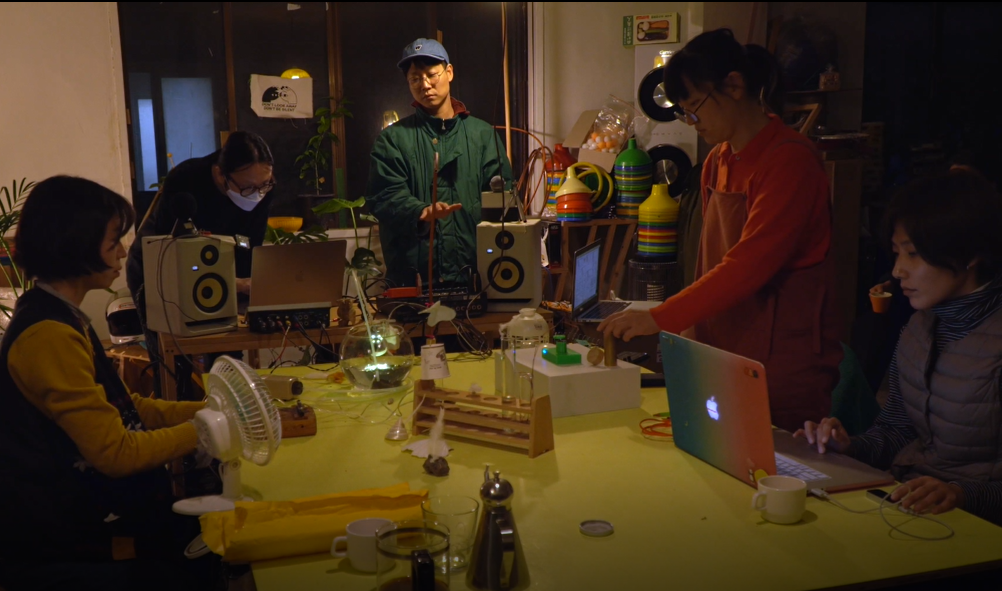
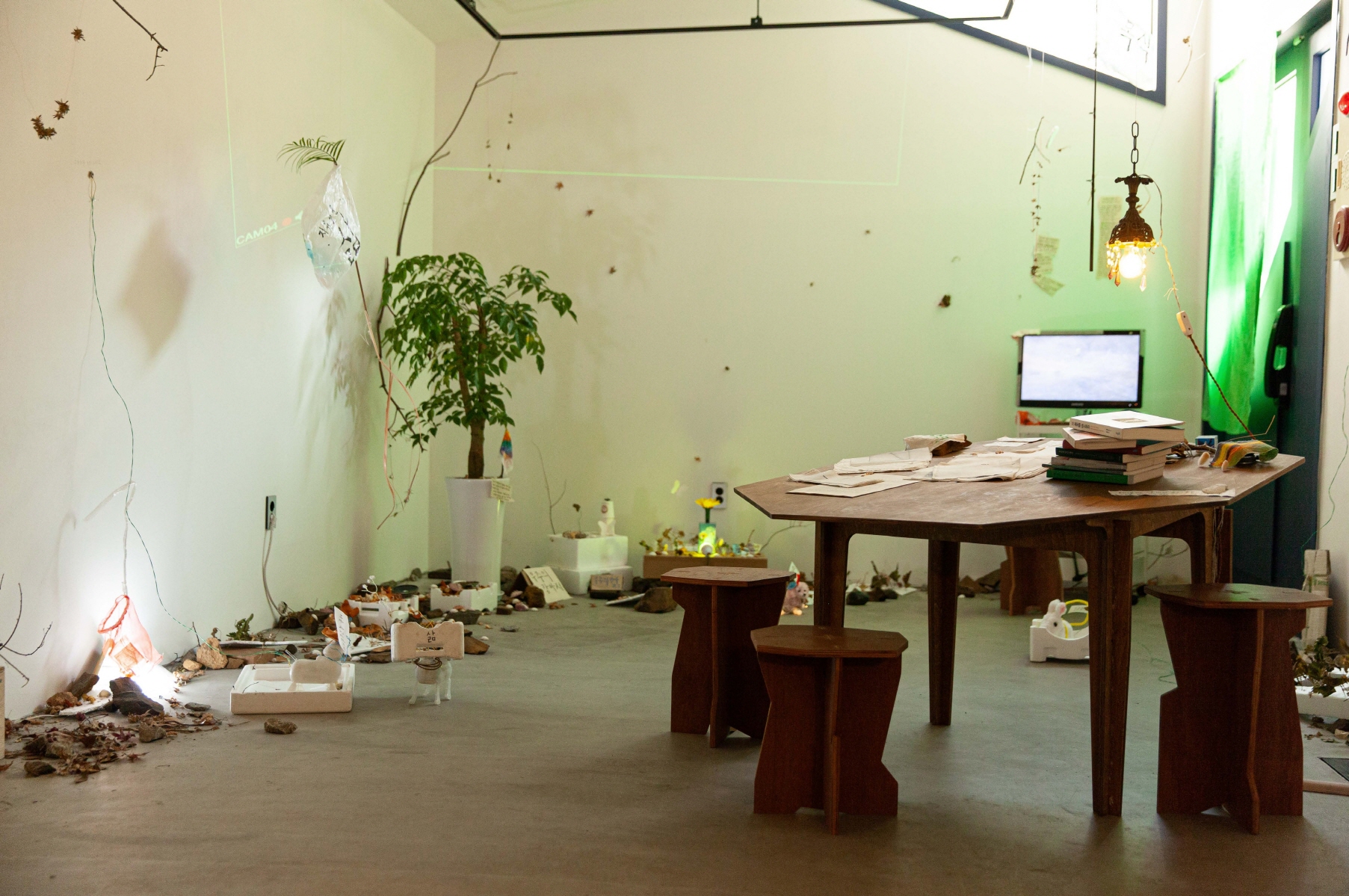
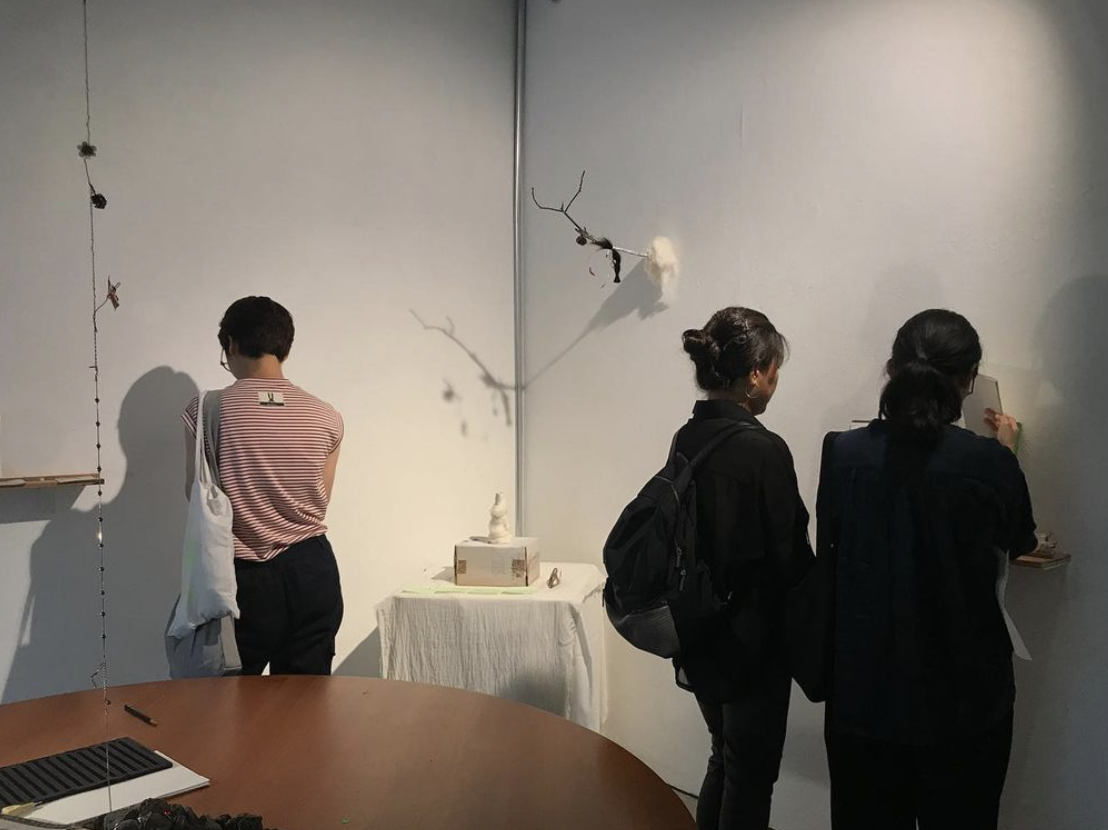
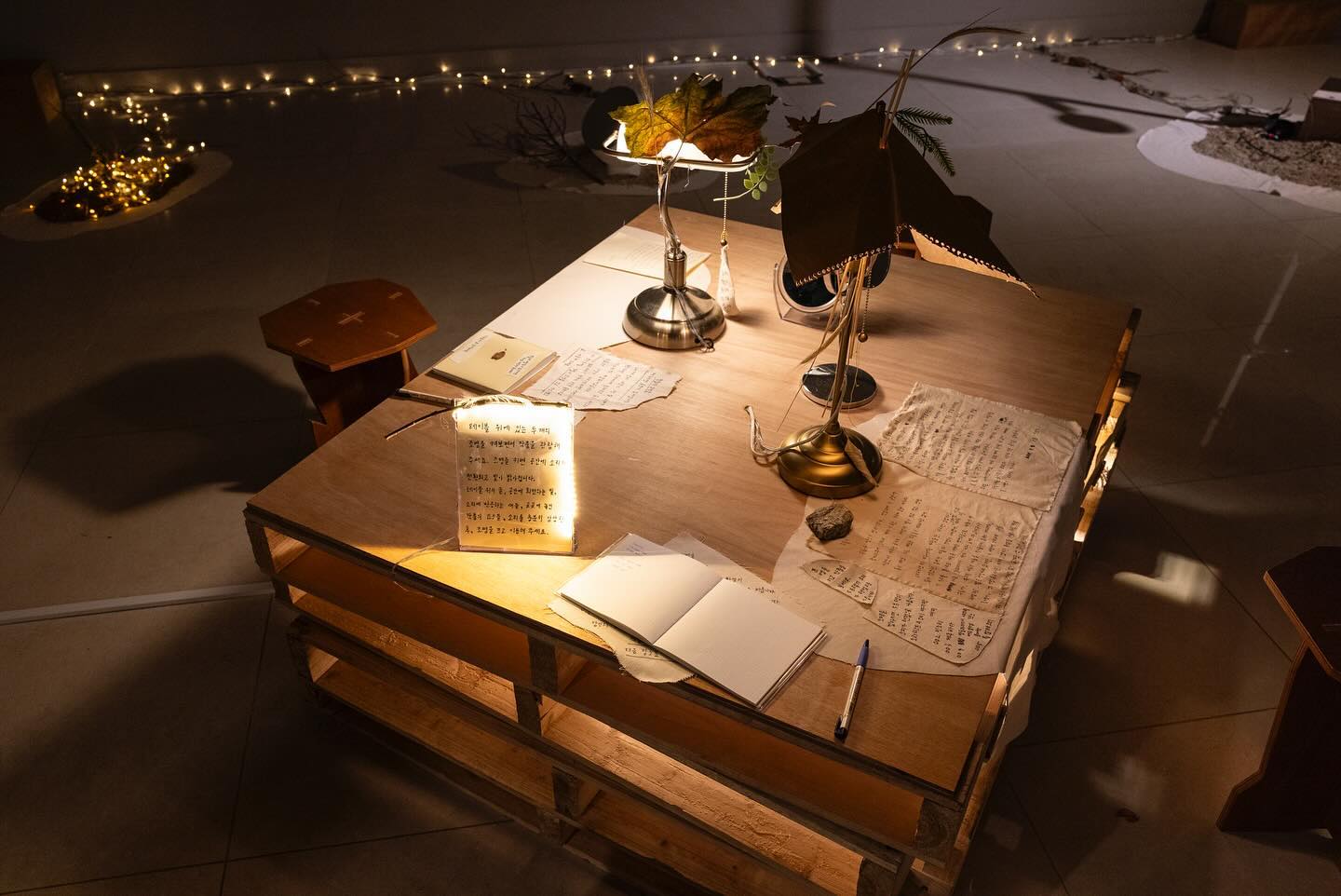
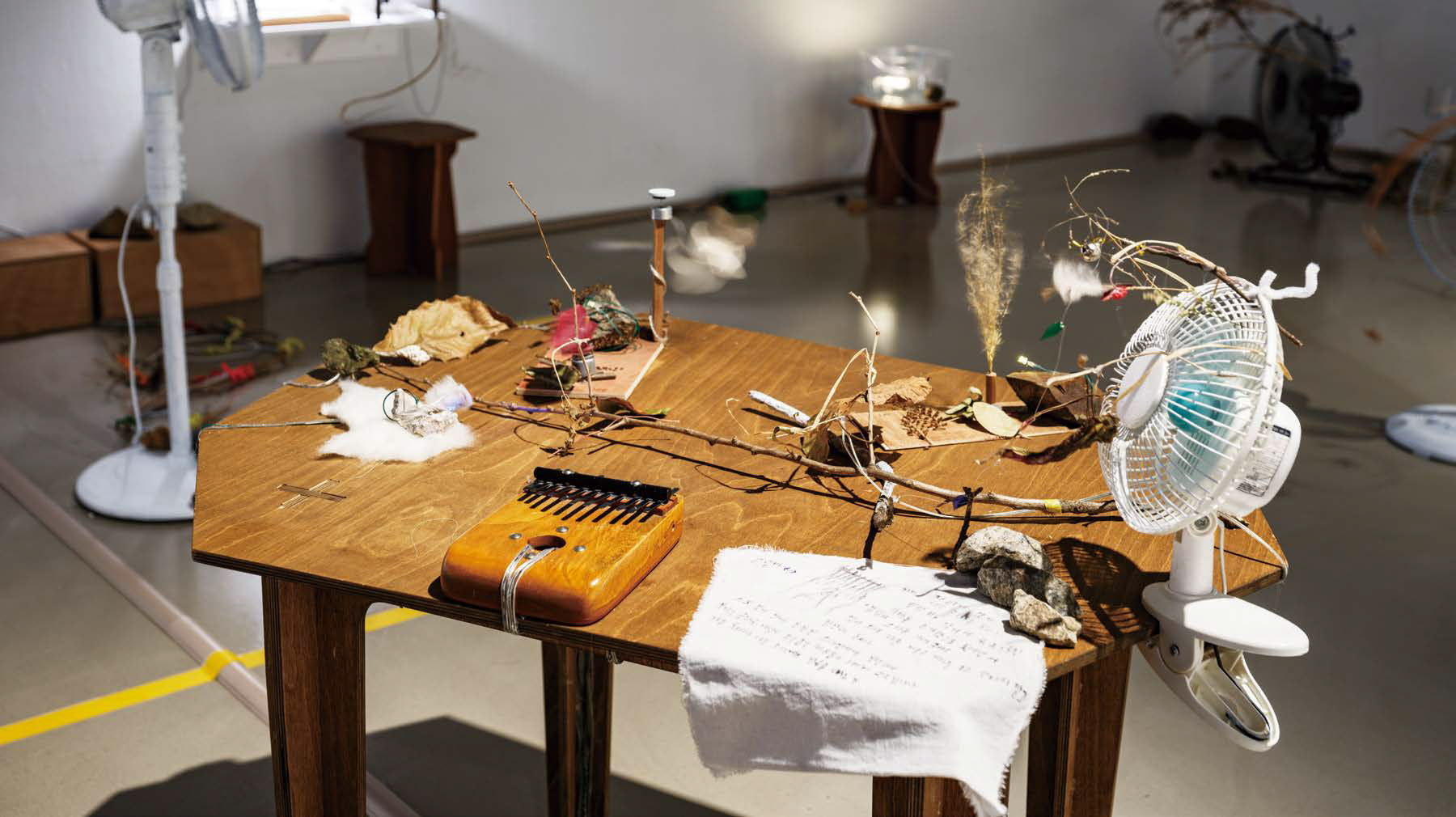
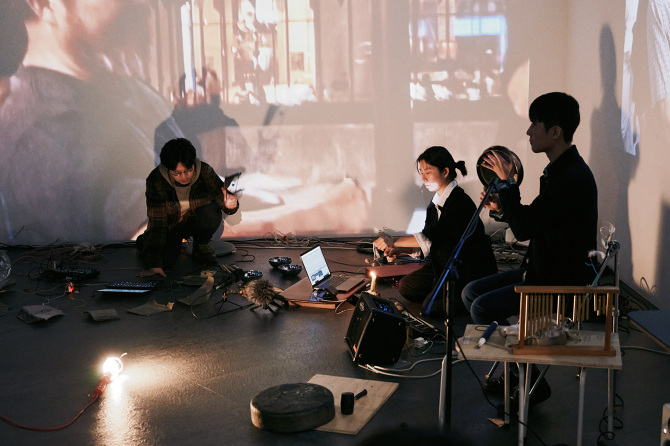
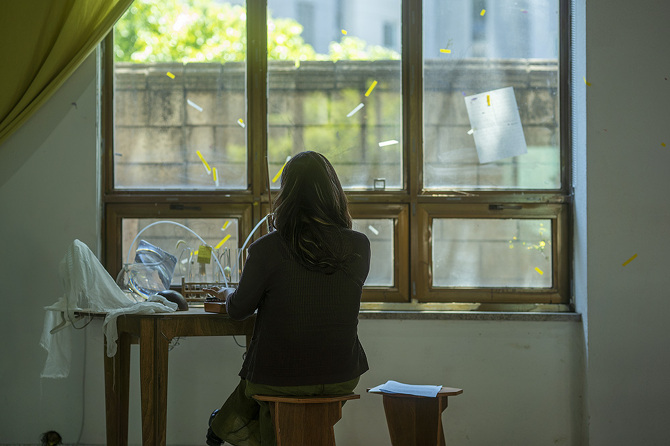
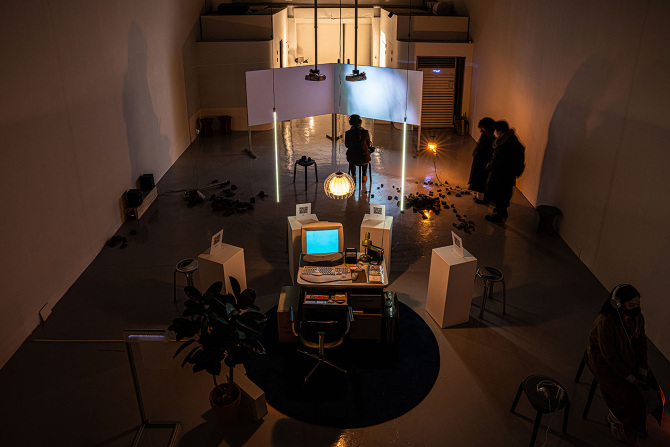
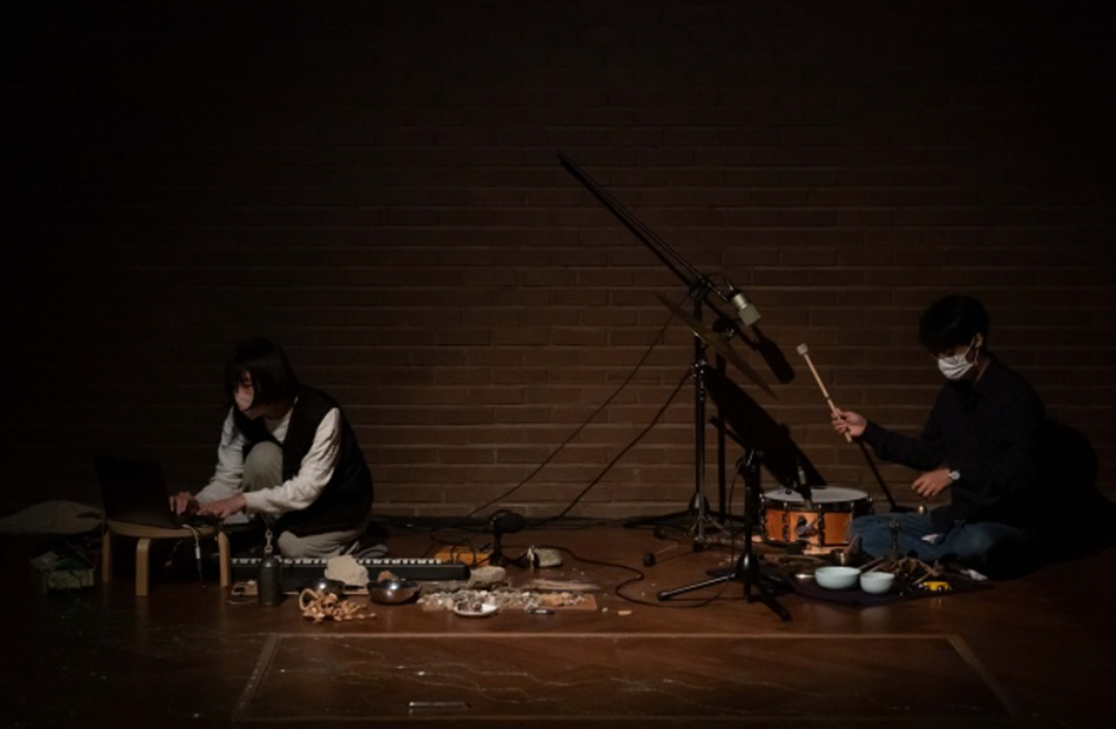
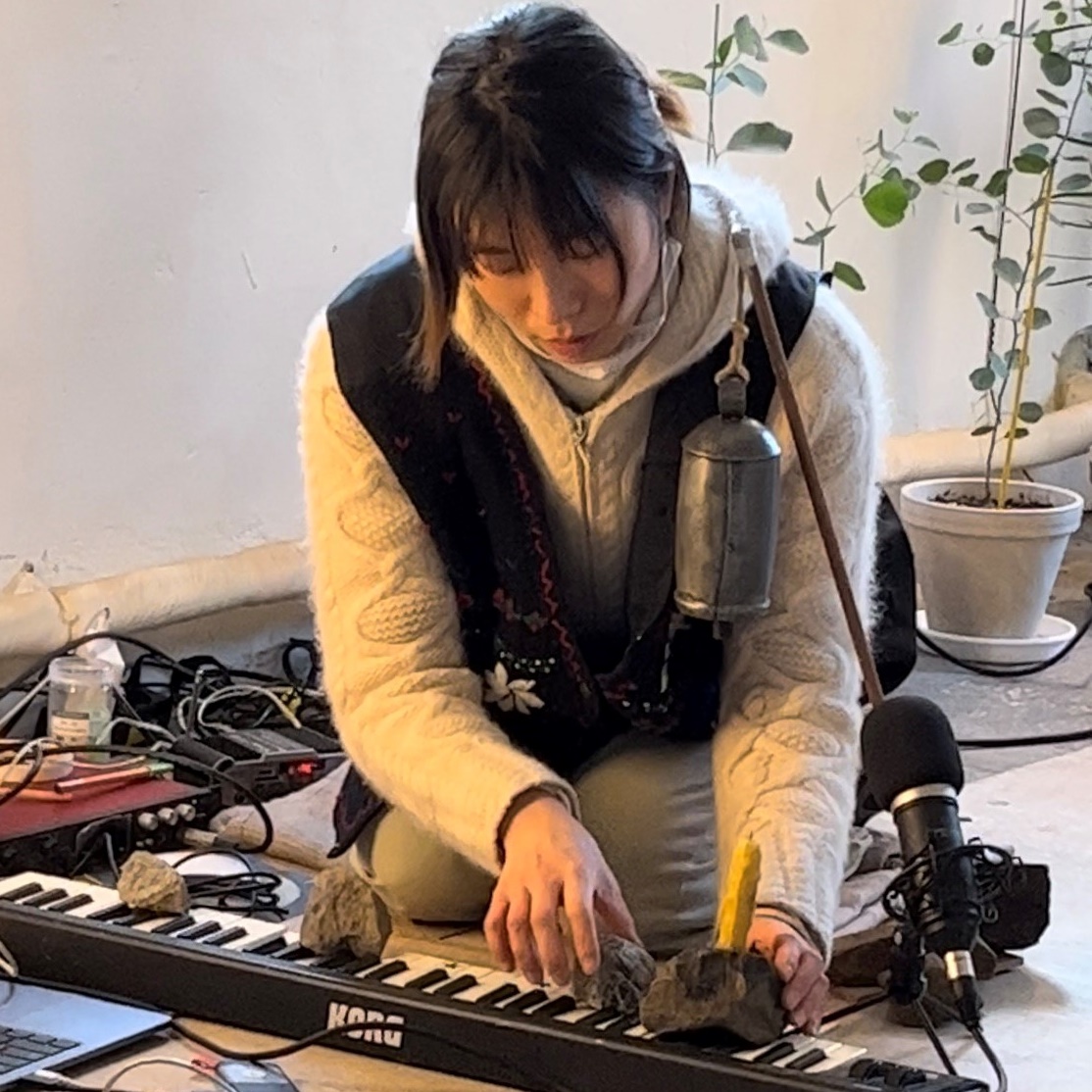
Kalimba, Sound sensor, table, mixed media
Dimensions variable
About The Work

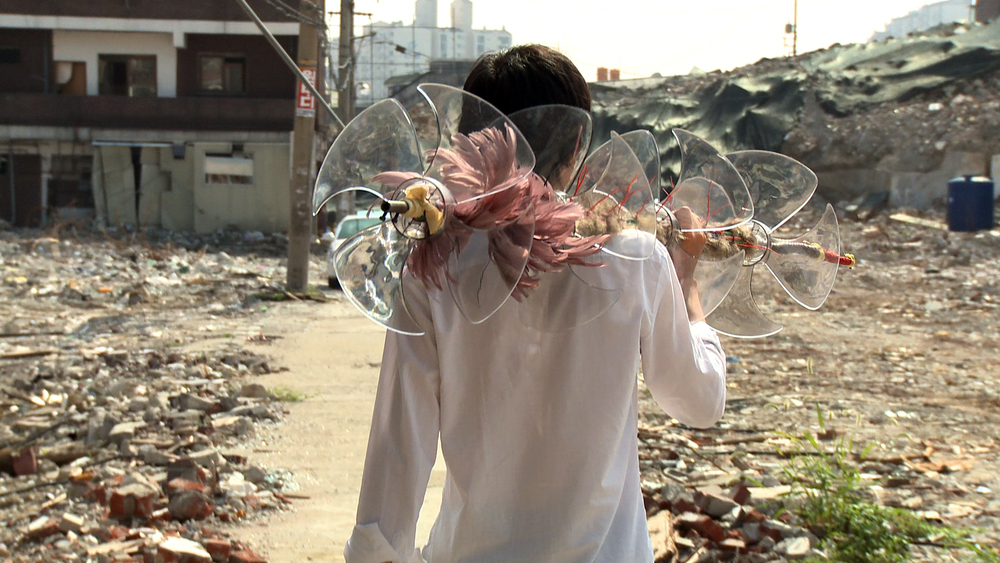
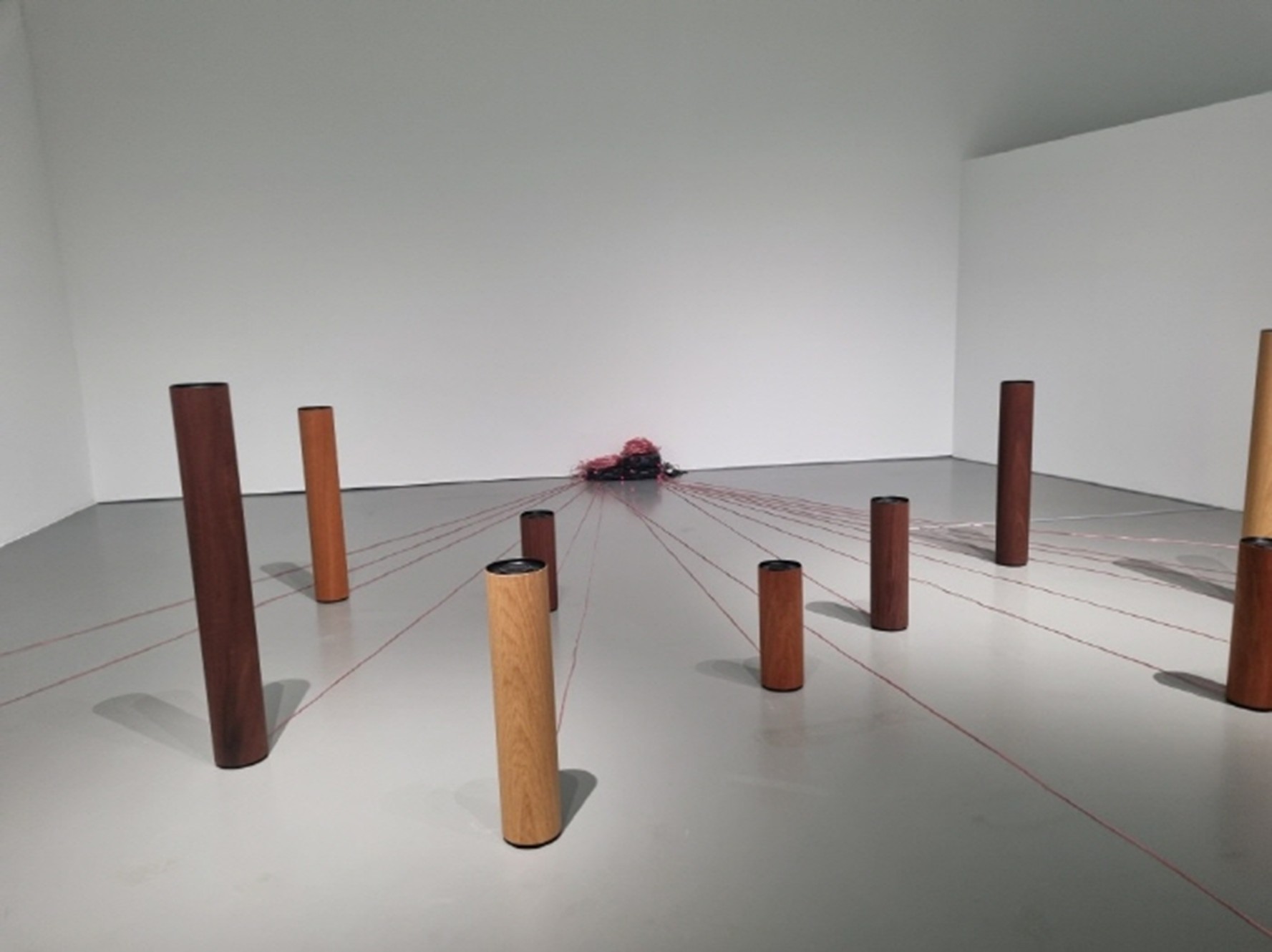
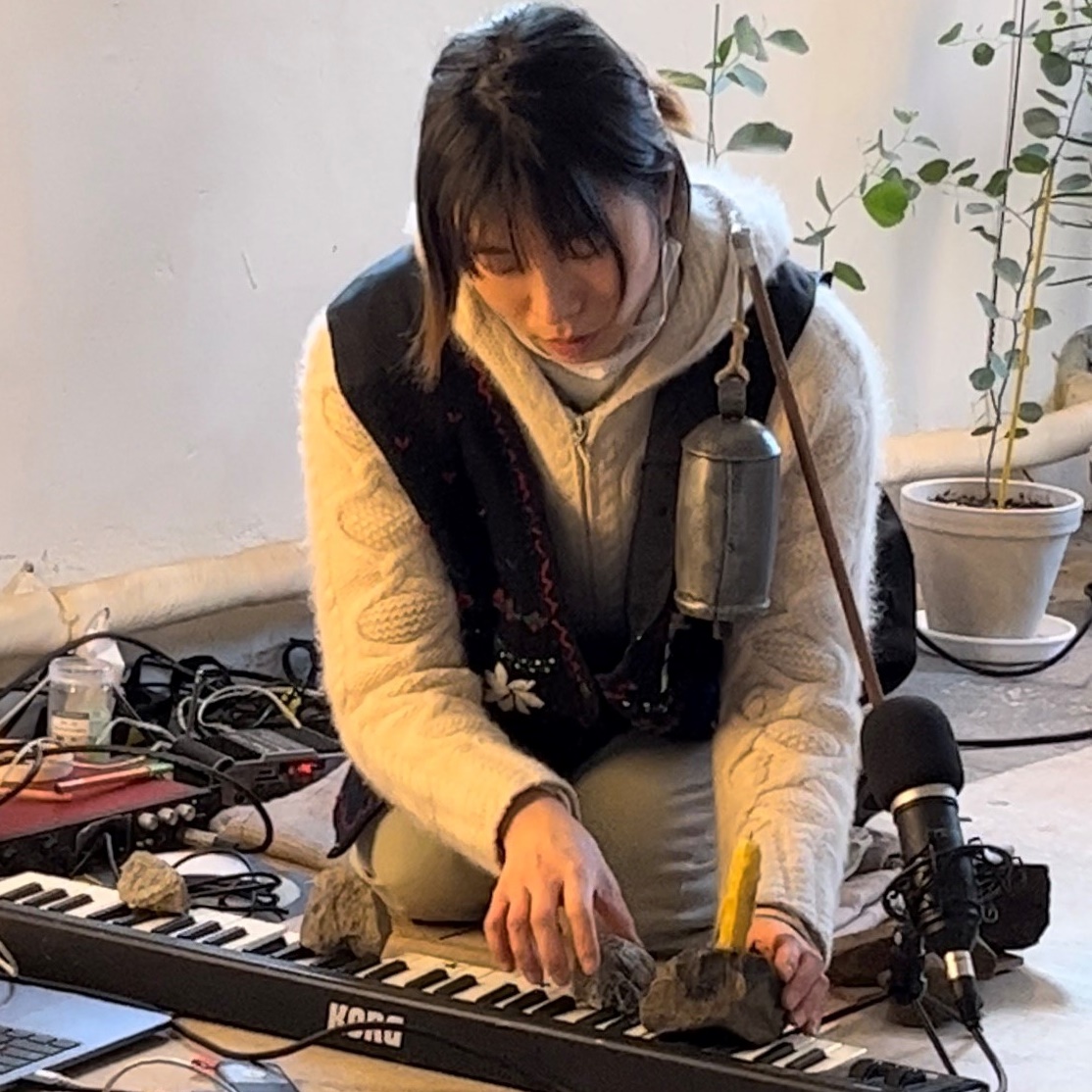
Oro Minkyung creates works that engage with and listen to soundscapes that are often considered barely audible. Through performative actions and sound installations, her practice centers on light and sound, inviting viewers to focus on moments that sense small memories and the subtle tremors of quivering leaves.
 
Her practice begins with attending to the small movements of light and sound within the phenomena of passing time. She observes the subtle tremors of things that exist around us yet are easily overlooked—light, shadows, energy, relationships, and other delicate vibrations.
 
Oro Minkyung’s work examines relationships within various lives through small, subtle elements—the vibrations of beings that have always existed alongside us and sustained us. Spaces filled with these barely perceptible tremors invite audiences to move beyond mere physical sensory experience, using it as a medium to discover connections between technology and society, humans and nature, past and future, ultimately expanding into a new sense of solidarity.

Solo Exhibitions (Brief)
Group Exhibitions (Brief)

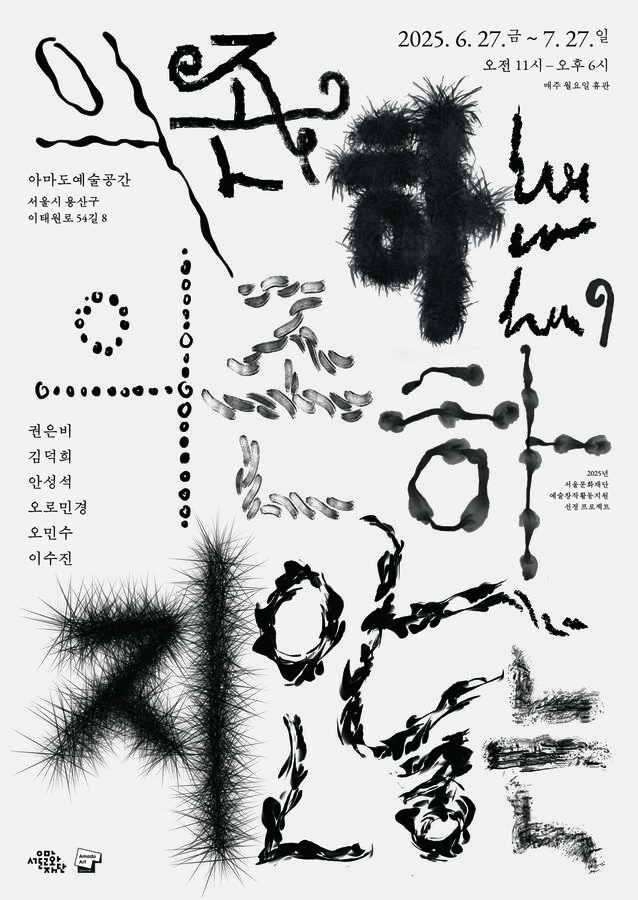
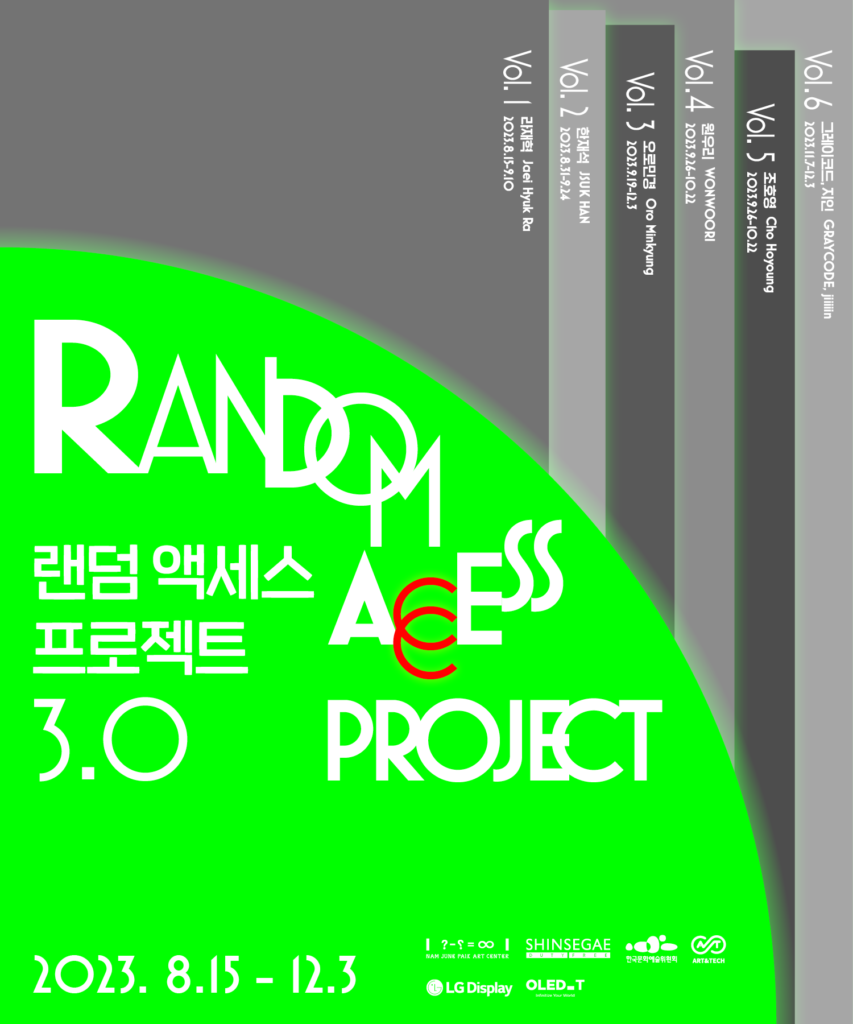
Oro Minkyung has also participated in numerous group exhibitions, including Immaterial to Hypermaterial (Gyeonggi Museum of Modern Art, Ansan, 2025), Reliance and Independence (Amado Art Space, Seoul, 2025), Asynchronous Singing (ARKO Art Center, Seoul, 2024), Memory, Stare, Wish (Gyeonggi Museum of Modern Art, Ansan, 2024), and 《Random Access Project 3.0》 (Nam June Paik Art Center, Yongin, 2023).

Awards (Selected)

Oro Minkyung was selected as a Science Walden Artist at Ulsan National Institute of Science and Technology in 2019 and received an Asian Cultural Council Fellowship in 2017.

Collections (Selected)

Oro Minkyung’s work is included in the collection of the Gyeonggi Museum of Modern Art.
Works of Art

The Vibration of the Being that has Supported us

Originality & Identity

Oro Minkyung’s practice begins by focusing on the vibrations of small and minute existences. In her early works, such as Hold On(2010), Put the Moment into(2010), and her first solo exhibition 《One’s Scenery》(Alternative Space Noon, 2012), she captures traces of light and shadow and the intimate sensations of disappearing spaces. Through this, she explores the subtle vitality present even in moments we easily overlook.

This sensorial attention later expands into a perspective that engages with others and society. In 《Youngin and Butterfly: Letters from the Particle Laboratory at the End》(Factory 2, 2019), she questions social standards of “normality” and “health,” presenting a narrative where the world becomes broader when perceived through diverse senses.

Her recent solo exhibition 《Love from Ruins》(Art Jamsil, 2022) investigates how we confront social trauma and loss. The remaining fragments of memory within disappearing places and communities are reconnected to lived movements, highlighting a sense of solidarity.

The recent work The White Lights Underneath the Ground(2024) sensorially evokes the historical context of division in Korean society, transforming past wounds into a possibility for healing. It demonstrates an expanded perspective on reconnecting memory to the future through the act of listening again to what has been lost.

Style & Contents

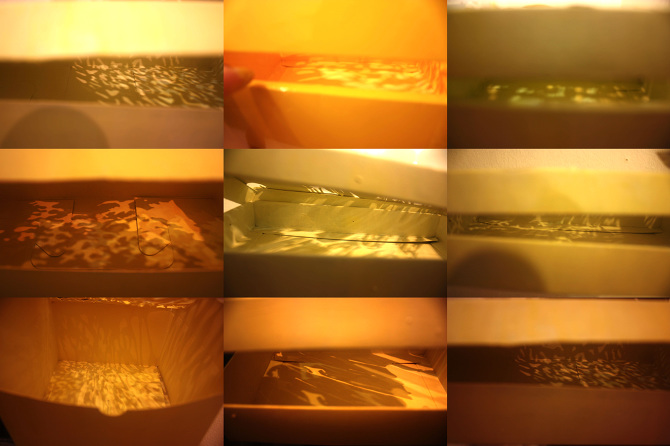
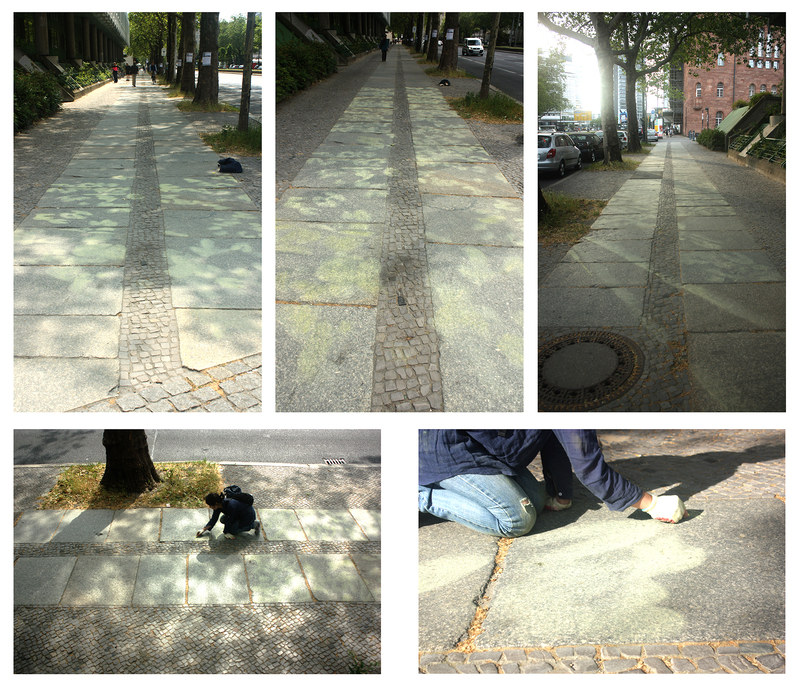
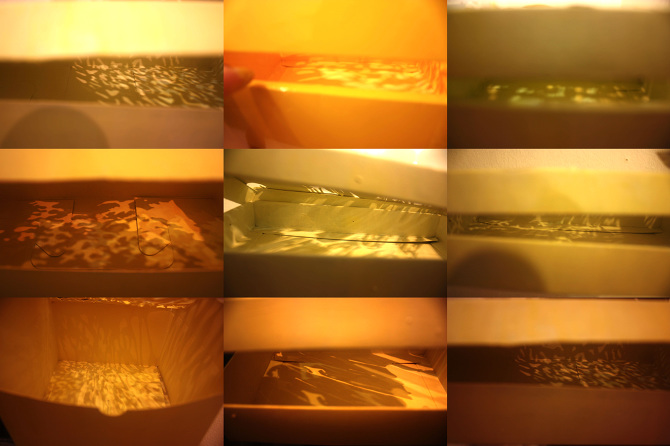
Oro Minkyung began her artistic career by recording traces of time, space, and objects with simple materials and gestures, as seen in works such as Hold On, where she draws with chalk along the path of light, and Put the Moment into, which transfers silhouettes of shadows into a boxed spatial form.

She later transitioned toward sound-based installations and performances, exploring the intersection of sensory perception. In 《Youngin and Butterfly: Letters from the Particle Laboratory at the End》, the viewers’ movement or gaze triggers interactions with sound, light, and air, expanding the very act of seeing and listening.

In 《Love from Ruins》, she employed everyday objects such as vibration speakers, sound sensors, and toy devices to invite active audience participation. These interactive elements demonstrate how technology can mediate a sense of solidarity.

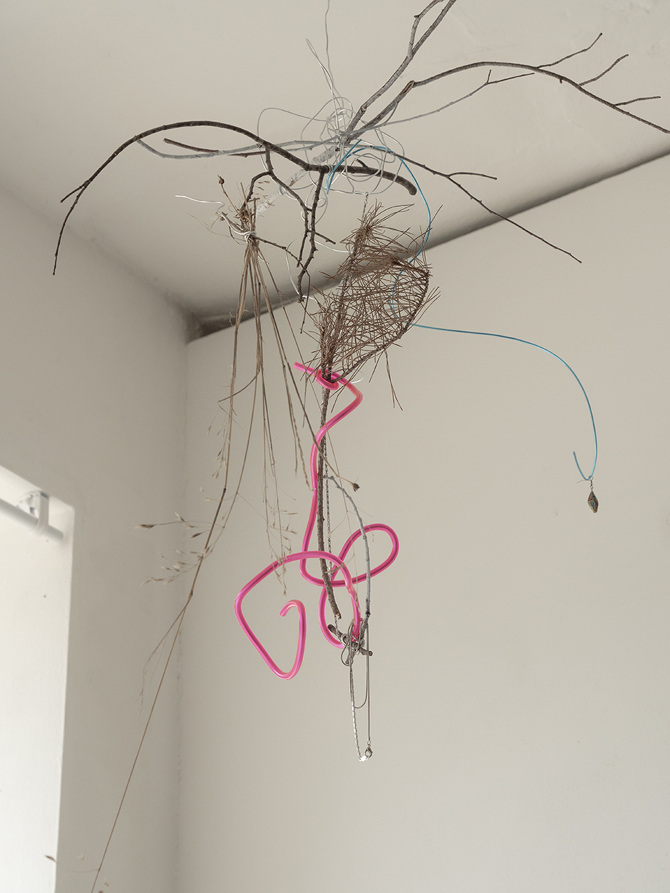
Works from 《Random Access Project 3.0》(Nam June Paik Art Center, 2023), including Time that Delivers the Light(2023), and more recent pieces such as The White Lights Underneath the Ground and The Sound Behind Sound #2 – Song of Dried Grass(2024), build sensory ecologies linking technology, the human body, and the environment. Through sound, the artist reconstructs spaces where social realities and personal emotions coexist.

Topography & Continuity

Oro Minkyung’s artistic practice continues to sustain a refined sensitivity toward “small things.” By revealing what is invisible or easily forgotten through minimal elements such as light, sound, and traces, and by connecting them to social relationships, her work establishes itself within Korean contemporary art as a form of sensorial solidarity.

While her early works concentrated on discovering and recording traces left by time and space, recent projects have expanded toward communal recovery through technology and collaboration. Particularly after 2019, performances and installations created together with collaborators and audiences have functioned as devices of care and consolation.

By sensorially reconstructing issues of memory, division, and disaster—central to contemporary society—her work redefines the role of art through a perspective of healing and support. She consistently explores how technology can become an extension of human perception and a tool for shaping community.

Works of Art

The Vibration of the Being that has Supported us

Articles

Exhibitions

Activities