Heejae
Lim’s work begins with the question of how nature becomes processed into an
image. As seen in early works such
as HLN004 (2016)
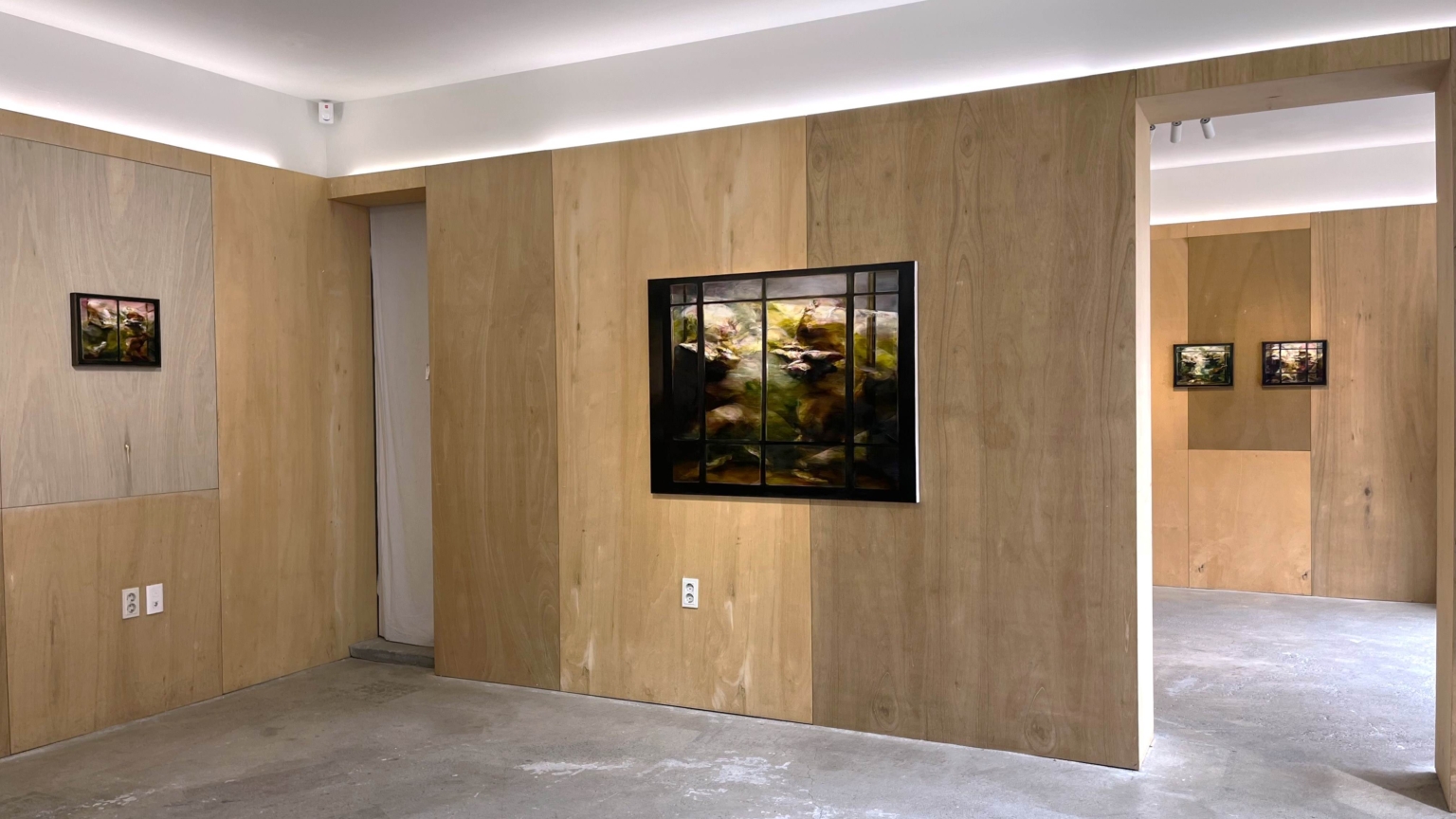
and MNK001 (2017), the artist focuses on nature
presented through glass surfaces—television or documentary screens—in a
taxidermied, objectified state. Though these images appear to capture the
movement of living beings, they are in fact selected, edited, and staged by
humans, revealing that our perception of nature is fundamentally situated
within a manipulated frame. Lim discovers, in this gap, the desire to “touch
and possess” nature, and the dilemma of representation that inevitably fails to
satisfy this desire.
This line
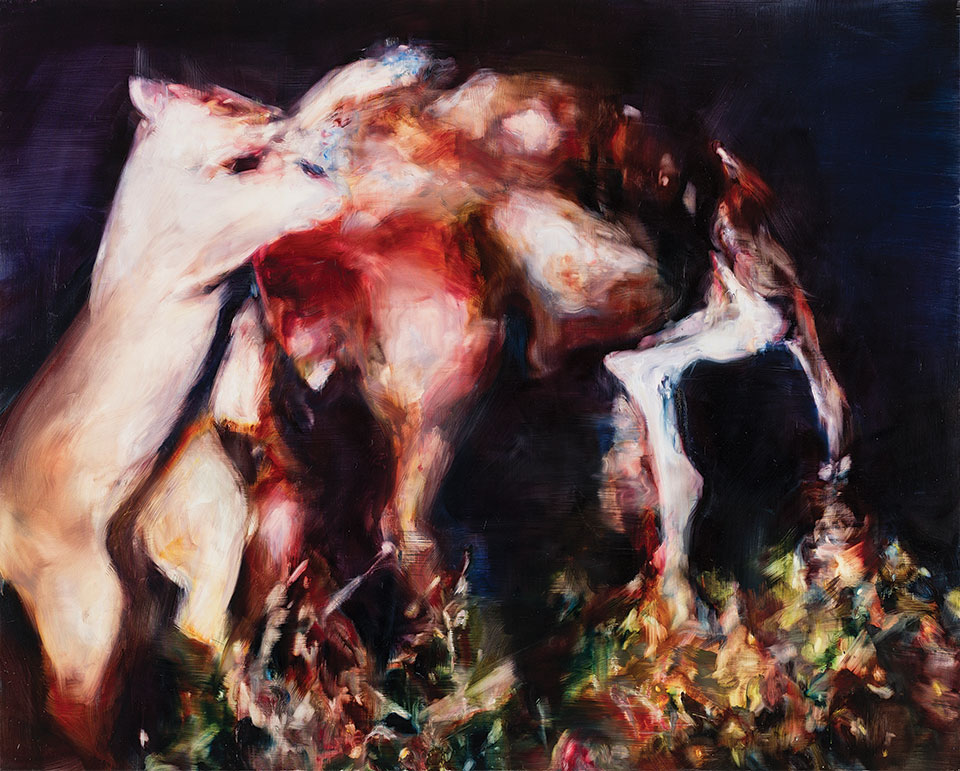
of inquiry becomes clearly articulated in her first solo exhibition, 《Noli Me Tangere》(Gallery DOS, 2017). Lim
noted that scenes of predation and survival in documentaries seem to reveal the
natural world, yet are in fact “a theatrical stage that has lost its sense of
reality.” In other words, our view of nature is always mediated, transformed
through the surfaces that frame it. Lim considers this mediating structure
essential to understanding “nature as image.” The nature she depicts is never
untouched or original; it always exists in a processed state.
In the
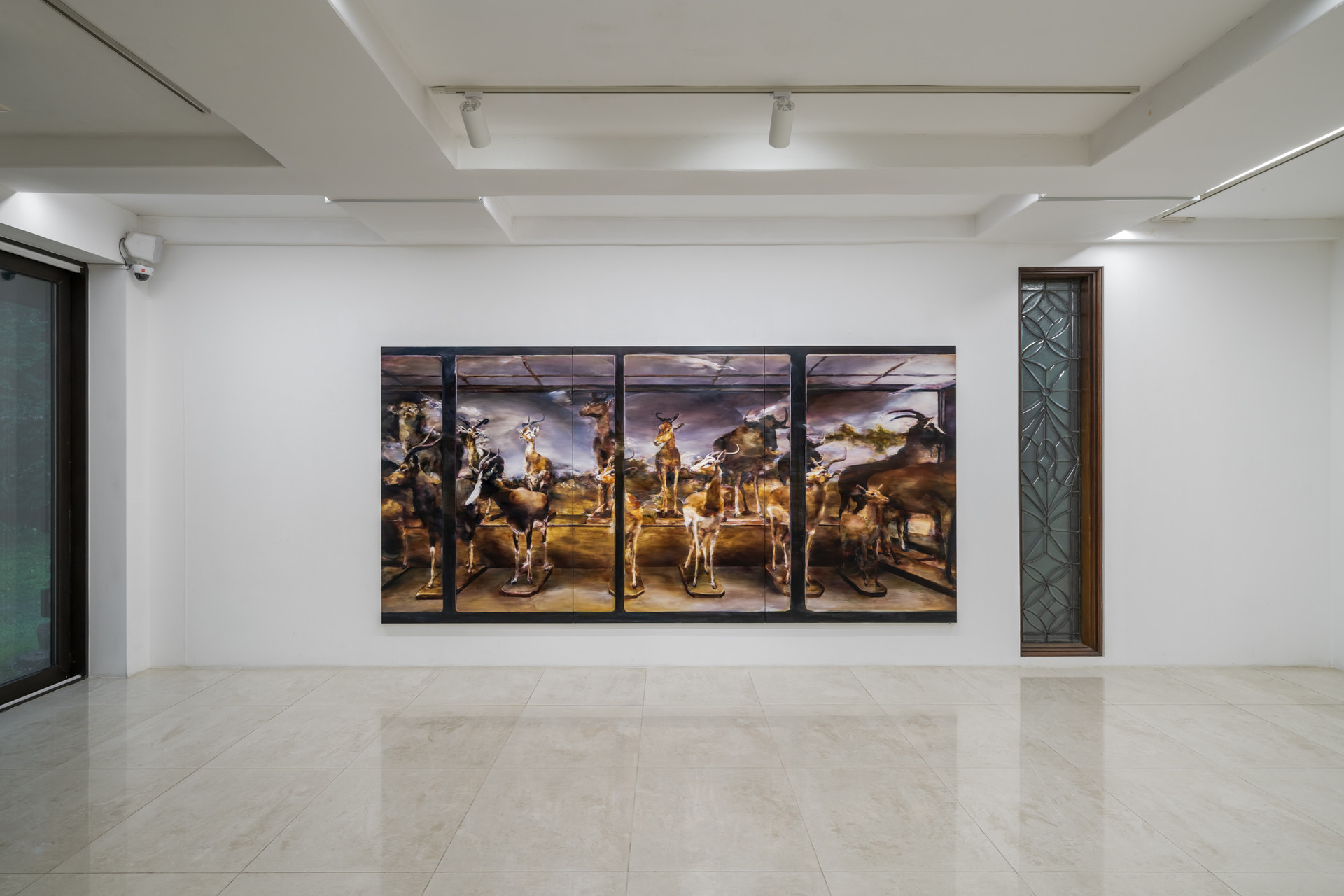
2022 solo exhibition 《Cabinet of
Curiosity》(LEE EUGEAN GALLERY), this focus expands into
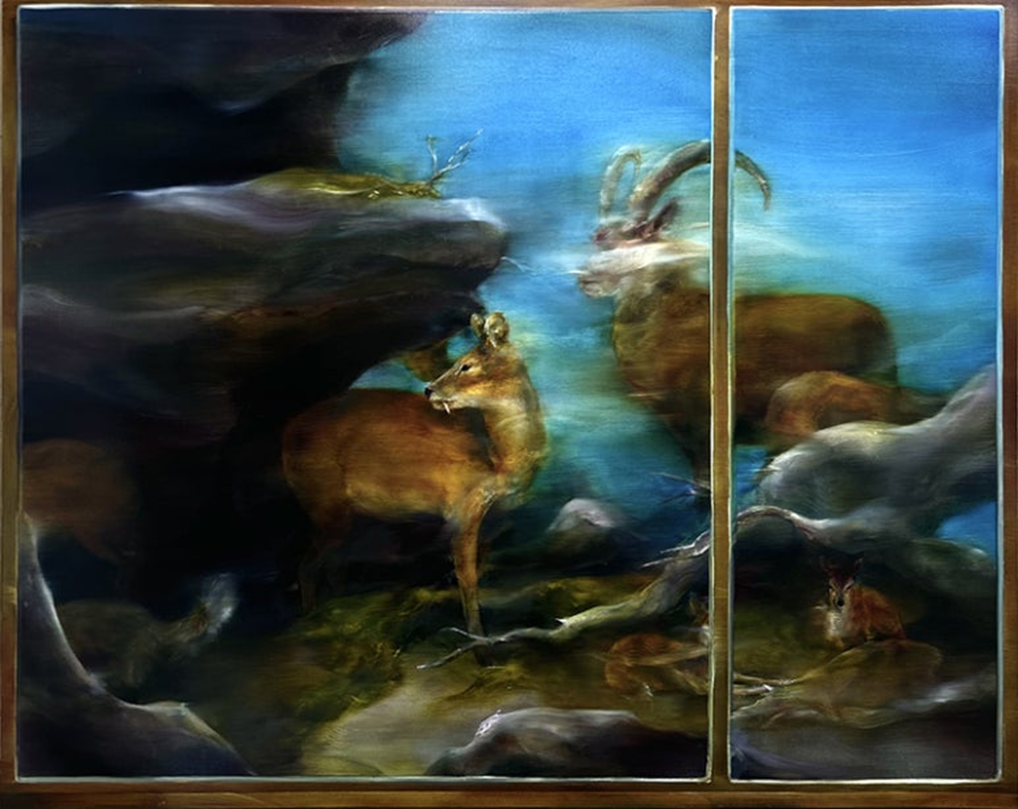
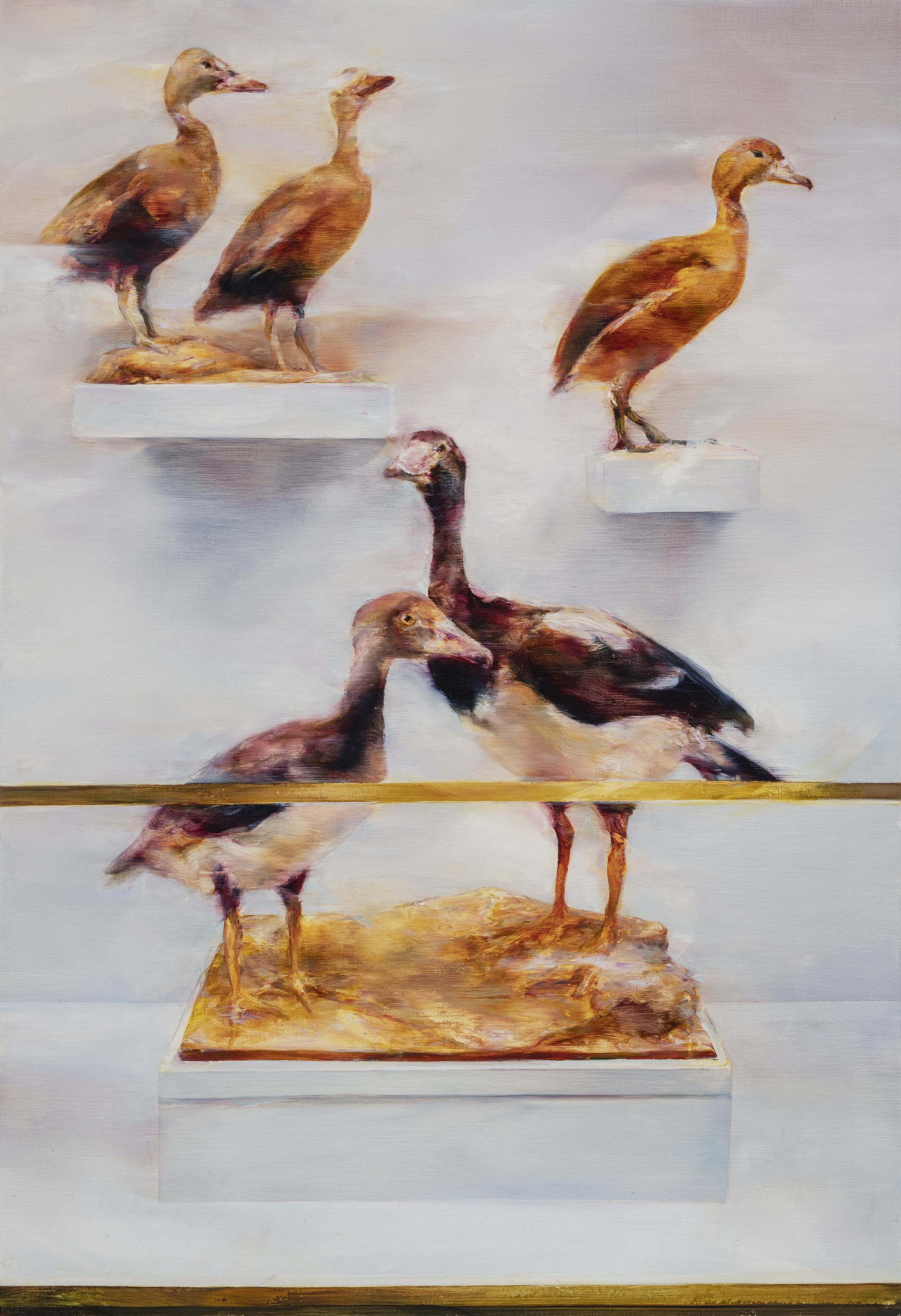
the realm of “the desire to possess.” Taxidermied animal specimens may seem to
preserve living creatures, but in reality, they are objects of possession
premised on death. Works such as Stuffed Antelopes (2022)
and Stuffed Chamois and Wild Sheep (2021–2022)
reveal a state in which the boundaries between life and death, nature and
artificiality, become entangled. Through these preserved bodies, the artist
encourages viewers to reflect on how we structure and rearrange nature—and on
the contradictory emotions arising from this process.
Her recent
work Tree of Stuffed Humming birds (2024) expands
this thematic inquiry toward the notion of “relationship.” Fifty-six
hummingbirds, seven nests, and a branch shaped like a snake’s head exist as
individual entities yet form a tightly interwoven relational network. As the
artist states, “the most elusive and alive thing is relationship,” and such
relational vitality moves beyond the representation of a single specimen,
advancing toward a new concept of a pictorial ecosystem in which life, image,
and relationship move together.