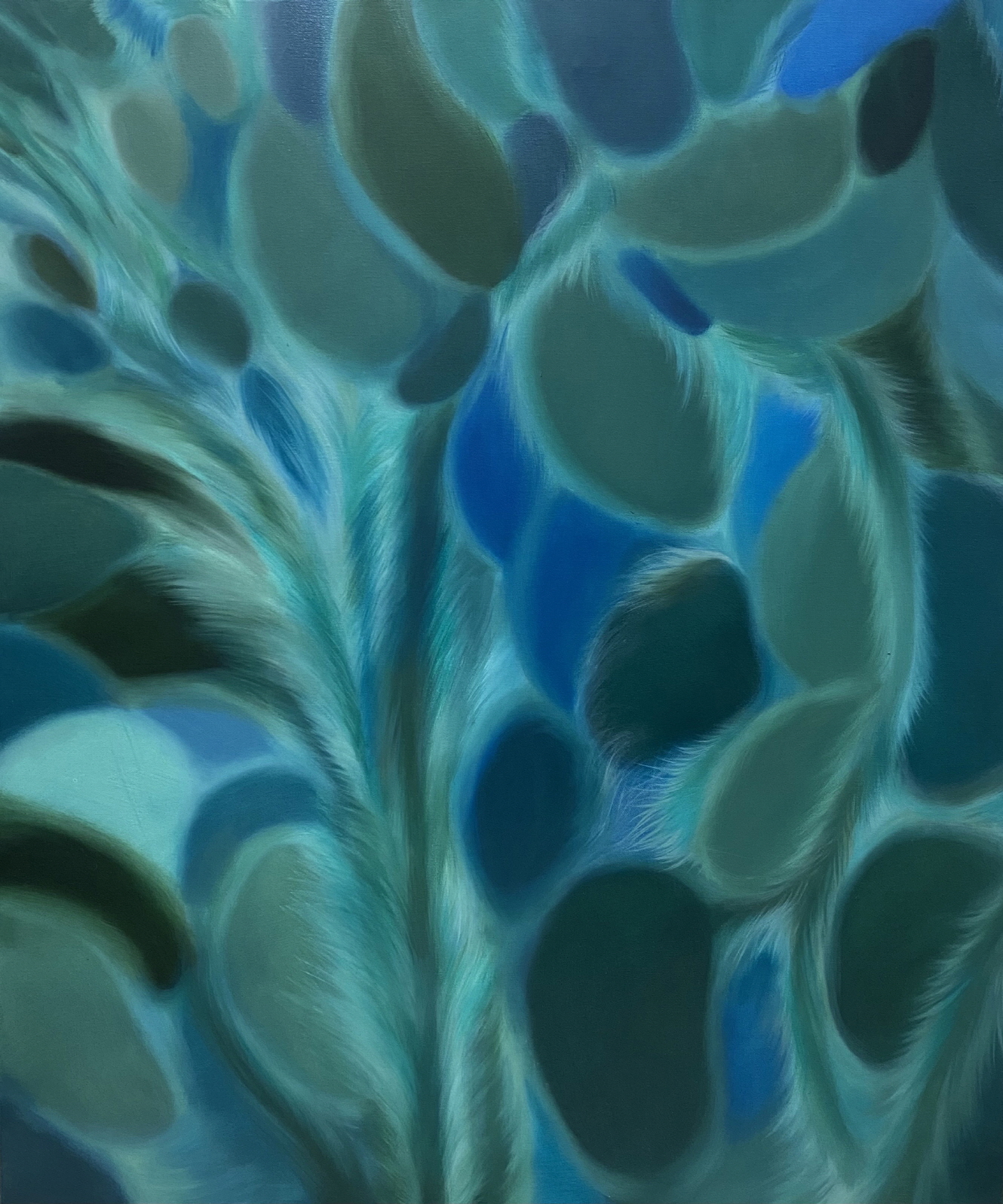
Biorhythms, Puerto Lguazu, 11am - K-ARTIST

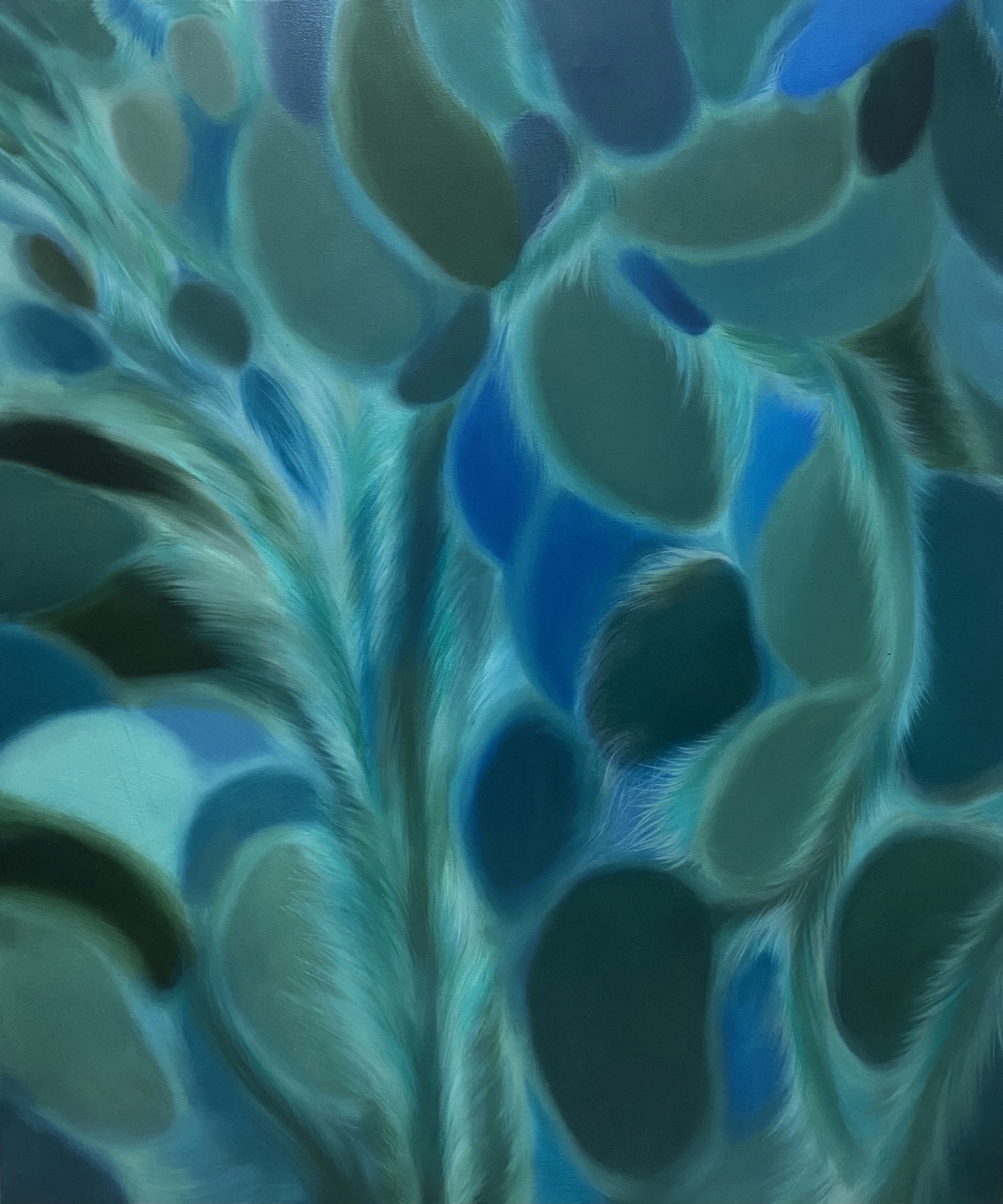
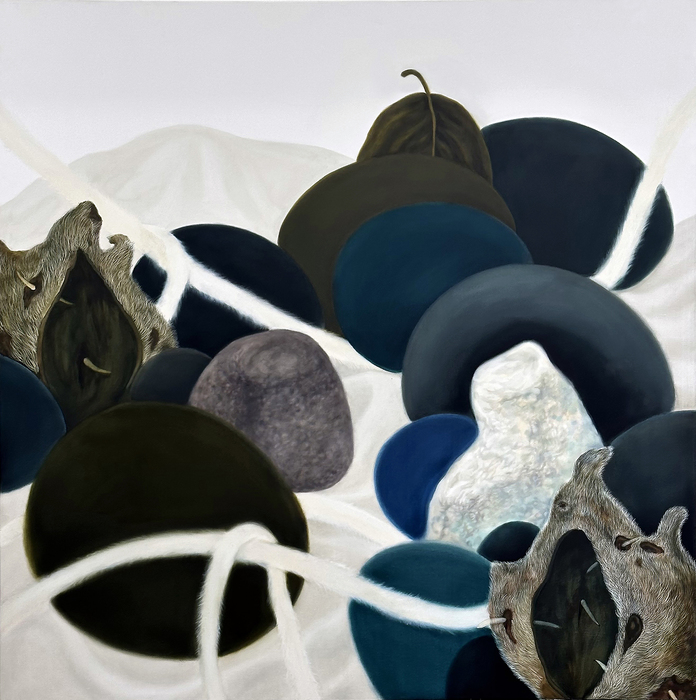
Biorhythms, Puerto Lguazu, 11am

2022
Oil on canvas
72.7 x 60.6 cm
About The Work

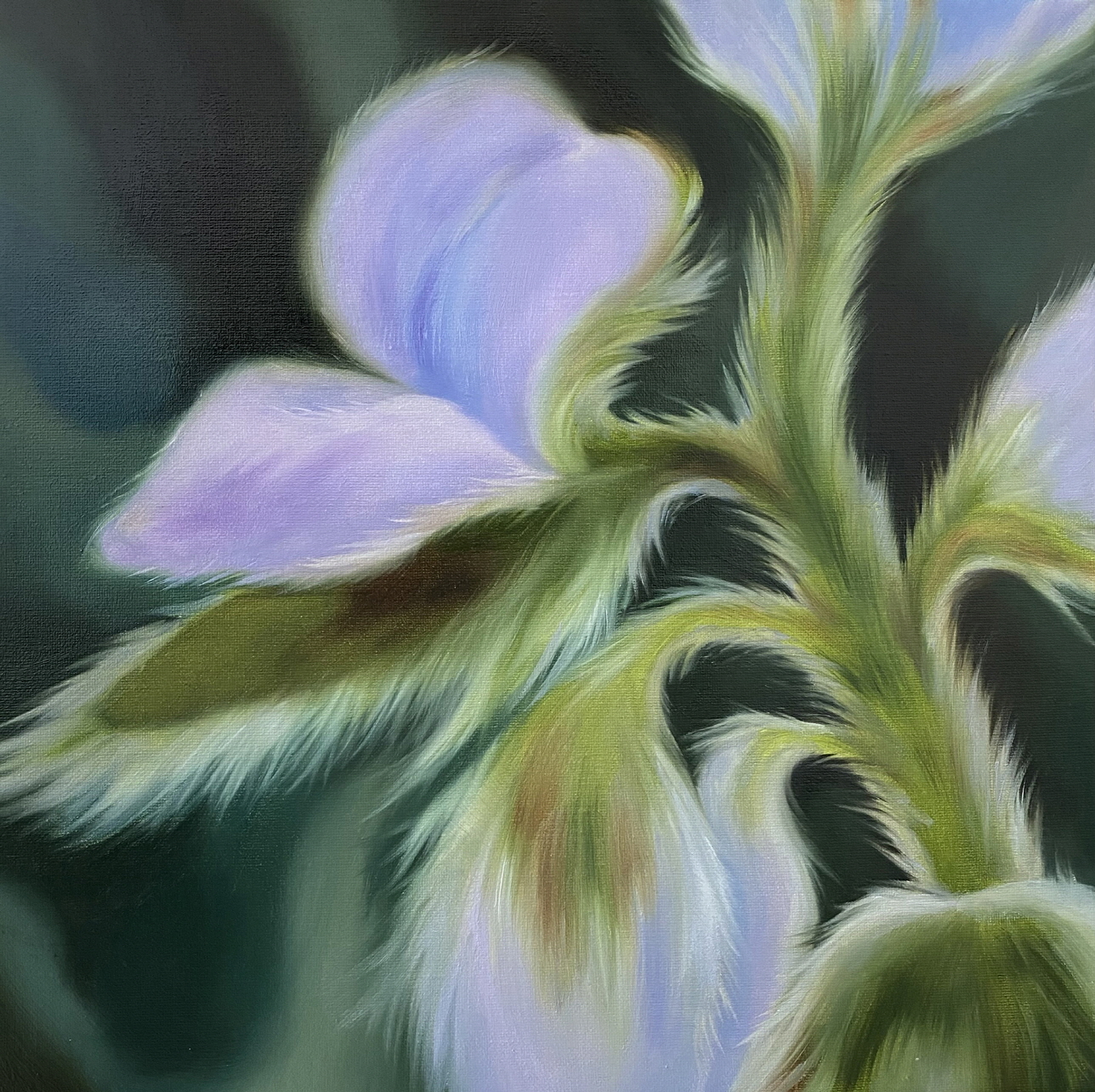
Greem Kim examines the relationship between humans and nonhuman beings, reconsidering humanity through the modes of existence found in nonhuman life. Rooted in her interest in the biosphere as a site of mutual dependence among humans, plants, and minerals, she visits life-filled environments and translates her sensory and cognitive experiences into painterly form.
 
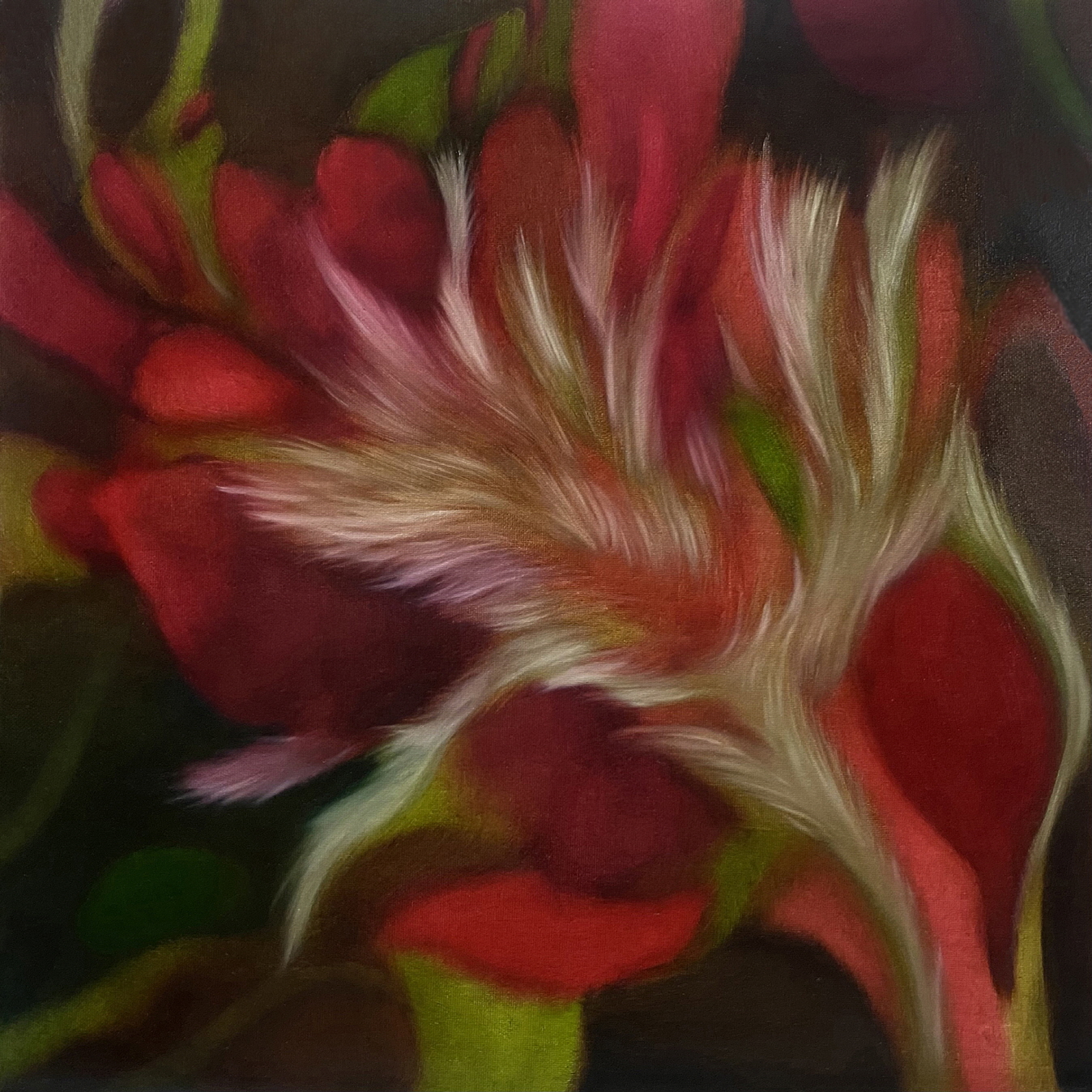
Her work begins with direct observation in places such as forests, later transforming these encounters into a visual language. Tactile, immersive surfaces depict intimate interspecies interactions, where organic forms metaphorically reflect human existence while forming imagined ecosystems.
 
Kim merges emotions, sensations, and reflections into the act of painting, blending figurative landscapes with abstract bodily sensibilities. Rather than distinguishing between species, her images follow shared affective flows, allowing drifting, rhythmic life-forms to guide viewers into a virtual ecosystem on the canvas.

Solo Exhibitions (Brief)

Kim has held solo exhibitions including 《BENEATH BRANCHES》 (WWNN, Seoul, 2025), 《Nesting on a Blue Night》 (Sueno339, Seoul, 2025), and 《RHYTHMOSCAPE》 (ARTSPACE SEO:RO, Seoul, 2022).

Group Exhibitions (Brief)

Kim has also participated in numerous group exhibitions, including 《The Mountain’s Abode》 (CHAMBER, Seoul, 2025), 《Plan-t: Peeking into the Nest》 (Space Mirage, Seoul, 2024), 《Artificial Garden》 (VODA Gallery, Seoul, 2024), 《Visible and Invisible》 (Gallery Playlist, Busan, 2023), 《Personal, Poetic》 (Gallery In, Seoul, 2022), 《Dispersed Echo》 (Space Pado, Seoul, 2022), and 《About Indiscernibility》 (Dohing art, Seoul, 2018).

Works of Art

The Organic Relationship between Humans and Nature

Originality & Identity

Greem Kim’s practice consistently begins with a sensory inquiry that reconsiders the relationship between the human and the non-human. Even in early works such as Lake and Pebbles Sitting on a Rock(2018), where she reconstructed scenes observed in specific natural locations, she already approached nature not as a passive backdrop but as an entity equal to the human subject.

In the two-person exhibition 《Visible and Invisible》(Gallery Playlist, 2023), her focus expanded further as she intertwined the internal sensations of organic life with human perception, transforming landscape into a field of sensory relations rather than a purely visual motif. Kim understands the survival strategies she encounters in nature—especially protective structures such as “fur,” “coatings,” or “outer shells”—as reflections of human conditions and ways of living.

This line of inquiry became more formally articulated in her first solo exhibition, 《RHYTHMOSCAPE》(Artspace SEO:RO, 2022). Based on her experiences traveling through high-altitude regions of South America, she translated bodily sensations of tension and release—generated by drastic changes in altitude and atmospheric density—into a pictorial language. In this context, nature is not something to be merely observed but a world perceived through the body. For Kim, landscape exists not outside the self but as an ontological experience that permeates and imprints itself upon the senses. Following this exhibition, her conceptual focus shifted from the abstract notion of “coexistence” to a sharper understanding of nature and humanity as mirrors that reveal each other’s modes of existence.

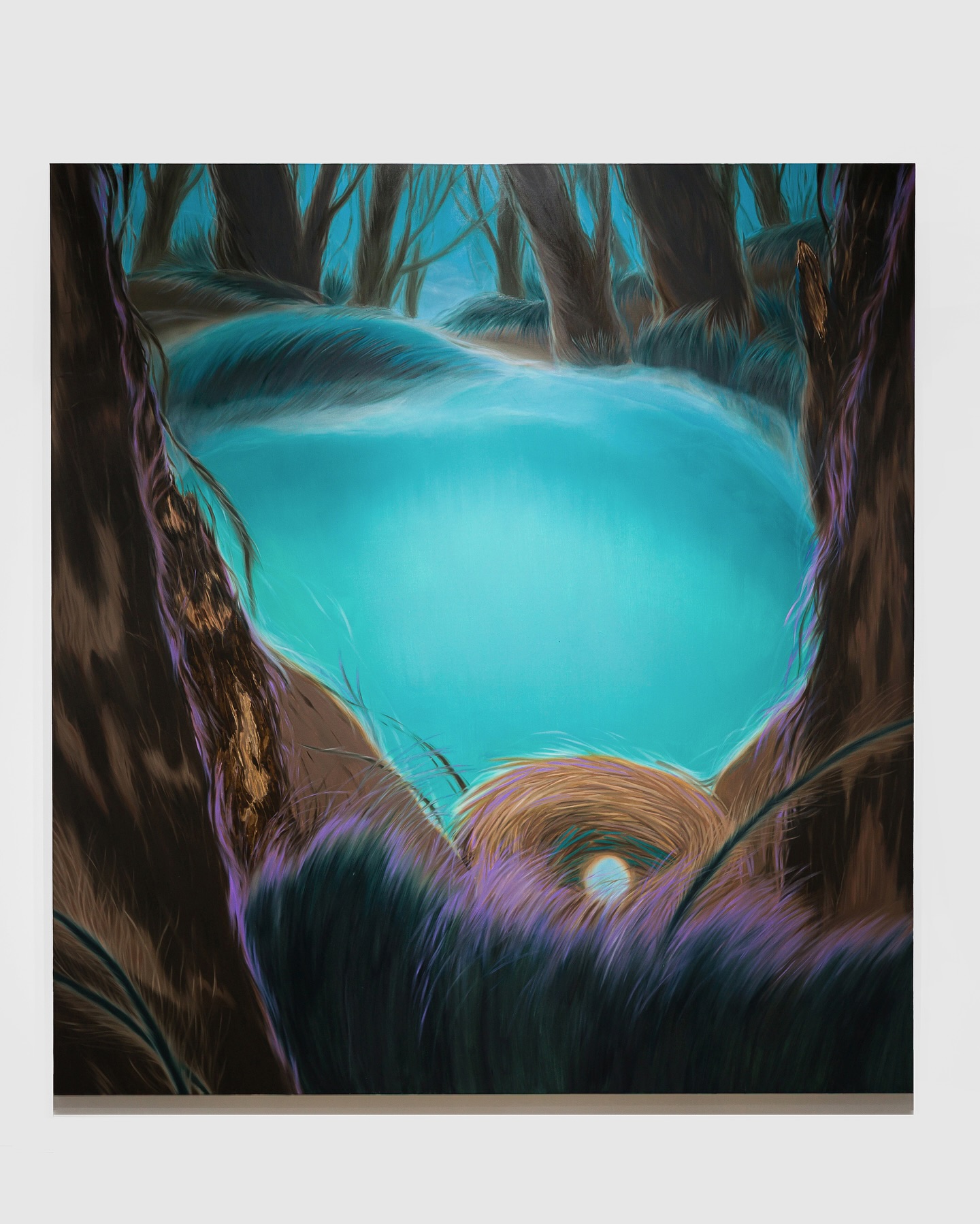
This line of thought becomes more concrete in her second solo exhibition, 《Nesting on a Blue Night》(Sueno339, 2025), where the concept of the “nest” takes center stage. Observing a blue satin bowerbird tirelessly gathering materials and constructing its nest in the dark forest, Kim recognized that the fundamental acts that constitute life—labor, survival, the building of shelter—operate equally for both humans and non-humans. The persistent efforts of young generations striving to secure independent living spaces overlapped with the ecological strategies of the bowerbird, expanding her observations of nature into a philosophical reflection on human conditions. Here, nature becomes not an external other but a lens through which the structures of human life may be interpreted anew.

In her most recent solo exhibition, 《BENEATH BRANCHES》(WWNN, 2025), her thematic scope expands from ecological relationships to the temporality of life, death, and regeneration. Prompted by both the daily act of walking through the forest and the deeply personal experience of her grandmother’s passing, Kim encountered in the dark forests of Tongyeong a primordial sensation—a dense blackness in which all forms of life seemed intertwined, containing within it the pulse of renewal. For Kim, nature is no longer a subject to be observed but a temporal space in which the origins of life and the feeling of death coexist. The seamless flow among nature, body, memory, death, and regeneration profoundly broadens the thematic horizon of her practice, moving toward a holistic ecological perception that senses the world beyond the binary of human and non-human.

Style & Contents

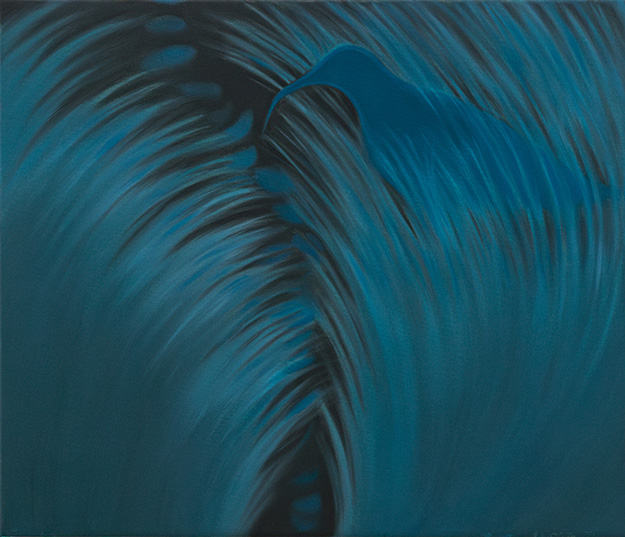
Greem Kim’s paintings develop through a method that merges relatively figurative compositions with tactile textures and ecological elements. In early works such as Lake and Pebbles Sitting on a Rock, concrete subjects like stones, lakes, and plants appear clearly on the canvas, yet their surfaces are rendered through abstract brushwork and soft layers of sensory modulation. This demonstrates the artist’s focus not on the external appearance of forms but on translating the temperature, tactility, and subtle vibrations she perceives through her body. Even at this stage, though grounded in observational depiction, her paintings adopt a structure already open toward “sensations beyond what is visible.”

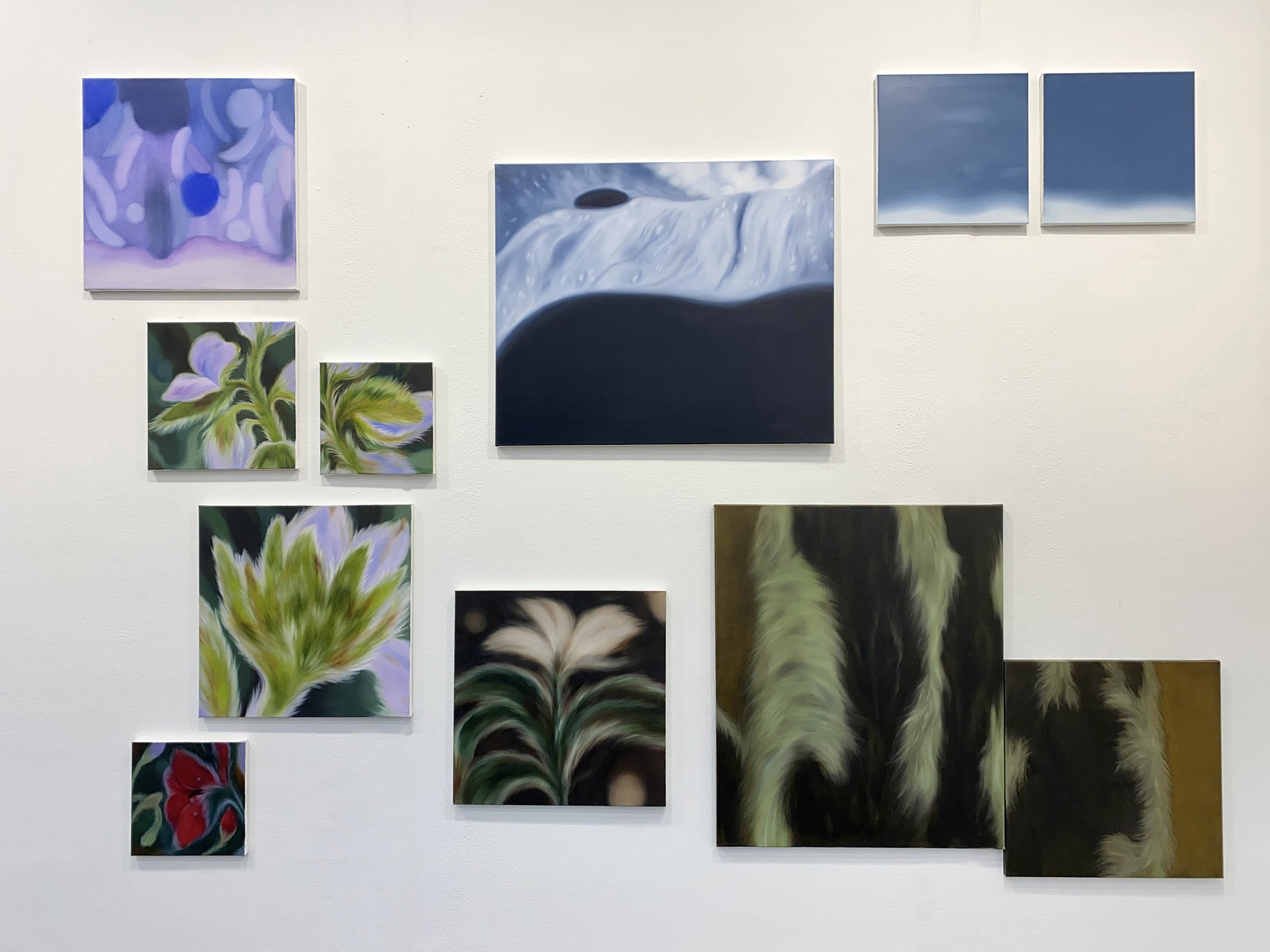
Her formal approach becomes further abstracted in subsequent works. Transforming bodily sensations experienced in the high-altitude regions of South America into painterly language, Kim begins dismantling the fixed shapes of landscapes and replaces them with flows of color and texture aligned with the body’s rhythms of breath and response. The variable installation of 《RHYTHMOSCAPE》 positions canvases as though they are part of the site itself, allowing each surface to function like a unit of rhythm. Here, nature is rendered not through concrete forms but through pathways of moving sensation, interwoven ecological trajectories, and energies of tension and release. Her compositions shift from depicting the surface of nature to transforming the embodied experience of nature directly into painterly structure.

More recently, her material strategies and compositional approach have become increasingly layered and complex. In works such as Peeking into the Nest(2025) and Nesting on a Blue Night(2024–2025), thousands of brushstrokes accumulate like strands of fur, constructing the structural intricacy of the nest while visually articulating the protective instinct of living beings. Tactile textures—layered fur-like strokes, flowing organic lines, and the interplay of darkness and light—transform the painting into a sensory terrain rather than a mere image. Elements such as eggs, dead branches, sharp stones, and budding leaves function simultaneously as figurative subjects and as symbolic devices where the layers of life and death intersect. Kim’s painting evolves beyond natural description, reorganizing ecological and structural phenomena into material and rhythmic configurations of the painted surface.

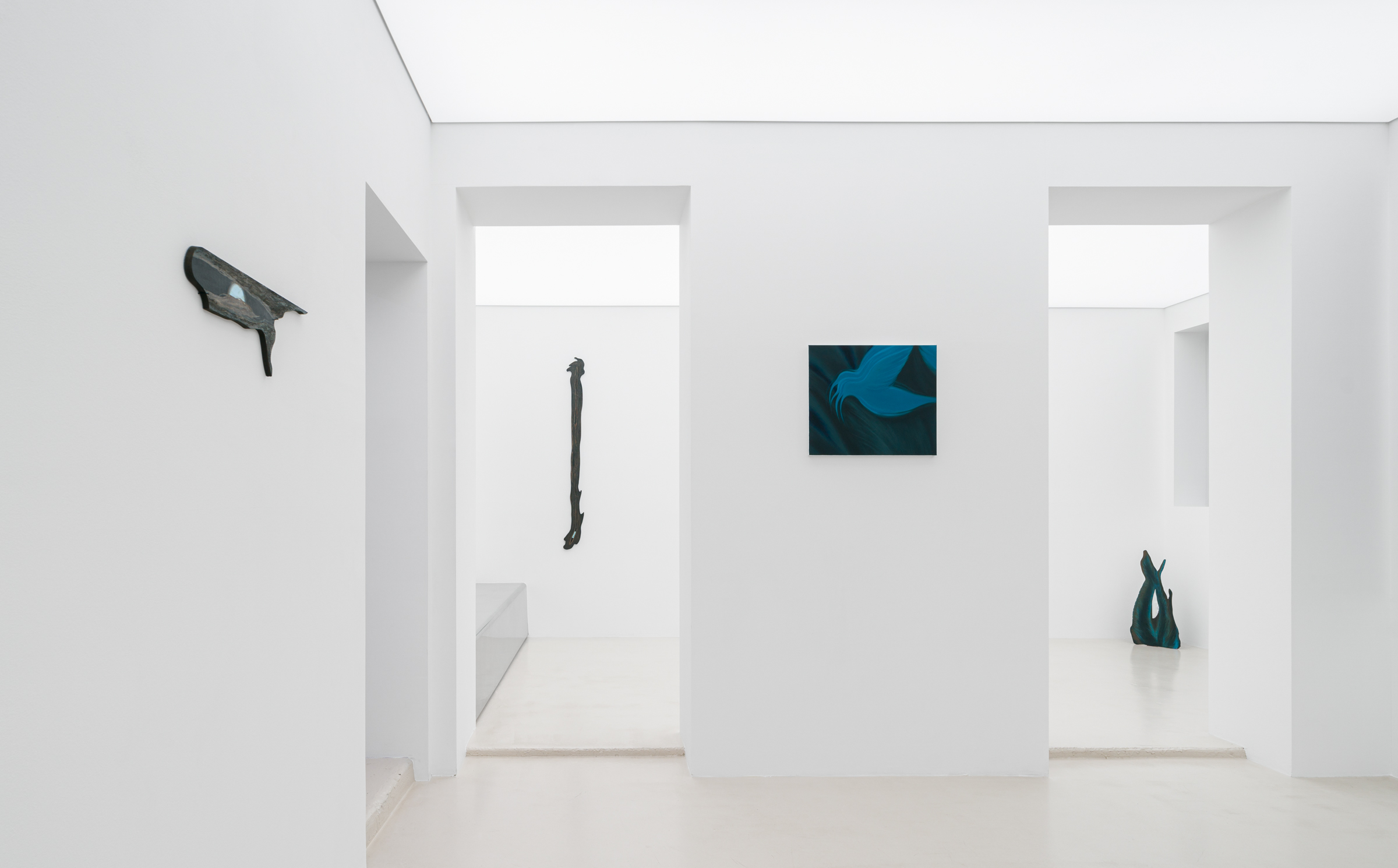
In 《BENEATH BRANCHES》, the canvas becomes more abstract than in previous periods, with deep browns and blacks contrasted sharply by flickering blue light. The nest appears as a microscopic structure, while the surrounding forest dissolves into abstraction, traversed by fractures of sensation. Works from this period move beyond the category of “landscape,” entering a psychological and ontological space where emotion, memory, sensation, death, and renewal coexist. The organic lines that form the painting no longer demarcate individual beings; instead, they serve as visual metaphors for the nonlinear ecological network in which all forms of life are intricately entangled.

Topography & Continuity

Greem Kim does not approach nature as a subject to be simply represented; rather, she integrates the life strategies, ecological conditions, and sensory modes of non-human beings directly into the content and structure of her painting. Her work consistently combines everyday experience, natural environments, and biological sensation to overturn human-centered perceptual systems. This orientation extends beyond ecological awareness, functioning instead as a contemporary practice that reconsiders the intertwined structures of sensation, relation, and life.

Across different periods, her exhibitions expand her relationship with nature in multilayered ways. 《RHYTHMOSCAPE》 frames nature as “a phenomenon experienced through the body,” while 《Nesting on a Blue Night》 recasts it as “a strategy through which life constructs its conditions.” In 《BENEATH BRANCHES》, nature becomes “a primordial temporal realm where life and death converge.” The evolution of Kim’s concepts and formal tendencies moves continuously through landscape, bodily experience, ecology, memory, death, and regeneration—ultimately arriving at a comprehensive ecological sensibility that perceives nature as a sensory and ontological system.

Her practice extends far beyond natural depiction or ecological messaging. It constitutes an attempt to restructure the sensory architecture of the world through painting. This aligns naturally with contemporary post-anthropocentric ecological discourses—non-human ontology, posthuman ecology, sensory ecology—positioning her work as an original contribution within contemporary painting that integrates sensation, embodiment, and life systems.

Works of Art

The Organic Relationship between Humans and Nature

Articles

Exhibitions

Activities