Dawha
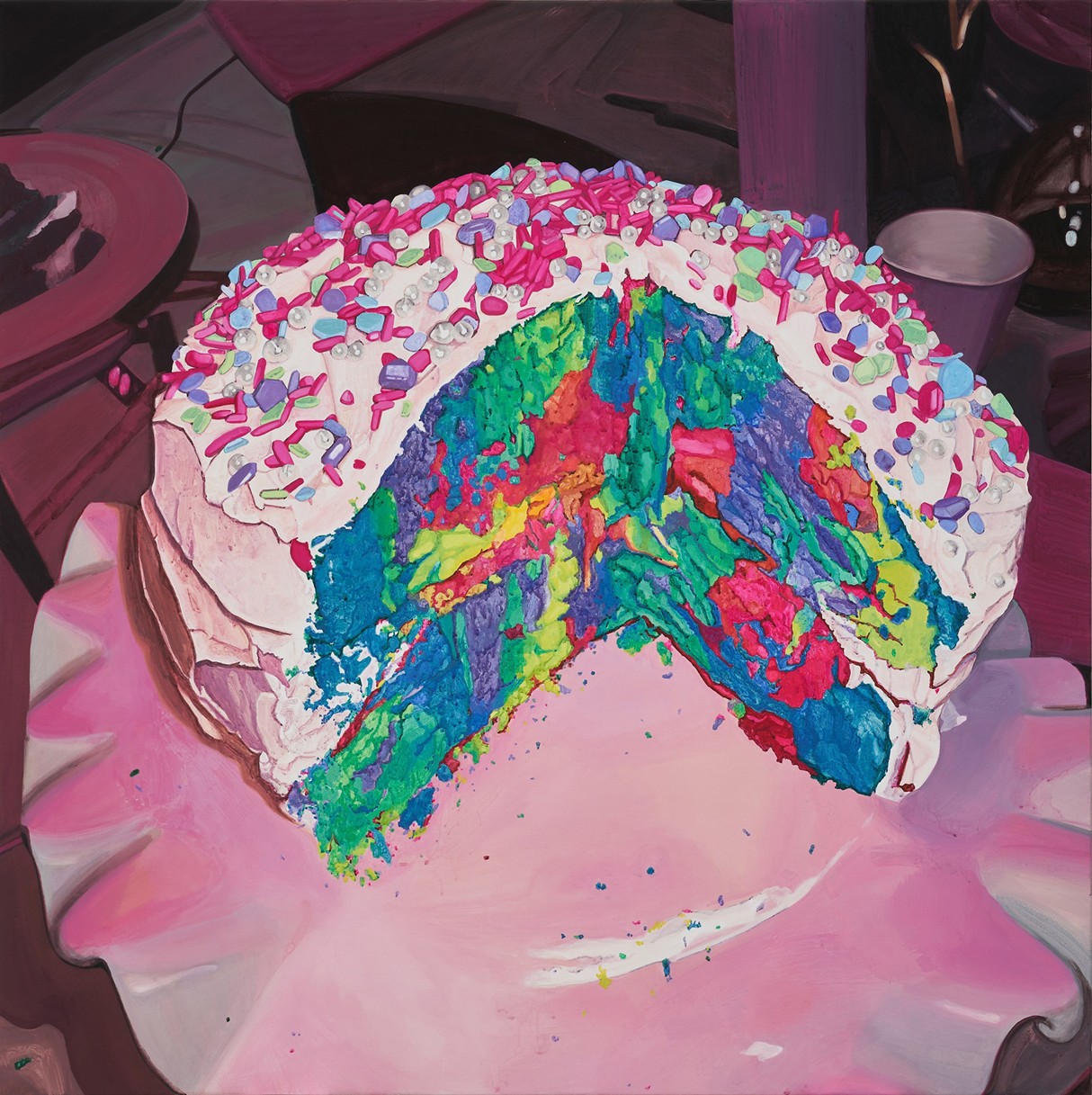
Jeon’s work explores the fate of images that are continuously generated and
disappear within the digital environment. The artist regards memes and
low-resolution “cursed images” circulating online as cultural relics,
translating their unstable emotions and temporality into the language of
painting. Her first solo exhibition, 《Christmas Instant Mix》(2020, Young&Vok),
began with a fascination for fabricated nostalgia and the hybrid sensibility of
replicated imagery. Her longing for an idealized Western Christmas—something
she had never personally experienced—was reinterpreted as a form of “fake
nostalgia,” developing into a pictorial narrative featuring mass-produced
vintage wrapping paper images. This early attempt later evolved into her second
solo exhibition, 《Ghost in the Machine》(2022, Space Cadalogs), in which she collected and reinterpreted
“cursed images.”
Jeon
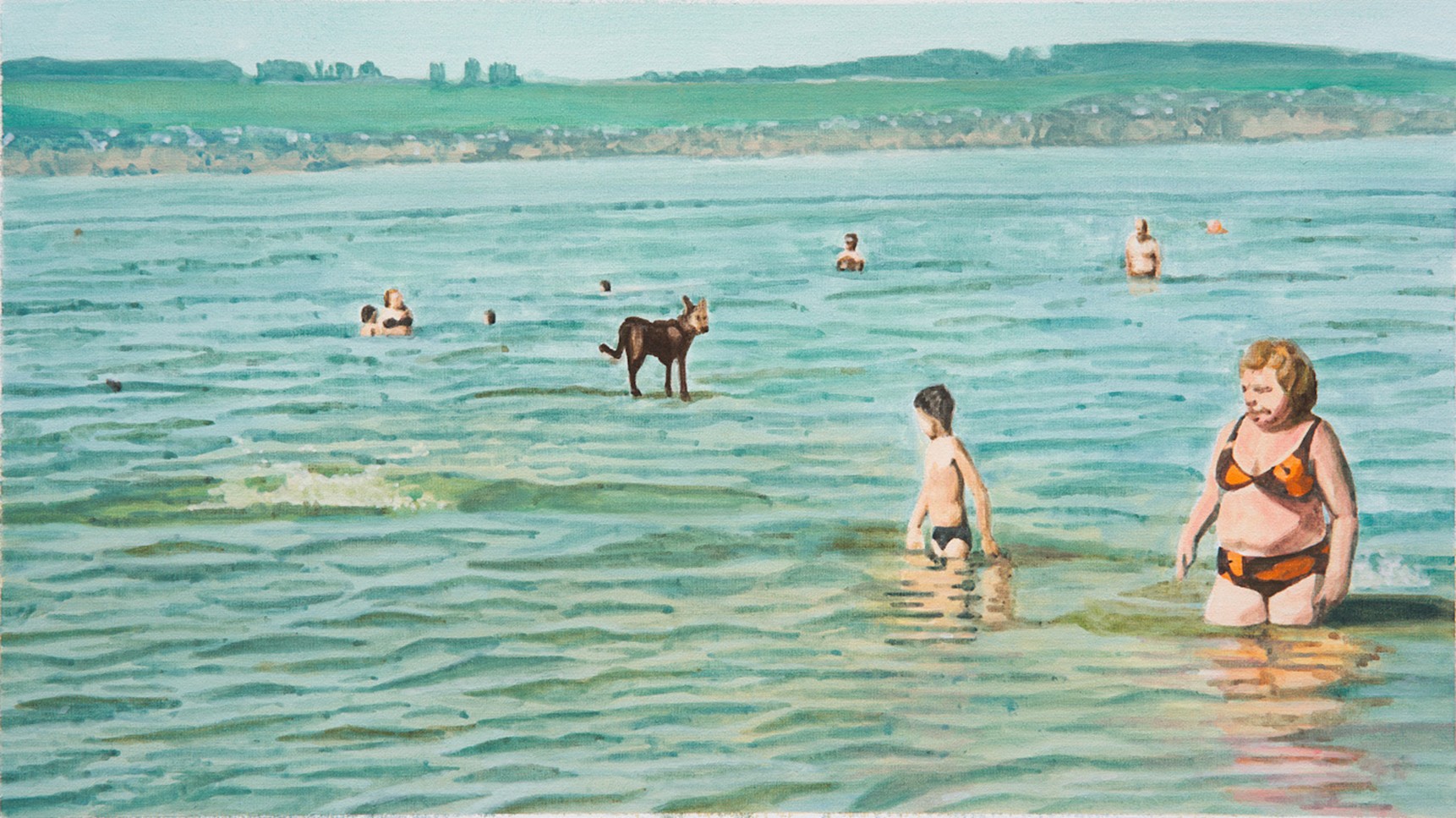
perceives low-resolution images circulating online not as mere visual data, but
as “cultural residues” where memory and oblivion intersect in the digital age.
Works such as Millennium(2022) and Me and
the Gang(2022) visualize the imperfection and estrangement inherent
in such imagery, exploring how perception within the digital world fades and
transforms. Through these works, Jeon questions the identity of “disappearing
images” and seeks to grant them a physical “body” through painting, thereby
resisting the evaporation of time.
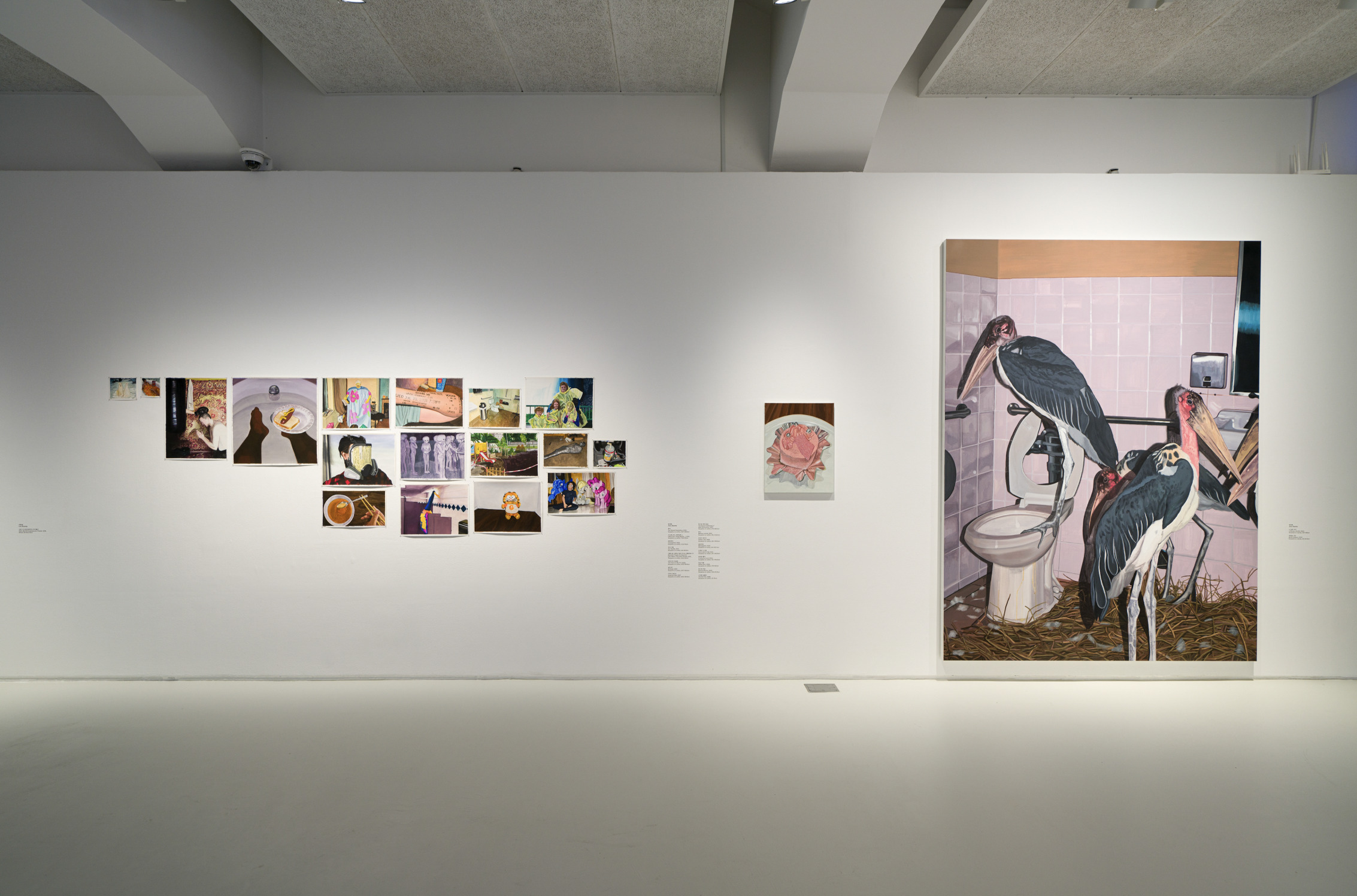
In works
like A Woman Like Me(2024), her focus expands from how
images reflect reality to how they become separated from it and reincarnate
anew. Based on a photograph of storks taken during Hurricane Matthew, this
painting strips away factual layers of information to capture the eerie
sensation that arises “when something exists where nothing should.” Jeon’s
paintings can thus be understood as an attempt to visualize the magical
afterimage of incomplete images—the “strange yet real” sensibility of the
digital era.
Her recent
solo exhibition, 《Me, Memes,
Crippling Depression》(2025, Gallery SoSo), demonstrates
a more subjective and introspective expansion of her concepts. By juxtaposing
lighthearted online memes with themes of personal melancholy and humor, Jeon
explores how contemporary visual experience intersects with emotion, memory,
and language. This perspective reflects on how affect is translated into
imagery and re-materialized as painting within the digital ecosystem.