I Tell You Peter - K-ARTIST

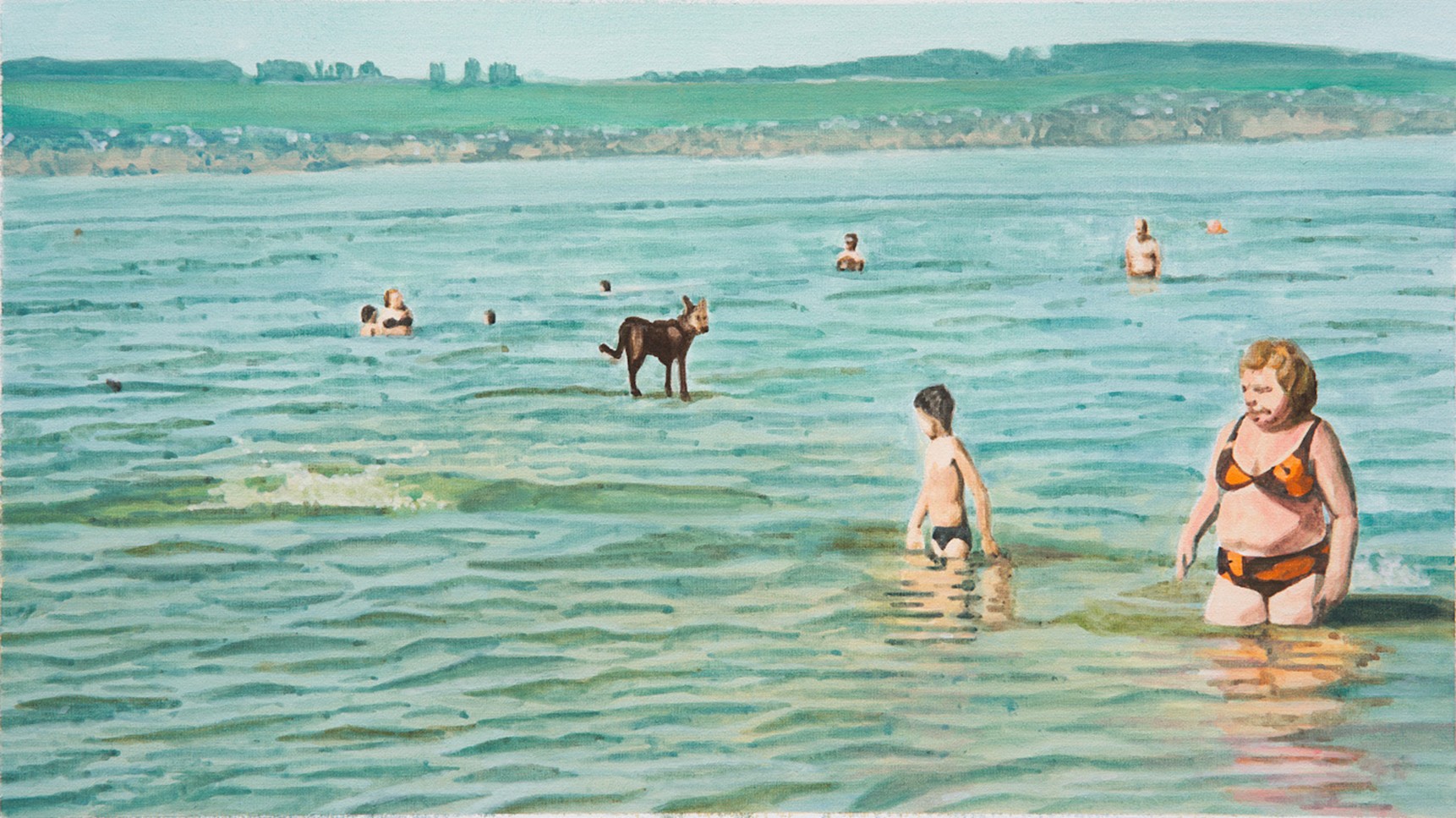
I Tell You Peter

2021
Gouache on cotton
22.2 x 39.6 cm
About The Work

Dawha Jeon has been exploring today’s digital ecosystem, oversaturated with fleeting and decontextualized images, by reconfiguring them along a different temporal axis. Viewing meme images circulating online as a kind of cultural relic, she collects and reinterprets them into the material form of painting.
 
Dawha Jeon, as a digital native, collects and studies various memes without being constrained by format, rescuing slowly vanishing born-digital images from the detritus of web networks. What she focuses on is not the refined or prestigious, but the crude, popular, and repeatedly circulated fragments of data that have become tattered over time.
 
From these fading data fragments, the artist discovers new sensations, humor, and scenes of reality, re-mediating them into painting as a material form and producing them as contemporary images. Furthermore, this practice explores the potential of painting beyond its surface, functioning as a hypertextual conduit that activates the work, while constructing a dynamic network of images that collide, merge, and interconnect.

Solo Exhibitions (Brief)

Jeon’s solo exhibitions include 《Me, Memes, Crippling Depression》 (Gallery SoSo, Seoul, 2025), 《Ghost in the Machine》 (Space Cadalogs, Seoul, 2022), and 《Christmas Instant Mix》 (Young&Volk, Seoul, 2020).

Group Exhibitions (Brief)

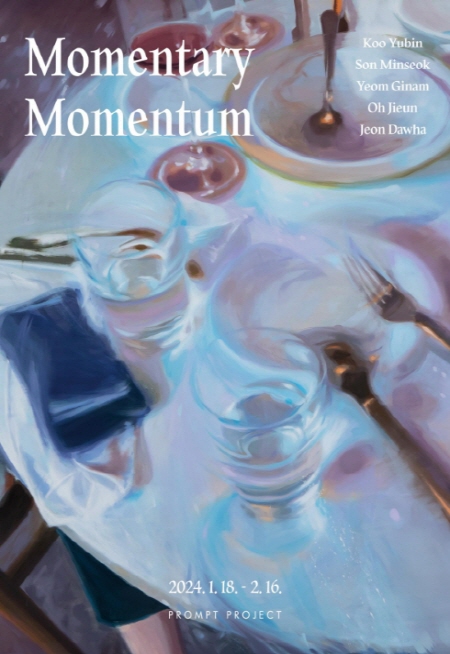
Jeon has also participated in various group exhibitions, including 《Foreverism: Endless Horizons》 (Ilmin Museum of Art, Seoul, 2024), 《Momentary Momentum》 (Prompt Project, Seoul, 2024), 《Memory Beneath The Ego, Fantasy Above the Ego》 (Seoul National University Museum of Art, Seoul, 2023), 《Here’s the thing!》 (Gallery ooojh, Seoul, 2022), 《The Art Plaza: LINK by IBK》 (IBK Bank, Seoul, 2022), 《Serials》 (Rainbowcube, Seoul, 2021), and more.

Collections (Selected)

Dawha Jeon was selected as a resident artist at the Wassaic Project in New York in 2025.

Works of Art

The Oversaturated Digital Ecosystem

Originality & Identity

Dawha Jeon’s work explores the fate of images that are continuously generated and disappear within the digital environment. The artist regards memes and low-resolution “cursed images” circulating online as cultural relics, translating their unstable emotions and temporality into the language of painting. Her first solo exhibition, 《Christmas Instant Mix》(2020, Young&Vok), began with a fascination for fabricated nostalgia and the hybrid sensibility of replicated imagery. Her longing for an idealized Western Christmas—something she had never personally experienced—was reinterpreted as a form of “fake nostalgia,” developing into a pictorial narrative featuring mass-produced vintage wrapping paper images. This early attempt later evolved into her second solo exhibition, 《Ghost in the Machine》(2022, Space Cadalogs), in which she collected and reinterpreted “cursed images.”

Jeon perceives low-resolution images circulating online not as mere visual data, but as “cultural residues” where memory and oblivion intersect in the digital age. Works such as Millennium(2022) and Me and the Gang(2022) visualize the imperfection and estrangement inherent in such imagery, exploring how perception within the digital world fades and transforms. Through these works, Jeon questions the identity of “disappearing images” and seeks to grant them a physical “body” through painting, thereby resisting the evaporation of time.

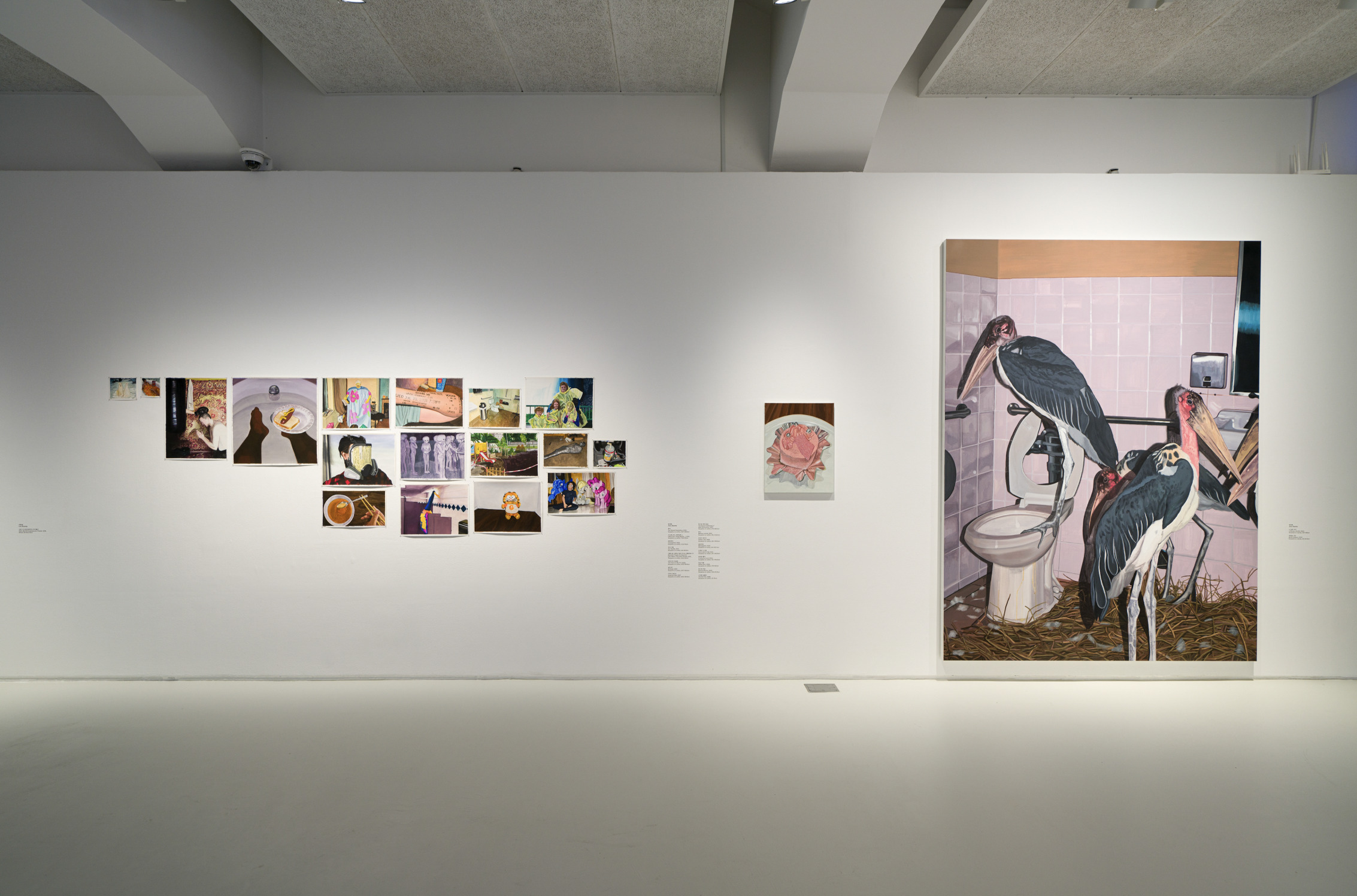
In works like A Woman Like Me(2024), her focus expands from how images reflect reality to how they become separated from it and reincarnate anew. Based on a photograph of storks taken during Hurricane Matthew, this painting strips away factual layers of information to capture the eerie sensation that arises “when something exists where nothing should.” Jeon’s paintings can thus be understood as an attempt to visualize the magical afterimage of incomplete images—the “strange yet real” sensibility of the digital era.

Her recent solo exhibition, 《Me, Memes, Crippling Depression》(2025, Gallery SoSo), demonstrates a more subjective and introspective expansion of her concepts. By juxtaposing lighthearted online memes with themes of personal melancholy and humor, Jeon explores how contemporary visual experience intersects with emotion, memory, and language. This perspective reflects on how affect is translated into imagery and re-materialized as painting within the digital ecosystem.

Style & Contents

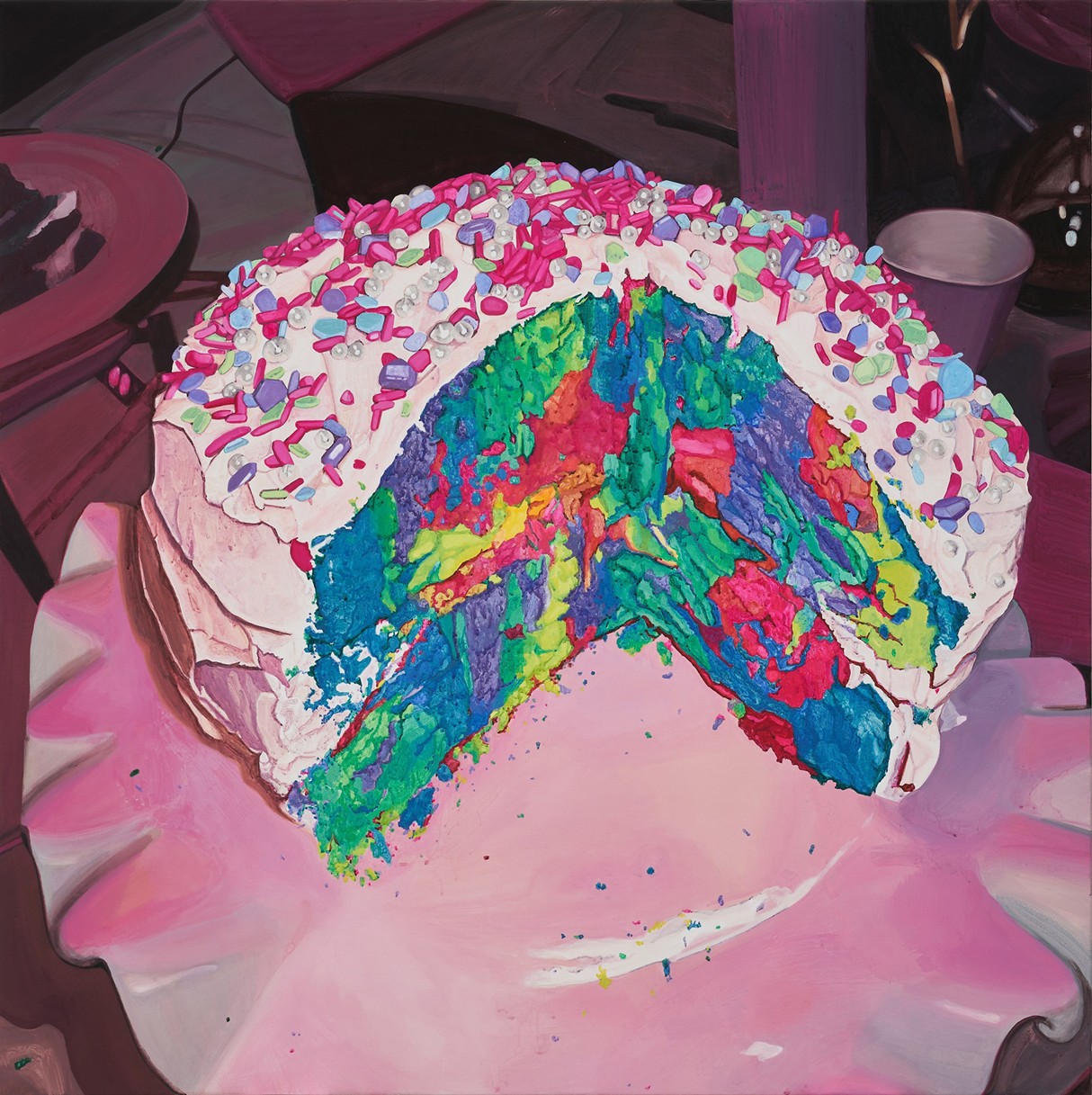
Jeon’s work centers on translating deteriorated digital images into the materiality of painting. On cotton fabric specially coated for watercolor, she layers thin washes of gouache paint so that each layer remains visually distinct without blending. This process resembles the digital act of “merging layers” in Photoshop. The resulting surface is a reconstruction in which immaterial data is decomposed, reassembled, and reborn as a tangible presence—creating what the artist calls a “body of digital images.”

Her early works, such as Brutally Honest(2019) and Eoljug-a(2021), capture remnants of digital language—memes, personal jokes, or unshared phrases—and translate them into painting. By collecting fragments of text like stray monologues and juxtaposing them with images, Jeon metaphorically reflects on how we perceive and remember in the digital age.

In the series 《Ghost in the Machine》, Jeon does not simply reproduce the worn textures of cursed images; rather, she translates their process of degradation into painterly layers. As seen in Millennium and Me and the Gang(2022), blurred flash effects, irregular compositions, and exaggerated contours reconstruct the aesthetics of digital noise on canvas. This painterly transformation functions as a kind of “digital-archaeological painting,” converting the sensory traces of vanishing data into new material textures.

Later works such as A Woman Like Me(2024, 《Foreverism: Endless Horizons》, Ilmin Museum of Art) and Pilgrims(2025) and Suck It Up Darl(2025) from 《Me, Memes, Crippling Depression》 demonstrate an expanded approach to painting. Working across large canvases and wooden panels, Jeon treats painting not as the representation of a single image but as a conduit for emotion and thought. The vacant spaces and layered hues on her surfaces materialize the “ghostliness” of digital images, producing an ambiguous atmosphere where humor and anxiety coexist.

Topography & Continuity

Among Korea’s younger generation of artists, Dawha Jeon occupies a distinctive position for her painterly exploration of the residue and sedimented sensibility of digital images. She recognizes internet memes, low-resolution pictures, and casually tossed-off texts as cultural deposits and restores them into the material domain of painting, articulating the visual sensibility of the digital-native generation with remarkable clarity. Her work can be viewed as an aesthetic interpretation of the post-technological fatigue—a visualization of the “tattered data aesthetics” of our time.

Her paintings neither critique nor replicate the distribution structure of digital images. Instead, she uncovers emotional rhythms and visual humor within fragmented remnants of disappearing images, offering a new pictorial language that reflects the sensibility of the present. The “expanded gaze” seen in her post-《Ghost in the Machine》 works focuses less on image content and more on existence itself—on the process through which immaterial data transforms into a physical pictorial surface.

Furthermore, Jeon extends painting into a kind of hypertextual conduit. Within exhibition spaces, disparate images collide, run parallel, and form emotional networks, turning painting into a temporarily “activated event.” This approach establishes a new pictorial terrain where material and immaterial, image and emotion intersect. Her ongoing attempt to resurrect ephemeral fragments of online data through painting represents one of the most compelling directions for post-digital painting today.

Works of Art

The Oversaturated Digital Ecosystem

Articles

Exhibitions

Activities