Manual – Appendix – Ink Color - K-ARTIST

Manual – Appendix – Ink Color

2022
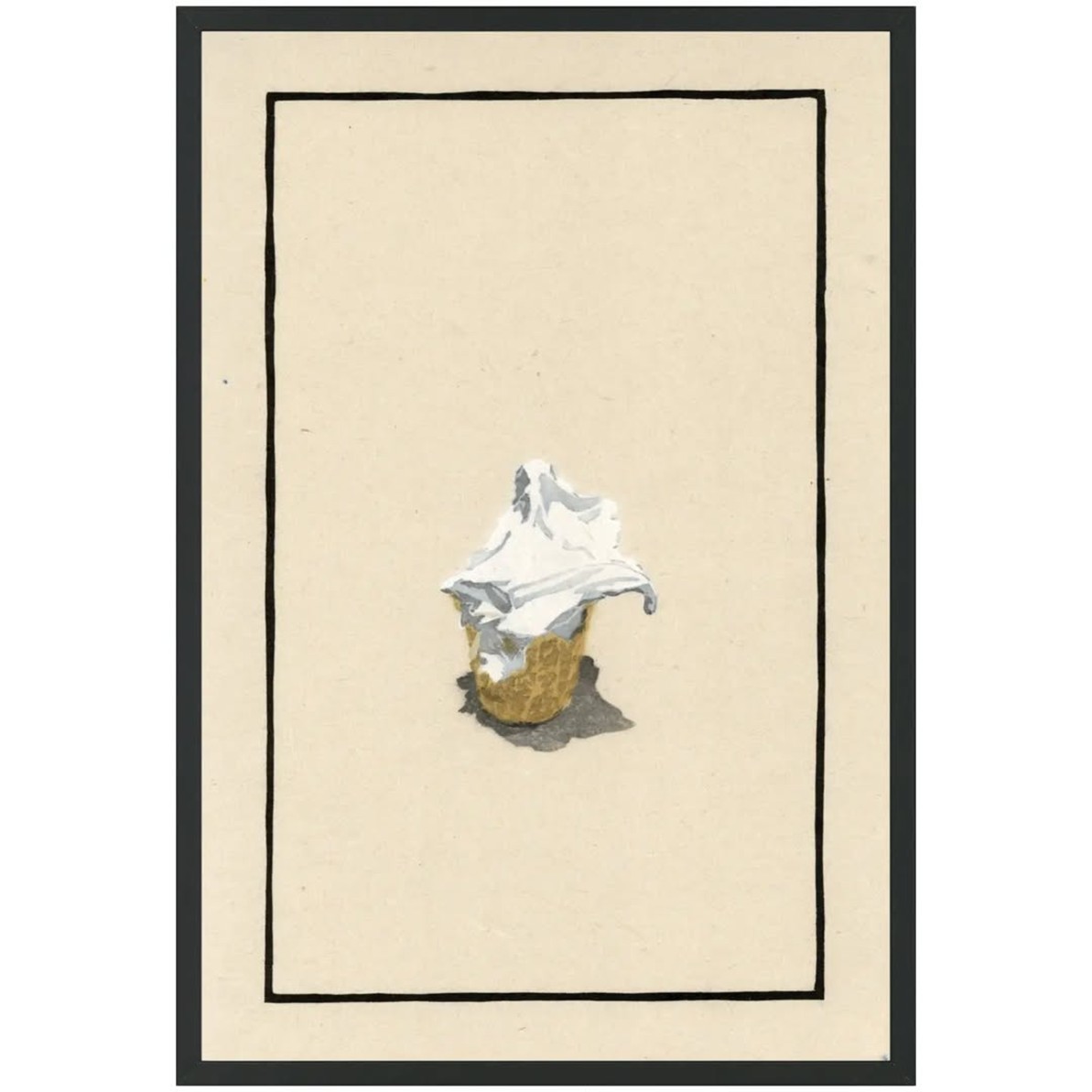
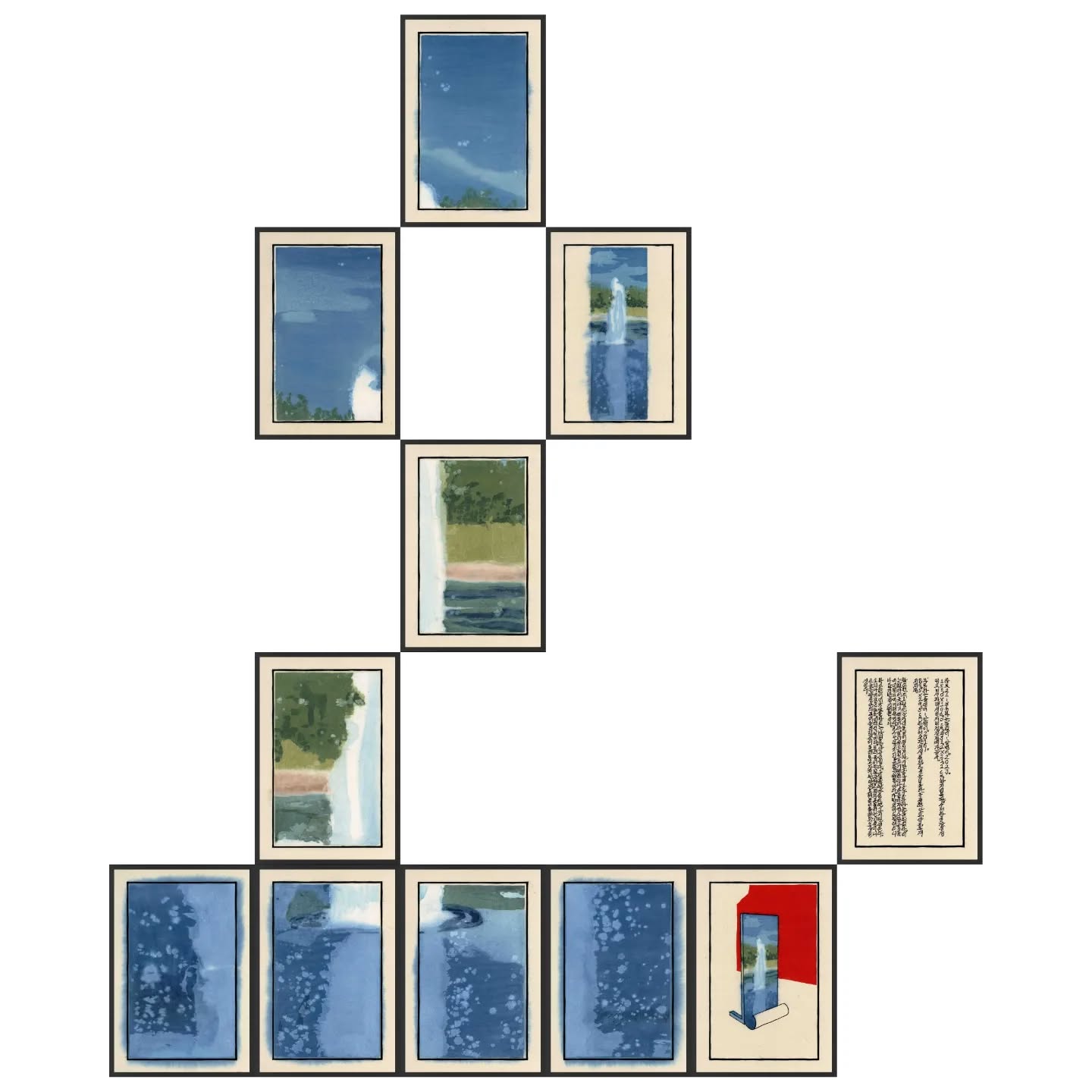
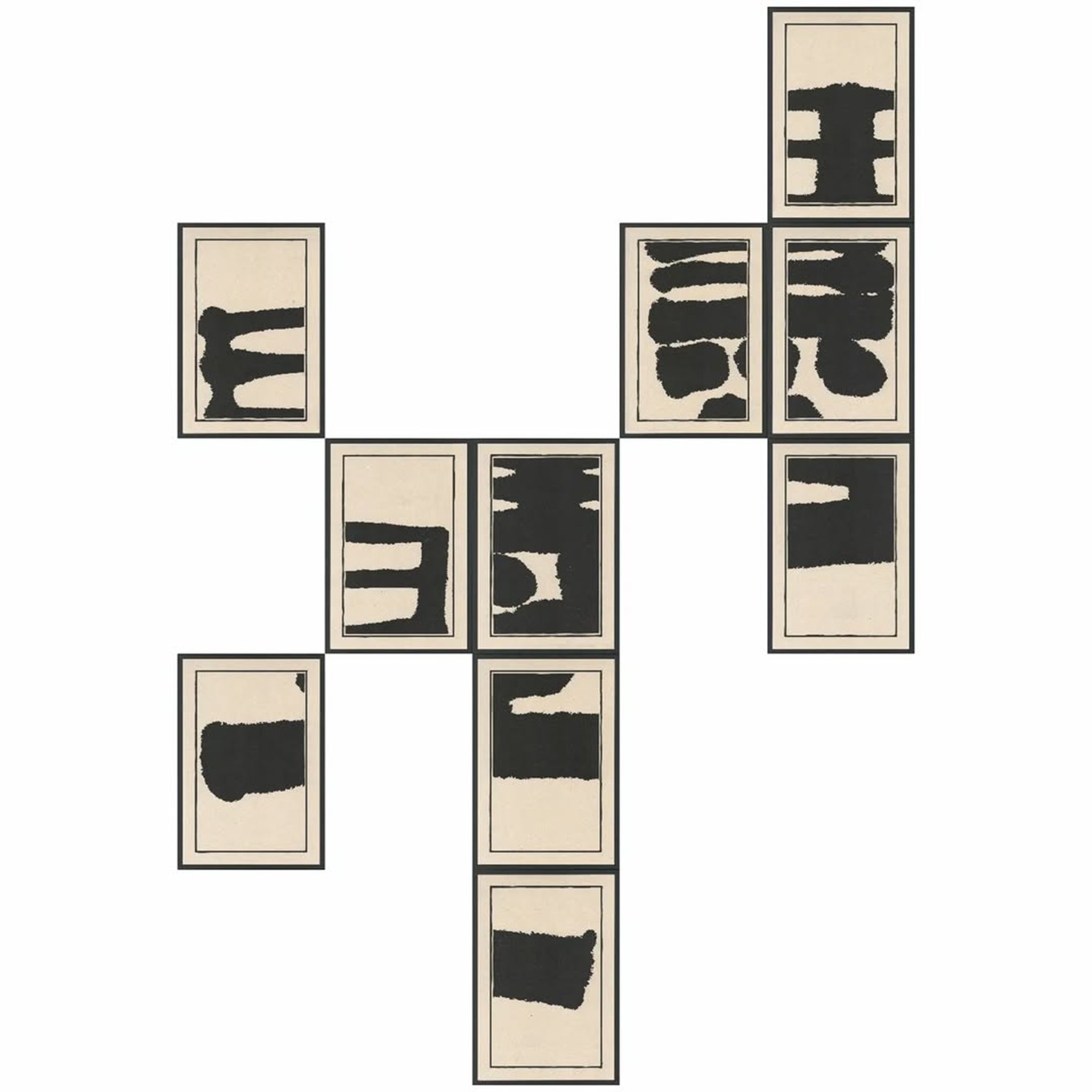
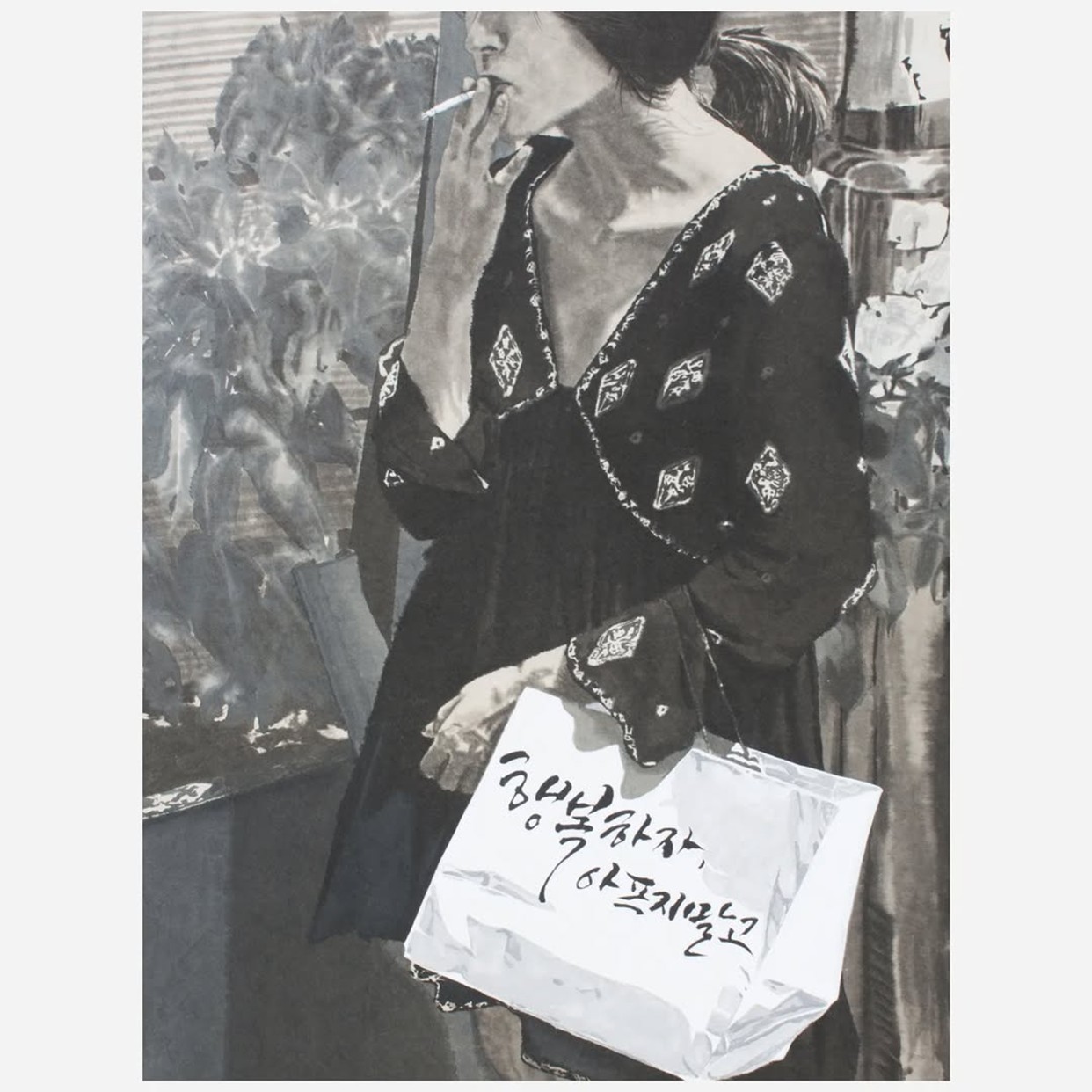
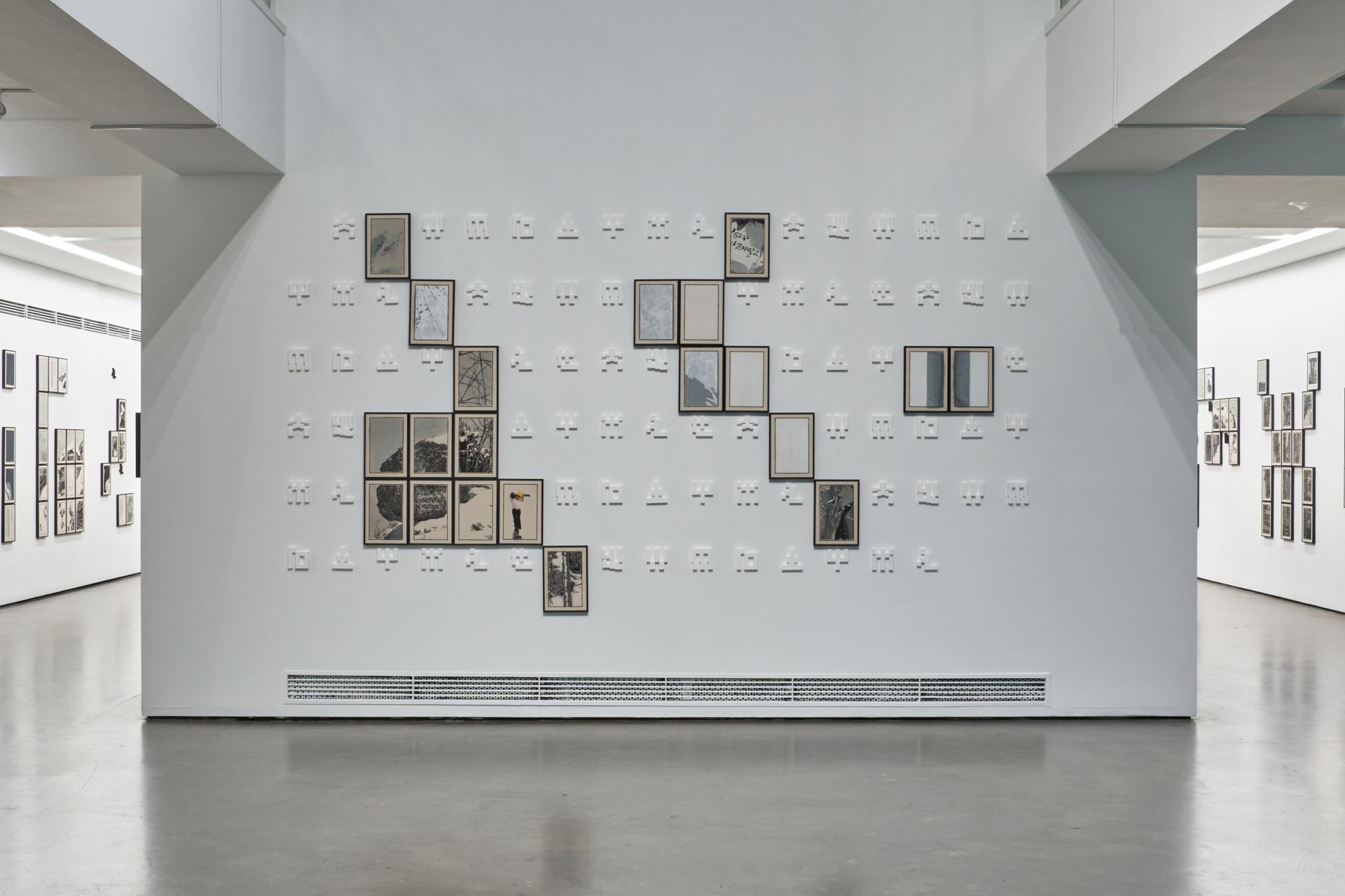
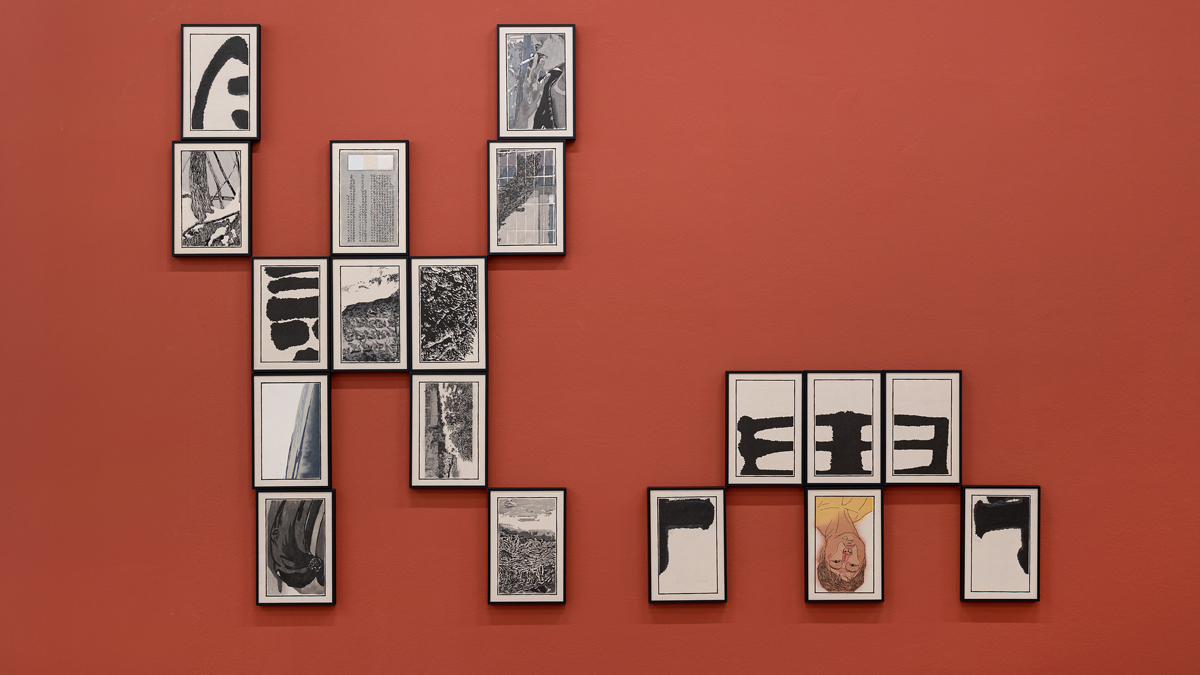
Woodblock print and oil-based ink on hanji, mounted on beige and white hanji, black frame, metal
155.5 × 105.5 cm (each 31.1 × 21.1 cm)
About The Work

Hwang Kyumin has been developing his practice based on an interest in traditional East Asian painting. He poses a fundamental question about what can be defined as East Asian painting and experiments with creating his own system of painting by referencing principles and elements from its various roots that he finds personally meaningful.
 
Hwang Kyumin moves beyond merely following traditional East Asian painting techniques or philosophies. By inputting his own work as well as works by contemporary artists into a system built on historical formats, he demonstrates that the long-standing traditions of East Asian painting can retain relevance and value in the present.
 
What matters in his work is not formal imitation but the “transmission of thought.” For Hwang, tradition functions not as a repository of past imagery but as a structural principle for generating contemporary sensibility and language.

Solo Exhibitions (Brief)

Hwang has held solo exhibitions including 《Hwang’s Manual of Eternal Classics》 (OCI Museum, Seoul, 2022), 《Penetrating Stone》 (KSD Gallery, Seoul, 2020), and 《Muh Emdap Inam Mo》 (Seoul Art Space Seogyo, Seoul, 2019).

Group Exhibitions (Brief)

Hwang has also participated in numerous group exhibitions, including 《Ah! East Asian Painting: Eternal Paradise》 (Art Center White Block, Paju, 2025), 《Marks of Identity》 (Gallery Jinseon, Seoul, 2024), 《The Act of Collaboration》 (Incheon Art Platform, Incheon, 2024), 《Hwang’s Manual of Song’s Work – Throwing Arrows》 (Incheon Art Platform, Incheon, 2024), 《Prayer without Faith》 (Gallery Yoshinaga, Tokyo, 2023), and 《Korean Traditional Painting in Alter-age》 (Ilmin Museum of Art, Seoul, 2022).

Residencies (Selected)

Hwang was selected as a resident artist at the MMCA Residency Goyang (2024) and Incheon Art Platform (2023).

Collections (Selected)

Hwang’s works are held in collections including OCI Museum, MMCA Art Bank, and Yangju Chang Ucchin Museum of Art.

Works of Art

Reconstruction of the Concept and System of Traditional Oriental Painting

Originality & Identity

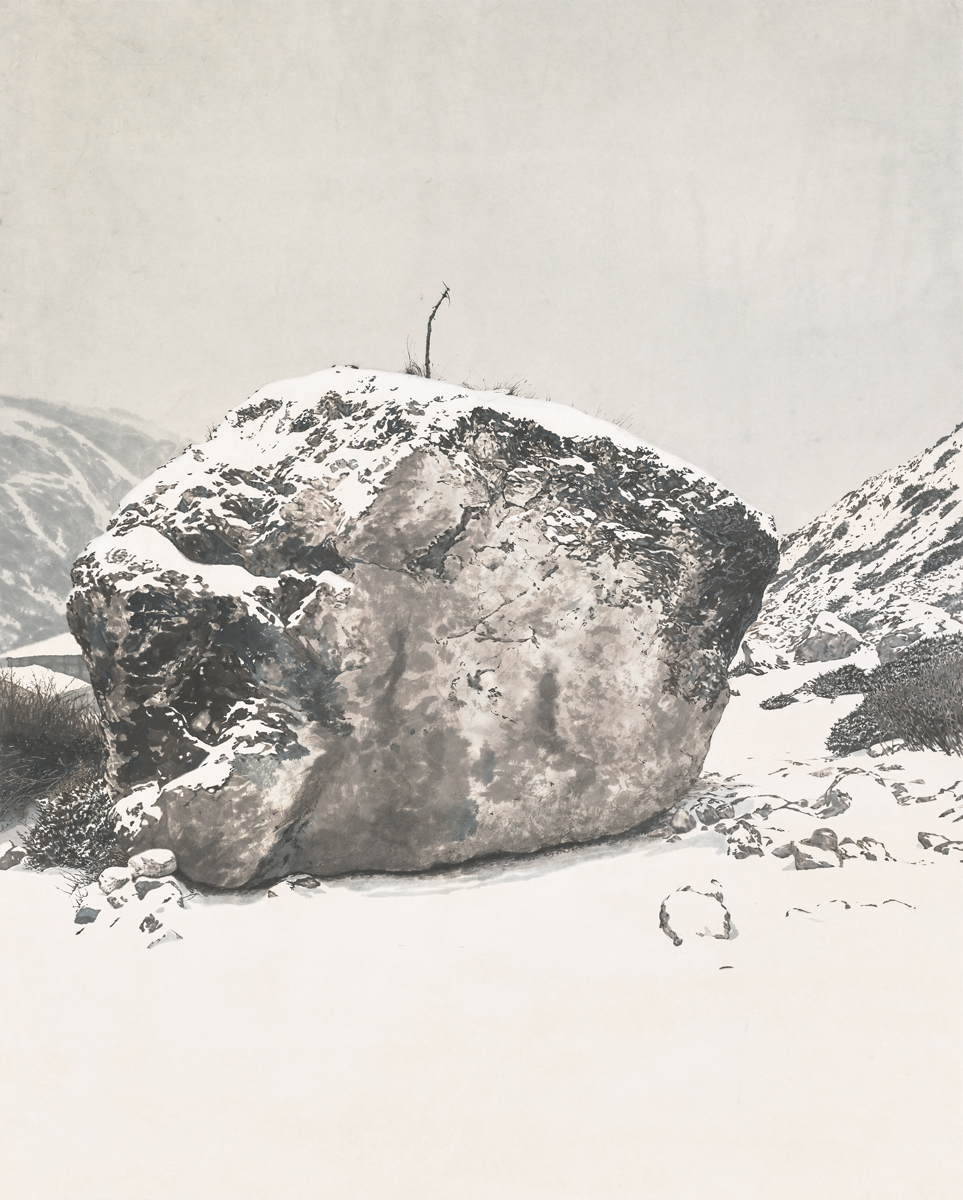
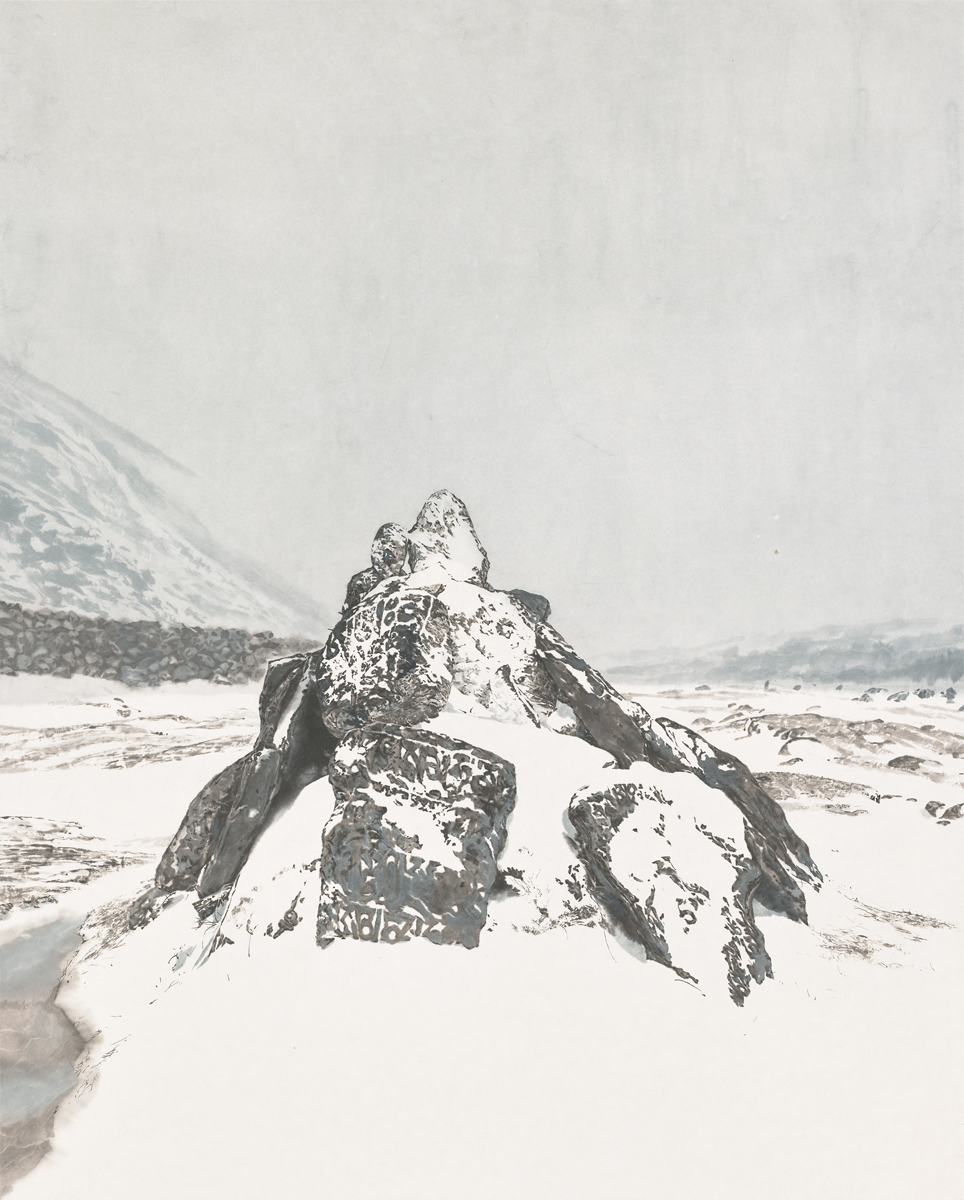
Hwang Kyumin’s practice begins with the reconstruction of the concepts and systems of traditional East Asian painting. Centering on the fundamental question of what can be defined as “East Asian painting,” he examines the validity of tradition based on his own sensory experiences and understanding. Early works such as Beyond the Stone(2019) and his first solo exhibition 《Muh Emdap Inam Mo》(Seoul Art Space Seogyo, 2019) reinterpreted the “unreadable texts” and ritualistic gestures he encountered during his travels in the Himalayas through painting. During this period, he explored how humans perceive time, faith, and uncertain futures through symbols such as stones, mist, and chants.

In his second solo exhibition 《Penetrating Stone》(KSD Gallery, 2020), Hwang juxtaposed scenes from daily life with historical painting formats to question the notion of “replication.” Borrowing the structure of traditional painting manuals, he deconstructed the academic framework of East Asian painting and inserted contemporary thought into it. This attempt developed into a conceptual shift that critically examined past conventions while contemporarily reactivating the embedded system of “learning” within tradition.

By the time of his third solo exhibition 《Hwang’s Manual of Eternal Classics》(OCI Museum of Art, 2022) and the group exhibition 《Hwang’s Manual of Song’s Work – Throwing Arrows》(Incheon Art Platform, 2024), Hwang introduced a fictional character, “Mr. Hwang (b.1874),” as a metaphorical embodiment of the East Asian painting system. Mr. Hwang is portrayed as an art enthusiast and learner of traditional painting, through whom the artist transforms the learning structure of historical painting manuals into a form of contemporary pictorial thinking. This narrative situates the artist as another participant in the historical lineage, visually articulating the continuum that connects “calligraphy → East Asian painting → contemporary calligraphy and painting.”

Ultimately, Hwang’s focus lies not in “reinterpretation of tradition” but in the exploration of “East Asian painting as a system” itself. He regards painting not as a matter of medium or style but as a cognitive structure interwoven with knowledge, habit, memory, and learning. Through this, he constructs a new pictorial narrative where past and present, the individual and the collective, reality and fiction intersect.

Style & Contents

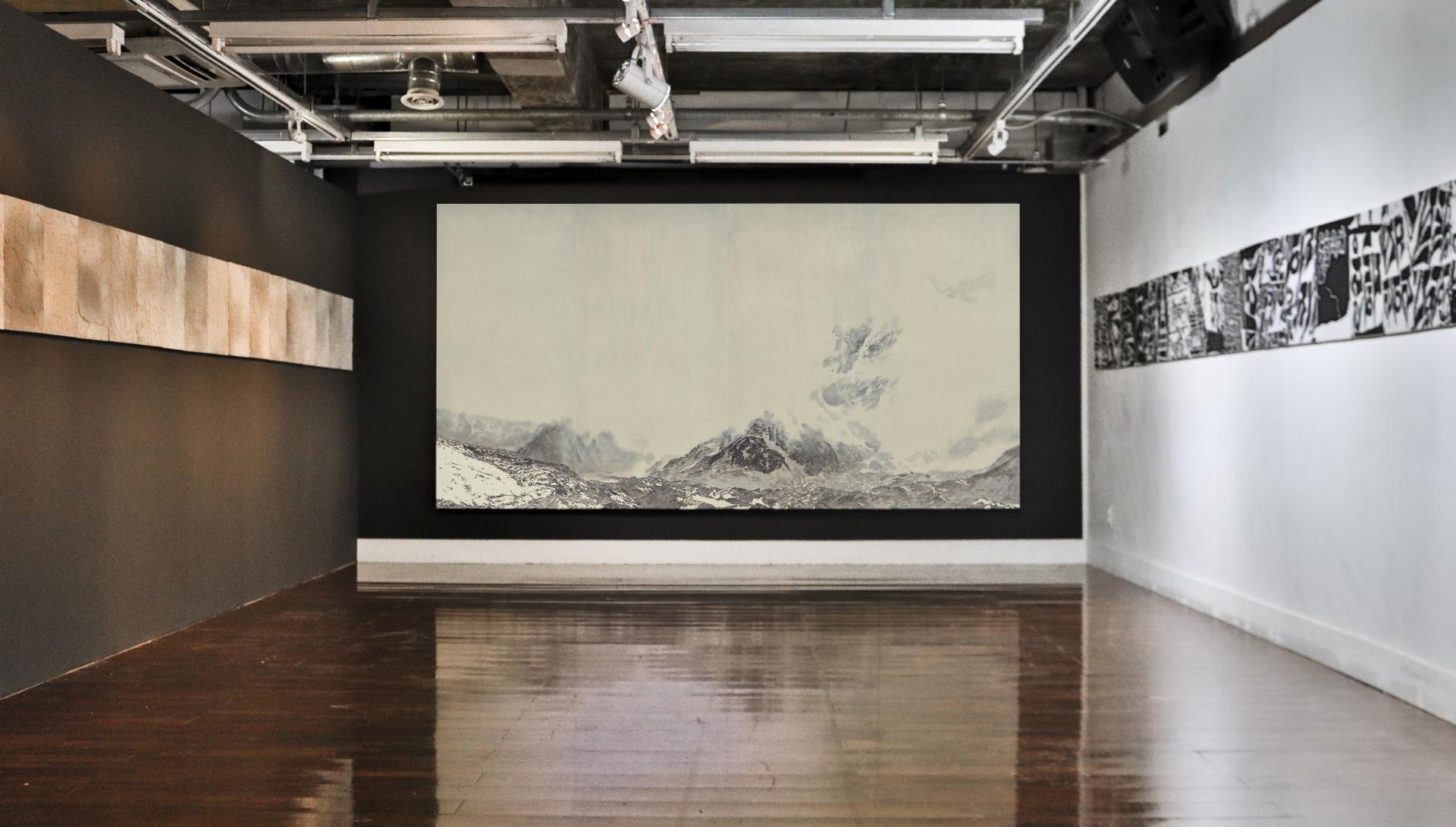
Hwang’s formal experimentation focuses on transforming the language of traditional ink painting into a mechanical and structural system. In 《Muh Emdap Inam Mo》, he combined painting, printmaking, and relief sculpture to realize a form of “tactile appreciation.” Designed for viewers to touch stone monuments and experience the layered passage of time through touch, the exhibition expanded painting beyond its flat surface into a sensorial field.

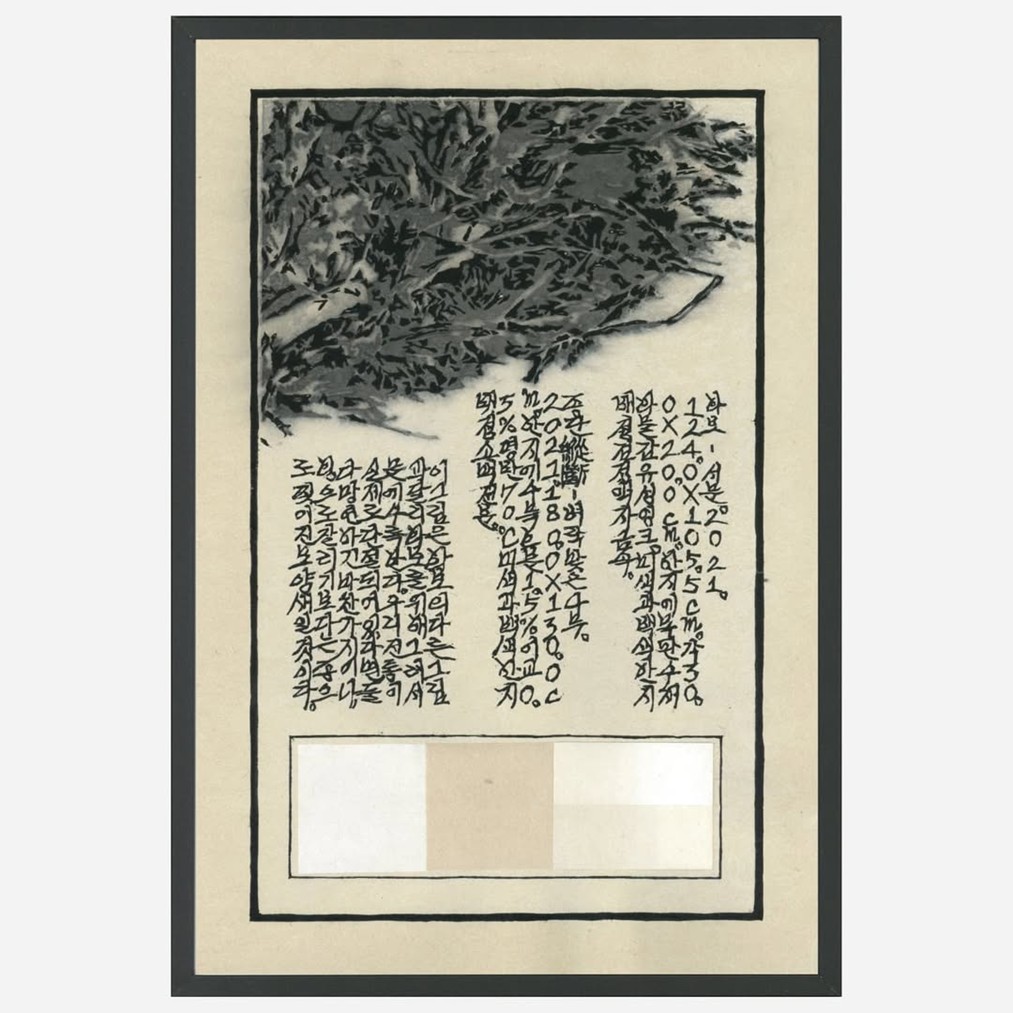
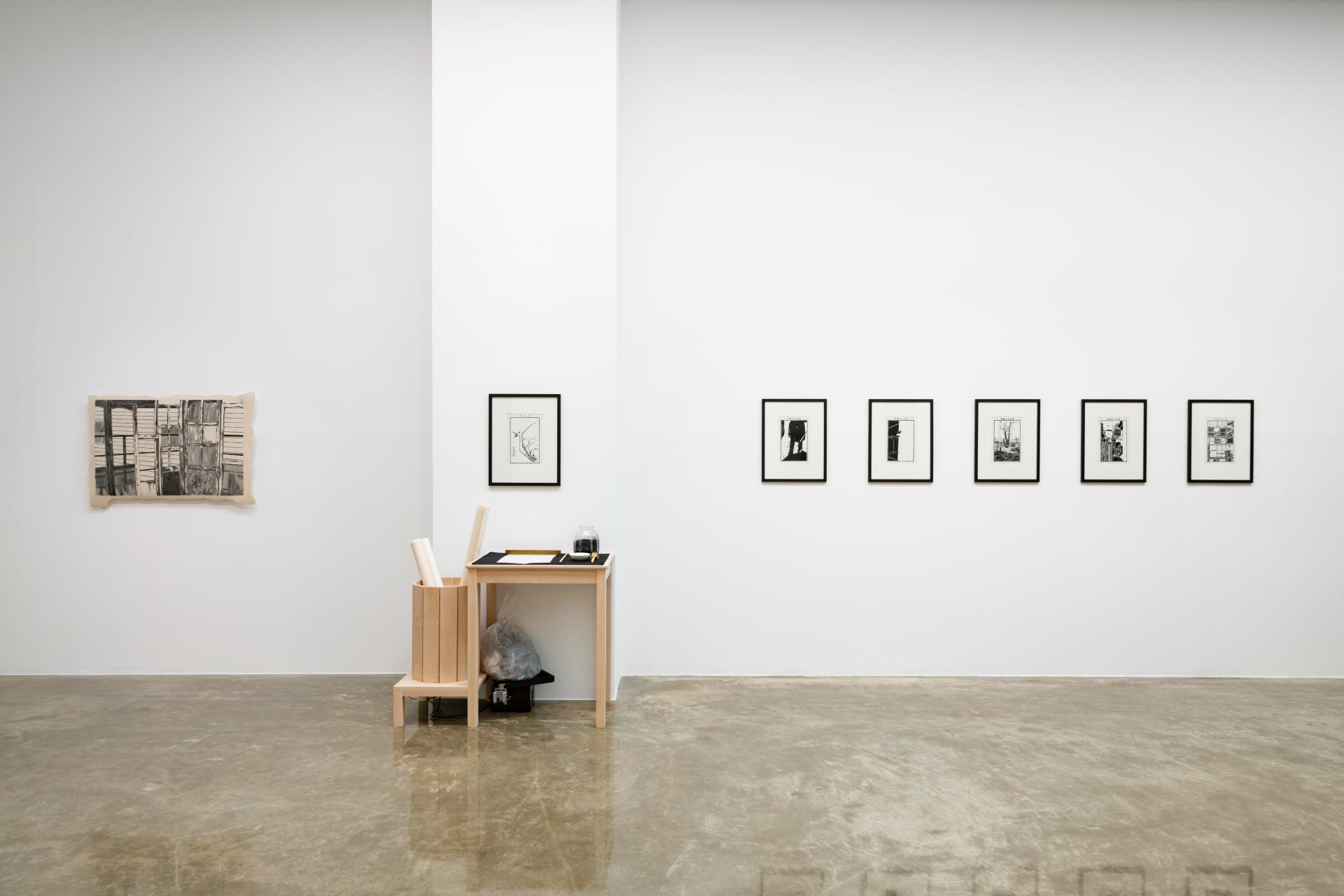
In 《Penetrating Stone》, he explored the balance between the materiality of ink and the “photographic image.” The first series translated snapshots from daily life into ink paintings, while the second appropriated the format of the Manual of the Mustard Seed Garden (芥子園畵譜) to reinterpret contemporary scenes within a classical composition. The third series employed ink powder produced by a custom-made machine to replicate the second series, visualizing the intersection between traditional manual practice and mechanical repetition.

By 2022, in 《Hwang’s Manual of Eternal Classics》, Hwang further systematized the structure of repetition and appropriation. While emulating the compositional design of traditional painting manuals, he reorganized his framework into ten thematic categories: Heaven (天), Water (水), Fire (火), Rain (雨), Stone (石), Earth (土), Grass (艸), Tree (木), Human (人), and Calligraphy & Painting (書畵). Each category weaves together nature, humanity, and art into a unified narrative, demonstrating that the language of traditional media can be reconfigured through contemporary memory and perception.

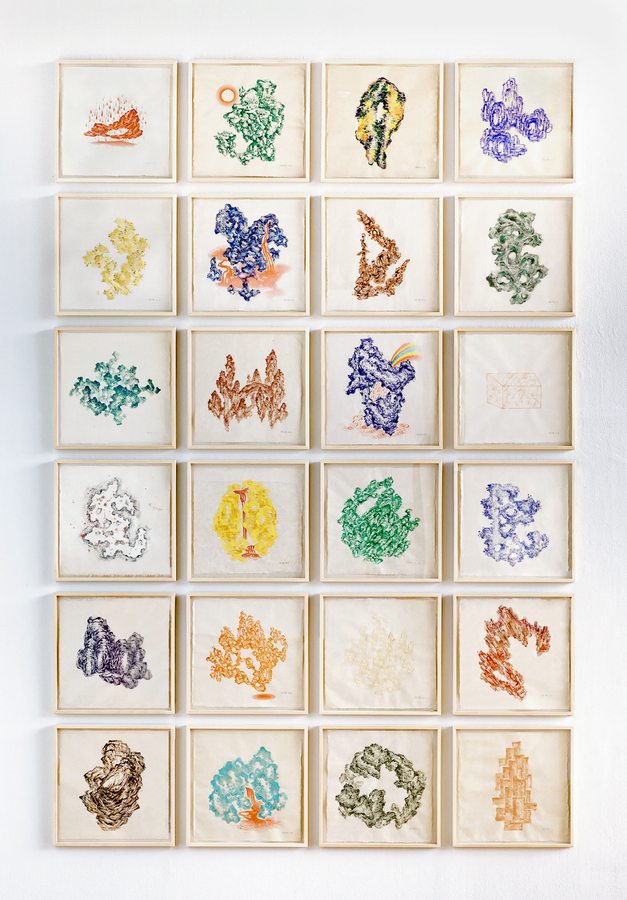
In 《Hwang’s Manual of Song’s Work – Throwing Arrows》, this structure expanded to incorporate the work of another artist. Hwang recontextualized contemporary calligraphy and painting artist Jean Song’s works, such as The Flower Arrangement by the Shepherd(2023) and Hybrid Dove(2023), within his manual system, producing a secondary pictorial structure exemplified by Hwang’s Manual Painting – Hybrid Hybrid Dove(2023). Through this process, the “manual” becomes not merely a record but a generative device of contemporaneity that overlays the paintings of past and present, self and others.

Topography & Continuity

Hwang Kyumin is recognized in the contemporary Korean art scene as an artist who distinctively explores “East Asian painting as a system” through his unique visual language. Rather than restoring or reproducing traditional media, his work transforms tradition into an algorithmic or intellectual structure. The three-phase composition of 《Penetrating Stone》 and the fictional narrative framework of 《Hwang’s Manual of Eternal Classics》 both reprogram the acts of learning, replicating, and inheriting that define East Asian painting.

His painting practice extends the “process of learning” into a formal language of its own. Instead of adhering to traditional precepts, he interprets and transforms them into his own cognitive system, thereby examining the sustainability of East Asian painting. What matters in his work is not formal imitation but the “transmission of thought.” For Hwang, tradition functions not as a repository of past imagery but as a structural principle for generating contemporary sensibility and language.

In contemporary Korean art, Hwang stands out as an artist who logically expands the language of traditional painting, fluidly traversing the boundaries between calligraphy and system, painting and concept. His practice proposes a new direction for East Asian painting that prioritizes “reconstruction” over “representation” and “thought” over “technique.” Hwang’s experiment demonstrates that Korean traditional painting can transcend its historical forms to participate in global artistic discourse as a structure of thought.

Works of Art

Reconstruction of the Concept and System of Traditional Oriental Painting

Exhibitions

Activities