Mt. Geumgang - K-ARTIST

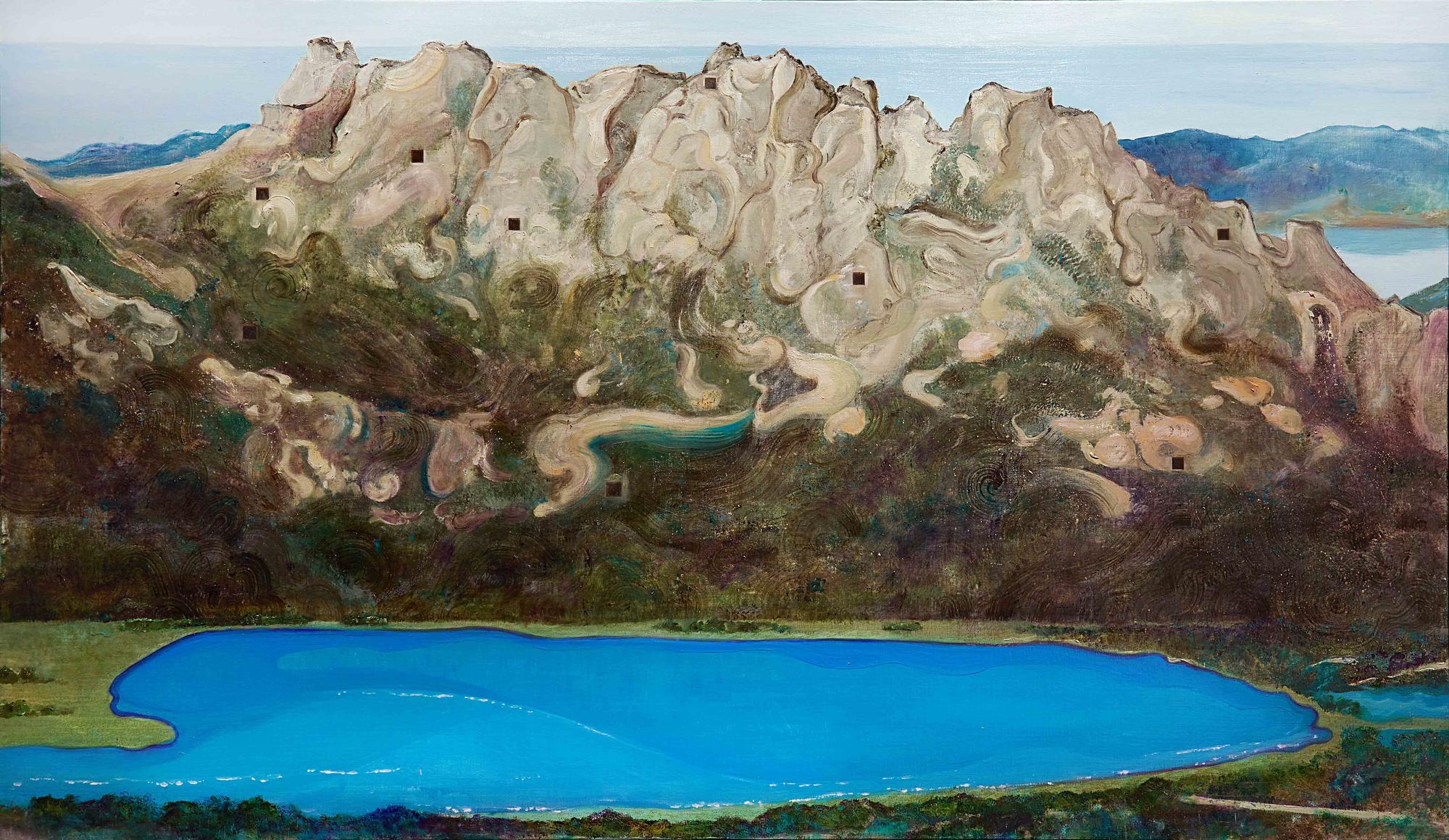
Mt. Geumgang

2020
Oil, acrylic on canvas 
141.5 x 375.5 cm
About The Work

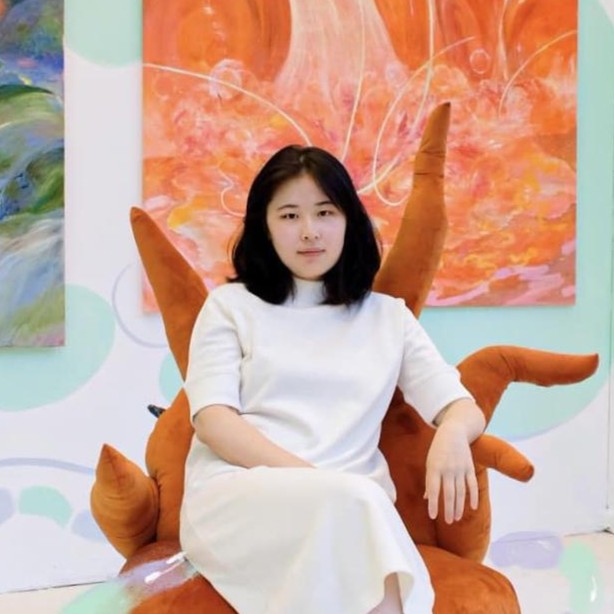
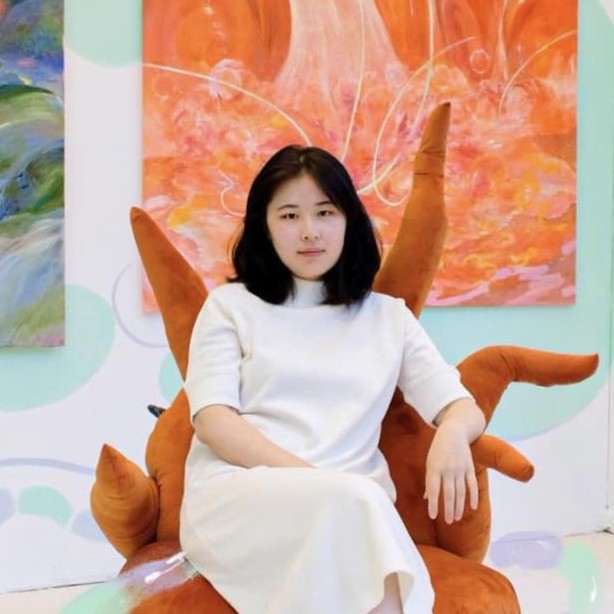
Haevan Lee, drawing from her upbringing near the Korean Demilitarized Zone (DMZ), has explored the structures of borders and their socio-cultural impact across various national boundary regions. To understand the complexities of border identities and ecological environments, she employs landscape painting, storytelling, and historical research, capturing the local context of specific sites through diverse mediums such as painting, installation, and video.
 
Haevan Lee’s practice originates from her personal experience with the DMZ, a specific border area on the Korean Peninsula, and expands to encompass the broader concept of buffer zones, both physical and psychological. Her paintings, blending fact and abstraction, materialize and make visible the invisible boundaries within our reality, allowing viewers to perceive and contemplate the contradictions and tensions inherent in these spaces through an artistic lens.

Solo Exhibitions (Brief)

Haevan Lee has held solo exhibitions including Hidden Blooming(Kumho Museum of Art, Seoul, 2025), 《Battleground》 (Insa Art Space, Seoul; Bradwolff Projects, Amsterdam, 2024), A Statue Dreaming on River (Gallery Lux, Seoul, 2020), and more.

Group Exhibitions (Brief)

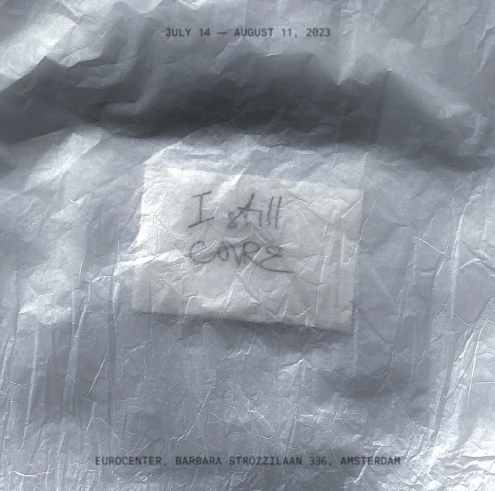
Haevan Lee has also participated in numerous group exhibitions, including The Mutable Line(G Gallery, Seoul, 2025), Soft Intimacies (Stroom Den Haag, Haag, the Netherlands, 2024), I Still Care(Eurocenter Amsterdam, Amsterdam, 2023), 《A scenic route to self》 (NEST, Haag, the Netherlands, 2022), Border_less.site(Culture Station Seoul 284, Seoul, 2021), Bangkok Art Biennale 《Escape route》(Bangkok Art and Culture Centre (BACC), Bangkok, 2020), and 《DMZ》 (Culture Station Seoul 284, Seoul, 2019).

Awards (Selected)

Haevan Lee was selected as the 22nd Kumho Young Artist and, in 2025.

Residencies (Selected)

Haevan Lee was as a resident artist for the MMCA Residency Goyang.

Collections (Selected)

Haevan Lee’s works are housed in the collection of National Museum of Modern and Contemporary Art(MMCA) Government Art Bank, Korea.

Works of Art

The Local Context of Specific Sites

Originality & Identity

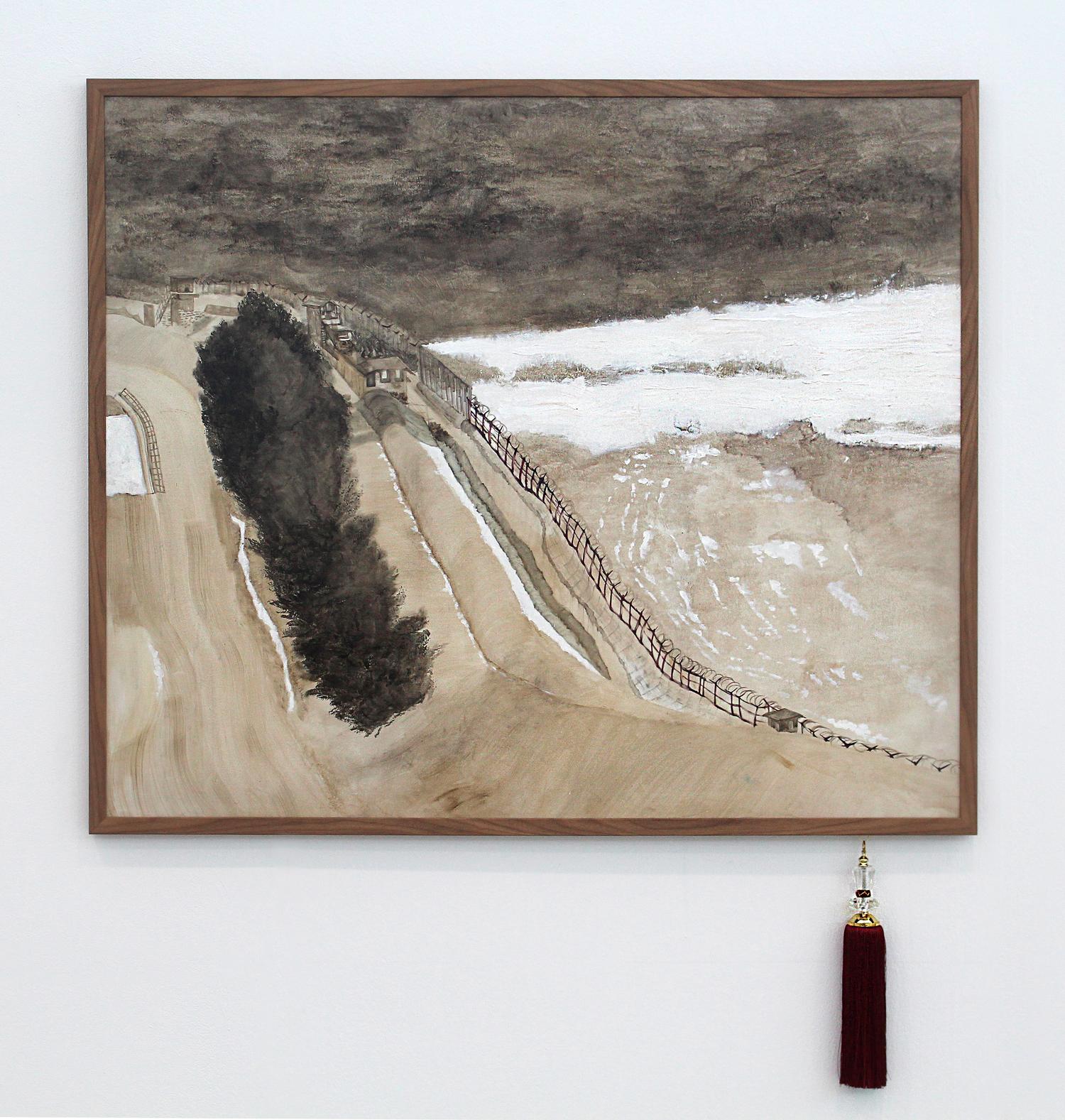
Haevan Lee’s practice begins with the geopolitical and psychological notions of “boundary” and “buffer zone.” Drawing from her upbringing near the Korean Demilitarized Zone (DMZ), she has explored the divided reality of the Korean Peninsula and the invisible tensions that stem from it through a painterly approach. Early works such as Civilian Control Line 2(2012) and Mt. Geumgang from 707OP(2019) depict the border between North and South not as a mere political demarcation but as a landscape layered with memory and emotion. For Lee, landscape is not a site of visual reproduction but an “emotional topography” formed within the constraints of restricted access and surveillance.

Over time, her focus on boundaries expanded from physical to psychological and symbolic dimensions. In her solo exhibition 《Goliaths, Tanks》(Peace Culture Bunker, 2018), she sensorially evoked the “post-division landscape” through the reverberations of her studio, a former anti-tank facility. Meanwhile, in 《A Statue Dreaming on River》(Gallery Lux, 2020), she metaphorically rendered the bunkers of Mount Geumgang as seen through a military telescope, constructing a dual perspective in which peace and threat coexist.

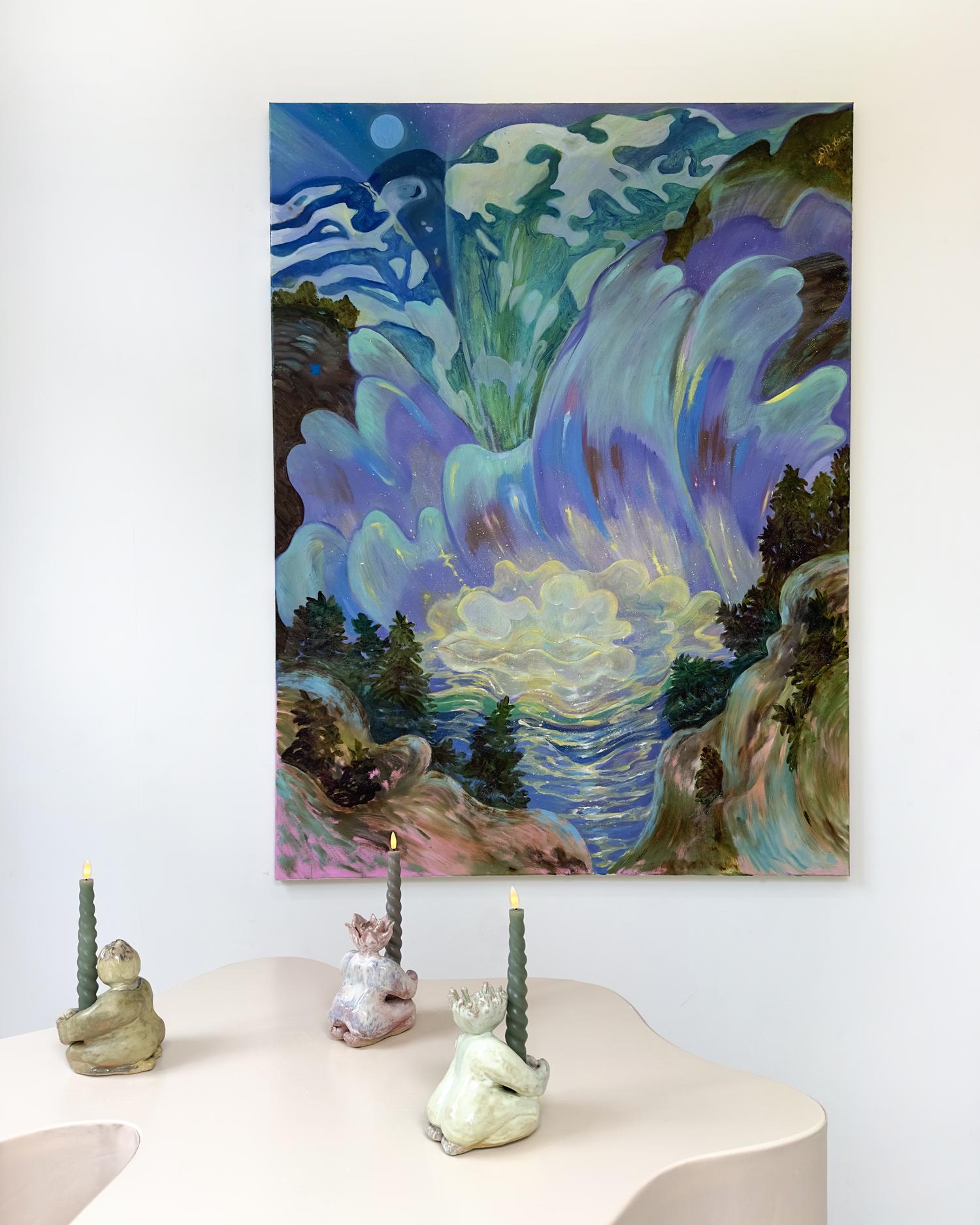
Later, in 《Buffer Zone》(SAGA, 2021), Lee extended her exploration to “buffer zones,” reimagining neutral territories—spaces untouched by human presence—as ecological and philosophical sites. Expanding her field of research beyond the DMZ to the borderlands between North Korea and China, as well as across Eurasia, she came to regard the landscape of borders as a global phenomenon. As seen in works like Buffer Zone(2021) and the ‘Battleground’(2024) series, her borders remain unstable and mutable sites—where the artificial and the natural, tranquility and tension, continuously intersect.

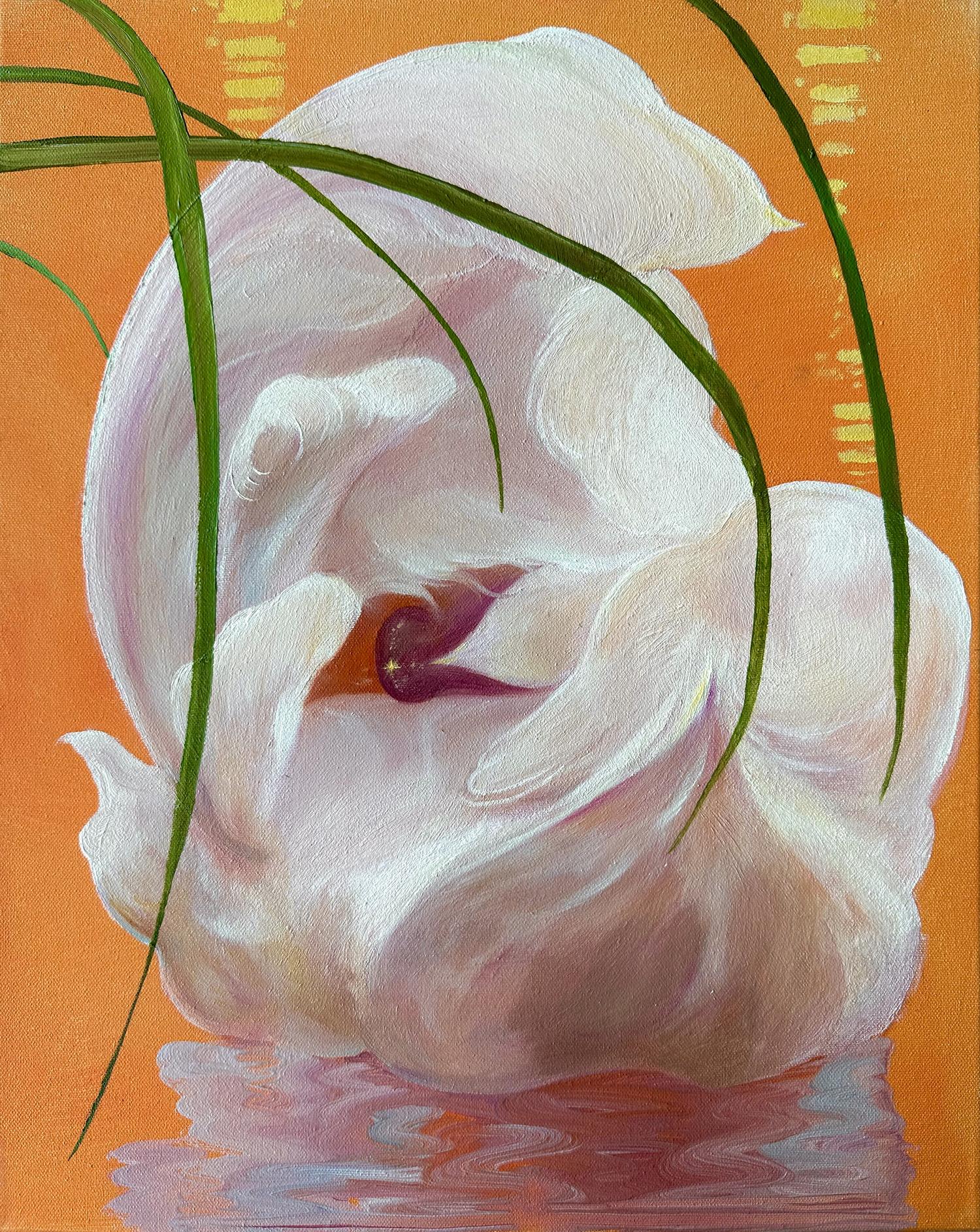
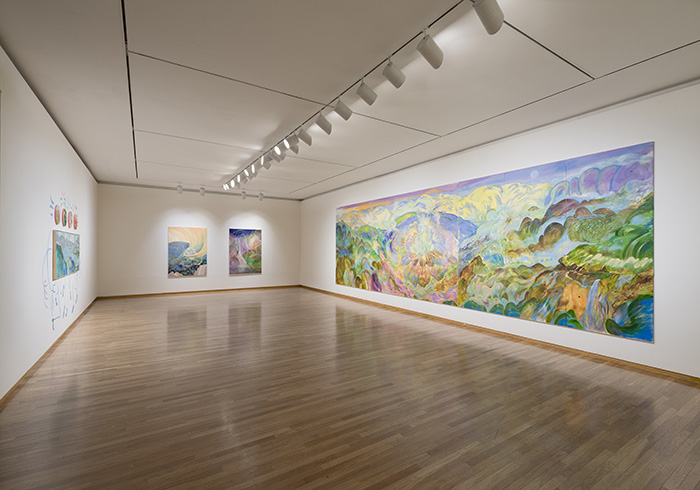
By the time of her recent solo exhibition 《Hidden Blooming》(Kumho Museum of Art, 2025), Lee’s gaze had shifted from external borders to an inner “psychological buffer zone.” Using orange as a symbol of boundary, she visualized a “neutrality within chaos” through landscapes where explosions and serenity coexist. This trajectory encapsulates her conceptual journey—from the physical exploration of borders to the visualization of emotional terrain within the human psyche.

Style & Contents

Lee’s formal explorations revolve around painting but consistently expand beyond its traditional limits. Her early DMZ landscapes, composed in oil, carried a lyrical tone, yet over time her brushwork grew more expressionistic and abstract. In Mt. Geumgang from 707OP, she built upon directly observed scenes while infusing the canvas with distortions of memory and traces of emotion, proposing a structure of “recollection” rather than “representation.”

In 《Goliaths, Tanks》(2018), she transformed painting into sculptural objects, combining physical elements such as ticking clock sounds and magnetic vibrations into multimedia installations. These experiments expanded the static image of painting into a “sensation of movement,” juxtaposing temporal and sensory layers within a single space. Following this, 《A Statue Dreaming on River》 juxtaposed large-scale paintings with small abstract fragments, visually conveying the fragmented nature of memory and the imperfect act of observation.

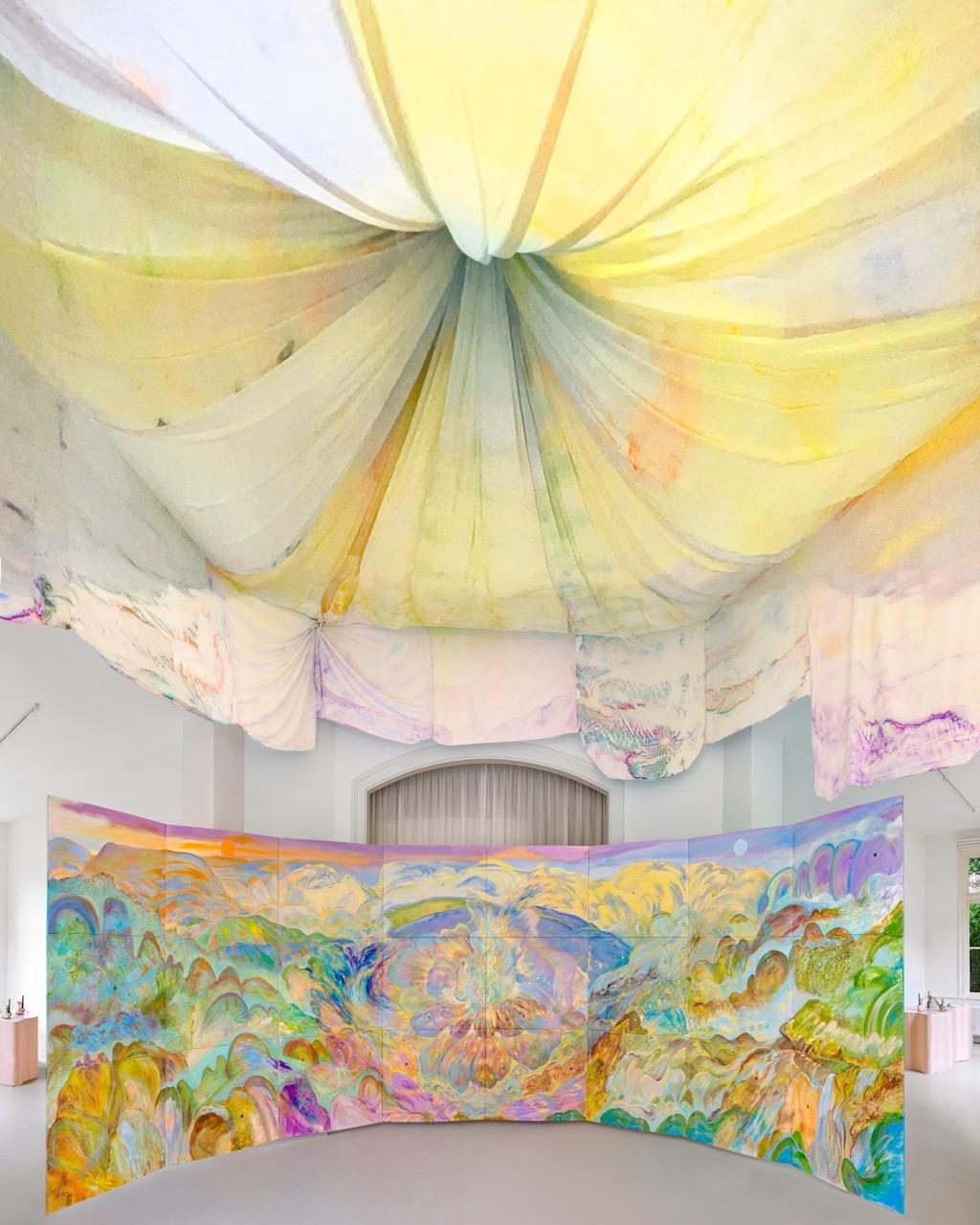
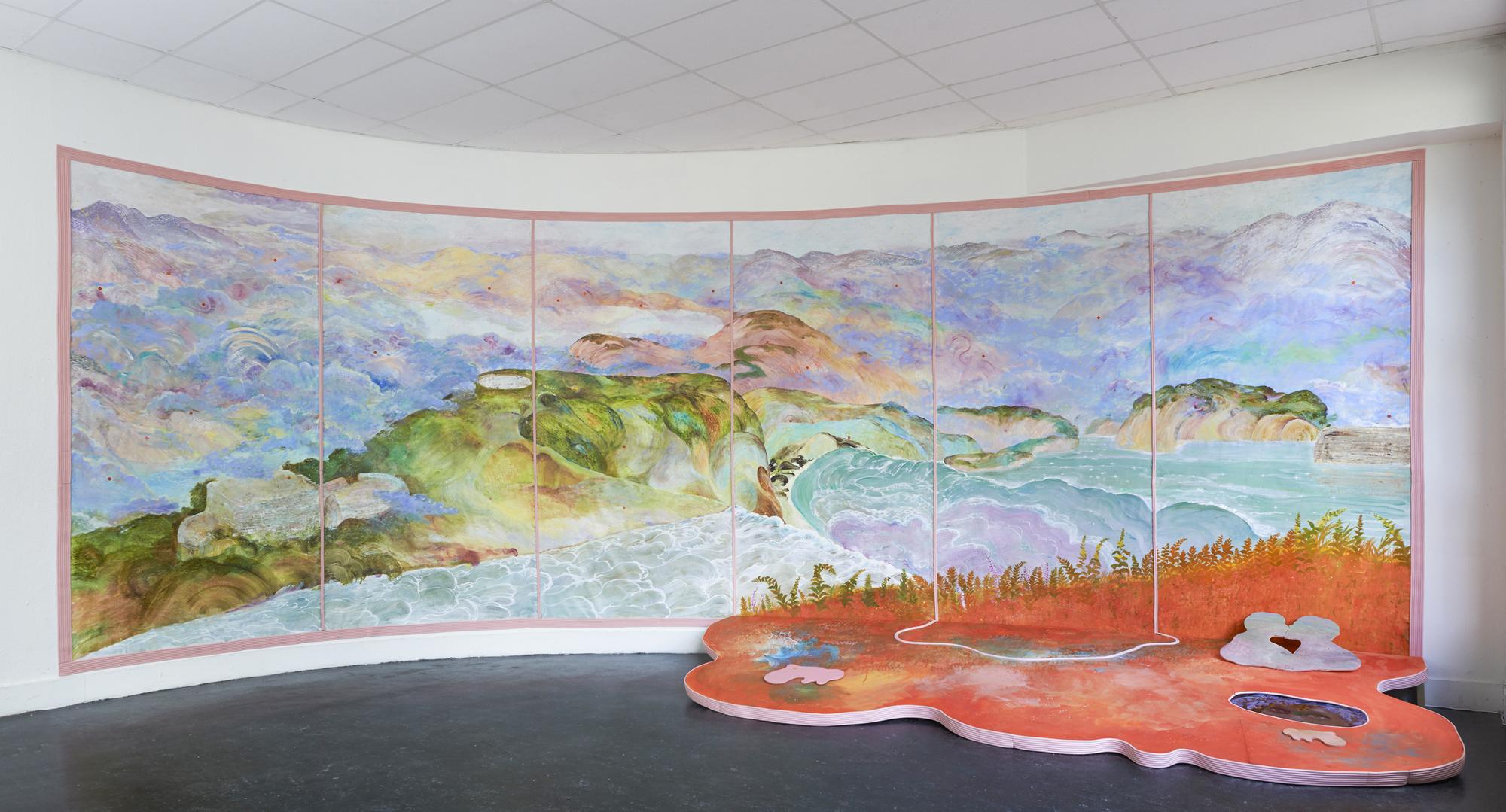
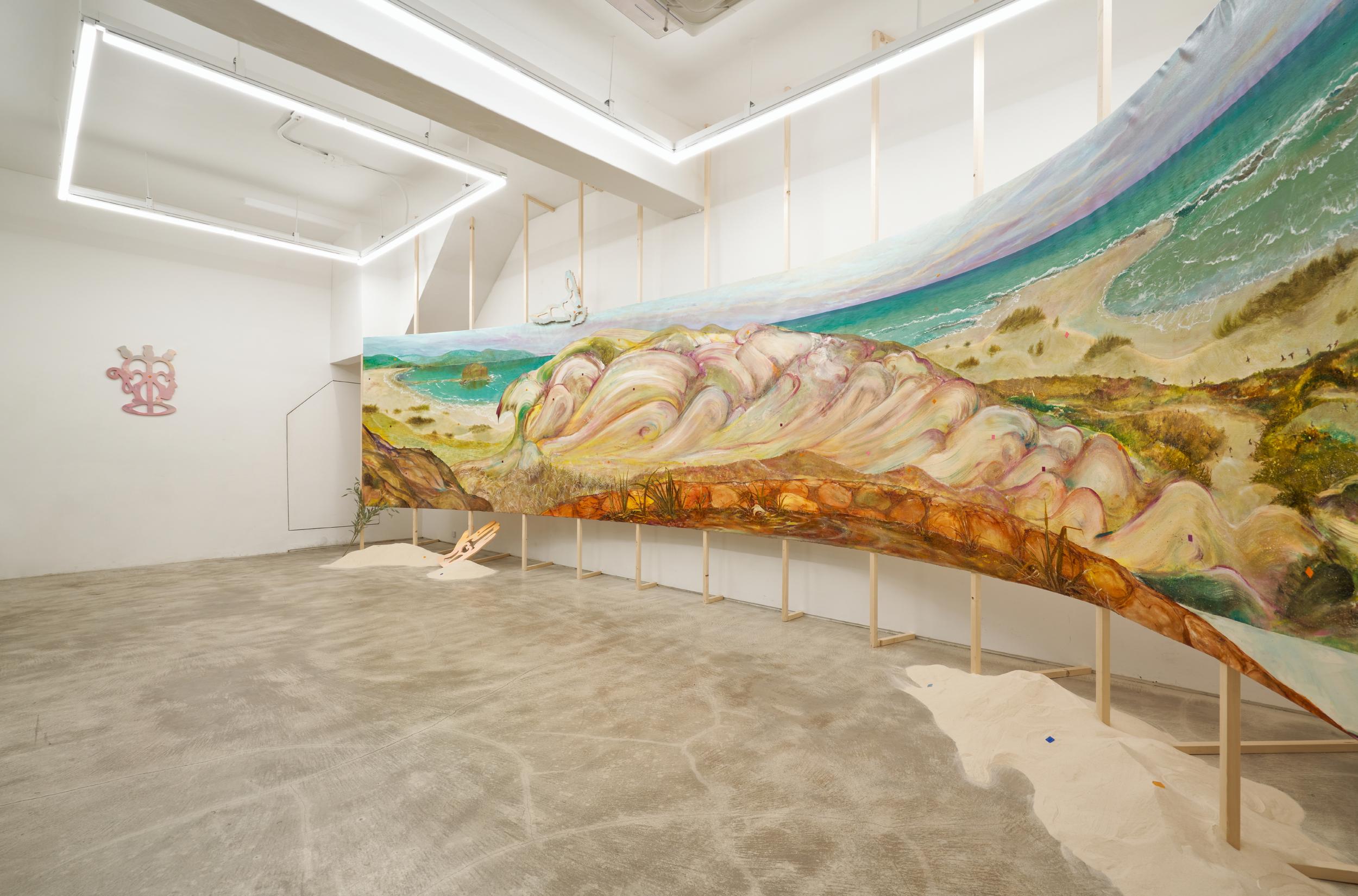
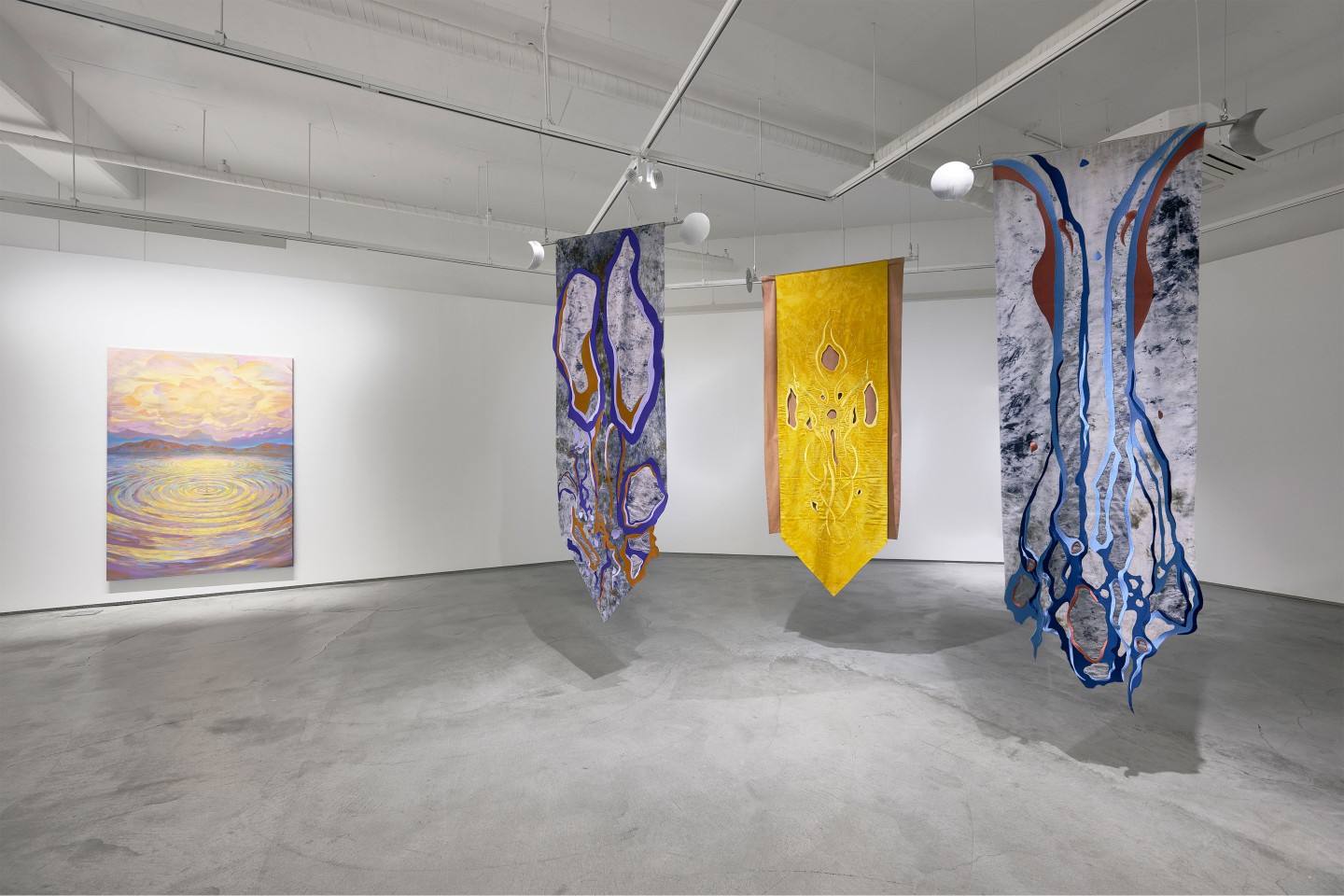
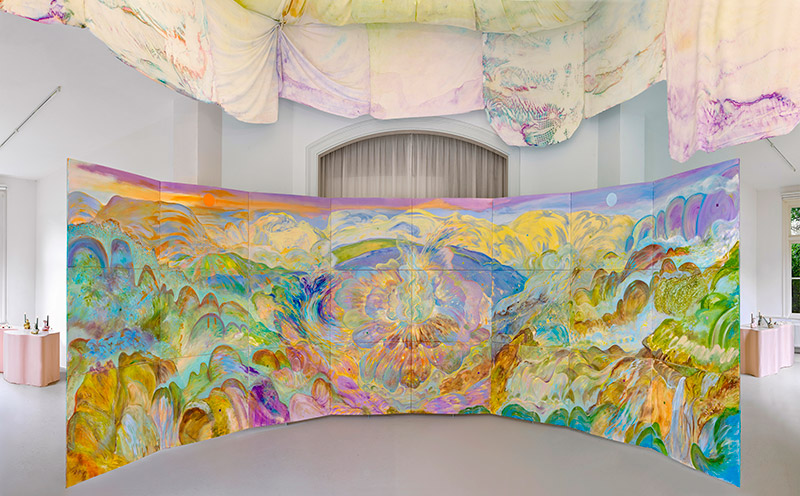
After 《Buffer Zone》, her formal language expanded into panoramic compositions. The horizontally stretched Buffer Zone was constructed by stitching together multiple viewpoints, encouraging the viewer’s perception to shift continuously with movement. In the ‘Battleground’ series, large curved paintings, ceramics, and textiles coalesce into a single immersive environment, producing symbolic landscapes where explosions and nature converge.

In 《Hidden Blooming》, her painterly vocabulary becomes more restrained while the symbolic use of color grows more pronounced. Orange functions as a visual device that expresses both the tension of boundaries and the desire for calm, while images of explosions on the canvas suggest the coexistence of inner chaos and equilibrium. This formal evolution demonstrates the artist’s continuous expansion of painting into spatial and material realms, while increasingly turning toward the introspective depths of emotional structure.

Topography & Continuity

Haevan Lee occupies a distinct position in contemporary Korean art for her painterly reinterpretation of “borders.” She redefined the DMZ not as a static symbol of division but as a “sensory site” where ecological renewal and psychological neutrality intersect. While her early works were grounded in documentation, she gradually expanded the concept of painting to encompass internal memories and emotional landscapes that transcend physical boundaries.

Her work operates at the intersection of historical reality and personal experience, observing the world through the lens of lived memory. Following exhibitions in 2021 such as 《Border_less.site》 and 《Buffer Zone》, Lee extended her inquiry from the Korean Peninsula to the broader Eurasian continent, posing universal questions that transcend national borders—about coexistence, anxiety, and ecology. Her practice functions as both artistic research and a painterly-spatial investigation into the conditions of human existence through “geopolitical landscapes.”

Though painting remains central to her practice, Lee increasingly embraces sculptural and installation-based experimentation. The curved paintings, ceramics, and textiles in works like the ‘Battleground’ series and the exhibition 《Hidden Blooming》 demonstrate that her painting has evolved from a two-dimensional image into an experiential field of perception.

Currently active between Seoul and The Hague as a Kumho Young Artist and an MMCA Residency Goyang artist, Haevan Lee continues to expand her perspective on border landscapes to a global scale. Her work will likely persist in exploring “landscapes beyond the boundary,” developing new painterly languages that bridge geopolitical realities with sensory experience.

Works of Art

The Local Context of Specific Sites

Exhibitions

Activities