No Graffiti Here - K-ARTIST

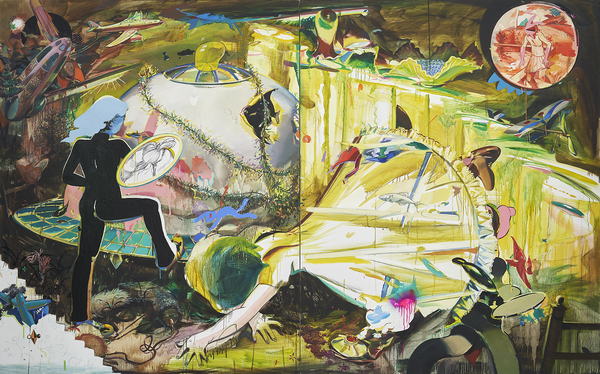
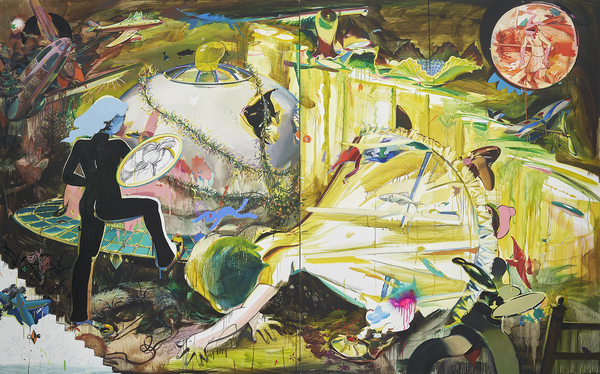
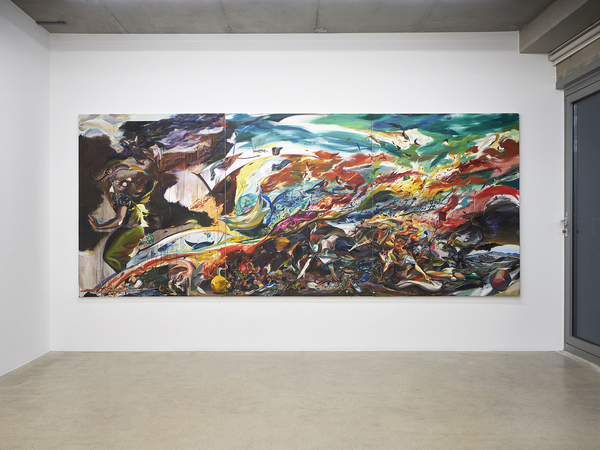
No Graffiti Here

2020
Oil on canvas 
162.2 x 260.6 cm
About The Work

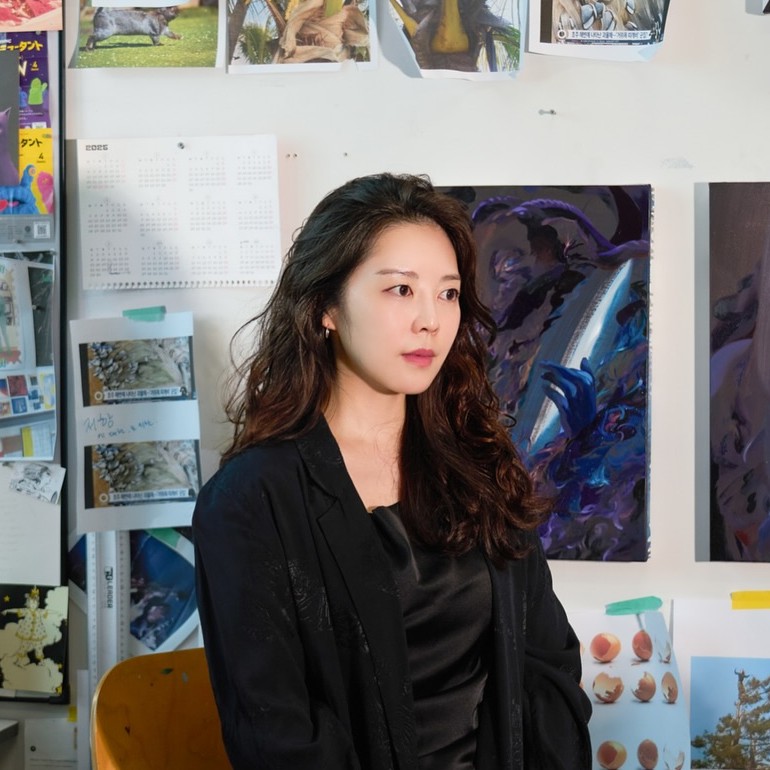
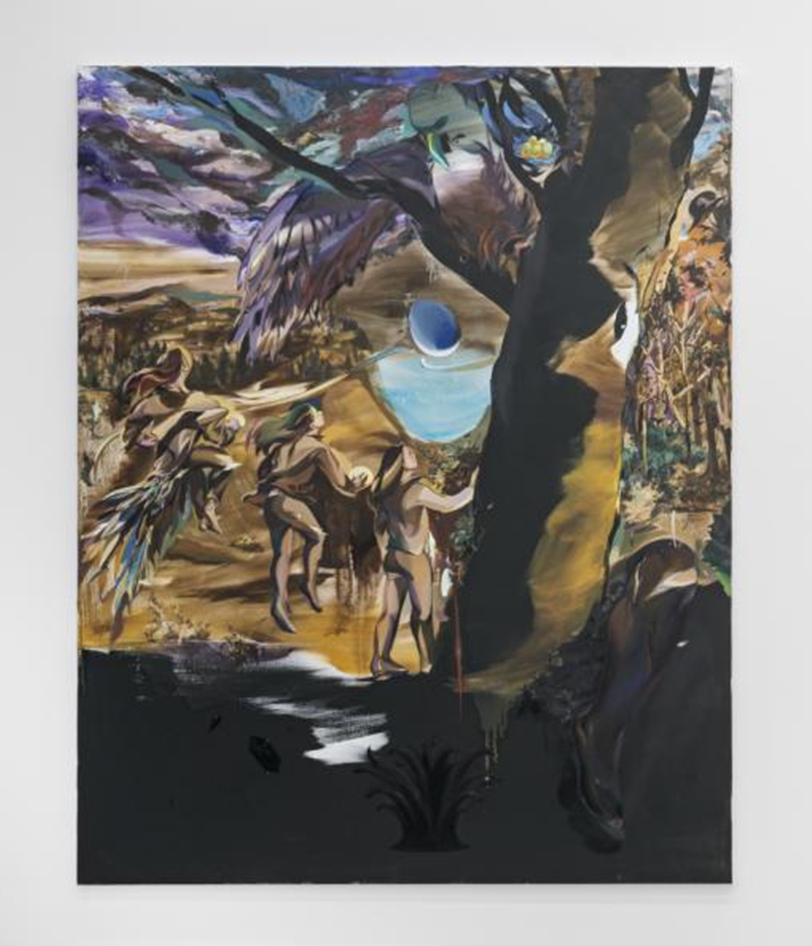
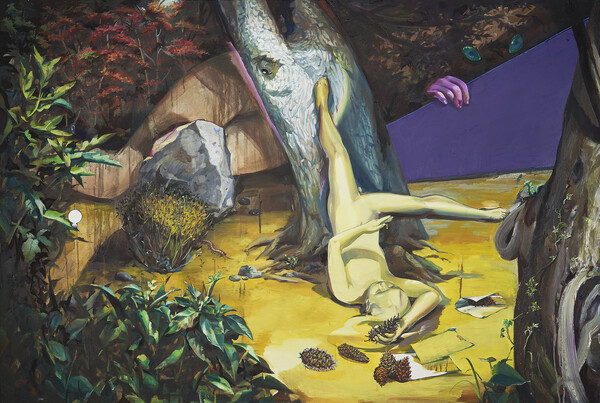
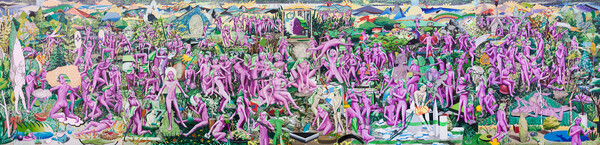
Soojung Jung has been experimenting with her own distinctive language of figurative painting, rooted in her interest in the small and large events, narratives, and images that unfold around her. Her paintings, reminiscent of dreamlike scenes, present unfamiliar yet familiar moments that emerge from her imaginative interpretation of real-life events.
 
Jung’s paintings, while grounded in various real-world references, go beyond merely borrowing conventional motifs. She weaves narratives with images imbued with new meanings and imaginative layers, exploring the potential of multifaceted, open-ended painting. 
 
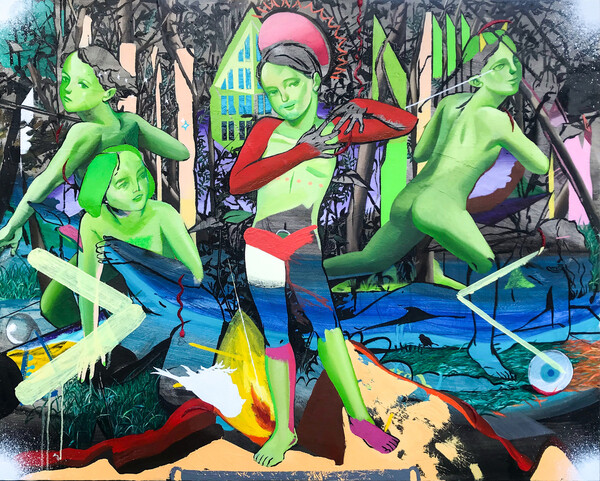
The entanglement and coexistence of diverse beings in her works create a strange yet uncanny impression, while the pulsating energy among them reminds us of the vitality of all living beings sharing this world today.

Solo Exhibitions (Brief)

Jung’s solo exhibitions include 《Black Bones, Heart and Gemstones》 (A-Lounge, Seoul, 2023–2024), 《Falconry》 (SeMA Storage, Seoul, 2021), 《The Star of Villains》 (OCI Museum of Art, Seoul, 2020), 《A Homing Fish》 (Gallery MEME, Seoul, 2019), and 《Sweet Siren》 (Rainbowcube, Seoul, 2018).

Group Exhibitions (Brief)

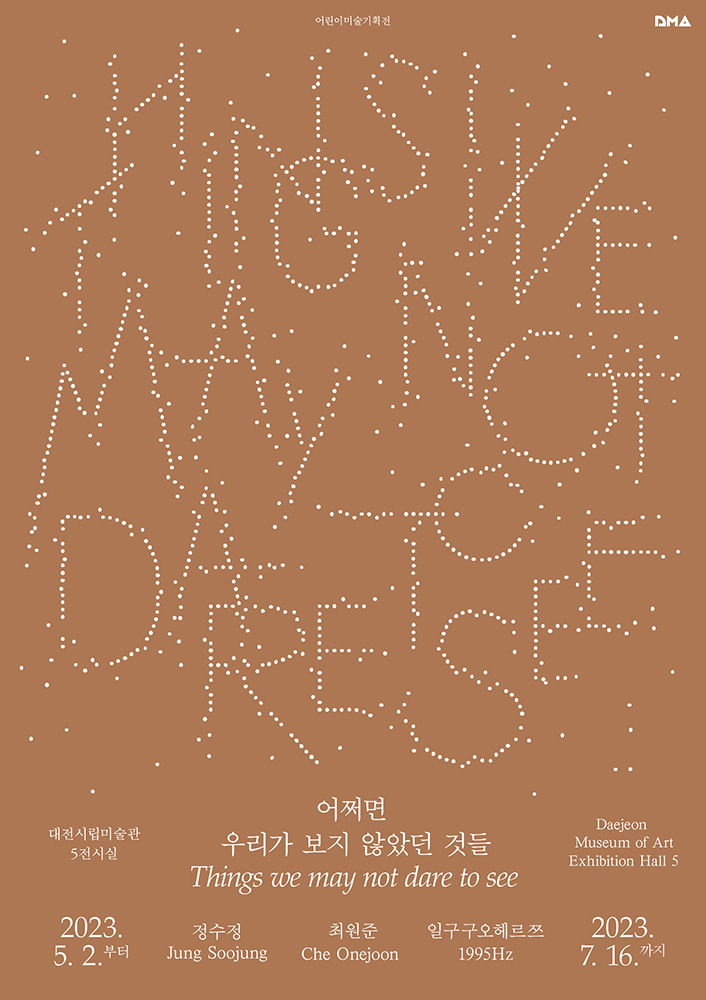
Jung has also participated in numerous group exhibitions, including 《-DIRECTOR》 (KICHE, Seoul, 2024), 《Time Lapse》 (Pace Gallery, Seoul, 2024), 《UNBOXING PROJECT 2: Portable Gallery》 (New Spring Project, Seoul, 2023), 《Things we may not dare to see》 (Daejeon Museum of Art, Daejeon, 2023), 《Hysteria: Contemporary Realism Painting》 (Ilmin Museum of Art, Seoul, 2023), 《21st Century Paintings》 (HITE Collection, Seoul, 2021), and 《Name》 (Museumhead, Seoul, 2020).

Awards (Selected)

Jung presented a solo booth in the ‘Focus Asia’ section of Frieze Seoul 2023 and was selected as the 23rd Kumho Young Artist in 2025, with a solo exhibition planned at Kumho Museum of Art in 2026.

Residencies (Selected)

Soojung Jung was selected for the OCI Museum 1211 Residency in 2024.

Collections (Selected)

Jung’s works are included in the collections of OCI Museum of Art and BNK Busan Bank.

Works of Art

The Entanglement and Coexistence of Diverse Beings

Originality & Identity

Soojung Jung’s work begins with real events and images but is based on a painterly reflection that expands them into imaginary worlds rather than simply reproducing them. As revealed in her early piece Protecting the forest in the east(2018), she consistently explores the relationship between humanity, nature, civilization, and life force, pursuing the themes of “coexistence” and “vitality.”

In her first solo exhibition 《Sweet Siren》(Rainbowcube, 2018), she visualized the energy and spirit of nature through mythological beings resembling nymphs, who emerge as embodiments of pure vitality beyond the distinctions of good and evil or gender. These works reflect the artist’s perception that the power of nature precedes and governs the world beyond human control.

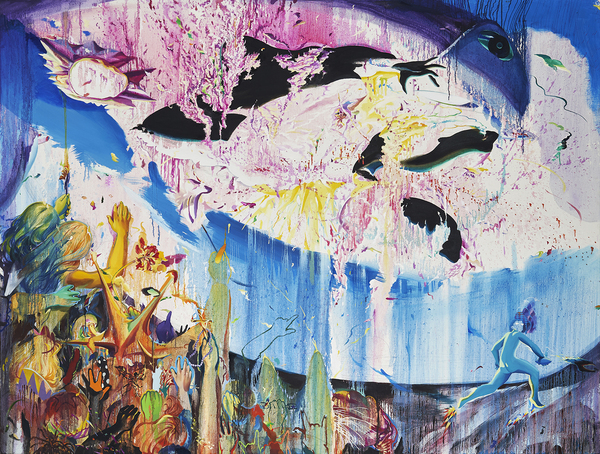
Her solo exhibitions 《A Homing Fish》(Gallery MEME, 2019) and 《The Star of Villains》(OCI Museum of Art, 2020) introduced imaginary beings that collide with the inner desires of human civilization. In works such as Fly(2020) and Our Starman(2020), Jung explored the painterly process of “destroying and rebuilding her own world” through the tension and energy that arise at the moment when order collapses. These narratives form an imagined world of her own creation, yet they also manifest as psychological spaces where human anxiety and desire surface.

In her 2021 solo exhibition 《Falconry》(SeMA Storage), she developed a life narrative centered on “women, birds, and animals.” Inspired by falcons, these works blur the boundary between the human and the nonhuman, investigating instinctive emotional connections among living beings. The women and animals appearing in her paintings stand at the intersection of nature and civilization, life and emotion—reminiscent of the imagery in Nausicaä of the Valley of the Wind or Princess Mononoke. In her recent solo exhibition 《Black Bones, Heart and Gemstones》(A-Lounge, 2023), the artist reinterprets the “witch” as a symbol of both oppression and resistance, anger and recovery—a historical victim who simultaneously embodies autonomous strength.

Ultimately, Jung’s painting transforms real-world narratives and cultural icons into imaginative worlds, exploring the fundamental energy of human existence and the ethics of relation. Her artistic universe continually expands as a field of imagination that reveals what was unseen, grounded in her belief that “what moves this world are small, invisible organisms.”

Style & Contents

Jung’s paintings consistently maintain a figurative structure while realizing a surreal imaginative space. In 《Sweet Siren》, her early canvases employed a continuous narrative structure, expressing the cyclical rhythm of life—ranging from cells and the cosmos to living beings and human daily life. In Giving answers to Bosch(2018), referencing Hieronymus Bosch’s The Garden of Earthly Delights, she symbolically juxtaposed the extremes of human faith, science, and desire. This marked the starting point of her exploration into visualizing the world’s order and imbalance through painting.

In 2020’s 《The Star of Villains》, the artist established a new visual language through intense color, explosive brushwork, and dynamic composition. Works such as No Graffiti Here(2020) and Fly dominate the pictorial space with trajectories of motion and energy, fusing the physicality of painting with the velocity of emotion. This expression reaches its peak in Our Starman, where the painting’s internal narrative bursts visually through energy so powerful that it seems to distort space itself.

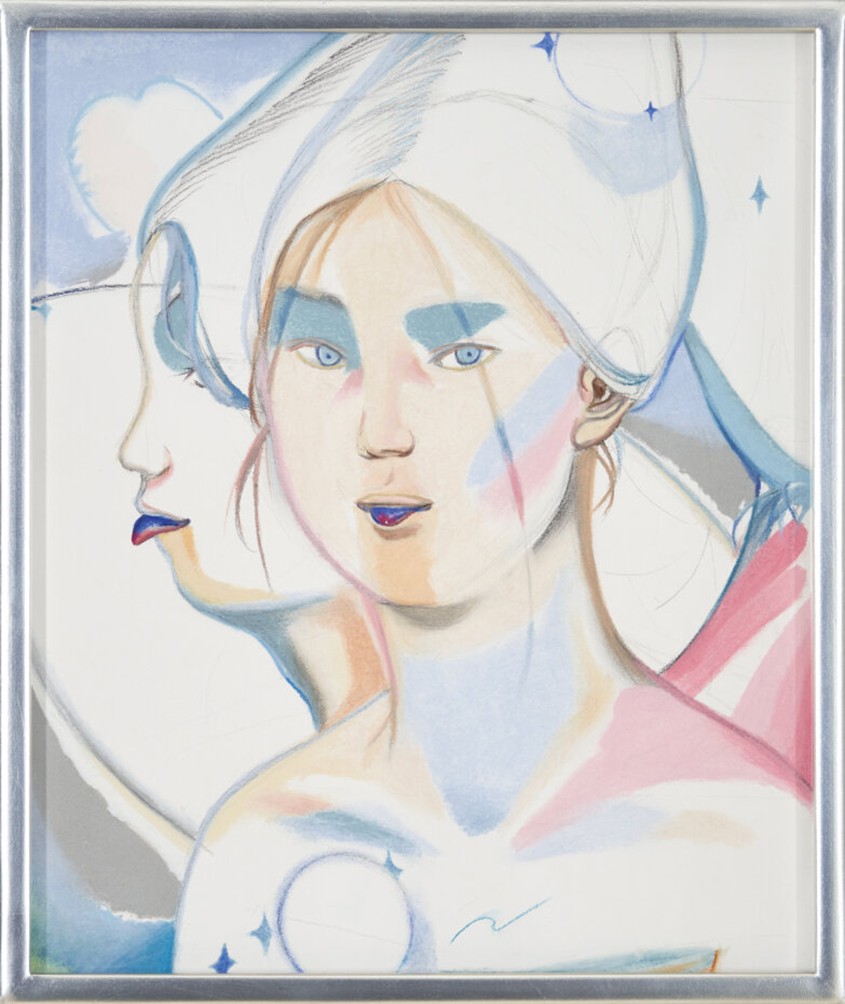
She later refined her compositions in 《Falconry》, seeking a more distilled pictorial structure. In her portrait series ‘Tronie’(2021), Jung translated the flow of emotion through expression-centered portraiture, while Mating(2021)—a monumental seven-meter-long painting—embodied the union and instinct of life through movement and color. As a result, painting expanded from mere depiction into an act of expressing vitality itself.

Her recent exhibition 《Black Bones, Heart and Gemstones》 further developed her pictorial language in a more complex manner. The fungi, spores, and microorganisms in Voyage(2023) reconstruct the microscopic world of invisible life into an expanded ecosystem, while the witches in 《Black Bones, Heart and Gemstones》 are transformed into energies of emotion and desire through the intersection of brushstrokes and color. In this way, Jung’s painting focuses less on material experimentation than on the dynamism of form and emotion, and on the structural articulation of painterly imagination.

Topography & Continuity

Soojung Jung is one of the most consistent artists in contemporary Korean painting to practice “rethinking reality through imaginary worlds.” Through subjects of nature, women, and nonhuman beings, she dismantles modern dichotomies and treats painting itself as a living organism. The progression from 《Sweet Siren》 to 《Black Bones, Heart and Gemstones》 traces the evolution of her thematic focus—from “the vitality of nature” to “relational imagination,” and ultimately toward “the restoration and re-narration of existence.”

Her originality lies in her ability to borrow symbolic iconography and translate it anew into the language of painting. Drawing inspiration from mythology, animation, and Renaissance painting, Jung reconstructs these images not as direct appropriations but as sensory events, presenting them as “open paintings.” Her practice occupies a crucial position within the current tendency of contemporary painting to fuse narrative, image, and sensibility, while balancing autonomy and lyricism.

She gained international attention with her solo booth in the ‘Focus Asia’ section of Frieze Seoul 2023 and was selected as the 23rd Kumho Young Artist in 2025, with a solo exhibition scheduled at Kumho Museum of Art in 2026. This trajectory reflects the expansion of her painting from regional symbolism toward universal imagination.

Looking ahead, Jung’s practice will continue to build a new pictorial ecosystem that traverses the boundaries between the human, the nonhuman, and the imaginary, centered on the theme of “invisible vitality.” Her artistic world will persist as a continuous experiment toward the moment when painting itself comes alive.

Works of Art

The Entanglement and Coexistence of Diverse Beings

Articles

Exhibitions

Activities