Sojin
Kwak’s work explores the invisible sensations and relational scenes that lie
behind visible phenomena. She focuses on the tension and negotiation that occur
as the photographer’s body, the camera, the subject, and the place intertwine.
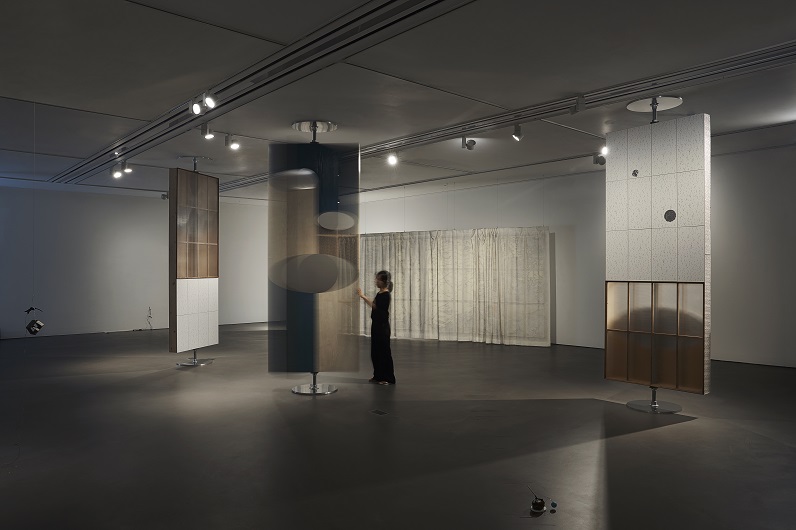
In 《Axe and Dummy Heads》(Insa
Art Space, 2020) and Bent(2020), this relational gaze
emerges through intermedia exchange via collaboration. The structure in which
artists working with different media entrust their own languages to others
marks the beginning of Kwak’s ongoing inquiry into “invisible negotiations” and
the “interdependence between medium and body.”
In her
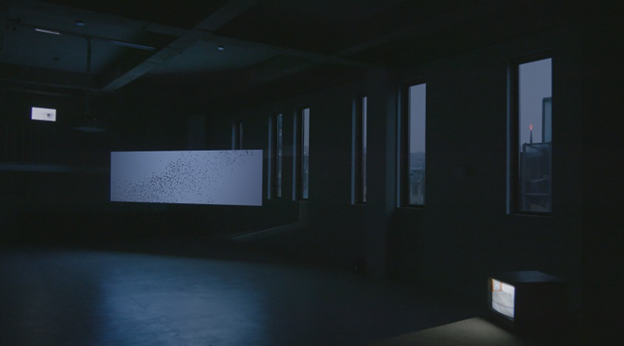
solo exhibition 《Black Bird
Black》(TINC, 2021), she explored perceptual boundaries
through the singular color black. The experience of “invisibility” encountered
while filming a flock of crows prompted the artist to question the limits of
perception and the layers of sensory awareness. For Kwak, darkness functions
not as a mere backdrop but as a sensory passage revealed at the moment when
objects and images vanish. This attitude aligns less with reproducing reality
than with observing the point at which reality collapses.
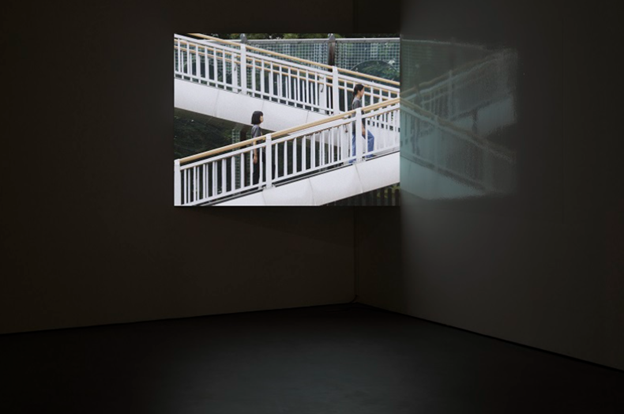
In the
solo exhibition 《oh-my-god-this-is-terrible-please-don’t-stop》(Seoul Art Space Mullae, 2022), she introduced the concept of “consensual
non-consent,” centered on relational tension. Borrowing from the structure of
BDSM, she examined points where power relations, though unequal, could still be
mutually compensatory. By translating the relationship between camera and
subject into the sensations of “control and exposure, desire and pause,” Kwak
metaphorically revealed the essence of media power.
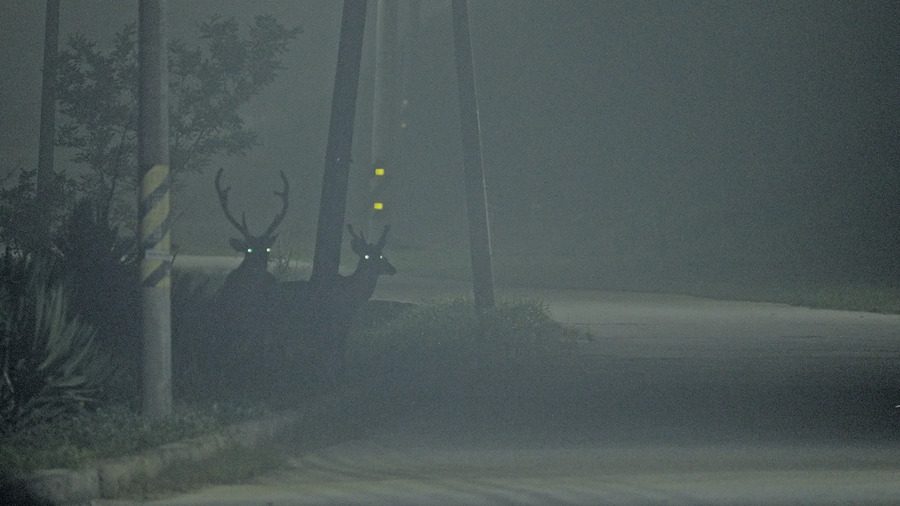
Her recent
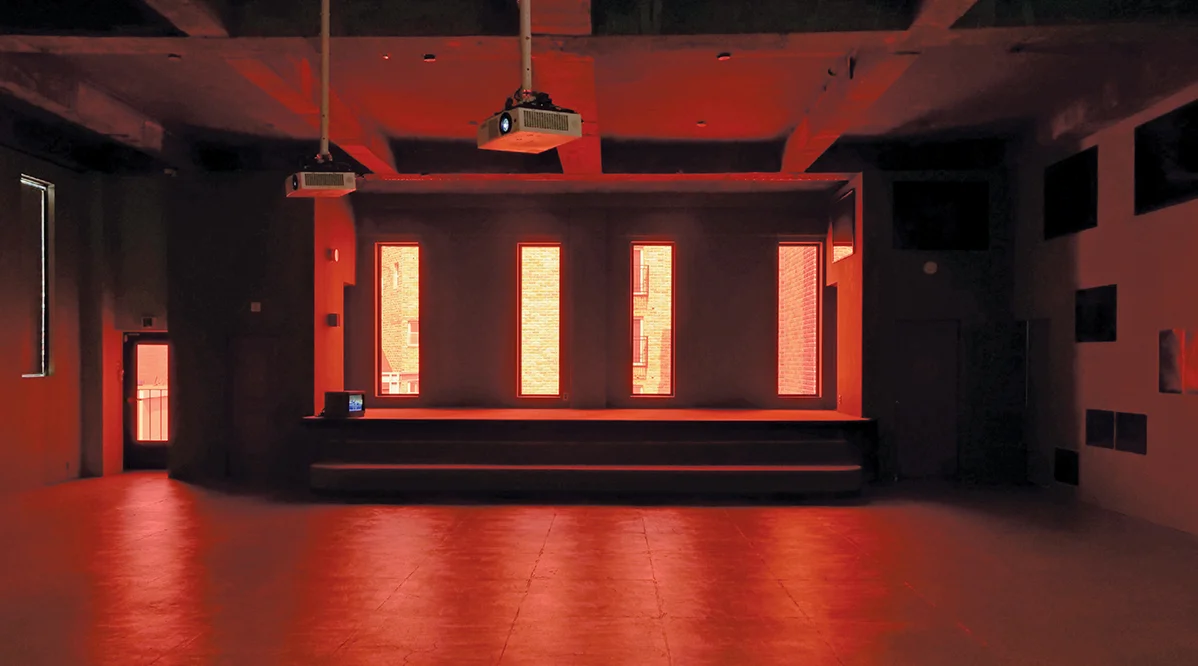
solo exhibition 《Cloud to Ground》(Replace Hannam, 2025) and the video
HWI-PAN(2024) demonstrate an expansion of the artist’s interest
toward ecological and physical worlds. Natural phenomena such as wild deer,
lightning, and electric current are interpreted as relational events in
themselves. At the intersection of technological devices and ecological
systems, Kwak examines moments in which human perception and natural sensation
intertwine, revealing the emotional and tension-filled structures that arise
behind the visible world.