HWI-PAN - K-ARTIST

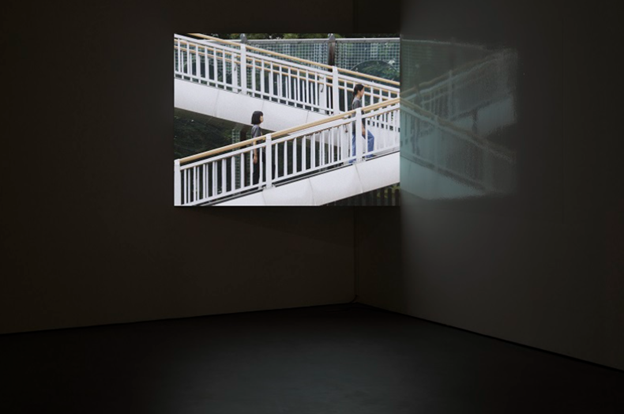
HWI-PAN

2024
Film, sound
23min
About The Work

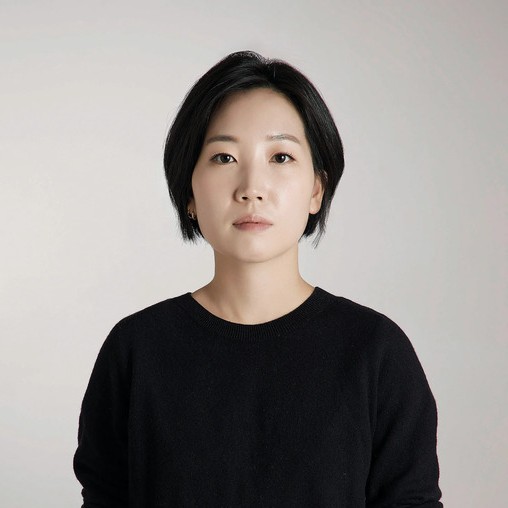
Sojin Kwak has continued to capture scenes of relationships formed through the mutual influence between the photographer’s body, the camera as a device, the subject, and the place. Through video, performance, sculpture, and installation, she addresses the diverse interactions latent beneath visible phenomena and technology, along with the resulting tensions and signs of change.
 
Sojin Kwak, who began her career as a cinematographer for films and documentaries, has been developing multimedia projects since 2020 based on in-depth field research and performative filming. Interested in the collaborations and constraints that emerge in the process of merging media and the body, the artist adopts a multimedia approach to make the invisible negotiations within this process perceptible. 
 
Artist’s work originates from her inquiries into the invisible interactions embedded within the networks of ecology, history, and media. She captures living relational scenes in which technology, bodies, objects, and sensations are intertwined and revealed. By traversing between objects, devices, and the body, her work visualizes the layered sensations and emotions that exist beneath the objective or visible, allowing audiences to experience these moments through their own bodies.

Solo Exhibitions (Brief)

Kwak has held various solo exhibitions, 《Cloud to Ground》 (Replace Hannam, Seoul, 2025), 《oh-my-god-this-is-terrible-please-don’t-stop》 (Seoul Art Space Mullae, Seoul, 2022), 《Black Bird Black》 (TINC, Seoul, 2021), and 《Axe and Dummy Heads》 (Insa Art Space, Seoul, 2020).

Group Exhibitions (Brief)

Kwak has also participated in numerous group exhibitions, including 《off-site 2: Eleven Episodes》 (Kukje Gallery, Seoul, 2025), 《Green Shivering》 (Busan Museum of Contemporary Art, Busan, 2025), 《Waiting for the Forest》 (National Museum of Modern and Contemporary Art, Seoul, 2025), 《OB/SCENE FOCUS》 (Art Space 3, Seoul, 2024), 《Frieze Film 2023》 (Amado Art Space, Seoul, 2023), and 《#2》 (DOOSAN Gallery, Seoul, 2023), among others.

Awards (Selected)

In 2024, Kwak was selected as the inaugural recipient of the ‘Sisley Award for Young Creation Korea.’

Works of Art

The Invisible Interactions within the Networks of Ecology, History, and Media

Originality & Identity

Sojin Kwak’s work explores the invisible sensations and relational scenes that lie behind visible phenomena. She focuses on the tension and negotiation that occur as the photographer’s body, the camera, the subject, and the place intertwine. In 《Axe and Dummy Heads》(Insa Art Space, 2020) and Bent(2020), this relational gaze emerges through intermedia exchange via collaboration. The structure in which artists working with different media entrust their own languages to others marks the beginning of Kwak’s ongoing inquiry into “invisible negotiations” and the “interdependence between medium and body.”

In her solo exhibition 《Black Bird Black》(TINC, 2021), she explored perceptual boundaries through the singular color black. The experience of “invisibility” encountered while filming a flock of crows prompted the artist to question the limits of perception and the layers of sensory awareness. For Kwak, darkness functions not as a mere backdrop but as a sensory passage revealed at the moment when objects and images vanish. This attitude aligns less with reproducing reality than with observing the point at which reality collapses.

In the solo exhibition 《oh-my-god-this-is-terrible-please-don’t-stop》(Seoul Art Space Mullae, 2022), she introduced the concept of “consensual non-consent,” centered on relational tension. Borrowing from the structure of BDSM, she examined points where power relations, though unequal, could still be mutually compensatory. By translating the relationship between camera and subject into the sensations of “control and exposure, desire and pause,” Kwak metaphorically revealed the essence of media power.

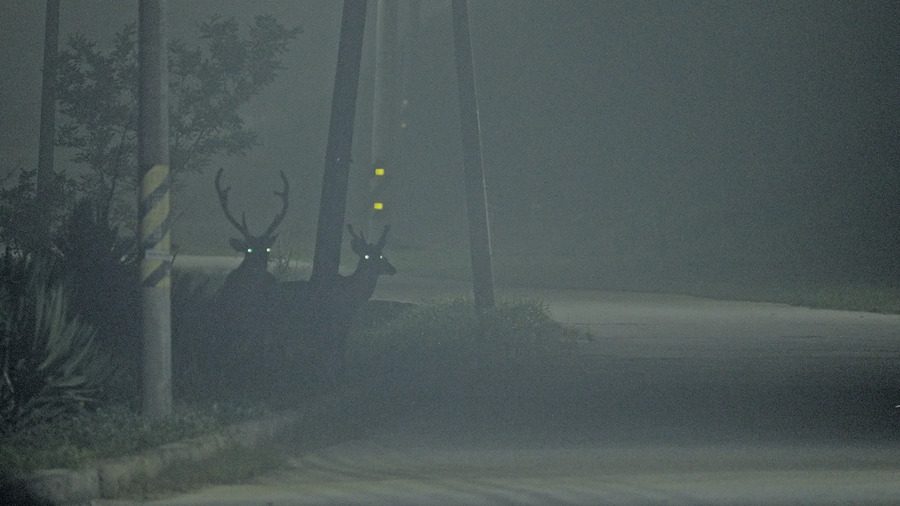
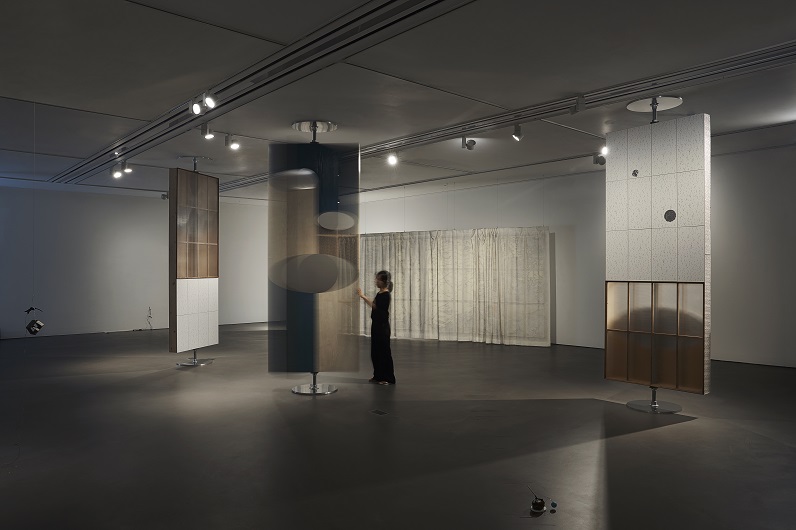
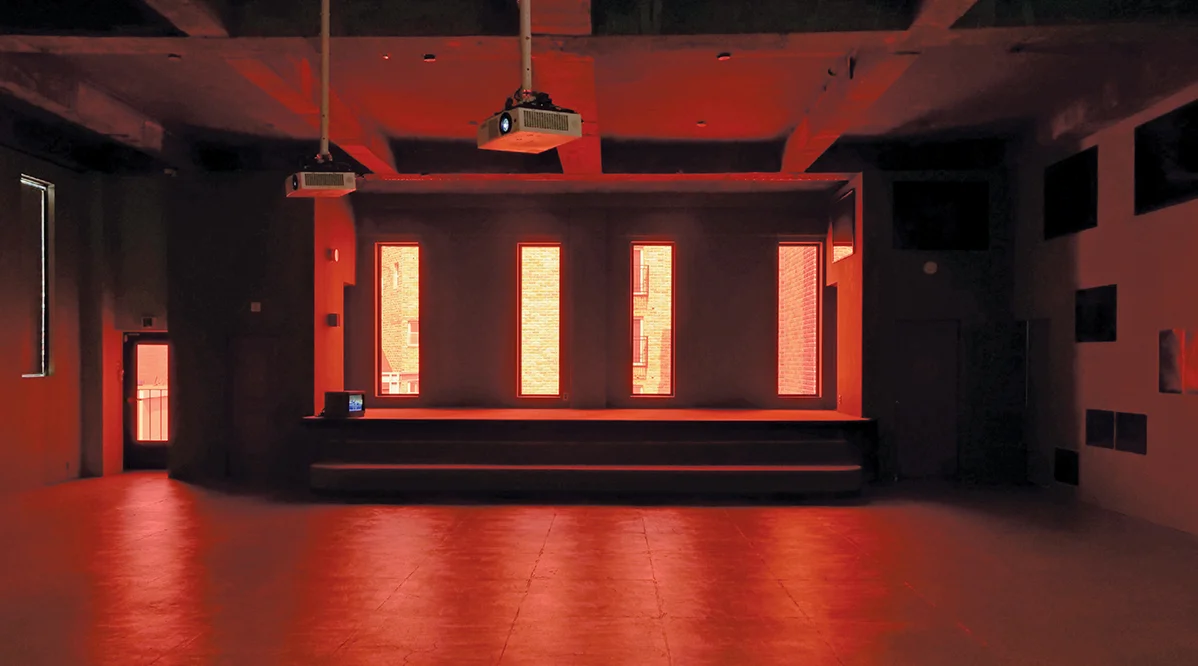
Her recent solo exhibition 《Cloud to Ground》(Replace Hannam, 2025) and the video HWI-PAN(2024) demonstrate an expansion of the artist’s interest toward ecological and physical worlds. Natural phenomena such as wild deer, lightning, and electric current are interpreted as relational events in themselves. At the intersection of technological devices and ecological systems, Kwak examines moments in which human perception and natural sensation intertwine, revealing the emotional and tension-filled structures that arise behind the visible world.

Style & Contents

Kwak’s formal experimentation has evolved through a fusion of cinematic realism and performative action. In her early work Bent, she juxtaposed multichannel video and sculptural installation, emphasizing the artwork not as a completed result but as a trace of process. Later, in Black Bird Black(2021), documentary-style shooting and experimental editing combined to create a cyclical structure of disappearance and regeneration within darkness. This looped form reflects her focus on visualizing the fluidity of time rather than constructing a fixed narrative.

Tapping, Scratching, Tracing ♥no talking♥(2022) marks a key instance in which Kwak’s video language expanded into bodily sensation. Scratching and tapping the camera lens with fingernails transforms the visual medium into an auditory and tactile experience. The camera becomes both a recording device and an interacting body, and the viewer physically senses the vibration beyond the screen. Kwak’s video practice thus evolves beyond the visual to invoke the totality of sensory perception.

In HWI-PAN, scenes overlapping deer movements, nocturnal darkness, and traces of human presence reveal ecological interrelations. When boundaries dissolve in the dark, distinctions between human and nonhuman, camera and subject, become meaningless. In Cloud to Ground(2025), lightning is interpreted as the relational entanglement between electric currents, creating an experiential space where audiences shift from “observers” to “participants.” Combining video, sound, and installation, this exhibition invites viewers to sense the rhythm of “generation–extinction–reconnection” along the paths of light and current.

Topography & Continuity

Kwak’s formal structure evolves through the movement and mutual transformation between media. Video, sound, sculpture, and installation continually intersect rather than remain within their own domains, and the artist tests the ontological boundaries of media within this cyclical system. As a result, her work forms a multilayered structure that investigates the boundaries between sensation and technology, body and object, reality and illusion.

Within the landscape of contemporary Korean media art, Kwak has established herself as an artist who delicately explores the relationship between body, technology, and sensory perception. Her work focuses on “sensory structures” rather than social narratives, treating the camera not as a device of surveillance but as a medium of negotiation. This approach, consistent since 《Axe and Dummy Heads》, has evolved into a distinctive visual language that reveals the human tension latent in technological systems.

Through the recurring themes of “invisibility” and “consent,” she contemplates the ethical boundaries of media while pursuing an ecological turn that reconfigures relationships among technology, nature, humans, and environment. This expands a technological-critical perspective into what might be called sensory realism.

Kwak’s practice ultimately questions humanity’s position within the complex networks of the present. Her videos and installations document not objective facts but the tensions of relations and the subtle vibrations of sensation, allowing viewers to experience how “I” am connected to the world.

Works of Art

The Invisible Interactions within the Networks of Ecology, History, and Media

Articles

Exhibitions

Activities