Tanhamu Warp Drive - K-ARTIST

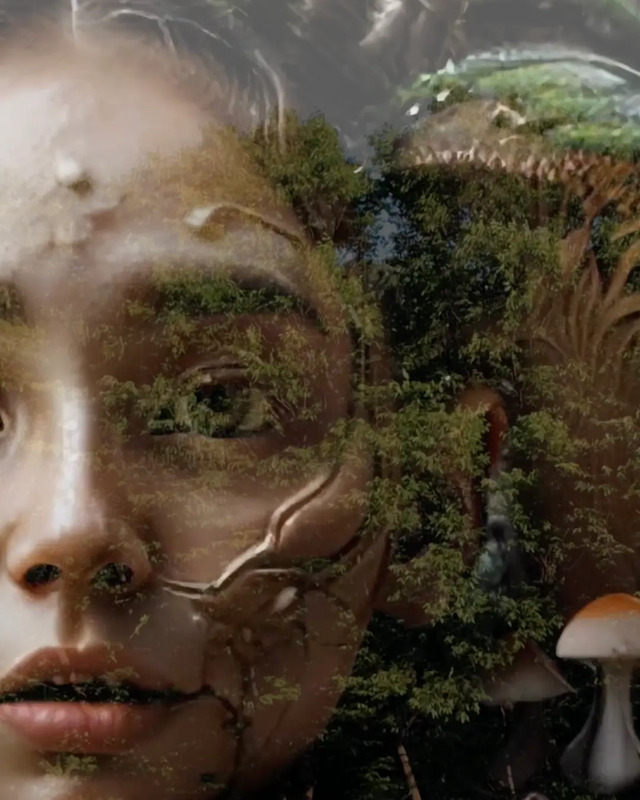
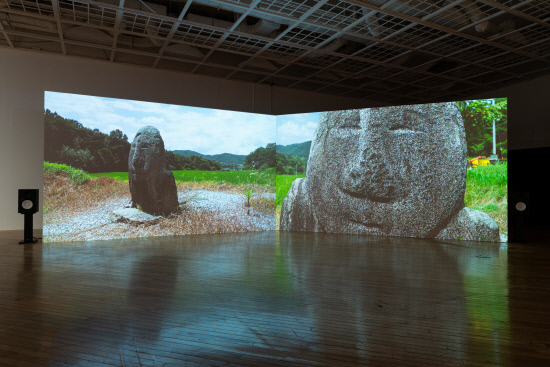
Tanhamu Warp Drive

2021
Single channel video
14min 5sec
About The Work

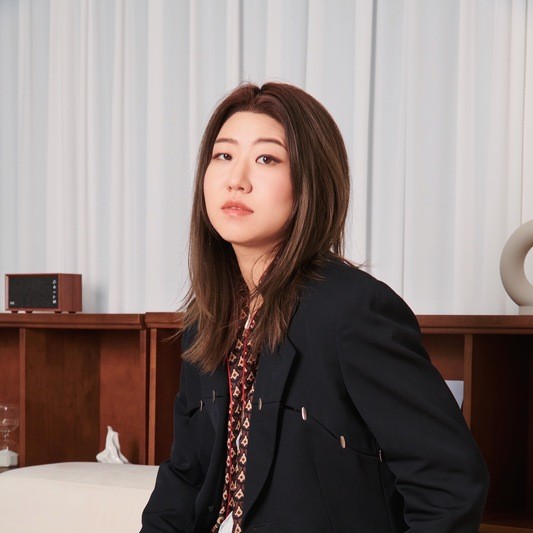
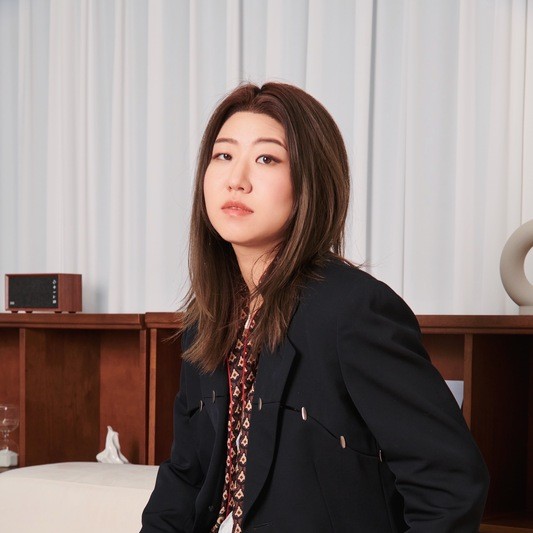
Sunjeong Hwang is a contemporary artist and new media composer who explores the organic interconnections between humans, nature, and technology. Grounded in multidisciplinary research and artistic experiments that expand perception and cognition, her practice synthesizes poetry, manifestos, AI, generative coding, data systems, and temporal structures.
 
Through this approach, she creates distinctive transmedia formats, presenting multisensory environments, video works, installations, performances, audiovisual projects, and sound pieces.
 
She has explored the points of connection between humans, nature, and technology in various ways, considering how these connections can be proposed on a sensory level and how the sense of symbiosis can be shared. Her work expands into an ecosystem that moves like a living weave, allowing us to experience and imagine the entanglement of beings within the world—beyond anthropocentric thinking—through futuristic interfaces, sensory networks, and environmental systems.

Solo Exhibitions (Brief)

Hwang’s solo exhibitions include 《Sonic Planet – Hertz and Dough》(Buk-Seoul Museum of Art, Seoul, 2025), 《Mycelium Movements》 (IHAM Gallery, Paris, 2023), and 《Formation of Kinship 〈Tanhamu〉》 (Space illi, Seoul, 2022).

Group Exhibitions (Brief)

Hwang has also participated in numerous group exhibitions, including 《Dreaming of Terrapolis》 (Gyeongnam Art Museum, Changwon, 2025), 《Layered Medium: We are in Open Circuits》 (Manarat Al Saadiyat, Abu Dhabi, UAE, 2025), 《When Spider Spin Dusk》(Coreana Museum of Art, Seoul, 2025), Taipei Digital Art Festival 《Chimera Island 鎧美拉之島》 (Taiwan Contemporary Culture Lab, Taipei, 2024), and 《At the End of the World Split Endlessly》 (Seoul Museum of Art, Seoul, 2024).

Awards (Selected)

In 2023, Hwang was selected as a finalist for the 23rd SONGEUN Art Award and awarded at ISEA 2023, the 28th International Symposium on Electronic/Emerging Art, and FUTURE TENSE 2023 in Hong Kong.

Residencies (Selected)

Hwang is a 2025 Transmediale Resident.

Collections (Selected)

Hwang’s works are housed in Gangdong I’Park, Seoul, Korea.

Works of Art

The Convergence where Past and Present Sensibilities Meet

Originality & Identity

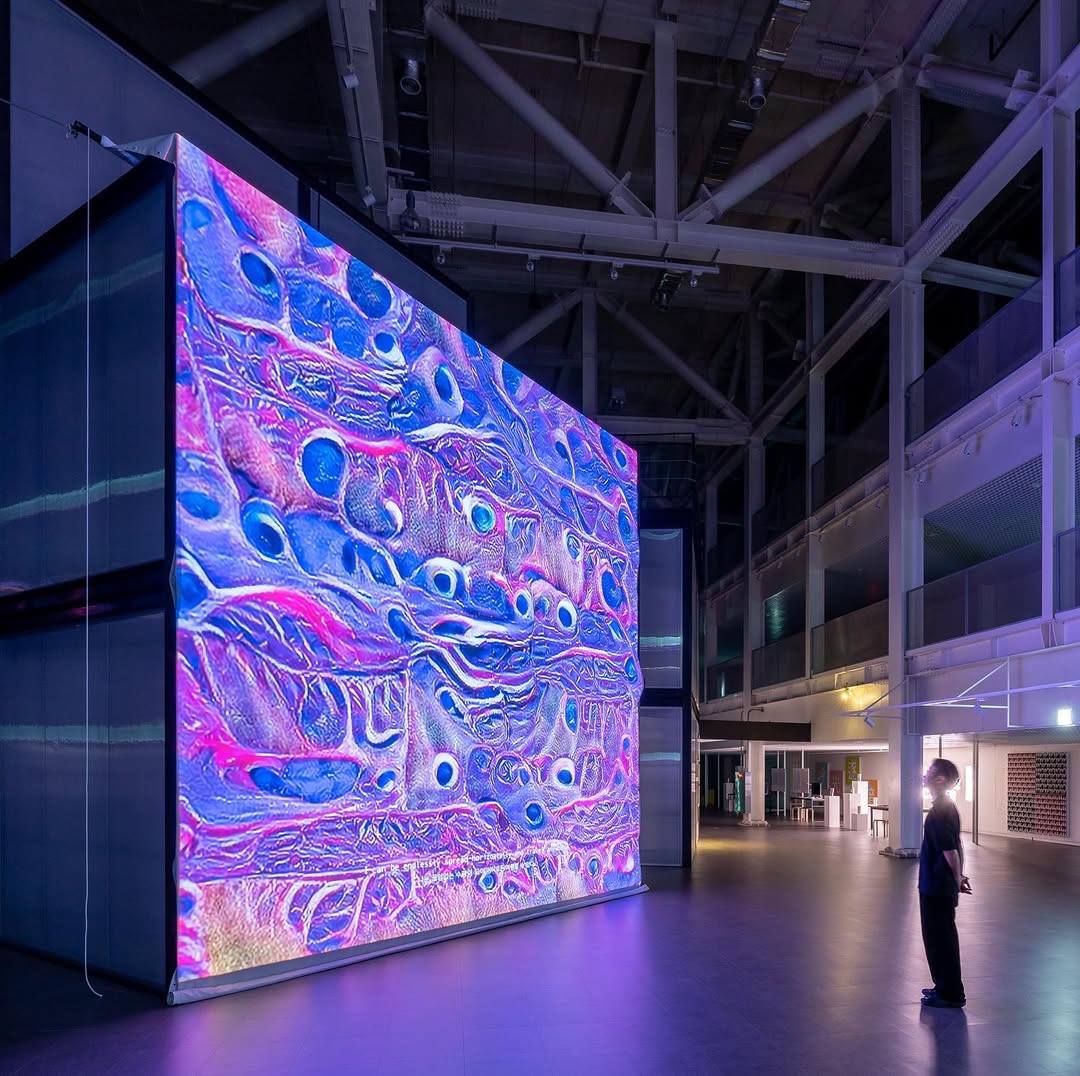
Sunjeong Hwang’s practice departs from anthropocentric thinking and explores new ecological networks in which humans and nonhumans, nature and machines are connected through technological media. First introduced in the group exhibition 《Migration to a New Earth Planet》(Asia Culture Center, 2021), the long-term Tanhamu Project investigates sensory and informational exchanges between human and nonhuman agents, grounded in the cycles and symbiosis of mycelial systems.

In Highway Fungi: Tanhamu(2021–2022), data from plants and fungi are collected and translated into real-time audio-visual signals, proposing interspecies communication through a “translation of sensation.” This line of thought expands into the notion of a “Post Hyper Human Map,” sketching an ontological cartography for expanded sensing.

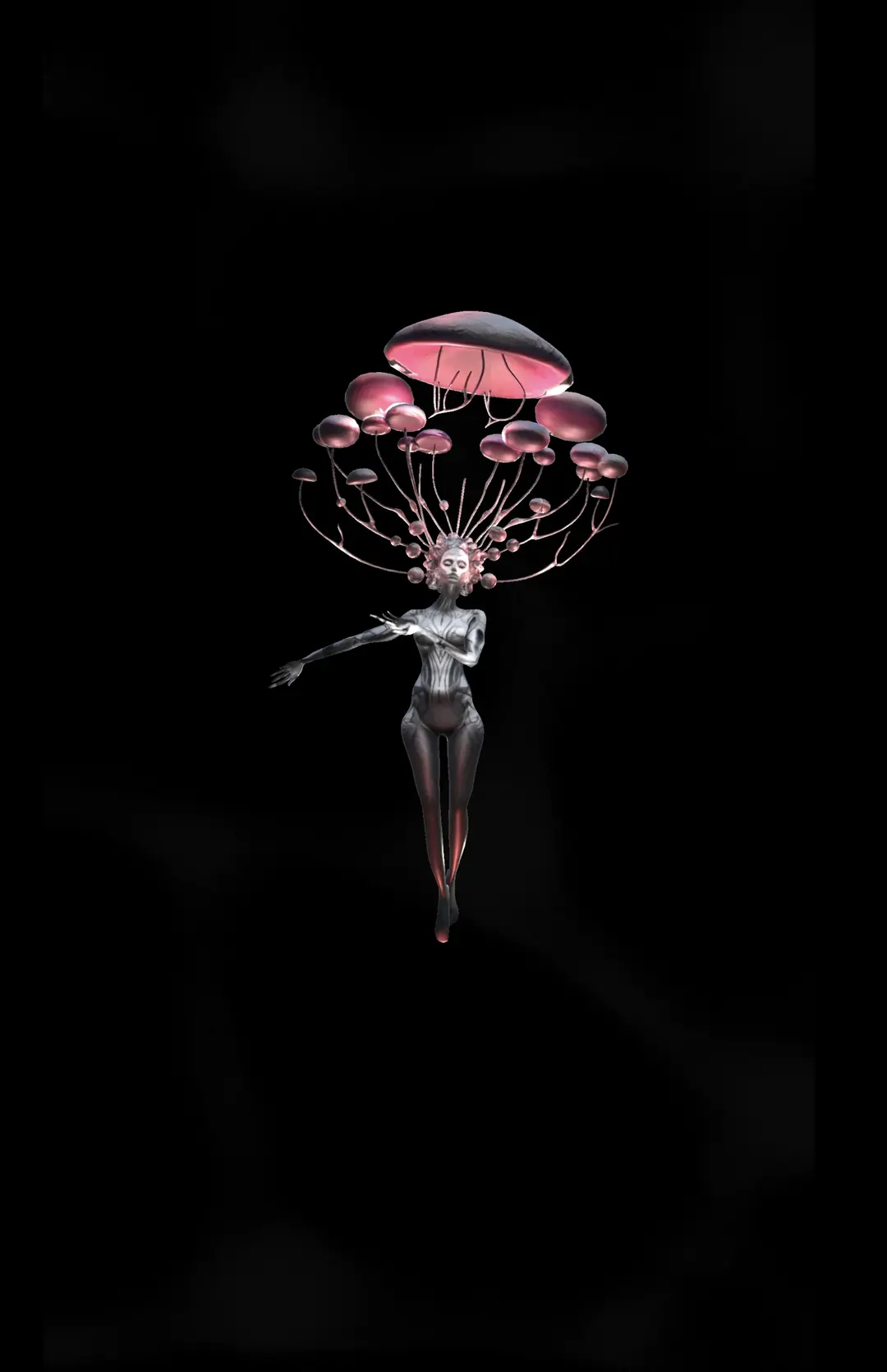
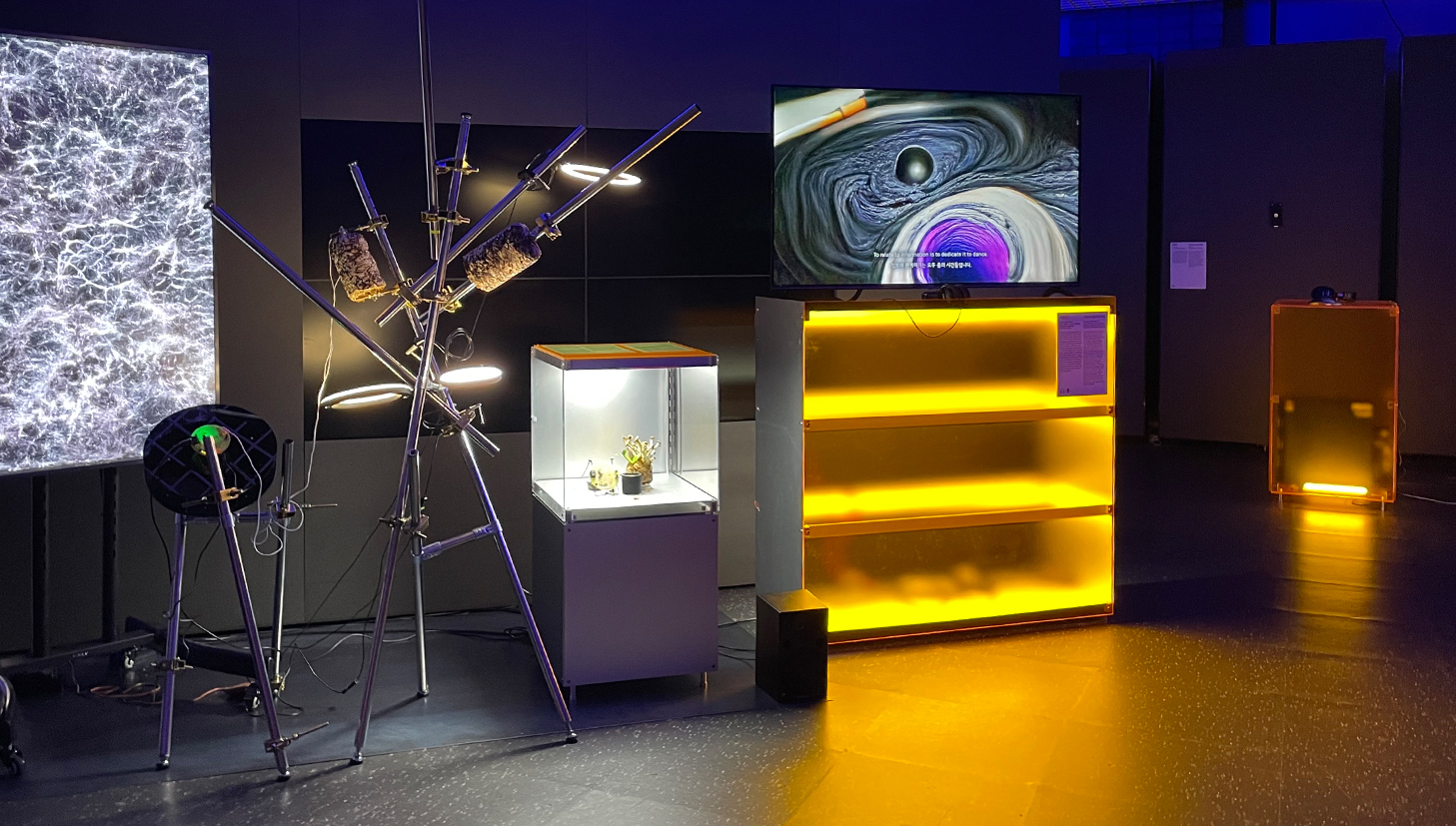
Tanhamu: Tanhamutronica(2022) and Tanhamu_the times of dancings(2022) imagine a speculative ecology where humans, mycelium, and AI are horizontally connected. Here, Hwang examines the sensory evolution of future humanity through symbiosis, affective resonance, and the formation of a horizontal consciousness. This narrative continues in Close to the Weaving Web: Om; Prelude(2023), which presents a “weaving of sensation” that binds human neural pathways, plant root networks, and AI neural networks into a single woven structure.

Subsequently, The Recipe of Earth, Body and Sounds: Synaptic Odyssey(2023) restructures relations among technology, nature, and humans through vital acts such as eating, breathing, and sensing—braiding fungal cycles with bodily perception into one “recipe,” with emphasis on ecological healing and cyclical temporality. Minuit Heya: Sensotalic Helix Movement 000(2024) invites audiences to experience the temporality and sensorial charge of nonhuman matter through bodily rhythm, drawing on shamanic rites and work songs as motifs.

In Telluric Memories: Warm Woven Clicks, and Entangled Radiant(2024), presented in the group exhibition 《At the End of the World Split Endlessly》(Seoul Museum of Art, 2024), and in the solo presentation 《Sonic Planet – Hertz and Dough》(Buk-Seoul Museum of Art, 2025) by the research lab Hertz and Dough, human–nonhuman complexes are framed as sites for “sensory liberation” and “the renewal of memory,” inviting audiences to contemplate relational ecologies through sound.

Style & Contents

Hwang works in a transmedia vocabulary that integrates multisensory environments, sound installations, video, performance, and data systems. In the early Highway Fungi: Tanhamu, environmental data from plants (temperature, humidity, CO₂, etc.) are gathered in real time and rendered as audio-visual output, making an “invisible ecology” perceptible. In Tanhamu: Tanhamutronica, custom PCB boards and Arduino interfaces attempt communication with nonhuman species, proposing that electronic mediation can itself facilitate ecological symbiosis.

Tanhamu_the times of dancings employs generative neural-network algorithms to datafy human movement and fuse it with nonhuman rhythms, softening sensory boundaries. This computational visual language deepens in Close to the Weaving Web: Om; Prelude, which integrates AI neural networks with human synapses into a single woven topology—constructing a new sensory terrain where technical networks and biological perception interlock.

In The Recipe of Earth, Body and Sounds: Synaptic Odyssey, a multichannel environment—combining sound, projection mapping, objects, and video—stages sensory circulation and ecological coexistence through the act of ingestion. Minuit Heya: Sensotalic Helix Movement 000 then fuses traditional ritual vocabularies with contemporary technology via upcycled plastics, LEDs, and a sound system—recasting technological media from mere tools into “sensory symbionts.”

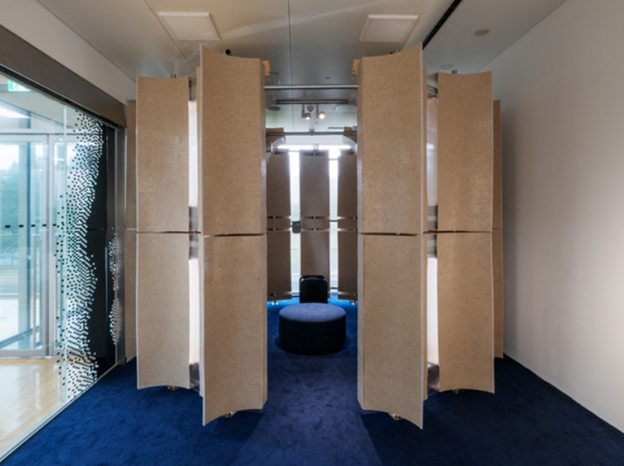
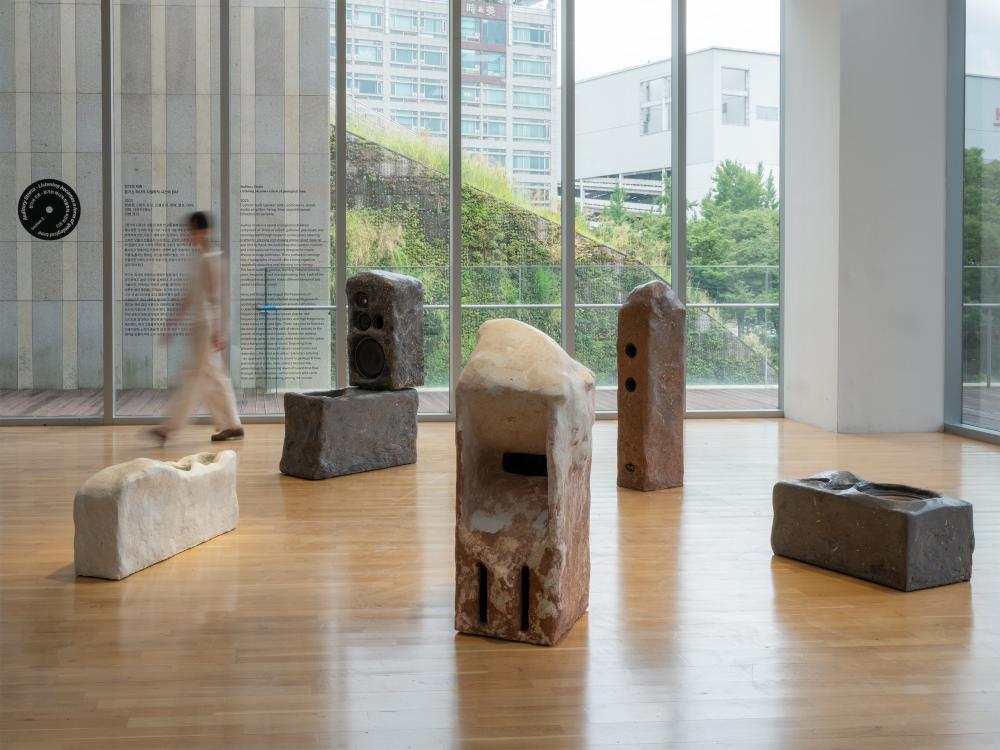
Most recently, 《Sonic Planet – Hertz and Dough》 introduces Audinua 12(2025) and Auditory Strata(2025), which experiment with “listening itself” through a 7.4.1-channel, site-specific sonic architecture. Within non-linear sonic flows, audiences physically register shifts of time and networks of relation—encountering new modes of cognition mediated by hearing. Across these works, Hwang’s technical experimentation reorganizes structures of experience and forges organic relationships among body, space, and sound.

Topography & Continuity

Positioned at the intersection of posthumanism, sound art, and media ecology, Hwang examines human–nonhuman relations through the lens of “reorganizing sensation.” By translating invisible networks—sound, neural circuits, mycelium, AI—into artistic media, she offers a distinctive worldview that links technology and ecology within contemporary media art.

The thematic trajectory originating in the Tanhamu Project advances toward building sensory interfaces for interspecies symbiosis, extending into sound research that makes “listening” an ontological experience—as in 《Sonic Planet – Hertz and Dough》(Buk-Seoul Museum of Art, 2025).

Her work has gained attention at major Korean institutions—Asia Culture Center, Seoul Museum of Art, SONGEUN Art and Cultural Foundation, Coreana Museum of Art—and continues internationally in Paris, Abu Dhabi, and Taipei, where her themes maintain relevance in global discourse. Her vision—addressing posthuman ecologies and technological sensation—has drawn strong interest from international media-art festivals and research-driven exhibitions.

Going forward, based in Berlin and Seoul, Hwang is expected to sustain transmedia sensory experiments and large-scale collaborations, proposing new interfaces for the composite ecologies of human–nonhuman–machine. As a key vector in contemporary media art, her practice will continue a sustained journey toward new worlds of sensation, memory, and symbiosis.

Works of Art

The Convergence where Past and Present Sensibilities Meet

Articles

Exhibitions