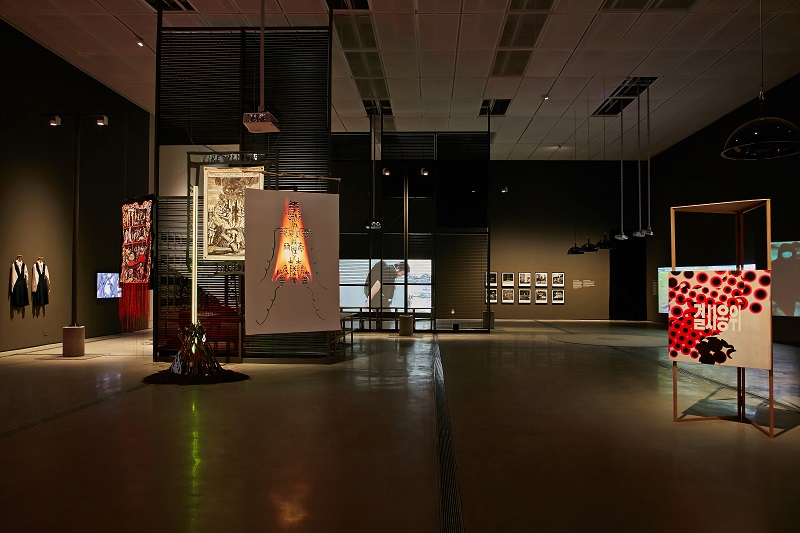
The in-between Gesture2 - K-ARTIST

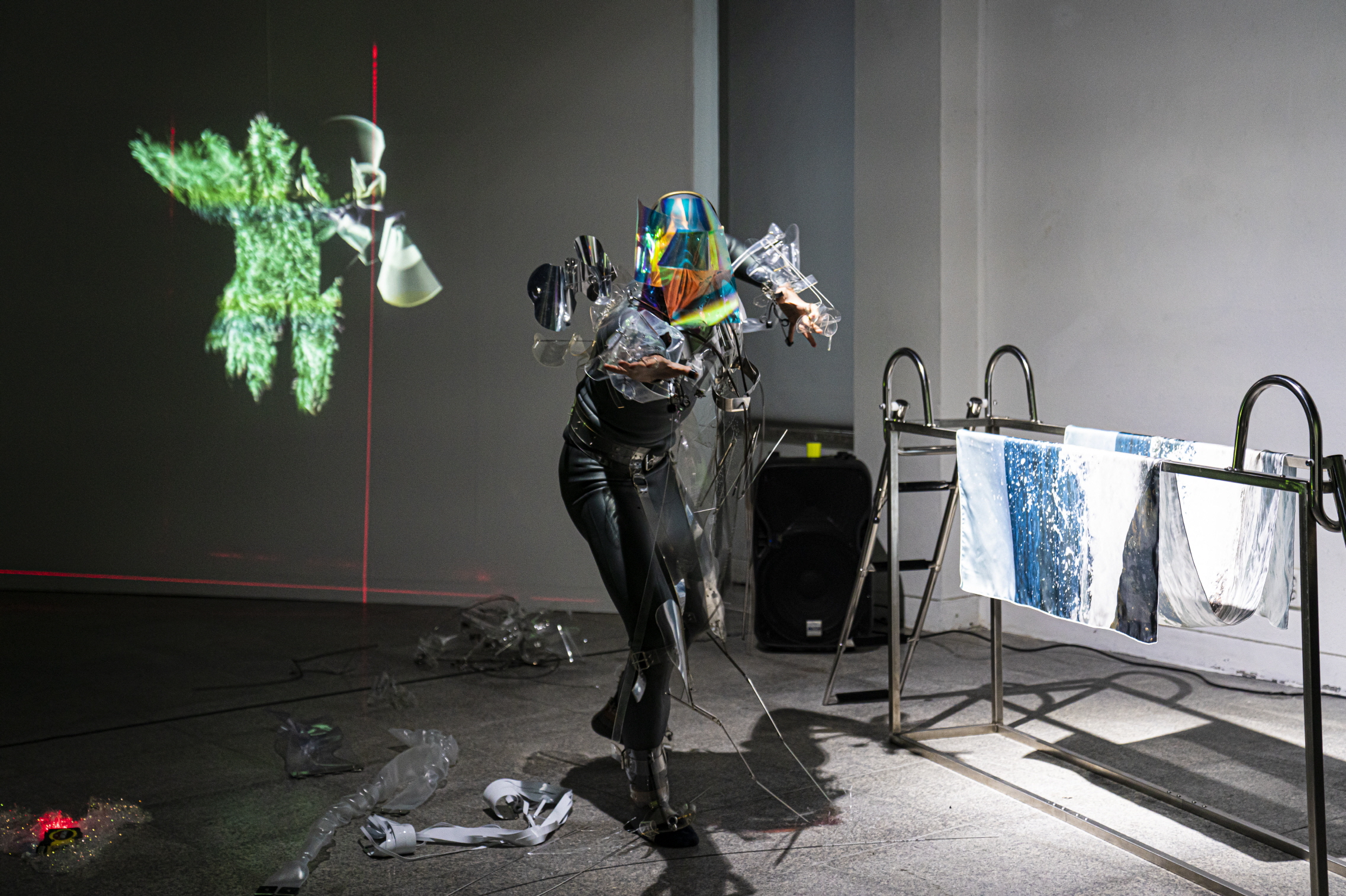
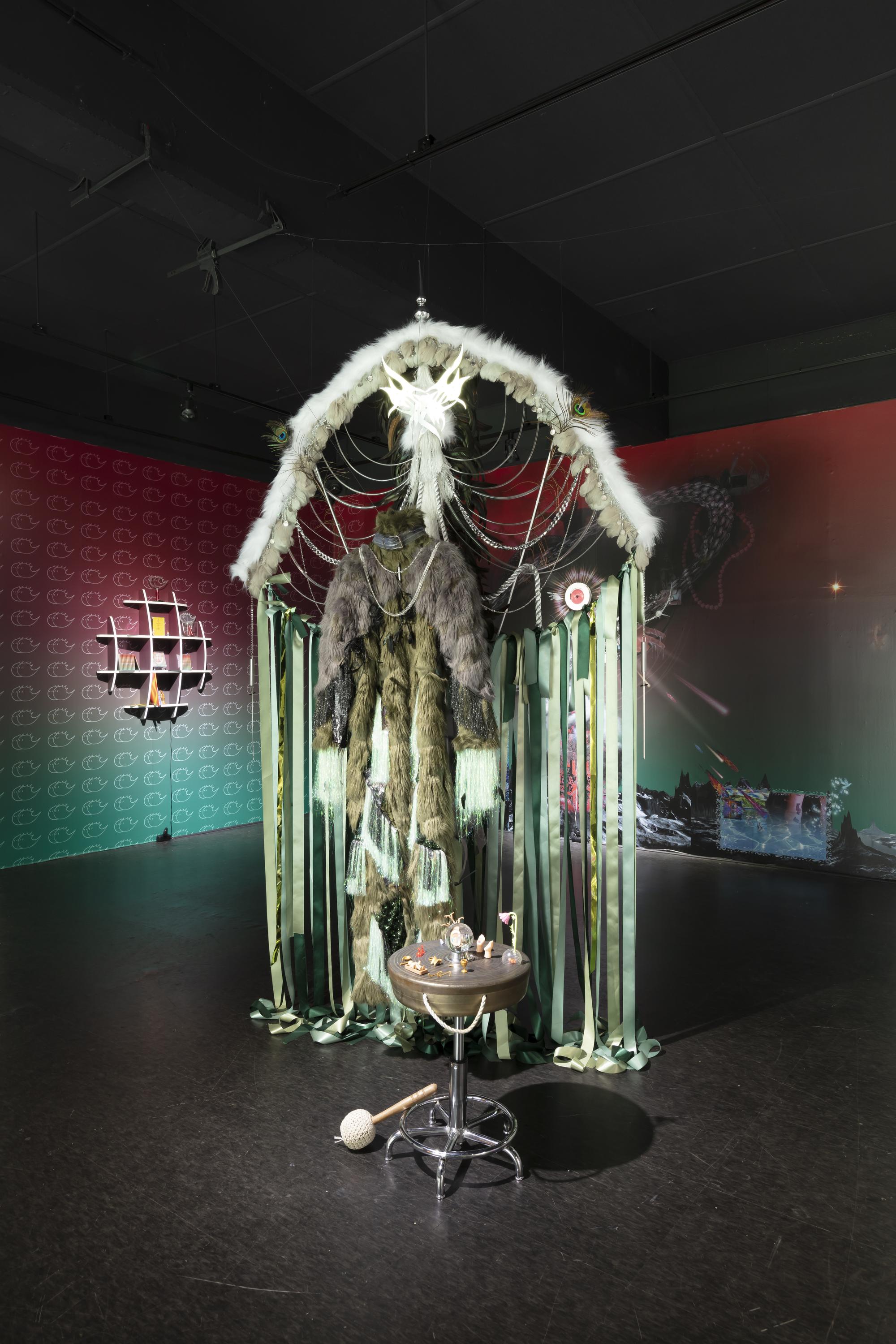
The in-between Gesture2

2022
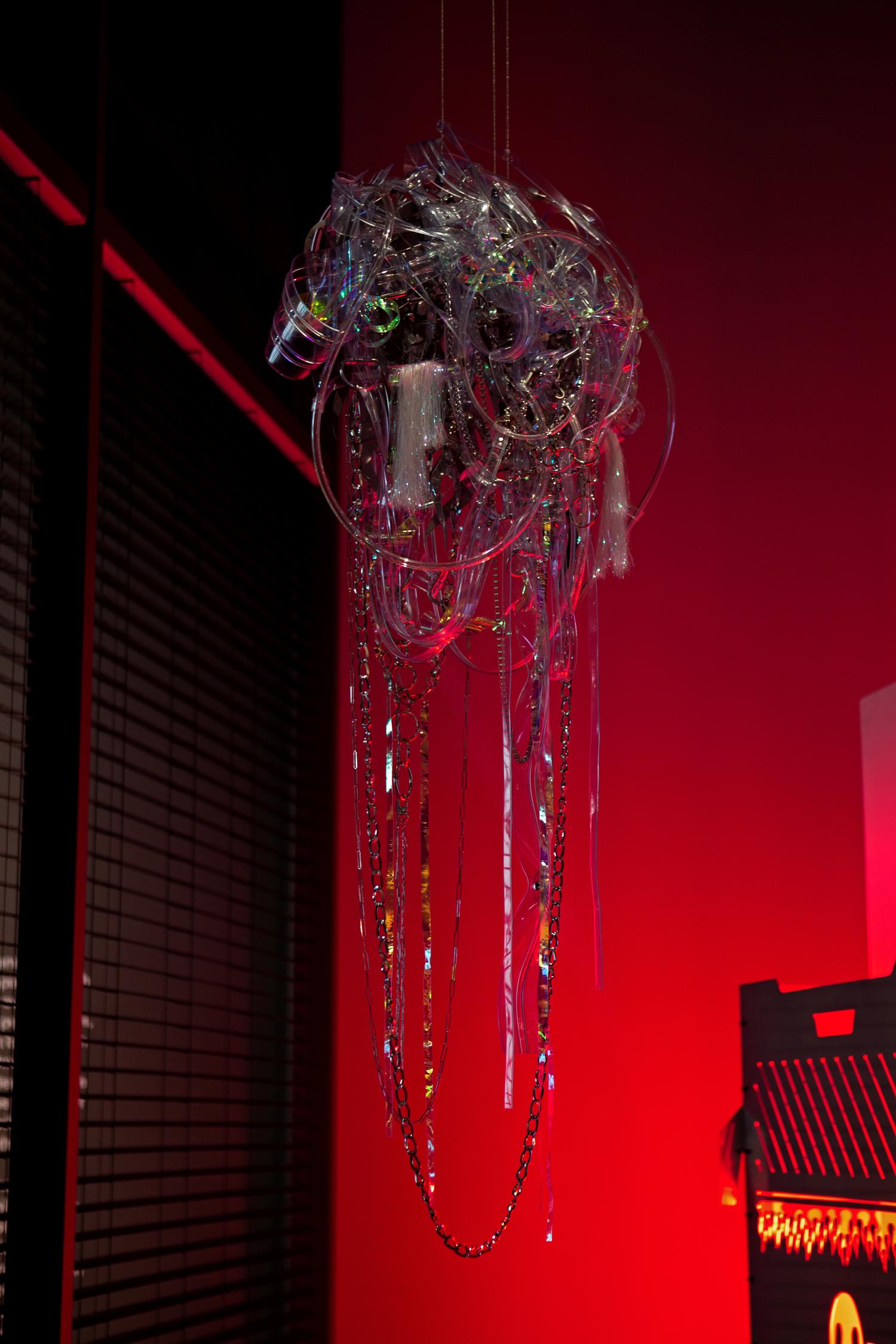
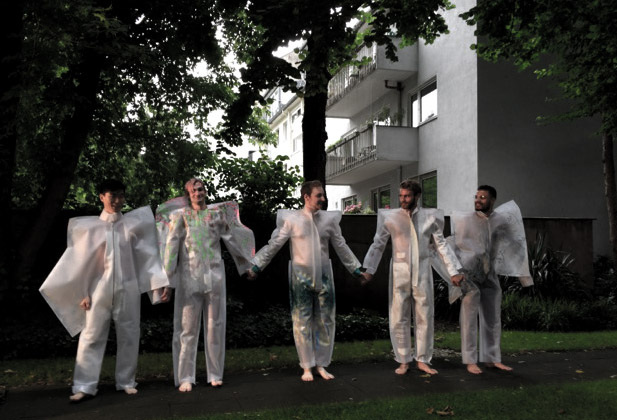
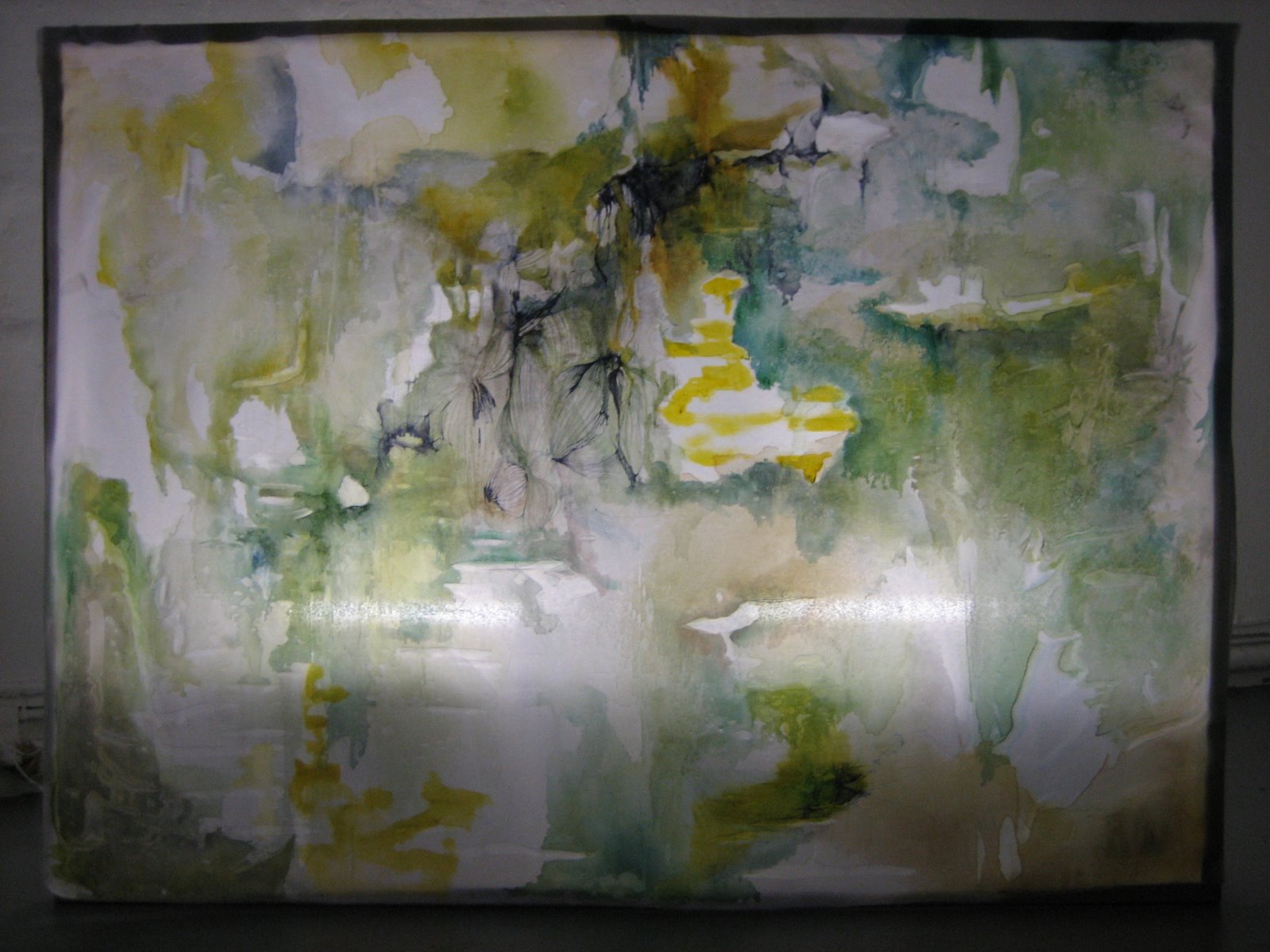
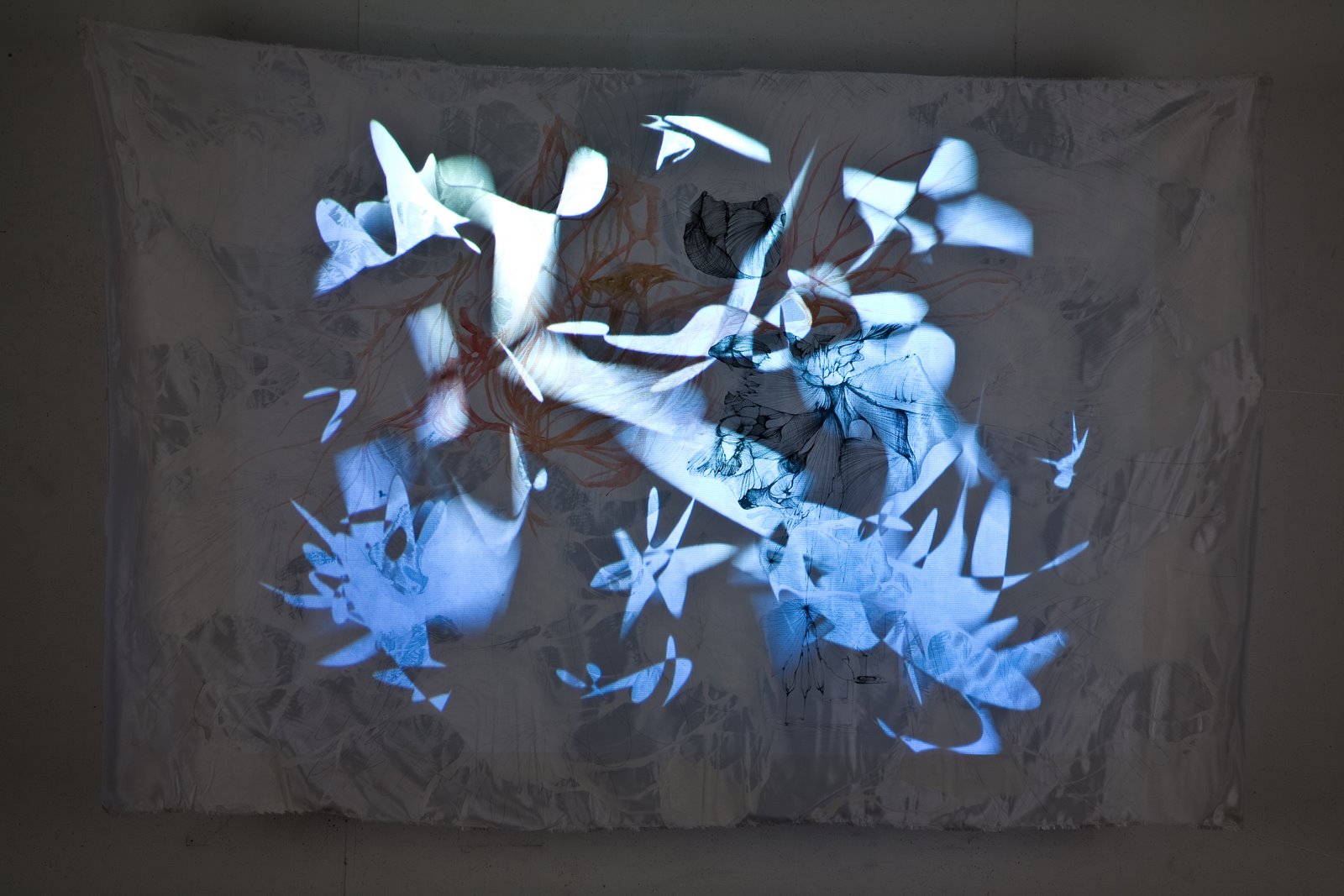
Game performance, installation
25min
About The Work

Hkason has been presenting multilayered relationships—extending from the human body to objects and space—through the format of stage-like settings, focusing on the materiality of skin that covers the body and the clothing that overlays it, as well as the act of wearing. The physical act of putting on and draping, which emerges from his sustained inquiry into the relationship between body and object, shifts into a relationship between body and space, achieving a gradual expansion.
 
Furthermore, He looks for moments where the properties of materials and surfaces change beyond the simple act of putting on or covering, and aims for flexible ambivalence in the mediums, fastenings, and actions that facilitate this transformation. And his work reveals the fluid relationship between space, technology, and the human body.
 
The artist investigates how the human body and space have evolved and transformed alongside technology, translating moments of dissonance and convergence into sculptural forms of movement. In doing so, the work prompts reflection on—and a renewed awareness of—the boundaries that increasingly merge with and expand into our surrounding environment.

Solo Exhibitions (Brief)

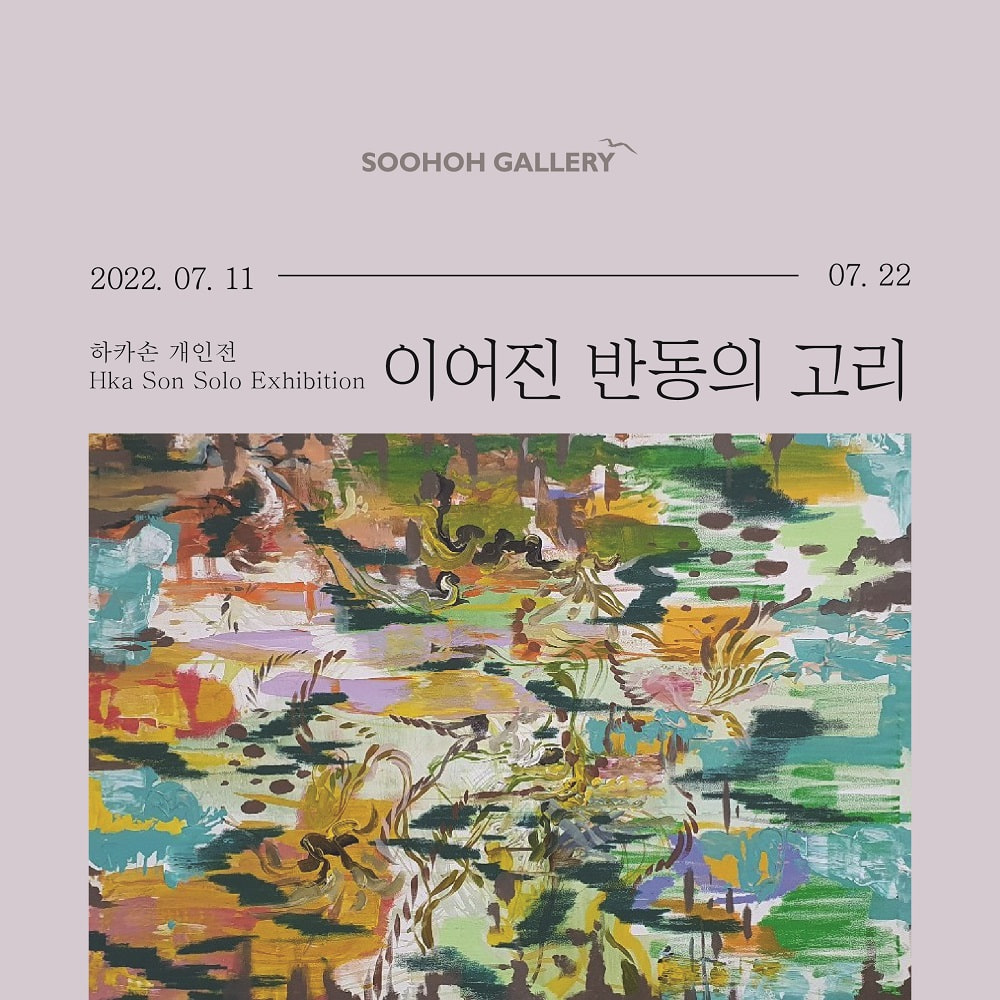
Hkason’s recent solo exhibitions include 《Mirror and Cloak》 (Platform-L, Seoul, 2024), 《Gametophyte》 (Cheongju Art Studio, Cheongju, 2023), and 《이어진 반동의 고리》(Soohoh Gallery, Seongnam, 2022).

Group Exhibitions (Brief)

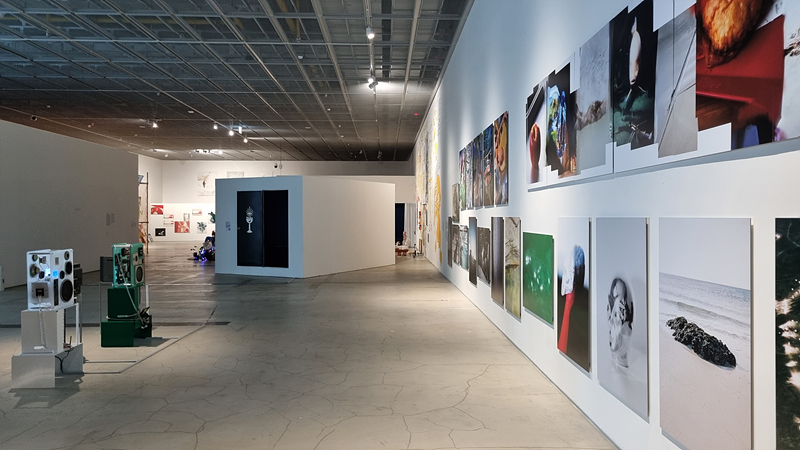
Hkason has also participated in numerous group exhibitions, including 《Poetic Forensic》 (Sewoon Hall, Seoul, 2025), Seoul Arts & Tech Festival 《Unfold X 2024》 (Culture Station Seoul 284, Seoul, 2024), 《LAB Coming Day》 (Arts Korea Lab, Seoul, 2023), 《Science Meets Art》 (Busan National Science Center, Busan, 2022), 《RTA 2022: Evolution》 (Post Territory Ujeongguk, Seoul, 2022), and 《Semi Art Community Project: Boogie Woogie Art Museum》 (Ulsan Art Museum, Ulsan, 2022).

Residencies (Selected)

Hkason has served as an artist-in-residence in programs such as the 2024 ACC Creators Residency, the 17th Cheongju Art Studio Residency, among others.

Works of Art

On the Body, Objects, and Space

Originality & Identity

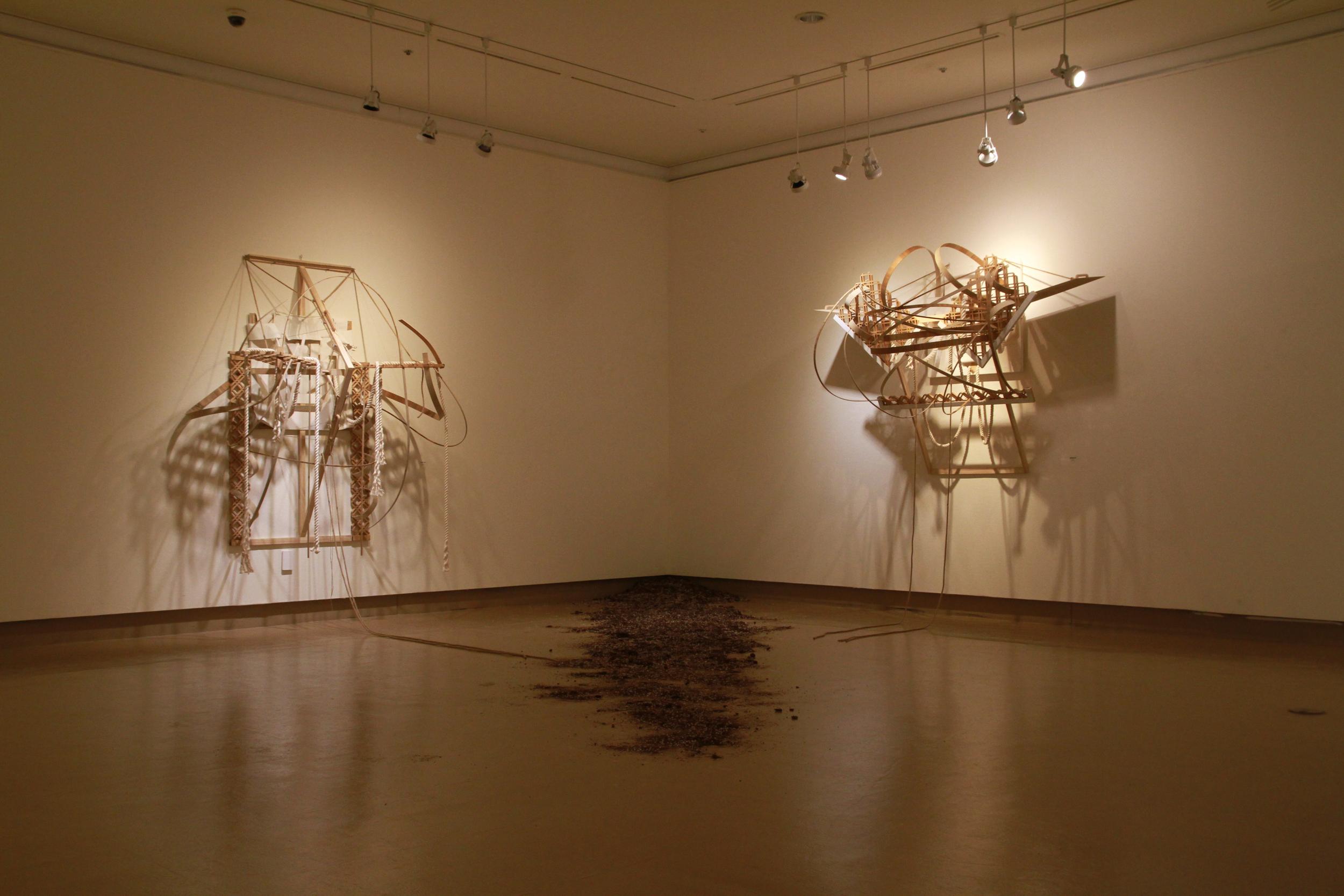
Hkason’s core inquiry is to construct a network of relations that expands from body to object to space, mediated by the acts of wearing and covering. As in Overman exuviates 1 (2021), which combines a hanok lattice window with heterogeneous materials to propose a “third form on the boundary,” the artist—drawing on Laozi’s notion of wu wei and Bergson’s concepts of duration and repetition—investigates the body’s limits, renewal, and expansion. This viewpoint focuses on how material actions such as “putting on–draping–removing–fastening” translate the body’s boundary into a spatial event.

The artist treats the body as both a “generator of movement” and a “condition of the stage,” tracking the drama that emerges when the body’s fluidity is transposed into sculpture’s mechanical motion. The in between Gesture (2022) reveals a process of self-optimization through images of posture correction and molting, while the solo exhibition 《Gametophyte》 (Cheongju Art Studio, 2023) translates the gametophyte’s (generative phase’s) separation/recombination into a spatial relational web.

The live performance exhibition 《Mirror and Cloak》 at Platform-L in 2024 asks whether a “mechanical body entrusted with presence” can “update” the human body’s subtle yet monumental movements. In the same year, selected for the Asia Culture Center residency, the artist introduced the concept of “crip space,” playfully reframing the relation between body and space. Crip Body (2024) reconfigures a sense of place premised on belonging and hospitality into the gestures of a wearable robot, generating new joints between body and space through the folding and unfolding of artificial joints and reflective elements.

Presented at the Seoul Arts & Tech Festival 《Unfold X 2024》, Floating Bodily Particles (2024) experiments with sensory deprivation/resynchronization via a floating capsule, problematizing the imagined reactivation of “vestigial organs.” In this way, Hkason’s themes consistently pursue the “variability of the body” and the possibility of “spaces that change with the body,” accompanied by an ethics of response amid anxieties about the future.

Style & Contents

Hkason integrates specialized training in painting, media, and fashion to construct a transmedia idiom. As seen in The in between Gesture and in the collaboration with Dew Kim, Armored Evolver (2020), wearable sculpture transfers bodily energy into sculptural action through the physical operations of “wearing/fastening.” The repetition of “detachment–reattachment,” the mutability of fastening methods, and the optics/mechanics of reflective/transparent/elastic materials (neoprene, wire, film, PVC, urethane, etc.) are woven into content, composing a neutral zone between body and non-body, organic and mechanical.

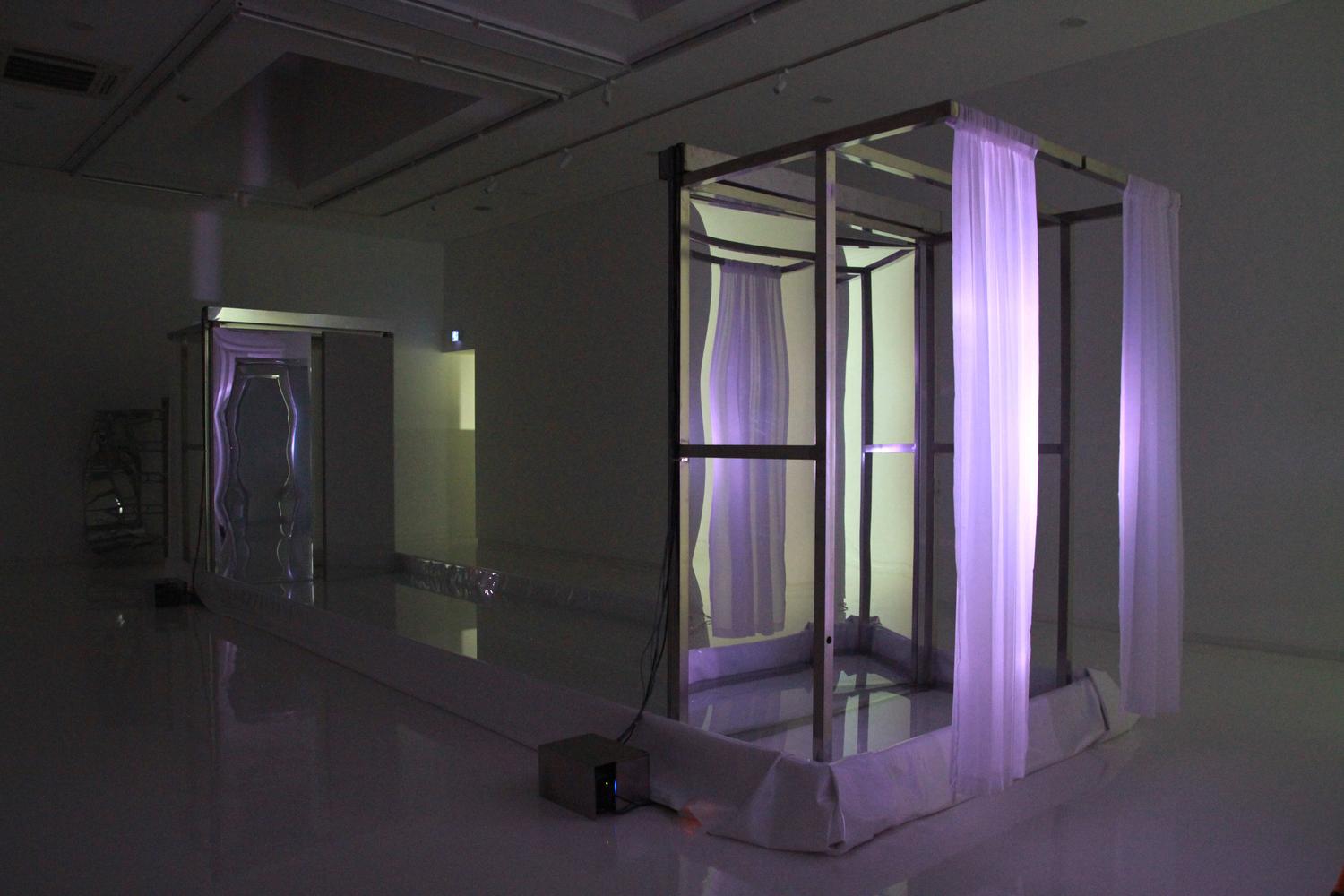
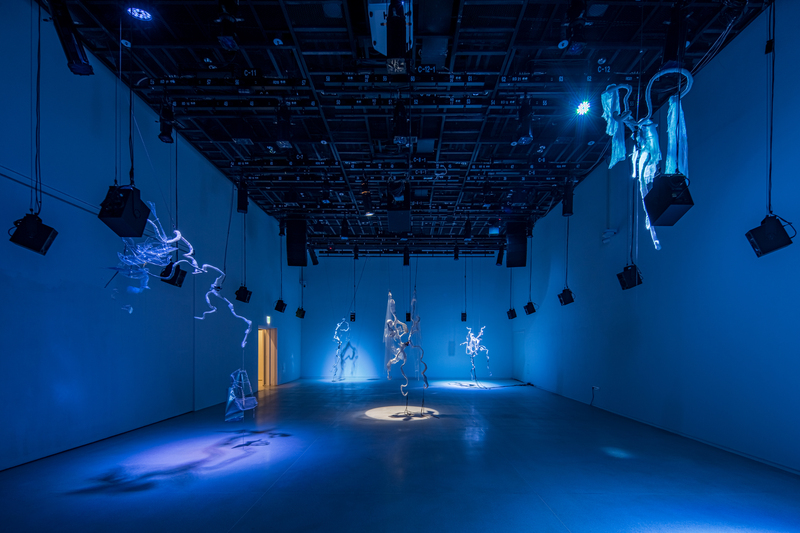
The exhibition 《Gametophyte》 becomes a turning point in which installation is itself both performer and stage. The water surface of the tank and the mirror doors, together with immaterial elements—waves, haze, and light—shape a dramaturgy of “introduction–build-up–climax–subsidence,” while the audience’s own movement is absorbed as choreography.

In 《Mirror and Cloak》, motorized structures invoke the fashion lexicon of “turn–pose–walk,” activating the “backstage” through spotlights, shadows, and collaborative sound. The “spatial drawing” formed by multiple reflections extends the planar line of the early drawing series into a spatial vector.

Crip Body produces a new grammar of gesture through the folding/unfolding of multilayer artificial joints and reflective panels, expanding the radius of wear and coupling bodily regeneration, homing, and adaptability with mechanical prosthesis. Floating Bodily Particles resets touch, sight, and hearing in a weightless state on 37°C water, softening the boundary between the body’s interior/exterior and turning sensory lack into a generative condition of content. In short, Hkason integrates material properties (reflection, transparency, pliability), mechanical drive (motors, joints), stage technologies (lighting, haze, water surface), and audience movement (as choreography) to build a simultaneous system in which “form = content.”

Topography & Continuity

Hkason articulates a clear “technological choreography of body–object–space” that traverses fashion, media, installation, and performance. While connecting to lineages evoking Stelarc or Rebecca Horn, the artist secures a distinct position through the grammar of “wearing/fastening/membrane,” the devices of “mirror/door/water surface,” and a conceptual ecology that includes the gametophyte, crip space, and the floating capsule.

From early experiments with wearables (such as perfect match (2016)) to the autonomous machine-stage of 《Gametophyte》 and the orchestration of mechanical body–fashion idiom–stage drama in 《Mirror and Cloak》, the trajectory has evolved consistently toward “translating the body’s transformations into transformations of space.”

The axes of continuity are: (1) an action-theory of “wearing–fastening–molting,” (2) research into the material properties of reflective/transparent/elastic and industrial substances, (3) the bidirectional translation between mechanical drive and human gesture, and (4) stage composition that choreographs audience movement. The axes of change are the autonomization from wearable/body dependence to “installation = performer,” and the shift toward sensory-reset apparatuses (floating capsule).

In sum, Hkason’s work takes the “variability of the body” as its driving force and realizes a mediating structure linking technology, environment, and community. It is poised to function as a hybrid model in the field of contemporary art, traversing performance, new media, and design thinking.

Works of Art

On the Body, Objects, and Space

Exhibitions

Activities