dianalab x blblbg-Nameless on the Map - K-ARTIST

dianalab x blblbg-Nameless on the Map

2022
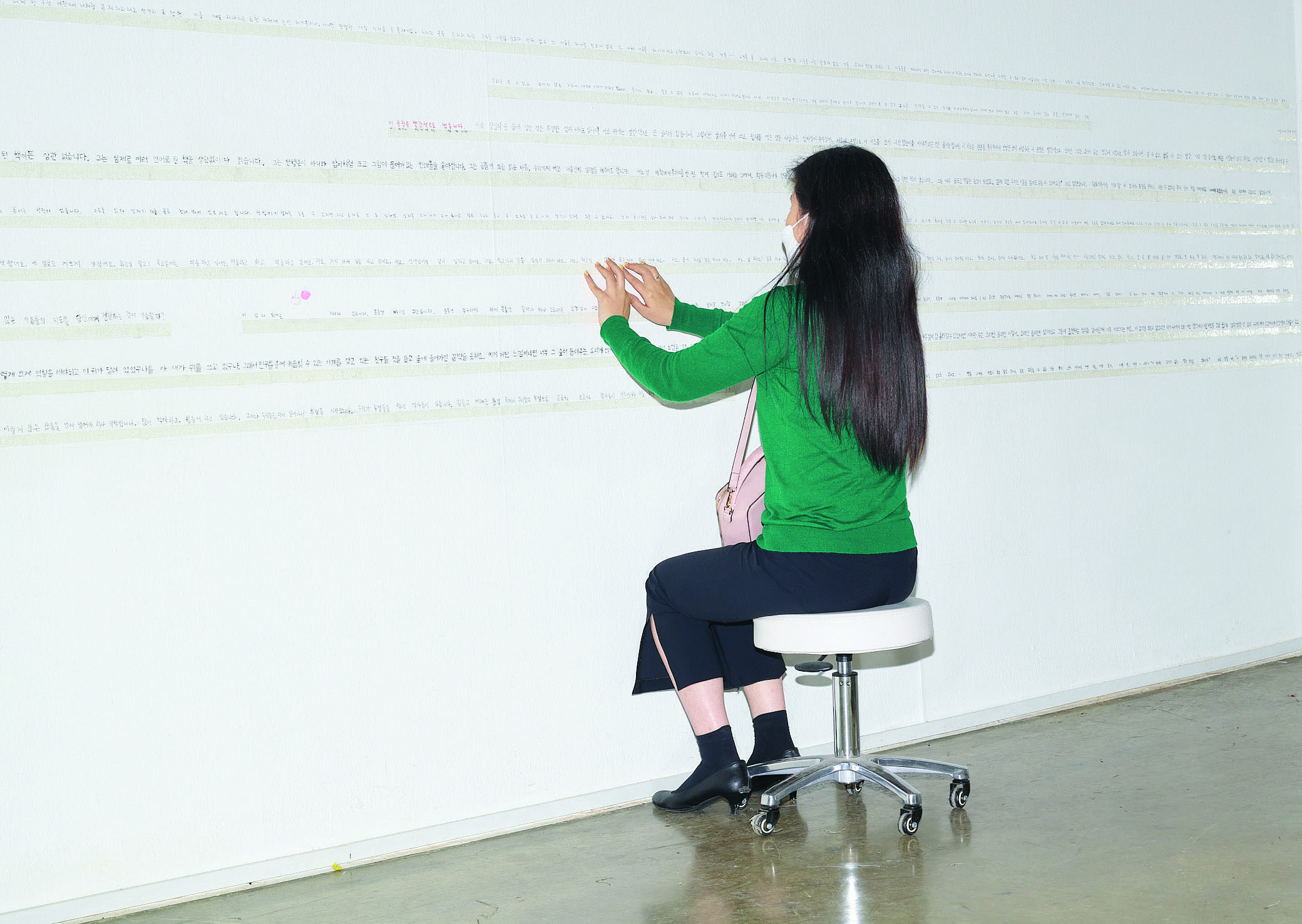
Braille stickers
Dimensions variable 
About The Work

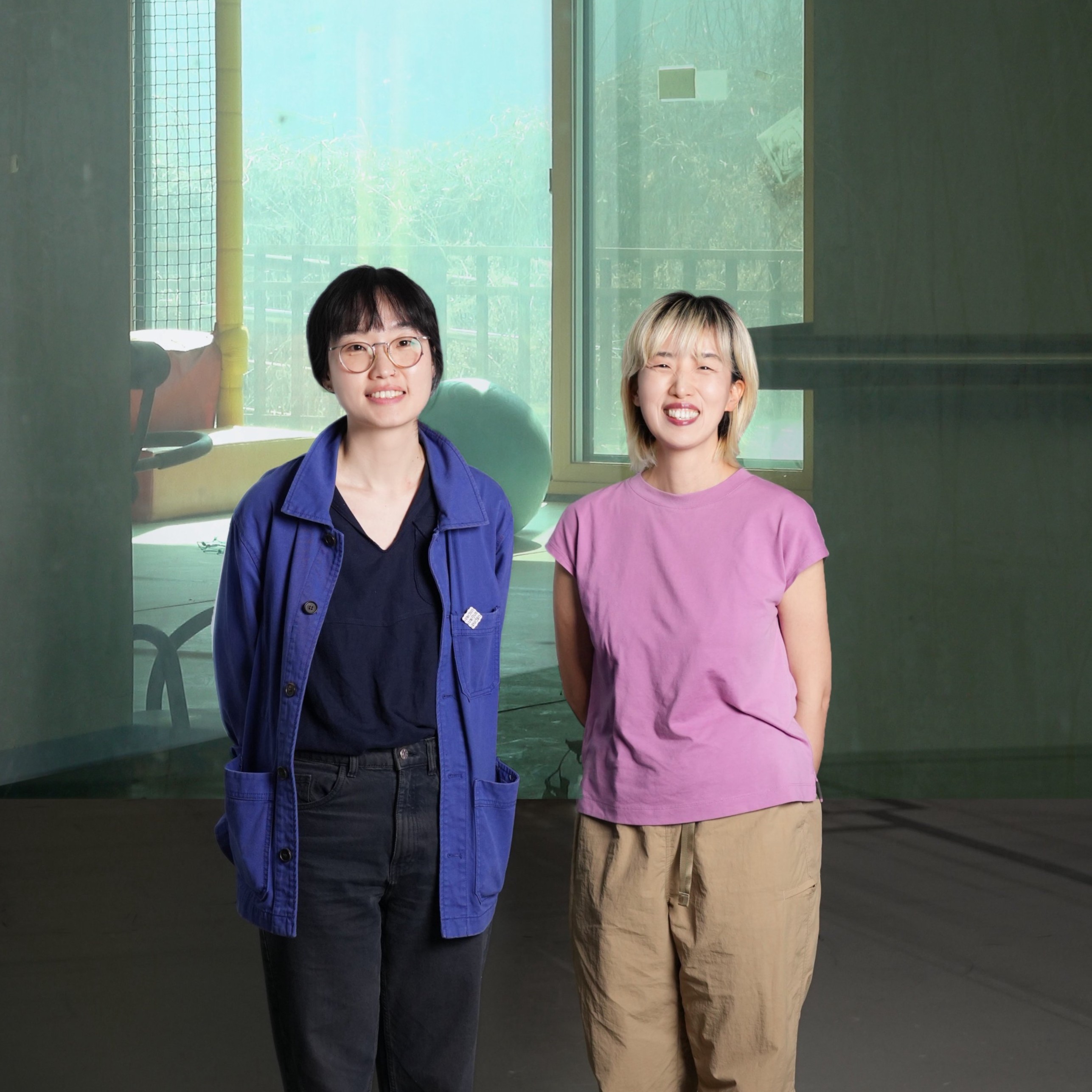
dianalab, founded in 2016 and led by Baekgu (109, b. 1986) and Yousun (b. 1983), is a collective of artists working across video, sound, and other media that researches and practices modes of expression in collaboration with social minorities. dianalab resists reducing people with disabilities and other marginalized communities to a single, uniform identity. Instead, it considers the nuanced spectrums of their experiences and has continuously explored environments and works that can be created together with them.
 
The collective regards accessibility as an essential element of artistic creation—not only in terms of physical space, but also in capturing fleeting moments or delicately shaping even the invisible air—pursuing practices that sensitize us to the many unseen boundaries within our society.
 
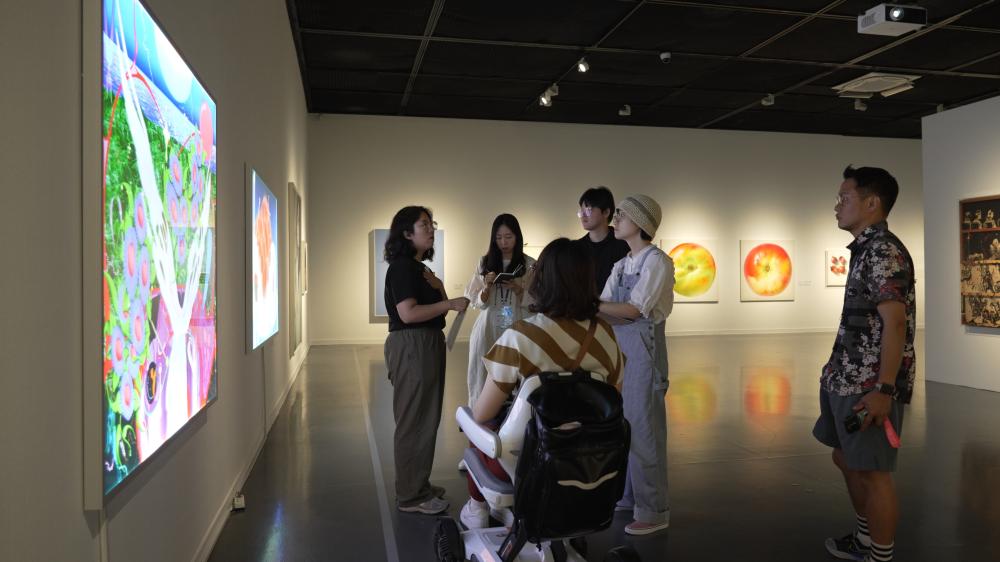
dianalab has created environments where people with diverse identities can come into contact with and experience friction at each other’s boundaries. They suggest that such encounters and interactions can generate imagination about others. Building on this, dianalab continues its artistic practice by creating spaces and moments where invisible boundaries can be sensed, allowing individuals to reveal themselves and share a sense of being welcomed simply for who they are.

Solo Exhibitions (Brief)

dianalab was represented by solo exhibitions including 《How dare you think that I don’t have red?》 (Seoul Museum of Art, Seoul, 2024) and 《Sense of Invitation》 (Post Territory Ujeongguk, Seoul, 2021).

Group Exhibitions (Brief)

dianalab has also participated in numerous group exhibitions, including 《Young Korean Artists 2025: Here and Now》 (National Museum of Modern and Contemporary Art, Gwacheon, 2025), 《Local in the Making》 (ARKO Art Center, Seoul, 2022), and the 2021 ARKO Art & Tech Festival 《Nothing Makes Itself》 (ARKO Art Center, Seoul, 2021).

Works of Art

Expression in Collaboration with Social Minorities

Originality & Identity

dianalab studies expression in collaboration with social minorities. Their thematic focus moves beyond the auxiliary discourse of “barrier-free” and expands toward a “barrier-conscious” practice that recognizes and works with boundaries. The starting point, ‘We Welcome All’ (2018–), translates the discrimination and unequal circulation experienced at NODEUL Popular School for Disabled People into a neighborhood map, returning the question “who is welcomed, where?” to the level of real space. Next, ‘Fragments of Hospitality’ (2020–) makes hospitality visible as multilingual and multisensory through collaboration with 51 teams and the web platform ‘Fragments of Hospitality 1444,’ accumulating units (fragments) of hospitality that can operate outside large institutions.

After recognizing the limits of online access, 《Sense of Invitation》 (Post Territory Ujeongguk, 2021) reframed the ethics of “invitation” as an issue of sensory translation, placing the pathways of seeing/hearing/touching on equal footing. In the same year, the exhibition 《Signals from the Harbor》 (SPACE bisugi, 2021) used the harbor as a metaphor where different ships gather, staging a shared ground where the signals of local residents, disabled artists, and minority audiences intersect.

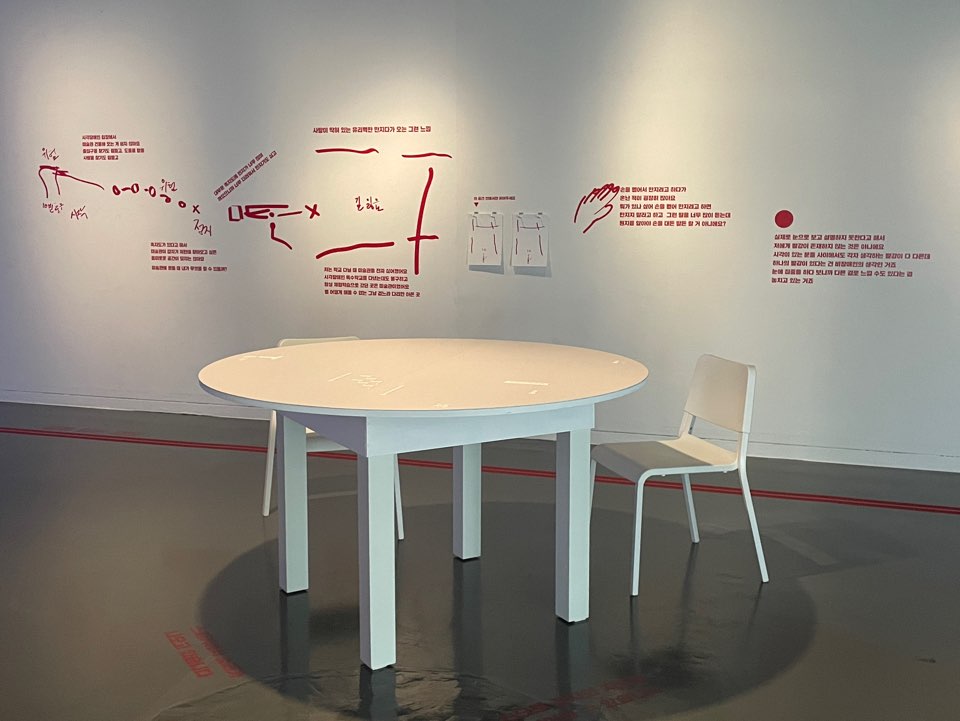
Turning their gaze inside the institution, the recent solo exhibition 《How dare you think that I don’t have red?》 (Seoul Museum of Art, 2024) shifted accessibility from add-on accommodation to a process of re-questioning norms and the boundaries of “we.” Within this exhibition, To Whom Is the Museum Open 2024 (2024), About Red (2024), and Lost Map (2024) used first-person testimonies and research as the internal engine of the display, dismantling non-disabled-centrism.

This trajectory converges in the group exhibition 《Young Korean Artists 2025: Here and Now》 (National Museum of Modern and Contemporary Art, 2025) as an awareness of the “impossibility of perfect inter-sensory translation.” The ‘tikkl’ (2025) series—tikkl0403 (2025) and tikkl0627 (2025)—narrativizes moments when invisible lines, walls, and fences become perceptible, building scenes in which figures from different times and places cross boundaries thro

Style & Contents

dianalab’s formal choices always begin from reality. ‘We Welcome All’ converts thresholds, restrooms, and statements of non-discrimination into “standards of ethics,” while ‘Fragments of Hospitality 1444’ places project descriptions and artist information in sign language, large-print, English, and Korean on equal terms—information provision becomes a sculptural language.

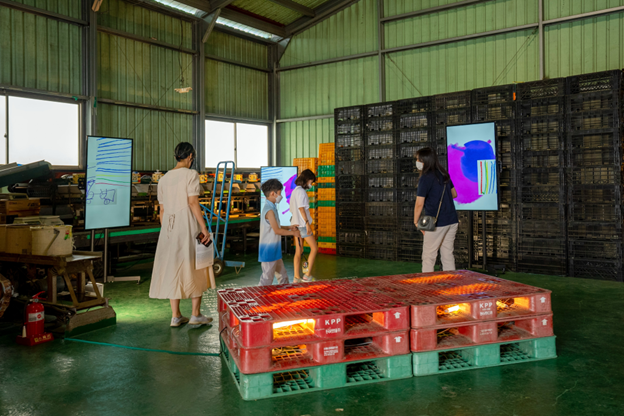
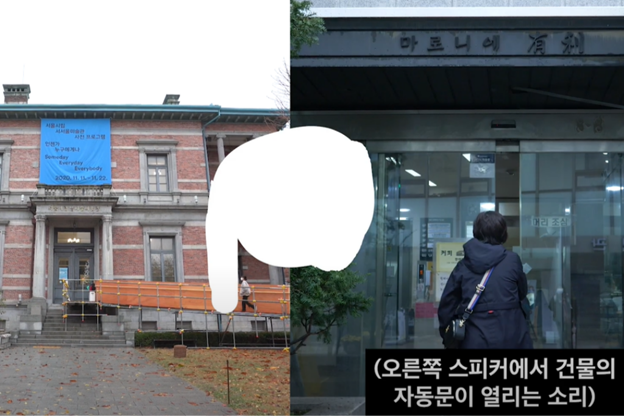
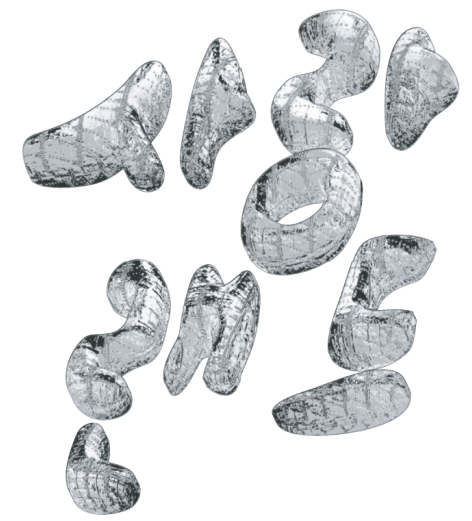
《Sense of Invitation》 rearranged the basic vocabulary of the exhibition: Braille leaflets, a sign-language screen, audio description, and on-site access attendants. These are not “auxiliaries” but the “grammar” of the work. At ARKO Art Center’s 《Local in the Making》 (2022), We have encountered fences before recorded, in the long breath of interviews, the entanglements of human/non-human and disabled/non-disabled, while Nameless on the Map retuned “reading” through Braille stickers and sound. A performance in which an invisible, unreadable map is read respectively by performers, stenographers, and sign-language interpreters refused to edit out difference and delay, making them the work itself.

At Seoul Museum of Art, Lost Map (2024) re-staged informational asymmetry as a tactile-auditory tableau via a 3D-printed tactile map and speakers. Testimonial audio played alongside parallel texts in Braille and raised Korean, turning the signifier “map” into a medium that exposes the invisibility of institutional wayfinding. In the same exhibition, collaborative works loaded the operational layer—lectures, workshops, interviews—into the narrative of the gallery, softening the boundaries among research, production, and exhibition.

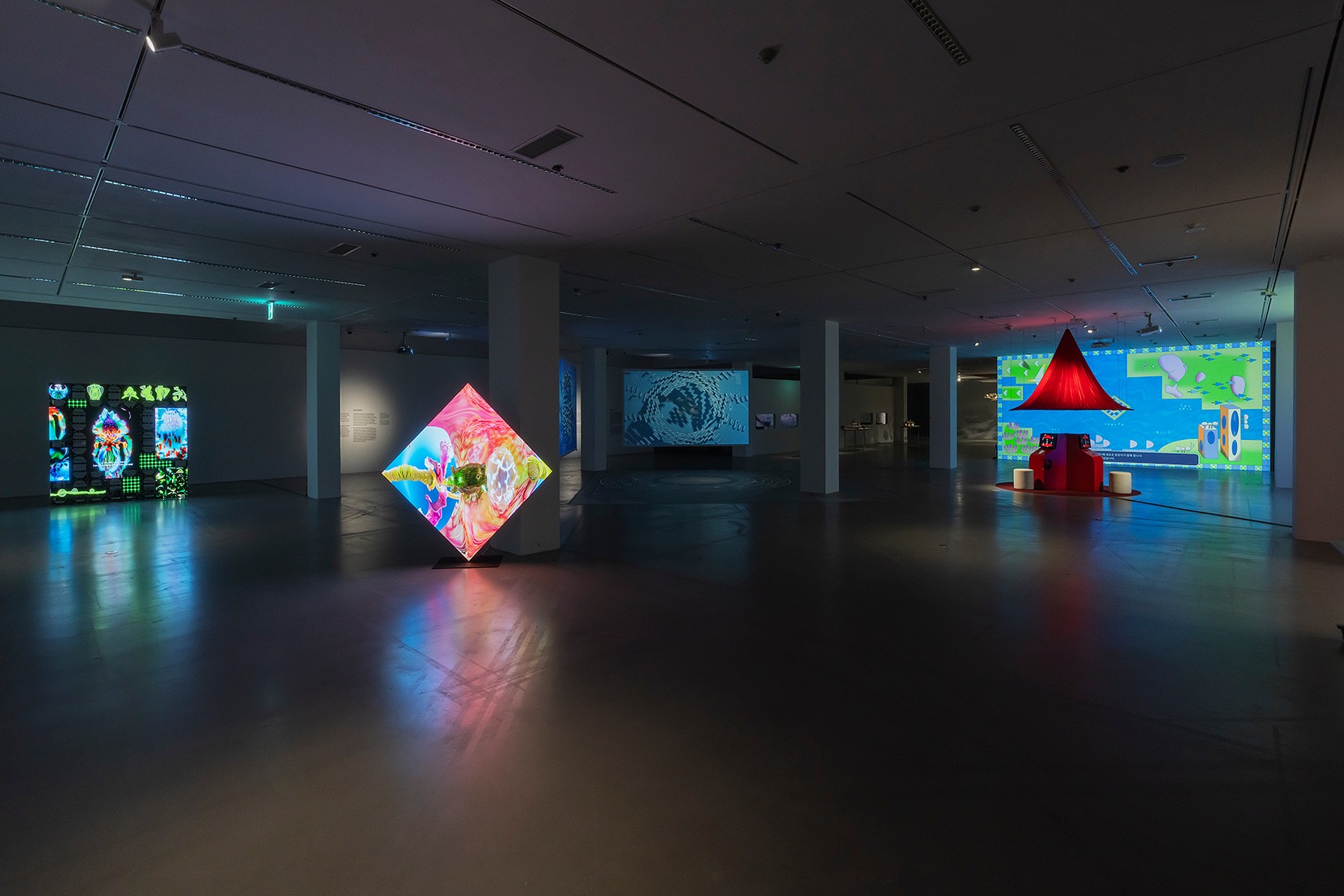
At MMCA, the ‘tikkl’ series paralleled “sourceless senses” by interweaving single-channel and three-channel video, sound installation, and wall drawings. Here, form is finely tuned to expose the residue of sensory translation (the impossibility of full transmission); members of minority communities take part in production, and Braille descriptions are installed in the gallery. As a result, dianalab’s form approaches an expanded curation in which workshops, maps, leaflets, access protocols, and performance are incorporated as parts of the “work.”

Topography & Continuity

dianalab is a case in contemporary Korean art that flips accessibility from “service” to “form.” They have built the smallest units of hospitality through place and information, loosened the borders of sense/language/norms through collaboration and relaxed formats, and, more recently, absorbed institutional protocols into the core of exhibition while elevating untranslatability itself into aesthetics. In the process, they curate artists, visitors, operators, and stakeholders as equal participants, collapsing entrenched divides between solo/group exhibitions and between artwork/project/exhibition within actual operations and viewing.

This originality—“barrier-consciousness” that integrates accessibility into the exhibition’s grammar, operations, and institutional frameworks—connects directly to contemporary issues. It is where the ethics of care and hospitality, disability justice, gender/queer/multispecies (non-human) sensibilities, institutional critique, and community practice meet on the same plane. dianalab binds together community mapping, relaxed performance, tactile–auditory hybrid scenography, and the equal placement of Braille/sign language/audio description, using “protocols,” “circulation,” and even “captions” as sculptural materials for hospitality.

As a result, the perimeter of solo/group exhibitions is replaced by new modes of production, and the distinction between artwork and exhibition is re-written as an operational aesthetics. In other words, their exhibitions occupy a rare position in which discourses that critique institutions and exercises that train the senses run simultaneously, answering—persuasively—the central question of contemporary art: who composes the time and space of art together, and by which rules?

Works of Art

Expression in Collaboration with Social Minorities

Articles

Exhibitions

Activities