Elevator, Escalator - K-ARTIST

Elevator, Escalator

2024
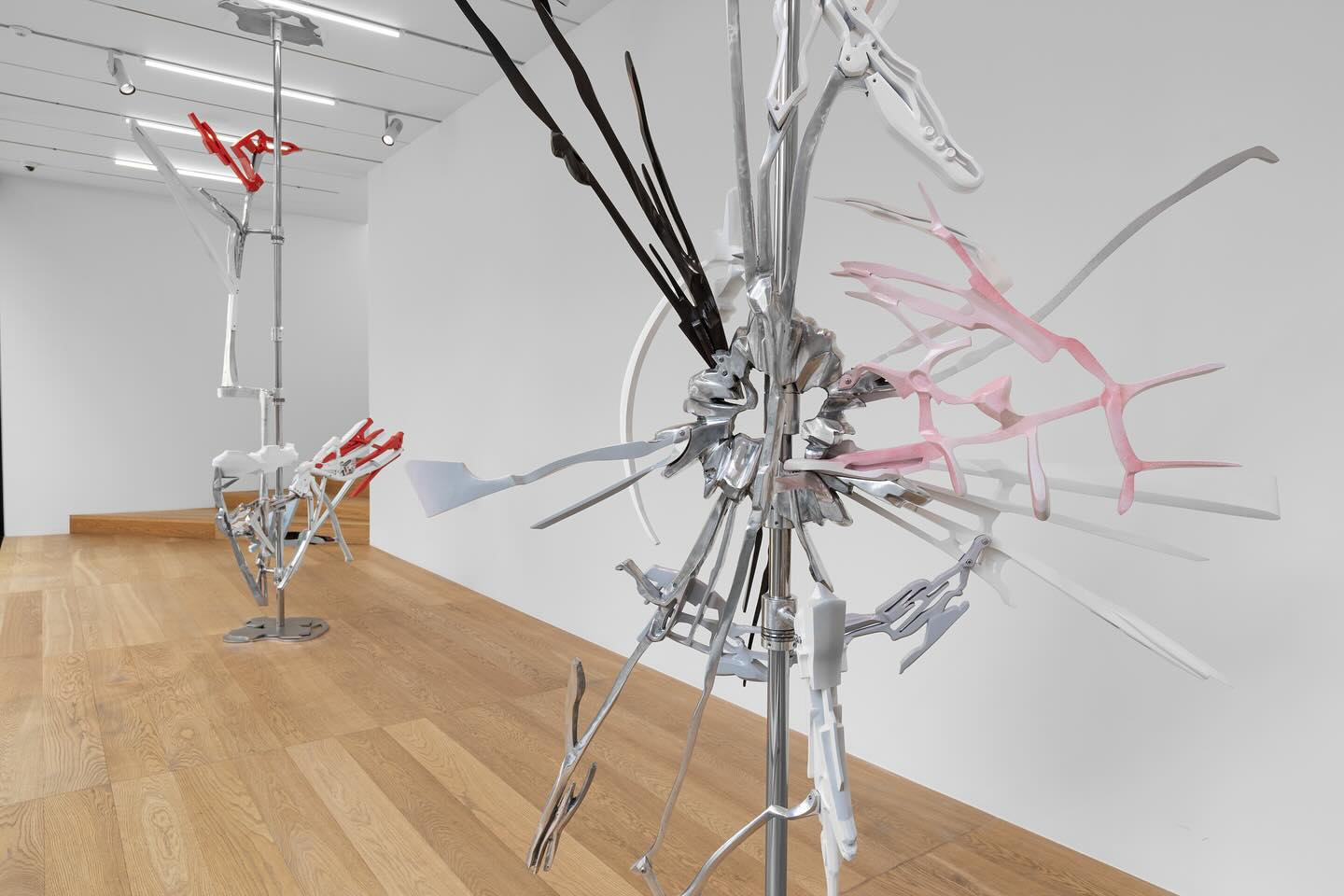
Aluminium, stainless, PLA, bolts, buts, putty, acrylic 
355 x 190 x 70 cm, 355 x 190 x 95 cm
About The Work

Ahyeon Ryu explores how individuals with digital literacy perceive political and economic phenomena. Specifically, the artist aims to highlight how individuals' unique characteristics, including race, gender, region, and socioeconomic class, are increasingly commodified and consumed within a culture steeped in consumerism.

Through her work, Ryu shapes the habitual processes of perception embedded in the system, visualizes the unique situations of individuals alienated under capitalism, and seeks to envision a subjective future beyond the cycle of the capitalist spectacle.
 
Her work illuminates the extensive influence images exert on individuals within the intersecting consumerist platforms of reality and virtuality. Ultimately, by reshaping the political potential of images circulated within capitalist frameworks, it is hoped that an alternative space can be created wherein audiences can independently engage with images.

Solo Exhibitions (Brief)

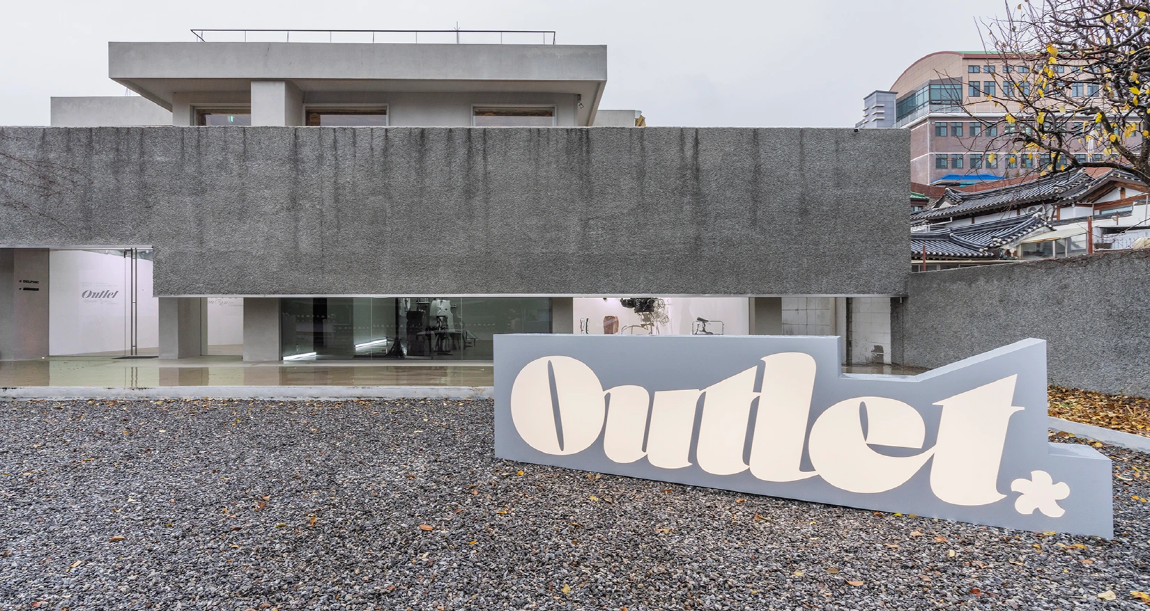
The solo exhibitions held by Ahyeon Ryu include 《Outlet》(Museumhead, Seoul, 2023–2024) and 《White Mirror: Prequel Version》(WWW Space, Seoul, 2020).

Group Exhibitions (Brief)

Ryu has also participated in numerous group exhibitions, including 《Tactics for an Era》 (K&L Museum, Gwacheon, 2025), 《The 24th SONGEUN Art Award Exhibition》 (SONGEUN, Seoul, 2024), 《Asphodel Meadows》 (Staffordshire St, London, 2023), 《Embodied》 (Morley Gallery, London, 2023), 《To You: Move Toward Where You Are》 (ARKO Art Center, Seoul, 2022), 《The Taming of the Shrew》 (Museumhead, Seoul, 2022), and 《Are You Afraid of Severance?》 (SAGA, Seoul, 2021).

Awards (Selected)

In 2025, Ahyeon Ryu was selected as one of the final recipients of the Chunman Art for Young Award.

Works of Art

Subjective Future beyond the Cycle of the Capitalist Spectacle

Originality & Identity

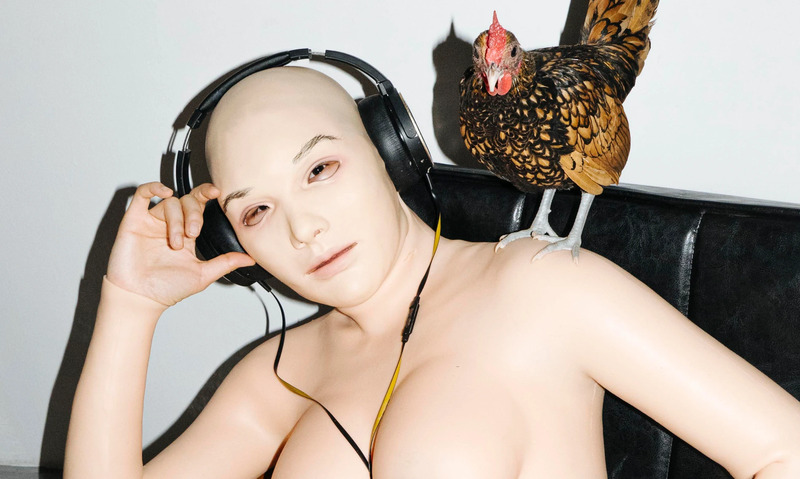
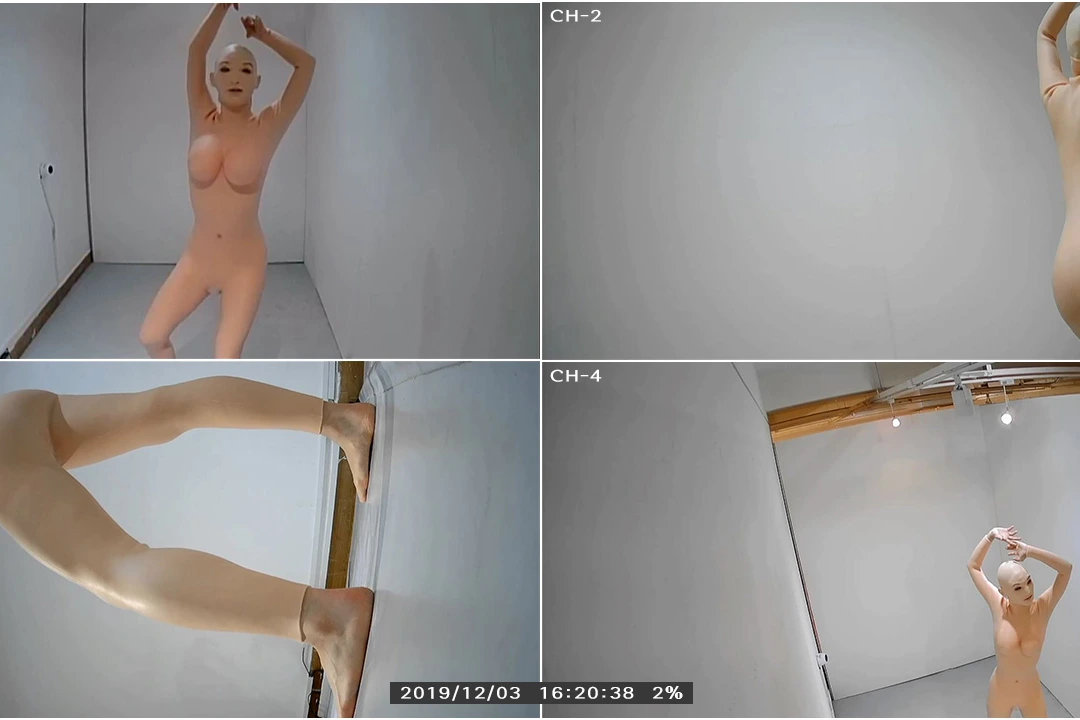
Ahyeon Ryu’s inquiry begins with the question of how individuals equipped with digital literacy are conditioned to “see” within the audiovisual environment of capitalism. The works White Mirror (2019) and White Mirror: Prequel Version (2020, WWW Space) place the audience within real-time surveillance and closed-circuit viewpoints, exposing voyeuristic and male-centered structures of gaze unconsciously internalized. The twist that the avatar on the screen is in fact watching the audience from behind a thin wall becomes a device that reveals image consumption as an operation of power.

In the same trajectory, How did you move the line (2019), presented during her study in London, shifts the boundary of vision through non-human mediators such as mirrors, brackets, and radios, suggesting that the act of seeing itself is a manipulable norm.

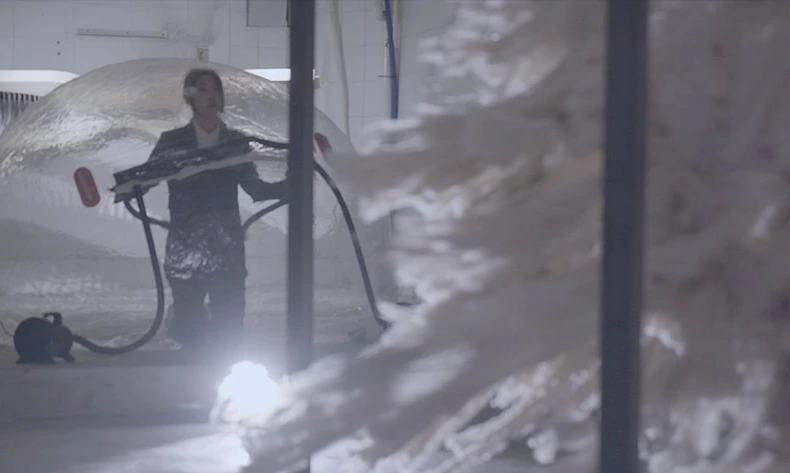
Later, in Burlesque (2021), shown at the group exhibition at SAGA, the artist visualized the modes of labor within the neoliberal platform economy. Waged labor such as food delivery and unpaid labor producing ideal bodies are both absorbed into the system of image production, and within the exhibition space, these circulate as video data through sculptural interfaces. This revealed that image labor is not merely a process of production but a system extending to the moment when the audience participates in consumption.

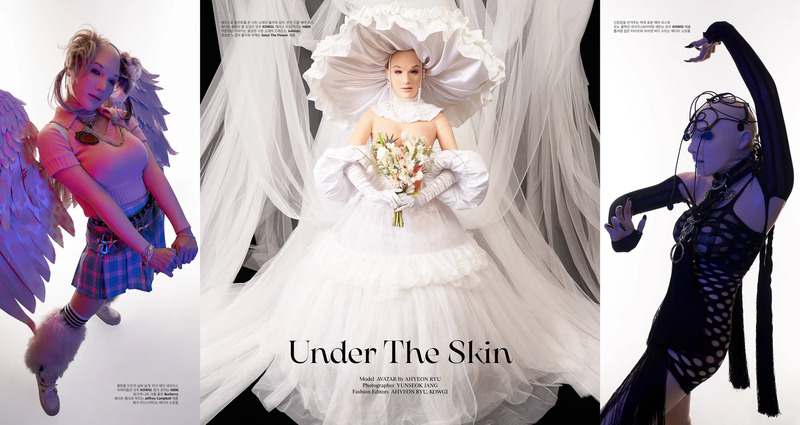
The Triptych (2022) placed female spectatorship at the forefront, in contrast to earlier works. By adopting the layout of fashion magazines and the triptych format used in religious painting, the work brought objectified images of the body unconsciously reproduced in everyday life into the exhibition space. The audience comes to identify themselves with the avatar in the image, only to realize that they too have been reduced to commodities stripped of uniqueness.

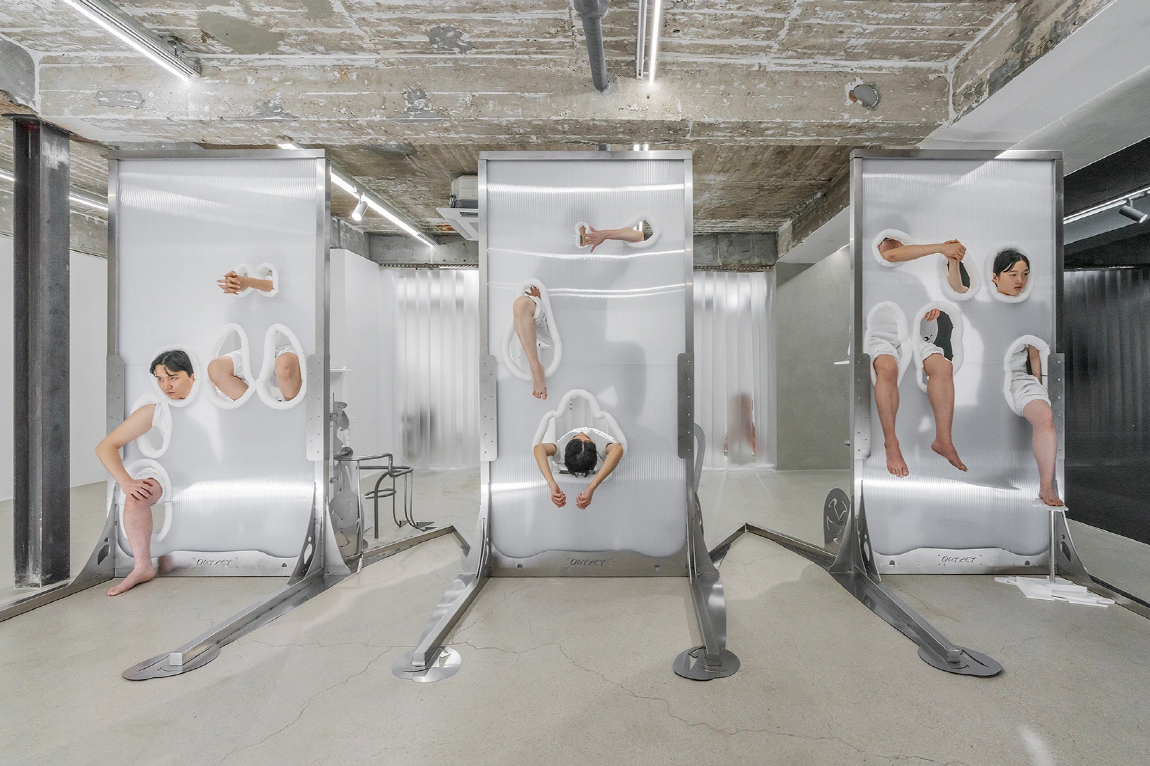
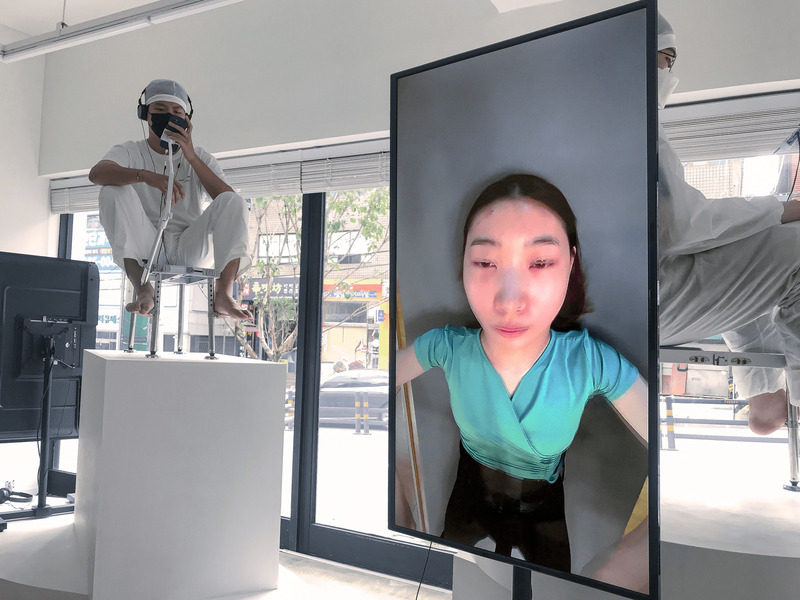
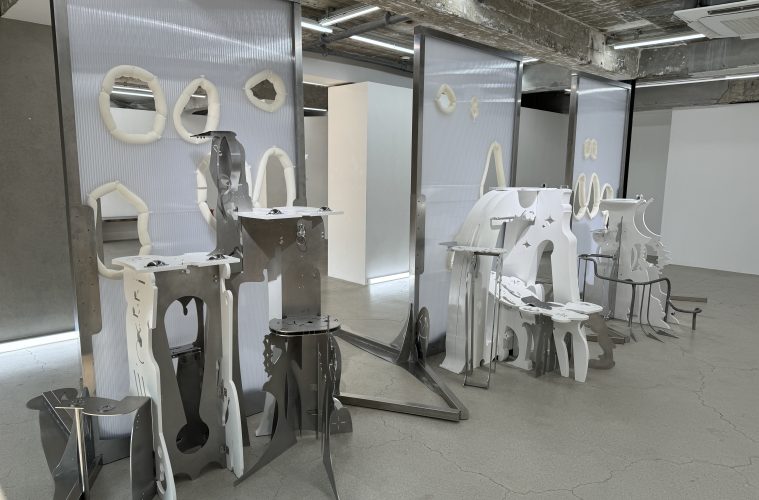
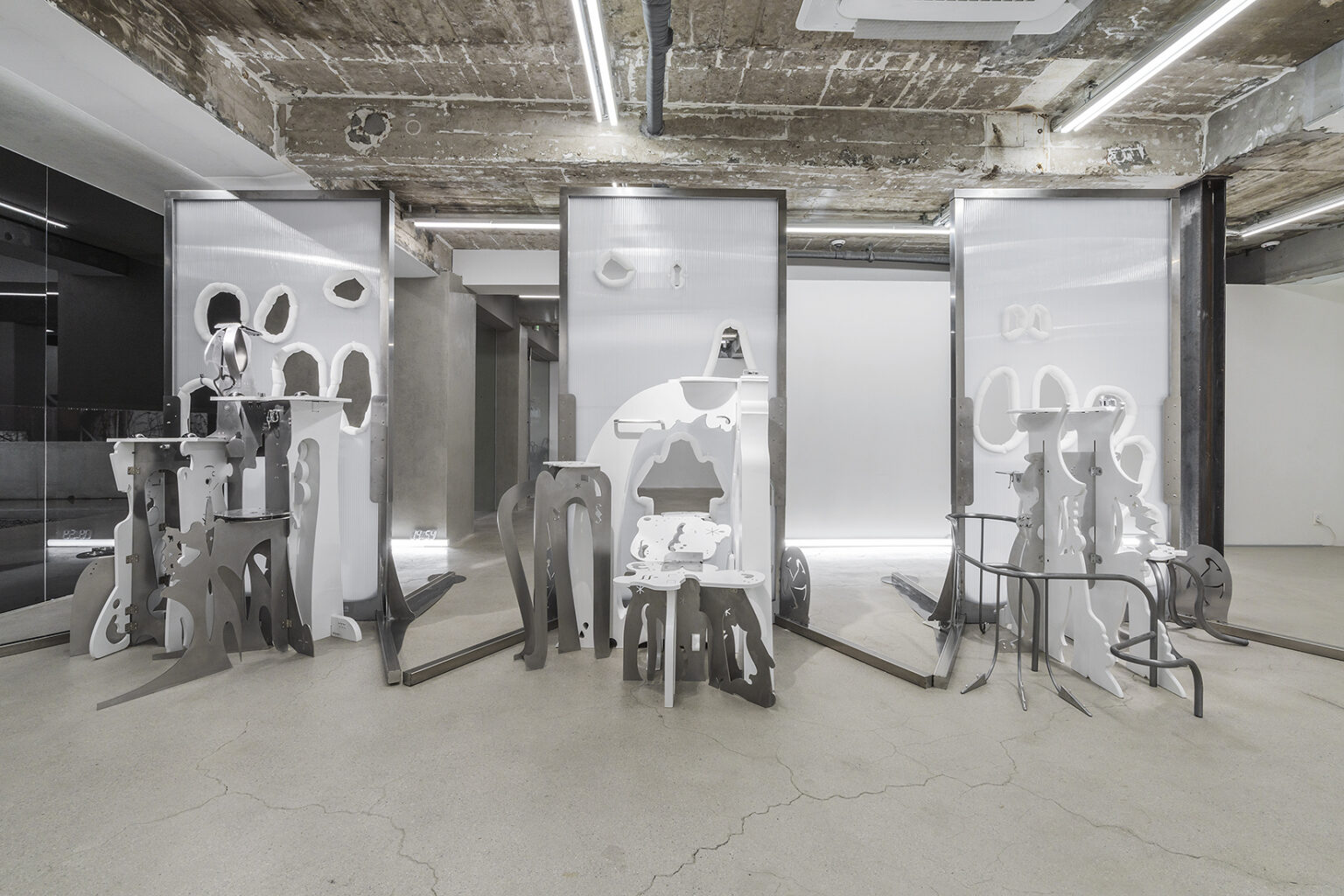
Her solo exhibition 《Outlet》 (2023–2024, Museumhead) and the group exhibition 《The 24th SONGEUN Art Award Exhibition》 (2024–2025, SONGEUN) expanded the commodification of the body in consumer society into the entire exhibition space. Sculptures such as Garments 07 (2023) revealed the hybridity of body and fashion, while Elevator (2024) and Escalator (2024) embodied metaphors of infinite scrolling of data and physical escape through mechanical movement.

Her recent work Research-b (2025) revisits the processes discarded or omitted on the way to achieving the inherent quality of “solidity” in sculpture, extending the critique of capital and image into the generative logic of sculpture as a medium.

Style & Contents

While Ryu’s early formal language centers on performance, it is fundamentally grounded in an “object-interface” mode of thought. In White Mirror, the boundary between humanization and reification was constructed through silicone bodysuits, while in White Mirror: Prequel Version, CCTV, wire mesh, a rooster, and closed-circuit perspectives revealed the body as an interface that operates the system. The body thus acquires the tangible volume of sculpture while simultaneously functioning as a hub of immaterial information exchange, infiltrating and rewiring the audience’s everyday sensibilities.

In Burlesque, the sculptural interface functioned both as the pedestal for video and as a relay for labor. The artist transformed forms of labor into performers’ bodies and video data, placing them on sculptural interfaces and thereby drawing the audience’s perception into the site of labor. By showing sculpture not merely as a physical structure but as a system mediating the circulation of images, Ryu established a strategy that intersects immaterial processes with material environments.

In 《Outlet》, the artist accelerated her formal experimentation through spatial staging. The exhibition was divided into a showroom and a fitting room, where hybrid bodies emerged by combining sculptures with multiple performers. Here, the body was no longer presented as a fixed entity but as fused with fashion that must be renewed daily. The still gestures of performers overlapped with the textures of sculpture, allowing the audience to experience the commodification of the body in real time.

Elevator and Escalator transformed sculpture into self-powering wheels through mechanical repetition and acceleration. These machine-sculptures rejected legibility and functioned as subversive images disrupting the seamless networks of capital. Research-b, constructed with MDF, blinds, plastic clay, and other materials, leaned against the wall as layers accumulated, presenting “sculpture as process.” It can be read as an experiment in intermediality, revealing sculpture not as a fixed object but as a generative process.

Topography & Continuity

Ahyeon Ryu has consistently revealed how bodies and images are commodified within the capitalist system. By positioning the body as commodity, laborer, or avatar across performance, sculpture, and installation, her work persistently traces how individual uniqueness is absorbed into spectacle. Within the context of contemporary Korean art, this constitutes an original coordinate that reconstructs the relationship between “body-image-capital.”

From the ‘White Mirror’ series to 《Outlet》, 《The 24th SONGEUN Art Award Exhibition》, and Research-b, the trajectory of her practice has expanded from critiques of digital image consumption to platform labor, female spectatorship, the commodification of the body in consumer society, and finally the mechanical movements and generative processes of sculpture. In terms of media, her spectrum has widened from live performance to photography and light boxes, kinetic sculpture, mixed-material installations, and process-oriented works. In the course of this development, her works have shifted from “finished objects” to “events/circuits/processes,” and the site of viewing has transformed from “exhibition” to “experiment.”

Within the landscape of contemporary Korean art, she has established a distinct critical discourse that traverses digital literacy, labor, consumerism, and techno-capitalism. In particular, by transforming performance into sculptural environments and developing hybrid forms that merge body and object, she has contributed to shifting the audience’s experience from static observation to event-driven encounter.

Her exploration of global issues such as techno-capitalism and the politics of the image is expected to lead to new formal experiments connecting performance and sculpture. It is anticipated that Ryu will increasingly occupy significant positions in international contemporary art discourses as her practice continues to unfold on the global stage.

Works of Art

Subjective Future beyond the Cycle of the Capitalist Spectacle

Articles

Exhibitions

Activities