Void Pagoda(空塔) 1 - K-ARTIST

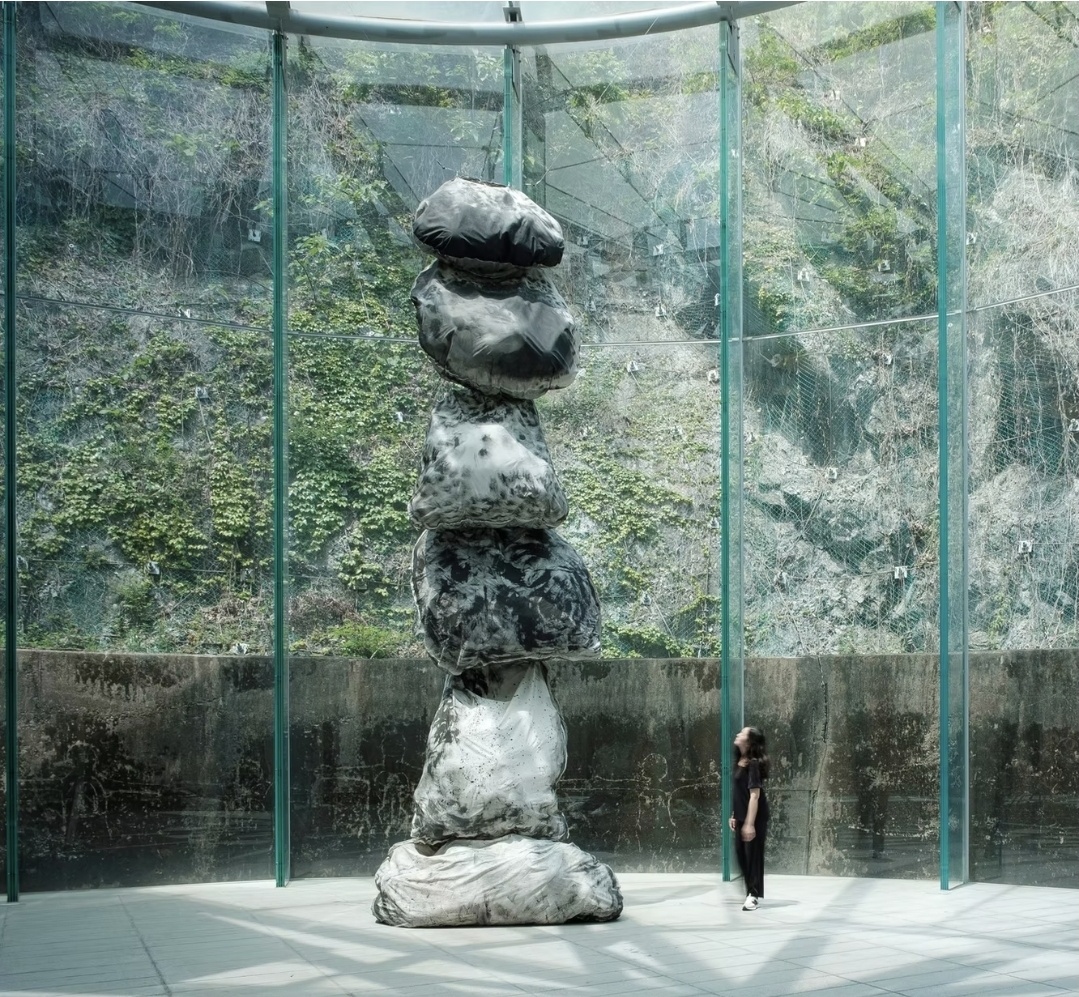
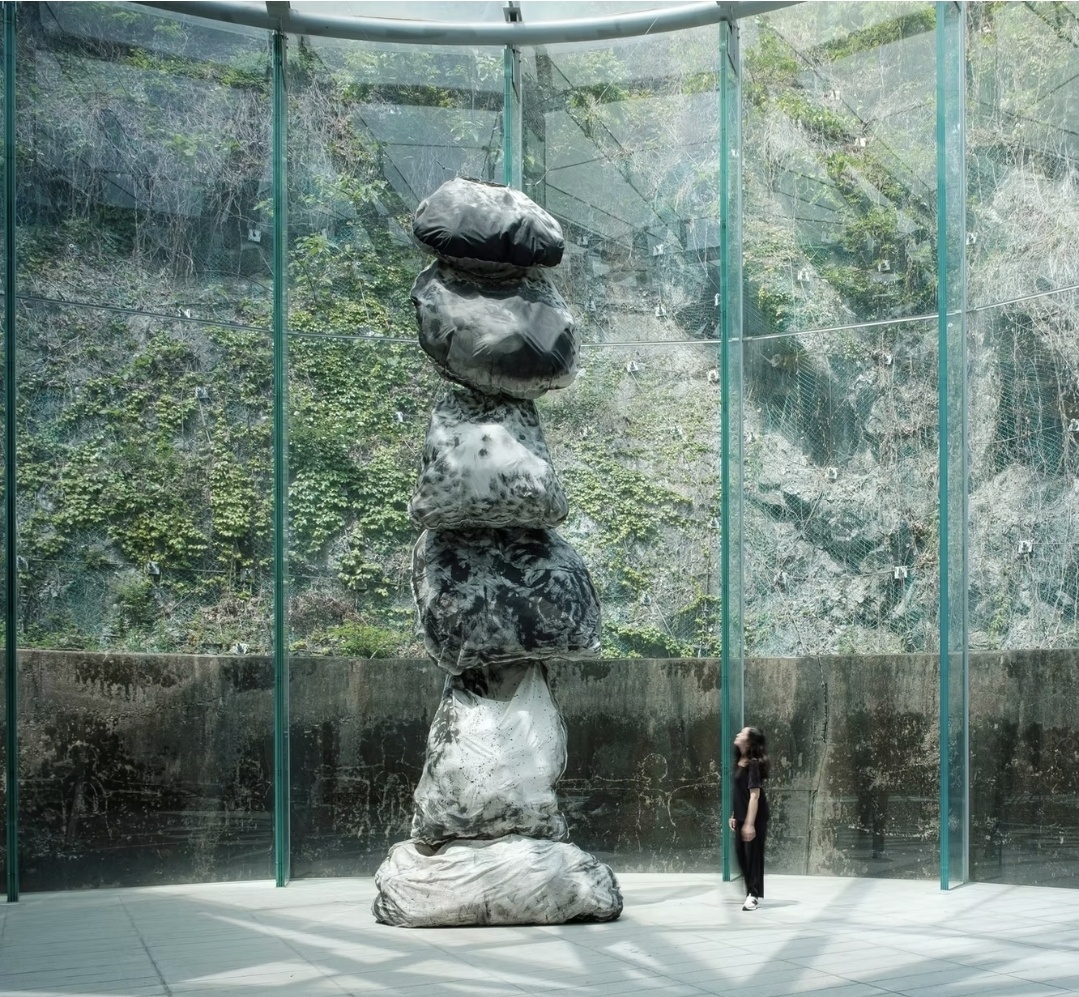
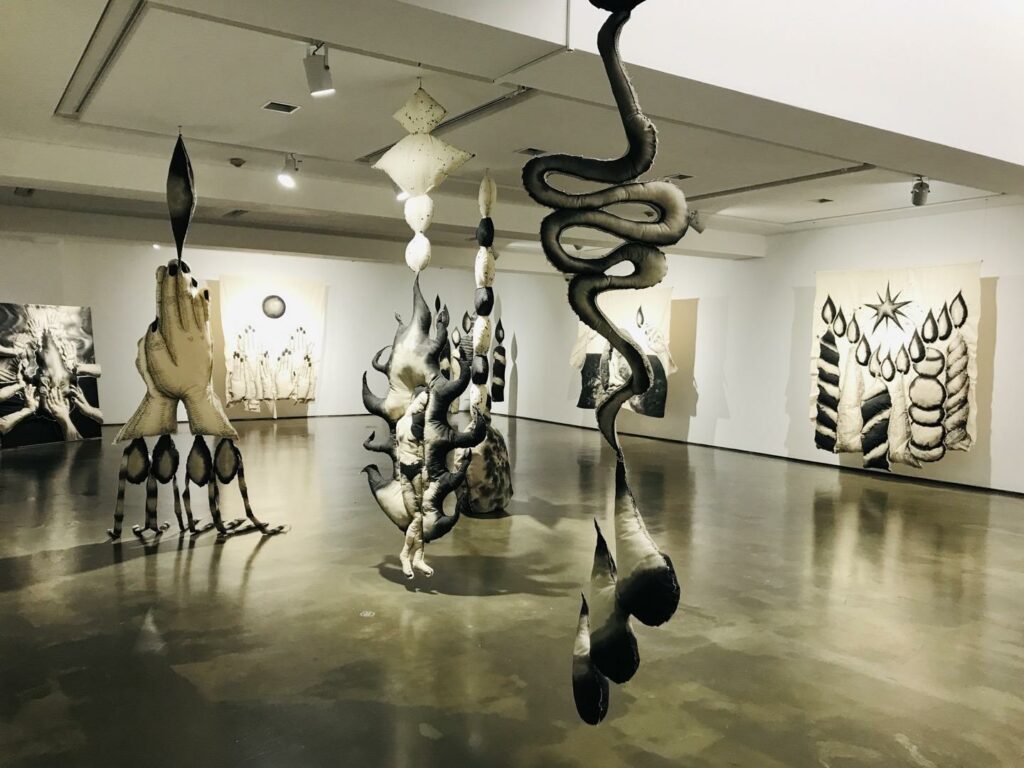
Void Pagoda(空塔) 1

2021
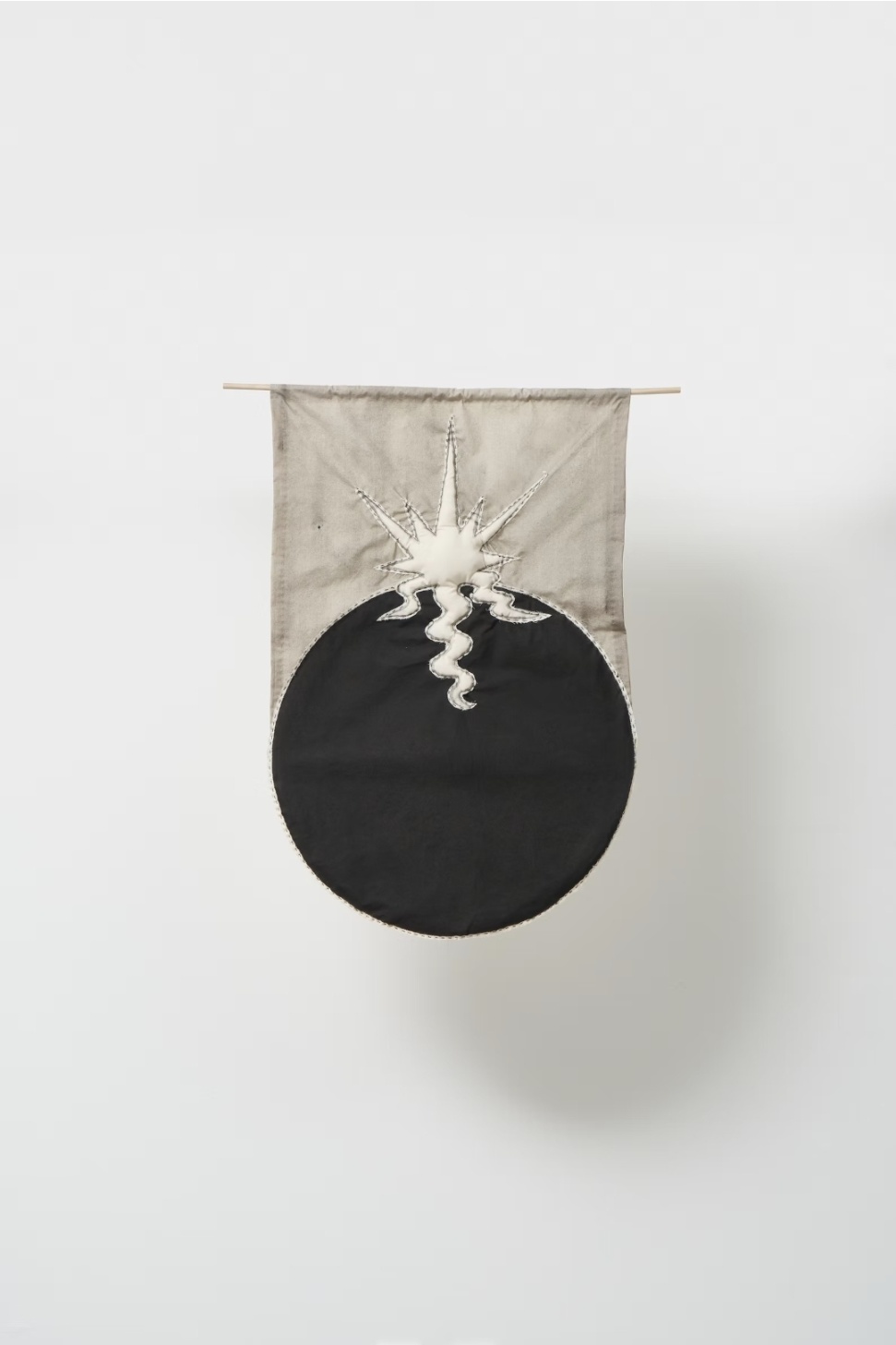
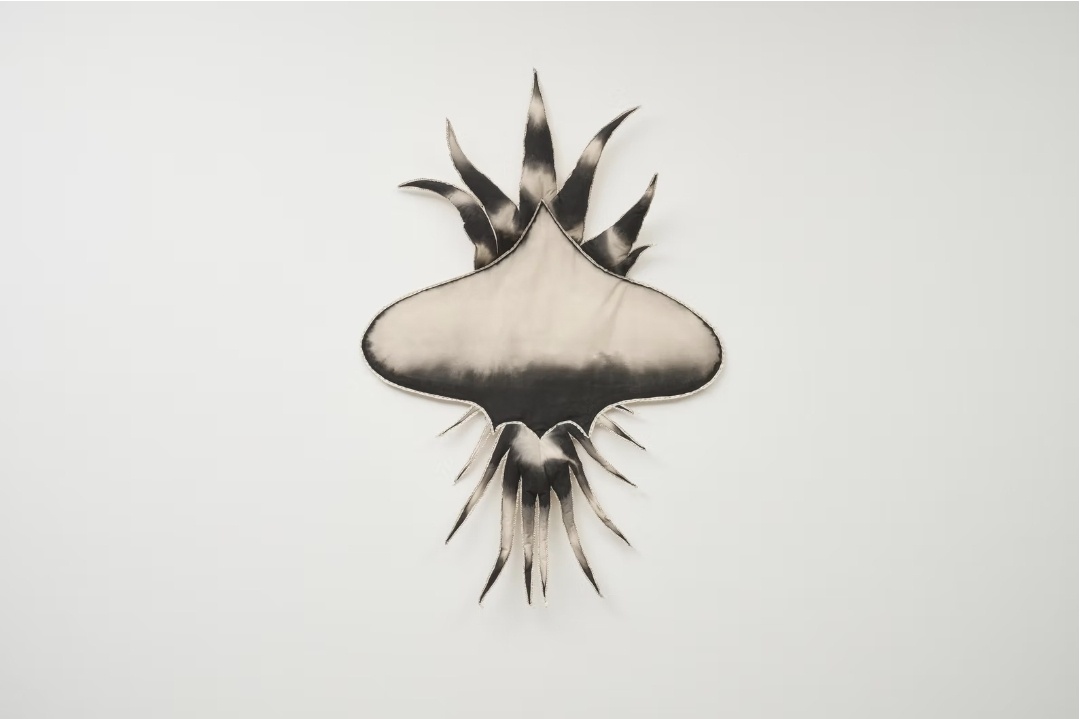
Meok on cotton fabric, thread, cotton stuffing
Dimension variable
About The Work

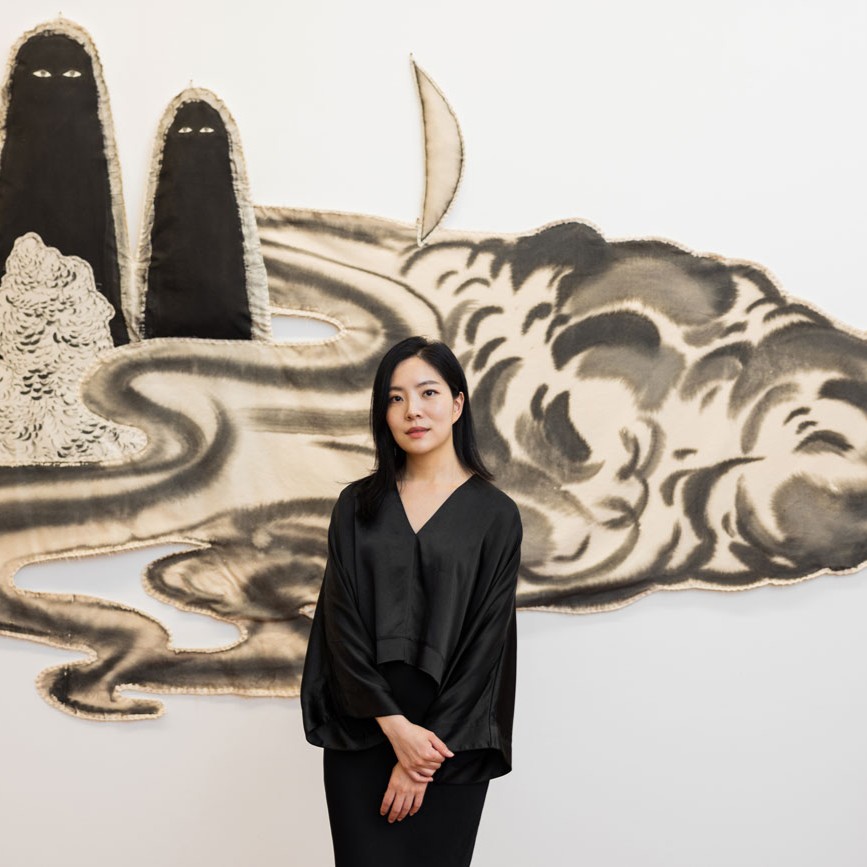
Sang A Han begins her work from memories of everyday experiences and the emotions that arise from them. Grounded in the expressive methods of traditional East Asian painting, her practice unfolds the subtle and complex emotions and memories that cannot be reduced to a single word, articulating them through a metaphorical and symbolic visual language shaped by the many changes she experiences as an artist, a woman, and an individual.
 
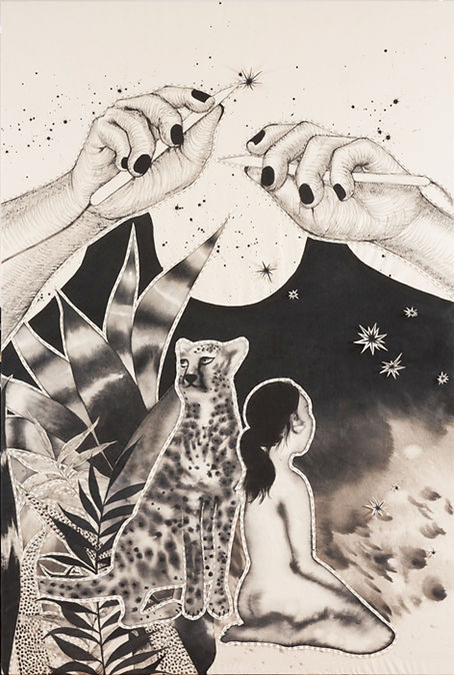
Sang A Han’s work begins with drawing in meok (ink) on cotton fabric, weaving together fragments of emotions and imaginations that stem from autobiographical experiences. The medium and expressive methods of traditional East Asian painting, which form the foundation of her practice, possess a multilayered character that resembles the stories she seeks to convey.
 
Sang A Han’s work begins with deeply personal, autobiographical experiences, yet the multilayered emotions and reflections embedded within them resonate as universal feelings that humans hold toward what they cherish. In this way, the artist’s narratives establish a sense of empathy with viewers and expand into a broader, shared story.

Solo Exhibitions (Brief)

Sang A Han’s solo exhibitions include 《Flesh & Flash》 (The WilloW, Seoul, 2025), 《Black Flame》 (Galleria Fumagalli, Milan, 2024), 《Pointed Warmth》 (BYFOUNDRY, Seoul, 2022), 《Pointed Mind》 (OCI Museum of Art, Seoul, 2022), 《Unfamiliar Wave》 (SONGEUN ARTCUBE, Seoul, 2019), among others.

Group Exhibitions (Brief)

Han has also participated in various group exhibitions, including DMA CAMP 《Unseen》 (Daejeon Creative Center, Daejeon, 2023), 《Daily Life not so simple》(Seoul National University Museum of Art, Seoul, 2022), 《summer love》 (SONGEUN, Seoul, 2019), 《Gwangju Hwaru-10 Artists’ Exhibition》 (Asia Culture Center, Gwangju, 2018), and 《Story Blossoms in Art》 (Gyeonggi Museum of Modern Art, Ansan, 2016).

Awards (Selected)

Sang A Han received the Grand Prize at the Seongnam Arts Center Emerging Artists Contest in 2012, and was selected as an OCI Young Creative in 2021.

Collections (Selected)

Sang A Han’s works are included in the collections of the Seongnam Cultural Foundation, FOUNDRY SEOUL, SONGEUN, and the OCI Museum of Art.

Works of Art

Bodily and Emotional Memories Rooted in Experience

Originality & Identity

Sang A Han’s early works take as their seed the coexistence of anxiety and anticipation rooted in autobiographical experience. In her solo exhibition 《Unfamiliar Space》 (Weekend, 2018), the event of pregnancy summoned complex affects that could not be reduced to a single emotion, and the scenes—such as the series Unfamiliar Space (2018)—were arranged as “unfamiliar” narratives where ominous imaginings and romantic perspectives intersected. During this period, fragments of nature (sky, water, fire), body parts, and loose geometries intertwined, opening a passage through which private narratives could be translated into universal affects.

In her mid-career, the wave-like nature of life events became structurally developed. In her solo exhibition 《Unfamiliar Wave》 (SONGEUN ARTCUBE, 2019), works such as Unfamiliar Wave 1 (2019) and Unfamiliar Wave (2019) reorganized the events of marriage, childbirth, and child-rearing into metaphorical maps of personal history by combining them with mythological and religious symbols (the sun, moon, stars, praying hands, flames). Narrative time was presented not as linear but as a cyclical (wave-like) model, with the exhibition path itself inducing repetition and renewal.

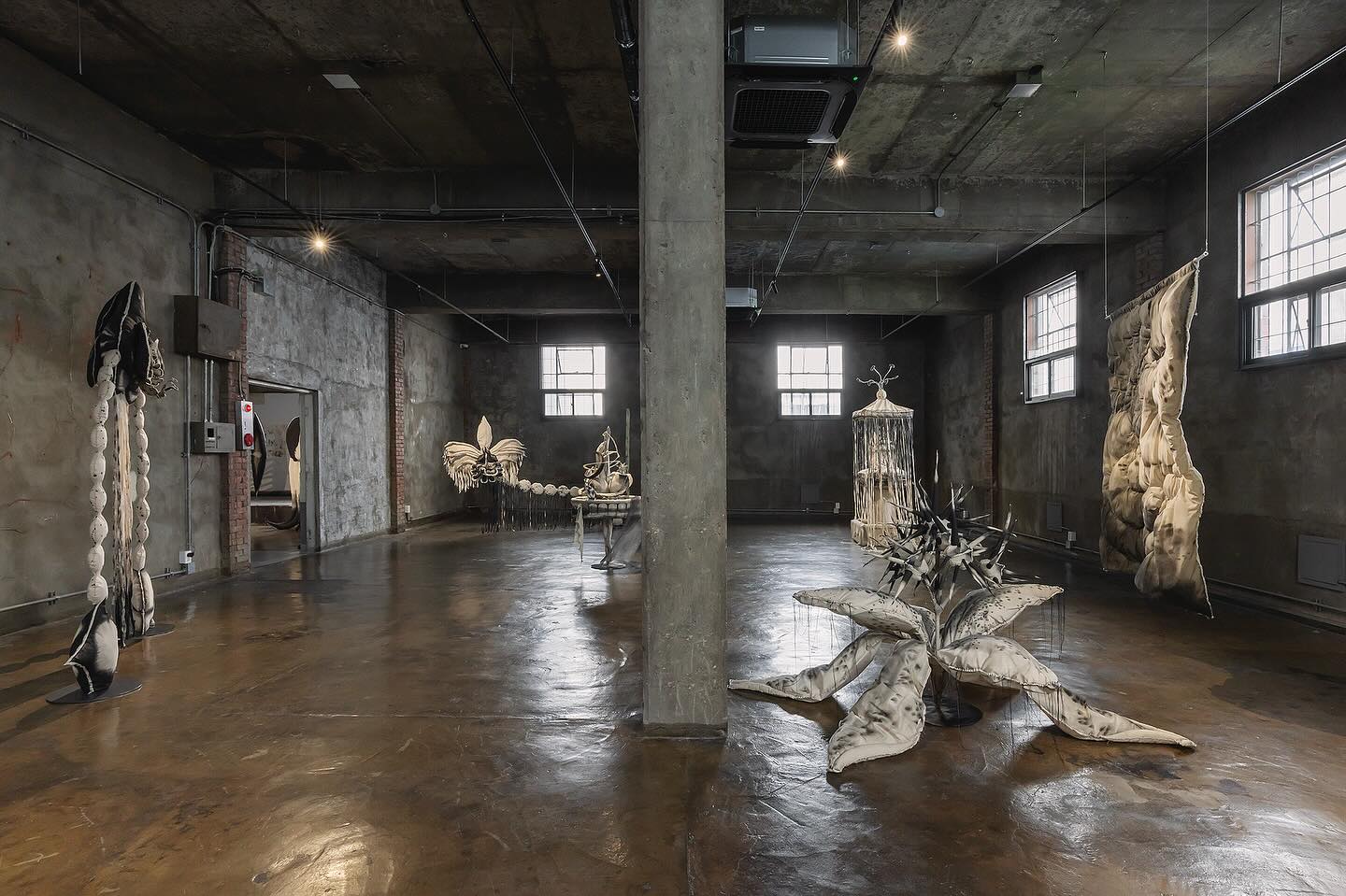
During the pandemic, Han foregrounded the coexistence of motherhood and otherness. The solo exhibitions 《Pointed Mind》 (OCI Museum of Art, 2022) and 《Pointed Warmth》 (BYFOUNDRY, 2022) staged the ambivalent coexistence of “sharpness (critical gaze)” and “warmth (the affect of care)” within the same scenes, employing devices of prayer and invocation—pagodas, scrolls, hangings—as engines of narrative.

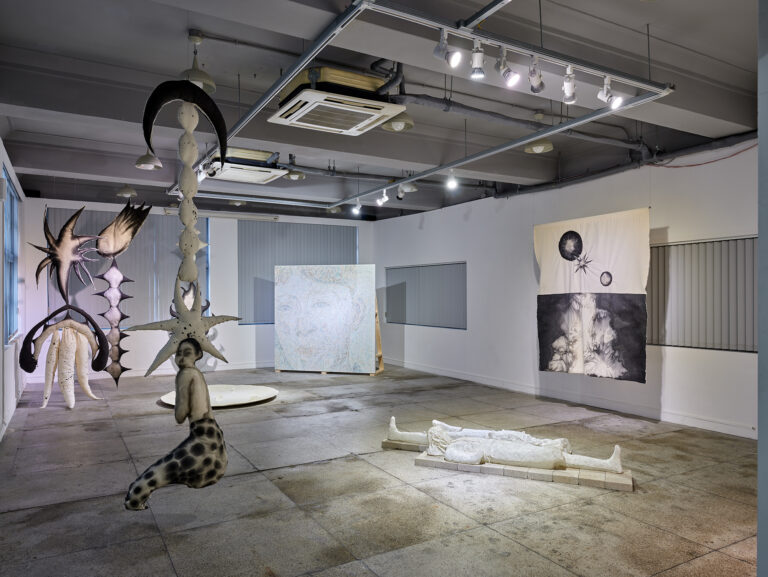
Most recently, her work has expanded toward the interpenetration of motherhood, the body, and the environment, mediated by Julia Kristeva’s theory of the body. In 《Black Flame》 (Galleria Fumagalli, 2024), the ‘Void Pagoda’ (2021–) and Black Figurine 2 (2024) combined flowers, flesh, and legs to invoke both the warmth, strangeness, and dread of motherhood. Her latest solo exhibition 《Flesh & Flash》 (The WilloW, 2025) presupposes synthetic yet unstable bodies, experimenting with the concept of provisional subjects—hybrids of human and nonhuman—that appear and vanish like flashes.

Style & Contents

Her medium has consistently evolved around the combination of meok (ink), cotton fabric, thread, and cotton stuffing. 《Unfamiliar Space》 and 《Unfamiliar Wave》 embodied the multilayered tonalities of meok’s hyeon-saek (玄色) through the techniques of overlapping, cutting, and stitching. Unfamiliar Wave 1 created a cellular surface where boundaries blur through the interaction of water, ink, and fabric, while the hanging piece Unfamiliar Wave incorporated moving air and light as part of the work’s materiality.

Since 2021, the ‘Void Pagoda’ series has established a sculptural grammar of stacking, hanging, and balancing. Void Pagoda (空塔) 1 and Void Pagoda (空塔) 5 stood as “fake stones” filled with cotton, sustained through negotiations between tension (strings) and gravity, replacing the weight and permanence of traditional stone pagodas with softness and variability. In 《Pointed Mind》, the ensemble of vertical mobiles, scrolls, and towers utilized the tall ceilings of the space, performing the gallery itself like a musical instrument.

From 2024 onward, self-standing structures began to emerge. Threshold (玄關) 2 combined meok, cotton fabric, and cotton stuffing with a stainless-steel frame to realize an arched form of “self-standing flesh.” The introduction of a structural “skeleton” liberated the works from the dependency of hanging, translating the anatomical metaphor of flesh–bone–skin (fabric)–blood (ink) into the language of form–structure–texture–color.

The thematic subjects also shifted—from body fragments to hybrids of motherhood, plants, and the nonhuman, and eventually toward provisional subjects. The recent work Black Figurine 2 juxtaposed legs and flowers within a single figure to embody birth and growth, while the solo exhibition 《Flesh & Flash》 layered thread, cotton fabric, and ink like a “flash,” producing evental surfaces where body, scene, and time intersect at momentary points of convergence.

Topography & Continuity

The core of her continuity rests on three aspects: first, the materialization of affect through the hyeon-saek of meok and the materiality of fabric; second, the homology of form and concept through stitching, balancing, and circulation; and third, the grammar of unfamiliarity that translates private experiences into universal affects. Unfamiliar Wave 1 with its surfaces of “layering–seeping–stitching,” the tense balance of the ‘Void Pagoda’ series, and the self-standing arch of Threshold (玄關) 2 all enact the same formal logic of boundary–connection–transition.

Within the context of contemporary Korean art, she stands as an artist who foregrounds the textile mediation between painterliness and sculpturality. By binding the tradition of ink with the contemporaneity of textile and installation, she articulates themes of affect, the body, and care—speaking of motherhood, alterity, and the nonhuman through micro-material processes (seeping, drying, tension, gravity) in a distinctive way.

Her trajectory of development is clearly marked: from plane works, to hangings, to balanced sculptures, and finally to self-standing structures. From the plane-installation hybrids of her early solo exhibitions, to the composition of space, to the body–plant hybrids of 《Black Flame》, and to the synthetic yet unstable subjects of 《Flesh & Flash》, her practice has accumulated in a stepwise progression.

The artist has already traversed both domestic (OCI, BYFOUNDRY) and international (Galleria Fumagalli, Milan) stages. Looking ahead, she holds significant potential to experiment with body–environment interpenetrations at a public scale through the scaling up of self-standing structures (the Threshold series), expansion into outdoor textile–metal hybrids, site-specific variations of the ‘Void Pagoda’ in urban contexts, and collaborations with bio-materials or responsive lighting. At the same time, if engineering collaborations addressing the preservation and weather-resistance of textiles are pursued, her “structures of softness” will become all the more distinct as a sculptural language of care within the realms of international exhibitions and public art.

Works of Art

Bodily and Emotional Memories Rooted in Experience

Articles

Exhibitions

Activities